My friend texted me on a Tuesday night: “I just threw everything on one pan and it WORKED.” I knew exactly what she meant.
—
1. Why Sheet Pan Chicken Actually Delivers (When So Many “Easy” Dinners Don’t)
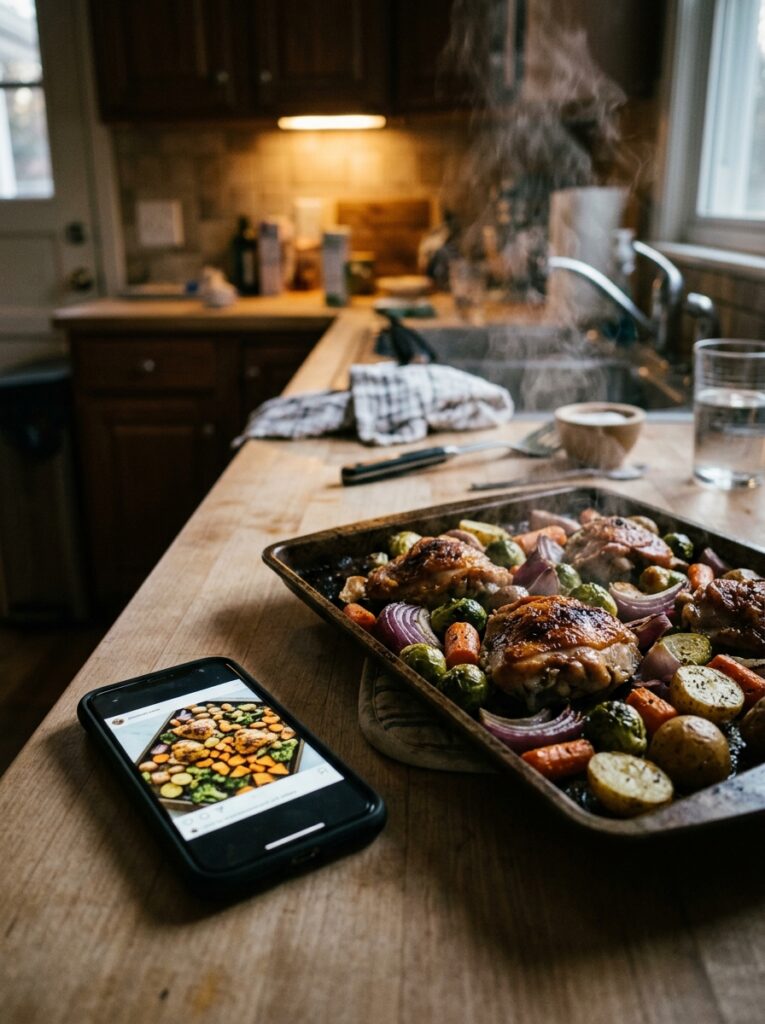
Here’s the thing about weeknight cooking — most “easy” recipes are lying to you. They say 20 minutes but they mean 45. They say one pot but then you’ve got a cutting board, a strainer, two mixing bowls, and somehow a wok involved.
Sheet pan dinners are different. Not because they’re trendy, not because some food blogger told you they’re life-changing. Because the science of them actually works. You’ve got direct dry heat from the oven, a flat surface that lets moisture escape instead of trap, and every ingredient cooking together in the same environment so flavors develop without you doing anything at all.
And chicken is the perfect protein for this. It’s forgiving. It doesn’t need much. It takes on flavor from whatever’s around it — garlic, lemon, herbs, spices — and when roasted properly, it comes out with crispy skin and juicy meat and that little bit of caramelization on the edges that makes everything taste like you tried harder than you did.
That’s the whole secret, honestly. You didn’t try that hard. The oven did the work.
—
2. The Cut of Chicken That Changes Everything at High Heat
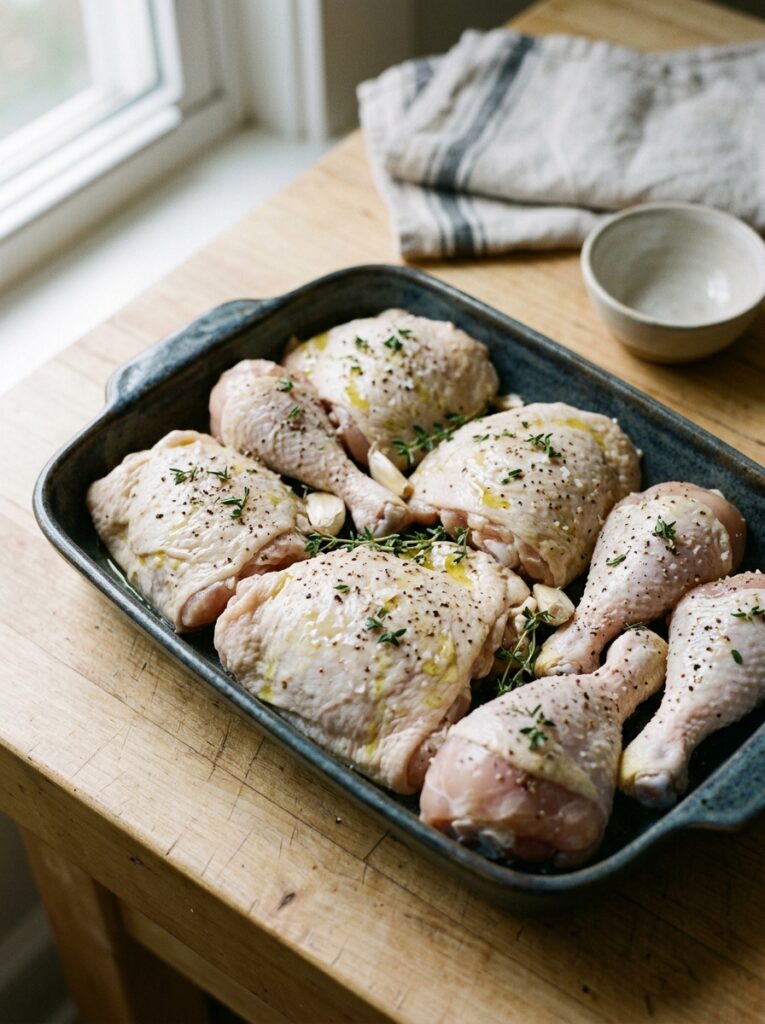
Bone-in, skin-on thighs. I’ll die on this hill.
People always want to use chicken breast because it feels healthier, and I get it, but hear me out. Chicken breast at high heat in a 425°F oven for 30+ minutes is how you end up with something that tastes like it was punished. It dries out fast. There’s no fat to protect it, no bone to slow the heat down.
Thighs? They’re built for this. The bone conducts heat evenly from the inside, the skin crisps up into something golden and almost lacquer-like, and the fat that renders out during cooking basically bastes the whole thing as it goes. You end up with meat that’s tender and deeply savory and slightly charred at the edges and I’m sorry but chicken breast just can’t do that.
“The fat that renders out of chicken thighs during roasting doesn’t just keep the meat juicy — it coats every vegetable on the pan and turns ordinary into something you’d order at a restaurant.”
That said — drumsticks work brilliantly too. Cheaper, kid-friendly, slightly quicker to cook. If you’re cooking for four people and budget matters, grab a pack of drumsticks and don’t look back.
—
3. The Temperature Nobody Told You About
Most ovens can do 425°F (220°C for UK readers). That’s your number. Not 375, not 400. Four twenty-five.
Lower temperatures steam the vegetables instead of roasting them, and you end up with soft, pale, slightly sad produce instead of those caramelized, slightly charred edges that make the whole pan worth eating. High heat is what creates the Maillard reaction — the browning — and that’s where all the actual flavor lives.
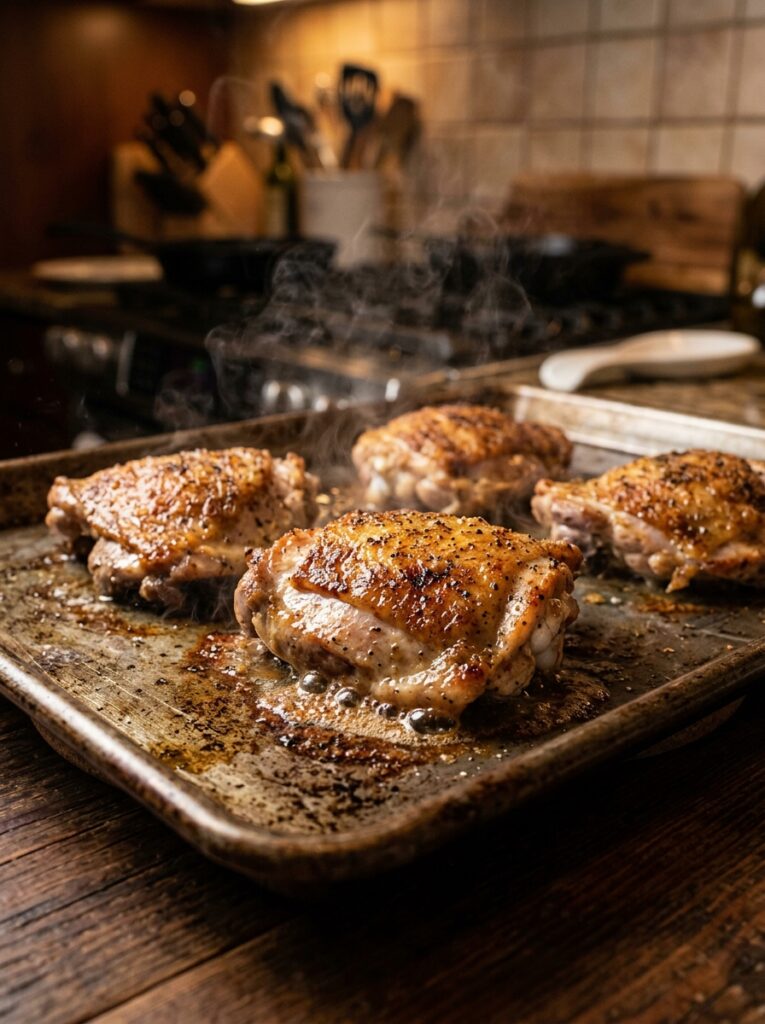
One thing that genuinely matters: preheat the pan. Slide your empty sheet pan into the oven while it heats up. When you lay the chicken down on a hot pan, it immediately starts searing from below. That’s the difference between skin that crisps up properly and skin that just kind of… steams and goes limp.
Side note — if your oven runs cool (and a lot of UK ovens do, worth knowing), bump it up to 230°C just to compensate.
—
4. The Vegetables That Actually Survive a 30-Minute Oven
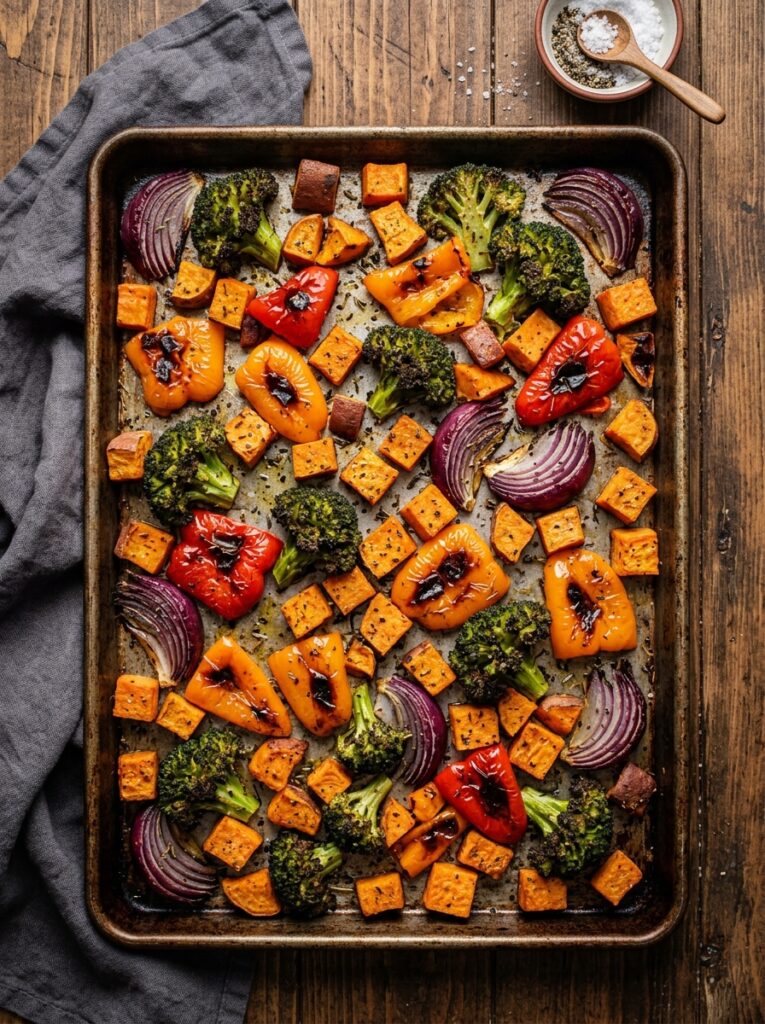
Not everything belongs on a sheet pan at the same time. This is where people go wrong.
Delicate vegetables — spinach, cherry tomatoes that haven’t been halved, courgette cut too thin — they’re cooked in 10 minutes. If you put them on the pan at the beginning with your chicken, you’ll pull them out as sad, collapsed little puddles. Been there. It’s not great.
What survives? Root vegetables, cruciferous vegetables, and anything dense enough to hold up to extended heat. Think:
- Broccoli florets — they char at the tips and become almost nutty
- Sweet potato, cubed small — tender inside, caramelized outside
- Red onion wedges — they go jammy and sweet in the best possible way
- Bell peppers — they soften and concentrate
- Tenderstem broccoli — especially good, the stalks get crispy
- Chickpeas, drained and dried — these get crunchy and basically become crispy little flavor bombs
If you want to add cherry tomatoes, add them in the last 10 minutes. Same with asparagus. They need heat, not a long roast.
—
5. The Marinade Math That Needs No Measuring
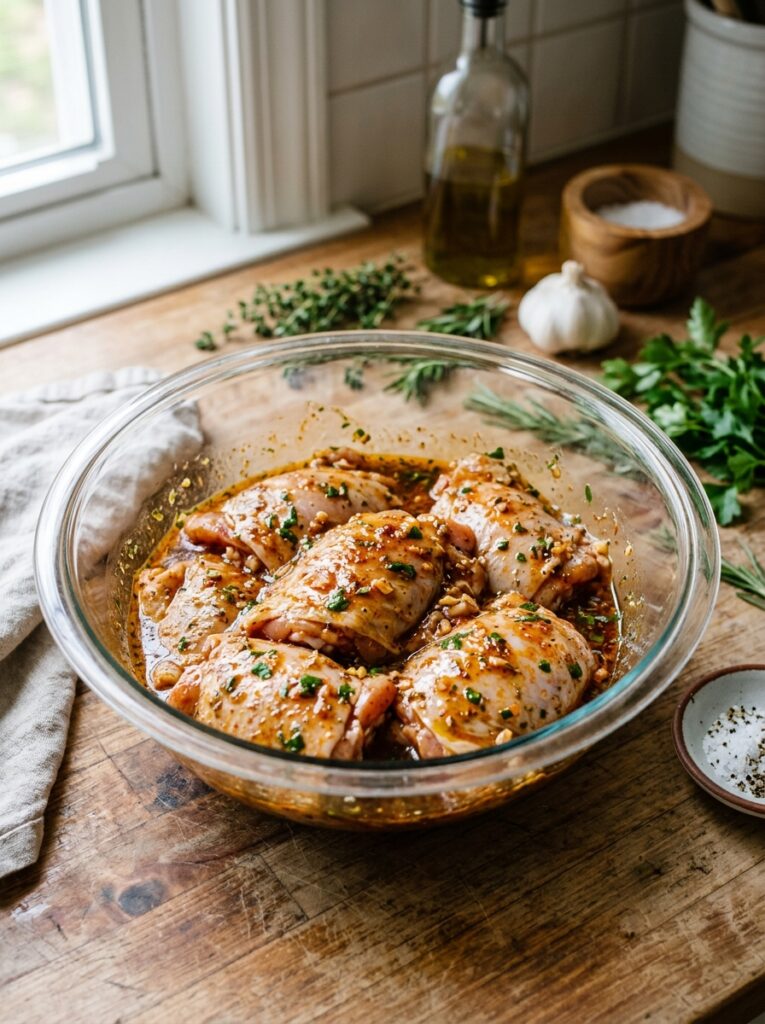
I don’t measure for weeknight marinades. I just don’t. Here’s the rough formula in my head and it works every single time:
Fat + acid + seasoning + something punchy.
Fat is usually olive oil, sometimes a little sesame oil if I’m going Asian-inspired. Acid is lemon juice or apple cider vinegar or even a splash of balsamic. Seasoning is salt and pepper, obviously, but also dried herbs — smoked paprika, oregano, cumin, whatever’s in the cupboard. And “something punchy” is garlic. Always garlic. Or a spoonful of harissa. Or Dijon mustard. Or soy sauce.
You don’t need a recipe for this. You need a ratio you trust: roughly 3 parts oil to 1 part acid, then season aggressively.
The mistake most people make is under-salting. Season the chicken and then look at it and think, is that enough? It isn’t. Add more.
“Season the chicken. Look at it. Add more salt. You’re still probably under-seasoning it.”
Marinate for 20 minutes if you’re short on time, or overnight if you’ve got the foresight. Overnight is genuinely worth it — the acid breaks down the surface proteins slightly and you get better penetration of flavor throughout the meat.
—
6. The One Step That Separates Good Sheet Pan Dinners From Great Ones
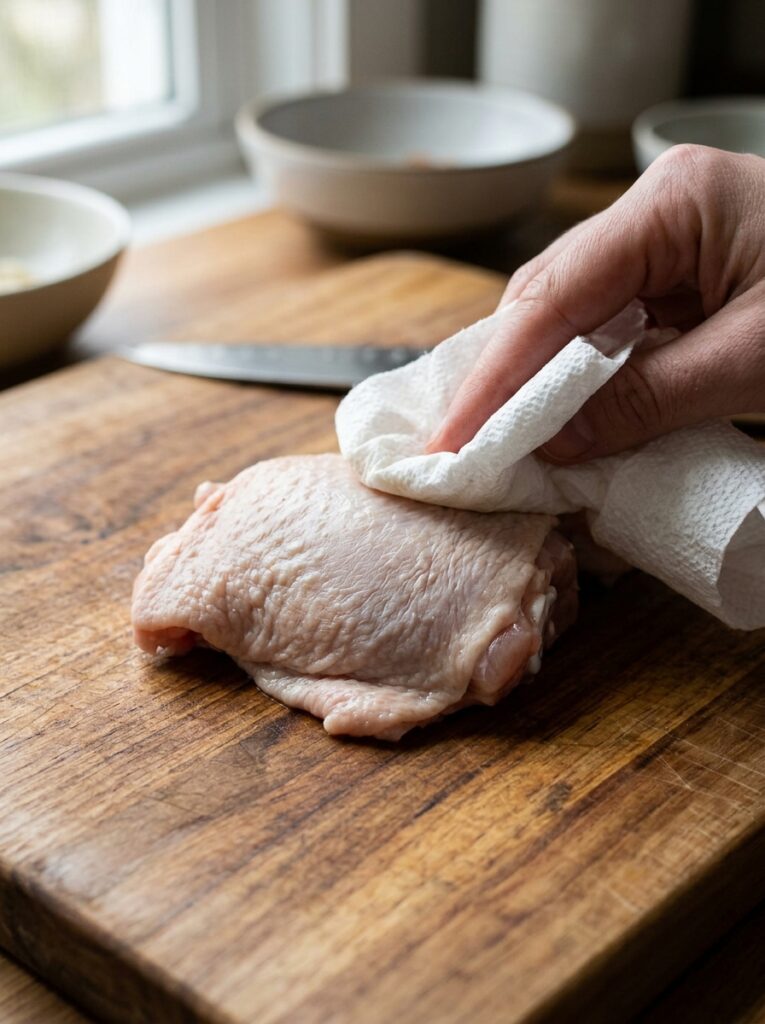
Pat the chicken dry before it goes on the pan.
That’s it. That’s the step.
Moisture on the surface of the chicken steams it instead of roasting it. You’re fighting the browning the whole time. A few seconds with a piece of kitchen roll (or paper towel if you’re American) makes an enormous difference to the final texture of the skin.
After you dry it, coat it in your marinade. And then let it sit at room temperature for at least 15 minutes before the oven. Cold chicken straight from the fridge goes into temperature shock in a hot oven and you can end up with unevenly cooked meat — pink near the bone while the outside is done.
—
7. A Full Recipe That Actually Works: Lemon Herb Chicken With Sweet Potato and Broccoli
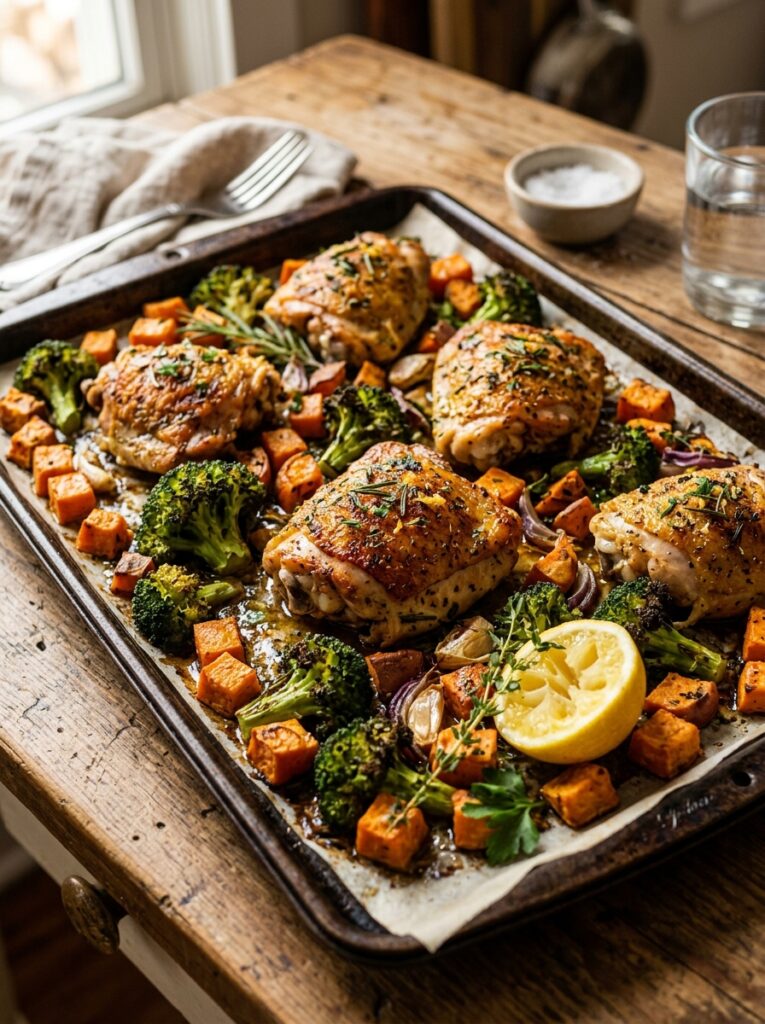
Here’s a real one. Not scaled-down, not oversimplified. This feeds four people and takes maybe 40 minutes start to finish.
You’ll need: 4 bone-in, skin-on chicken thighs 2 medium sweet potatoes, cut into ¾-inch cubes 1 large head of broccoli, broken into florets 1 red onion, cut into wedges 3 tablespoons olive oil Juice of 1 lemon + the zest 4 garlic cloves, minced or grated 1 teaspoon smoked paprika 1 teaspoon dried oregano Salt and black pepper, lots of it
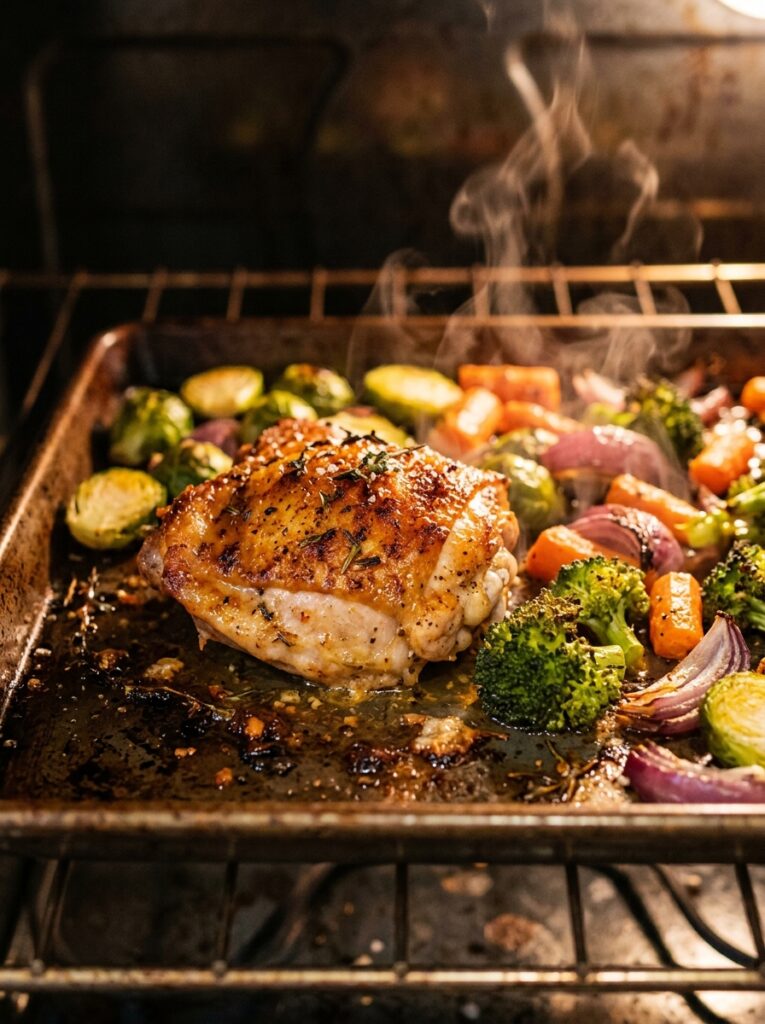
Preheat oven to 425°F / 220°C. Put your sheet pan in while the oven heats. Pat chicken dry, rub with half the olive oil, all the garlic, lemon zest, paprika, oregano, generous salt and pepper. Toss sweet potato with remaining olive oil and season well. Pull the hot pan out, lay chicken skin-side down first (yes, really — for even cooking), surround with sweet potato. Roast 20 minutes. Flip chicken. Add broccoli and onion wedges. Roast another 15-18 minutes until chicken skin is deeply golden and a thermometer reads 165°F (74°C) in the thickest part. Squeeze lemon juice over everything before serving.
Done. One pan. Genuinely delicious.
—
8. The Spice Combination That Makes Sheet Pan Chicken Feel Restaurant-Level
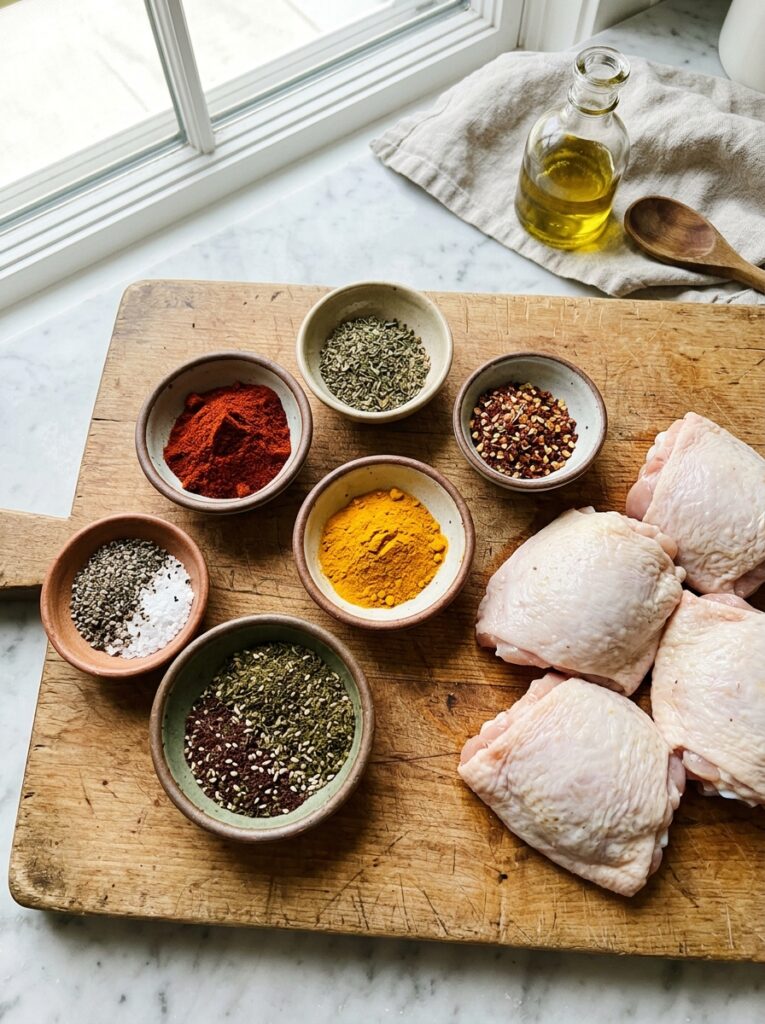
Smoked paprika is doing a LOT of heavy lifting in weeknight cooking and I don’t think it gets enough credit. It adds this deep, slightly smoky warmth without being spicy, and it’s the reason food that cost £3 to make tastes like something from a proper kitchen.
Pair it with cumin and you get something almost Moroccan-feeling. Pair it with garlic powder and dried thyme and you get something very French-adjacent. Pair it with turmeric and a pinch of cinnamon and you’re somewhere between a tagine and a roast and honestly it’s better than either.
Other underrated combinations worth trying:
- Za’atar + lemon + olive oil — bright, herby, Middle Eastern-inspired, genuinely one of the best
- Harissa + honey — spicy-sweet glaze that caramelizes beautifully
- Miso paste + rice vinegar + sesame oil — umami overload in the best possible way
- Dijon + maple syrup + apple cider vinegar — sticky, tangy, basically perfect
—
9. Making It Genuinely Healthy Without Making It Taste Like You’re Trying to Be Healthy
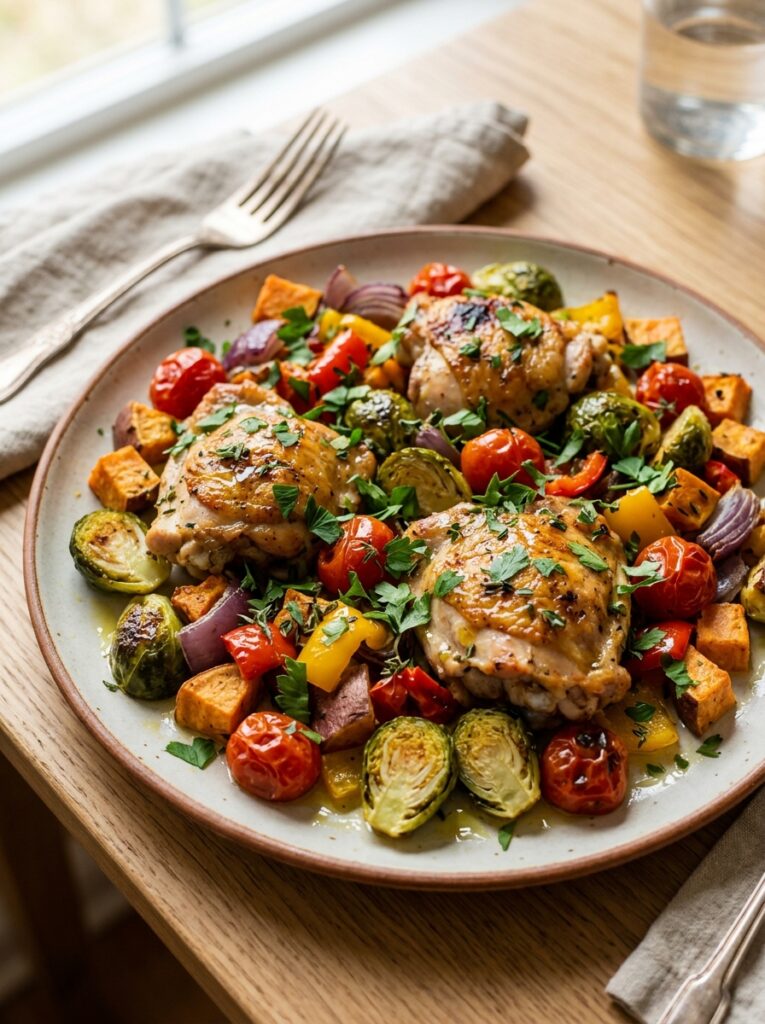
I kind of hate how the word “healthy” has come to mean “joyless” in cooking discourse. A healthy sheet pan dinner doesn’t mean no oil, no salt, no satisfaction. It means mostly vegetables, a good lean-ish protein, whole ingredients, and nothing processed.
Chicken thighs are higher in fat than breast, yes. But they’re also higher in iron, zinc, and they’re more satiating — meaning you eat less because you feel full. The olive oil on the vegetables? Your body needs fat to absorb the fat-soluble vitamins in those vegetables. You’re not doing yourself any favors by dry-roasting broccoli.
Real healthy cooking is seasoning things properly so you actually want to eat the vegetables. It’s roasting sweet potatoes until they’re caramelized so they feel like a treat. It’s adding fresh herbs at the end so there’s brightness and life in every bite.
“A healthy dinner that you don’t want to eat isn’t healthy. It’s just sad food you feel virtuous about not finishing.”
—
10. How to Make One Pan Feed Two Nights Without Eating the Same Thing Twice
This is actually my favorite meal-planning trick and I’m weirdly proud of it.
Night one: sheet pan chicken as written. Serve with rice or crusty bread.
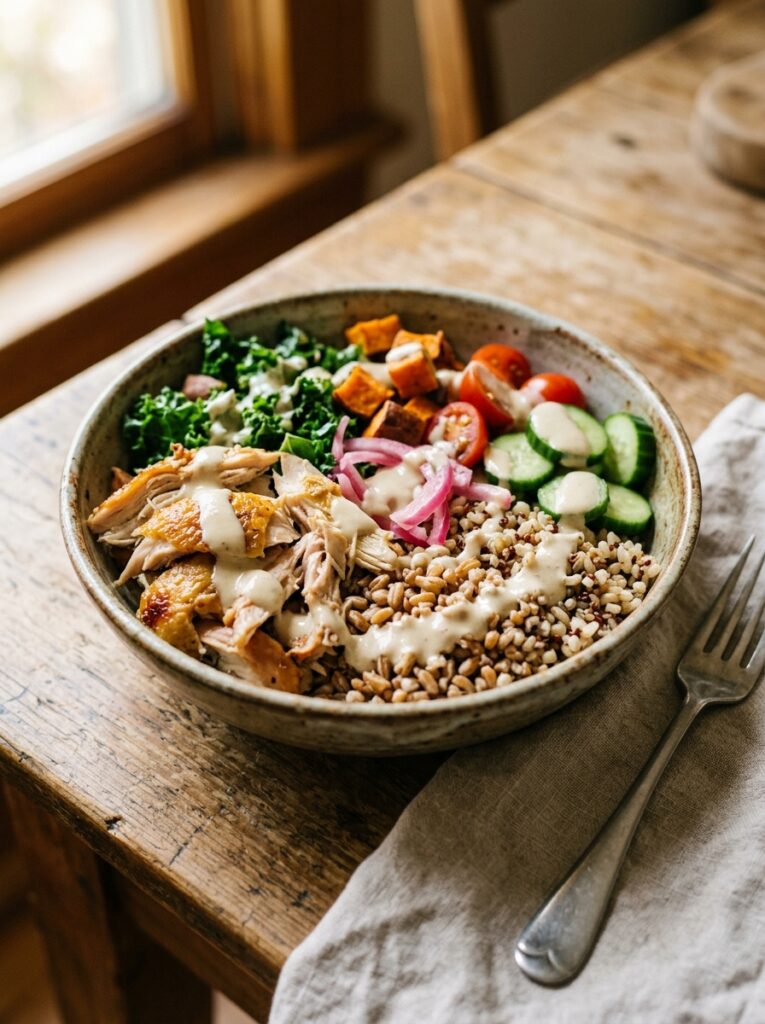
Night two: pull the leftover chicken off the bone, warm it with whatever vegetables survived (or whatever new ones you have), and turn it into something completely different. A quick grain bowl with a tahini dressing tastes nothing like last night’s roast. Stuff it into a flatbread with yogurt and pickled cucumber and it’s basically a different meal. Or toss it with pasta, a spoonful of harissa, and some spinach and no one will know.
The trick is the sauce. Change the sauce, change the entire experience of the leftovers.
—
11. The Annoying Mistakes That Even Good Cooks Make
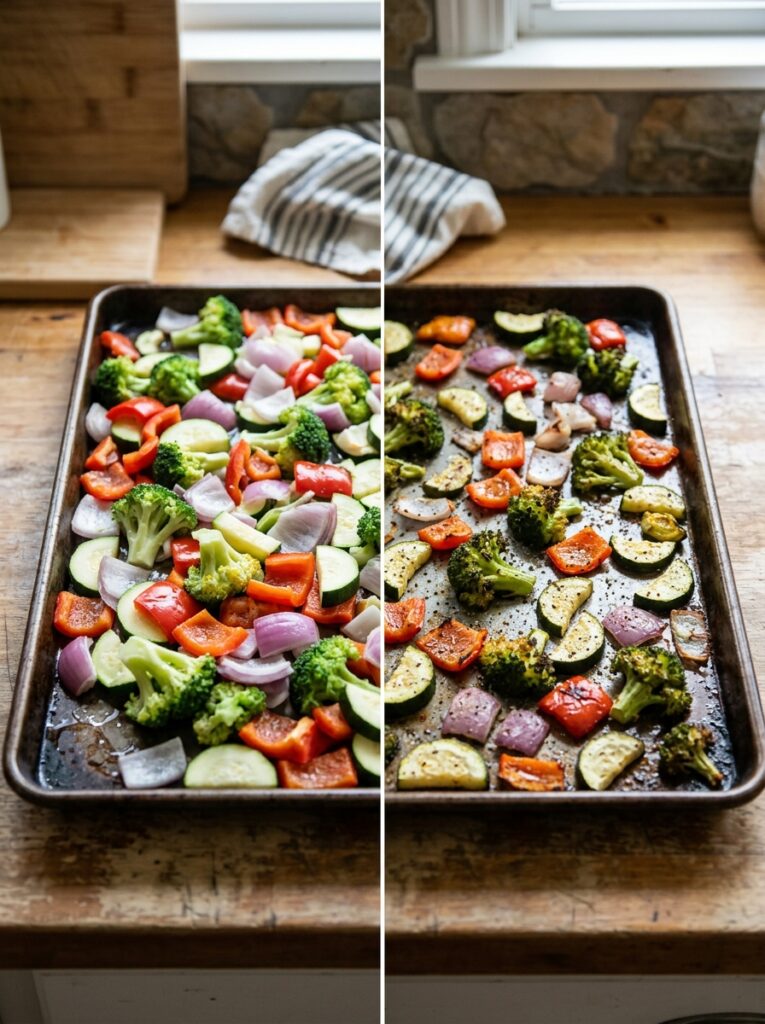
Crowding the pan. This is the most common one and it ruins everything. When vegetables are piled on top of each other, they steam. You need space for air to circulate around each piece — every surface needs to be able to breathe. If you’re feeding more than two people, use two pans. Honestly, just use two pans.
Not accounting for different cooking times. Sweet potato takes longer than broccoli. Chicken takes longer than asparagus. If everything goes on the pan at the same time, something will be overcooked. Stagger your additions — denser veg first, delicate veg last 10-12 minutes.
Forgetting to finish with something fresh. A squeeze of lemon, some fresh parsley, a scattering of fresh herbs, maybe a spoonful of Greek yogurt on the side — it lifts the whole thing. Roasted food can taste heavy without that brightness.
—
12. The Storage and Reheating Truth (Because Nobody Talks About This Enough)
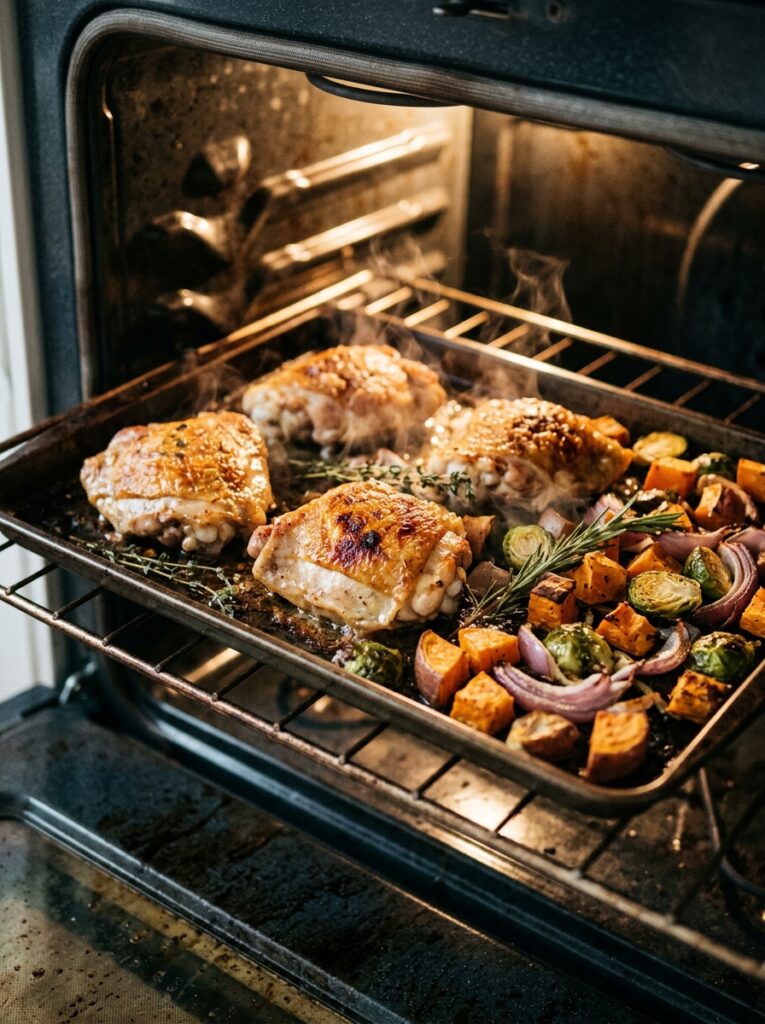
Sheet pan chicken keeps in the fridge for three days. But — and this matters — reheat it right or the skin goes rubbery and the vegetables go grey and sad.
Do NOT use the microwave for the chicken if you can avoid it. Put the leftovers back in a 375°F / 190°C oven for 12-15 minutes. The skin crisps back up, the vegetables warm through without totally collapsing, and it tastes like you just made it. The microwave will give you something warm and technically edible but you deserve better than that.
If you’re in a hurry — okay, fine, microwave the vegetables, pan-fry the chicken in a dry non-stick pan for a few minutes to restore some of that crust. Two pans versus one, but you get your texture back.
—
❓ FAQ
Q: Can I use chicken breasts instead of thighs for a sheet pan dinner? A: You can, but you’ll need to adjust the time and temperature. Boneless chicken breast cooks faster — usually 22-25 minutes at 425°F — and it’s easy to overcook. If you’re using breast, tent it loosely with foil for the first half of cooking, then uncover to brown. Still works, just needs more attention.
Q: How do I know when the chicken is fully cooked without cutting into it? A: A meat thermometer is genuinely the easiest answer — you’re looking for 165°F (74°C) in the thickest part of the meat, away from the bone. Don’t have one? Press on the thickest part; the juices should run clear, not pink. But honestly, a thermometer is worth the £8 it costs and removes all the guessing.
Q: Can I make sheet pan chicken ahead of time for meal prep? A: Absolutely. Marinate the chicken the night before — it actually improves the flavor. You can also chop and season all the vegetables the night before and keep them in the fridge. Day-of, everything goes straight on the pan and you’ve essentially cut your active time down to five minutes.
—
💭 Final Thoughts
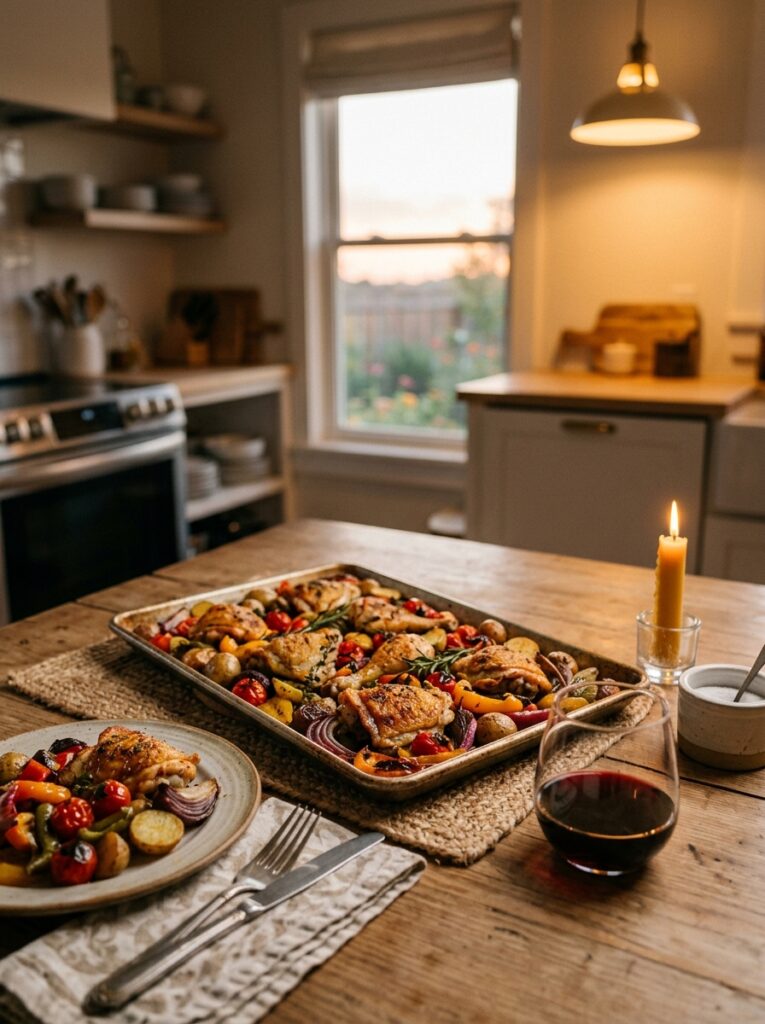
There’s something genuinely satisfying about a dinner where the oven does most of the thinking. One pan, 40 minutes, and you’ve got something that’s colorful and warm and smells like a real meal — not something you threw together because you ran out of ideas on a Tuesday.
The variables are yours to play with. Different spices, different vegetables, different finishing sauces. The formula stays the same. What do you think you’d throw on the pan first?