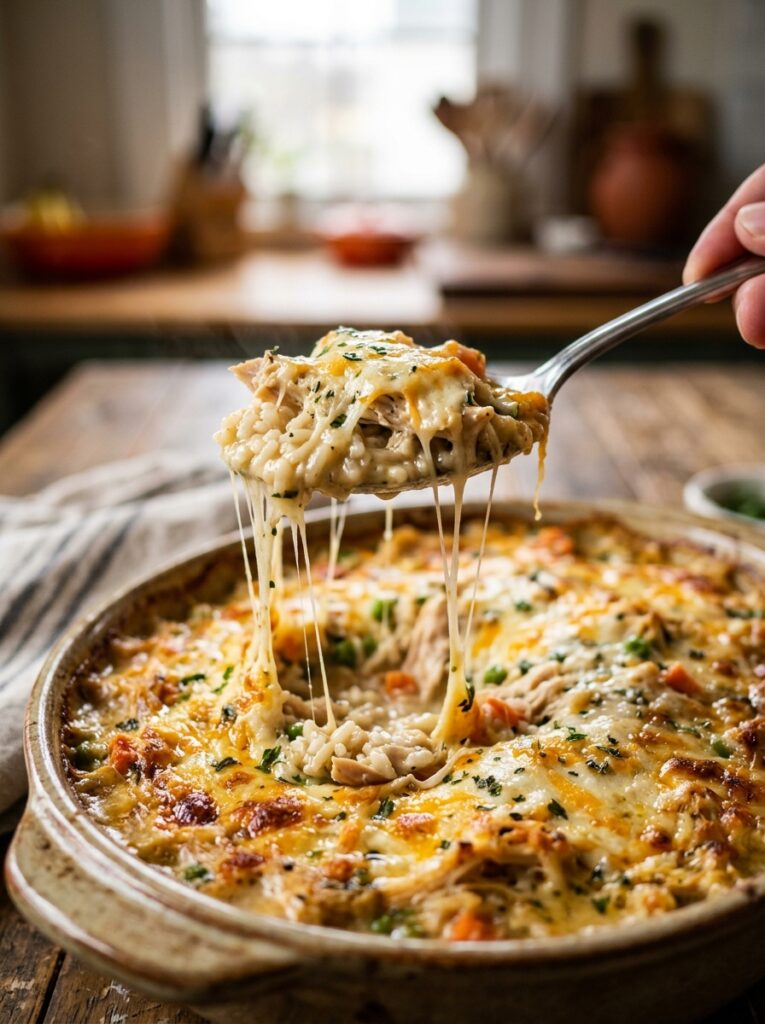
My mum made this on Thursdays. Not a special Thursday — just a regular one. Cold outside, nothing exciting on the schedule, and somehow that dish came out of the oven smelling like the entire house had been hugged. I’ve been chasing that feeling ever since.
This isn’t a fancy recipe post. It’s a real one.
—
1. Why Baked Casseroles Hit Different Than Stovetop Rice Dishes
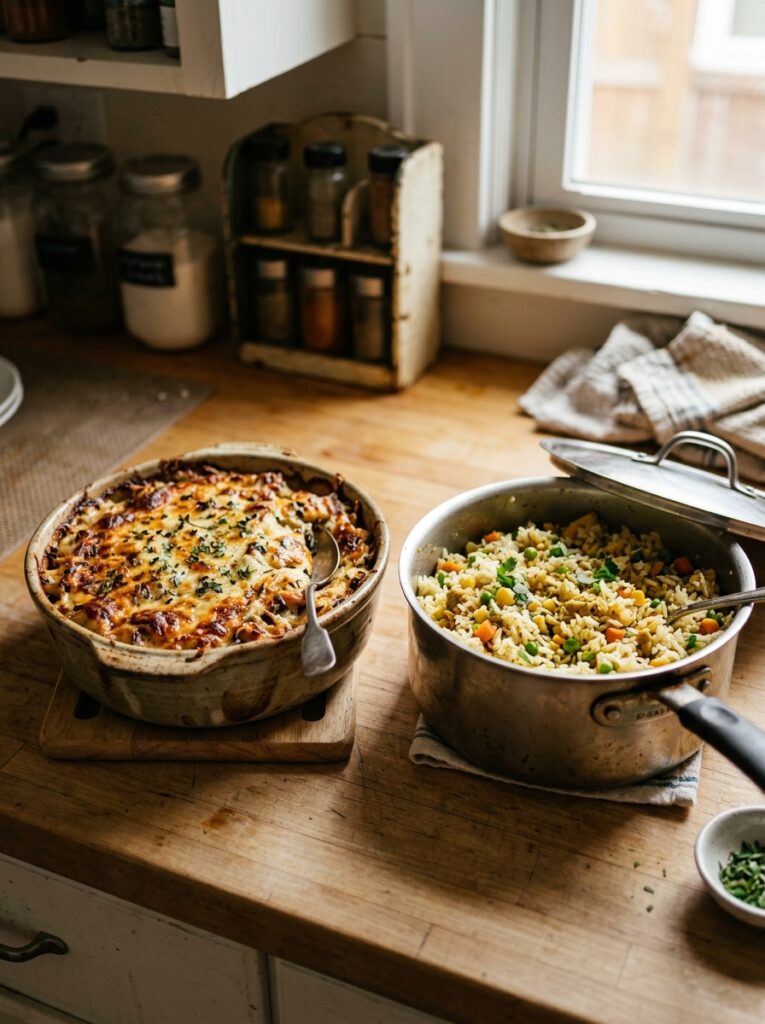
There’s a science to what happens when chicken and rice cook together in a closed dish at 375°F. The steam can’t escape. The starch from the rice thickens the surrounding liquid, the fat from the chicken thighs drips down and flavors every grain, and by the time you pull it out, the whole thing has kind of… become one thing. Not chicken served with rice. ONE thing.
Stovetop versions are fine. They get the job done. But they don’t do THAT.
The other part? The top. That slightly crispy, golden layer of rice at the edges where the dish meets the heat directly — that’s not a side effect, that’s the whole point. You know exactly what I’m talking about.
So yeah, this is the method that matters, and once you get comfortable with it, you’re not going back.
—
2. The Cut of Chicken That Makes or Breaks the Whole Dish
I’ll just say it: boneless, skinless chicken breasts are the wrong choice here.
Not always — in other contexts, totally fine. But in a baked casserole that needs to stay in the oven for an hour? Breasts dry out. They turn chalky around the 45-minute mark and no amount of sauce covers that up.
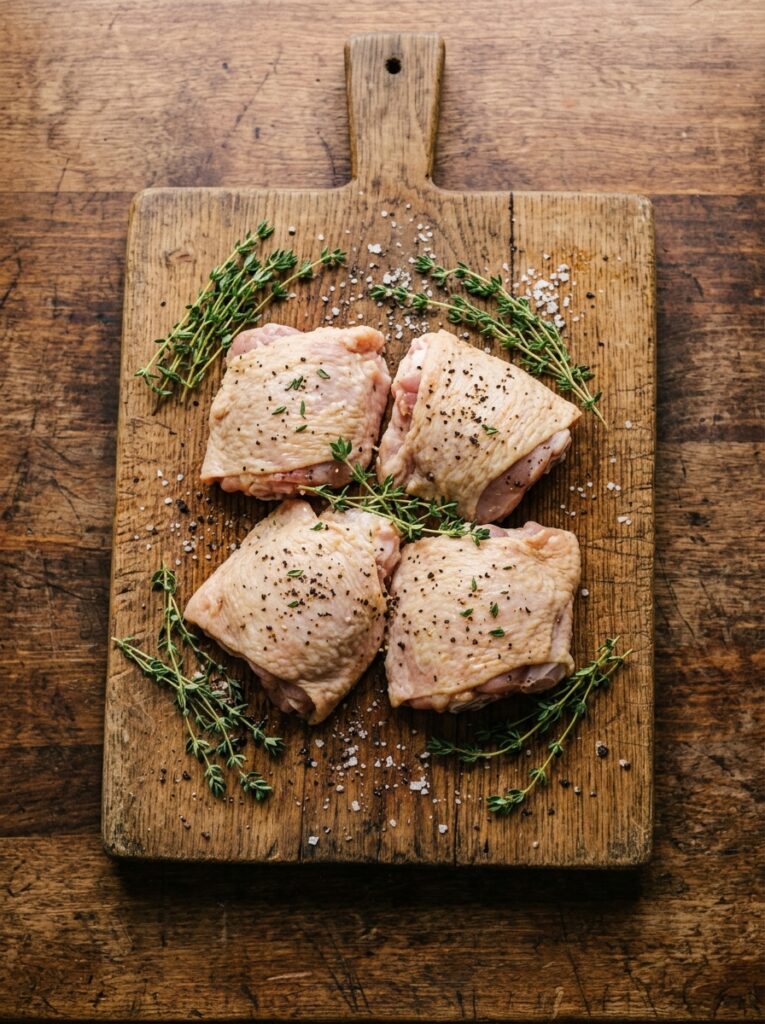
Bone-in thighs are what you want. Or boneless thighs if you’d rather skip the fuss. The fat content keeps the meat moist, it shreds beautifully, and — crucially — the flavor it releases into the rice is just incomparable. I’ve tested this so many times I genuinely lost count. Thighs win every single time.
“The fat from the thighs doesn’t just keep the chicken moist — it seasons every grain of rice underneath it without you having to do a thing.”
If you’re in the UK and working with supermarket packs of mixed pieces — legs and thighs together — those work brilliantly too. Just adjust the cooking time slightly upward.
—
3. The Liquid Ratio That Nobody Talks About Enough
Here’s where most homemade casserole recipes quietly fail. The rice-to-liquid ratio.
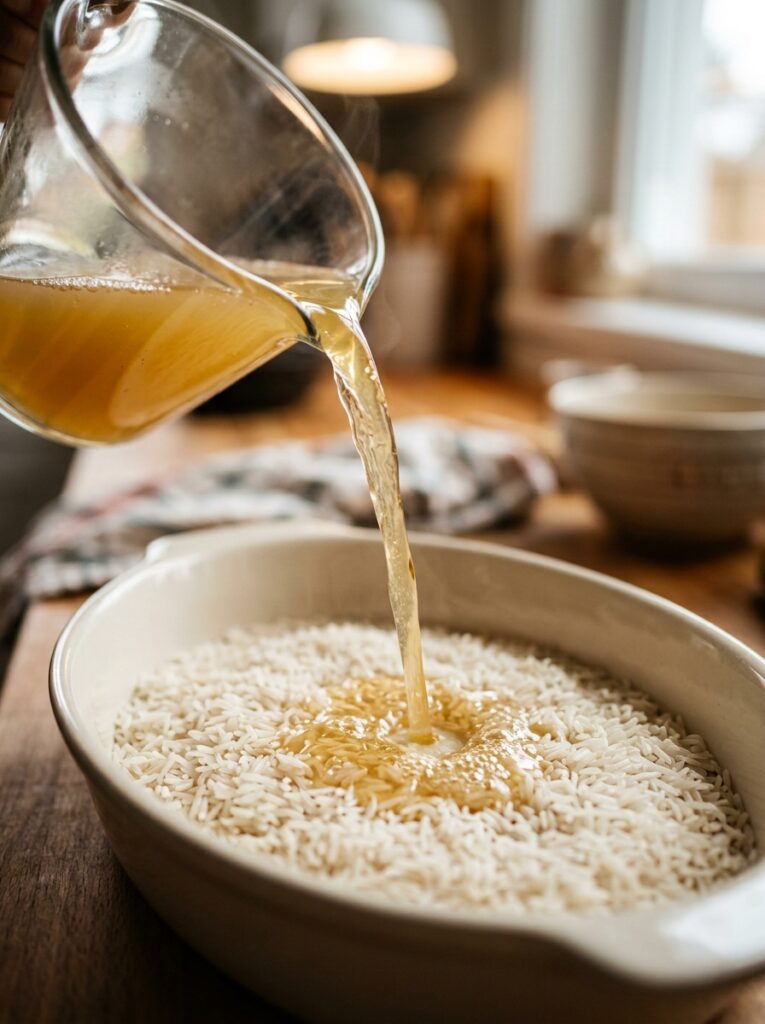
Long-grain white rice needs roughly a 1:2 ratio (1 cup rice to 2 cups liquid) on the stovetop. But in the oven, you lose less steam, so you can back off just a little — around 1¾ cups liquid per cup of uncooked rice is the sweet spot for most standard covered casseroles.
But here’s the thing. That ratio changes depending on what your liquid actually IS. Using a thin broth? Stick with 1¾. Adding cream of mushroom soup? That’s much thicker, it doesn’t absorb the same way, so you’ll want to thin it with extra broth or water — about half and half.
And please, please, please cover the dish tightly. With foil if your casserole dish doesn’t have a lid. If steam escapes, your rice will be hard and your chicken will be dry and you’ll think the recipe is broken when really the foil just wasn’t snug.
One layer of foil is fine. Two layers means you REALLY don’t trust your oven, which — honestly, fair.
—
4. The Seasoning Moment Most Home Cooks Skip
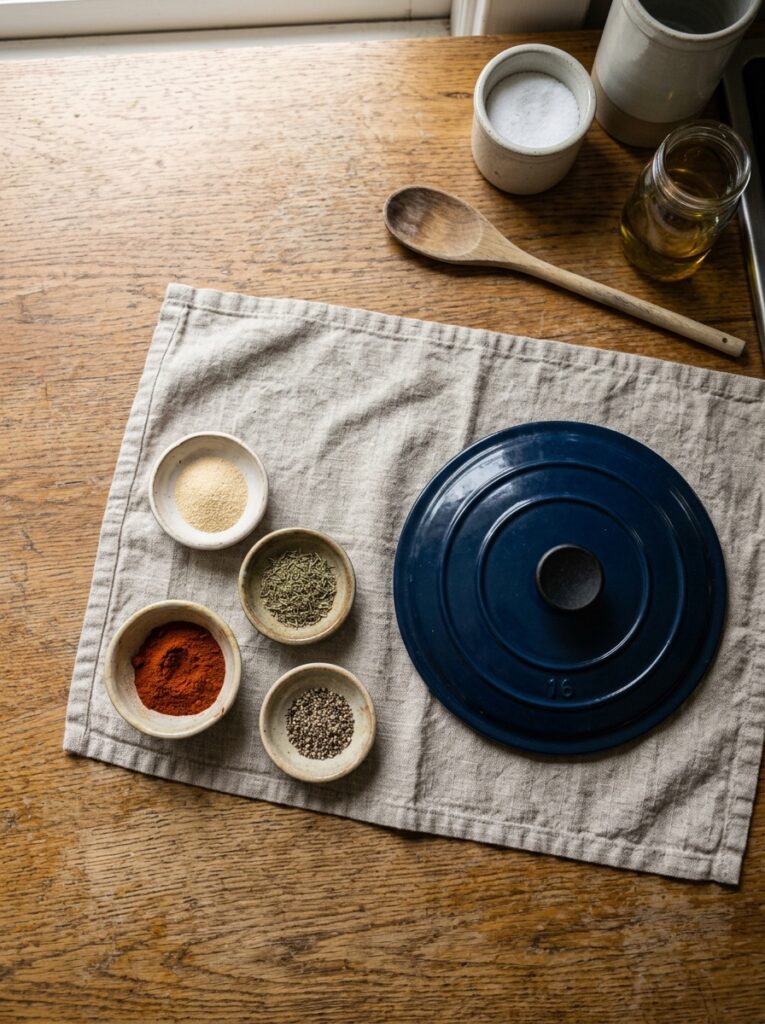
People season the chicken. They season the top of the casserole. What they don’t do is season the rice.
Dry, uncooked rice absorbs seasoning like a sponge. If you stir garlic powder, onion powder, a pinch of smoked paprika, salt, and black pepper right into the dry rice before anything else goes in the dish — that seasoning ends up distributed through every single bite.
Do it anyway. It takes thirty extra seconds and it makes a real difference.
Side note — smoked paprika is the sleeper ingredient in this whole thing. Not hot paprika, not sweet paprika specifically, but smoked. It gives this slightly deep, almost campfire undertone that makes people say “what IS that?” and you just shrug like you know something they don’t. Which you do.
—
5. The Version That’s Practically a One-Bowl Prep
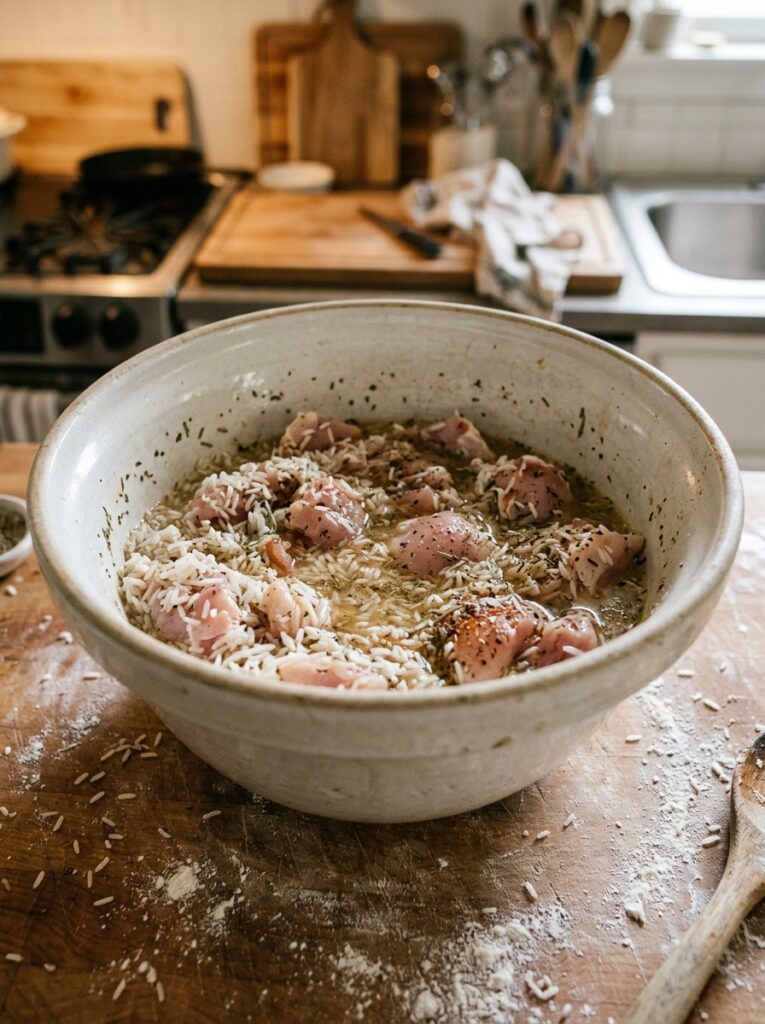
If you want maximum ease with minimum washing up, here’s the approach.
Start with a 9×13 baking dish — ceramic, glass, or cast iron if you have it. Add 1½ cups of long-grain white rice directly into the dish. Season it (see above). Pour in your liquid: I use a mix of chicken broth and one can of cream of chicken soup loosened with about ½ cup of water. Stir.
Then nestle your seasoned chicken thighs — four to six of them — directly on top. Don’t push them down. They sit on the rice, and as they cook, their juices run down into everything underneath.
Cover tight. Oven at 375°F (190°C). Ninety minutes.
That’s it. That’s genuinely it.
The last ten minutes, pull the foil off and let the top brown. Don’t skip this. The contrast between the golden crust and the soft, steaming interior is the whole aesthetic of this dish.
—
6. The Broth Question — And Why Homemade Isn’t Always the Answer
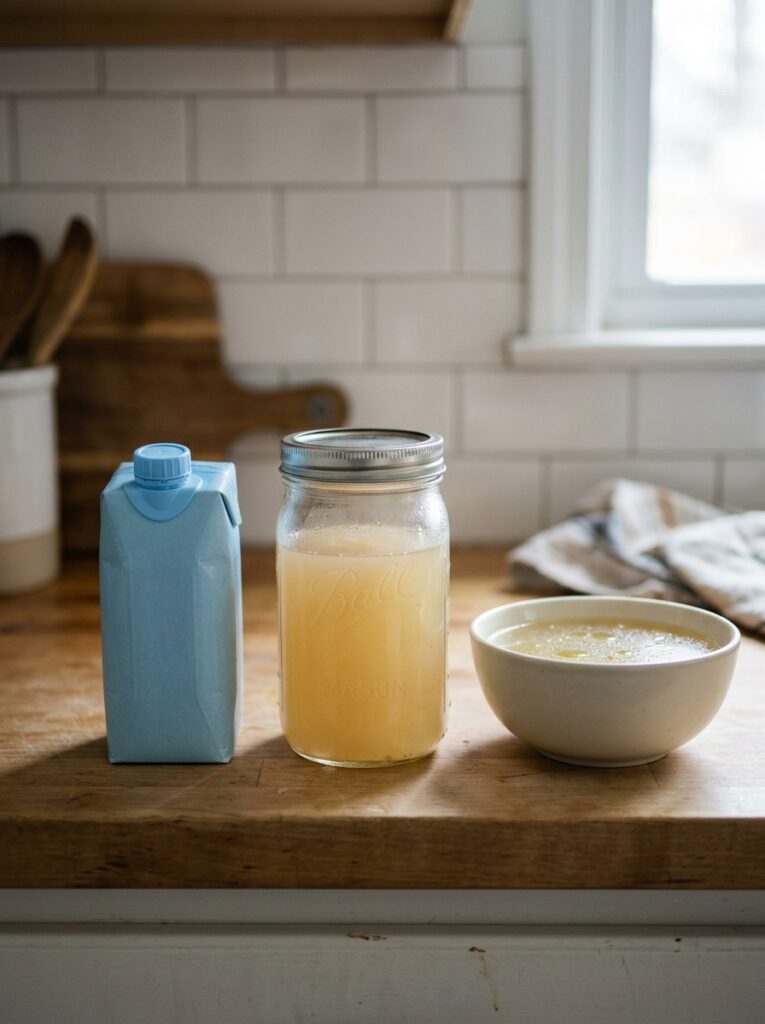
I know what you’re thinking. Homemade stock, right? Sure, if you’ve got it. But honestly? A good-quality store-bought chicken broth works completely fine here, and in some cases it’s more consistent.
The casserole is doing the heavy lifting. The oven time, the chicken fat, the layered seasoning — those are what create depth. The broth is the carrier, not the star.
What I’d AVOID is the low-sodium kind. It often tastes flat in a baked dish where everything is concentrated. Use regular-sodium broth and just adjust what you add on top of it, rather than starting from a tasteless base and trying to fix it later.
“Starting with flat liquid is like starting a painting on grey canvas — you can get there, but you’re working against yourself from the jump.”
UK cooks: chicken stock cubes dissolved in hot water work great. Just make sure they’re fully dissolved before they go in the dish, or you’ll get weirdly salty patches.
—
7. Vegetables That Actually Survive the Oven Without Turning to Mush
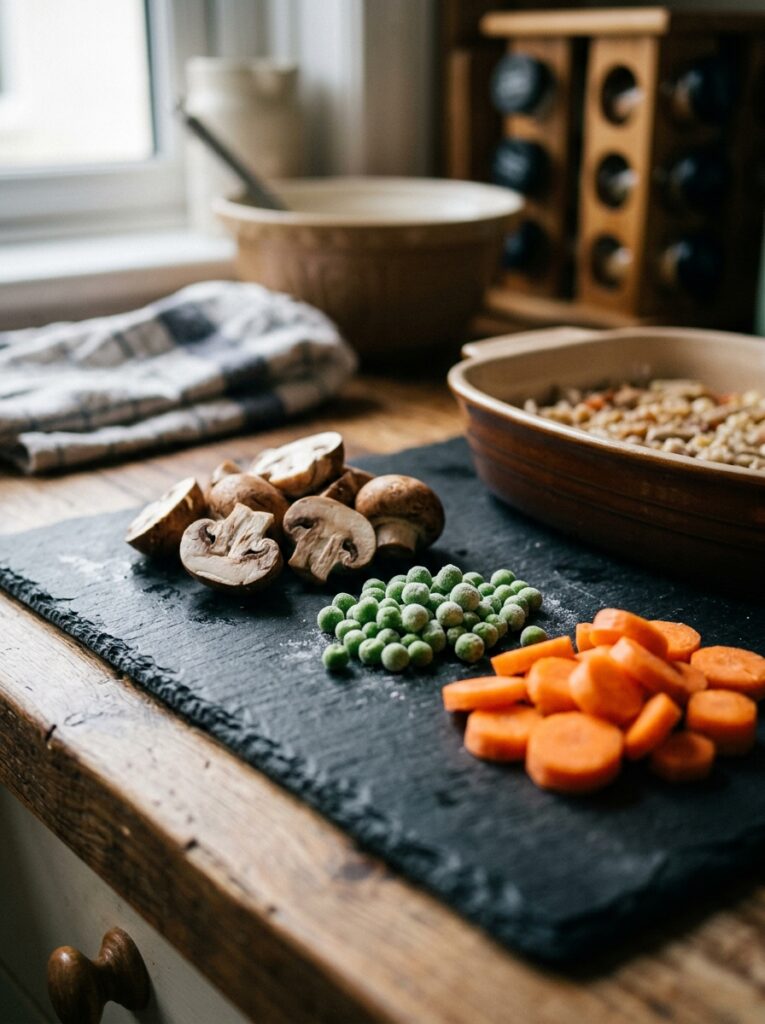
Not all vegetables belong in a casserole, and that’s just the truth.
Zucchini? Gone by the time the chicken’s cooked. Same with spinach unless you add it in the last ten minutes. Cherry tomatoes go oddly jammy — which some people love, so, up to you.
What WORKS: frozen peas (stirred in during the last fifteen minutes — they heat through without dying), diced onion (added raw at the beginning, they basically melt and sweeten everything), and mushrooms (sliced, added on top before baking, they brown and add earthiness).
Frozen sweetcorn is genuinely underrated in this. It holds its texture, it adds little pops of sweetness, and it makes the whole thing feel a bit more substantial without any extra effort.
And if you want to sneak in some greens — baby spinach stirred in right when you pull the foil off, with the residual heat wilting it slowly — that’s actually lovely. It doesn’t cook to oblivion, it just softens.
—
8. The Cheese Layer Debate (I Have Opinions)
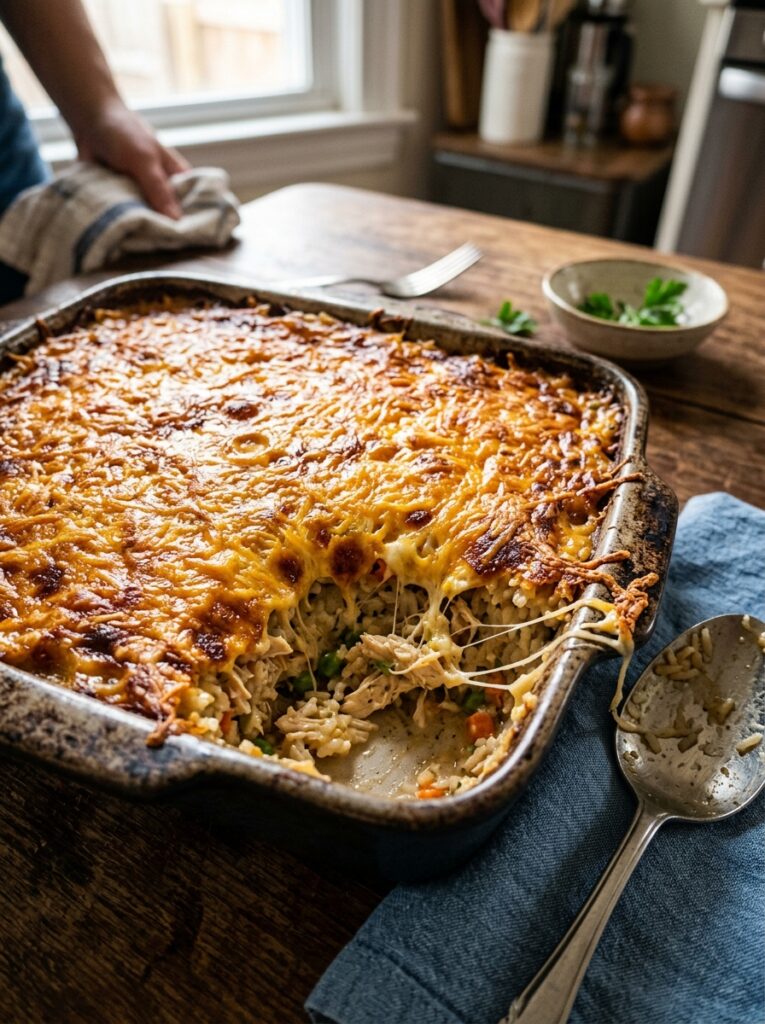
Some people add cheese on top. Others think it ruins the texture of the rice crust.
I say: it depends on when you add it.
If you dump shredded cheese on top at the start? You’ll end up with a weirdly thick, slightly rubbery cheese layer that doesn’t quite integrate. It sits there.
Add it in the last ten minutes — same moment you remove the foil — and it melts just enough to get bubbly and slightly golden at the edges, and it doesn’t swamp the dish. Cheddar works here. Sharp cheddar especially. Or a mix of cheddar and a small amount of something meltier if you want that pull.
But honestly? The no-cheese version is the one I make most often. It’s got this lighter, cleaner finish that makes it feel like a proper meal rather than a casserole you have to sleep off.
Both are valid. I just wanted to be transparent about where I land.
—
9. The Cold Leftover Problem (And Why It’s Actually a Gift)
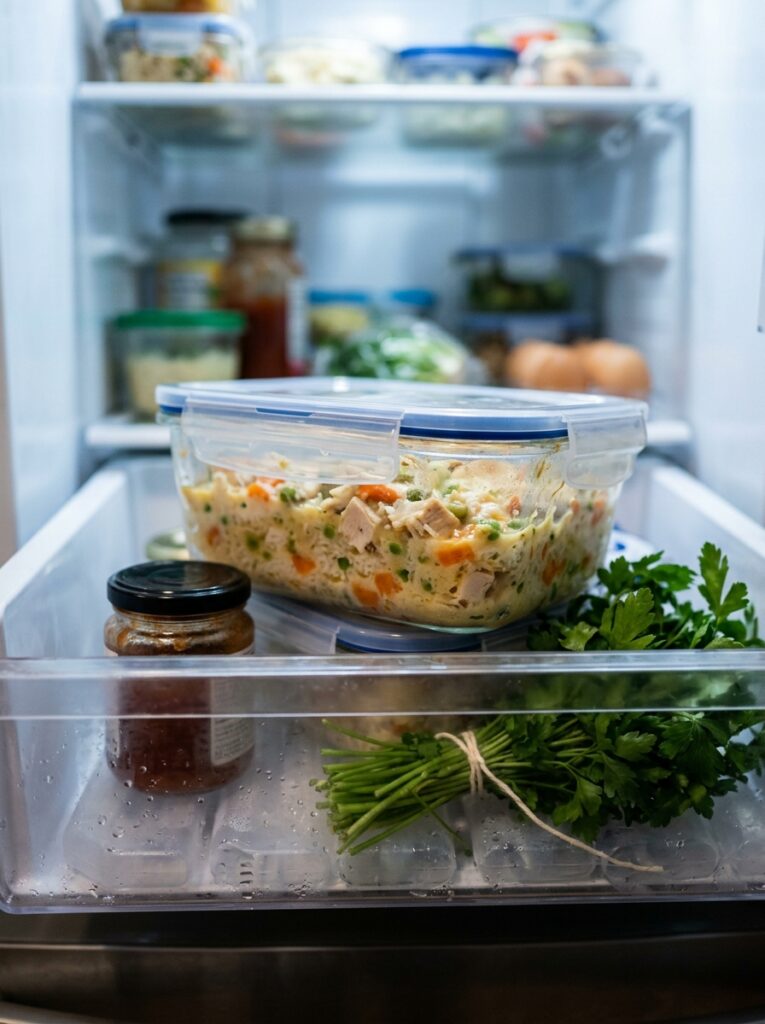
Day-two casserole is better than day-one casserole. I said what I said.
The rice has absorbed everything overnight. The flavors have settled. The texture of the chicken gets even more tender as it sits in its own cooking liquid. You reheat it with a splash of broth in the dish — covered, in a 350°F oven for about twenty minutes — and it comes out tasting like you actually put effort in.
For lunch the next day, I like to scoop it into a bowl and eat it with a fried egg on top. Which sounds weird but is genuinely excellent — the yolk kind of becomes part of the sauce. Don’t knock it until you’ve tried it.
Meal preppers, LISTEN: this dish freezes. Portion it into individual containers, freeze flat, and you’ve got actual dinners waiting for you. Reheat from frozen in the oven at 350°F covered with foil, about forty minutes, splash of broth so it doesn’t dry out.
—
10. The Small Tricks That Separate Good from “Oh Wow”
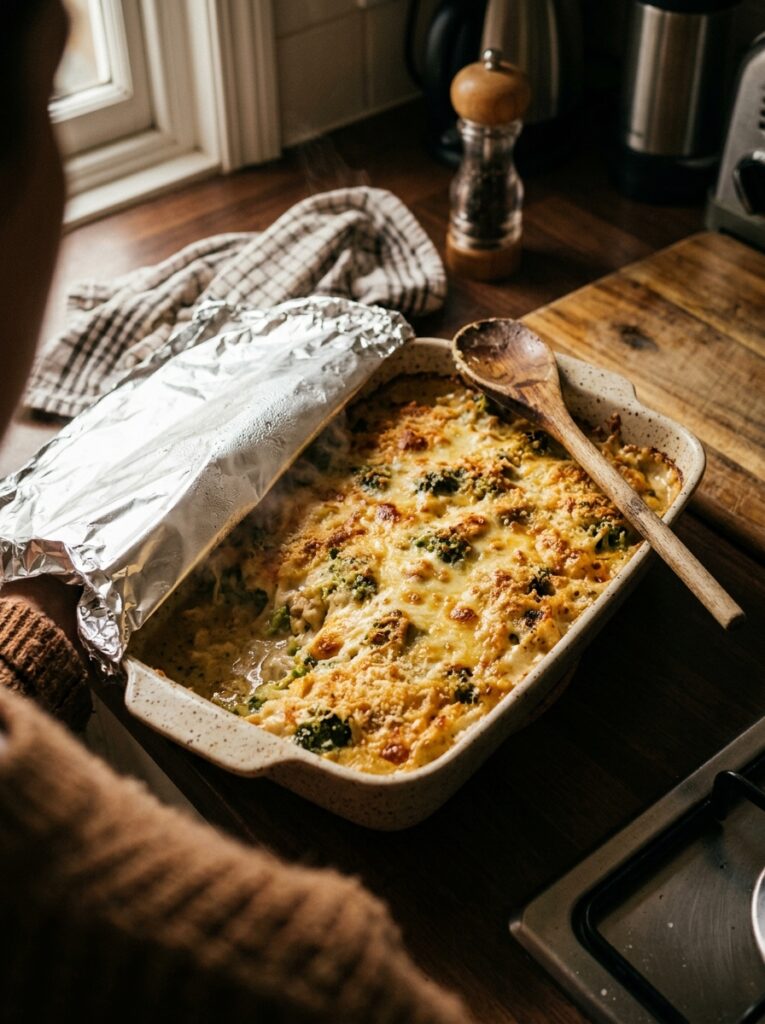
A few things I’ve figured out over years of making this:
- Brown the chicken first. Just three minutes per side in a hot pan before it goes in the oven. You don’t HAVE to, but that extra Maillard crust on the chicken adds a layer of flavor the oven alone can’t replicate. Takes five extra minutes. Worth it.
- Add a bay leaf. Tucked into the rice mixture before baking. Pull it out at the end. It’s subtle, you might not even identify it, but remove it from one batch and you’ll notice something’s slightly missing.
- Let it rest. Ten minutes after it comes out of the oven, covered, before you serve it. This lets everything re-absorb and makes the texture of the rice much better.
- Fresh herbs at the end. Parsley or chives, scattered just before serving. The whole casserole is rich and golden and then there’s this little bright, green contrast. Visually, it’s the detail that makes it Pinterest-worthy.
—
11. The Version Your Kids Will Eat Without Negotiations
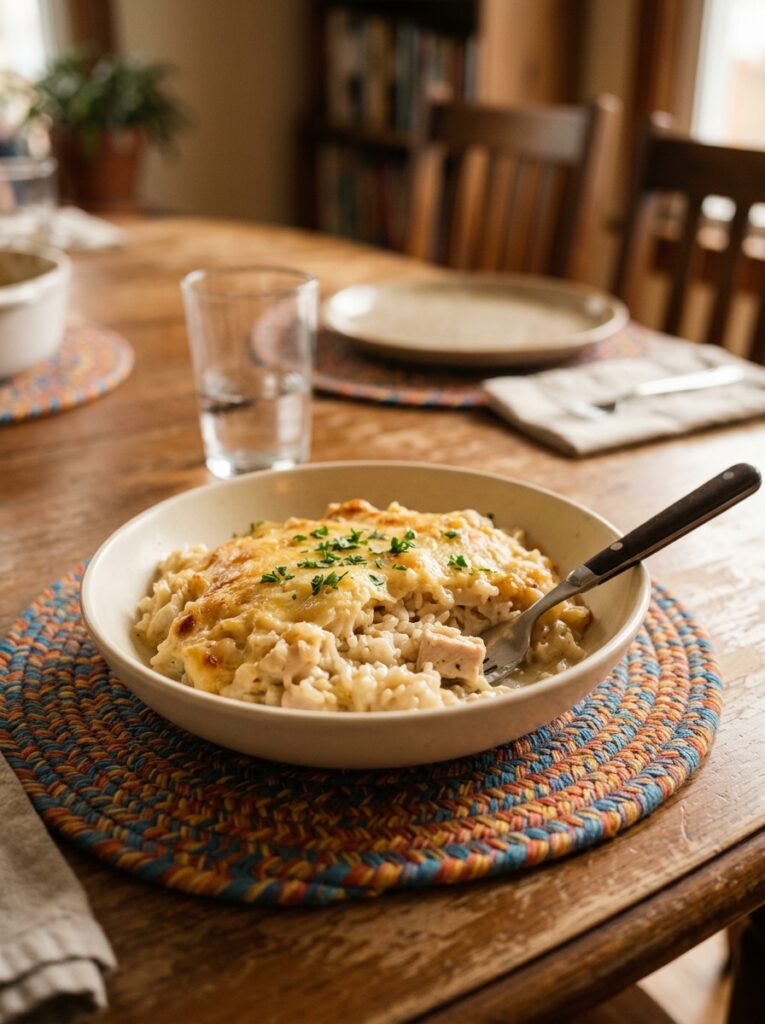
Real talk: make the base recipe, skip the smoked paprika (or halve it), use cream of chicken soup thinned with broth as your liquid, and add frozen peas and sweetcorn.
That’s it. It’s mild, it’s familiar, it smells incredible, and the texture is soft enough that it’s not intimidating. Add cheese on top if that seals the deal.
“The best family dinner isn’t complicated — it’s the one that actually gets eaten, and this one always does.”
We sometimes make this and add mild shredded cheddar and a thin layer of mashed potato over the top instead of leaving it open. Sort of a casserole-meets-cottage-pie thing. It doesn’t have a name, we’ve just always done it, and it genuinely makes everyone at the table unreasonably happy.
—
12. How to Make This Your Signature Dish Without Changing Much
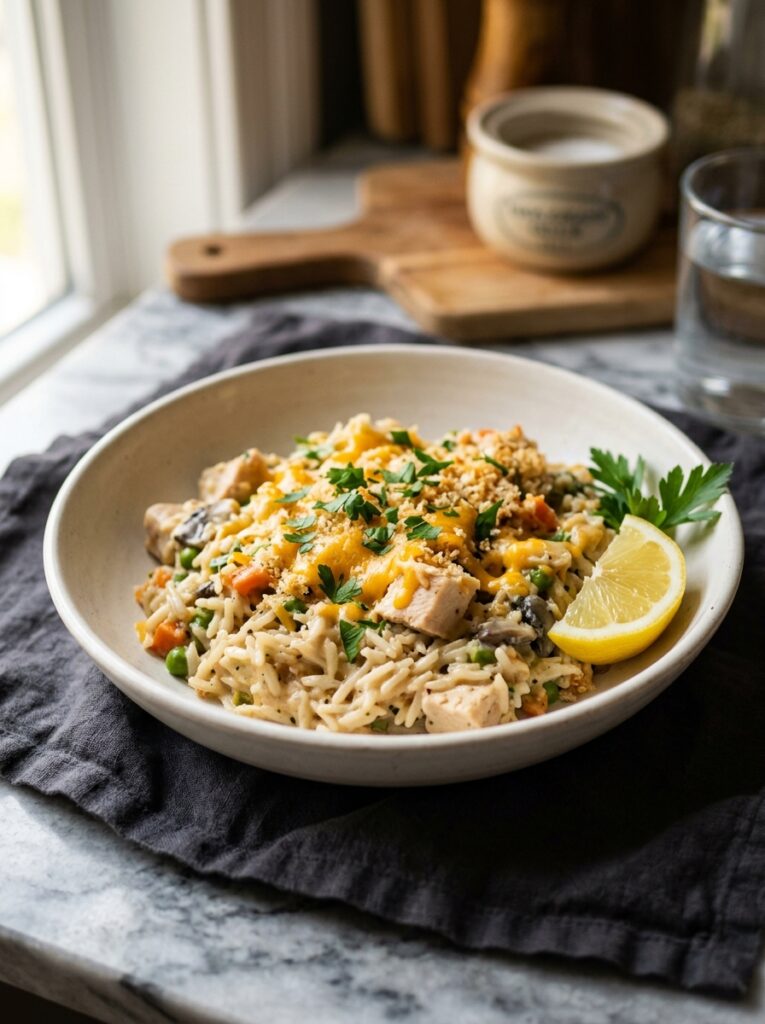
Here’s the thing about casseroles — they’re adaptable in a way that feels almost cheat-code level.
Same base method, different flavors entirely depending on what you put in. Use Mexican-style spices (cumin, chili powder, a tin of green chilis stirred in, black beans, topped with cheese and pickled jalapeños at the end) and it’s a completely different dish. Use Italian herbs, a tin of chopped tomatoes in place of some broth, and olives, and it goes in a totally different direction.
The bones of the recipe — rice-to-liquid ratio, covered baking, bone-in thighs, rest time — they stay exactly the same.
What changes is your flavor world. And that’s what makes this a recipe you come back to every week without getting bored of it. I’ve been making some version of this for years and I’m not even close to running out of variations.
Give yourself permission to mess with it. The method is forgiving. That’s the whole point.
—
❓ FAQ
Q: Can I use instant rice or parboiled rice instead of regular long-grain? A: You can, but you’ll need to adjust the liquid significantly — instant rice needs far less, so drop to about 1 cup of liquid per cup of rice and reduce your baking time to around 45-50 minutes. Parboiled (converted) rice actually works nicely and holds up well without going mushy.
Q: Do I need to pre-cook the rice before adding it to the casserole? A: Nope — that’s the whole beauty of this method. Uncooked rice goes straight into the dish and cooks in the liquid while everything bakes. Starting from raw gives the rice a chance to absorb all that chicken-flavored liquid as it cooks, which you can’t get if it’s already cooked.
Q: How do I know when the casserole is actually done? A: Check that the liquid has been absorbed and the rice is tender (not crunchy) — a fork poked into the center should hit soft grains, not a hard core. The chicken should reach an internal temperature of 165°F (74°C). If the rice needs more time but is getting dry, add a splash of broth, re-cover, and give it another ten minutes.
—
💭 Final Thoughts
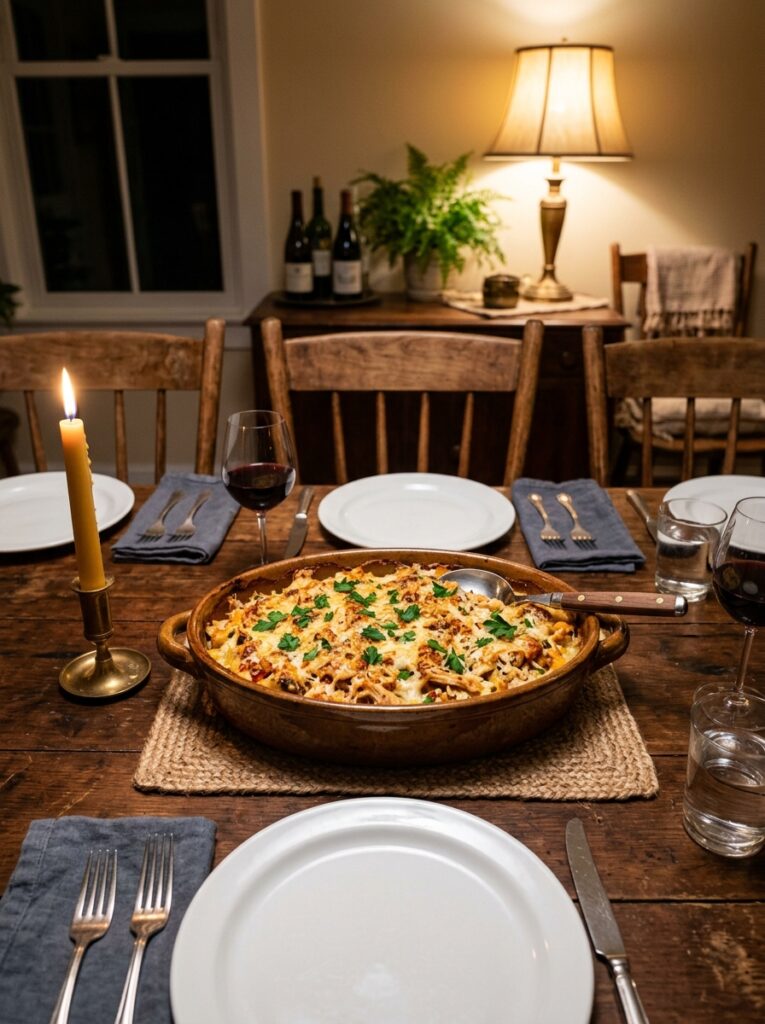
There’s something quietly satisfying about a dish that asks so little of you and gives back so much. You don’t need to stand over it, you don’t need technique, you just need to understand a few small things and trust the oven to do the rest. It’s the kind of dinner that makes a Tuesday feel like you’ve got things together.
Which honestly, sometimes, is the whole point.
What’s the one thing you always add to your chicken and rice that nobody else does?