My friend called me at 4:30pm last week asking what she should make for dinner. She had chicken thighs, a bag of rice, half an onion, and a can of something in the back of the cupboard. I told her: make a casserole. She said she didn’t know how. I told her she absolutely did — she just didn’t know she knew.
That’s basically the whole story of chicken and rice casserole.
—
1. Why This Dish Has Been Feeding Families for Decades (And Why It Still Works)
There’s a reason this casserole has been in every church cookbook, every mum’s handwritten recipe file, every “what do I even make tonight” brain spiral since roughly forever. It works. Not in a trendy, reel-worthy kind of way — in a this will actually get eaten kind of way.
The formula is almost embarrassingly simple. Raw chicken. Uncooked rice. Liquid. Heat. The rice absorbs everything as it bakes — the fat from the chicken, the seasoning you scattered on top, the steam that builds inside the dish — and what comes out is this dense, almost sticky, deeply savory thing that tastes like it took way more effort than it did.
And here’s the part that gets me every time: you don’t stir it. You don’t check on it every ten minutes. You cover it with foil and walk away.
That’s genuinely it.
“You cover it with foil and walk away. That’s genuinely it.”
It’s weeknight food at its most honest, and I’d argue it’s one of the most underrated comfort meals in any home cook’s repertoire — American or British.
—
2. The Rice Question That Trips Almost Everyone Up
Okay so here’s where people go wrong. And I mean a lot of people, including me the first few times I made this.
Long-grain white rice is what you want. Not instant rice, not pre-cooked microwave rice, not risotto rice, and not — please — cauliflower rice unless you’re genuinely trying to change the dish entirely.
Long-grain white rice absorbs liquid slowly and evenly in the oven. It doesn’t turn mushy. It doesn’t clump into a weird paste. It stays individual and fluffy but still takes on all that savory chicken flavor, which is the whole POINT.
Brown rice technically works but it needs more liquid and significantly more time — we’re talking nearly 2 hours at a lower temperature. Doable on a Sunday, not so much on a Tuesday.
Basmati is a lovely substitution if that’s what you’ve got. It adds a faintly floral note and cooks slightly faster, so check at the 45-minute mark. Short-grain can get gummy, which isn’t the end of the world but it’s a different texture entirely.
—
3. The Chicken Thigh Debate (The Answer Is Thighs, It Was Always Thighs)
Chicken breasts will work. I’m not going to pretend they won’t. But thighs? Thighs are genuinely better for this.
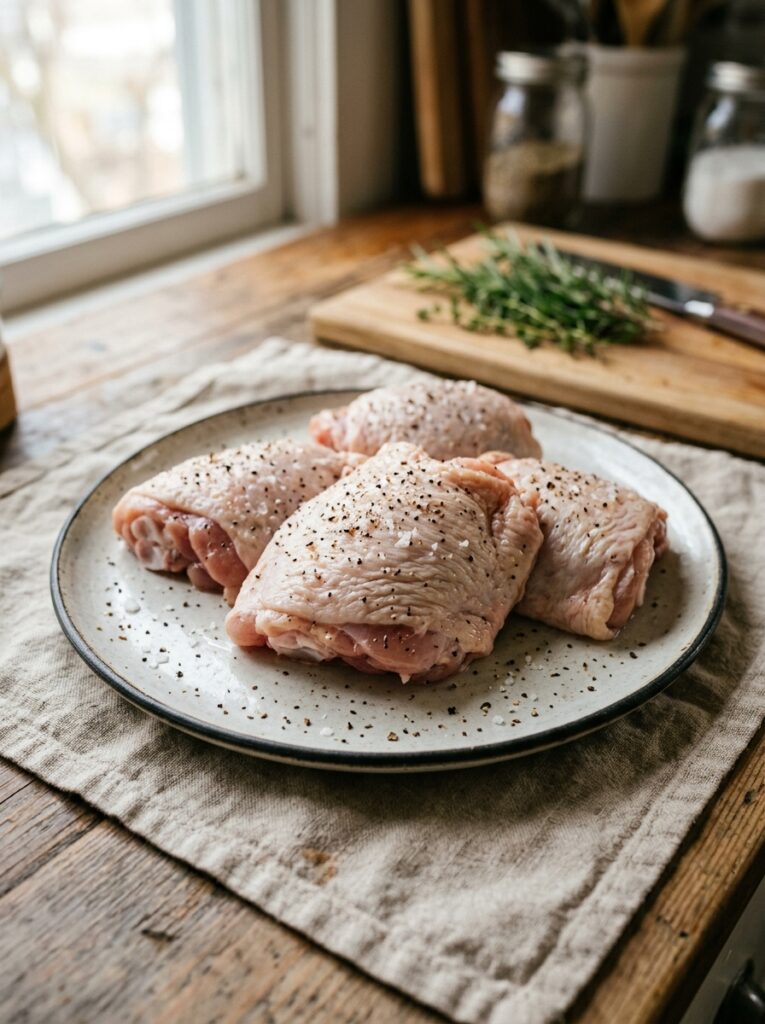
Fat content. That’s the whole argument. Thighs have more fat, which means they stay moist during the long, covered bake. They also release more flavor into the liquid, which the rice then absorbs, which means every bite tastes like chicken — not just the actual chicken bits.
Bone-in, skin-on thighs give you the absolute best result. The skin crisps up if you uncover the dish for the last 10-15 minutes, which adds a texture contrast that feels almost cheffy for something that cost practically nothing to make.
Boneless skinless thighs work too, especially if you’re meal-prepping and want something easy to slice and pack. Just expect slightly less depth of flavor — you can compensate with a bit more stock and an extra pinch of seasoning.
As for chicken breasts, if that’s what you have, cut them in half horizontally so they’re not massive slabs. They’ll still be decent. They just won’t be as good, and that’s the truth of it.
—
4. The Liquid Ratio That Actually Makes This Work
This is the part of the recipe where people either nail it or end up with crunchy rice and an existential crisis at 6:30pm.
The standard ratio: 2 cups of liquid for every 1 cup of uncooked rice.
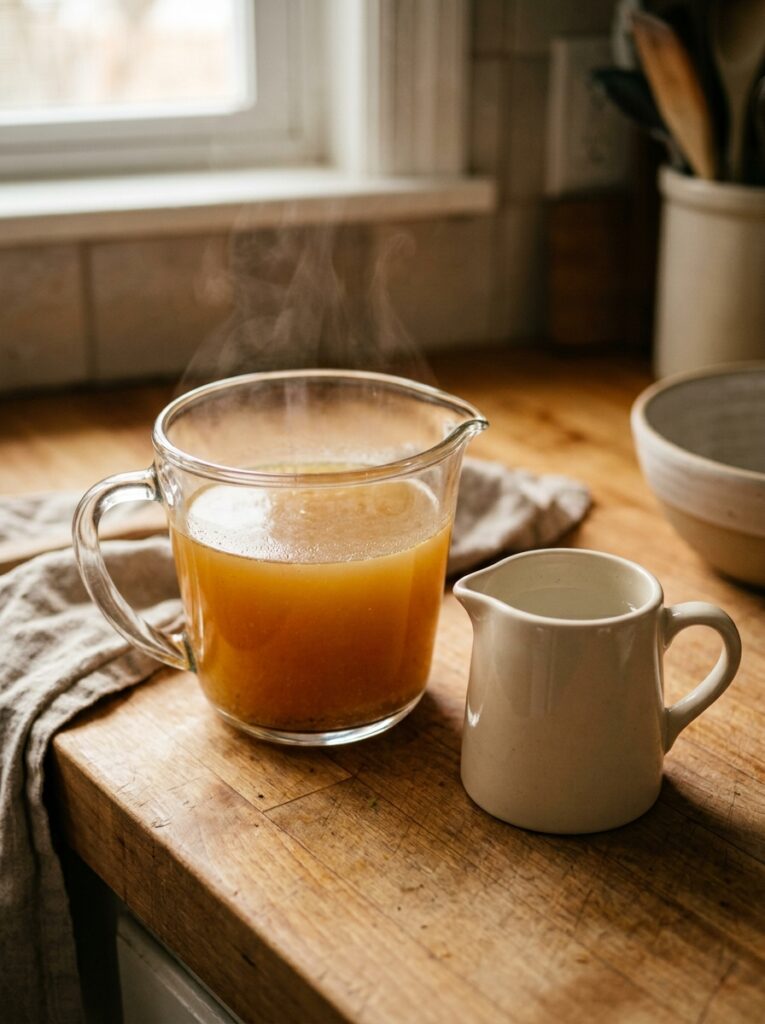
For a standard 9×13 dish using 1.5 cups of rice, that’s 3 cups of liquid. Usually a mix of chicken stock and something creamy — condensed cream of chicken soup is the classic American approach, cream of mushroom works beautifully too. In the UK, you can use a good chicken stock cube dissolved in hot water with a couple of tablespoons of crème fraîche stirred in. Same effect, different route.
Don’t use water alone. You’ll end up with technically cooked rice that tastes of nothing, which is a waste of everyone’s time and the chicken.
“Don’t use water alone. You’ll end up with technically cooked rice that tastes of nothing.”
Some people add a splash of white wine to the liquid base. I think this is a great idea and not at all pretentious for a Tuesday dinner. It adds a quiet brightness that you’d notice if it wasn’t there.
—
5. Seasoning: Don’t Be Timid About This
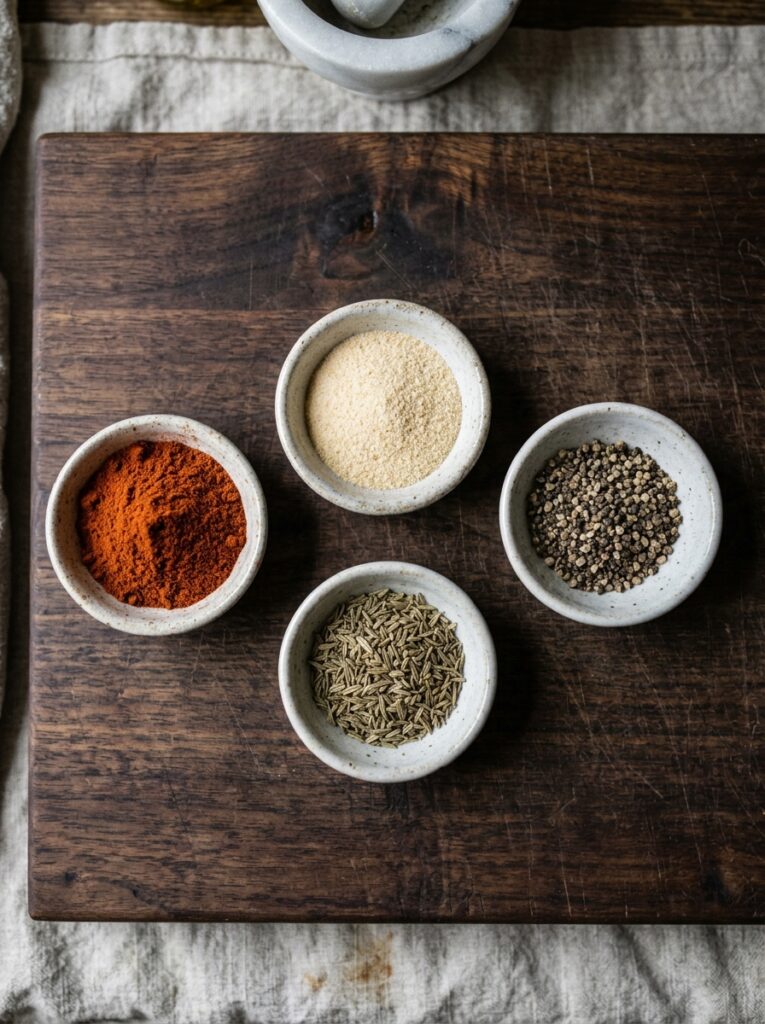
The single most common mistake in any casserole — any of them, ever — is under-seasoning. You’ve got a big dish of starchy, mild ingredients and you cannot season them too lightly.
Salt the chicken properly before it goes in. Don’t just dust it. Really season it.
Garlic powder, onion powder, smoked paprika. That’s a solid base. Add dried thyme or Italian seasoning if you’ve got it. A tiny pinch of cayenne if you want a background warmth. Freshly cracked black pepper — always more than you think.
And then season the liquid too. Taste your stock before you pour it in. If it’s bland, add more. This isn’t the moment for subtlety.
The rice absorbs EVERYTHING, which means it’ll absorb any lack of seasoning just as efficiently as it absorbs the good stuff. Give it something worth absorbing.
—
6. How to Build the Casserole So It Actually Cooks Evenly
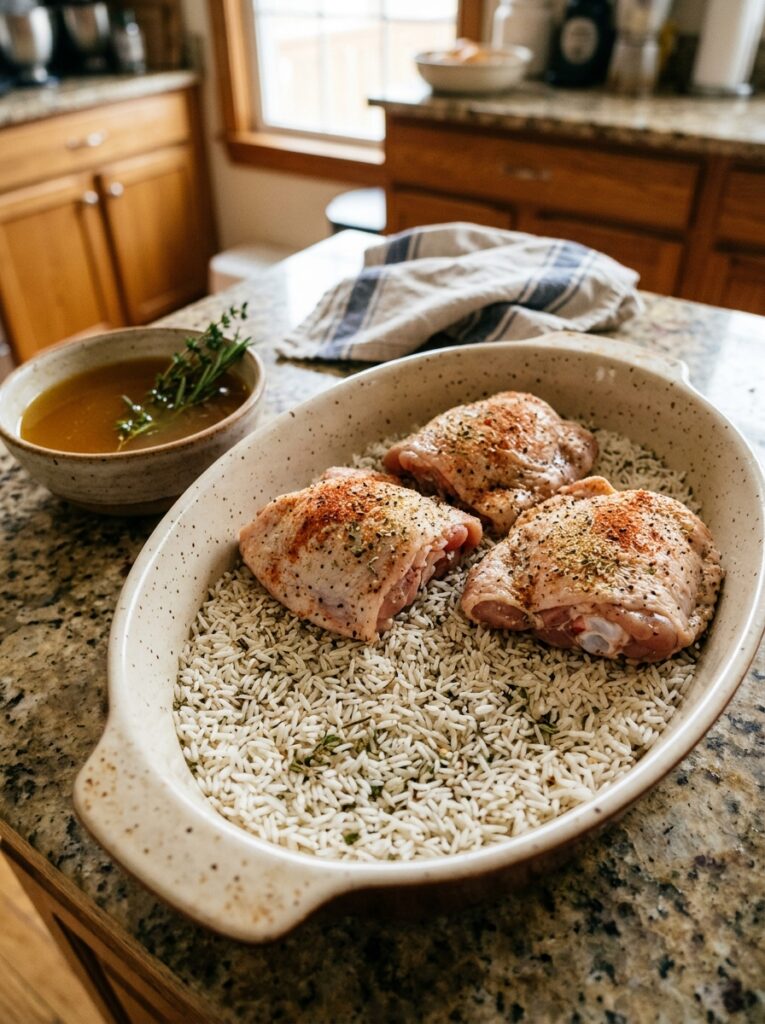
The order you layer things matters more than people realize.
First: grease your baking dish. Even with a liquid base, the edges can catch and stick, especially where the rice gets more exposed.
Then: pour in your liquid mixture first. Stir in any garlic or onion you’re using. The rice goes in next, spread evenly across the bottom — don’t dump it all in one pile.
Chicken pieces on top. Not nestled deep into the rice, just laid on the surface. As the liquid heats and steams, it’ll pull the chicken down slightly while keeping the skin (if using) exposed for crisping later.
Cover tightly with foil. And I mean tightly — any steam that escapes is moisture the rice won’t absorb, and you’ll end up with uneven cooking.
Bake at 375°F / 190°C for about 60-65 minutes, then uncover for that final 10-15 minutes of browning. Let it rest for 5 minutes before you serve it. The rice will firm up slightly as it sits, which is exactly what you want.
—
7. The Vegetables That Actually Belong in This Dish
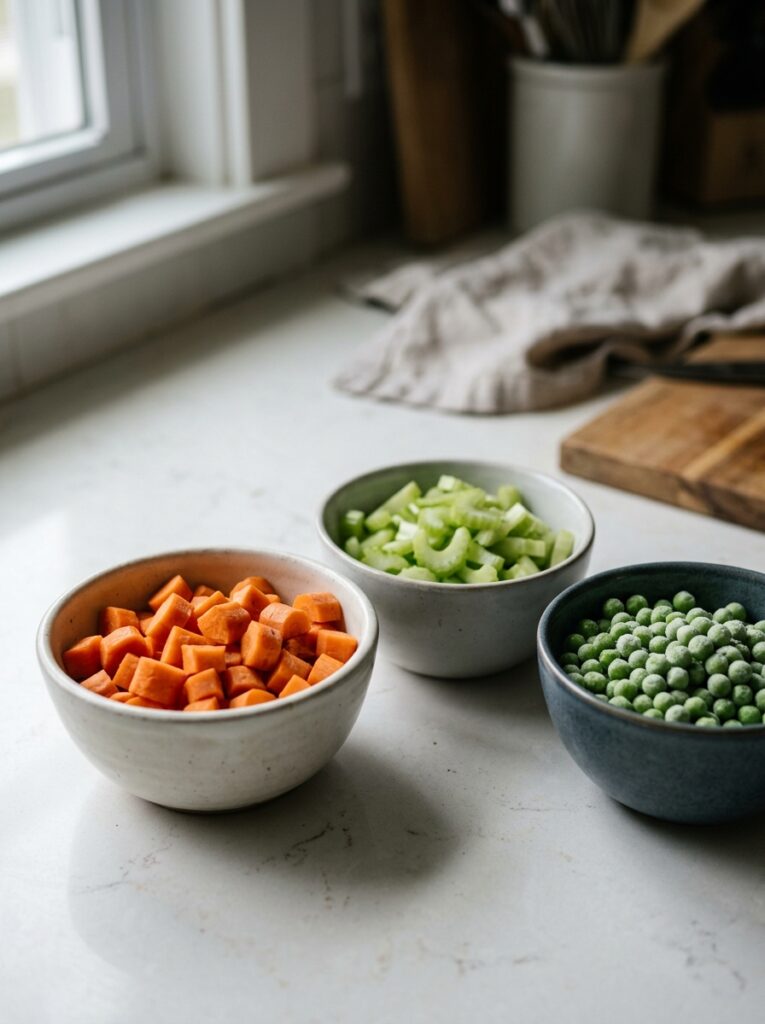
Not everything belongs here. Some vegetables turn to mush, some release too much water, some just taste wrong next to chicken and rice.
What works: diced onion (almost always), frozen peas stirred in during the last 10 minutes, sliced mushrooms layered in with the rice, diced bell pepper, corn (both countries seem to like corn in this). Frozen spinach works if you squeeze every bit of moisture out of it first.
What doesn’t work as well: fresh tomatoes (too watery, they throw off the whole liquid ratio), courgette/zucchini for the same reason, anything that takes a long time to cook because by the time the rice is done, the vegetables will be well past their best.
Side note — if you want to add broccoli, add it in the last 20 minutes, not the beginning. Broccoli that’s been in the oven for an hour is a texture problem I don’t want to think about.
—
8. The Cheesy Version That Makes Everyone at the Table Embarrassingly Happy
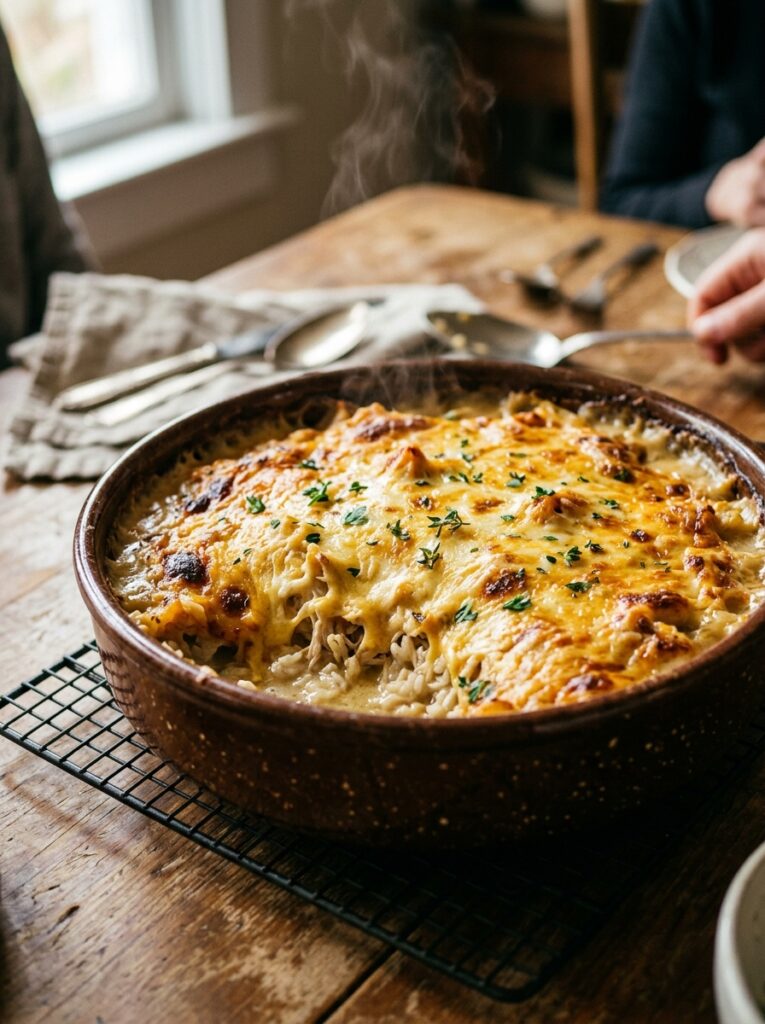
You didn’t think I’d leave this out, did you.
Here’s the move: at the 60-minute mark, when you take the foil off, scatter a generous handful of shredded cheese over the whole surface. Cheddar works great. A mix of cheddar and something meltier — like mozzarella or Monterey Jack — works even better.
Cover it back up for literally 2 minutes to get the melt started, then uncover for the last 10-15 minutes so the top gets a bit golden and bubbly at the edges.
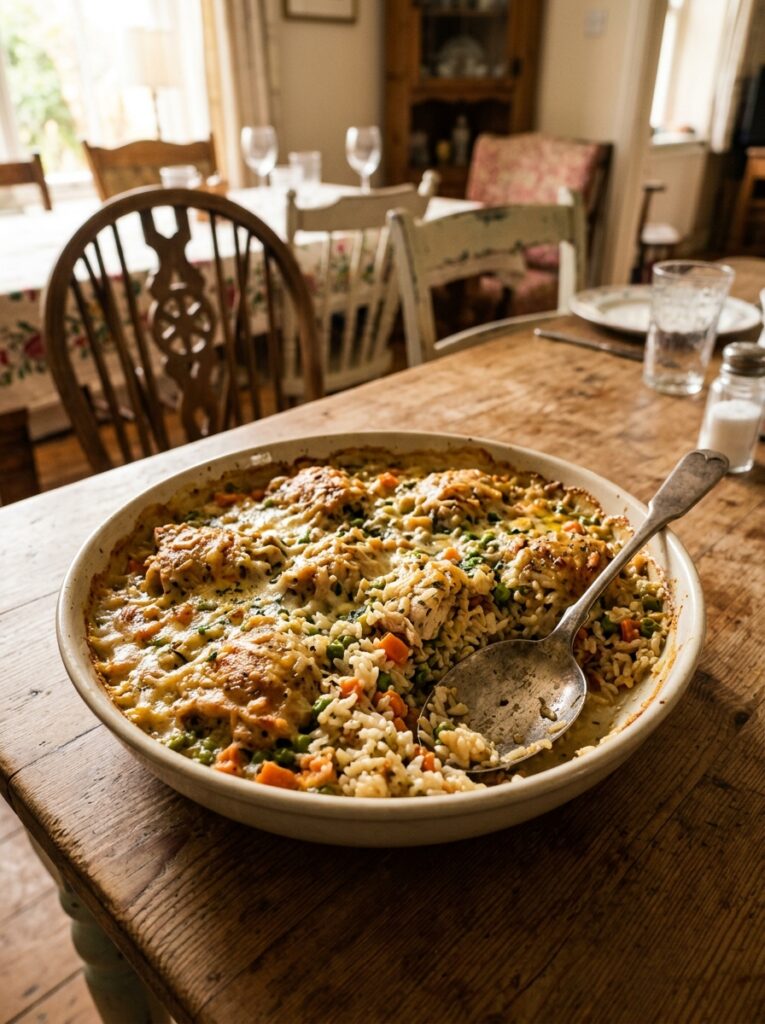
The cheese forms this crust that sort of seals the top layer of rice and chicken together, and when you serve it, it pulls apart in the most satisfying way. It’s the kind of thing where people go quiet when they eat it. Not because it’s complicated or fancy. Just because it’s really good.
“It’s the kind of thing where people go quiet when they eat it.”
—
9. Making It Ahead: What Holds, What Doesn’t
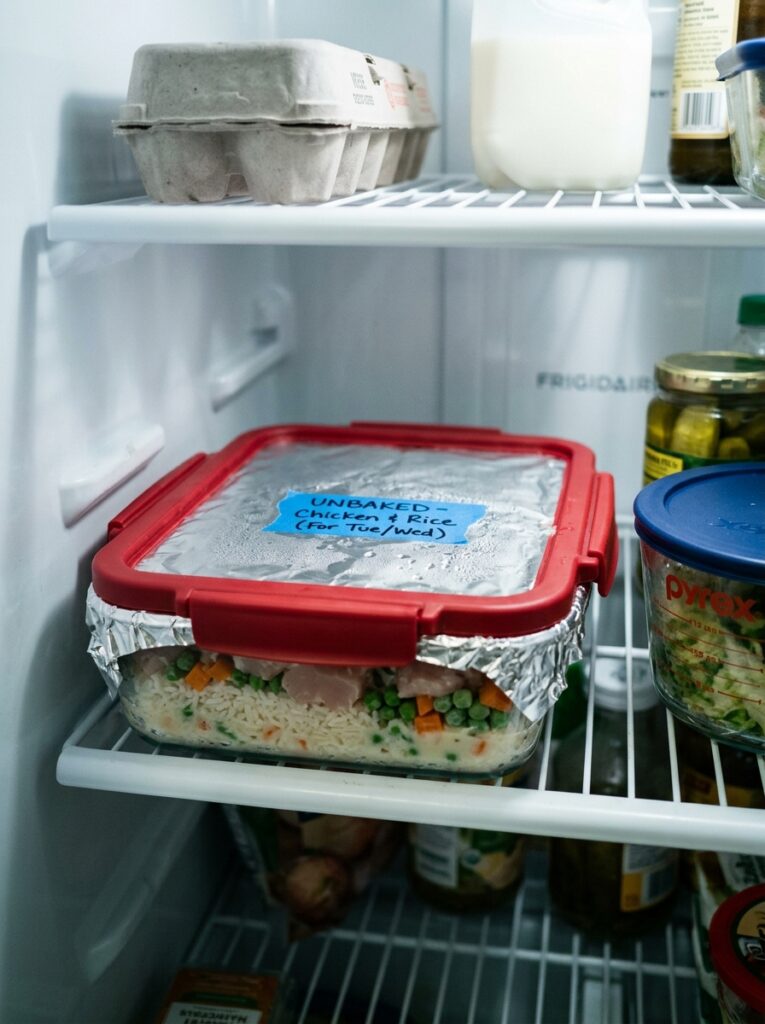
Great news: this casserole is genuinely meal-prep friendly.
You can assemble the whole thing — liquid, rice, chicken, seasoning — cover it tightly, and refrigerate it overnight. Just add about 10 minutes to the covered baking time since it’s going in cold. The rice won’t start absorbing the liquid in the fridge, which is exactly what you want.
Already-cooked casserole keeps well in the fridge for 3-4 days. Reheat covered with a splash of extra stock or water to loosen it back up — rice gets dense as it cools and needs that extra moisture when reheating. Low and slow in the oven (325°F / 160°C, covered) is better than blasting it in the microwave if you have time.
Can you freeze it? You can, but honestly the rice texture changes quite a bit after freezing. It gets slightly grainy and clumpy. If you’re going to freeze, undercook the rice slightly before freezing so the reheat brings it to the right texture. Or just freeze the cooked chicken separately and start the rice fresh.
—
10. The British Version You Didn’t Know You Needed
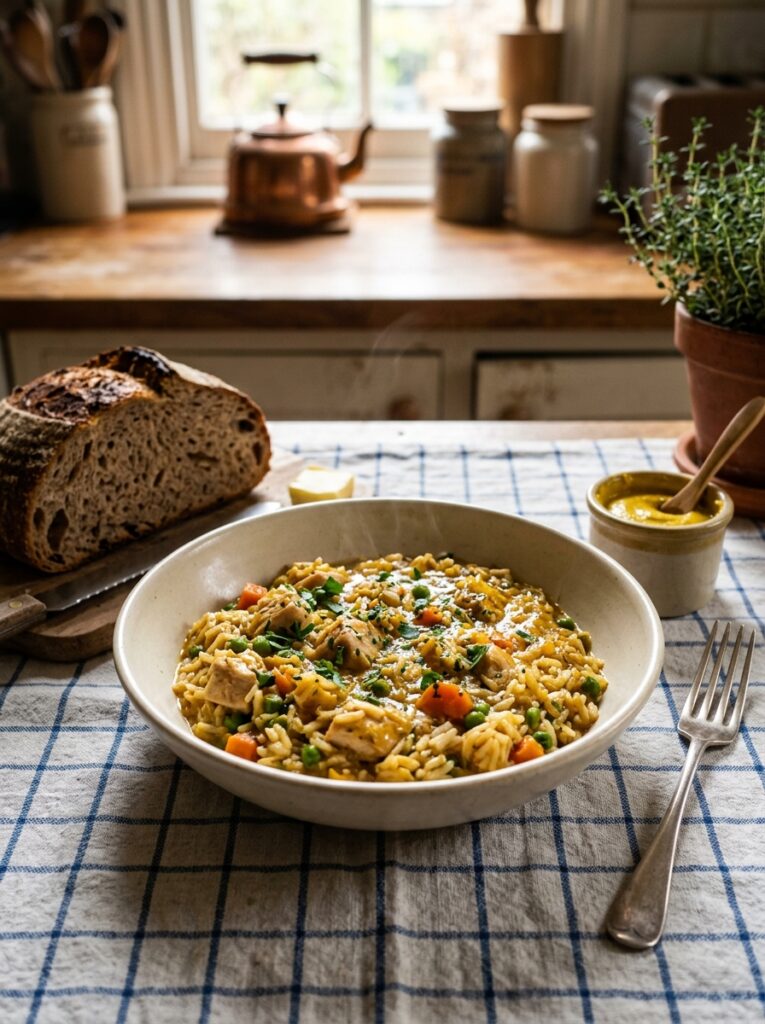
American and British versions of this dish are different in interesting ways and I love both of them.
The American classic leans on condensed soup, garlic powder, paprika, and a generous cheese topping. It’s rich and comforting in an almost aggressively satisfying way.
The British version tends to be a bit more herbaceous — thyme, bay leaves, maybe a leek instead of onion. Less creamy, more savory. Sometimes a glug of white wine in the stock. The result is lighter but still deeply warming, the kind of dinner that feels right on a grey November evening with the kitchen window fogged up.
You can also take it in a completely different direction and go with a loose curry flavor — turmeric, cumin, a bit of garam masala, coconut milk mixed with the stock instead of cream. That version is honestly stunning and it gets made on heavy rotation in my kitchen from about October through March, but I guess that’s its own article.
—
11. The One Thing That Separates a Good Casserole From a Great One
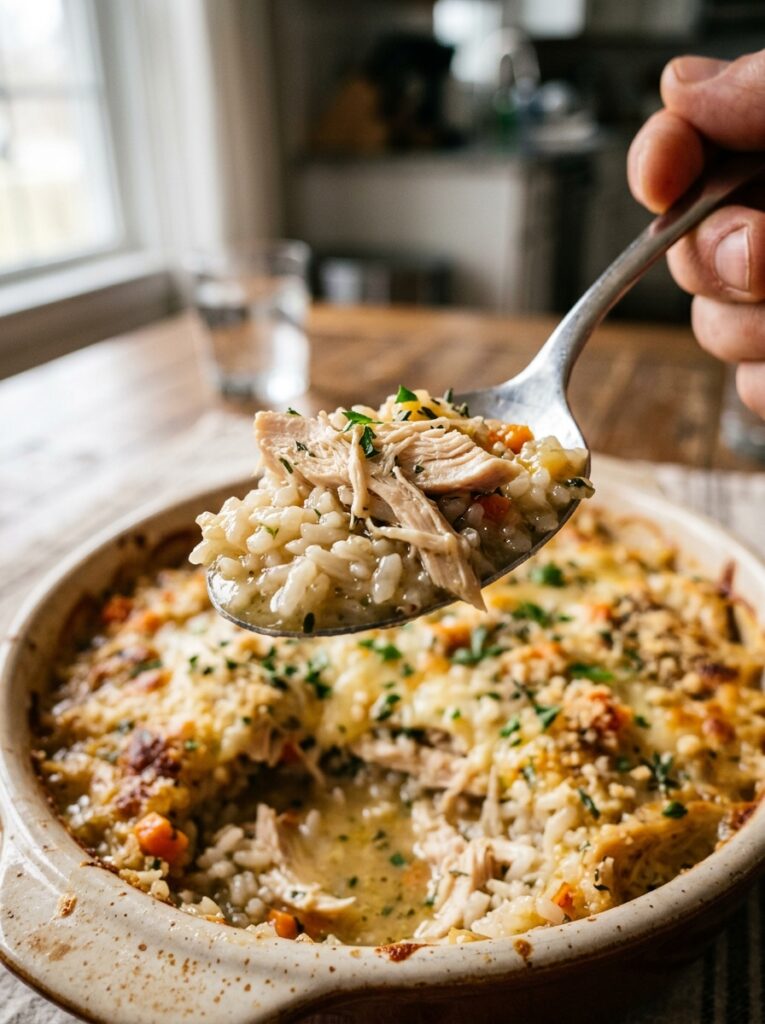
It’s the resting time. I know I mentioned it already but I’m mentioning it again because people skip it EVERY TIME.
When the casserole comes out of the oven, the rice is still cooking. There’s residual steam trapped under whatever’s left of your foil tent, and the liquid is still being absorbed. If you serve it immediately, it’ll seem a bit loose and wet. Give it five actual minutes — not one minute, not until someone complains from the other room — and it transforms.
The rice firms up. The flavors settle into each other. The texture becomes that dense, cohesive thing that’s so much better than it sounds.
Five minutes. Set a timer if you have to.
—
12. Serving This in a Way That Doesn’t Feel Like Just a Bowl of Casserole
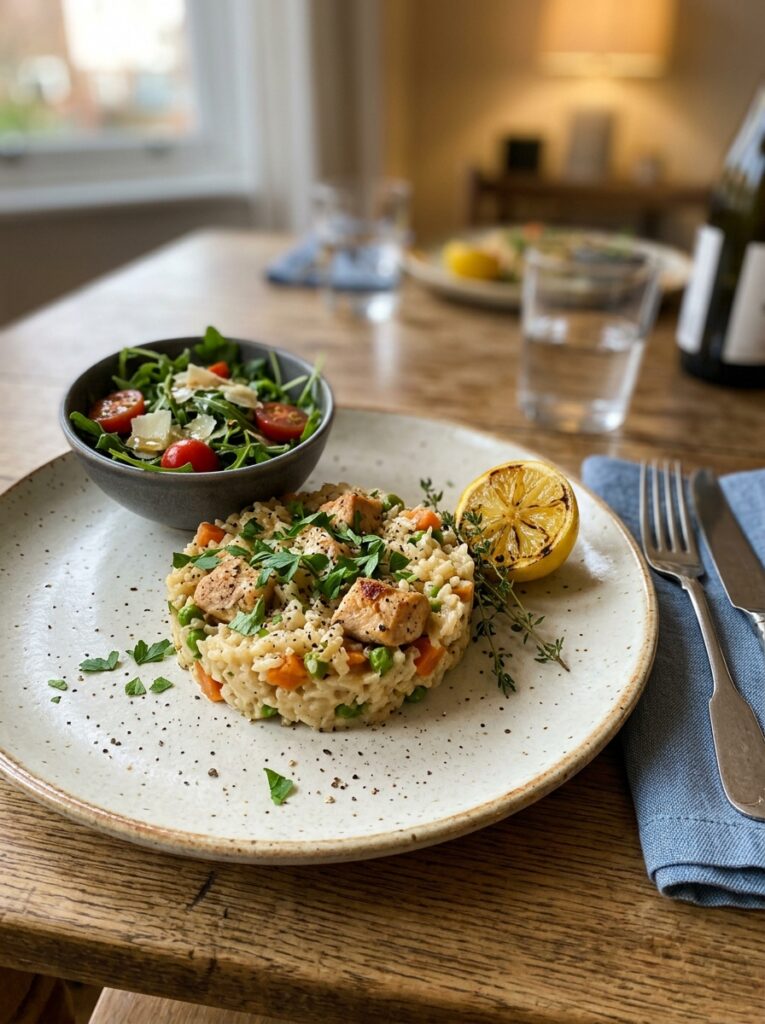
Okay so casserole on its own is great but here’s how to make it feel like a proper dinner rather than just a weeknight rescue mission.
A simple green salad on the side — something with a sharp vinaigrette to cut through the richness. Crusty bread for scooping (non-negotiable in my opinion). Roasted green beans or broccoli on the side if you want something more substantial.
Garnish-wise: fresh parsley scattered on top makes an immediate visual difference and adds a tiny brightness to each bite. A squeeze of lemon over the finished dish does something almost magical to the whole flavor. Sour cream or a dollop of plain yogurt on the side for people who want it.
It doesn’t need much. That’s the whole point of this dish. It’s already doing the heavy lifting.
—
❓ FAQ
Q: Can I use instant rice instead of regular long-grain rice? A: You can, but you’ll need to adjust your liquid ratio down significantly — usually about 1.5 cups of liquid per cup of instant rice — and your cook time will be much shorter, around 30-40 minutes. The texture won’t be quite the same, but it’s a reasonable option if instant is all you’ve got.
Q: My casserole came out with crunchy rice on top but mushy rice at the bottom — what happened? A: This usually means either the foil wasn’t sealed tightly enough (steam escaped from the top layer) or the liquid didn’t distribute evenly when you poured it in. Next time, stir the liquid gently after pouring to make sure it reaches every part of the dish, and double-check that foil seal.
Q: Is this dish freezer-friendly for proper batch cooking? A: It’s okay from the freezer, but rice doesn’t freeze beautifully — the texture can go a bit grainy. If you’re batch cooking, freeze the cooked chicken pulled off the bone separately, then pair it with freshly cooked rice when you need it. Or slightly undercook the full casserole before freezing so the reheat finishes it properly.
—
💭 Final Thoughts
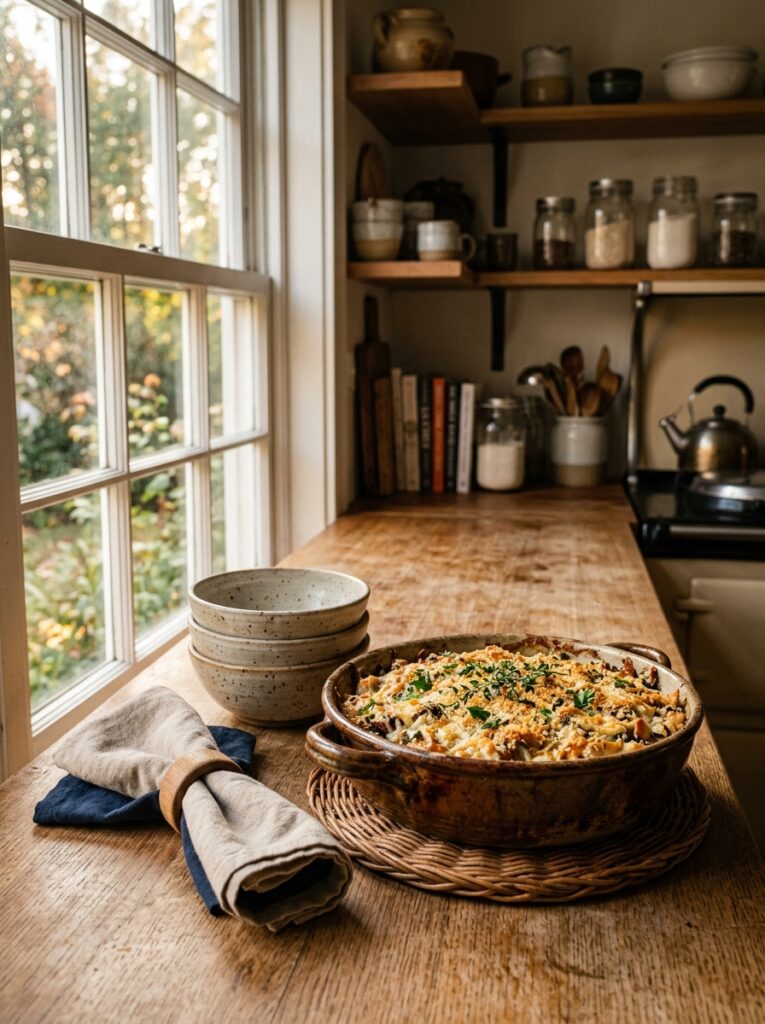
There’s something almost quietly heroic about a dish that asks so little and gives so much back. Chicken and rice casserole isn’t going to win any awards for being interesting or current — and honestly? That’s fine. That’s kind of the whole point.
It’s the dinner that’s already in your kitchen, waiting to be assembled. The one that smells incredible by the time everyone’s home and hungry. The one that gets requested again before you’ve even finished eating it.
So what’s your version — cheesy and American, or herby and British?