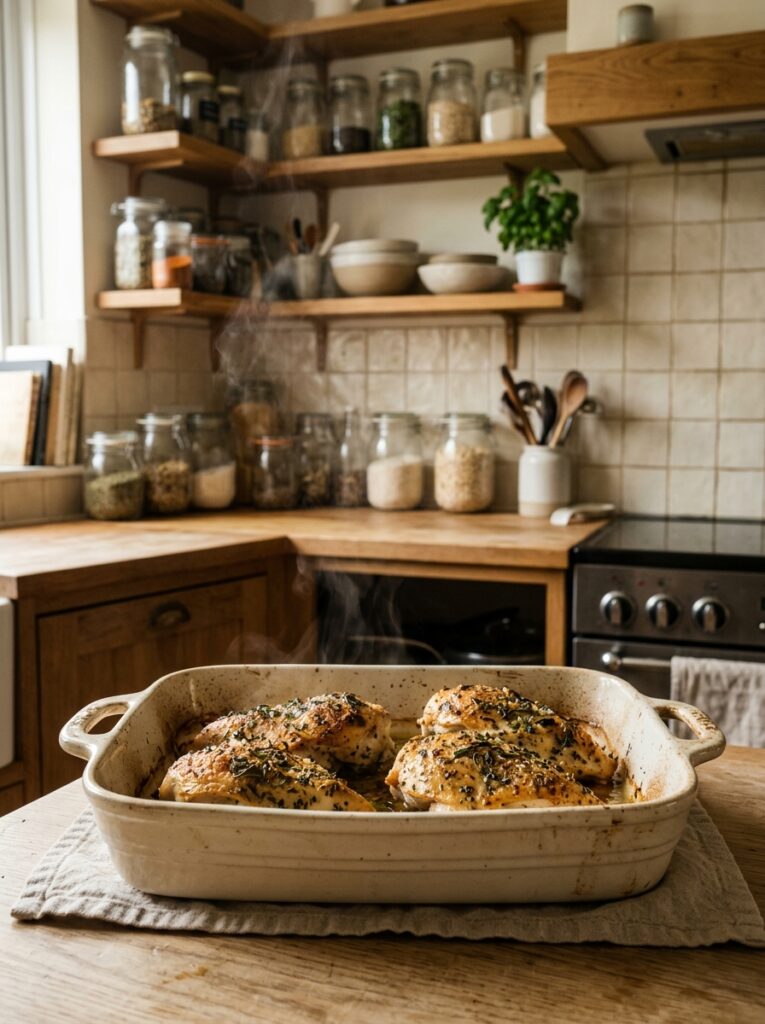
My friend Mia said something to me last year that I think about every single time I open the oven door: “I’ve ruined more chicken breasts than I’ve saved.” And honestly? Same. For a long time, I thought the problem was me. Turns out, it was the method.
—
1. Why Your Oven Baked Chicken Is Probably Drying Out (And What’s Actually Happening)
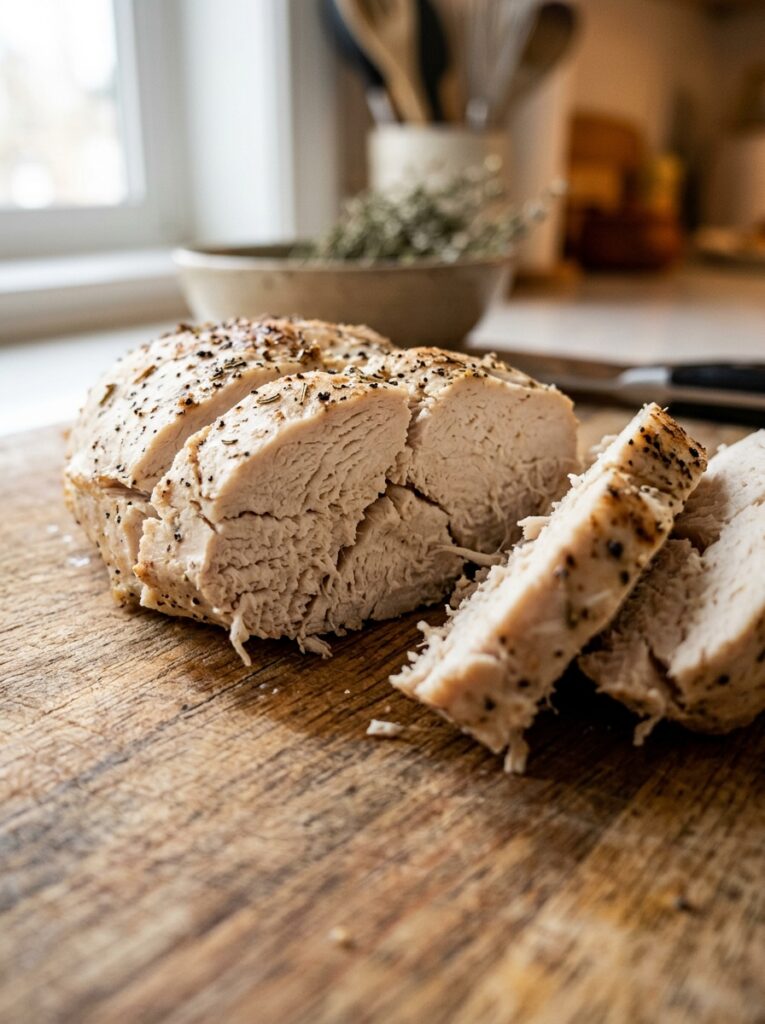
Here’s the thing nobody tells you clearly enough. Chicken breast has almost no fat. None of the built-in self-basting that a thigh has, none of the forgiving marbling that makes red meat stay moist even when you overcook it a little. So when you throw a bare breast into a hot oven and walk away, you’re basically asking it to fail.
The science is pretty simple. Muscle fibers contract as they heat up, and they squeeze out moisture as they do. Once that moisture’s gone, it’s GONE — no amount of sauce saves dry chicken. The fix isn’t complicated, but it does require actually committing to a couple of steps.
First: pound your chicken. Or butterfly it. Either way, even thickness is everything. Because a thick end and a thin end cook at completely different rates, and by the time the thick part is done, the thin part’s already cardboard. Takes about two minutes. Changes everything.
Second: don’t skip the rest. Five minutes, covered loosely with foil, off the heat. That’s it. Juices redistribute, texture settles, and suddenly you’ve got chicken that actually tastes like something.
—
2. The Simple Herb and Garlic Bake That You’ll Make On Repeat
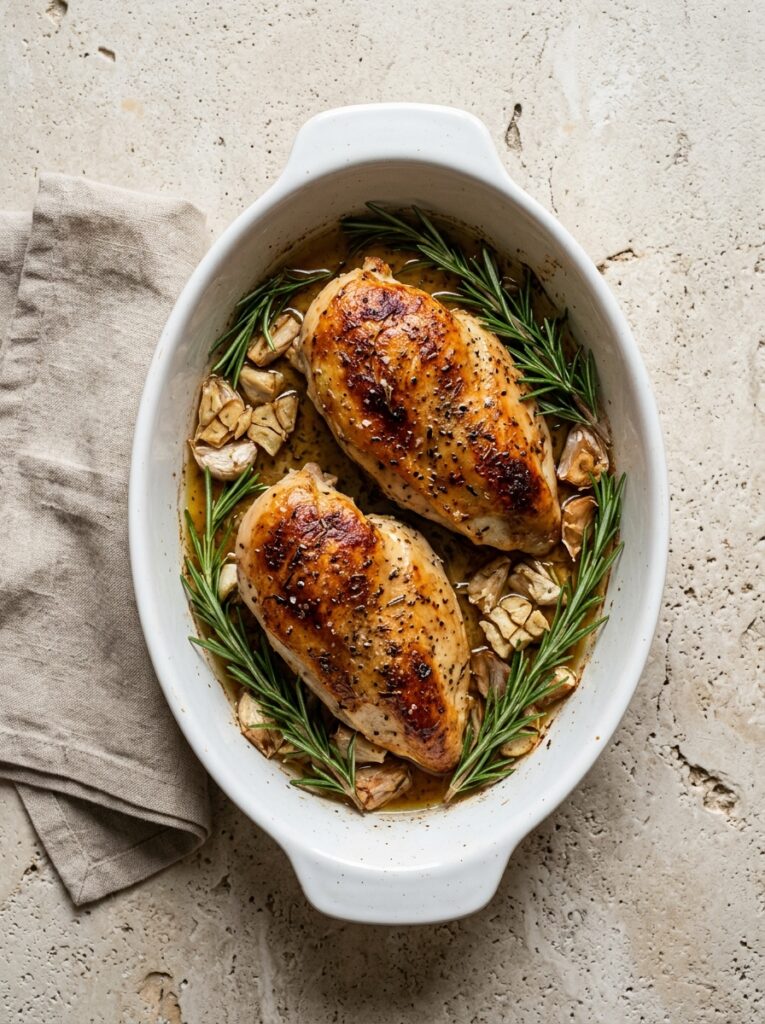
This one sounds so boring. I almost didn’t include it. But I’ve made it probably forty times and it’s still the one I come back to on a Thursday night when I have no energy and some chicken that needs to be used.
Four chicken breasts, pounded to about ¾ inch thickness. Coat them in olive oil — real olive oil, the kind that smells like something — then mix dried oregano, garlic powder, a little smoked paprika, salt and black pepper. Press it into both sides.
Bake at 425°F (220°C) for about 18-22 minutes depending on size. Let it rest. Slice against the grain.
“The difference between good chicken and great chicken is five minutes of rest and two minutes of pounding. That’s the whole secret.”
The smoked paprika is doing more work than it looks like. It adds this very faint depth, almost smoky-sweet, that makes the dish feel like you tried harder than you did. Serve it over roasted vegetables, slice it into a salad, shred it into pasta — it genuinely goes with everything. I’ve eaten it cold over a bowl of rice at midnight and had zero regrets.
—
3. The Honey Mustard Glaze That’s Better Than Any Restaurant Version
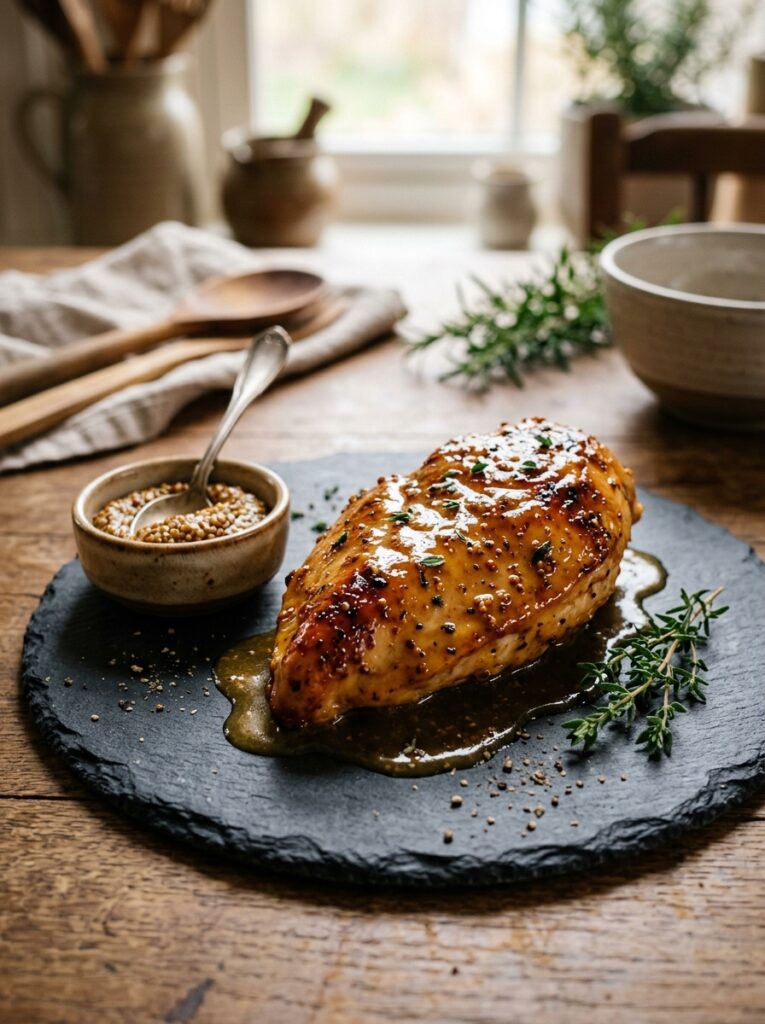
Okay, I’ll admit I was skeptical of honey mustard for a long time. It felt very 1994. But then I made a proper version — not from a bottle, an actual quick mixture — and now I understand why it’s been around that long.
Two tablespoons of Dijon mustard, one tablespoon of whole grain mustard, two tablespoons of honey, a splash of apple cider vinegar, salt. Whisk it. Taste it. Adjust. It should be tangy and sweet and a little sharp on the back of your tongue.
Pour about two-thirds over the chicken before it goes in, reserve the rest. Bake at 400°F (200°C) for 20-25 minutes, then brush the reserved glaze over the top in the last five minutes. The glaze caramelizes on the outside and gets a little sticky and deeply golden and it’s EXACTLY what you want.
Side note — this works really well with a stone-ground mustard from any decent shop. You don’t need anything fancy. The ratio matters more than the brand.
—
4. Lemon and Thyme, But Make It Actually Taste Like Something
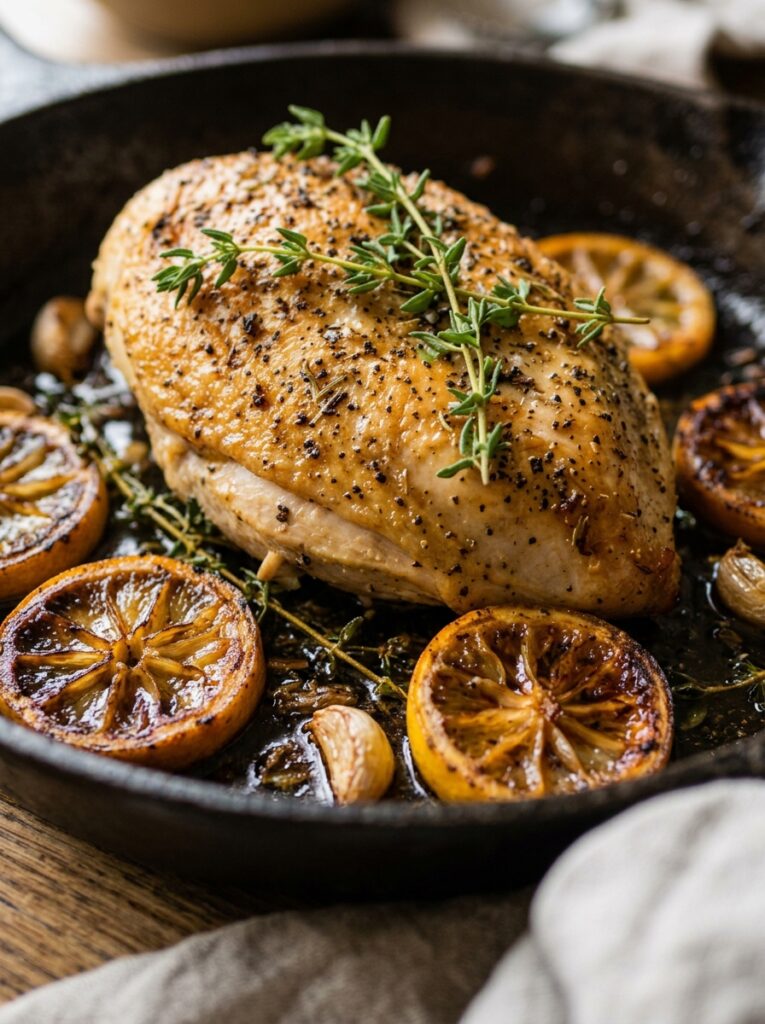
Most lemon chicken is underwhelming. There, I said it. You squeeze some lemon over it and it tastes vaguely citrusy and nothing much else. The trick is using the zest, not just the juice, and getting some of it under the skin if your breasts still have it, or pressing it directly into slashes if they don’t.
Make small cuts across the top of the breast — four or five diagonal slashes, about half an inch deep. Rub a mix of lemon zest, fresh thyme leaves, minced garlic, olive oil, and a pinch of chilli flakes (or red pepper flakes if you’re in the US) right into those cuts and all over the surface. Let it sit for even 20 minutes if you can.
Bake at 425°F (220°C). The cuts do two things: they let the marinade actually penetrate the meat instead of just sitting on top, and they help the chicken cook more evenly. You get little crispy edges around each slash that are genuinely the best part of the whole thing.
—
5. One Pan, Everything Together: The Tomato and Olive Sheet Pan Dinner
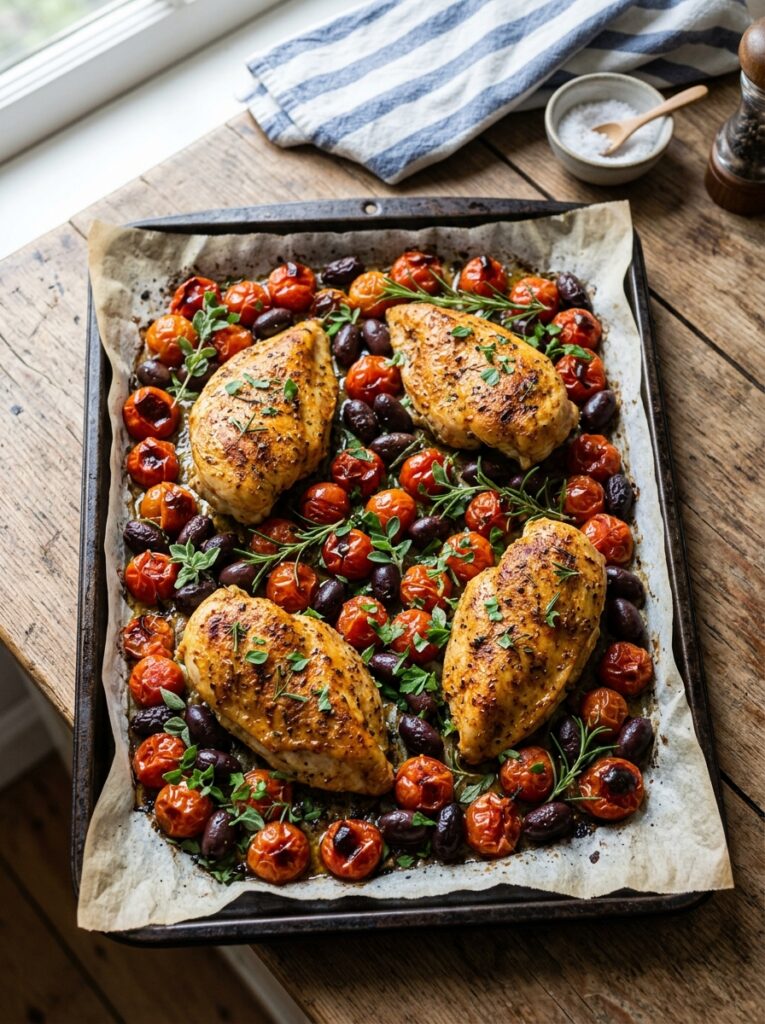
Some nights you just need one pan and minimal decisions.
“A sheet pan covered in caramelised tomatoes and briny olives is basically a full meal that cooked itself while you were doing something else.”
For this one, you’re laying cherry tomatoes, kalamata olives, sliced red onion, and a handful of capers across a large rimmed baking sheet. Drizzle with olive oil, season well. Nestle the seasoned chicken breasts right in the middle of all of it.
The tomatoes collapse and get jammy. The olives intensify and get a little wrinkled and salty. The onion sweetens. Everything mingles around the chicken and you end up with this incredibly flavourful sauce that just… happens, without you doing anything.
Roast at 400°F (200°C) for about 25 minutes. Scatter fresh basil over the top when it comes out. Eat with crusty bread. That’s genuinely the whole recipe and I won’t apologise for how simple it is.
—
6. The Spice Rub That Tastes Like It Came From a Proper Restaurant
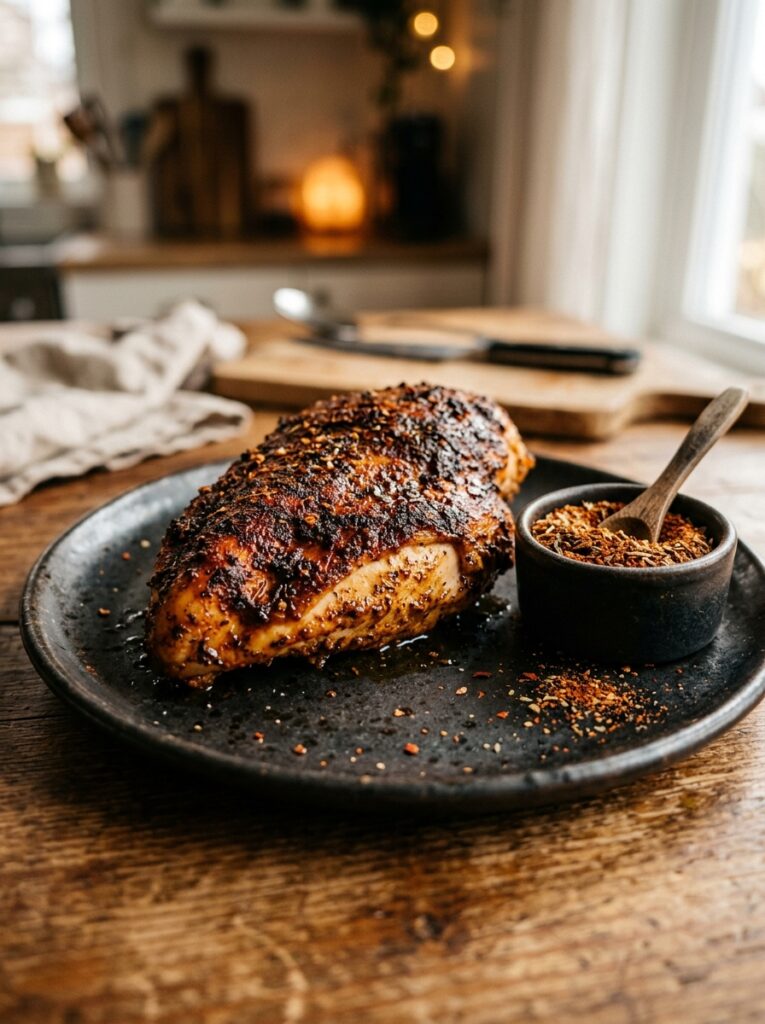
There’s a combination of spices that I mix up and keep in a little jar now because I use it so often. Cumin, coriander, smoked paprika, garlic powder, onion powder, a pinch of cayenne, salt, and brown sugar. The brown sugar is the thing people leave out and then wonder why the crust isn’t quite right.
Sugar caramelises in the oven heat. It creates a crust — not a thick one, but a thin, slightly crunchy, deeply savoury-sweet exterior that holds all the other spices in place and makes the chicken look absolutely gorgeous coming out of the oven.
Use about a tablespoon of rub per breast. Press it firmly — don’t just dust it on. Let the chicken sit at room temperature for 15 minutes before it goes in. Bake at 425°F (220°C) for 18-22 minutes. The colour it develops is something between mahogany and rust and it’s frankly beautiful.
Good with rice, flatbreads, or just a very cold crisp salad on a warm evening.
—
7. Parmesan Crusted, Which Never Gets Old
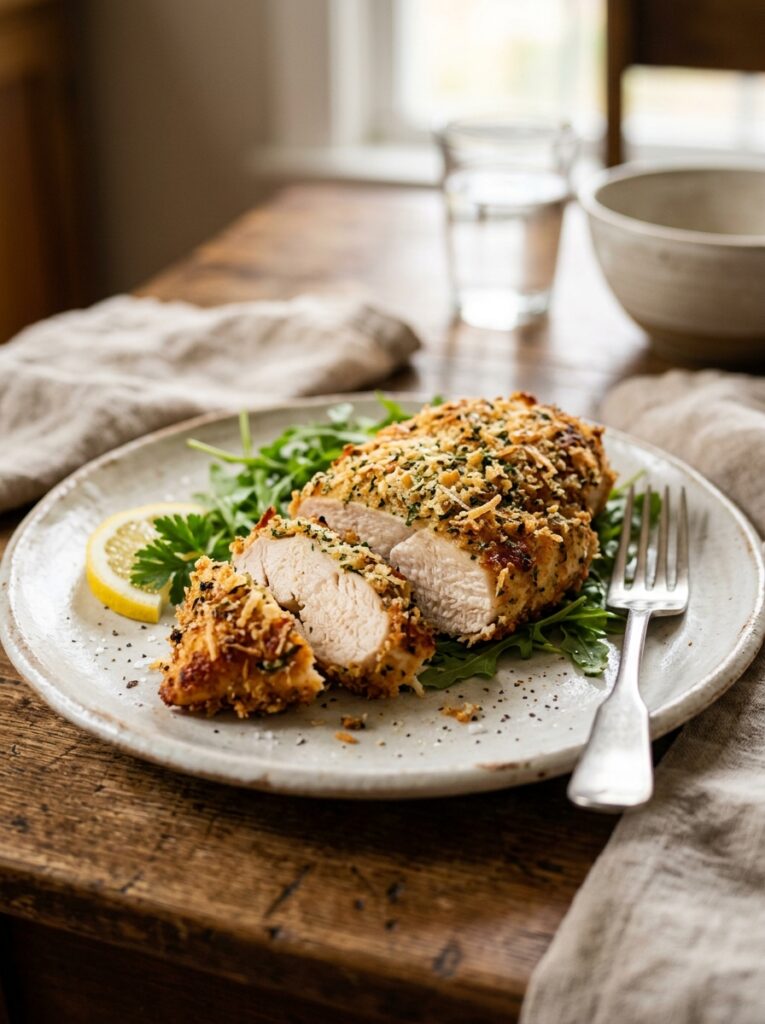
I want to say that breaded chicken is obvious and I was going to leave this out. But every time I make this version, someone asks me for the recipe. So here it is.
The ratio that works: half cup of finely grated parmesan, half cup of panko breadcrumbs, dried Italian herbs, garlic powder, salt, and pepper. Mix. Brush the chicken lightly with mayo — not a thick coating, just enough so the crust sticks — then press the breadcrumb mix firmly onto the surface.
Bake on a wire rack set over a baking sheet at 425°F (220°C) for 20-24 minutes. The wire rack is non-negotiable if you want crunch on the bottom too, because it lets air circulate underneath. Without it, the underside steams and goes soggy.
The parmesan melts into the panko and creates this salty, crispy, golden shell that shatters a little when you cut into it. It’s incredibly satisfying. I don’t have a fancier way to say that.
—
8. Tuscan Cream Sauce in the Oven (Yes, You Can Do It This Way)
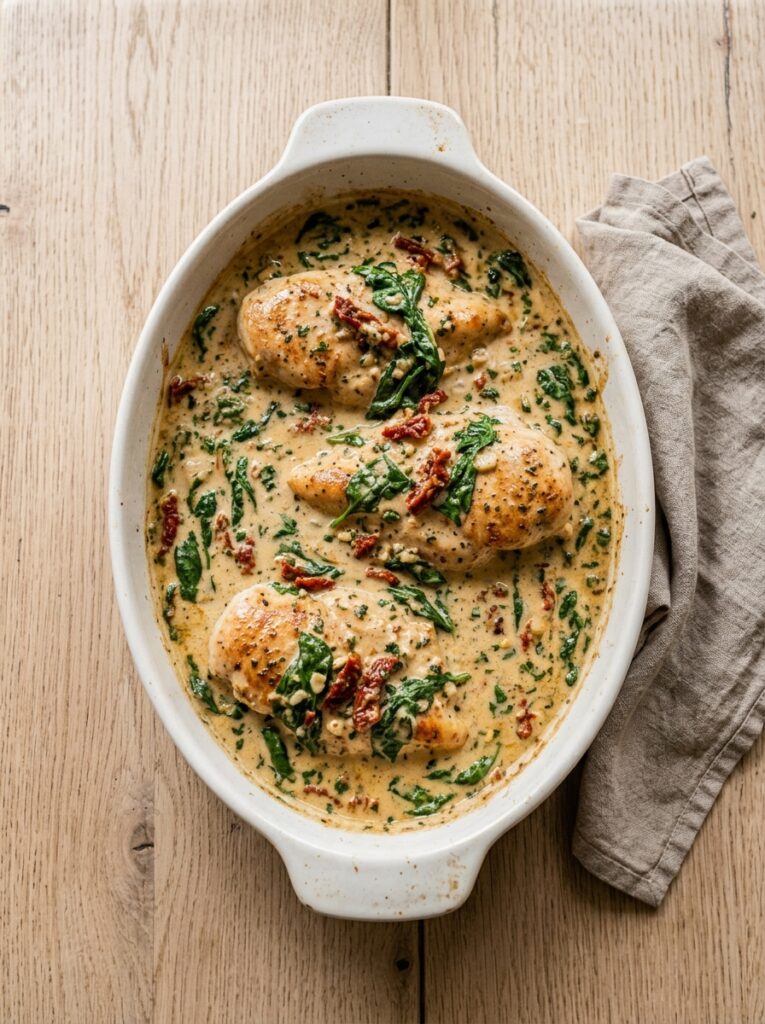
Most Tuscan chicken recipes are stovetop and they require you to stand there and stir things. This version goes entirely in the oven and requires significantly less effort for almost the same result.
You’re searing the chicken briefly on the stovetop — two minutes each side, just for colour — then transferring it to a baking dish. Pour around it: a mix of cream, chicken stock, sun-dried tomatoes, garlic, and spinach. The spinach will wilt down into almost nothing, so use more than you think you need.
“There’s something about cream and sun-dried tomatoes that makes a weeknight dinner feel like you bothered. Even when you really didn’t.”
Bake covered at 375°F (190°C) for 20 minutes, then uncovered for another 10 so the sauce reduces and thickens slightly around the edges. Serve over pasta or with a big hunk of bread. This is the recipe I pull out when I want people to feel well-fed and looked after, because it works every time.
—
9. Balsamic Brown Sugar Glaze That Looks Far More Impressive Than It Is
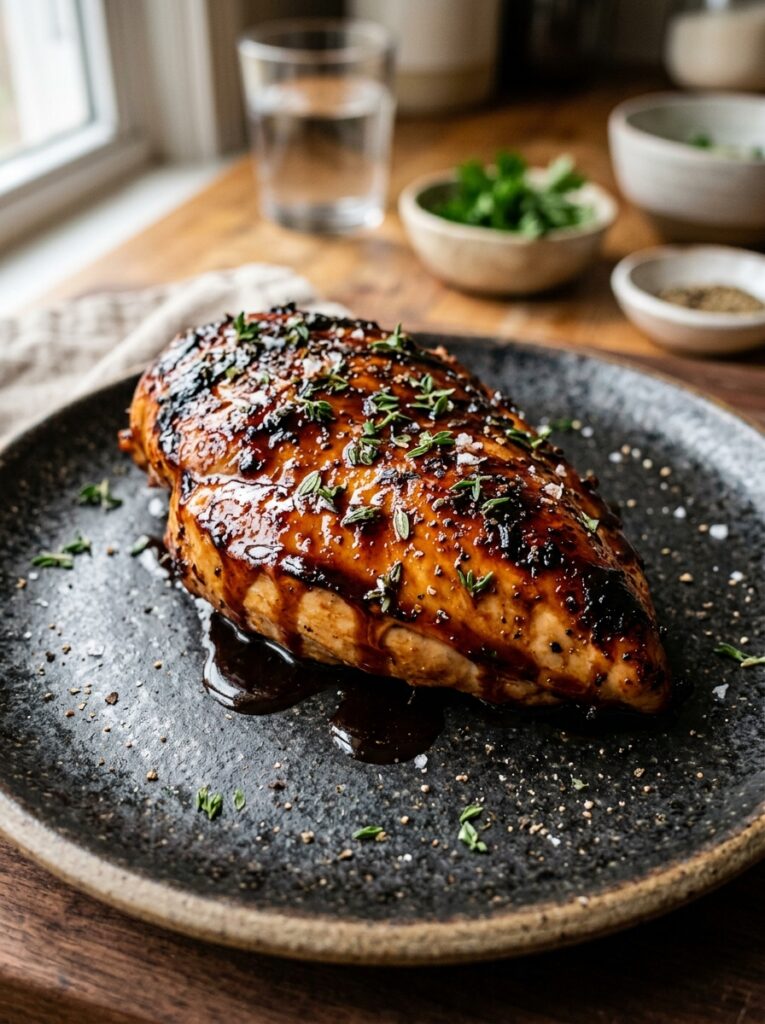
Balsamic vinegar reduces into something almost magical when it gets heat. It thickens, sweetens, intensifies, turns glossy. Add a little brown sugar to the process and it becomes this lacquer-like glaze that coats chicken in the most elegant-looking way.
In a small saucepan, simmer three tablespoons of balsamic vinegar with one tablespoon of brown sugar until reduced by half — maybe four minutes. That’s it. Brush half on the chicken before baking, half on in the last five minutes.
Bake at 400°F (200°C) for 20-25 minutes. The finished chicken looks like something from a food magazine, honestly. Deep, glossy, rich-looking. The flavour is sweet but with that balsamic sharpness underneath, and it pairs brilliantly with roasted green beans or a simple arugula salad with shaved parmesan.
—
10. Za’atar Spiced Chicken That Belongs in Your Regular Rotation
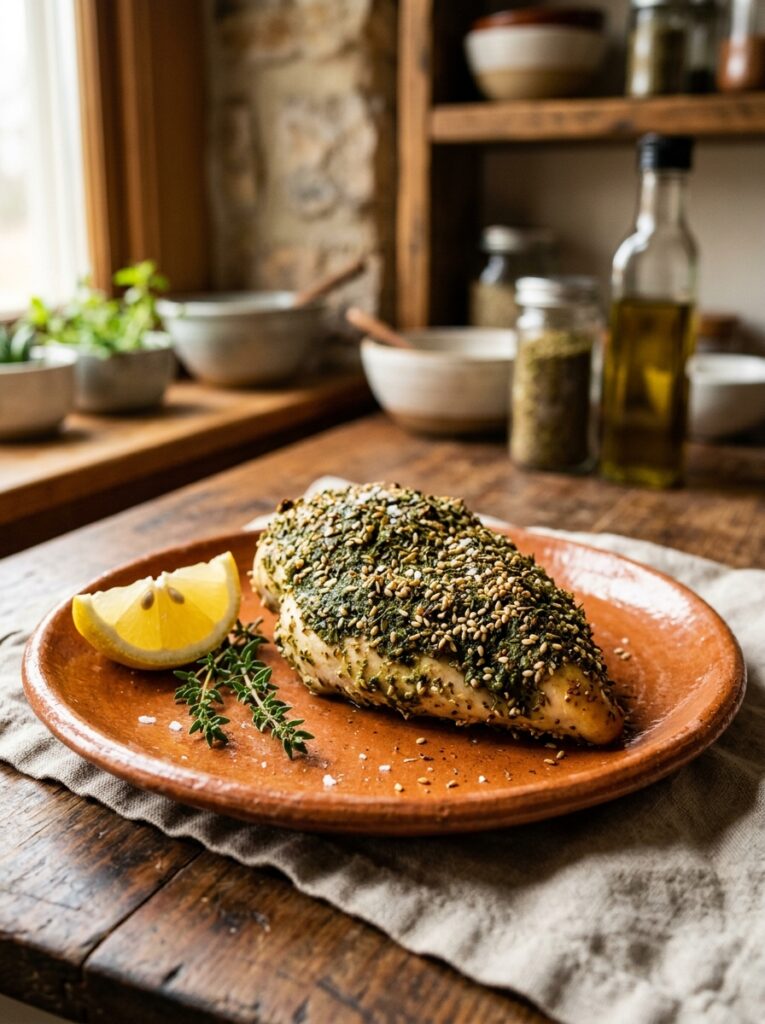
Za’atar is one of those spice blends that I sort of slept on for too long, and then suddenly I can’t stop using it. It’s earthy and herby and has a slight lemony tartness from the sumac in it. On chicken, with olive oil and a little salt? Really, really good.
Mix two tablespoons of za’atar with three tablespoons of olive oil and a squeeze of lemon. Coat the chicken completely and let it marinate for at least 30 minutes. An hour if you’ve got time.
Bake at 425°F (220°C) for 18-22 minutes. The herbs toast slightly in the oven and the whole thing smells herbal and warm and good in a way that’s kind of hard to describe — not like typical Italian herbs, more complex than that. Serve with flatbread, yogurt, and sliced cucumber. Or honestly just eat it straight off the pan. No judgment.
—
11. Buffalo Style Baked Chicken That Actually Works Without Frying
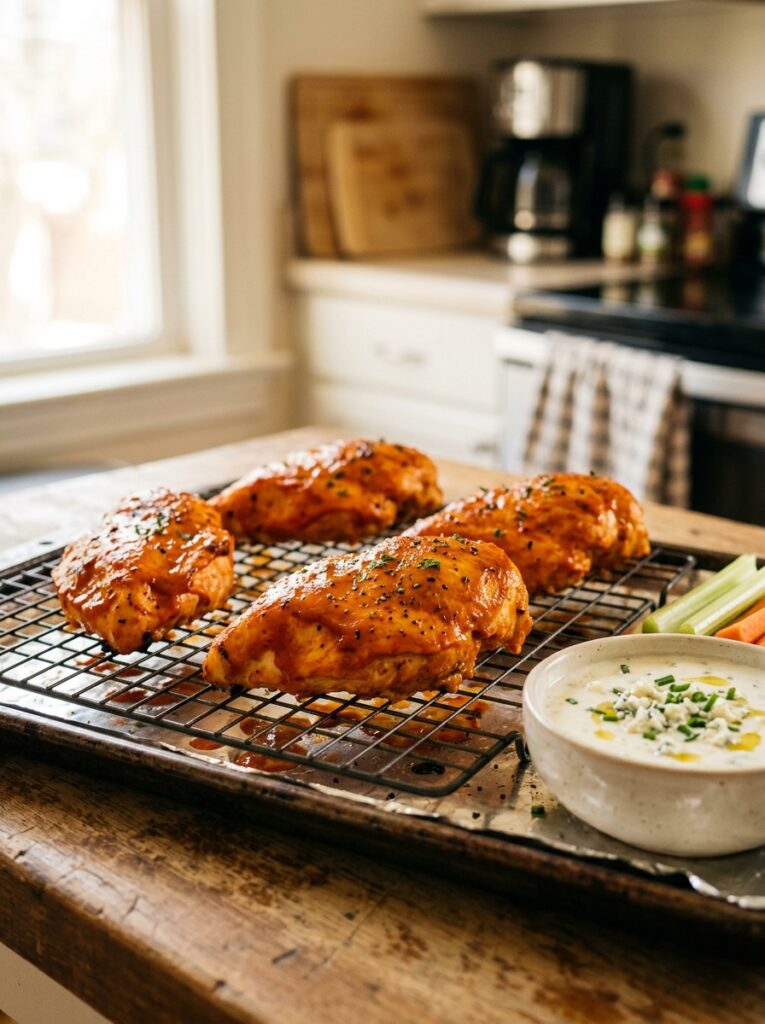
Not gonna lie, I didn’t think baked buffalo chicken could compete with fried. I was wrong. The key is the sauce going on in layers — some before, more after — and getting your oven hot enough that the outside actually crisps up a bit.
Season the chicken with garlic powder, cayenne, salt. Bake at 425°F (220°C) for 15 minutes. Then brush generously with your buffalo sauce (hot sauce plus melted butter, roughly 2:1) and return to the oven for another 8-10 minutes. The sauce will bubble and caramelise around the edges.
Let it rest, then slice and serve over rice, in wraps, on top of a wedge salad with blue cheese dressing. The heat level is up to you — more hot sauce, more butter, or adjust accordingly. The method is the same either way.
—
12. The Resting Rule and Why Every Single Recipe Above Depends On It
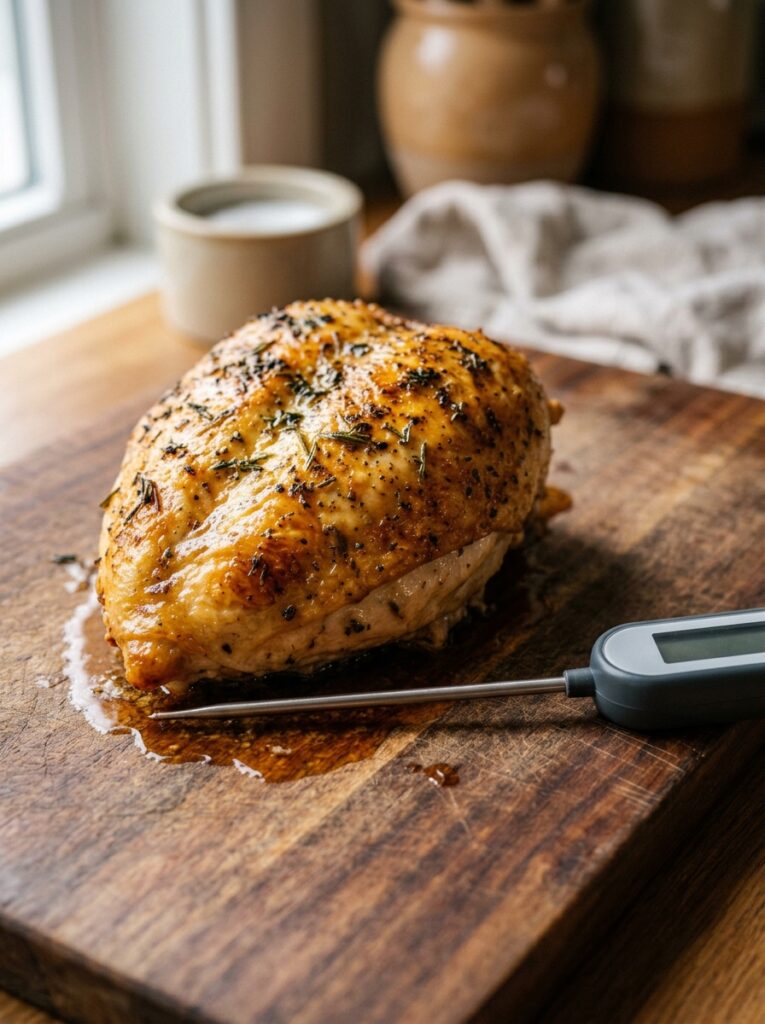
I keep mentioning resting the chicken and I want to close this section with why it matters enough to repeat.
When chicken comes out of the oven, the muscle fibers are still contracted from the heat. If you cut straight in, the juice just runs out onto the cutting board and you lose everything you worked for. If you wait five minutes — literally five, covered loosely with foil — those fibers relax. The moisture that was pushed toward the surface redistributes back through the meat. You end up with something noticeably more tender than if you hadn’t waited.
It feels like a pointless step when you’re hungry and the chicken smells incredible. Do it anyway. Every time. I promise you won’t regret it.
—
❓ FAQ
Q: How do I know when chicken breast is actually cooked through without cutting into it every two minutes? A: The most reliable way is a meat thermometer — you’re looking for 165°F (74°C) at the thickest point. If you don’t have one, the juices should run completely clear when pierced and the flesh should feel firm rather than springy when pressed. But really, a thermometer is worth buying; it removes all the guesswork.
Q: Can I bake chicken breasts from frozen? A: You can, but it’s not ideal. Frozen chicken releases a lot of moisture as it cooks, which can make the outside steam rather than roast, and it takes significantly longer — usually 50% more time. For best results, thaw completely in the fridge overnight. If you’re in a pinch, fully frozen works at 375°F (190°C) but don’t expect the same crust or colour.
Q: How long can I keep leftovers and what’s the best way to reheat without making the chicken dry again? A: Stored in an airtight container, cooked chicken breast keeps well in the fridge for up to four days. For reheating, avoid the microwave if you can — it dries things out fast. Instead, warm it gently in a covered pan with a splash of water or stock over low heat, or wrap in foil and reheat in the oven at 325°F (160°C) for about 10-12 minutes. It won’t be quite as good as fresh but it’ll be close.
—
💭 Final Thoughts
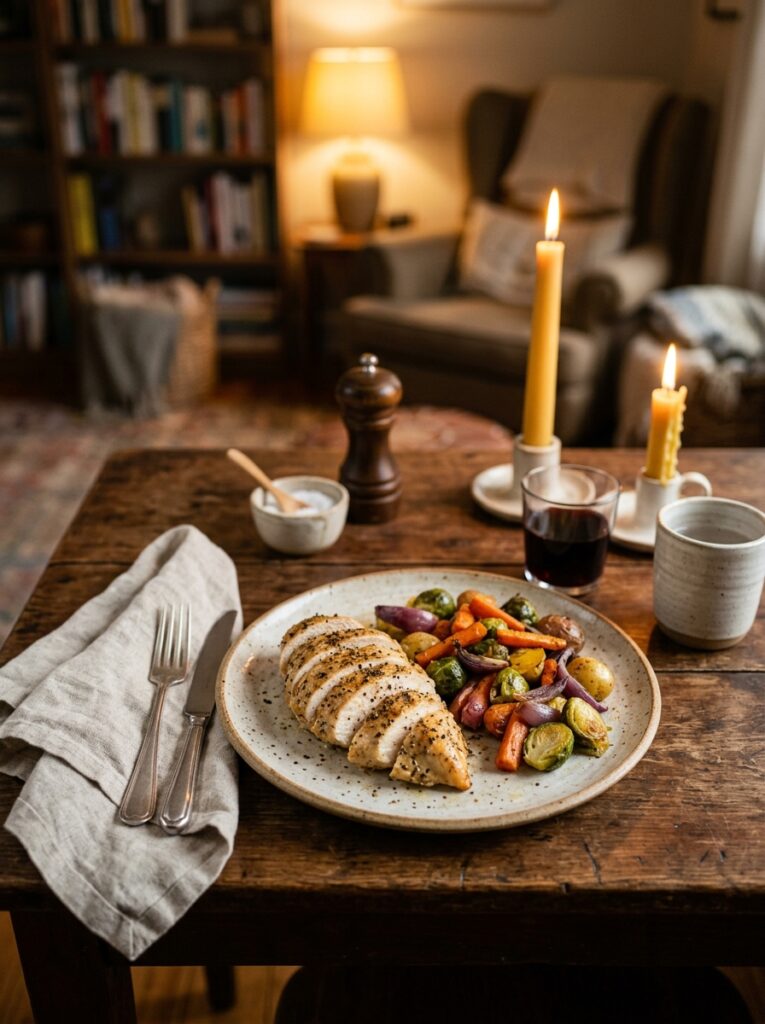
Chicken breast gets a bad reputation and I think it’s mostly deserved — because most of us learned to cook it wrong. Too hot, too long, too bare, too impatient. But when you actually work with its limitations, it’s one of the most versatile things you can have in the fridge.
These twelve recipes are different enough from each other that you could rotate through them for months without getting bored, which is kind of the whole point. They’re weeknight-real, not weekend-aspirational.
Which one are you actually going to make first?