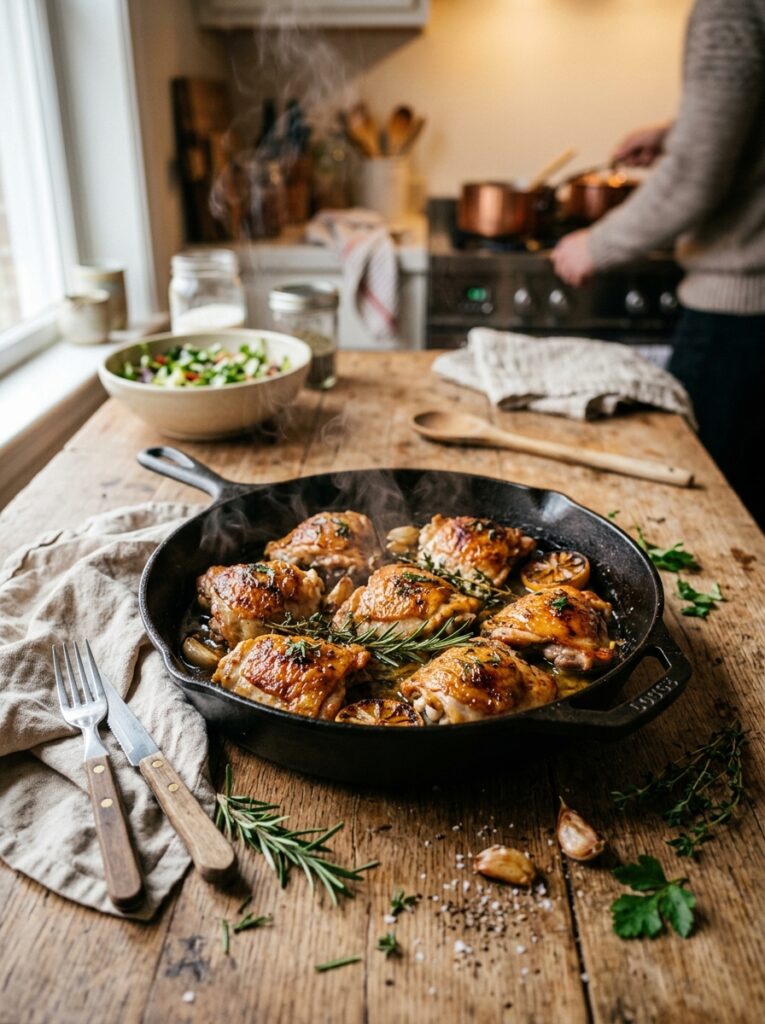
My neighbor knocked on my door last Tuesday to ask if something was burning. It wasn’t. It was just chicken thighs doing what they do — that caramelizing, fat-rendering, deeply savory thing that makes the whole house smell like a restaurant you can’t afford.
I’ve been making oven-baked chicken thighs for years and I’m not sorry about it.
—
1. Why Chicken Thighs Beat Breasts Every Single Time (Fight Me)
Not gonna lie, I used to be a chicken breast person. I thought thighs were somehow lesser. Some inferior cut for people who didn’t know better.
I was so wrong.
Thighs have more fat, which means more flavor, and more importantly — they don’t dry out when you accidentally leave them in 10 minutes too long. Which I do. Often. Breasts punish every distraction; thighs forgive everything. They stay juicy at 400°F when a breast would’ve turned into something you need to drown in sauce just to swallow.
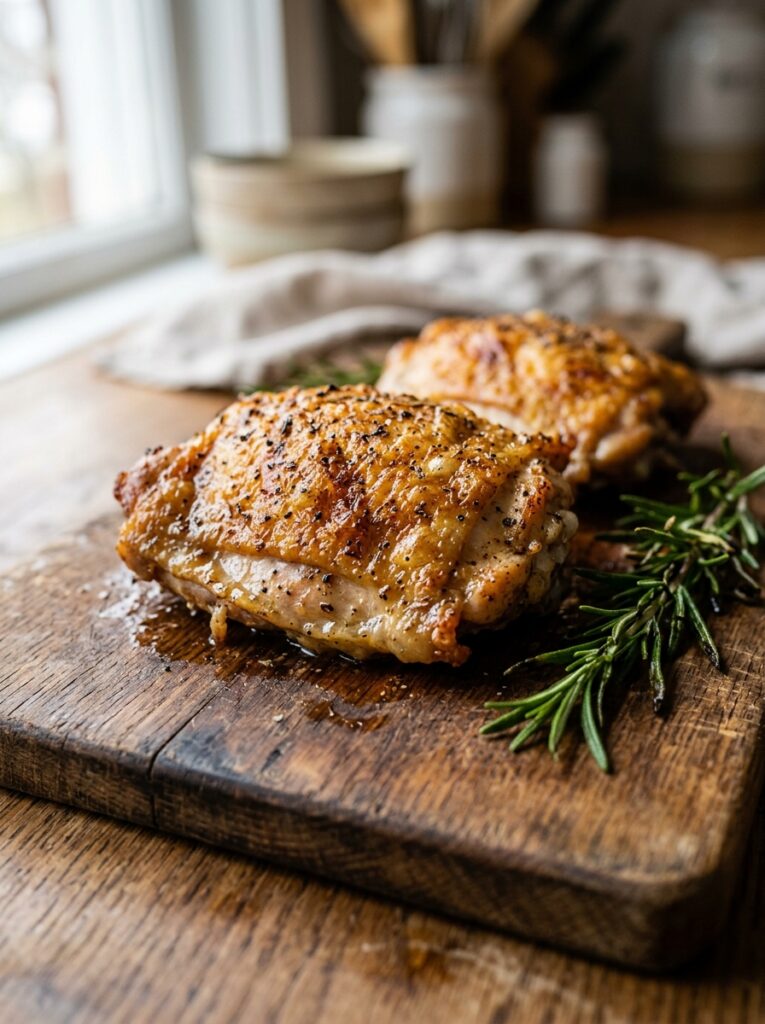
Bone-in, skin-on thighs are the ones you want for roasting. The bone conducts heat from the inside and keeps the meat moist. The skin turns into something crispy and golden and genuinely worth eating. If you’ve only ever bought boneless skinless, you’re missing the whole point.
“A chicken thigh at 400°F is the most forgiving thing you’ll ever put in an oven.”
And here’s the thing — they’re cheaper. Significantly cheaper. In the US, they’re almost always a dollar or two less per pound than breasts. In the UK, bone-in thighs from the supermarket are often half the price per piece. You get more flavor AND spend less. It’s genuinely one of life’s better deals.
—
2. The Temperature Question Nobody Agrees On (Here’s the Answer)
375°F? 400°F? 425°F? There are approximately one million chicken thigh recipes and they all disagree on oven temperature and it’s genuinely maddening.
Here’s what I’ve figured out after years of eating chicken:
375°F (190°C) is good if you’re doing a longer braise-style cook, maybe with vegetables underneath that need time. The skin won’t get as crispy but the meat will be incredibly tender.
400°F (200°C) is the sweet spot for most straightforward roasted chicken thigh situations. Crispy skin, juicy interior, done in 35-45 minutes depending on size.
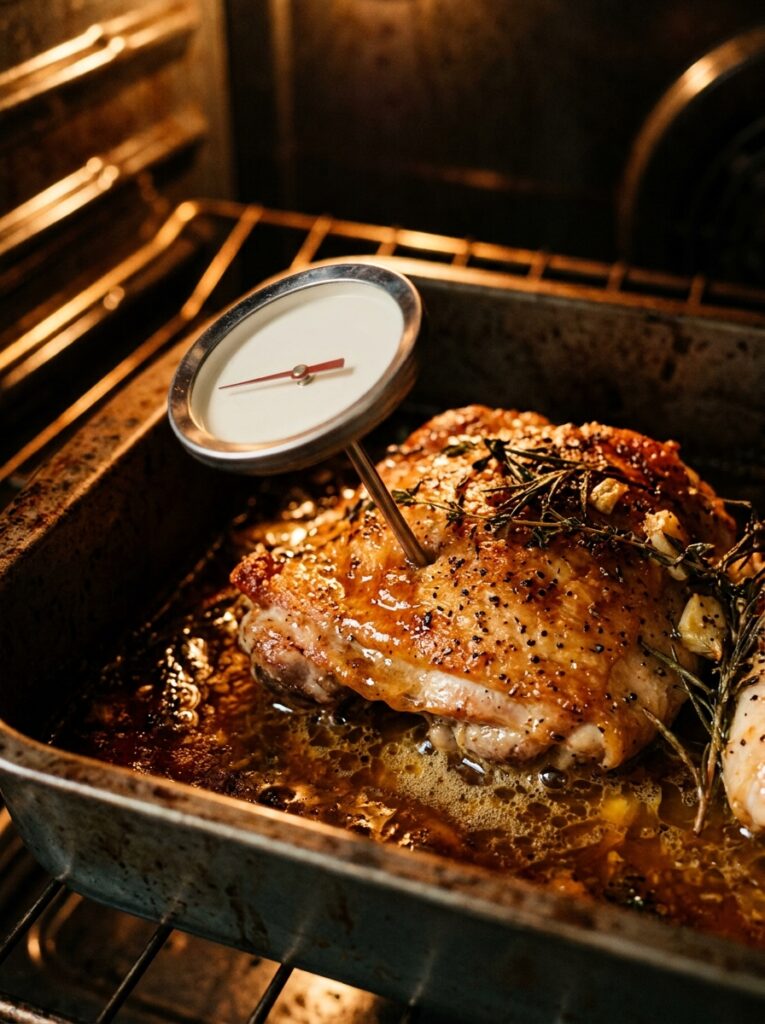
425°F (220°C) is for when you want maximum crispiness and you’re in a hurry. 30-35 minutes, check with a thermometer, done. The skin gets genuinely shattery at this temperature. Not everybody wants that, but I do.
Internal temperature should always hit 165°F (74°C). Always. Don’t guess, just use a thermometer — it costs about $10 and changes everything.
—
3. The Marinade That’s Been Living in My Head Rent-Free

This isn’t technically a recipe section but I’m going to tell you about a marinade anyway because it’s that good and I can’t help myself.
Olive oil, lemon zest, garlic — minced so fine it almost disappears — smoked paprika, a lot of salt, cracked black pepper, and dried oregano. That’s it. Mix it into a paste, rub it all over the thighs, and let them sit for at least 30 minutes. An hour is better. Overnight in the fridge is when the magic really happens.
The lemon zest (not juice — zest) perfumes the skin in a way that’s almost floral. The smoked paprika goes dark and sticky in the oven. The garlic gets sweet. And by the time it’s done, you’ve got something that looks like it took effort even though you spent maybe four minutes making the marinade.
Side note — if you’re using dried oregano, use the good stuff. The kind where you open the jar and can actually smell it. Old, faded dried oregano that smells like paper dust does nothing.
—
4. Sheet Pan Dinners That Actually Taste Good (Not Sad Wet Vegetables)
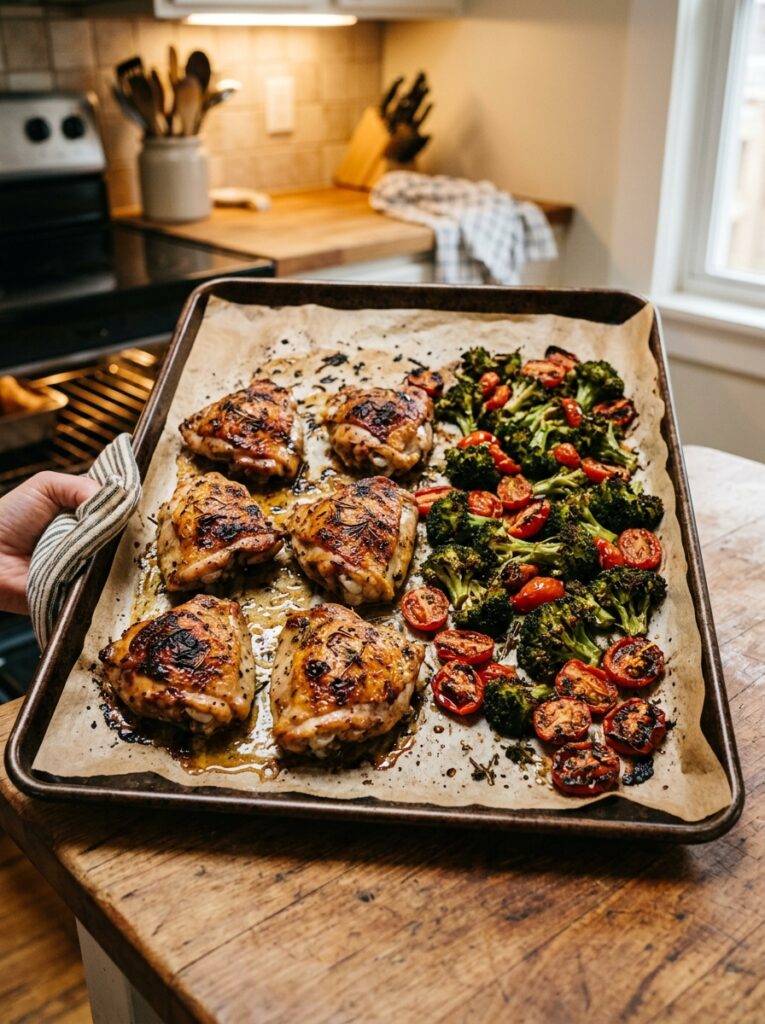
Okay, sheet pan chicken thighs. The concept is simple: one pan, chicken on top, vegetables around the edges, everything roasts together. Theoretically easy. In practice? A lot of people end up with perfect chicken and steamed, soggy vegetables sitting in rendered fat.
The fix is not complicated.
Cut your vegetables SMALL and put the thighs on a wire rack set over the pan, so the fat drips down onto the vegetables below and the chicken skin stays exposed to hot air on all sides. Or — if you don’t have a rack — push the vegetables to the very edges, spread thin, and don’t pile them. Give them room.
Vegetables that actually work well with chicken thighs at high heat: cherry tomatoes (they burst and become something saucy and sweet), cubed butternut squash, thick-cut fennel, halved Brussels sprouts, and baby potatoes that have been parboiled first. Raw potatoes need way more time than the chicken, which is how you end up eating crunchy potatoes with perfect chicken, which nobody wants.
—
5. The One Pan You Need That Isn’t a Sheet Pan
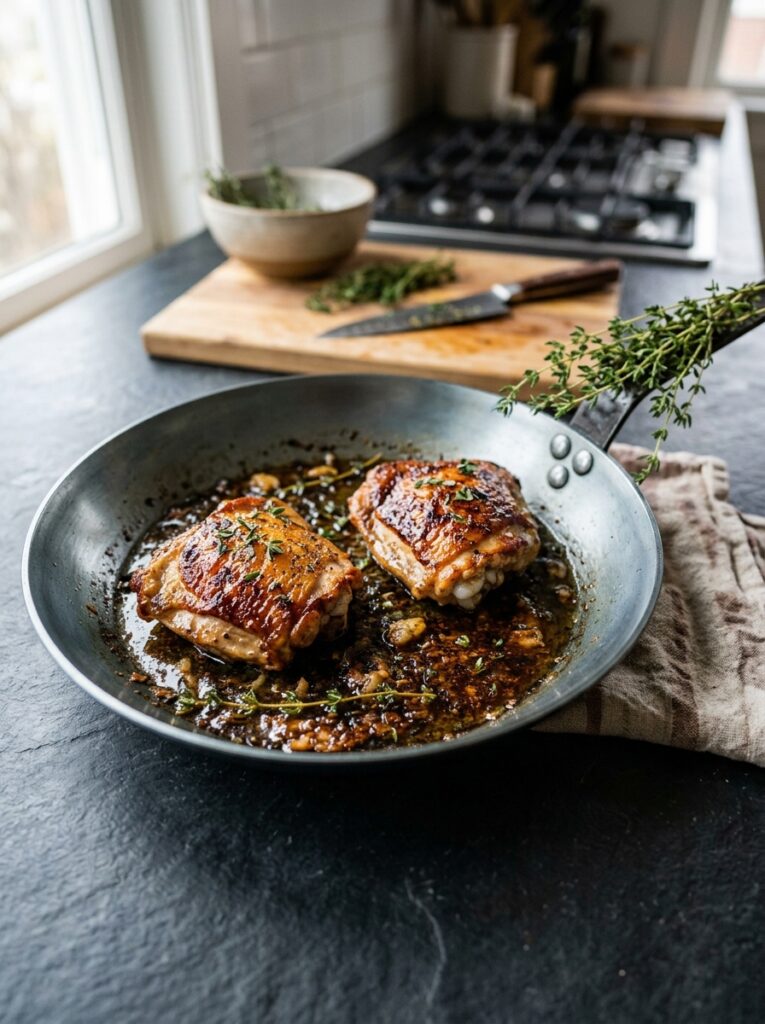
A cast iron skillet. Hear me out.
Start the thighs SKIN SIDE DOWN in a cold cast iron skillet, then turn the heat on to medium-high. Let the fat render out slowly as the pan heats up. Don’t touch them. Wait until the skin releases easily — it’ll take 7 or 8 minutes — and then flip them once, and put the whole skillet in the oven at 425°F.
The skin you get from this method is genuinely different from anything you’d get starting in the oven. It’s thin, deeply golden, almost lacquered. There’s no bubbling or steaming involved — it’s a slow, direct fat-on-metal render that creates texture the oven alone can’t replicate.
“Starting skin-side down in cold cast iron is the thing nobody tells you, and it’s the only reason restaurant chicken skin looks like that.”
Finish in the oven for 15-20 minutes and rest for 5 before you cut in. Don’t skip the rest.
—
6. For the Nights You Want Something That Feels Fancy Without Being Fancy
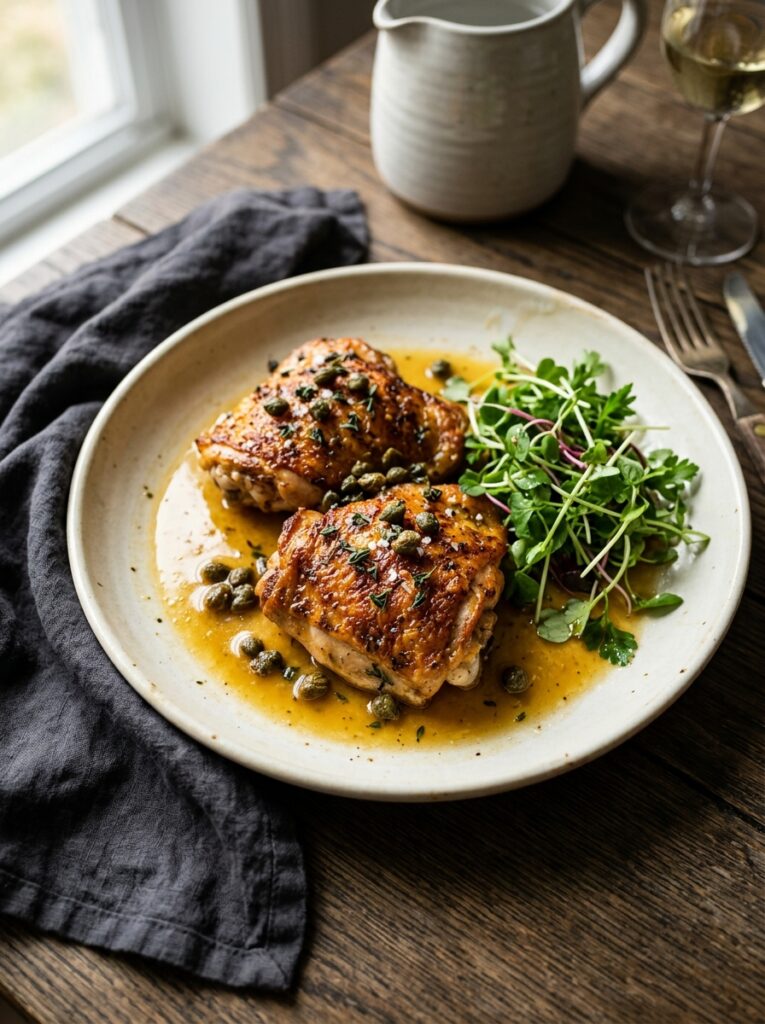
Honey, soy, ginger, and a little sesame oil. That’s your glaze.
Mix it in a bowl — roughly equal parts honey and soy sauce, a thumb of grated fresh ginger, a teaspoon of sesame oil — and brush it over the thighs in the last 15 minutes of cooking only. If you put it on from the start, the honey burns. Don’t put it on from the start.
What comes out of the oven is sticky and dark and slightly caramelized at the edges, and it goes brilliantly over rice with scallions on top. The whole thing takes maybe 50 minutes including prep and it looks like something you’d order somewhere. It’s genuinely one of those dinners that makes you feel a bit smug, honestly.
Add a splash of rice vinegar to the glaze if you want a bit more sharpness. Or a pinch of chili flakes if you want heat. The formula is flexible.
—
7. When You Want Something Cozy and Braised and a Bit French About It
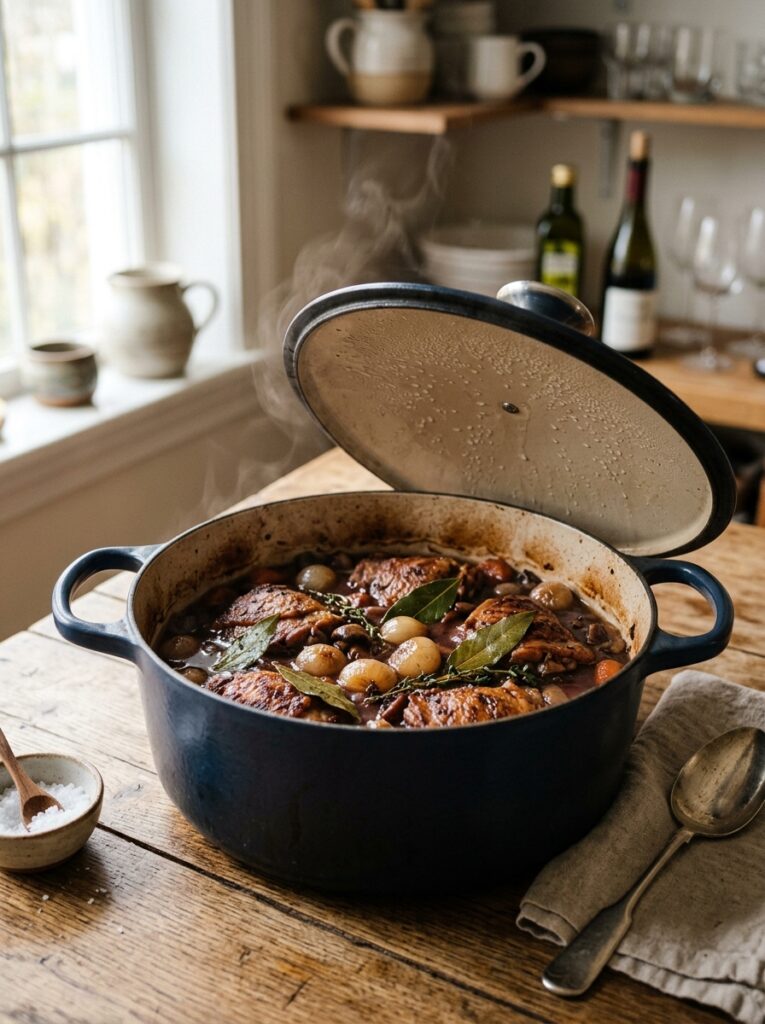
This is the recipe for a rainy evening, a glass of something red, and absolutely no urgency.
Bone-in chicken thighs, browned in a Dutch oven, then set aside. In the same pot: diced shallots, smashed garlic, and a handful of thyme. Cook until soft. Pour in most of a bottle of white wine — or chicken stock if you’d rather — and scrape all the browned bits off the bottom. That’s flavor. Don’t wash it away.
Nestle the thighs back in, add a few sprigs of fresh thyme, cover partially, and put the whole pot in the oven at 325°F (160°C) for about an hour and twenty minutes.
The result is braised chicken in the most deeply savory liquid you’ll want to dip crusty bread into. The meat falls off the bone. The shallots become almost jammy. And your kitchen smells like something wonderful happened in it, which it did.
—
8. The Spice Rub Combination I Didn’t Expect to Love
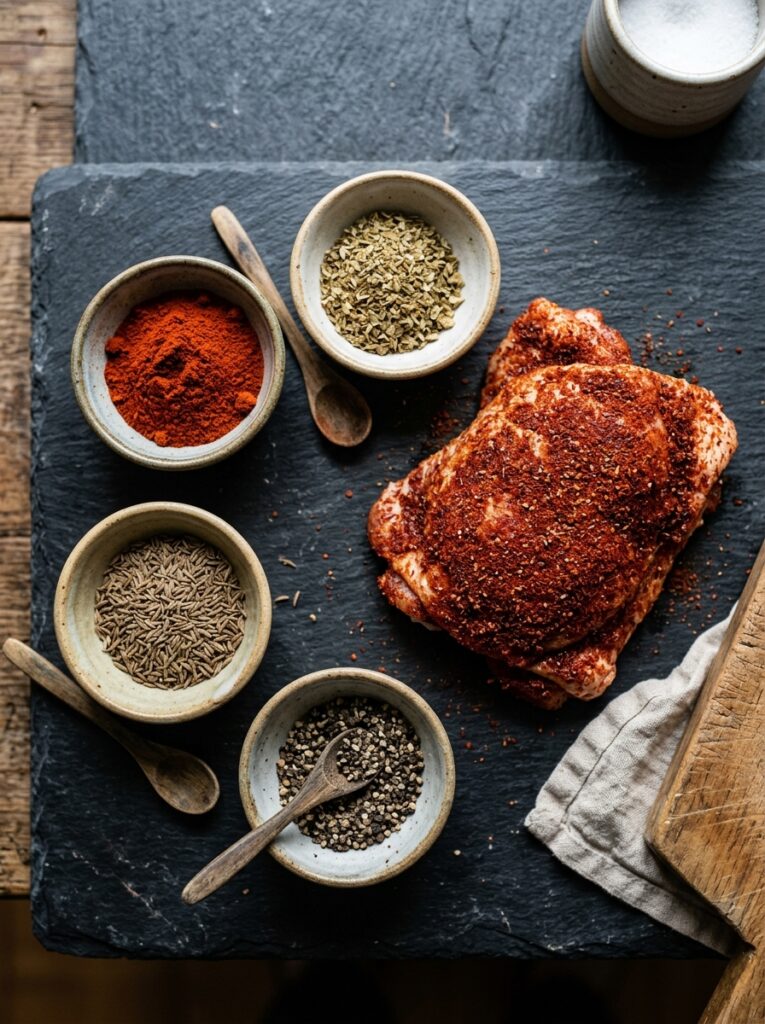
Cumin, coriander, turmeric, a little cinnamon. Not a lot of cinnamon — just enough that it’s there.
This combination makes roasted chicken thighs taste… warm? Earthy? A little unexpected in the best way. It’s not quite any particular cuisine’s territory, it just sort of borrows from a few and makes something its own.
Pair this spice rub with a yogurt sauce — plain whole-milk yogurt, garlic, cucumber if you have it, a squeeze of lemon — and serve over flatbreads with whatever leafy thing is in your fridge. Arugula works, actually, or watercress if you want a bit of pepper.
This is the one I make when I’m a bit bored of the usual rotation and need something that feels different without being complicated.
—
9. The Garlic Situation (There’s No Such Thing as Too Much)
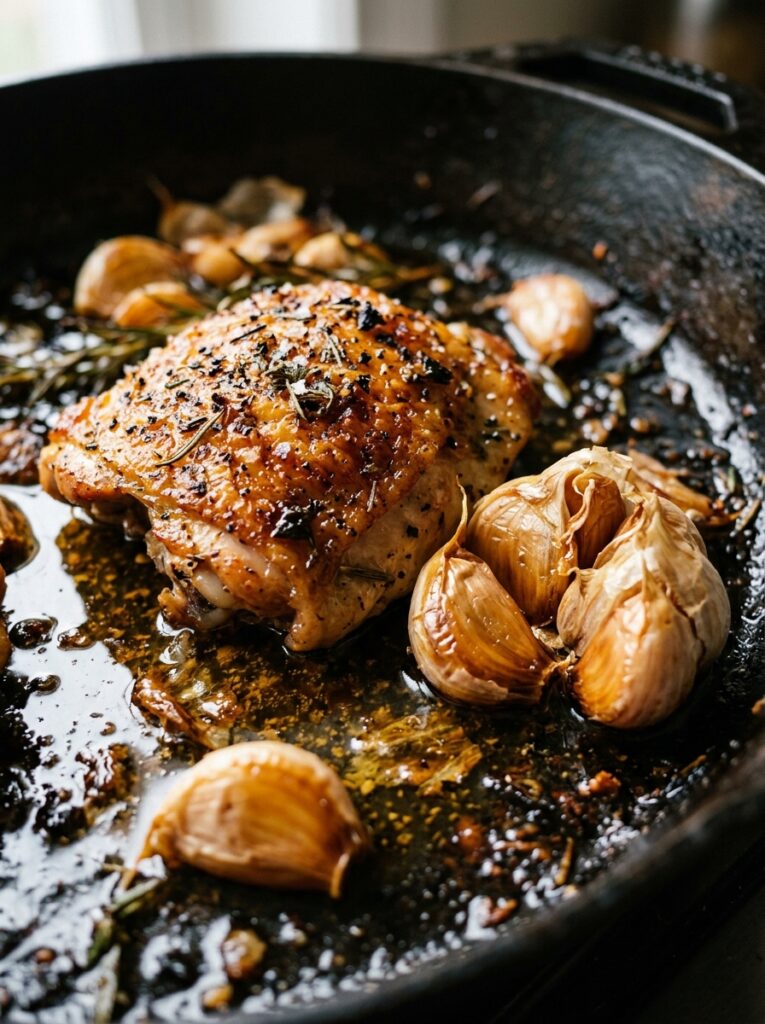
A whole head of garlic. Split horizontally. Tucked around the chicken thighs in the roasting dish.
Don’t peel it. Just cut the head in half crosswise so all the cloves are exposed, drizzle olive oil on the cut sides, and let them roast alongside the chicken for the full duration. By the time the chicken’s done, the garlic will have gone soft and sweet and spreadable.
Squeeze it out onto bread. It’s like butter but better, and I will absolutely die on that hill.
“A whole roasted head of garlic costs almost nothing and makes every dinner feel worth lingering over.”
You can also stir the roasted garlic into the pan juices to make a quick sauce — just squish out the cloves, whisk them into the drippings with a splash of stock, and you’ve got something to spoon over everything.
—
10. Vegetables That Deserve More Credit in This Context
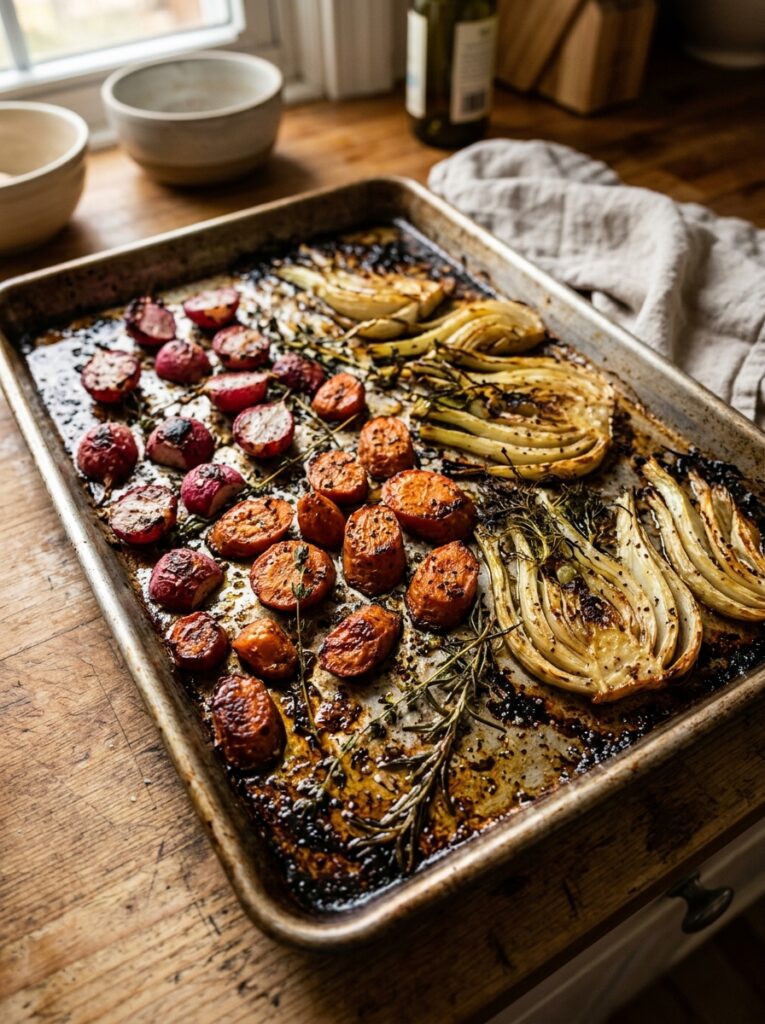
Leeks. I don’t see enough people talking about what happens to leeks when they roast under chicken thighs.
They go silky and soft and take on all the fat and juices from the bird, and they basically become a sauce-like bed that the chicken sits on, which makes the whole thing feel much more like an actual dish than “chicken with vegetables.”
Halve them lengthwise, clean thoroughly (so much grit in leeks, always), and lay them flat in your roasting tin. Put the thighs directly on top, seasoned well. Roast at 400°F for about 40 minutes. The leeks on the bottom of the pan will be almost melted. The ones exposed around the edges will have a bit of char on them.
Also: sliced fennel behaves similarly. So does radicchio, although that one’s a surprise — it goes from bitter to almost sweet when roasted. Try it once and see.
—
11. What to Do With Leftovers (This Might Be the Whole Point)
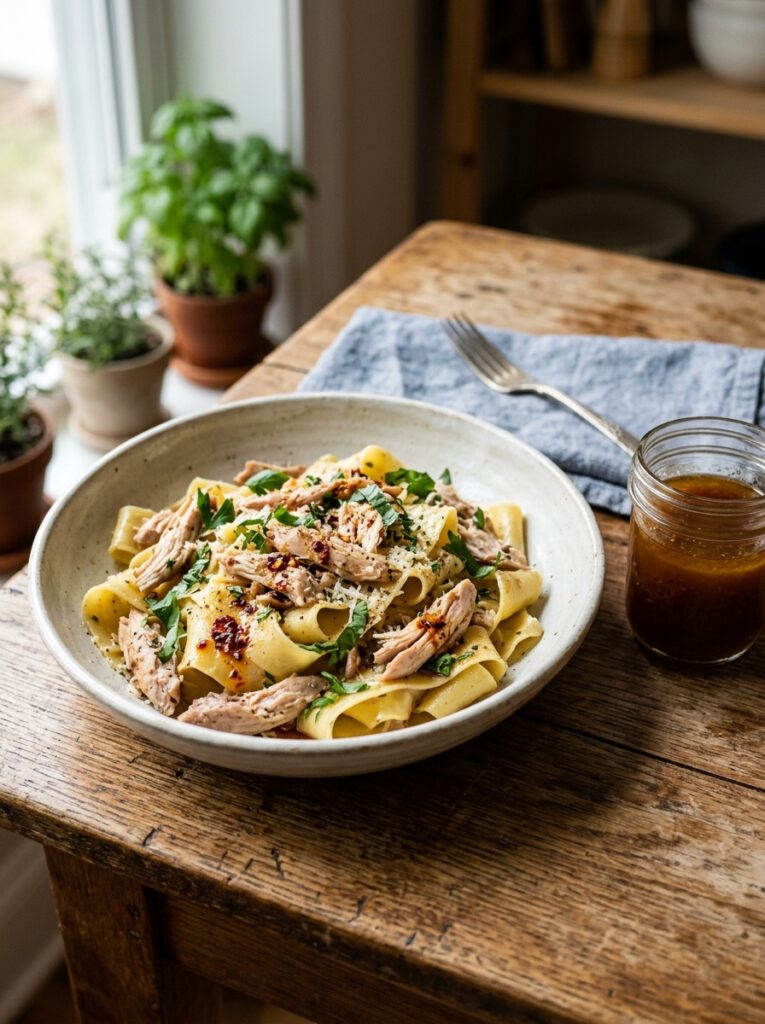
Cold leftover chicken thigh meat is, not gonna lie, one of the better things in a fridge.
Pull it off the bone and toss it into a grain bowl with whatever grains you cooked earlier in the week. Or shred it into a quesadilla. Or chop it finely and mix it with mayonnaise, Dijon, a bit of celery, salt and pepper, and eat it as a sandwich filling that’s about ten times better than anything from a shop.
The meat from bone-in thighs shreds differently than breast meat — it has more texture, a little more chew, and it actually stays moist even on day two when the breast would be chalky and dry.
Leftover braised thigh meat? Pull it into pasta. Add some of the braising liquid as a sauce, a handful of grated Parmesan, done. It’s a 10-minute dinner that tastes like it wasn’t.
—
12. The Last Thing I Want You to Know Before You Start
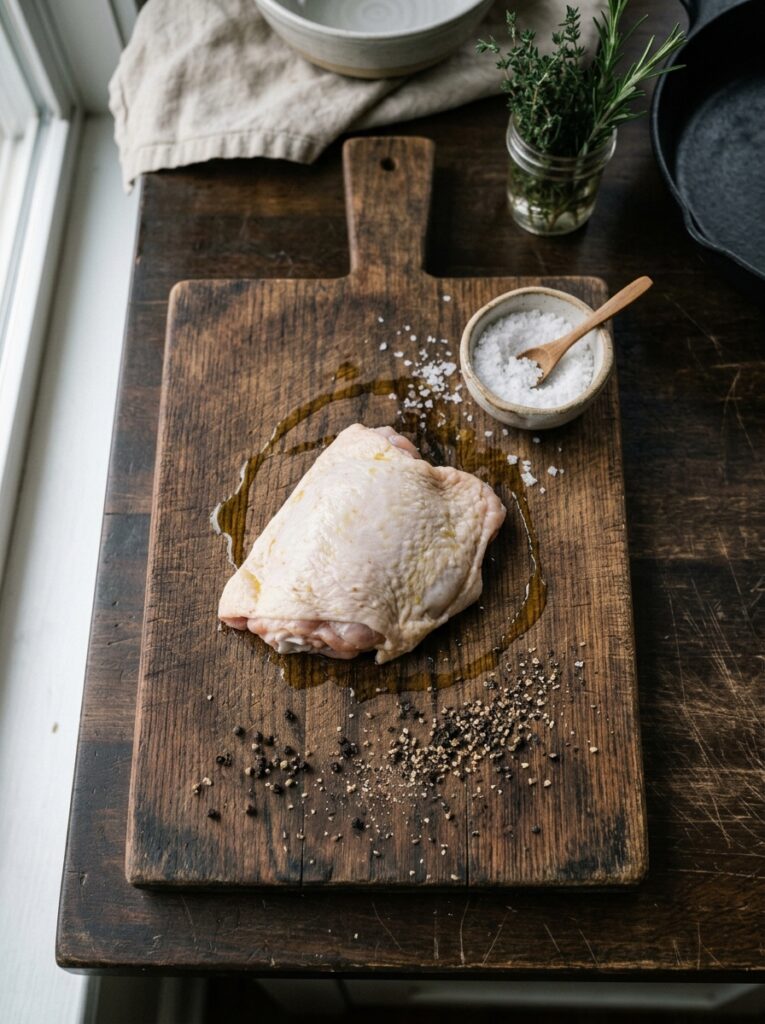
Don’t crowd the pan.
I know you want to cook all six thighs at once for a family of four and have leftovers. I understand the impulse. But if the thighs are touching, the steam can’t escape, and instead of crispy golden skin you get something that looks more like it was poached. Which might be fine sometimes but it’s not what we’re going for here.
Use two pans if you need to. Put them on different racks and swap them halfway through. It’s one extra dish, and it’s worth it.
Also — and this is the last thing, I promise — let the chicken come to room temperature for 20-30 minutes before it goes in the oven. Cold chicken straight from the fridge goes into temperature shock and cooks unevenly. Room temp chicken cooks evenly and faster. It’s a small thing that makes a real difference.
—
❓ FAQ
Q: How long do chicken thighs take in the oven at 400°F? A: Bone-in, skin-on thighs typically take 35-45 minutes at 400°F (200°C), depending on size. Always check with a meat thermometer — you’re looking for 165°F (74°C) at the thickest part, not touching the bone. Let them rest 5 minutes before cutting in.
Q: Should I cover chicken thighs when baking them in the oven? A: Only if you want softer skin. Covering them traps steam, which keeps the meat tender but prevents crisping. For most roasted chicken thigh recipes, you want them uncovered. If you’re doing a braise or want fall-off-the-bone tenderness over crispiness, covering partially is fine.
Q: Can I marinate chicken thighs overnight? A: Yes, and honestly you should. An overnight marinade (in the fridge, always) gives the flavors time to really penetrate. If your marinade contains a lot of acid — like lemon juice or vinegar — don’t go longer than 12 hours or the texture can start to get a bit mushy. Olive oil, herbs, and spice-based marinades can go longer without issue.
—
💭 Final Thoughts
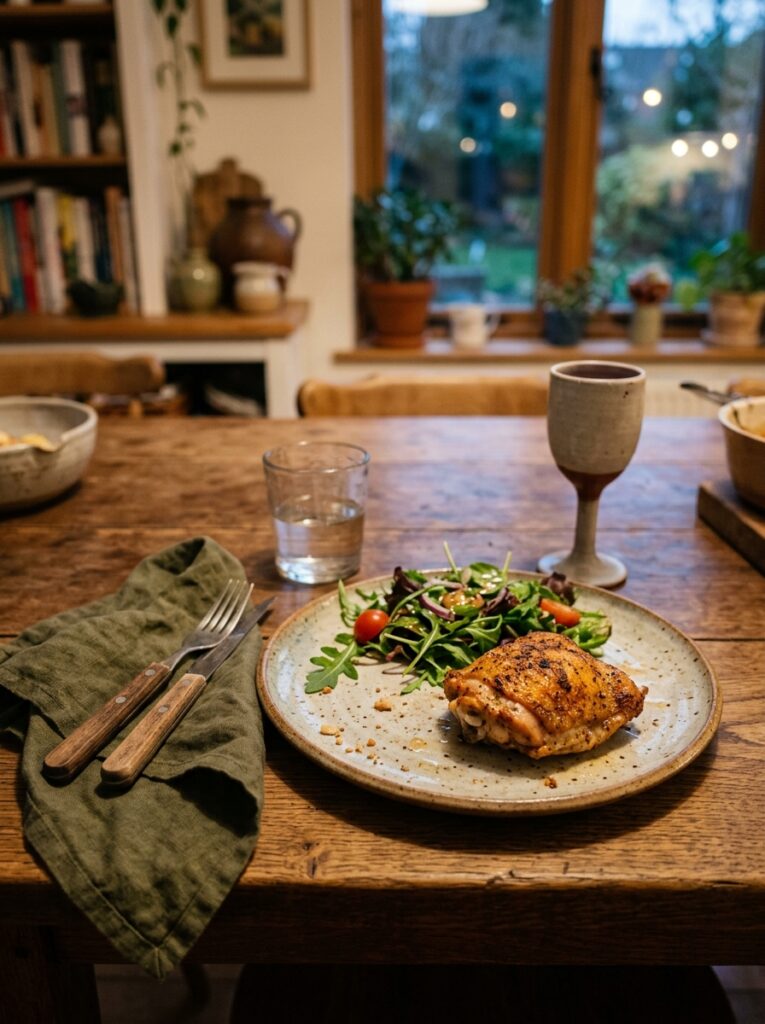
Chicken thighs don’t need much. A hot oven, a bit of seasoning, and enough time to do their thing. The recipes can be as simple or as involved as you want — from a plain olive oil and salt situation on a weeknight to a slow-braised pot that takes the whole evening and fills the house with something that makes everyone wander into the kitchen asking when it’ll be ready.
They’re probably the most forgiving cut of meat I cook with. And I think there’s something genuinely nice about cooking something that meets you where you are.
What’s your go-to way to cook chicken thighs — are you a high-heat crispy skin person, or do you lean toward the low-and-slow braise?