My friend Dani dunked a carrot stick into a little white cup and went completely silent for a second. That’s the tell. That’s how you know something’s actually good — when someone stops talking mid-sentence to process it.
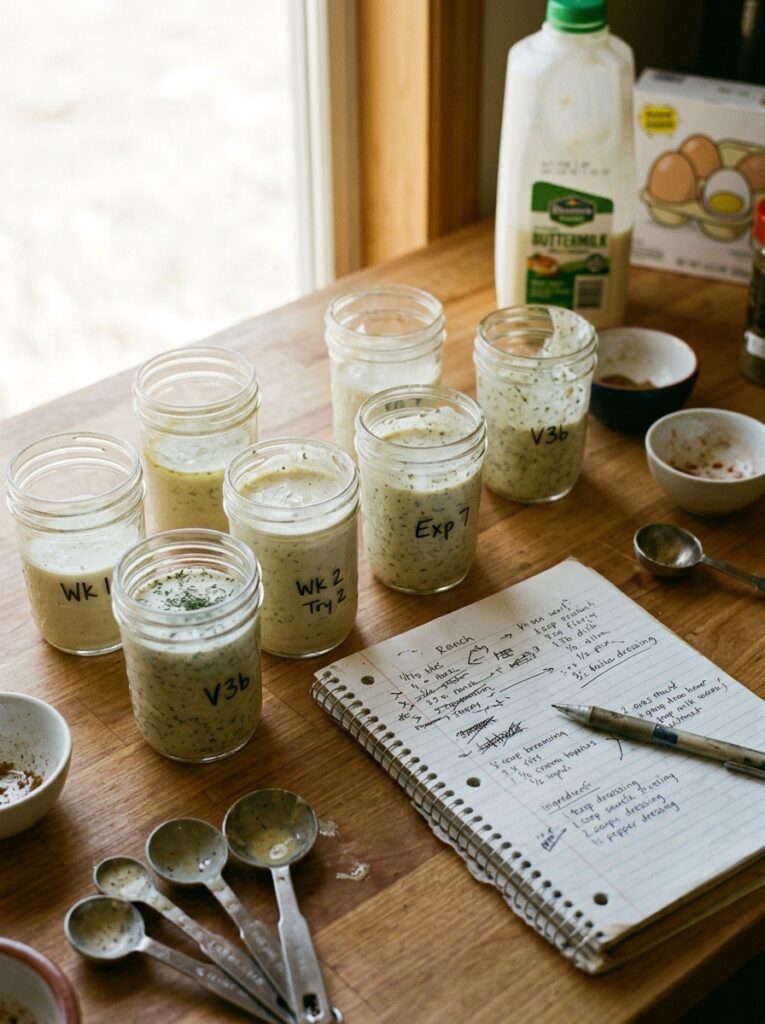
She was eating Wingstop ranch. And now I’ve spent the better part of three weeks reverse-engineering it in my kitchen, which is either very dedicated or slightly unhinged. Probably both.
—
1. Why Wingstop Ranch Hits Different Than Every Other Ranch You’ve Tried
Most ranch dressing you buy in a bottle tastes like… a vague concept of ranch. Like someone described ranch to a computer and the computer made a sauce. It’s there, technically. It has the right components. But it doesn’t make you stop talking.
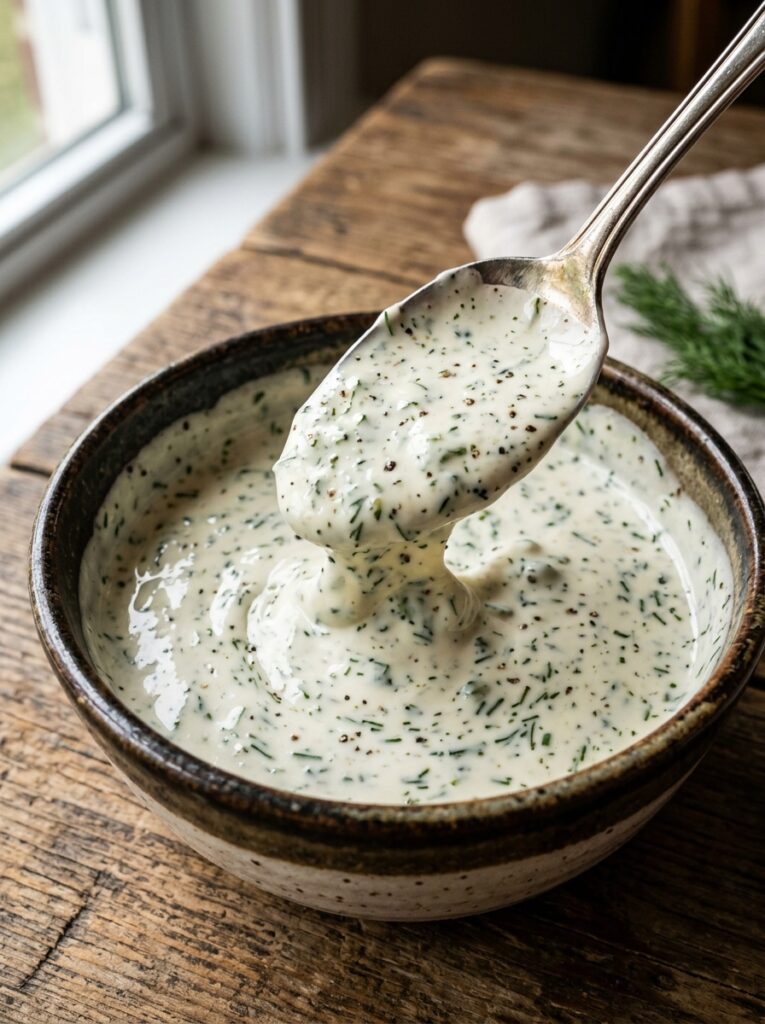
Wingstop’s version has this thing going on — it’s thicker than you’d expect, tangier, with a buttermilk edge that stays. The herb flavor doesn’t just float on top, it’s actually IN it. And there’s something almost peppery underneath, a little bite that keeps each dip interesting.
That’s what I was chasing. Not a copy-paste of some recipe I found, but that specific feeling — the one where you dip a wing and you can’t quite figure out why it’s so much better than the ranch you made last time.
—
2. The Base That Actually Makes It Work (Most People Get This Wrong)
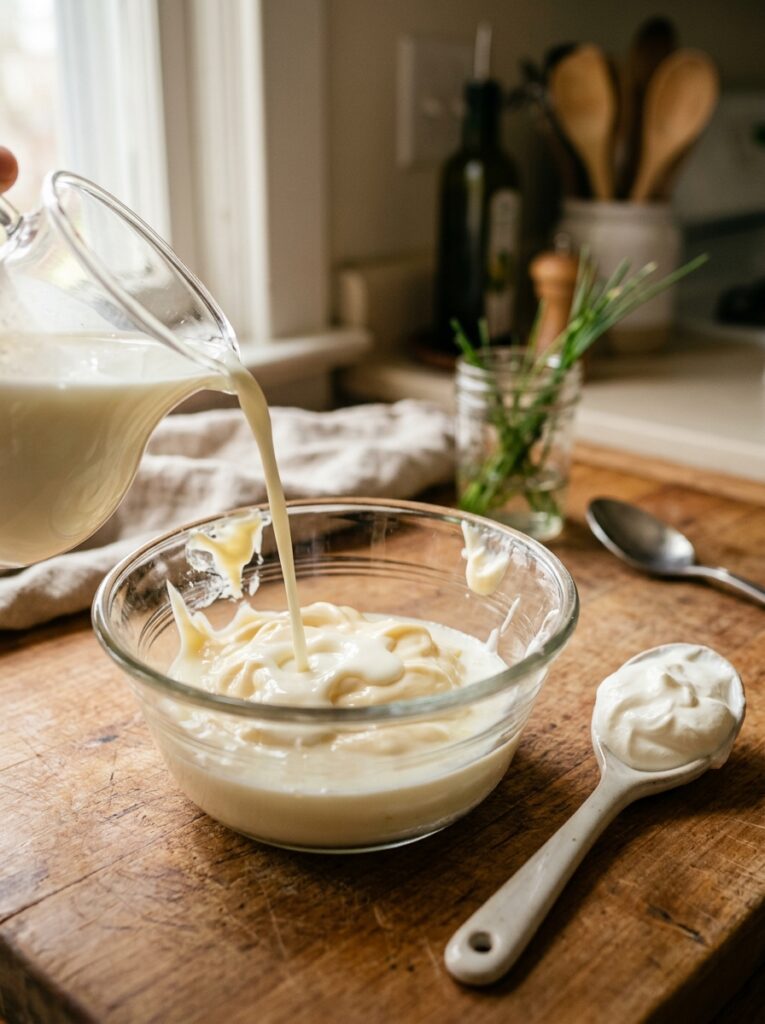
Here’s where a lot of homemade ranch attempts fall apart. People use sour cream as the only base, or they go all-mayonnaise, and neither one gets you there on its own.
The real magic is the combination. Mayo brings the fat and body. Buttermilk brings the tang. A small amount of sour cream (we’re talking maybe two tablespoons) rounds out the texture in this way that’s almost imperceptible but completely noticeable when it’s missing.
Don’t skip the buttermilk. I know it’s annoying to buy a whole carton for two tablespoons. But it’s doing irreplaceable work here. That faint sourness, that slight liquid quality that stops the dressing from being too heavy — it comes from buttermilk specifically. Not regular milk with lemon juice, not yogurt, not “I’ll just use cream.” Buttermilk.
“The magic isn’t in one ingredient — it’s in the balance between three of them working against each other just slightly.”
If you truly can’t get buttermilk, you can make a close approximation: one cup of whole milk plus one tablespoon of white vinegar, let it sit for ten minutes. It’s not quite the same but it’s genuinely close enough for this recipe.
—
3. The Herb Ratio That Took Me Four Batches to Figure Out
Okay so. The first batch I made was too dill-forward. Tasted like tzatziki’s American cousin. Good, but not it. Second batch I went heavy on the parsley and it tasted green and slightly grassy. Third batch I finally started measuring properly instead of just throwing things in, which, lesson learned.
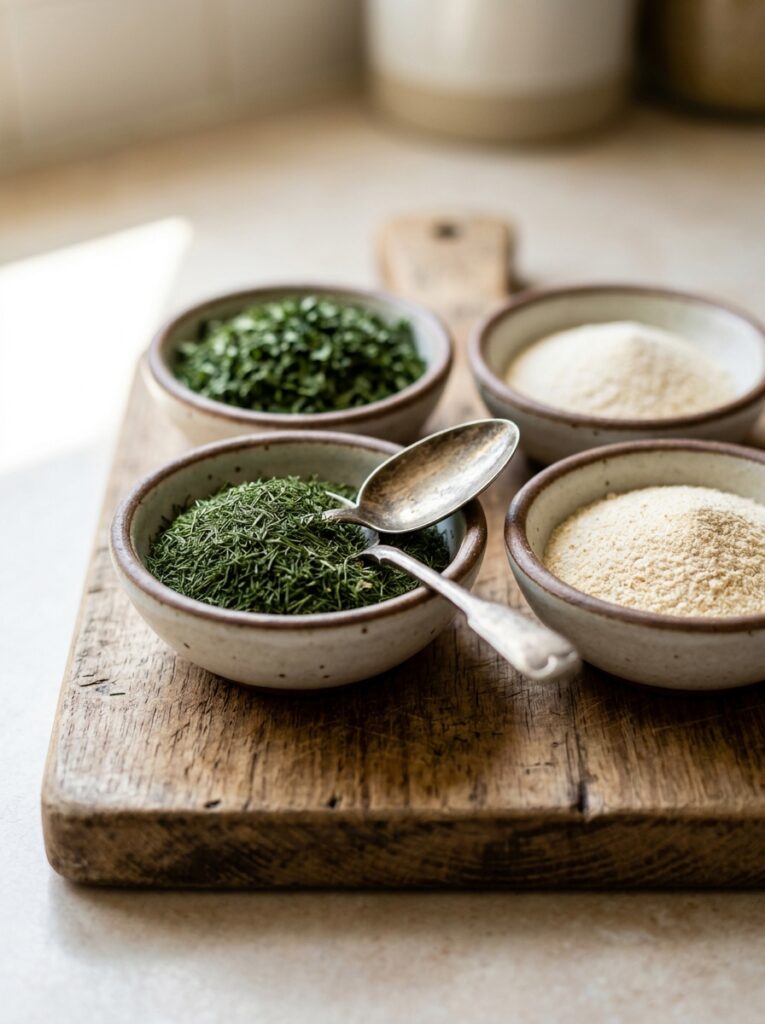
The ratio that works is: dried dill should be present but not dominant. Dried parsley carries more of the weight than you’d think. Garlic powder goes in earlier than you’d expect (it needs time to hydrate into the dressing). Onion powder, just a little, gives it that savory depth.
Fresh herbs versus dried is actually an interesting question here. Fresh dill sounds like the obvious upgrade, but in this particular dressing, dried dill gives you that concentrated, slightly dusty flavor that reads as MORE ranch-like, not less. Fresh chives as a finishing touch? Yes. But the base herbs? Go dried.
—
4. The One Thing Every Recipe Online Leaves Out
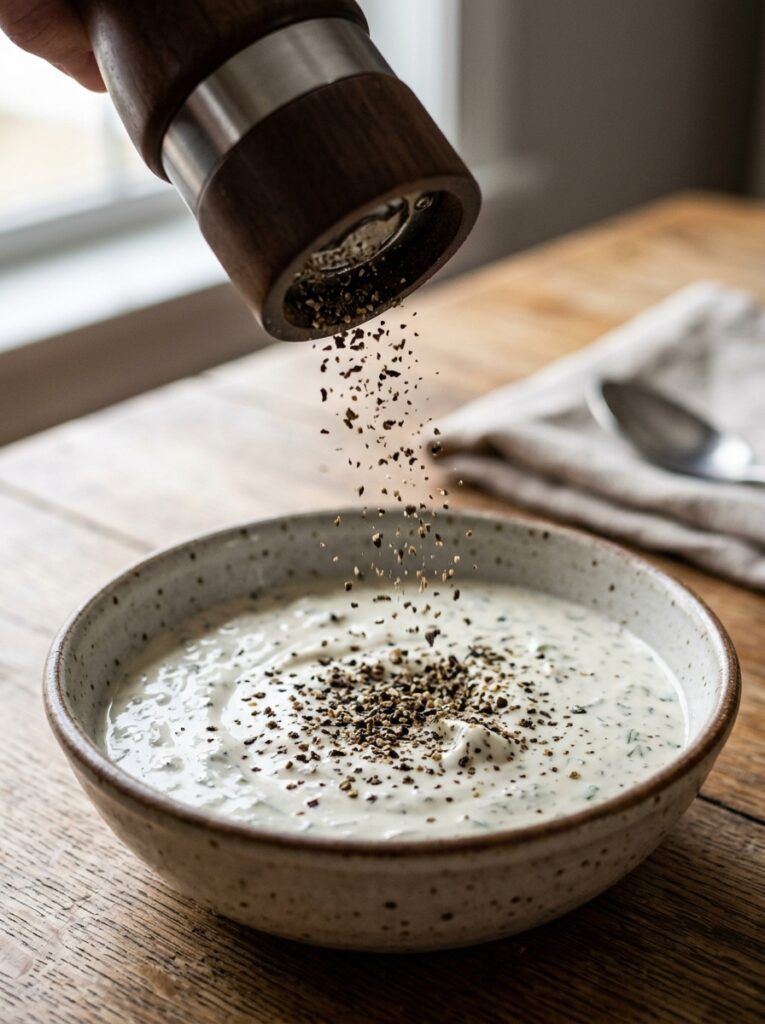
Black pepper. More of it than you think.
I don’t mean a little grind over the top. I mean pepper that you can actually taste — freshly cracked, coarse enough to add tiny little moments of heat throughout. Wingstop’s ranch has this. It’s not spicy, it doesn’t overwhelm anything, but there’s a warmth that makes it more complex than a standard ranch.
Most recipes I found online call for half a teaspoon or less. I’m using closer to three-quarters, sometimes a full teaspoon depending on how fresh my pepper is. Taste as you go. But err on the side of more, not less.
Also — white pepper. Just a pinch alongside the black. It does something subtle to the finish. This is the kind of tip that sounds annoying but then you make it both ways and you taste the difference and you feel vindicated.
—
5. Getting the Thickness Right (So It Clings, Not Drips)
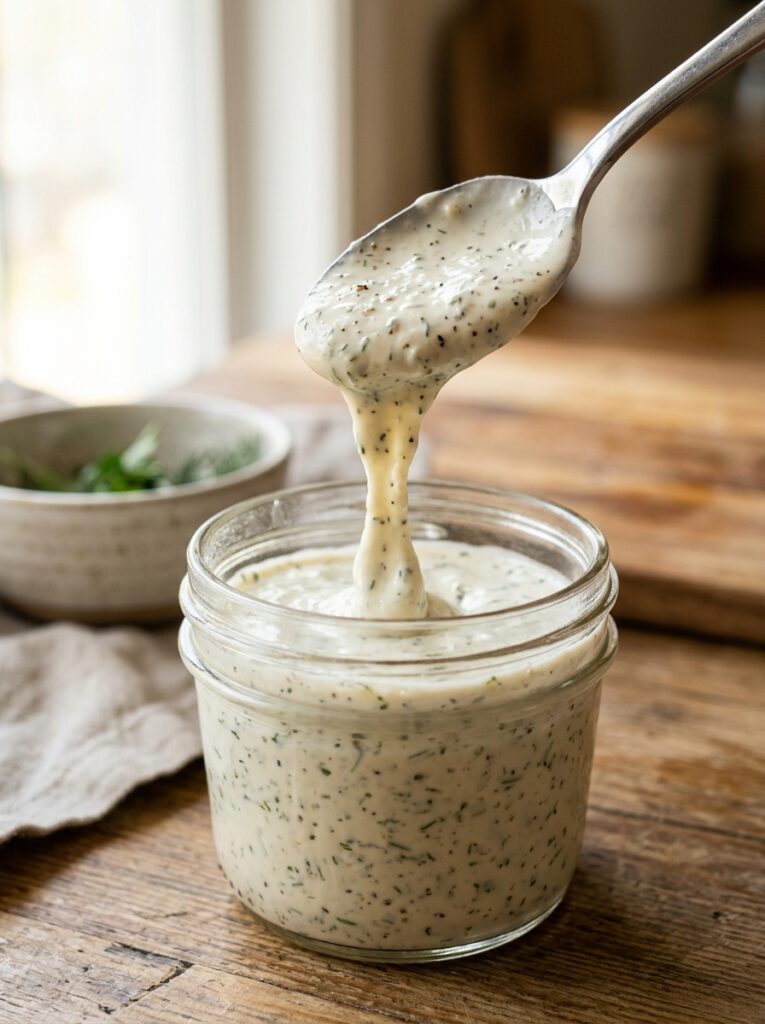
Wingstop ranch is thick. Not like frosting-thick, but thick enough that when you dip a wing, it COATS it. Dressing that’s too thin just slides off and pools at the bottom of the basket, which is sad for everyone involved.
The thickness comes from two things: the mayo-to-buttermilk ratio, and the resting time.
Resting time is genuinely underrated. When you first make this, it’ll taste good but slightly loose, like the flavors haven’t decided to commit to each other yet. Put it in the fridge for at least two hours. Four is better. Overnight is almost unfairly good. The whole dressing tightens up, the flavors meld, and something that tasted like “ranch components” transforms into an actual, cohesive dressing.
If you want it thicker than the resting time gives you, add a tiny bit more mayonnaise rather than changing the buttermilk amount. That keeps the tang intact while adding body.
—
6. The Full Recipe (Finally)
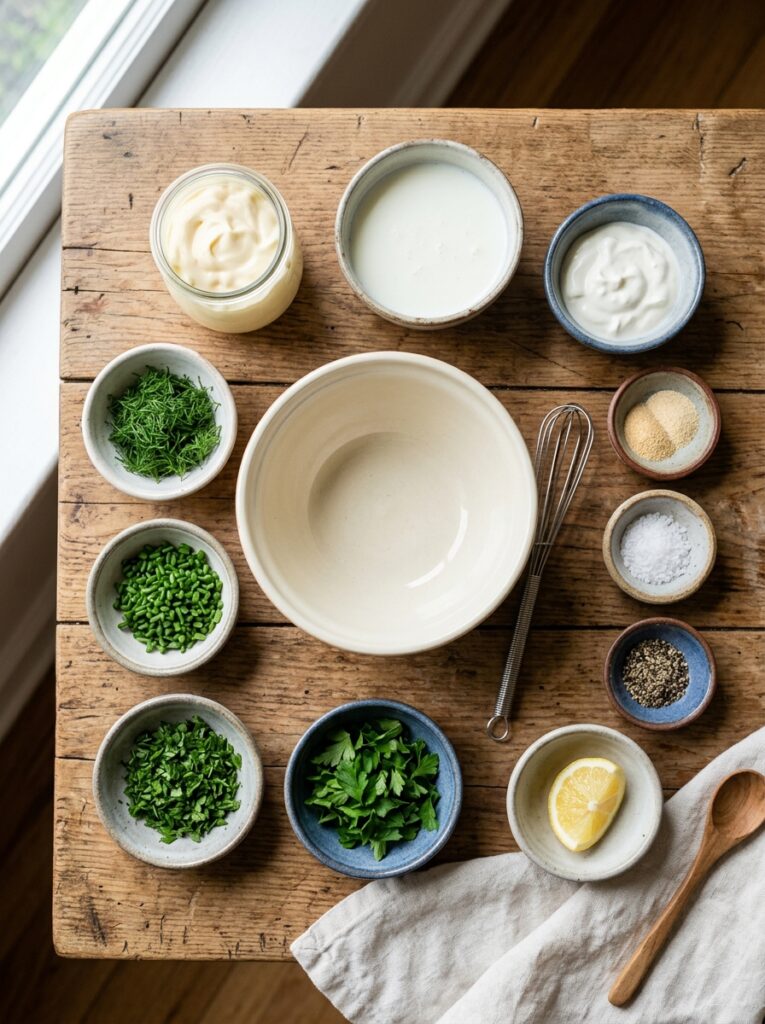
Here it is, the version I actually make now:
- ½ cup mayonnaise (full-fat, please, this isn’t the place for light mayo)
- ¼ cup buttermilk (shake the carton before measuring)
- 2 tablespoons sour cream
- 1 teaspoon dried parsley
- ½ teaspoon dried dill
- ½ teaspoon garlic powder
- ¼ teaspoon onion powder
- ¾ teaspoon freshly cracked black pepper
- A small pinch of white pepper
- ½ teaspoon white wine vinegar (not red, not balsamic — white wine or plain white vinegar)
- ¼ teaspoon salt, plus more to taste
- Optional: a few fresh chives, finely chopped
Whisk everything together. Taste it. Adjust the salt. Cover and refrigerate for at least two hours. That’s it. Makes roughly ¾ cup, which is enough for a good-sized batch of wings or a salad for four.
“Taste it before it rests and after — it’s almost like two different dressings.”
—
7. What to Do with It Beyond Wings
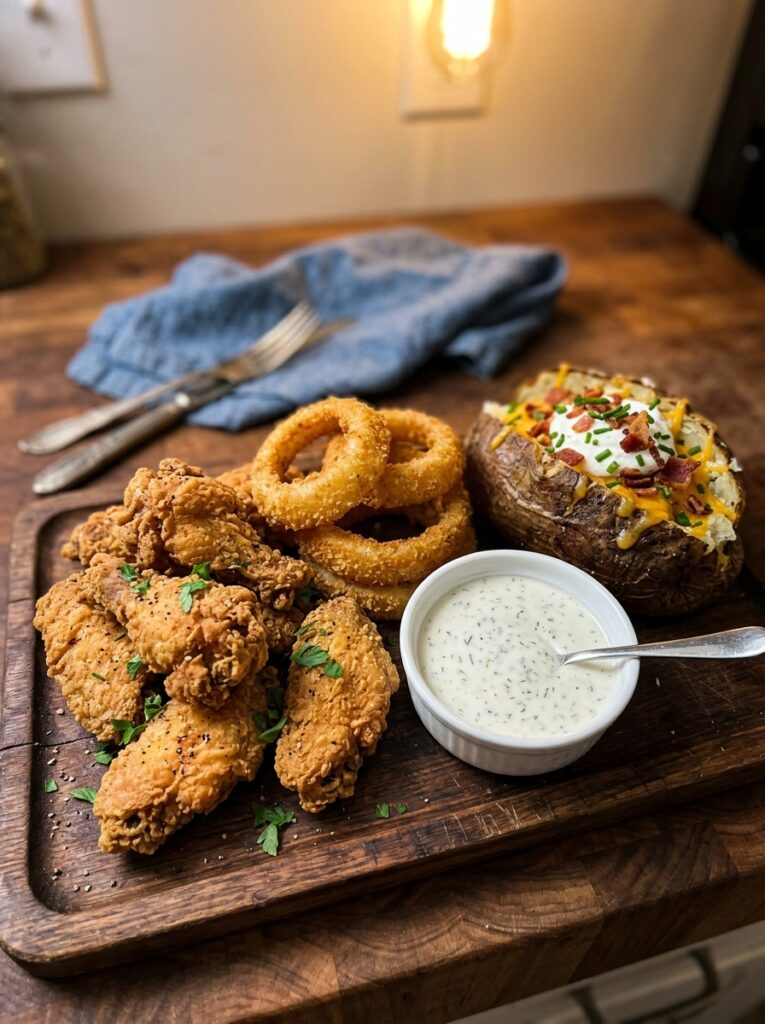
Because once you’ve got this in the fridge, you’re going to start putting it on everything. And you should.
It’s spectacular as a dipping sauce for anything fried — chicken strips, onion rings, those little potato wedge things you get at the fish and chip shop. It works brilliantly as a salad dressing, especially on anything with crispy bacon and something crunchy. Drizzle it over a baked potato and you’ll wonder why you ever used plain sour cream.
My personal favorite, which I’m slightly embarrassed about: I use it as a spread on sandwiches instead of mayo. Specifically on a chicken sandwich with a bit of hot sauce. It’s so good it feels like cheating. The tang plays against the heat in this way that makes the whole sandwich more interesting.
It also works as a dip for pizza. Side note — this is not a controversial opinion if you grew up in certain parts of the US, but it will confuse every British person you serve it to. Let them be confused. Then watch them try it.
—
8. Scaling It Up for a Party (Because You Will Need More Than ¾ Cup)
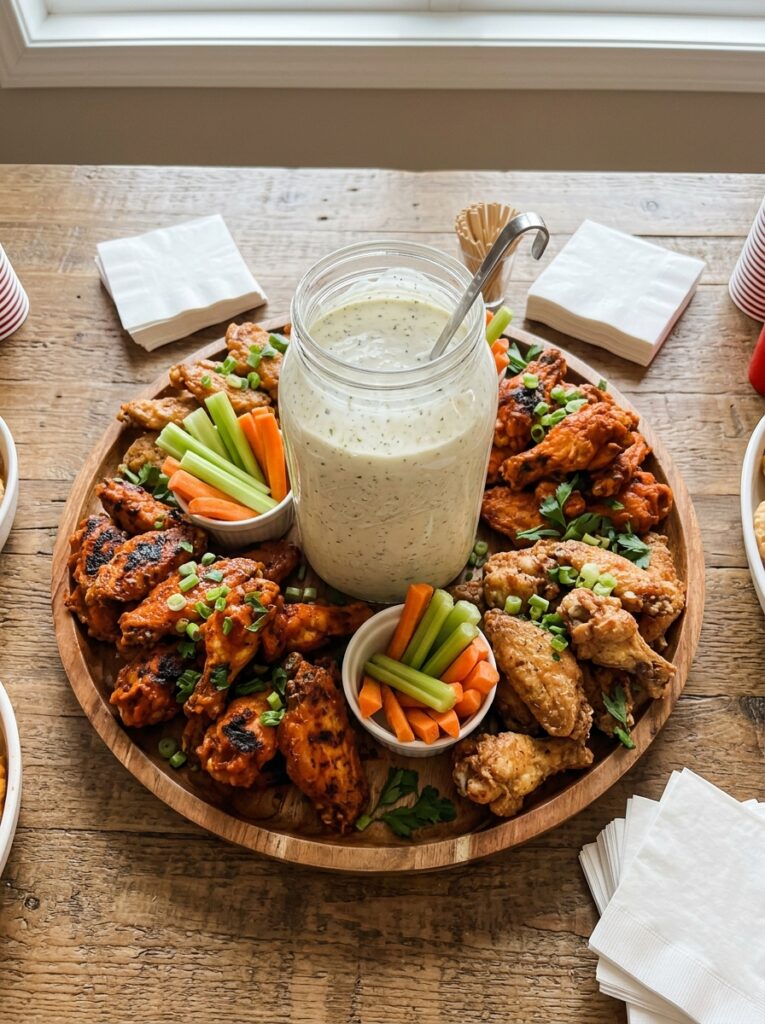
This recipe scales beautifully. For a crowd — let’s say you’re doing a big batch of wings for eight to ten people — just triple everything. The ratio stays the same, the flavors stay balanced, nothing weird happens.
The only adjustment I’d make at scale is to hold back a bit on the salt until the end. When you’re making a large batch, the salt can concentrate as it rests, so taste it fresh, then taste again after refrigerating, and adjust then rather than going heavy at the start.
Store it in a jar with a lid — honestly any container works, but a mason jar makes it feel intentional — and it keeps in the fridge for up to five days. You won’t have it for five days. That’s not the kind of problem this dressing creates.
—
9. Making It Work for Dietary Restrictions
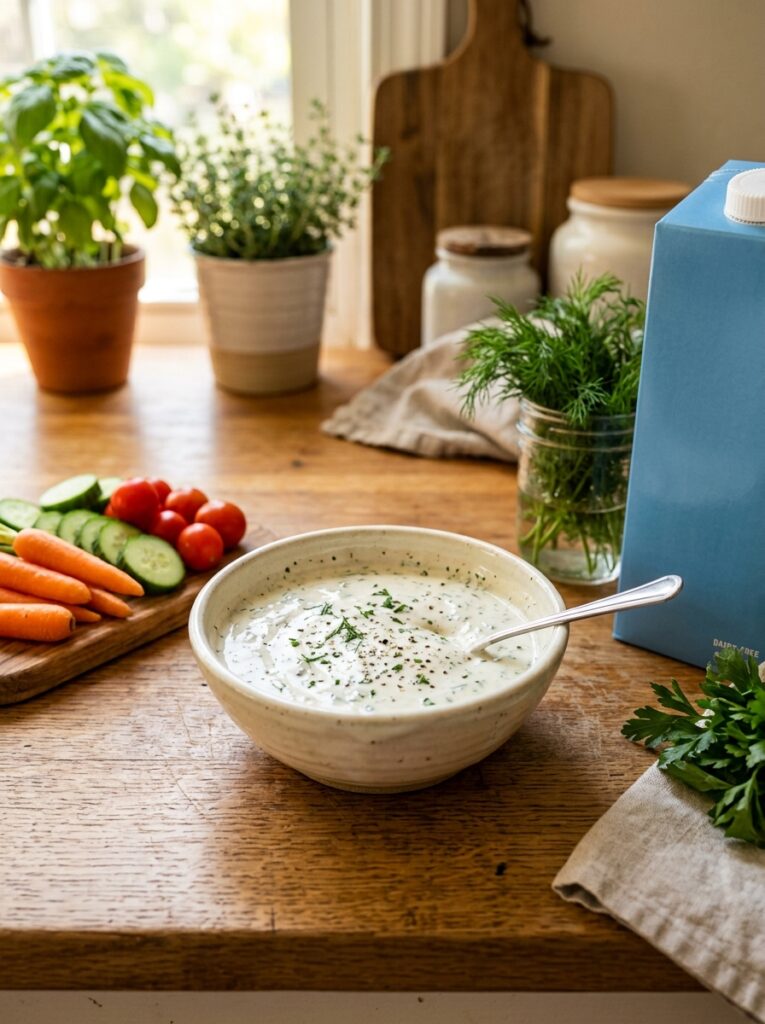
If someone at your table doesn’t eat dairy, this gets tricky but it’s not impossible.
Vegan mayo works as a sub and it’s actually quite good in this. The bigger issue is the buttermilk — you’ll need to make a plant-based version using oat milk or soy milk with a tablespoon of apple cider vinegar, let it curdle slightly, and use that. The flavor profile shifts a little (soy milk version is slightly sweeter, oat milk is slightly nuttier) but it still reads as ranch.
For the sour cream, a plain unsweetened coconut yogurt works okay. Don’t use a flavored one obviously.
The herb and pepper component doesn’t change at all, which means the hardest-to-get-right part — the seasoning — is already dialed in. That’s genuinely good news.
—
10. The Problem With Bottled Ranch (Said With Affection)
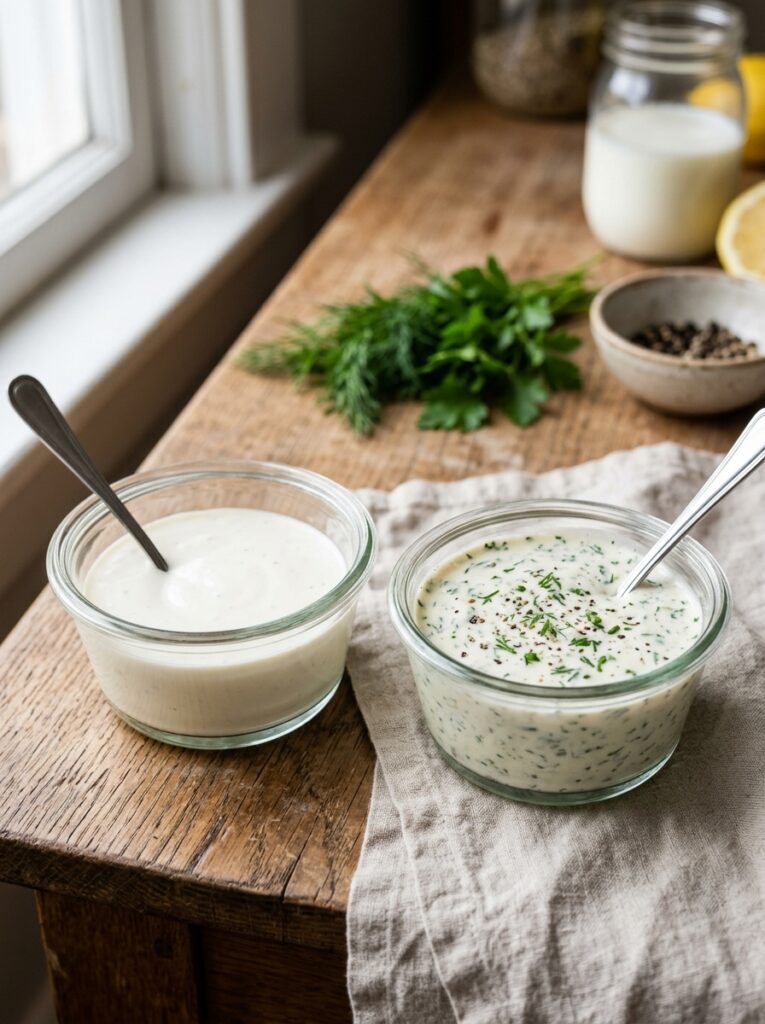
I want to be clear: I don’t hate bottled ranch. There are moments for bottled ranch. 1am, out of everything, pizza crust situation? Bottled ranch is exactly correct for that scenario.
But there’s a specific flatness to it. Everything’s been stabilized and preserved and it’ll last until the heat death of the universe on a shelf, which means the flavors have been processed into submission. They’re present but they don’t POP. The garlic is muted, the pepper is practically absent, the herb flavor tastes like it was added from a concentrate of a concentrate.
Making it fresh means everything is still awake. The garlic powder still smells like garlic when you open the jar. The dill hasn’t lost its edge. And because you’re tasting as you go, it’s also just… exactly what you want it to be, which no bottle can promise.
—
11. Little Upgrades That Change the Whole Thing
If you want to take the base recipe somewhere more interesting without losing the Wingstop character:
Add half a teaspoon of smoked paprika and a squeeze of lemon. It becomes a slightly smokier, brighter version that’s especially good on grilled things.
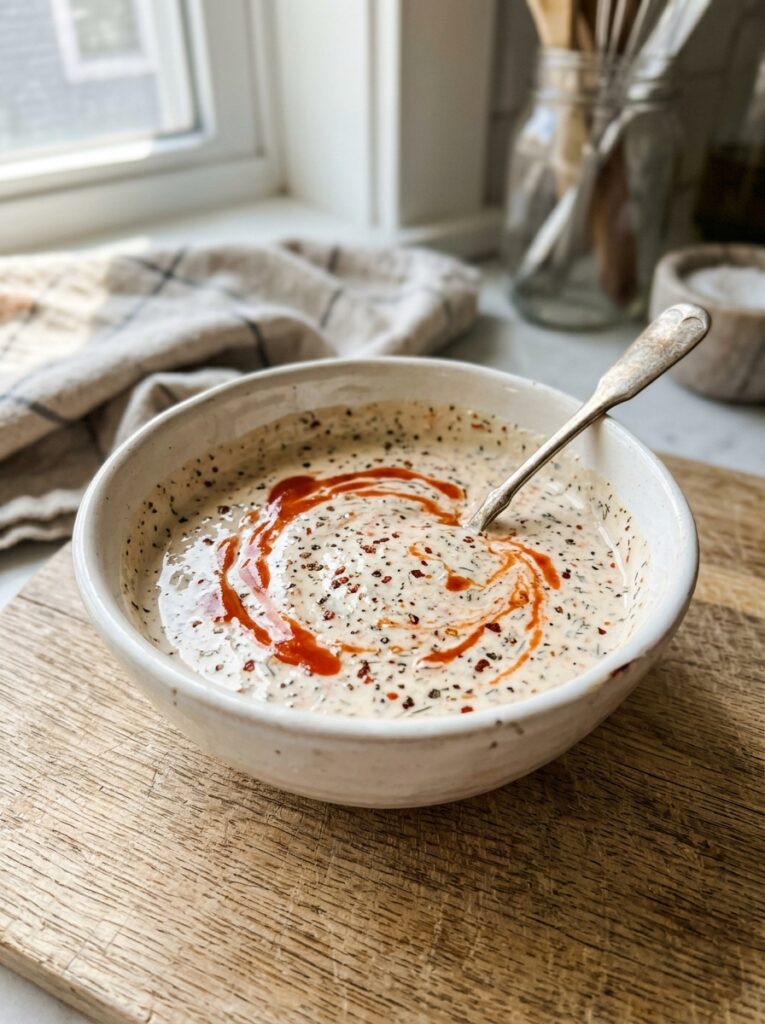
Or — and this is the one that got me — add two teaspoons of hot sauce (the vinegary kind, not the thick chili paste kind) and a pinch of cayenne. Now you’ve got a spicy ranch that is GENUINELY better than any spicy ranch you’ve bought in a bottle. It still tastes like ranch, it still has all the creamy tang, but there’s a slow heat that builds while you’re eating.
Some people add a small amount of cream cheese to make it thicker and richer. I’ve tried it. It’s good but it starts tasting less like this specific ranch and more like a dip, which is a different thing. Depends what you want.
“Two teaspoons of hot sauce and a pinch of cayenne turns this into a spicy ranch that I genuinely can’t stop making.”
—
12. Why Making Your Own Feels Different Than You’d Expect
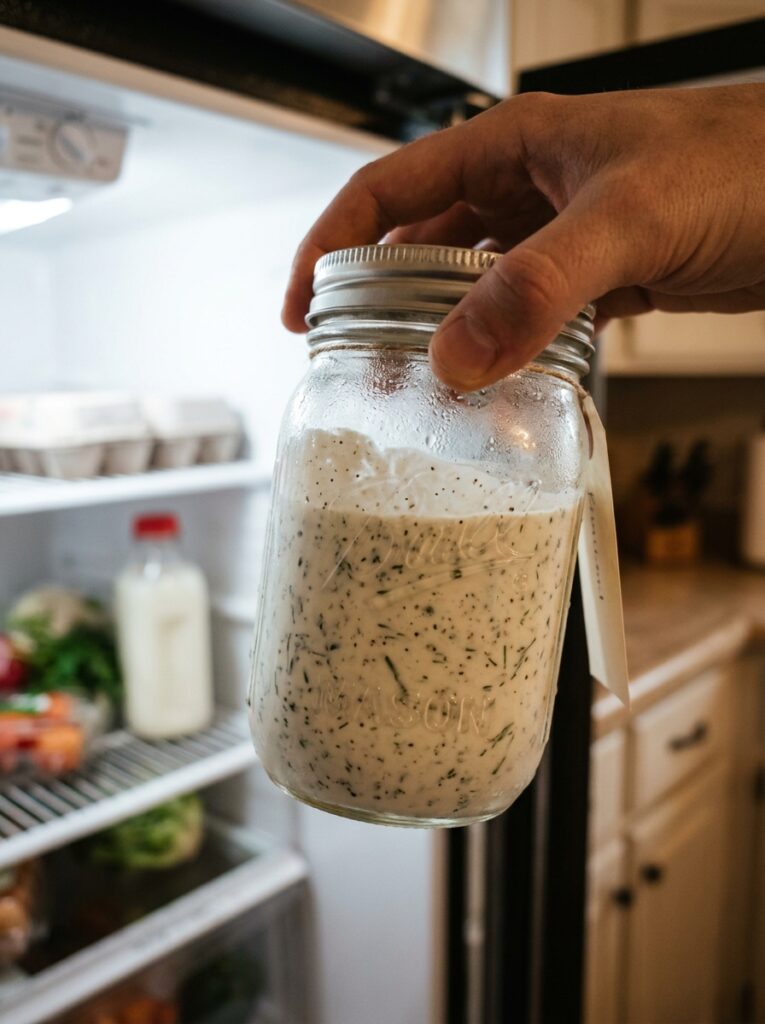
There’s something almost ridiculous about being proud of a condiment. It’s ranch dressing, not a bœuf bourguignon. But I genuinely feel a small, embarrassing amount of satisfaction every time I pull a jar of this out of the fridge.
I think it’s because it’s so immediately, reliably good. Some things you make from scratch and there’s a learning curve, a period of adjustment, multiple attempts. This delivers on the first proper try. You taste it after the resting time and it just… tastes right. It tastes like the little white cup from Wingstop, which was the whole point, and also now it’s in your fridge and you made it yourself and it cost almost nothing.
Dani came over again last week. I had carrot sticks on the counter and the jar of ranch in the fridge. She went quiet for the same second.
—
❓ FAQ
Q: Can I use dried chives instead of fresh? A: You can, and it still tastes good — dried chives are more concentrated so use about half the amount. But fresh chives give you a slightly brighter, cleaner finish that’s worth it if you have them. The dried version won’t ruin anything, it’ll just taste a little more… bottled, if that makes sense.
Q: How long does homemade ranch dressing keep in the fridge? A: About four to five days in a sealed container. The buttermilk means it won’t last as long as commercial versions, but honestly that’s fine because it won’t be around that long. If it starts smelling off or the texture separates badly and won’t whisk back together, toss it.
Q: Is Wingstop ranch actually different from regular restaurant ranch? A: Yes, and specifically because of the thickness and the pepper level. Most chain restaurant ranch is thinner and milder — it’s designed to appeal to everyone, which means it’s a little cautious. Wingstop’s version has more personality. The black pepper and the buttermilk tang are both more forward than you’d get at a typical fast-casual spot, which is what makes people remember it.
—
💭 Final Thoughts
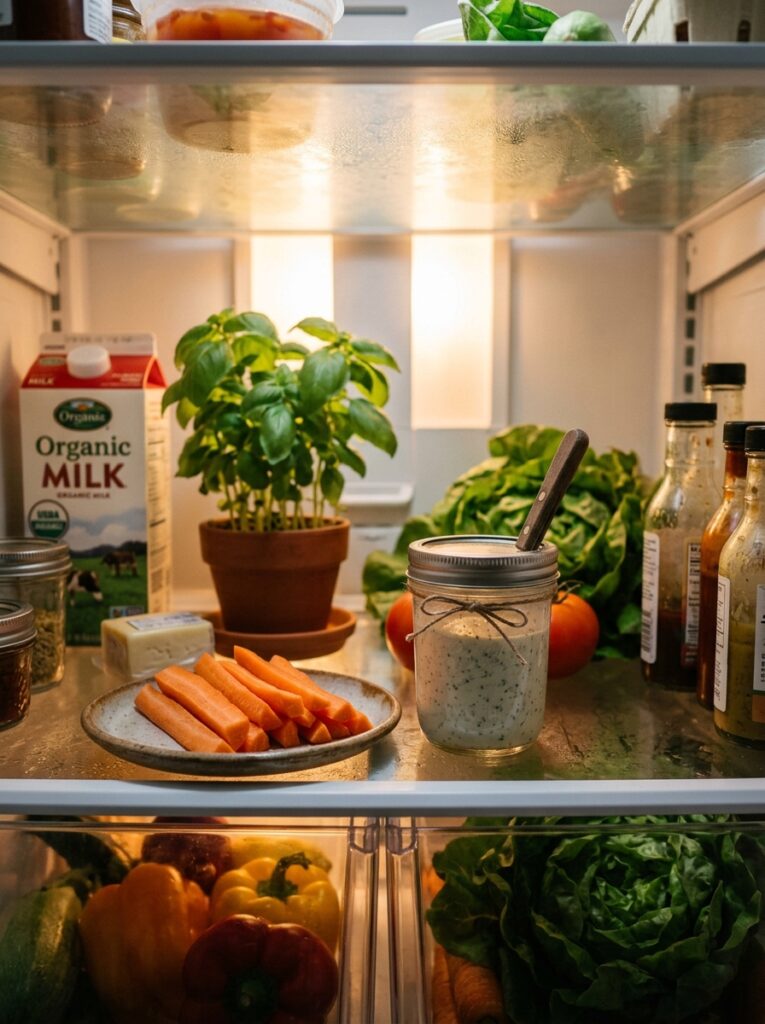
This one turned into a bit of an obsession, not gonna lie. Three weeks of ranch batches, a slightly exasperated flatmate, and one very happy friend with a carrot stick. But I’ve got the recipe exactly where I want it now, and it lives in my fridge on a near-permanent basis.
The thing about making a dipping sauce from scratch is that it sounds like more effort than it actually is — everything in this recipe probably took me eight minutes to assemble, plus the hands-off fridge time. That’s a pretty good ratio for something that changes the whole texture of a meal.
Would you put this on something weird and unexpected, or are you strictly a wings-and-carrot-sticks person?
