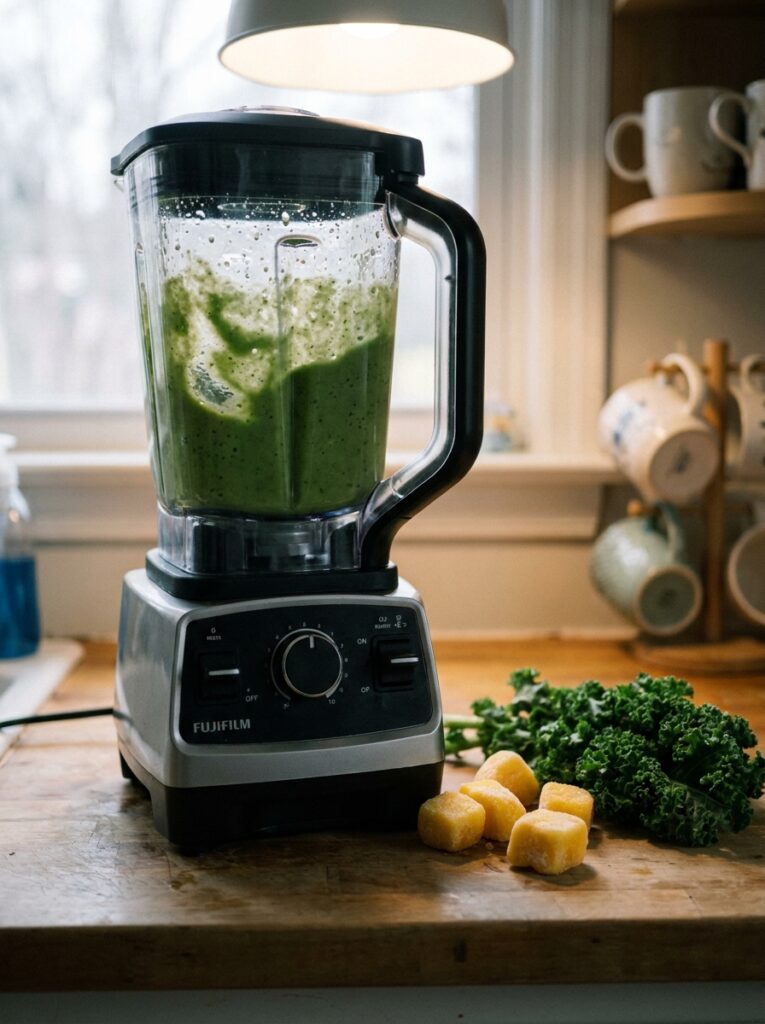
I gained eight pounds during a particularly grim winter and tried approximately everything. Meal kits. Calorie apps. That one soup people swear by. Nothing clicked until I started paying serious attention to what I was drinking for breakfast — and not in the way I expected.
—
1. Why Most Weight-Loss Smoothies Are Just Dessert in a Blender
Let’s be real. The internet is full of “weight loss smoothies” that are basically milkshakes with PR. A cup of mango, half a banana, some flavored yogurt, a drizzle of honey — delicious, obviously, but you’ve just started your day with 60 grams of sugar and a hunger crash waiting for you at 10:30am.
The difference between a smoothie that helps you lose weight and one that doesn’t is shockingly simple. Protein. Fiber. Volume. In that order. When all three show up in your glass, your body genuinely stays full. Not “I guess I’m okay” full. Like, actually full, check-the-clock-because-surely-it’s-lunchtime full.
The recipes below aren’t punishment food. But they’re also not pretending to be something they’re not. They work because they’re built around what keeps hunger quiet, not just what tastes good going down.
“The recipes below aren’t punishment food. But they’re also not pretending to be something they’re not.”
—
2. The Green Smoothie That Doesn’t Taste Like a Lawn
People hear “spinach smoothie” and picture something muddy and virtuous and sad. This one’s different, I promise.
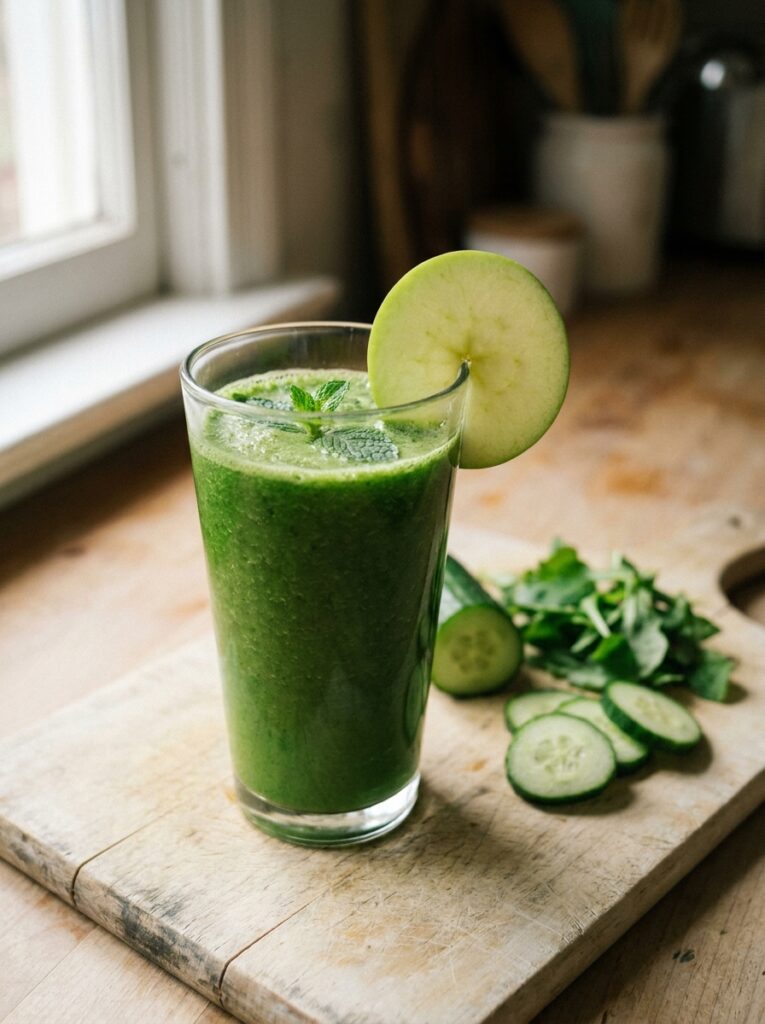
Blend two big handfuls of baby spinach with one frozen banana, half a cup of frozen pineapple chunks, the juice of half a lime, one tablespoon of ground flaxseed, and about a cup of unsweetened almond milk or oat milk — whatever’s in your fridge. The banana and pineapple completely overwhelm the spinach flavor. You’ll taste tropical. You’ll taste a little zingy from the lime. You won’t taste lawn.
The flaxseed is doing real work here. It’s adding a hit of soluble fiber that slows digestion down, which means that fullness lasts. It also adds a very subtle nuttiness that honestly makes the whole thing taste more interesting.
Baby spinach works better than kale for this. Kale is great but it’s assertive, and unless you’re already a convert, it can hijack the flavor in a way that makes the whole thing feel like medicine. Spinach just… disappears. In the best way.
—
3. The Breakfast That Convinced My Skeptical Partner
My partner is deeply suspicious of anything described as “healthy.” Hates the word. Won’t touch protein powders. Categorically refuses to drink anything green.
This one won him over. Completely.
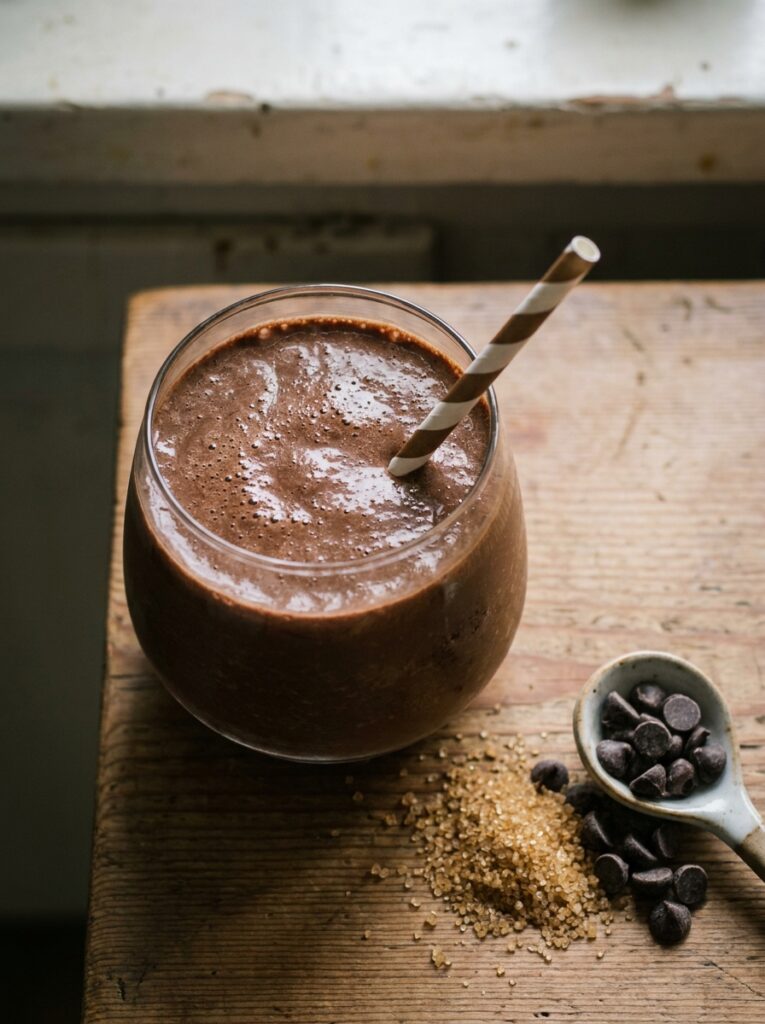
Frozen cherries — about a cup — with half a cup of plain Greek yogurt (not low-fat, the full stuff actually keeps you fuller), one tablespoon of almond butter, a cup of milk of your choice, and a small square of dark chocolate or a teaspoon of cocoa powder. Blend until smooth.
It tastes like a chocolate cherry dessert. It has roughly 25 grams of protein. It’ll keep you going until noon without effort. The Greek yogurt is doing heavy lifting on the protein front, and the almond butter adds fat that slows glucose absorption — which means no sugar spike, no crash.
If you want it thicker, add a couple tablespoons of rolled oats and let it sit for two minutes after blending. Changes the whole texture. Almost like a drinkable porridge, which sounds weird but is genuinely good.
—
4. The One You Make When There’s Nothing in the House
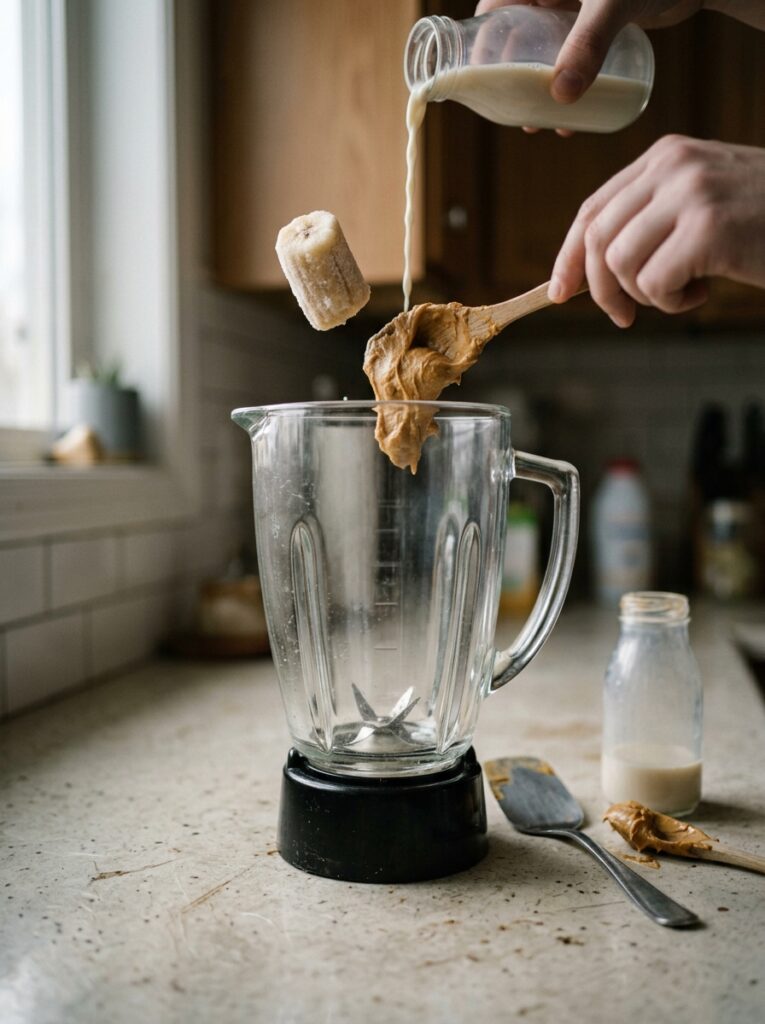
You know the moment. It’s 7:45am, you’re half asleep, the fridge has some sad leftovers and not much else, and you need something before you leave. This smoothie exists for that moment.
Frozen banana — keep a bag in the freezer always, always — with two tablespoons of peanut butter, a tablespoon of chia seeds, half a teaspoon of cinnamon, and whatever milk you’ve got. That’s it. Done in two minutes.
The chia seeds are tiny but they expand in your stomach, which is genuinely useful for fullness. The peanut butter gives you fat and protein. The banana gives you just enough natural sweetness that you don’t need anything else.
It’s not glamorous. It won’t win any Instagram awards. But it works on a regular Tuesday morning when you don’t have the bandwidth for anything complicated.
“Keep a bag of frozen bananas in the freezer always, always. It’s a non-negotiable at this point.”
—
5. What to Know About Protein Powder Before You Buy One
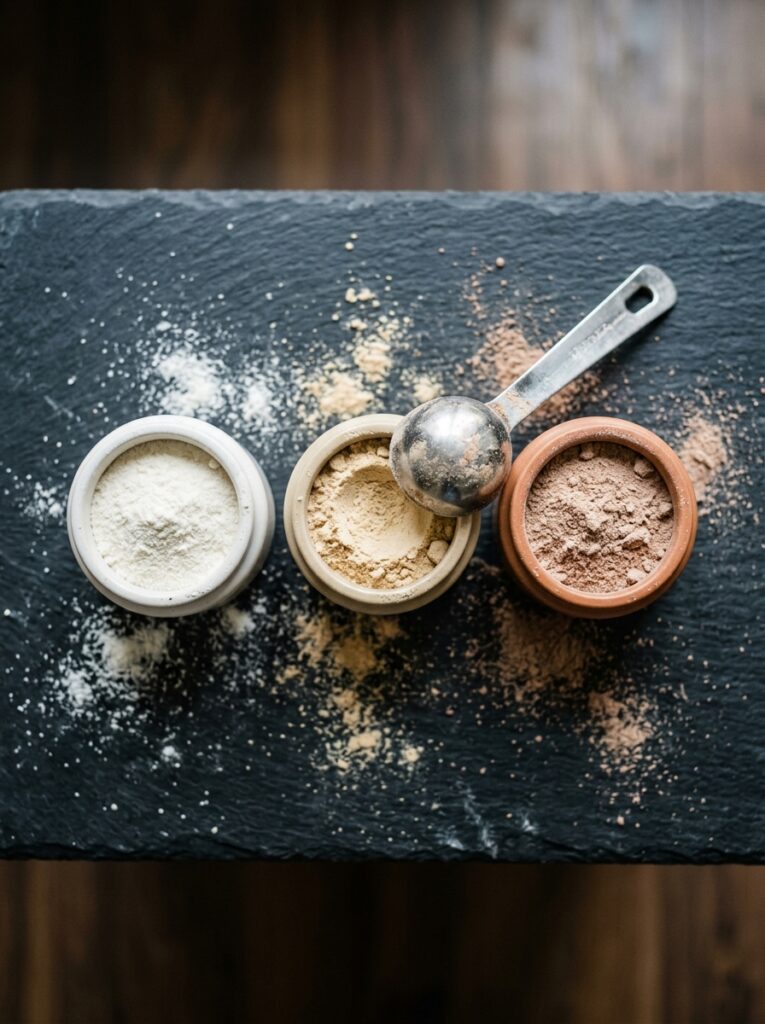
Not gonna lie, I avoided protein powder for years because the whole scene felt kind of intimidating and also the flavors were aggressively artificial. Chalky vanilla that smelled like sunscreen. “Chocolate” that tasted like something adjacent to chocolate but not quite.
But here’s the thing — you don’t have to use protein powder. If you’re building your smoothie with Greek yogurt, nut butters, seeds, and whole foods, you can hit a solid 20-25 grams of protein without it. So if you’re not into it, skip it entirely and just double your yogurt or add an extra tablespoon of nut butter.
If you DO want to use it, unflavored protein (either whey or a plant-based blend) is the most flexible. You can add it to anything without it fighting the other flavors. The flavored ones work better when you’re building a smoothie around that flavor specifically — like if you want chocolate protein, commit to a chocolate smoothie and it’ll actually be good.
What to avoid: anything with artificial sweeteners as the first or second ingredient. They mess with your appetite signals in ways that aren’t helpful when you’re trying to eat less overall.
—
6. The Color That’s Secretly Doing the Most for Your Metabolism
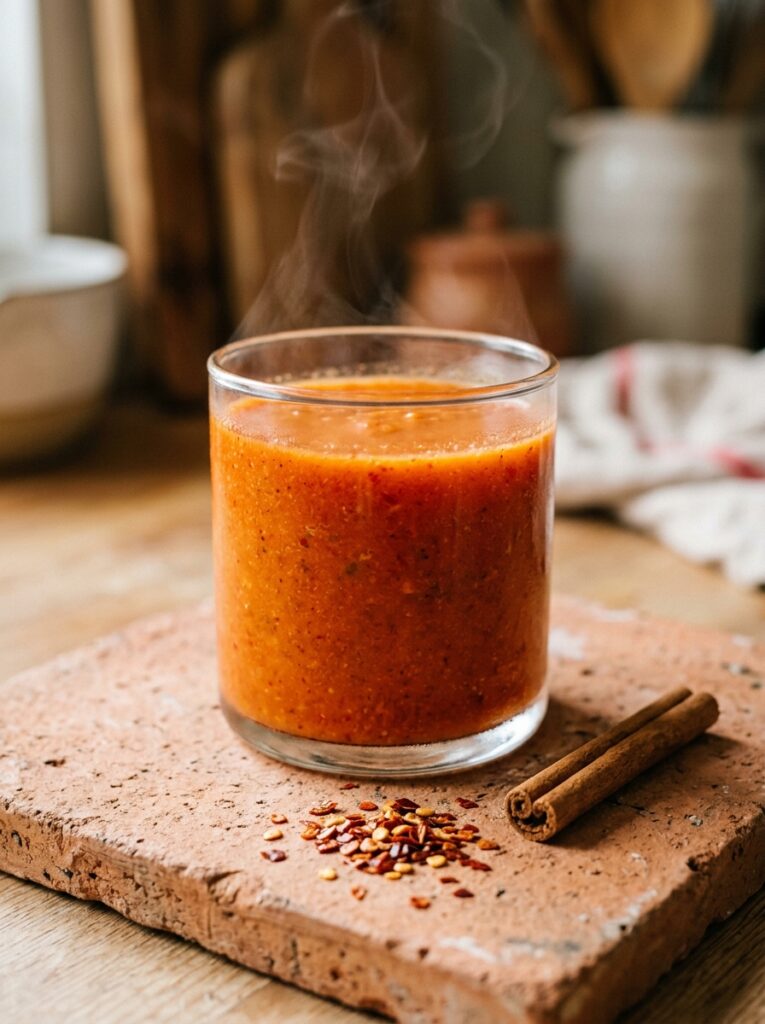
Orange and yellow fruits — mango, papaya, carrot, turmeric — keep showing up in nutrition research for a reason. They’re loaded with antioxidants and compounds that support a healthy metabolism, and they blend into some of the most naturally sweet, satisfying smoothies without needing added sugar.
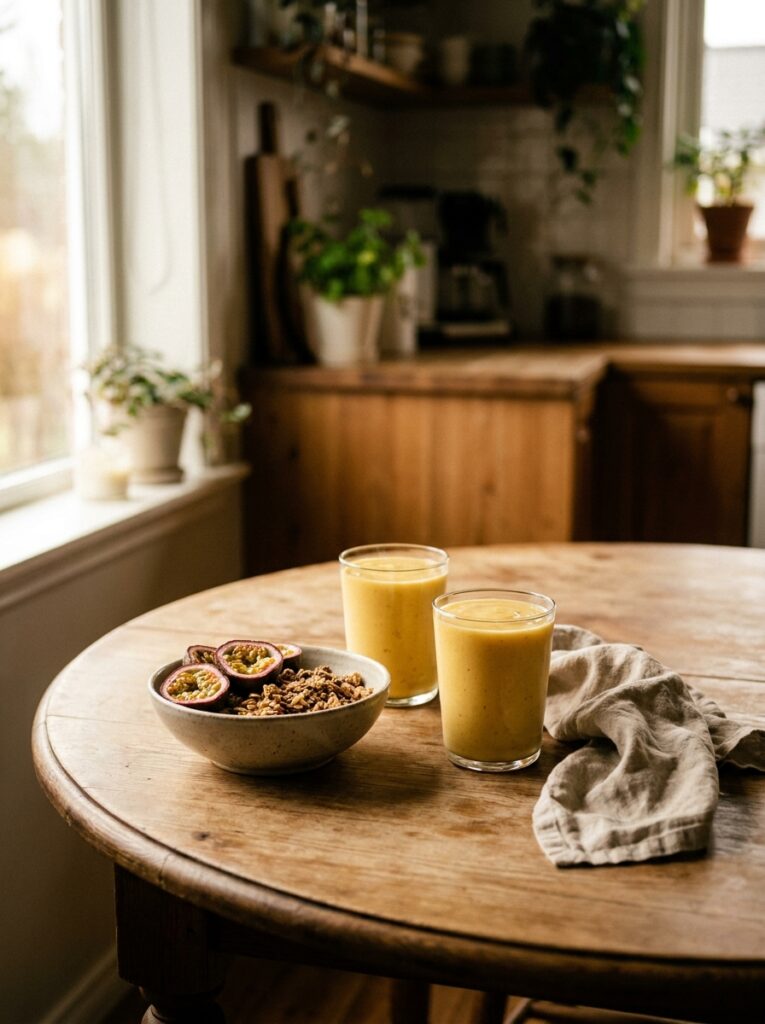
This one’s become a staple: a cup of frozen mango, half a medium carrot (yes, raw carrot, just chop it first), a small chunk of fresh ginger — maybe an inch — half a teaspoon of turmeric, a squeeze of orange juice, a tablespoon of hemp seeds, and water or coconut water to thin.
The ginger and turmeric together have a slight warming quality that’s hard to describe but really pleasant in the morning. The mango covers any earthy taste from the turmeric. And the hemp seeds are one of the most underrated smoothie additions — three tablespoons gives you 10 grams of protein and they blend invisibly.
Coconut water instead of regular water adds electrolytes without a ton of calories. If you exercise in the morning this is actually a solid choice for rehydrating while you eat breakfast.
—
7. The Portion Size Trap That Catches Everyone
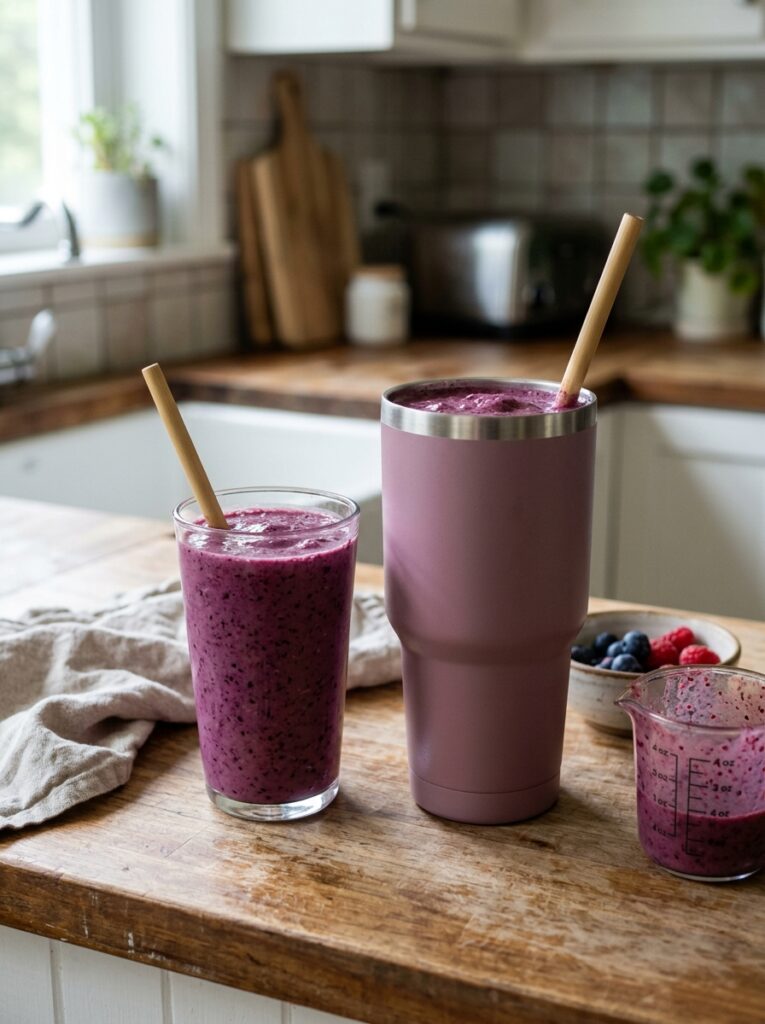
I made this mistake for months. I’d make a “healthy” smoothie and it would be… huge. Like, 24 to 28 ounces of stuff. Two bananas, a massive handful of spinach, a cup of berries, some oats, protein powder, almond milk. A lot.
And here’s the uncomfortable truth — even with good ingredients, calories add up. A smoothie that’s 600 calories isn’t helping you lose weight if you’re already eating three meals. It’s replacing one, or it should be.
The target for a weight-loss meal replacement smoothie is roughly 300-400 calories with 20+ grams of protein. That’s enough to be a real breakfast. It’s not enough to be a full day’s worth of food, which some of my early smoothies were quietly approaching.
The easiest fix is smaller fruit portions — half a banana instead of a whole one, a quarter cup of mango instead of a full cup — and more vegetables, more protein, more fiber. The volume stays satisfying but the calorie count drops significantly.
Measure your ingredients for the first week or two. Not forever, just until you’ve got a feel for it.
—
8. A Winter Smoothie That Doesn’t Feel Like a Punishment
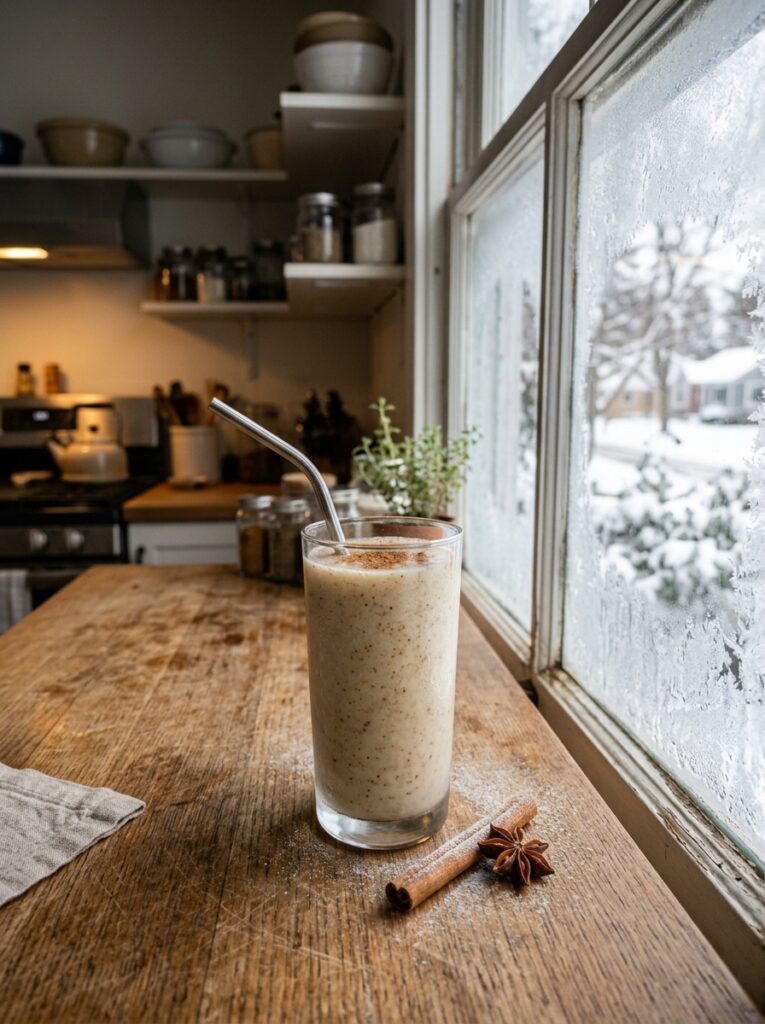
There’s something genuinely miserable about drinking something cold and thin when it’s gray outside and you just want porridge. I get it. This recipe is the answer to that specific problem.
Blend a cup of frozen cauliflower rice — trust me on this, it adds zero flavor and makes everything creamy and thick — with half a cup of pumpkin purée, a teaspoon of cinnamon, a pinch of nutmeg, a pinch of ginger powder, two tablespoons of rolled oats, a tablespoon of almond butter, and about half a cup of milk. Warm the milk slightly before blending if you want the whole thing less cold.
It tastes like autumn. Warm spices, a bit of richness from the almond butter, that thick creamy texture from the cauliflower. My instinct was to put it in a bowl and call it a smoothie bowl, which is also a completely valid option — top it with some pumpkin seeds and a swirl of nut butter and suddenly it’s breakfast that actually feels intentional.
The pumpkin purée adds vitamin A and a surprising amount of fiber. The cauliflower adds bulk with almost no calories. This one’s genuinely filling in a way that feels cozy rather than clinical.
—
9. What Actually Happens When You Replace One Meal a Day
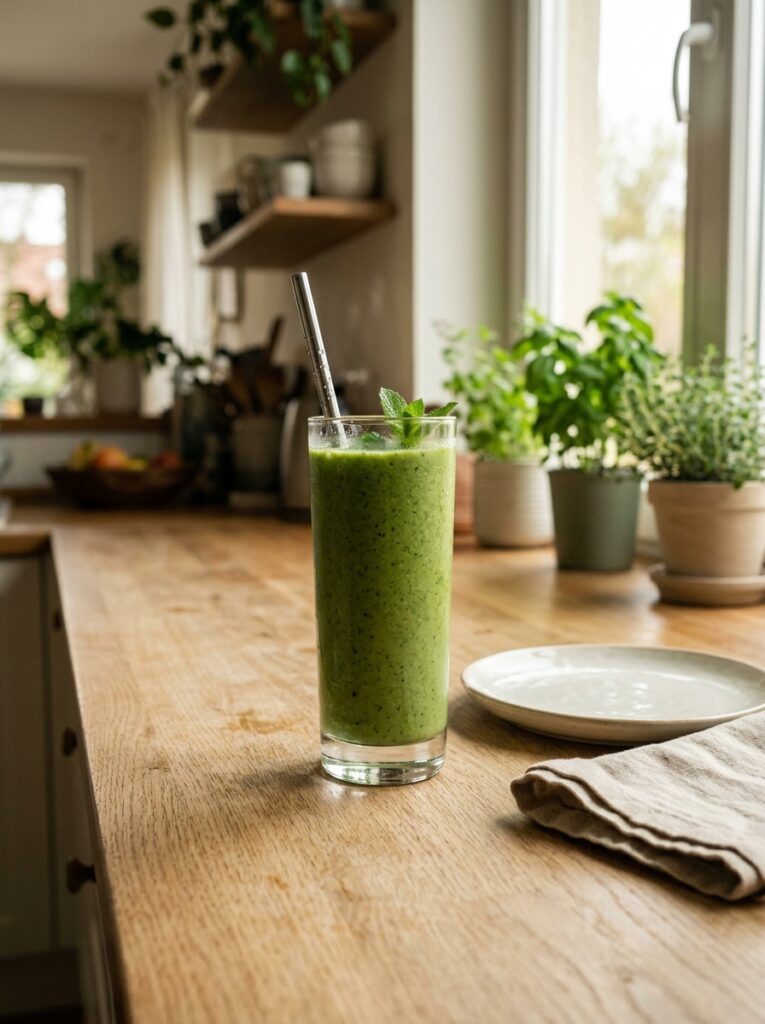
I don’t want to promise you things I can’t verify. Bodies are different. Hormones, sleep, stress, all of it plays into what happens when you change one thing in your diet.
But for a lot of people — including me — replacing one meal with a well-built smoothie does create a sustainable calorie reduction without the feeling of deprivation that crashes every diet eventually. The key word is “well-built.” Not a sugary fruit blast. A protein-forward, fiber-rich meal in a glass.
The other thing that happened, which I didn’t expect, is that it simplified decision-making around one daily meal. Decision fatigue is real. Having a rotation of four or five reliable smoothie recipes meant I didn’t have to think about breakfast at all. It was just handled. And that freed up mental energy for not making bad snack choices at 3pm, which was honestly where I was losing the battle.
—
10. The Berry Blend That Earned Its Place on This List
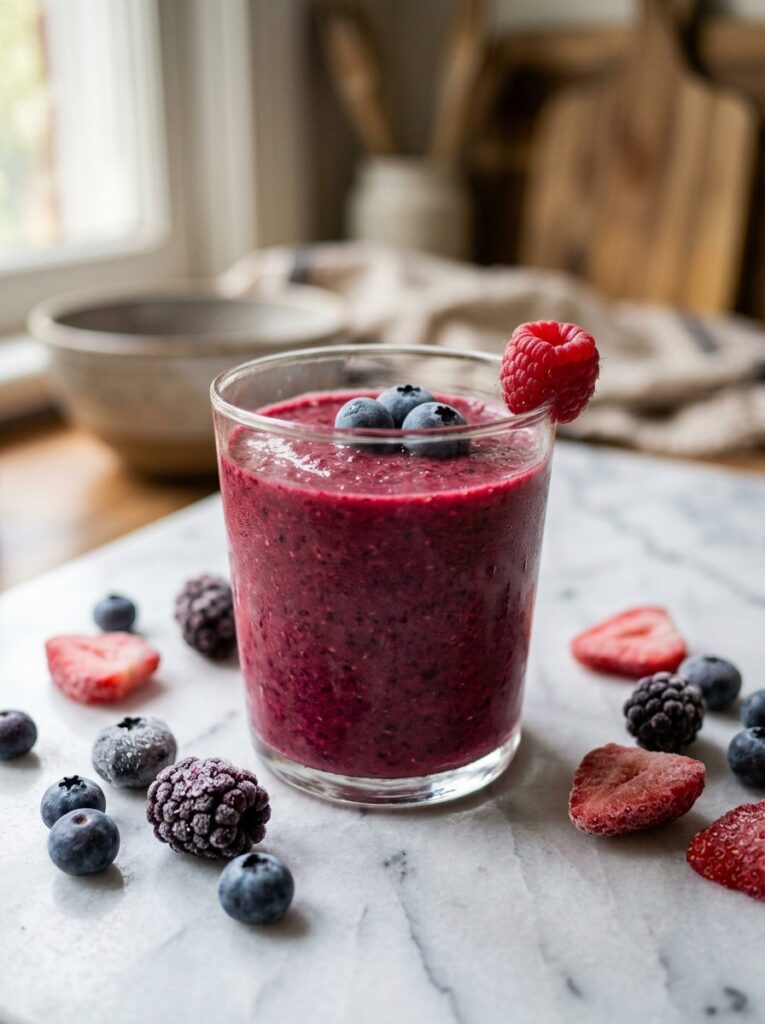
Berries are the real workhorse of weight-loss smoothies — they’re high in fiber, antioxidants, and they’re naturally lower in sugar than most fruit. Frozen mixed berries are one of the most cost-effective things in the freezer aisle, and they’re just as nutritious as fresh.
Here’s the one I make most often: a cup of frozen mixed berries, half a cup of cottage cheese (genuinely underrated smoothie ingredient, adds protein and creaminess without a strong flavor), a tablespoon of ground flaxseed, a teaspoon of vanilla extract, half a cup of oat milk, and optional — a small handful of raw oats if you want it thicker.
The cottage cheese sounds weird. I know. But you can’t taste it. What you get is this incredibly smooth, creamy texture and a protein hit that rivals Greek yogurt. It also tends to be cheaper than Greek yogurt, which matters.
Blend it long enough that everything is fully smooth — cottage cheese can leave small lumps if you don’t. Worth the extra thirty seconds.
“Berries are the real workhorse of weight-loss smoothies — they’re high in fiber and naturally lower in sugar than most fruit.”
—
11. The Ingredient You’re Probably Throwing Away That Belongs in a Blender
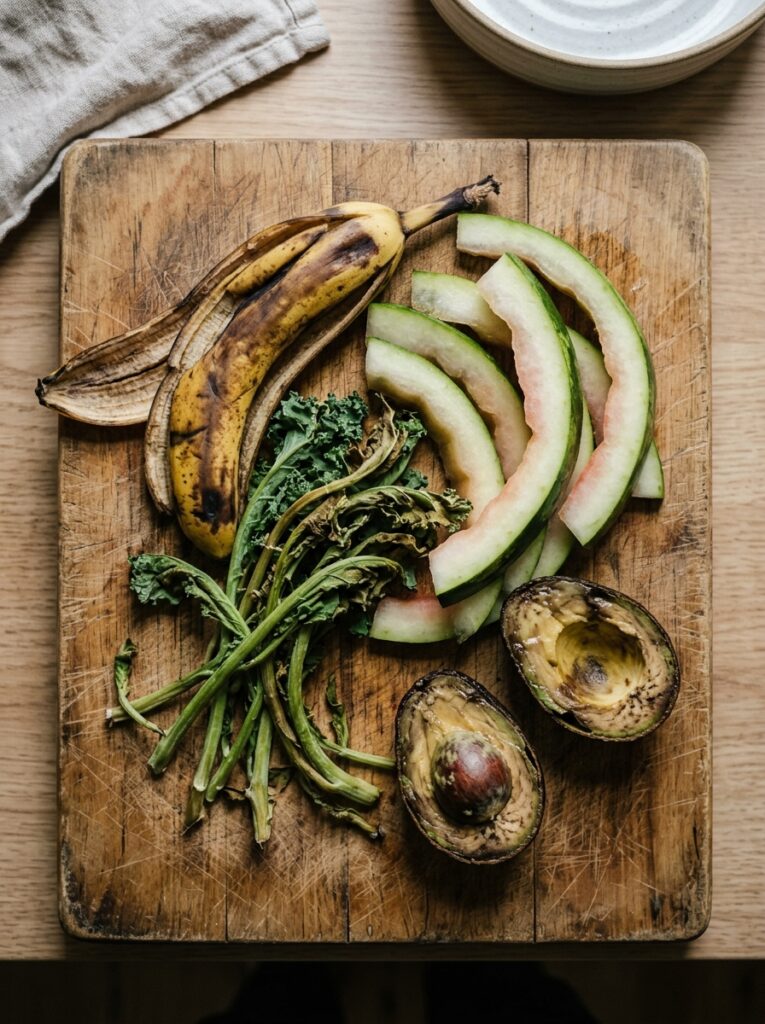
Zucchini. Frozen.
I know, I know. But hear me out. Frozen zucchini blends into an almost silky texture that you genuinely cannot detect. It adds volume, fiber, and a little bit of water content that makes smoothies feel more substantial — like drinking something that used to have actual structure. Which it did.
Peel a zucchini, chop it into chunks, freeze it in a bag. Done. From that point on, you can add half a cup to basically any smoothie without it changing the flavor at all. The texture improvement is real though. Something about frozen zucchini makes smoothies feel almost like soft-serve.
Pair it with cocoa powder, a tablespoon of peanut butter, a frozen banana, and oat milk for a chocolate smoothie that’s so thick and rich you’ll forget it has a vegetable in it.
Also: if you grow courgettes in summer and end up with those ridiculous ones the size of your arm, this is what you do with them. Freeze them now. Use them all winter.
—
12. The Habit That Makes All of This Actually Stick
Here’s the thing nobody tells you when you start making smoothies for weight loss. The first two weeks, everything feels effortful and a bit annoying and you’re constantly wondering if it’s worth it. That phase passes.
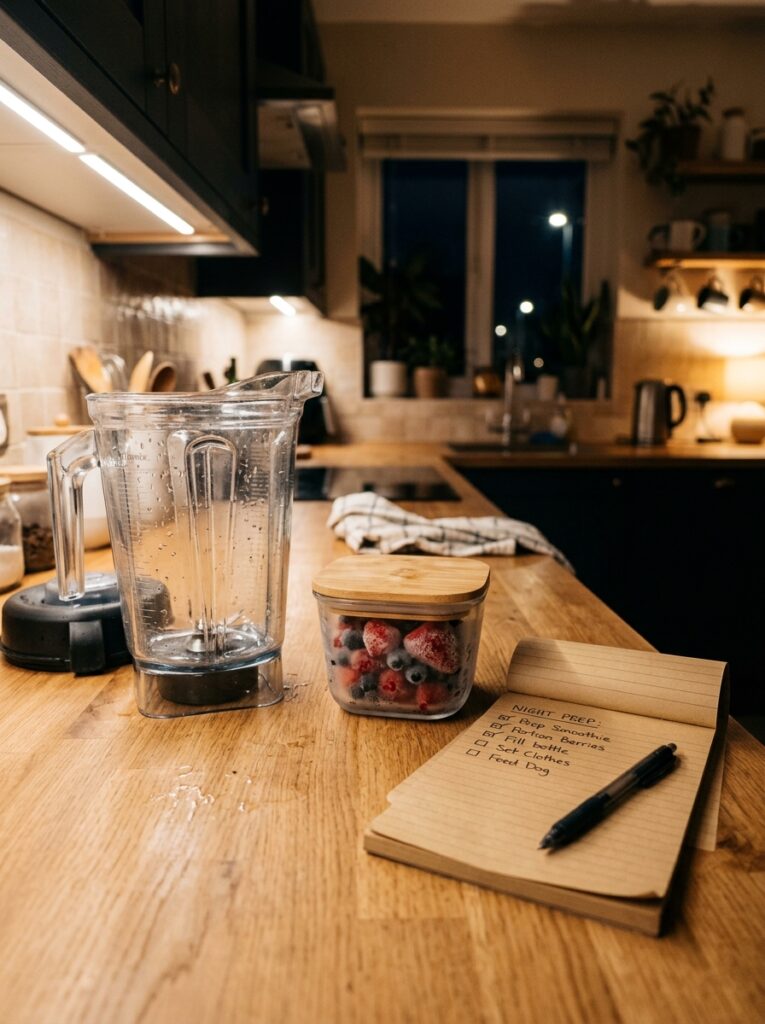
What makes it stick isn’t motivation. It’s prep. If the ingredients are already in your freezer, already portioned, already ready to go — you’ll make the smoothie. If they’re not, you’ll make toast.
Spend 20 minutes on Sunday doing one thing: portion your smoothie ingredients into small bags or containers and freeze them. Each bag is one smoothie. On a weekday morning, you just dump the bag in the blender, add your liquid, and go. Two minutes, maybe three.
That’s genuinely the whole secret. Not the perfect recipe. Not the right protein powder. Just having the thing already done before you need it.
A good blender helps, but it doesn’t have to be expensive. Even a mid-range blender handles frozen ingredients fine if you add enough liquid and don’t rush it.
—
❓ FAQ
Q: Can I drink a smoothie for breakfast every day without getting bored? A: Most people find that rotating four or five recipes keeps it interesting enough. If you’re eating the same smoothie every single morning, yeah, you’ll hit a wall around week three. Keep at least three or four options in your freezer at once and alternate them — that variety makes a surprising difference.
Q: Is it better to drink a smoothie before or after I exercise? A: Depends on the workout and how your stomach handles it. A lighter smoothie — mostly liquid, lower fiber — tends to work better before, especially if you’re doing cardio. Something denser and protein-heavier is genuinely good within 30-45 minutes after a workout when your muscles want protein most. There’s no single right answer, so just figure out what doesn’t make you feel terrible mid-exercise.
Q: Do I need to count calories for smoothies to help with weight loss? A: Not forever, but at the start it’s worth having a rough idea. The main traps are portion size (two bananas and a cup of mango is a lot of sugar) and additions that add up fast (nut butter, honey, granola toppings). Once you’ve built a few reliable recipes you know the rough count for, you can stop tracking and just use those recipes.
—
💭 Final Thoughts
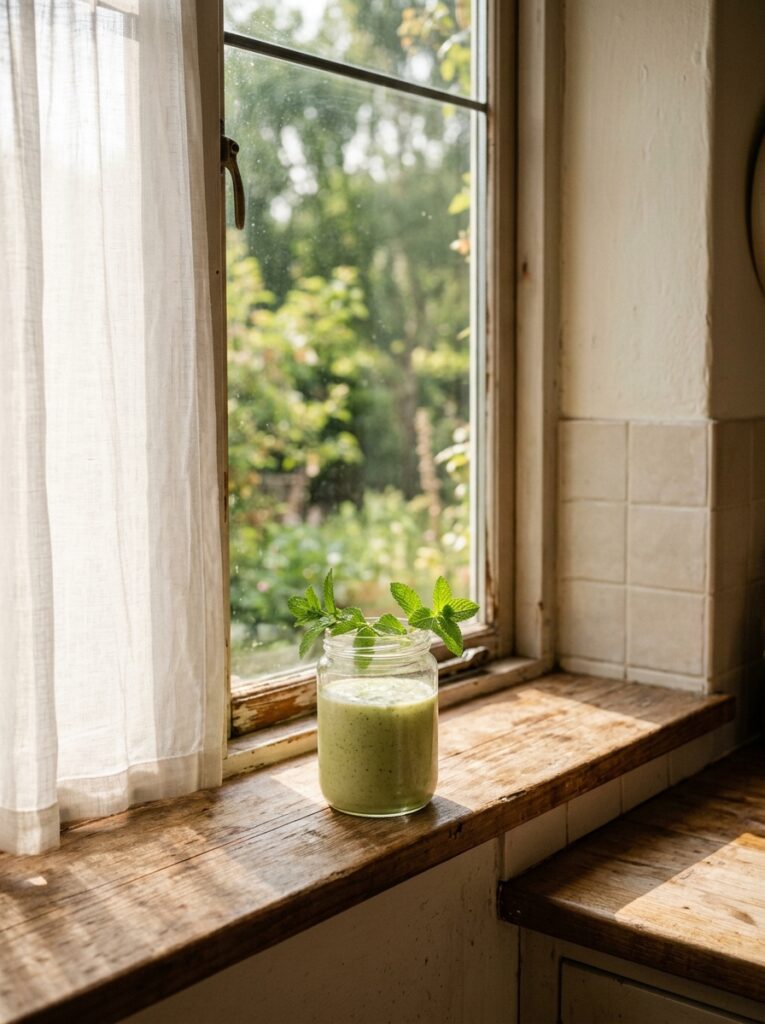
None of this is magic. I want to be clear about that. But there’s something about building a morning habit around food that’s both nourishing and quick and honestly kind of good that changes the whole trajectory of the day. You start out having made a good choice. That tends to ripple.
The smoothies aren’t the point, really. The point is having one reliable, easy thing that removes a decision and adds protein and sends you out the door feeling like you’re doing okay. Which, most mornings, is all you actually need.
What’s the one ingredient you’ve always been suspicious of putting in a blender?