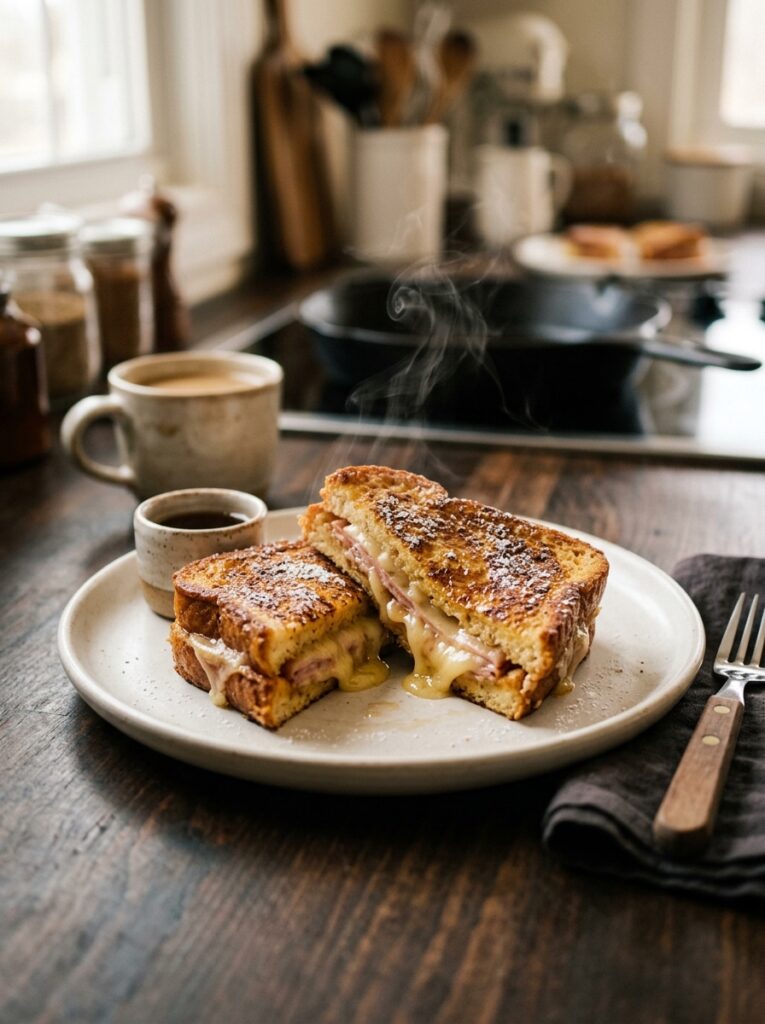
My friend Dani texted me a photo at 8am on a Tuesday and just wrote “make this immediately.” No context. No recipe. Just a stack of something golden and slightly obscene-looking that I couldn’t stop staring at.
It was a French toast sandwich. And yes, I made it that same morning.
—
1. Why This Isn’t Just “French Toast With Stuff Inside” (The Distinction Actually Matters)
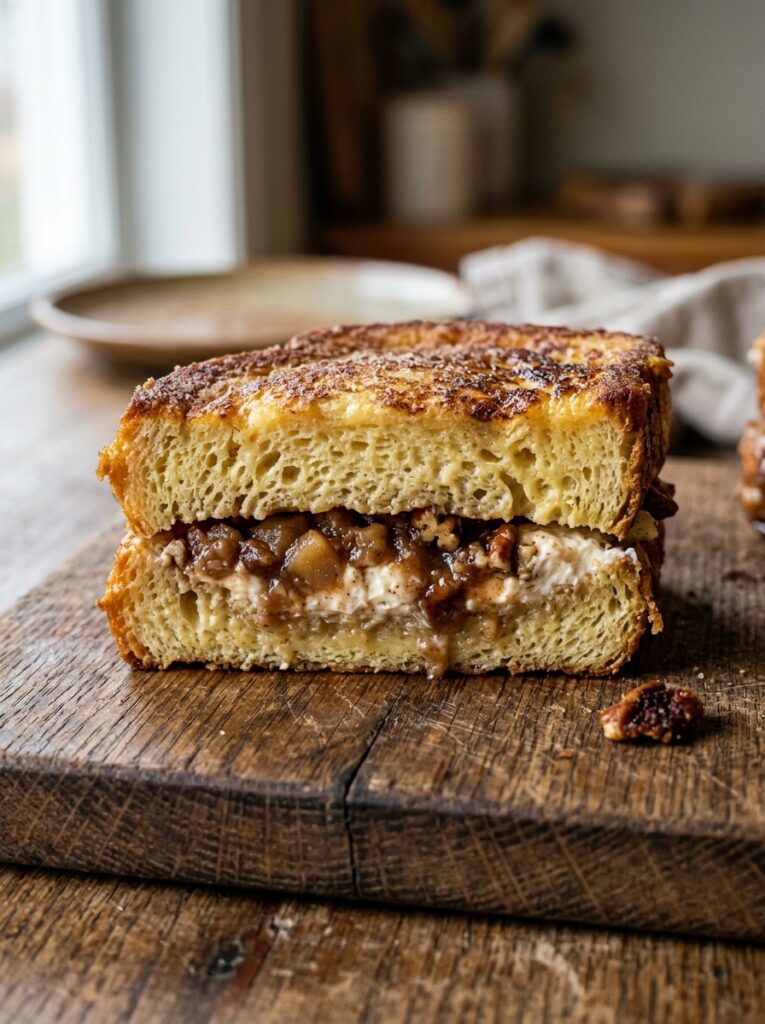
Okay so here’s the thing. A French toast sandwich isn’t French toast that you happen to serve alongside eggs or bacon. It’s not a brunch plate situation. The bread IS the cooking method — you’re using the custard dip and the pan-fry as the outer shell of an actual sandwich, and that changes everything about how you think about fillings, texture, and structure.
The outside gets golden and faintly crisp. Slightly custardy in the middle of each slice. And whatever’s inside — sweet, savory, it genuinely doesn’t matter — becomes this warm, melty thing you couldn’t get any other way.
Think of it like a croque monsieur’s more relaxed American cousin. It doesn’t need a béchamel. It doesn’t need a grill. It just needs a good pan, some eggs, and about twenty minutes of your morning.
This is the kind of recipe that once you make it, you genuinely can’t believe you ever assembled breakfast any other way.
2. The Bread Question Is More Important Than You Think
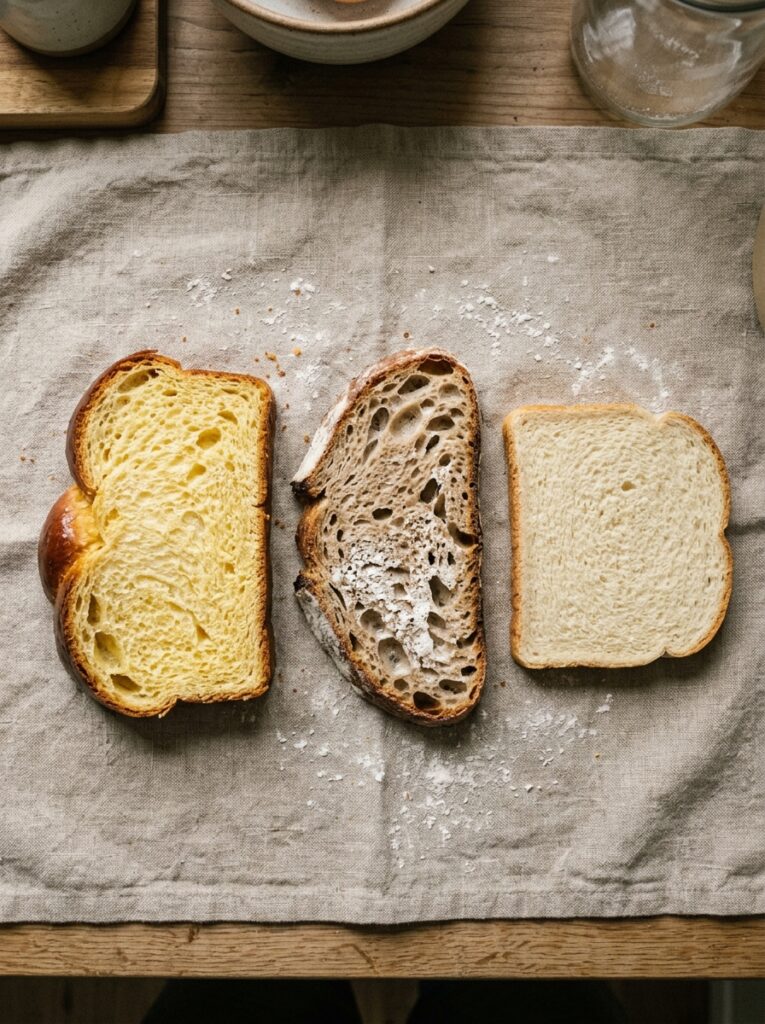
Don’t grab whatever’s in the bag. I’m serious.
Thin sandwich bread will go soggy. It can’t hold the custard without basically dissolving, and then you’ve got a structural disaster that falls apart before you get it to the plate. You need something with a bit more body to it.
Brioche is the obvious answer and yes, it’s excellent. The slight sweetness plays really well whether you’re going sweet OR savory with the filling, and it holds its shape even after a good long soak. Thick-cut white bread — the kind you’d use for proper doorstep toast — works brilliantly too, especially if you’re going the savory route.
Sourdough is divisive for this. The tang can clash with sweeter fillings, but honestly? If you’re doing something like brie and jam or a sharp cheddar situation, the sourdough adds something kind of interesting. I’ve done it both ways. I don’t hate the sourdough version.
The key is thickness. You want slices that are at least 3/4 inch thick. Maybe a full inch. That’s the sweet spot where the outside cooks beautifully and the inside doesn’t turn into mush.
“The bread isn’t just a vehicle. In a French toast sandwich, it’s the whole point.”
3. Getting the Custard Right Without Overthinking It
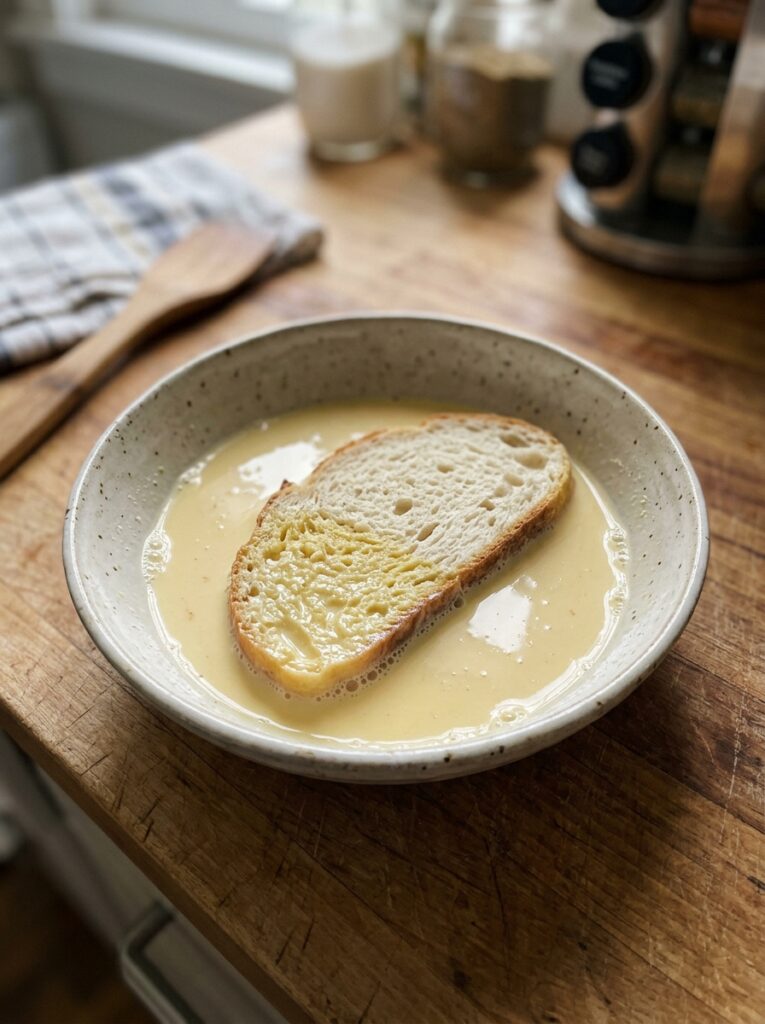
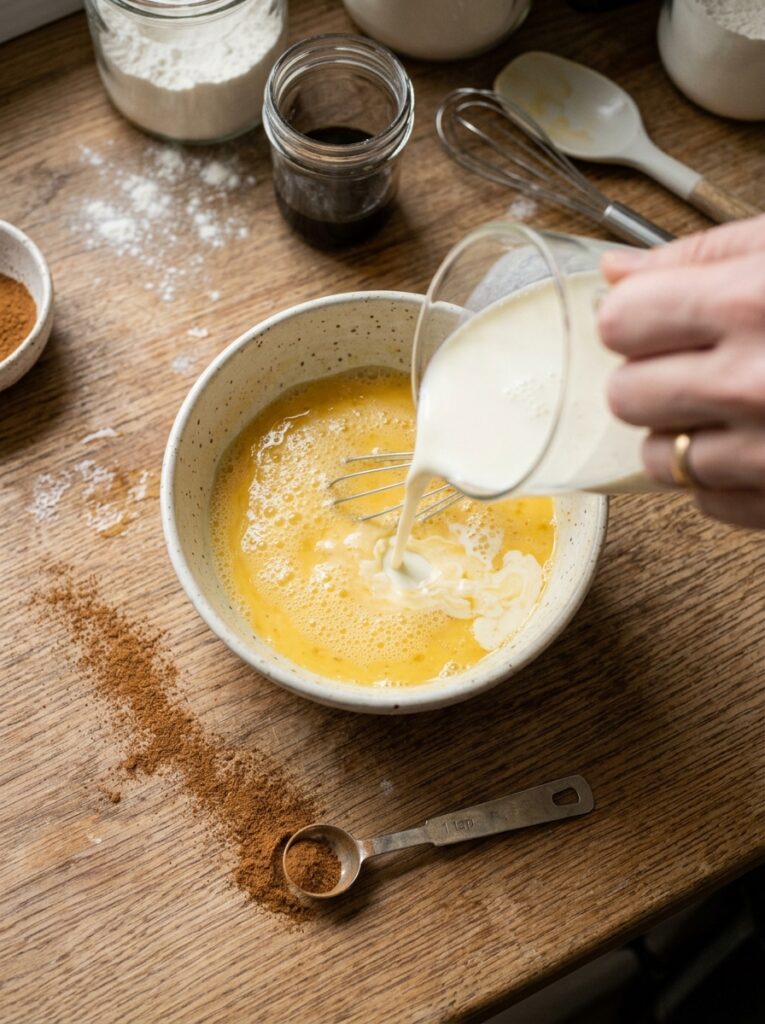
Two eggs. Splash of whole milk — maybe 3 tablespoons. Small pinch of salt even if you’re going sweet, because salt makes everything taste more like itself. Tiny dash of vanilla if you want. That’s it.
Whisk it in a shallow bowl, not a deep one. You want enough surface area that the bread can lie flat and soak properly. Give each slice about 30 seconds per side in the custard — don’t rush it, don’t overthink it. You’ll see the bread change color slightly as it absorbs.
Some people add a bit of cinnamon to the custard and I’m not going to tell you not to, but I find it can overpower the filling flavors when you’re going savory. If I’m making a savory version I skip it. Sweet version, absolutely, go ahead.
One thing that actually matters: don’t soak it so long it gets floppy and impossible to handle. You want it to absorb the custard, not drown in it. Especially with brioche, which is already quite soft. Thirty seconds. Flip. Thirty seconds. Into the pan.
4. The Savory Version That Will Ruin You for Regular Sandwiches
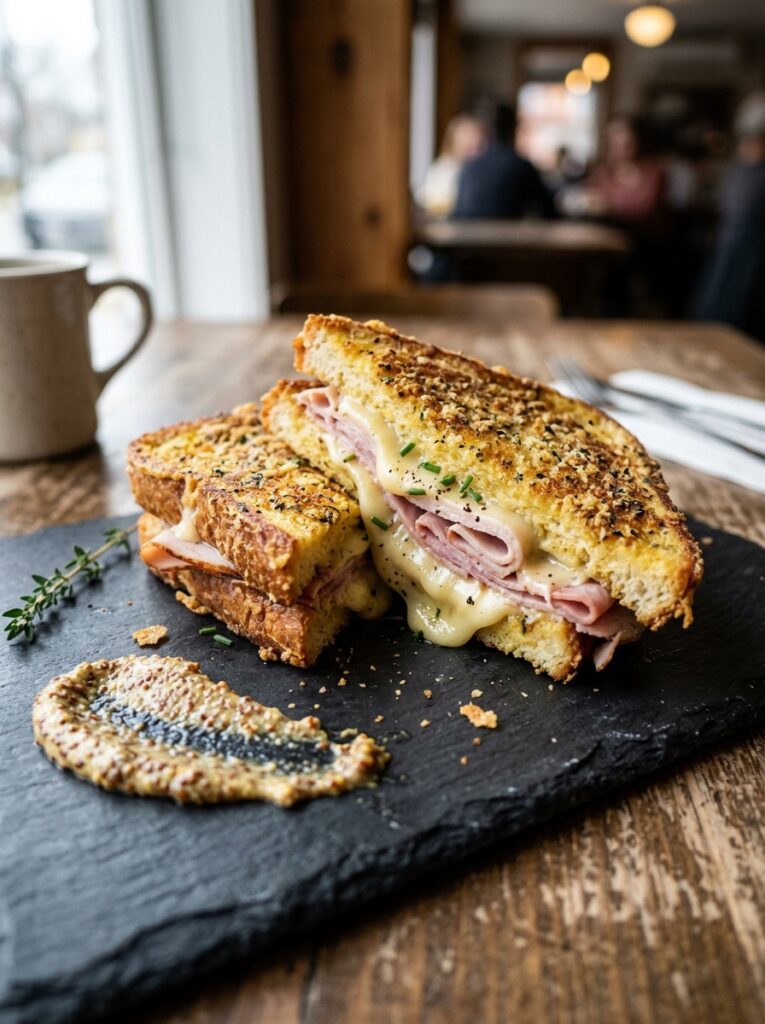
Okay let me paint you a picture.
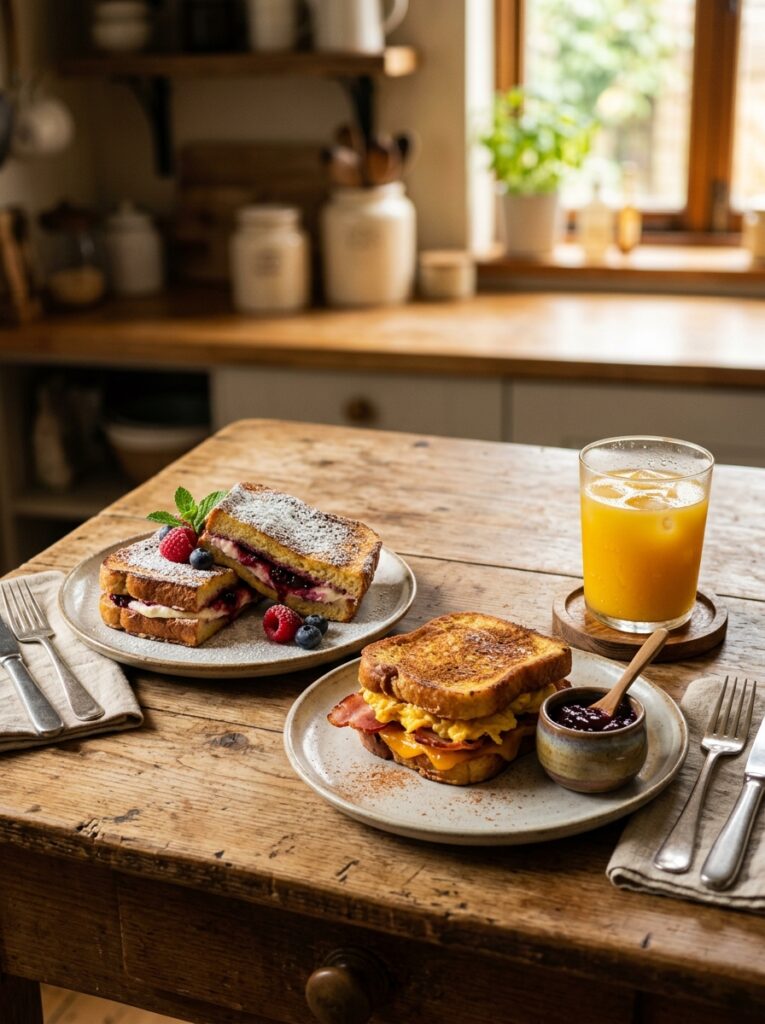
Thick slice of brioche, soaked in the custard. Inside: a smear of whole grain mustard, a couple slices of good ham, and some gruyère — or honestly any strong melty cheese you’ve got. Thin slice of brie works if that’s your thing. Even a sharp cheddar if that’s what’s in the fridge.
You build the sandwich BEFORE you dip. Assembly first, custard second. This is non-negotiable. If you try to fill it after dipping you’ll just make a mess and lose half your custard on the counter.
Press it gently to compact it, then dip both flat sides in the custard. Medium heat. A little butter in the pan — not a lot, just enough to coat. You press it down gently with a spatula, you let it sit undisturbed for about 2 to 3 minutes per side. You’ll know it’s ready to flip when it releases cleanly from the pan without you forcing it.
When you cut it in half — diagonally, always diagonally — the cheese inside is melted and slightly pulling apart. The bread is golden on the outside and just barely custardy through the middle.
It’s the kind of thing that makes people quiet for a minute after the first bite. The good kind of quiet.
“You press it down gently, you wait, and then — that cheese pull is your reward for having patience.”
5. The Sweet Version That Belongs on a Weekend Morning (Or a Tuesday, No Rules)
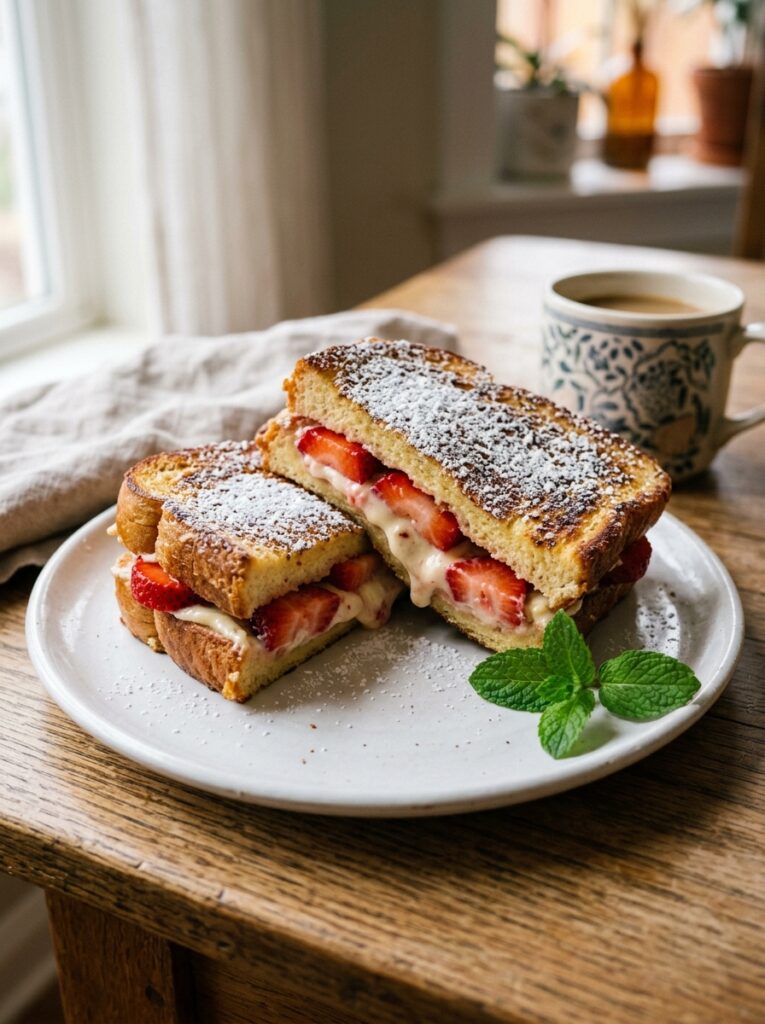
Dani’s original version, the one she texted me, was the sweet one. And it’s almost embarrassingly good.
She does cream cheese and fresh strawberries. Simple as that. A generous spread of plain cream cheese on both inner sides of the bread — it melts just slightly against the warm toast and goes almost mousse-like — and then thin slices of strawberry in the middle. A tiny drizzle of honey on top once it’s plated.
I’ve done variations. Nutella and banana is the obvious one, and it’s exactly as good as you’d expect. A good fruit jam and a wedge of brie is more sophisticated and kind of incredible. Mascarpone with any stone fruit — peaches, nectarines, cherries — is something I think about more than I should.
But here’s what I want to say about the sweet version: the toppings matter just as much as the filling. A dusting of powdered sugar. Fresh berries on the side. A pour of maple syrup — though not so much that it makes everything soggy. Even just some warm honey, drizzled right before serving.
It looks spectacular. It photographs well. And it takes about the same amount of effort as regular French toast, which is to say, not much at all.
6. The One Thing That Goes Wrong (And How to Not Let It Happen to You)
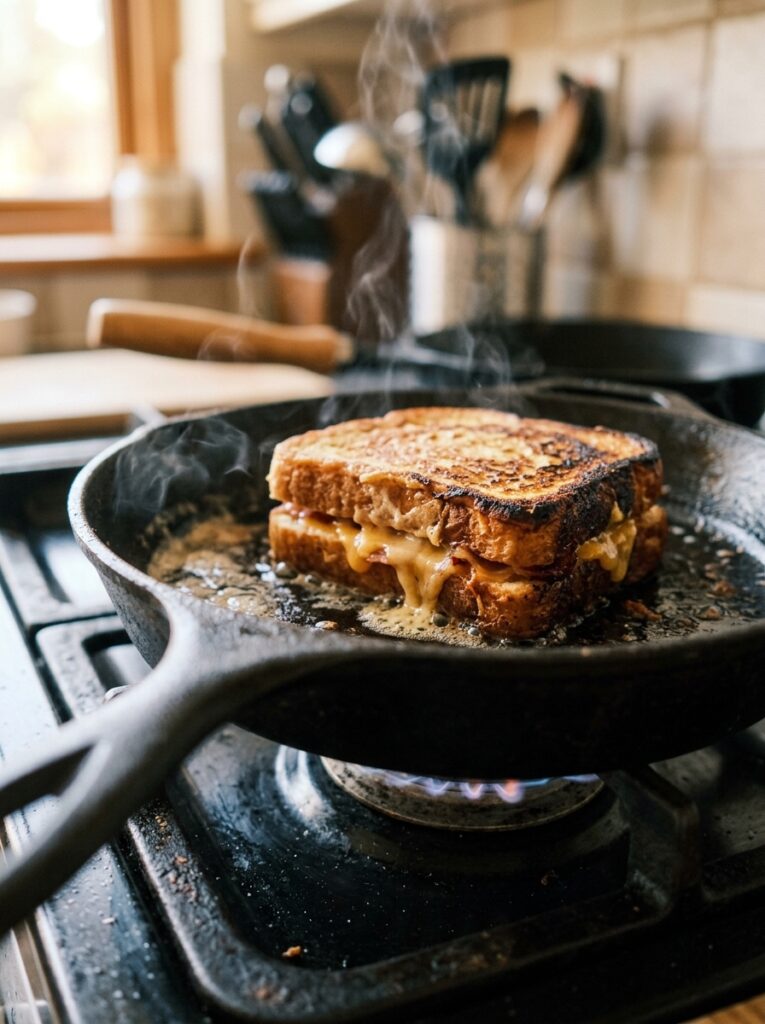
The filling leaks. Or the sandwich bursts open in the pan. Or you flip it and the whole thing slides apart and you end up with a scrambled, cheese-y French toast situation which is — fine, honestly, it’s still delicious — but it’s not what you were going for.
Here’s why it happens: the bread was too thin, OR you overfilled it, OR you didn’t press it together firmly enough before dipping.
The fix is really just to be a little deliberate about assembly. Build the sandwich, press the edges gently with your fingers to seal them. If you’re working with a particularly generous filling, use a toothpick on each half to pin it together while it cooks — pull them out before serving, obviously.
Also: don’t start with the heat too high. Medium is your friend. High heat will scorch the outside before the inside gets warm and the cheese (if you’re using it) has a chance to melt. Lower and slower is the move.
Side note — a heavy pan actually helps a lot here. Cast iron is ideal because it holds heat evenly and you’re less likely to get hot spots that burn one corner. But if you don’t have one, a regular non-stick pan works fine. Just watch it a bit more carefully.
7. Building a Version Around Whatever’s Actually in Your Fridge Right Now
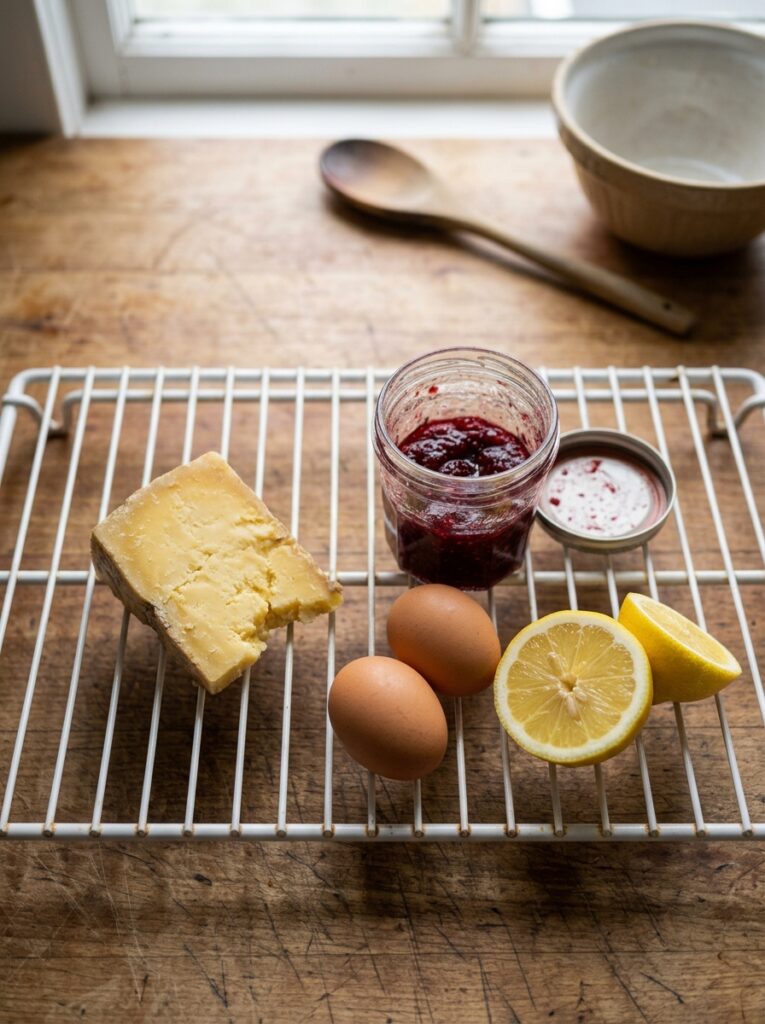
This is where French toast sandwiches get genuinely useful for everyday cooking, not just weekend projects.
Leftover roasted vegetables? Pile them in with some goat cheese and you’ve got something that sounds fancy and took you ten minutes. Cold cooked bacon? Obviously. Leftover Christmas turkey with cranberry sauce in the middle? I know that sounds slightly chaotic but try it before you judge me.
A fried egg INSIDE the sandwich is a thing that exists and I want everyone to try it at least once. You scramble it lightly, let it cool just slightly so it’s not steaming, and then layer it in with some cheese and a tiny bit of hot sauce. The custard-soaked bread on the outside, egg on the inside. Protein stacked on protein. It’s a lot, in the best way.
The point is that this isn’t a precious recipe that only works when you have specific ingredients. It’s a method. Once you understand the method — thick bread, custard dip, medium heat, gentle press — you can build it around whatever you’ve got.
8. The Ratio That Actually Makes It Work
Here’s a thing nobody really talks about: the filling-to-bread ratio in a French toast sandwich is different than in a regular sandwich.
Because the bread puffs slightly as it cooks, and because it softens through the middle from the custard, you actually need MORE filling than you’d think. A thin layer of cream cheese disappears. A single slice of ham gets lost. You want a generous hand with the filling — not overflowing, but definitely more than you’d put in a regular sandwich.
Cheese in particular: more than feels reasonable. It’ll melt down and reduce, and you don’t want to bite in and get mostly bread with just a hint of cheese somewhere in there. Lay it in. Be bold about it.
“A stingy filling is the difference between a good French toast sandwich and a great one. This is not the time to hold back.”
9. Whether the British Version Is Different (Sort of, Kind of)
This is a slightly niche question but bear with me because I find it interesting.
In the UK, what gets called “eggy bread” or “French toast” tends to be savory more often than not — just salted custard, fried, served with ketchup or brown sauce. The sweetened American version with maple syrup is more of an import. So British readers approaching this recipe might actually be more comfortable going straight to the savory sandwich version, and I think that’s a completely valid starting point.
British cheeses work brilliantly here, by the way. Mature cheddar is maybe my favorite cheese for the savory version — it melts well and has enough flavor to stand up to the custard bread. A good Lancashire cheese. Stilton if you’re feeling brave (yes, really — blue cheese in a French toast sandwich is an experience).
The pantry staples are the same on both sides of the Atlantic, honestly. Eggs, milk, bread, butter. The filling possibilities change slightly based on what’s normal in your kitchen, but the technique is identical.
10. The Plating Move That Makes It Look Like You Tried Way Harder Than You Did

Cut it diagonally. Always. I said it before and I’m saying it again because it genuinely matters for how the cross-section looks.
Plate it on something warm if you can — a warmed plate holds the heat while you eat it, and French toast gets cold faster than you’d expect. If you’re dusting powdered sugar, do it RIGHT before serving, not five minutes in advance when it’ll dissolve into the surface.
A small handful of fresh fruit on the side makes it look like a proper brunch situation without any additional effort. Some micro greens if you’ve got them and you’re going savory. A ramekin of warm maple syrup on the side rather than poured on top — it lets people control their own experience and it photographs a hundred times better.
Nothing on this list takes more than about thirty extra seconds. But it makes the difference between “nice breakfast” and “wait, did you make this yourself?”
11. Scaling It Up When You’re Feeding More Than One Person
One of the slightly underrated things about this recipe is that you can batch it for a crowd without it feeling hard.
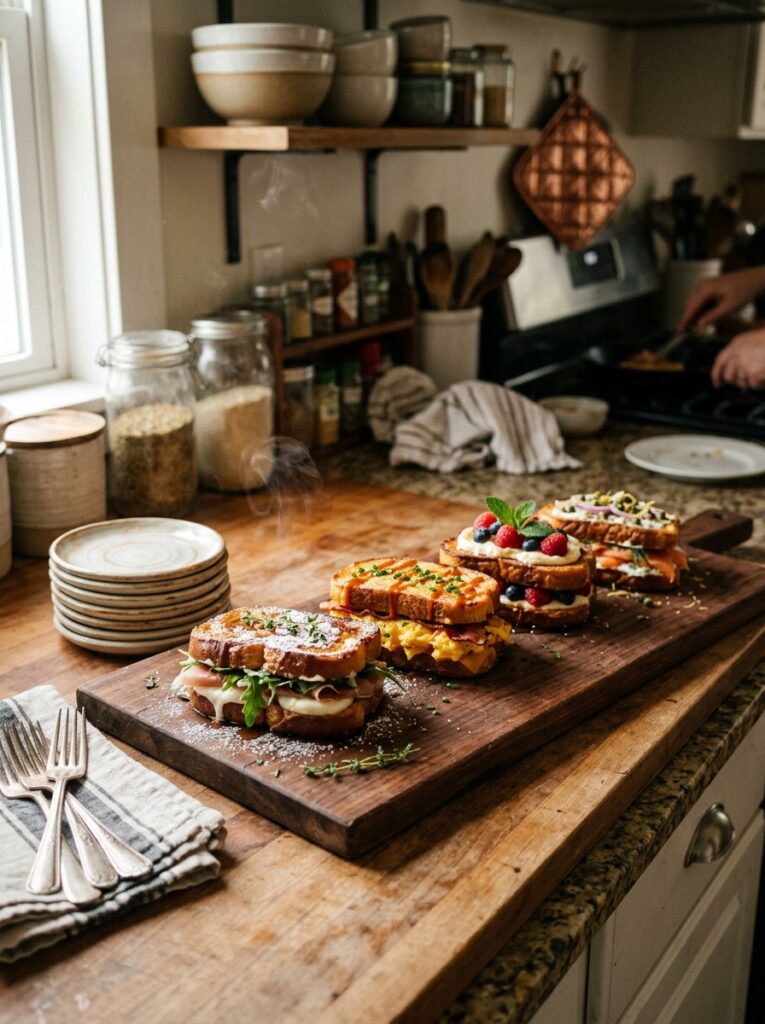
Make them to order if it’s just two people — it’s fast enough. But if you’re doing brunch for four or six, the move is to make them slightly ahead and keep them warm in a low oven (around 200°F or 90°C) on a wire rack over a baking sheet. The rack is important — keeping them off the surface of the pan stops the bottom from steaming and going soft.
They’ll hold for about 15-20 minutes without losing much. The cheese stays melted. The bread stays reasonably crisp. It’s not quite as spectacular as fresh from the pan, but it’s close.
You can also prep the fillings the night before, which cuts your morning assembly time down to basically nothing. Have your cheese sliced, your fillings ready, your custard mixed in a bowl in the fridge. Morning of, it’s just assembly and cooking.
12. The Version I Keep Coming Back To
I’ve made a lot of versions now. Sweet, savory, fancy, lazy, emergency-what’s-in-the-fridge versions. They’ve all been good, some have been genuinely great.
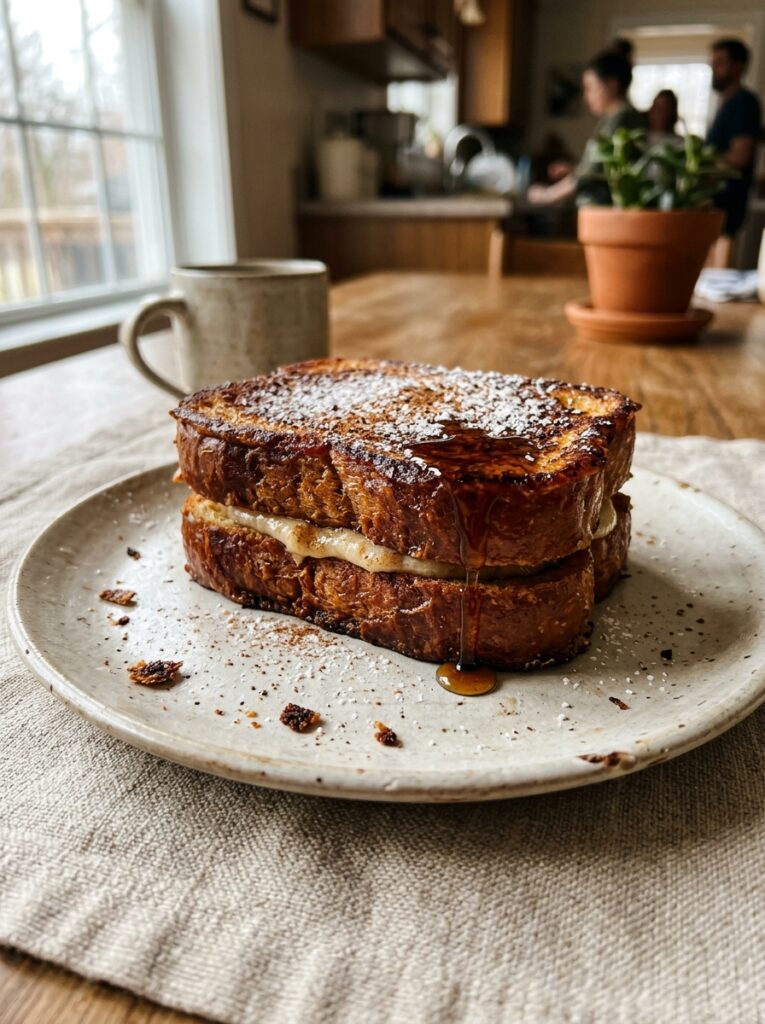
But the one I keep coming back to is the simplest savory version. Good ham, strong cheddar or gruyère, a scrape of mustard, thick brioche. Finished with a fried egg on top, not inside — just resting on top, yolk intact, so when you cut in, the yolk breaks and runs down the side.
It sounds like a lot but the whole thing takes about fifteen minutes. It’s the kind of breakfast that makes a Tuesday feel like it might actually be okay. Like maybe the week isn’t going to be that bad after all.
Which, honestly, is all you can ask of breakfast.
—
❓ FAQ
Q: Can I make French toast sandwiches ahead of time and reheat them? A: Yes, and they reheat better than regular French toast does. Let them cool on a wire rack rather than a plate, then store in an airtight container. Reheat in a pan with a tiny bit of butter on medium-low heat, about 2 minutes per side, or in a low oven at 300°F/150°C for about 8-10 minutes. The texture won’t be exactly like fresh but it’ll be close.
Q: What’s the best cheese for a savory French toast sandwich? A: Something with good melt AND good flavor — gruyère, mature cheddar, or brie are the top three. Avoid anything that doesn’t melt well (like feta on its own) or anything too mild, because the custard-soaked bread has a flavor of its own and a weak cheese just disappears into it.
Q: Can I use plant-based milk in the custard? A: Absolutely. Oat milk works best because it has a slightly creamier texture than most alternatives. Soy milk is fine too. The custard won’t be quite as rich but it’ll still work well and the bread will still soak properly. Just make sure you’re still using eggs — the eggs are really what makes the custard work, not the dairy.
—
💭 Final Thoughts
The French toast sandwich is one of those things that sounds slightly extra until you actually make it, and then you wonder why you ever bothered with plain French toast at all. It’s forgiving, fast, endlessly rearrangeable around whatever you’ve got on hand. Dani’s 8am text genuinely changed my Tuesday mornings.
What filling are you trying first?
