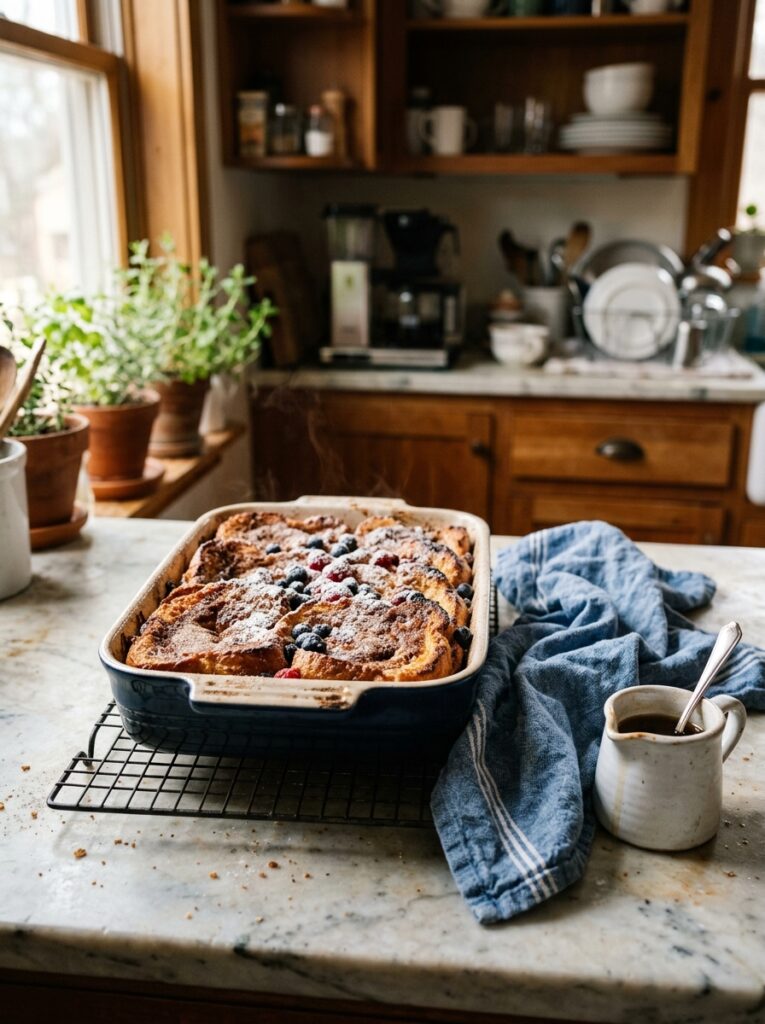
I made it on a Tuesday. Not a special occasion, not a weekend brunch thing — just a random Tuesday because I had a stale loaf sitting on the counter and couldn’t face another bowl of cereal. That was it. That was the moment everything changed.
—
1. Why Stale Bread Isn’t a Problem — It’s Actually the Whole Point
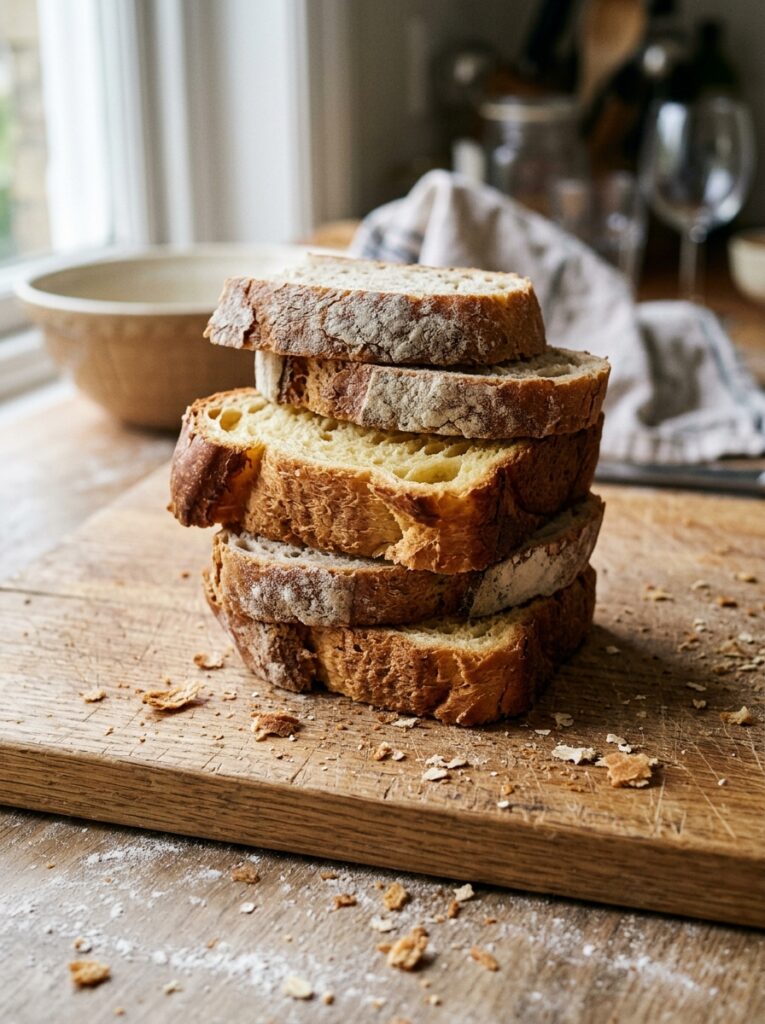
Okay so here’s the thing most recipes won’t say out loud: fresh bread makes worse French toast. I know. It sounds wrong. But fresh bread is too soft, too moist, and it just turns to mush when it soaks up the custard. You end up with something that’s simultaneously soggy in the middle and somehow weirdly rubbery on the outside, and it’s just not it.
Stale bread — we’re talking day-old at minimum, two days is honestly ideal — has dried out just enough that it can drink up the egg mixture without falling apart. It holds its shape in the oven. It gets that slightly crisp exterior with a genuinely custardy interior that makes oven French toast worth talking about at all.
Brioche is the classic choice and honestly it earns that reputation. Rich, slightly sweet, it takes on custard like it was born for it. But a thick-cut white sandwich loaf works brilliantly too, especially if it’s had a night out on the counter. Sourdough is a wild card — a bit tangy against the sweet custard, which some people love and some people don’t. You probably already know which camp you’re in.
Cut your slices thick. Like, an inch thick. Don’t be shy about it.
2. The Custard Ratio That Actually Makes a Difference
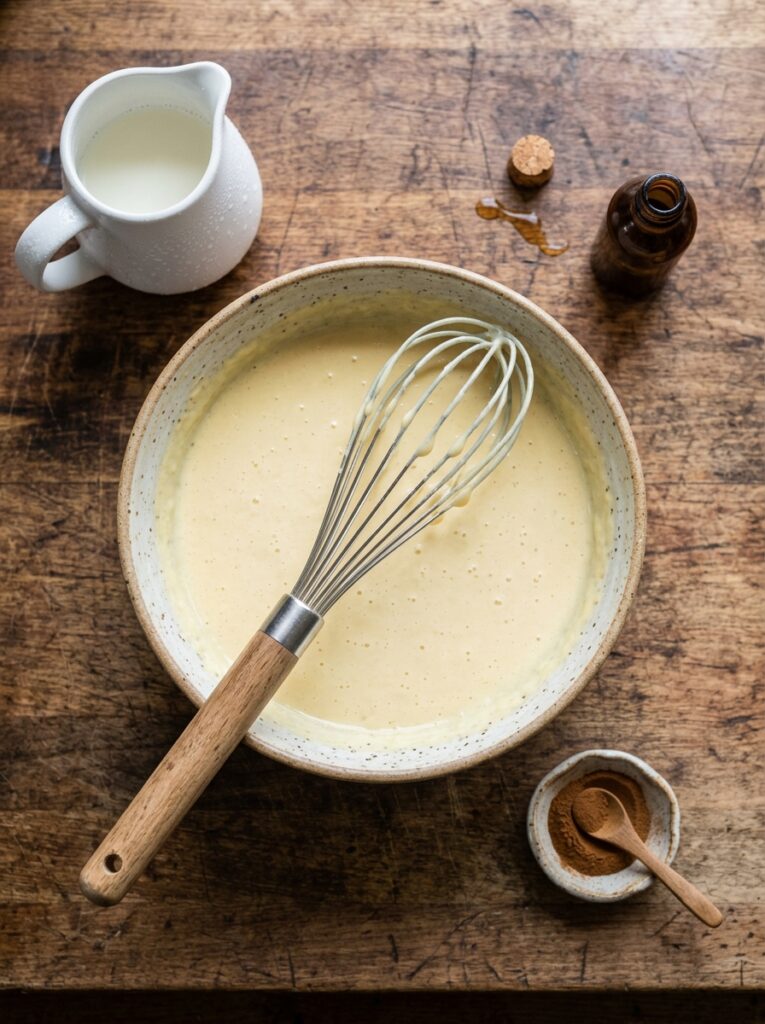
Not gonna lie, I used to just eyeball the egg-and-milk thing and wonder why my French toast was inconsistent. Turns out ratios matter, and once you nail it, you’ll never go back to guessing.
For every two thick slices of bread, you want roughly one large egg and a quarter cup of whole milk. If you’re making a full baking dish — say, eight to ten slices — that’s four to five eggs and about one cup of milk. Now add to that about two tablespoons of heavy cream if you have it (it’s not essential but it makes things noticeably more luxurious), two tablespoons of sugar, a teaspoon of vanilla extract, half a teaspoon of cinnamon, and a pinch — a real pinch — of salt.
“The salt sounds wrong. It isn’t. It makes everything sweeter without adding sweetness. Don’t skip it.”
Whisk it until the eggs are fully incorporated. No streaks of white. That part matters.
3. The Overnight Soak vs. The Quick Soak — and When to Choose
This is where oven French toast gets genuinely exciting, and also where it splits into two completely different recipes depending on your morning.
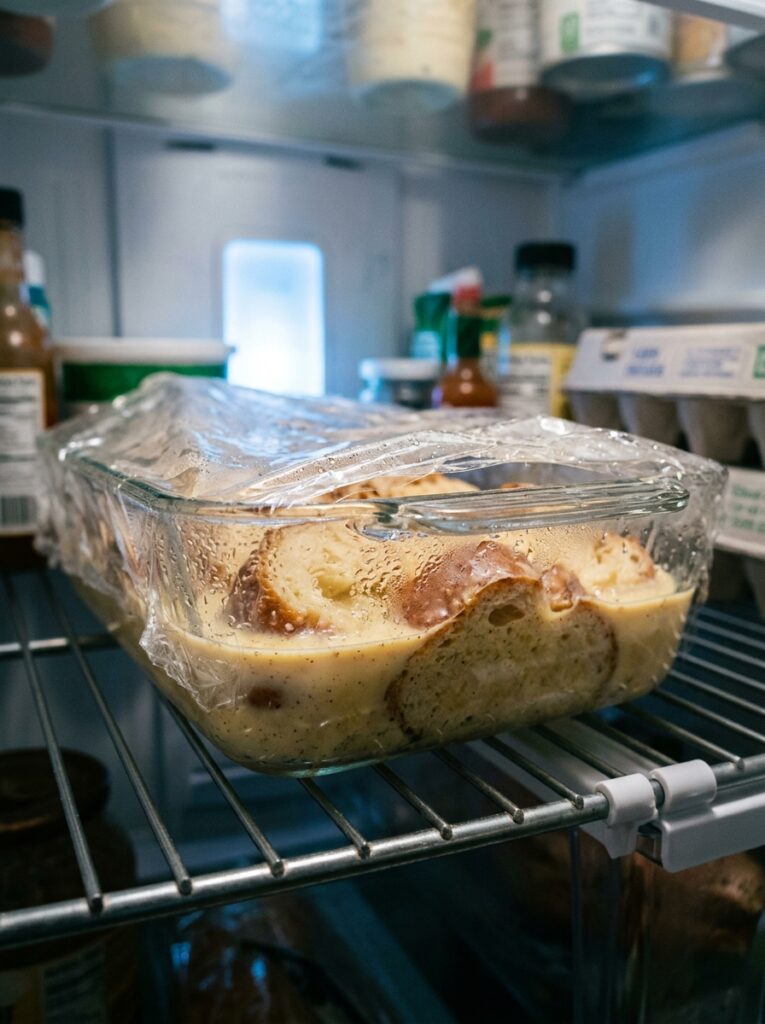
The overnight version — where you assemble the dish the night before, let the bread soak in the custard in the fridge, and bake it in the morning — is life-changing for anyone who’s ever tried to host brunch without losing their mind. You just pull it out, let it sit for ten minutes at room temp while the oven preheats, and bake. Done. No standing at the stove while everyone else is having coffee.
The quick soak works when you’re making this on impulse (hi, Tuesday me). Dip each slice into the custard for about thirty seconds per side, let it absorb properly — don’t rush this — then arrange in your baking dish. The texture will be slightly less deeply custardy than the overnight version, but honestly? Still incredible.
If you’re doing the overnight soak, pour the custard over the bread in the dish, press it down gently, cover with cling film, and refrigerate. In the morning, give it another gentle press before baking. The bread will have soaked up almost everything and look almost alarmingly wet. That’s correct.
4. Baking Temperature and Timing — The Numbers That Actually Work
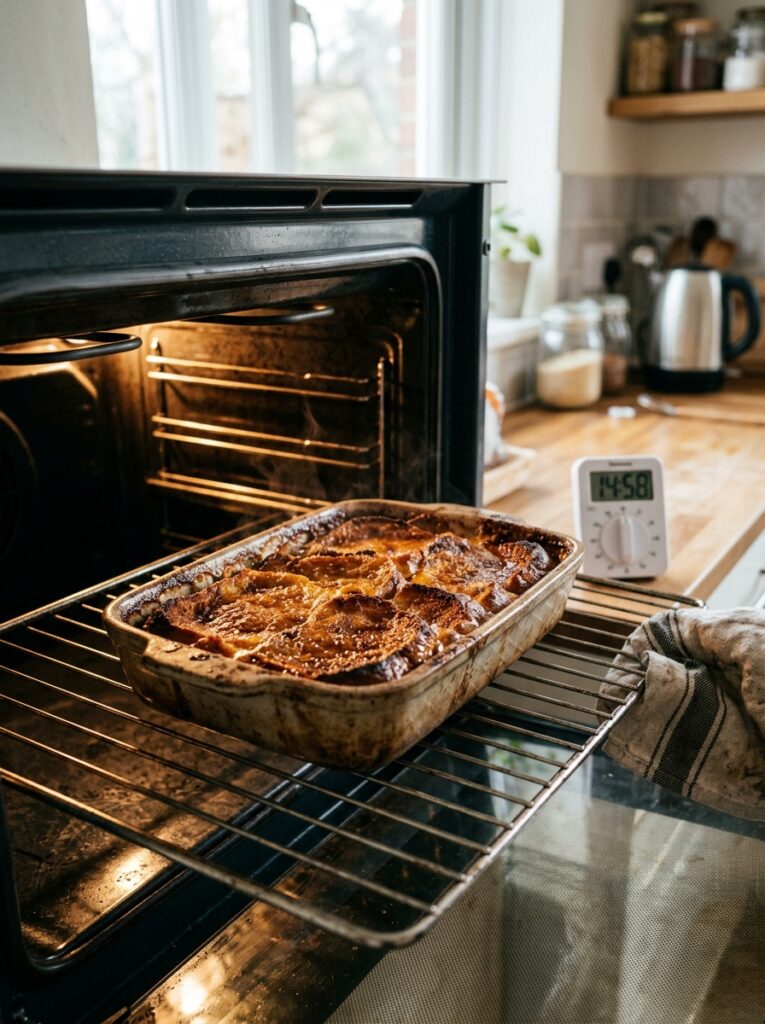
Right. So here’s where a lot of people go wrong. They treat oven French toast like it’s toast and crank the heat up high to get color fast. And then they’re confused when the inside is still eggy and weird.
Lower. Slower. Trust it.
350°F (175°C) is the move. Bake covered with foil for the first twenty minutes — this is what cooks the custard through without drying everything out — then uncover for another fifteen to twenty minutes to get the top golden and slightly caramelized. Total time: thirty-five to forty minutes.
If you want a crispier top, add a thin sprinkle of brown sugar over the bread before the uncovered bake. It’ll melt into something almost brittle and sweet and genuinely excellent. A tiny bit of butter dotted on top helps too.
The internal temperature should hit around 160°F (71°C) if you want to be precise about it, but honestly the visual cues are pretty reliable — golden on top, not jiggly in the center when you give the dish a gentle shake.
5. The Brown Sugar Pecan Variation That Makes People Ask For The Recipe
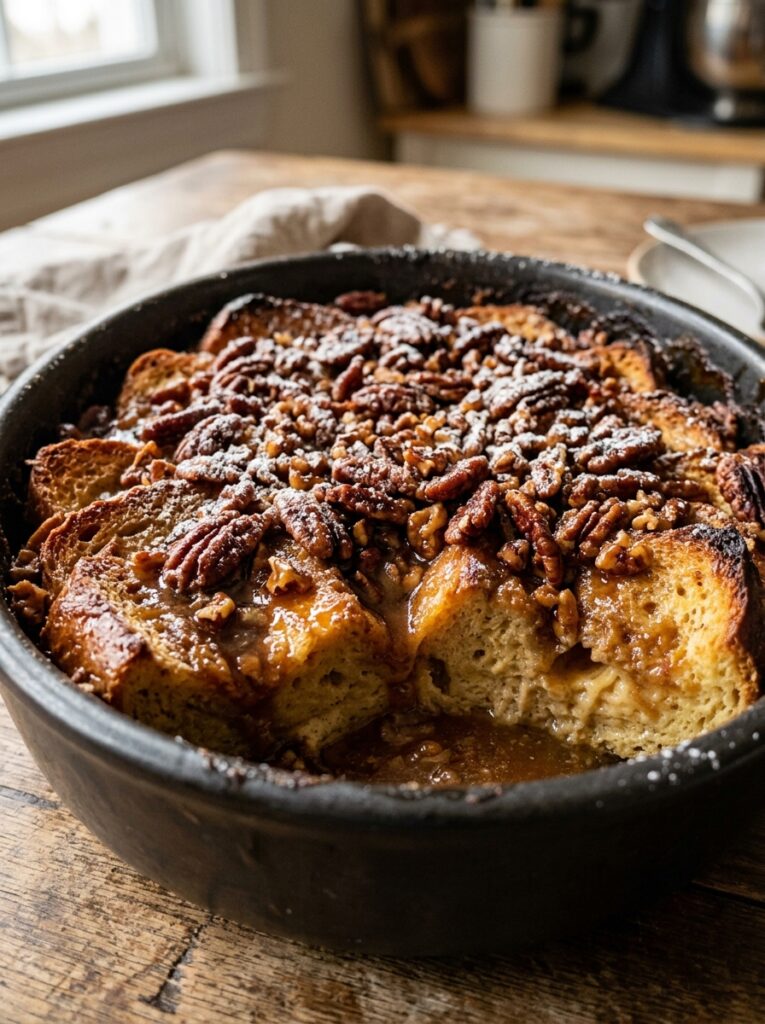
Okay but if you want to make this PROPERLY impressive, this is the one.
Make a streusel. In a small bowl, mix together half a cup of brown sugar, a third of a cup of flour, four tablespoons of cold butter cut into small cubes, and half a cup of roughly chopped pecans. Use your fingers to rub the butter into the sugar and flour until it’s sandy and clumpy. Scatter this over the top of your soaked bread before the uncovered bake.
What happens in the oven is genuinely exciting. The butter melts, the sugar caramelizes, the pecans toast in real time, and it forms this crunchy, sweet, almost toffee-like crust over the top of the soft custardy bread underneath. The contrast is — look, I’m going to sound dramatic here but it’s worth it — extraordinary.
This is what you make when someone comes over and you want them to think you spent the morning cooking. Side note: you definitely didn’t. You made it the night before.
6. Stuffed Oven French Toast Is a Different Category of Good
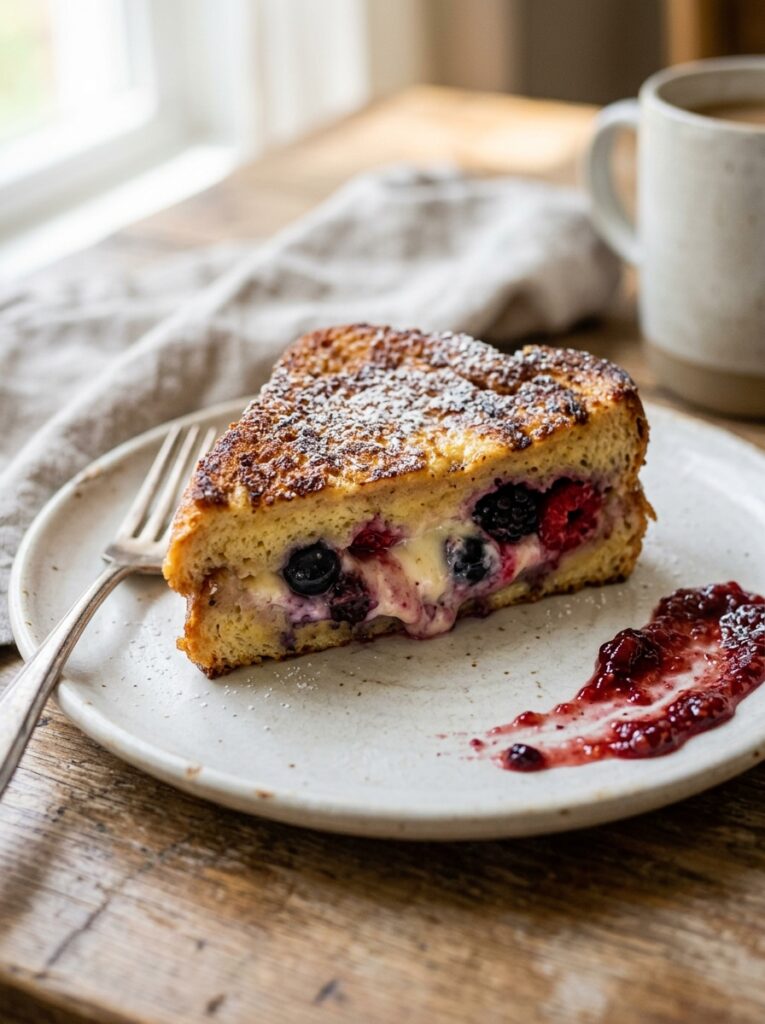
Here’s where I get a little carried away, just a warning.
You can STUFF it. Like, take two slices of soaked bread, sandwich a layer of cream cheese between them (or ricotta, or mascarpone — actually mascarpone is incredible here), and bake it as one thick unit. The cheese melts slightly without losing its body, and when you cut into it you get this warm, creamy layer running through the middle of the custard-soaked bread.
Add some thinly sliced strawberries or a spoonful of jam inside the cream cheese layer. Or go full dessert and do Nutella with sliced banana. Not for breakfast, technically — or maybe exactly for breakfast, I won’t tell anyone.
“The strawberry cream cheese stuffed version has been made in my kitchen more times than I can honestly count. It never gets old.”
The only adjustment you need: bake for an extra five to eight minutes to make sure the center is fully hot through. And don’t skip the foil-covered stage, because you really need that heat to penetrate the filling.
7. The Savory Version That Gets Overlooked Every Single Time
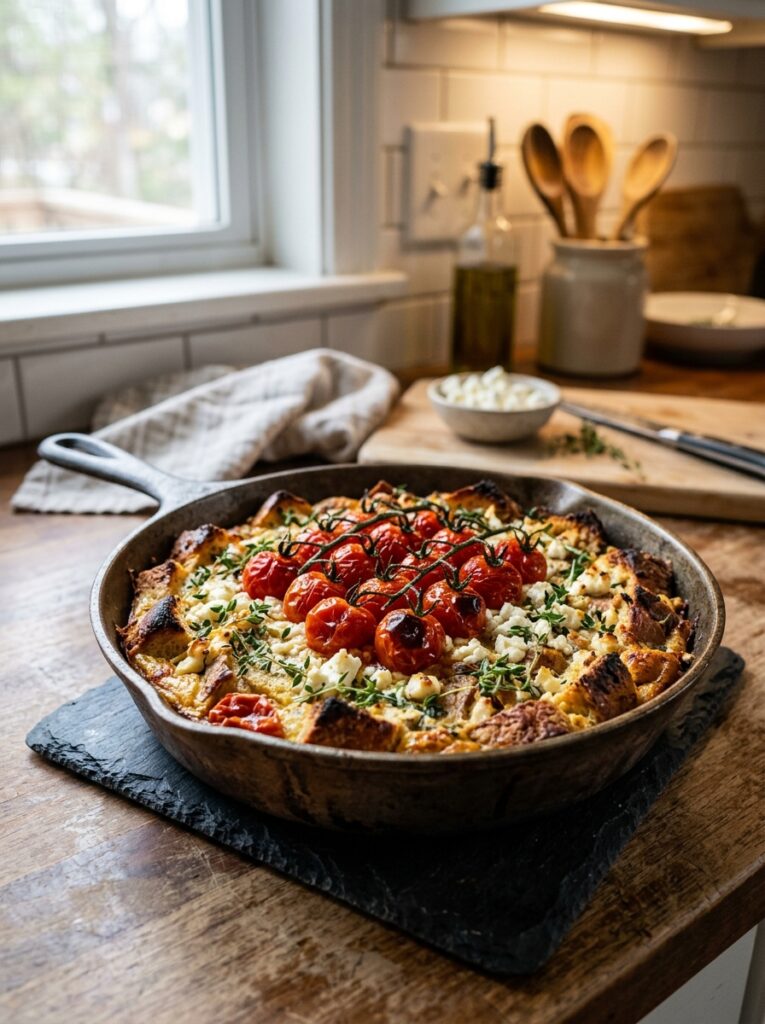
Everyone treats French toast like it’s automatically sweet and that’s a shame.
Savory oven French toast is genuinely worth your time. Skip the sugar, vanilla, and cinnamon in your custard. Instead, add a tablespoon of Dijon mustard, a generous pinch of black pepper, some fresh thyme, and — this is optional but very good — a handful of grated Gruyère or sharp cheddar stirred right into the egg mixture.
Arrange your soaked slices in the baking dish, layer some caramelized onions on top (the kind you’ve cooked low and slow for forty minutes until they’re sweet and jammy), scatter more cheese over everything, and bake. Serve with a simple green salad and you’ve got something that could reasonably go on a brunch menu at a nice place.
The British version of this, if you want to go that direction, works brilliantly with thick-cut white bread and a layer of strong cheddar on top. Very good. Very specific. Totally worth it.
8. What to Do When It Comes Out Wrong (and Why It Happened)
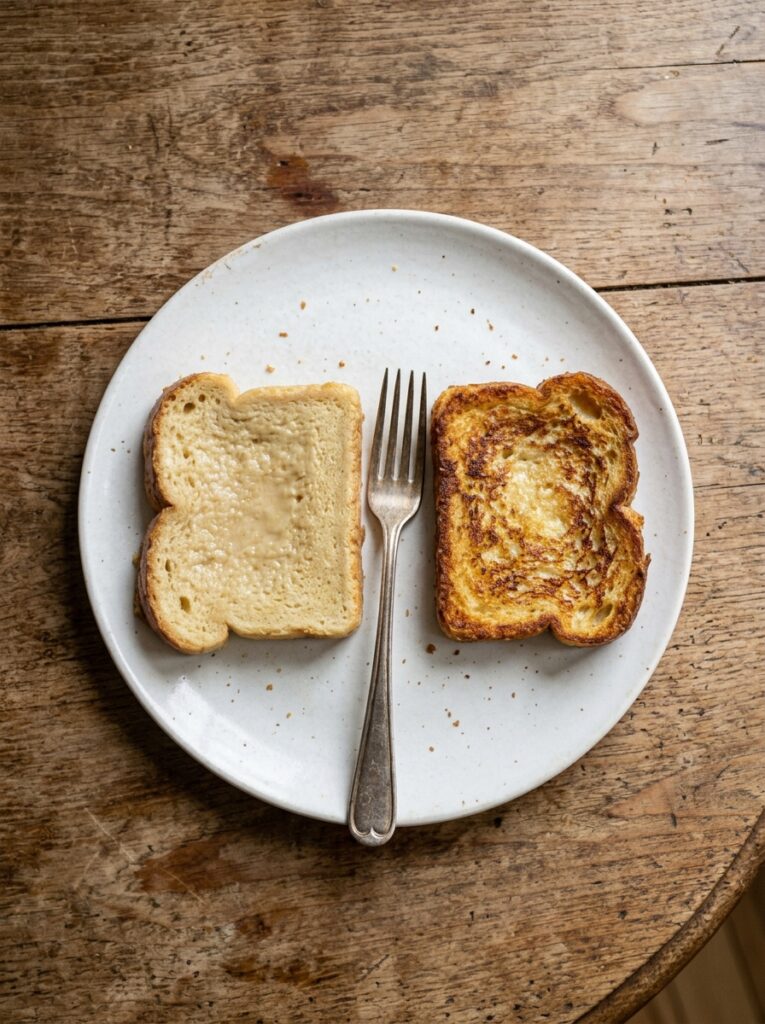
Sometimes it goes wrong. Let’s talk about that, because it does happen.
Soggy in the middle usually means one of two things: your bread was too fresh, or the heat was too high on the outside before the inside had time to cook. Next time: stalker bread, lower temp, and don’t skip the foil.
Dry and almost rubbery on the outside usually means you overbaked the uncovered stage, or your custard ratio was too lean on fat. Add cream next time. Don’t go past twenty minutes uncovered unless your oven runs cool.
Weirdly eggy flavor — this is almost always from not fully whisking the eggs into the custard. That unmixed egg white cooks separately and tastes, well, like plain cooked egg white. Whisk harder, longer than you think you need to.
None of this is unfixable. The good news about oven French toast is that even a slightly imperfect batch is still really, really good.
9. The Toppings That Are Actually Worth Making From Scratch
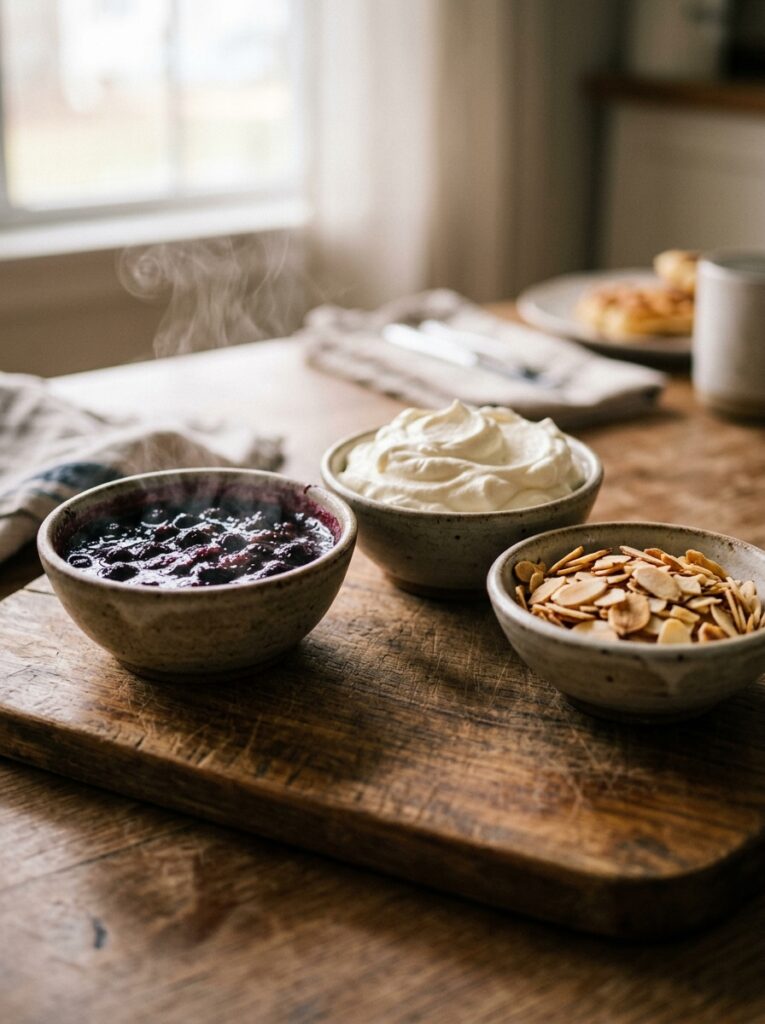
I know powdered sugar and maple syrup are the default. And they’re fine! Completely fine. But here’s what’s genuinely better and still actually quick.
Warm berry compote: a cup of mixed berries (frozen is perfect for this, they cook down beautifully), two tablespoons of sugar, a squeeze of lemon, cooked in a small pan over medium heat for about eight minutes until thick and glossy. Pour it over the top and it soaks into all the edges and corners. It’s ridiculously good.
Cinnamon honey butter: two tablespoons of softened butter, a tablespoon of honey, a quarter teaspoon of cinnamon, mashed together with a fork. Put it on hot French toast and watch it melt. That’s it. That’s the whole thing.
Clotted cream and jam, for any UK readers reading this — yes, completely valid on oven French toast. Don’t let anyone tell you otherwise.
10. How To Scale This For a Crowd Without Breaking a Sweat
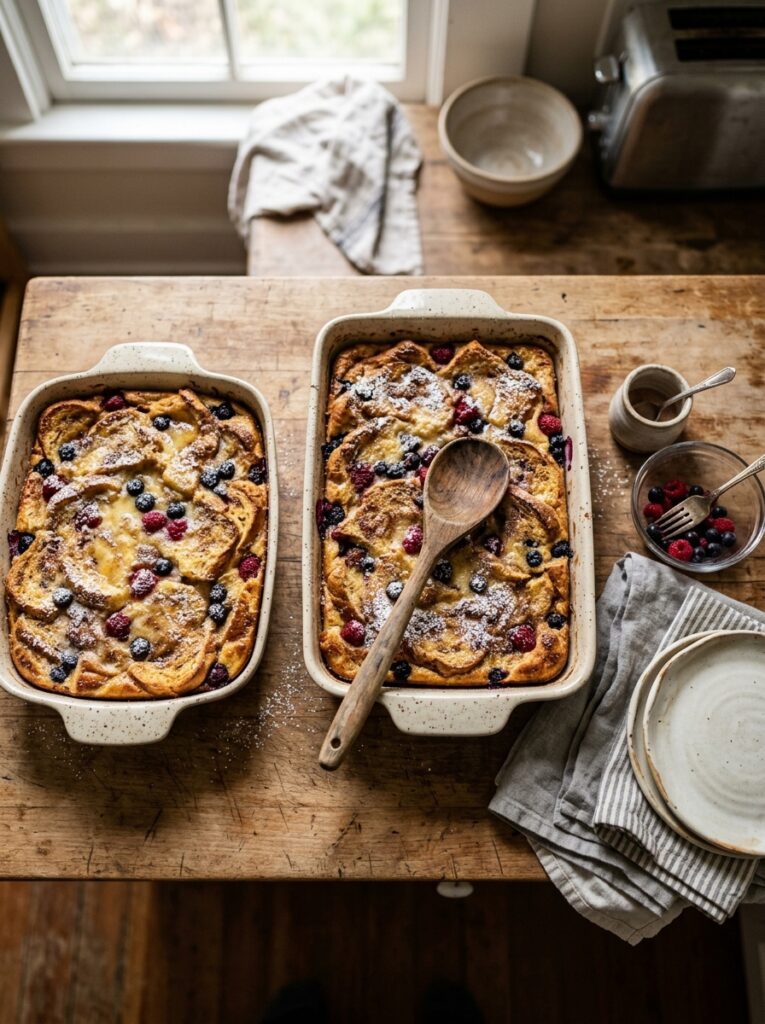
This is where oven French toast gets genuinely useful rather than just delicious.
A standard 9×13 inch baking dish holds about eight to ten thick slices, which serves four to five people comfortably. You can double this by using two dishes side by side in the oven, rotating them halfway through for even baking. Thirty-five to forty minutes still works, maybe a few extra minutes if your oven runs cold.
If you’re doing the overnight prep method and feeding a crowd — a holiday morning, a birthday brunch, people staying over — you can prep TWO full dishes the night before, slide them both in the morning, and feed ten people a proper breakfast without cooking anything to order.
That’s the thing about oven French toast that never gets mentioned enough. It’s genuinely low stress. You’re not standing at the hob flipping things, managing temperatures, burning your wrist on a hot pan. You put it in the oven. You make coffee. You have a conversation. And then it’s done.
“I’ve made this for twelve people on a Saturday morning and still managed to sit down before my coffee got cold. That alone is worth the recipe.”
11. Storing Leftovers (If You Have Any, Which Is Not a Given)
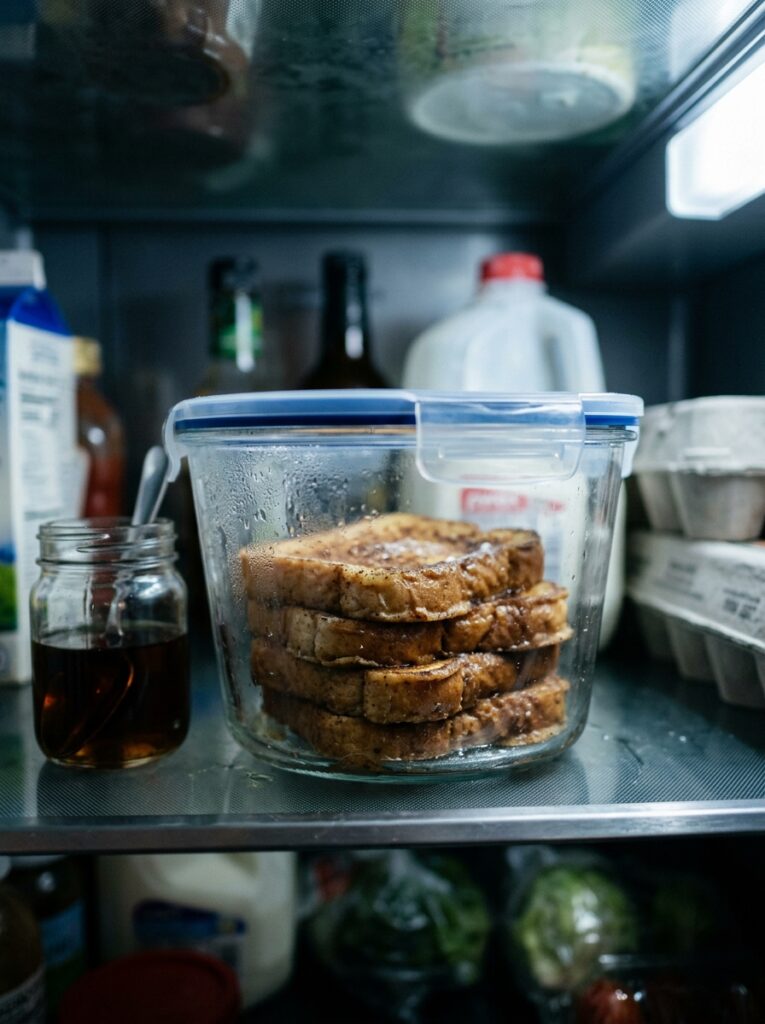
If somehow there’s leftover oven French toast — I know, but theoretically — it keeps really well. Wrap it tightly or pop it in an airtight container and refrigerate for up to three days.
Reheating in the oven is the way to go: 300°F (150°C) for about ten minutes, covered loosely with foil. It’ll come back almost exactly to how it was. The microwave works in a pinch but tends to make the edges a bit soft, so if you have the time, use the oven.
You can also freeze individual portions. Wrap each slice tightly in cling film, pop them in a freezer bag, and freeze for up to a month. Reheat from frozen at 350°F (175°C) for about fifteen to eighteen minutes covered. Honestly kind of a miracle for busy mornings.
12. The Version I Keep Coming Back To (And Will Probably Make This Weekend)
So if I had to land on one — my actual go-to, the thing I’ve made more times than anything else in this entire category — it’s the overnight brioche bake with the brown sugar streusel top.
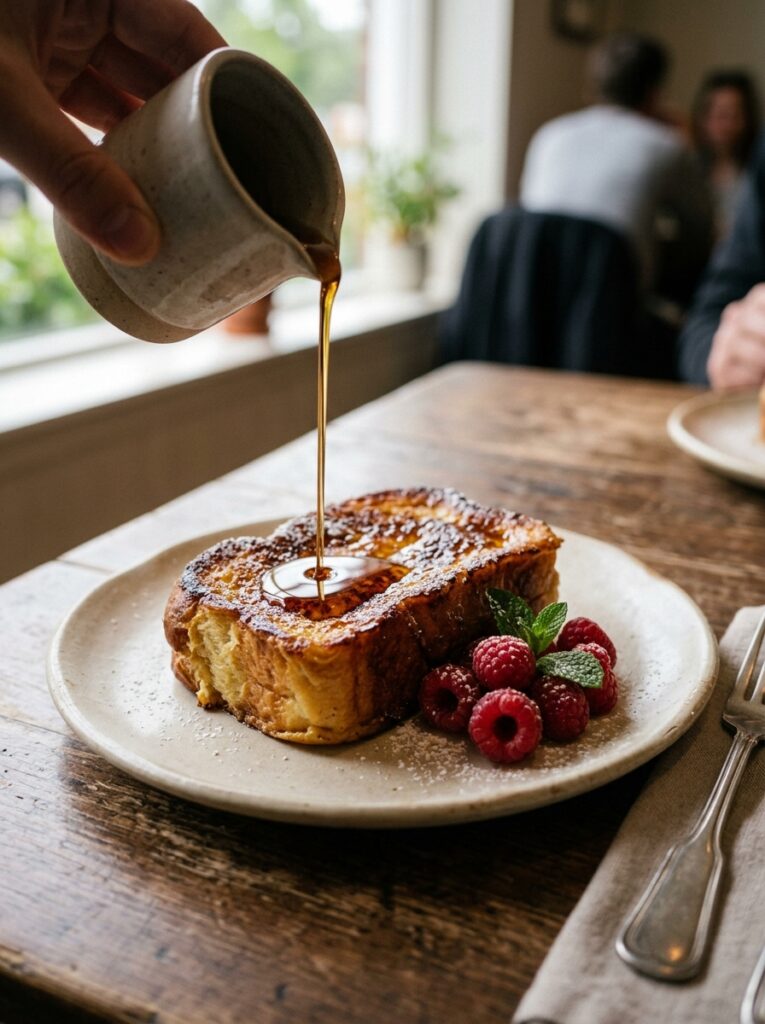
Thick brioche. Rich custard with a splash of cream. Overnight soak so the bread is completely saturated and deeply custardy all the way through. Brown sugar and butter scattered generously on top. Forty minutes in the oven, the last twenty uncovered. A warm pool of maple syrup and the berry compote if I have berries.
It’s soft. It’s rich. The top is almost like a crème brûlée situation — crackly where the sugar hit the heat, golden brown at the edges, slightly gooey where the butter pooled.
It’s the kind of thing that makes people put their phones down. And honestly that’s about as high a bar as I can think of.
—
❓ FAQ
Q: Can I use any type of milk, or does it have to be whole milk? A: Whole milk really does give you the best result — the fat content helps the custard set properly and stay rich. Semi-skimmed works if that’s what you have, but avoid skimmed milk if you can. Plant-based milks like oat or full-fat coconut milk also work surprisingly well for a dairy-free version.
Q: Do I have to cover the dish with foil during baking? A: You don’t have to, but it makes a real difference. The foil traps steam and makes sure the inside cooks through before the top browns too fast. Without it, you risk a golden exterior and an underdone, eggy center. Cover for the first twenty minutes, then uncover for the last fifteen to twenty — that combo is the sweet spot.
Q: Can I make this the same morning without an overnight soak? A: Absolutely. The quick-soak method (about thirty seconds per side in the custard) works really well for a morning-of bake. Your bread won’t be quite as deeply custardy as the overnight version, but it’ll still be genuinely delicious. Just make sure your bread is stale enough to absorb the custard without falling apart.
—
💭 Final Thoughts
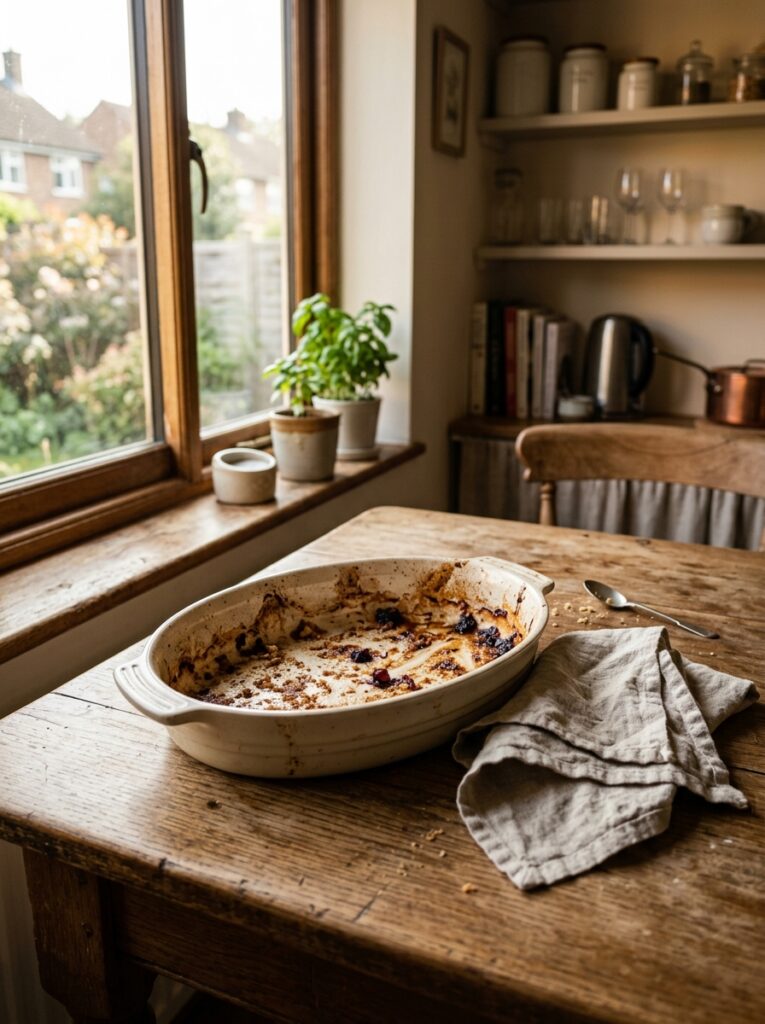
Oven French toast didn’t just solve the “what’s for breakfast” problem for me — it kind of changed how I think about mornings entirely. The idea that you can do ten minutes of work the night before and wake up to something that actually tastes like you tried? That’s worth a lot.
It’s one of those recipes that rewards you disproportionately for how little effort goes in. Which, honestly, is the best kind.
What would you do with the overnight version — save it for a special morning, or make it on a random Tuesday just because?
