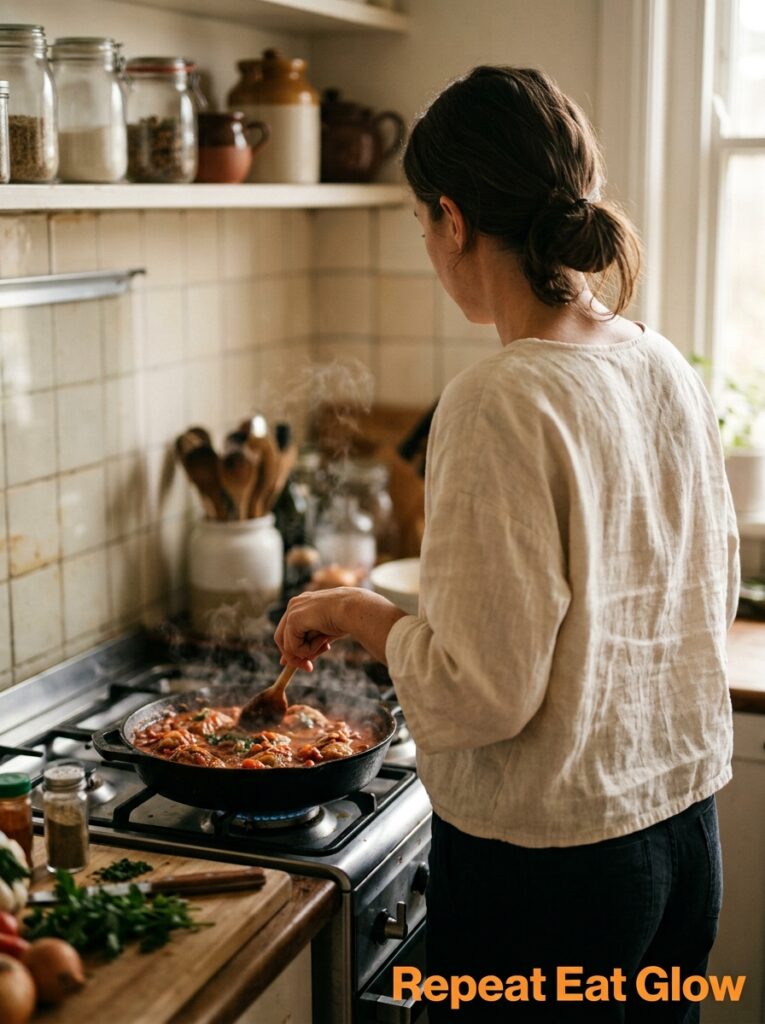
You’ve got chicken breasts in the fridge and a can of tomatoes in the cupboard. Most people stare at that combination and think fine, I’ll just do pasta. But here’s the thing — you’re sitting on one of the most versatile pairings in cooking, and you’re barely scratching the surface of what it can do.
—
1. Why This Combination Hits Different When You Actually Treat the Chicken Right
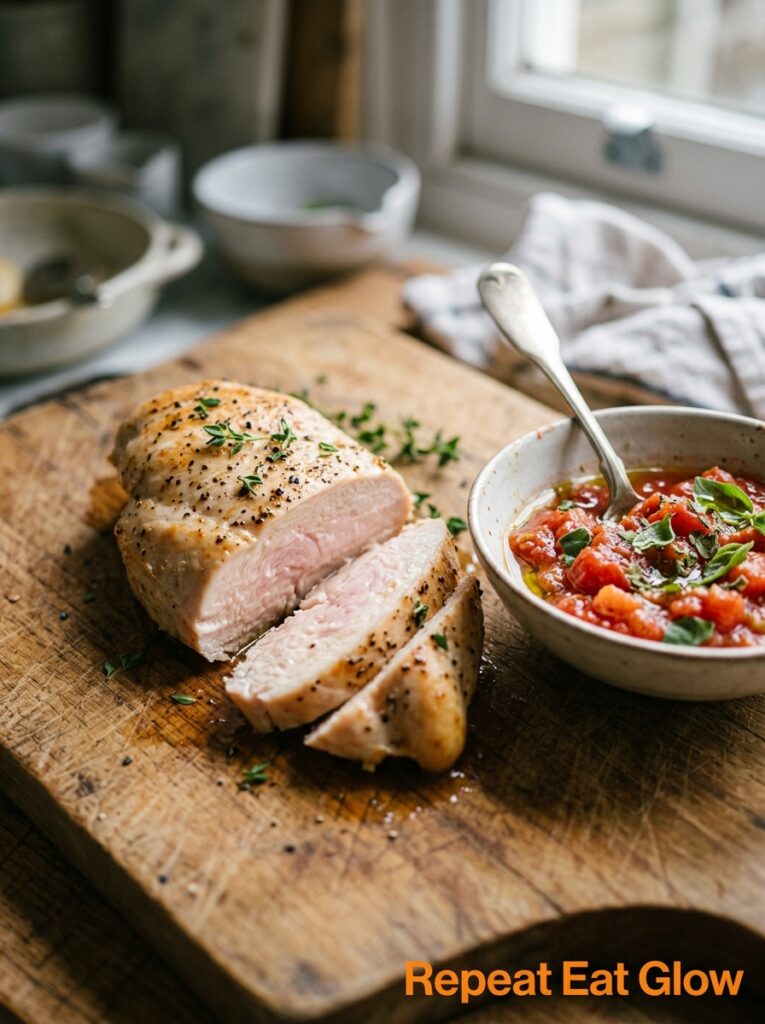
Here’s the honest truth about chicken breast: it doesn’t have a lot going on by itself. It’s lean, it’s mild, and if you look at it wrong it turns into shoe leather. But that mild quality? That’s actually the point. It soaks up flavor like nothing else.
The tomato is doing heavy lifting here. Its acidity actually tenderizes the meat as it cooks — so the longer a chicken breast sits in a tomato-based braise or sauce, the softer and more forgiving it becomes. That’s why so many classic recipes across Italian, Spanish, and North African cooking rely on this exact pairing. They figured this out centuries ago.
What you want to do before any recipe is pound your chicken breasts to an even thickness or cut them in half horizontally. Not gonna lie, this step changes EVERYTHING. It’s the reason your chicken cooks through at the same rate instead of giving you one dry end and one underdone middle. Five minutes of prep. Enormous difference in the result.
Also — and this is the thing people skip — season the chicken properly before it hits the pan. Salt on both sides, let it sit for ten minutes if you can. The salt starts working on the protein structure right away, and by the time it meets your tomatoes, it’s already building flavor from the inside out.
2. The Shakshuka-Adjacent Dinner That’s Not Quite Shakshuka
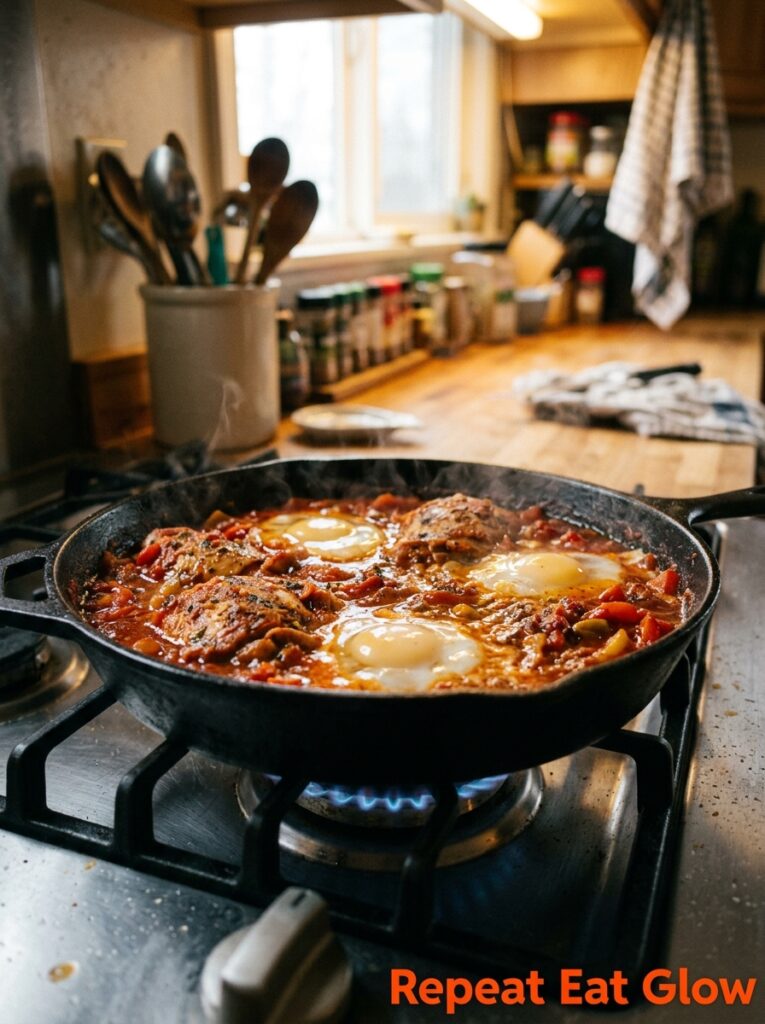
Most people think of shakshuka as a breakfast thing. Eggs in spiced tomato sauce, pita on the side, weekend brunch energy. But take that same base — olive oil, garlic, crushed tomatoes, cumin, smoked paprika, a hit of chilli — and nestle pan-seared chicken into it instead of cracking eggs, and you’ve got something COMPLETELY different.
Something richer. More filling. More “actual dinner.”
Brown your chicken breasts in a wide, deep pan first. Get some real color on them, don’t just cook them through — you want that golden crust because that’s where the flavor lives. Pull them out. In the same pan, soften half an onion and four garlic cloves in olive oil, then add a teaspoon each of smoked paprika and cumin, let the spices cook for about 30 seconds until they smell almost nutty. In goes a 14oz can of crushed tomatoes, a pinch of sugar, salt, and maybe a tiny splash of harissa if you’ve got it.
Let that simmer down for five minutes, then slide your chicken back in, spoon the sauce over the top, cover and cook on low for 15 minutes. Scatter fresh parsley over the top. Serve it straight from the pan with crusty bread.
It’s the kind of dish you’d make for someone you’re trying to impress but you don’t want them to know you’re trying.
“Brown the chicken properly. That golden crust is where half the flavor comes from — don’t skip it.”
3. The Italian Grandmother Version (But Faster)
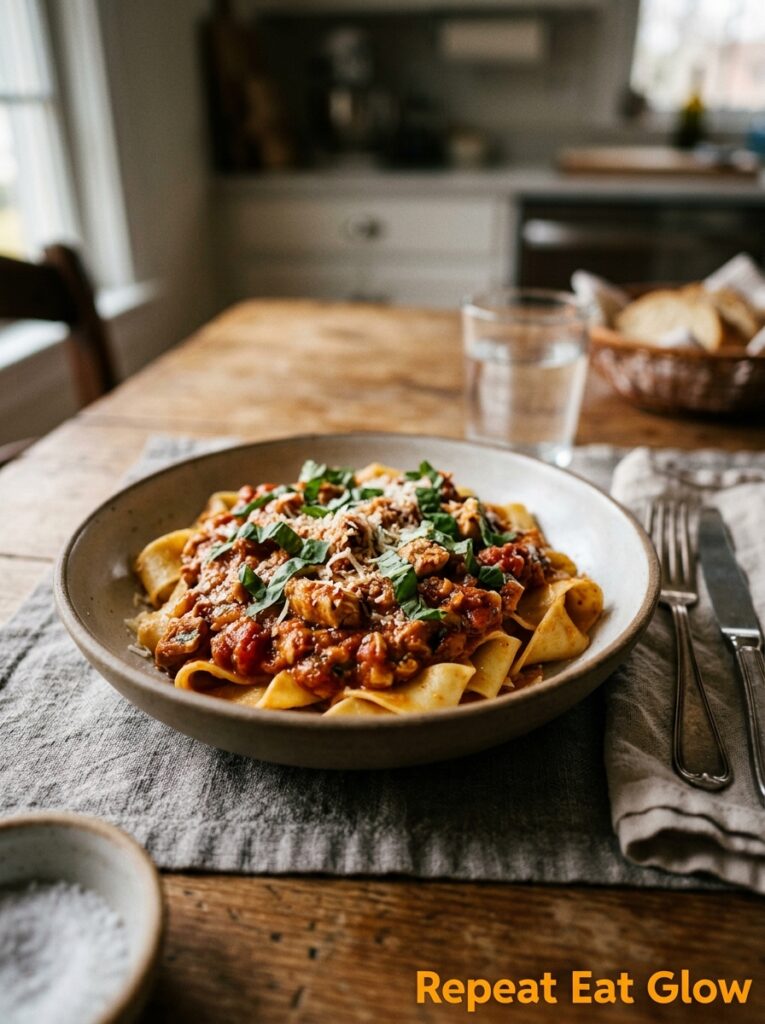
Chicken cacciatore has a reputation for being a Sunday project. Something that takes three hours and involves a whole cut-up chicken and a lot of standing around. And yeah, the slow version is genuinely incredible. But a stripped-down weeknight cacciatore with chicken breasts? Done in 35 minutes and tastes like you put in way more effort than you did.
The key ingredients here are canned whole tomatoes (San Marzano if you can find them, but honestly any decent brand works), capers, olives, a splash of dry white wine, and fresh thyme. The capers and olives are doing something important — they’re adding salt and brininess that makes the tomato sauce taste more complex without you having to do much extra.
Crush your whole tomatoes with your hand directly into the pan. Slightly messy, completely worth it, the texture ends up better than diced. Add your herbs and liquid, get it simmering, tuck in the chicken breasts, and let it go on a low heat.
The thing I love about this dish is that it’s genuinely forgiving. Let it go an extra ten minutes? The chicken just gets more tender. Forgot to add the olives at the start? Chuck them in at the end. It’s the kind of recipe that corrects for inattention, which, some days, is exactly what I need.
4. Cold Lunch Completely Sorted: The Chicken Puttanesca Salad Nobody Told You About
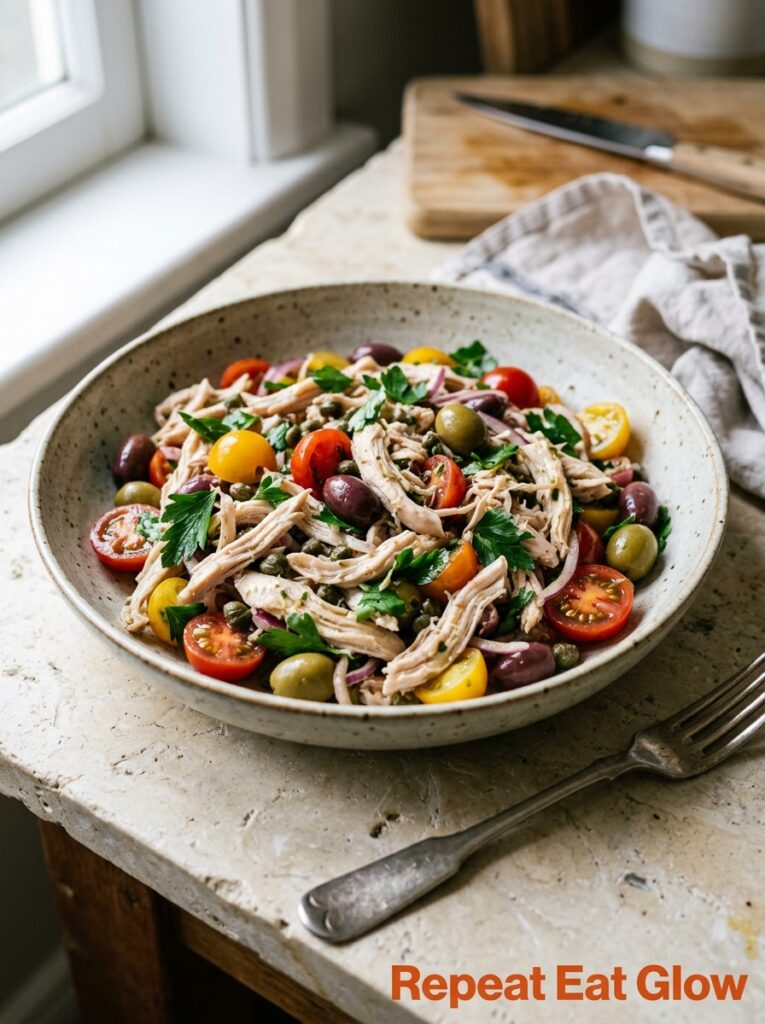
Here’s a use for leftover chicken that isn’t just “throw it on a green salad.”
Make a quick puttanesca sauce — tinned tomatoes, anchovies (just two, they’ll melt away), garlic, capers, olives, chilli flakes, olive oil — and let it simmer thick and jammy. Then let it COOL. Like, actually cool. Put it in the fridge.
Take leftover chicken breast, shred it or slice it thinly, and toss it into the cold puttanesca with some white beans or chickpeas. Add fresh basil, a squeeze of lemon, eat it over rocket or just with bread.
It sounds a bit weird. It is extremely good. The sauce acts like a dressing but with way more body and personality than anything you’d buy in a bottle. The beans make it substantial enough that you’re not hungry again an hour later, which is the whole point of lunch.
This is a recipe that rewards having sauce left over in the fridge. So honestly — make more sauce than you need on purpose.
5. When You Want Something That Tastes Like a Restaurant Did It
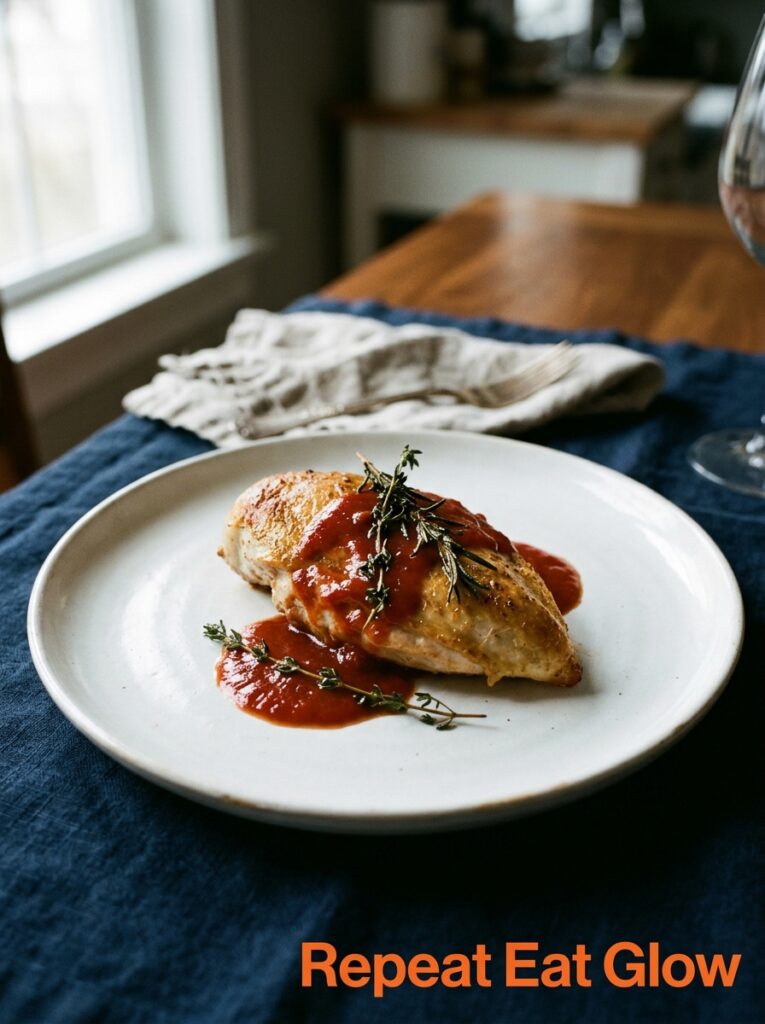
Chicken in a tomato cream sauce. I know, I know — cream feels indulgent on a Tuesday. But you’re using like three tablespoons. That’s not indulgent, that’s sensible.
Sear your chicken, set it aside. Soften shallots (not onion — shallots are sweeter and they dissolve more smoothly into a cream sauce), then add garlic, a splash of white wine, let it reduce by half. In goes a can of chopped tomatoes. Let that simmer for about 8 minutes until it thickens slightly, then stir in 3 tablespoons of double cream or heavy cream, a teaspoon of Dijon mustard, and salt and pepper.
The mustard. Don’t skip it. You can’t taste it as mustard — it just makes everything taste more rounded and a little bit tangy without you being able to identify why.
Put the chicken back in, spoon sauce over it, another 10 minutes on low. Serve with pasta, with mashed potatoes, with polenta, with literally anything that can soak up sauce.
This is the dinner that makes people ask what restaurant you ordered from.
“Three tablespoons of cream turns a tomato sauce into something that feels genuinely luxurious. That’s not cheating. That’s cooking.”
6. The One-Pan Bake That Does the Work While You Decompress
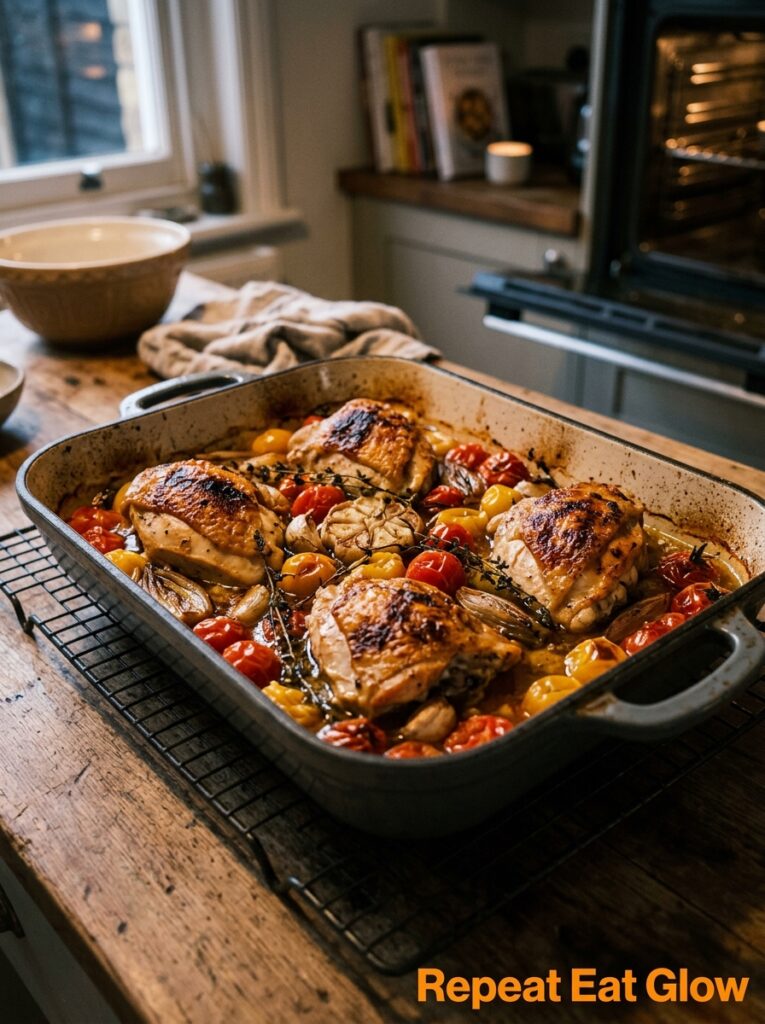
This one requires almost no active cooking. Maybe ten minutes of hands-on time. The oven does everything.
Lay chicken breasts in a roasting dish. Halve a load of cherry tomatoes and scatter them around and on top — probably two big handfuls. Smash four or five garlic cloves with the side of a knife and throw those in. Pour over a generous glug of olive oil, season everything really well with salt, pepper, and dried oregano, and add a small glass of white wine or chicken stock to the bottom of the dish.
Into a 400°F / 200°C oven for 25-30 minutes.
The tomatoes will burst and collapse and their juices will mix with the wine and olive oil into this intensely savory, slightly sweet pan sauce that’s different every single time depending on how ripe your tomatoes were. Sometimes it’s deeply concentrated. Sometimes it’s silkier. Both are correct.
Finish with fresh basil torn over the top and eat with good bread to catch the juices. Or over white rice if you want something more substantial.
This is the recipe I send people when they say they don’t know how to cook.
7. The Spicy Version for When You’re Tired of Being Reasonable
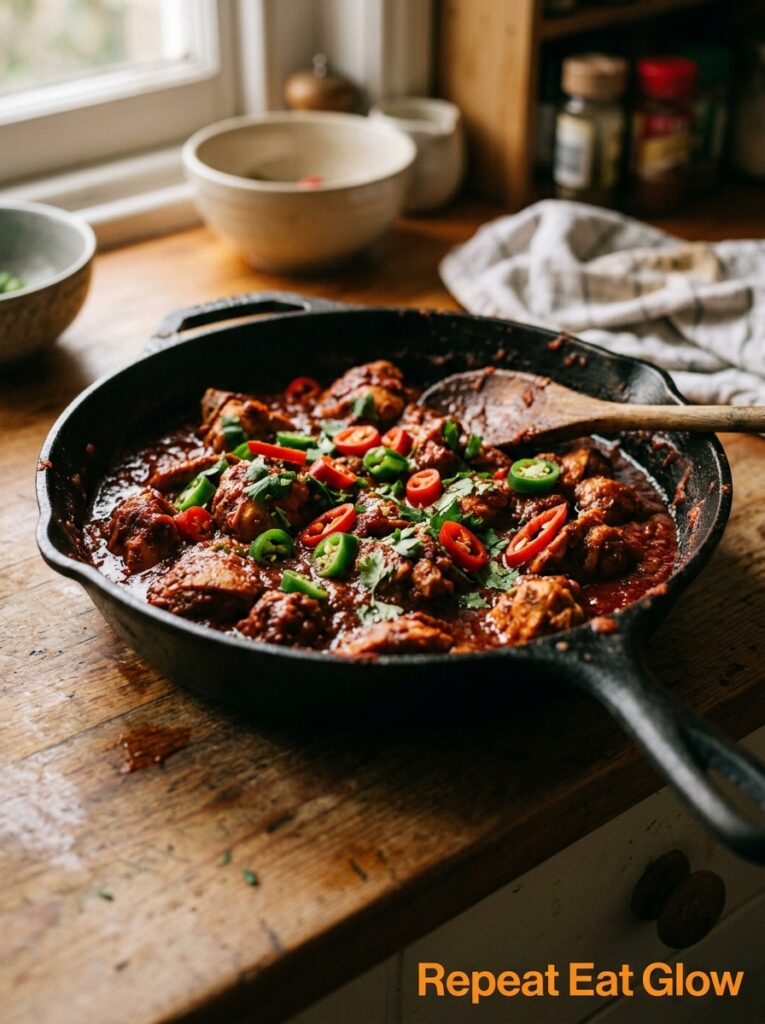
Okay so arrabbiata is a classic pasta sauce and it’s classically not a chicken dish. But I’ve been putting chicken in it for years and I’m not stopping.
The whole point of arrabbiata is that it’s aggressively spicy — arrabbiata means “angry” in Italian, which is kind of perfect. Olive oil, crushed red pepper flakes (more than you think), canned whole tomatoes, garlic, and that’s basically it. The restraint is what makes it work. There’s nowhere to hide if any of those ingredients isn’t good.
Brown your chicken, make the sauce in the same pan, braise the chicken in it for 20 minutes. The heat mellows slightly as it cooks but there’s still a real kick at the end. Serve it with pasta to catch all the spicy sauce, or on its own with bread.
Side note — if you’re cooking for people with different spice tolerances, you can make the base sauce and then add extra chilli to your own portion at the end. The reasonable adult thing to do, apparently.
“Arrabbiata means ‘angry.’ Make it angry. Mild arrabbiata is just tomato sauce with anxiety.”
8. The Version That Makes Leftover Chicken Exciting Again
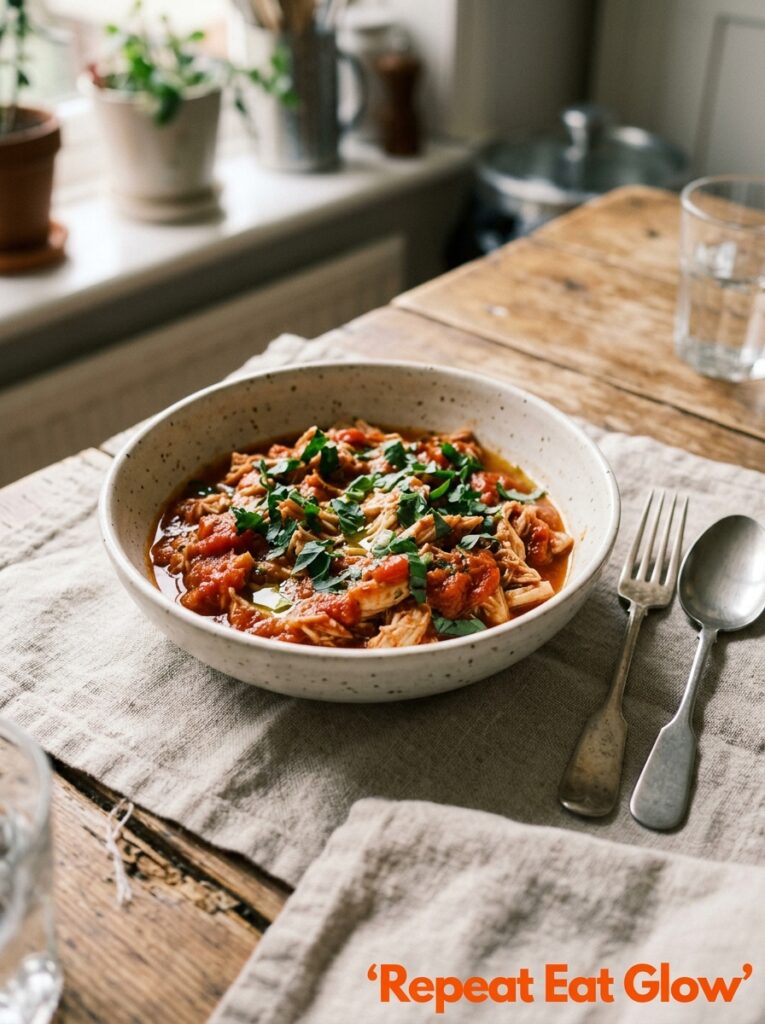
Chicken tikka masala is technically a British dish (fight me) and it’s VERY much in the chicken-plus-tomatoes family. And yes, you can make a really solid version at home without a tandoor or two days of marinating.
The shortcut: use full-fat Greek yogurt to marinate your chicken breast pieces for even 30 minutes, with cumin, coriander, turmeric, garam masala, and a bit of ginger. The yogurt tenderizes the chicken fast and the spices get right into the surface.
Then — and this is key — cook the chicken SEPARATELY first, either in a very hot pan or under the broiler/grill to get some char on it. Don’t just dump raw chicken into the sauce. That char is what makes it taste like tikka masala and not just a curry.
For the tomato sauce: onion, ginger, garlic, all the warm spices again, tomato passata or blended canned tomatoes, and at the end, a good pour of double cream. Let it all come together, then add your charred chicken pieces.
Serve with basmati rice and naan if you’ve got it. It won’t taste exactly like your favorite takeaway. It’ll taste different — more fresh somehow, lighter, like you can taste each ingredient individually instead of everything blurred together.
9. A Really Good Soup That Doesn’t Feel Like “I’m Being Healthy”
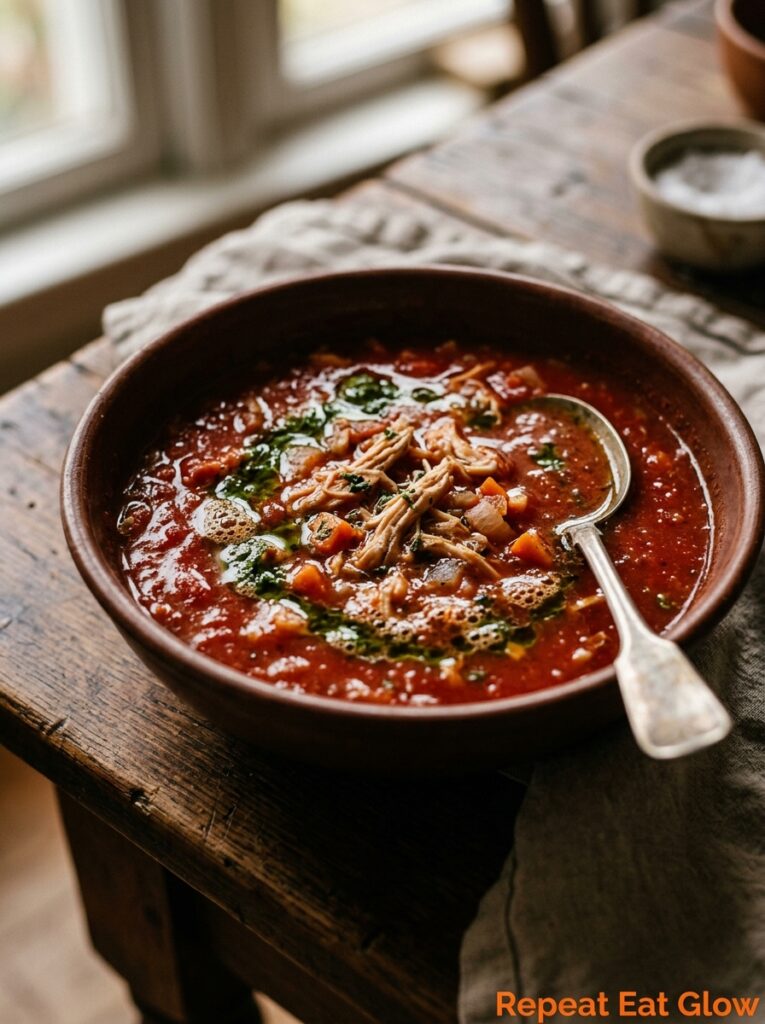
Tomato soup is comforting but it doesn’t really fill you up. So: add chicken.
Not in a boring way. Start with the usual suspects — olive oil, onion, celery, garlic — but roast your tomatoes first. Halve them, drizzle with oil, roast at 375°F / 190°C for 20-25 minutes until they’re a bit collapsed and caramelized at the edges. That roasting step deepens the flavor in a way that you really can’t get from just simmering canned tomatoes.
Blend the roasted tomatoes with your softened aromatics and some chicken stock. Season well. Then poach chicken breasts directly in the soup — they’ll cook gently and release some of their flavor into the broth while staying incredibly tender.
Pull the chicken out, shred it with two forks, stir it back in.
The result is this thick, slightly smoky, deeply savory soup that has real protein in every bowl. Top with a drizzle of cream or a swirl of pesto. Crusty bread is non-negotiable.
10. The Summer Version (Yes, This Pairing Works Cold Too)
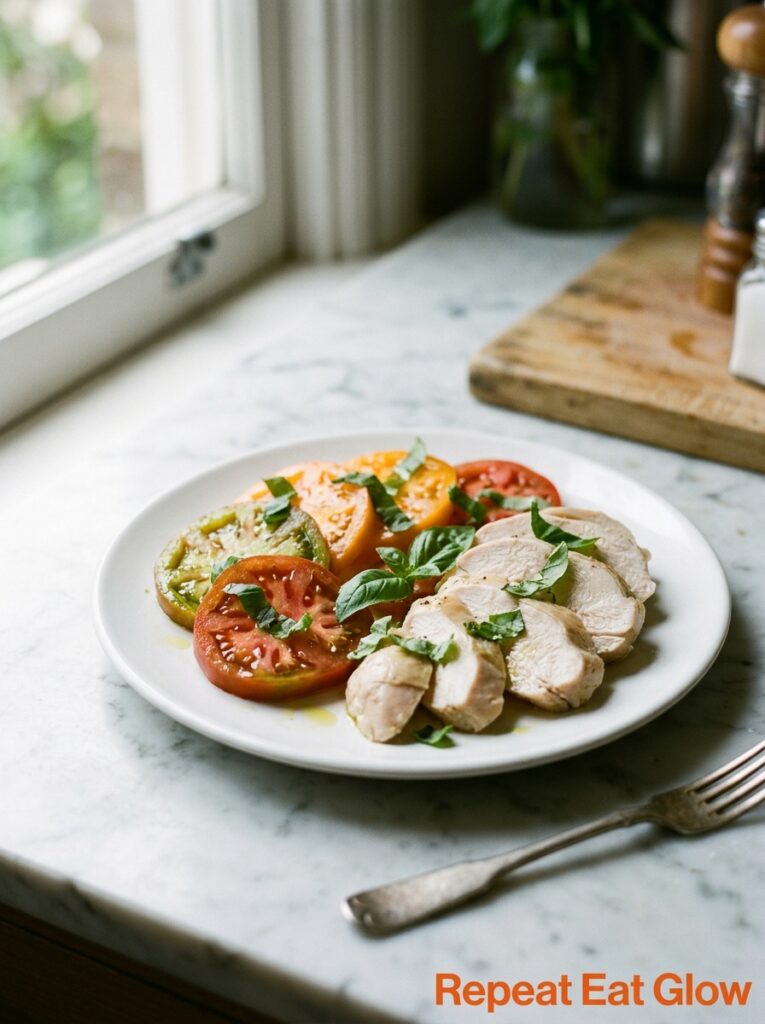
When it’s hot outside, you don’t necessarily want a braise. But fresh tomatoes and cold sliced chicken breast together — done right — is genuinely one of the best summer lunches.
Poach your chicken breasts in lightly salted water with a bay leaf and some peppercorns until just cooked through. Let them cool completely in the liquid, which keeps them moist rather than letting them dry out in the air. Then slice them thinly.
Meanwhile: chop ripe tomatoes (heirloom if you can get them, honestly, the color alone is worth it), mix with finely sliced red onion, capers, fresh basil, olive oil, a bit of red wine vinegar, salt, and a pinch of sugar.
Arrange the chicken over the tomatoes, spoon the whole thing together, and leave it for ten minutes so everything can mingle. It’s kind of like a panzanella but without the bread, or add torn sourdough if you want something closer to a full meal.
This is what I make when I don’t want to turn on the stove.
11. The One That’s Actually Faster Than Ordering Takeout
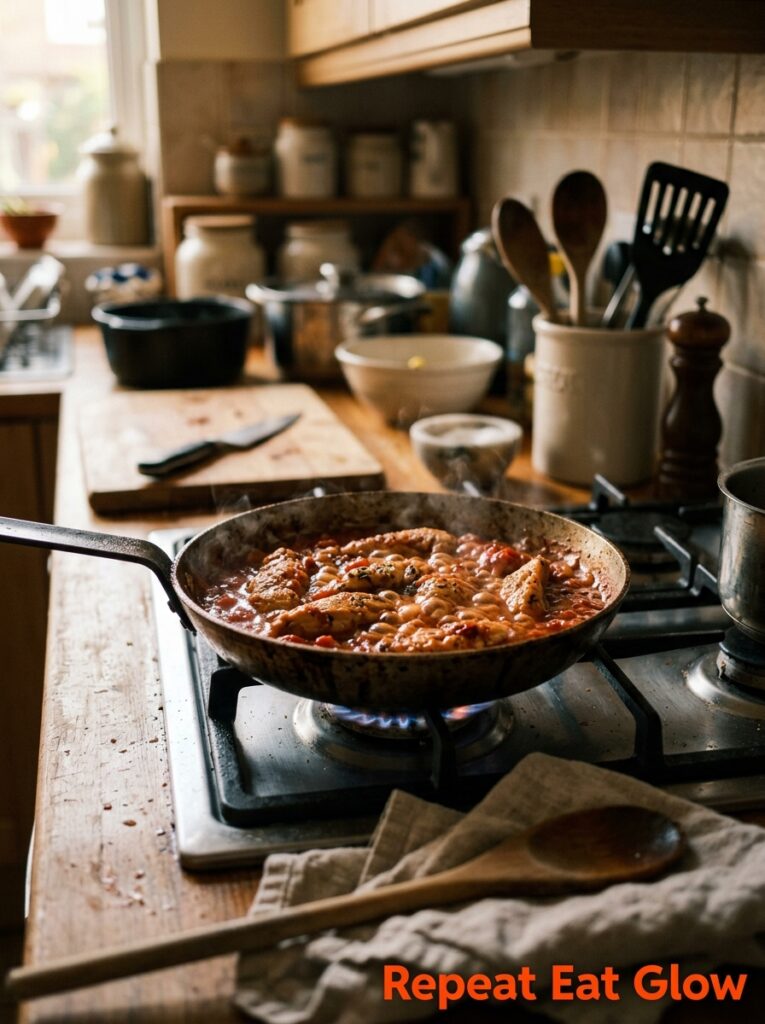
Quick-braised chicken with tinned tomatoes and cannellini beans. I timed this once: 28 minutes start to finish.
Sear chicken breasts in oil, set aside. Fry garlic and fresh rosemary for about 60 seconds. In go the tomatoes — crushed or chopped, doesn’t matter — and a drained can of cannellini beans. Season, add a splash of stock or water, let it all bubble together.
Nestle the chicken back in, cover, cook on low for 15 minutes.
Done. Genuinely done. And it’s not just fast — the beans thicken the sauce and add this lovely creamy texture that makes the whole dish feel like it’s been going for way longer than it has. It tastes like Tuscany, or at least what I imagine Tuscany tastes like on a Wednesday night.
12. The Tomato-Glazed Chicken That’s Basically Just Showing Off
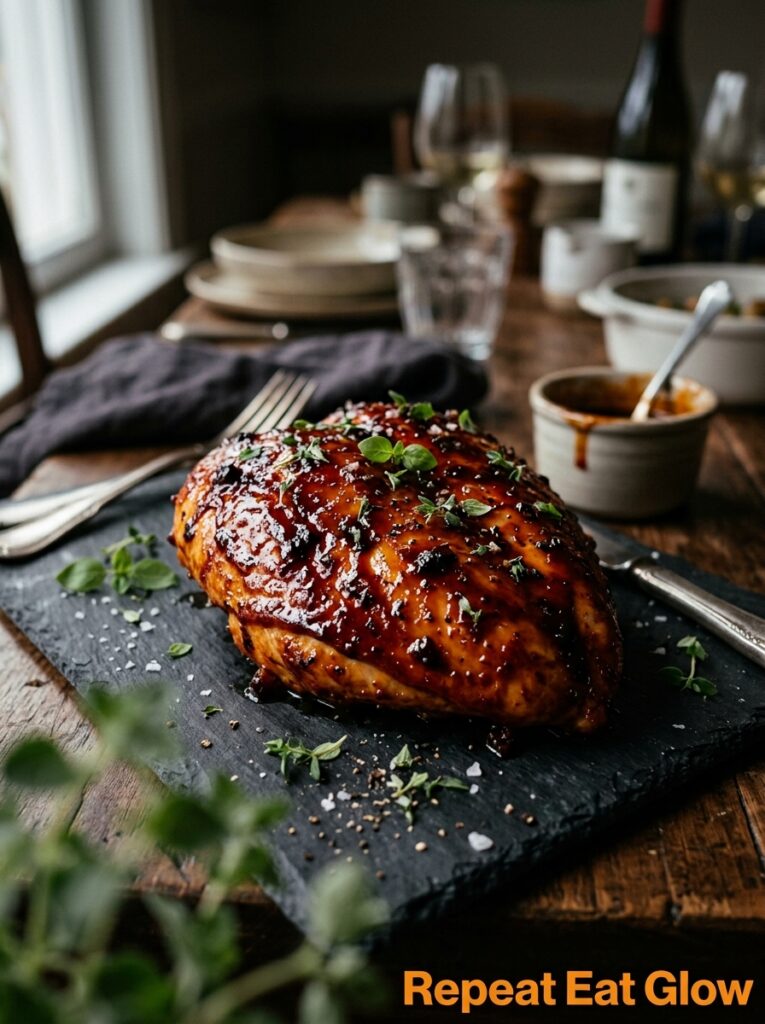
Last one. This is for when you actually feel like cooking.
Make a concentrated tomato glaze: passata or tomato purée, balsamic vinegar, honey, garlic, a pinch of chilli, salt. Simmer it until it’s thick and glossy and almost jam-like. It should coat a spoon.
Score the tops of your chicken breasts lightly (just shallow cuts), brush the glaze all over them, and roast at 425°F / 220°C for 22-25 minutes, brushing with more glaze halfway through.
The result is this lacquered, deeply savory-sweet, slightly sticky chicken with a glaze that caramelizes at the edges into something almost crispy. It looks IMPRESSIVE. Like you spent ages on it.
Slice it over creamy mashed potatoes with a simple green salad alongside. The glaze is so flavorful that you honestly don’t need a sauce — the pan juices mixed with any leftover glaze is enough.
—
❓ FAQ
Q: How do I stop chicken breast from drying out when I cook it in tomato sauce? A: Don’t cook it on high heat and don’t overcook it — chicken breasts are done when they reach 165°F / 74°C internally. Braising on a low simmer with the lid on gives you the most forgiving results. Also, pounding them to an even thickness before cooking makes a huge difference.
Q: Can I use canned tomatoes and fresh tomatoes interchangeably in these recipes? A: Mostly, yes, but they behave differently. Canned tomatoes are more consistent and break down into a sauce much more easily. Fresh tomatoes are better when you want them to retain some texture or when you’re eating them raw or barely cooked. For long-cooked braises, canned wins almost every time.
Q: Can I meal prep any of these for the week? A: The braised and saucy versions actually get better after a day in the fridge — the chicken absorbs more flavor overnight. Most of these reheat really well in a covered pan on low heat with a splash of water. The tomato-glazed chicken from section 12 is probably the one exception; eat that fresh.
—
💭 Final Thoughts
Chicken breast and tomatoes might not sound like the most exciting jumping-off point. But that’s kind of the whole point — this pairing is a blank canvas that works in almost every direction you push it. From a 28-minute weeknight braise to something genuinely restaurant-worthy on a Saturday night.
The best part is that once you’ve made a few of these, you stop needing a recipe at all. You just start improvising around what’s in the cupboard.
What’s the chicken and tomato dish you always come back to?
