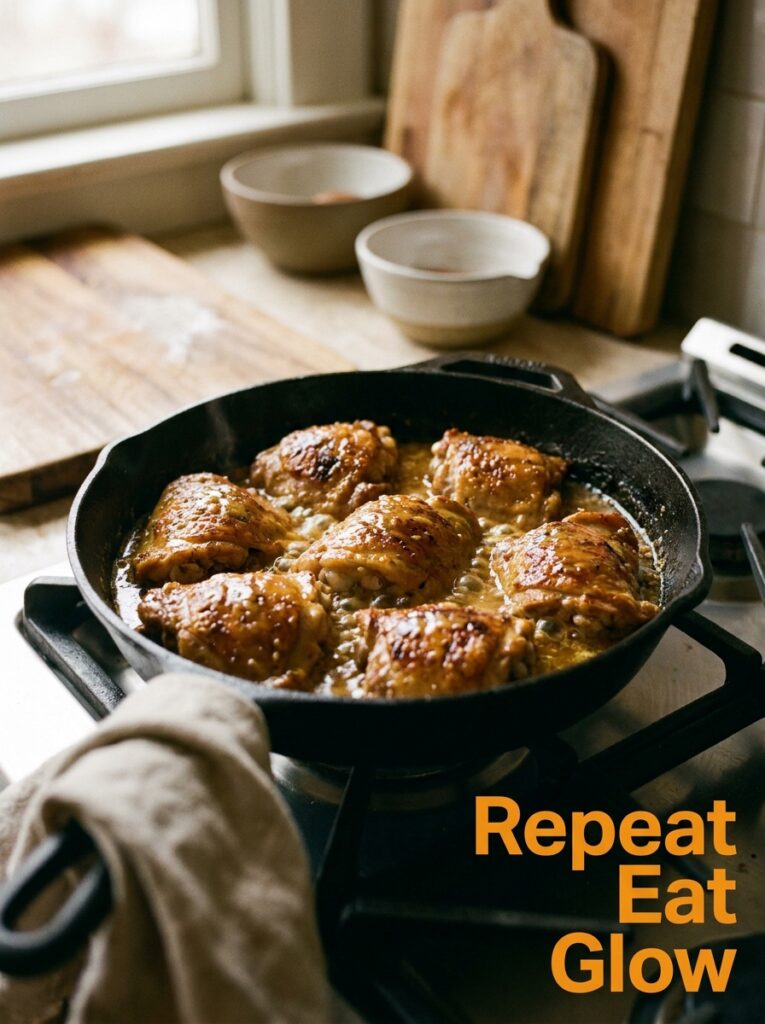
There’s a moment — you know the one — where you pull something out of the oven and the whole kitchen smells so good you actually stop what you’re doing. That’s this dish. Sticky, glossy, a little tangy, a little sweet, and somehow both weeknight-easy and dinner-party-worthy at the same time.
—
1. Why Honey Mustard Chicken Has This Weird Hold on Everyone Who Makes It

Let me tell you something: I’ve made a LOT of chicken recipes. Too many. Some of them were fine, some of them were genuinely great, and a handful of them have just quietly become part of my life. Honey mustard chicken is in that last category, and I don’t think I fully understood why until recently.
It’s the balance, I think. That sharp, almost spicy bite from the mustard — Dijon is ideal, but we’ll talk about that — against the slow sweetness of honey. Neither one wins. They just kind of negotiate with each other, and the result is this sauce that’s deep and complex without requiring you to do anything complicated. You whisk it together in like three minutes. Three minutes!
And it clings. That’s the other thing. A good honey mustard sauce clings to chicken thighs in a way that makes every bite feel intentional, like the whole thing was designed exactly that way. Which, I mean, it kind of was. The sugars in the honey caramelize against the heat of the oven and you get these beautiful, amber-lacquered edges that look like you spent an hour on them. You didn’t. But nobody needs to know.
“The sauce takes three minutes to whisk together. The flavor tastes like you spent an hour.”
2. The Cut of Chicken That Actually Changes Everything Here
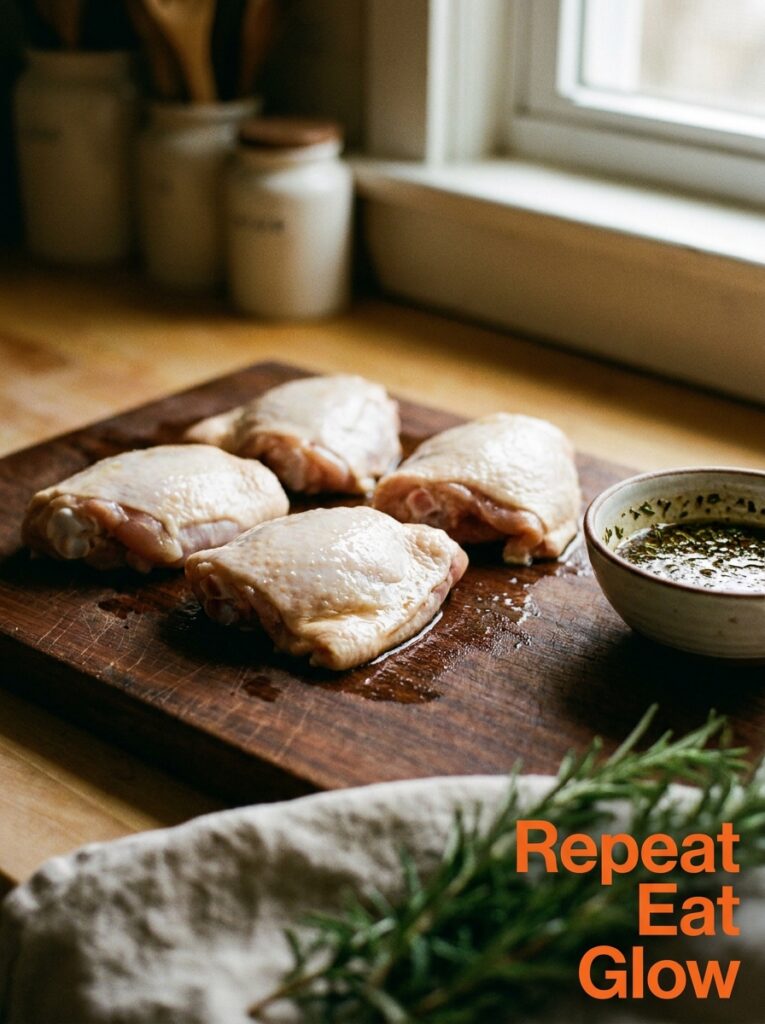
Okay, real talk: I used to make this with chicken breasts because that’s what I had. And it was… fine. The problem with breasts is that they’re unforgiving. Cook them even slightly too long and the whole thing dries out, and then the sauce is just sitting on top of dry meat instead of becoming part of it.
Thighs are what you want. Bone-in, skin-on chicken thighs, specifically. They take longer to cook, which sounds like a downside, but it isn’t — that extra time in the oven is what lets the sauce really work into the meat, what lets the skin go golden and a little crispy underneath all that sticky glaze. The fat in the thighs bastes the meat from the inside while the sauce is doing its thing on the outside.
Boneless thighs work too, and they’re quicker — good call if you’re in a rush on a weeknight. Just adjust the cooking time down to around 25-28 minutes at 400°F. And if you’re in the UK cooking this, that’s around 200°C, fan oven maybe 180°C.
Don’t fight me on the thighs. I know some of you will, but I’m right.
3. The Mustard Situation — Because “Just Use Any Mustard” Is Bad Advice
There are mustards and then there are mustards. For this recipe you’ve got a decision to make, and it’s actually worth thinking about.
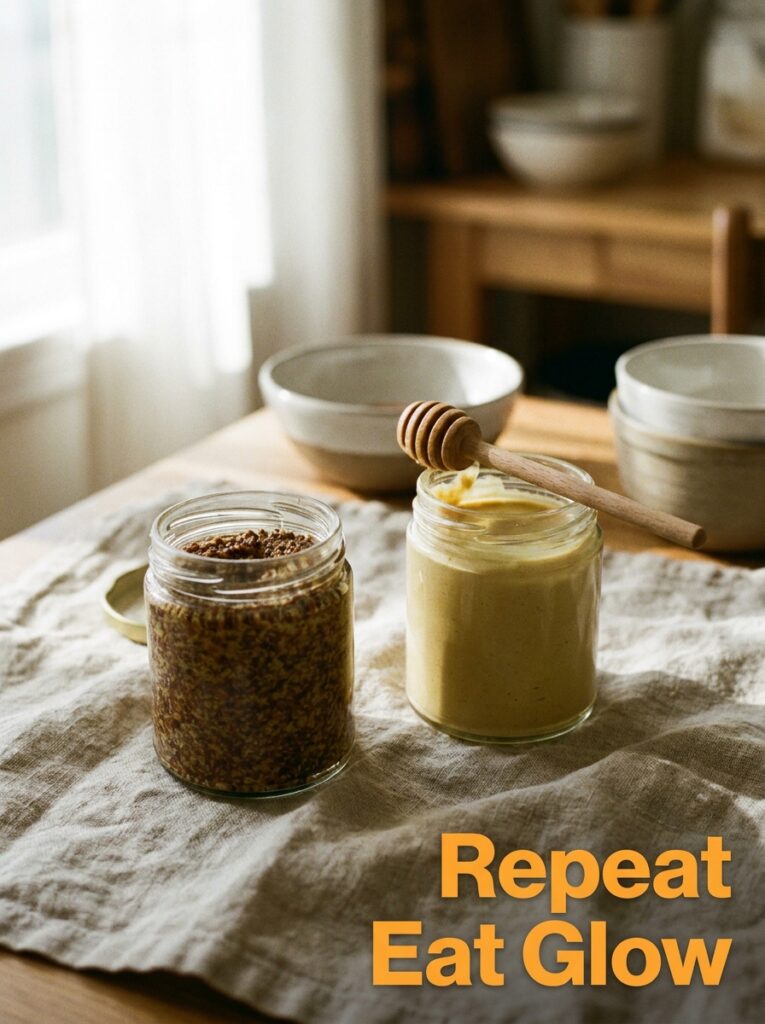
Dijon is the classic move. It’s smooth, it’s sharp without being overwhelming, and it blends into sauces in this seamless way that coarse-grain mustard doesn’t. If you want the most polished, restaurant-y version of honey mustard chicken, Dijon is your answer.
But — and here’s where it gets interesting — whole grain mustard adds something Dijon doesn’t. Those little mustard seeds kind of pop when you bite into them, and they give the sauce this rustic, textured quality that feels really different. More homemade somehow, even though both versions are equally homemade. I’ve been making a 50/50 blend lately and honestly it might be the best version I’ve landed on.
Yellow mustard, American-style? Not for this. Too acidic, too thin, and it makes the whole thing taste like a hot dog. Which is fine if you want a hot dog, but that’s not what we’re doing.
And don’t cheap out on the honey. Real, actual honey — runny enough to pour. Something with a bit of floral character to it is lovely here, but honestly any decent honey from the supermarket works perfectly well.
4. The Basic Recipe That Actually Works (And Isn’t Boring)
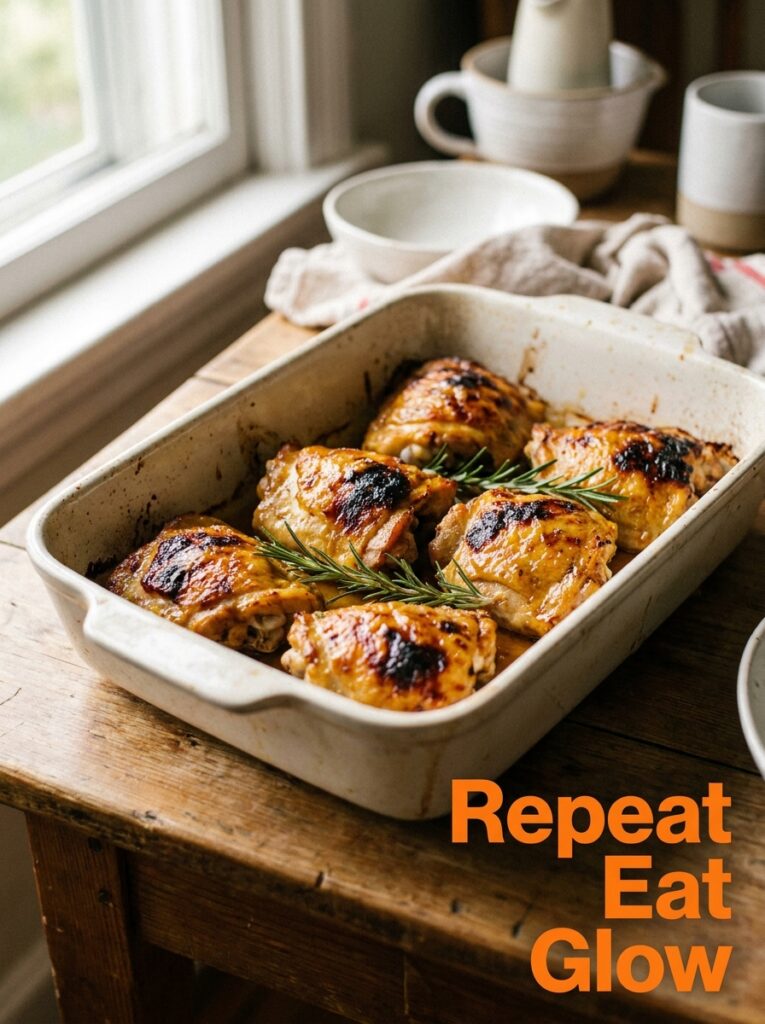
So here’s what I do for a batch that feeds four people comfortably. You need: 8 bone-in, skin-on chicken thighs, 3 tablespoons of Dijon mustard, 2 tablespoons of whole grain mustard, 4 tablespoons of honey, 2 tablespoons of olive oil, 3 cloves of garlic (minced), 1 tablespoon of apple cider vinegar, salt, pepper, and some fresh thyme if you’ve got it.
Whisk everything except the chicken together in a bowl until it’s smooth. Taste it. It should make your face do something. Season the chicken well, put it in a roasting dish or cast iron skillet skin-side up, pour the sauce over and around, and roast at 400°F (200°C) for about 40-45 minutes. You want the internal temperature to hit 165°F, and you want that skin looking dark gold and gorgeous.
Here’s the part people skip: spoon the sauce from the bottom of the pan back over the chicken about halfway through cooking. Just once is fine. It makes a difference.
Rest it for five minutes before serving. Always rest it.
“Spoon the sauce back over halfway through. It’s one extra step and it’s everything.”
5. The Version That Feels Fancy Without Being Complicated
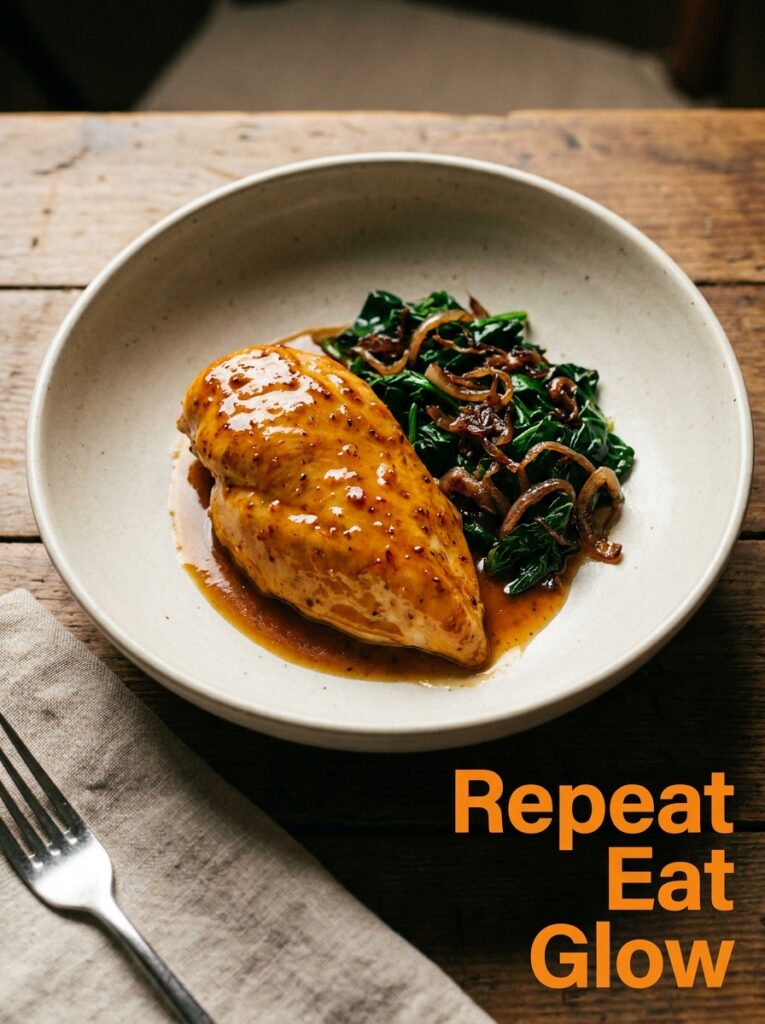
Sometimes you want to make honey mustard chicken and have people think you did something impressive. I get it. Here’s the version for that.
Add a splash — maybe 2 tablespoons — of heavy cream to the sauce before roasting. This doesn’t change the flavor dramatically but it adds this silkiness, this roundness that makes the sauce feel almost like something from a proper restaurant kitchen. The cream also keeps the sauce from getting too dark or caramelized if your oven runs hot.
Fresh tarragon instead of thyme. Big difference. Tarragon is a little bit anise-y and it has this very specific “French bistro” energy that makes honey mustard chicken taste elevated in a way that’s hard to explain until you try it.
You can also add a handful of cherry tomatoes to the pan. They blister and collapse in the oven and mingle with the honey mustard sauce in the most wonderful way — juicy pockets of something sweeter and more acidic mixed into the sticky glaze. I started doing this by accident when I had tomatoes to use up, and now I do it on purpose every time.
Serve this version over creamy mashed potatoes and I promise you’ll feel very pleased with yourself.
6. The One-Pan Sheet Pan Version for the Nights When You’re Tired
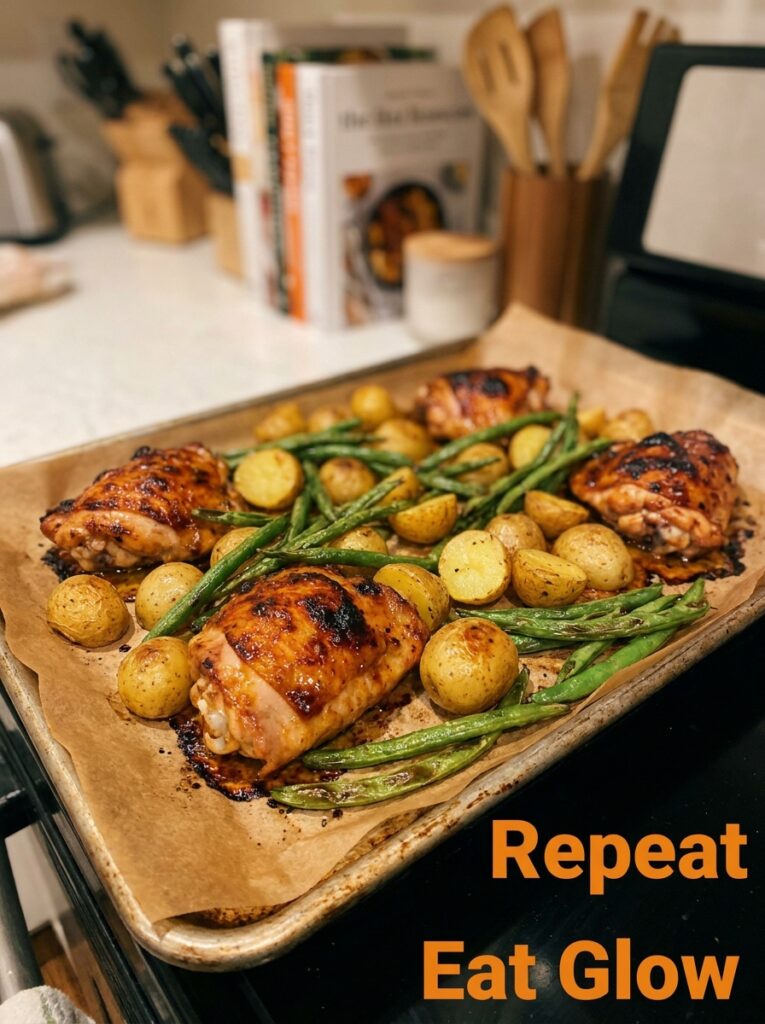
It’s a Wednesday. You’ve had a long one. You don’t want to think, you don’t want to wash seven dishes, and you definitely don’t want to stand over a stove.
Sheet pan honey mustard chicken is what Wednesdays are FOR.
Throw your chicken thighs on a large sheet pan. Add whatever vegetables you want — I love baby potatoes halved and tumbled in with some red onion cut into wedges, but green beans, broccoli florets, or chunks of sweet potato all work. Pour the sauce over everything, not just the chicken. The vegetables roasting in that honey mustard situation are genuinely the best part of the whole meal, so don’t hold back.
Everything goes in at 400°F. The potatoes take about as long as the chicken, which is why they’re the vegetable I’d push you toward if you’re undecided. Check it around 40 minutes. If the chicken is done before the veg, just pull the chicken off and let the vegetables go another 10 minutes on their own.
One pan. One sauce. Basically zero decisions. This is the version I make most often, not gonna lie.
7. Slow Cooker Honey Mustard Chicken — The Winter Version
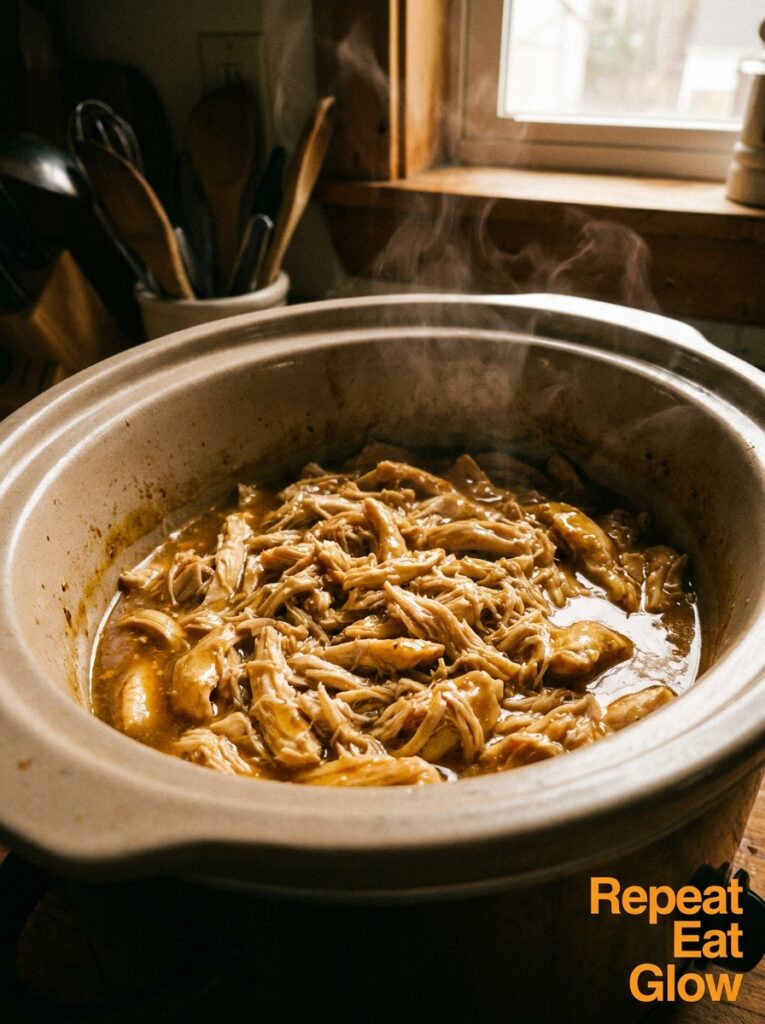
When it’s actually cold outside. Like properly cold, grey-sky, want-a-blanket cold. That’s when I switch to the slow cooker version and it’s a completely different experience.
The sauce goes thinner in the slow cooker, more like a broth than a glaze, and the chicken goes falling-off-the-bone soft in a way that’s incredibly satisfying to eat. You lose the caramelized exterior — that’s just the truth of slow cooking — but you gain something else: this deeply savory, slightly sweet liquid that you can reduce on the stovetop afterward or just spoon over everything as it is.
Brown the chicken thighs in a hot pan first. Skin side down, a few minutes until golden. I know you might want to skip this, but don’t. That fond — the browned bits stuck to the pan — adds a flavor depth to the finished dish that raw-meat-straight-into-the-slow-cooker just doesn’t have.
Then everything goes in. Low for 6-7 hours, or high for 3-4. Serve it with rice and something green, maybe some steamed tenderstem broccoli, and eat it while it’s still making the kitchen warm. Side note — I sometimes add a couple of sprigs of rosemary to the slow cooker version and it’s really, really good. Anyway.
“Slow cooked honey mustard chicken doesn’t look impressive in the pot. It tastes like a hug.”
8. The Marinade Trick That Makes Grilled Honey Mustard Chicken Exceptional
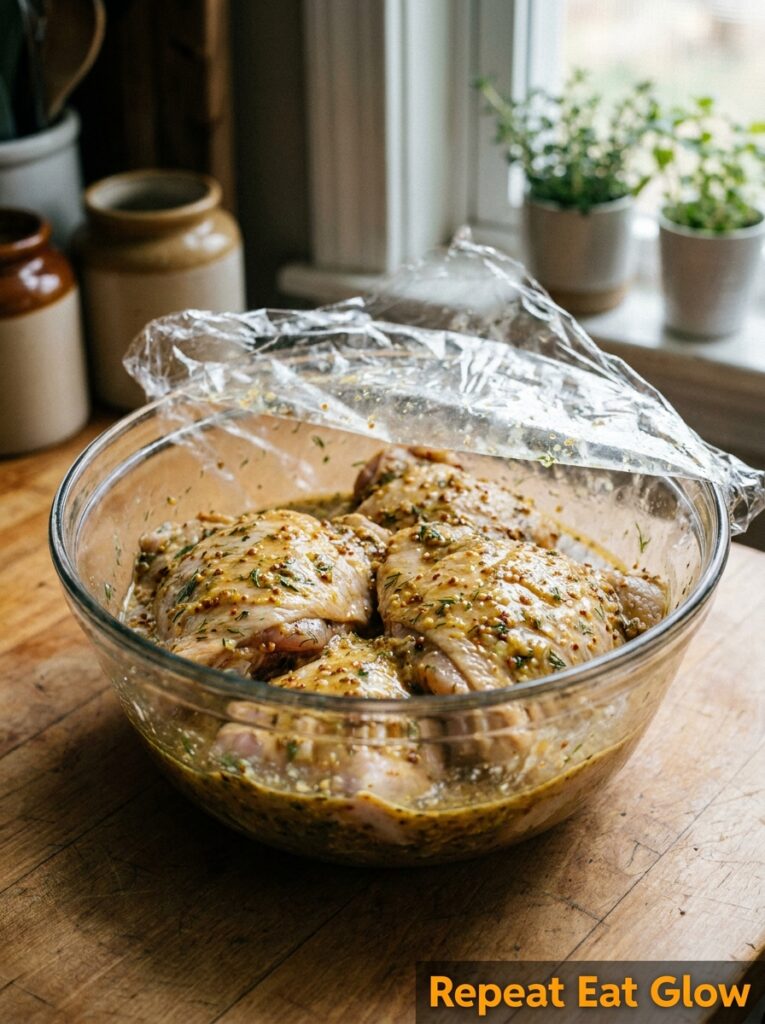
Summer version. Different animal entirely.
The honey is your enemy at the grill if you’re not careful. It burns. The sugars hit high heat and go from glossy-perfect to charred-bitter in about 90 seconds, and nobody wants that. So the trick with grilling is to use the honey mustard as a MARINADE first, not a basting sauce.
Marinate your chicken — boneless thighs are better here, or even chicken legs — for at least two hours, ideally overnight in the fridge. Then when you grill, brush off most of the marinade before the chicken hits the grate. Grill over medium heat, not high. And in the last two or three minutes of cooking, brush on a little fresh honey mustard sauce that you haven’t marinated the raw chicken in.
That’s how you get the flavor throughout the meat AND the glossy, beautiful exterior without the burning. Little bit of a process, but if you’re grilling for people in the garden on a summer evening, it’s absolutely worth it.
9. The Sauce Ratio That You Should Actually Memorize
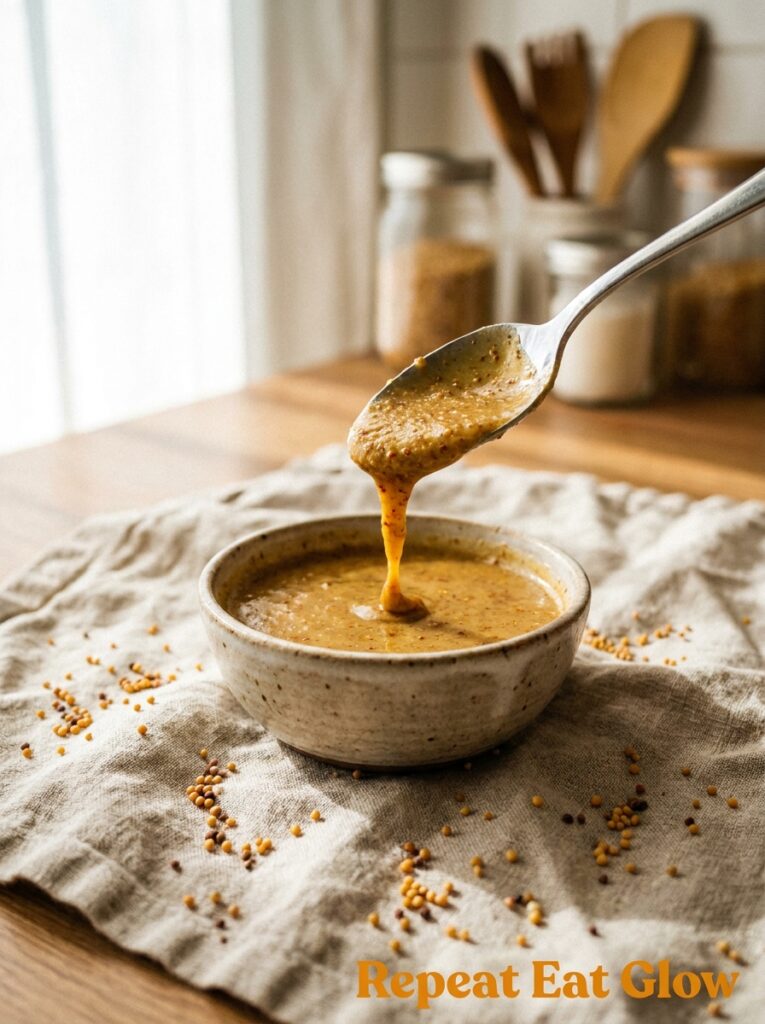
This is the thing. Once you get this ratio in your head you can make honey mustard sauce without a recipe ever again.
3 parts mustard to 2 parts honey. That’s it.
From there, you add something acidic — apple cider vinegar is my favorite, lemon juice works, white wine vinegar is a bit sharper — and something fatty, which is usually olive oil or a bit of melted butter. Then garlic, salt, black pepper. That’s the formula.
The 3:2 ratio keeps it from going too sweet, which is the mistake most people make when they wing it. Too much honey and the whole thing tastes like candy. Which sounds good until you’re eating it and you realize there’s no tension, no interest. The mustard is what keeps you coming back for another bite.
You can adjust from there depending on your taste. More honey if you’ve got people who find mustard too sharp. More mustard if you want it punchier. But start at 3:2 and work from there, not from a blank page.
10. What to Serve It With — And What Not To Bother With
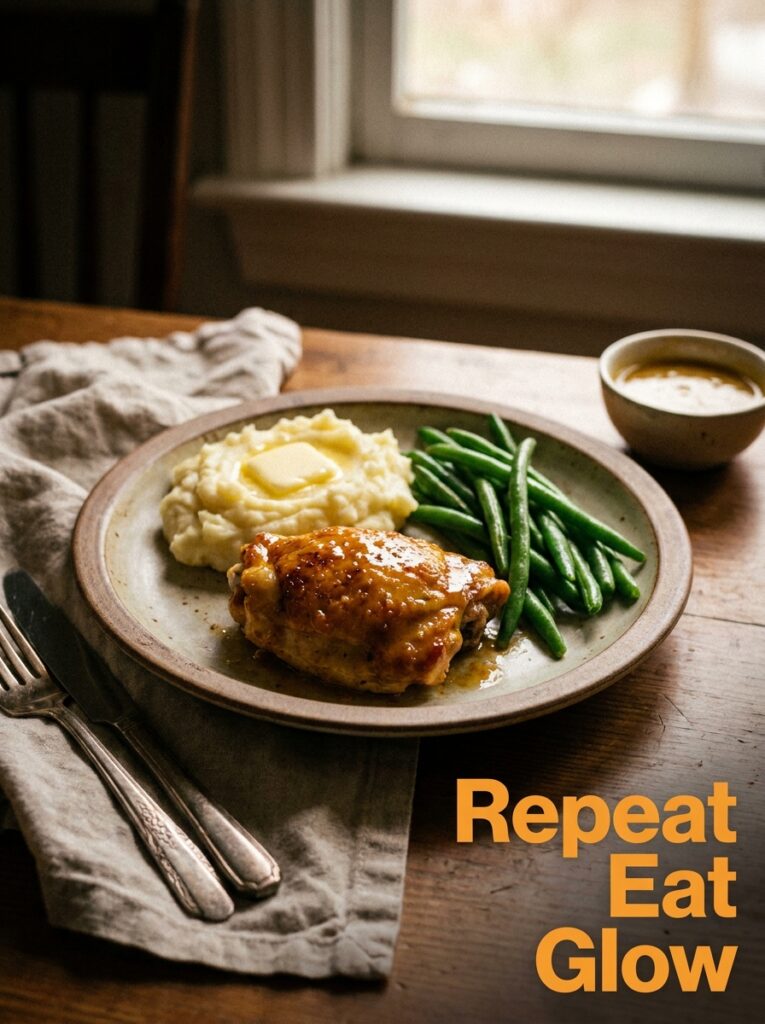
Rice is good. Mashed potatoes are great. Crusty bread is honestly underrated here — tearing a piece of good sourdough through that sticky sauce in the bottom of the pan is one of those small pleasures that costs nothing.
Roasted vegetables alongside work well if they’re simple. Tenderstem broccoli, green beans, roasted carrots. Something that doesn’t have too much going on, because the chicken is already got the complexity covered.
What I’d skip: pasta. I’ve tried it, and it’s not bad, but pasta wants a sauce that coats it, and honey mustard sauce doesn’t quite behave that way. The flavors also compete a bit — pasta often goes with things more tomato or cream-based, and honey mustard sits weirdly in that world.
Quinoa if you’re going lighter. It actually absorbs the sauce really well, and the slight nuttiness of quinoa is genuinely a nice foil for the sweetness of the glaze.
11. Leftover Honey Mustard Chicken Is a Gift, Honestly
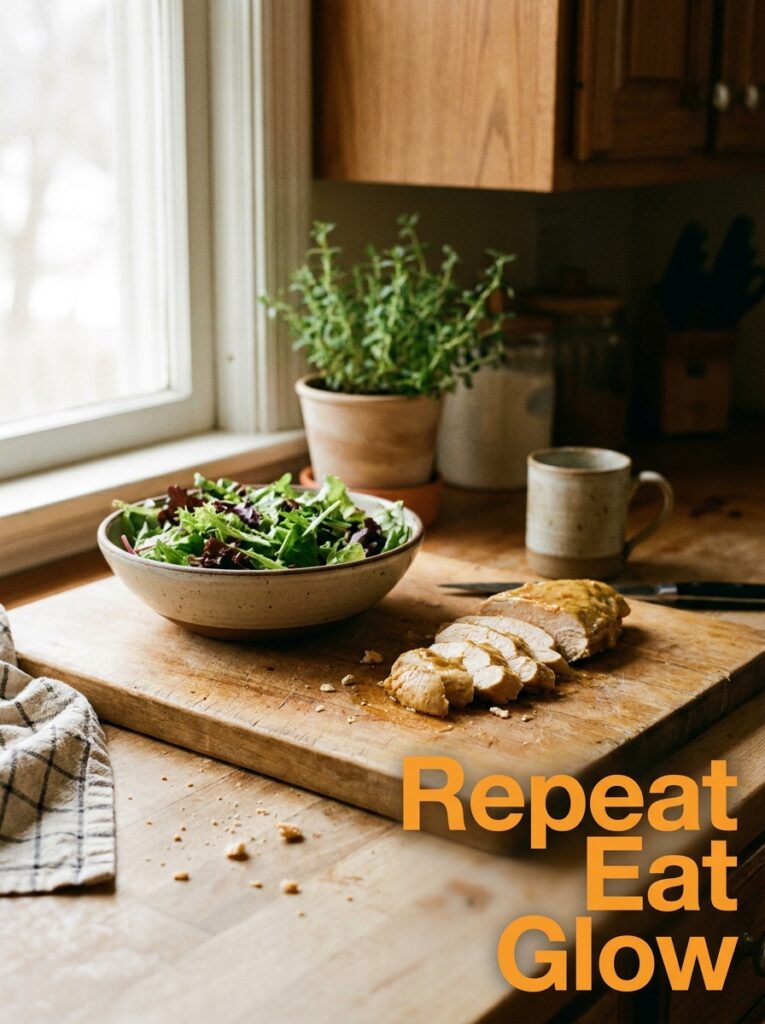
I’ve started making extra on purpose. Which I realize sounds obvious, but I used to make exactly enough and then be sad the next day.
Cold honey mustard chicken pulled off the bone and tucked into a wrap with some rocket and maybe a little crème fraîche or sour cream — that’s a lunch that feels like something. Not just leftovers thrown in a container.
Shred it and toss it through a simple green salad. The sauce that clings to the meat acts as dressing, especially if you add a little extra squeeze of lemon.
Or just eat it cold over the sink at midnight. We’ve all been there. No judgment.
The sauce from the pan, by the way — pour that into a jar and keep it. Drizzle it on roasted vegetables the next day, use it as a dipping sauce, or thin it down with a splash of chicken stock and toss it through pasta. Okay, so pasta works for the sauce even if not for the original dish. I take back exactly one thing I said earlier.
12. The Version I’d Make for Someone I Wanted to Impress
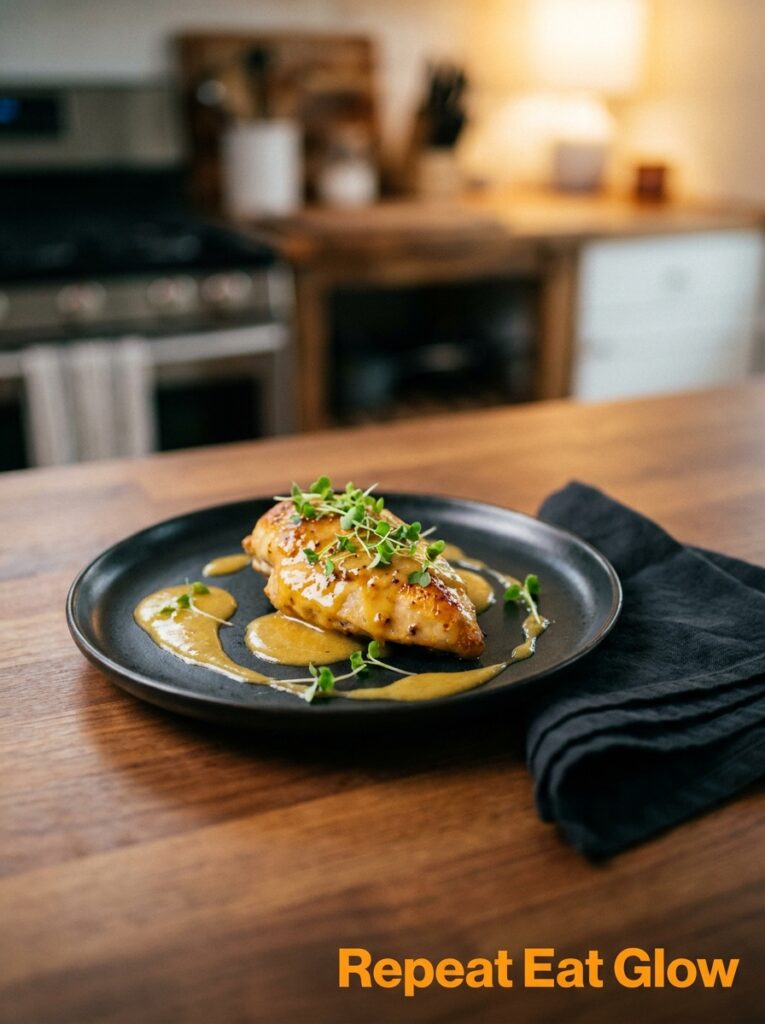
This is the one. Everything else has been building to this.
Marinate overnight. Bone-in thighs in the 3:2 mustard-honey ratio with Dijon AND whole grain, garlic, a tiny bit of white wine, fresh thyme, apple cider vinegar. Pull the chicken out of the fridge an hour before you cook it — room temperature makes a real difference.
Sear it skin-side down in a cast iron skillet until the skin is deep golden and some of the fat has rendered. Then flip, pour the marinade over the top, add a splash more wine to the pan, and transfer the whole thing to the oven at 375°F (190°C) for 35 minutes.
While it’s in the oven, make something simple. Really good mashed potatoes — cream, butter, salt, don’t overthink it. Maybe some wilted spinach with garlic.
Pull the chicken out. Spoon the sauce over it. Let it rest. Then plate it properly, scatter some fresh thyme leaves over the top, and put it on the table.
It looks serious. It tastes SERIOUSLY good. And you did it because you knew what you were doing, not because you followed a complicated recipe.
That’s the whole thing with honey mustard chicken. Once you understand how the sauce works, you own it. You make it yours.
—
❓ FAQ
Q: Can I use chicken breasts instead of thighs for honey mustard chicken? A: You can, but be careful with timing — breasts cook faster and dry out more easily. If you’re using boneless breasts, reduce the oven time to around 22-25 minutes at 400°F and check the internal temperature early. Pounding them to an even thickness before cooking helps a lot with even cooking.
Q: Can I make honey mustard chicken ahead of time? A: Yes, and it actually gets better. You can marinate the chicken up to 24 hours in advance and keep it covered in the fridge. The cooked dish also reheats well — cover loosely with foil and warm at 325°F (160°C) for about 15-20 minutes so it doesn’t dry out.
Q: Is honey mustard chicken kid-friendly? A: Most kids really love it because of the sweetness, though some find strong mustard too sharp. If you’re cooking for little ones, dial back the mustard slightly and increase the honey a touch — the 3:2 ratio can become more like 2:3 for a milder, sweeter version that still tastes great.
—
💭 Final Thoughts

Honey mustard chicken is one of those recipes that doesn’t ask much of you and gives an enormous amount back. Five ingredients in the sauce. One pan. Forty minutes. And somehow you end up with dinner that smells like a proper Sunday roast even when it’s a Tuesday with nowhere near enough time.
I’ve made versions of this for years and I’m still not bored of it, which is the highest compliment I can give any recipe.
What’s the one sauce you make that gets requested every single time?
