There’s a Tuesday night feeling. You know the one. The fridge is technically full but somehow nothing looks like dinner. And then you make this, and your whole kitchen smells like a hug, and you wonder why you ever paid delivery fees.

—
1. Why This Dish Has Survived Every Food Trend Since Forever
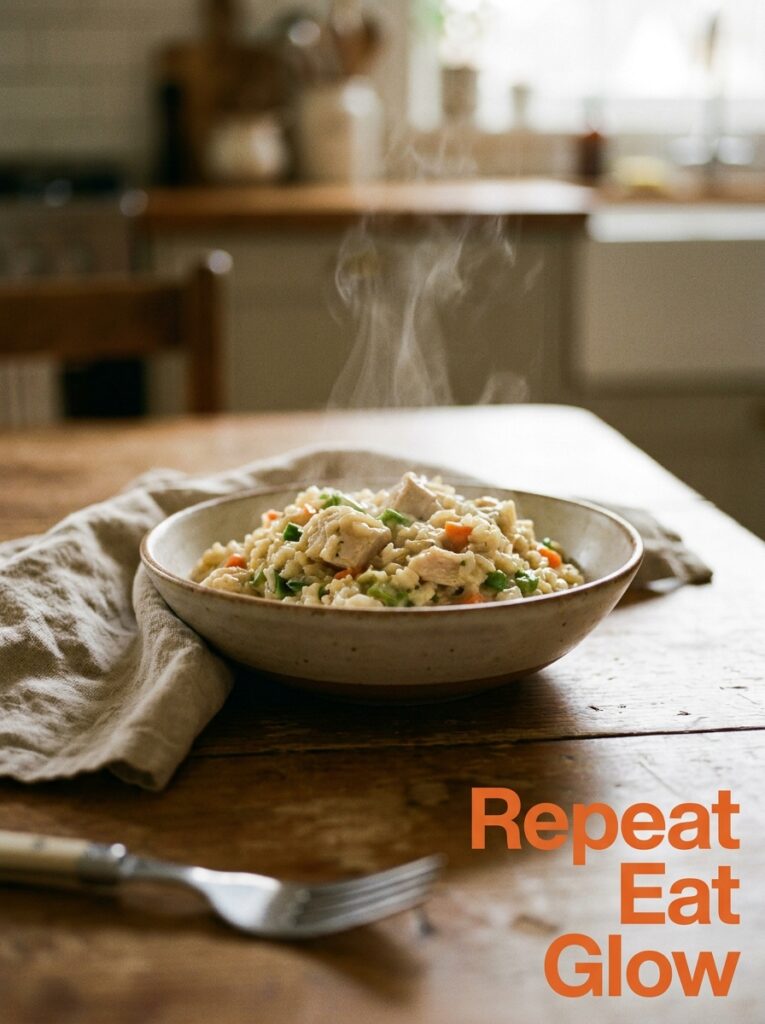
Creamy chicken and rice isn’t trendy. It’s never been trendy. And that’s exactly why it’s still here while cauliflower steaks and rainbow bagels have had their moment and quietly disappeared.
There’s something almost stubborn about this dish. It doesn’t need to impress anyone. The combination of tender chicken, starchy rice drinking up all that rich, savory sauce — it’s been feeding families in American farmhouses and British terraced houses for generations. My grandmother made a version of it in a casserole dish so old it had its own personality. No fancy technique, no hard-to-find ingredients, just a pot and some patience.
But here’s the thing people don’t say out loud: the reason creamy chicken rice keeps showing up on weeknight tables is because it’s genuinely forgiving. You can overcook the rice a little and it just gets creamier. You can use chicken breasts or thighs, leftovers or fresh, bone-in or not. The dish doesn’t punish mistakes the way a risotto or a soufflé will. It WANTS to work out. And that makes it rare.
“The best comfort food isn’t the fanciest thing in your repertoire — it’s the thing you’ve made enough times that your hands know what to do before your brain catches up.”
—
2. The One Cut of Chicken That Changes Everything
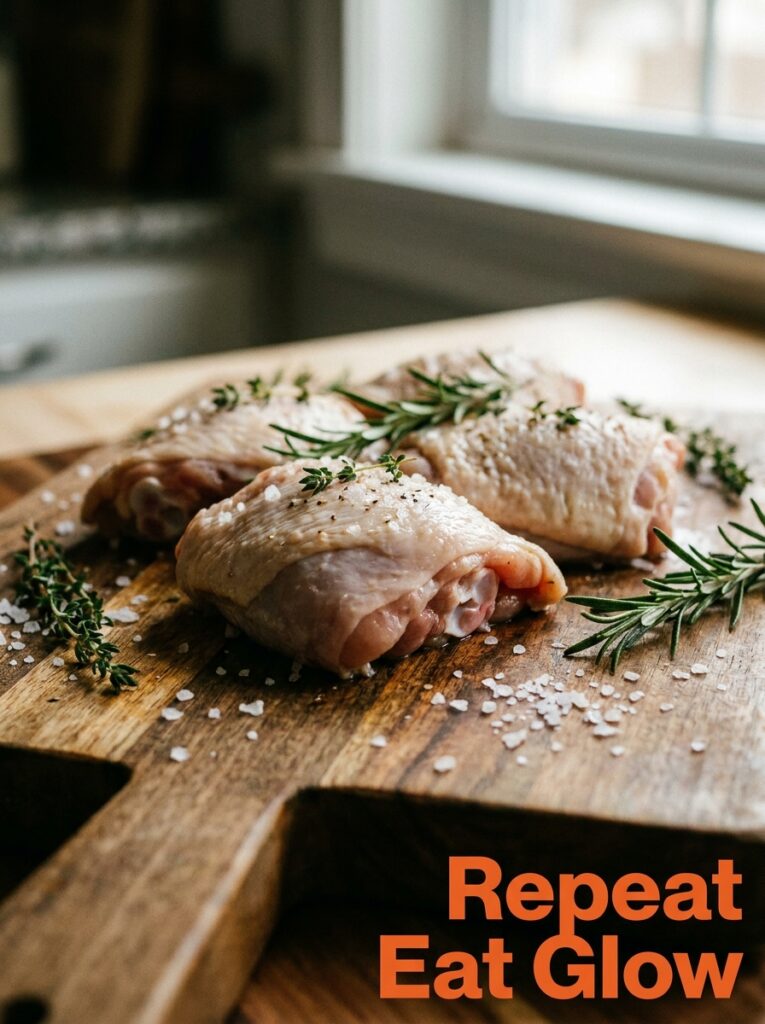
Okay, I know. Chicken thighs versus chicken breasts is almost a tired debate at this point. But for creamy chicken rice specifically, it’s not even a debate. Thighs win. Not close.
Bone-in, skin-on thighs are the ideal if you have time, because you can render the skin until it’s golden and then use those drippings to build your sauce. The fat that comes off crispy chicken skin is — I’m not being dramatic — liquid gold for flavor. But if you’re going boneless, skinless because that’s what’s in your fridge? Also fine. That’s the beauty of this recipe category. Boneless thighs stay juicy even if you push the cooking time by ten minutes. Chicken breasts will work too, they’ll just need you to pay a little more attention.
Cut them into chunks before cooking and you get more surface area, which means more browning, which means more flavor development in the pan. That’s where the depth comes from. Not from a spice cabinet full of obscure powders — from actually letting the chicken get some color in hot oil before you add anything else.
One more thing I want to say here: don’t salt your chicken and immediately throw it in the pan. Give it a minute. Or season it earlier and let it sit. Dry surface = better browning. Wet surface = steam. Steam isn’t your friend when you’re trying to get a sear.
—
3. The Flavor Base That’s So Simple It Feels Like Cheating
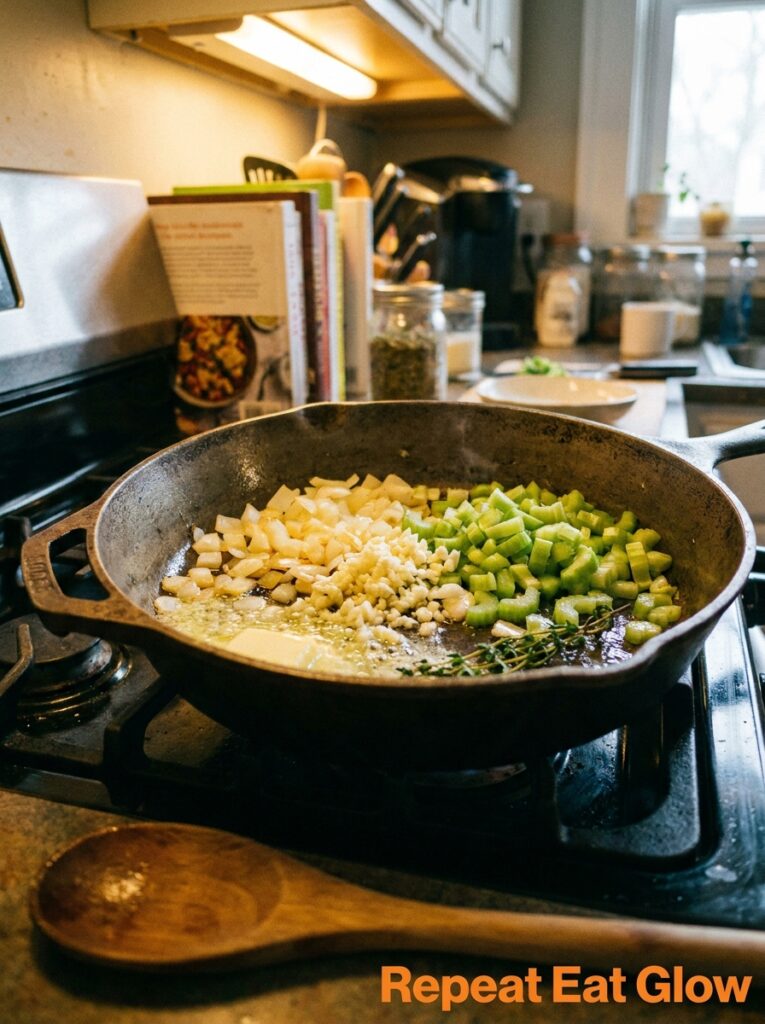
Here’s what I start with, almost every time: butter, onion, garlic, and a splash of something acidic. That’s it.
The onion goes in first over medium heat, low and slow, until it’s properly soft and starting to turn translucent. Not caramelized, not raw, just — yielding. Then garlic, which needs maybe 60 seconds before it turns bitter if you’re not watching. Then the chicken goes back in if you’ve been doing this in stages, and the whole thing starts smelling absolutely unhinged in the best way.
The acidic splash — white wine if you’ve got it open, chicken stock, even a tiny hit of apple cider vinegar — deglazes the pan and picks up all those stuck bits. Those brown bits, the fond, that’s not burning. That’s flavor. Scrape every single bit of it up. Don’t leave any behind.
From there, the liquid comes in. Chicken stock is the non-negotiable. Good stock makes a noticeable difference here. Not saying make your own necessarily, but the low-sodium carton stuff beats the cubes for this particular application because you need volume and you need control over the salt level.
—
4. Long-Grain, Short-Grain, or Something Else Entirely — Here’s What I Actually Use
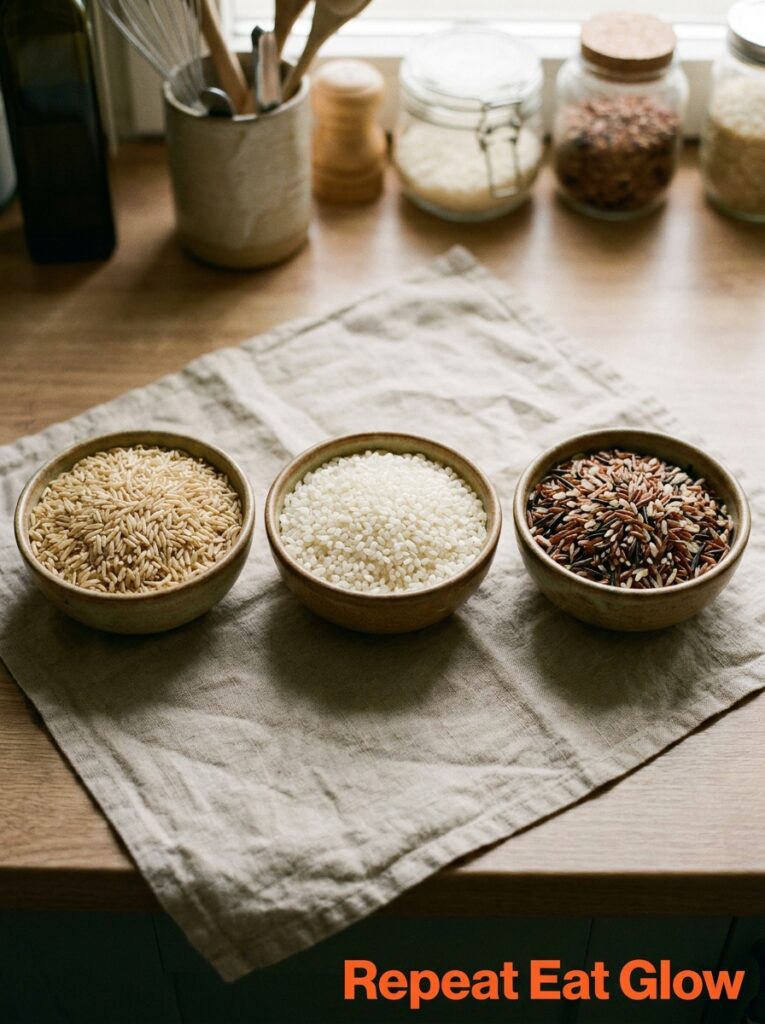
The rice question is real and people skip over it.
Long-grain white rice like basmati is the standard go-to. It holds its shape, absorbs liquid without getting gummy, and each grain stays distinct enough that you feel like you’re eating rice and not porridge. For a looser, soupier creamy chicken rice that leans more toward a stew, this is your best option.
Short-grain rice — arborio, for example — is for when you want something more like a risotto crossover. It releases starch as it cooks and makes the whole dish thicker, creamier, almost silky. More effort, but genuinely luxurious texture. And it doesn’t need constant stirring the way a traditional risotto does if you’re doing it in a covered pan with enough stock.
Brown rice works if you need it. I won’t pretend it’s equally good, because the texture is nuttier and chewier and the cooking time nearly doubles, which means your creamy sauce has to compensate. But it’s not a disaster by any means.
The one I’ve been using lately? Jasmine rice. It’s softer than basmati, slightly floral, and it absorbs that creamy sauce like it was designed specifically for this purpose. It probably was.
“Rice is doing more than filling the bowl — it’s the thing that either makes the sauce sing or swallows it whole.”
—
5. The Cream Situation: Heavy, Light, or Something From the Back of Your Fridge
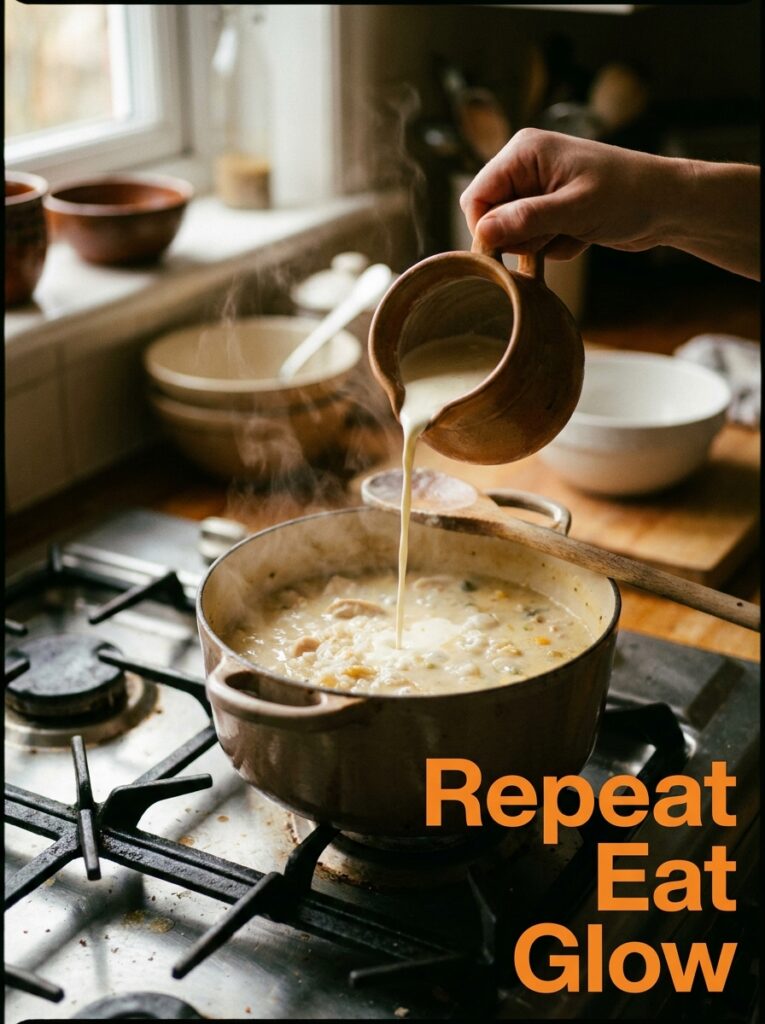
Heavy cream is the obvious choice. Thick, rich, doesn’t split when you heat it, and it coats everything in a way that feels almost decadent. Half a cup goes a long way in a dish like this.
But honestly? Not everybody keeps heavy cream on hand, and not everybody wants the richness. So let’s talk options.
Half-and-half works if you’re careful with heat. Don’t let it boil aggressively or it’ll separate and you’ll get a grainy, sad sauce. Keep the heat moderate after you add it and you’ll be fine. Crème fraîche is fantastic — it’s got a subtle tang that cuts through the richness in a really pleasant way, and it’s more forgiving than sour cream at high heat. Sour cream you CAN use, just stir it in off the heat or at the very end and don’t let it bubble.
For a dairy-free version: full-fat coconut cream gives you the richness and a slightly sweet background note that works surprisingly well with chicken and rice, especially if you add some ginger and lime to the flavor base. Cashew cream is another solid option and has almost no flavor of its own, which means it mimics the neutral richness of heavy cream pretty convincingly.
The cream goes in at the end. That’s non-negotiable. Add it too early and you lose the texture and the color gets muddy. Add it in the last five minutes and you get something that looks like it came from a restaurant kitchen. Or at least, that’s what I tell myself.
—
6. The Herb That Everyone Forgets Until They Have It and Then Can’t Imagine Leaving Out
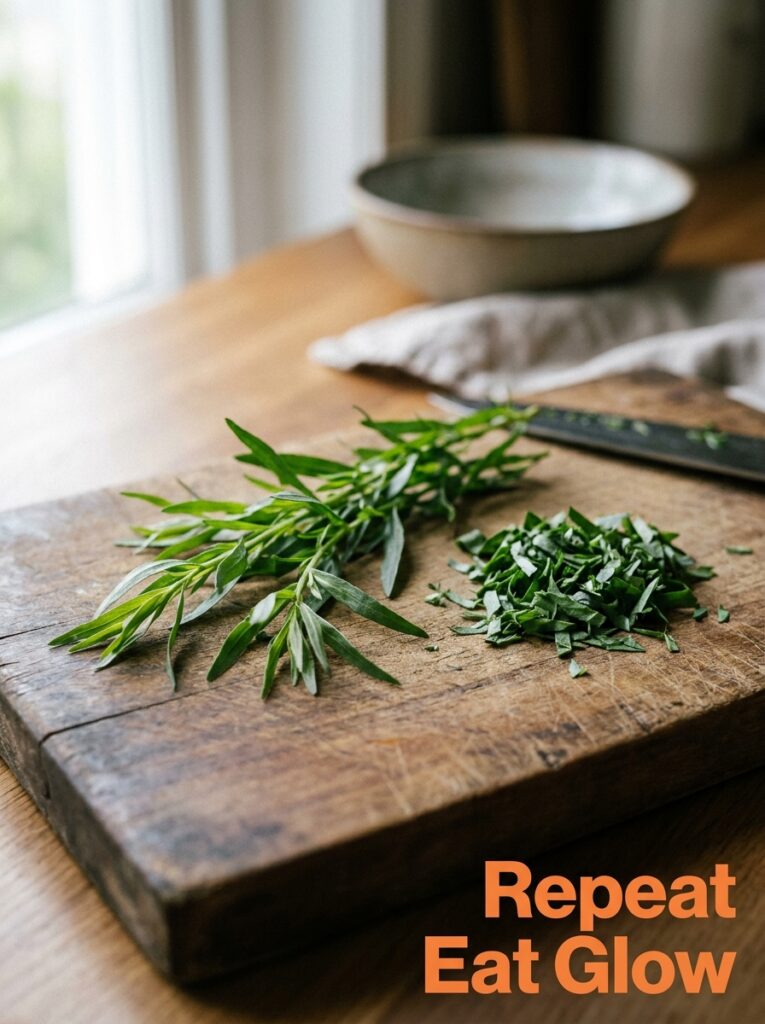
Tarragon.
I know. Stay with me.
Fresh tarragon has this gentle anise-like flavor that’s NOT licorice, it’s more delicate than that — and it’s got this almost creamy quality to it that makes it work beautifully with chicken and dairy-based sauces. Classic French fricassee uses it for a reason. If you haven’t tried it in your creamy chicken rice, you’re genuinely missing something.
But I get that it’s not always in the grocery store, depending on where you live. So thyme is the everyday reliable choice. Fresh thyme sprigs can go in early and you fish them out before serving. Dried thyme is fine too — use about a third of the amount you’d use fresh. Parsley added at the end gives brightness. Chives are lovely if you like a mild onion note.
Side note — I went through a period where I was putting fresh dill in everything, and this is one of the recipes that actually benefited from it. Just a small handful stirred in at the very end. It’s a bit unexpected, very good, very Scandinavian-summer-kitchen-vibes.
—
7. One-Pot vs. Baked: Which Method Is Actually Better
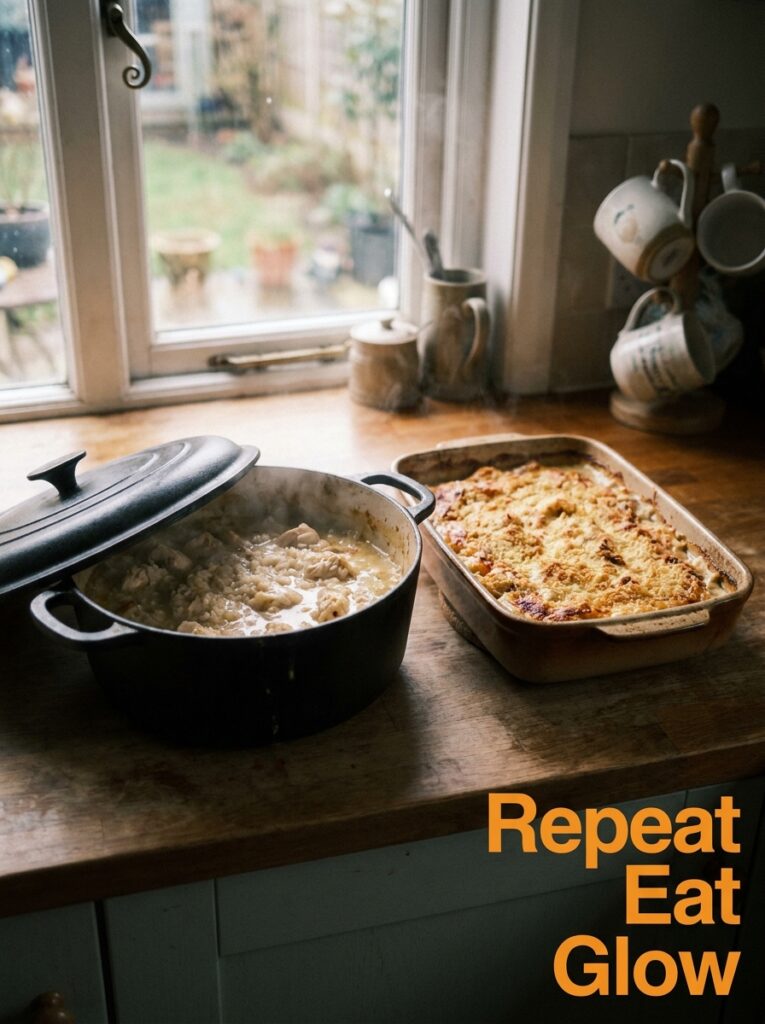
Both work. Neither is wrong. But they produce genuinely different results and it’s worth knowing which you’re going for.
One-pot on the stovetop is faster, more interactive, and gives you more control. You can taste and adjust as you go, add more stock if the rice is absorbing everything too fast, and the whole thing comes together in about 30-35 minutes from start to finish. The texture tends to be saucier and more flowing — closer to a thick stew than a casserole.
Baked is the hands-off version. You build your flavor base on the stovetop, add everything to a baking dish or a Dutch oven, cover it tightly, and let the oven do the work. An hour at 375°F. The rice bakes into the sauce in a way that feels almost magical — every grain coated and soft but still distinct. The top layer gets this slightly set, almost crispy edge if you leave the lid off for the last ten minutes. I love that edge. It’s VERY good.
The baked method is also more forgiving if you get distracted. Oven’s not going to scorch the bottom the way a stovetop can if your phone rings.
My honest preference? Stovetop for weeknights, baked on a Sunday when I’ve got more time and I’m not hovering over the stove.
“The oven does something to creamy chicken rice that the stovetop just can’t — it makes it taste like someone’s been in the kitchen all day, even if they haven’t.”
—
8. The Mushroom Addition That Half My Readers Swear By
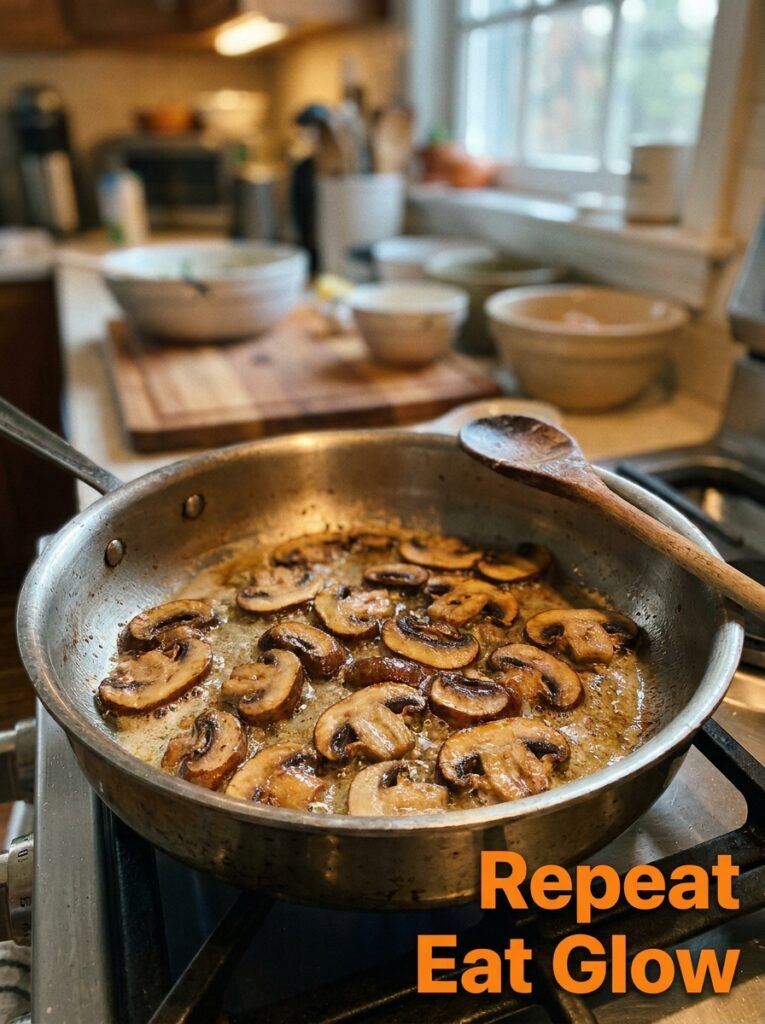
Not everyone wants mushrooms. I understand. But the people who add them to creamy chicken rice tend to become evangelists about it, so it felt wrong not to mention.
Cremini mushrooms sliced and cooked down in butter until they’re deeply brown — not just softened, actually BROWN — add this earthy, savory depth that makes the whole dish feel more substantial. Like there’s something happening on multiple levels. Shiitake mushrooms are even better for this, honestly, if you can get them. They’re a bit meatier and have more of an umami punch.
The key is cooking them separately and not crowding the pan. Crowded mushrooms steam instead of brown and you get a rubbery, pale, slightly sad result. Give them space, high heat, no stirring for a minute or two at a time. You want them to develop color before they release their liquid.
Then stir them into the dish about halfway through so they don’t go mushy by the time everything else is done. They hold up better that way.
—
9. The British Version That I Think Americans Are Sleeping On
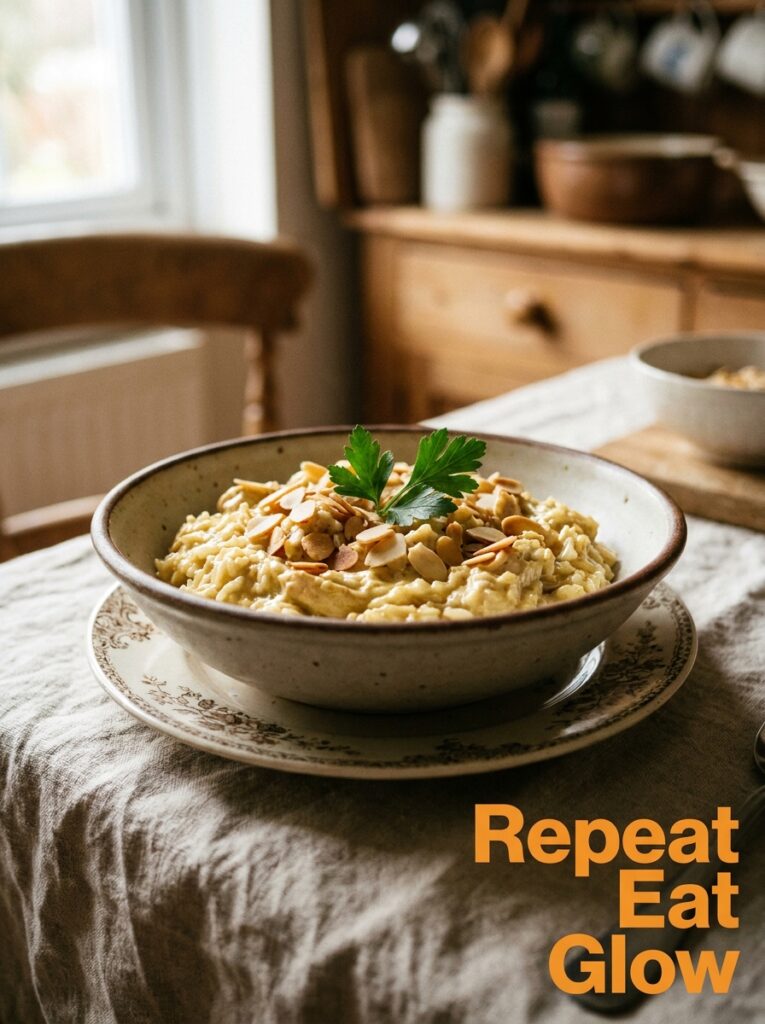
In the UK, there’s a version of creamy chicken rice that’s closer to a coronation chicken situation but warmer — spiced very gently with a bit of mild curry powder and finished with a squeeze of mango chutney stirred through the sauce. It sounds strange, maybe. It’s not.
The curry powder is subtle — barely a teaspoon for a full pan — and the chutney adds this sweet-savory note that rounds out the richness of the cream without making the whole thing taste like a curry. It just tastes more interesting than you expected. A bit complex. The kind of thing where people take a bite and go “what IS that?” and you just smile.
Serve it with naan on the side instead of crusty bread and suddenly it feels like an actual occasion. Which is maybe exactly what a Tuesday night needs.
—
10. Vegetables You Can Actually Throw In Without Ruining Anything
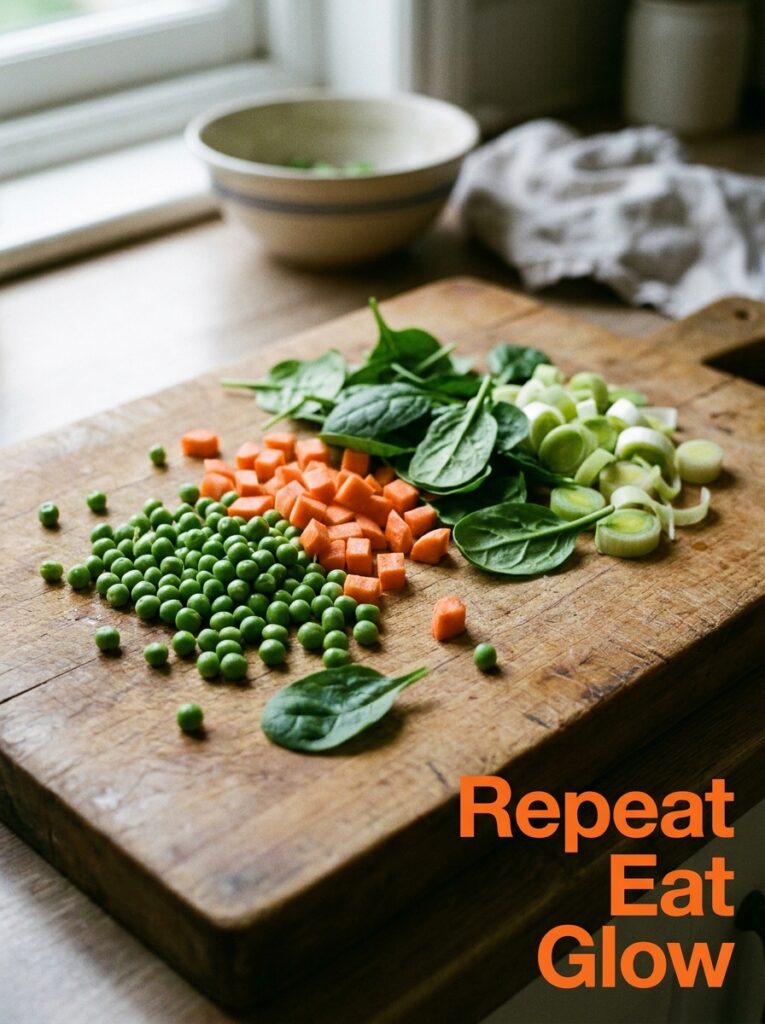
The chicken and rice are doing heavy lifting here, so vegetables are more of a supporting cast.
Frozen peas are the classic for a reason — stir them in right at the end from frozen and they warm through without going grey and mushy. Spinach does the same thing. A big handful looks like too much and then it wilts down to almost nothing and adds color without competing with the main flavors.
Baby sweetcorn, fine green beans, and sliced bell peppers can go in earlier because they need a bit more time. Asparagus tips work beautifully in spring. Roasted cherry tomatoes on top when serving add color and a bit of brightness.
What I’d avoid: anything with strong bitterness — broccoli works technically but it starts to taste a bit institutional at that point, if I’m honest. And anything that needs a long cooking time, like root vegetables, will just be out of sync with everything else unless you start them much earlier separately.
—
11. What to Serve Alongside (and What to Skip)
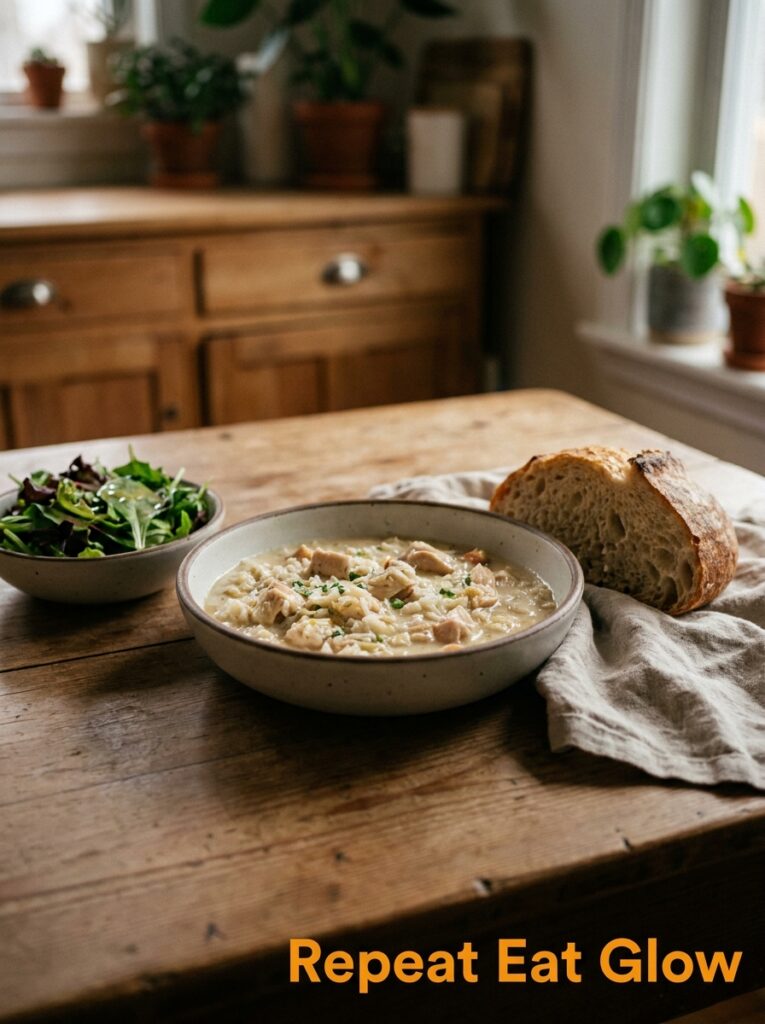
The dish is already a complete meal. But if you’re serving it at a proper dinner table and want something alongside, here’s what actually works:
Crusty bread for the sauce is almost mandatory. A good sourdough or French baguette and you’ll be soaking up the last bits of cream from the bowl until it’s embarrassing. That’s the goal. In the UK, a proper tiger loaf works brilliantly for this.
A sharp green salad with a vinegary dressing cuts through the richness in a way that feels intentional. Rocket (or arugula, same thing) with lemon and a bit of parmesan. Simple.
Skip: roasted potatoes, another starchy side that competes with the rice and just makes the whole meal feel heavy. Also skip: garlic bread, because the dish already has garlic and you don’t need more — though I acknowledge this is a controversial opinion and some people will do it anyway.
—
12. How to Store It, Reheat It, and Make It Taste Just as Good the Next Day
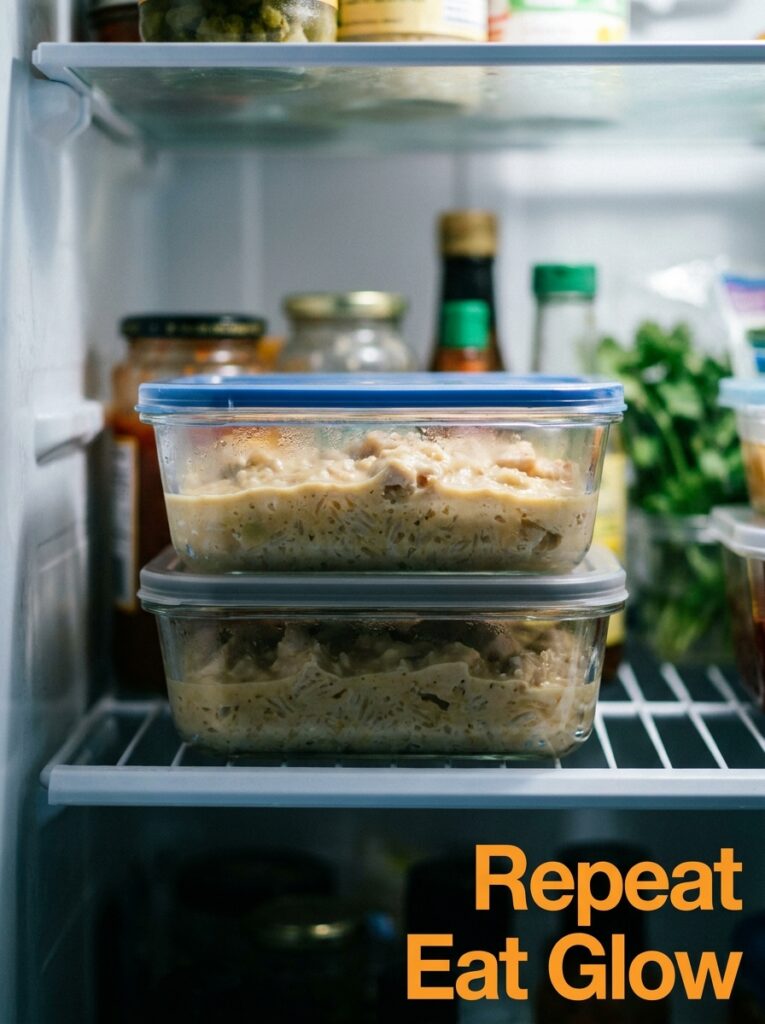
Creamy rice dishes can be tricky to reheat because the rice soaks up the sauce as it sits overnight and what was a luxurious, flowing dish becomes a slightly stiff, clumped situation by morning. But it’s an easy fix.
Add a splash of chicken stock or a small spoonful of cream when reheating. On the stovetop over low heat, stirring gently, and it loosens back up beautifully. In the microwave, add the liquid, cover with a damp paper towel, and heat in 90-second bursts, stirring in between.
Stored in an airtight container in the fridge, it keeps for three days easily. Can you freeze it? Technically yes. The rice texture changes a bit — gets softer, slightly grainier — but if you’re meal prepping and okay with that tradeoff, it absolutely works. Thaw overnight in the fridge before reheating.
One more thing: leftovers make a genuinely excellent filling for stuffed bell peppers the next day. Just saying.
—
❓ FAQ
Q: Can I make creamy chicken rice with leftover rotisserie chicken? A: Yes, and it’s honestly one of the best uses for it. Build your sauce and cook the rice first, then stir in the shredded rotisserie chicken right at the end — it just needs to warm through rather than cook, so it stays tender. Takes the total time down to about 25 minutes.
Q: My sauce keeps breaking or getting grainy — what am I doing wrong? A: Usually the heat is too high when the cream goes in. Heavy cream is forgiving but sour cream and half-and-half aren’t, so they need gentle heat. Add dairy over medium-low, stir constantly for the first minute, and don’t let it come to a rolling boil. If it does break, a small whisk and a splash of stock stirred vigorously can sometimes bring it back.
Q: Can I make this in a slow cooker? A: Sort of. The chicken does brilliantly in a slow cooker, but add the rice only in the last 45 minutes to an hour on high — otherwise it turns to mush. Add the cream in the very last 15 minutes. It’s a bit more high-maintenance than you’d expect from a slow cooker recipe, but it works.
—
💭 Final Thoughts

Creamy chicken rice is the kind of recipe that doesn’t photograph dramatically or win any awards. It just quietly becomes the thing you crave on the nights when you need something to work. Once you’ve made it your own — your herbs, your rice, your preferred cream — it stops being a recipe you follow and becomes a thing you just know how to make.
And isn’t that the best place for a recipe to end up?
