You know that feeling when it’s 6pm and you haven’t decided what’s for dinner and everyone’s already hovering near the kitchen? Yeah. This is for that moment. These are the recipes I actually make — not aspirational ones I’ve bookmarked and forgotten, but the ones with splattered cards and worn-down notes.
—
1. Why Chicken Pasta Has This Weird Power Over Us (And I’m Not Even Embarrassed About It)
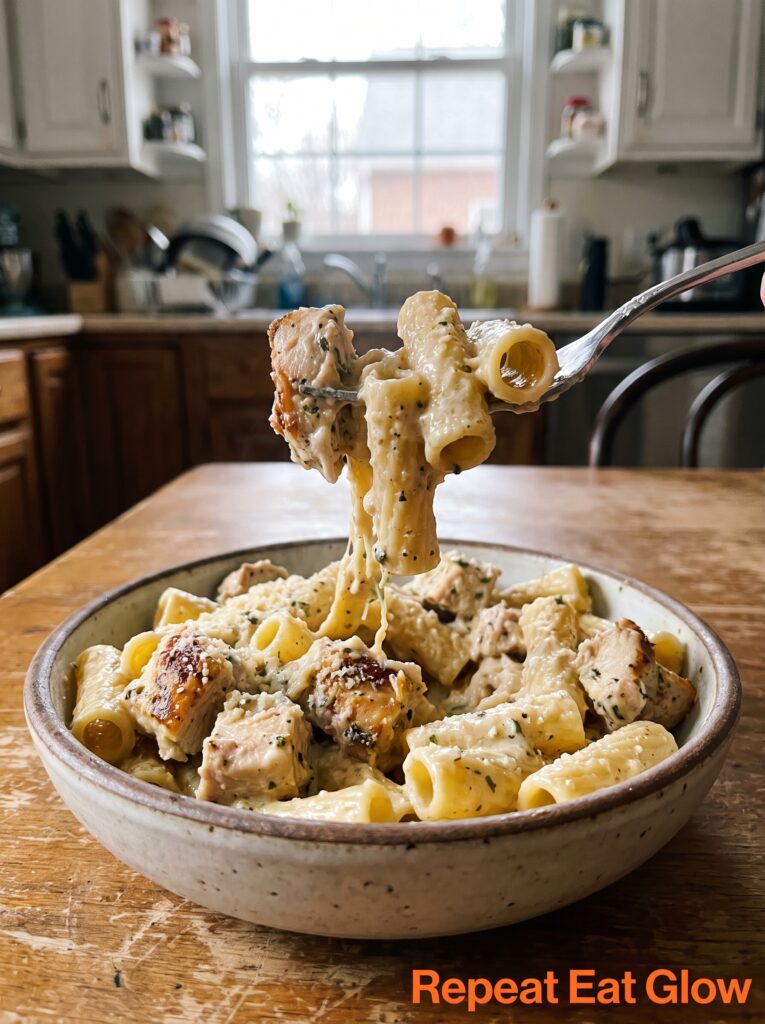
There’s something almost embarrassing about how much I love chicken pasta. It’s not glamorous. It’s not the thing you make when you’re trying to impress someone who went to culinary school. But honestly? That’s kind of the whole point.
Chicken and pasta together do something that a lot of fancier combinations just don’t. The protein, the carbs, the sauce situation — it hits every note you need after a long day. I’ve made chicken pasta on Tuesday nights when I was running on four hours of sleep and it tasted like someone cared about me. That sounds dramatic. It’s not, though.
The UK and US both have their own versions of this love affair, which I find genuinely interesting. In the States it tends toward creamy, saucy, a little indulgent — think the kind of pasta your American aunt makes at Christmas that everyone fights over. In Britain there’s a bit more of a Mediterranean lean, olive oil and cherry tomatoes and a handful of basil thrown in like an afterthought that actually makes the whole thing. I pull from both, honestly. No rules.
What I want to give you here isn’t just recipes. It’s the feeling of knowing what to do with a chicken breast and a box of pasta at 6:15 on a Wednesday. That’s the real goal.
“The best chicken pasta doesn’t require talent. It requires knowing about five things that actually work.”
2. The One-Pan Rule That Changed My Weeknight Cooking Completely
I didn’t believe in one-pan pasta for a long time. Felt like a shortcut that would taste like a shortcut. I was wrong, and I’ll admit that clearly.
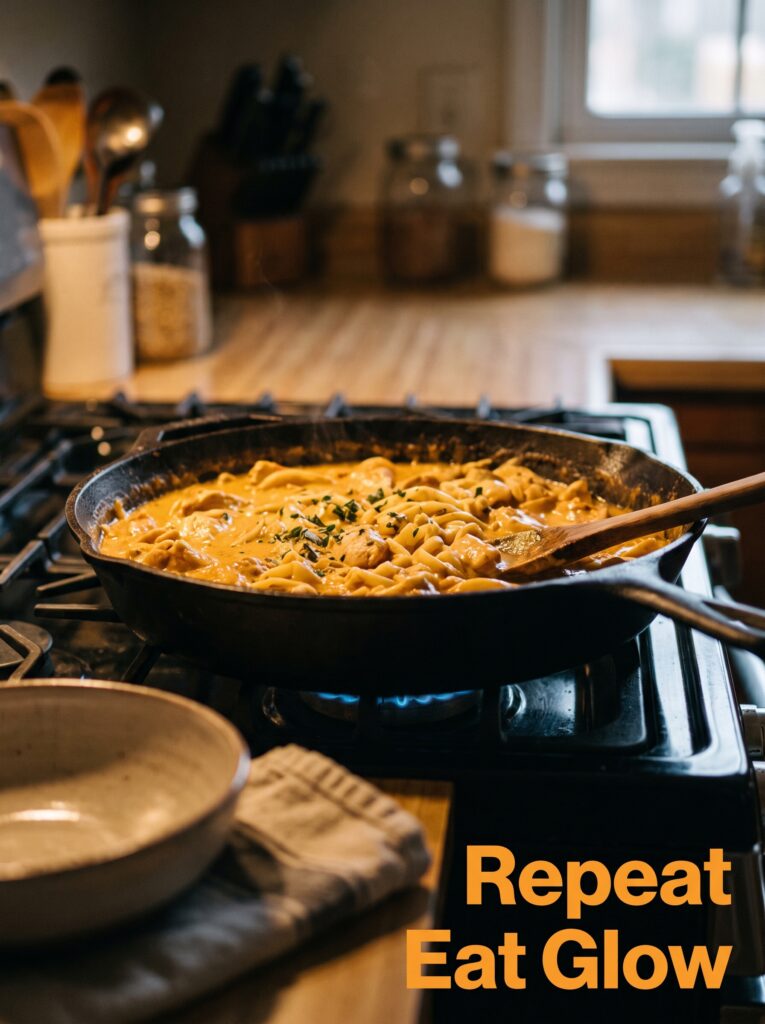
The trick with one-pan chicken pasta — where you cook everything together in the same skillet, including the pasta — is that the starch from the pasta actually thickens the sauce as it cooks. So you end up with this clingy, glossy, almost creamy result without adding a single drop of cream. It’s science being delicious.
Here’s how I do it. Season chicken thighs (thighs, not breasts — more on that in a minute) with salt, pepper, smoked paprika, garlic powder. Sear them in a wide skillet in a little olive oil until golden. Pull them out. In the same pan, add some sliced garlic, a big pour of chicken stock — around 3 cups — half a cup of passata or crushed tomatoes, and your pasta. I like penne or farfalle for this. Stir it, get it boiling, then turn it down to a good simmer with the lid on. Check it every couple of minutes. When the pasta’s nearly done, nestle the chicken back in, let it finish cooking, and then scatter parmesan over the top and let it melt.
Twenty-five minutes. One pan. Done.
The pan still has to be washed, yes, I know. But ONE pan feels like freedom after a week of cooking.
3. Thighs vs. Breasts and Why This Is Actually Worth Arguing About
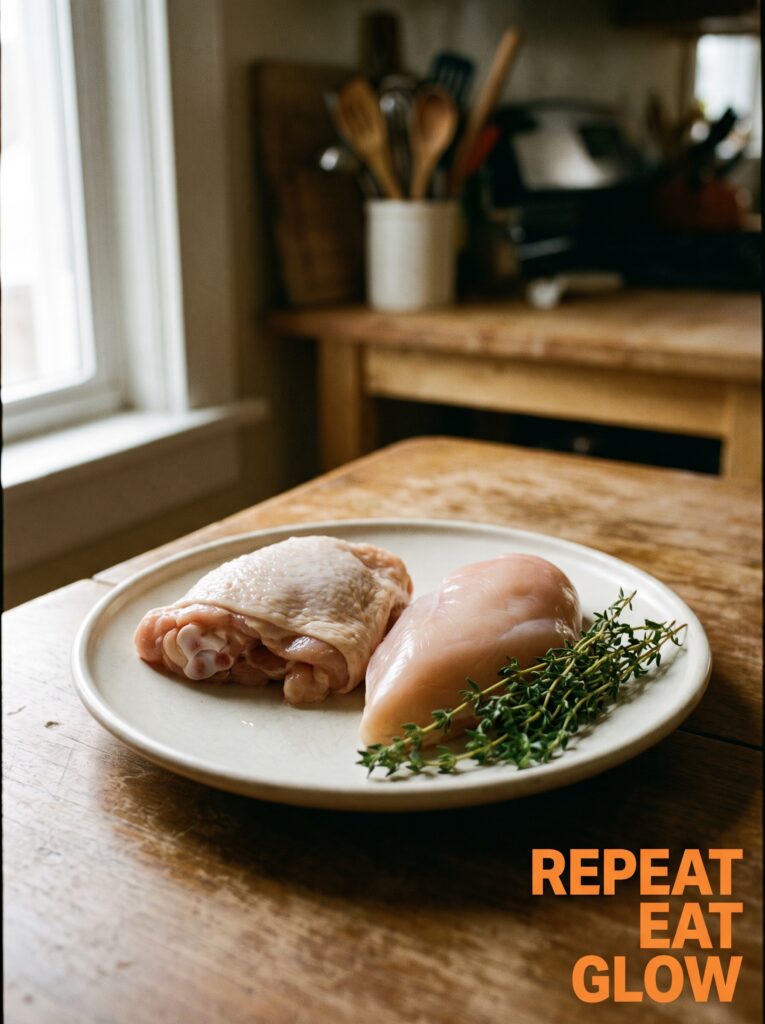
Okay. Chicken thighs vs. chicken breasts in pasta — this is a conversation people get weirdly passionate about, myself included.
Breasts are leaner. They cook faster. They’re easy to slice thin and they look neater in a bowl. I get the appeal, I do. But they’re also the first thing to turn dry the second you look away, and in a pasta dish where everything’s supposed to come together in one sauce, dry chicken is a crime against the whole enterprise.
Thighs are FORGIVING. That’s the word. You can overcook them slightly and they’re still juicy. They have more flavor — that slightly deeper, richer chicken taste that actually stands up to a bold sauce. And they’re usually cheaper, which in the current state of grocery shopping is not a small thing.
That said — there are times you want a breast. A creamy lemon chicken pasta? Yeah, a thinly sliced breast that’s been pounded out and cooked quickly actually works beautifully there. The delicacy of it matches the sauce. So it’s not that thighs are ALWAYS better, it’s that thighs are more forgiving and I default to them when I’m tired and don’t have the bandwidth to watch a pan like a hawk.
Use what you have. Just don’t overcook whatever it is.
4. Lemon and Garlic Chicken Pasta That Doesn’t Need a Recipe Card, Just a Feeling
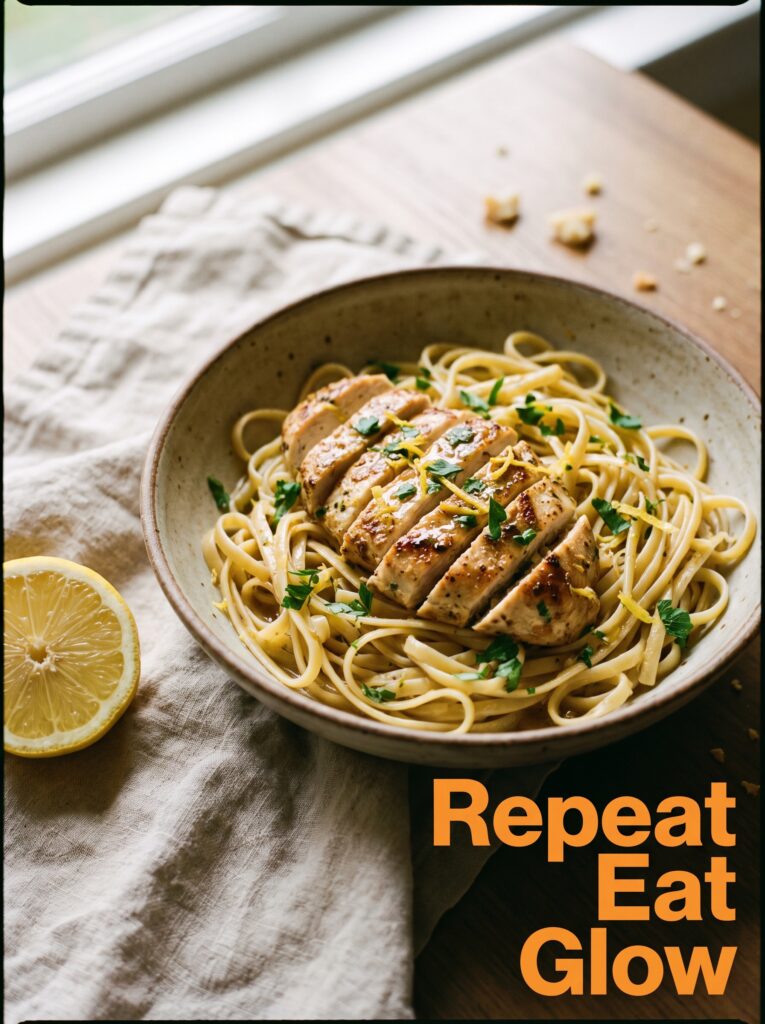
This one I make so often I don’t measure anything anymore. It started as a recipe and became a reflex.
Boil linguine or spaghetti until just shy of al dente — you want it still a little firm because it’s going back in the pan. Meanwhile, in a wide skillet, cook chicken (I slice it into strips first), get some color on it, set it aside. In the same pan — always the same pan — add butter, a LOT of garlic. Like four or five cloves. Don’t be timid. Let it go for a minute until it smells incredible and slightly dangerous. Squeeze in half a lemon, maybe more. Add a splash of the pasta water — that starchy magical stuff — and let it emulsify into something saucy. Pasta goes in, chicken goes back in, toss until it coats everything. Fresh parsley. More lemon. Parmesan if you want it.
The smell when that garlic hits the butter and then the lemon hits the garlic… I can’t describe it except to say it smells like the exact opposite of a hard day.
It’s light but it’s filling. It’s fast but it tastes considered. And it works whether you’re in a two-bed flat in Manchester or a house in Georgia. That’s what I love about it.
“A handful of good ingredients doing exactly what they’re supposed to — that’s not a shortcut, that’s cooking.”
5. The Creamy Tuscan Version That’s All Over Pinterest for a Reason
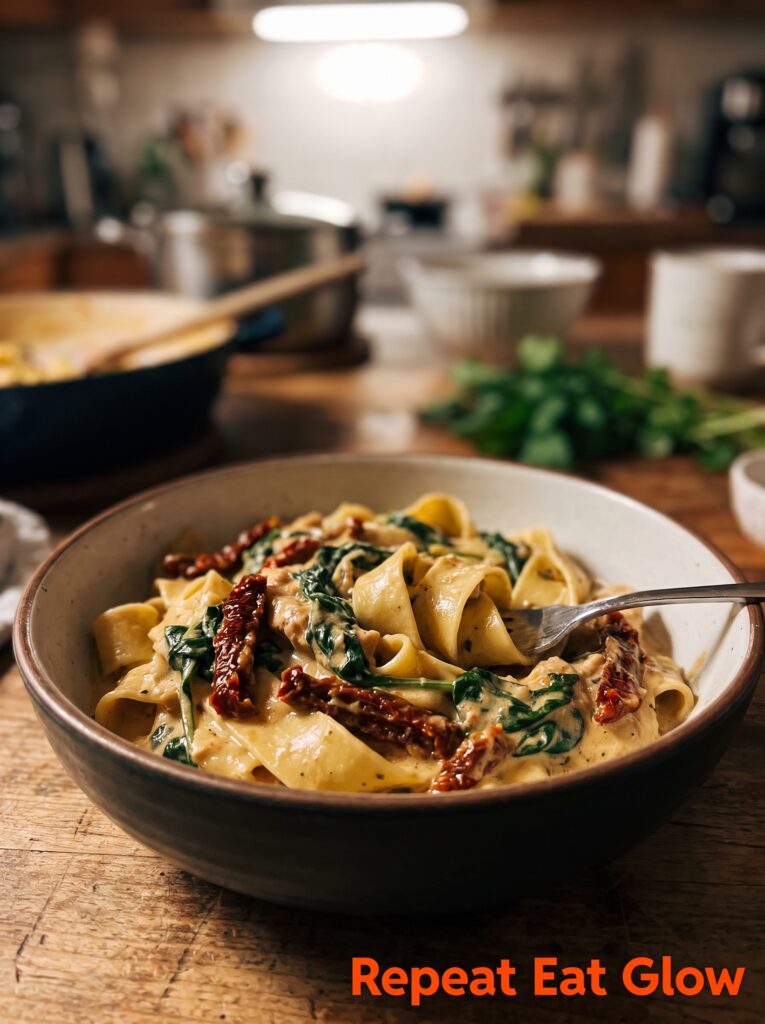
I held out on the Creamy Tuscan Chicken Pasta trend for a while because I’m the kind of person who resists things that are too popular. Then I made it and understood immediately.
Sun-dried tomatoes. Spinach. A cream sauce that’s somehow both rich and not too heavy. Parmesan that melts right into it. It tastes like something you’d order in a restaurant that has cloth napkins, and it takes maybe thirty-five minutes.
The key is the sun-dried tomatoes. Don’t skip them, don’t substitute them, don’t use fresh tomatoes and think it’ll be the same. It won’t. The oil-packed ones in the jar — you actually use a spoon of that oil to cook the chicken in, and it adds this whole background layer of flavor that you can’t put your finger on but you’d definitely notice if it wasn’t there.
For the sauce: shallots and garlic first, then a pour of chicken stock, then heavy cream (or double cream if you’re in the UK — yes, same thing, different name, equally decadent). Let it reduce. Add the sun-dried tomatoes, the spinach — it’ll look like way too much spinach and then it won’t — and then the pasta. I use rigatoni or tagliatelle. Both are brilliant here.
Side note: I’ve made this for people who “don’t really like pasta” and they’ve asked for the recipe. Make of that what you will.
6. When You Only Have 20 Minutes and You Need Something That Doesn’t Taste Like It
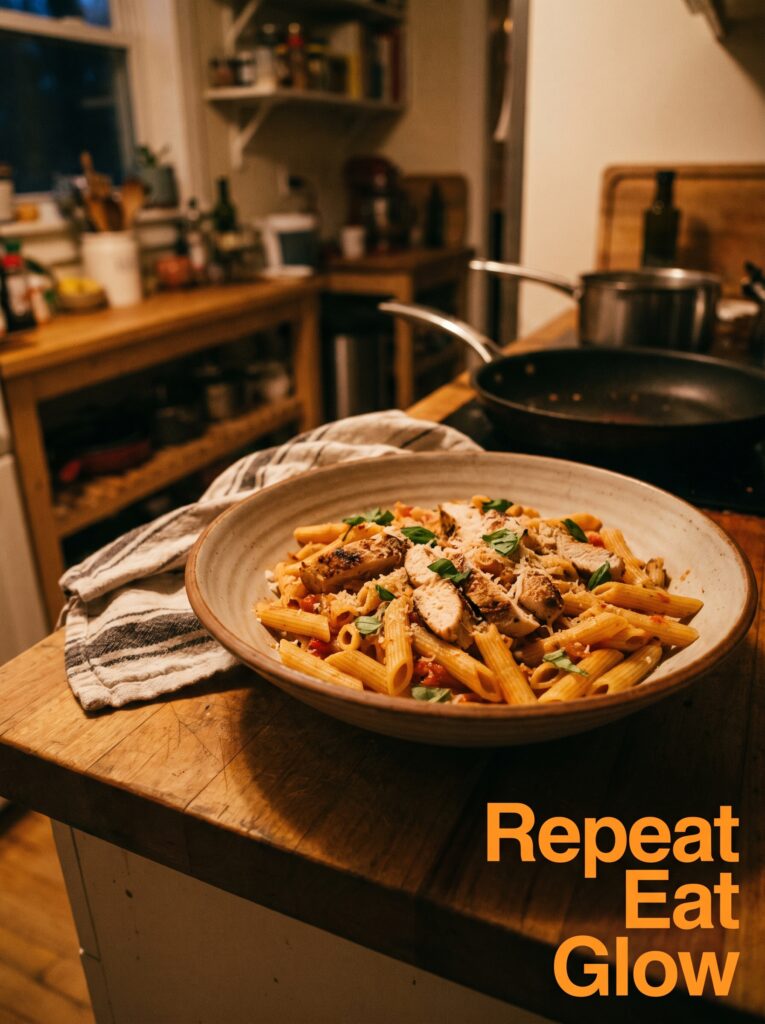
Honest moment — sometimes the elaborate stuff isn’t happening. The pan is already dirty, someone needs a bath, and 20 minutes is what you have.
This is where a really good pesto chicken pasta earns its place. And I mean a GOOD one, not the sad watery version from a bad jar.
Cook pasta. While it cooks, slice chicken thin and cook it fast in a hot pan with olive oil and plenty of salt. Done in five minutes if it’s thin enough. Reserve a mug of pasta water — please, don’t forget this step, it’s the whole secret — drain the pasta, and while everything’s still steaming hot, stir in four tablespoons of good green pesto and enough pasta water to make it glossy rather than clumpy. Add the chicken. Done.
Optional but very worth it: a handful of toasted pine nuts, some torn basil, a few halved cherry tomatoes for a bit of brightness. But honestly it’s great without those too.
What makes this taste like more than it is comes down to two things. Hot pasta and hot chicken going into the pesto at the same time so the warmth blooms the flavor. And not drowning it in pesto — you want to taste the chicken and the pasta too, not just a wall of basil.
7. The Buffalo Chicken Pasta Nobody Warns You Is Addictive
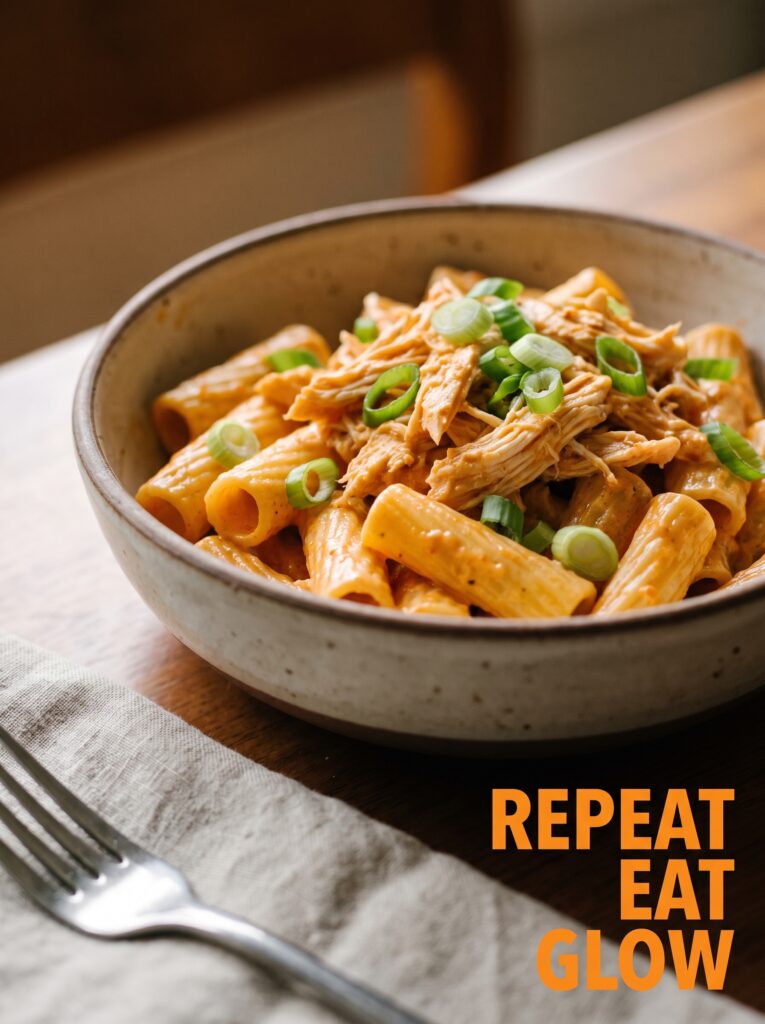
This one I feel like I should apologize for in advance. Because once you make it you’ll think about it the following week.
Buffalo sauce + cream cheese + pasta + chicken. That’s the whole concept. It’s American in a very unapologetic way and I mean that as a compliment.
Cook rotini or penne. Cook chicken, shred it — this is one of the rare cases I’ll use chicken breast because the shredding texture works better here. In a saucepan, melt about 4oz of cream cheese with a splash of chicken stock until it becomes a sauce, then stir in half a cup of your favorite buffalo sauce (Frank’s is the classic, the correct answer, don’t argue with me). Add the shredded chicken, the pasta, toss it all together.
Top with crumbled blue cheese or ranch dressing or both, I’m not here to police you. Some sliced green onions. Maybe a drizzle of extra hot sauce.
It’s spicy, it’s creamy, it’s messy to eat. Kids who can handle a little heat love it. Adults who’ve had a long Friday REALLY love it.
“Some dinners are elegant. This one’s just really, really good.”
8. A Greek-ish Chicken Pasta That Proves You Don’t Need a Heavy Sauce
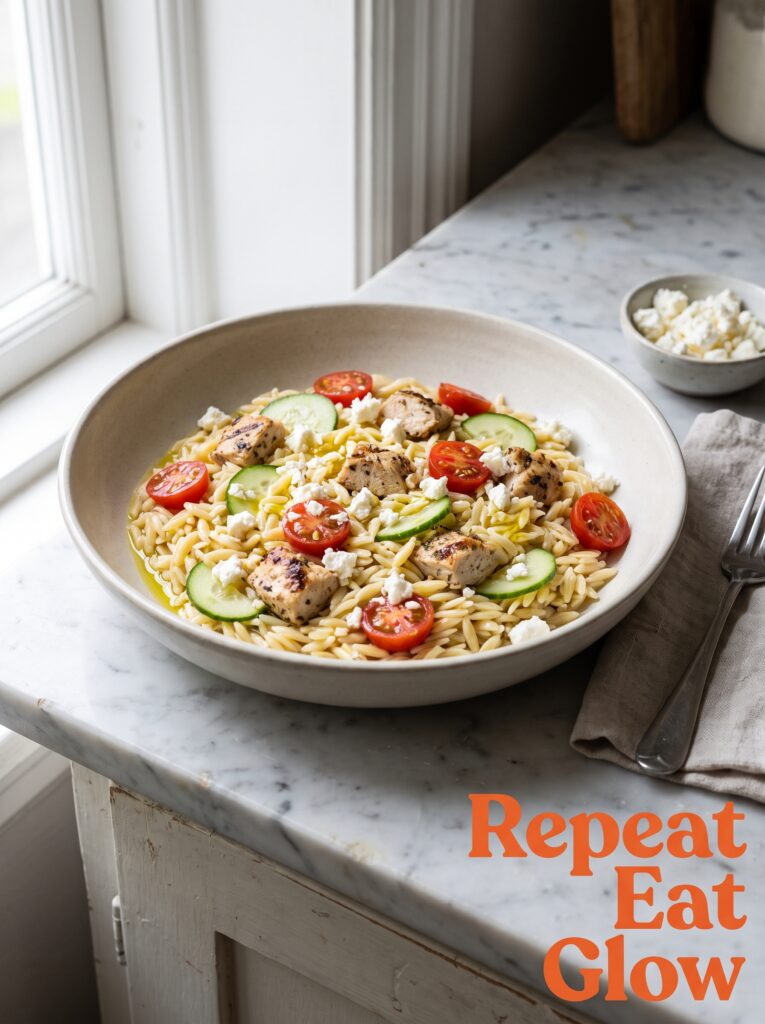
Not everything needs to be creamy. Sometimes you want something that tastes bright and a little herby and doesn’t sit heavy.
This one’s olive oil based. Chicken marinated in lemon juice, olive oil, garlic, oregano, and a pinch of chili flakes — even thirty minutes makes a difference but overnight is better. Cook it, slice it. Toss cooked pasta (I like orzo or small penne) with the chicken, halved Kalamata olives, roasted red peppers from a jar, crumbled feta, a handful of fresh spinach that wilts slightly from the heat of the pasta, and a good drizzle of olive oil. Squeeze of lemon. That’s it.
It tastes clean. Herby. The feta adds this salty creaminess without making everything heavy. The olives add a savory depth that you’d miss if you left them out.
This is the recipe I make when I want to feel like I put effort in but also didn’t really want to cook that night. It travels well too — genuinely good cold the next day, which is rare for pasta dishes.
9. The Pasta Bake That Makes Enough for Two Nights
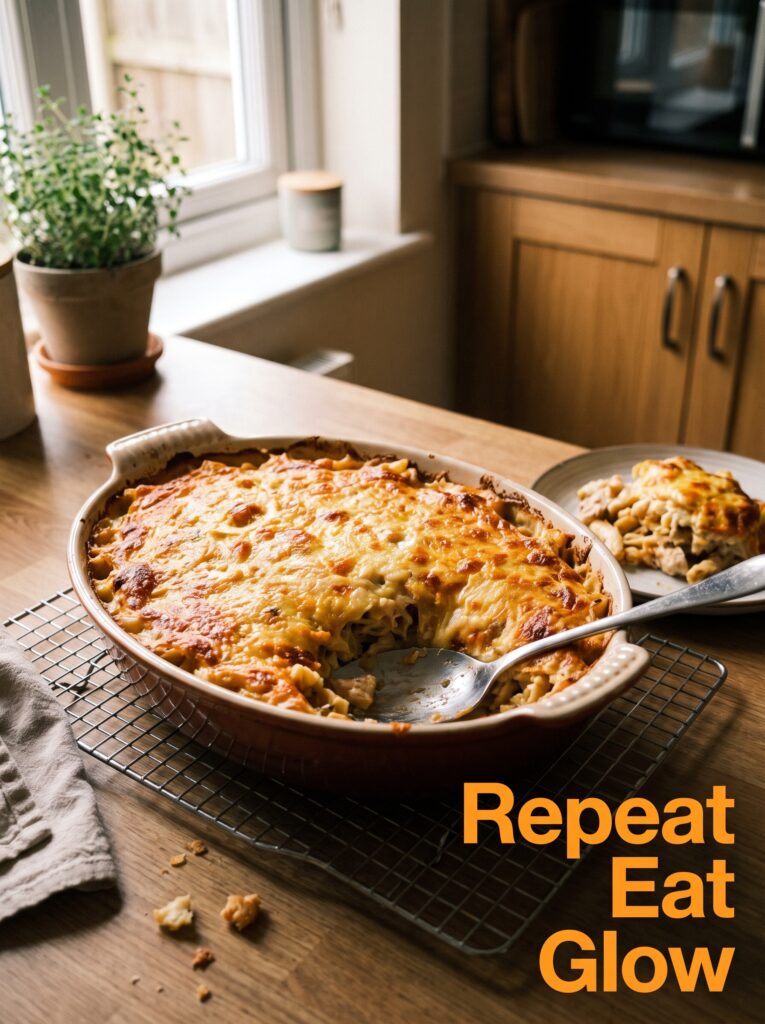
Pasta bakes are a category of their own. There’s something specifically satisfying about putting something in the oven and then just… leaving it. The oven does the work, the kitchen smells incredible, and you get to pretend you’ve been cooking.
This is my go-to chicken pasta bake. Cook penne until it’s underdone — al dente at most, still a bit chalky even. Make a quick tomato sauce: onion, garlic, tinned tomatoes or a jar of good passata, salt, Italian seasoning, a pinch of sugar. Stir in shredded cooked chicken (rotisserie chicken is perfect here, no shame), the penne, and a big handful of mozzarella. Pour it all into a baking dish. More mozzarella on top. Some parmesan. Into a 375°F (190°C) oven for 25 minutes until it’s bubbling and the cheese on top has started to turn golden and slightly crispy at the edges.
The edges. That’s the best part and everyone knows it.
Makes enough for 4-6 people easily. Reheats brilliantly. Actually tastes BETTER the next day because the flavors settle. This is meal prep that doesn’t feel like meal prep.
10. Swaps That Actually Work When You Don’t Have Everything
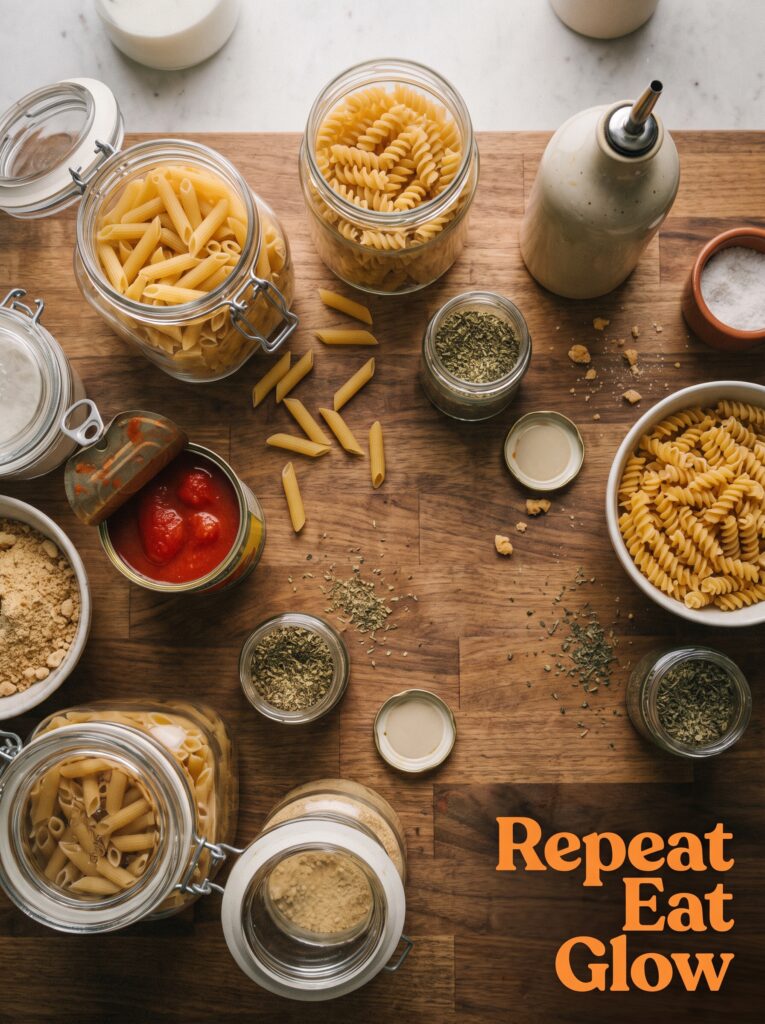
Real cooking happens with what’s in the fridge, not what the recipe says should be there. So here are the substitutions I actually trust.
No heavy cream? Full-fat coconut milk works in a surprisingly large number of pasta sauces. It’s not identical but it’s good, and it won’t split the way milk can. Or blend some cream cheese with pasta water — gets you closer to the real thing.
No fresh garlic? Garlic powder is genuinely fine, especially in rubs and dry seasonings. Garlic paste in the tube is better than nothing and keeps forever in the fridge. We all have it, we’re all using it, stop being embarrassed.
No parmesan? Pecorino Romano is sharper and sometimes better, honestly. Grana Padano is milder and works. In a pinch, aged Cheddar adds a completely different but still delicious thing to a pasta sauce.
Pasta gone from the cupboard? Gnocchi works in most sauces. Orzo cooks fast and suits lighter, olive-oil-based dishes. Couscous is not pasta but it’ll absorb a sauce and make something satisfying in a completely different way.
The point is — if you understand the structure of a dish, you can improvise. Chicken pasta is almost infinitely adaptable. That’s the whole reason we keep coming back to it.
11. What to Serve Alongside (And What Doesn’t Actually Need Anything)
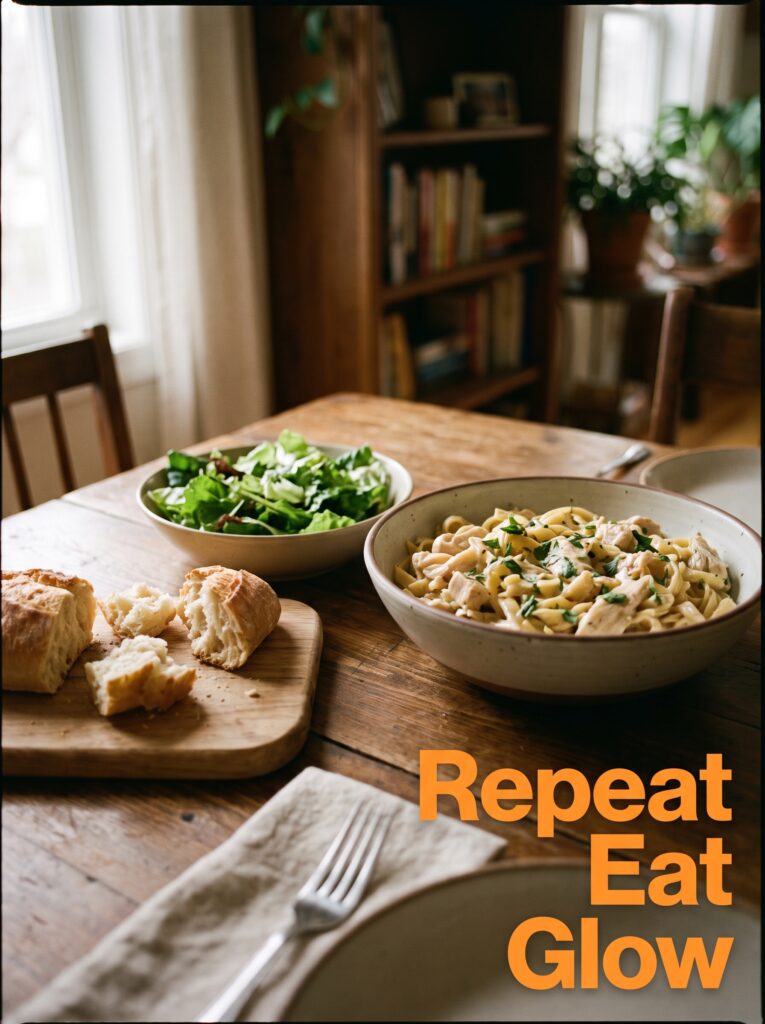
Most of these recipes? Honestly don’t need a side. A bowl of good chicken pasta is its own complete thing and anyone telling you to add a “light salad” has clearly not experienced the 6pm hunger level I’m working with on a Tuesday.
That said — garlic bread. Obviously. Crusty bread of any kind. A warm baguette in the UK, garlic Texas toast in the States, whatever you have, just something to mop up the sauce with.
If you want a vegetable — roasted cherry tomatoes, which take no effort and add color. Or a quick cucumber salad with red onion and a vinegary dressing, which cuts through the richness of anything creamy. Or just some steamed broccolini with lemon on the side.
What doesn’t work: complicated sides that require their own full cooking process. The entire point of these dinners is that they’re EASY. Don’t add effort back in through the side dish.
12. The Tiny Things That Make Every Version Better
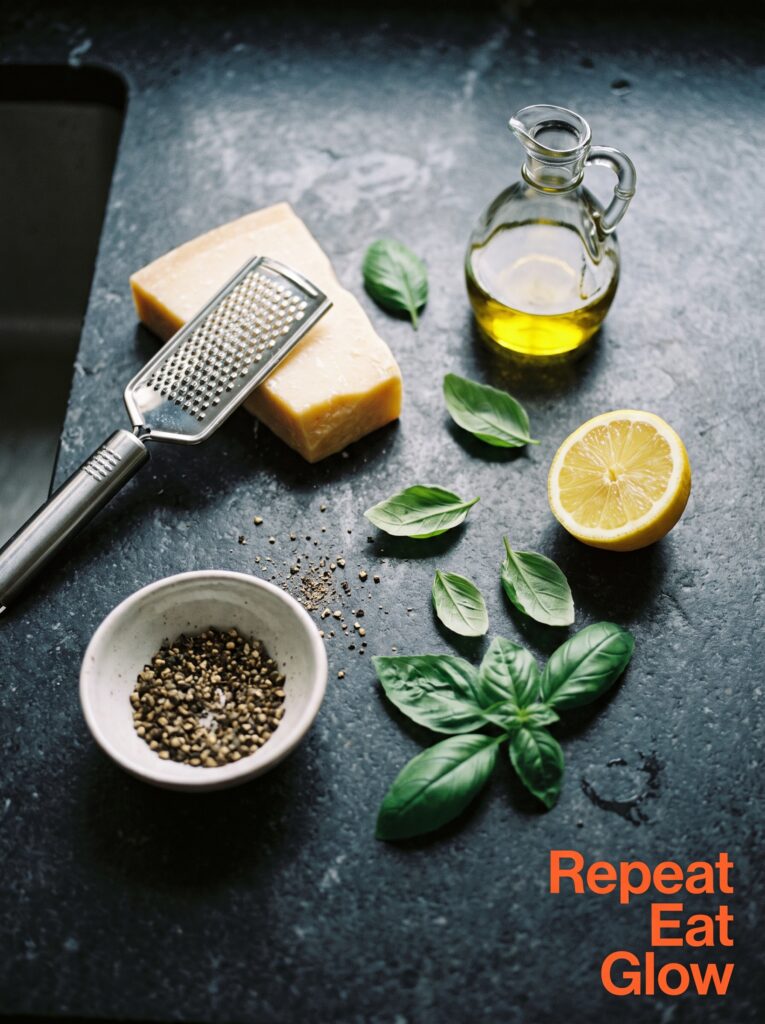
Okay. These are the micro-details that genuinely move the needle.
Salt your pasta water enough. It should taste “pleasantly salty” — not like seawater exactly but definitely seasoned. Unsalted pasta water produces flat pasta no matter what sauce you put on it.
Let the chicken rest before cutting. Even five minutes. The juices redistribute and it stays moist instead of bleeding out on the cutting board.
Always save pasta water. ALWAYS. A mug, before you drain. You won’t use it every time but when you need it and you have it, it saves a thin or broken sauce.
Finish with something fresh. A squeeze of lemon, a handful of fresh herbs, some extra parmesan. That last addition right before serving — it lifts everything. Even the simplest dish suddenly tastes bright and finished instead of like it came out of a pot.
Don’t skip the browning step on the chicken. That golden crust isn’t just about looks. It’s flavor, built right into the meat, and it carries through into the whole dish.
Small things. Big difference.
—
❓ FAQ
Q: Can I use leftover or rotisserie chicken in these recipes? A: Absolutely — and honestly, for the pasta bake and the pesto version especially, pre-cooked chicken is almost better because it’s already tender and shredded. Just add it toward the end of cooking so it heats through without drying out.
Q: How do I keep chicken pasta from drying out when I reheat it? A: Add a splash of water, milk, or stock before microwaving, and cover it so the steam keeps everything moist. Stovetop reheating works even better — medium-low heat with a little liquid stirred in, lid on, and it’s nearly as good as fresh.
Q: What pasta shapes work best for creamy chicken sauces? A: Shapes that catch sauce are your best friend — rigatoni, penne, farfalle, fusilli. Long flat pasta like tagliatelle or pappardelle also works brilliantly. The ones to avoid for creamy sauces are very thin or delicate pasta — angel hair tends to clump into a sad, starchy lump when coated in cream sauce.
—
💭 Final Thoughts
Chicken pasta isn’t trying to be anything other than what it is — dependable, satisfying, the kind of meal that makes a difficult day slightly more manageable. I’ve never once regretted making it, which is more than I can say for a lot of ambitious weeknight decisions.
Start with one of these, make it your own, make it again differently next time. The whole point is that it’s flexible enough to become YOUR thing, not just something you followed from a card.
And honestly — what’s the recipe you keep coming back to when everything else feels like too much?
