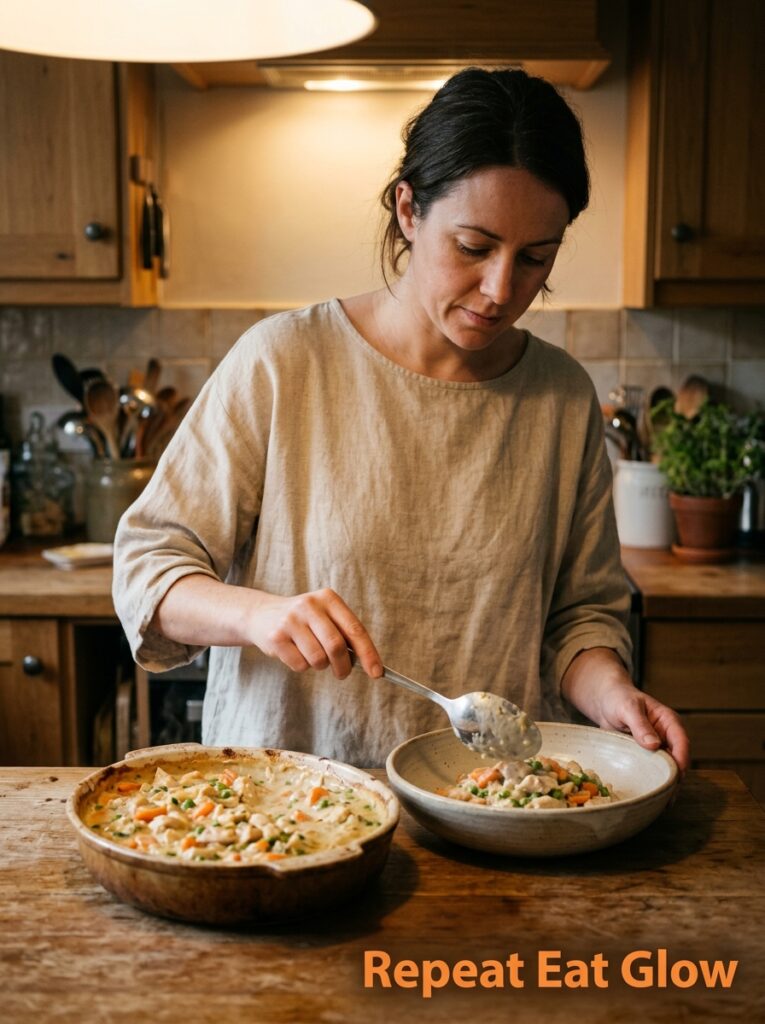
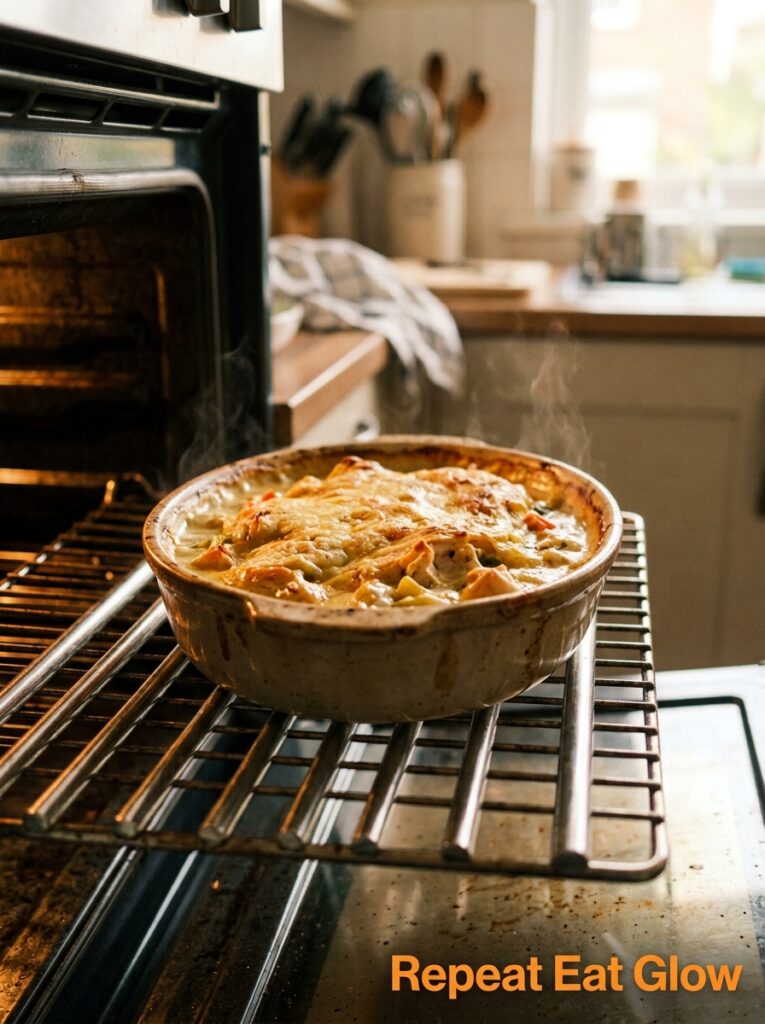
You know that moment when you pull something out of the oven and the whole kitchen just smells right? Bubbling edges, golden top, steam hitting your face when you lift the lid. That’s what a good chicken casserole does — and it takes maybe 20 minutes of actual effort to get there.
—
1. Why Casseroles Got a Bad Reputation (And Why That’s Completely Unfair)
Let’s just say it. For a while there, “chicken casserole” made people think of church potlucks and canned soup with crushed crackers on top. Not glamorous. Not exactly something you’d photograph.
But here’s what actually happened — the food itself was never the problem. The recipes were just stuck in 1987. The technique is genuinely brilliant. You put things in a dish, the oven does the work, you do something else with your evening. Everything cooks together and the flavors sort of sink into each other in a way that stovetop cooking just doesn’t replicate.
I’ve had casseroles in the UK that were nothing short of extraordinary — rich with thyme and white wine, the kind of thing you’d expect from a pub with a wood fire burning. And I’ve had American versions loaded with cream of mushroom soup that were, honestly, deeply comforting in the best possible way. Different. Both valid. Both wildly underrated.
So no. We’re not leaving casseroles in the past. We’re just making better ones.
“A casserole isn’t a lazy dinner. It’s a patient one.”
2. The One Thing Most People Get Wrong Before the Oven Even Turns On
Raw chicken, cold from the fridge, straight into the dish. That’s the mistake.
I’m not saying you need to do anything complicated — just let your chicken sit out for 15 minutes first. Or, better yet, season it the night before and leave it in the fridge uncovered. The salt actually draws out a little moisture, then it gets reabsorbed, and what you end up with is chicken that’s seasoned all the way through rather than just on the surface. It makes a REAL difference.
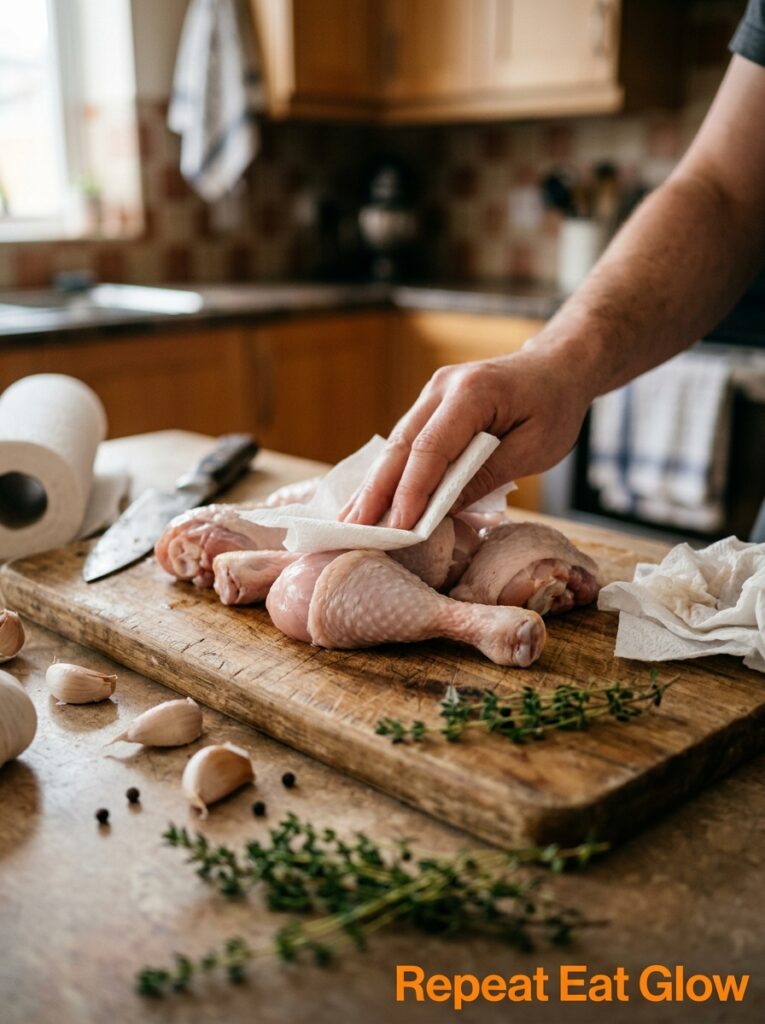
Also — dry your chicken pieces. Pat them with paper towel before you do anything else. Wet chicken steams instead of browning, and browning is where flavor starts. Even if you’re not searing (and honestly, some nights I don’t bother), that extra surface dryness still helps.
Side note — a lot of recipes skip this entirely, which is probably why people sometimes end up with pale, watery casseroles and blame the dish rather than the prep. It’s usually fixable. A few extra seconds of prep and you’re miles ahead.
3. The Base Recipe That Works Every Single Time
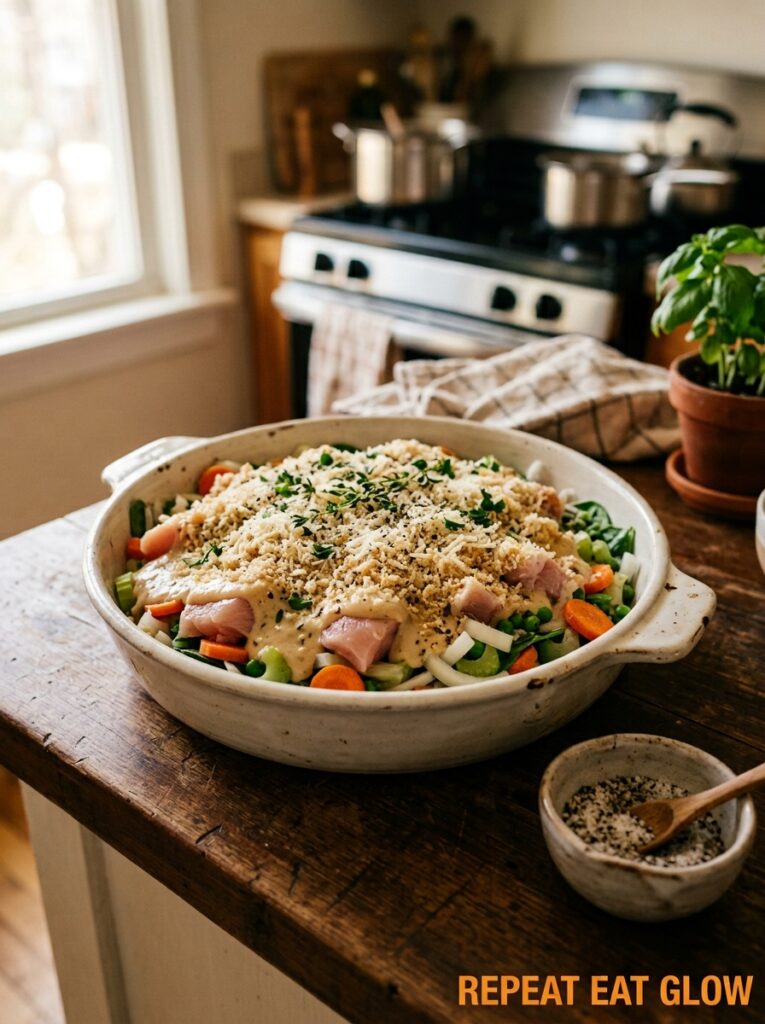
Here’s the version I keep coming back to. It’s flexible, it feeds four easily, and you probably have most of this already.
You’ll need about 1.5 lbs of chicken thighs (bone-in or boneless, doesn’t matter much), one can of cream of chicken soup or a homemade equivalent, half a cup of chicken stock, two cloves of garlic, one medium onion, a handful of frozen peas or some broccoli if you want vegetables worked in, salt, pepper, and whatever herbs you feel like — thyme, rosemary, or even just dried Italian seasoning works.
Brown the chicken in a cast iron or oven-safe skillet if you have five minutes. If you don’t, you can skip it. Mix the soup, stock, garlic and onion together, pour it over, cover the dish tightly with foil, and bake at 375°F / 190°C for about 45 minutes. Then uncover for the last 10-15 minutes to let the top go golden.
That’s genuinely it. That’s the whole thing.
4. The Cream of Mushroom vs. Cream of Chicken Debate (People Feel Strongly)
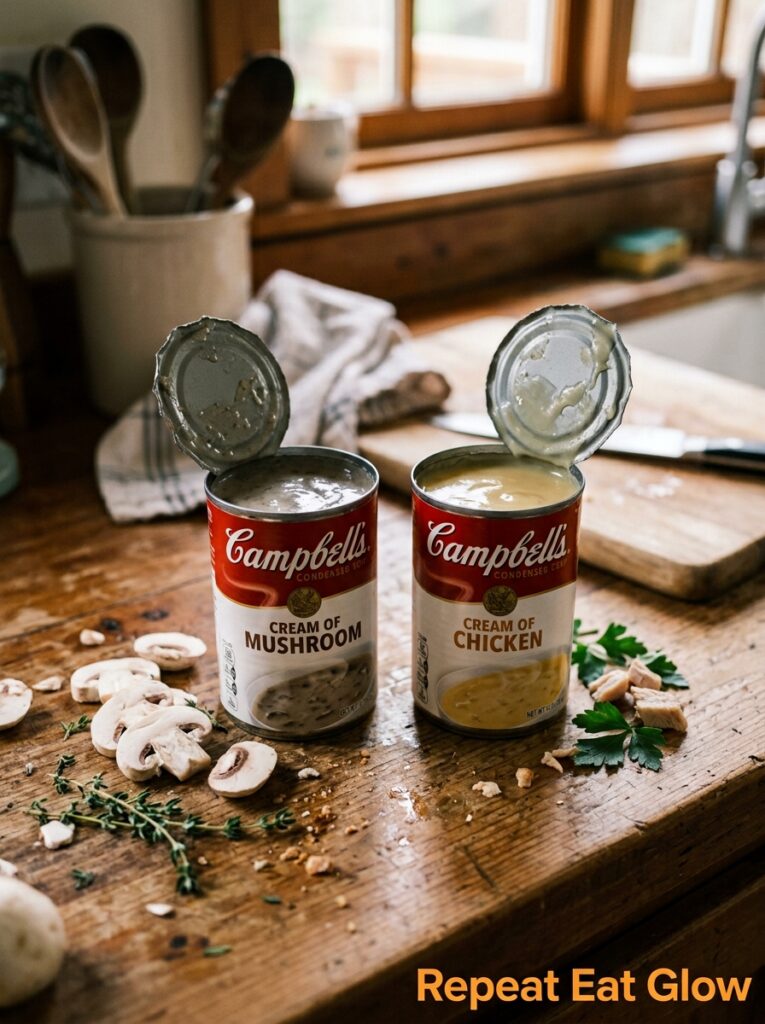
Okay so this is more contentious than it should be, but — different people grew up with different versions, and it actually changes the dish quite a bit.
Cream of mushroom gives you something earthier. It’s darker, richer, slightly more savory. It works really well with chicken thighs specifically because the fat in the thigh and the earthiness of the mushroom kind of balance each other. Add some dried thyme and a splash of white wine and it goes somewhere that almost feels restaurant-level without trying very hard.
Cream of chicken keeps things cleaner. It’s a more neutral base, so it lets whatever herbs and vegetables you add actually come through. This is the better choice if you’re feeding kids who would notice a mushroom and stage a protest. It’s also what gives you that glossy, slightly silky sauce that coats the chicken so perfectly.
Can you mix them half and half? Yes. Do I do this sometimes? Also yes. Does it work? Every time.
“The secret isn’t in the recipe — it’s in not overthinking the recipe.”
5. Making It Stretch: How to Feed Six People With Enough for a Four-Person Recipe
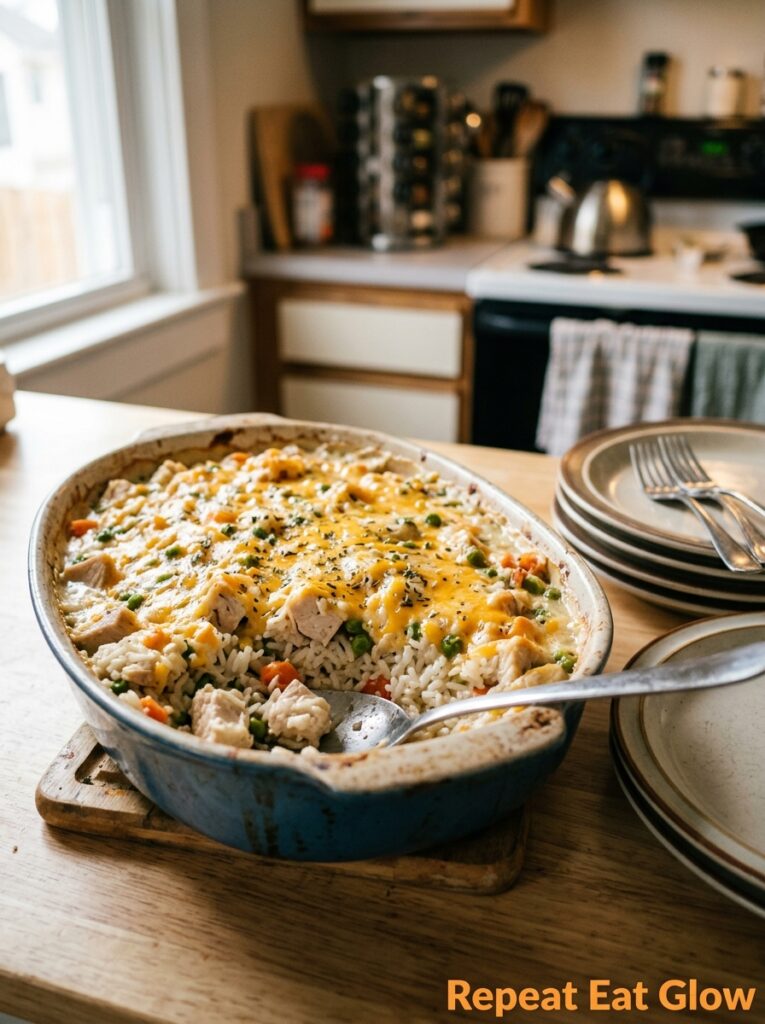
Here’s where casseroles beat almost every other quick dinner option — they’re incredibly easy to stretch. And I don’t mean in a sad, watered-down way.
Add a cup of cooked rice or egg noodles directly to the dish before baking. The pasta or rice absorbs the sauce as everything cooks together and it becomes part of the whole thing rather than a side that feels separate. If you go the rice route, increase your stock by about half a cup to compensate for what the rice soaks up.
Or — add more vegetables. Diced potatoes work really well in the bottom of the dish, and they take about the same time as the chicken to cook through at that temperature. Tinned butter beans are a British trick I’ve completely stolen and refuse to give back. They add bulk, they’re creamy, they absorb flavor beautifully, and nobody questions why they’re there.
The casserole dish size matters too. If you’re scaling up, go wider rather than deeper. Too deep and the middle doesn’t cook evenly. Shallow and wide gives you better heat distribution and, crucially, more of that golden top that everyone fights over.
6. The Toppings That Actually Change Everything
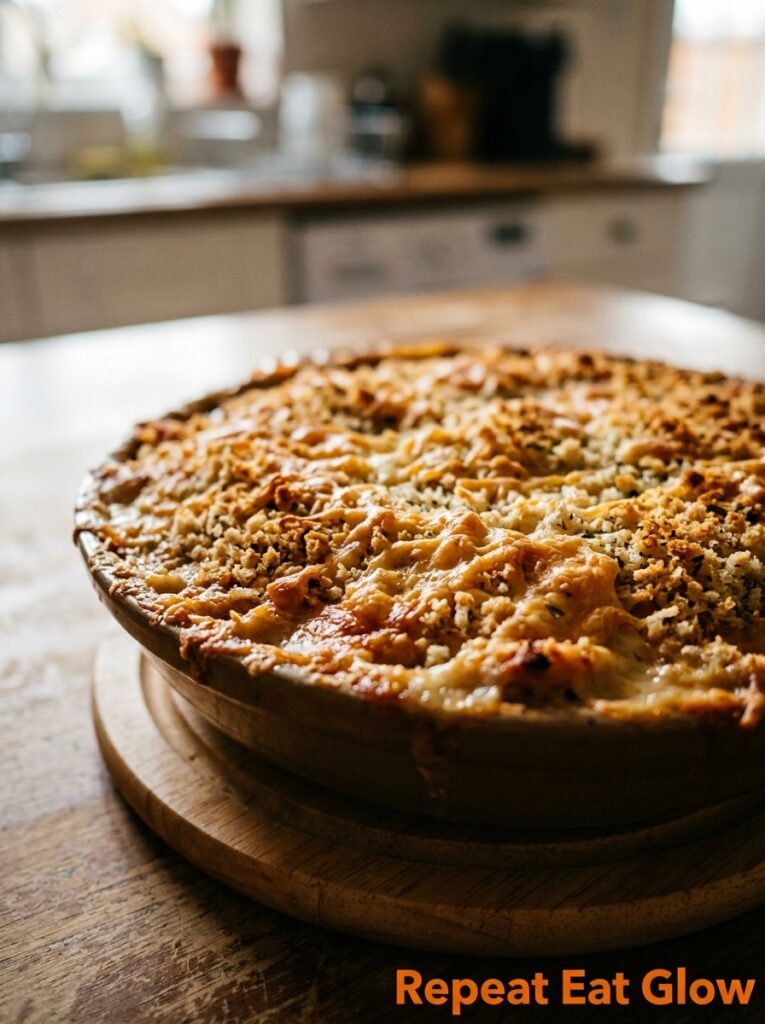
There’s a whole world between “no topping” and “breadcrumbs.”
Crushed crackers — Ritz, or their UK equivalent — mixed with a little melted butter and parmesan. That’s it. That’s the topping. It goes on in the last 15 minutes and comes out looking like something you put effort into.
Or try sliced potatoes instead of a crumb top. Thin rounds laid overlapping like scales, brushed with olive oil. They crisp up at the edges and stay soft in the middle and the whole thing looks incredible on the table. It’s basically a casserole-dauphinoise hybrid and it absolutely slaps, as the kids apparently say.
French fried onions are a classic for a reason. They add crunch and a deeply savory oniony flavor that punctuates each bite. Available in most US supermarkets and increasingly easy to find in the UK too. Don’t skip them if you see them on the shelf.
Honestly, the topping is where you make the casserole yours. The base can stay the same every time, but change the top and it feels like a completely different dinner.
7. The Herbs and Spices That Take It From Fine to Actually Memorable
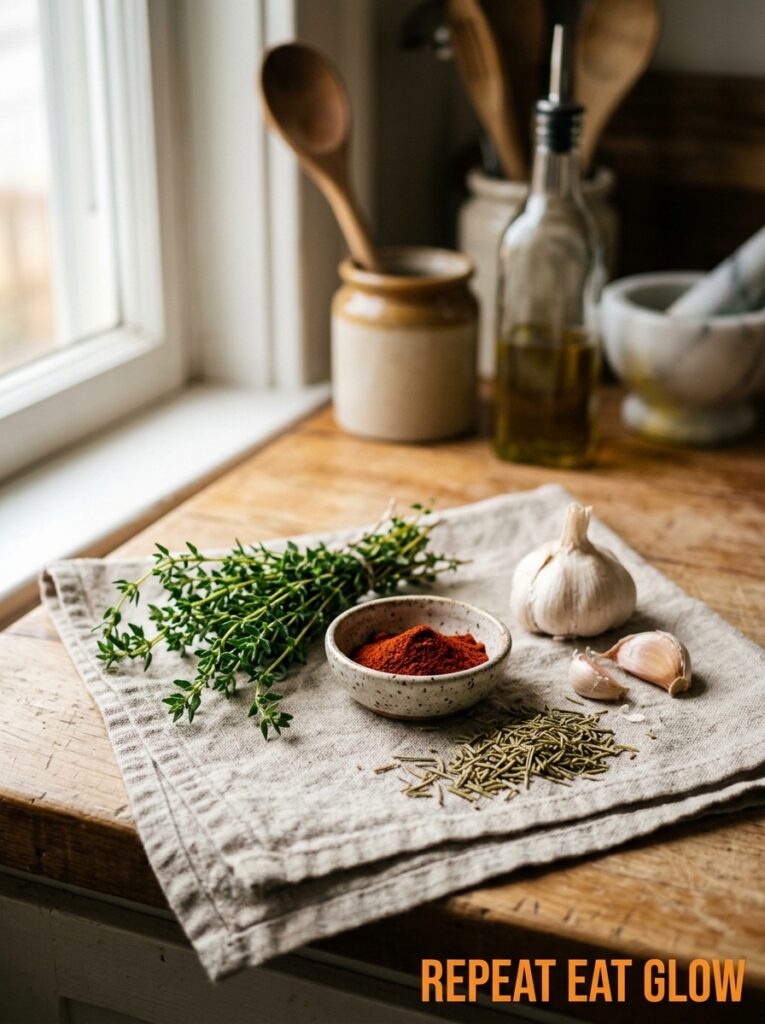
Let me be HONEST — I used to under-season casseroles badly. I’d put in salt and pepper and one cautious pinch of thyme and wonder why it tasted a bit flat. The issue is that long oven cooking mutes flavors. You need to go bolder than you think.
Garlic powder in addition to real garlic. Smoked paprika — not regular, smoked. A little mustard powder if you have it, because mustard in a creamy sauce adds this background warmth that nobody can quite identify but everyone responds to.
Fresh herbs go in at the end, not the beginning. Parsley scattered over after it comes out of the oven. Chives work great too. They wilt slightly from the heat of the dish but don’t cook down to nothing the way they would inside.
And don’t forget acid. A squeeze of lemon over the top right before serving cuts through all that richness and makes the whole dish taste brighter and more alive. UK readers might reach for a splash of malt vinegar, which sounds strange but genuinely works on creamy chicken dishes — just a tiny bit.
“Under-seasoned is the quiet killer of every otherwise good casserole.”
8. Making It Ahead: The Actual Best Thing About This Whole Category of Food
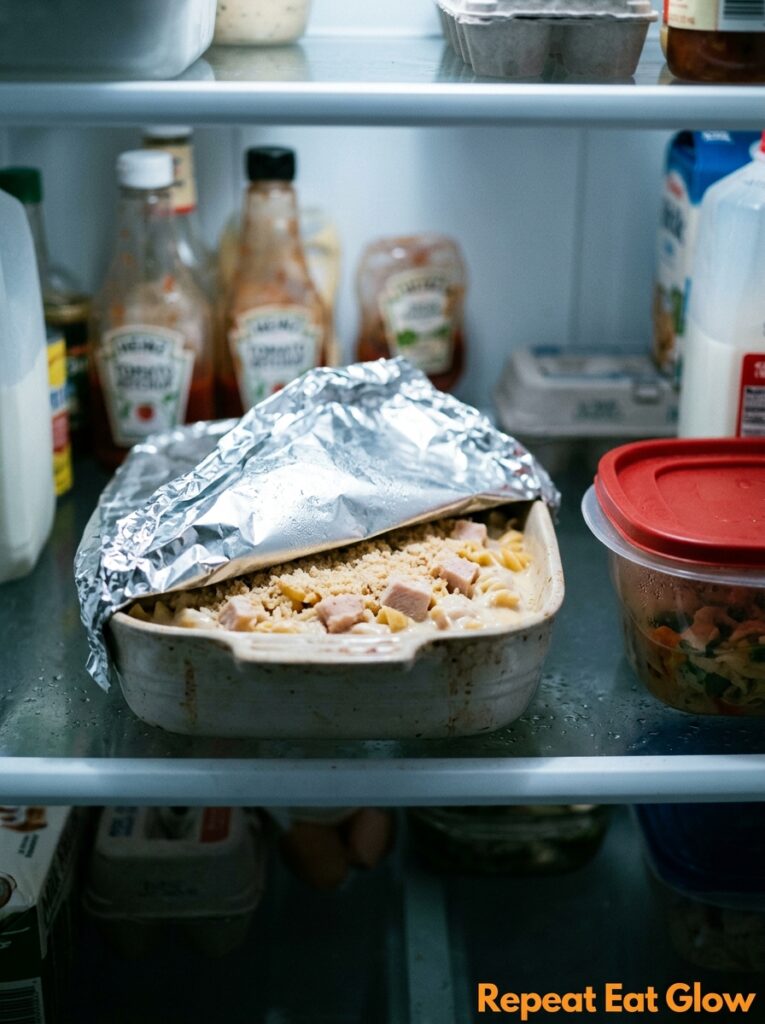
Sunday afternoon, you’ve got half an hour. You make the casserole but don’t bake it. Cover it tightly, put it in the fridge, and on Tuesday night when you’re exhausted and didn’t sleep well and dinner is the last thing you want to think about — it goes straight from fridge to oven and you’re done.
The slightly surprising thing is that rested casseroles often taste BETTER than freshly assembled ones. The chicken absorbs more of the sauce, the flavors settle into each other, the whole thing just deepens overnight. So making it ahead isn’t a compromise, it’s actually kind of optimal.
If you’re going from cold, add 10-15 minutes to the baking time and make sure the foil is on tight for the first half. You don’t want the top going dark before the middle’s properly hot.
You can also freeze them fully assembled but unbaked. Cover tightly with foil, freeze for up to three months, thaw in the fridge the night before. The texture of the chicken is marginally softer after freezing but honestly it’s barely noticeable once it’s all cooked together.
9. The British Twist That American Readers Need to Try
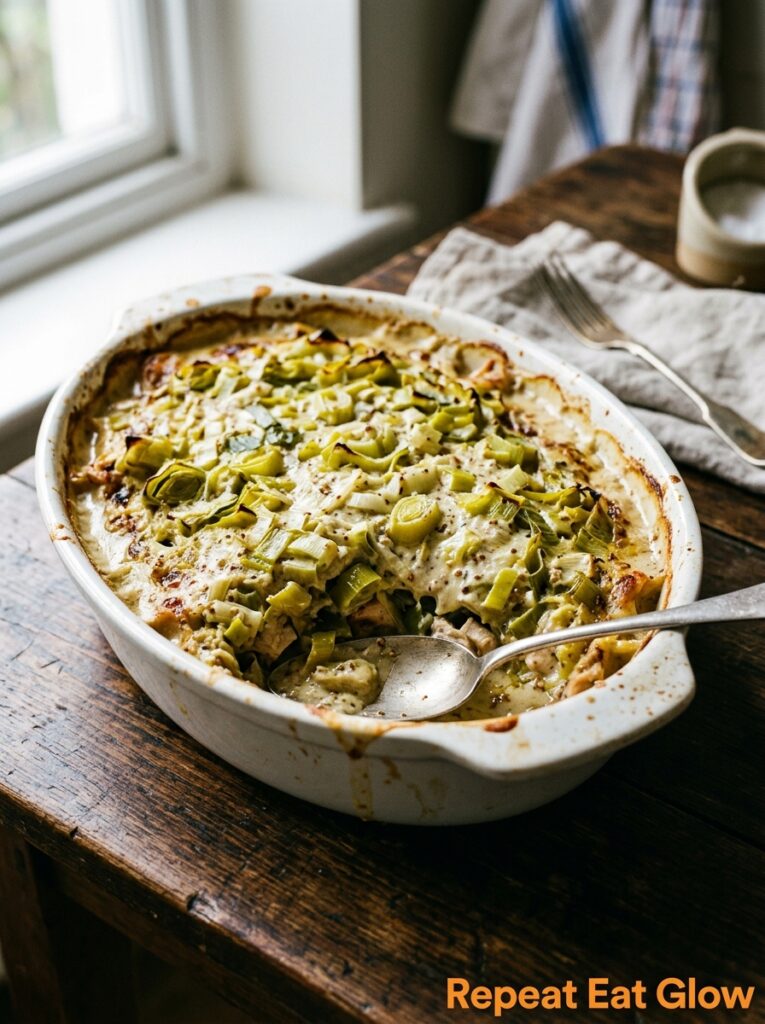
Okay, hear me out. Leeks.
Most American casserole recipes don’t include leeks, and it’s a genuine shame. They’re sweeter and more delicate than onions, they almost dissolve into the sauce, and they bring this subtle background sweetness that works incredibly well with chicken.
Slice two leeks — the white and light green parts only — and add them right to the dish with everything else. They soften beautifully during the bake. No pre-cooking required. And the flavor they add is sort of quiet and gentle but if you left them out, you’d notice.
Also — Coleman’s mustard. If you’re in the UK, you probably already know. If you’re in the US, get it on Amazon or look in the British section of a well-stocked grocery store. It’s sharper and hotter than American yellow mustard and it adds this punchy depth to cream-based sauces that nothing else quite replaces. Just a teaspoon stirred into the sauce before baking. That’s all.
10. One-Pan Versions for the Nights When Even a Casserole Dish Feels Like Too Much
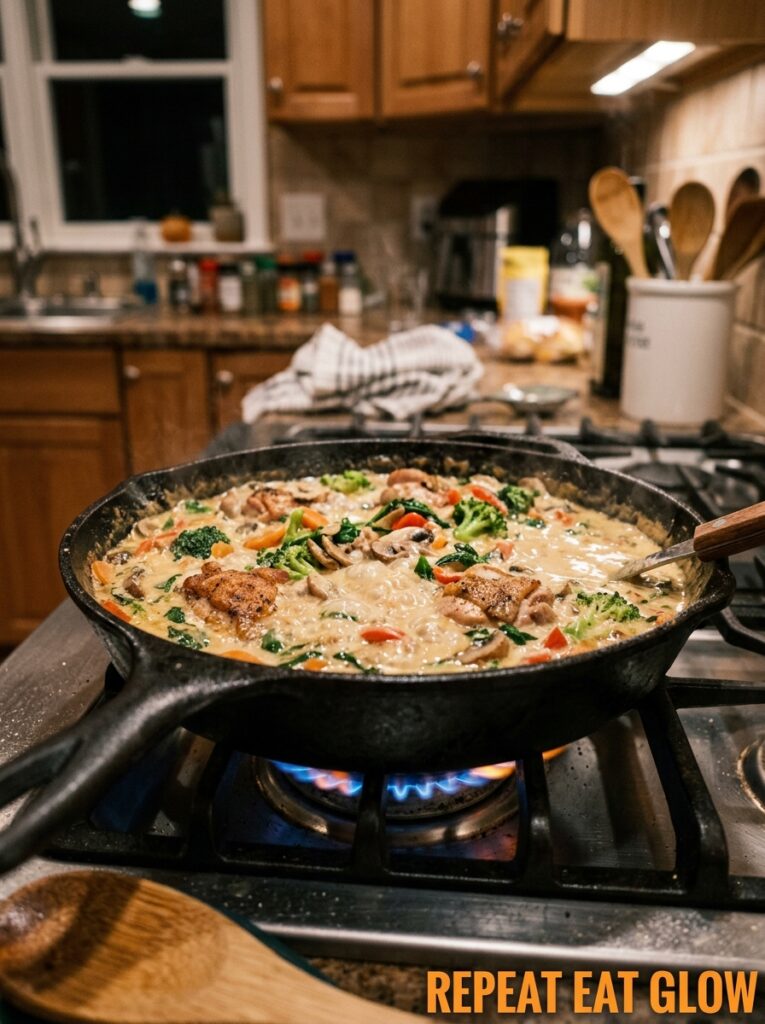
I’m going to be real. Some nights even assembling a casserole dish sounds like work. And on those nights — a Dutch oven or oven-safe skillet does everything.
Brown the chicken right in it. Don’t clean the pan. Add everything else to the same pan, deglaze with a little stock, scraping up all those brown bits from the bottom (that’s flavor, don’t lose it), then put the whole thing in the oven. One pan, minimal cleanup, same result.
Cast iron skillets work brilliantly for this. If you don’t have one, a Le Creuset or any heavy-bottomed pot with an oven-safe lid will do the same job. The key is something that conducts heat evenly — thin pans can create hot spots and you’ll end up with parts of the chicken overcooked while other bits are still underdone.
The one-pan version also has a slightly more rustic look, which — not gonna lie — photographs really well. Like, the kind of thing that does well on Pinterest because it looks effortless and cozy at the same time.
11. What to Actually Serve Alongside It (Because Everyone Has a Different Idea)
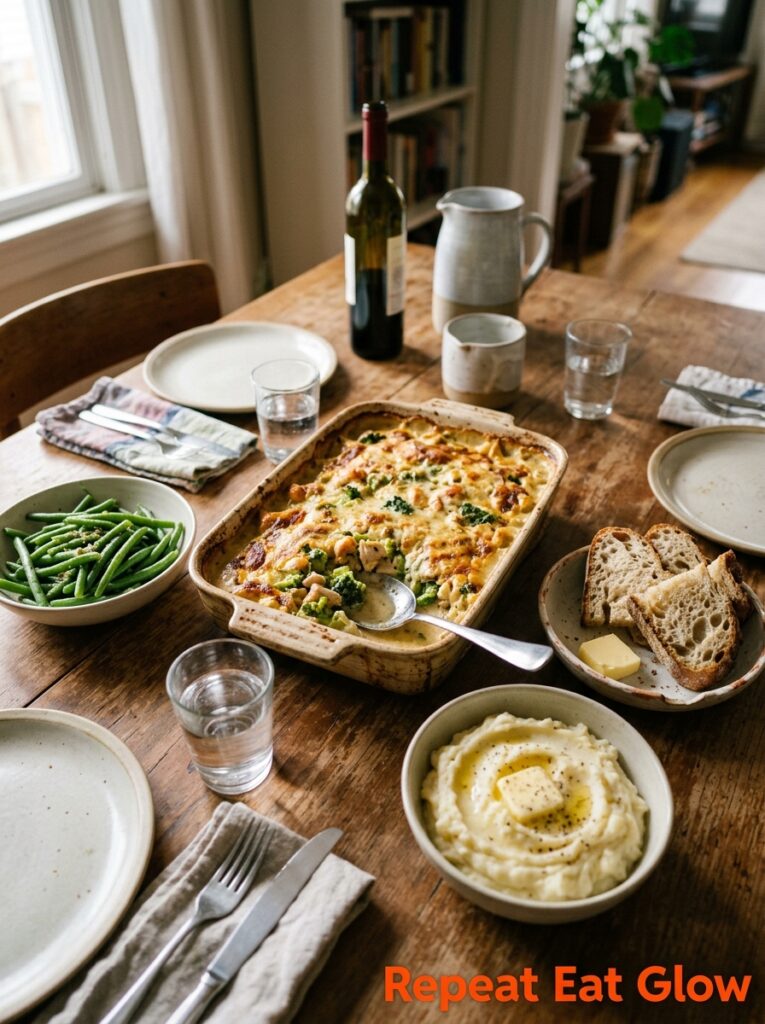
Mashed potato is the obvious answer, and it’s obvious because it’s correct. The sauce from a chicken casserole and a pile of buttery mash is one of the better combinations in the dinner universe. Not gonna argue with it.
But crusty bread is maybe even better for the sauce situation specifically — you can mop. There’s something about tearing a piece of bread and dragging it through the bottom of the dish that feels deeply satisfying in a way that’s hard to explain. Just do it.
Rice works well if you didn’t add it to the casserole itself. Steamed green beans on the side keep things from feeling too heavy. Or a simple salad — something bright and acidic to contrast with the richness of everything else.
In the UK, it’d be completely normal to serve this with a side of baked beans (the Heinz kind, specifically) which sounds like chaos but actually works because the sweetness cuts through the savory cream sauce nicely. Don’t knock it.
12. The Version for When You Want to Impress Without Admitting How Easy It Is
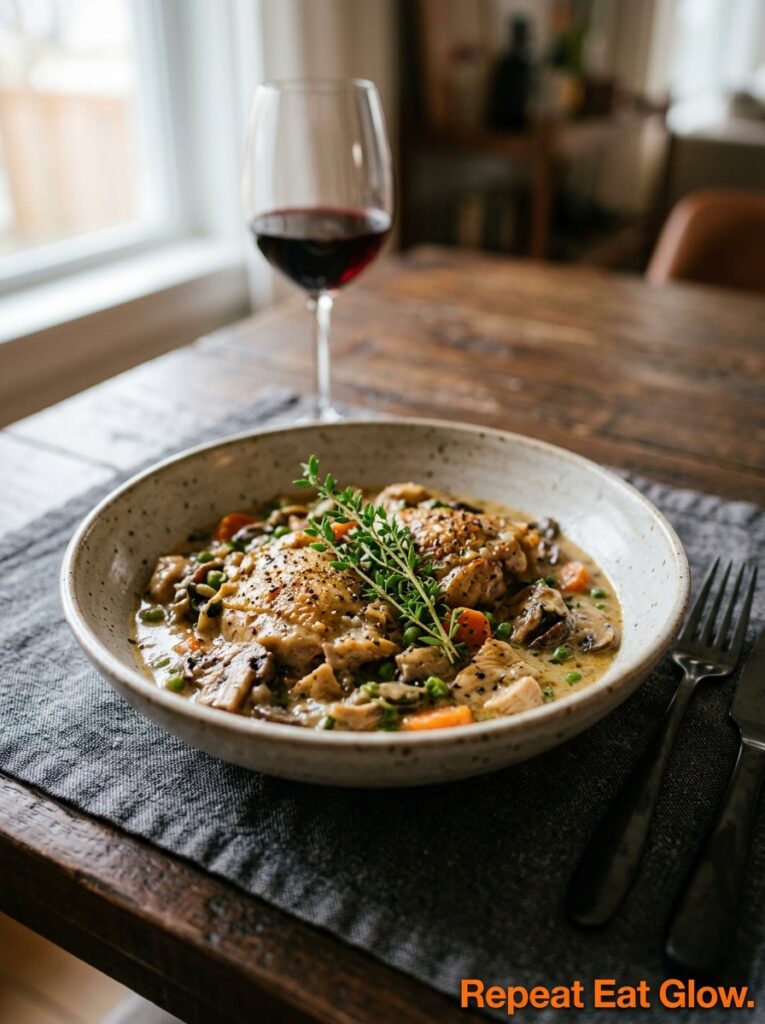
Everything above, but small changes that look intentional.
Use chicken thighs with the skin on and don’t cover them in sauce — let the skin sit on top, exposed, so it crisps up in the last 15 minutes. Score the skin slightly with a knife, rub it with a mixture of smoked paprika, garlic powder, and salt, and lay it skin-side up on top of the sauce.
Use fresh thyme and rosemary instead of dried. The fragrance when it comes out of the oven is SO much more vivid — woody and herbal and genuinely lovely.
Finish with a drizzle of good olive oil and a scattering of fresh parsley. Put it on the table in the dish — a nice ceramic or cast iron, not a Tupperware. Light a candle. Pour a glass of wine.
Nobody needs to know it took 25 minutes to assemble. That information is yours to keep.
—
❓ FAQ
Q: Can I use chicken breasts instead of thighs in a casserole? A: You can, but thighs are genuinely better for this because the higher fat content keeps them moist during the long cook time. Breasts can dry out, especially if they’re large. If you do use breasts, cut them in half and check them around the 35-minute mark — they often need less time than thighs do.
Q: How long does leftover chicken casserole keep in the fridge? A: Three to four days, tightly covered. Reheat in the oven at 350°F / 175°C for about 20 minutes, or in the microwave in shorter bursts with a splash of stock stirred in to loosen the sauce up. It reheats really well, honestly better than a lot of dishes.
Q: Is there a dairy-free version that actually works? A: Yes — swap the cream of chicken soup for a coconut milk and chicken stock mixture (roughly half and half), and use a dairy-free butter for the topping. The coconut flavor is subtle once everything’s cooked together but it does add a slight sweetness, which some people love. A squeeze of lemon at the end balances it out nicely.
—
💭 Final Thoughts
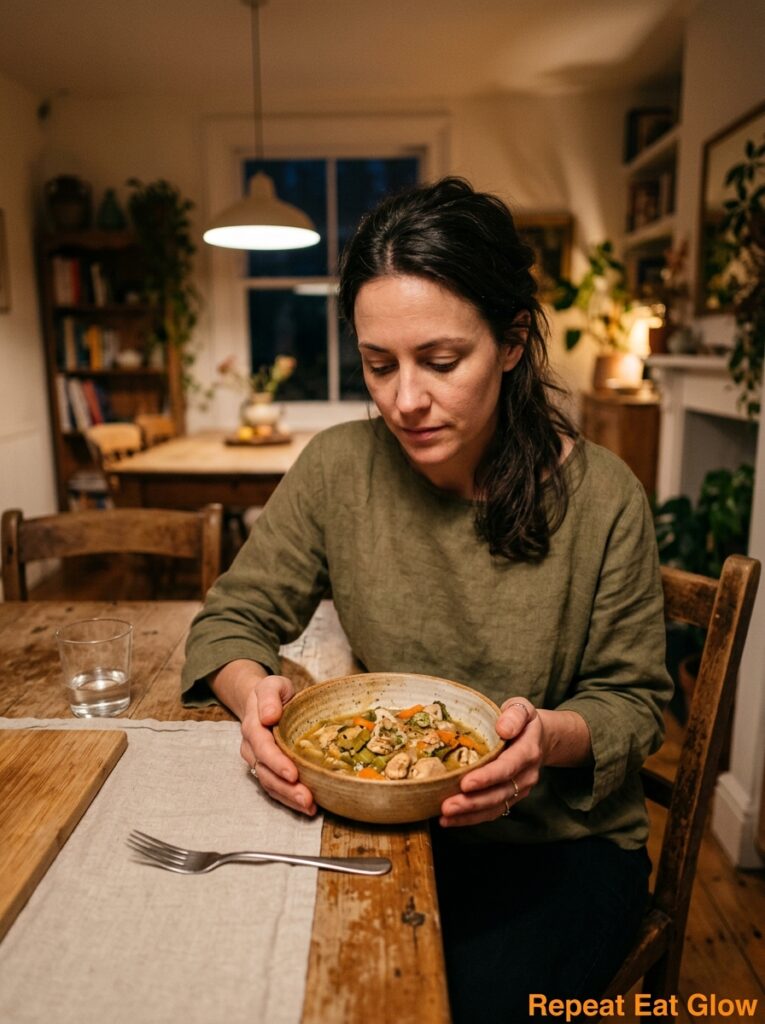
A chicken casserole isn’t trying to be anything other than what it is — honest, filling, deeply comforting, and easier than it looks. There’s something kind about a dish that asks so little of you and gives back so much.
Make it on a Sunday. Eat it on a Tuesday. Notice how good the kitchen smells.
What’s the one ingredient you always add to yours that nobody else does?
