Cabbage and asparagus are two versatile vegetables that can turn simple ingredients into flavorful, satisfying meals. Cabbage adds a hearty, slightly sweet crunch, while asparagus brings a fresh, earthy flavor and tender texture. They work especially well in roasted dishes, stir-fries, salads, skillet meals, soups, and grain bowls. If you are looking for easy cabbage and asparagus recipes, these ideas are a great way to add more vegetables to your everyday meals.
Both vegetables are also easy to pair with proteins, grains, noodles, and flavorful sauces. You can keep the recipes light with lemon, garlic, and olive oil or make them more filling with chicken, shrimp, eggs, beans, or noodles. Most of these dishes can be adjusted according to whatever vegetables and pantry ingredients you already have. That makes cabbage and asparagus a particularly useful combination for simple weeknight cooking.
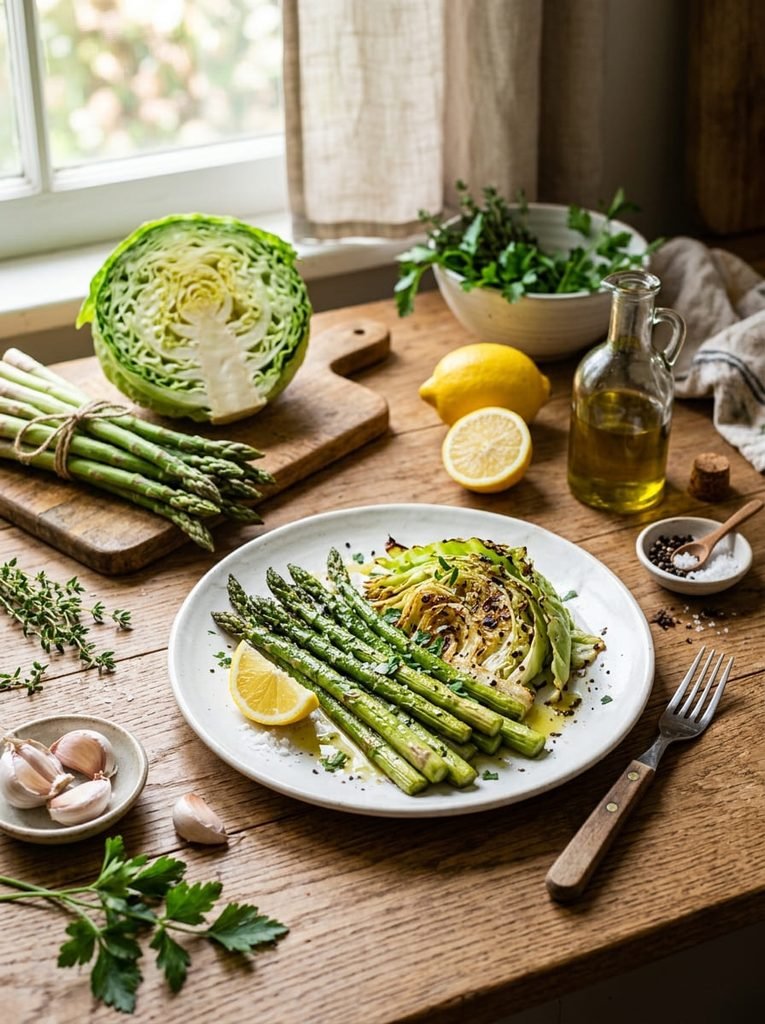
1. Garlic Roasted Cabbage and Asparagus
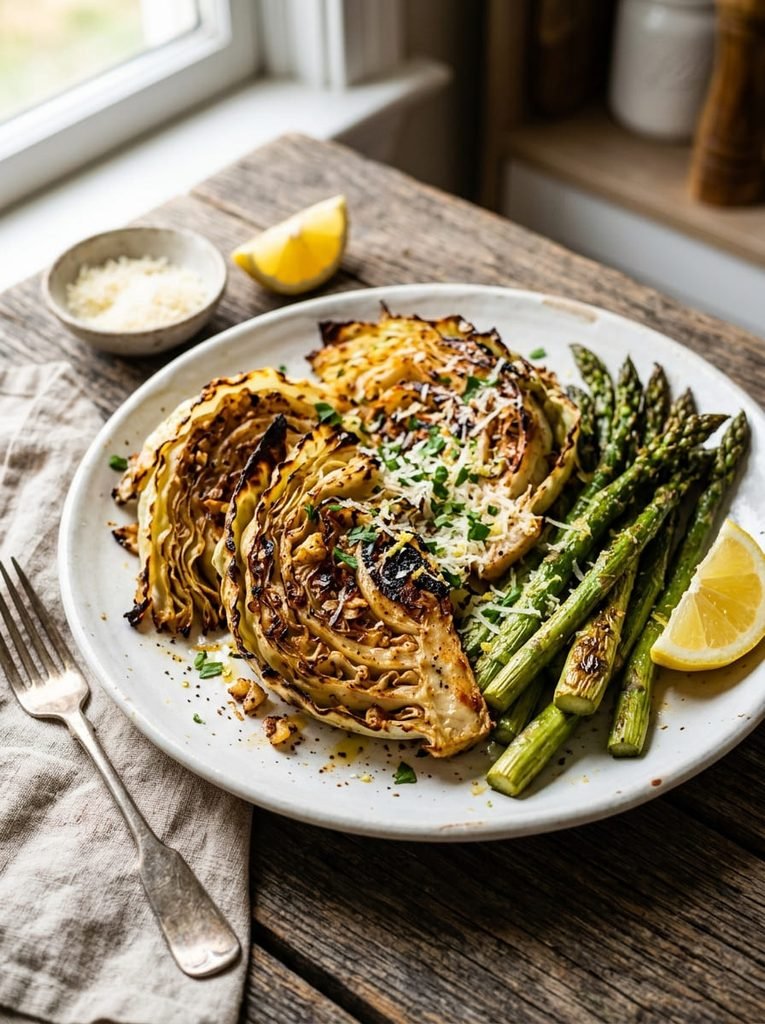
Roasting is one of the easiest ways to bring out the natural flavor of both cabbage and asparagus. Cut cabbage into thick wedges or bite-sized pieces and trim the asparagus into smaller sections. Toss everything with olive oil, minced garlic, salt, black pepper, and a little paprika before spreading it across a baking sheet. Roast until the cabbage edges become caramelized and the asparagus is tender with lightly browned tips.
Finish the vegetables with fresh lemon juice for a bright contrast to the roasted flavors. You can also sprinkle Parmesan cheese over the top during the final few minutes of cooking. For a complete meal, serve the vegetables with grilled chicken, salmon, or crispy chickpeas. This simple recipe makes an excellent side dish but can easily become a light dinner.
2. Cabbage and Asparagus Stir-Fry
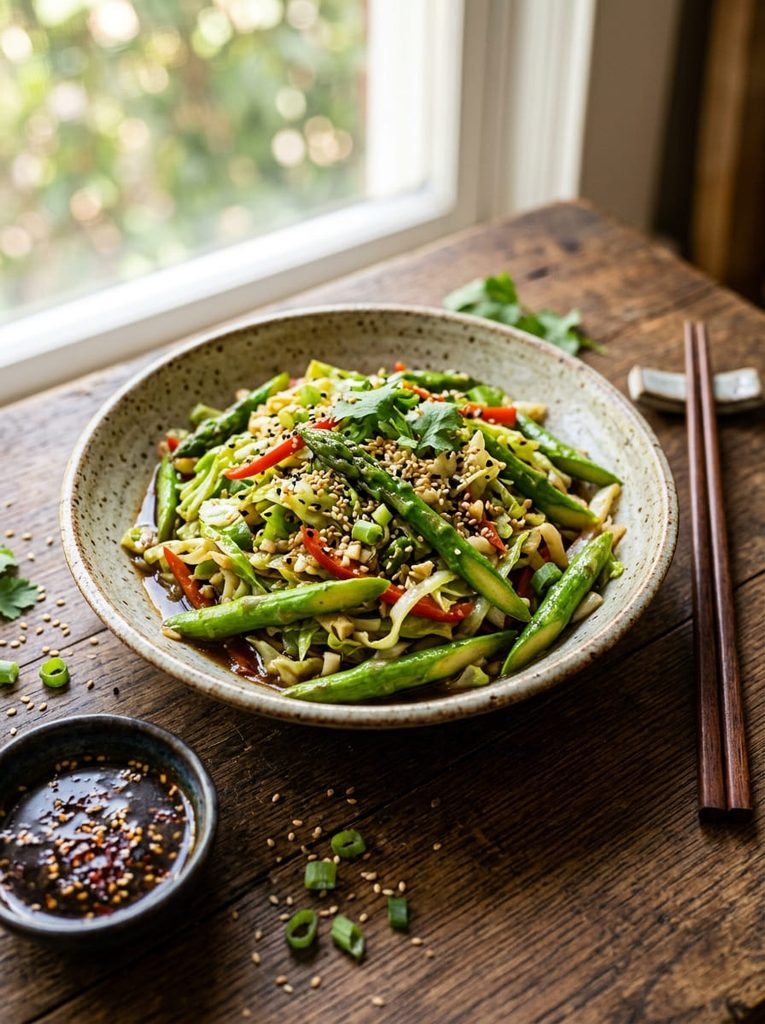
A quick stir-fry is perfect when you want dinner on the table without turning on the oven. Slice cabbage into thin strips and cut asparagus into bite-sized pieces so everything cooks quickly. Stir-fry the vegetables with garlic and ginger, then add a simple sauce made with soy sauce, sesame oil, and a little honey. Cook just until the cabbage softens slightly while the asparagus remains bright and crisp.
You can add chicken, shrimp, tofu, or thinly sliced beef for extra protein. Serve the stir-fry over white rice, brown rice, or noodles for a more substantial meal. Red pepper flakes can add a little heat, while sesame seeds make a simple finishing garnish. The entire dish can be customized depending on what is available in your refrigerator.
3. Lemon Parmesan Cabbage and Asparagus
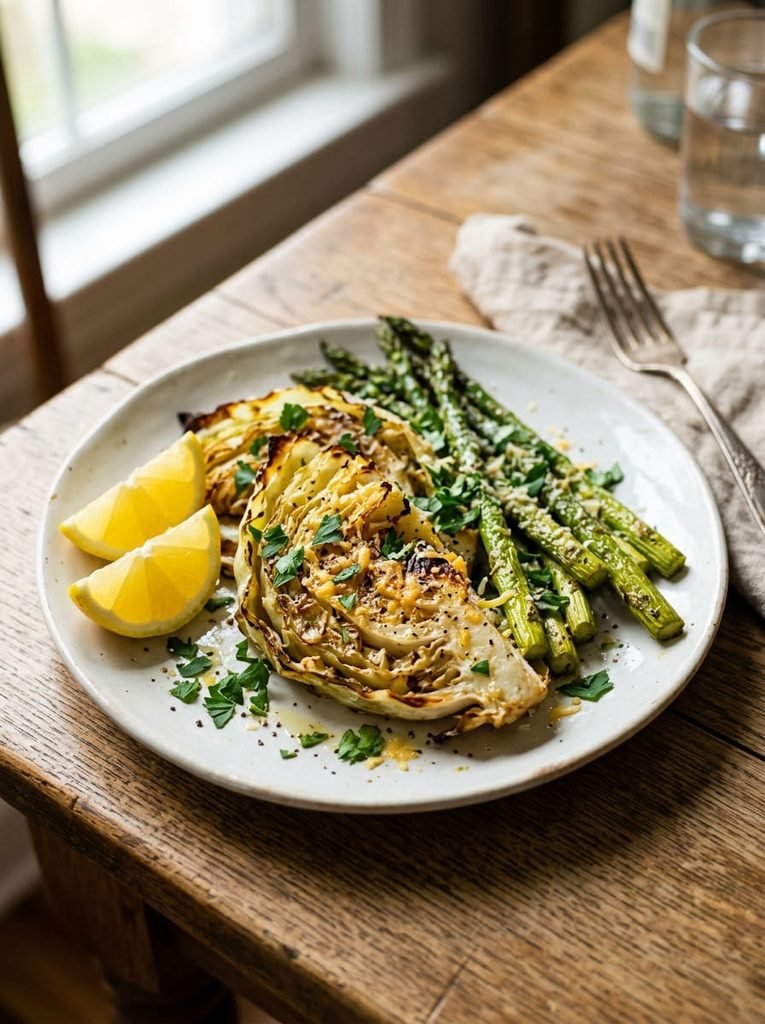
Lemon and Parmesan create a simple flavor combination that works beautifully with both vegetables. Roast or sauté cabbage and asparagus until tender, then toss them with fresh lemon juice and grated Parmesan. Garlic and black pepper add savory depth without making the dish complicated. The result is a light vegetable side that works with almost any main course.
This recipe is especially good alongside roasted chicken, fish, or grilled steak. You can also add toasted breadcrumbs for a little crunch. If you prefer a dairy-free version, replace the Parmesan with nutritional yeast or simply use extra lemon and herbs. Fresh parsley or basil makes a colorful finishing touch.
4. Cabbage and Asparagus Pasta
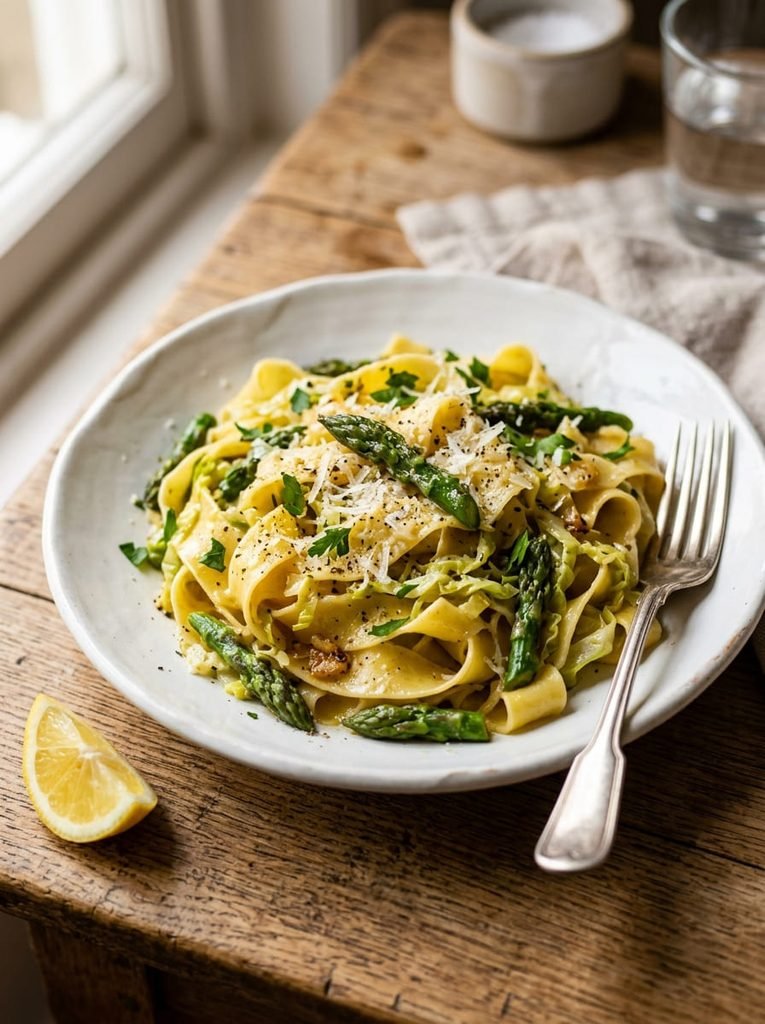
Cabbage and asparagus can turn a basic pasta dish into a colorful vegetable-packed dinner. Cook your favorite pasta while sautéing sliced cabbage, asparagus, garlic, and olive oil in a large skillet. Add the cooked pasta along with a splash of pasta water, Parmesan, lemon juice, and black pepper. Toss everything together until the vegetables are coated and the sauce becomes lightly glossy.
For more protein, add grilled chicken, shrimp, white beans, or crispy chickpeas. You can also make the dish creamy with a spoonful of cream cheese, Greek yogurt, or a small amount of heavy cream. Use whole-wheat or chickpea pasta if you want extra fiber and protein. This is an easy way to use vegetables without making dinner feel like a salad.
5. Cabbage and Asparagus Egg Skillet
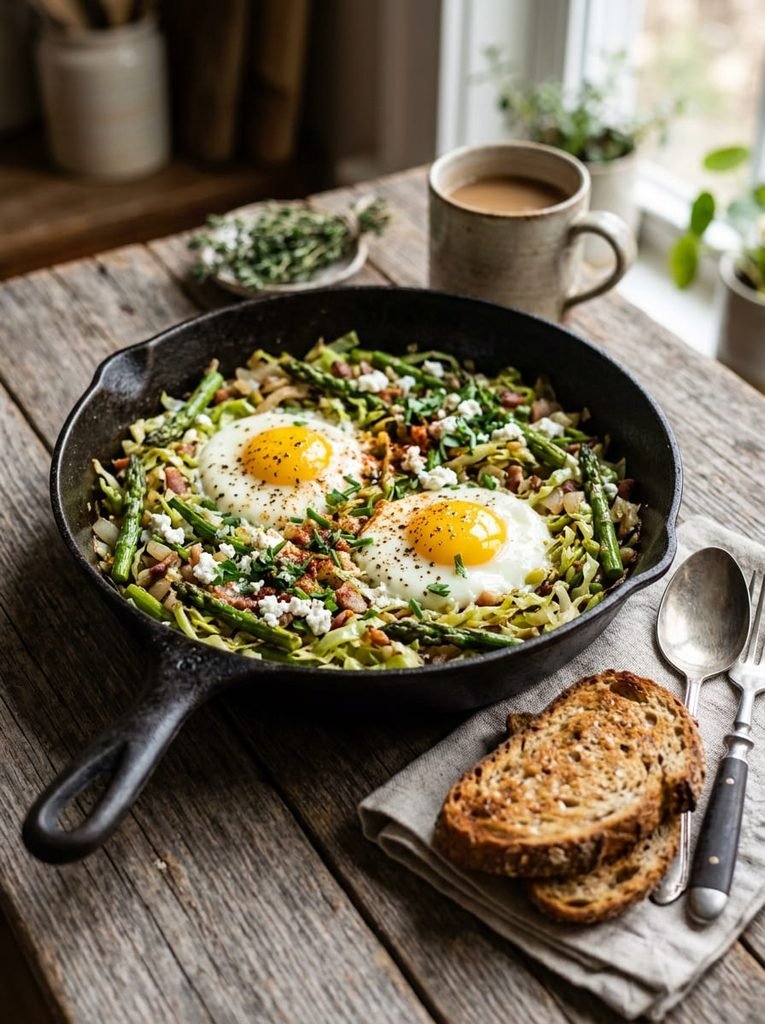
A cabbage and asparagus egg skillet is a simple option for breakfast, lunch, or a light dinner. Sauté chopped cabbage and asparagus with onion and garlic until tender but still slightly crisp. Make small spaces in the vegetables and crack eggs directly into the skillet. Cover and cook until the egg whites are set and the yolks reach your preferred level of doneness.
Season everything with salt, black pepper, paprika, or chili flakes. A little feta, Parmesan, or shredded cheddar can be added before covering the pan. Serve the skillet with toasted bread or roasted potatoes for a more filling meal. It is inexpensive, quick, and easy to customize.
6. Cabbage and Asparagus Chicken Skillet
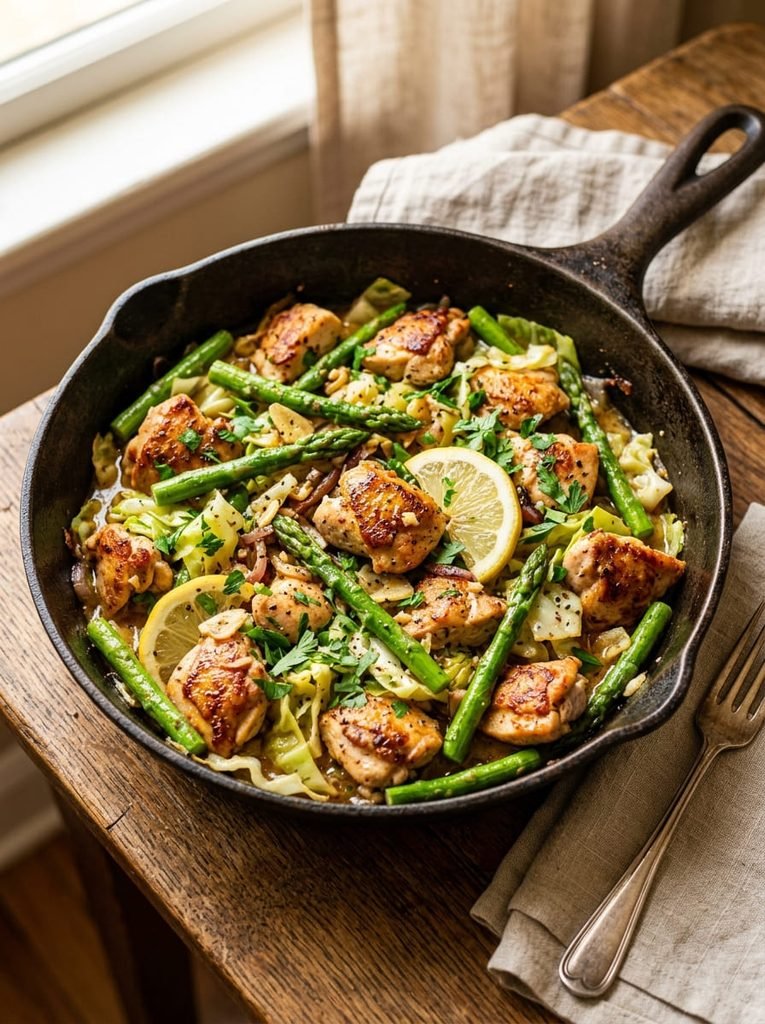
For a more substantial dinner, combine cabbage and asparagus with tender pieces of chicken in one skillet. Brown bite-sized chicken pieces with garlic, paprika, salt, and pepper before adding sliced cabbage. Once the cabbage begins to soften, add asparagus and cook until tender-crisp. Finish with lemon juice and fresh herbs for a simple sauce.
You can make the dish creamy by adding a small amount of cream or softened cream cheese near the end. Alternatively, keep it light with chicken broth, lemon, and olive oil. Serve the skillet with rice, quinoa, or crusty bread. Since everything cooks in one pan, cleanup is quick and easy.
7. Warm Cabbage and Asparagus Salad
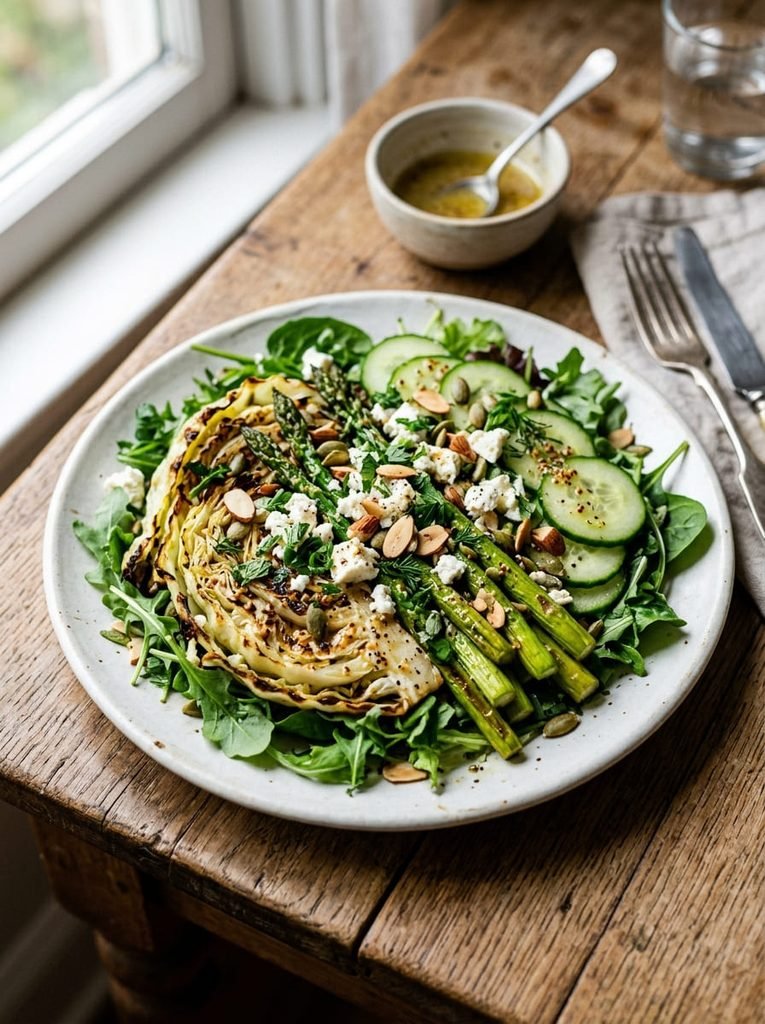
A warm salad is a great way to enjoy cabbage and asparagus without serving them completely raw. Lightly sauté or roast both vegetables, then toss them with mixed greens, sliced cucumber, or fresh herbs. Add a simple dressing made with olive oil, lemon juice, Dijon mustard, honey, salt, and pepper. The warm vegetables slightly soften the greens and create a more satisfying salad.
Add grilled chicken, hard-boiled eggs, chickpeas, or white beans if you want extra protein. Toasted almonds, walnuts, or pumpkin seeds provide a crunchy contrast. Crumbled feta or goat cheese also works beautifully with the vegetables. This salad can be served as a light lunch or alongside a larger dinner.
8. Creamy Cabbage and Asparagus Soup
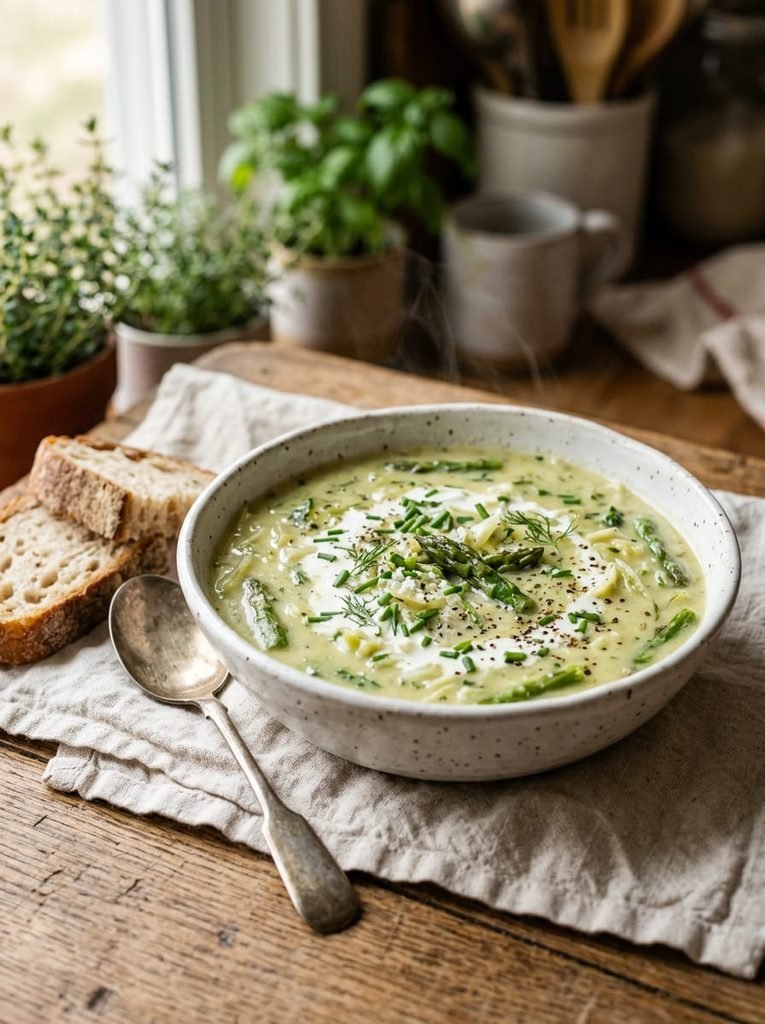
Cabbage and asparagus can also be combined in a comforting vegetable soup. Start by sautéing onion and garlic before adding chopped cabbage, asparagus, potatoes, and vegetable or chicken broth. Simmer until the vegetables are tender, then blend part of the soup for a creamy texture while leaving some pieces whole. Add black pepper, herbs, and a squeeze of lemon before serving.
For a richer soup, stir in a little cream or Greek yogurt after removing the pot from the heat. You can also keep it completely dairy-free by blending some of the cooked potatoes into the broth. Serve with crusty bread or a simple sandwich. This is an especially comforting way to use both vegetables during cooler weather.
9. Cabbage and Asparagus Fried Rice
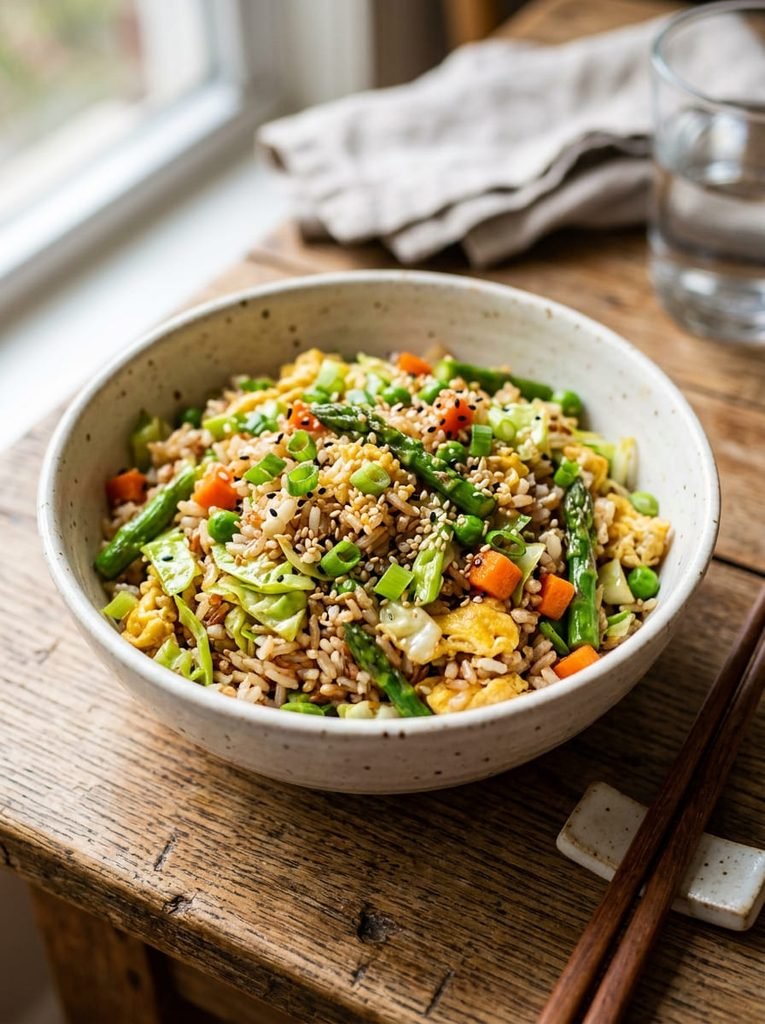
Turn leftover rice into an easy vegetable-packed dinner with cabbage and asparagus. Sauté chopped cabbage and asparagus with garlic, carrots, peas, or green onions before adding cold cooked rice. Push everything to one side of the pan and scramble an egg before mixing it into the vegetables and rice. Add soy sauce and a little sesame oil for classic fried-rice flavor.
Chicken, shrimp, tofu, or edamame can be added for extra protein. The vegetables should remain slightly crisp rather than becoming overly soft. Using cold leftover rice helps prevent the finished dish from becoming mushy. This recipe is particularly useful when you need to use up leftovers.
10. Roasted Cabbage and Asparagus Grain Bowls
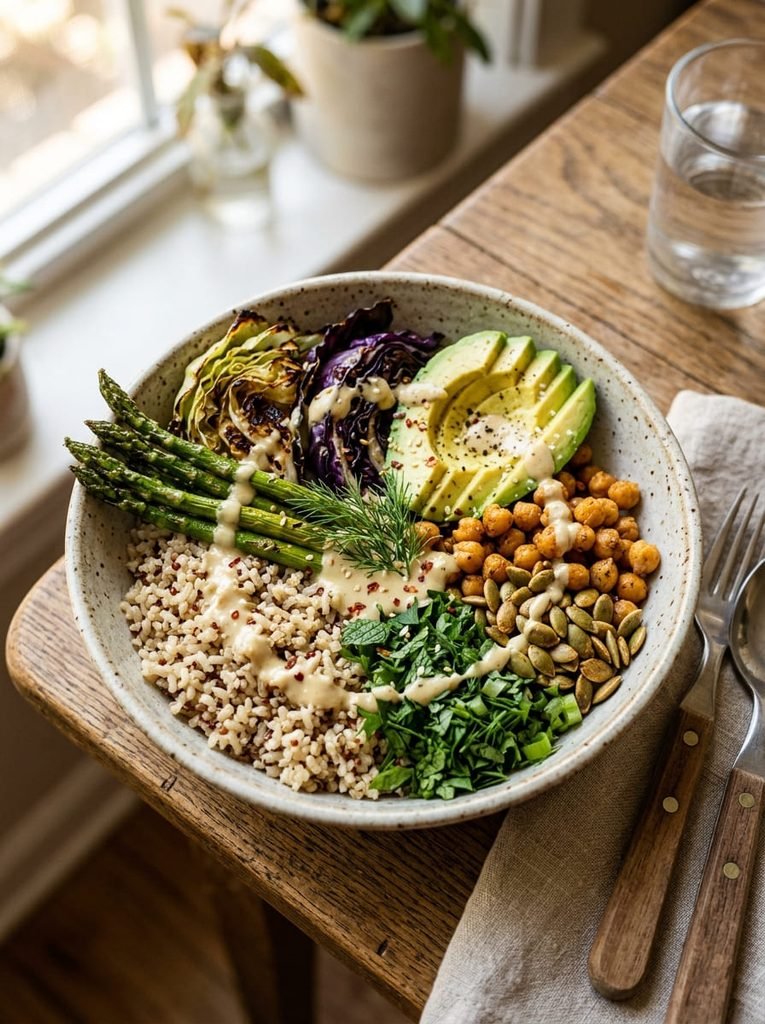
Grain bowls make it easy to build a complete meal around roasted vegetables. Roast cabbage and asparagus with olive oil, garlic, paprika, salt, and pepper while cooking quinoa, brown rice, or farro. Add the warm vegetables to the cooked grain and top with avocado, chickpeas, pumpkin seeds, or grilled chicken. Finish with a lemon-tahini dressing or your favorite yogurt-based sauce.
You can prepare all of the components ahead of time and assemble bowls throughout the week. Sweet potatoes, carrots, or roasted peppers can also be added for more variety. Keep the dressing separate until serving so the vegetables and grains stay fresh. This is an excellent meal-prep option for lunches or quick dinners.
11. Cabbage and Asparagus Tacos
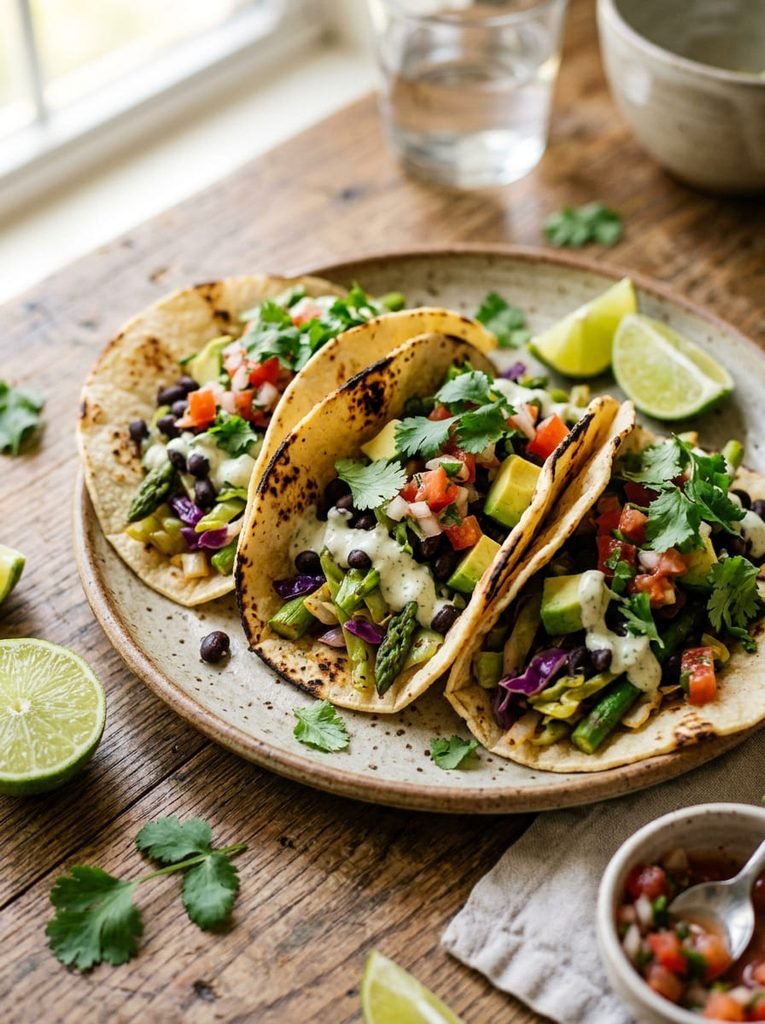
Cabbage and asparagus make an unexpectedly delicious taco filling when seasoned properly. Sauté chopped asparagus and thinly sliced cabbage with cumin, smoked paprika, garlic, and a little chili powder. Spoon the warm vegetables into tortillas and add black beans, avocado, salsa, and fresh cilantro. A squeeze of lime brings all the flavors together.
For extra protein, add grilled chicken, shrimp, or seasoned tofu. You can also top the tacos with a creamy lime sauce made from Greek yogurt and lime juice. Use corn tortillas for a naturally gluten-free option if desired. These tacos are colorful, fresh, and easy enough for a busy weeknight.
12. Cabbage and Asparagus with Garlic Butter
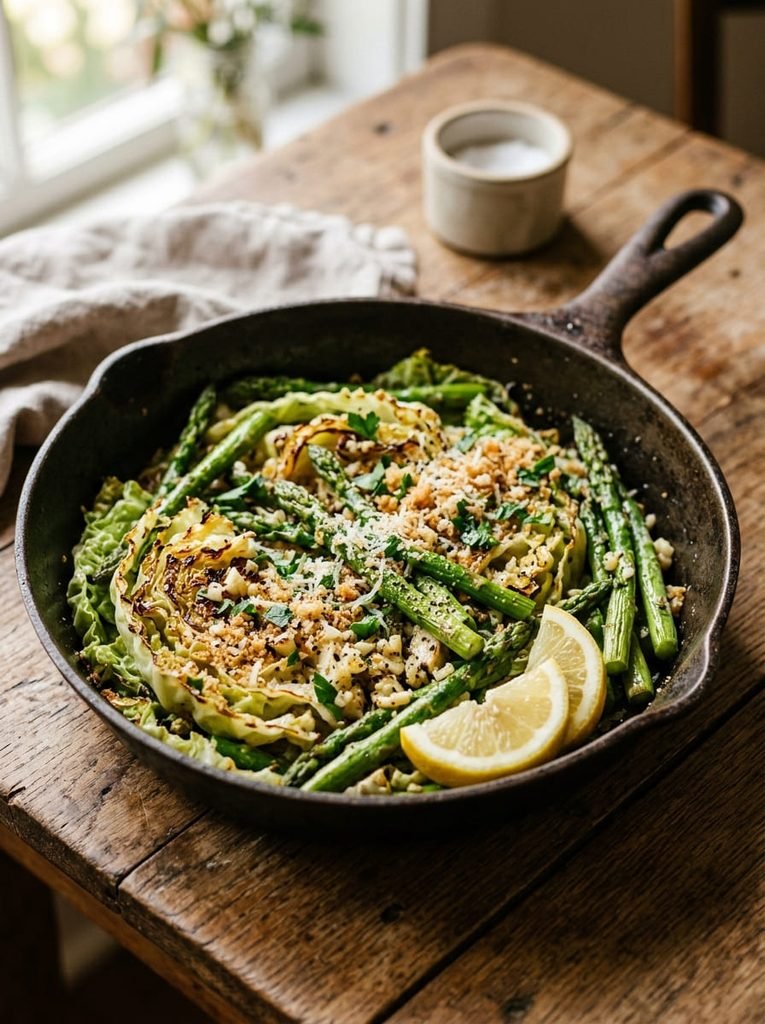
Garlic butter makes a simple vegetable side dish feel much more indulgent. Sauté cabbage and asparagus in a skillet until they begin to soften, then add butter, minced garlic, black pepper, and a little lemon juice. Cook for another minute or two until the vegetables are coated and fragrant. Be careful not to overcook the asparagus so it keeps some texture.
This recipe pairs particularly well with steak, chicken, pork, salmon, or roasted potatoes. For a lighter version, use olive oil instead of butter. A sprinkle of Parmesan or toasted breadcrumbs can add another layer of flavor. It is one of the quickest ways to turn these two vegetables into a flavorful side.
13. Cabbage and Asparagus Noodle Bowl
Noodle bowls are another easy way to combine cabbage and asparagus with a flavorful sauce. Cook rice noodles, soba noodles, or another favorite variety while quickly stir-frying the vegetables with garlic and ginger. Toss everything together with soy sauce, sesame oil, lime juice, and a little honey or maple syrup. Add chili crisp or red pepper flakes if you like spicy food.
Top the bowl with sesame seeds, green onions, cilantro, or crushed peanuts. Tofu, chicken, shrimp, or edamame can make the meal more filling. You can also add carrots, mushrooms, or bell peppers for extra vegetables. The result is a quick dinner with plenty of texture and flavor.
14. Cabbage and Asparagus Frittata
A vegetable frittata is an easy way to turn cabbage and asparagus into a protein-rich meal. Sauté the vegetables with onion and garlic until they are tender, then pour beaten eggs over everything. Add feta, goat cheese, cheddar, or Parmesan before transferring the skillet to the oven if needed. Bake until the eggs are completely set and lightly golden on top.
A frittata can be served warm or at room temperature, making it useful for meal prep. Add fresh herbs such as parsley, dill, chives, or basil for extra flavor. Leftover roasted vegetables can also be incorporated into the mixture. Serve with a simple green salad and toasted bread for an easy lunch or dinner.
15. Cabbage and Asparagus with Balsamic Glaze
For a slightly sweet and tangy vegetable side, try roasted cabbage and asparagus with balsamic glaze. Roast the vegetables with olive oil, salt, and pepper until the edges are caramelized. Drizzle a small amount of balsamic glaze over the finished vegetables just before serving. The acidity and sweetness complement the earthy flavor of asparagus and the natural sweetness of roasted cabbage.
Add crumbled goat cheese or feta for a creamy contrast. Toasted walnuts or pecans can provide extra crunch. This dish works especially well alongside roasted chicken, pork tenderloin, or grilled salmon. It is simple enough for a weeknight but attractive enough for a dinner gathering.
Tips for Cooking Cabbage and Asparagus Together
The most important thing to remember is that cabbage and asparagus do not always need exactly the same cooking time. Thin asparagus cooks relatively quickly, while thicker cabbage pieces can take longer to become tender. When roasting, cut the cabbage into smaller pieces or give it a head start before adding the asparagus. When stir-frying, add cabbage first and asparagus slightly later so both vegetables retain their best texture.
Seasoning can also completely change the personality of these vegetables. Garlic, lemon, Parmesan, ginger, soy sauce, sesame oil, paprika, cumin, and fresh herbs are all excellent choices. For a lighter flavor, use olive oil and citrus, while creamy sauces can make the vegetables feel more comforting. Do not be afraid to experiment with different combinations depending on the main dish.
What Goes Well with Cabbage and Asparagus?
Cabbage and asparagus pair particularly well with chicken, salmon, shrimp, steak, eggs, tofu, beans, and chickpeas. For grains, try rice, quinoa, farro, couscous, or noodles depending on the recipe. Fresh lemon, lime, garlic, ginger, Parmesan, feta, sesame seeds, and herbs can add flavor without requiring complicated sauces. These combinations make it easy to transform the vegetables into complete meals.
If you are planning several meals for the week, roast a large batch of cabbage and asparagus at once. Use part of it as a side dish, then turn the leftovers into grain bowls, tacos, pasta, fried rice, or omelets. This approach saves cooking time and gives the same vegetables completely different flavors throughout the week.
Final Thoughts
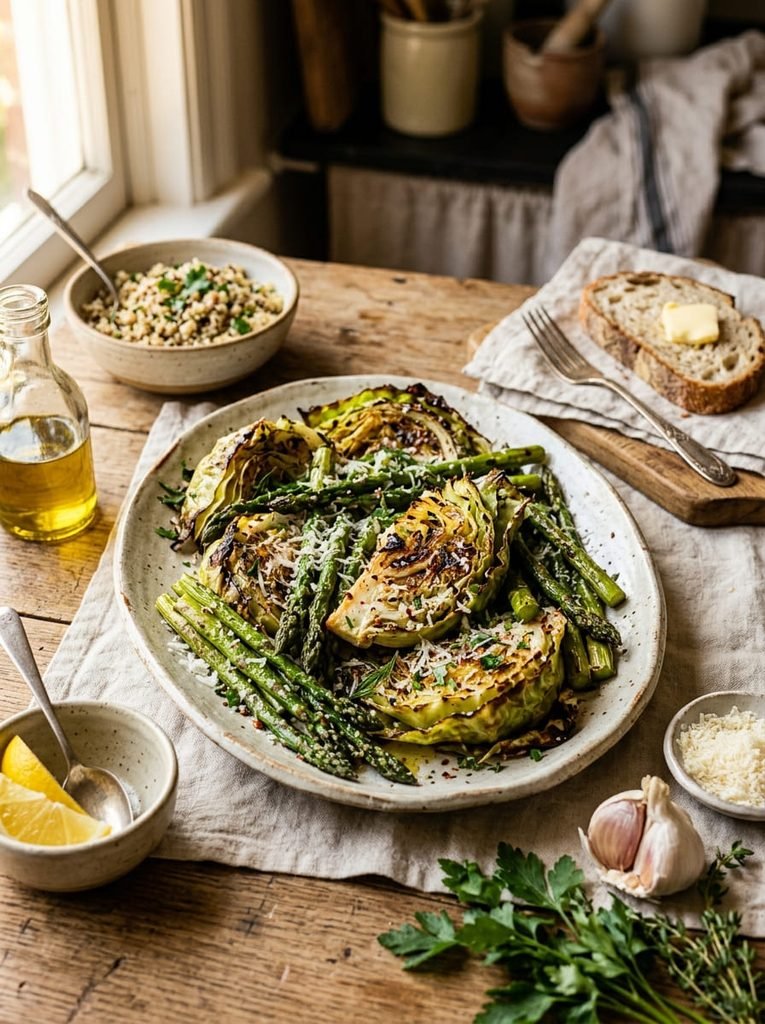
These cabbage and asparagus recipes show just how versatile two simple vegetables can be. You can roast them with garlic and lemon, toss them into pasta, stir-fry them with a savory sauce, combine them with eggs, or build a complete grain bowl around them. Adding chicken, shrimp, tofu, beans, or eggs can easily turn the vegetables into a satisfying main meal. With a few basic seasonings, there are plenty of ways to keep the combination interesting.
Whether you are looking for a healthy side dish, a quick weeknight dinner, or a simple meal-prep recipe, cabbage and asparagus are an excellent starting point. Keep the cooking time short when you want crisp vegetables, or roast them longer for deeper caramelized flavor. Try a few different sauces and seasonings to find your favorite combination. Once you start experimenting, these two vegetables can become a regular part of your easy recipe rotation.