You know that feeling when you open the fridge at 5:30pm, see a pack of chicken breasts, and think please, not again? Yeah. This is for you. These aren’t fancy restaurant imitations — they’re the real weeknight dinners that people actually make, eat, and text their friends about.

—
1. Why Your Oven Is the Most Underrated Tool in Your Entire Kitchen
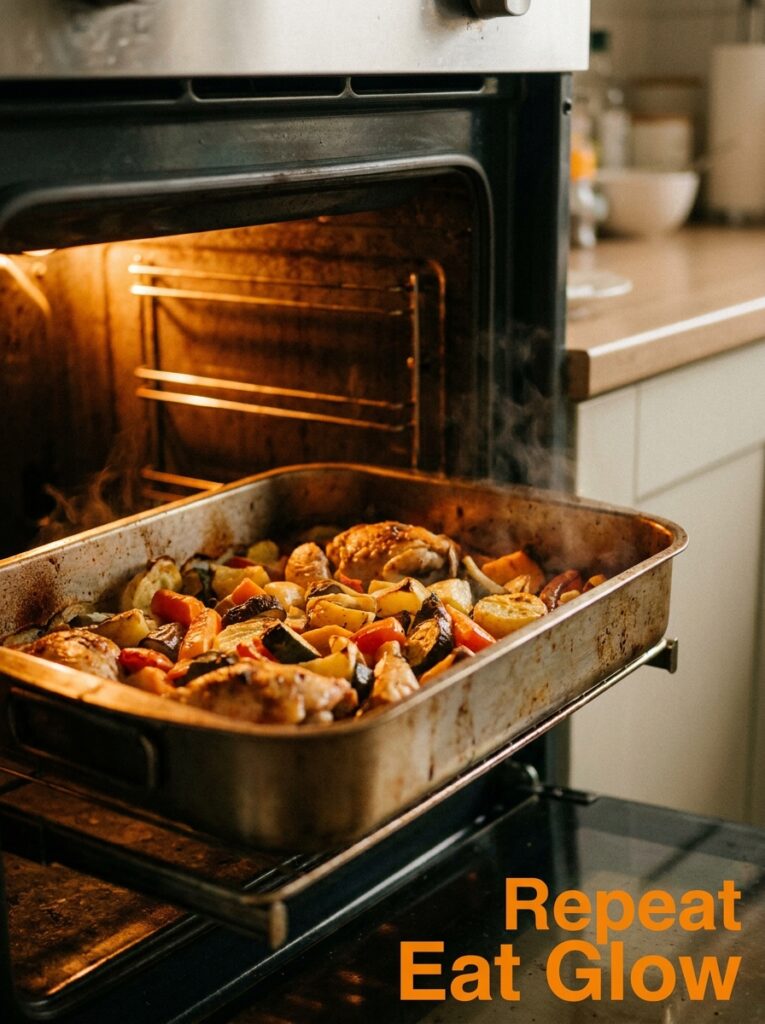
Seriously. The oven does the work. That’s the whole point. You season something, slide it in, set a timer, and go fold laundry or help with homework or just sit down for twenty minutes without anyone needing anything from you. That’s the dream, and baked chicken delivers it consistently.
But here’s what people miss — the oven isn’t just convenient, it’s BETTER for chicken in a lot of ways. You get even heat from all sides. You don’t have to babysit a pan. The exterior can go golden and a little crispy while the inside stays genuinely juicy, not dried out and sad. Stovetop chicken requires attention. Oven chicken just needs you to show up and season it properly.
I’d been pan-frying chicken for years before someone showed me a simple sheet pan recipe, and I genuinely felt a little embarrassed at how good it was. Less effort, better result. And I didn’t have to stand over a spitting skillet in my good jeans.
The one thing that makes oven chicken go wrong? Temperature. Too low and it steams, goes pale and a bit rubbery. Too high without the right prep and the outside burns while the inside’s still pink. Most recipes that work sit between 375°F and 425°F depending on cut and method, and getting that range right changes everything.
“The oven doesn’t just cook chicken. It makes dinner happen without you.”
—
2. The Cut That Makes or Breaks Your Weeknight Dinner (It’s Not What You Think)
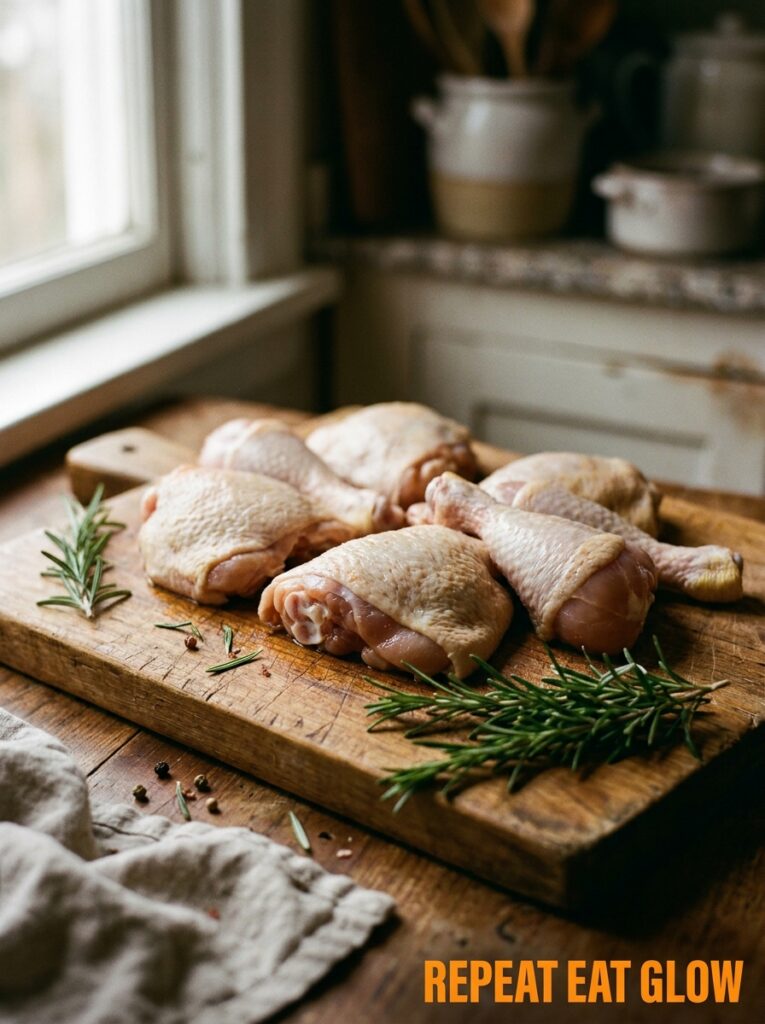
Everyone defaults to boneless skinless chicken breasts. And look, they’re fine. They’re convenient and lean and you probably have three of them in the fridge right now. But bone-in, skin-on thighs? That’s where baked chicken gets genuinely exciting.
Thighs have more fat running through the meat, which means they forgive you when dinner runs late. You forget about them for an extra ten minutes — they’re still good. You put them in slightly under-seasoned — the fat carries whatever flavor you DID add. They’re basically doing the heavy lifting for you.
Not gonna lie, I resisted thighs for ages because I thought breasts were the “healthy” choice and thighs were somehow cheating. That’s not really how it works. But anyway, the flavor difference is real. Thighs have a deeper, more savory taste even before you’ve done anything to them. Season them with literally just salt, pepper, and a little olive oil and they’ll come out tasting like you spent time on dinner.
Drumsticks are another underrated option, especially if you’re feeding kids or want something you can eat with your hands without any pretense. They go crispy in the oven in a way that feels almost like fried chicken. Sheet pan drumsticks at 425°F for 40 minutes — done.
Breasts do have their place, though. They’re great for recipes with creamy sauces or cheesy toppings where the leaner meat absorbs the surrounding flavors. We’ll get to those.
—
3. The Salt-First Trick That Professional Cooks Actually Use at Home
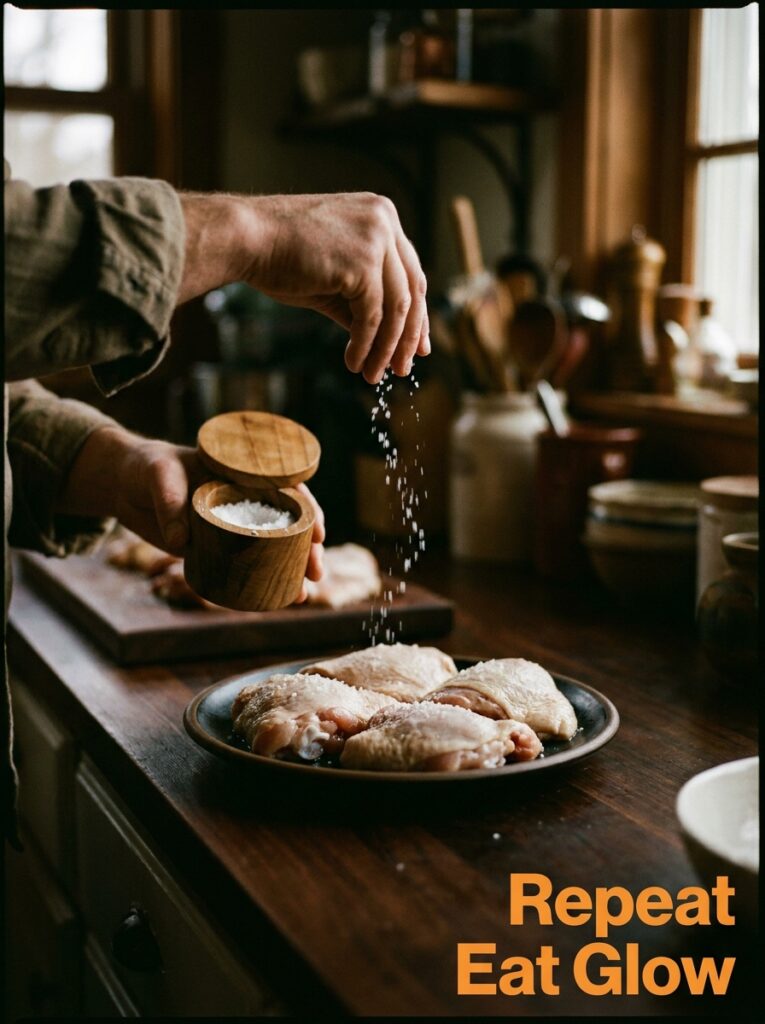
Dry brining. Sounds fancy. Isn’t. You literally just salt your chicken and leave it in the fridge for a while — at least 30 minutes, ideally a few hours, overnight if you’re feeling organized (ha).
What’s happening is simple. The salt draws out a tiny bit of moisture initially, then gets reabsorbed into the meat along with that moisture. It seasons the chicken from the inside, not just the surface. And it slightly breaks down the protein structure in a way that makes the final texture noticeably better — more tender, less dense, less like you’re chewing through something.
I started doing this maybe two years ago after reading about it in some cookbook and forgetting about it, then re-reading it, then finally actually trying it, and honestly the difference was obvious immediately. Chicken I’d made a hundred times before suddenly tasted like I’d done something special. My husband thought I’d used a different recipe.
You don’t need a specific amount — just season generously on both sides, more than feels comfortable if you’re not used to it. Go from there. After you’ve done it a few times you’ll know instinctively.
This is probably the single biggest free upgrade to any baked chicken recipe. It costs nothing except a little planning.
—
4. Lemon Herb Chicken Thighs That’ll Become Your Most-Made Recipe

Okay, let’s get into actual recipes. This one first because it’s the one I make constantly, the one I’ve given to approximately fifteen people who’ve all adopted it as their own.
Four to six bone-in skin-on thighs. Juice of two lemons — not bottled, please, just two lemons. Olive oil, three garlic cloves minced, dried oregano, fresh thyme if you have it dried if you don’t, salt, pepper, and a pinch of red pepper flakes. That’s it. Mix everything together, coat the chicken, let it sit for at least 30 minutes, roast at 400°F for 40-45 minutes until the skin is crackly and golden and the juices run clear.
The smell when it comes out. The skin that’s gone almost lacquered, shiny and crisp. The way the lemon has sort of caramelized around the edges of the pan into something a little sticky and concentrated. You’ll want to serve this with something that soaks up the pan juices — crusty bread, roasted potatoes, rice, whatever you’ve got.
Side note — if you can, flip the chicken skin-side DOWN for the first 20 minutes, then flip it up for the remaining time. The skin gets even crispier this way. I don’t always do this when I’m rushing, and it’s still great, but when I do it the result is noticeably better.
“Pan juices are free sauce. Use them.”
—
5. The One-Pan Trick That Makes Cleanup Almost Painless
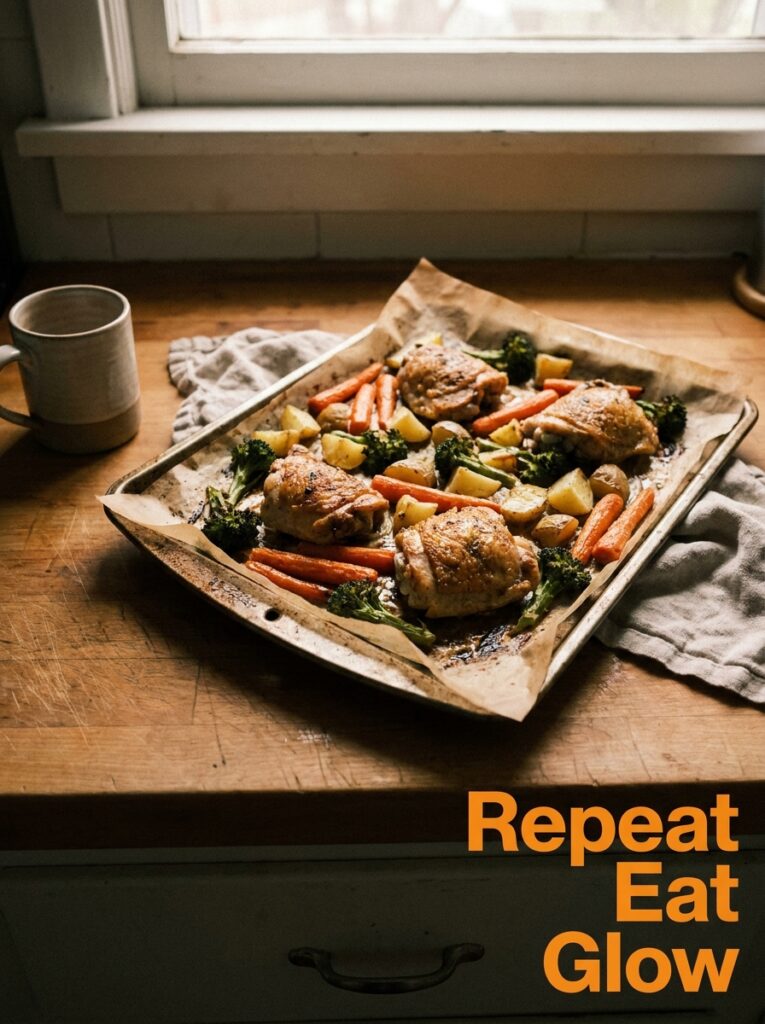
Sheet pan chicken with vegetables. The whole dinner on one pan, one oven, done at the same time. This is not a new concept but there’s a reason it shows up on every food blog, Pinterest board, and “what’s for dinner” list across the country — because it WORKS and it doesn’t make a mess.
The key is cutting your vegetables to match the cooking time of your chicken. Dense vegetables like potatoes, carrots, and beets need to go in earlier or be cut smaller. Faster-cooking things like courgette (that’s zucchini for my US readers), cherry tomatoes, and asparagus go in during the last 15-20 minutes or they’ll go to mush.
So for bone-in thighs at 400°F, I’ll start the potatoes and chicken together. Cut potatoes into one-inch chunks, toss with olive oil and seasoning, spread them around the chicken, everything goes in at the same time. About 20 minutes before it’s done I’ll scatter cherry tomatoes and some olives if I’m feeling Italian about the whole situation.
The vegetables pick up the chicken fat and pan juices as they cook. Everything ends up sort of flavored by everything else. It’s accidentally elegant without any extra effort.
One pan to wash. Dinner in 45 minutes. Not gonna lie — this is probably in my rotation at least twice a week.
—
6. Creamy Garlic Baked Chicken Breasts for When You Need Comfort, Fast

This is the one that tastes like it came from a restaurant and takes about 15 minutes of actual effort. You need chicken breasts, heavy cream (or double cream if you’re in the UK), garlic, chicken stock, dijon mustard, and parmesan. That’s basically it.
Season and sear the breasts in an oven-safe pan for 3 minutes per side — just to get some color, not to cook through. Remove them, quickly make a pan sauce with minced garlic cooked in butter, splash of white wine if you want, chicken stock, heavy cream, dijon, and a handful of parmesan. Stir it all together, put the chicken back in, then the whole pan goes in the oven at 375°F for about 20 minutes.
What comes out is chicken in this thick, creamy, slightly tangy sauce that’s pooled around everything like it’s been cooking for hours. It hasn’t. The sauce actually finishes cooking in the oven while the chicken does too, which concentrates it and marries all the flavors together in a way you can’t get just doing it on the stove.
Serve it over mashed potatoes or egg noodles or honestly just with bread, because the sauce is the whole point.
—
7. Honey Garlic Soy — The Marinade That Works on Literally Every Cut
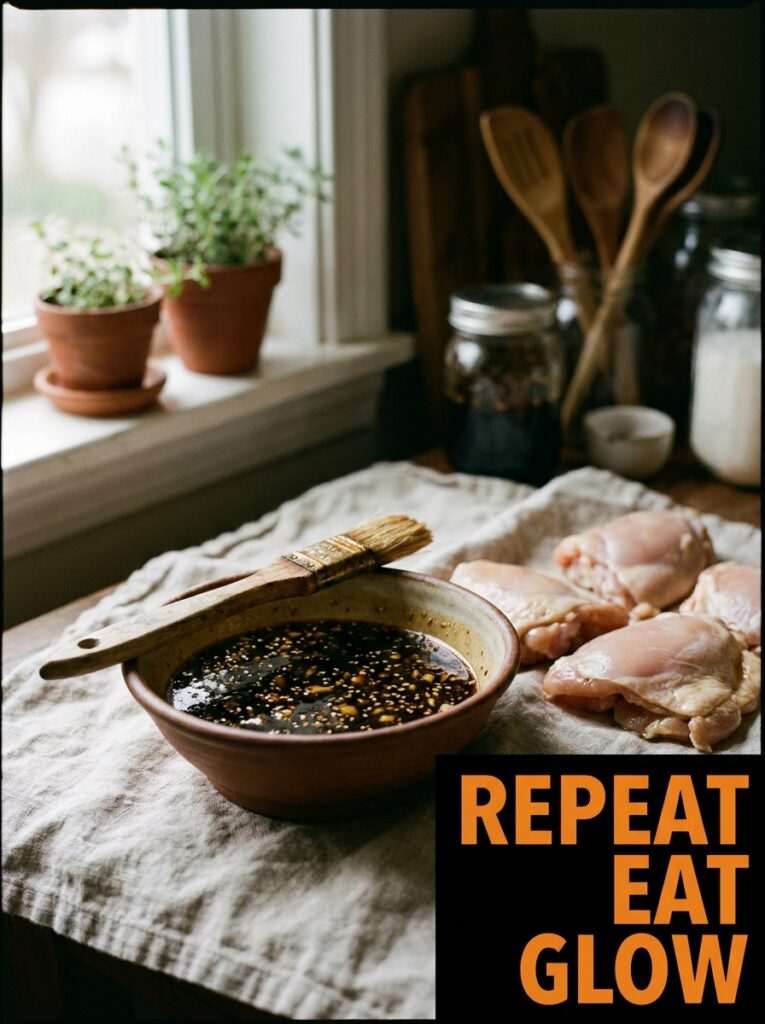
There’s a category of recipe that I think of as “foolproof” — the kind where the flavor combination is so good and so forgiving that it almost doesn’t matter what you do with it, it’s going to taste right. Honey garlic soy is that.
Three tablespoons soy sauce. Two tablespoons honey. Four cloves of garlic minced. Tablespoon of sesame oil if you have it, a teaspoon of rice vinegar if you want, ginger if you’re feeling ambitious. Whisk it together and pour it over literally any piece of chicken.
Drumsticks: 40 minutes at 425°F, brush with extra marinade halfway through. Thighs: same. Breasts: 25-30 minutes at 400°F. The honey caramelizes and you get this dark, sticky, slightly sweet exterior that looks like it took skill and didn’t.
The thing I love about this marinade is that it also works as a weeknight strategy. Make a big batch of it on Sunday, pour it over whatever chicken you have, and keep it in the fridge for up to 24 hours. When Tuesday happens and you have zero mental energy, the flavor is already done. Just roast and eat.
“A good marinade on Monday means you don’t have to think on Tuesday.”
—
8. The Spice Rub That’s Better Than Any Bottle You’ll Buy at the Store
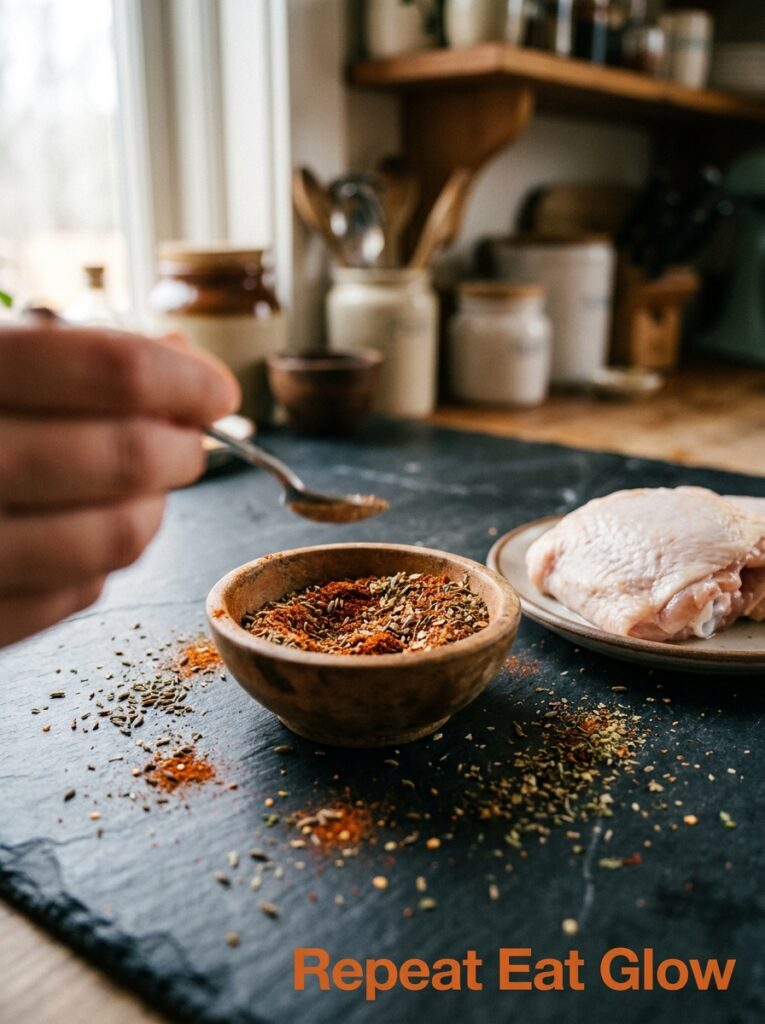
Making your own spice rub takes literally three minutes and tastes dramatically better than anything pre-made. I say this as someone who used to buy every spice mix in the supermarket aisle thinking it was saving time.
My go-to: two teaspoons smoked paprika, one teaspoon garlic powder, one teaspoon onion powder, half teaspoon cayenne (adjust to preference), one teaspoon dried oregano, one teaspoon cumin, salt and black pepper. Mix it all together and coat your chicken generously before baking.
The smoked paprika is the key player here — it gives the chicken this deep reddish color and a smokiness that makes people ask what you did to it. Combined with cumin it gets a little earthy, almost like something you’d order at a BBQ place. But it’s just chicken thighs in your oven at 425°F.
This rub keeps in a small jar for months. I usually make three or four times the quantity and keep it near the stove so it’s there when I need it. Ten seconds of reaching instead of three minutes of measuring — that’s the kind of “meal prep” I can actually sustain.
Rub the chicken, a little oil to help it stick, in the oven it goes. Done.
—
9. Stuffed Chicken Breasts When You Want to Actually Impress Someone
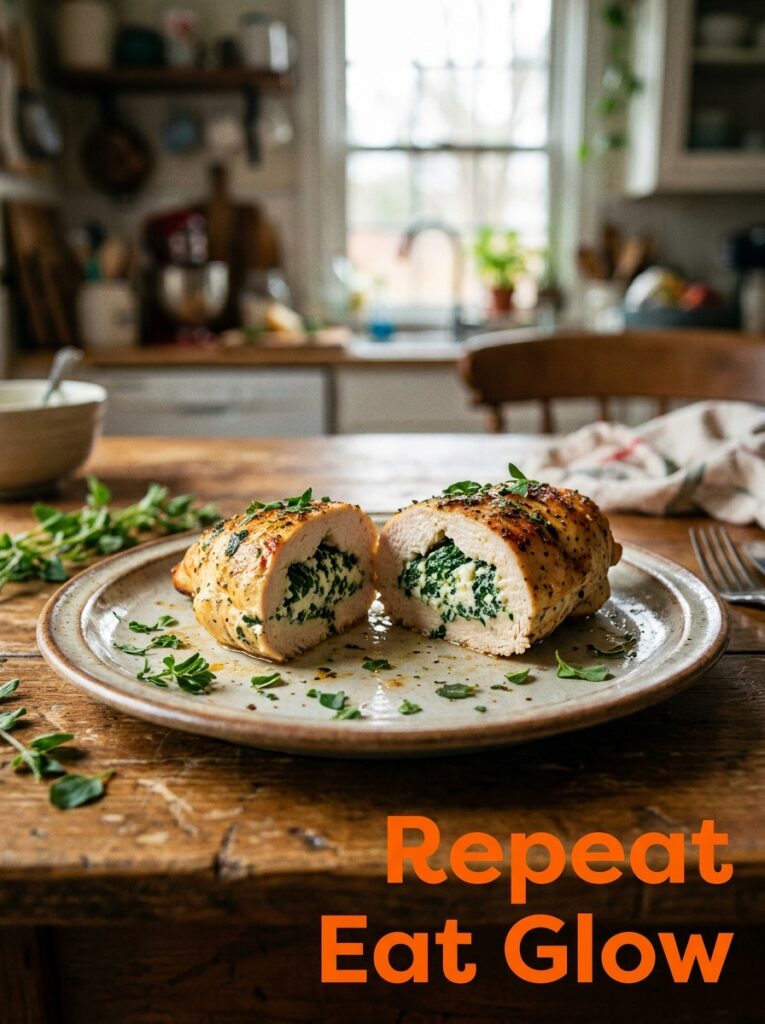
Stuffed chicken sounds complicated. It’s one of those things that looks elaborate on a plate and feels like you must have spent hours. You didn’t. It’s actually forgiving once you know the trick.
Butterfly the chicken breast — just cut it horizontally most of the way through and open it like a book. Season the inside, add your filling, fold it closed, and either secure with toothpicks or just press it closed and put it seam-side down in the pan. The oven does the rest.
Filling combinations that work really well: spinach and cream cheese with a little garlic, sun-dried tomatoes and mozzarella, brie and caramelized onion, or feta with olives and roasted red peppers if you want something Mediterranean. Each one tastes completely different even though the method is identical.
At 375°F they take about 25-30 minutes. The filling melts and the edges sort of seal during cooking. Cut into one when you pull it out and watch all that melted cheese and filling — it’s genuinely satisfying every single time. This is the recipe to make when you have guests coming midweek and you haven’t had time to plan anything elaborate.
—
10. What to Do With the Leftovers (Better Than the Original Dinner, Honestly)
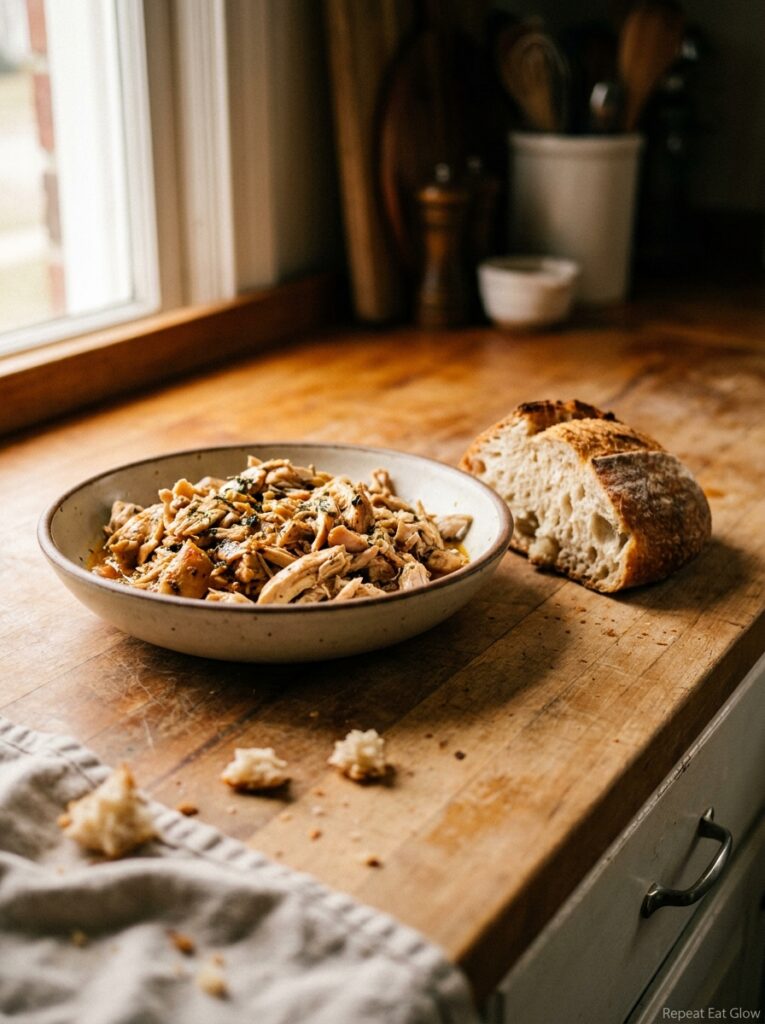
Cold baked chicken the next day is, I would argue, one of life’s quieter pleasures. But beyond just eating it cold — which is genuinely good, especially the thighs — there are a few quick leftover moves worth knowing.
Shred it and use it in a chicken and vegetable soup. The already-seasoned meat adds so much more flavor than plain poached chicken. Roughly chop it and toss with pasta, a little olive oil, some cherry tomatoes, and whatever herbs you have — dinner in eight minutes. Use it in a sandwich with something creamy and something pickled, or in a grain bowl with roasted vegetables and tahini.
Leftover baked chicken also freezes well if you strip it off the bone while it’s still slightly warm. Portion it into freezer bags in meal-sized amounts. Future-you opening the freezer on a Wednesday night is going to feel so sorted.
The bones — don’t throw them out. Cover them in water with a halved onion, some celery, peppercorns, and a bay leaf. Simmer for an hour and a half. You’ve got chicken stock, which honestly makes everything taste better.
—
11. Temperature Is the Only Thing That Actually Matters for Safe, Juicy Chicken
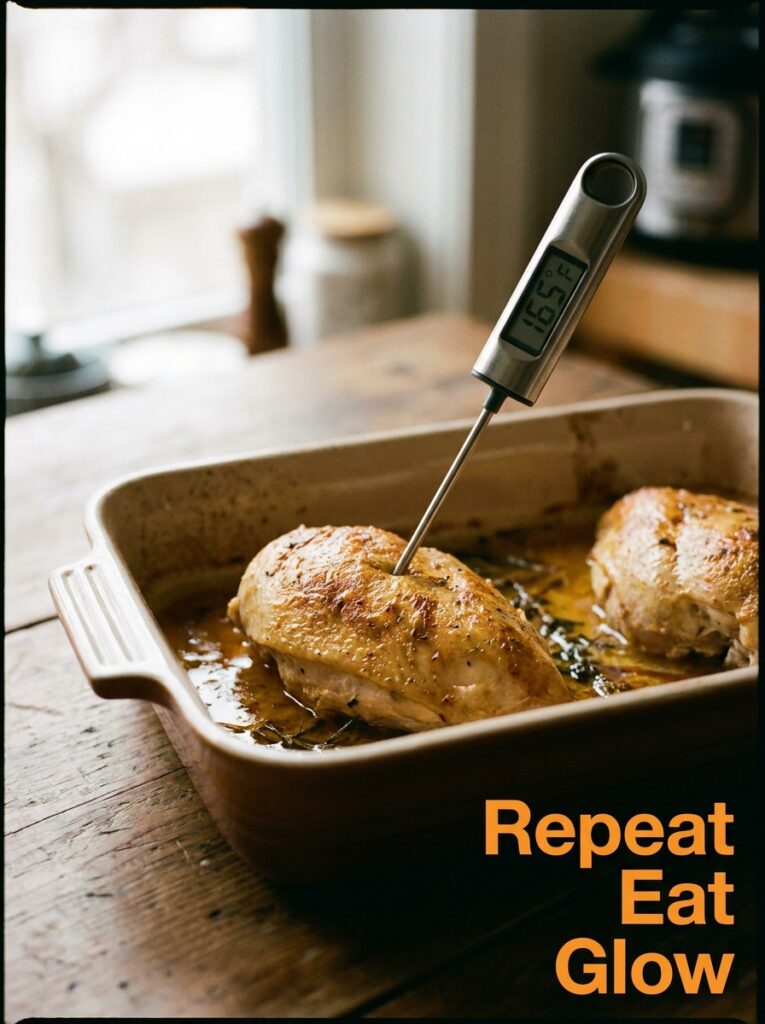
I know the “cook it to 165°F” rule and so do you. But here’s the thing — if you’re pulling breasts at exactly 165°F straight from the oven, they’re probably going to keep cooking while they rest and end up slightly over. Pull them at 160°F and tent with foil for five minutes. They’ll carry over to 165°F and they’ll be noticeably juicier.
Thighs are more forgiving — they can go to 175°F or even a bit higher and they’re still tender because of the fat content. Some people prefer them at 185°F, where the connective tissue has fully broken down and the meat pulls apart. Both are safe, both are good. Preference is personal.
Buy a cheap digital meat thermometer. Not an expensive one — a basic instant-read thermometer from any kitchen shop or Amazon for around $15 will change the way you cook chicken permanently. No more cutting into it and guessing. No more rubbery overcooked meat because you were nervous. Just read the temperature and know.
It’s the single most useful kitchen tool for anyone who cooks chicken regularly.
—
12. The Dinner That Happens in Your Head Before It Happens in the Oven

Meal planning is boring to talk about but genuinely changes how weeknight dinners feel. And with baked chicken, it’s almost too easy — most of these recipes can be prepped in the morning or even the night before.
Season the chicken the night before, stick it in the fridge. Marinate it Sunday, cook it Tuesday. Chop the vegetables while you’re making coffee and store them in a container in the fridge. The actual oven time is usually 30-45 minutes regardless, but removing the thinking from the equation? That’s where the weeknight meal stops feeling like a chore.
Keep a rotation of five or six baked chicken recipes you actually like. Write them down or save them, whatever works for you. With that, you’ve got a whole month of dinners where you basically already know what’s happening. The lemon herb thighs one week, the honey garlic the next, the sheet pan situation on the week when life is messy.
Simple systems for people who didn’t become chefs and don’t want to start now. That’s all this is.
—
❓ FAQ
Q: How long does it take to bake chicken breasts at 400°F? A: Boneless skinless chicken breasts typically take 22-30 minutes at 400°F depending on thickness. Thicker breasts (around 8-9 oz) will need closer to 30 minutes. Always check with a meat thermometer — pull them at 160°F and let them rest for five minutes.
Q: Can I bake frozen chicken without thawing it first? A: You can, but it’ll take 50% longer than thawed chicken and you won’t get as good a sear or browning on the exterior. It’s safe (the USDA says so), but the texture isn’t as good. A quick thaw in cold water for an hour makes a real difference to the final result.
Q: Why is my baked chicken always dry? A: Usually it’s because it’s overcooked. Boneless breasts go from perfect to dry very quickly. Use a meat thermometer, don’t go past 165°F, and let the chicken rest for at least five minutes before cutting into it so the juices redistribute. Dry-brining beforehand also helps significantly.
—
💭 Final Thoughts

Baked chicken isn’t a compromise. It’s not what you make when you’ve run out of ideas — it can be genuinely the dinner you’re most excited about, if you’ve got the right recipe and a bit of seasoning confidence. These twelve ideas are starting points, not rules. Swap a herb, try a different spice, use what you already have in the cupboard.
What would change about your weeknight cooking if dinner just… didn’t feel hard?
