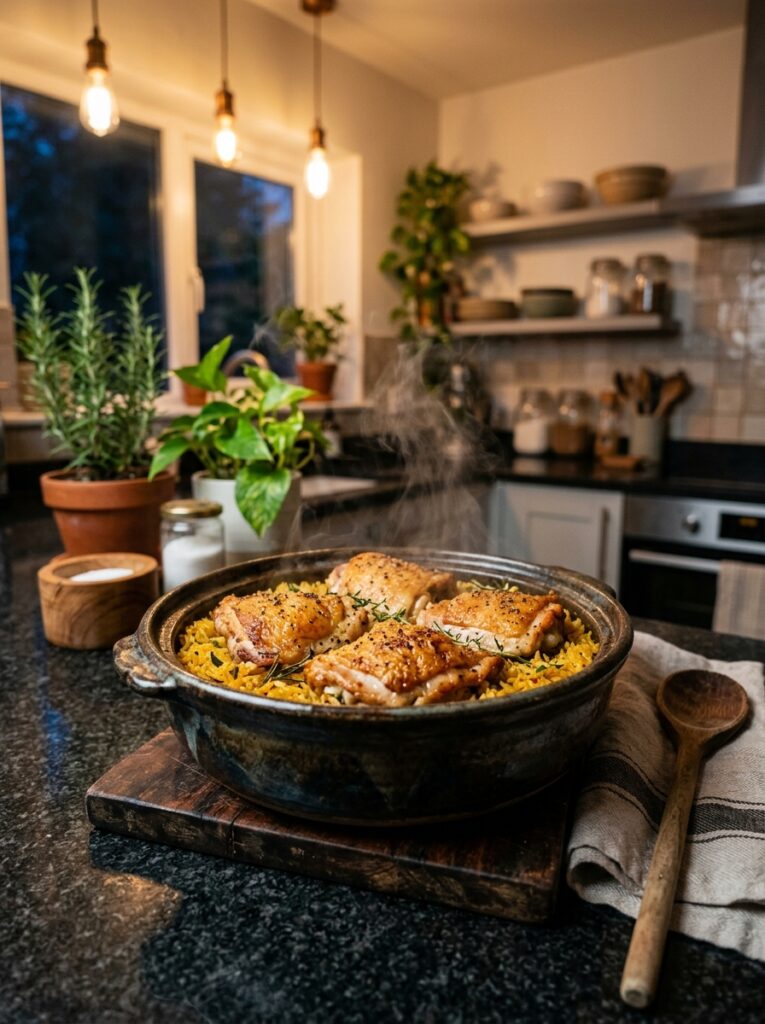
My neighbor knocked on the door last winter while I had one of these in the oven. She stood in my kitchen for ten minutes, not to talk, just to smell it. That’s the whole review right there.
—
1. Why This Is the One Dinner That Actually Gets Easier Every Time You Make It
I’ll be upfront: I’m not someone who enjoys cooking on weeknights. Not even a little. The whole “therapeutic chopping” thing people talk about — I don’t have that. What I do have is a deep, abiding appreciation for a meal that goes into one dish and comes out looking like I tried.
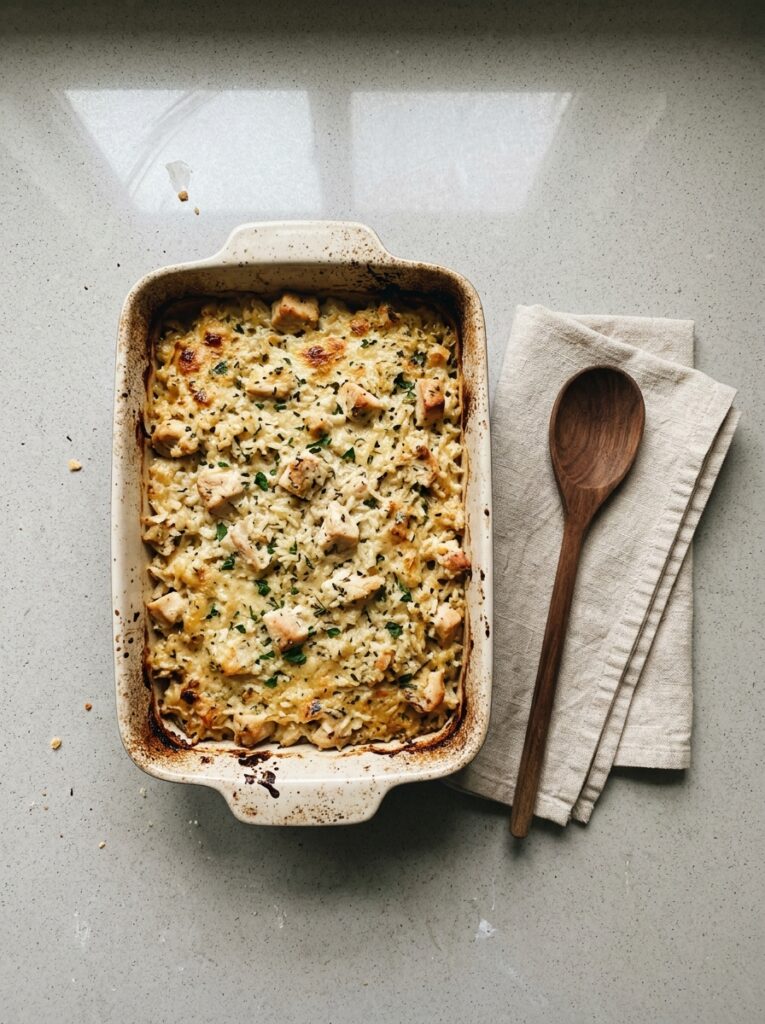
Chicken rice casserole is that meal. And it’s not just easy in a “dump everything in a pot” kind of way, it’s easy in a way that gets better the more you understand it. Once you know the basic ratio — roughly one part rice to two and a half parts liquid, some kind of fat, some kind of seasoning, and bone-in chicken pieces that won’t dry out — you stop following recipes entirely. You just cook.
The other thing? It’s genuinely hard to wreck. Slightly too much broth? Fine, it’ll be saucy. Forgot to add the garlic? Someone will survive. There’s a forgiveness built into casseroles that no other dinner format really offers.
That’s why people keep coming back to it.
2. The Rice That Makes or Breaks the Whole Thing (And It’s Not What You Think)
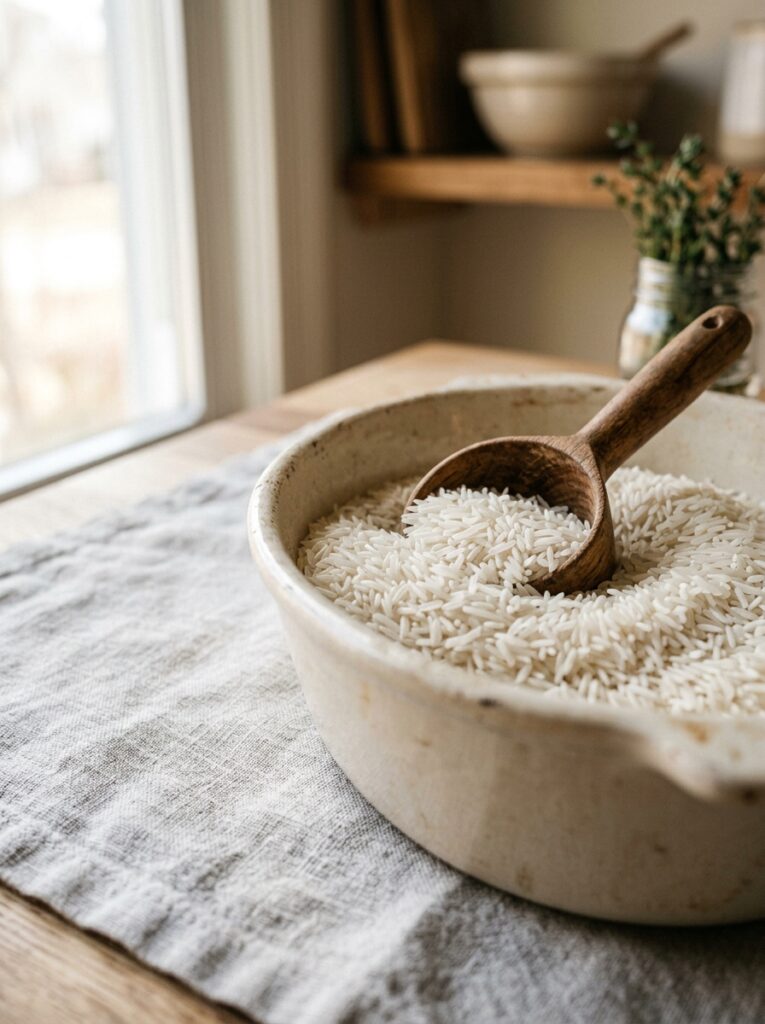
Long-grain white rice. That’s the answer, and I’ll defend it.
Not short-grain, not arborio, definitely not the kind that says “5 minutes” on the packet. Those either turn to mush or sit there half-raw and confused by the oven environment.
Long-grain white rice absorbs liquid slowly and evenly, which is exactly what you need in a covered dish baking at 350°F/175°C for the better part of an hour. It comes out fluffy with just enough bite. Brown rice CAN work — but you need significantly more liquid and more time, and honestly the result is nuttier and denser in a way that doesn’t always suit the creamy sauce situation you’re usually building here.
Jasmine rice, side note, is actually lovely in this. It adds a subtle floral thing that feels a bit unexpected but really good. I discovered this by accident when I grabbed the wrong bag, and now I do it on purpose.
“Long-grain white rice isn’t glamorous. It’s just right.”
3. The Case for Bone-In Thighs Over Everything Else
I used to use chicken breasts. For years. I’d wonder why my casserole always felt slightly dry in the middle, like eating something that had once been good.
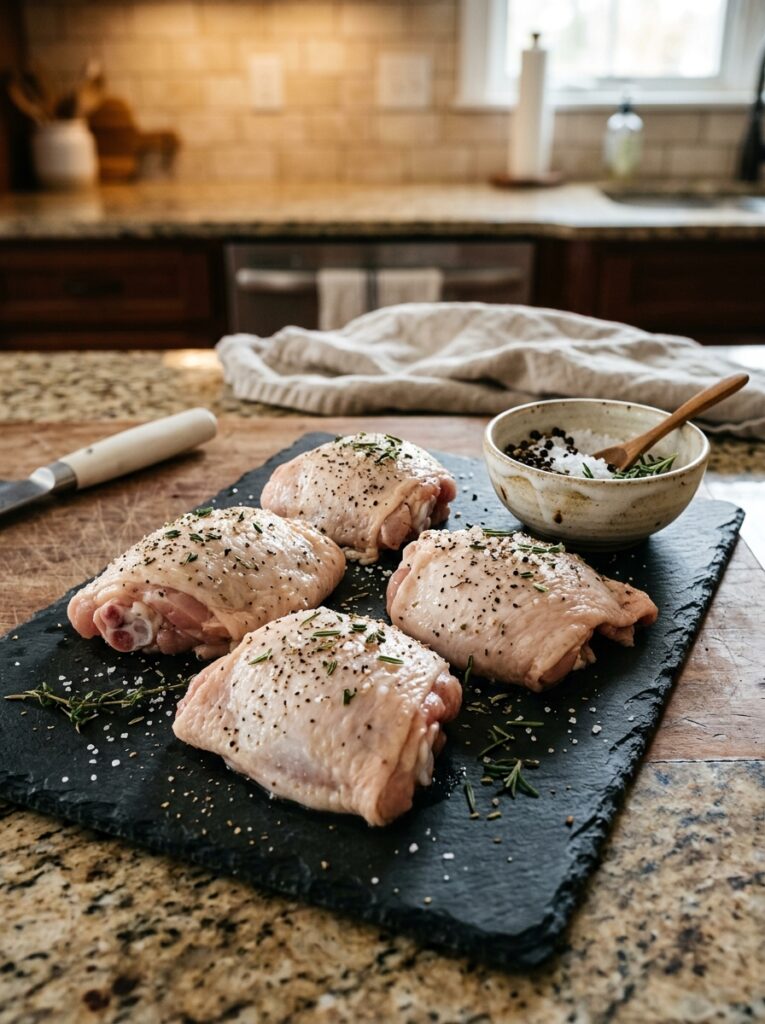
Bone-in, skin-on thighs changed everything.
Here’s why: thighs have more fat, and fat stays moist at oven temperatures that would make a breast weep. The bone also conducts heat differently — more slowly, more evenly — so the whole piece cooks through without a dramatic moisture loss. And the skin? It crisps up on top while the underside essentially braises into the rice. It’s doing two jobs at once.
Drumsticks also work brilliantly if you’re feeding kids or just want something easier to pull apart. Bone-in breasts are fine if that’s your preference, but check them earlier — they’ll hit temperature faster and they don’t have the same fat insurance the thighs do.
The one thing I’d say: don’t skip the browning step. Even two or three minutes per side in a hot pan before everything goes into the baking dish makes the whole thing taste like you actually cooked, not just assembled.
4. What Liquid You Use Is a Whole Personality Decision
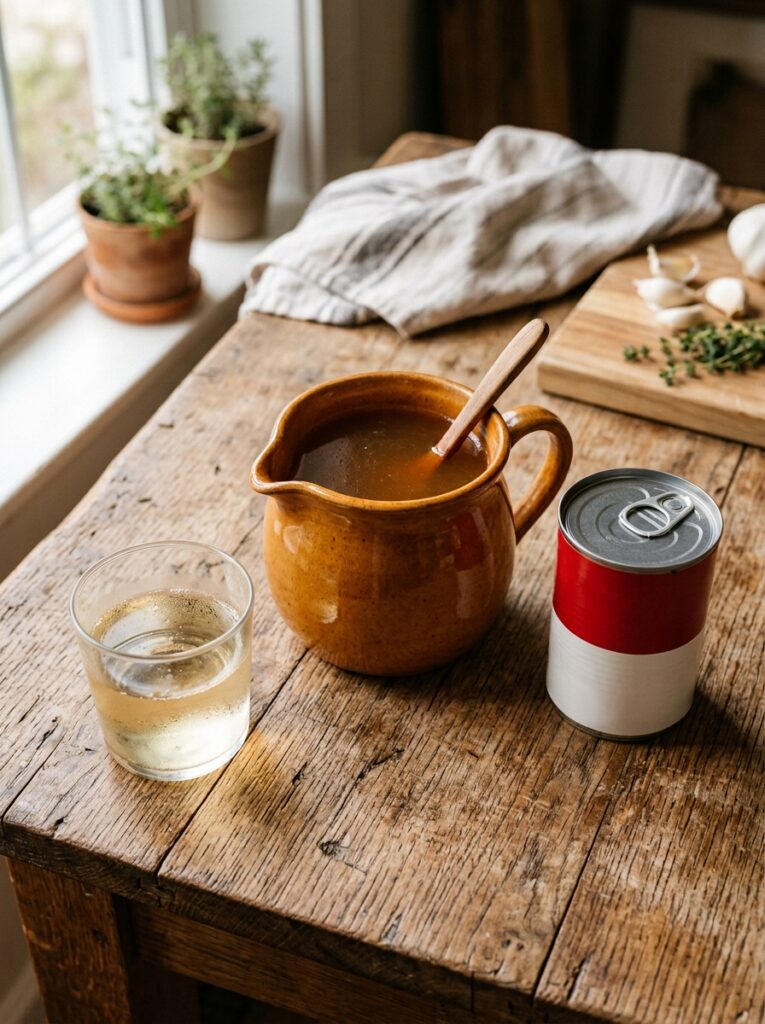
Chicken stock is the obvious move. Low-sodium if you can, because between the stock and anything creamy you’re adding, the salt can get away from you fast.
But here’s where it gets interesting. A mix of chicken stock and a splash of white wine gives you something slightly more complex without tasting “fancy” in an off-putting way. A bit of full-fat coconut milk stirred into the liquid takes the whole dish somewhere different — creamy and slightly sweet, incredible with ginger and a little turmeric. Whole milk or cream works if you’re making a more classic comfort version.
I’ve also done straight-up French onion soup from a can mixed with water when I had nothing else in the house. Not proud of it. It was DELICIOUS.
The ratio matters more than the exact liquid. If you’re using standard long-grain white rice, you want about 2 to 2.5 cups of liquid per cup of uncooked rice. Less and you get crunchy pockets, more and it goes gluey. Both are bad. Both are fixable if you catch them in time — add a splash more liquid and give it another ten minutes covered, or take the lid off for the last stretch to let it breathe.
5. The Seasoning That Keeps Showing Up in Every Version I Love
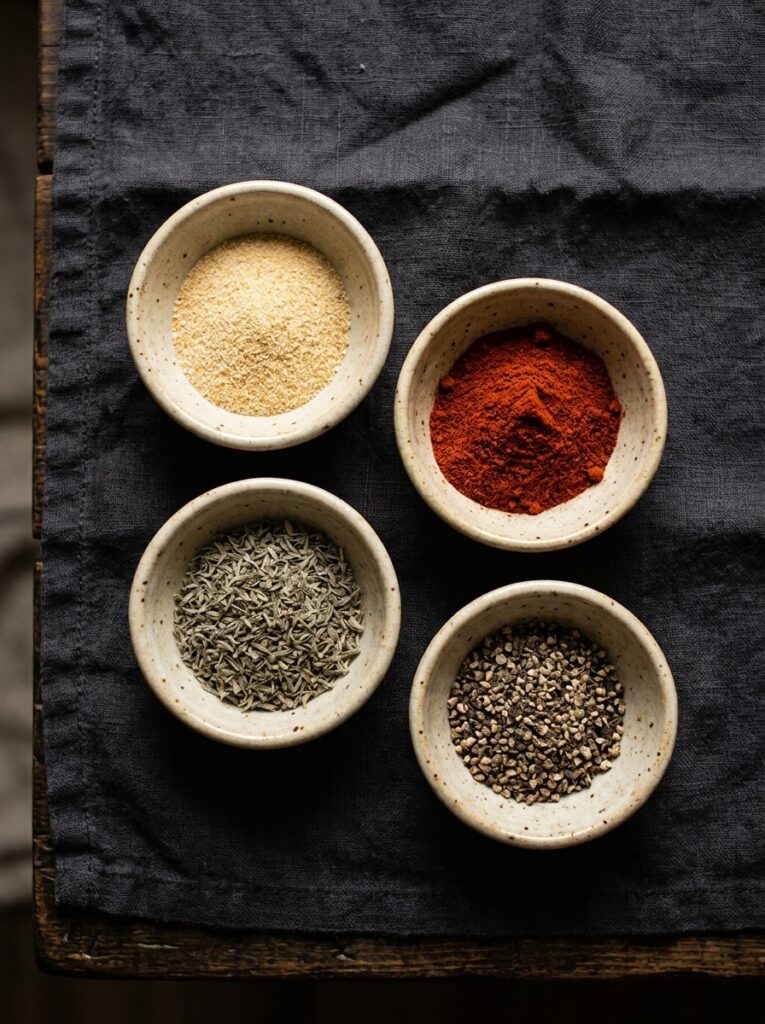
Garlic. Always garlic.
But specifically — garlic that’s been softened in butter first, not raw garlic dumped in cold. The difference is significant. Raw garlic in a casserole can sometimes taste almost bitter after an hour of baking. Softened garlic is sweeter, rounder, and it melts into the whole dish rather than announcing itself in patches.
Beyond that, it depends on which direction you’re taking it. A classic American comfort version wants onion powder, garlic powder, maybe dried thyme and a generous amount of paprika on the chicken skin before it goes in. A more British-adjacent version — something that’d work for a Sunday supper — leans into dried tarragon and a bit of Dijon stirred into the liquid.
“You don’t need twenty spices. You need three good ones that actually know each other.”
The fresh herb situation is different. I always add something green at the end — flat-leaf parsley is easiest, fresh thyme if I have it, sometimes just a few torn basil leaves for a slightly different vibe. It wakes the whole dish up after its long hot nap in the oven.
6. Adding Vegetables Without Ruining the Texture of Everything
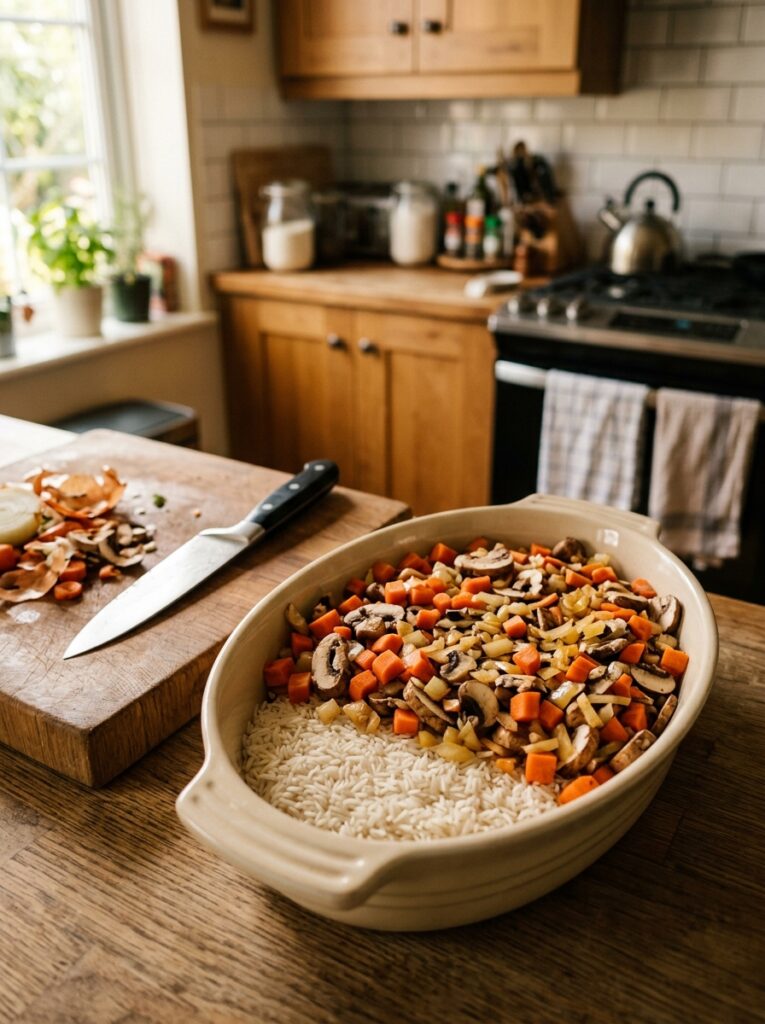
This is where people go wrong. They add raw broccoli to a casserole that’s going in at 375°F for an hour and then wonder why they have beige mush where there used to be a vegetable.
Soft vegetables — spinach, frozen peas, corn — go in during the LAST ten minutes. Just scatter them on top, put the lid back on, and let the residual heat do the work. They stay bright, they stay themselves.
Hardier vegetables need partial cooking first. Diced carrots, celery, peppers — sauté them briefly before everything goes into the dish, just enough to take the raw edge off. They’ll finish in the oven but they won’t collapse.
Mushrooms are a special case. They release a LOT of water, so either cook them down properly first to concentrate them, or accept that they’ll make your casserole saucier. Neither is wrong. But surprised is the wrong thing to be.
One combination I keep going back to: softened leeks, frozen peas in at the end, and a small handful of fresh spinach stirred through right before serving. It makes the whole dish feel lighter without actually being lighter.
7. The One-Pot Version That Skips the Oven Entirely
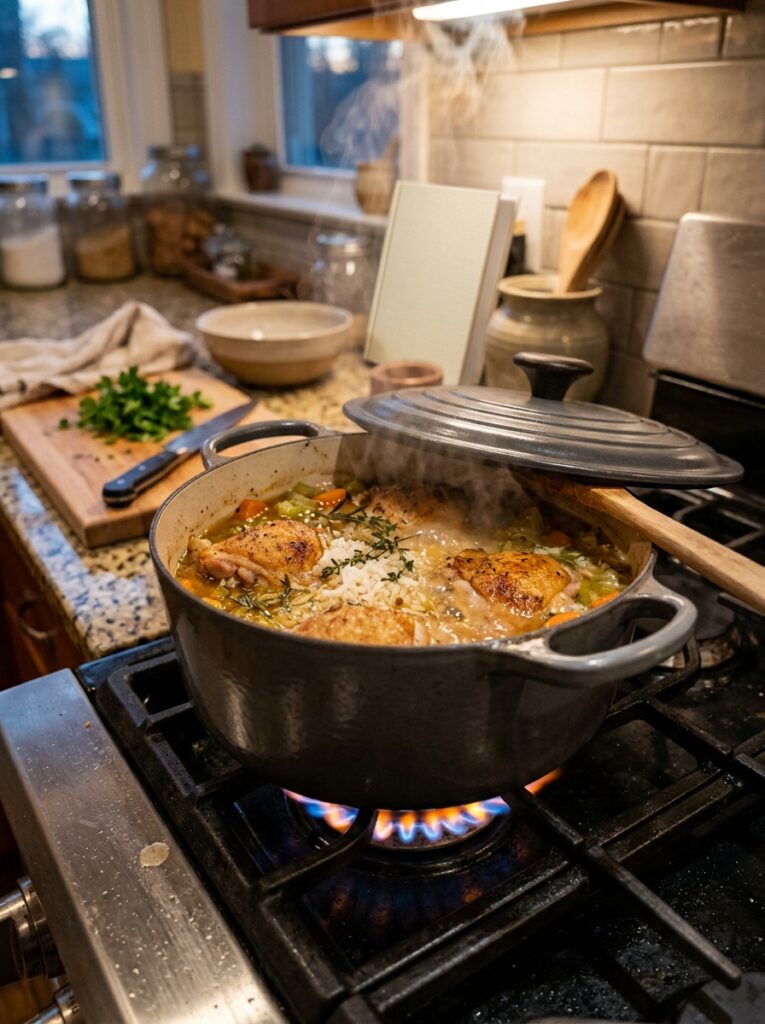
Okay, sometimes you don’t want to heat the oven. I understand.
The stovetop version works, but it needs you to pay attention. Start by browning the chicken in a wide, heavy-bottomed pan — a Dutch oven is ideal, or a deep cast-iron skillet. Remove the chicken, soften your aromatics in the same fat, add the rice and toast it for a minute until it smells slightly nutty, then pour in your liquid and nestle the chicken back on top. Lid on, heat as low as it’ll go, and leave it for about twenty-five minutes without peeking.
The no-peeking thing is real. Steam is doing the work and every time you lift the lid you lose it.
After twenty-five minutes, check the rice in the center. If there’s still liquid sitting on top, give it another five minutes. If it’s cooked through, kill the heat and let it rest for ten minutes still covered. The resting is not optional — it’s when the rice firms up and separates properly.
It won’t be as hands-off as the oven version. But it’s faster, and there’s something satisfying about it.
8. The Creamy Version Americans Grew Up With and Still Request Specifically
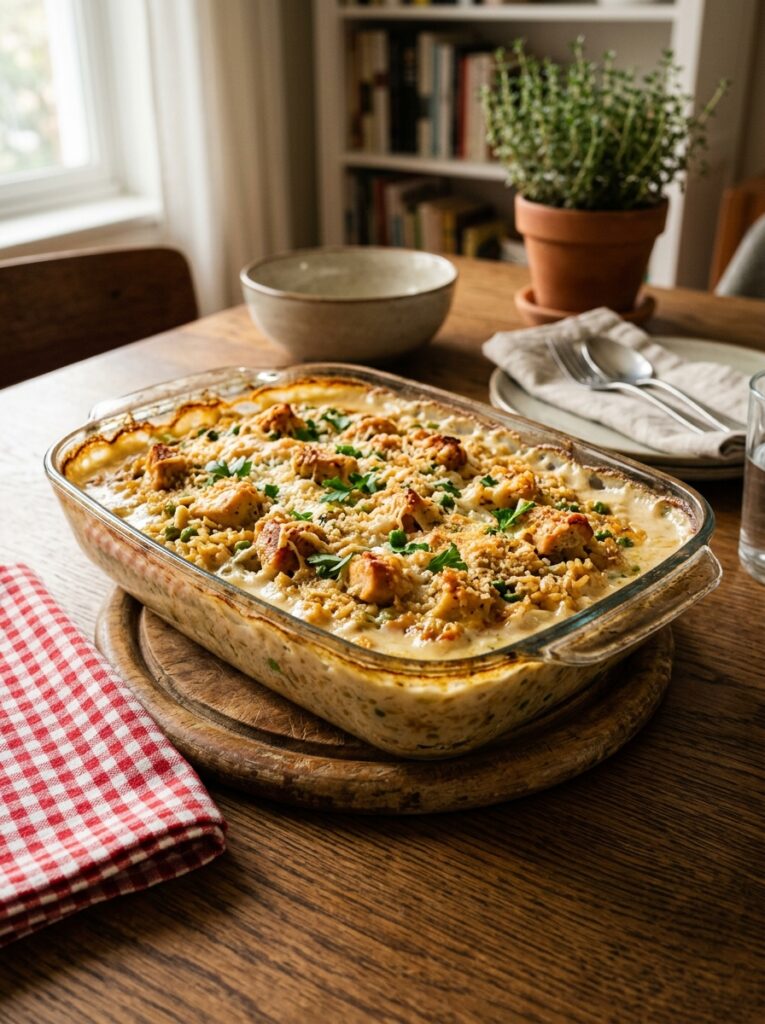
You know the one. It has condensed cream of mushroom soup in it. Or cream of chicken. And before anyone gets snobbish about it — that version is genuinely good, there’s a reason it’s been requested at family gatherings since roughly 1962, and dismissing it makes you no fun at dinner parties.
The basic ratio: one can of condensed soup (don’t dilute it), one cup of chicken stock, one cup of uncooked long-grain rice, and whatever chicken pieces you’re using. Add a bit of garlic powder, some black pepper, and maybe a handful of shredded sharp cheddar mixed into the liquid. Cover tight with foil or a lid and bake at 350°F/175°C for about ninety minutes if using bone-in pieces, seventy if boneless.
The cheese on top at the end — uncover for the last fifteen minutes to let it blister — is not optional in my household.
British readers: the condensed soup approach translates fine with UK supermarket versions of cream of chicken or mushroom. Same technique, same result. Maybe a bit more stock if the soup is thicker than the American version.
“There’s a reason this recipe has been passed down on handwritten index cards for sixty years. Respect that.”
9. How to Make It Feel Less Like a Casserole and More Like an Actual Meal
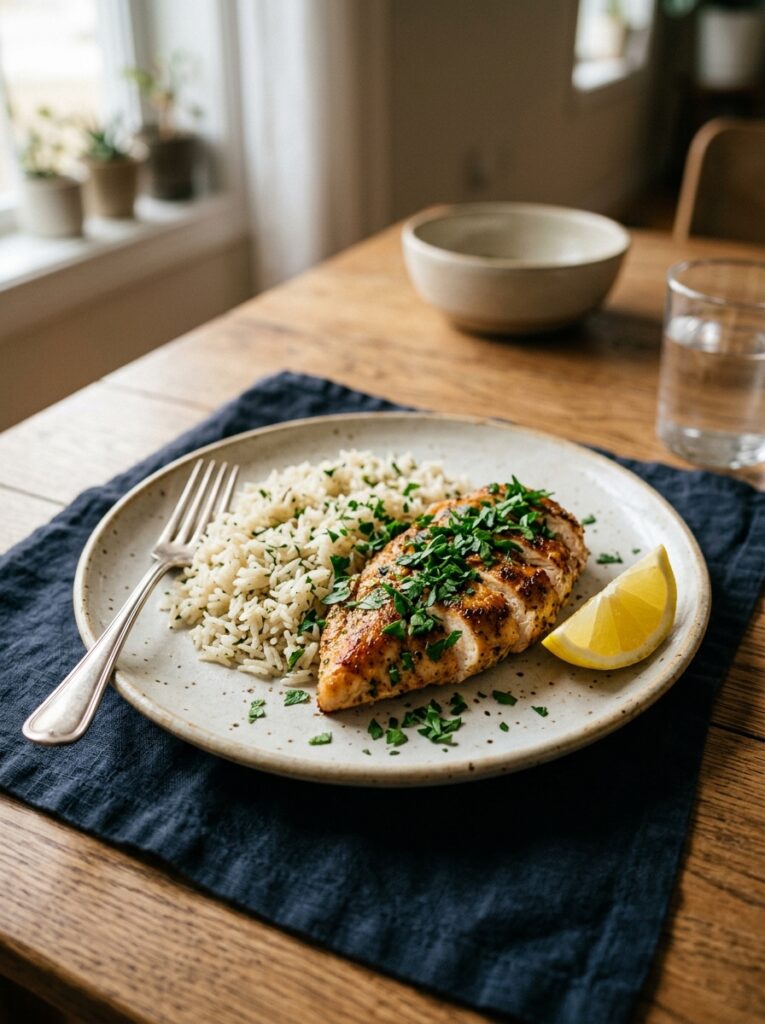
Serve it with something acidic. Always.
A simple salad with a sharp vinaigrette, a few lemon wedges on the side, pickled red onions, even just a good crusty bread that you can use to chase the sauce — something bright to cut through the richness. Casseroles are inherently cozy and a little heavy, and that one acidic element makes the whole plate feel balanced.
The other thing: don’t serve it immediately out of the oven. Let it rest at least ten minutes. The rice continues to absorb and firm up, the steam settles, and you can actually scoop it cleanly rather than chasing liquidy bits around the dish.
A sprinkle of flaky sea salt right at the end, on top of everything, does something that no amount of salt stirred in earlier can replicate. That tiny crunch and hit of saltiness on the very surface changes the first bite completely. It’s a small thing, but I notice when I skip it.
10. The Variations That Are Worth Trying at Least Once
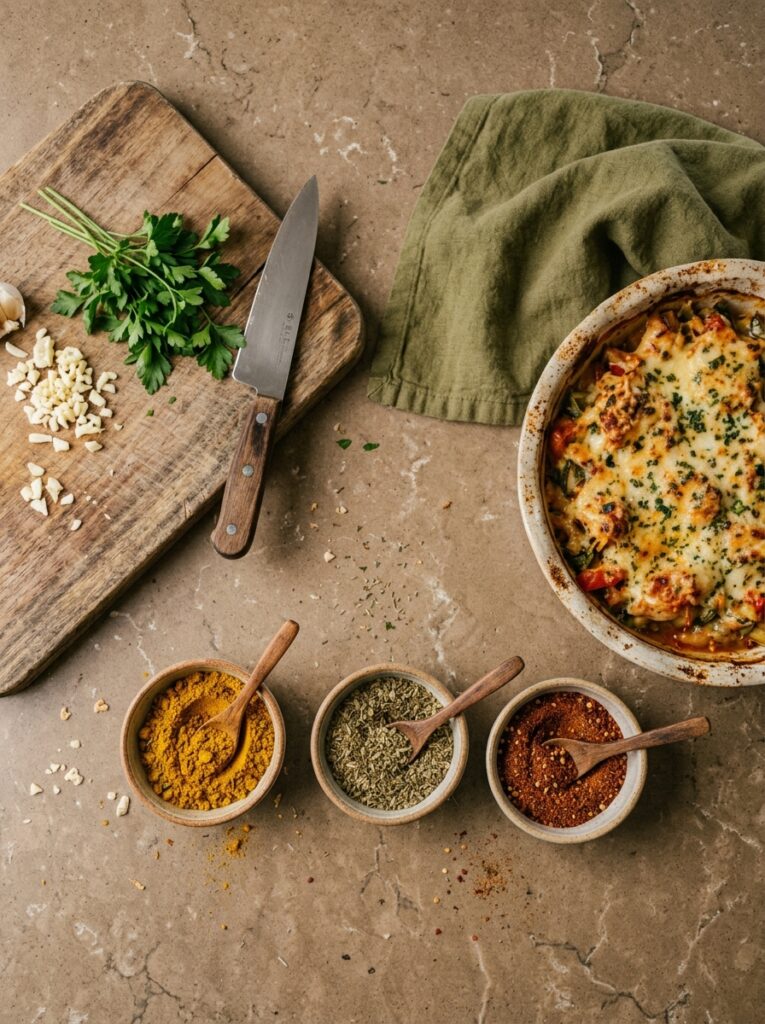
There’s the lemon herb version — extra garlic, fresh lemon zest stirred into the liquid, chopped fresh parsley and dill, a finishing squeeze of lemon before serving. It eats like something you’d get at a good Greek restaurant. Light but not boring.
There’s the smoky paprika one, which is just the classic version with smoked paprika replacing sweet, a good pinch of cayenne, some diced peppers cooked in, and a bit of tomato paste whisked into the stock. It goes slightly more Spanish in direction, and I love it with a cold glass of something.
There’s also a curried version with turmeric, ground cumin, coriander, a bit of garam masala, and coconut milk as part of the liquid. Add frozen peas at the end, top with fresh coriander/cilantro. Serve with flatbread. That one tends to disappear fastest at any gathering I’ve taken it to, without exception.
The core technique doesn’t change across any of these. Only the seasonings and liquid shift. Which is the whole point — once you know the base, you’ve got about fifteen different dinners inside it.
11. The Thing Nobody Talks About: Making It Actually Reheat Well
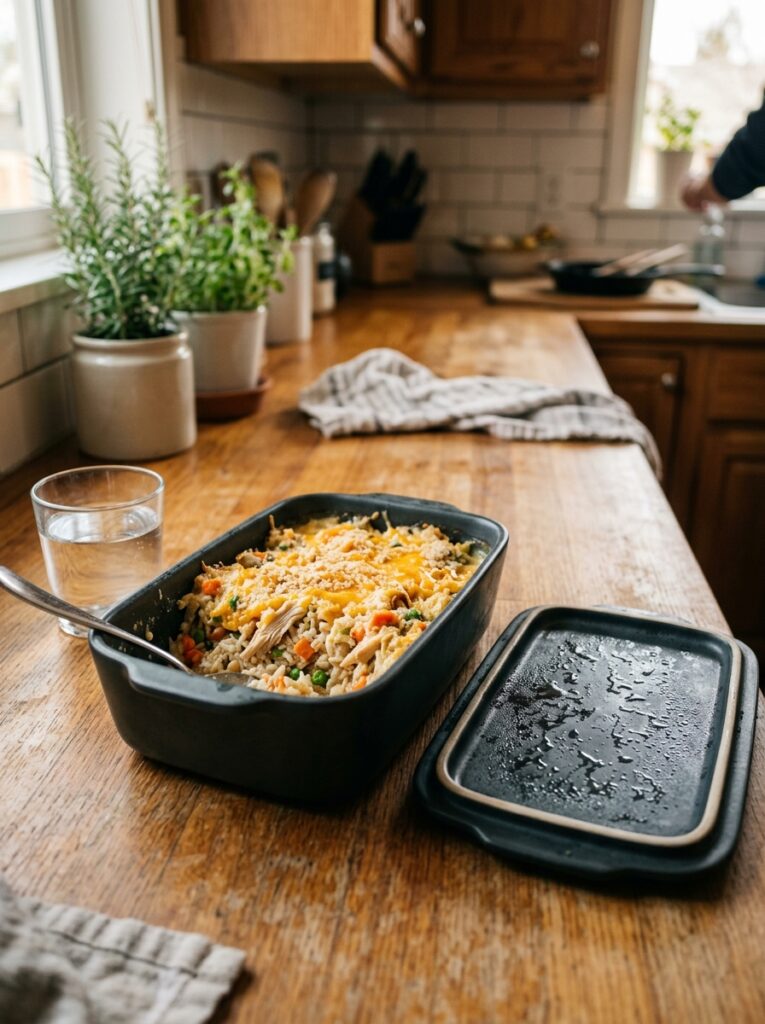
Chicken rice casserole refrigerates well, but it reheat badly if you don’t add liquid back in. The rice will have absorbed everything overnight and it’ll come out of the microwave dry and slightly gummy if you just nuke it straight.
Add a splash of stock or even just water. A tablespoon or two per portion, stirred through or just drizzled on top before heating. Cover it loosely. Heat in two-minute bursts rather than one long blast, stirring in between.
In the oven: 325°F/160°C, covered with foil, about twenty minutes. Add a little extra liquid to the dish first, same principle.
The freezer is also your friend here. Fully cooked casserole freezes well for up to three months. Thaw in the fridge overnight, reheat as above. It won’t be quite as good as fresh, but it’ll be significantly better than most things you could pull out of a freezer on a Tuesday when you forgot to plan anything.
12. The Version I Make When I Actually Want to Impress Someone
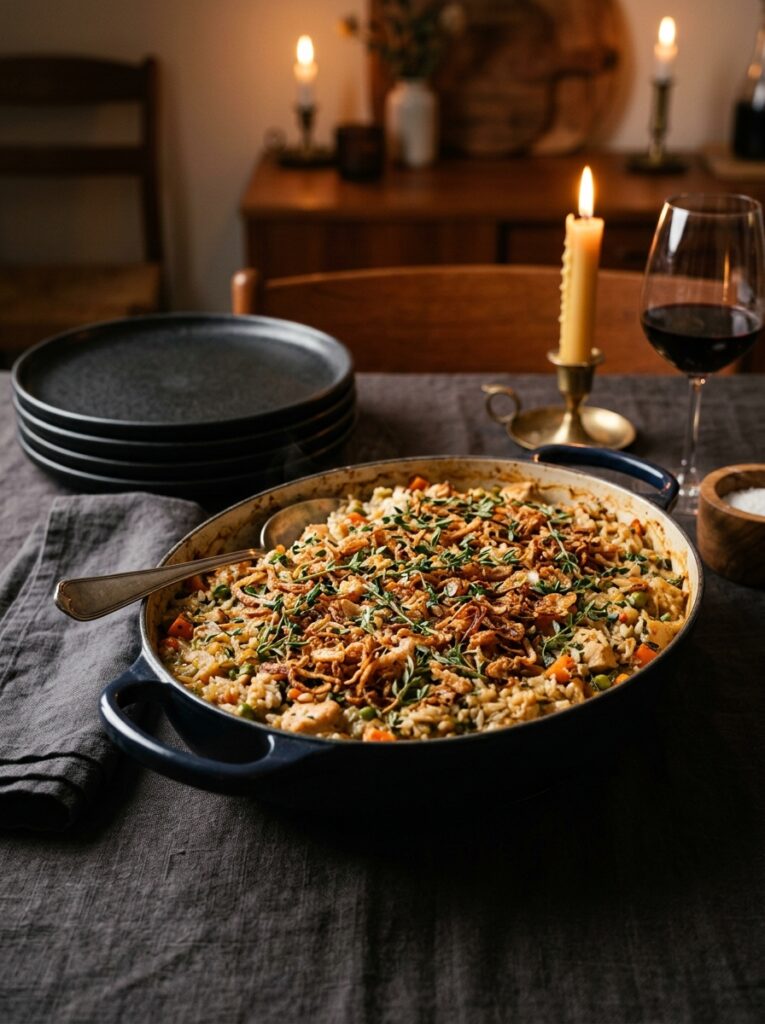
It’s not that different from the regular one. That’s the secret.
I use bone-in thighs, brown them properly until the skin is properly golden, not just pale. I soften shallots instead of onion — they’re sweeter and slightly more elegant without being pretentious about it. I add a splash of dry white wine to deglaze the pan and get all the good brown bits off the bottom before the liquid goes in. Fresh thyme, a bay leaf, good quality stock.
Jasmine rice. Always jasmine for this version.
It bakes covered for fifty minutes, then uncovered for the last ten so the chicken skin re-crisps. I scatter fresh flat-leaf parsley on top and bring the whole dish to the table, because a heavy casserole dish landing on a table always looks like an occasion even when it isn’t one.
People ask me for the recipe. I tell them it’s very complicated.
—
❓ FAQ
Q: Can I use leftover cooked chicken instead of raw? A: Yes, but add it in the last twenty minutes rather than the beginning — it just needs to warm through, not cook, and going in from the start will dry it out completely. Reduce your total liquid slightly too, since you won’t get the same collagen release you’d get from raw.
Q: My rice always comes out crunchy in the middle. What am I doing wrong? A: Almost always a liquid issue or a seal issue. You either didn’t use enough liquid (aim for 2 to 2.5 cups per cup of uncooked long-grain rice), or steam was escaping because the lid or foil wasn’t tight. Also check your oven temp — if it’s running hot, the outside can set before the inside fully absorbs. Another fifteen minutes covered with a splash more liquid usually rescues it.
Q: Can I make this the night before and bake it the day of? A: Sort of. You can prep and refrigerate the chicken and aromatics, but don’t assemble the rice and liquid ahead of time — the rice will start absorbing liquid overnight and you’ll end up with something completely different. Assemble right before baking, add an extra five to ten minutes to the bake time since everything’s coming in cold from the fridge.
—
💭 Final Thoughts
Chicken rice casserole doesn’t need defending. It’s been feeding people reliably for decades, it adapts to almost anything you throw at it, and on a cold evening there’s genuinely nothing better coming out of an oven. It’s the kind of cooking that’s less about following instructions and more about understanding a handful of principles well enough to trust yourself.
Make it once this week. Then tell me you didn’t stand at the counter and eat directly from the dish.
What version are you going to try first?