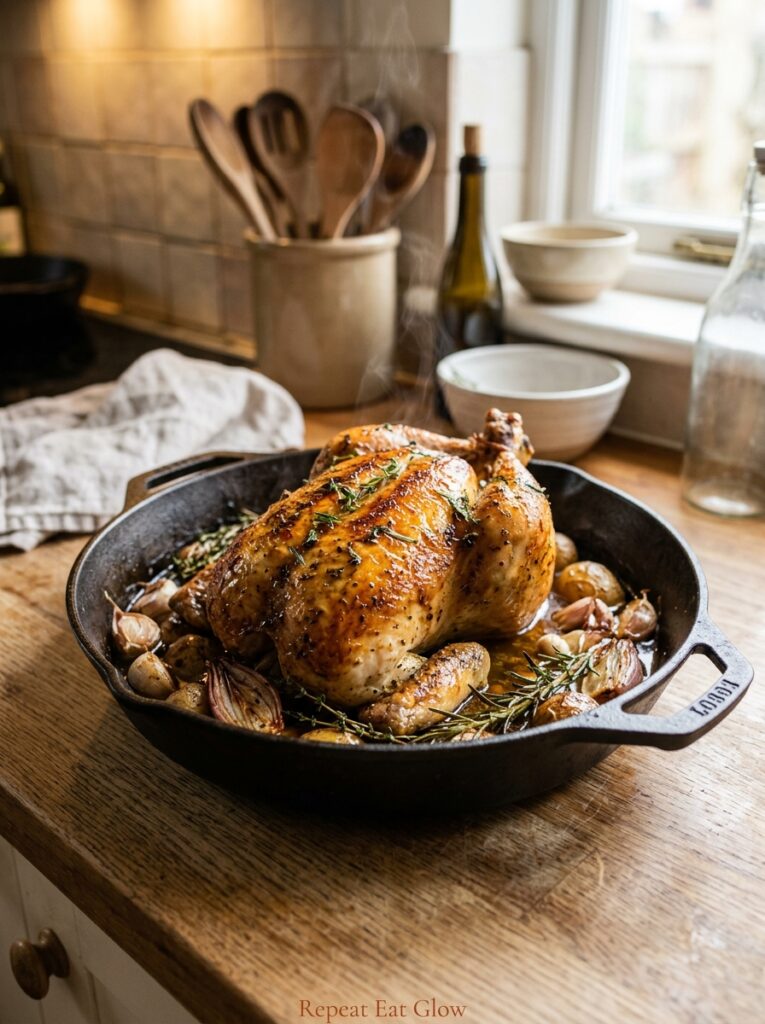
My husband talks through every meal. Always has. But the first time I pulled that lemon-herb bird out of the oven, he just… stopped. Fork halfway to his mouth, kind of stared at it. That’s when I knew this was a recipe worth keeping.
—
1. Why Roast Chicken Has This Hold On People (And It’s Not Nostalgia)
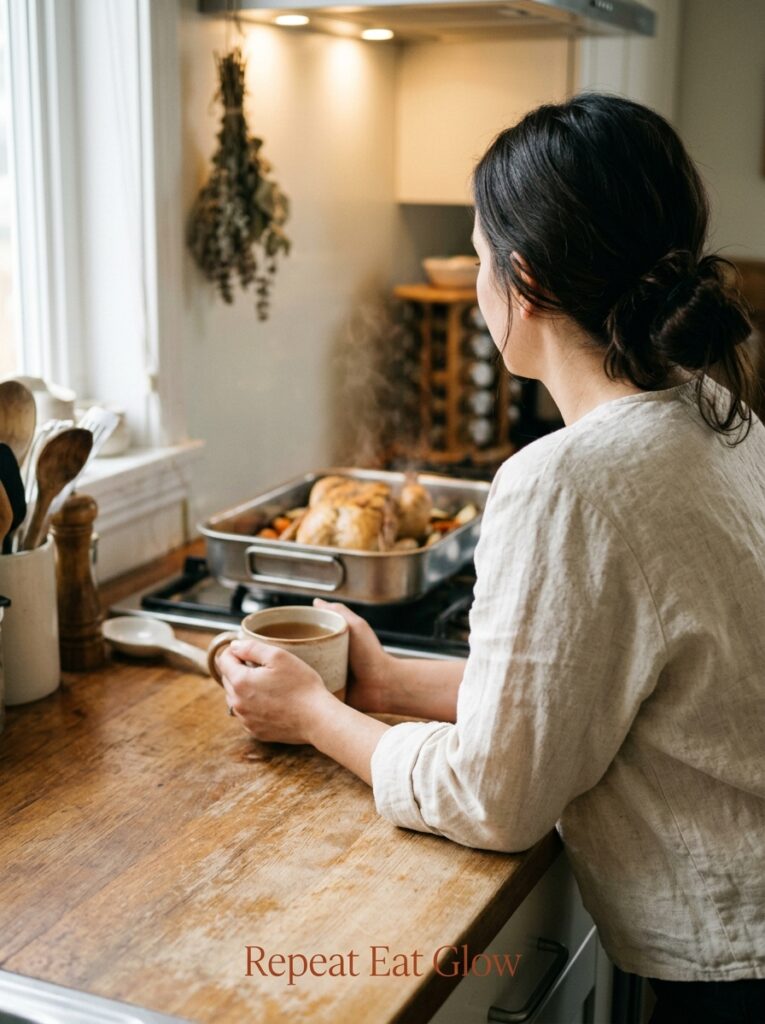
Okay so everyone says roast chicken is “comforting” and “nostalgic” and yeah, sure, fine. But I think the real reason we keep coming back to it is more selfish than that. One pan. One bird. Basically one hour of actual effort spread across an evening where you’re also doing laundry and helping with homework and answering emails.
It doesn’t ask much of you.
And yet it delivers this golden, crackling, falling-off-the-bone situation that makes you look like you’ve been cooking all day. The smell alone does something to a house. Not “warm lighting” in a vague Pinterest-caption way — I mean the actual smell of garlic browning in chicken fat at about 6:45pm, when everyone’s starting to wander into the kitchen. That smell is doing emotional labor.
The other thing? Every oven roasted chicken recipe builds from the same simple skeleton. Once you’ve got the base, you can go anywhere.
—
2. The Bird That Ruined Every Roast Chicken I’d Made Before
I’ll just say it: I was brining wrong. Or rather, I wasn’t brining at all, and then when I finally tried it I did it for like 20 minutes in salted water and thought that counted. It doesn’t.
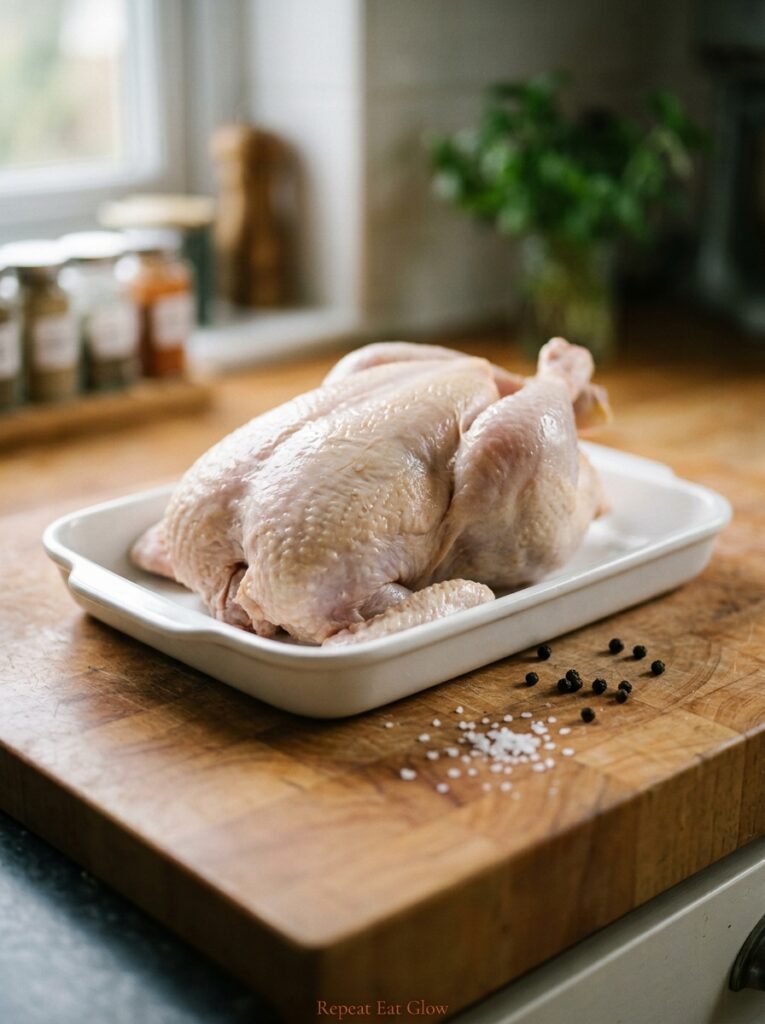
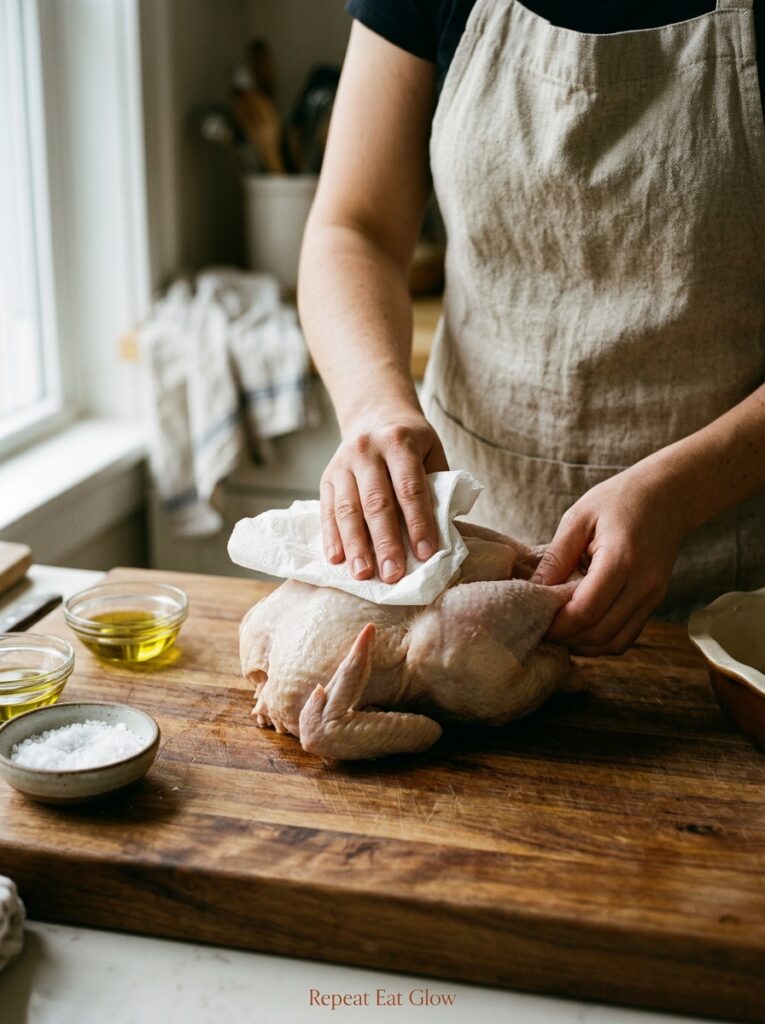
Dry brining is the thing. Salt your chicken — generously, don’t be shy about it — and leave it uncovered in the fridge for at LEAST 24 hours. Overnight minimum. The salt draws out moisture, then it gets pulled back in, and what you end up with is meat that’s seasoned all the way through, not just on the surface.
I know a day of planning sounds like a lot. But it’s two minutes of actual work. You’re just moving time around.
“The secret to the best roast chicken you’ve ever made is almost always just salt, applied earlier than you think it should be.”
For a 4-pound bird, use about 1 teaspoon of kosher salt per pound. Rub it under the skin if you can get your hand in there without being weird about it, and all over the outside. Then just… leave it alone. Resist the fridge.
—
3. The Herb Butter Situation Nobody Talks About Enough
Okay so butter under the skin — yes, everyone knows this. But which butter, and with what in it?
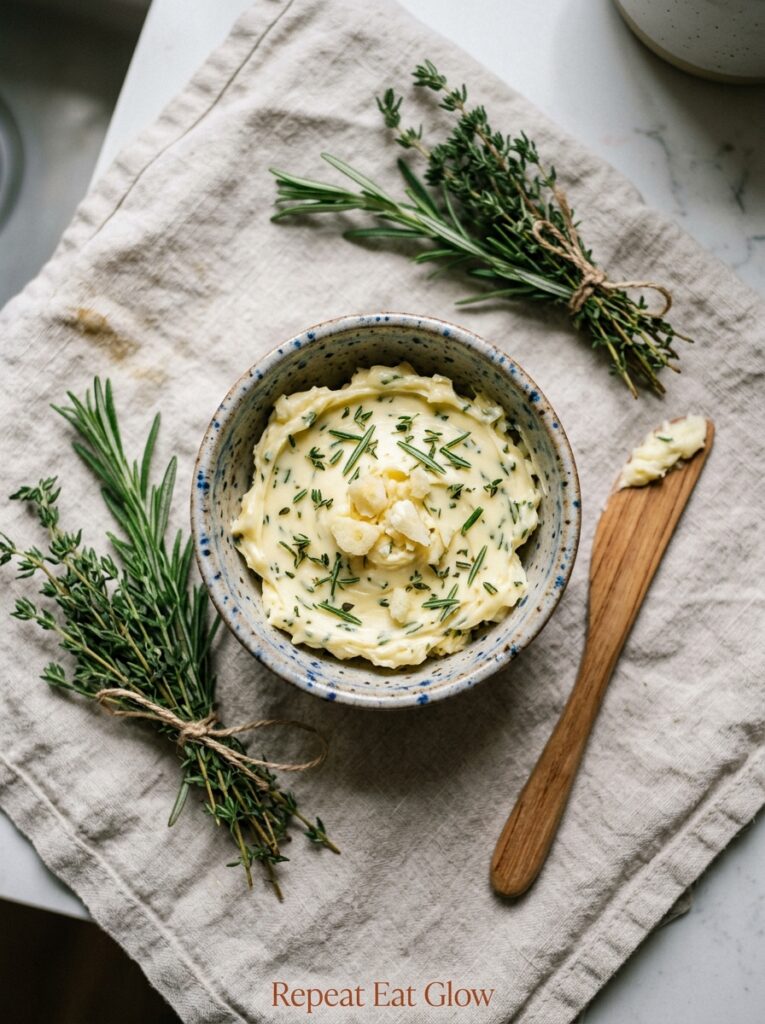
Here’s what I’ve landed on after a frankly embarrassing number of test roasts. Softened (not melted) unsalted butter, mixed with:
- Fresh thyme leaves, pulled off the stems
- A little lemon zest — not a lot, just enough
- Two cloves of garlic, grated fine (not minced, grated, there’s a difference)
- A pinch of flaky salt and black pepper
That’s it. Don’t keep adding things. The garlic gets sweet and almost caramelized under the skin, and the lemon zest lifts the whole thing without making it taste like dish soap, which lemon sometimes does when it’s overdone.
You want maybe 3-4 tablespoons of this mixture for a standard chicken. Push it under the breast skin as far as it’ll go, then smear whatever’s left on the outside. Don’t skip the outside — that’s where your color comes from.
—
4. The Roasting Pan Trick That Changed Everything About My Weeknight Dinners
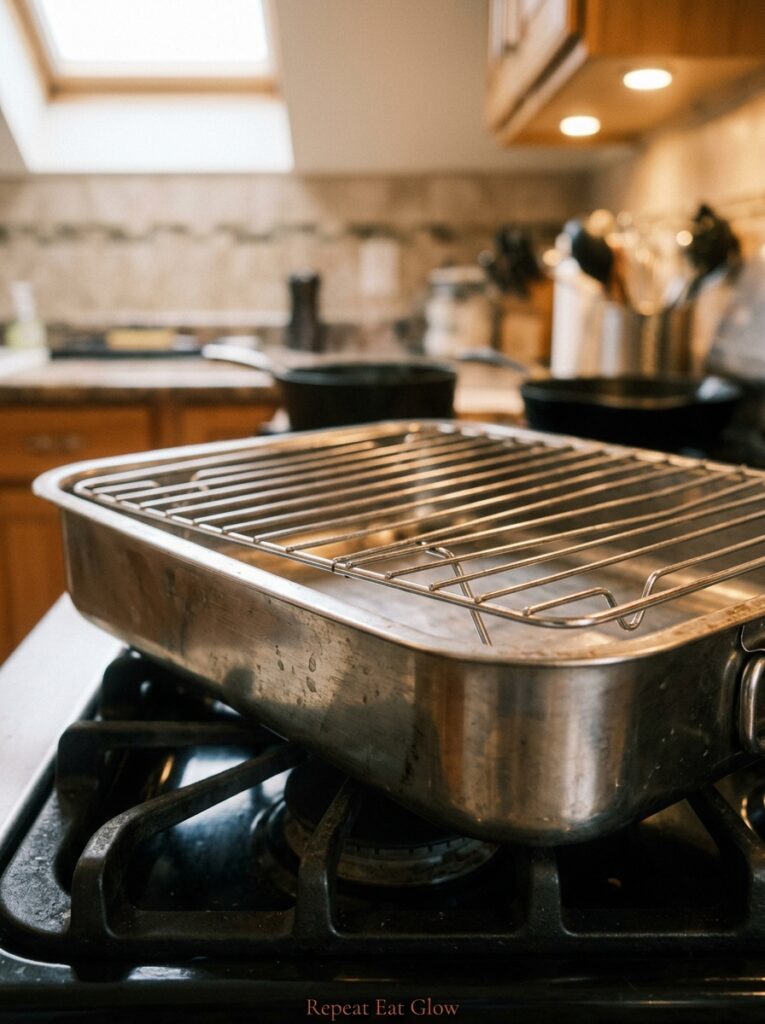
Don’t roast your chicken flat on a bare pan. Please.
You want a bed of aromatics underneath — roughly chopped onion, halved garlic heads (skin on, cut face down), a few carrots broken in half, a lemon cut in two. Not because these vegetables are necessarily going to taste incredible after an hour under a chicken. They won’t, honestly. But they lift the bird so air can circulate underneath, and they create this incredible base for the pan juices.
Those pan juices. I can’t.
Whatever liquid falls down into that pan — the fat, the chicken juices, the garlic pulp that’s sort of melted into everything — that’s your sauce. Don’t add stock. Don’t thicken it. Just tilt the pan, spoon it off, and pour it over the finished bird at the table.
“The best sauce you’ll ever make requires no recipe. It’s already in the bottom of your roasting pan.”
This is the part of roast chicken that gets overlooked in every recipe that focuses too hard on the bird itself.
—
5. Temperature and Timing: The Stuff That Actually Matters
Start high, finish high. I’ve done the low-and-slow thing, the start-low-end-high thing, all of it. My honest opinion? High the whole way is underrated.
425°F (that’s 220°C for UK readers) for about 55-65 minutes on a 4-pound bird. The high heat is what gets you the skin you’re after — properly crispy, the kind that shatters a little when you cut through it. Not rubbery. Not pale.
The ONE rule: your chicken needs to be at room temperature before it goes in. Take it out of the fridge about 30-40 minutes early. A cold bird in a hot oven is the enemy of even cooking, and I know everyone says this and nobody does it. Do it.
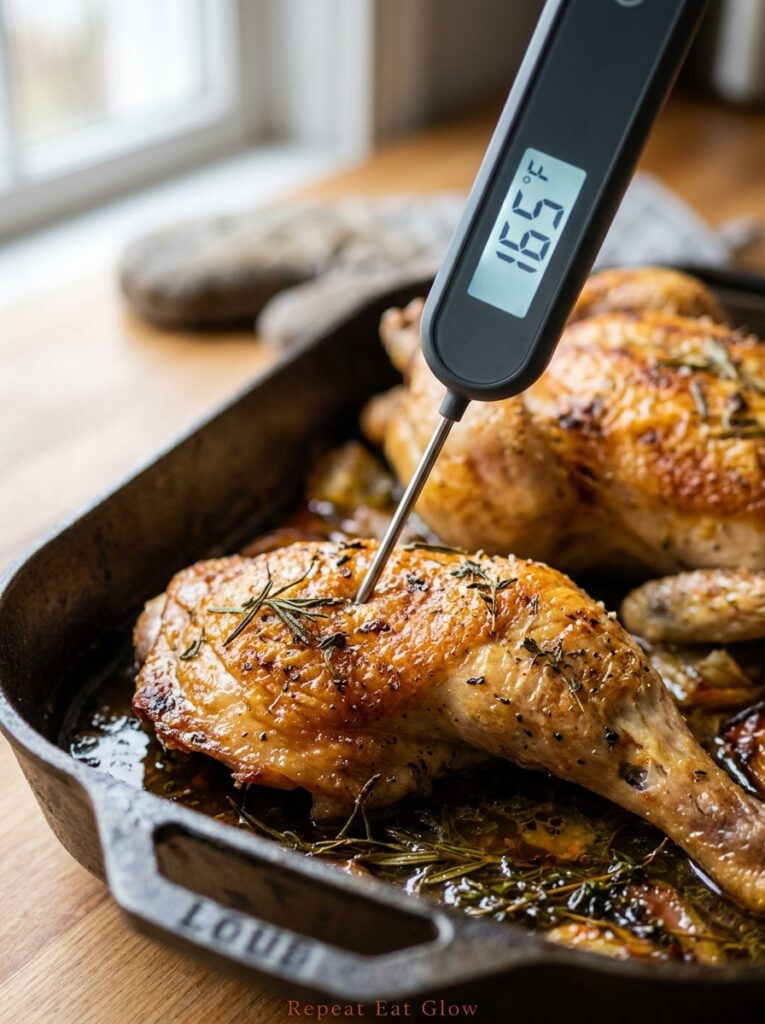
Thermometer in the thickest part of the thigh, not touching bone: 165°F (74°C). That’s your moment.
Then — this is non-negotiable — let it rest for 15 minutes before you touch it. Tented loosely with foil. The juices are still moving around inside that chicken, and if you cut into it immediately they all run out and you end up with dry meat and a wet board. I’ve made this mistake approximately one hundred times.
—
6. The Version My British Mother-in-Law Thinks I Learned From Her
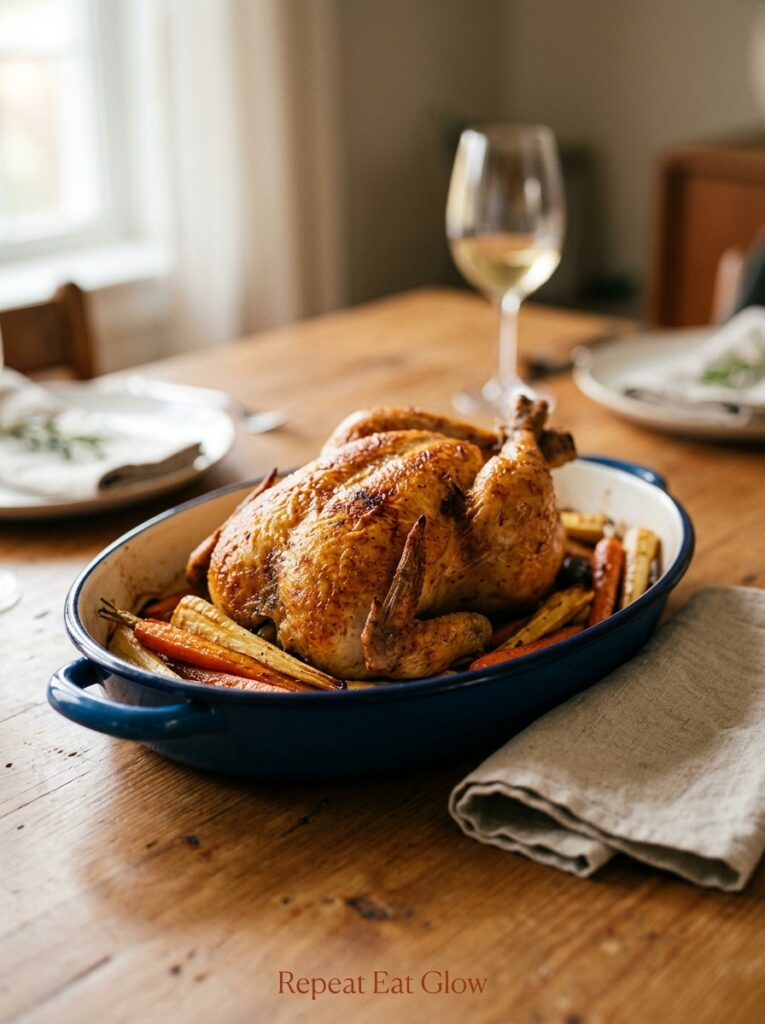
There’s a roast chicken that’s very classically British — and honestly, beautiful — that I made for the first time after watching her do it, though I’ve since completely changed it and not told her.
It’s a chicken roasted over a simple bed of white onions, with just butter, salt, and dried sage. That’s it. No garlic, no lemon. And the result is this deeply savory, almost old-fashioned thing that tastes like every Sunday you’ve ever been happy on. The sage gets crispy on the skin and goes almost herby-toasty, which sounds odd but isn’t.
The trick is basting. She bastes every 20 minutes and she’s right to do it. Spoon the juices back over the breast (the driest part) and you keep things from tightening up. I’ve started doing this with my herb butter version too.
Side note — traditional accompaniments here matter. Roast potatoes done in the same fat, proper gravy from the pan, maybe some wilted greens. The British approach to this meal is not fussy but it’s not messed with either, and there’s something to be said for that.
—
7. One-Pan Lemon and Garlic Chicken: For When the Week Has Already Won
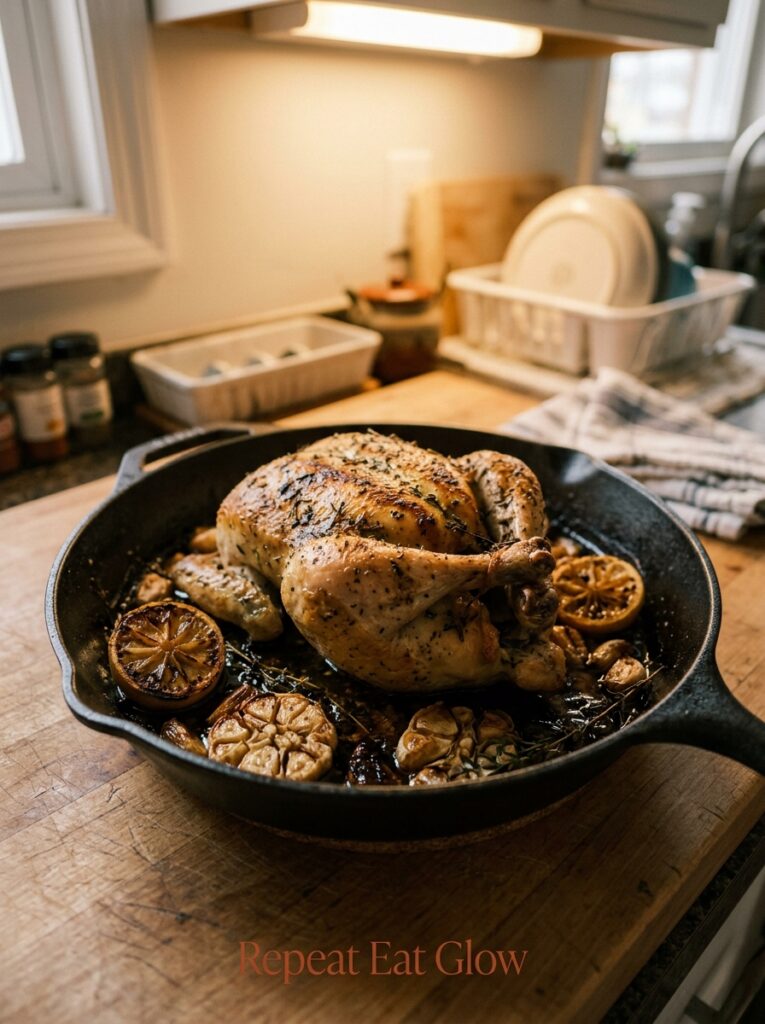
Tuesday night version. The full commitment to a simple, achievable thing.
Spatchcock your chicken — cut out the backbone with kitchen shears, press it flat — and it’ll roast in about 40 minutes instead of an hour. Yes, it looks slightly alarming on the pan. No, it doesn’t matter.
Underneath: baby potatoes halved, a whole head of garlic cloves unpeeled, sliced lemon rounds, a few sprigs of rosemary. Drizzle everything with olive oil, season generously, lay the flattened chicken on top skin-side up.
“Forty minutes. One pan. You’ll feel like you won something.”
It’s the kind of dinner where you carry the pan straight to the table and everyone just sort of digs in and things get a little messy and that’s completely fine. It doesn’t need to be pretty. It already smells like a restaurant.
This is probably the one I make most. Because it’s forgiving and fast and the leftovers — cold, from the fridge, at midnight — are spectacular.
—
8. How to Do the Whole Roasted Garlic Thing Without Wasting Half Your Oven
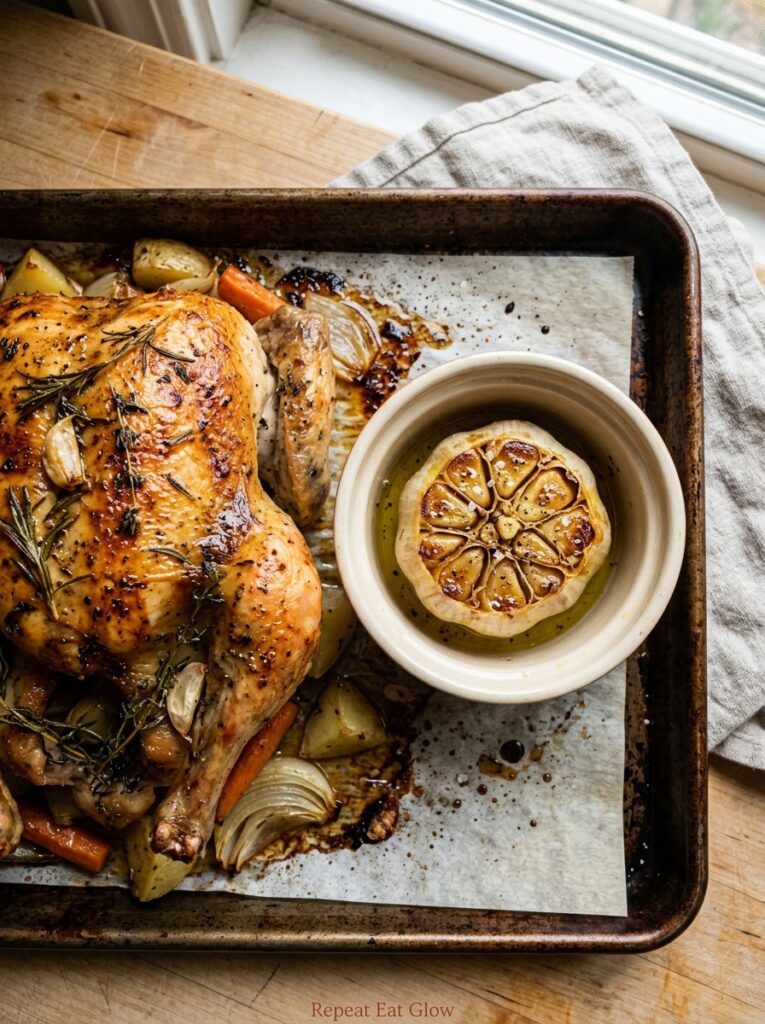
If you’re already roasting a chicken, your oven is doing something right now for at minimum 55 minutes. There’s no reason you shouldn’t slide in a few heads of garlic wrapped in foil alongside the bird.
Cut the tops off, drizzle with olive oil, wrap in foil. They go in for the last 35-40 minutes. What comes out is this soft, spreadable, sweet-savory paste that you can squeeze directly onto bread, mash into butter, stir into the pan juices, or just eat with a spoon while leaning over the sink. Honestly.
Roasted garlic on sourdough with a little flaky salt while the chicken rests? That’s dinner getting better before dinner is even plated.
—
9. The Harissa-Spiced Bird That Gets Requested By Name Now
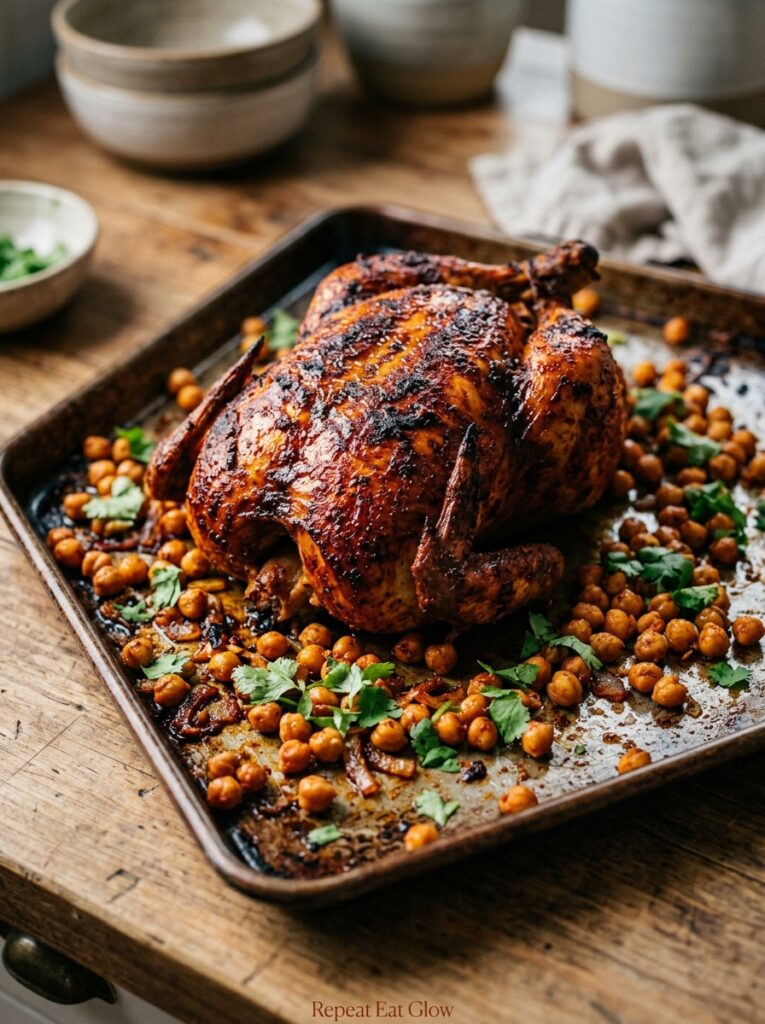
My neighbor asked for this recipe three times before I wrote it down. That felt like endorsement enough.
Same dry brine situation as above. Then a paste of:
- 3 tablespoons harissa (the good stuff from a jar, not a sad little squeeze tube)
- 1 tablespoon olive oil
- 1 teaspoon cumin
- Half a teaspoon smoked paprika
- Juice of half a lemon
Rub this all over the chicken — under the skin too — and if you have time, leave it in the fridge for another few hours after brining. The harissa does something incredible at high heat: it goes almost jammy and deeply red and the edges of the skin get these dark, caramelized bits that look dramatic and taste even better.
Serve it with couscous or flatbread or — this is my favorite call — a big bowl of cucumber yogurt that’s half herbs and very cold. The contrast between the hot spiced chicken and the cold yogurt is genuinely excellent.
—
10. Vegetables That Actually Cook Properly Underneath a Chicken
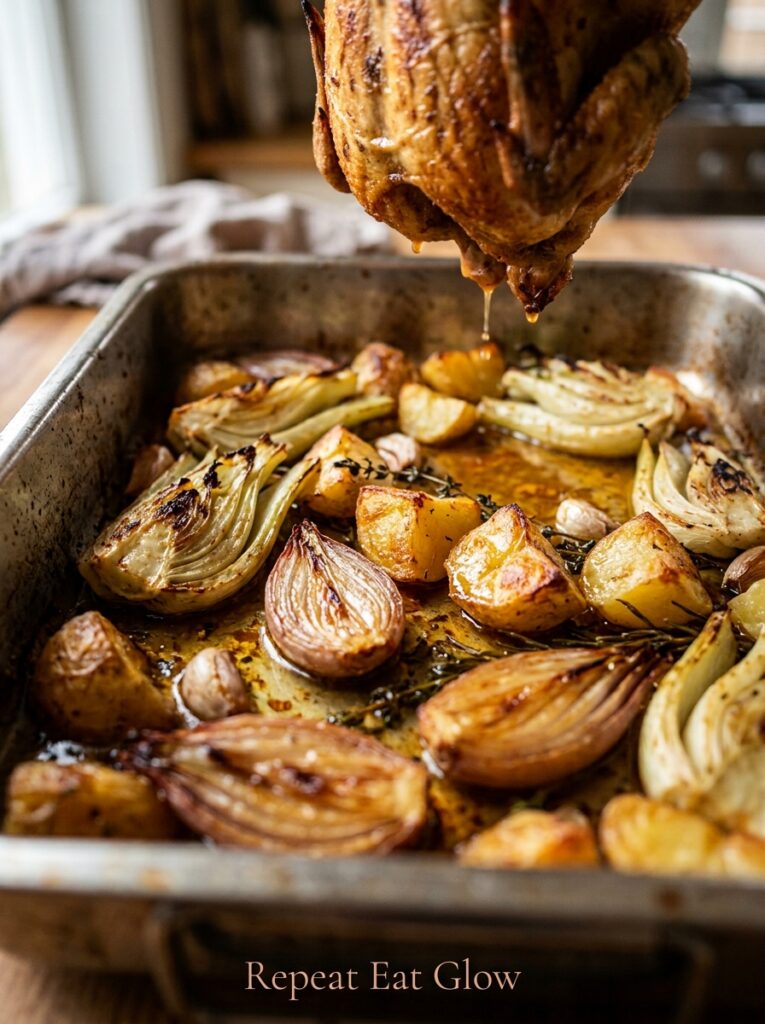
This is something a lot of recipes get wrong. They tell you to roast vegetables under a chicken and then don’t account for the fact that some vegetables can’t handle 60+ minutes under a hot bird without turning to mush.
Root vegetables are your friends here. Parsnips, carrots, turnips, halved new potatoes — they all stand up to the heat and come out caramelized and a little crispy on the edges where the fat has hit them. That’s what you want.
Courgette (zucchini), tomatoes, asparagus — these cannot go in from the start. They’ll be liquid. Add them in the last 15-20 minutes if you want them at all.
And honestly? Don’t crowd the pan. I’ve ruined many a vegetable situation by jamming too much in. The chicken needs air, and so does everything else. Use a big pan or a separate tray if you have to.
—
11. What to Actually Do With the Leftovers (This Is the Real Secret)
The chicken you roast Sunday night is not just Sunday dinner. It’s Monday lunch, possibly Tuesday too, if you play it right.
Pick the carcass clean while it’s still warm — it’s easier and you get more meat. Shred everything, keep it in a container in the fridge, and then:
- Monday: chicken tacos with whatever condiments are in the fridge
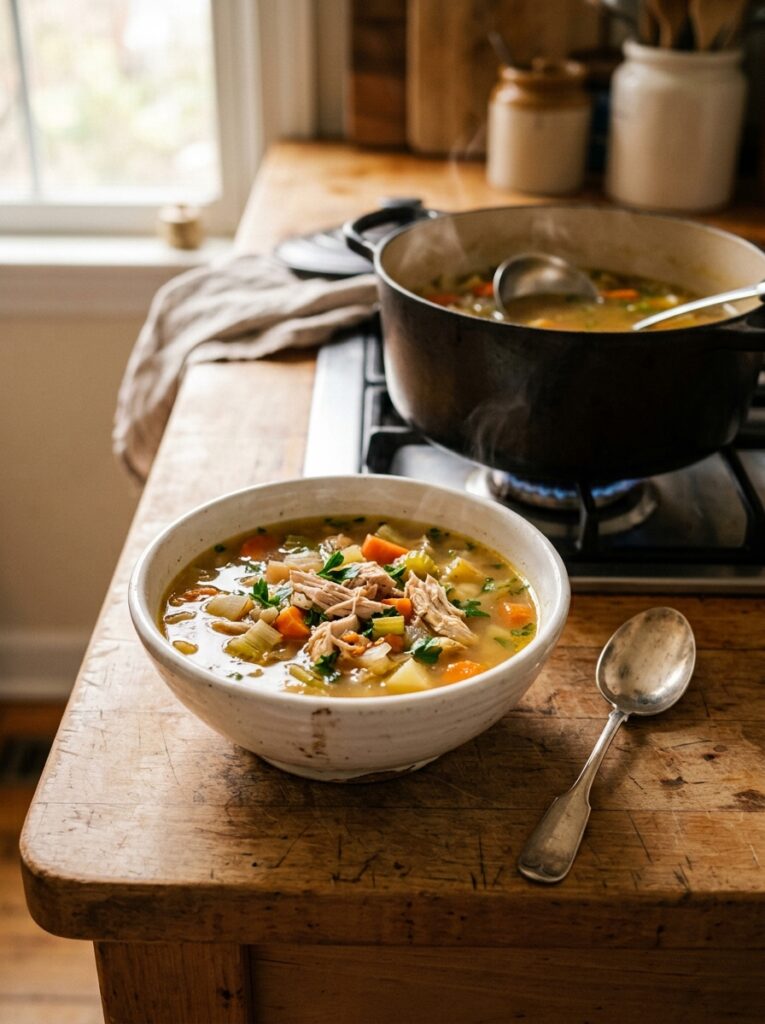
- Tuesday: throw it into a quick soup with the leftover pan drippings, some stock, and whatever veg needs using
- The carcass itself: simmer it for two hours with onion, carrot, celery and you have the best stock you’ve ever made
That stock situation is the real return on investment of roasting a whole bird. It’s better than anything in a carton, and it makes your kitchen smell incredible, which is its own reward.
—
12. The Last Thing I’d Tell You Before You Start
Get a meat thermometer if you don’t have one. That’s it. That’s the last piece of advice.
Every other variable — the herbs, the butter, the brine, the vegetables — all of that is flexible and personal and subject to what’s in your fridge. But cooking by temperature instead of by time is the single thing that will stop you from ever serving dry chicken again.
I resisted buying one for years because I thought experienced cooks just knew. They don’t. They just check the temperature instead of guessing, and then they look like they knew.
Start there. Everything else will follow.
—
❓ FAQ
Q: Do I really need to dry brine overnight? What if I’m cooking the chicken the same day? A: You don’t have to, but your chicken will be noticeably less seasoned and the skin won’t be as crispy. If you’re cooking same-day, salt it as early as you possibly can — even two hours makes a difference. It’s worth building the habit of planning a day ahead when you can.
Q: My chicken skin always goes pale and soft instead of crispy. What am I doing wrong? A: Almost always moisture. Pat your chicken completely dry before it goes in the oven, make sure the oven is fully preheated, and don’t cover the bird at any point during roasting. Also check that your oven isn’t overcrowded — steam from too many things in the oven is a skin killer.
Q: Can I use a frozen chicken if I thaw it first? A: Yes, totally fine — just make sure it’s fully thawed all the way through before you start, especially the cavity. A partially frozen bird will cook unevenly, and you can end up with done breast meat and undercooked thighs. Defrost in the fridge overnight (or two nights for a bigger bird) and you’re good.
—
💭 Final Thoughts
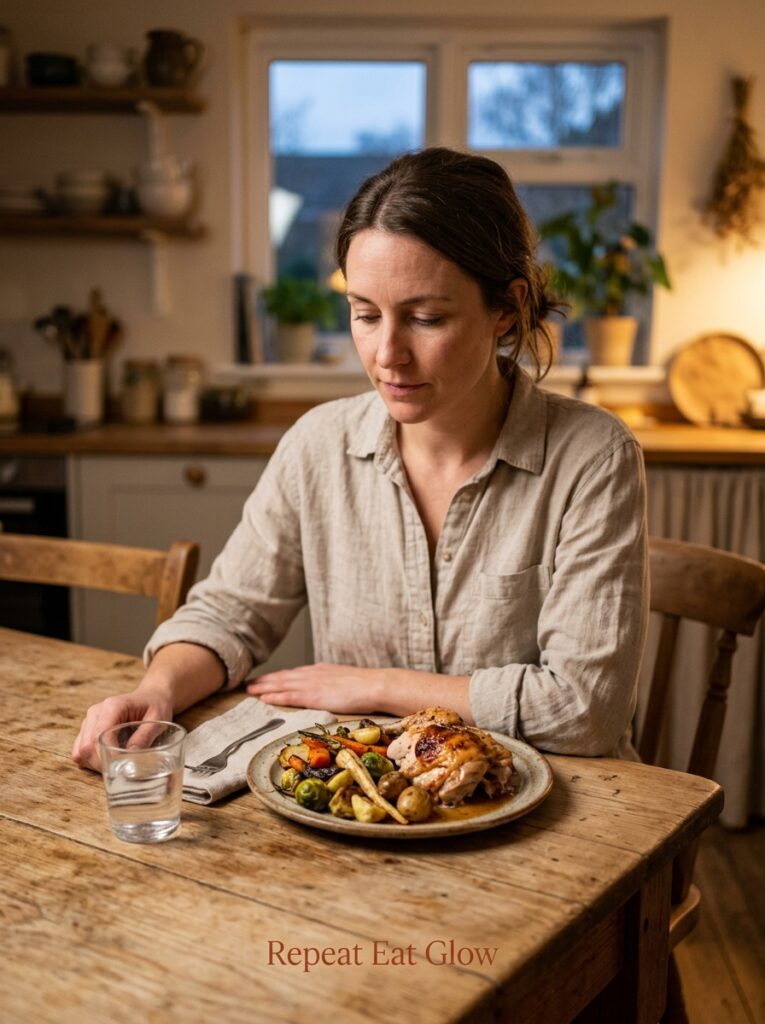
Roast chicken is the kind of meal that sounds simple until you realize how many small decisions go into making it genuinely great. The brine, the butter, the temperature, the rest — none of it is hard. It just takes a little attention. And the payoff, that moment when you carry the bird to the table and everyone stops what they’re doing, is worth every bit of it.
What’s your version? Is there a spice blend or a vegetable combination you’ve landed on that you’d never give up?
