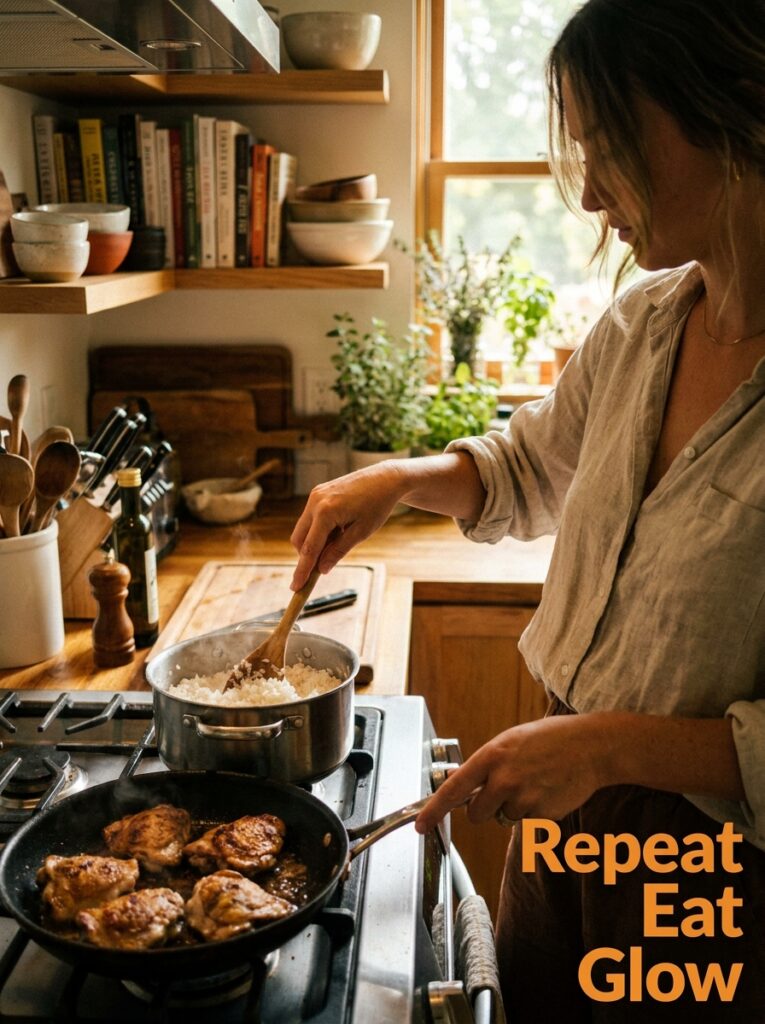
You know those recipes you’ve saved seventeen times and never made? This isn’t one of those. This is the dinner that happens on a Wednesday when you’re tired and the fridge is looking sad, and somehow — somehow — it comes out better than you expected.
—
1. Why Every Home Cook Has a Version of This and None of Them Are the Same
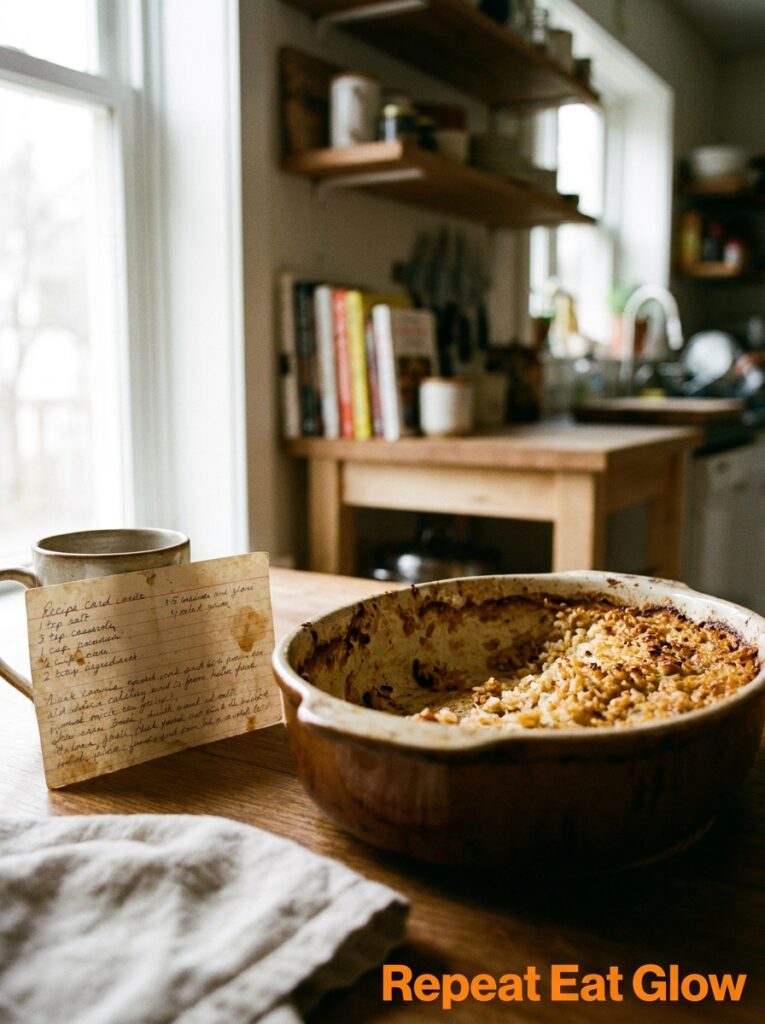
There’s something almost universal about baked chicken and rice. Every family’s got a version. Your mum had one, your nan had one, that one aunt who doesn’t really cook but makes THIS perfectly — she’s got one too.
And yet they’re all different. Some are crispy on top and creamy underneath. Some are soupy in the best way, the kind you eat with a spoon. Some are flavored with dried onion soup packets, some with garlic and lemon, some with what I can only describe as “whatever was in the cupboard.” And they’re all good. That’s the thing about this dish — it’s weirdly forgiving.
The version I’ve landed on after too many failed attempts (the rice was crunchy, the chicken was dry, don’t ask) uses a pretty specific ratio of liquid to rice, bone-in chicken for flavor, and about 20 minutes of actual work before the oven does everything else. I’m not exaggerating on that 20 minutes. It’s genuinely that fast to put together.
What makes it work isn’t really the recipe. It’s the method. So let’s start there.
“The oven does ninety percent of the work. Your job is just not to mess up the setup.”
—
2. The Chicken Cut That Makes or Breaks the Whole Thing
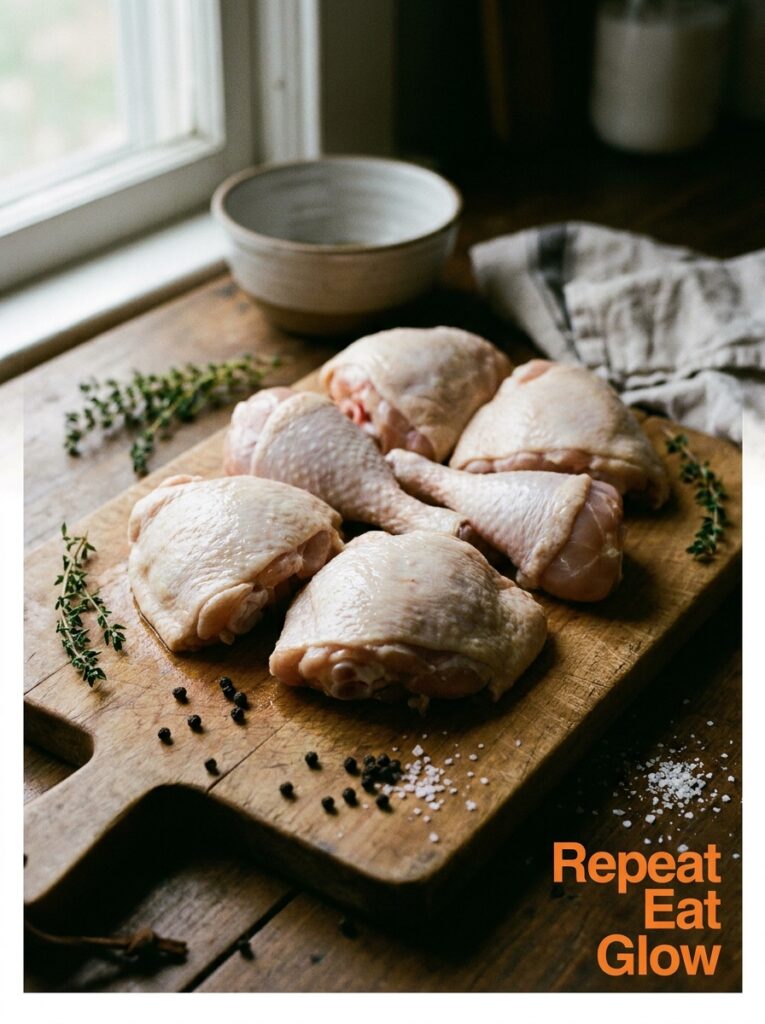
Can I just say something that might be mildly controversial? Boneless skinless chicken breasts have no business being in this recipe.
I know, I know. They’re convenient. They’re lean. But they go dry so fast in a slow bake, and dry chicken on top of otherwise perfect rice is kind of heartbreaking. For this dish, you want bone-in thighs or drumsticks. Or both, honestly, if you’re feeding more than two people.
Bone-in thighs are the BEST option. The bone keeps the meat moist while it cooks, the fat renders down into the rice below, and the skin gets this deeply golden, slightly lacquered look on top that makes the whole pan look like it came from somewhere better than your kitchen. The skin also acts like a little shield, which sounds dramatic but is actually just how it works — it keeps the moisture in.
Drumsticks are great if you’re cooking for kids or just prefer them. They take slightly longer to get fully cooked through, but they’re hard to ruin and they’re cheap, which never hurts.
One thing I’d avoid: mixing breast pieces with thighs in the same pan. They cook at different rates and you’ll either undercook the thighs or dry out the breast. Pick one, commit.
—
3. The Liquid Ratio Nobody Explains Properly (Until Now)
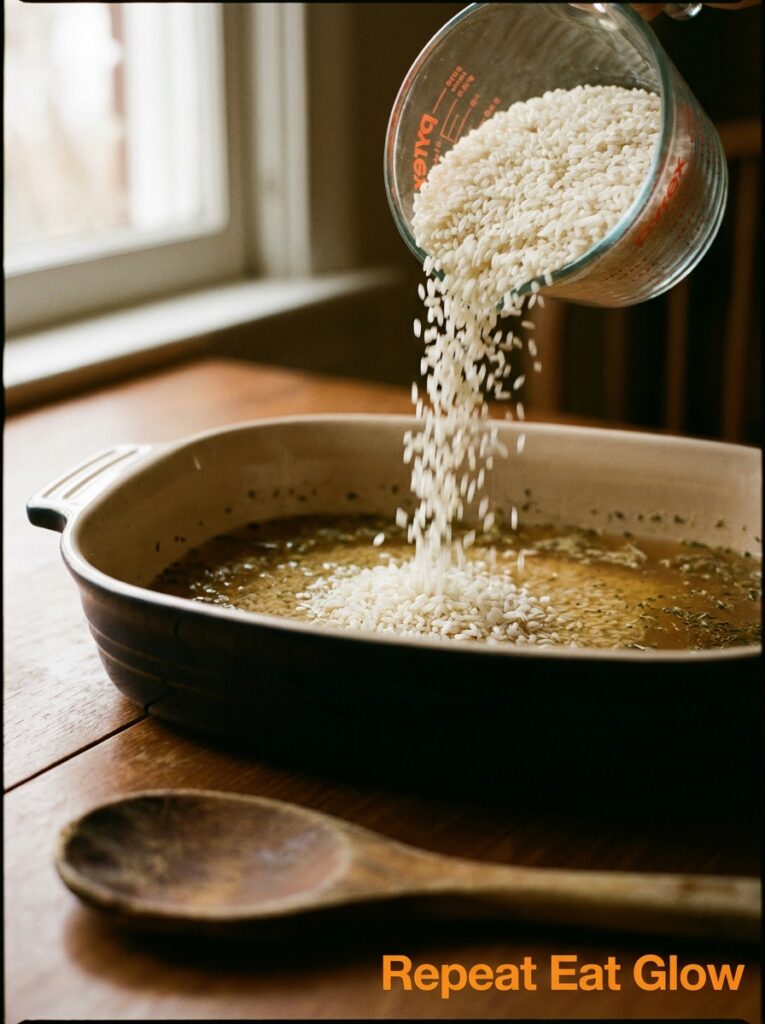
This is where most baked chicken and rice recipes go wrong. The liquid-to-rice ratio matters more than almost anything else, and it changes depending on the rice you use.
Long-grain white rice — jasmine or plain long-grain — is the sweet spot for this method. You want 2 cups of liquid for every 1 cup of dry rice when you’re baking covered. BUT. The chicken releases liquid as it cooks. The juices come down from the thighs, the fat renders, and suddenly you’ve got more liquid in the pan than you started with.
So the trick is to slightly reduce your liquid. I use 1¾ cups of broth per cup of rice, not 2. That little reduction accounts for what the chicken adds. You end up with rice that’s fluffy and separate, not wet and gluey.
The broth matters too. Chicken broth (or chicken stock if you want to be fancy about it) adds flavor that water simply can’t. I use the low-sodium kind so I can control the salt myself, which sounds like something a recipe blog would say but genuinely does make a difference — chicken skin releases salt as it cooks too.
Side note — if you’re using brown rice, don’t. Not for this. Brown rice needs too long and the chicken will overcook waiting for it. Separate battle, separate day.
—
4. The Flavor Base That Takes Thirty Seconds and Changes Everything
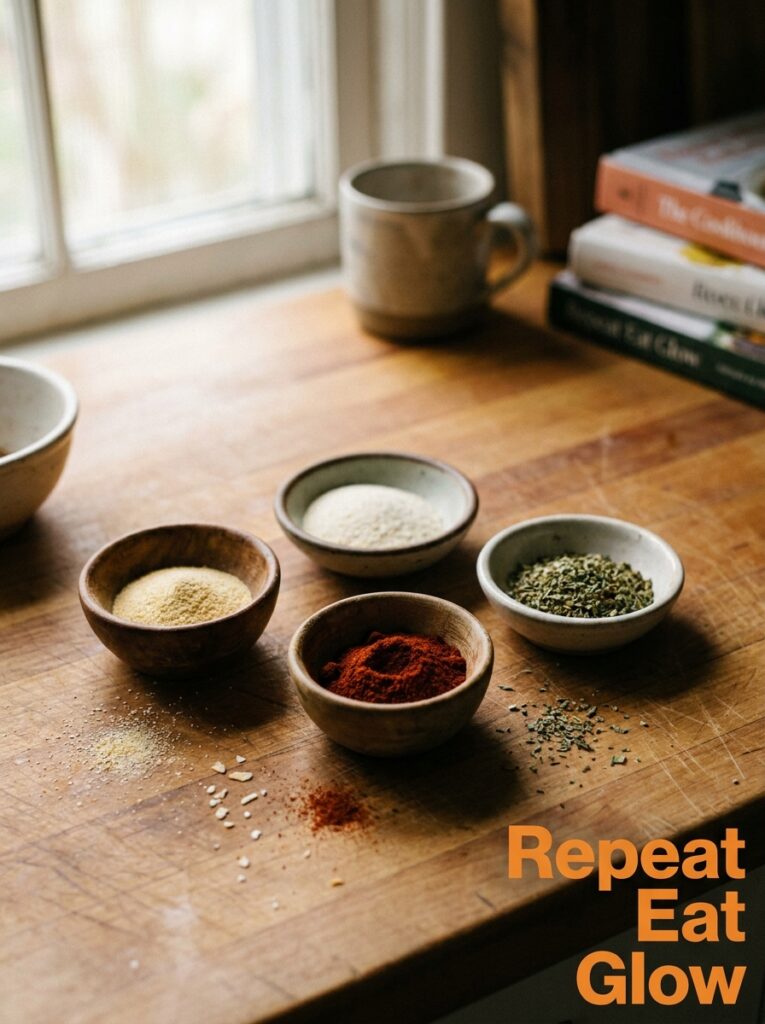
Before the rice goes in, you want some aromatics in the pan. Not complicated ones. Not a mirepoix or anything that requires a knife skills class. Just:
Sliced onion. Minced garlic. And whatever dried spice makes you happiest.
I do a generous layer of thinly sliced onion on the bottom of the baking dish. When the chicken and liquid go on top and everything bakes, those onions get almost melted into the rice. Soft and sweet and barely identifiable as onion anymore, which is excellent news if you live with someone who “doesn’t like onions.”
The garlic — I use about four cloves, minced, stirred into the broth. Not roasted, not sautéed first, just raw and minced and mixed in. It cooks down in the oven and turns mellow and nutty rather than sharp. Four cloves sounds like a lot but trust the process.
For spice, smoked paprika is my non-negotiable. It gives the chicken that faintly smoky, almost barbecue-ish crust without doing too much. I also add garlic powder (yes, in addition to the fresh garlic, yes on purpose), onion powder, salt, and a tiny bit of cayenne just for heat in the background.
“You don’t need a long ingredient list. You need the right ones.”
—
5. The Part Where You Actually Season the Chicken (Don’t Skip This)
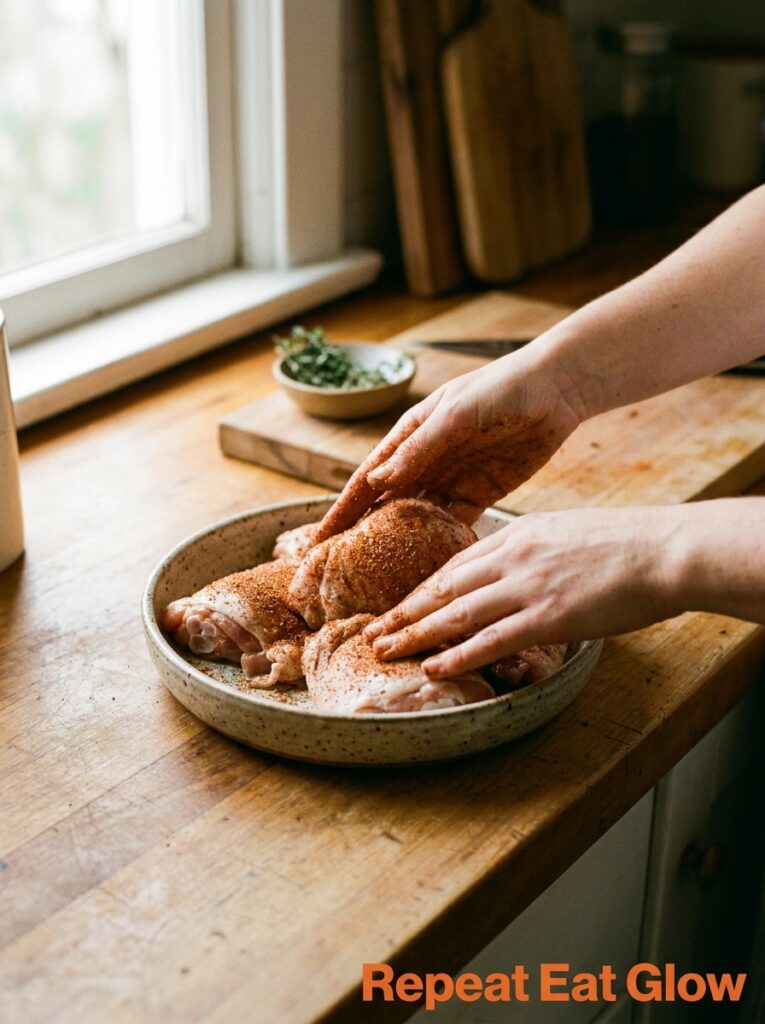
This seems obvious but I’m including it because I’ve skipped it in tired-weeknight moments and regretted it every single time.
Pat the chicken dry with paper towels first. Dry skin = crispier skin in the oven. Wet skin stays pale and a bit flabby-looking, which sounds unappetizing because it is.
Then season GENEROUSLY. Not a light dusting. Really get in there. Under the skin too if you can loosen it, which takes about five seconds and makes a noticeable difference in the final flavor. Mix your spices with a little olive oil to make a loose paste and rub it all over.
Let it sit while you prep everything else — even ten minutes makes a difference. The salt starts drawing out a tiny bit of moisture and then reabsorbing back in, which is basically home-kitchen brining on a very small, very lazy scale.
One more thing: don’t crowd the chicken pieces. They should have a bit of space between them so the heat can circulate and the skin can crisp up rather than steam. If you’re feeding six people, use a bigger dish or two smaller ones.
—
6. The Oven Temperature Argument (and Where I’ve Landed)
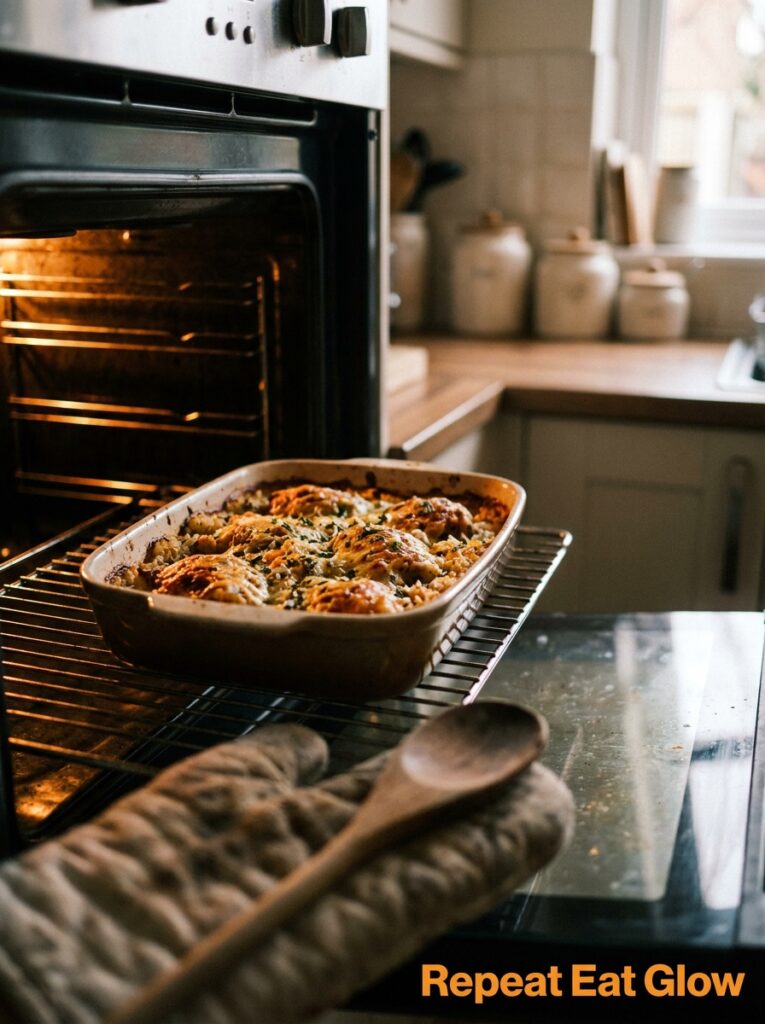
Some recipes say 375°F. Some say 400°F. A few very confident food people insist on 350°F and a much longer cook time.
Here’s where I am after testing this way too many times: 375°F covered for the first 40 minutes, then 400°F uncovered for the last 15-20. That’s the move.
The covered phase lets the rice absorb the liquid properly without any evaporation getting in the way. The uncovered phase at higher heat is purely for the chicken — it’s what gets that skin golden and a little crispy at the edges. You won’t get the same crust without it.
Foil works for covering. So does a tight-fitting lid if your baking dish has one. The seal matters a bit — you want the steam trapped inside. A loose foil cover means you lose too much liquid and risk crunchy rice at the bottom.
How do you know it’s done? The rice is cooked and fluffy when you pull it apart with a fork, the liquid should be absorbed, and the chicken should read 165°F internal temperature. Or, if you’re cooking by intuition, the skin is deeply golden and the juices run clear when you pierce the thickest part with a knife.
—
7. What to Put On Top of the Rice (Not Optional, But Also Flexible)
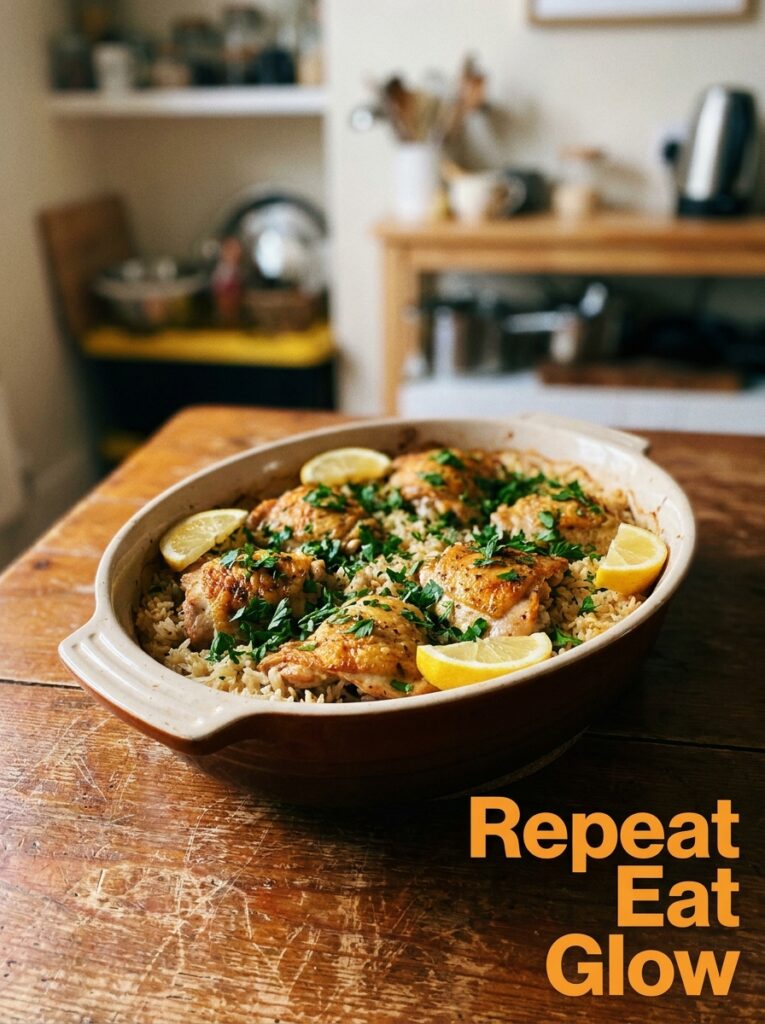
Fresh parsley is the obvious choice and honestly I’d never talk you out of it — the green against the golden chicken looks great and it adds this bright, almost grassy note that cuts through the richness.
But here’s what I actually love: a small handful of lemon zest stirred through right before serving. Not lemon juice — the acidity of juice can make the rice taste weirdly sharp. Just the zest, which adds fragrance and brightness without any sourness.
If you want something more substantial on top, crispy fried shallots are incredible. The kind you can buy in a little tub at most Asian grocery stores or even larger supermarkets. They add crunch and a kind of savory sweetness that makes the whole dish feel restaurant-finished.
A quick drizzle of good olive oil right before it hits the table doesn’t hurt either. Not extra-virgin, necessarily — just something with a bit of personality.
“The garnish isn’t decoration. It’s the last layer of flavor.”
—
8. The British Versus American Pantry Problem (and How to Work Around It)
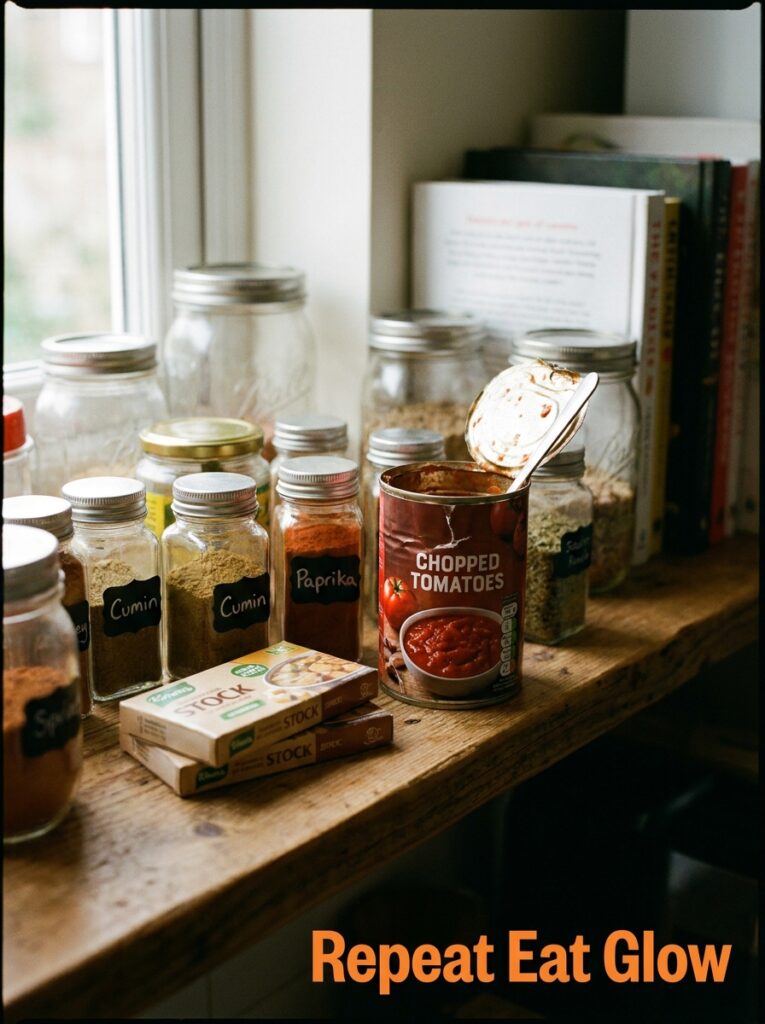
Quick thing for UK readers: “chicken broth” in American recipes is essentially what you’d call chicken stock. If you’re using Knorr stock cubes (which, same), just make it slightly stronger than you normally would for soup — a bit more concentrated. That depth of flavor is what the rice really needs.
Also, bone-in skin-on chicken thighs are extremely easy to find at any UK supermarket — usually labeled as “chicken thighs” or “whole thighs” — but US recipes sometimes assume you’re buying the large, American-style portions. UK thighs tend to be a bit smaller, so you might need an extra one or two pieces for the same pan. Not a big deal.
For American readers: if you’re at a store that doesn’t have jasmine rice, any plain long-grain white rice works perfectly. Basmati is also fine and gives a slightly nuttier flavor that works well with the smoked paprika. Just don’t use short-grain or sushi rice. Different starch, different result entirely.
—
9. Adding Vegetables Without Ruining the Rice
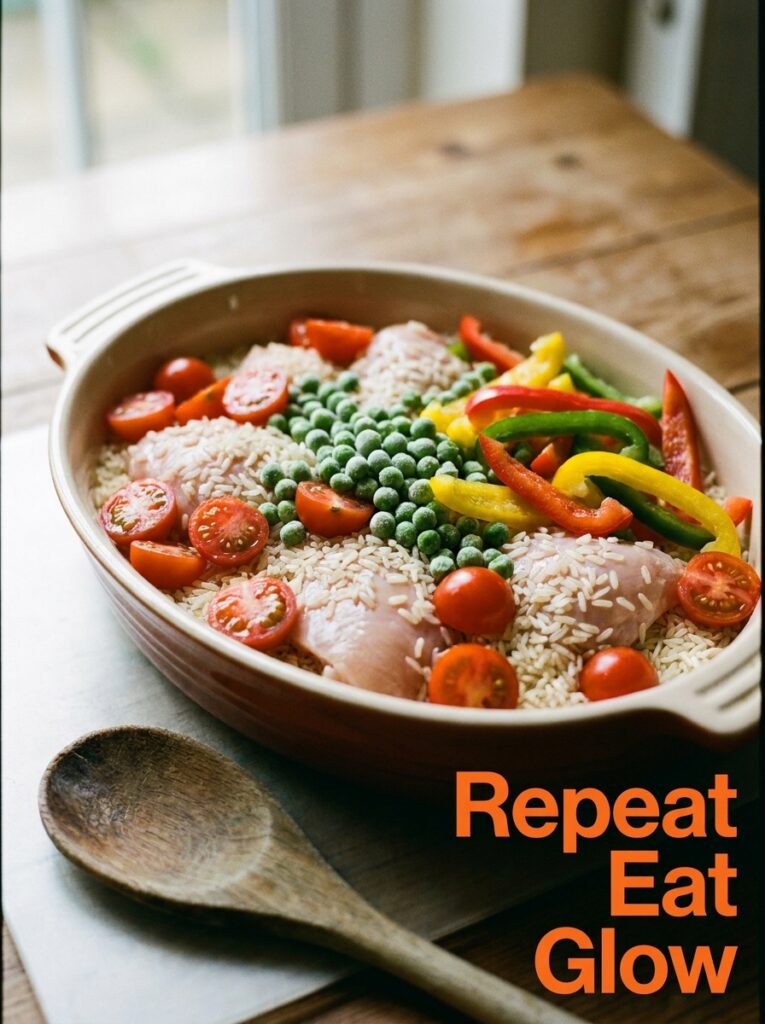
The temptation is to throw everything in. I’ve done it. I’ve added frozen peas, bell pepper strips, mushrooms, spinach — sometimes all at once — and what I’ve learned is that most vegetables either overcook badly or release so much liquid that the rice ends up waterlogged.
Here’s what actually works: vegetables that can take the heat. Sliced bell peppers added on top (not buried in the rice) come out slightly charred at the edges and sweet all the way through. Quartered baby tomatoes are excellent. Frozen peas added ONLY for the last five minutes of cooking stay bright and just-done rather than grey and sad.
What doesn’t work: zucchini (too much water), broccoli (gets bitter and weirdly yellow), spinach (disappears into a dark sludge). Not worth it. Add those on the side.
Baby corn, weirdly, works great. I don’t fully know why. It’s just always good.
—
10. Making It Creamy Without Any Cream
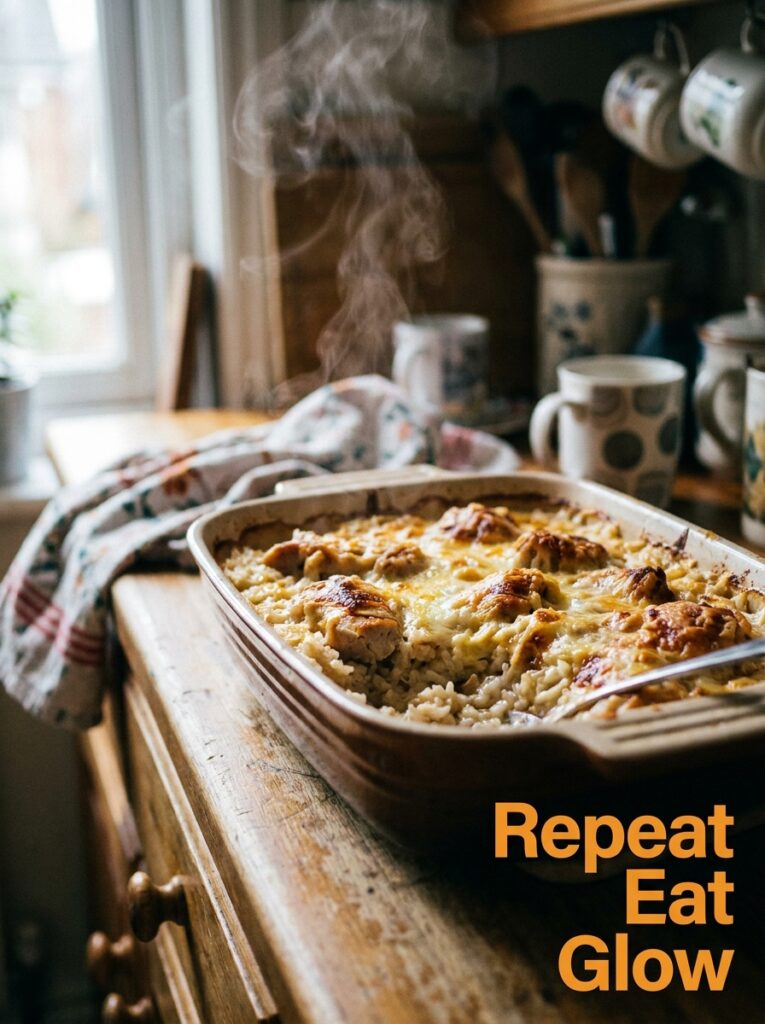
There’s a version of this that I honestly prefer to the plain broth version — and it involves one can of cream of chicken soup or, if you’d rather avoid canned soup, a few tablespoons of softened cream cheese stirred into the broth.
The cream cheese version sounds bizarre but it works. It melts completely into the liquid, adds a faint richness and creaminess to the rice, and doesn’t taste cheesy — just deeper and silkier. About two tablespoons per cup of rice.
For the cream of chicken soup version (very American, very nostalgic, very good): mix the condensed soup with broth instead of using straight broth. Don’t add the full amount of broth on the can — it’ll be too much liquid. It also adds more sodium, so taste before you add salt.
UK equivalent would be cream of chicken cup soup dissolved into your stock. Works the same way. The rice comes out almost like a really good pilaf.
—
11. Leftovers, Reheating, and the Next-Day Situation
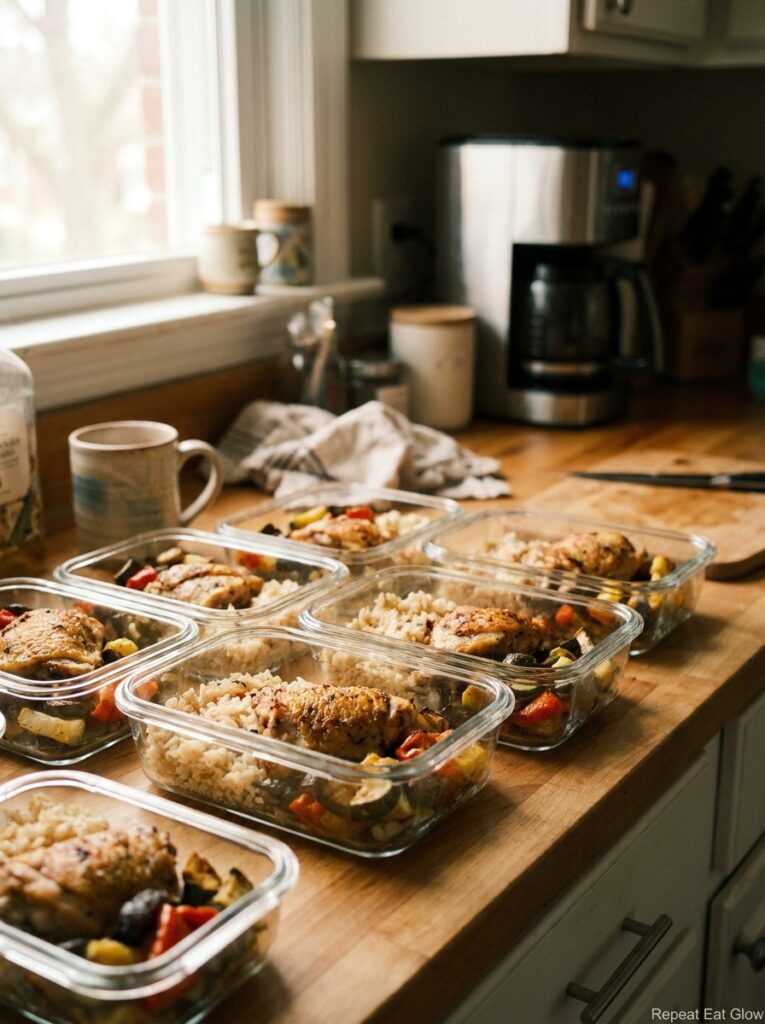
Cold baked rice is… not great, honestly. The texture goes a bit stiff and the rice tends to clump. But reheated? Completely fine if you do it right.
The key is adding moisture back. A splash — and I mean a small splash, like two tablespoons — of water or broth over the rice before it goes in the microwave, then covered. A damp paper towel works too. Heat it in 30-second bursts and fluff with a fork between rounds.
The chicken actually reheats better than the rice. The skin won’t be crispy anymore but the meat stays moist inside, especially the thighs. Pull it off the bone for leftover rice bowls and it’s practically a different meal.
This keeps in the fridge for three days without problems. I wouldn’t freeze it — the rice texture suffers significantly after freezing.
—
12. The One-Pan Promise Is Real (and Why That Matters on a Weeknight)
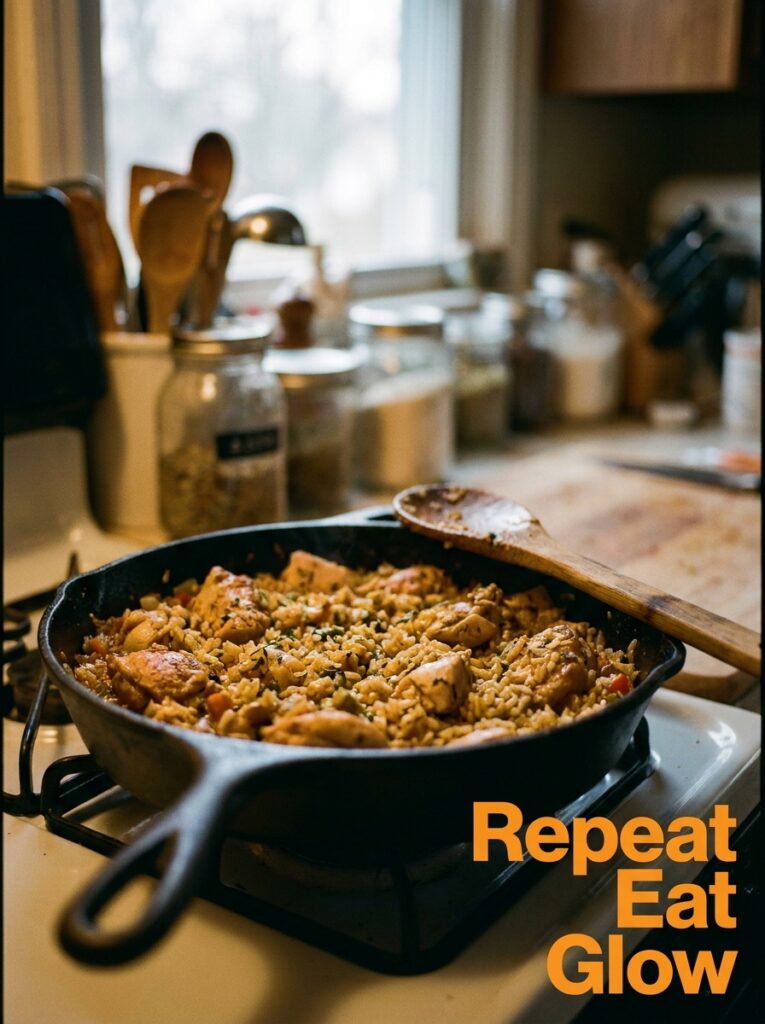
One baking dish. That’s it. One baking dish to wash, one oven to clean around, one serving platter if you want to make it look nice (you don’t have to).
I want to be genuinely honest here: this is why baked chicken and rice became a weeknight staple for so many people. Not because it’s the most exciting thing you can make. Because it’s the thing you can make when you’re tired and still have people to feed and you don’t want to stand over a stove stirring anything. You put it in the oven, you set a timer, you go do other things. Forty-five minutes later dinner is ready and it smells incredible and everyone thinks you tried harder than you did.
That’s the whole deal. The satisfaction-to-effort ratio is basically unbeatable.
—
❓ FAQ
Q: Can I use chicken broth instead of stock, or does it matter? A: Both work fine — broth is typically thinner and lighter in flavor, stock is richer and more gelatinous. For this recipe, either is great. If you’re using stock cubes or bouillon, just make sure you’re not making it too salty since the chicken releases salt during cooking too.
Q: My rice always comes out crunchy at the bottom — what am I doing wrong? A: Usually it’s one of two things: the foil wasn’t sealed tightly enough and too much liquid evaporated during the covered phase, or your oven runs hot and the temperature was higher than you thought. Try sealing the foil tighter or checking your oven temp with a thermometer. A little extra splash of broth before covering also helps.
Q: Can I make this ahead and reheat the whole dish? A: You can, but add a generous splash of broth over everything before reheating — cover it with foil and warm it at 325°F for about 20 minutes. The rice comes back to life pretty well. The skin won’t be crispy anymore but the overall dish is still really good.
—
💭 Final Thoughts

Baked chicken and rice is never going to be a flashy dinner. It’s not going to win any points for presentation unless you lean into the garnish game a little. But it keeps delivering, week after week, in a way that very few recipes do — reliably, warmly, without drama.
Make it once and you’ll understand why everyone’s aunt has a version of it.
So what’s yours going to look like?
