My neighbor texted me at 9:45 on a Friday night asking what she should make for 14 people at brunch the next morning. I didn’t even hesitate. “Make the casserole,” I told her. “Go buy bread now.” She’d never heard of it. I can’t stop thinking about that conversation because honestly? Before I stumbled onto this recipe a few years back, I was in the same boat — standing in my kitchen at 6am, half-asleep, frying individual pieces of french toast for a crowd like some kind of martyr.
Never again.
—
1. Why This Recipe Works When Basically Every Other “Easy Brunch” Recipe Is Lying to You
Most “easy” brunch recipes aren’t easy. They’re just normal recipes with the word “easy” in the title. You still have to actively cook them at some terrible hour of the morning, standing over heat, managing timing, hoping everyone eats at the same pace.
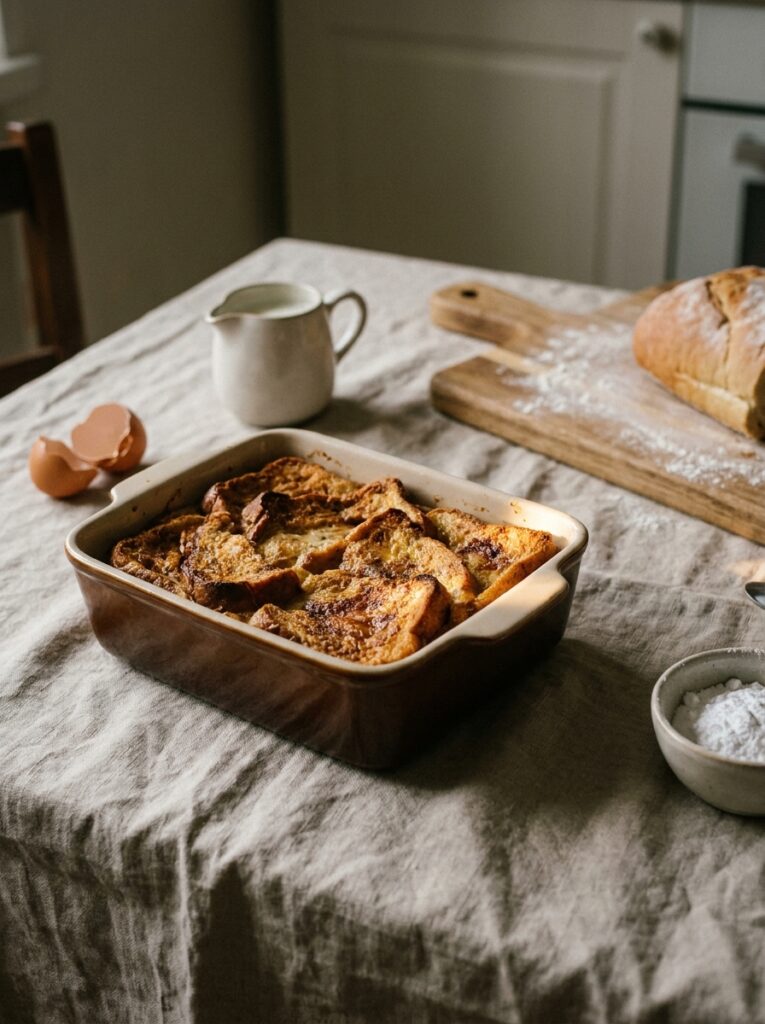
French toast casserole doesn’t do that. You build it the night before, stick it in the fridge, and then the next morning you just slide it into the oven. That’s genuinely it. You’re not lying to anyone.
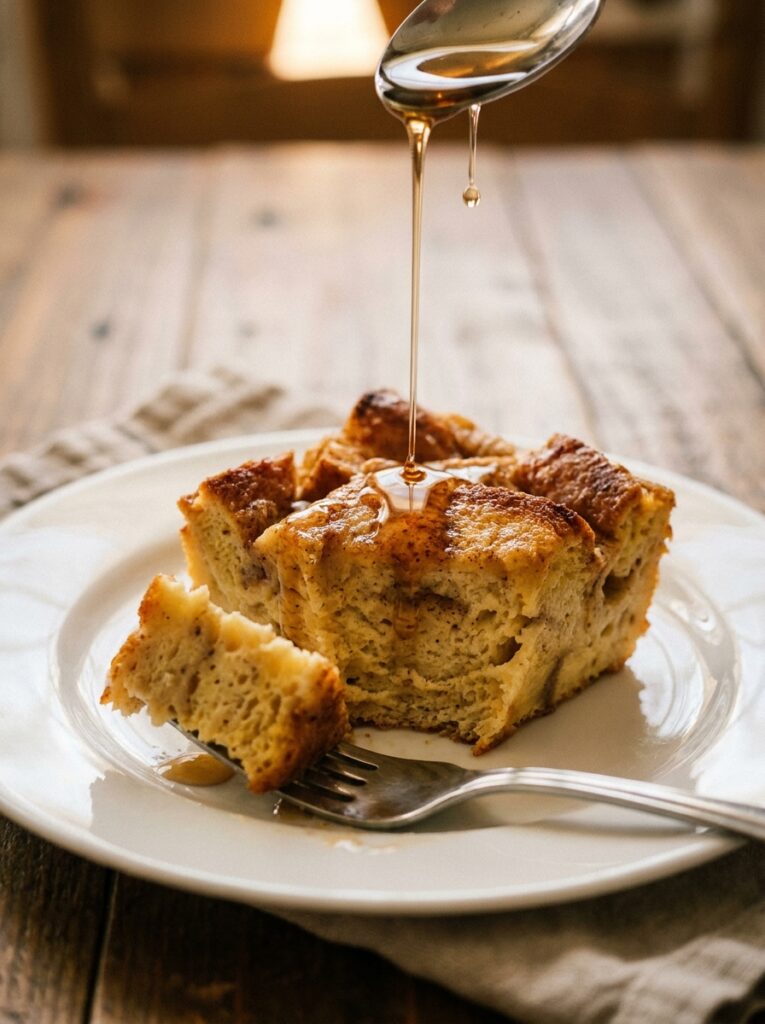
And the result isn’t some sad compromise, either. The custard soaks all the way into the bread overnight, which means you get this impossibly creamy, almost bread-pudding-like texture in the middle with crispy, caramelized edges. It’s richer than regular french toast. It’s better, actually. The overnight soak is the whole point, not just a shortcut.
“The overnight soak isn’t a shortcut — it’s the reason this tastes better than anything you’d make at 6am.”
The crowd size issue disappears completely. Whether you’re feeding four or fourteen, the math barely changes. Bigger dish, more bread, slightly longer bake time. That’s the whole adjustment.
—
2. The Bread Decision That Makes or Breaks the Whole Thing
Can I just say — this is where people go wrong. A lot of people go wrong here.
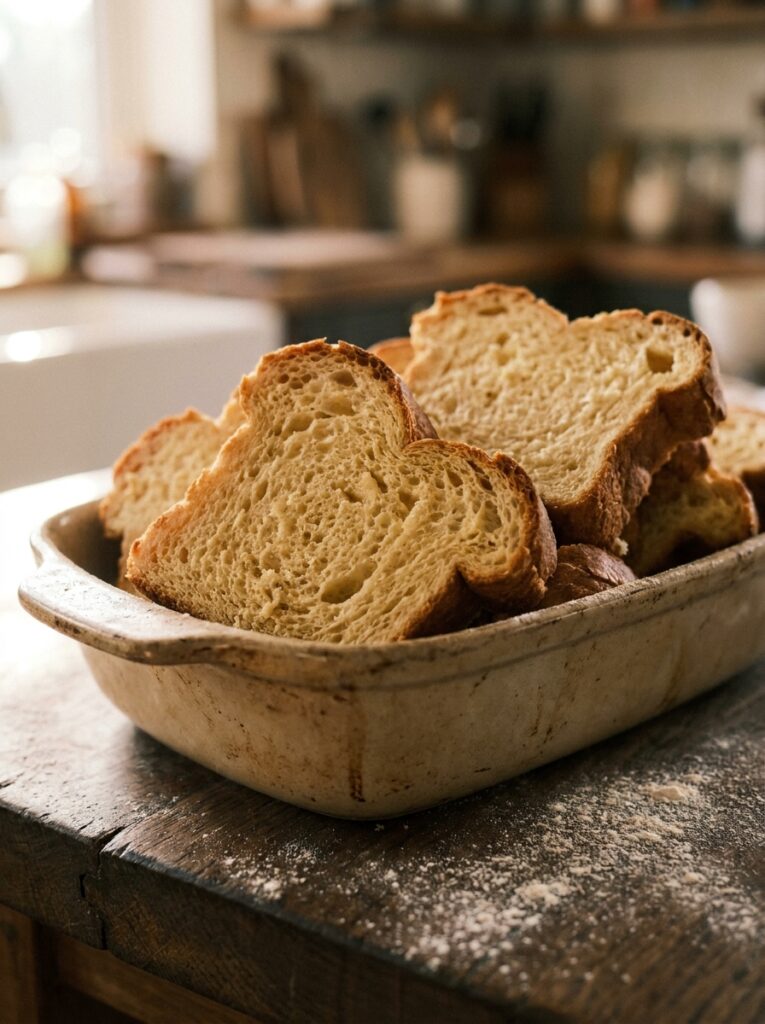
Thin sandwich bread turns to mush. I know it’s tempting because it’s what you have, but don’t. You want something thick and sturdy, something with actual substance that can absorb a full cup of custard without disintegrating overnight.
Brioche is the dream. Rich, slightly sweet, with a tight enough crumb that it holds its shape but still absorbs every bit of the egg mixture. A thick-cut challah works beautifully too. Both are pretty widely available in most large supermarkets now, and if you’ve got a bakery nearby that makes either, even better. Day-old is actually ideal — slightly stale bread absorbs the custard faster and more evenly. So don’t throw that away.
For UK readers: a good thick-cut white loaf or a supermarket brioche loaf both work well here. The french fancy rolls some bakeries sell — those work too if you slice them thick.
Cut your bread into cubes about 1 to 1.5 inches. Not tiny crouton pieces, not huge hunks. You want cubes that’ll stack with some air pockets between them so the custard can get all the way down to the bottom of the dish.
—
3. The Custard Ratio That You’ll Memorize After One Try
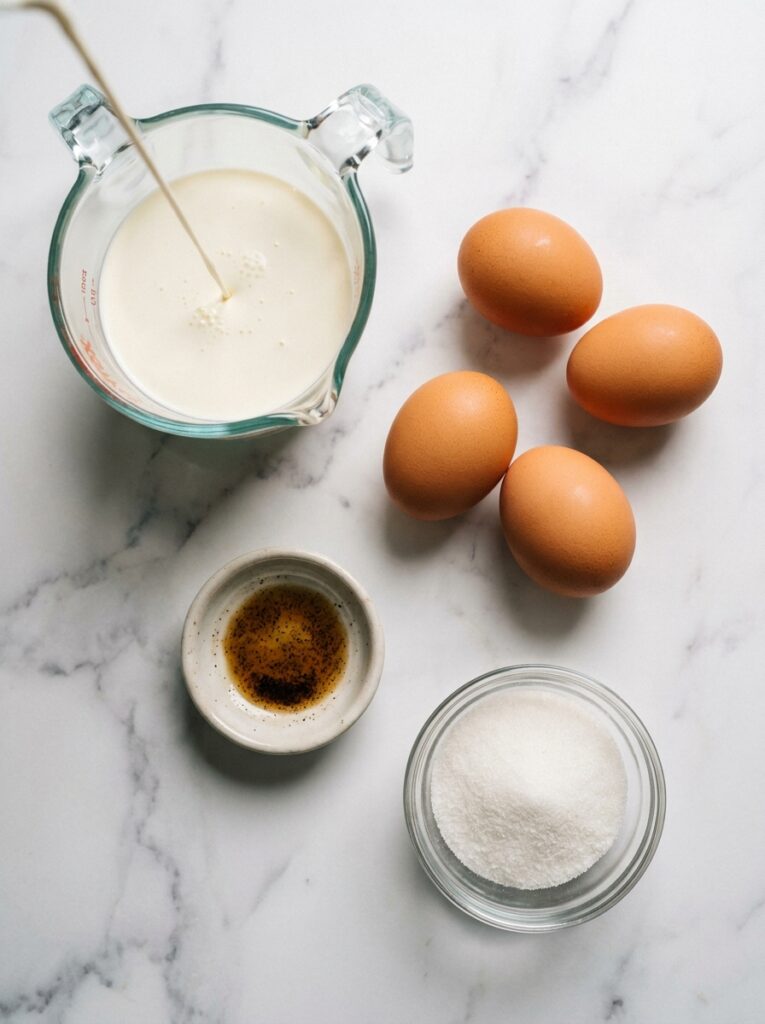
Here’s the base recipe for a standard 9×13 inch baking dish, which feeds about 8 people comfortably:
- 1 loaf (about 12–14 oz) brioche or challah, cubed
- 6 large eggs
- 2 cups whole milk
- ½ cup heavy cream
- 3 tablespoons sugar
- 1 tablespoon vanilla extract
- 1 teaspoon cinnamon
- ¼ teaspoon nutmeg (don’t skip this, trust me)
- Pinch of salt
Whisk the eggs first until the yolks are fully broken and combined, then add everything else and whisk again until you’ve got a smooth, even custard. Pour it slowly and evenly over your bread cubes, then use a spoon to gently press everything down so the top pieces get some custard on them too.
Cover with cling film and refrigerate overnight. Minimum four hours, honestly, but overnight is better.
—
4. The Brown Sugar Butter Situation on Top (This Is the Part People Lose Their Minds Over)
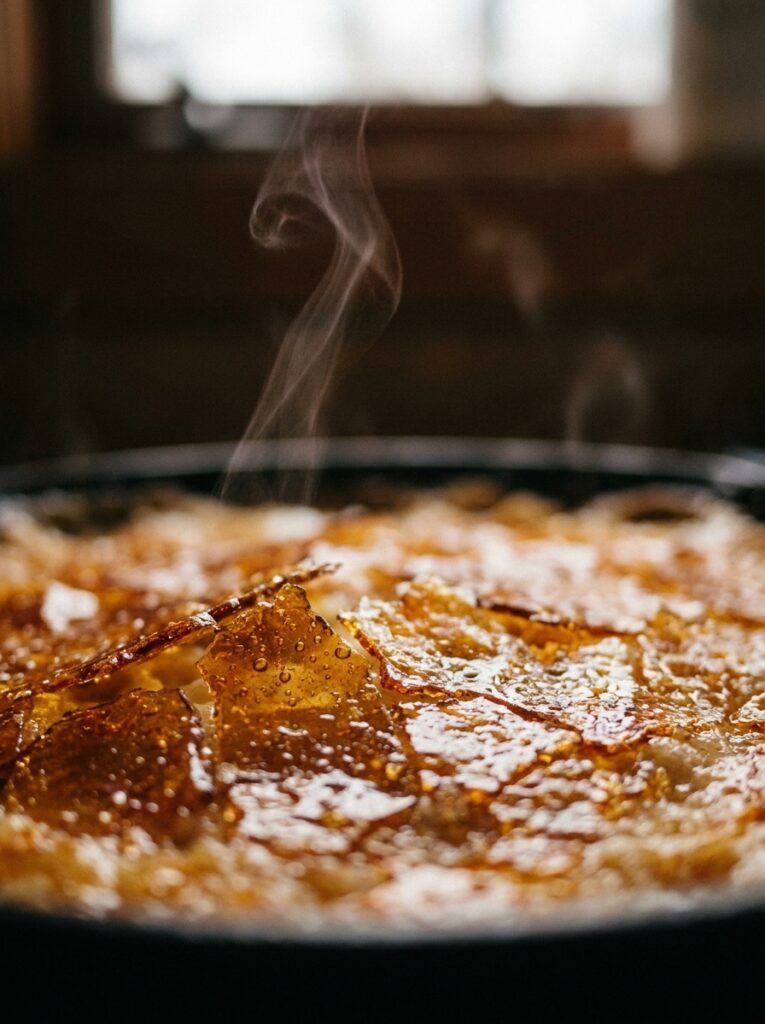
Okay. This topping.
Some people put it on before the overnight rest. Some people put it on right before baking. I’ve done it both ways and honestly? Right before baking is slightly better because the butter doesn’t separate weirdly into the custard layer below. But both work. Don’t stress it.
Mix together ¼ cup softened butter with ½ cup brown sugar and a pinch of cinnamon. Some people add ½ teaspoon of maple extract here and it’s an incredible move if you have it — not necessary, but a very good idea.
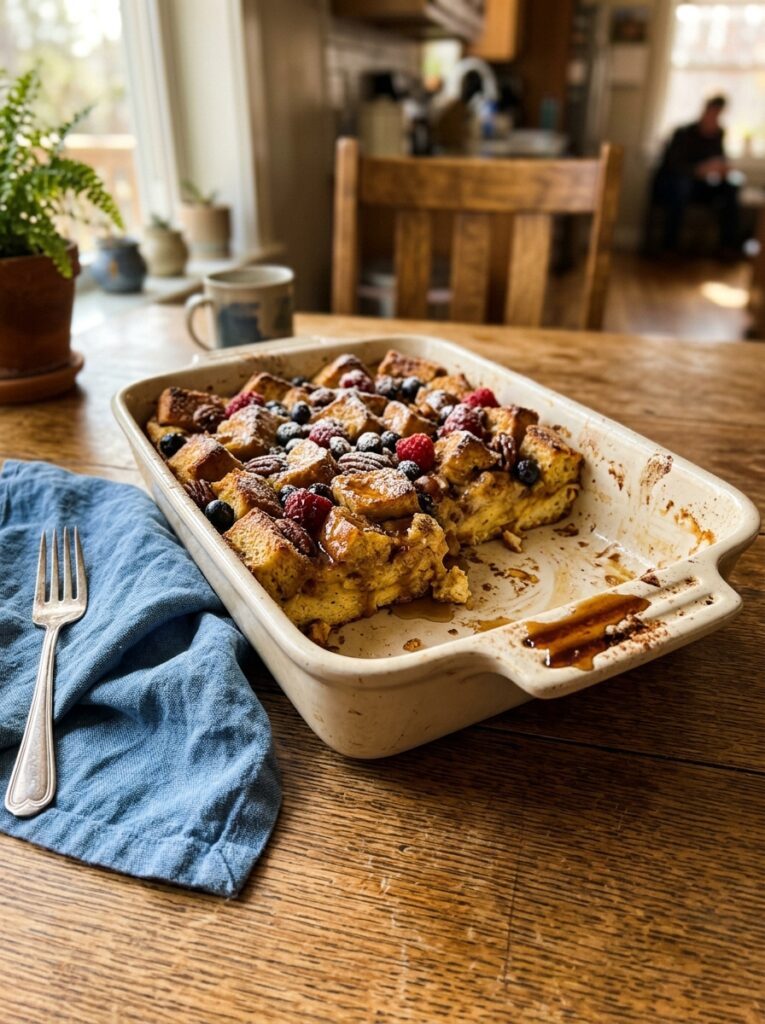
Dot this mixture across the top of the casserole. It’ll melt into a glossy, crackly, caramelized crust as it bakes. The corners get these almost toffee-like crispy bits. People will pick at the corners first. This will cause a minor argument at your table and it’s completely worth it.
“The corners get these almost toffee-like crispy bits. People will pick at them first. This will cause a minor argument.”
—
5. Oven Temperature and Timing — Or: Why 350°F Is Doing a Lot of Work Here
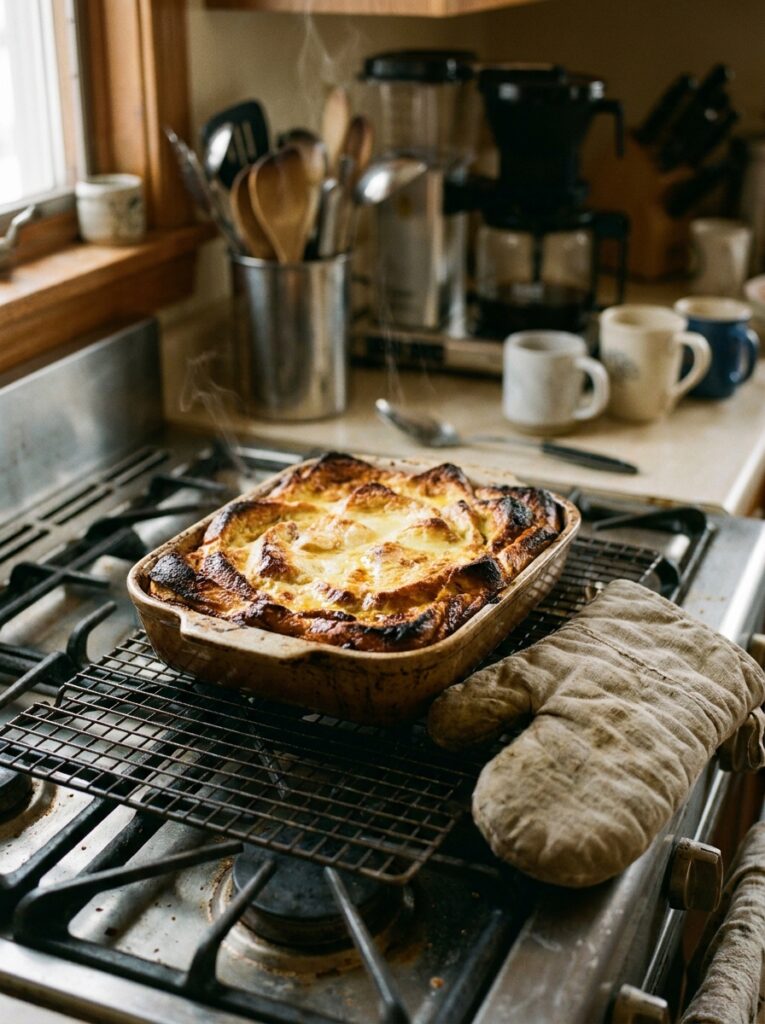
Pull the casserole out of the fridge about 20 minutes before it goes in the oven. Cold baking dish, hot oven = uneven cooking. Worth knowing.
Bake at 350°F (180°C) — covered with foil — for about 35 minutes. Then pull the foil off and bake another 15 to 20 minutes uncovered until the top is deep golden, slightly puffed, and the center doesn’t wobble when you shake the dish.
The covered-then-uncovered method matters. It keeps the inside from drying out while the custard sets, THEN lets the top brown properly. Skipping the foil step and just baking it all uncovered sounds like it would save time, but you’ll end up with a dried-out middle before the inside is fully cooked. Not worth it.
Total bake time: 50 to 55 minutes. Let it rest 5 to 10 minutes before you cut into it. This is not optional. If you cut it immediately it’ll just be a pile of warm mush, which is a heartbreaking result after all your patience.
—
6. The Version That Quietly Became My Most-Requested: Berries Baked Right In
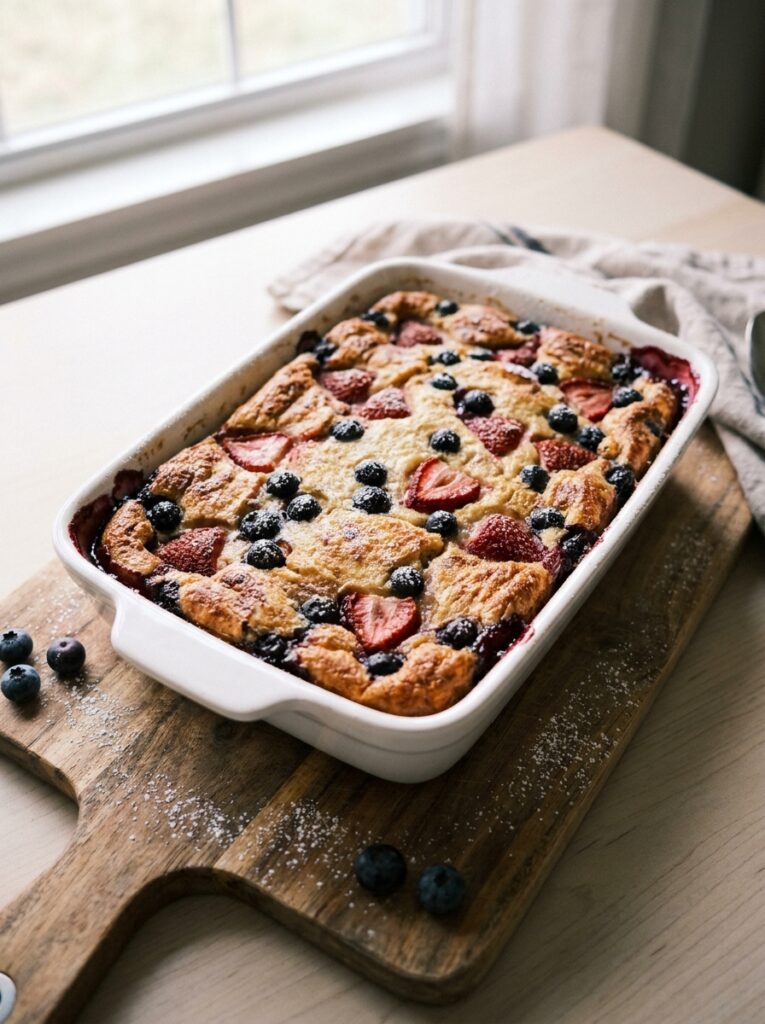
My regular casserole is good. This version made a friend actually gasp when she tried it, which had never happened to me before in a cooking context, so I’m mentioning it.
Scatter a cup of fresh or frozen blueberries (or raspberries, or a mix — frozen works perfectly here, no need to thaw) between the bread cubes as you’re layering into the dish. They’ll sink a bit, which is fine. As the casserole bakes, they soften and burst slightly, leaving little pockets of jammy fruit throughout the custard layer.
The contrast between the sweet caramelized top and the slightly tart berry pockets in the middle is genuinely one of the best things I’ve eaten at brunch in recent memory.
You could also do thin slices of pear layered through the bread in autumn, or thinly sliced apple tossed in a little cinnamon. Peaches in summer, if they’re ripe. The base recipe handles all of it.
—
7. A Simple Savory Version That Feels Like a Completely Different Recipe
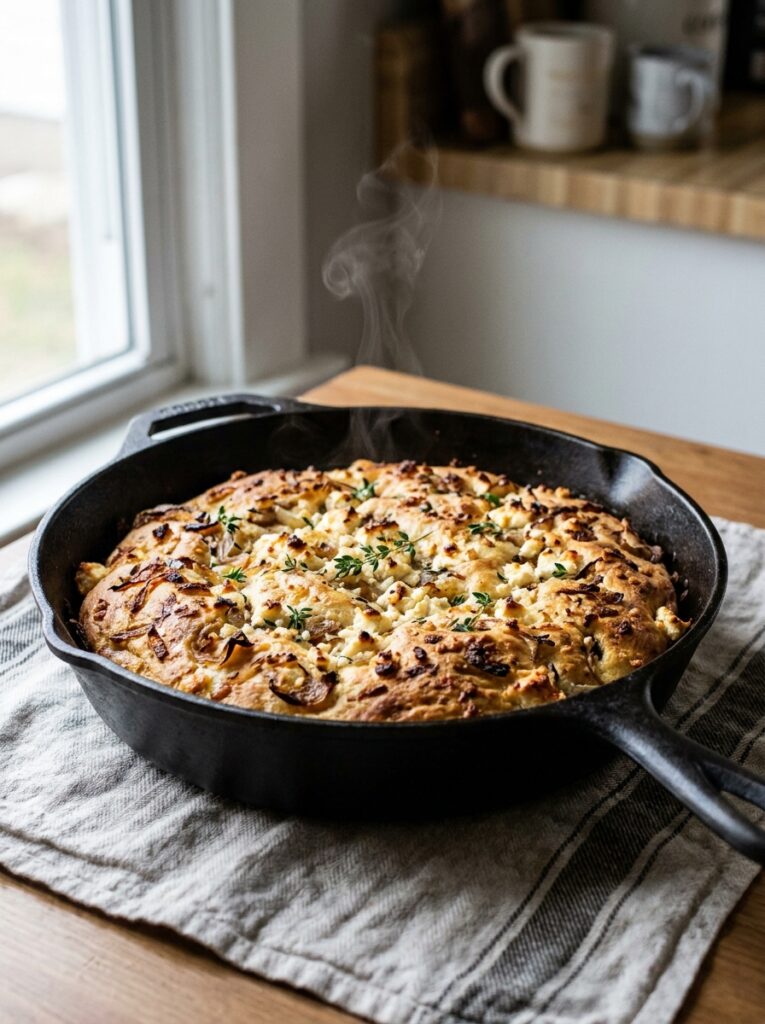
Not everyone wants sweet at brunch. Or maybe you’ve got people who don’t eat sugary things in the morning, which — I respect it.
Here’s what you do: same method, completely different custard.
Drop the sugar, vanilla, and cinnamon. Instead, whisk in ½ teaspoon garlic powder, ½ teaspoon onion powder, a good amount of black pepper, and some fresh thyme if you’ve got it. Use a sturdy sourdough or ciabatta-style loaf instead of brioche.
Layer in cubes of cooked bacon or sausage and a generous handful of shredded cheese — a sharp cheddar works great here, or a gruyère if you’re feeling fancy. Top with more cheese instead of the brown sugar butter.
It bakes the same way, same temperature, same timing. And it tastes like something between a strata and a savory bread pudding. It’s really good. It’s different enough that it feels like an entirely separate dish, not just a modified version of the same thing.
—
8. What to Serve Alongside So the Whole Table Feels Complete
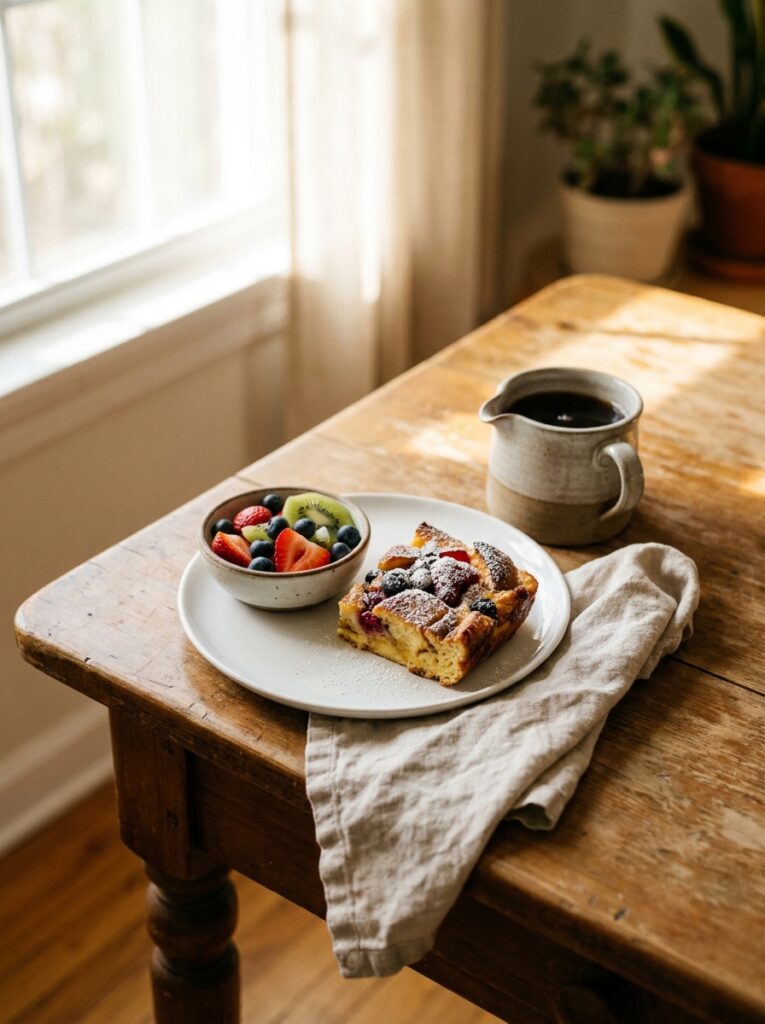
The casserole is rich. That’s a feature, not a bug, but it means you want to balance the table a little.
Fresh fruit is the obvious move — and it genuinely is the right one. A big bowl of sliced strawberries with a tiny bit of sugar and lemon zest stirred through, or just whatever’s good and ripe at the moment. Mango works surprisingly well alongside the warm cinnamon custard. So does a citrusy fruit salad.
For the savory version, I’d do roasted cherry tomatoes and maybe a light green salad if this is a lunch-brunch situation.
Drinks matter more than people think for brunch tables. Strong coffee, obviously. For a crowd, a big pot of tea works better than you’d expect if you’re trying to keep the morning easy — steep a large pot and keep it wrapped in a tea towel to hold heat.
Maple syrup on the table. Always. Even if the casserole already tastes sweet, someone will want to add more, and that someone is always right.
—
9. How to Scale This Down for a Tuesday Morning (Yes, Really)
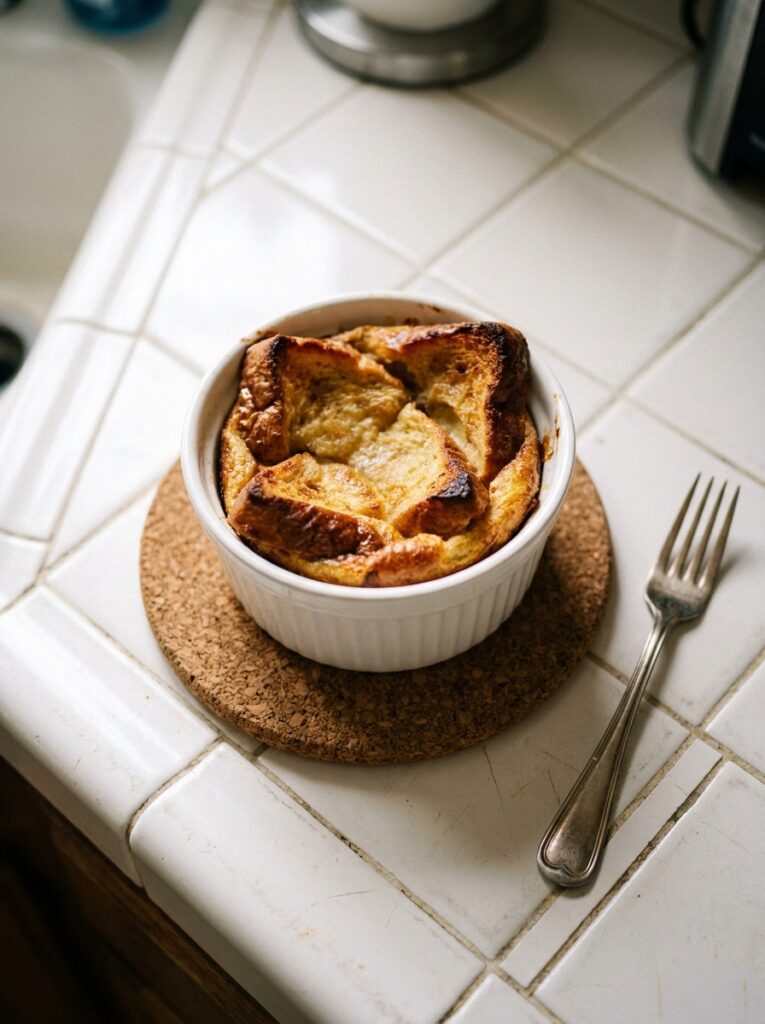
I know this is marketed as a crowd-pleaser, and it is, but don’t let the “big batch” framing put you off. This casserole works beautifully in a smaller dish for two or three people.
Use a loaf pan or an 8×8 square dish. Halve all the ingredients. Everything else stays the same — overnight soak, covered-then-uncovered baking, five-minute rest before cutting. The bake time actually shortens a bit, maybe 40 to 45 minutes total, so just keep an eye on it.
I’ve made this on a quiet Sunday when it was just me and my husband and we had leftover bread that needed using. It felt indulgent and completely worth it. Sometimes you don’t need a special occasion. Wednesday morning can be the occasion.
—
10. The Overnight Timing Breakdown for People Who Overthink It (Hi, Yes, Me)
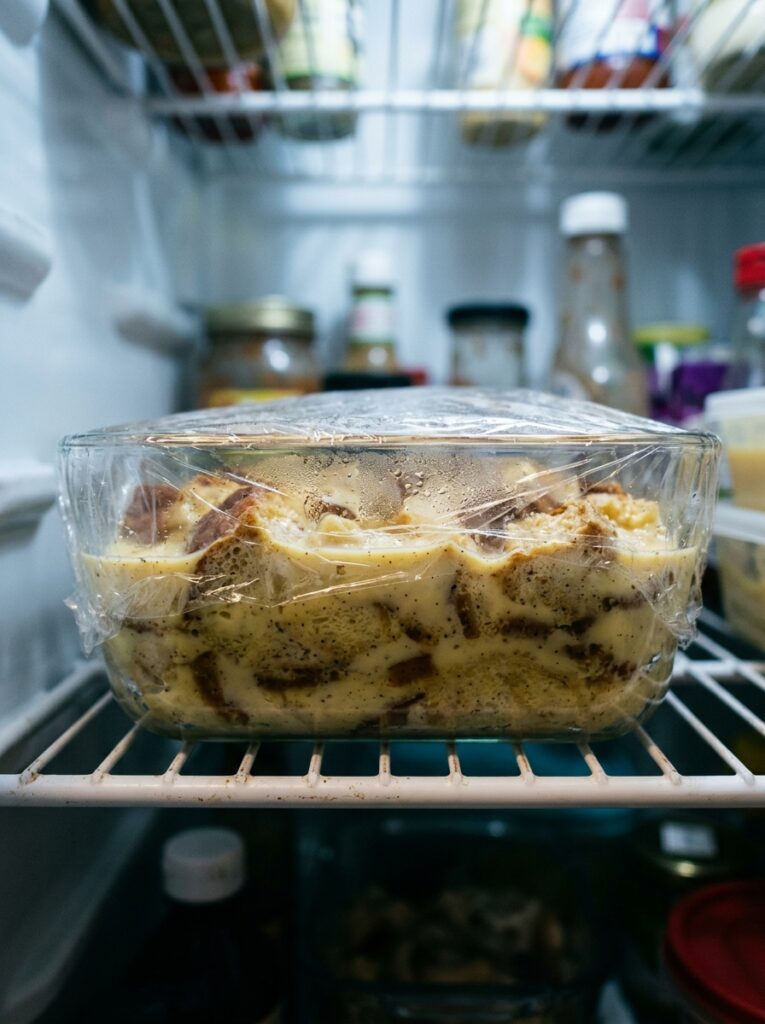
I know some people find the overnight part mildly stressful — like, what if you make it too early, what if you make it at 7pm instead of 11pm, does it matter?
It doesn’t, really. Here’s the approximate timeline:
- Assemble and pour custard: 20 minutes
- Refrigerate: anywhere from 4 hours to overnight (up to 18 hours is completely fine)
- Pull from fridge: 20 minutes before baking
- Bake: 50 to 55 minutes
- Rest: 10 minutes
- Eat: immediately, enthusiastically
The only thing to avoid is making it more than 18 hours ahead, because at that point the bread can get a little over-saturated and the texture suffers. But if you’re making it the night before to eat the next morning? You have a wide, forgiving window.
—
11. The Topping Situation: Powdered Sugar, Maple, Whipped Cream — All Three, No Judgment
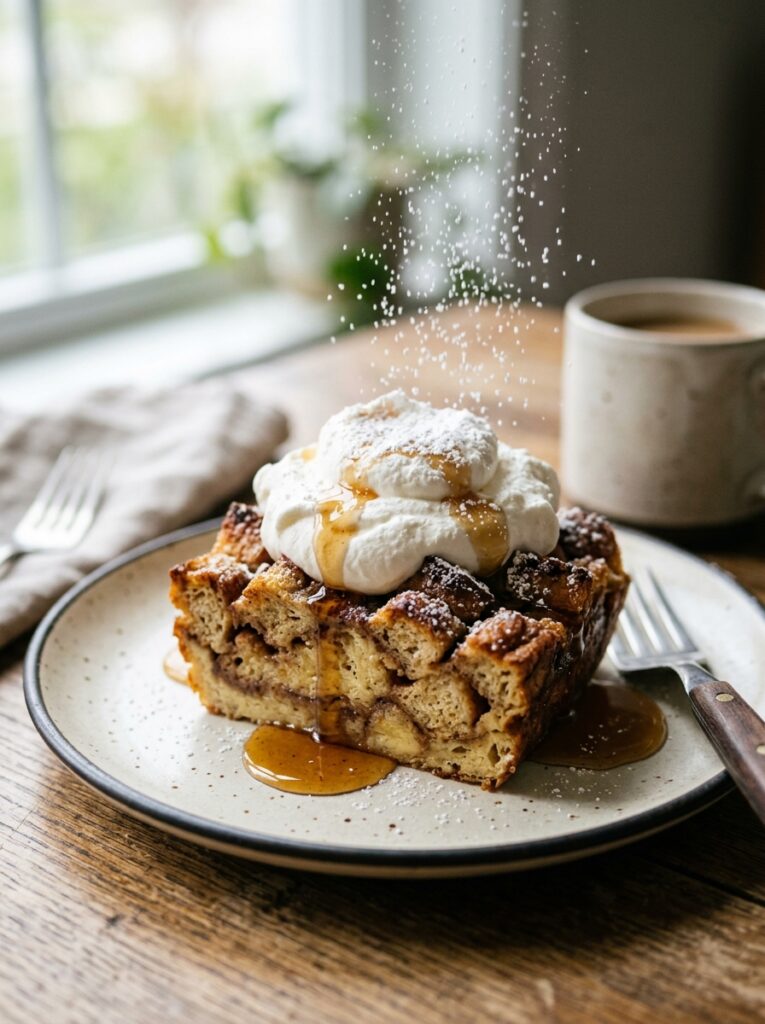
At my table, the topping situation has become a whole thing. Slightly chaotic. Everyone has a strong opinion and I love this about it.
Powdered sugar sifted over the top right before serving is non-negotiable in my house. It looks beautiful and adds just enough sweetness on the surface. A light dusting, not a snowstorm. There’s a difference.
Maple syrup in a small pitcher on the side — actual maple syrup, not maple-flavored syrup. Again. Not negotiable. This one I feel strongly about.
Whipped cream is the wildcard that always disappears fastest. You can buy it ready-made or whip your own with a little cream and vanilla, and it melts into the warm casserole in this gorgeous, slightly-liquid way that’s extremely good. Crème fraîche is an elegant swap for UK readers who want something a little less sweet and slightly tangy.
“Powdered sugar, maple syrup, whipped cream — someone always says they don’t want any of it and then eats the most of it.”
—
12. The Make-Ahead Trick That Makes You Look Impossibly Organized
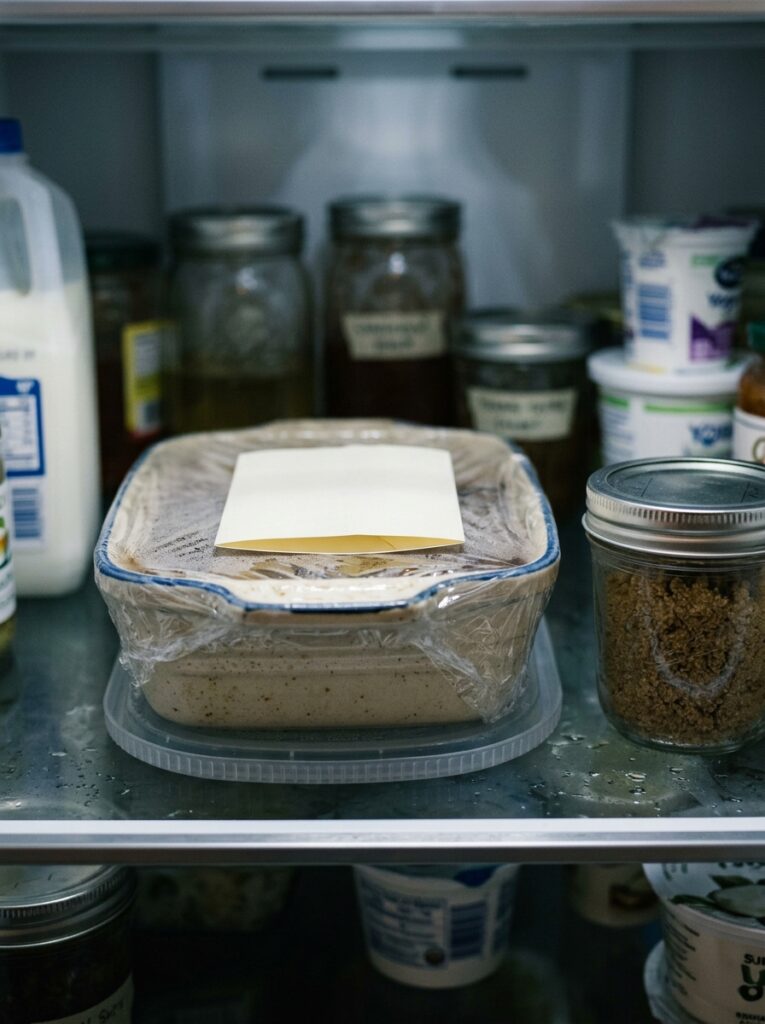
Here’s a thing I started doing last year that I’ve told so many people about. You can assemble the entire dry part of the casserole — the bread cubes, any layered-in fruit, the brown sugar topping — and freeze it in the baking dish. Then when you need it, you pull it out the night before, make the custard, pour it over the frozen bread, and put it in the fridge to thaw and soak overnight.
The next morning you bake it exactly as normal.
It doesn’t taste frozen. It doesn’t taste different at all. And it means you can prep the “body” of this casserole weeks in advance, which is genuinely useful around the holidays when your entire brain is occupied with fourteen other things.
I’ve made it this way and served it to guests who complimented me on the meal and asked how long I’d been in the kitchen that morning. “Oh, a few minutes,” I said. Which is technically true.
—
❓ FAQ
Q: Can I use regular sliced bread if that’s all I have? A: You can, but go for the thickest white or whole wheat sandwich bread you can find, and let it sit out for a few hours to get slightly stale first. Soft, fresh sandwich bread tends to go a bit too soggy — not inedibly so, but not the texture you’re aiming for. It’ll still taste good.
Q: My casserole is golden on top but still seems wobbly in the middle — is it done? A: A very slight jiggle in the very center is okay and will firm up as it rests. A pronounced wobble means it needs another 8 to 10 minutes covered with foil, then check again. Every oven runs slightly differently, so trust the wobble test more than the timer.
Q: Can leftovers be reheated the next day? A: Yes, and they’re surprisingly good. Reheat individual slices in a dry pan over medium-low heat for a couple of minutes per side — they get slightly crispy edges that are honestly almost better than day one. A microwave works too but you lose the texture. Worth the extra few minutes on the stovetop.
—
💭 Final Thoughts
The thing I keep coming back to with this recipe is how much it removes the performance anxiety from cooking for people you care about. You’ve already done the work. The morning of, you’re just the person who opens the oven. And somehow, every single time, someone at the table says “this is incredible — did you make this from scratch?”
Yes. The night before. In my pajamas. While watching something completely mindless on TV.
That’s kind of the best kind of cooking, isn’t it?
