My friend called me at 5pm on a Tuesday and said, “I have chicken thighs and I don’t want to think.” Same, honestly. Same.
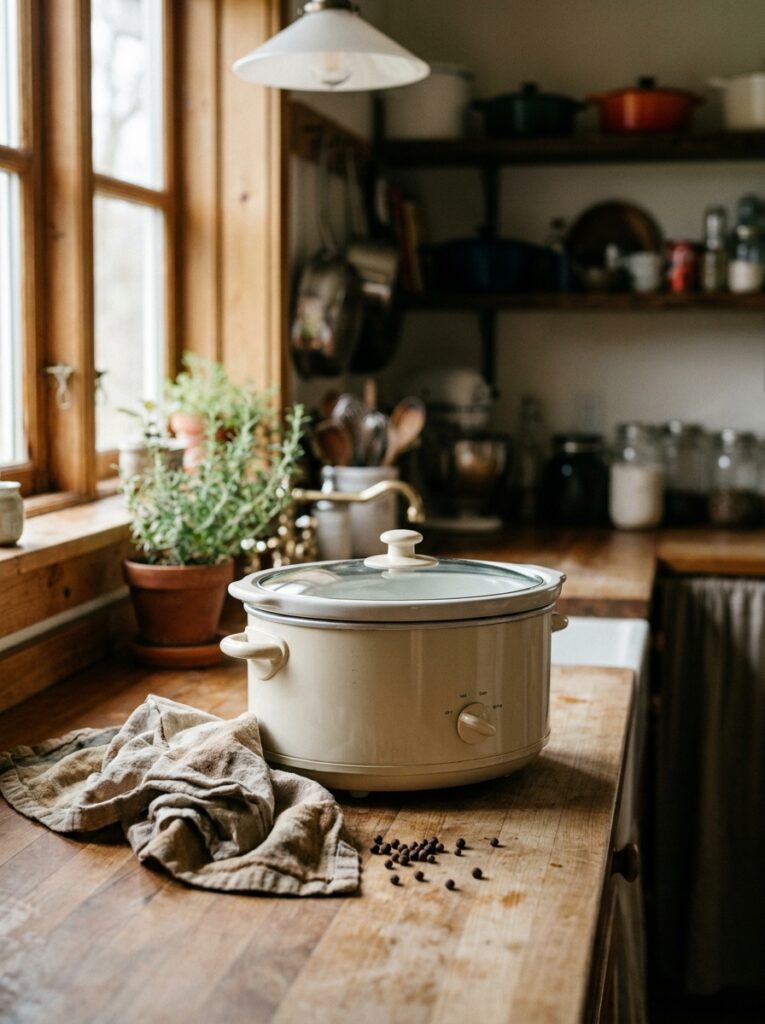
That’s how I ended up making this for her over the phone, walking her through it step by step while she poured herself a glass of wine and stood in her kitchen doing almost nothing. The whole setup took maybe eight minutes. She texted me three hours later: “why does this taste like I slow-cooked it all day.” Reader, she did.
—
1. Why Chicken Thighs Are Non-Negotiable Here (I Don’t Make the Rules)
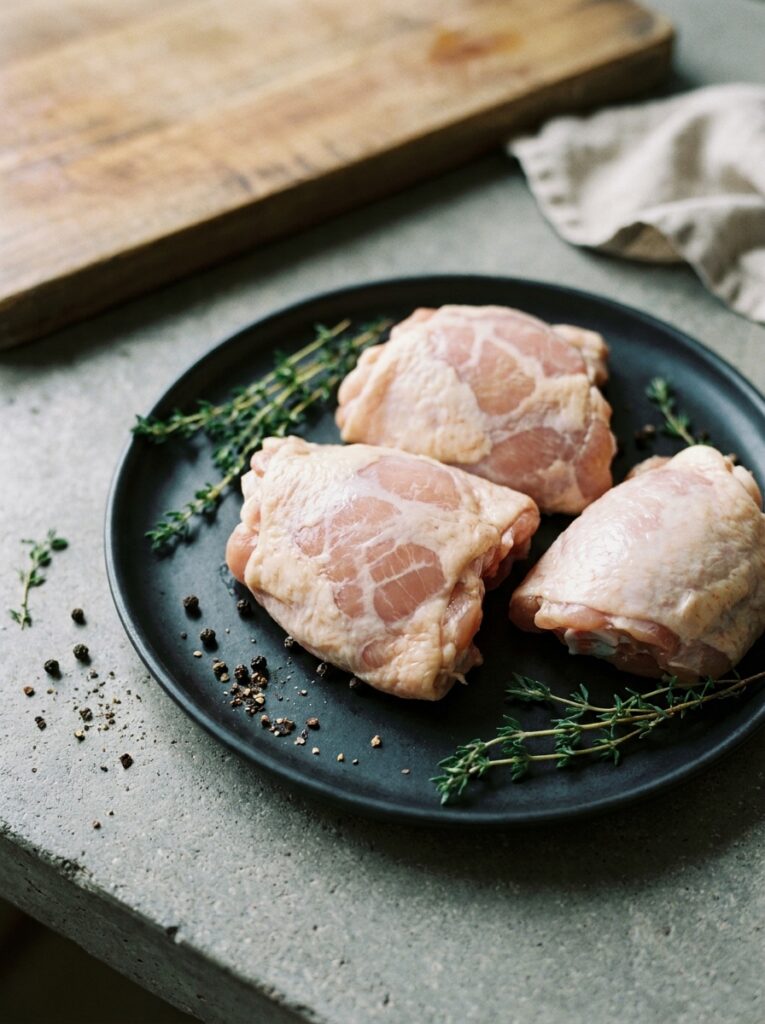
Look, I’ll make this quick. Chicken breasts in a crockpot turn rubbery and sad. They just do. And I know a lot of recipes will tell you they’re fine and interchangeable and blah blah blah — they’re not. Thighs have enough fat and connective tissue to survive hours of low, moist heat and come out the other side actually tender. They shred beautifully. They absorb flavor. They forgive you if you forgot to set the timer and the thing cooked an extra 45 minutes.
Boneless, skinless thighs are what I use most often, but bone-in works too — just expect to fish out the bones at the end, which is kind of satisfying in a weird way. Either way, you don’t need to brown them first. Some people will insist on it. I’ve done it both ways and honestly? In this particular recipe, it doesn’t make enough difference to dirty another pan. Save the browning for when you’re making a proper braise.
So: thighs. Always.
“Chicken breasts in a crockpot aren’t a time-saver. They’re a tragedy waiting to happen.”
—
2. The Part About Rice That Everyone Gets Wrong
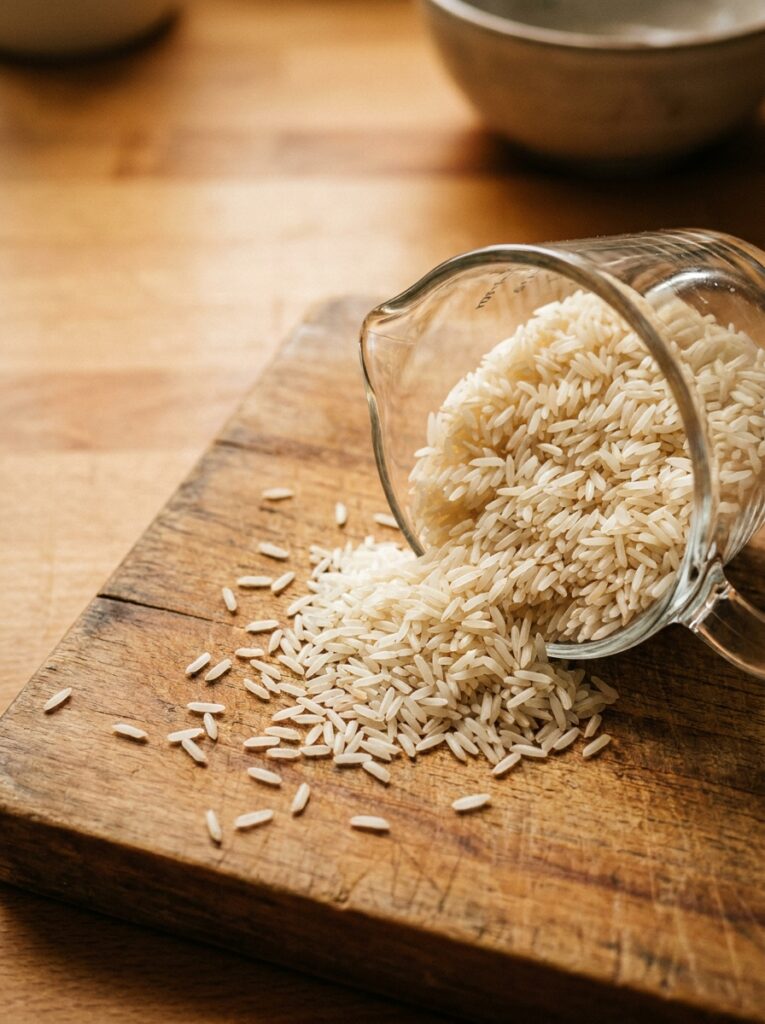
Rice in a slow cooker is genuinely tricky and I won’t pretend otherwise. The problem is timing. Rice cooks fast — relatively speaking — and chicken needs hours. So if you add raw rice from the beginning, you get mush. Grey, sad, falling-apart mush that tastes of nothing.
Here’s what actually works: you add the rice during the last 45 minutes to an hour of cooking. Set a timer. Don’t guess.
Long-grain white rice holds up best. Basmati works really well and adds a subtle fragrance that makes the whole dish smell like it came from somewhere interesting. I’d skip brown rice in this recipe because it takes too long and throws off the whole timing, and instant rice is a hard no for me — the texture is just wrong.
One more thing: rinse your rice. It takes thirty seconds and it removes excess starch that would make things even mushier. Just do it.
—
3. The Bare-Minimum Ingredient List (and Why That’s a Feature, Not a Bug)
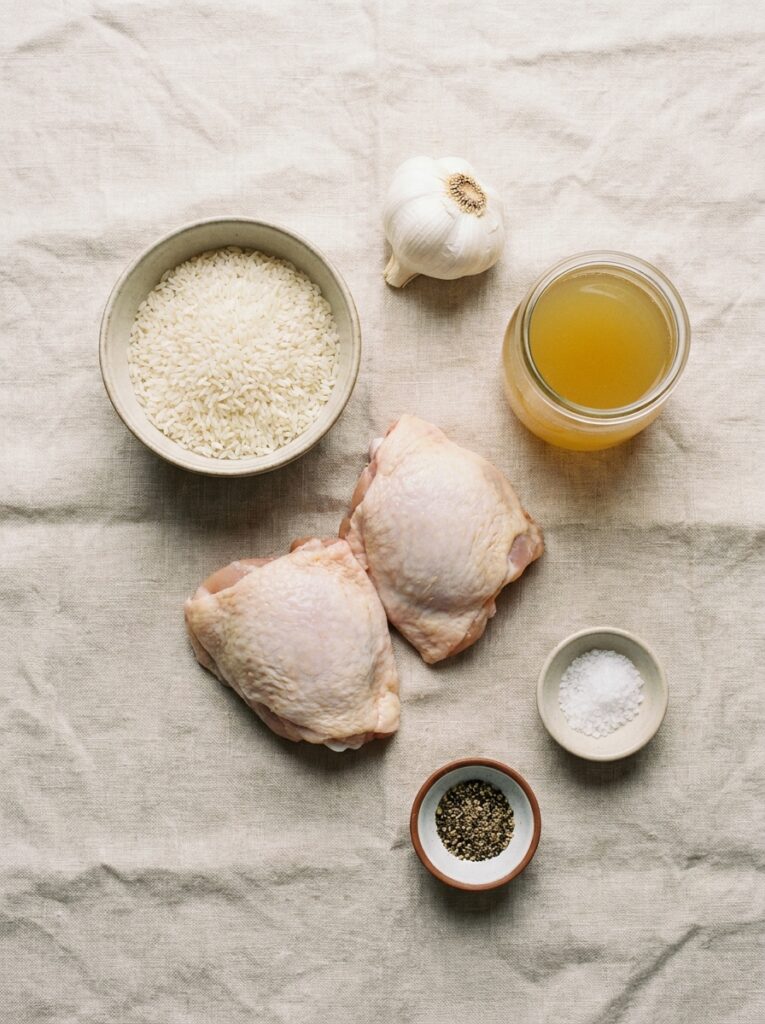
This recipe doesn’t need twelve things. That’s kind of the whole point.
You need: chicken thighs, long-grain white rice, chicken broth, a can of cream of mushroom soup or cream of chicken soup (depending on your mood), garlic, onion powder, salt, pepper, and something dried and herby — thyme, Italian seasoning, whatever’s at the front of your spice cabinet.
That’s it. That’s the base.
The cream soup is doing a lot of heavy lifting here. It adds body, creaminess, and depth without you having to make a roux or watch a pan. I know some people are snobbish about canned cream soups. I am not one of those people. Used correctly, they’re just a tool, and this is them being used correctly.
If you want to make it feel a bit fancier, throw in some frozen peas at the end when you add the rice, or a handful of sliced mushrooms at the start. But you don’t HAVE to do anything. That’s the magic.
—
4. How Much Liquid Is Enough (Without Making Soup by Accident)
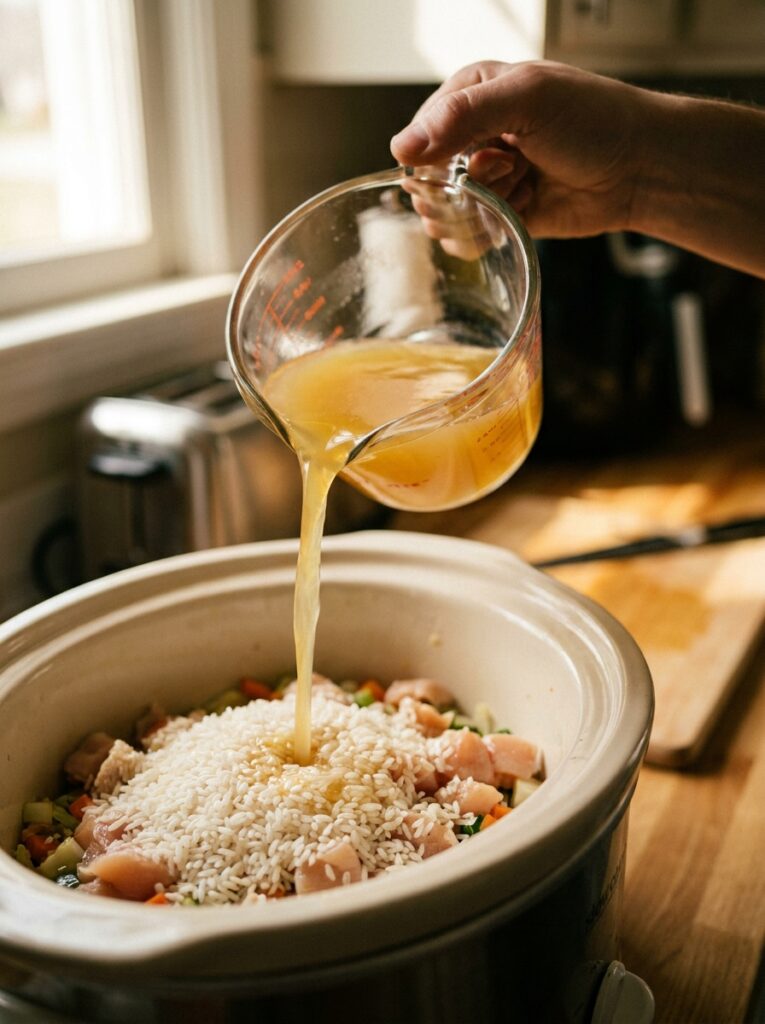
This is where most crockpot rice recipes go sideways. Too little liquid and the rice burns or goes crunchy at the edges. Too much and the whole thing becomes a stew situation.
For this recipe — which serves about four to five people — you want roughly two cups of chicken broth. That’s it. The cream soup adds its own liquid too, so don’t overcorrect. It feels like not enough when you look at it raw, but trust the process.
One cup of uncooked rice absorbs about two cups of liquid during cooking, and since some evaporation happens and the cream soup contributes moisture, the math works out. I know “trust the process” is annoying advice. But after making this probably thirty-something times, I’ve never ended up with crunchy rice or watery soup using this ratio.
The consistency you’re going for is thick and creamy, kind of like a really good risotto but with none of the standing-at-the-stove stirring. Honestly the crockpot does a better job than I do at the stove.
—
5. Garlic: How Much Is Too Much (The Answer Is Never)
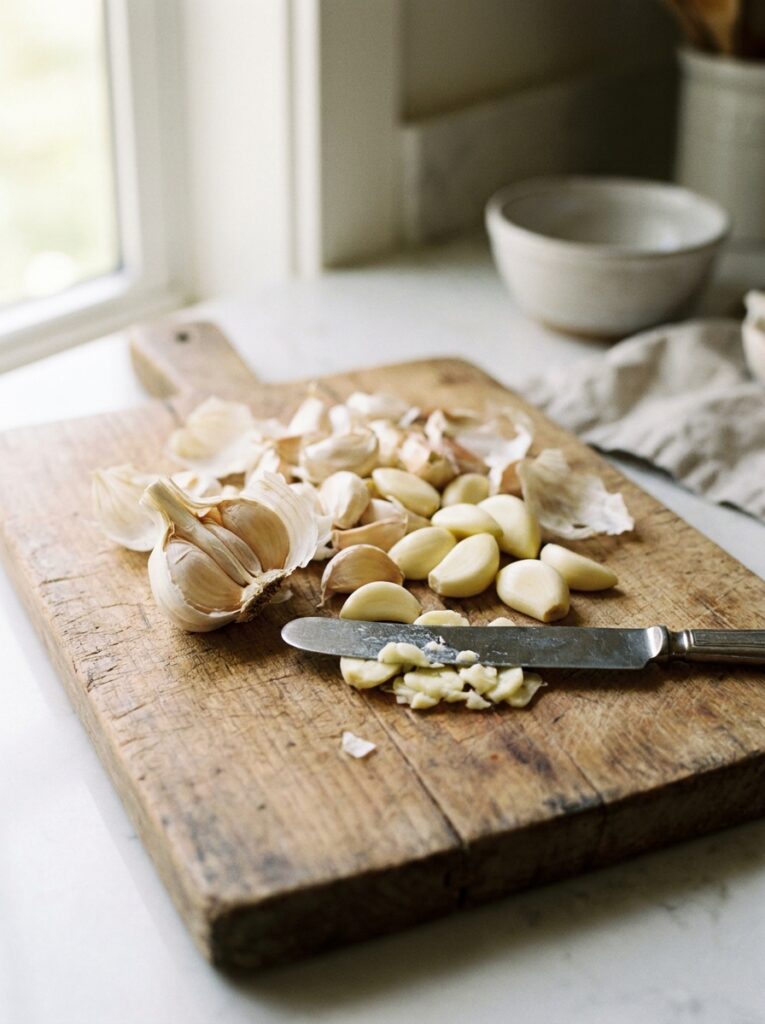
I use four cloves. Real garlic, minced, not the stuff from a jar — though if the jar garlic is what you have, it’s still going to be good. One of those little pre-minced teaspoons is roughly one clove, so adjust accordingly.
The garlic mellows out completely over the long cooking time. It doesn’t taste sharp or raw. It sort of melts into everything and becomes part of the background hum of flavor that makes you go back for a second scoop.
I also add onion powder rather than fresh onion, because in this case it distributes more evenly and doesn’t leave chewy onion chunks if you forget to chop them small enough. Which I have done. Onion powder: one teaspoon.
Side note — if you genuinely love raw onion and want a bit of texture, add half a finely diced white onion at the start. It’ll soften fully by the time it’s done.
—
6. Low and Slow vs. High and Fast: Pick Your Time Slot
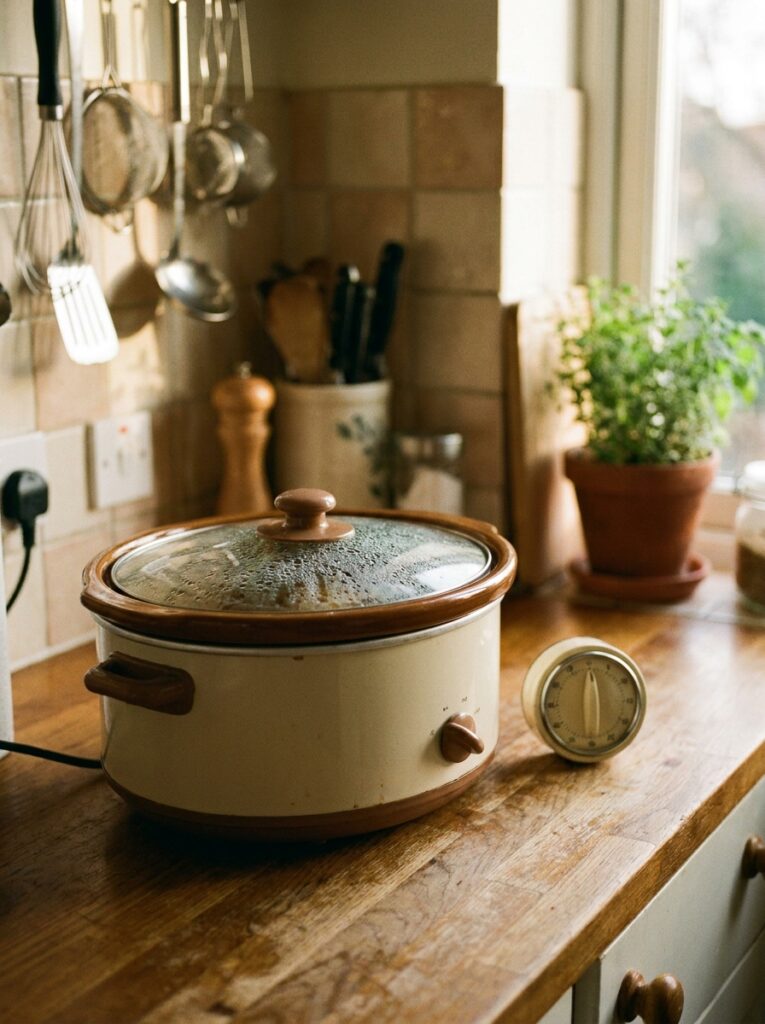
Here’s the deal. You’ve got two options.
Low for 6-7 hours, then add rice and cook on low for another 45-60 minutes. This is for mornings. Set it before work, come home, add the rice, sit down for an hour, eat.
High for 3-4 hours, then add rice and cook on high for another 30-40 minutes. This is for the person who decided at 2pm they wanted a crockpot dinner.
Low is better. I’ll say it. The chicken has more time to actually break down and the flavors meld more thoroughly. But high absolutely works and the difference is subtle enough that no one at your table is going to know.
Don’t peek too much while it’s cooking. Every time you lift the lid, you add about 20 minutes of cooking time because of the heat lost. I know it smells incredible. Resist.
“The hardest part of crockpot cooking is leaving it alone. That’s also the point.”
—
7. What to Do When You Lift the Lid and See Rice Still Looks Raw
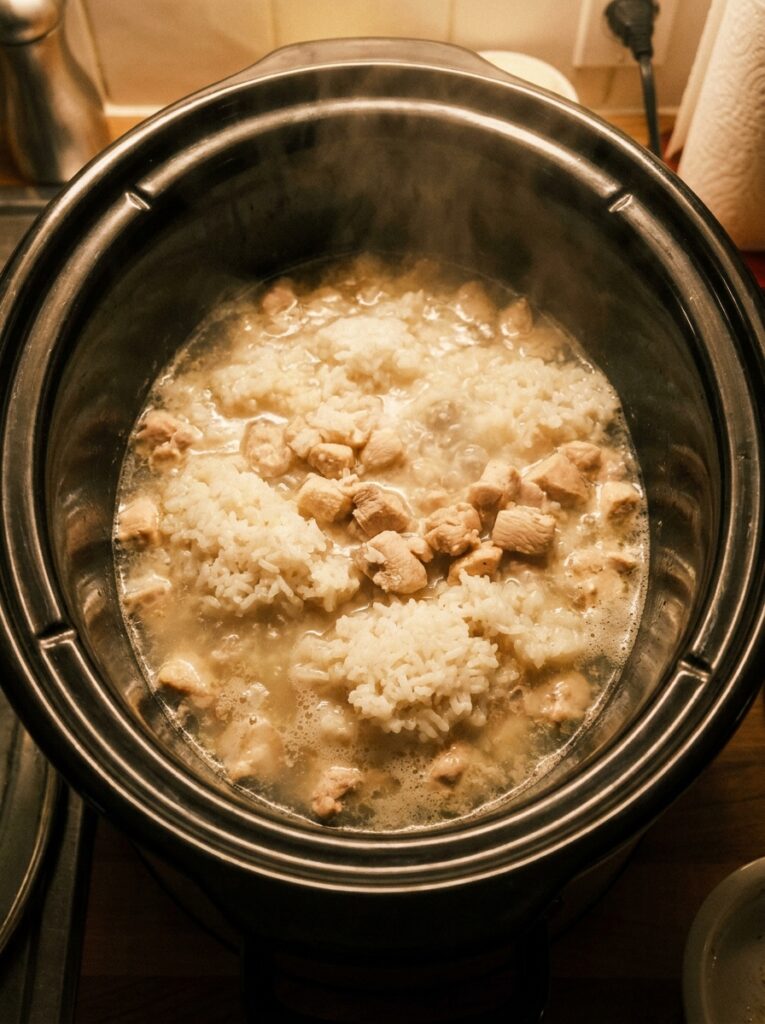
Give it more time. Seriously. Rice in a slow cooker takes longer than rice on the stove, and it doesn’t look done when it actually is. It still looks a bit opaque and almost undercooked right up until suddenly it isn’t. Don’t add more liquid. Don’t panic.
If you’re at the 60-minute mark for the rice on low and it’s still crunchy, put the lid back, turn it to high for another 15-20 minutes. That usually does it.
The other common problem: watery liquid around the rice. This just means you need to let it sit, uncovered, for about ten minutes after you turn off the crockpot. The rice will absorb the rest. Patience is the only technique required.
—
8. The Shredding Moment (This Is the Best Part)
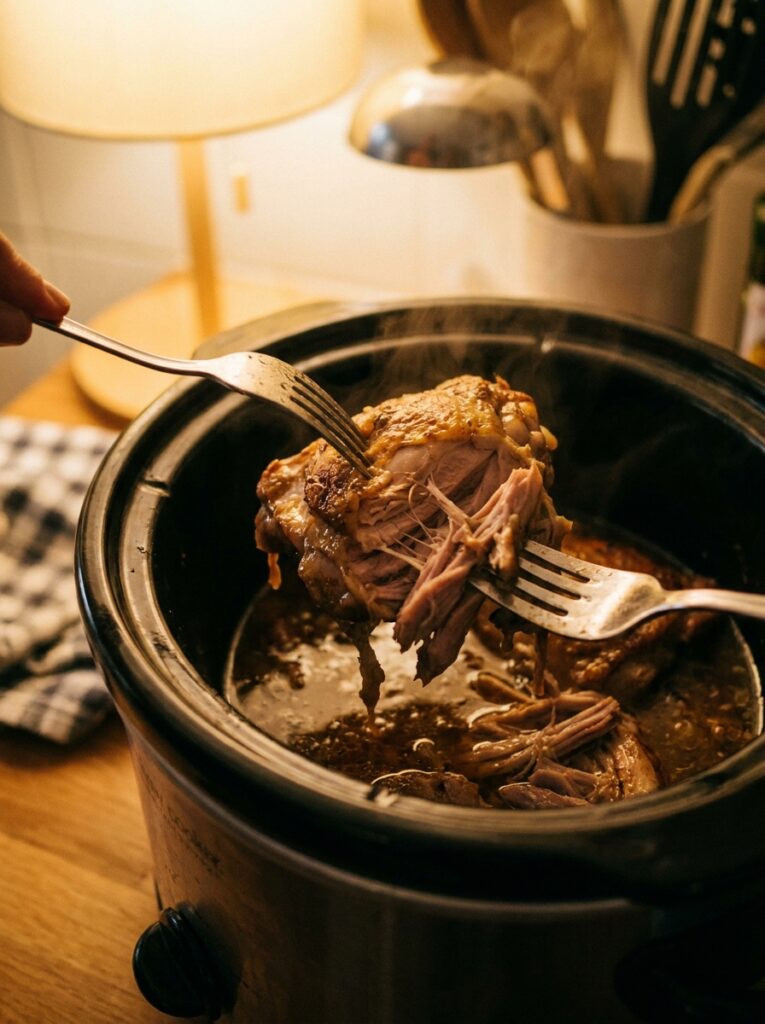
Once everything’s done, you’re going to take two forks and shred the chicken right there in the pot. Don’t bother transferring it anywhere. Just pull the thighs apart — they should offer almost zero resistance — and let the pieces fall back into the creamy rice.
This is genuinely one of the most satisfying things I do in my kitchen. The chicken just comes apart, almost like it’s embarrassed it ever had any structural integrity. You can shred coarsely and leave bigger chunks, or go fine and get that almost-pulled-chicken texture throughout. I go medium. It depends entirely on my mood.
Stir everything together after shredding. The chicken gets coated in the creamy sauce, the rice redistributes, and the whole thing looks like something that took effort. It didn’t.
—
9. Season AFTER, Not Just Before
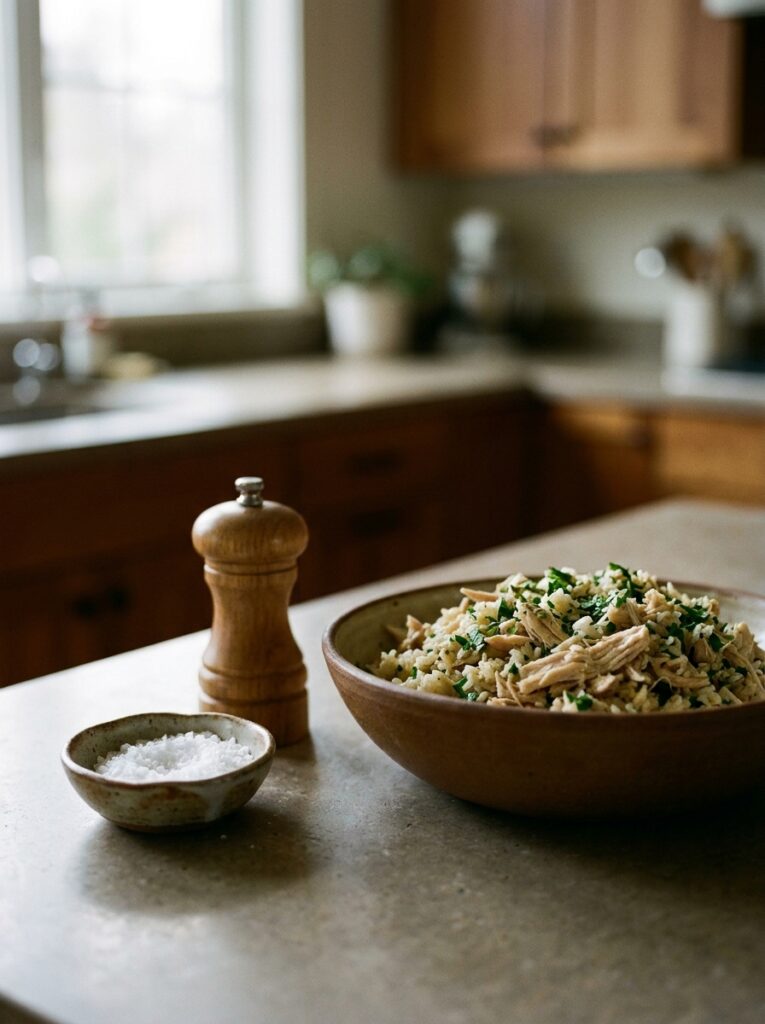
This is important. Season your chicken before it goes in — salt, pepper, garlic, herbs. Yes. But also taste the finished dish and season it again.
Slow cookers are sealed environments and the salt gets distributed really differently than pan cooking. Things often taste flat straight out of the crockpot, and it’s almost always just salt. A proper pinch of salt at the end can take the dish from “that’s fine” to “oh, actually.”
Same with pepper. Fresh cracked pepper at the end adds a tiny punch that dried pepper at the start just can’t replicate.
A squeeze of lemon juice — or even just a small splash — does something interesting too. Cuts through the richness slightly, makes everything taste brighter without tasting lemony. Try it once. You won’t leave it out again.
—
10. Toppings That Actually Add Something
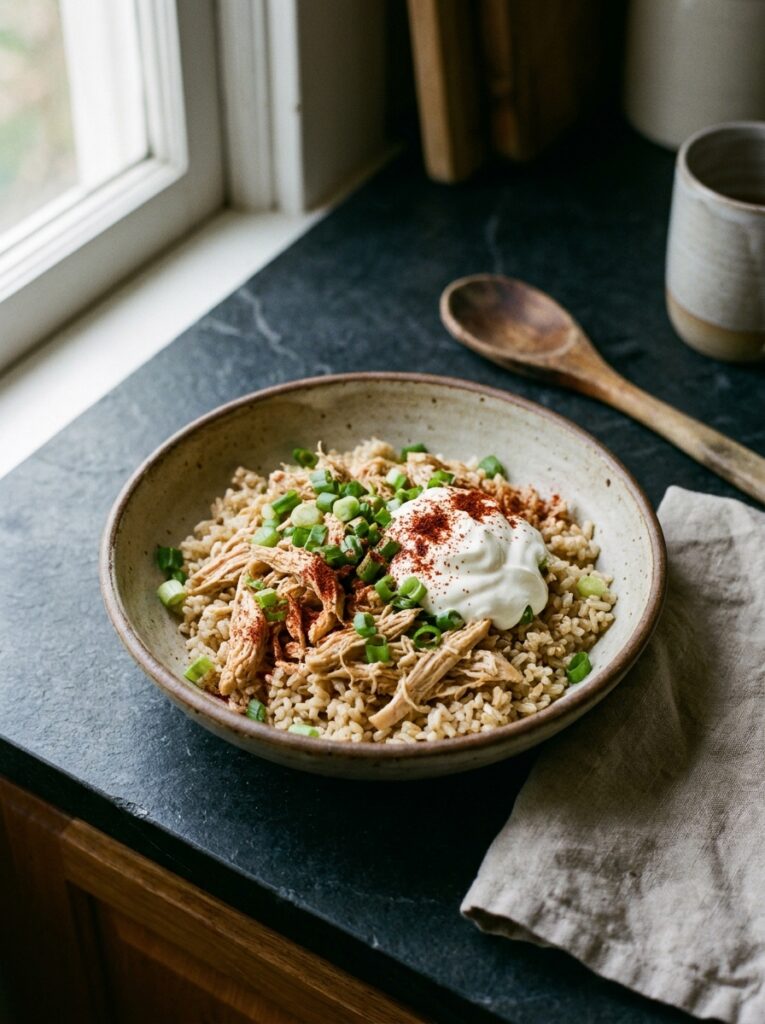
I usually go with fresh parsley because it’s green and pretty and I always have it. But let me tell you what else works really well on this.
A spoonful of sour cream or crème fraîche stirred in at the end makes it feel almost luxurious. Not a full cup — just a couple of tablespoons. It adds a slight tang and a creaminess that’s different from the soup base.
Crispy fried onions on top (the ones you’d put on a green bean casserole) add a crunch that this dish genuinely benefits from. Something about having a textural contrast against the soft rice and chicken is just… it works.
Grated cheddar. Yes. On chicken and rice. Try it.
Or you can do nothing and it’s still delicious. I want to be clear about that. These are options, not requirements.
—
11. Making It Work for Meal Prep (and Why It’s Actually Better the Next Day)
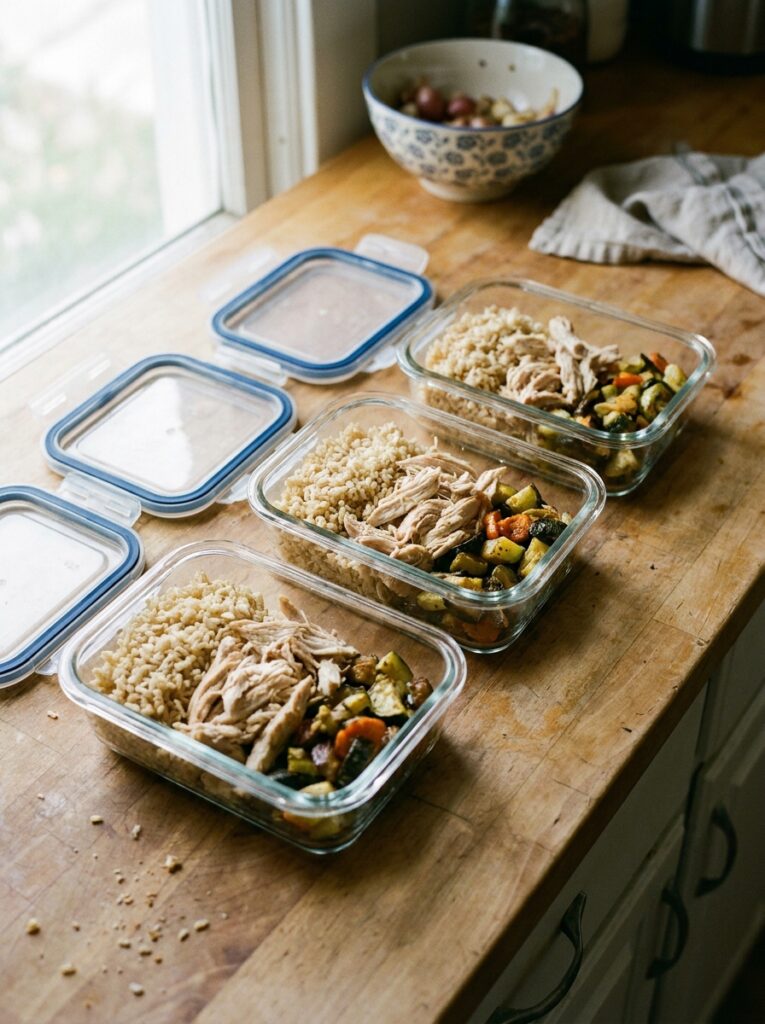
This reheats beautifully. Maybe even better the second day, when the rice has had more time to absorb all the flavors and everything has kind of melded together into one rich, cohesive thing.
Store it in an airtight container in the fridge for up to four days. When you reheat — stovetop with a small splash of broth or water, or microwave with a damp paper towel over the bowl — it comes back really well. The paper towel trick prevents the rice from drying out and going hard.
For meal prep, I’ll make a big batch on Sunday and portion it into containers for the week. It works with a simple salad on the side, or just on its own if it’s been a day and you don’t have the energy for a side dish. No judgment.
“Sunday crockpot chicken and rice might be the most quietly efficient thing you can do for your week.”
—
12. Swaps and Variations That Won’t Ruin Your Life
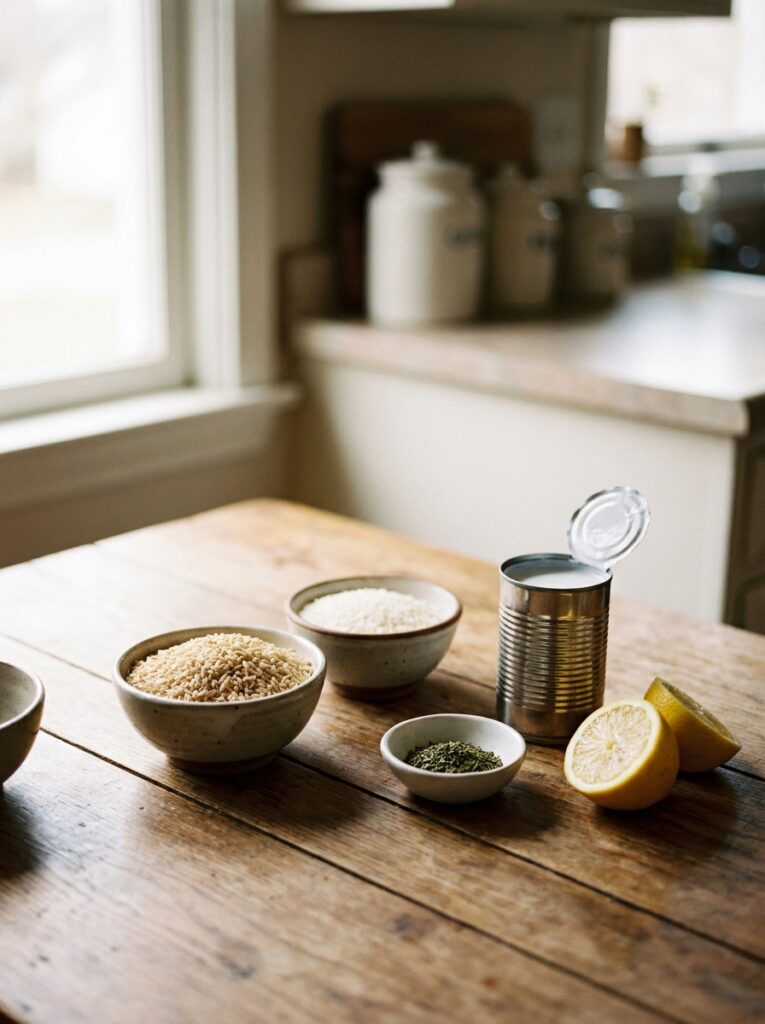
You can make this with different soups — cream of celery is underrated, cream of chicken is probably the mildest and most universally liked. There’s also a version I make with diced green chiles and a little cumin that leans more Southwestern, and it’s really good.
For a dairy-free version: skip the cream soup and use a can of full-fat coconut milk instead. I know that sounds weird. It’s not. The coconut flavor is mild when everything’s well-seasoned and it gives you that same creamy texture without any dairy.
Low-sodium broth if you’re watching salt, obviously. And as I mentioned — no brown rice, no instant rice, no wild rice blends unless you know what you’re doing and have tested the timing yourself.
The base formula is forgiving enough to take a lot of variation. But don’t mess with the thighs. That part I will not budge on.
—
❓ FAQ
Q: Can I use frozen chicken straight from the freezer in a crockpot? A: Most food safety guidelines recommend against it, actually — the concern is that frozen chicken spends too long in the “danger zone” temperature range before it gets hot enough to cook through safely. Always thaw in the fridge overnight first. It’s an easy habit that takes zero effort the night before.
Q: My crockpot runs really hot — should I adjust the times? A: Yes, definitely. Crockpots vary a LOT between brands and even between models, and some genuinely run hotter than the dial suggests. If yours has a habit of overcooking, start checking the chicken earlier and add the rice closer to the 40-minute mark rather than an hour. A quick-read thermometer (165°F / 74°C for chicken) takes the guesswork out.
Q: Can I double this recipe for a crowd? A: You can, as long as your crockpot is big enough — ideally a 6 to 8 quart for a doubled batch. Keep the ratios the same and don’t change the cooking time much, just make sure the chicken isn’t piled so high that it’s not getting even heat. Doubling the rice at the end may need an extra 10-15 minutes, so taste-test before you call it done.
—
💭 Final Thoughts
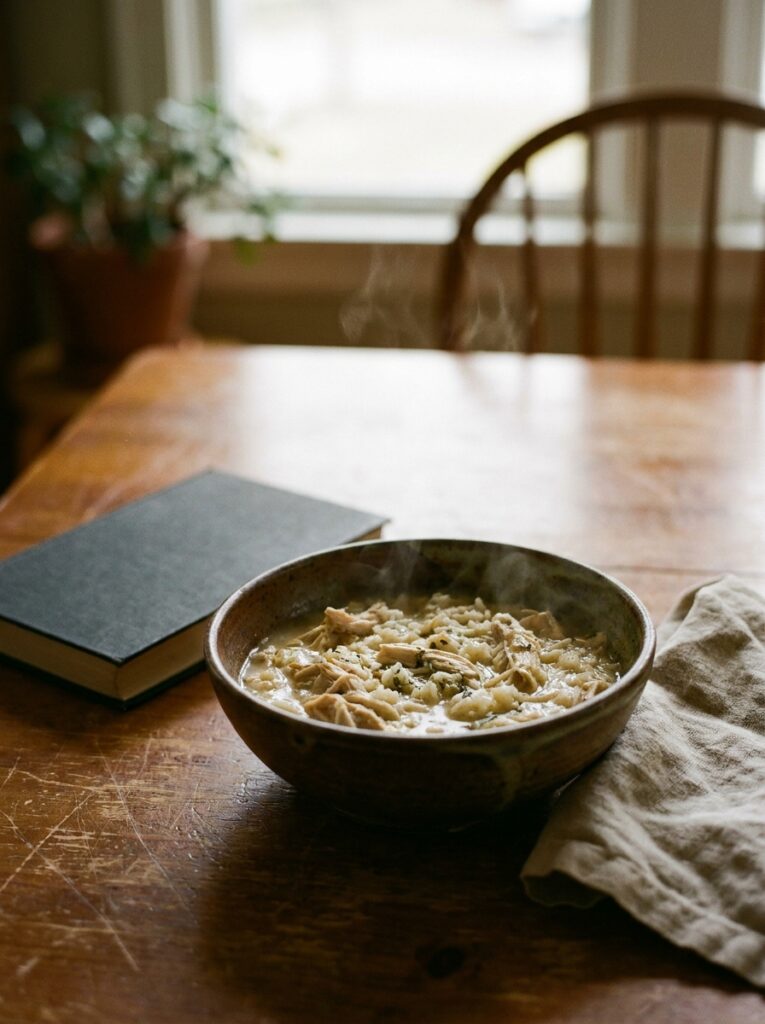
There’s something kind of beautiful about putting dinner together before you’ve even had your second cup of coffee and then just… forgetting about it. This recipe does that. It doesn’t ask much of you, and it gives back more than it takes — which is honestly everything I want from a weeknight dinner.
Make it once and you’ll understand why it keeps showing up on meal plans, text threads, and dog-eared recipe cards. The kind of food that doesn’t try to be impressive and somehow is anyway.
What’s the one dish you always come back to when you’re tired and just need dinner to work?