You pull a pack of chicken breast out of the fridge and just… stare at it. We’ve all been there. It’s 5:30pm, you’re tired, and somehow this perfectly fine protein feels completely uninspiring. Here’s the thing though — chicken breast is actually one of the most forgiving, speedy, and delicious things you can cook, and I’m going to prove it tonight.
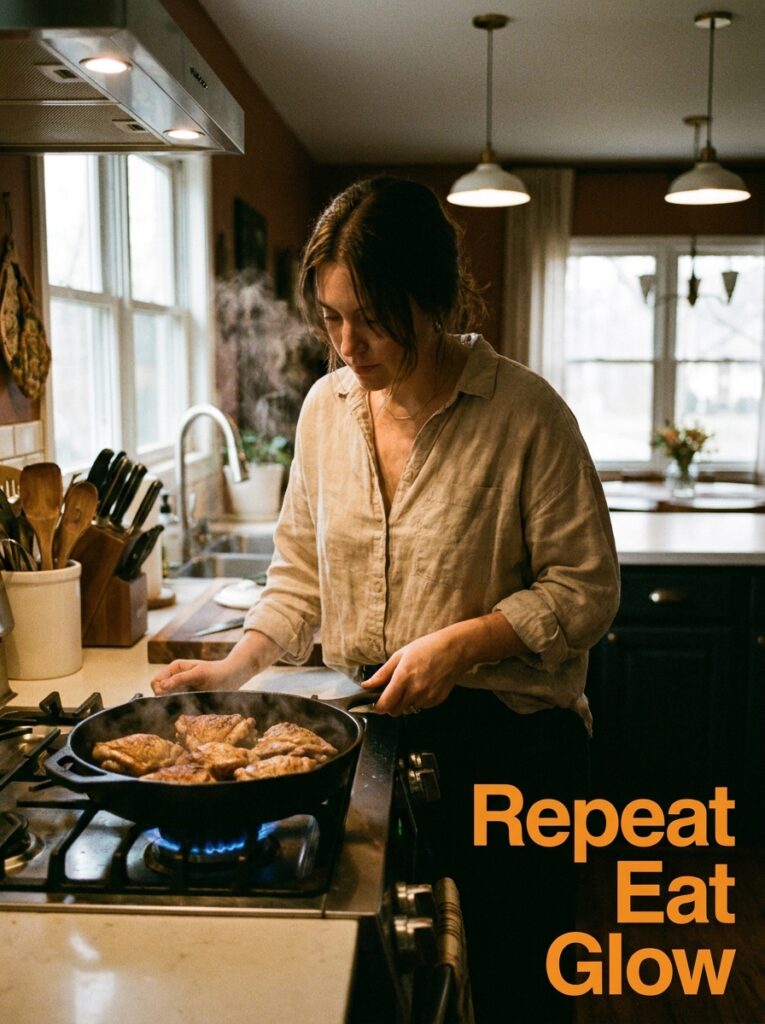
—
1. Why Chicken Breast Gets a Bad Reputation (And Why That’s Completely Unfair)
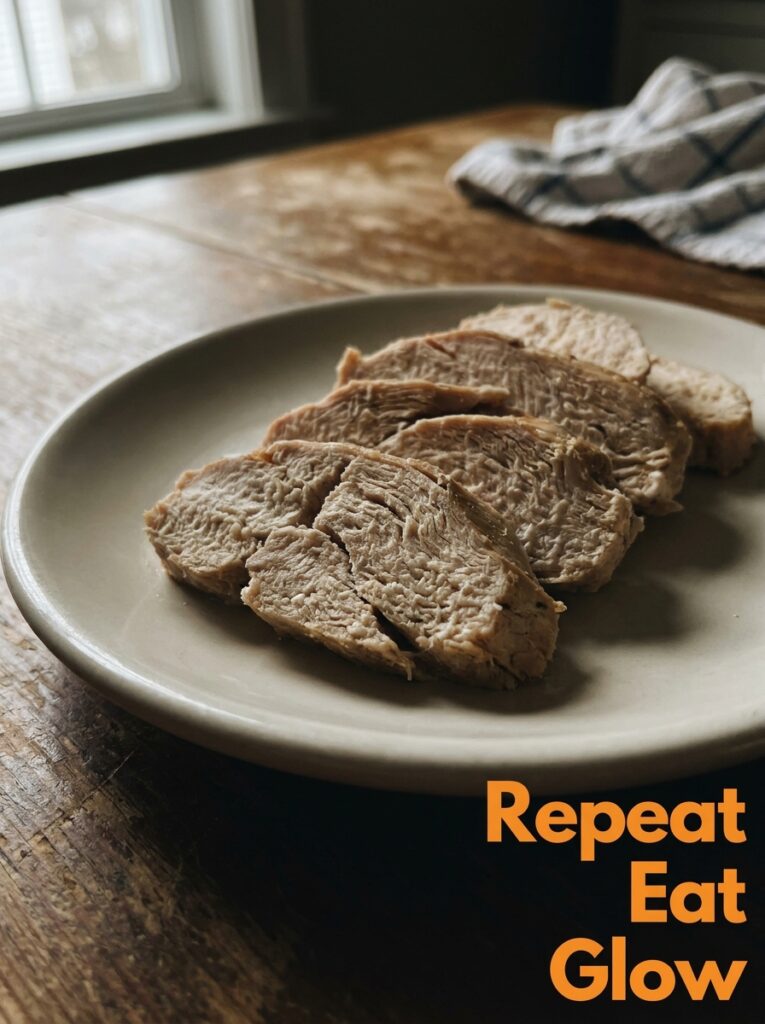
Okay, I’ll say it. Chicken breast has a PR problem. Somewhere along the way, it became the food of sad meal preps and rubbery diet lunches and that thing people eat when they “have to be good.” And honestly? That reputation isn’t entirely undeserved — because when it’s cooked badly, it’s terrible. Dry, chewy, flavorless. The kind of dinner you eat quietly while wishing you’d ordered pizza.
But here’s what nobody tells you: badly cooked chicken breast is almost always a temperature problem. Or a time problem. People either cook it too long on too-high heat, or they skip the crucial step of letting it rest. That’s it. That’s the whole mystery.
Get those two things right and you’re already ahead of 90% of home cooks. The chicken isn’t the problem. The method was.
And once you nail the basics — the actual texture, the juiciness, the seasoning that goes all the way through — you’ll realize there are about a dozen genuinely exciting dinners hiding behind this one ingredient. Quick ones. Weeknight ones. The kind where people ask for the recipe.
“Dry chicken is a method problem, not an ingredient problem. Fix the method and everything changes.”
—
2. The One Technique That Will Change Every Chicken Dinner You Make Forever
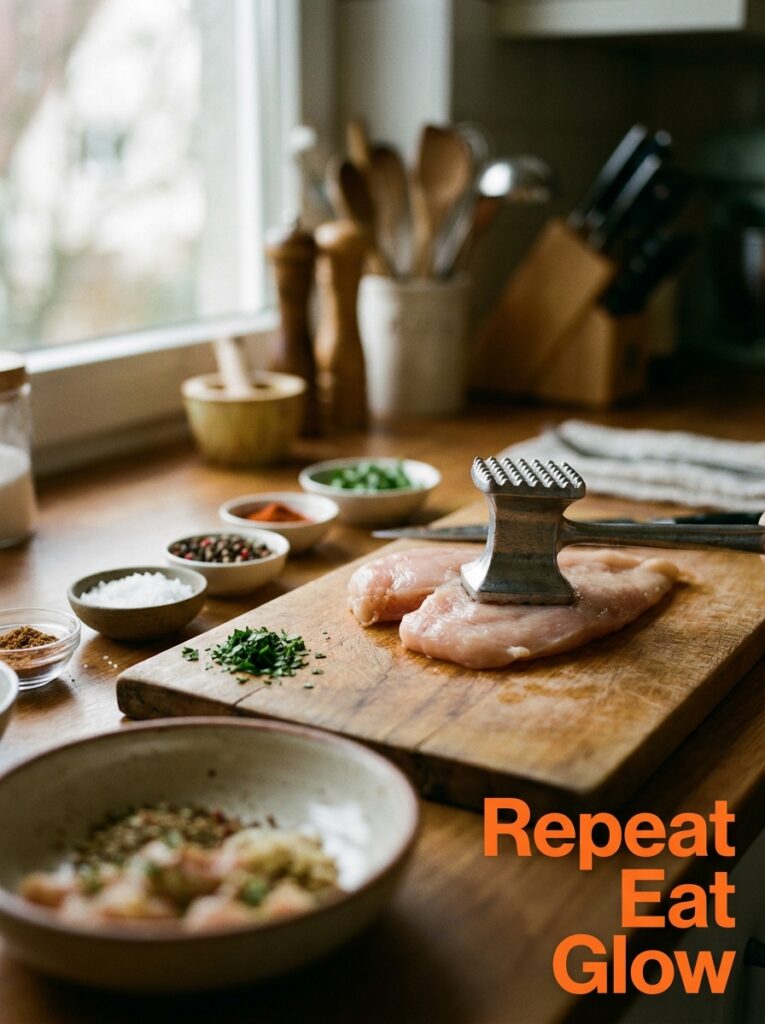
Butterfly it. I’m serious — this single move has done more for my weeknight dinners than any fancy sauce or elaborate marinade ever could.
When you butterfly a chicken breast (slice it horizontally almost all the way through, then open it flat), you’ve suddenly got a piece of chicken that’s roughly the same thickness all the way across. That means it cooks EVENLY. No more raw-in-the-middle-burnt-on-the-outside situation. No more cutting into it every two minutes to check.
A butterflied breast takes about 4 minutes per side in a hot pan. Four minutes. You could have dinner on the table in less time than it takes to watch two TikToks about making dinner.
Alternatively — pound it. Put the chicken in a zip-lock bag and bash it with a rolling pin until it’s about half an inch thick. Oddly satisfying, not gonna lie. Same result: even cooking, faster time, genuinely tender texture. Both methods work brilliantly. I tend to butterfly when I’m feeling civilized and pound when I’ve had a day.
The other thing — and this matters — is letting the chicken come to room temperature for about 15 minutes before it hits the pan. Cold chicken straight from the fridge seizes up. Room temp chicken relaxes into the heat. Small step, real difference.
—
3. The Lemon Garlic Pan Sauce That Takes Eight Minutes and Tastes Like a Restaurant Made It
Right. So you’ve got your butterflied chicken breast, seasoned with salt, pepper, and a pinch of garlic powder. Cook it in a splash of olive oil over medium-high heat — 4 minutes each side, then REST IT on a plate while you make the sauce. This is non-negotiable. Rest the chicken. Cover it loosely with foil, walk away for five minutes, and don’t touch it.
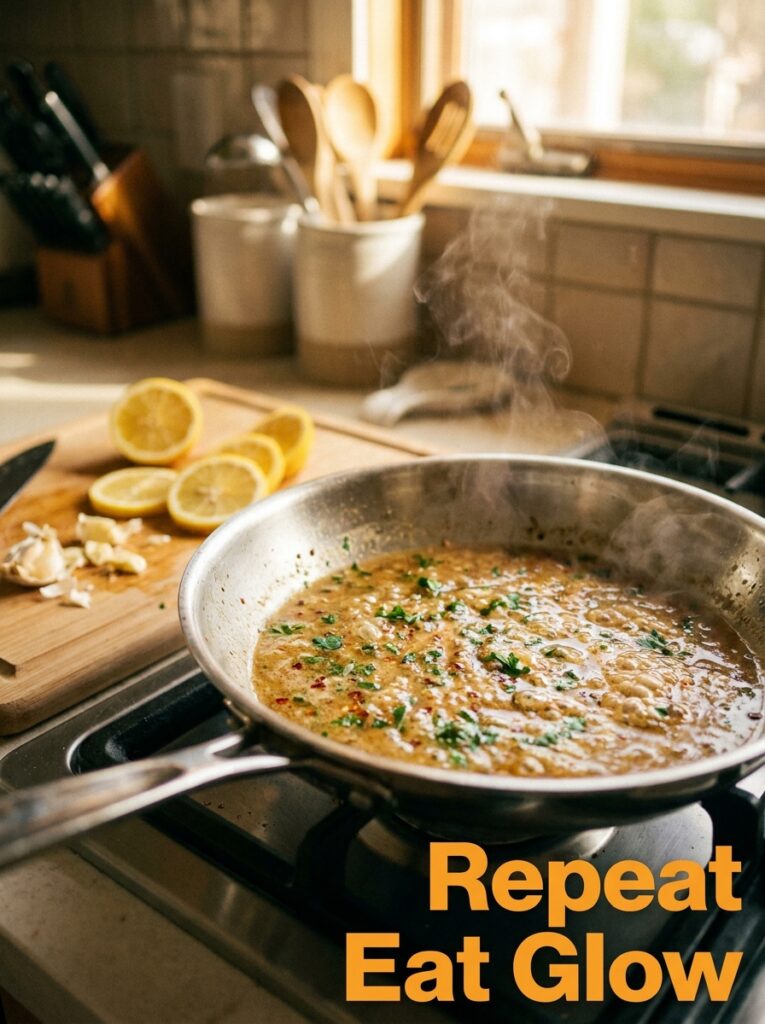
Now. Into that same pan — still hot, all those golden bits stuck to the bottom — goes a small knob of butter, two crushed garlic cloves, and a good squeeze of lemon. It’ll sizzle immediately and smell incredible. Really incredible. Add a splash of chicken stock (or even just water, honestly), scrape up all those caramelized bits, and let it reduce for about two minutes.
That’s the sauce. That’s it.
Pour it over the rested chicken, maybe throw some fresh parsley on top if you’ve got it, and serve with whatever you want — roasted potatoes, steamed rice, a pile of wilted spinach. This dinner takes 20 minutes from fridge to table and it tastes like something you’d pay £16 for in a bistro. I make this probably twice a month and it never gets old.
—
4. Marry Me Chicken: The Recipe That Actually Lives Up to the Name
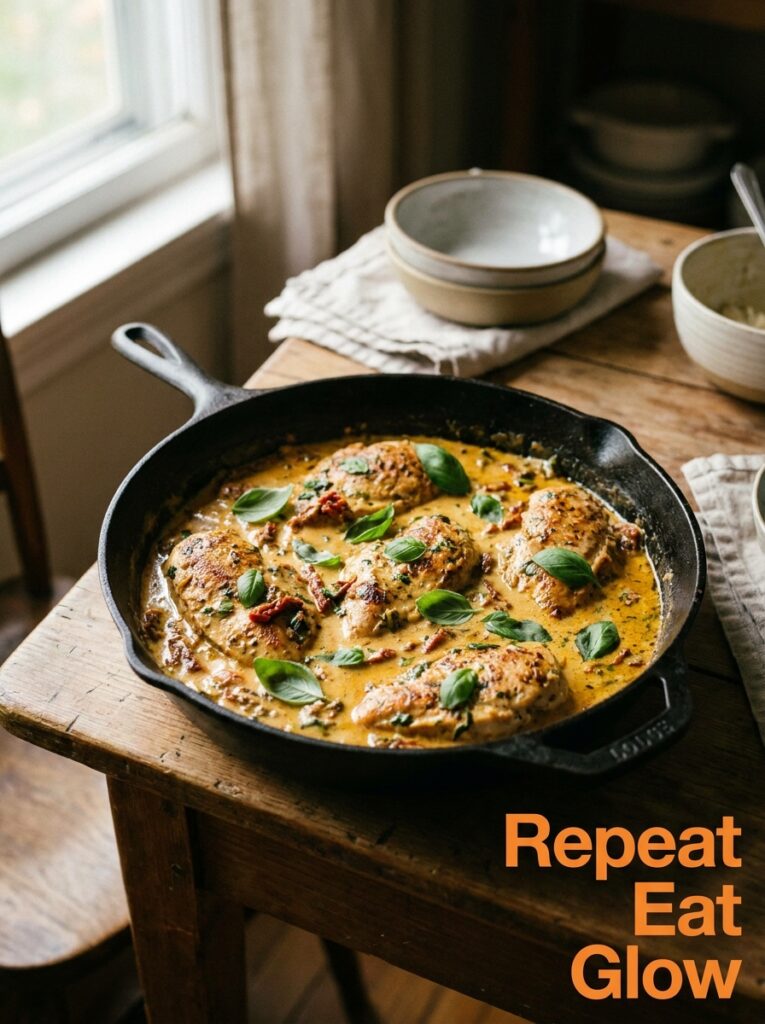
If you haven’t made Marry Me Chicken yet, stop reading and go make it tonight. Okay, finish reading first, but then go make it.
It’s a creamy sun-dried tomato sauce with garlic, parmesan, and a touch of chili flake, and it genuinely is as good as everyone says. The name’s silly but the dinner is not. I made it on a random Wednesday and my partner called it “the best thing I’ve ever made,” which — honestly, a little offensive given everything else, but I’ll take it.
The sauce comes together while the chicken finishes cooking in the oven. You start by searing your chicken breasts in an oven-safe skillet, then building the sauce right in the same pan: garlic, chopped sun-dried tomatoes, chicken broth, heavy cream (or double cream if you’re in the UK), parmesan, a little dried thyme, and those chili flakes. Once the sauce is simmering and smelling absolutely unreal, the chicken goes back in, the whole pan goes into a 375°F / 190°C oven for about 15 minutes, and then you’re done.
Serve it over pasta or with crusty bread. Serve it with a glass of wine. Serve it at a dinner party and let people think you spent hours on it. I won’t tell.
“Marry Me Chicken sounds like a Pinterest exaggeration. It isn’t. Make it once and you’ll understand.”
—
5. The Sheet Pan Dinner Formula That Means Almost Zero Cleanup
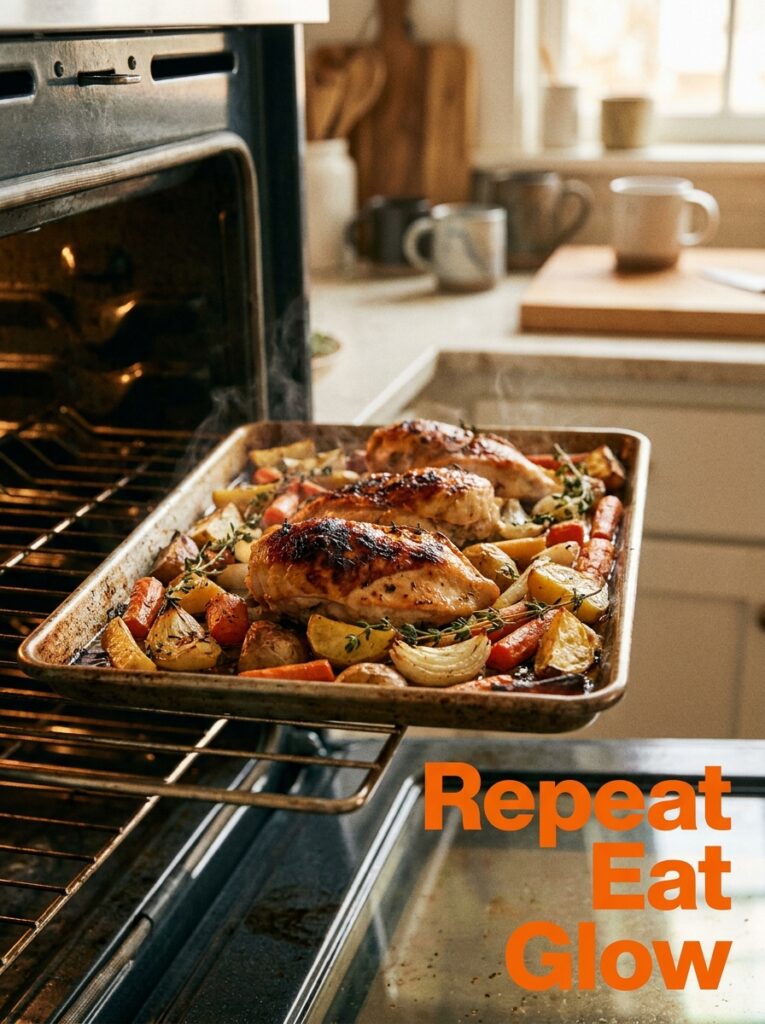
Sheet pan dinners are genuinely one of the best things to happen to weeknight cooking, and I feel like people underestimate how flexible the formula is. Chicken breast, vegetables, oil, seasoning, one pan, one oven. That’s the whole method.
Here’s what I do: I cut the chicken breasts into large chunks — not tiny, you want them juicy, so keep them substantial. Toss them with olive oil, smoked paprika, garlic powder, salt, and pepper. Then whatever vegetables I’ve got: cherry tomatoes, zucchini, bell peppers, red onion, broccoli, potato chunks. All on the same pan, everything seasoned generously, spread out so nothing’s crowded (crowded vegetables steam instead of roast and become sad and soft — don’t do it).
Into a 400°F / 200°C oven for 25 minutes. One check partway through, maybe a little toss. Done.
The cleanup is almost nothing. The flavor is great. And you can change the whole personality of this dinner just by swapping the spice blend — go Mediterranean with oregano and lemon, go Tex-Mex with cumin and chili powder, go warming and aromatic with curry spices. Same method, completely different meal.
—
6. The Weeknight Chicken Stir-Fry That Takes Less Time Than Ordering Takeout
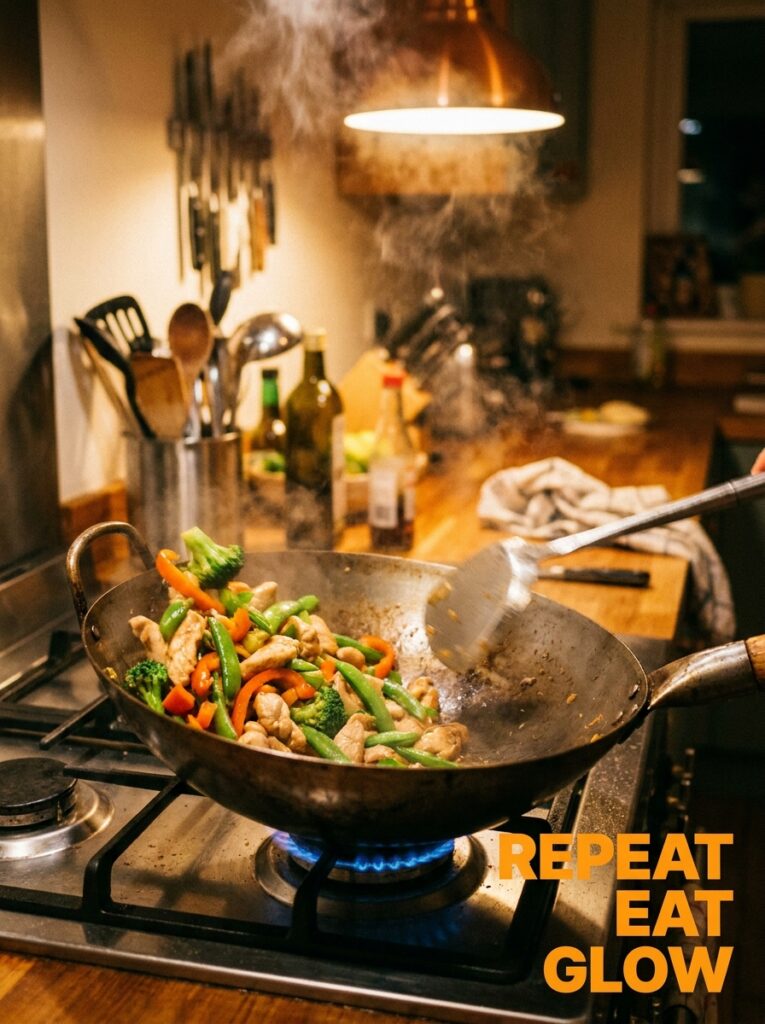
I know you’ve probably made stir-fry before, but hear me out because most people make it in a way that doesn’t work quite right, and then they’re disappointed, and then they blame the recipe instead of the pan temperature. The pan needs to be HOT. Like, actually ripping hot. This is the one time you want maximum heat.
Slice your chicken breast thin — against the grain, quite thin strips. Season with a little soy sauce, cornstarch, and sesame oil, and let it sit for even five minutes. The cornstarch is the secret; it gives the chicken this slightly silky coating that browns beautifully and keeps it tender.
Get your pan or wok screaming hot. Add the chicken in a single layer and don’t touch it for a full minute. Let it get some color. Then toss it. Then straight out of the pan while you do the vegetables — garlic, ginger, whatever’s in the crisper drawer. Then the sauce goes in last: soy sauce, a little honey, rice vinegar, garlic, a splash of sesame oil.
The whole thing takes maybe 15 minutes. And it tastes fresh and savory and way better than most delivery, especially because you made it exactly how you like it. Plus the garlic and ginger hitting a hot pan is one of my favorite smells in the whole world. Side note — it also clears your sinuses immediately, which is either a bonus or a hazard depending on how you feel about that.
—
7. Creamy Tuscan Chicken That Somehow Feels Fancy But Cooks in One Pan
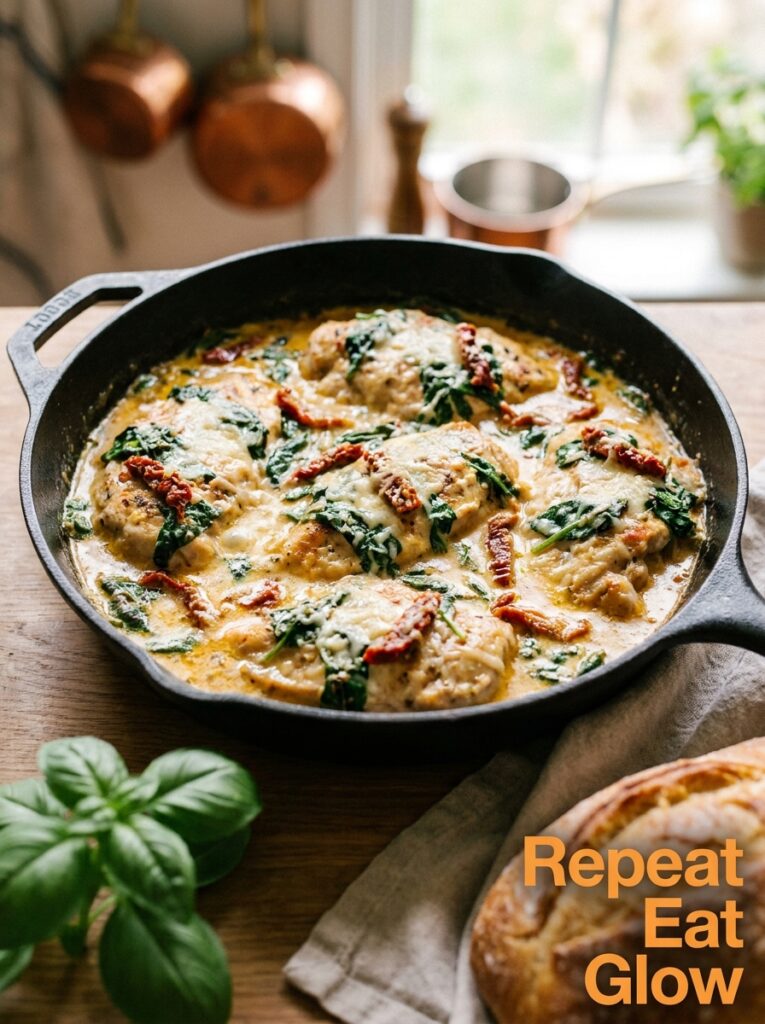
I go through phases with this recipe. A few months ago I made it every single week. Then I forgot about it. Then I made it again recently and remembered why I’d been obsessed with it. It’s just SO good.
Chicken breasts seared until golden, then set aside while you build the sauce in the same pan: onion, garlic, cherry tomatoes that burst and get jammy, baby spinach that wilts down into almost nothing, sun-dried tomatoes, cream, parmesan, a splash of white wine if you’ve got an open bottle. Everything cooks together until it’s thick and glossy and the kind of sauce you want to eat with a spoon.
The chicken goes back in, simmers gently for about ten minutes to finish cooking and soak up everything. Then dinner’s ready.
This is the kind of meal that works for a regular Tuesday AND for when you’ve got people coming over. I love a recipe that pulls double duty like that. Serve it with pasta, with rice, with polenta — it doesn’t care, it just wants to be eaten.
“One pan, twenty-five minutes, the kind of dinner that makes people think you’ve been cooking for hours. This is that dinner.”
—
8. The Cold-Weather Chicken Bake That Your Whole Kitchen Will Smell Like
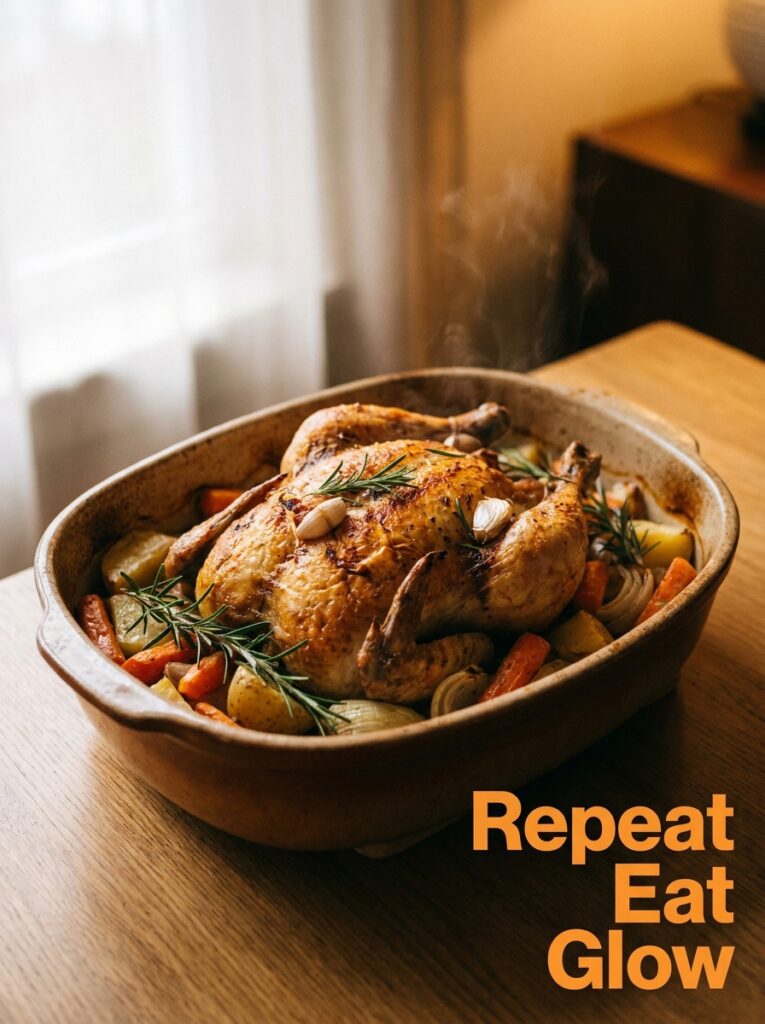
October through February, this is in heavy rotation in my house. It’s not a complicated recipe. But it’s the kind of thing that makes your whole kitchen smell extraordinary, and that counts for a lot on a dark evening.
Chicken breasts nestled in a baking dish with sliced onions underneath. On top: dijon mustard rubbed generously over each piece, then dried herbs (thyme, rosemary, a bit of oregano), then a drizzle of honey, then a pour of chicken stock around the bottom of the dish so everything stays moist. Cover with foil, into a 375°F / 190°C oven for 25 minutes, then uncover for another ten to get some color on top.
While it’s in the oven you’ve got enough time to make mashed potatoes. Or roast some carrots. Or honestly just sit down with a glass of something and breathe for a second, which is its own kind of cooking skill that I feel is underrated.
The honey-mustard glaze that forms on the chicken is sweet and sharp and deeply savory all at once. It’s comfort food that doesn’t feel heavy or indulgent. My family requests this one specifically, which doesn’t happen often, so I notice when it does.
—
9. Chicken Quesadillas That Are Worth the Mess (They’re Worth the Mess)
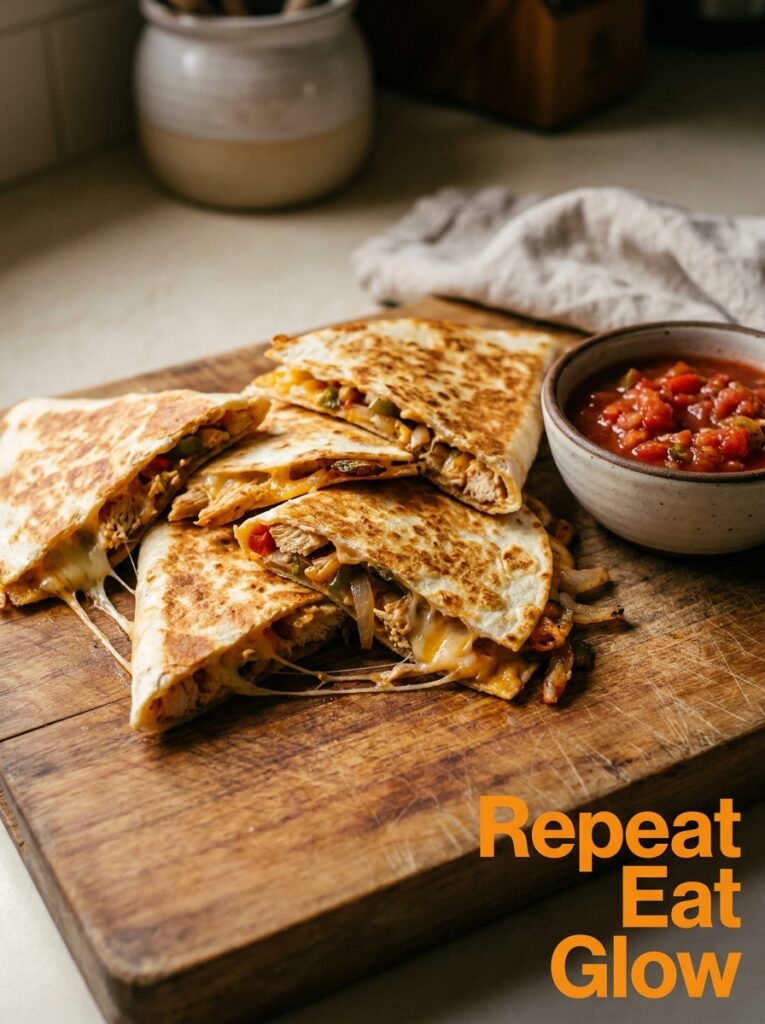
Yes, there will be melted cheese on your stove. Yes, it’s worth it. I have made peace with this.
Season and cook your chicken however you like — the lemon-garlic method from earlier works brilliantly here — then slice it thin and you’re ready. Flour tortillas, shredded chicken, whatever cheese melts well (a mix of mozzarella and cheddar is my personal choice, though Monterey Jack if you can find it), plus whatever fillings you want: roasted peppers, caramelized onions, black beans, a scrape of chipotle paste.
The key to a good quesadilla is medium heat and patience. Low enough that the tortilla doesn’t burn before the cheese melts. Don’t rush it. Four minutes per side on a dry, medium-hot pan and you’ll get that deeply golden, slightly crispy exterior with full melted cheese inside.
Cut into wedges and serve with sour cream and a quick pico de gallo — just tomatoes, red onion, cilantro, lime, salt. Takes four minutes to make and it genuinely does make the quesadillas taste better. Kids love this dinner. Adults love this dinner. Tuesday loves this dinner.
—
10. What to Do When Your Chicken Came Out Dry (Rescue Missions That Actually Work)
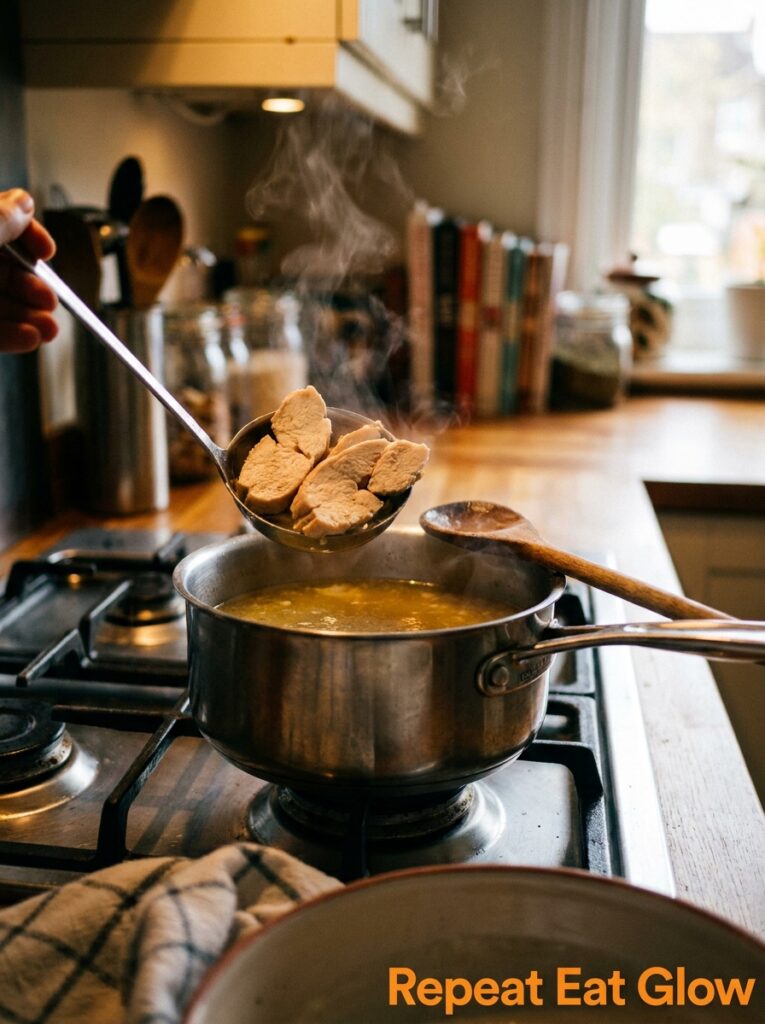
It happens. Even to people who know better. You got distracted, the pan was too hot, you forgot to rest it — whatever the reason, the chicken’s dry and dinner still needs to happen.
Don’t throw it out. First option: slice it thin and immediately drown it in a warm pan sauce or gravy. Thin slices of dry chicken in a good sauce are genuinely fine — the sauce does the heavy lifting and nobody notices. The lemon-garlic pan sauce from earlier is perfect for this exact situation.
Second option: shred it. Dry chicken shreds really well and once it’s shredded and mixed into something saucy — pasta, a creamy soup, tacos with plenty of salsa — you’d never know. I’ve rescued many a dry chicken breast with a can of good quality passata, some garlic and Italian herbs, and served it over pasta. Zero waste, actually delicious dinner.
Third option and this is the one people don’t think of: make chicken salad. Shred the dry chicken, mix with mayonnaise, dijon, a little lemon juice, whatever crunchy things you have (celery, cornichons, apple), season well. The mayo completely transforms the texture. Pile it on bread or serve with crackers and nobody ever needs to know how this started.
—
11. The Marinade Formula That Works Every Single Time (Memorize This)
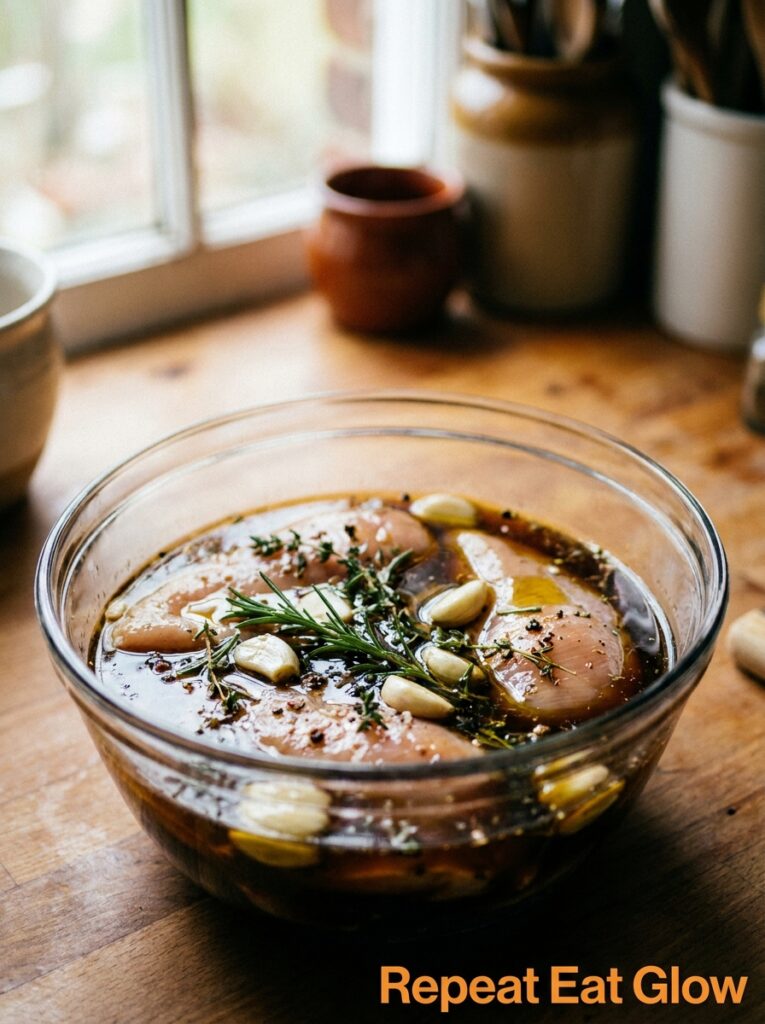
Here’s something I wish someone had told me years ago: a good marinade follows a formula. Fat + Acid + Flavor. That’s genuinely it. Once you know this you don’t need to follow recipes for marinades ever again.
Fat is usually olive oil. Acid is lemon juice, vinegar, yogurt, or buttermilk. Flavor is everything else — garlic, herbs, spices, soy sauce, honey, mustard, ginger. Any combination of these three elements, in roughly 3:1:1 ratio (more oil, some acid, big flavor), will give you a marinade that works.
For chicken breast, I actually prefer yogurt-based marinades because the protein in yogurt helps keep the meat tender even if it cooks a touch too long. The Indian-inspired thing — yogurt, garam masala, ginger, garlic, a little turmeric — is legitimately one of the best chicken marinades in existence. Even 20 minutes of marinating makes a difference. Overnight is incredible. Don’t skip it when you’ve got the time.
—
12. The Way I Actually Plate These Dishes (Because Presentation Matters, Even on a Tuesday)
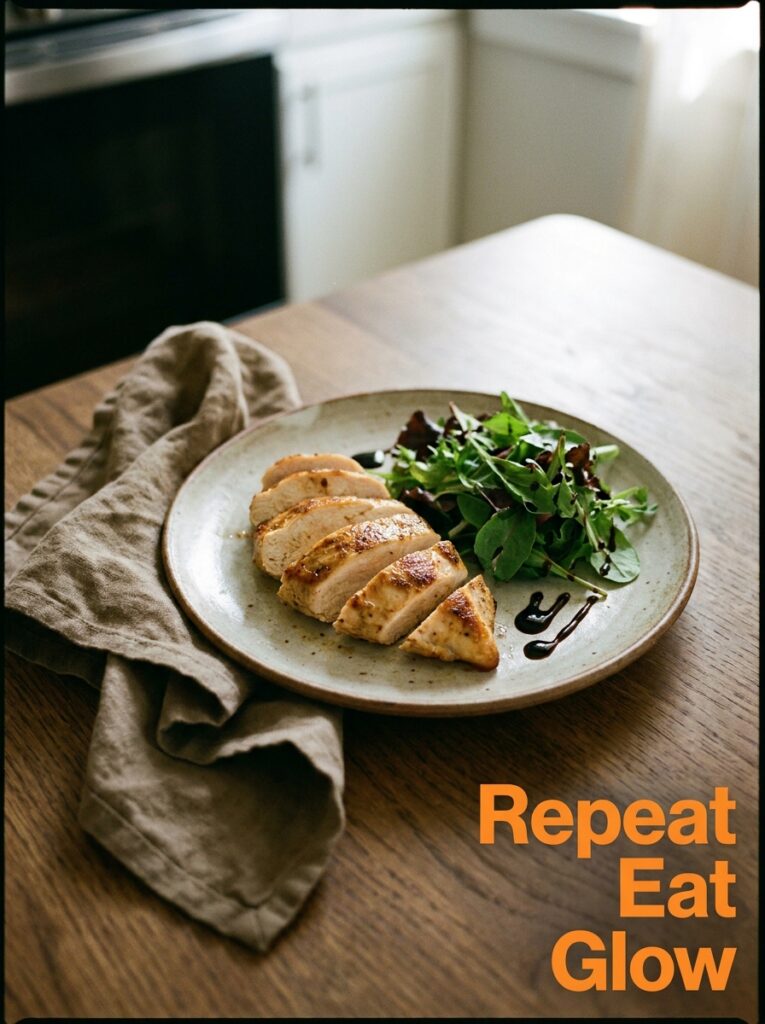
I know this might sound silly, but how you put the food on the plate genuinely changes how it tastes. Or at least how it feels to eat it. I’m not talking about Michelin star plating — I’m talking about small choices that make a real difference.
A scatter of fresh herbs at the end. A squeeze of lemon over the top right before it hits the table. Choosing a plate that has actual contrast with the food on it — a creamy chicken sauce on a dark plate looks DRAMATICALLY more appealing than the same sauce on a white plate, sort of inexplicably. Warm the plates if the dinner is saucy or delicate. A warm plate keeps everything at the right temperature longer and honestly signals to your brain that a real meal is happening.
And maybe the simplest thing: don’t overfill the plate. Leave some space. It doesn’t mean you’re eating less — you can always go back for more. It just means the food looks deliberate and cared for instead of dumped. You made this dinner. It deserves to look like you meant it.
—
❓ FAQ
Q: How do I know when chicken breast is fully cooked without cutting into it every two minutes? A: The most reliable method is a meat thermometer — you’re looking for 165°F / 74°C at the thickest part. If you don’t have one, get one; they’re inexpensive and genuinely worth it. Alternatively, the poke test: raw chicken feels very soft and squishy, fully cooked chicken feels firmer and springy when you press it gently.
Q: Can I use frozen chicken breasts straight from the freezer? A: Technically yes with some methods, but honestly it’s not ideal for most of these recipes. The uneven thawing means uneven cooking. Thaw overnight in the fridge if you can. If you forgot, a cold water bath in a sealed bag for about an hour works surprisingly well — change the water every 30 minutes.
Q: How long can I keep cooked chicken breast in the fridge? A: Three to four days in an airtight container is the standard food safety guidance on both sides of the Atlantic. It keeps better if you don’t slice it until you’re ready to use it — whole cooked chicken breast dries out slower than sliced. Reheat gently with a splash of water or stock to keep it from drying out further.
—
💭 Final Thoughts

Chicken breast dinners don’t have to be boring or dutiful or something you eat while wishing for something better. The right technique, a sauce that actually has flavor, and maybe one ingredient you haven’t tried with it before — that’s honestly all the difference. These recipes have gotten me through more busy weeks than I can count, and I still genuinely look forward to most of them. So what’s the dinner you keep meaning to try but somehow never get around to making?
