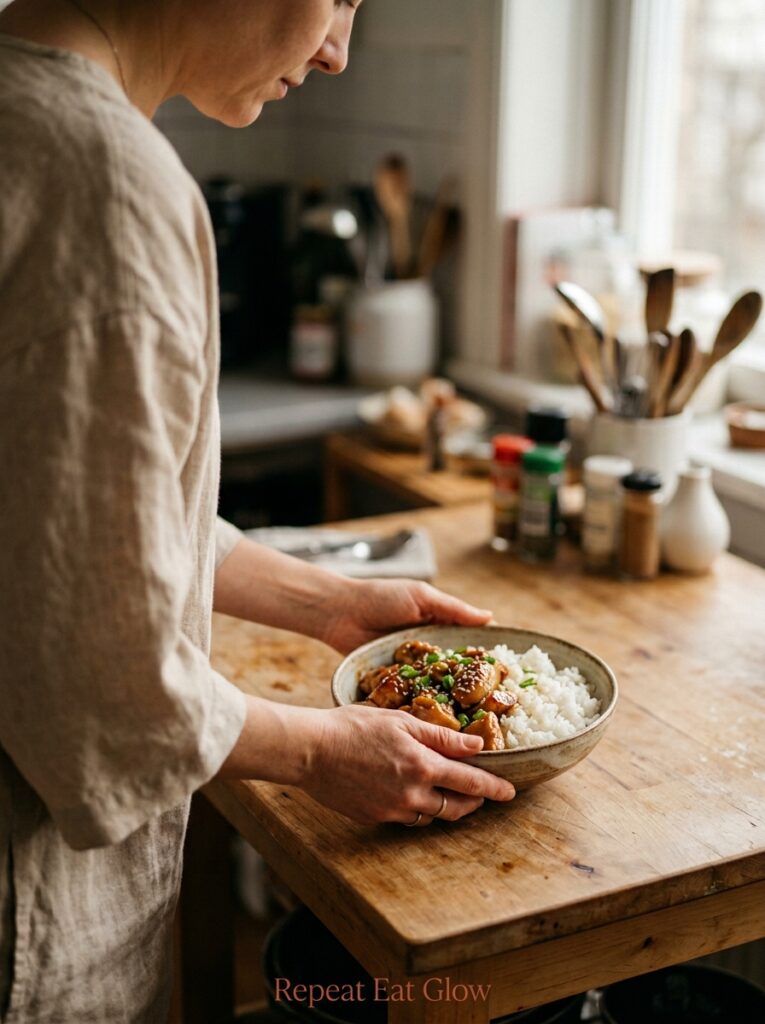
My friend Jo called me at 6pm on a Tuesday and said “I’ve got chicken thighs and soy sauce, what do I do?” And honestly? That phone call changed how I think about weeknight cooking forever.
—
1. Why Thighs Beat Breasts Every Single Time (Sorry, Not Sorry)
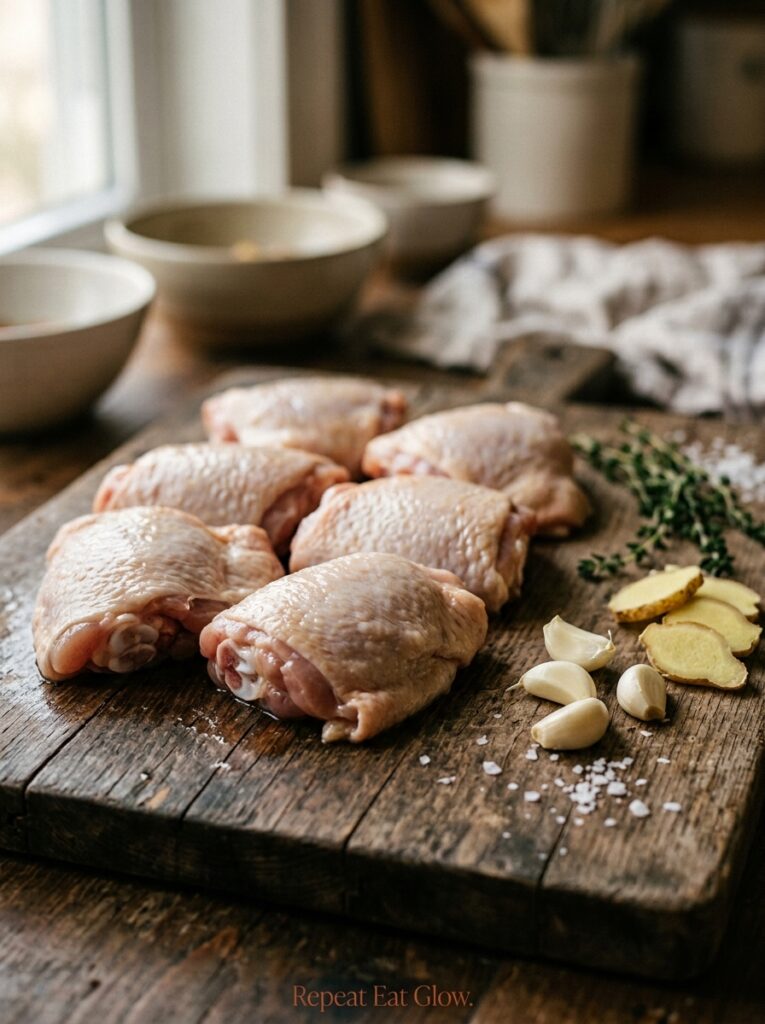
I used to be a chicken breast person. I was convinced it was the healthier choice, the smarter choice, the choice of someone who had their life together. I was wrong, and teriyaki specifically proved it to me.
Chicken thighs have fat in them — actual, real fat — and that fat is what caramelizes against the heat and turns your teriyaki sauce into something sticky and dark and almost smoky at the edges. Breasts go pale and a little sad. Thighs get glamorous. They’re also genuinely harder to overcook, which matters at 6pm when you’re distracted and checking your phone and the sauce is bubbling and the kids are asking about homework.
Bone-in or boneless? Boneless for speed, bone-in if you’ve got the oven on anyway and want more depth. Skin-on gives you those crispy bits at the edge that everyone fights over. That’s all you need to know.
“Chicken thighs have fat in them — actual, real fat — and that fat is what caramelizes against the heat and turns your teriyaki sauce into something sticky and dark and almost glamorous.”
—
2. The Sauce You’ll Make From Scratch and Never Buy Bottled Again
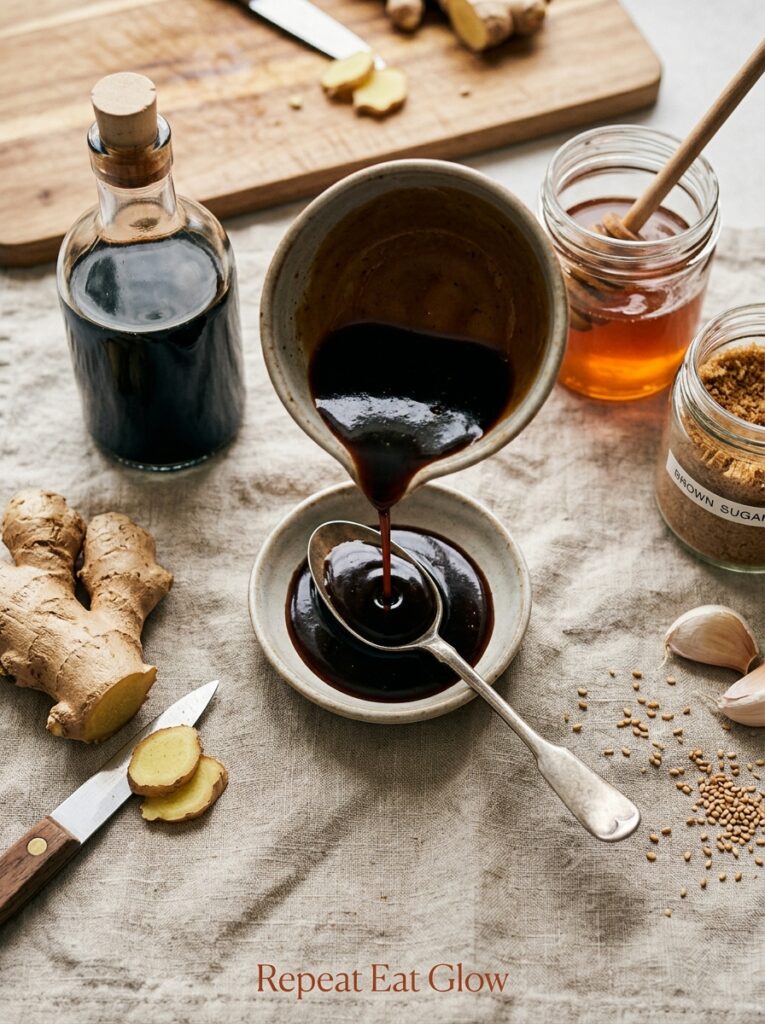
Four ingredients. That’s it. Soy sauce, mirin, sugar, sake (or dry sherry if sake feels like a special-occasion-only thing, which honestly, same). Equal parts soy and mirin, a splash of sake, a spoonful of sugar. Heat it until it thickens just slightly, until it coats the back of a spoon without running straight off. Done.
Some people add garlic. Some add ginger. Those are good additions, but I’d argue classic teriyaki doesn’t need them — it’s already got this deep, savory-sweet thing going that doesn’t really need backup.
The ratio matters more than the brand. Low-sodium soy sauce is fine here, it just means you might add a tiny bit more. Dark soy sauce makes the color richer and the flavor slightly more intense, which isn’t wrong at all.
Side note — mirin is in most big supermarkets now, often near the soy sauce or with the Asian ingredients. UK readers, Tesco and Waitrose both stock it pretty reliably. If you genuinely can’t find it, a mix of dry sherry and a pinch of sugar gets you close enough.
—
3. The Sheet Pan Dinner That Basically Makes Itself
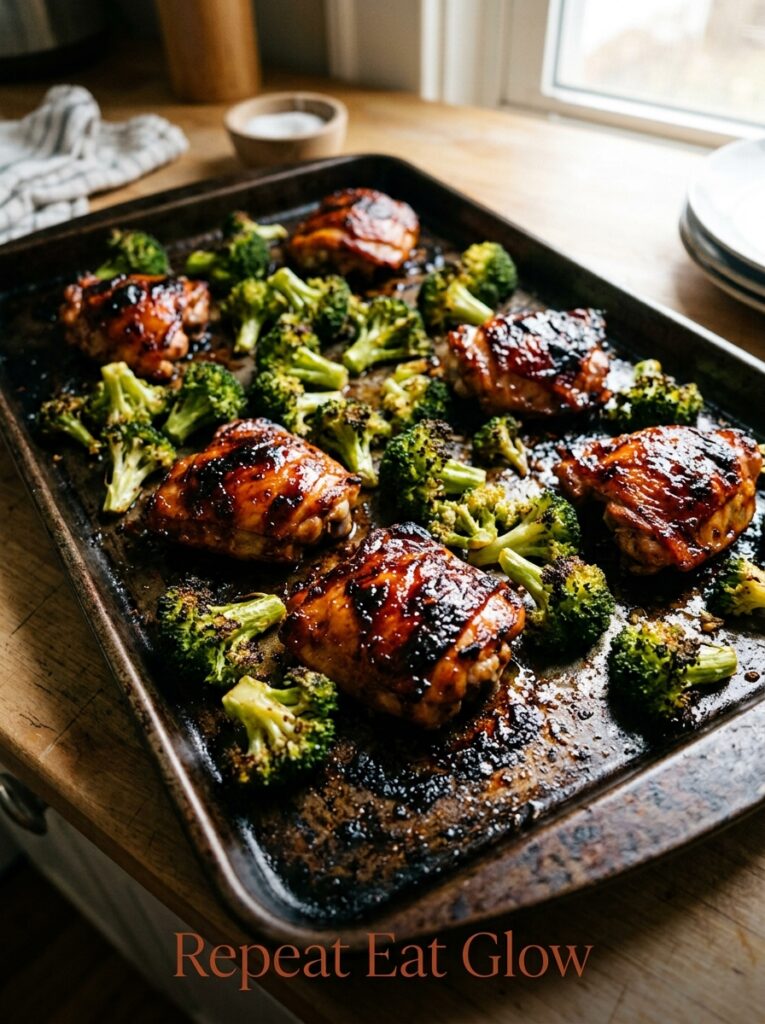
Here’s the recipe I actually make on a weeknight when I’m tired and don’t want to stand at the stove. Sheet pan. One bowl. Twenty-five minutes.
Toss chicken thighs with half your sauce. Arrange them on a lined baking sheet alongside whatever vegetables you’ve got — broccoli florets, bell peppers, snap peas, sliced zucchini, all of these work. Pour a little extra sauce over the vegetables. Roast at 400°F / 200°C for about 20-25 minutes, then turn the broiler/grill on high for the last three or four minutes.
That’s the secret, actually. The broil/grill step. That’s what gets you the lacquered, slightly charred edges that look like something you’d order at a restaurant and feel absurdly proud of when you pull them out of your own oven.
Serve over rice. Or don’t — it’s also incredible over noodles, or honestly just on its own if you’re eating at your kitchen counter like a reasonable adult who skipped the whole plating thing.
—
4. The Version That Comes Together in a Skillet While You’re Still in Your Coat
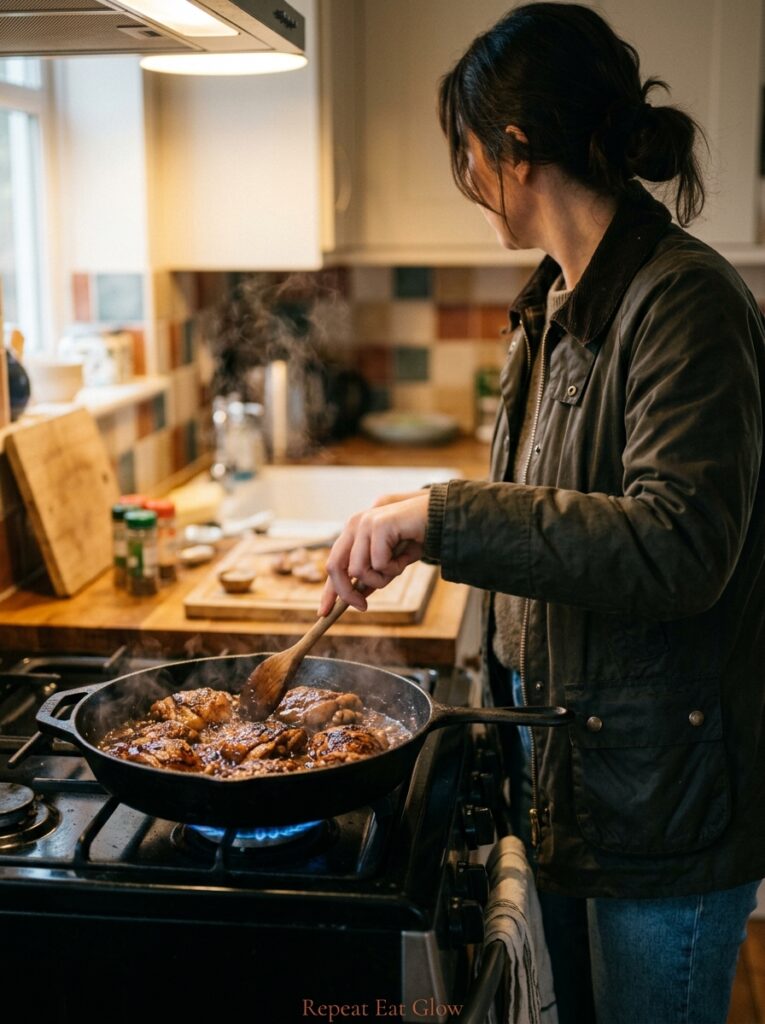
Some nights the oven isn’t happening. You got home late, rice is already in the rice cooker (get a rice cooker, it will change your LIFE), and you need chicken in a pan immediately.
Cut boneless thighs into chunks — about 1.5 inch pieces. Hot pan, a little neutral oil, and you don’t touch them for two minutes. That’s the move people skip. They poke the chicken. They move it around. Let it sit, let it get golden, and THEN flip it.
Once it’s mostly cooked through, pour your sauce in. It’ll hiss and bubble up dramatically. Keep the heat medium-high. Toss everything together and let the sauce reduce down to almost nothing in the pan — maybe two or three minutes. It gets thick and glossy and starts to catch just a little on the edges and that’s when you take it off the heat.
Sliced green onions. Sesame seeds. Done. Fifteen minutes, start to finish, and you’ll feel like you actually tried.
—
5. The Slow Cooker Version (For People Who Think Ahead, Which I Sometimes Do)
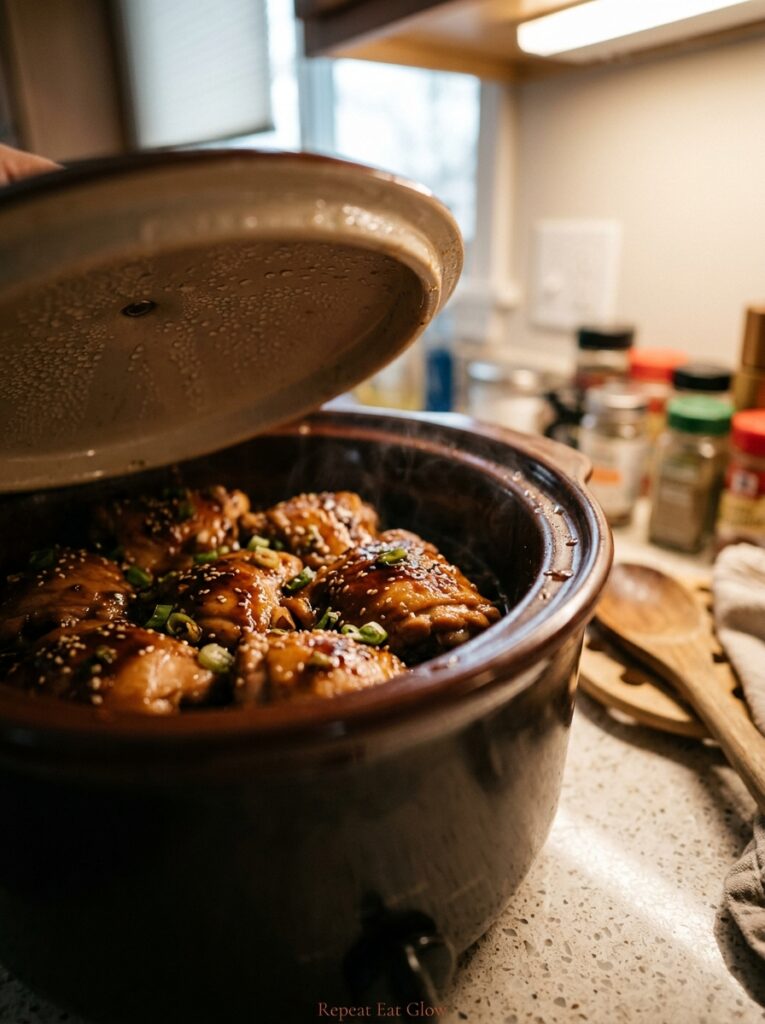
Not gonna lie, I’m not always a morning person. But on the rare days I am, slow cooker teriyaki chicken is absurdly good and absurdly easy.
Chicken thighs in the pot. Sauce poured over. Low for six hours or high for three. That’s genuinely the whole recipe.
The sauce will be thin when you open the lid — don’t panic. Scoop the chicken out, pour the liquid into a small saucepan, and reduce it on the stove for about five minutes until it thickens back up. Pour it over. Now it looks like you planned this deliberately.
This version shreds beautifully, by the way. Fork through the chicken once it’s out, let the strands soak in that reduced sauce, and pile it over rice bowls. Add a fried egg on top and you’ve got something that feels a bit luxurious for something you made in a pot you didn’t look at for six hours.
“Scoop the chicken out, pour the liquid into a small saucepan, and reduce it on the stove for about five minutes. Pour it over. Now it looks like you planned this deliberately.”
—
6. The Color That Keeps Showing Up in the Best Teriyaki Rice Bowls
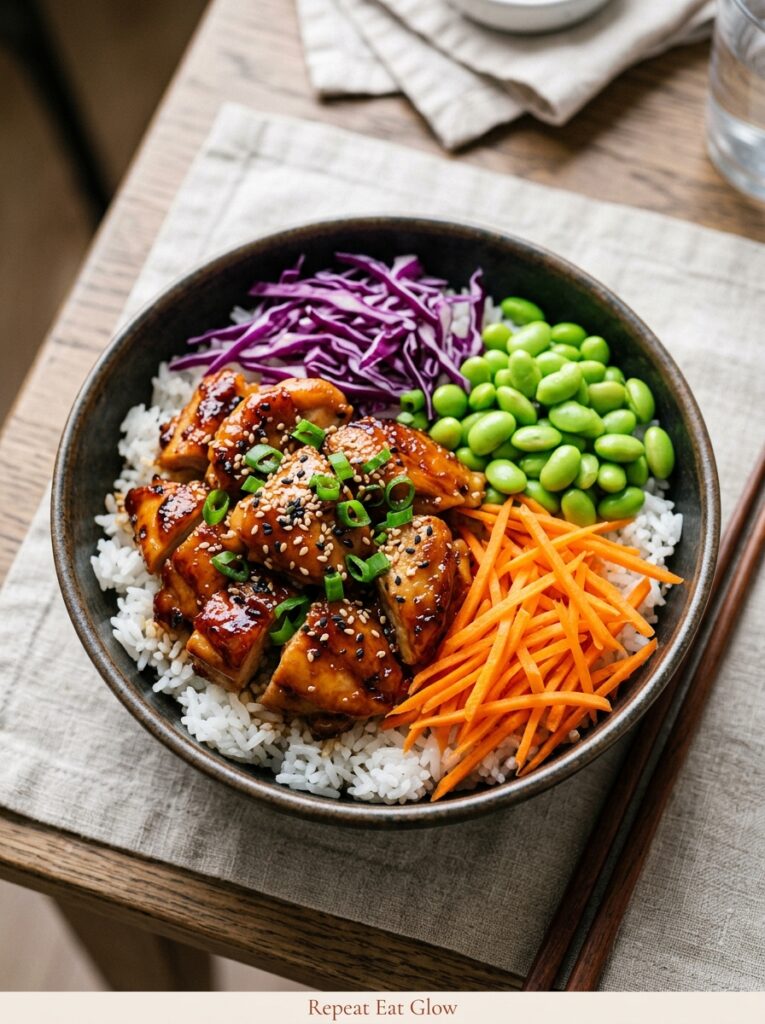
I know we’re talking about a chicken recipe, but the bowl matters. Or maybe it’s the opposite — maybe the bowl is actually what makes the whole thing feel like dinner instead of just food.
Here’s the rice bowl formula that never fails: rice on the bottom (jasmine or short-grain, either is wonderful), teriyaki chicken on top, and then at least two contrasting colors alongside it. Edamame is great — pop some frozen ones in the microwave, they take four minutes. Shredded purple cabbage adds this crunch that offsets all the saucy, sticky chicken perfectly. A halved soft-boiled egg (seven minutes in boiling water, straight into ice water) adds richness.
Cucumber slices, sliced avocado, pickled ginger if you’ve got it. You don’t need all of these. But two or three alongside the chicken and the rice turns “weeknight meal” into “something I’d genuinely photograph.”
Drizzle extra sauce over everything right at the end. A tiny bit of sesame oil if you have it — just drops, not a pour. That smell when it hits the warm rice. That’s it. That’s the whole appeal.
—
7. The Grilled Version That’s Actually Worth Firing Up the Barbecue For
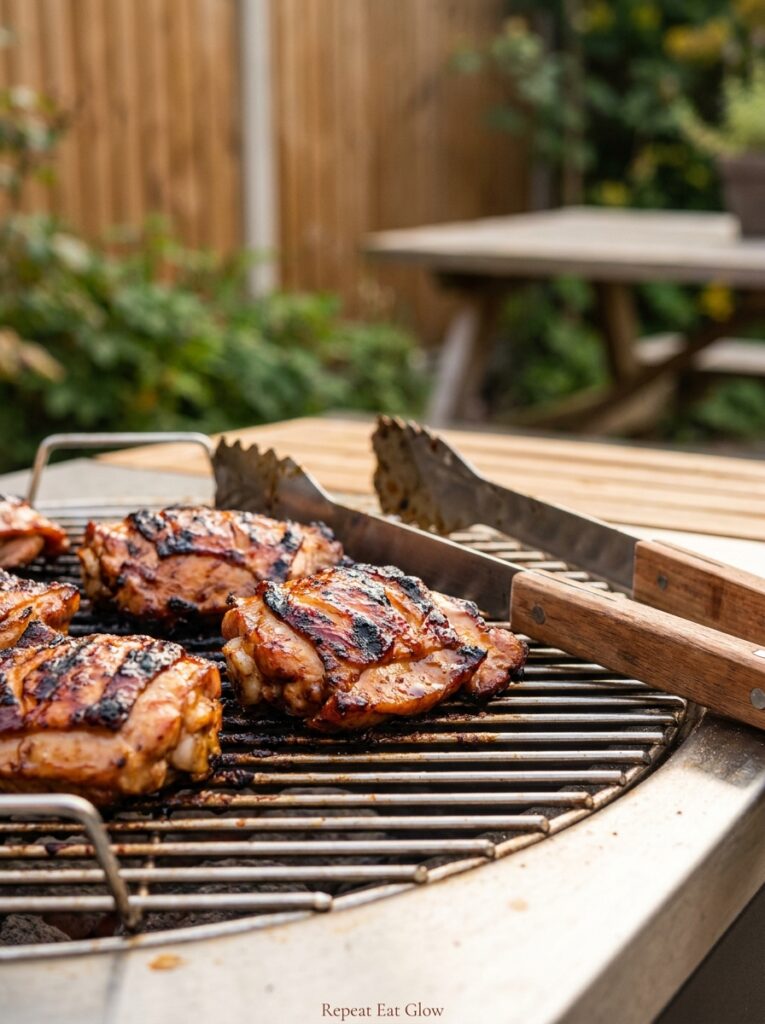
Summer (or any rare sunny day if you’re in the UK, I see you), the teriyaki chicken recipe changes completely. And it gets better.
Marinade the thighs overnight — or at minimum two hours — in the sauce. The sugar in the teriyaki caramelizes fast over flames, so you don’t want too thick a sauce at the start or it’ll burn before the chicken’s cooked through. Thin it slightly with a splash of water if needed.
Medium-high grill, lid down, flip once. Then baste with more sauce in the last few minutes of cooking. You’ll get these char marks and these sticky, glossy edges and the smell of it — the smoke and the sweetness and the soy — is genuinely one of the best things a backyard can produce.
Let it rest five minutes before cutting. Always. Even when you don’t want to.
—
8. What to Do With the Leftovers (Because There Will Be Leftovers)
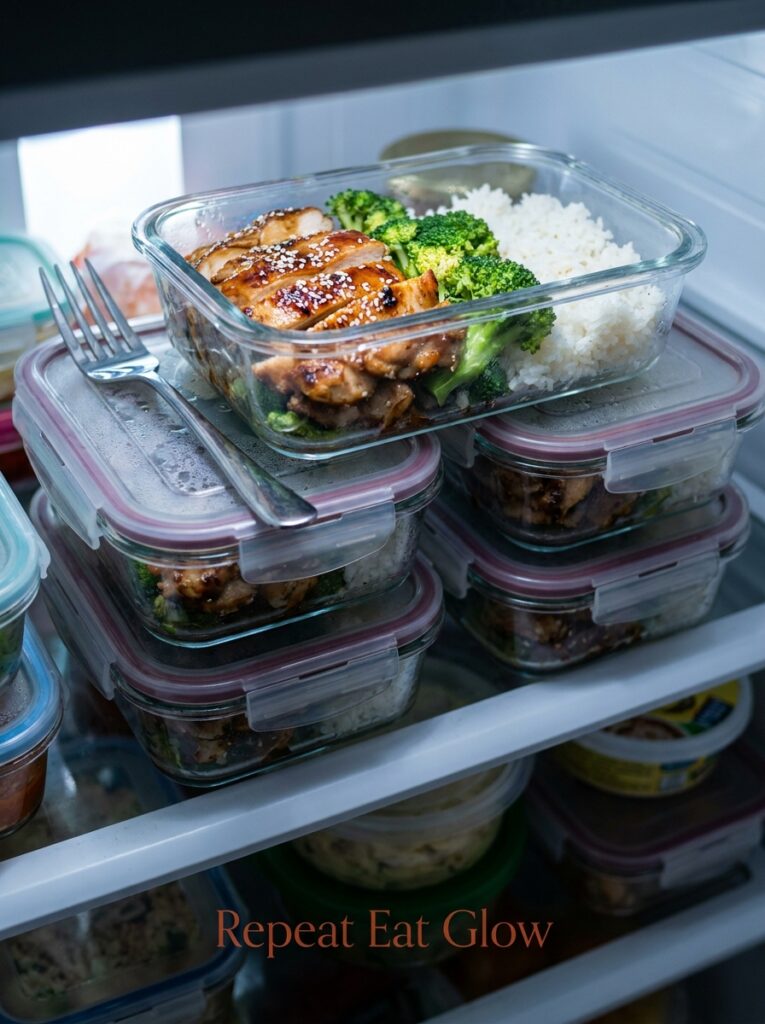
Leftover teriyaki chicken is arguably better than fresh teriyaki chicken the next day, and I will stand by that opinion.
Cold teriyaki chicken sliced thin on a sandwich with mayo and shredded cabbage. That’s a lunch worth waking up for. Or chop it and toss it into a quick fried rice — day-old rice, a hot pan, the chopped chicken, a couple of eggs, soy sauce. Five minutes. Genuinely impressive.
It also works in wraps. Flour tortilla, teriyaki chicken, avocado, a drizzle of something spicy like sriracha or a little chili sauce. Not traditional, but very good. Very “I didn’t technically cook dinner tonight.”
—
9. The One Vegetable That Belongs in Every Teriyaki Recipe
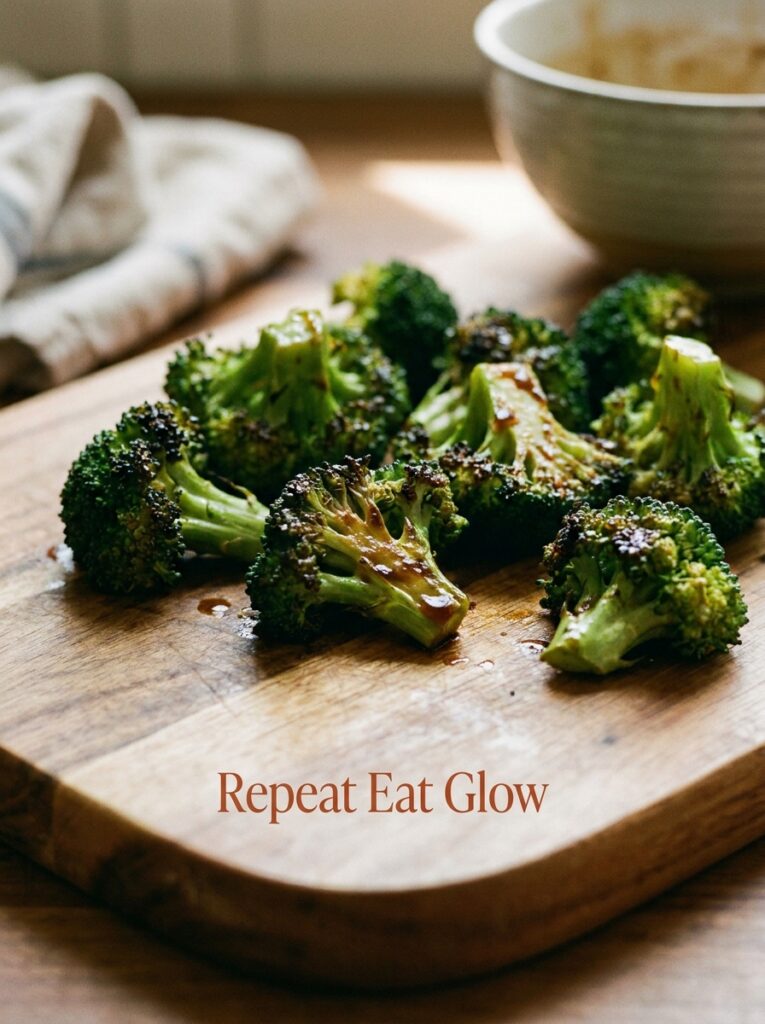
Broccolini. Not regular broccoli (though fine), not broccoli rabe (different flavor entirely). Broccolini, roasted or stir-fried until it’s slightly crispy at the tips and tender at the stalk.
It absorbs teriyaki sauce like it was designed to. The florets catch the sauce and get a little crispy in the oven and the stalks stay tender and there’s this textural thing happening that makes every bite interesting.
If you can’t find broccolini, regular broccoli cut small is totally fine. But if it’s there, choose it. Just lay it flat on the sheet pan with the chicken and let the sauce do the work.
—
10. The Rice That Actually Makes a Difference
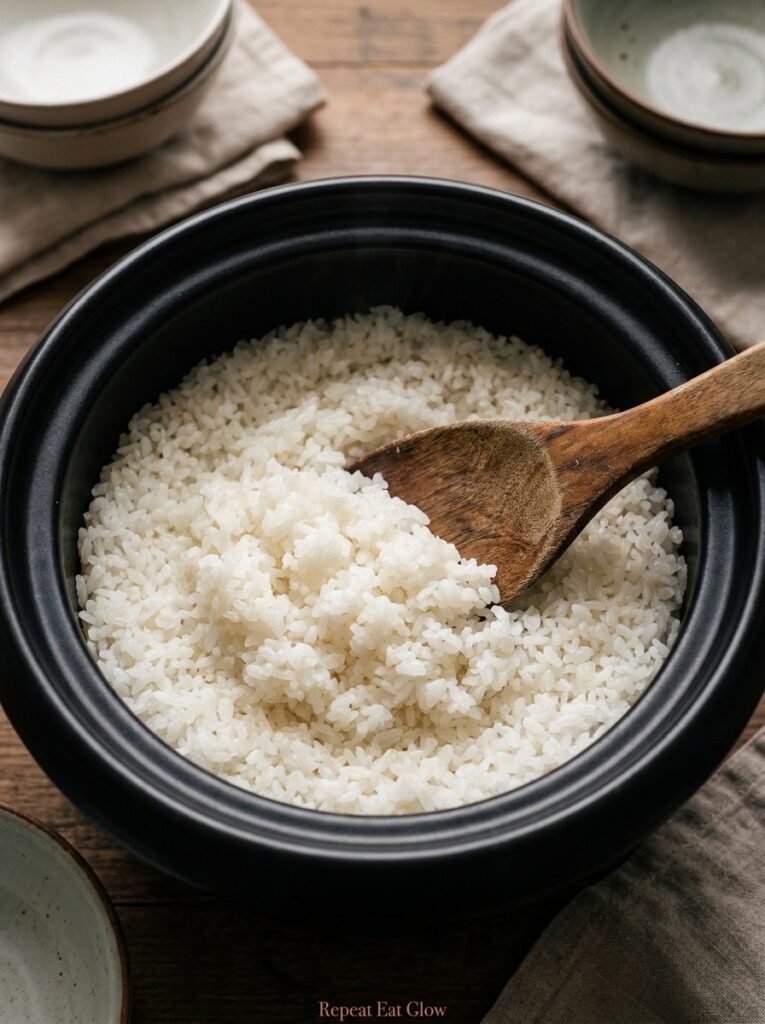
I’ve cooked teriyaki chicken over plain white rice for years and I don’t regret it. But I’ve also made this small adjustment and I’ll mention it because it’s easy.
Cook your rice in just a little less water than usual. Fluff it, then add half a teaspoon of rice vinegar and a pinch of salt, and stir through while it’s still hot. It makes the rice taste like something. Like it has a reason to be there. The slight tang plays against the sweet-savory sauce in a way that just makes the whole bowl work better.
It’s not sushi rice. It’s just slightly seasoned rice. But the difference is real.
—
11. The Teriyaki Salmon Variation Nobody Talks About Enough
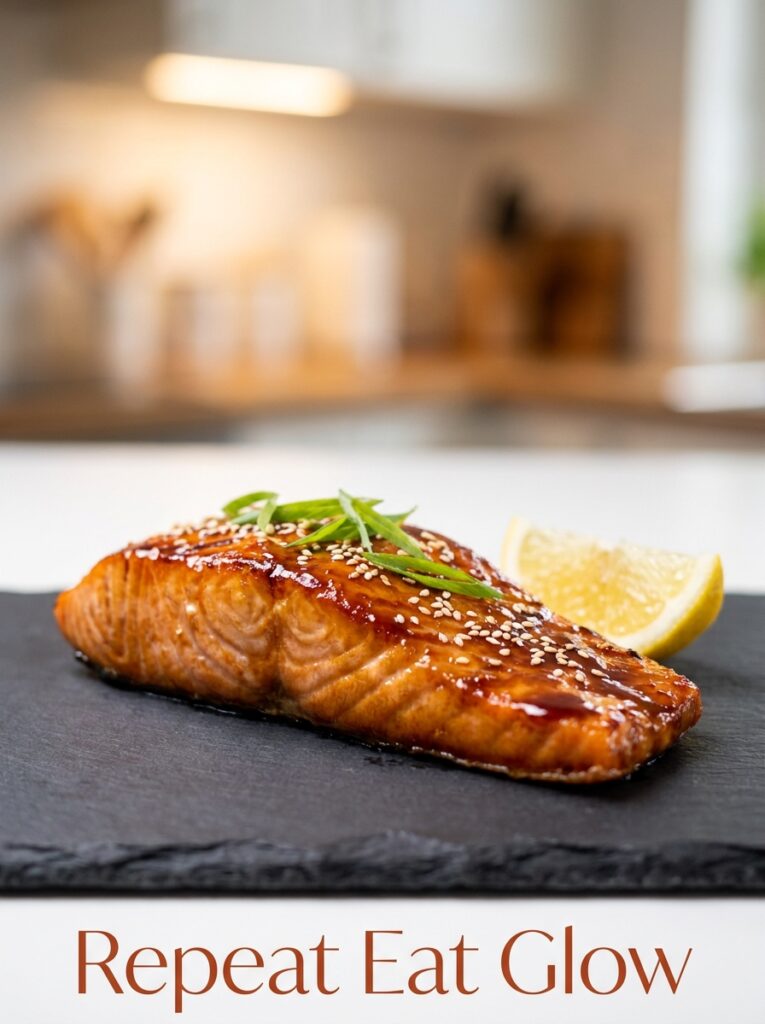
Okay, this is the slightly opinionated detour — same sauce, different protein. Salmon fillets, skin on, teriyaki sauce, ten minutes in a hot pan or twelve in the oven.
The sauce caramelizes against the salmon skin in this incredible way. It’s faster than chicken, which matters on a really tired Tuesday. And the combination of the richness of salmon with the sweet soy sauce is almost better than the chicken original, or maybe equally good, or maybe it just depends on my mood.
Make it on a day when you have rice already going and you need dinner in literally fifteen minutes. The kids will eat it. Or they won’t — but you will, and that’s enough.
“The sauce caramelizes against the salmon skin in this incredible way. It’s faster than chicken. And on a really tired Tuesday, faster wins.”
—
12. Building a Teriyaki Dinner Rotation That Doesn’t Get Boring
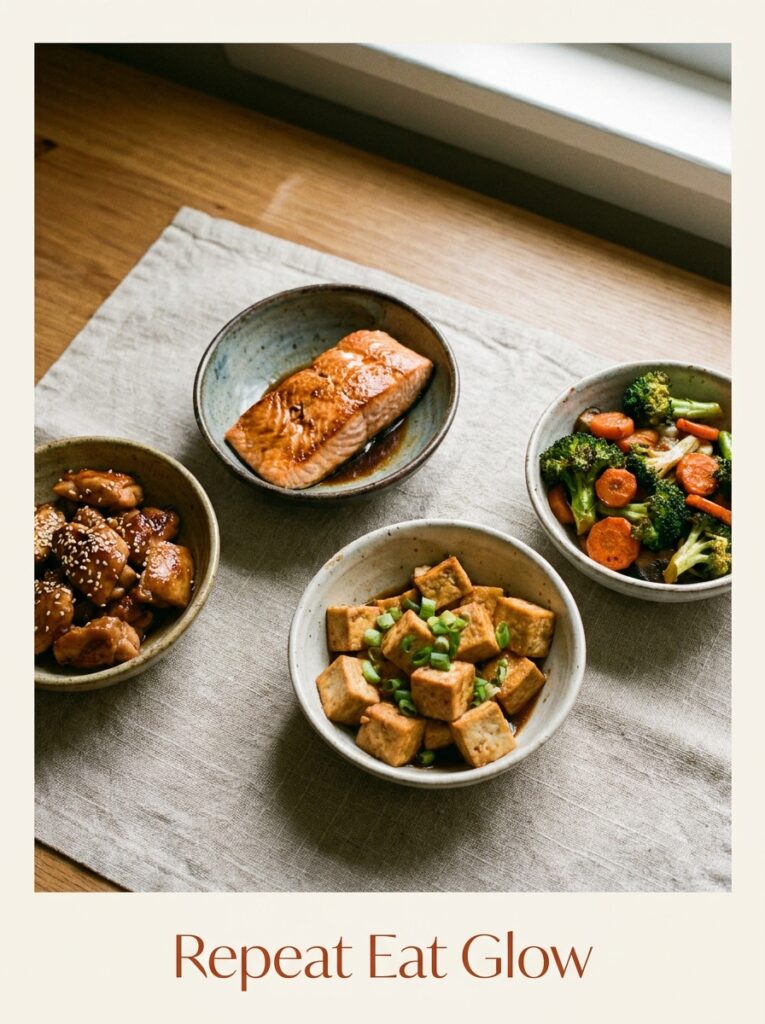
The reason teriyaki works so well as a weeknight rotation is that it’s one sauce that takes completely different shapes depending on how you cook it and what you serve it with.
Sheet pan one week, skillet the next, slow cooker the week after. Rice bowls, noodle bowls, wraps, fried rice with the leftovers. Chicken thighs, then salmon, then maybe chicken breast for someone in the house who still insists on it (no judgment).
You’re not eating the same thing twice. You’re eating the same flavor — that sticky, sweet-savory, deeply satisfying sauce — in a new shape each time. And that’s kind of a nice way to cook. Less decision fatigue, more actual dinner.
—
❓ FAQ
Q: Can I make teriyaki sauce without mirin? A: Yes, absolutely. Mix equal parts dry sherry or rice wine with a pinch of sugar and it’ll get you close to the same sweet, slightly acidic flavor mirin brings. Some people use apple juice or even a tiny bit of orange juice in a pinch — it’s not identical but it works.
Q: How long can teriyaki chicken be stored in the fridge? A: Three to four days in an airtight container and it reheats really well. It actually gets a bit more flavorful as the sauce continues to soak in. I’d reheat it in a skillet over medium heat rather than the microwave if you can — keeps the edges from getting rubbery.
Q: Is teriyaki chicken actually Japanese or is it a US thing? A: It’s genuinely Japanese in origin — the word literally refers to the cooking technique (broiling or grilling with a sweet soy glaze). The teriyaki you get at US and UK restaurants is often a sweeter, thicker version that’s been adapted over time. Homemade falls somewhere in the middle, which I think is the best place to be.
—
💭 Final Thoughts
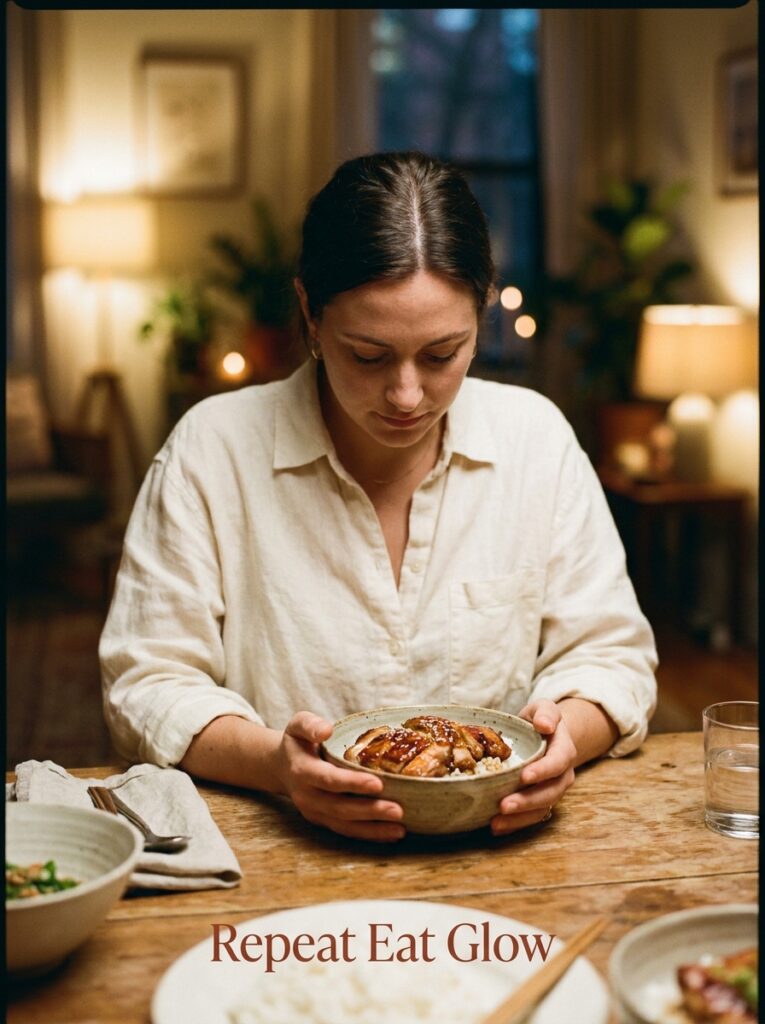
There’s something really satisfying about a recipe that looks like you worked harder than you did. Teriyaki chicken has that quality in abundance — it comes out of the oven or the pan looking glossy and intentional and like you made a whole decision about dinner, even if that decision took four minutes and happened at 5:45pm in a mild panic.
It’s reliable in a way that feels rare. And I think that’s why it keeps showing up on everyone’s weeknight rotation, year after year, no matter what food trends come and go.
What’s your version — do you go stovetop or sheet pan when the week gets long?
