My friend texted me last Tuesday: “I have chicken, an onion, and the will to live — barely. Help.” And honestly? That’s the energy we’re cooking with tonight.
Lazy dinners get a bad reputation. Like somehow admitting you don’t want to stand over a stove for an hour means you don’t care about food. But some of the best things I’ve ever eaten came from exactly that mindset — low effort, high reward, almost embarrassingly simple.
—
1. What “Lazy” Actually Means in a Kitchen (It’s Not What You Think)
Let’s get something straight. Lazy doesn’t mean bad. It doesn’t mean sad desk food or cereal at 9pm out of guilt. Lazy means you’re working with what’s already there — your energy, your pantry, your 40 minutes before you have to be somewhere else mentally.
The best lazy dinners aren’t dumbed-down versions of real meals. They’re their own category. They’ve evolved, honestly, from generations of tired people who were GOOD at cooking and just didn’t want to do all of it that night. That’s not laziness. That’s efficiency with flavor instincts.
And the moment you stop apologizing for wanting dinner to be easy, something clicks. You get more creative, not less. Because limits — time limits, energy limits, “I only have three things in this fridge” limits — they force interesting solutions.
“The best lazy dinners aren’t dumbed-down versions of real meals. They’re their own category.”
2. The Pasta That Cooks Itself While You Do Nothing
Okay not literally nothing. But almost.
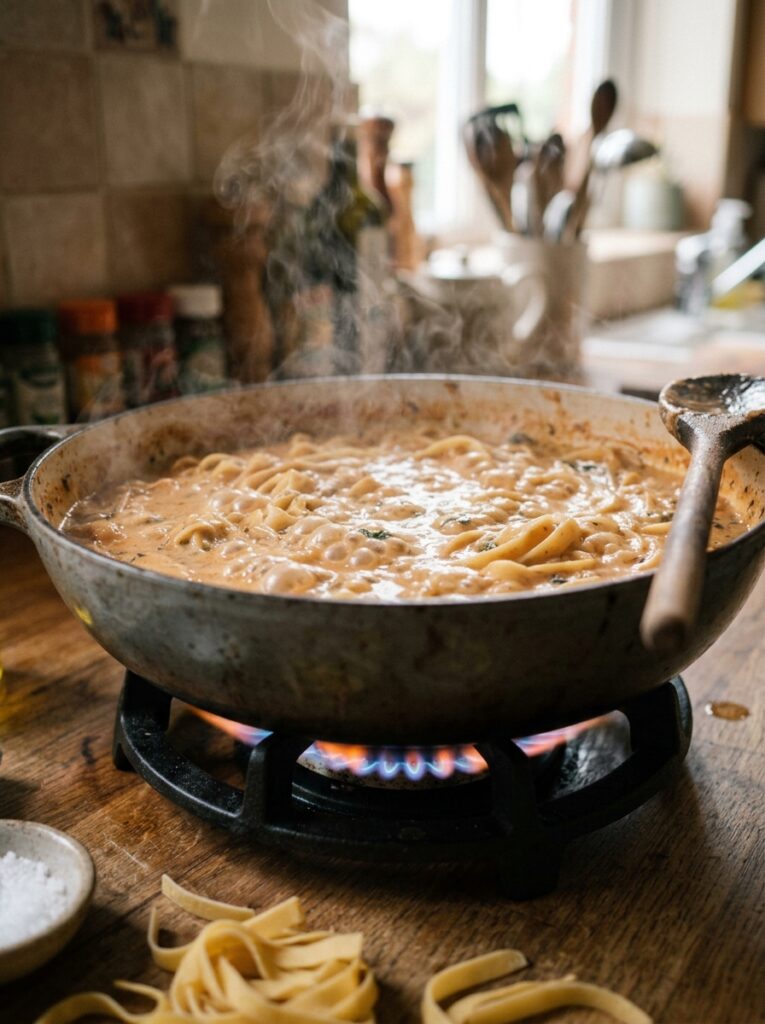
One pot pasta changed my weeknights in a way I’m slightly embarrassed to admit. You throw dry pasta into a wide pan or pot, add just enough water or stock to cover it, a handful of cherry tomatoes if you’ve got them, a few crushed garlic cloves, a generous pour of olive oil, salt, and whatever herb is sitting on your counter looking sad. Then you turn on the heat and mostly leave it alone, stirring occasionally, until the liquid absorbs and the pasta gets this starchy, almost creamy coating that no separately-boiled pasta ever achieves.
It’s different. It’s not “just as good.” It’s actually better in this specific lazy context, because the starch stays in the pot and does its job instead of getting poured down the drain. And cleanup is one pan. One. Pan.
Add a fried egg on top if you want protein. Crumble in some feta. It doesn’t need much.
3. The Thing About Baked Eggs (More People Should Do This)
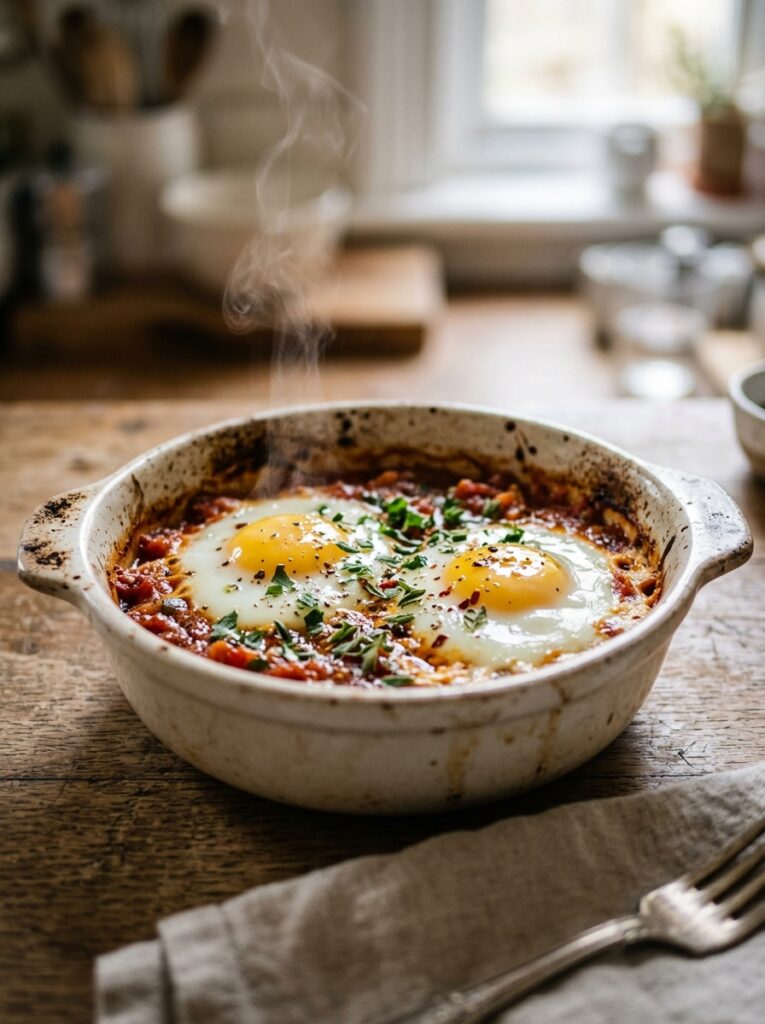
I feel like baked eggs are underrated in a way that kind of baffles me. You take whatever’s left in your fridge — a tin of chopped tomatoes, some wilted spinach, maybe leftover roasted vegetables from two days ago — throw it all in an oven-safe dish or skillet, make little wells, crack eggs in, season, and put the whole thing in a hot oven for 12 minutes.
That’s it. Done.
In the UK this concept lives somewhere near shakshuka, and in the US it’s basically a brunch move repurposed for dinner, which is exactly what we should be doing more of. Dinner doesn’t have rules. Breakfast food at 7pm is completely fine and I won’t be taking questions.
The key thing — don’t overcook the eggs. You want the whites just set and the yolks still a bit runny. Pull the dish out early. It keeps cooking for a minute after you take it out, and there’s nothing sadder than a chalky yolk that had potential.
4. Sheet Pan Dinners Work Best When You Stop Following the Recipe Exactly
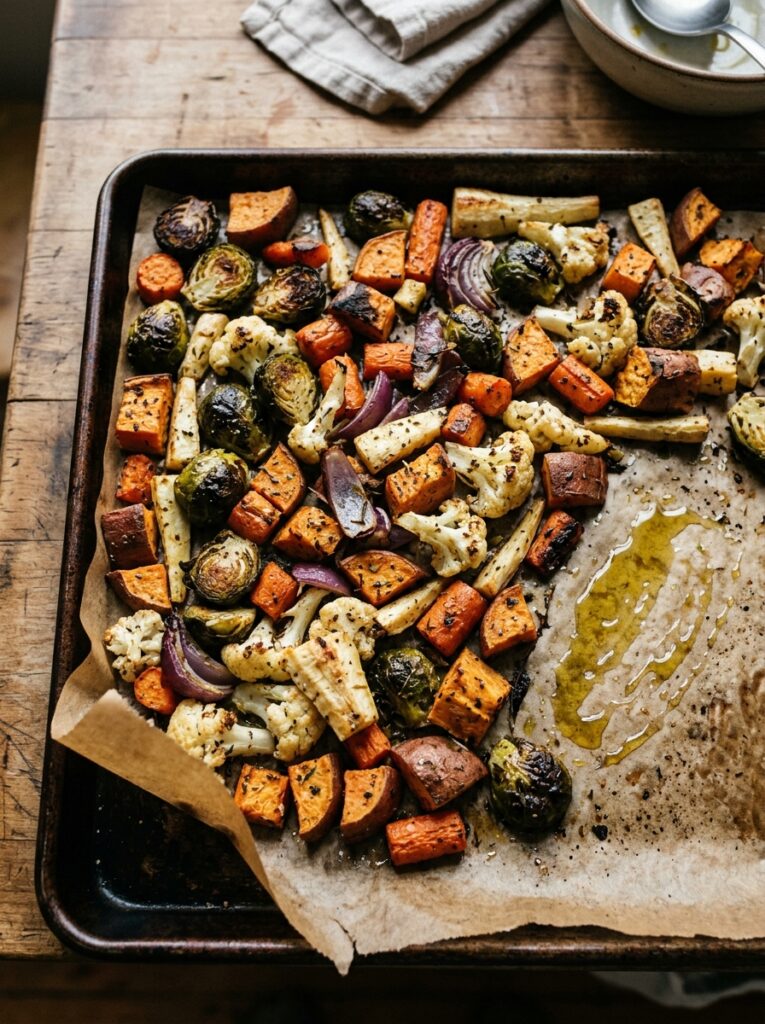
Every sheet pan recipe you’ve ever seen online is more of a suggestion than a law. This took me a while to accept.
The actual principle is this: protein in the middle, vegetables cut to similar sizes around the edges, enough fat that nothing sticks, enough heat that things get a bit crispy. Beyond that? You can improvise wildly.
Chicken thighs with whatever root vegetables you’ve got. Sausages alongside halved onions and some potatoes. A big piece of fish on top of lemon slices surrounded by asparagus or courgette. Even chickpeas, drained and dried, roasted until they’re crunchy with olive oil and smoked paprika and then thrown over a bowl of leftover rice.
The only mistake people make is overcrowding the pan. Everything needs space. When things are crammed in, they steam instead of roast and you lose that caramelized edge that’s the whole point. Use two pans if you have to. It’s not cheating, it’s science.
5. The Color That Keeps Showing Up in Every Lazy Dinner Worth Making
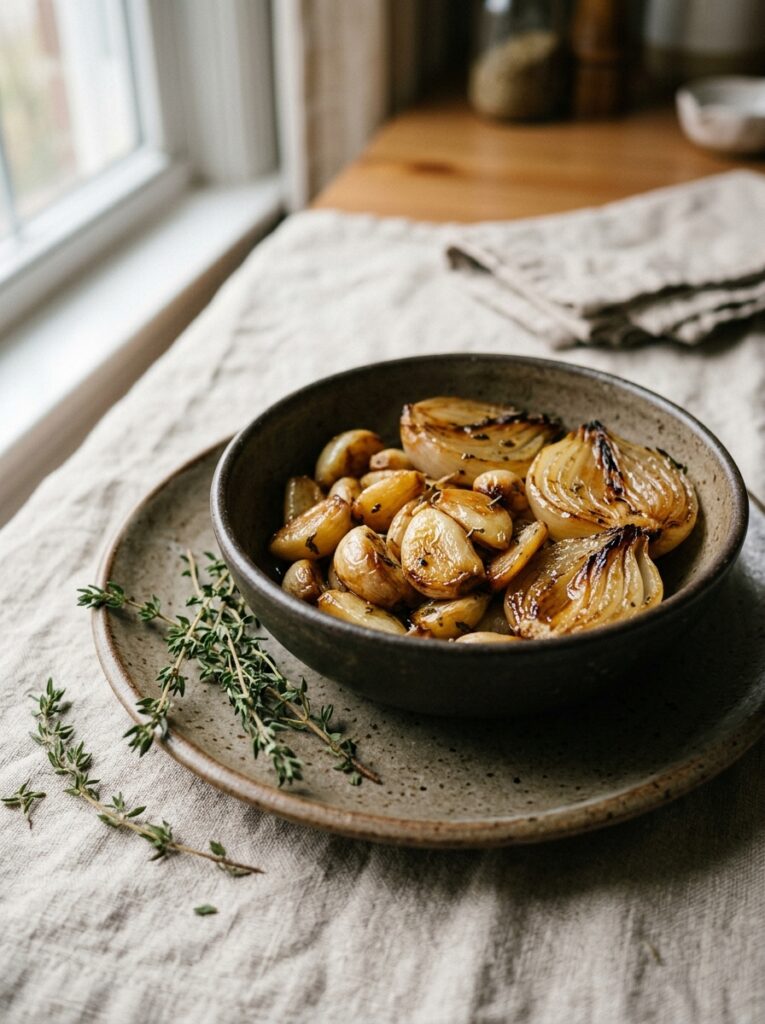
Yellow. And I don’t mean aesthetically.
Turmeric. Butter browning to gold in a pan. The pale yellow of a good soft-scrambled egg. The orange-gold of a properly roasted sweet potato. These aren’t coincidences — they’re a visual shorthand for fat, heat, and the Maillard reaction doing its work.
When a lazy dinner looks golden, it tastes right. You can fake a lot of effort with color. A bowl of pale, grey-ish food triggers doubt before you even take a bite, but something with crispy brown edges and a warm golden hue? You already trust it.
This is why butter matters more in lazy cooking than in careful cooking. Careful cooking has time to build flavor with technique. Lazy cooking needs a shortcut to depth, and butter, browned a little past where you’re comfortable, delivers it fast.
6. Why a Bag of Frozen Peas Might Be the Most Useful Thing in Your Freezer
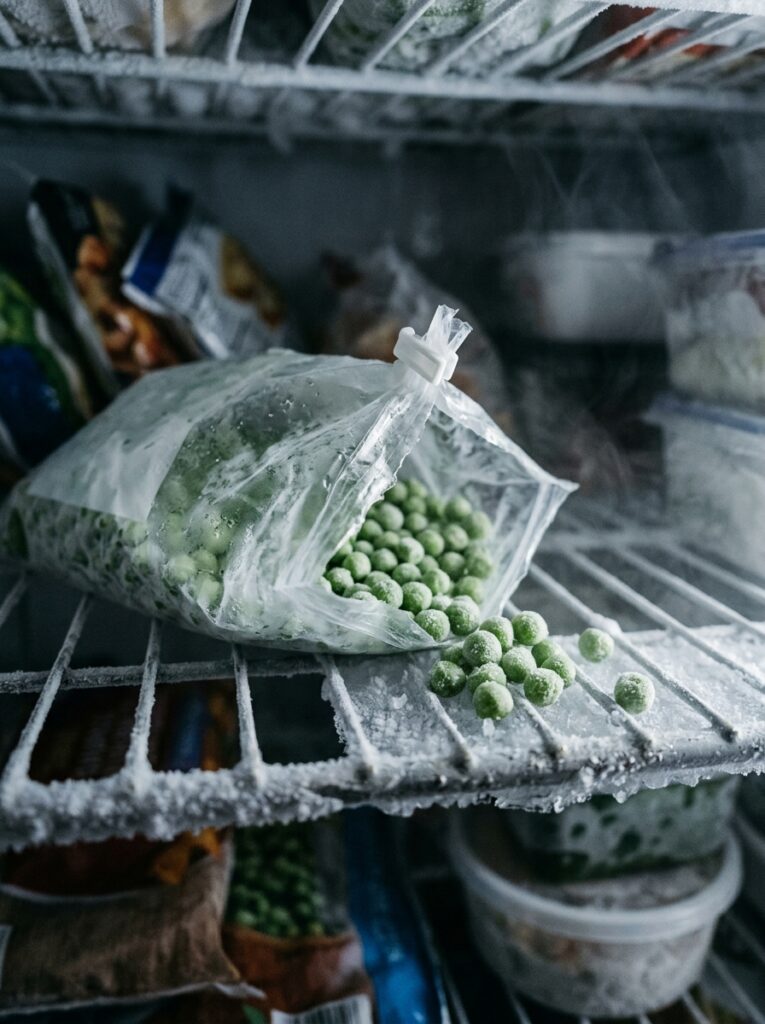
I know, I know. Stay with me.
Frozen peas aren’t exciting. But they’re ready in two minutes, they add color and sweetness and a bit of substance to anything, and they don’t require any thought. Stir them into a risotto you stopped tending to too early. Throw them into a pasta sauce. Mash them roughly with butter, lemon, and mint and put them on toast and call it dinner. (It is dinner. A good one.)
Side note — frozen sweetcorn does the same job in a slightly different direction. A bit more American in flavor, sweeter, great in a quick quesadilla or stirred into a rice bowl with whatever protein you have.
The freezer is genuinely underused as a lazy dinner ally. A few things always stocked in there — peas, some kind of protein, a bag of chopped onions if you can find them — and your floor for lazy is already so much higher than most people’s.
7. The One-Sentence Rule for Making Tinned Fish Taste Like You Tried
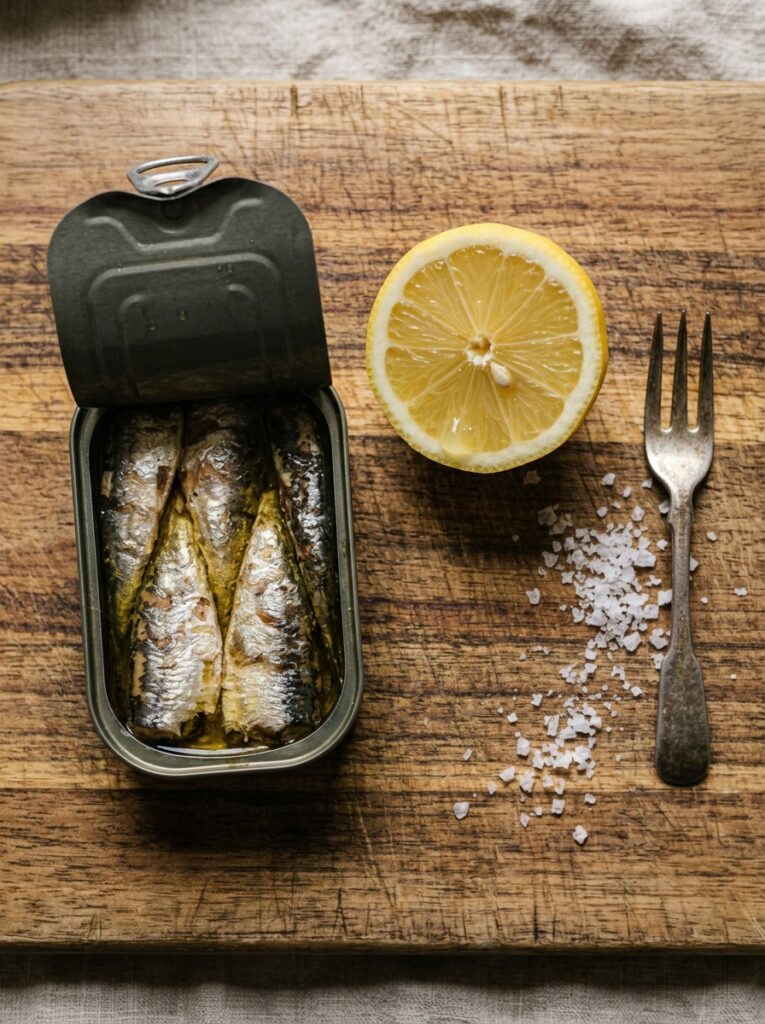
Season it while it’s still cold, before you do anything else.
That’s it. That’s the rule. Tinned tuna, sardines, mackerel, salmon — open the tin, drain it, then immediately add acid (lemon juice or a small splash of vinegar), salt, a little pepper, and whatever allium you have (even just a pinch of onion powder). Let it sit for two minutes while you sort out the rest.
This matters because tinned fish has a slightly flat, canned quality when you eat it straight. The acid wakes it up. The salt balances the brine. Two minutes of marinating does the work of a recipe.
“Season it while it’s still cold. Tinned fish has a flat, canned quality when you eat it straight — acid wakes it up completely.”
From here you can go anywhere. On toast with sliced avocado. Over a bowl of dressed leaves. Stirred into pasta with capers and olive oil. Tucked into a wrap with whatever crunchy thing you’ve got. Tinned fish is arguably the laziest high-quality protein available, in both the US and UK, and it doesn’t get enough credit from people who cook.
8. The Fridge Clean-Out Frittata (and Why It Never Fails)
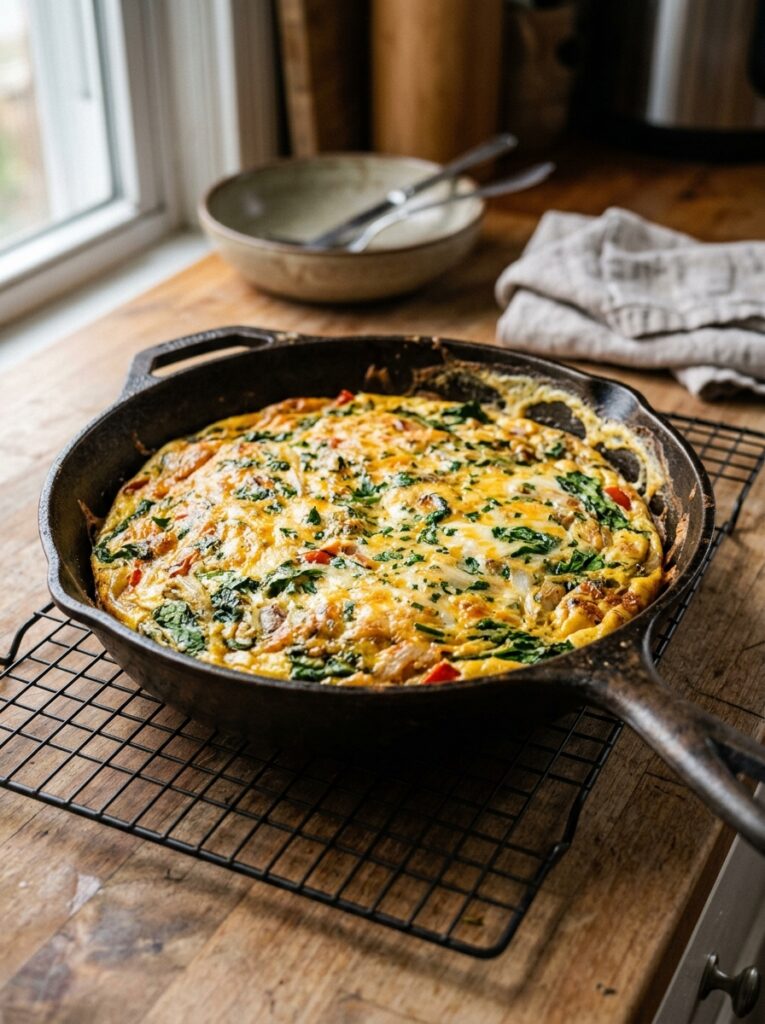
A frittata is a fancy word for “baked egg thing with stuff in it.” Don’t let anyone make you feel otherwise.
Here’s what happens: you whisk together some eggs — four to six for a standard pan — with a splash of milk or cream if you have it, salt, pepper. You add to your oven-safe skillet whatever cooked or par-cooked things exist in your fridge: leftover roasted vegetables, cooked potato, bits of cheese, wilted greens you sautéed for 90 seconds, a few torn herbs. Pour the eggs over. Cook on the hob on medium until the edges are set and the middle is still wobbly. Slide the whole pan under the grill/broiler for three to five minutes until the top is set and a bit golden.
Done. You’ve made dinner. It’s good cold too, which means tomorrow’s lunch is also handled, and that’s the kind of double-win that lazy cooking occasionally delivers without you even planning for it.
9. The Bread Bowl Situation Nobody Talks About Enough
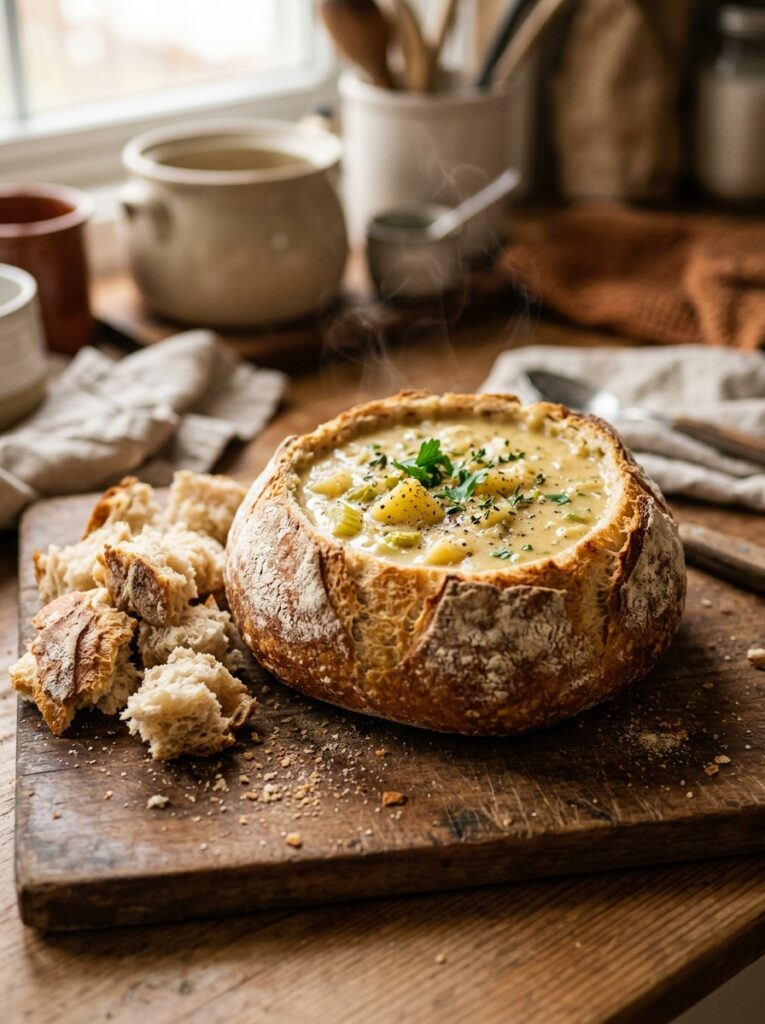
This is genuinely underrated as a weeknight move.
Take a crusty bread roll — the kind that’s got some structure to it — cut off the top, pull out most of the soft interior (eat it while you cook, obviously), and what you have is an edible bowl. Fill it with soup you heated from a carton, stew from the freezer, or even just a really good tomato sauce with a fried egg on top.
The bread soaks up whatever it’s holding and becomes part of the meal in a way that a regular bowl just can’t replicate. It’s the kind of thing that costs almost nothing, takes five minutes, and makes dinner feel slightly magical in a way that’s hard to explain without just doing it.
If you’ve got leftover soup — especially anything thick like lentil, roasted tomato, or a creamy vegetable blend — this is the move. Every time.
10. What to Actually Do When You Have Literally Nothing
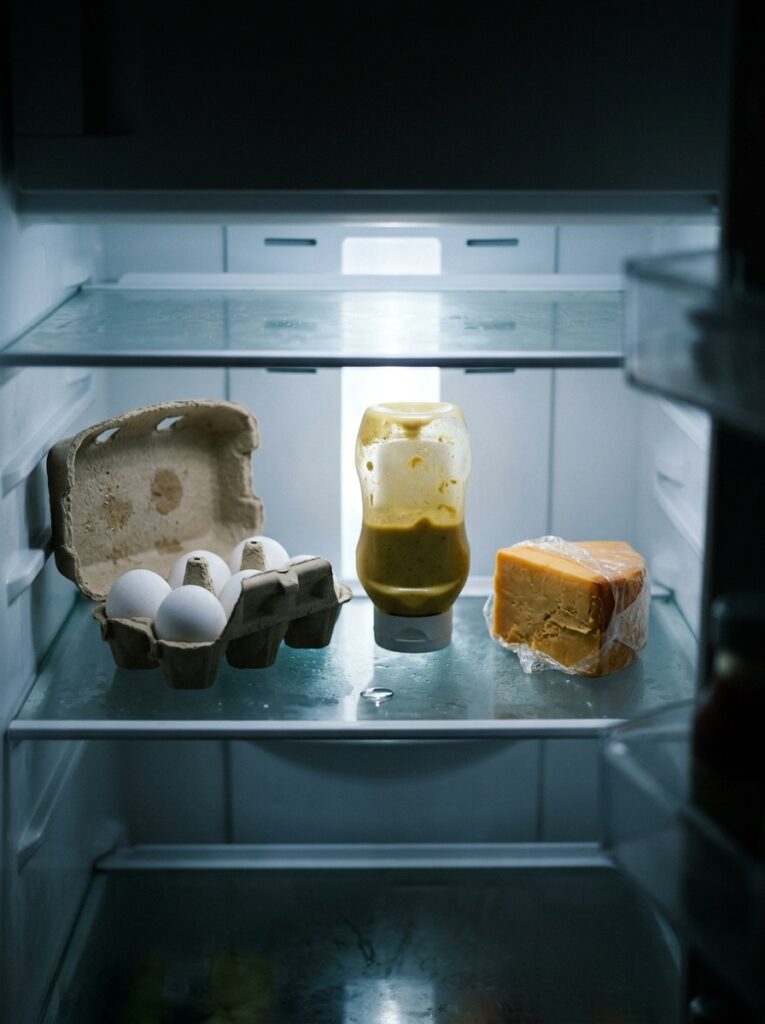
We’ve all been there. The fridge is not just low, it’s spiritually empty. And you don’t want to order in again.
Here’s the actual honest answer: eggs and carbs will always save you. Always. Fried egg on rice with soy sauce and whatever’s in the back of the condiment shelf. Scrambled eggs on toast with whatever cheese exists. A simple aglio e olio — pasta, olive oil, garlic, chili flakes, done — made entirely from things that live in your pantry and basically never run out.
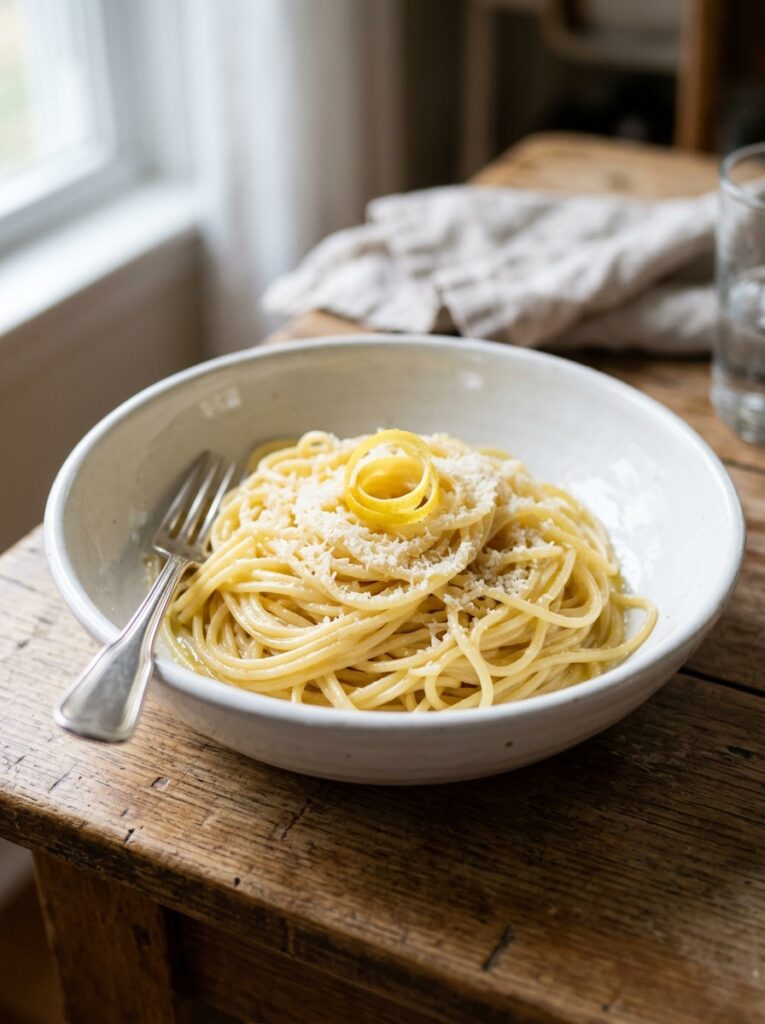
Aglio e olio is the one I want to be more evangelical about. People think it’s boring because it sounds minimal. But garlic, cooked slow in really good olive oil until it’s soft and golden (not brown, not burnt — golden), tossed through al dente spaghetti with a bit of the pasta water to make it silky? It’s remarkable. It tastes like someone put effort in. No one needs to know.
“Garlic, cooked slow in good olive oil until it’s soft and golden, tossed through spaghetti with a splash of pasta water — it tastes like someone put effort in.”
11. The Lazy Dinner That Feels Fancy Without Being Fancy
Soup with something floated on top.
Sounds underwhelming written out like that. But hear me out. Soup from a carton or tin is fine. Soup from a carton with a swirl of cream, a drizzle of chili oil, a few croutons made from stale bread you crisped in a dry pan for three minutes — that’s a different experience. Not because the soup changed, but because the presentation created expectation.
We eat with our eyes first and that cliché exists because it’s embarrassingly true. Lazy dinner success is often 70% the food and 30% how you serve it. Put it in a wide, shallow bowl instead of a deep one. Add something green on top. Tear a bit of bread and lean it against the rim. Light a candle if you’re eating alone, because you deserve it.
The effort you save on cooking can go somewhere. Sometimes it should go into the five seconds it takes to make it look like you cared, even when you really, really didn’t.
12. The One Habit That Makes Every Lazy Dinner Better Automatically
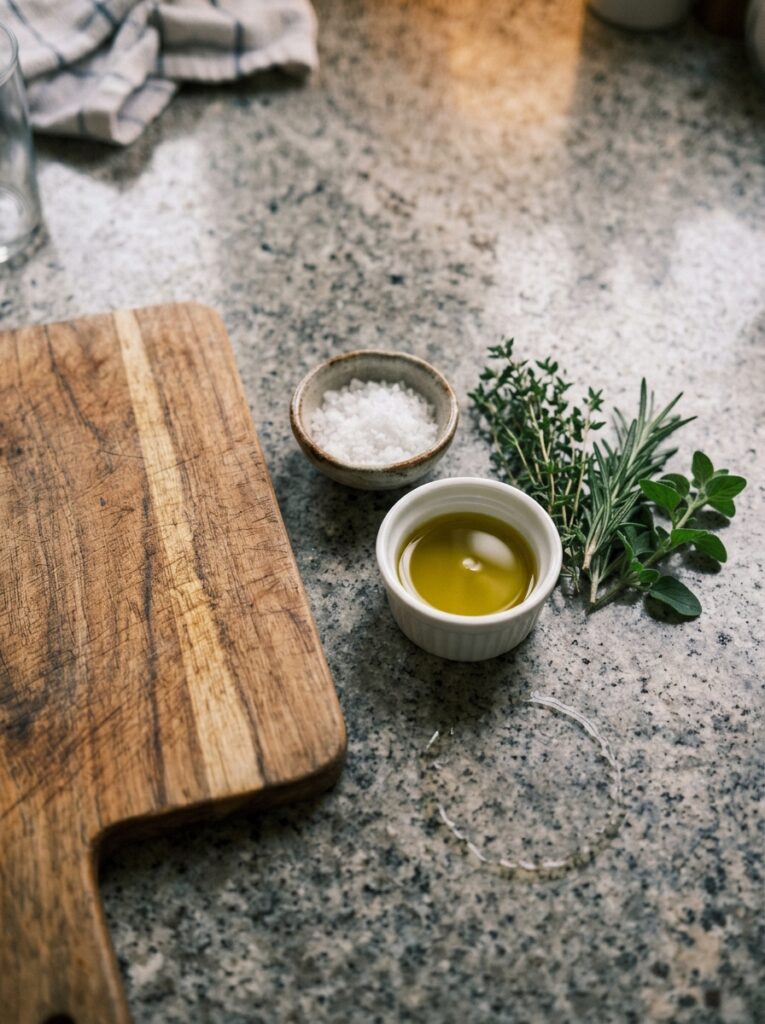
Keep a shallot or two on your counter. Always.
Not garlic — most people already do garlic. Shallots are sweeter, softer, faster to cook, and they make everything they touch taste a bit more considered. Sliced thin and fried quickly in butter until they’re soft and lightly caramelized, they can go on top of almost anything and make it taste like you thought about it.
On pasta. On eggs. On a piece of fish. On a bowl of soup. On toast with cream cheese. Anywhere.
That kind of small, cheap, fast upgrade is what separates a lazy dinner that you’re just getting through from one that you’d actually want to eat again. And wanting to eat it again is really the whole point, isn’t it.
—
❓ FAQ
Q: What are the best lazy dinners that don’t feel like “giving up” on proper food? A: One-pot pasta, baked eggs with tinned tomatoes, and aglio e olio are genuinely good dinners that happen to require minimal effort — they’re not compromises, they’re just efficient. The trick is keeping a few pantry staples stocked so you’re not starting from zero. A frittata made with fridge leftovers can also feel surprisingly satisfying.
Q: How do I make a lazy dinner feel more filling without cooking more? A: Add a carb you don’t have to cook — bread, crackers, rice that’s already in the fridge — and make sure there’s some fat in the meal, whether that’s olive oil, butter, cheese, or avocado. Fat is what makes you feel full and satisfied, not just volume. A splash of good olive oil stirred into a bowl of soup before serving makes a real difference.
Q: Can lazy dinners actually be healthy? A: Completely. Sheet pan vegetables with a protein, baked eggs with spinach, tinned fish on whole grain toast — these are all genuinely nutritious meals. The “lazy” part doesn’t have to mean processed or nutritionally empty. If your default lazy moves include a vegetable and some protein, you’re probably eating better than you think.
—
💭 Final Thoughts
Lazy dinners don’t need a defense. They need to be good — and they can be, pretty easily, with a small amount of pantry thinking and zero guilt about not wanting to cook a three-course meal on a random Wednesday.
The best ones are the ones you actually make, instead of staring at the fridge until you give up and do something you’ll regret. Even something small and thrown-together, made with a bit of care, beats a spiraling takeaway decision at 9pm.
What’s the laziest dinner you’ve ever made that turned out genuinely delicious?
