You’ve probably made both a hundred times separately. Roasted eggplant, chicken thighs, whatever. But the moment you put them together in the same pan, something genuinely different happens. Something deeper. And once you see it, you can’t go back.
—
1. Why This Pairing Works Better Than It Has Any Right To
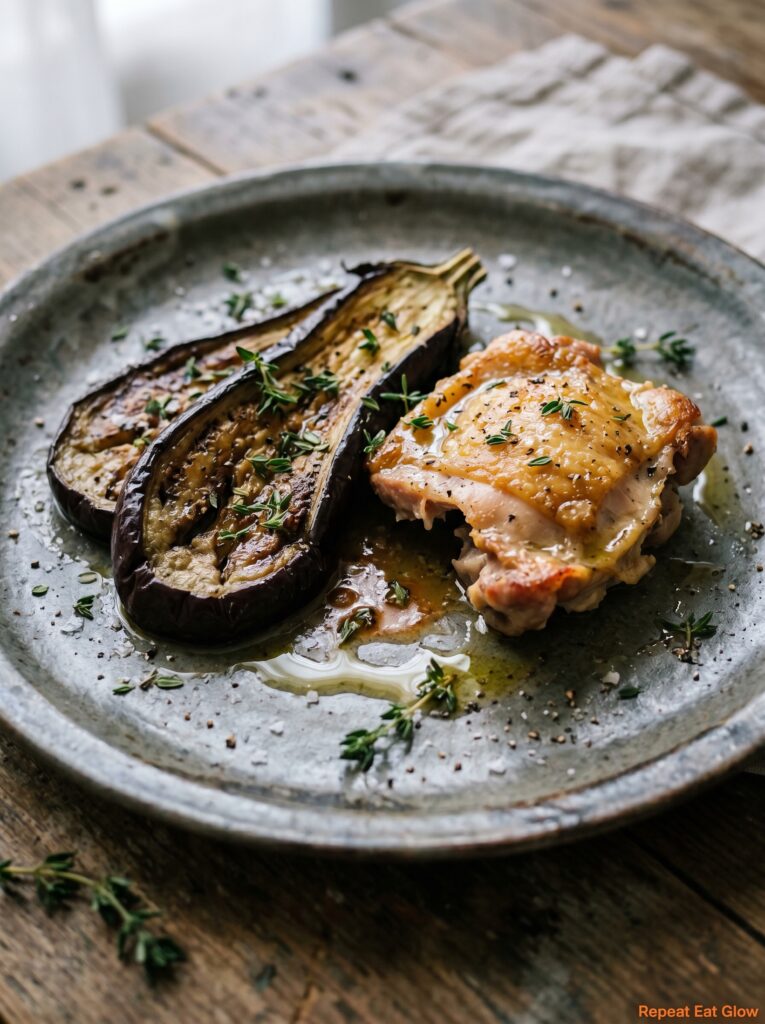
Okay so here’s the thing about eggplant that most people don’t fully appreciate until they’ve cooked it enough — it’s essentially a sponge with ambition. It absorbs fat, it absorbs acid, it absorbs every single flavor you throw at it. And chicken, especially dark meat, produces this gorgeous rendered fat and savory juice as it cooks. So when you put them together in a hot pan or a low oven, the eggplant is essentially drinking up everything the chicken releases.
The texture contrast is WILD, honestly. Silky, collapsing eggplant against chicken that’s either got a crispy sear or a slow-braised pull-apart quality, depending on how you cook it. There’s no dull bite. Every forkful has something going on.
And the flavor bridge between them is surprisingly intuitive. Both are savory, both are umami-forward, both respond brilliantly to garlic and olive oil and anything with a bit of acidity. They don’t compete. They just… complete each other, I guess. Kind of embarrassingly well.
“Eggplant doesn’t need babysitting. It needs a good partner — and chicken is exactly that.”
—
2. The One Prep Mistake That’s Making Your Eggplant Sad and Soggy
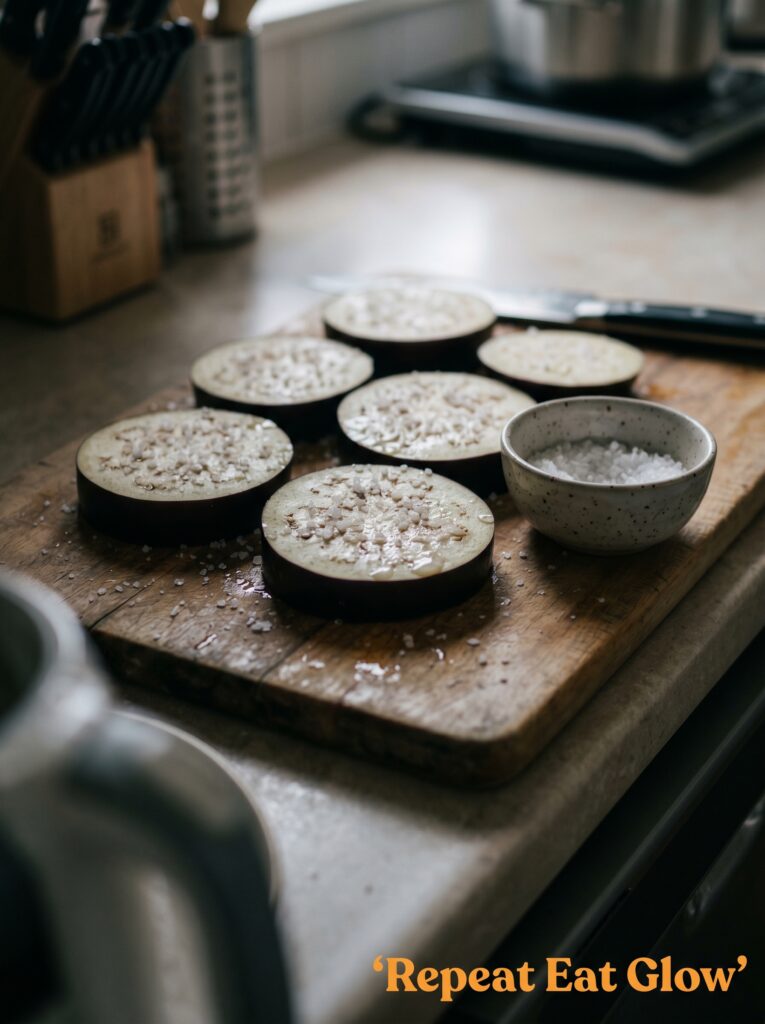
Salt it. I know you’ve heard this before but I’m going to say it anyway because people still skip it. Slice your eggplant, lay the pieces out, hit them generously with salt, and walk away for at least 20-30 minutes. You’ll come back and find little beads of moisture on the surface. Pat them dry.
What this does is draw out excess water so the eggplant actually browns instead of steaming and going to mush. There’s nothing sadder than eggplant that looks like it gave up. Brown and slightly caramelized is what you’re after — that’s where all the flavor lives.
Some people skip this step when they’re using smaller varieties like Japanese eggplant or the thin Italian ones, and honestly those can sometimes be fine unsalted. But the big globe eggplants you find in most American grocery stores or the slightly more elongated ones at UK supermarkets? Salt them. Every time.
One more thing while we’re here — don’t crowd your pan. Eggplant is dramatic about space. Give it room and it’ll give you that beautiful golden edge. Crowd it and you’re just making a soggy disappointment.
—
3. The Weeknight Version You’ll Make Twice in One Week
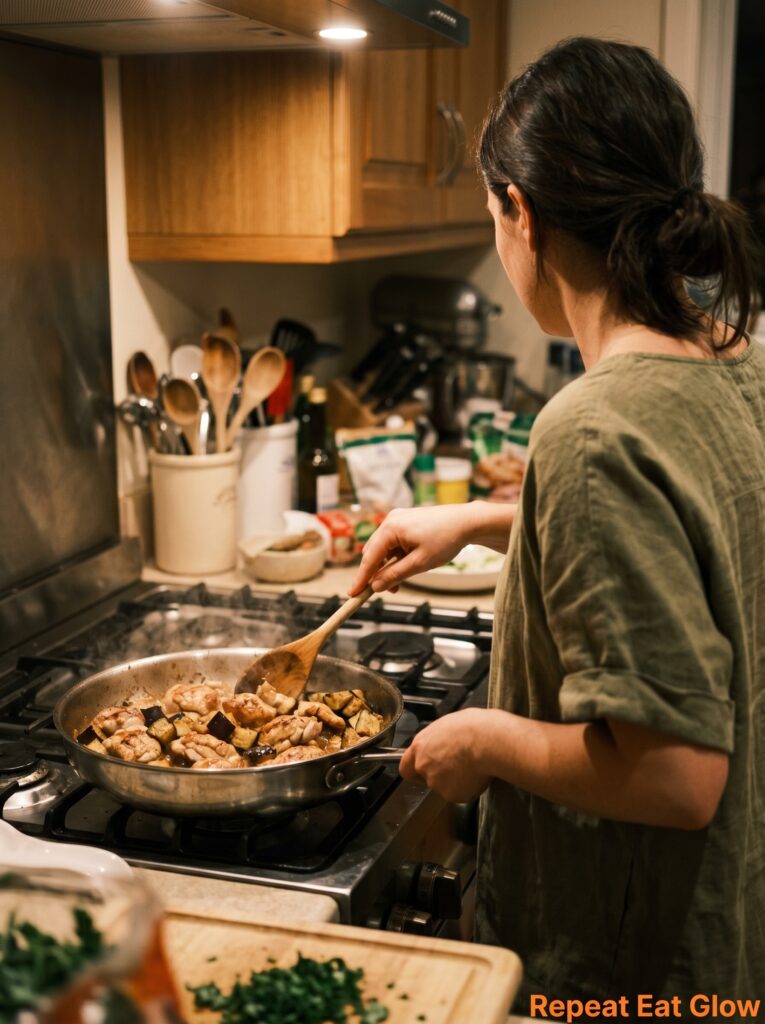
One skillet. That’s it. This is the recipe you reach for on a Tuesday when you’re tired but you still want something that tastes like you tried.
Brown chicken thighs — bone-in, skin-on if you can get them — in a generous glug of olive oil until the skin is properly golden. Don’t rush this part. The skin needs about 7-8 minutes over medium-high to get genuinely crispy, not just “sort of tan.” Pull them out and set aside.
In that same fat, toss in cubed eggplant. Let it soak up all that chickeny goodness and start to turn golden. Add crushed garlic, a big spoonful of tomato paste, a pinch of dried oregano, a splash of white wine if you’ve got an open bottle. Then nestle the chicken back in, pour over some chicken stock, and let everything bubble away together with a loose lid for about 25 minutes.
What comes out is almost like a braise. The eggplant has totally melted into the sauce. The chicken is falling-off-the-bone. It tastes like it simmered for hours. Serve it over rice or with crusty bread and that’s honestly your whole evening sorted.
—
4. The Flavor Profile That Keeps Showing Up in Every Great Eggplant Chicken Dish
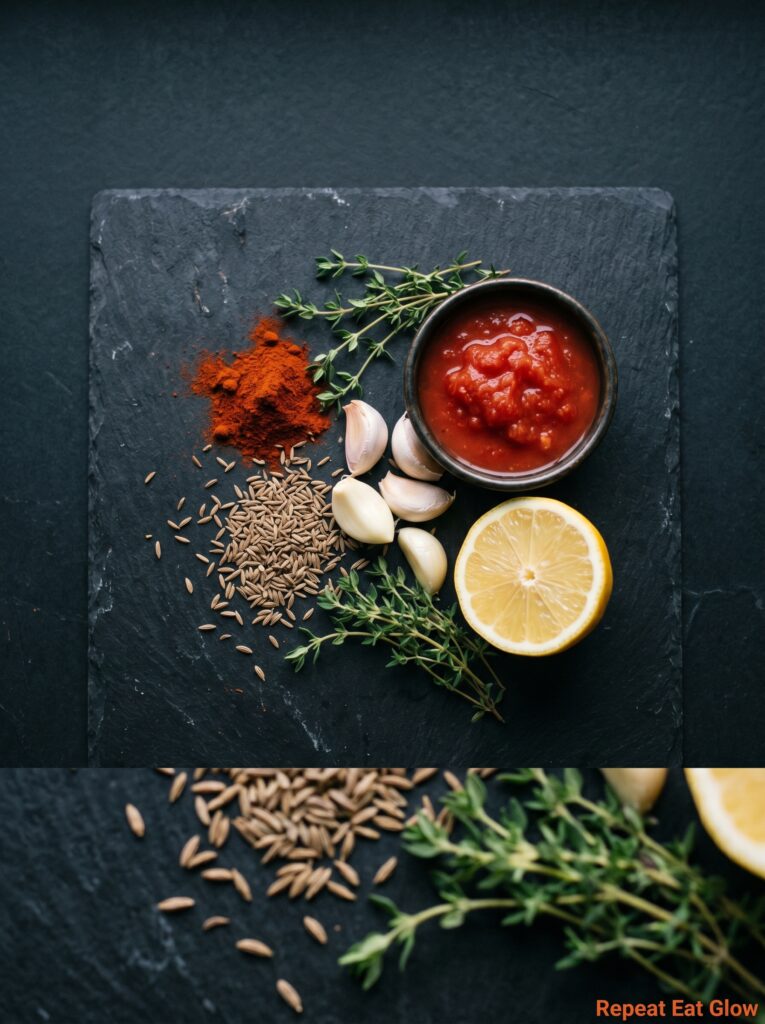
Middle Eastern. I keep coming back to it and so does almost everyone who cooks this combination seriously.
There’s a reason for that. The spice profiles of the region — cumin, coriander, cinnamon, allspice, a hit of chili — are just made for eggplant and chicken. Cumin brings this earthy warmth that eggplant absolutely loves. Cinnamon, which sounds strange if you’re not used to savory applications of it, adds a subtle sweetness that rounds out the sharpness of tomato and onion. And allspice is the one that makes people say “I can’t tell what’s in this but I NEED more of it.”
A simple marinade of those spices plus yogurt, lemon juice, garlic, and olive oil will completely change what you thought chicken was capable of. Marinate overnight if you can, even a couple of hours makes a difference.
“Cinnamon in a savory dish sounds wrong until it tastes right. Then it sounds obvious.”
When you’re shopping, you’ll find these spices easily at any Walmart, Target, or standard UK supermarket like Tesco or Sainsbury’s. No specialty store required, which I think is part of why this flavor profile has become so beloved — it’s wildly accessible.
—
5. A Sheet Pan Dinner That Somehow Looks Like You Tried
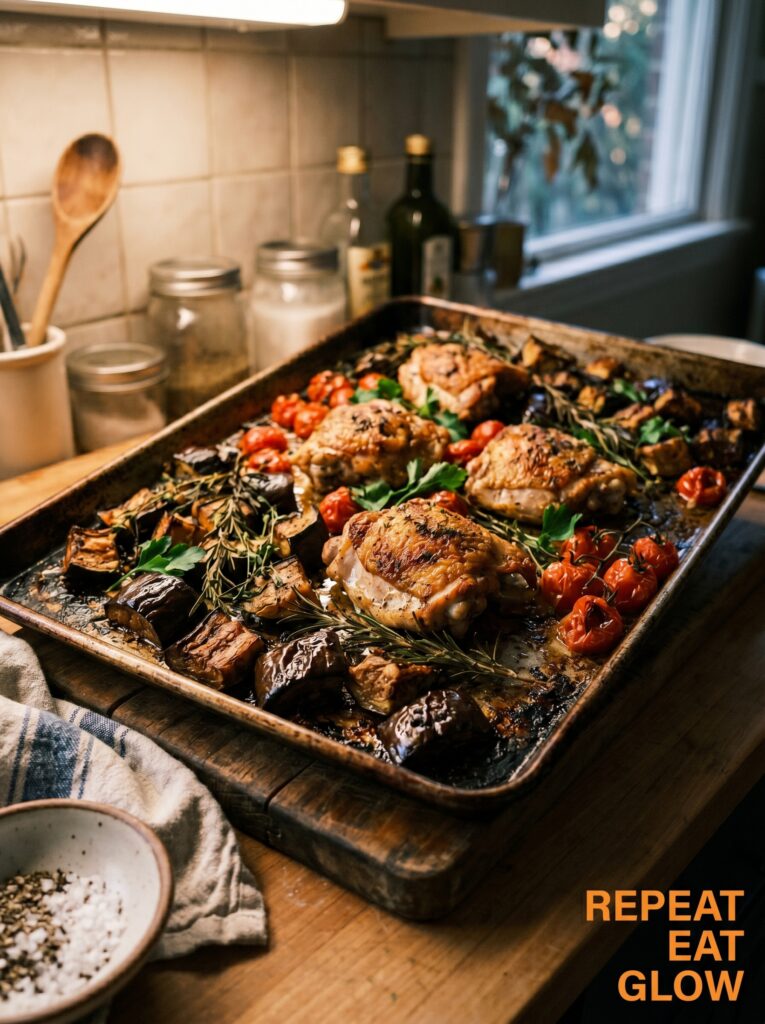
Sheet pan meals get a bad reputation for being boring. They’re not inherently boring, they’re just often made boring. Here’s how not to do that.
Toss chicken thighs (boneless work great here) in harissa paste — you can find it in most supermarkets now, both US and UK — olive oil, lemon zest, and a little honey. On the same pan, spread out thick slices of eggplant that you’ve tossed in olive oil, cumin, and salt. Add halved cherry tomatoes if you’ve got them. Some sliced red onion. A few whole garlic cloves still in their skins.
Roast at 425°F (220°C) for about 35-40 minutes. Everything gets a little charred at the edges. The tomatoes burst and get jammy. The eggplant is soft and slightly caramelized. And the chicken has this incredible harissa lacquer on the outside.
Finish with a handful of fresh herbs — flat-leaf parsley, maybe some fresh mint if you’re feeling it — and a squeeze of lemon right before serving. That fresh hit at the end is what makes roasted food taste alive instead of just cooked. Don’t skip it.
—
6. The Italian Approach: Why It’s Different From What You Think
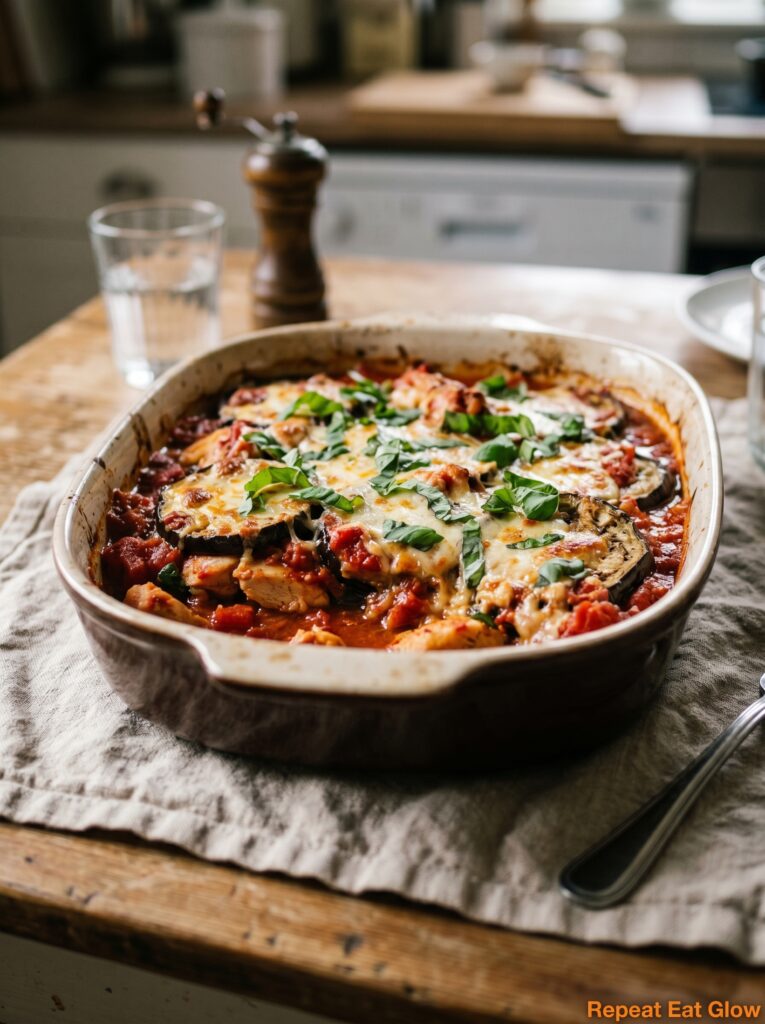
Mention eggplant and chicken in the same sentence to an Italian home cook and they’ll probably think Sicilian. And honestly? Valid.
The Sicilian-style prep is a bit different from the Middle Eastern approach — more of a sweet and sour thing, with capers and olives and maybe a few raisins for a background sweetness that sneaks up on you. It’s called agrodolce when you lean into it properly, and it sounds fussy but it’s not. It’s just about building layers.
Brown your chicken pieces. Remove. In the same pan, cook down sliced eggplant with onion, then add crushed tomatoes, a good pinch of sugar, red wine vinegar, some capers and sliced green olives, a bay leaf. Let it get thick and glossy. Return the chicken to the pan and let everything simmer together.
What you end up with is this incredible, briny, slightly sweet, deeply savory thing that doesn’t taste like anything else. Serve it room temperature, if you can wait — it genuinely improves as it cools slightly and the flavors settle. On a warm summer evening with some crusty sourdough and a glass of something cold, it’s kind of perfect.
—
7. The Slow Cooker Version for People Who Want Dinner to Happen on Its Own
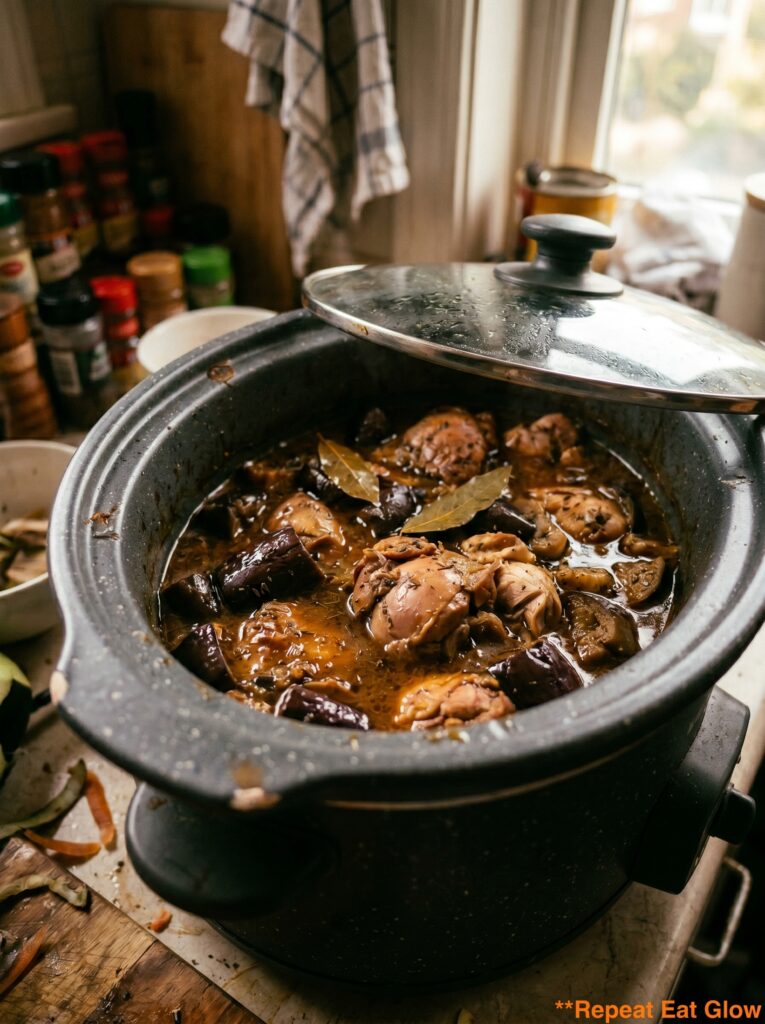
This one’s for the “set it and forget it” crowd and I say that with full respect because honestly sometimes you just need dinner to sort itself out.
Cube chicken thighs. Cube eggplant (salted and patted dry first, even here). Layer in the slow cooker with canned crushed tomatoes, garlic, a chopped onion, a splash of balsamic vinegar, dried basil, salt, pepper. Set to low for 6-7 hours or high for 3-4.
The eggplant will basically dissolve into the sauce, which sounds alarming but is actually incredible — it creates this thick, rich, almost velvety texture. The chicken shreds easily. It becomes this deeply saucy, hearty thing that you can serve over pasta, over polenta, or with flatbread.
“Some of the best food you’ll ever eat looked like nothing special going into the pot.”
Side note — this freezes beautifully. Make a double batch when you’re doing it anyway and thank yourself three weeks from now when you’re exhausted and there’s dinner already done.
—
8. The Greek Twist That Deserves More Attention Than It Gets
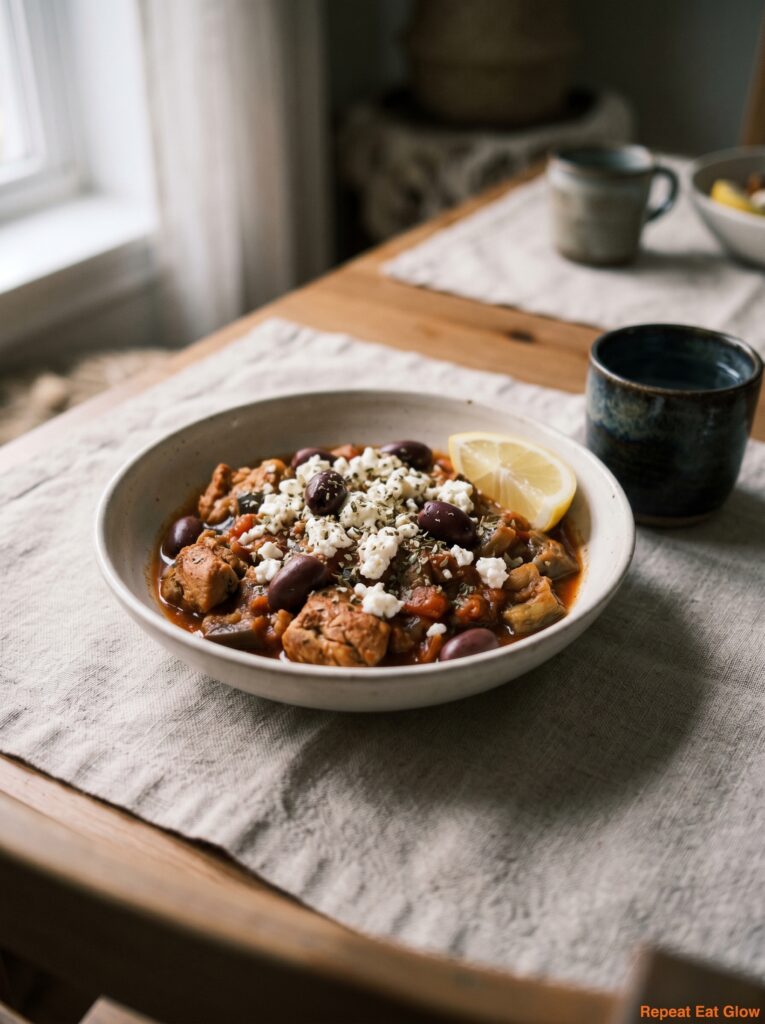
Greek-style eggplant and chicken doesn’t get nearly the social media coverage it deserves. And I’m genuinely annoyed about that.
Think of it like a deconstructed moussaka, sort of. You’ve got layers of flavor — cinnamon-laced tomato, rich savory meat, soft eggplant — but in a much more weeknight-friendly format. Use ground chicken if you want to mix it up (it works really well here), or dice regular chicken thighs small.
Brown the chicken with onion, garlic, a good pinch of cinnamon and oregano, a bay leaf. Add crushed tomatoes and let it reduce until thick. Meanwhile, roast slices of eggplant separately until properly golden. Layer the chicken mixture over the eggplant in your serving dish, top with a light béchamel or even just a good crumble of feta, and run it under the broiler for a few minutes until bubbling.
The feta does something magical here. Its saltiness and slight acidity cuts through the richness of the chicken and the softness of the eggplant and makes everything taste brighter. Definitely don’t skip it.
—
9. What to Do When You’ve Got Half an Eggplant Left Over
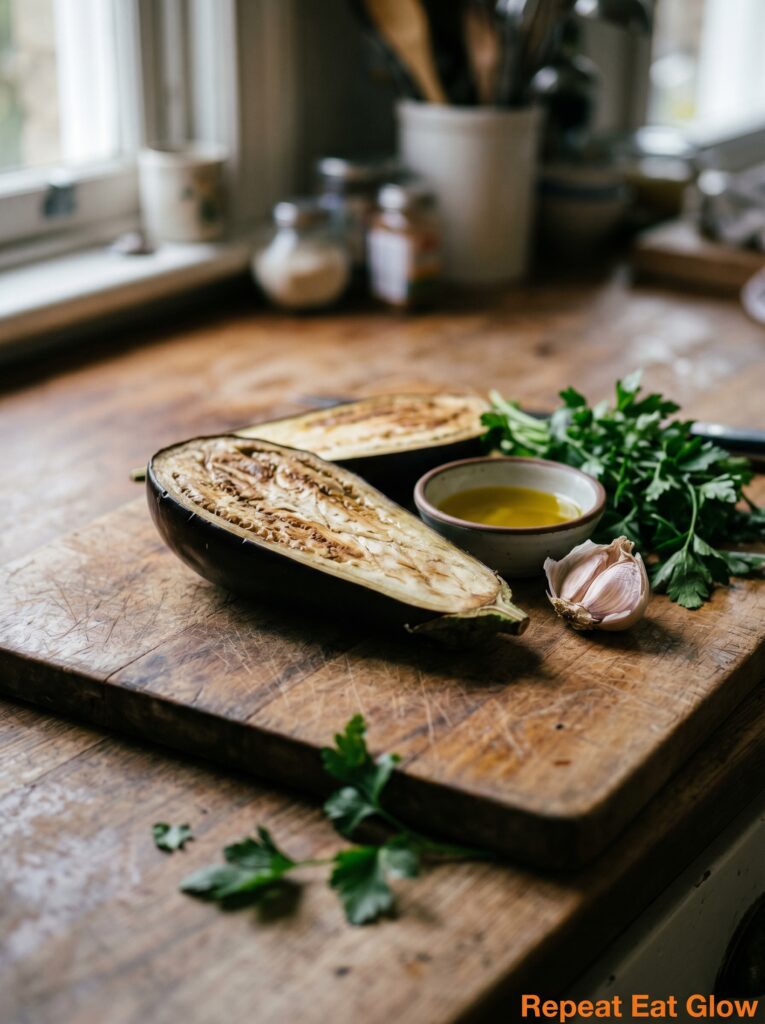
This happens to everyone. You used half for something else and now there’s this lopsided purple half sitting in your fridge, quietly judging you. Here’s a quick fix that uses it with chicken in maybe 20 minutes flat.
Dice it small. Dice a chicken breast small too. Get a pan very hot — genuinely hot, this is important — and stir-fry everything with garlic, ginger, a splash of soy sauce, a little sesame oil, and chili flakes. The small pieces of eggplant cook fast and get slightly crispy at the edges before turning tender in the middle. The chicken stays juicy because the pieces are small and the heat is high.
Add a spoonful of oyster sauce at the end if you have it. Or hoisin. Or just finish with a drizzle of honey and a squeeze of lime and call it fusion and feel confident about it.
Serve over rice or tuck into wraps with shredded cucumber and a bit of sriracha mayo. It’s not a recipe so much as a technique you can use whenever. Once you know how to stir-fry eggplant properly — high heat, don’t crowd, move it constantly — you’ll use it all the time.
—
10. The Spice Combination That Makes Eggplant Taste Incredible Every Single Time
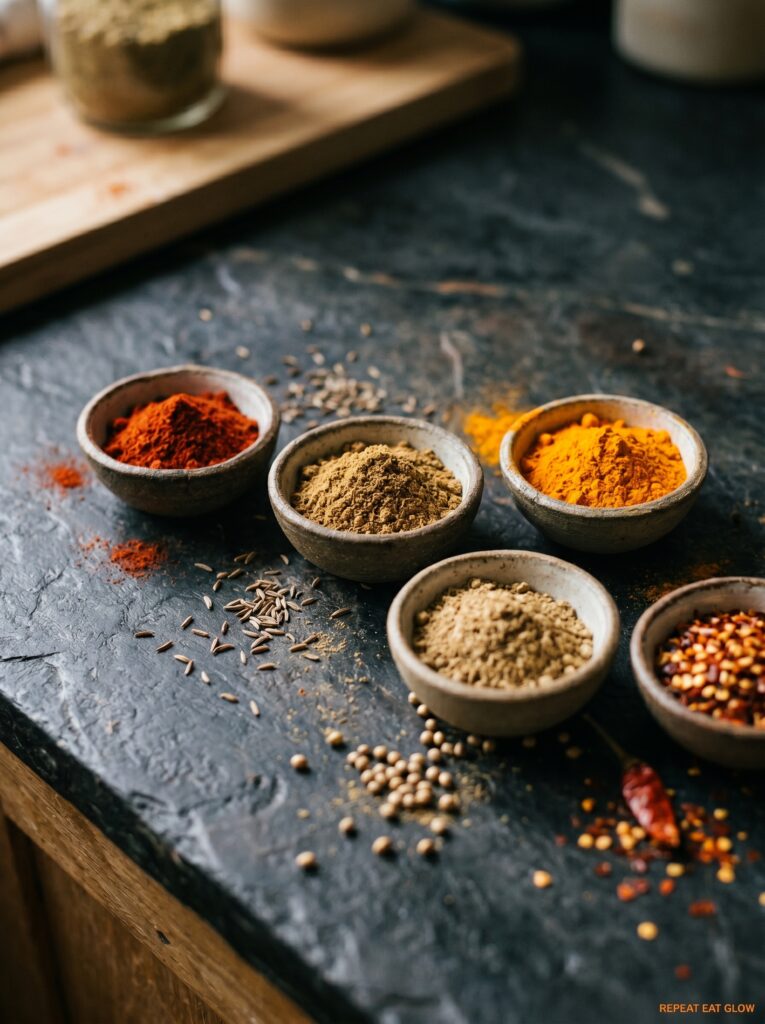
Za’atar. If you haven’t introduced za’atar to your eggplant, please do it today. It’s a Middle Eastern spice blend that usually contains dried thyme, sesame seeds, sumac, and a little salt, and it is MADE for roasted vegetables.
Rub it on your chicken. Toss your eggplant in it. Sprinkle it over the finished dish. You can find it in most larger supermarkets now — Whole Foods, Trader Joe’s in the US, Waitrose or Ottolenghi shops in the UK — and it keeps for months in a jar.
The sumac in it adds a sour, almost citrusy note that’s really different from just squeezing lemon. It’s brighter. A bit fruity. It lifts the earthiness of the eggplant without fighting it.
Combine za’atar with yogurt as a marinade for chicken, then roast everything together with sliced eggplant and a handful of cherry tomatoes. Finish with pomegranate seeds if you’re feeling fancy (or if they’re on sale, which they sometimes randomly are). It’s one of those meals that looks way more involved than it was.
—
11. The Cold-Weather Version That Feels Like an Actual Hug

Winter. It’s dark at 4pm in both Chicago and Manchester and you need something that makes the house smell incredible.
This is a slow-braised thing. Whole chicken pieces — legs, thighs — browned deeply in a Dutch oven or heavy casserole, then set aside. Sweat down onion and garlic until completely soft, add cubed eggplant and cook until starting to color, then stir in a big spoonful of tomato paste and let it caramelize for a minute. Pour in a can of crushed tomatoes, a cup of chicken stock, a cinnamon stick, a bay leaf, a pinch of chili flakes.
Nestle the chicken back in. Cover and cook in a 325°F (160°C) oven for 1.5 to 2 hours. The whole house smells like something your grandmother would’ve made, even if your grandmother never made anything like this. It’s just that kind of warm, ancient smell.
When you pull the lid off, the eggplant has completely surrendered and become part of the sauce, the chicken is falling off the bone, and there’s this glossy, rich red thing that looks like it belongs on the cover of a cookbook. Serve it over polenta or mashed potatoes or with thick crusty bread to mop everything up.
—
12. The Presentation Move That Makes It Look Like Restaurant Food at Home
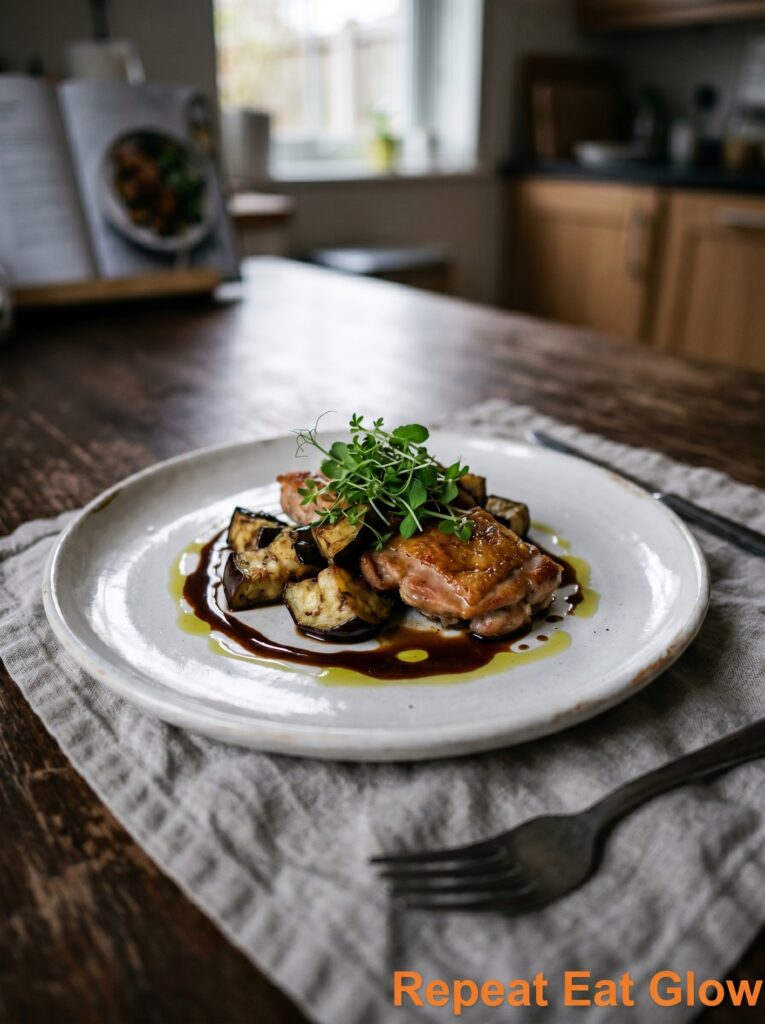
This is a small thing but it matters. Don’t just dump everything in a bowl or on a plate. Layer it deliberately.
Spread something creamy on the plate first — whipped feta, hummus, labneh, or even just good yogurt seasoned with garlic and olive oil. Then place your eggplant and chicken on top. The creamy base acts as a sauce underneath and makes the whole thing look intentional and beautiful instead of like a pile of dinner.
Finish with color. A handful of fresh herbs — parsley, dill, mint, cilantro, whatever works for the flavor profile. A drizzle of good olive oil. Maybe some toasted pine nuts or a scatter of pomegranate seeds. A few flakes of sea salt.
People eat with their eyes first and this stuff genuinely doesn’t take extra time — it takes maybe 90 extra seconds. But it’s the difference between a meal that feels forgettable and one that someone takes a photo of. And if you’re on Pinterest anyway, you already know that the food that photographs beautifully also tends to get remembered.
—
❓ FAQ
Q: Can I use chicken breast instead of thighs in these recipes? A: You can, but thighs will give you better results in most of these, especially anything braised or slow-cooked — they stay juicy and don’t dry out the way breasts can. If you really prefer breast, cut it into larger chunks and add it later in the cooking process so it doesn’t overcook.
Q: Does eggplant really need to be salted every time? A: Not always — smaller varieties and freshly picked eggplant tend to have less bitterness and moisture. But for the standard large globe eggplant you’ll find in most US and UK supermarkets, salting for 20-30 minutes and patting dry genuinely makes a difference in texture, especially for anything where browning matters.
Q: What’s the best way to reheat leftover eggplant and chicken dishes? A: Low and slow in a covered pan with a small splash of water or stock to loosen the sauce. Microwaving works in a pinch but eggplant can get a bit watery. Most of these dishes taste even better the next day once the flavors have settled, so leftovers are genuinely something to look forward to.
—
💭 Final Thoughts

Eggplant and chicken is one of those pairings that rewards you more the more you cook it. The first time you try one of these recipes, it’ll be good. The tenth time, you’ll have figured out your own little adjustments — more garlic, different spices, your preferred eggplant-to-chicken ratio — and it’ll be yours.
There’s something quietly satisfying about a combination this simple working this well. No fancy equipment, nothing you can’t find at a regular supermarket, and yet the results have this depth and richness that feels like proper cooking.
So which one are you trying first?
