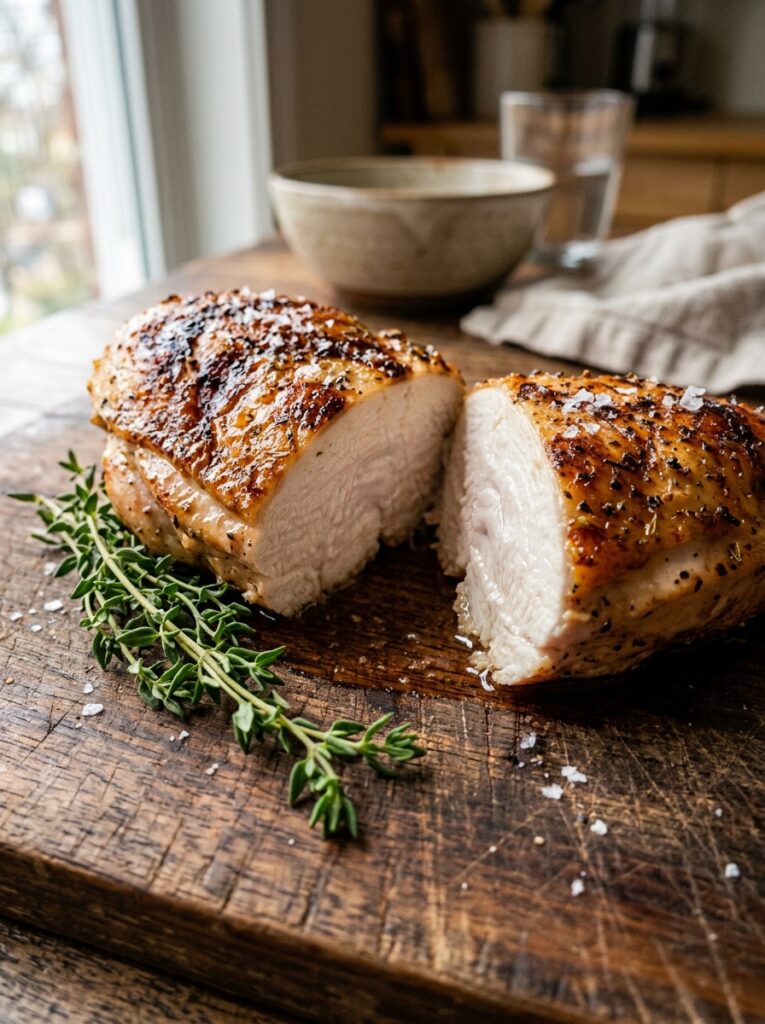
My friend Cara called me last week, genuinely frustrated. “I bought chicken breast AGAIN,” she said, “and I have absolutely no idea what to do with it besides the thing I always do.” And honestly? I get it. Chicken breast has a reputation problem. Not because it’s bad — it’s one of the most versatile proteins in existence — but because most of us learned maybe two ways to cook it and then just… kept doing that forever.
So here are twelve ideas that’ll actually get you excited to open the fridge.
—
1. The Garlic Butter Pan Sauce That Makes Everything Taste Intentional
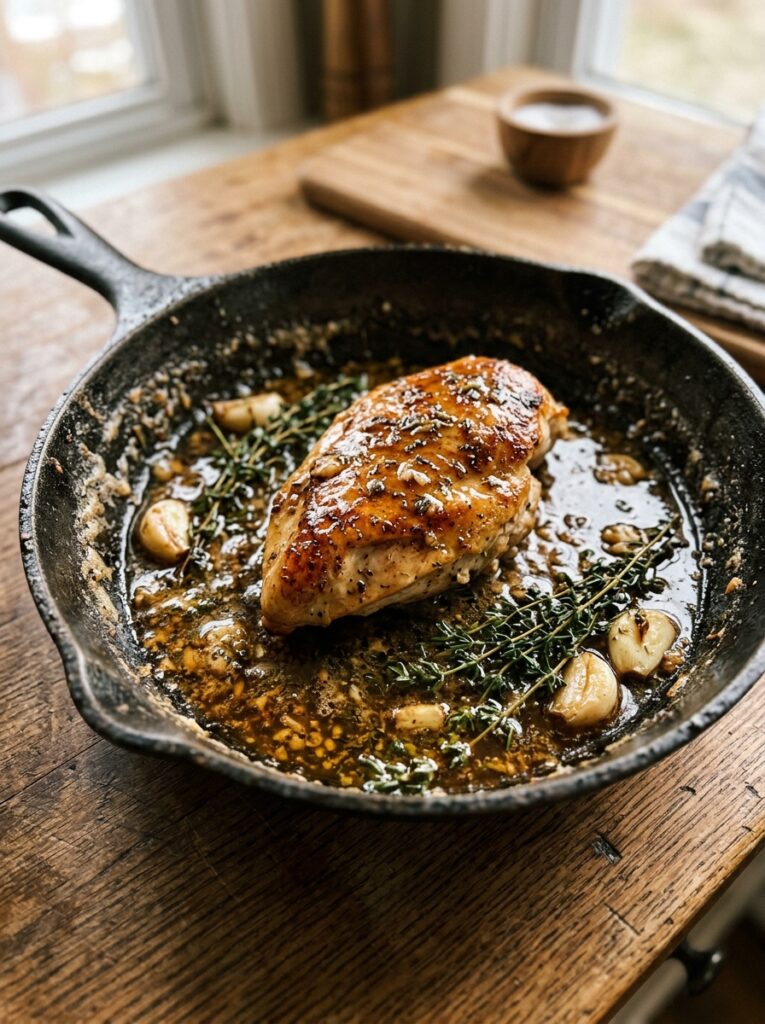
Start with a really hot pan. That’s the thing nobody tells you, or they tell you and you sort of half-do it. The pan needs to be properly, almost aggressively hot before the chicken goes in. Pat your breast dry — this is non-negotiable — season it heavy with salt and pepper, then lay it down and don’t touch it for five minutes.
While it rests after cooking (always rest it, please), you throw butter, minced garlic, a splash of white wine or chicken stock if you have it, and a squeeze of lemon into the same pan. The fond — all those dark bits stuck to the bottom — that’s where dinner actually lives. Scrape it up. Let it bubble. Pour it over the chicken like you meant to do that all along.
“The fond stuck to the bottom of the pan? That’s where dinner actually lives.”
It takes maybe twenty minutes total. And it tastes like you spent an hour.
—
2. Marry Me Chicken, But Make It a Weeknight Thing
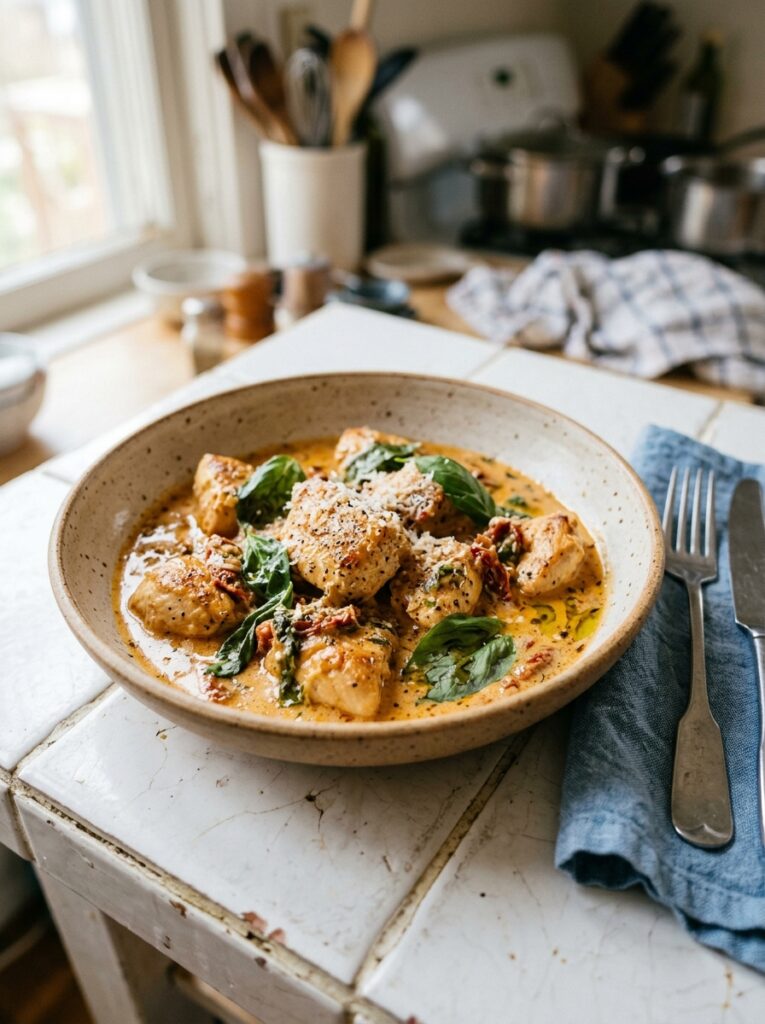
Yes, it has a silly name. No, I’m not going to apologize for it. Marry Me Chicken — chicken breast in a sun-dried tomato cream sauce — is the recipe that made me genuinely understand why people say some dishes are “impressive.” Because it looks like you ordered it somewhere. Creamy, a little tangy from the tomatoes, with parmesan melted through so the sauce has this subtle sharpness that keeps it from being too rich.
The key is the sun-dried tomatoes packed in oil, not the dry ones. They’ve already got all that concentrated flavor, and the oil they come in? Use that to sear the chicken. You’re welcome. Serve it over pasta or with crusty bread and just let people think you’ve been in the kitchen for ages.
—
3. Cold-Weather Comfort: Chicken and Leek Bake With a Cream Sauce
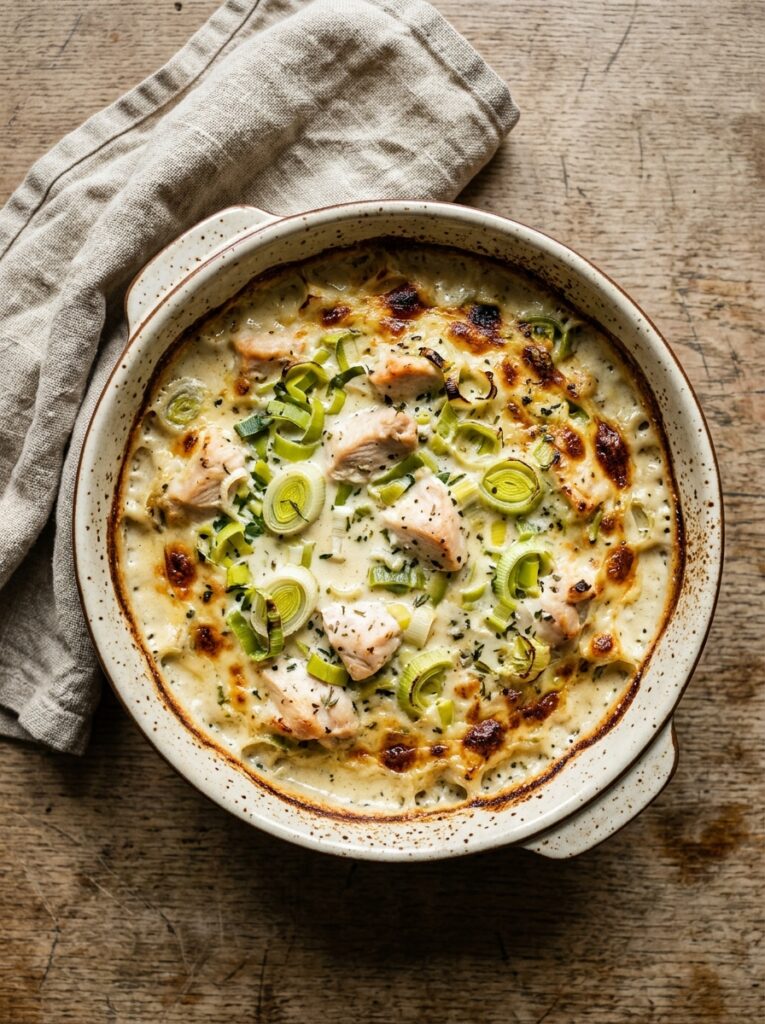
There’s something specifically British about this one — leeks, cream, a gratin situation — and I love it. It’s proper cold-weather food. Slice the leeks, soften them slowly in butter until they’re almost silky, then nestle your chicken breasts in and pour over a cream and stock mixture seasoned with thyme and a bit of mustard.
Bake it covered for the first twenty minutes, then uncovered so the top gets a little color. The chicken stays impossibly moist because it’s essentially braising in that sauce. It’s not a quick dinner, but it’s the kind of thing you put in the oven and then go set the table, light a candle, feel like an adult.
—
4. The Stuffed Chicken Trick That Actually Holds Together
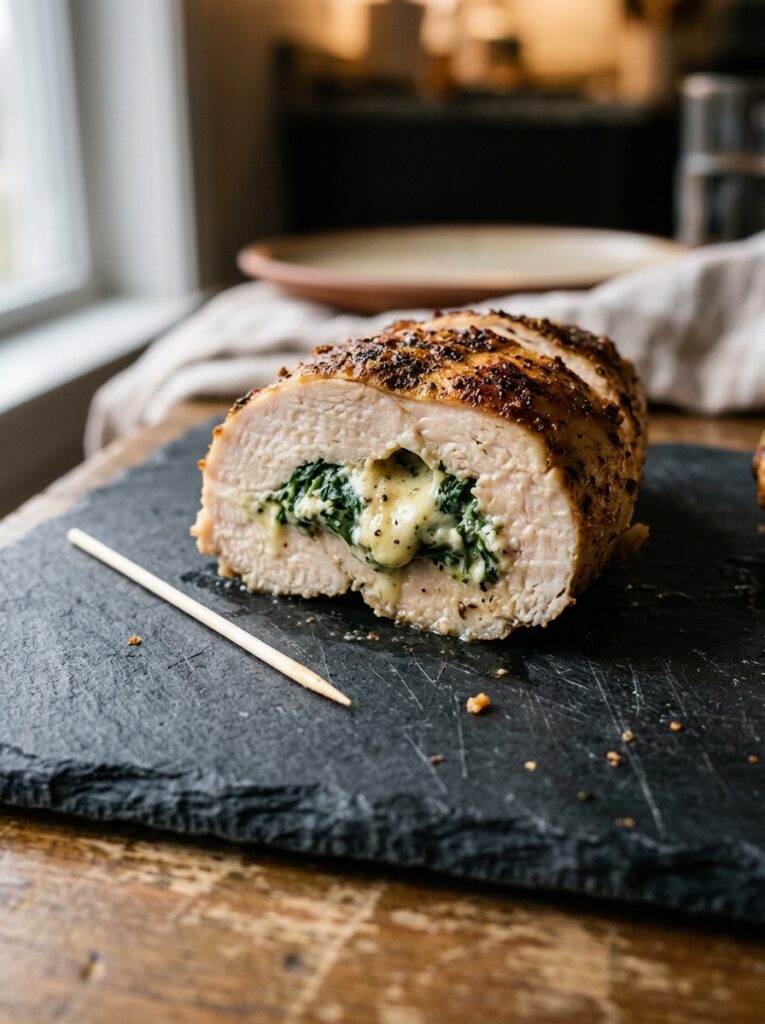
Okay, stuffed chicken can go wrong. You cut it open, everything falls out, it looks sad. But there’s a method that actually works: butterfly the breast, pound it out a bit so it’s even, put your filling in the middle (spinach and cream cheese is the classic, but smoked mozzarella and basil works brilliantly), roll it up TIGHT, and either tie it with kitchen twine or use toothpicks.
Then sear it first. The outside seals, the filling stays put, and when you slice it at the table there’s this moment — a little dramatic, not gonna lie — where it opens up and everything looks exactly like it should. Serve it sliced over some dressed leaves and it’s basically a restaurant plate.
—
5. Honey Sriracha Glazed Chicken That Tastes Like a Takeaway You Made Yourself
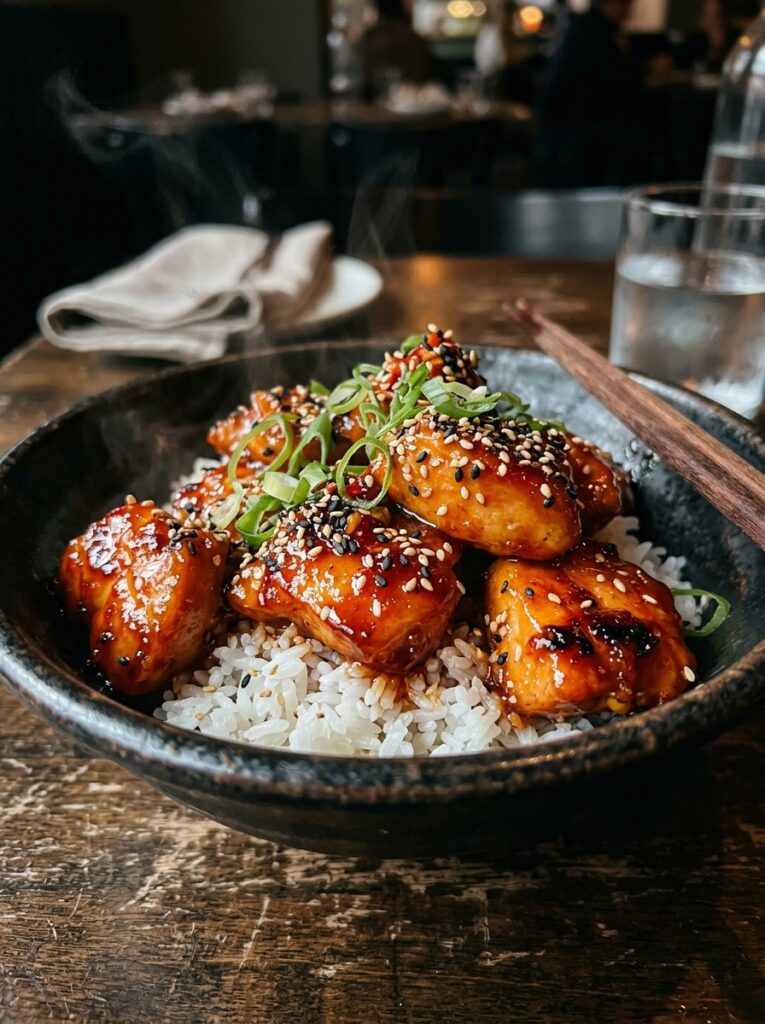
Sweet, sticky, a little hot. The sauce is four things: honey, sriracha, soy sauce, and garlic. That’s it. Let the chicken breast marinate in it for even just thirty minutes and then either pan-fry or bake it — baking gets you a stickier finish if you brush on extra glaze in the last five minutes of cooking.
“Sticky and sweet and a little dangerous — and somehow better than anything you’d actually order in.”
The leftovers are INCREDIBLE on rice the next day, cold from the fridge at 11pm. I’m not ashamed.
—
6. One-Pan Lemon Herb Chicken and Vegetables (Actually Crispy Though)
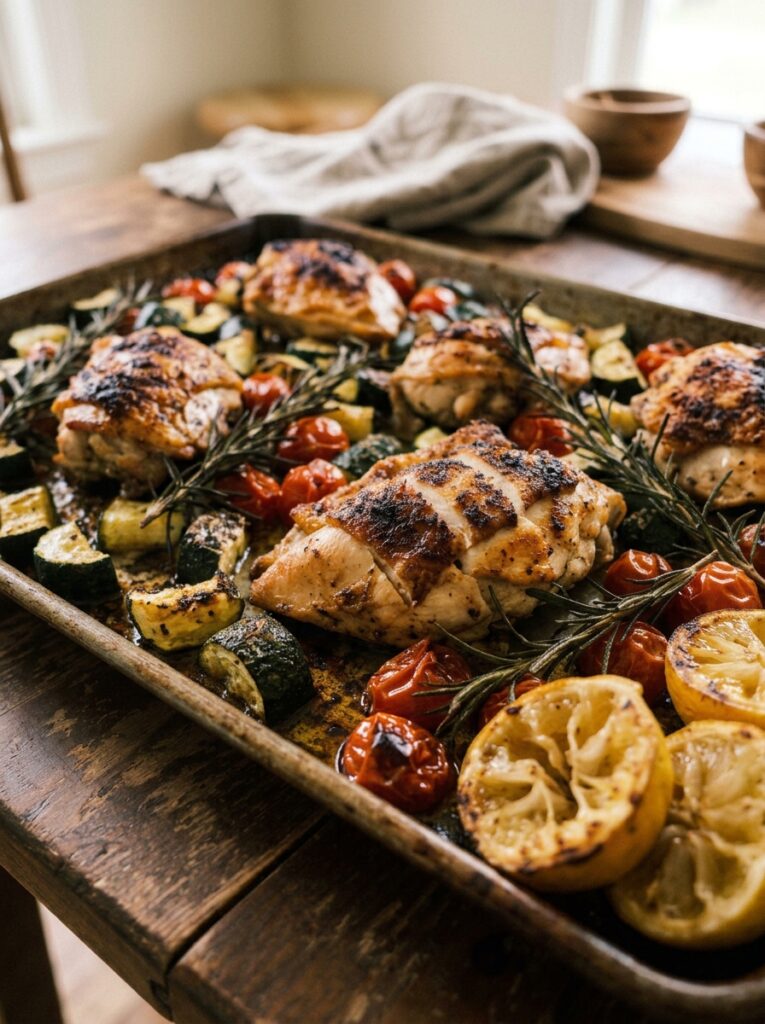
The mistake with one-pan dinners is crowding. You put everything in, it steams instead of roasts, and the vegetables turn to mush and the chicken looks gray. Don’t do that. Use your biggest tray. Leave space. Toss whatever vegetables you’re using — courgette/zucchini, cherry tomatoes, peppers, red onion — with olive oil and season them properly before they go anywhere near the oven.
High heat. 425°F / 220°C. Chicken goes in slightly ahead of softer vegetables. The edges of everything should be a little charred by the time you pull it out. That char is flavor, not a mistake.
Add lemon zest at the end, not during cooking — it turns bitter in the oven. That’s a small thing, but it matters.
—
7. Greek-Style Chicken With Olives and Feta (And Why the Oven Does the Hard Work)
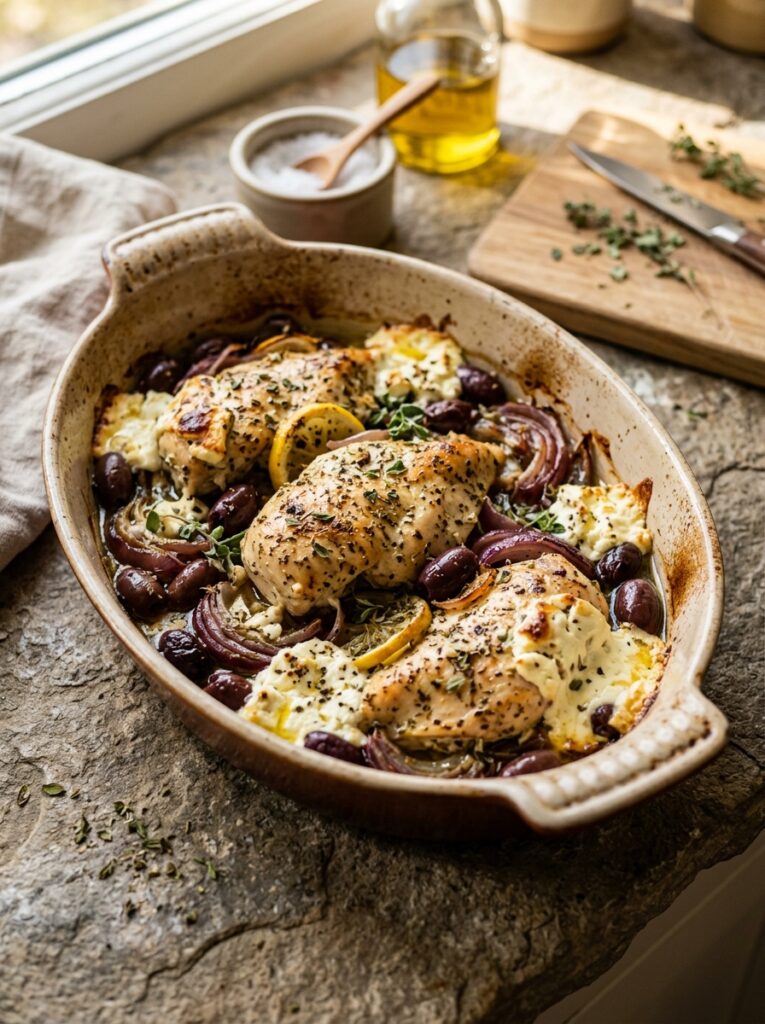
Marinade: lemon, olive oil, oregano, garlic, a little red wine vinegar. Give the chicken at least an hour in that — overnight if you’re organized, which I rarely am. Then into a baking dish with cherry tomatoes, halved olives (kalamata, genuinely worth it), and a few chunks of red onion.
Roast it until it’s done, then scatter cold crumbled feta over the top so it doesn’t melt but just… softens slightly from the heat of the dish. The tomatoes will have collapsed and mixed into the pan juices, which is basically a free sauce. Serve with flatbread to mop it up.
This one’s become a standard in my house. It feels summery even in January.
—
8. The Slow Cooker Trick That Makes Chicken Breast Actually Juicy
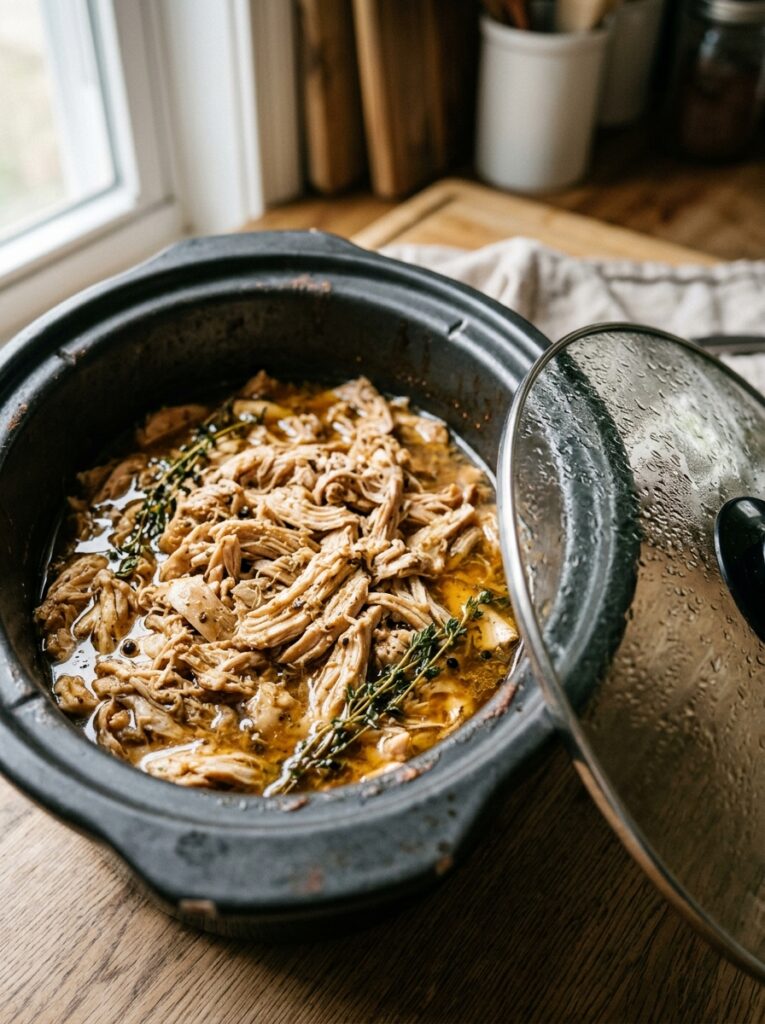
Here’s the thing about slow cookers and chicken breast — it can dry out if you just leave it in for eight hours. Chicken breast doesn’t have the fat content of a thigh, so it needs a different approach. Four to five hours on LOW, not high. And there needs to be liquid, but not too much — enough to come about halfway up the chicken, not to submerge it.
The result? You can literally pull it apart with two forks. It shreds perfectly, takes on whatever sauce it’s been sitting in, and works in tacos, wraps, baked potatoes, sandwiches. Cook it Sunday, use it three different ways through the week. That kind of versatility is why slow cooker shredded chicken might actually be the best thing in your meal-prep rotation.
“Cook it once on Sunday. You’ll still be eating well on Wednesday.”
—
9. Chicken Piccata for When You Want to Feel Like a Proper Cook
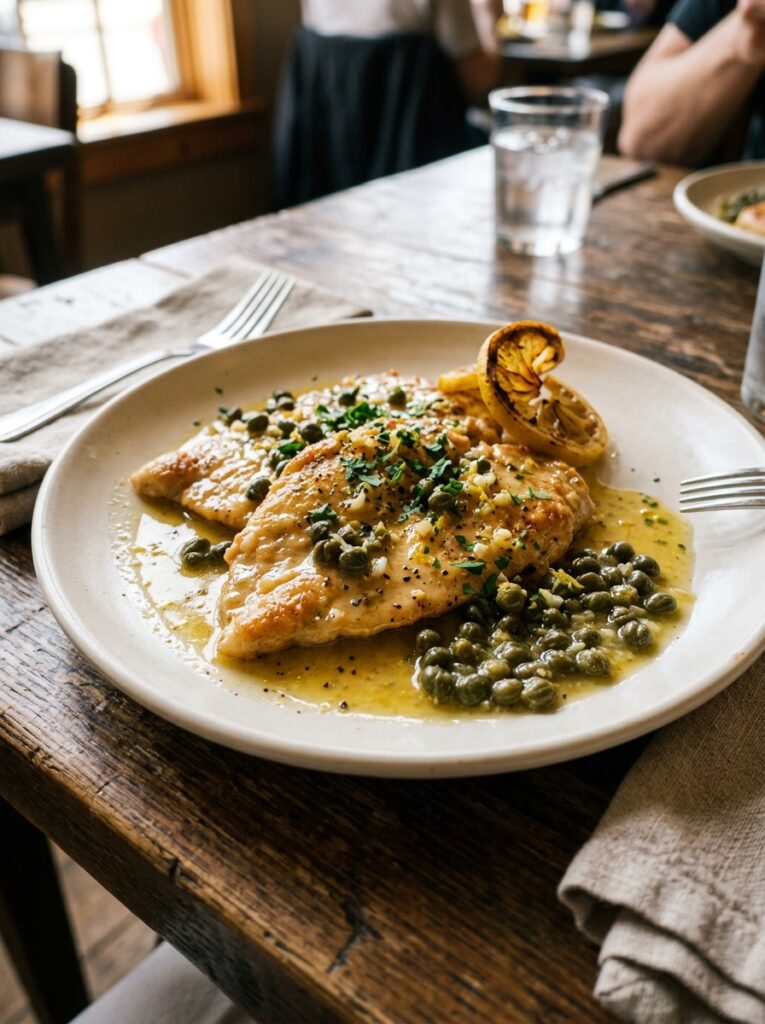
Piccata sounds fancy. It’s not complicated, I promise. You pound the chicken breast thin — thin is the goal here, maybe half an inch — coat it lightly in flour, cook it fast in butter and olive oil, then make a pan sauce with lemon juice, capers, a bit more butter, and some white wine or stock.
The capers do something specific here. They’re salty and briny and slightly weird in a way that lifts the whole dish. Don’t skip them. The whole thing comes together in about fifteen minutes once you’ve got the chicken prepped. Serve it over pasta or with garlic mashed potatoes if you’re leaning into the full comfort angle.
—
10. Thai Basil Chicken Bowl — Quick, Loud, Satisfying
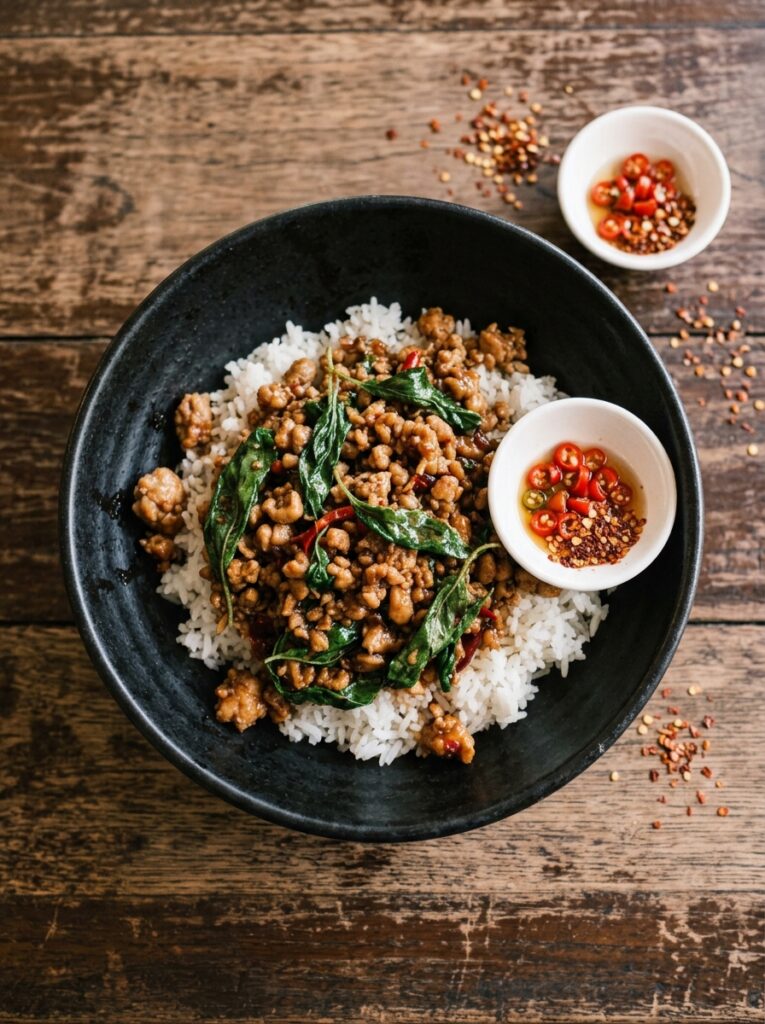
This one’s a bit chaotic to make, which I mean as a compliment. Ground chicken works best, but if you start with breast, just chop it very finely or pulse it quickly in a food processor. Then it’s hot wok, oil, garlic, chili, the chicken, fish sauce, oyster sauce, a pinch of sugar, and at the very end — a MASSIVE handful of fresh basil.
The basil wilts from the heat and goes kind of silky. The sauce is salty-sweet-spicy in a way that’s really hard to describe but absolutely hits. Spoon it over jasmine rice with a fried egg on top (the runny yolk mixing into the sauce is the moment), and you’ve got something that tastes like a proper Thai restaurant with about twenty minutes of actual effort.
Side note — don’t skip the fish sauce because it smells odd in the bottle. You won’t taste it as “fishy,” I promise. It’s just depth.
—
11. Creamy Tuscan Chicken (The One That Goes Viral Every Winter for a Reason)
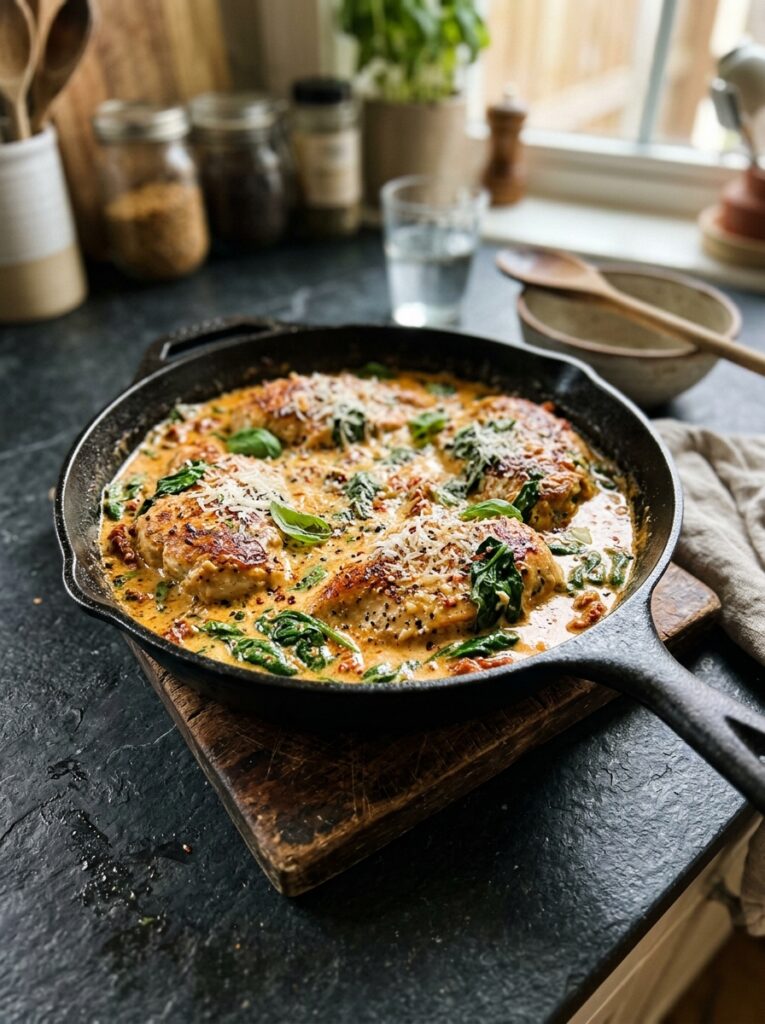
Sun-dried tomatoes again, because they’re genuinely a magic ingredient. This time with spinach, heavy cream, parmesan, garlic, and a little chicken stock to loosen the sauce. The spinach wilts down into almost nothing, the cream thickens around the tomatoes, the parmesan makes it just a little sharp.
It’s a ten-minute sauce once the chicken’s cooked. That’s the beautiful part. Sear your chicken breasts, set them aside, build the sauce in the same pan, nestle the chicken back in to warm through. Serve it with crusty bread or spooned over gnocchi if you want it to feel really luxurious.
People share this recipe because it looks completely unachievable and it’s… not. At all.
—
12. Just-Poached Chicken for the Weeks When You Need a Reset
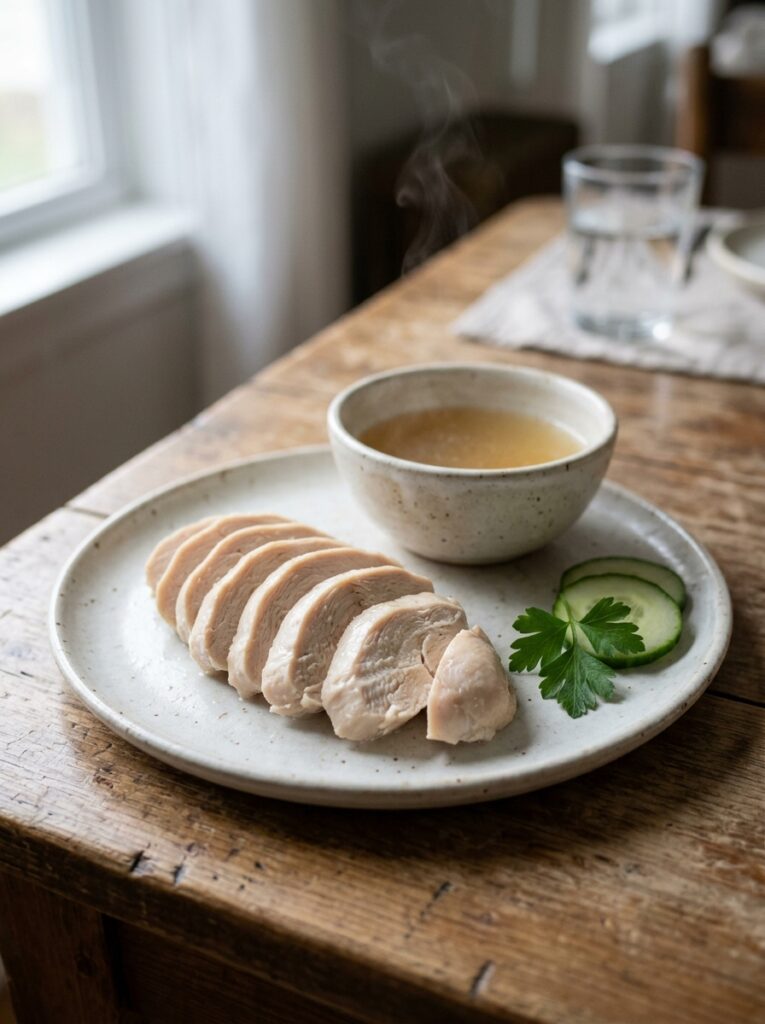
Not every dinner needs to be a production. Sometimes you want something light, simple, protein-forward, and genuinely satisfying without a lot of fat or fuss. Poaching chicken breast — gently, in water with a halved onion, a few peppercorns, a bay leaf, and some thyme — gives you incredibly tender chicken and a light broth you can save for soup later.
The trick is to bring the water to a simmer (not a rolling boil), add the chicken, and then turn the heat DOWN. You want it to barely bubble for about fifteen minutes depending on thickness, then turn off the heat entirely and let it sit for another ten. Slice it, and it’s juicy in a quiet, unfussy way that feels genuinely nourishing.
It’s not the most exciting method. But it might be the one you come back to most.
—
❓ FAQ
Q: Why does my chicken breast always turn out dry no matter what I do? A: Almost always, it’s one of three things — the heat’s too high for too long, you’re not resting the meat after cooking, or you skipped the marinade or sauce. Chicken breast has very little internal fat, so it needs help retaining moisture. A quick brine (one tablespoon of salt dissolved in a cup of water, thirty minutes) before cooking makes a noticeable difference, especially if you’re roasting or grilling.
Q: What’s the safest internal temperature for chicken breast? A: 165°F / 74°C is the USDA-recommended safe temperature, and that’s the standard guidance in the UK too. Use a meat thermometer — it’s the only way to actually know, and it takes the guesswork out completely. Remove the chicken from heat at around 160°F and the carry-over cooking will bring it the rest of the way.
Q: Can I meal prep chicken breast at the start of the week and keep it fresh? A: Yes, and it’s one of the most useful habits you can build into your week. Cooked chicken breast keeps well in the fridge for up to four days in an airtight container. Keep it in larger pieces rather than slicing it up right away — sliced chicken dries out faster. Then prep it however you need when you’re actually eating it.
—
💭 Final Thoughts
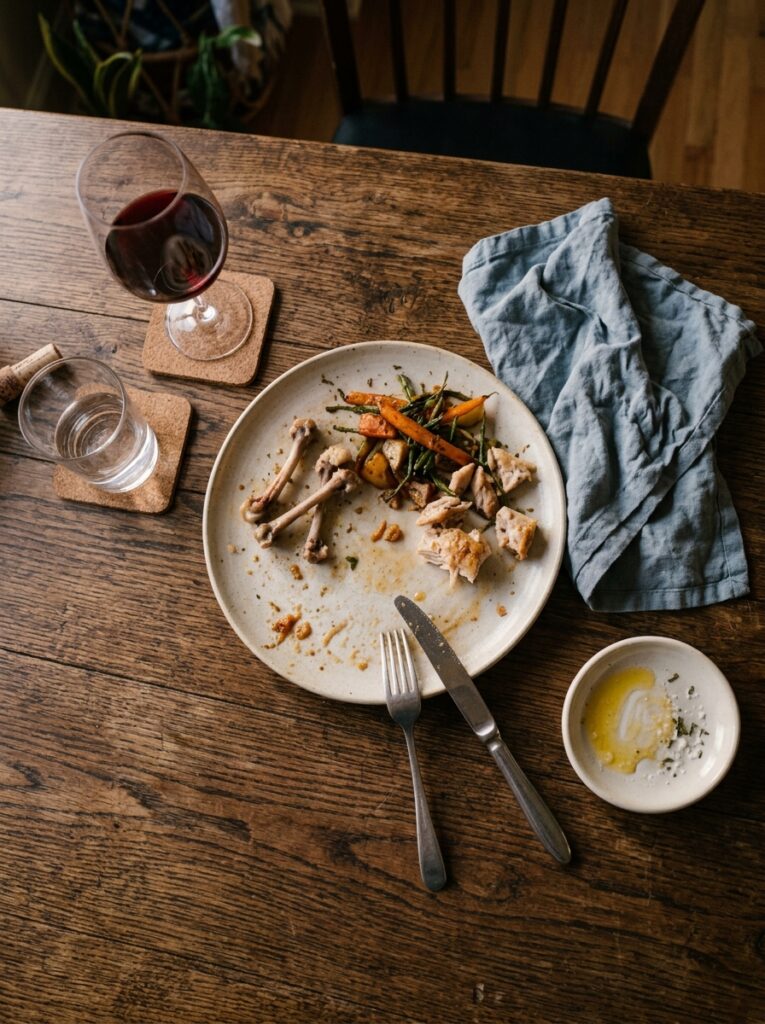
Chicken breast doesn’t have a creativity problem. We do. These twelve ideas only scratch the surface of what’s possible with one of the most adaptable proteins in your kitchen, and the real goal isn’t to cook all twelve — it’s to find two or three that genuinely excite you and actually make it into your regular rotation.
So which one are you starting with this week?
