If you are looking for fresh ways to use two simple vegetables, these cabbage and asparagus recipes are an easy place to start. Cabbage is hearty, budget-friendly, and naturally filling, while asparagus adds a tender texture and fresh flavor. Together, they can be roasted, sautéed, stir-fried, baked, or turned into a complete meal with grains, beans, eggs, chicken, or pasta. Whether you want a quick vegetable side dish or a satisfying weeknight dinner, these combinations make it easy to add more vegetables to your table.
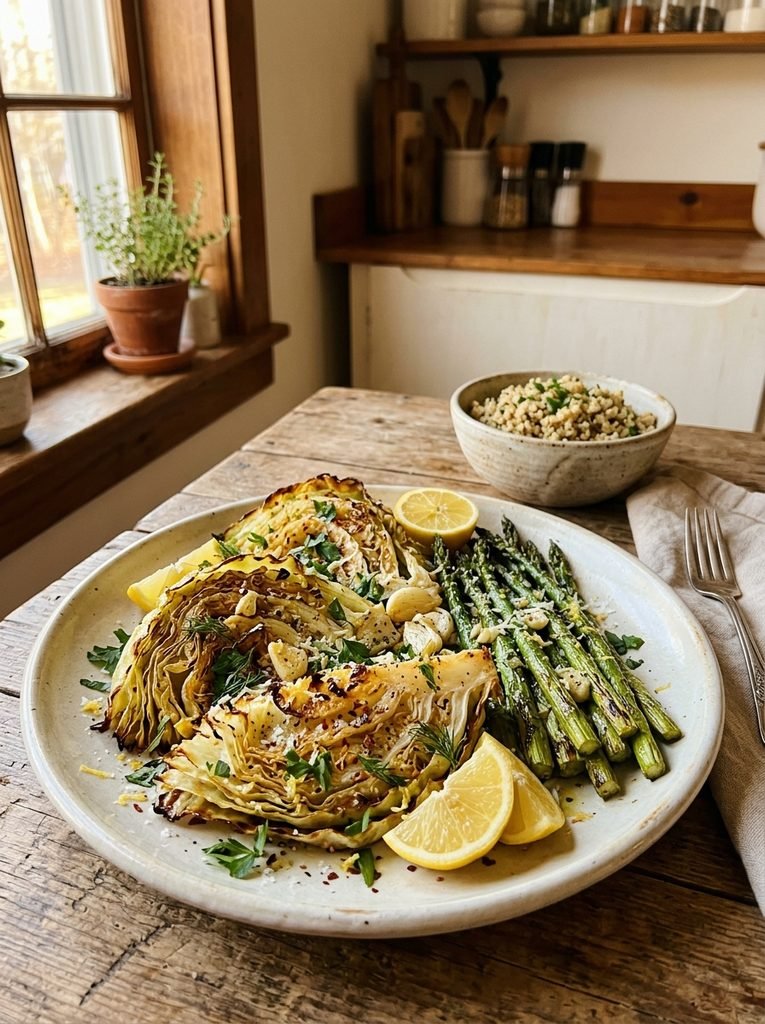
1. Roasted Cabbage and Asparagus
Roasting is one of the easiest ways to bring out the natural sweetness of cabbage and asparagus. Cut cabbage into thick wedges or bite-sized pieces and trim the asparagus before tossing both vegetables with olive oil, garlic, salt, black pepper, and a little paprika. Spread everything across a large baking sheet without overcrowding the vegetables. Roast at 425°F until the cabbage develops golden, caramelized edges and the asparagus is tender.
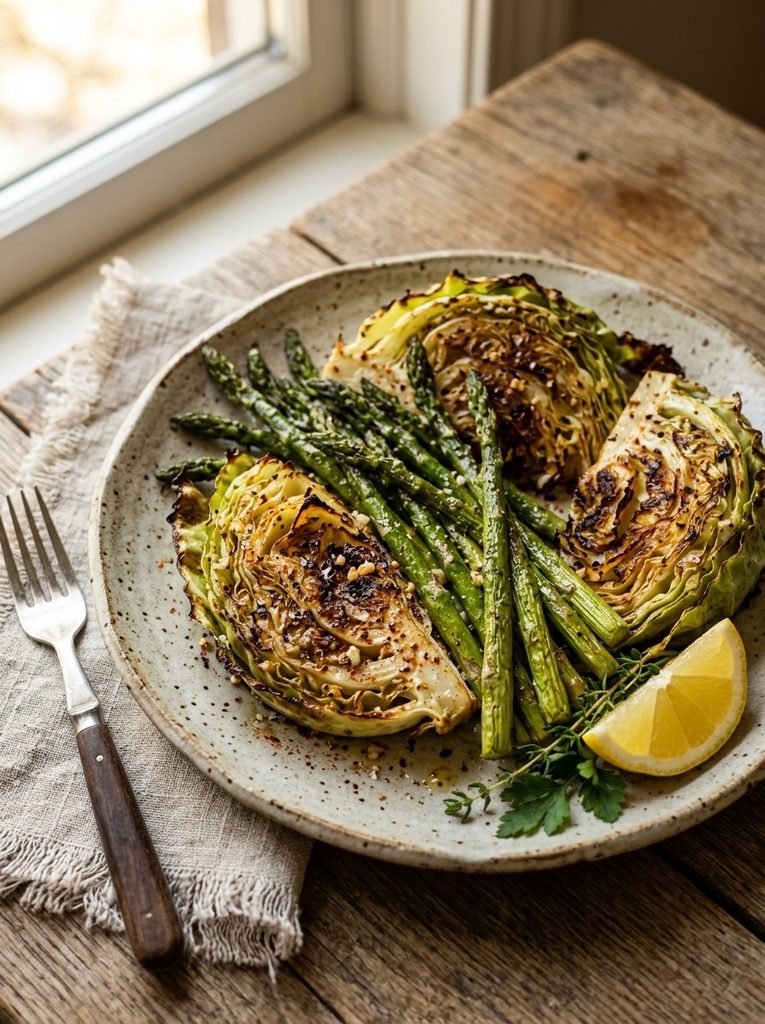
For extra flavor, finish the roasted vegetables with fresh lemon juice just before serving. A sprinkle of Parmesan cheese can also add a savory finish if you are not keeping the recipe dairy-free. This simple combination works beautifully beside roasted chicken, salmon, tofu, or a grain bowl. It is also delicious enough to eat straight from the pan.
2. Garlic Butter Cabbage and Asparagus
Garlic butter gives these vegetables a rich flavor while keeping the preparation extremely simple. Melt butter in a large skillet and sauté minced garlic for a few seconds before adding sliced cabbage. Cook until the cabbage begins to soften, then add trimmed asparagus and continue cooking until both vegetables are tender but not mushy.
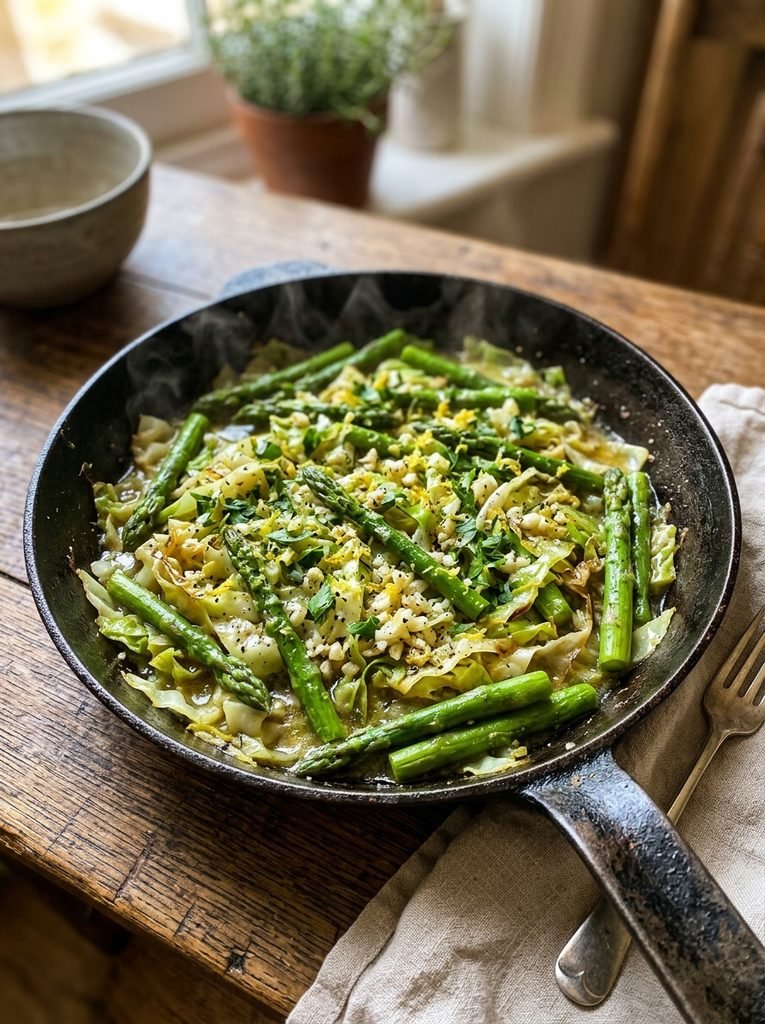
For a lighter version, use olive oil instead of butter. Add lemon zest, red pepper flakes, or freshly chopped parsley to brighten the finished dish. This recipe makes a particularly good quick side for busy weeknight dinners because it takes only a short time to prepare. Serve it with rice, potatoes, grilled meat, or a simple protein of your choice.
3. Cabbage and Asparagus Stir-Fry
A quick stir-fry is perfect when you want a flavorful vegetable dish without turning on the oven. Slice the cabbage into thin strips and cut the asparagus into smaller pieces so everything cooks quickly. Stir-fry the vegetables in a hot skillet or wok with garlic, ginger, and a simple sauce made from soy sauce or tamari, sesame oil, and a touch of honey or maple syrup.
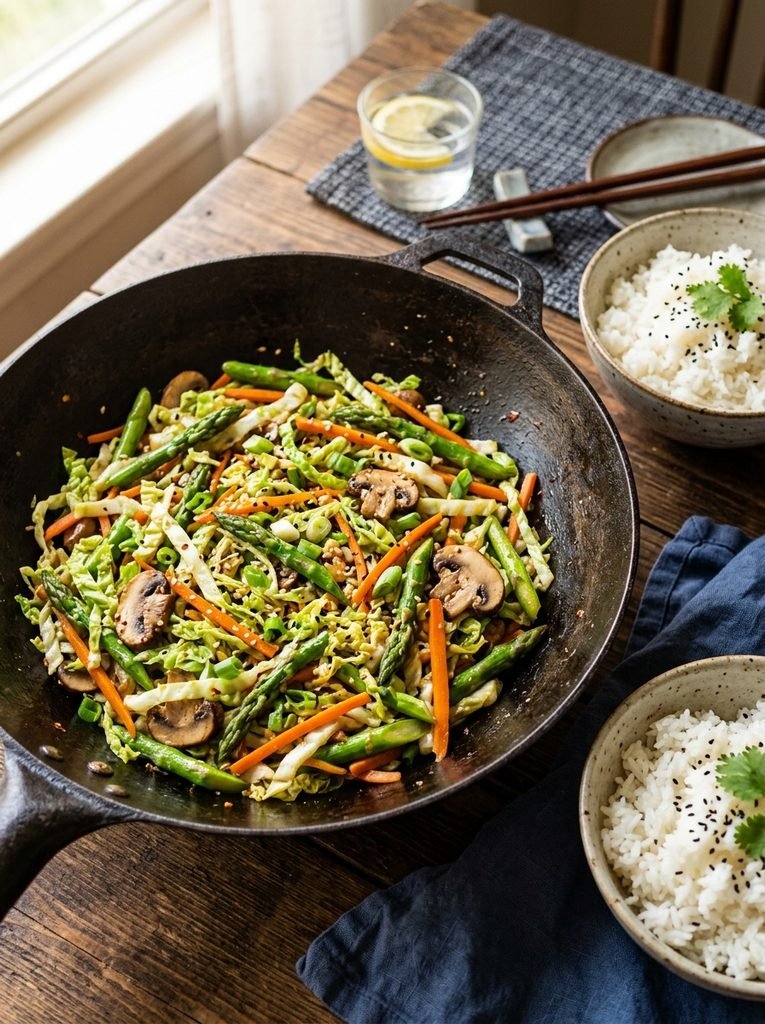
You can easily turn this into a complete meal by adding tofu, chicken, shrimp, or thinly sliced beef. Carrots, mushrooms, bell peppers, and green onions also fit naturally into the combination. Serve the stir-fry over steamed rice, brown rice, or noodles. Finish with sesame seeds and sliced green onions for extra texture.
4. Creamy Cabbage and Asparagus Pasta
Cabbage and asparagus can make a surprisingly delicious pasta combination. Sauté sliced cabbage with garlic and asparagus until tender, then toss everything with cooked pasta and a light creamy sauce. You can use heavy cream, half-and-half, or a plant-based cream alternative depending on your preference.
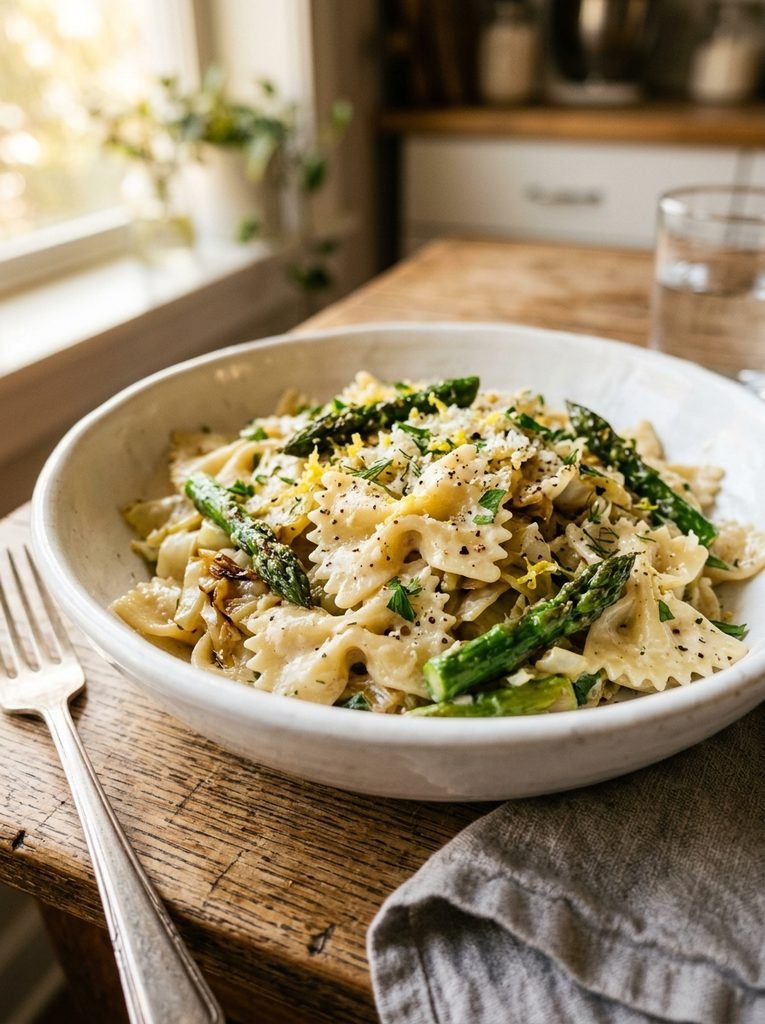
Parmesan cheese, black pepper, and lemon zest add plenty of flavor without requiring a complicated sauce. Short pasta shapes such as penne or bow ties work especially well because they hold onto the creamy sauce and small pieces of vegetables. This is a comforting dinner that still feels fresh because of the asparagus and cabbage.
5. Cabbage and Asparagus Egg Skillet
For an easy breakfast or light dinner, cook cabbage and asparagus in a skillet before adding beaten eggs. Sauté the vegetables with olive oil, garlic, salt, and pepper until tender. Pour the eggs over the vegetables and allow them to cook gently until set.
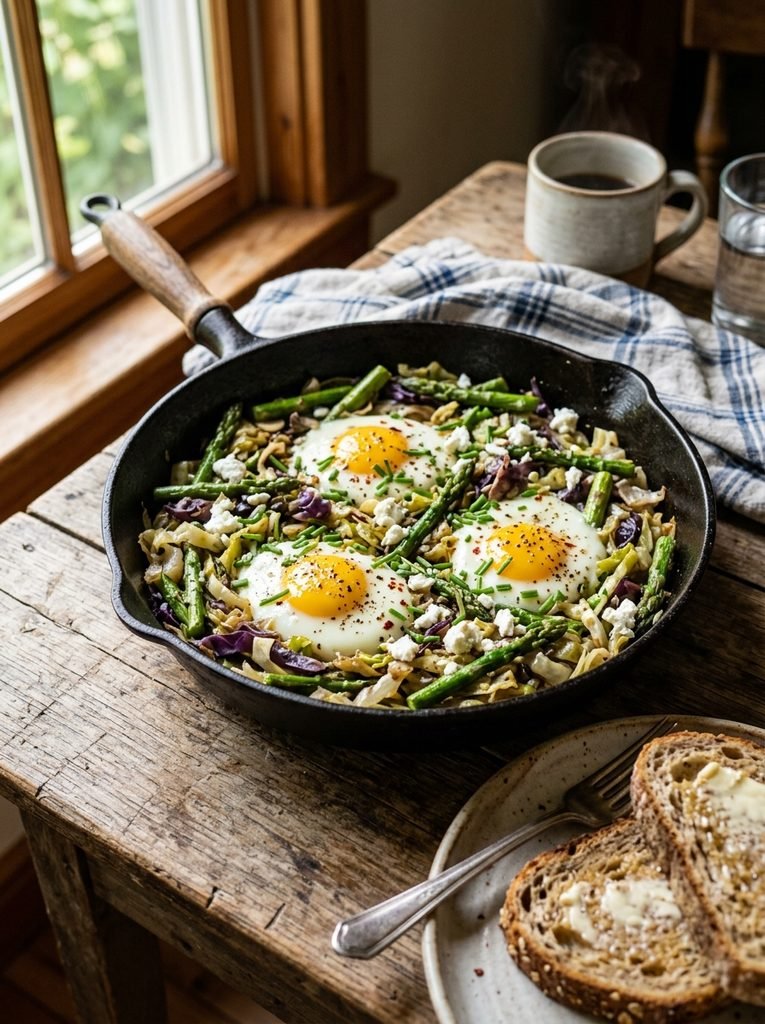
You can add shredded cheddar, feta, goat cheese, or Parmesan for extra richness. Fresh herbs such as parsley, dill, or chives can make the skillet taste even fresher. Serve it with whole-grain toast or roasted potatoes for a more filling meal. This is also an excellent way to use leftover cooked vegetables.
6. Lemon Parmesan Cabbage and Asparagus
Lemon and Parmesan are simple ingredients that can completely change the flavor of roasted vegetables. Roast cabbage and asparagus with olive oil, garlic, salt, and pepper until lightly caramelized. Once the vegetables are out of the oven, squeeze fresh lemon juice over them and sprinkle generously with Parmesan.
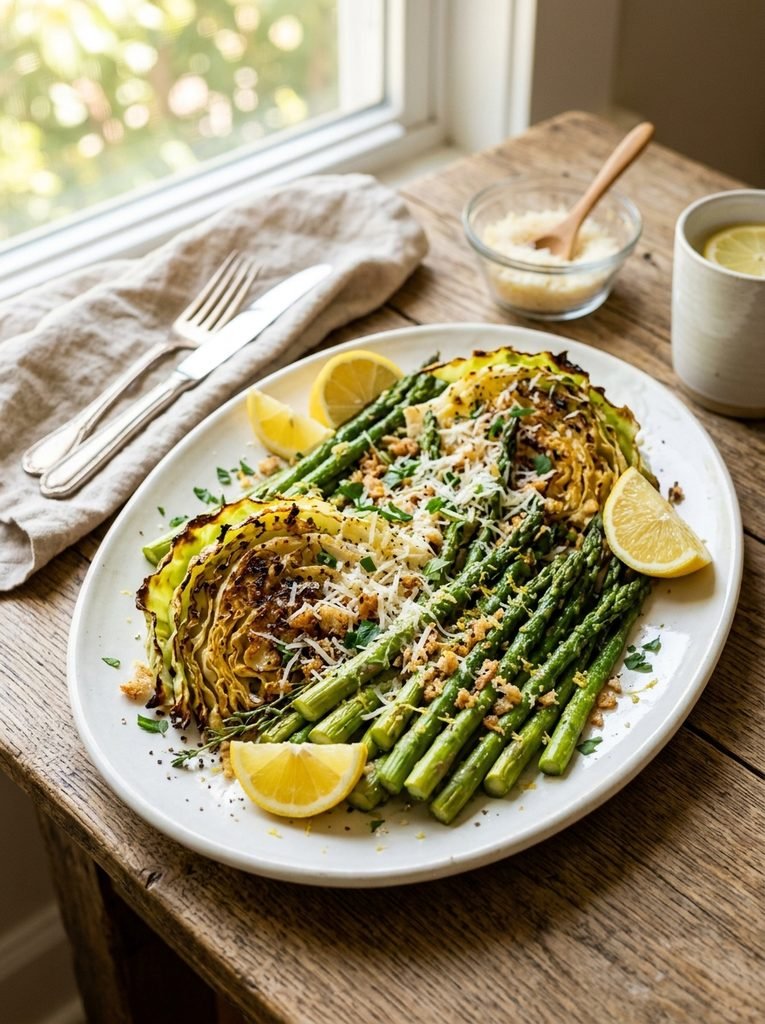
The combination of savory roasted cabbage, tender asparagus, bright lemon, and salty cheese makes this side dish especially flavorful. Add toasted breadcrumbs for a little crunch if desired. It pairs well with chicken, fish, steak, pasta, or a vegetarian main dish. For a dairy-free version, use nutritional yeast or your favorite plant-based Parmesan alternative.
7. Cabbage and Asparagus Soup
A vegetable soup is a comforting option when you want something warm and filling. Start by sautéing onion, garlic, and celery in olive oil, then add chopped cabbage, asparagus, vegetable broth, and seasonings. Simmer until the vegetables are tender while keeping the asparagus from becoming overly soft.
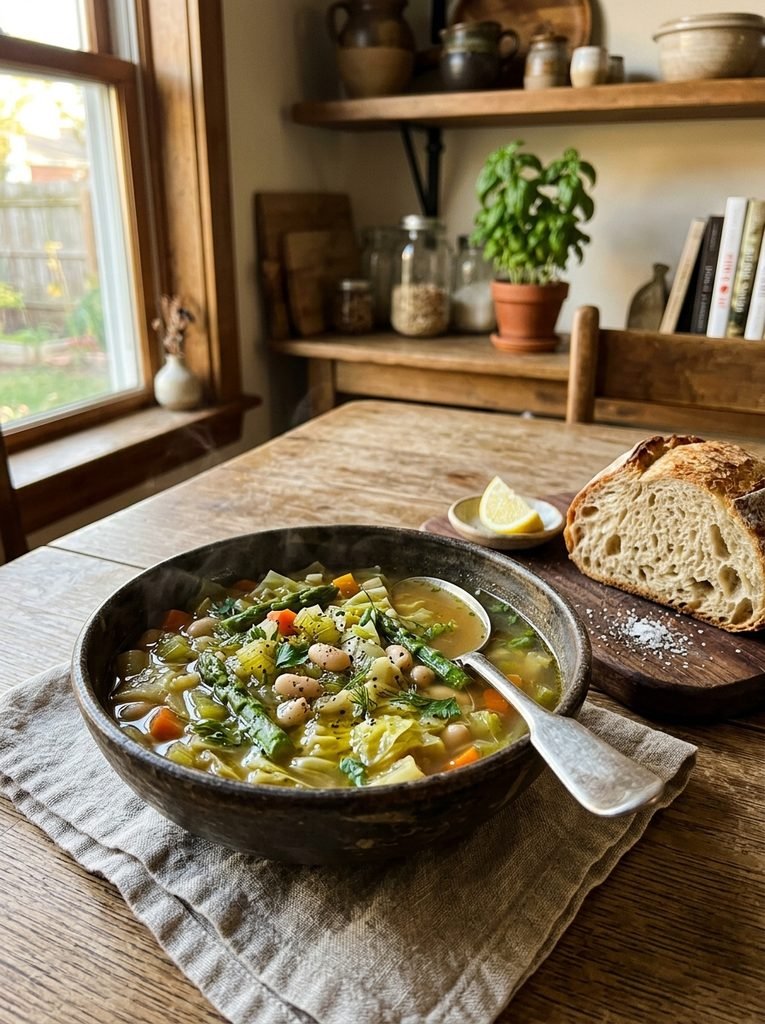
White beans or chickpeas can be added to make the soup more substantial. You can also stir in cooked potatoes, carrots, or peas for additional texture and flavor. A squeeze of lemon at the end keeps the soup tasting bright instead of heavy. Serve it with crusty bread for an easy lunch or light dinner.
8. Cabbage and Asparagus Grain Bowls
Grain bowls are an easy way to turn roasted vegetables into a complete meal. Start with cooked quinoa, brown rice, farro, or another favorite grain, then add roasted cabbage and asparagus. Include chickpeas, lentils, tofu, chicken, or another protein to make the bowl more satisfying.
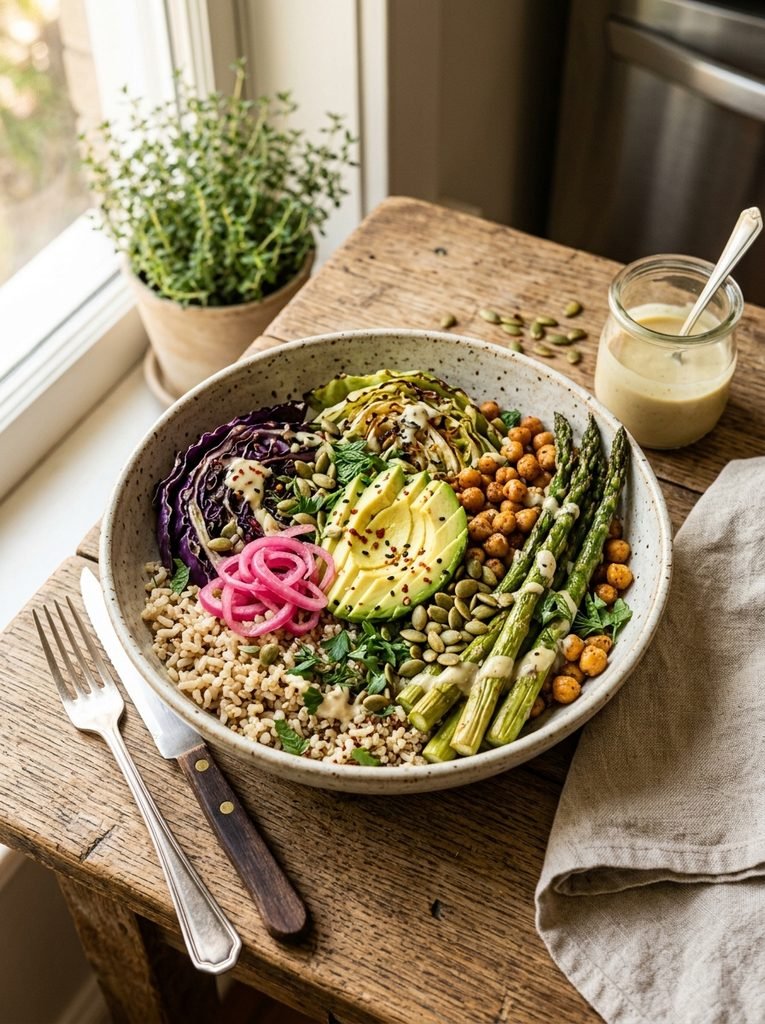
A simple lemon-tahini dressing works especially well with the earthy vegetables. You could also use a creamy yogurt dressing, garlic vinaigrette, or sesame-ginger sauce. Add avocado, pumpkin seeds, fresh herbs, or pickled onions for contrasting textures. These bowls are also convenient for meal prep because many of the components can be prepared ahead.
9. Cabbage and Asparagus Frittata
A frittata is another practical way to combine these vegetables into a complete meal. Sauté chopped cabbage and asparagus until tender, then pour beaten eggs over the vegetables. Add cheese if desired and transfer the skillet to the oven until the eggs are completely set.
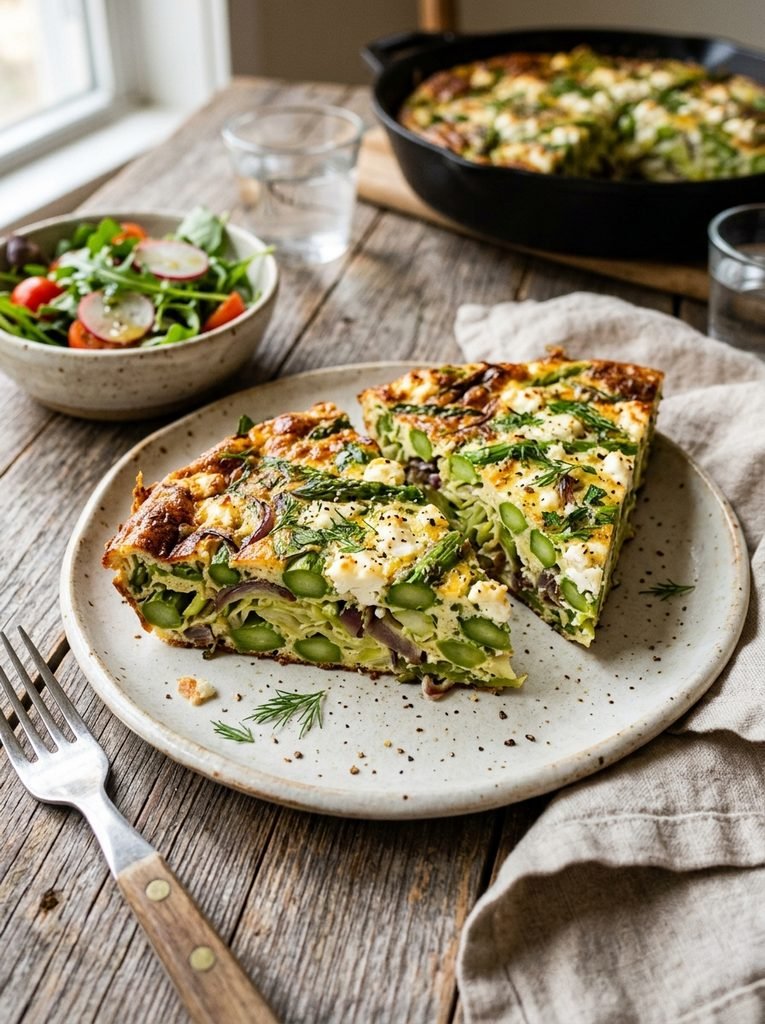
This recipe works well for breakfast, brunch, lunch, or a light dinner. You can add mushrooms, spinach, onions, tomatoes, or leftover roasted vegetables depending on what you have available. A little feta gives the frittata a salty flavor, while mozzarella creates a softer and more melty result. Slice it into wedges and serve warm or at room temperature.
10. Asian-Inspired Cabbage and Asparagus
For a bold flavor variation, give cabbage and asparagus an Asian-inspired seasoning. Cook the vegetables over high heat with garlic and ginger, then add soy sauce, sesame oil, rice vinegar, and a small amount of honey or maple syrup. The cabbage develops slightly crispy edges while the asparagus remains tender and fresh.
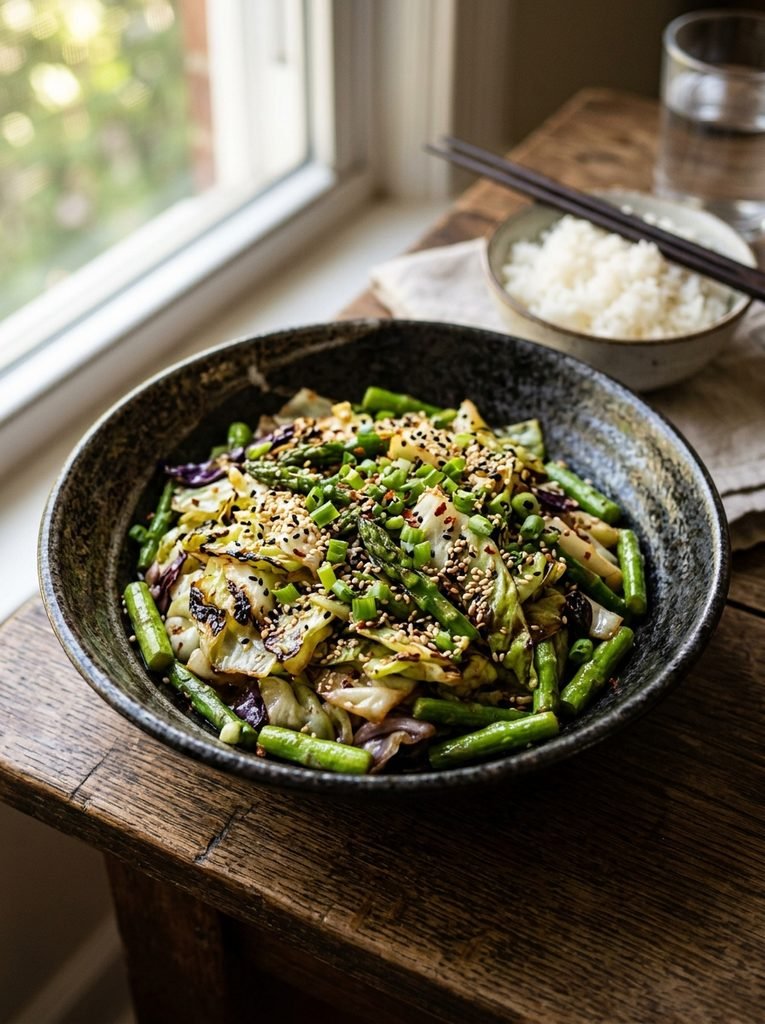
Top the finished dish with sesame seeds, scallions, and red pepper flakes. Add tofu, chicken, shrimp, or edamame if you want more protein. This combination is excellent over rice or noodles and can be prepared quickly on a busy evening. Use tamari or certified gluten-free soy sauce if you need a gluten-free option.
11. Cabbage and Asparagus Sheet Pan Dinner
Turn these vegetables into an entire sheet-pan dinner by adding a protein and a few simple seasonings. Arrange cabbage wedges and asparagus on a baking sheet with chicken breasts, salmon, tofu, or chickpeas. Drizzle everything with olive oil and season with garlic powder, paprika, salt, pepper, and your favorite herbs.
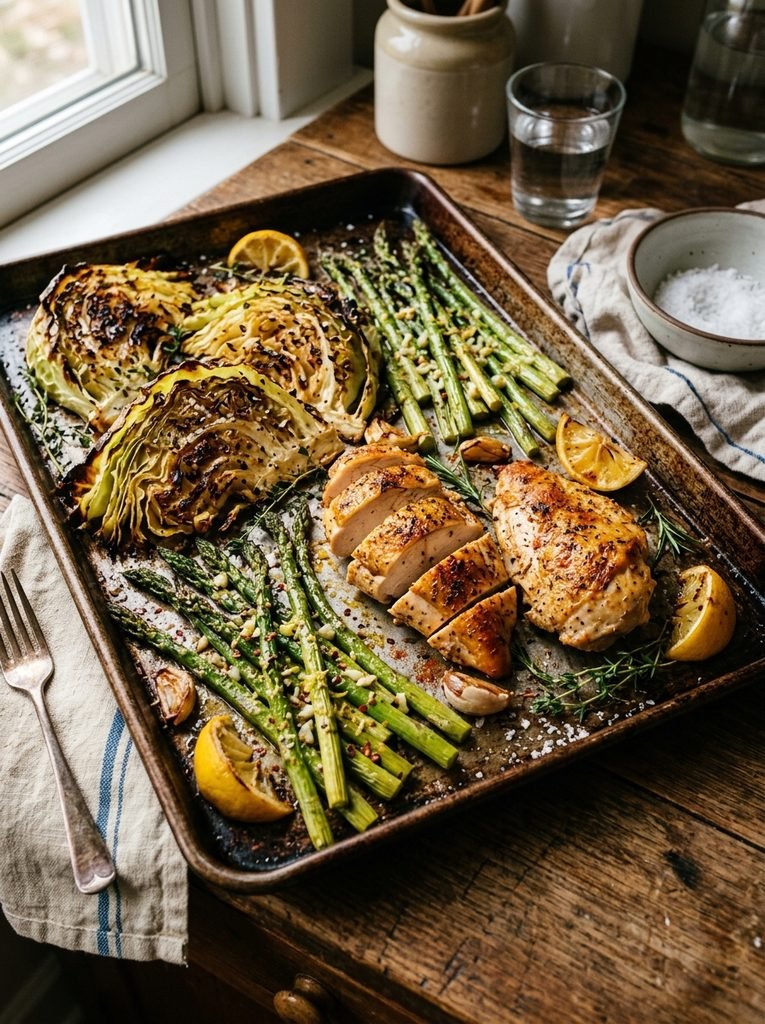
Because different ingredients cook at different speeds, cut everything into appropriately sized pieces and add delicate asparagus later if necessary. Finish the meal with lemon juice or a simple homemade dressing. Sheet-pan dinners are particularly useful for busy nights because they minimize both preparation and cleanup. Serve everything directly from the pan for an easy family-style meal.
12. Cabbage and Asparagus Salad
These vegetables do not have to be cooked into a warm dish. Thinly slice fresh cabbage and combine it with lightly blanched or roasted asparagus for a crisp vegetable salad. Add carrots, cucumber, green onions, herbs, or toasted nuts for additional flavor and texture.
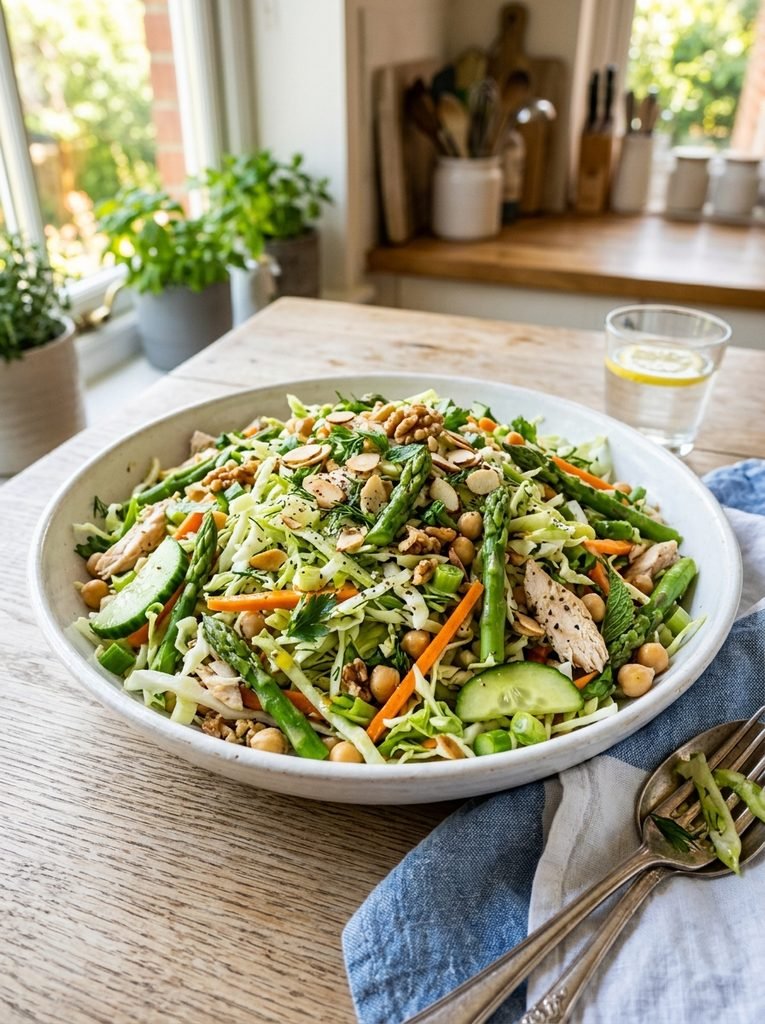
A lemon-Dijon vinaigrette pairs beautifully with both vegetables. For something creamier, use a Greek yogurt-based dressing or tahini dressing. Add chickpeas, white beans, grilled chicken, or hard-boiled eggs to turn the salad into a more substantial meal. It is a refreshing option for spring lunches, picnics, and summer dinners.
Tips for Cooking Cabbage and Asparagus Together
The key to cooking these vegetables successfully is remembering that cabbage generally takes longer to become tender than asparagus. If you are roasting or sautéing them together, cut the cabbage smaller or begin cooking it a few minutes before adding the asparagus. This helps prevent the asparagus from becoming overly soft while you wait for the cabbage to finish.
Seasoning also makes a major difference because both vegetables have relatively mild natural flavors. Garlic, lemon, Parmesan, ginger, sesame oil, chili flakes, mustard, and fresh herbs all work particularly well. For roasting, avoid overcrowding the pan because excess moisture can prevent the vegetables from browning. High heat is especially helpful when you want caramelized edges and more concentrated flavor.
What to Serve With Cabbage and Asparagus
These vegetables are versatile enough to work with almost any type of main dish. Roasted cabbage and asparagus can accompany chicken, salmon, pork, steak, tofu, or beans. Stir-fried versions are naturally suited to rice and noodles, while creamy versions work beautifully with pasta or crusty bread.
For a vegetarian meal, combine them with quinoa, lentils, chickpeas, white beans, eggs, or tofu. A simple grain plus roasted vegetables and a flavorful dressing can create a balanced meal without requiring complicated cooking. This makes cabbage and asparagus particularly useful when you want affordable, flexible recipes for everyday meals.
Final Thoughts
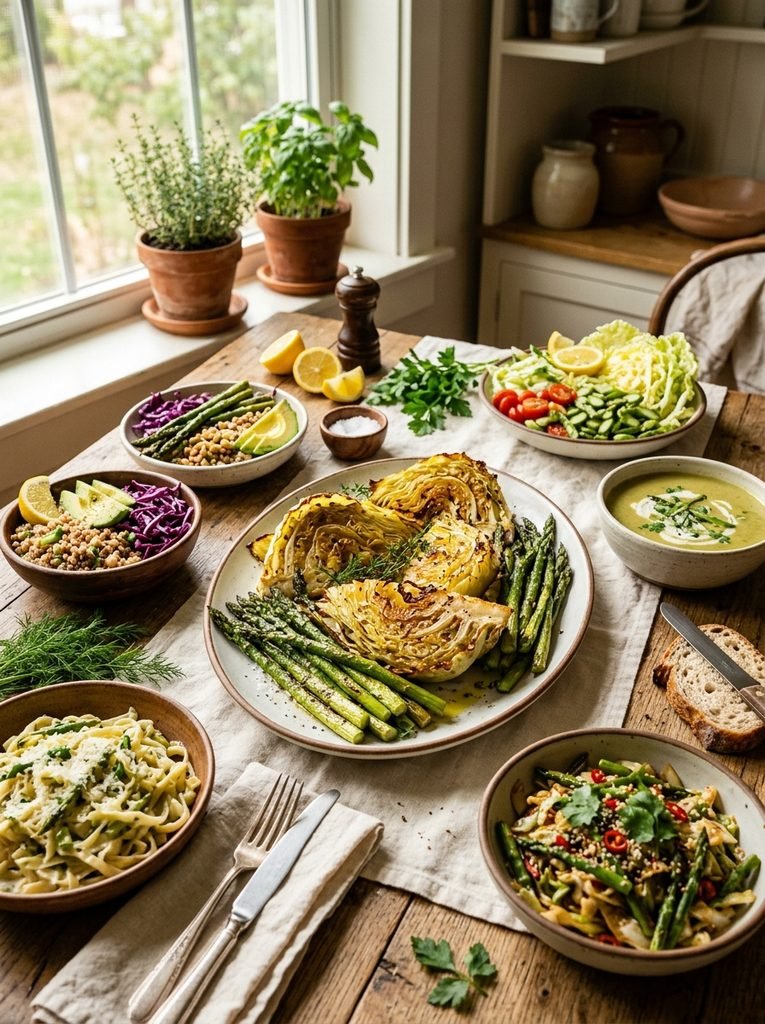
These cabbage and asparagus recipes show just how many ways you can combine two simple vegetables. From crispy roasted vegetables and quick stir-fries to creamy pasta, hearty soups, fresh salads, and complete sheet-pan dinners, there is an option for almost every type of meal. Cabbage brings substance and texture, while asparagus adds a fresh seasonal element that keeps the dishes interesting. With a few simple seasonings and your favorite protein or grain, these vegetables can become easy, flavorful meals you will want to make again.
