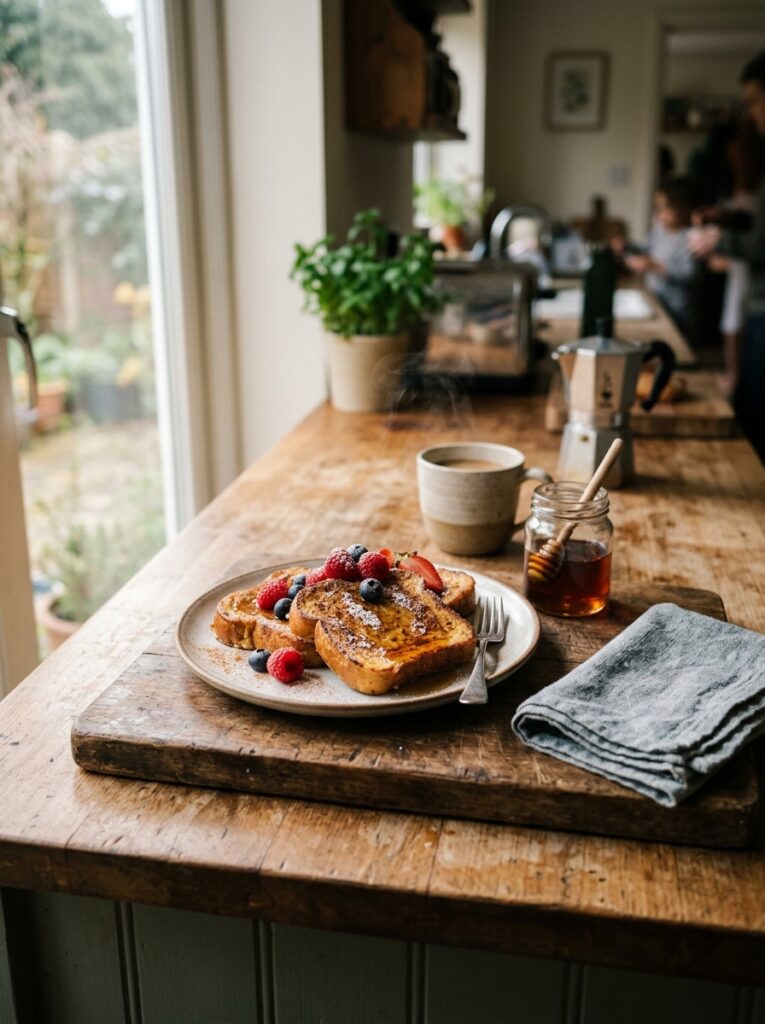
My friend called it “eggy bread” and I almost didn’t let her in the house.
She’s brilliant. She’s wrong about the name. But she was standing on my doorstep with brioche, so I let it go.
—
1. Why Most French Toast Tastes Like Disappointment
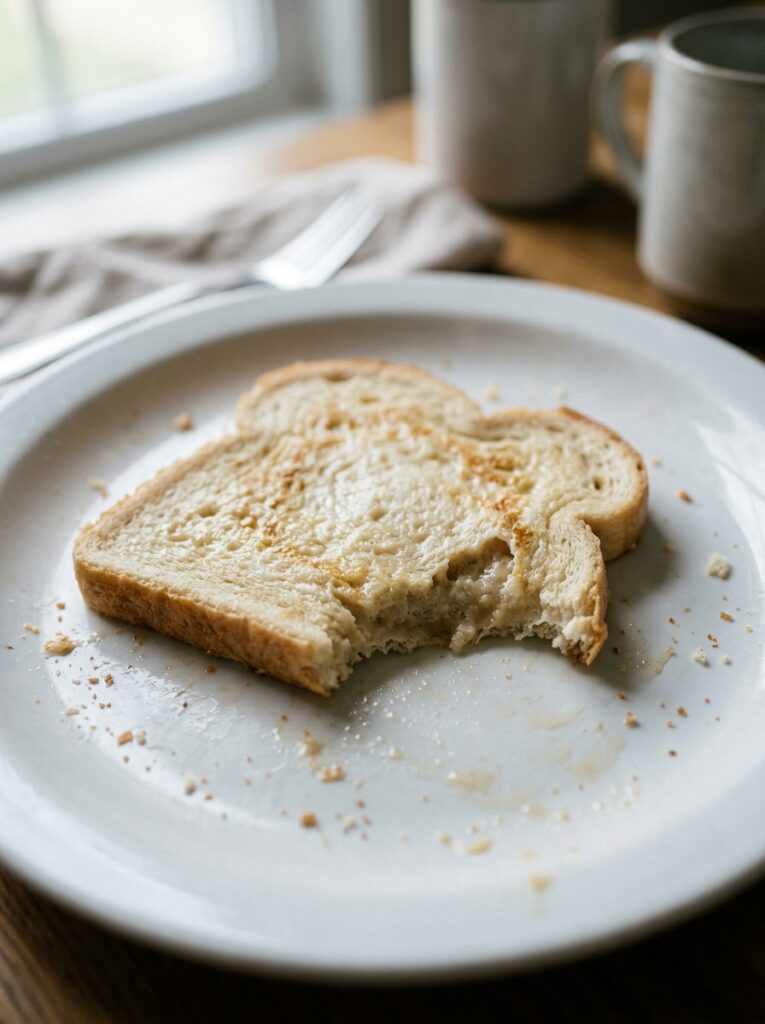
Not gonna lie — I spent years making mediocre French toast and thinking that was just… what it was. Soggy in the middle, slightly rubbery, weirdly bland even with maple syrup drowning it. I’d see photos online of these thick, custardy, golden-brown slabs and wonder what I was doing differently.
Turns out: everything.
The problems I had were super fixable. Wrong bread. Wrong milk-to-egg ratio. Wrong heat. And honestly the biggest one — not letting the bread SOAK long enough. People treat French toast like it’s a quick breakfast fix and then complain when the center tastes like unseasoned egg. You have to be patient with it. Two minutes of soaking isn’t enough. Five minutes minimum, and if you’re using thick-cut bread, flip it halfway through and give it a full ten.
Once I figured that out, everything changed.
—
2. The Bread That Makes or Breaks the Whole Thing
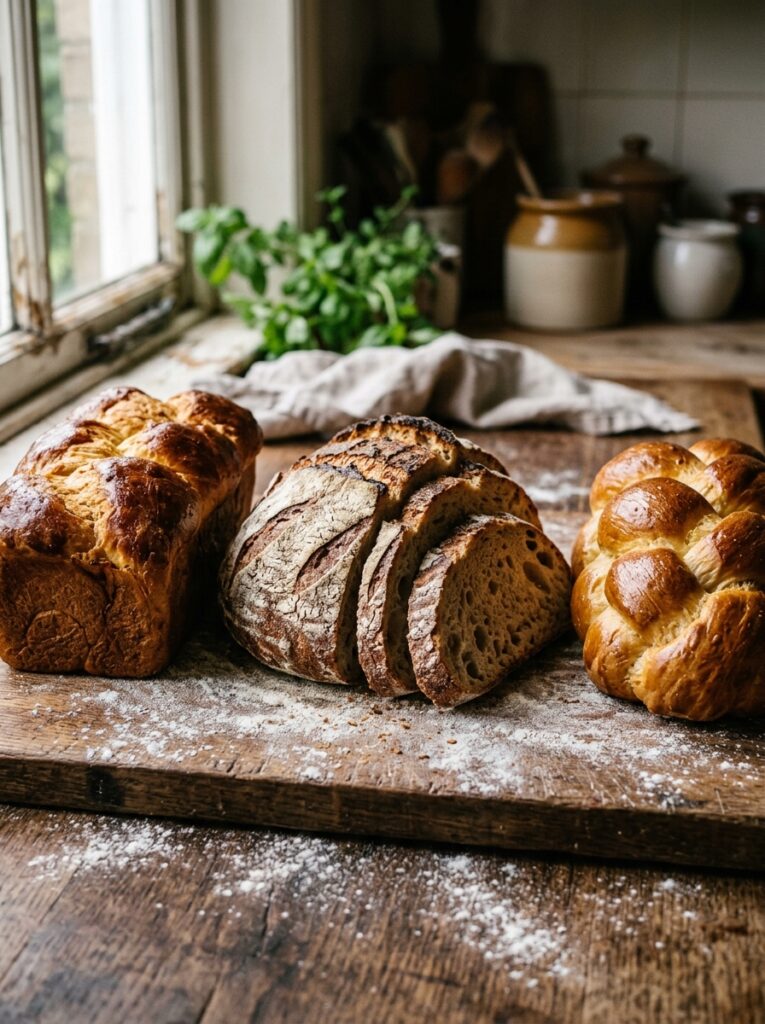
Here’s my actual hot take: the bread matters more than any other variable. More than the eggs, more than the spices, more than whether you use cream or whole milk. Get the bread right and the rest practically handles itself.
Brioche is the obvious answer and yes, it’s obvious for a reason. It’s buttery and slightly sweet already, it absorbs the custard beautifully without falling apart, and it gets this incredible crisp exterior while staying almost obscenely soft inside. Day-old brioche especially — slightly stale bread soaks more evenly because it’s lost some moisture and it’s hungrier for the egg mixture, if that makes sense.
“Day-old bread soaks more evenly. It’s hungrier for the custard. Give it what it wants.”
Challah is my other go-to. Similar qualities to brioche — enriched dough, slight sweetness, holds its shape in the pan. A thick slice of challah makes French toast that feels genuinely substantial, not sad and flat.
Can you use regular sandwich bread? You can. But it’ll go limp on you and the texture will be more “wet toast” than “custard-soaked heaven.” Use it if it’s all you’ve got, but cut your slices thick and really don’t over-soak them or you’ll end up with mush. A sourdough also works surprisingly well if you want something a bit heartier with a slightly tangy note — honestly an underrated choice.
—
3. The Custard Ratio Nobody Writes Down Clearly
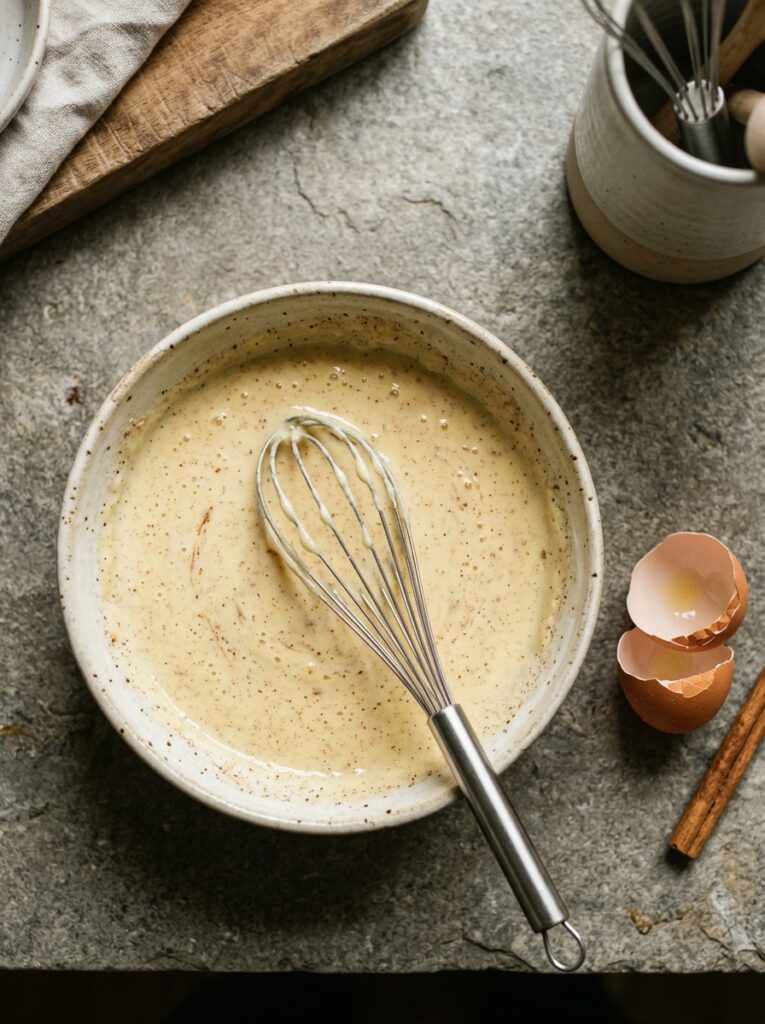
Two eggs per roughly half a cup of whole milk. That’s the baseline. Everything else you’re adding is just flavor.
But here’s what I want you to actually hear: whole milk is the floor, not the ceiling. If you have double cream or heavy cream, swap even just half the milk for cream and your custard becomes richer and thicker, meaning it coats the bread more completely and sets up with a better texture in the pan. You don’t need a lot. A splash does the job.
Salt. Add it. A small pinch of fine salt in your custard — people skip this and it’s why their French toast tastes flat. The salt brings out the sweetness of the eggs and balances everything.
Vanilla extract: yes, always. Half a teaspoon minimum. Some people use vanilla bean paste if they’re feeling fancy and honestly it shows — little flecks of vanilla in the egg, it looks beautiful. A tiny pinch of cinnamon too, though I know some people are anti-cinnamon in French toast (they’re wrong, but I respect their journey).
—
4. The Soak, and Why You Keep Getting It Wrong
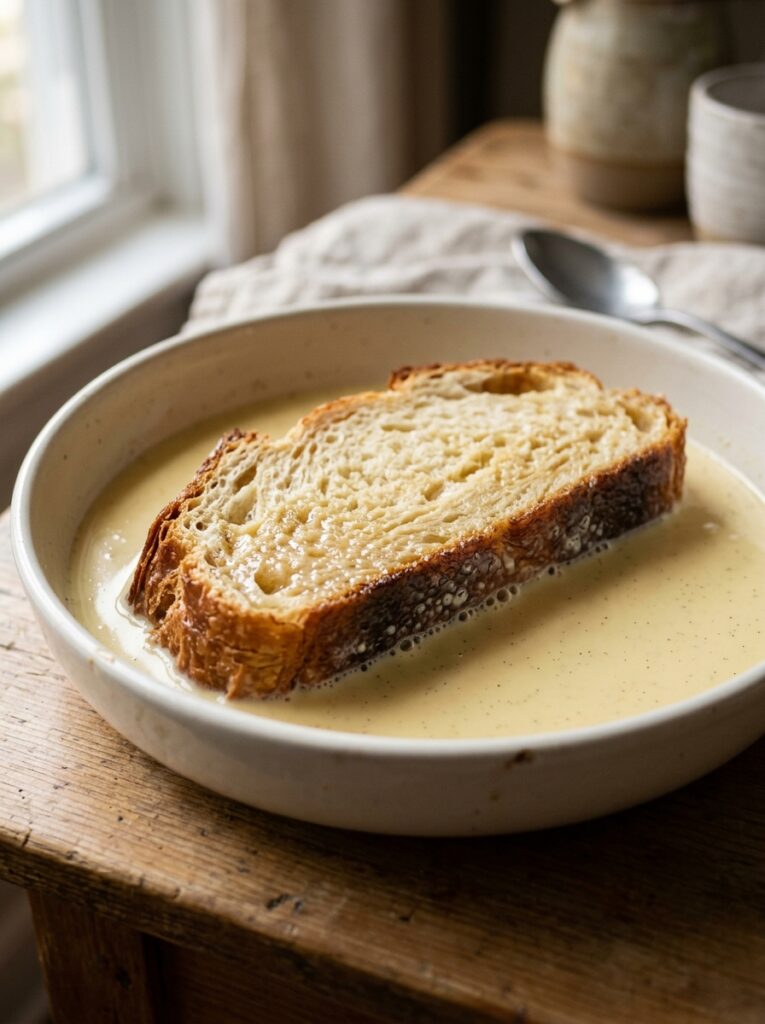
I’ve already said it once but I’m saying it again because it’s that important. The soak determines almost everything about the finished texture.
Pour your custard into a shallow dish — a wide pasta bowl or a baking dish works great. Lay your bread slice in. Don’t rush off and come back in thirty seconds. WAIT. Let it sit for at least five minutes per side for thick-cut bread. You want the custard to penetrate all the way to the center, not just coat the outside.
How do you know it’s ready? Pick up the slice gently and press the center. It should feel heavy and uniform — not firm and dry in the middle while the edges are soft. If the middle still has resistance, put it back.
The anxiety here is about it getting too wet and falling apart. That’s a valid concern. But underdone soak is a bigger problem than overdone. And if you’re using good sturdy bread like brioche or challah, it’ll hold together even with a long soak. Trust the bread.
—
5. The Pan Temperature That Most Recipes Get Completely Wrong
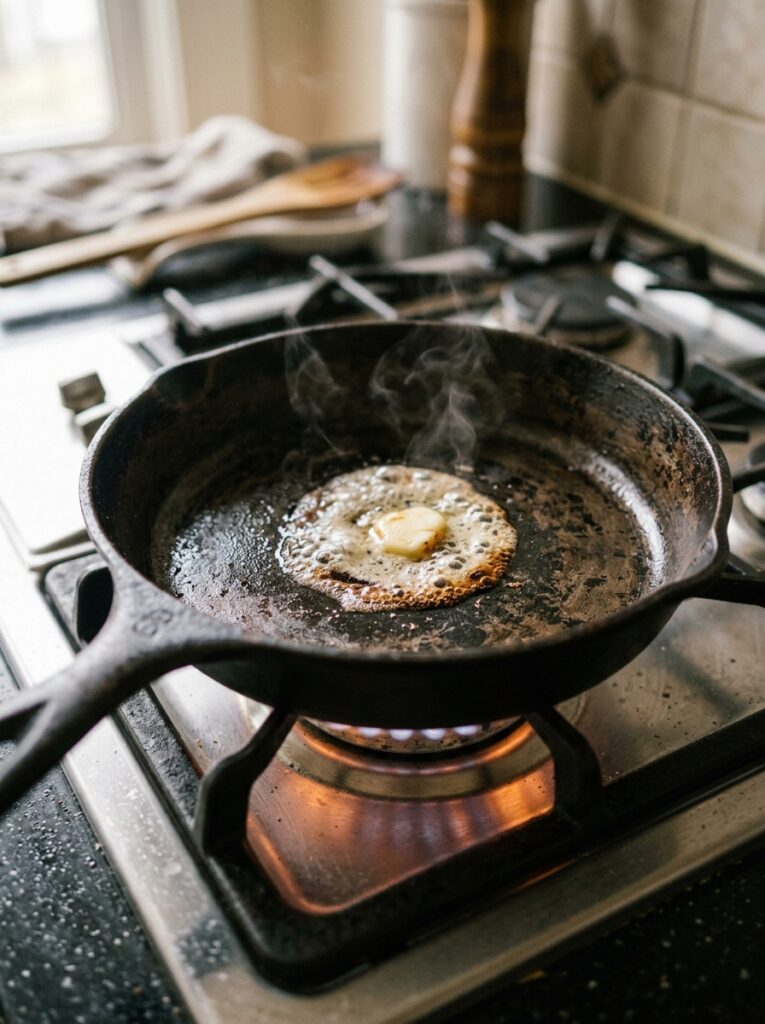
Medium heat. Not high. And you have to preheat the pan properly before anything touches it.
This is where a lot of French toast goes sideways. People rush to medium-high, get the butter to that brown-edged stage, and cook the outside fast while the center stays eggy and raw. Or worse — they put the bread in before the pan is hot enough and it just sits there absorbing butter passively without getting any color.
You want the butter melted, foamy, and just past the foaming stage before the bread goes in. That slight sizzle when it hits the pan — that’s what you’re aiming for. Then you leave it ALONE for three to four minutes. Don’t poke, don’t press, don’t lift to check. Just let it develop that crust.
When you flip it, the cooked side should be a deep amber-gold. Not pale yellow. Not dark brown. Deep amber. That’s the sweet spot where the sugars from the bread and the egg custard have caramelized just right.
“Deep amber on the flip — that’s where the magic lives. Pale yellow means it needed two more minutes.”
—
6. Butter vs. Oil: The Question With an Actual Answer
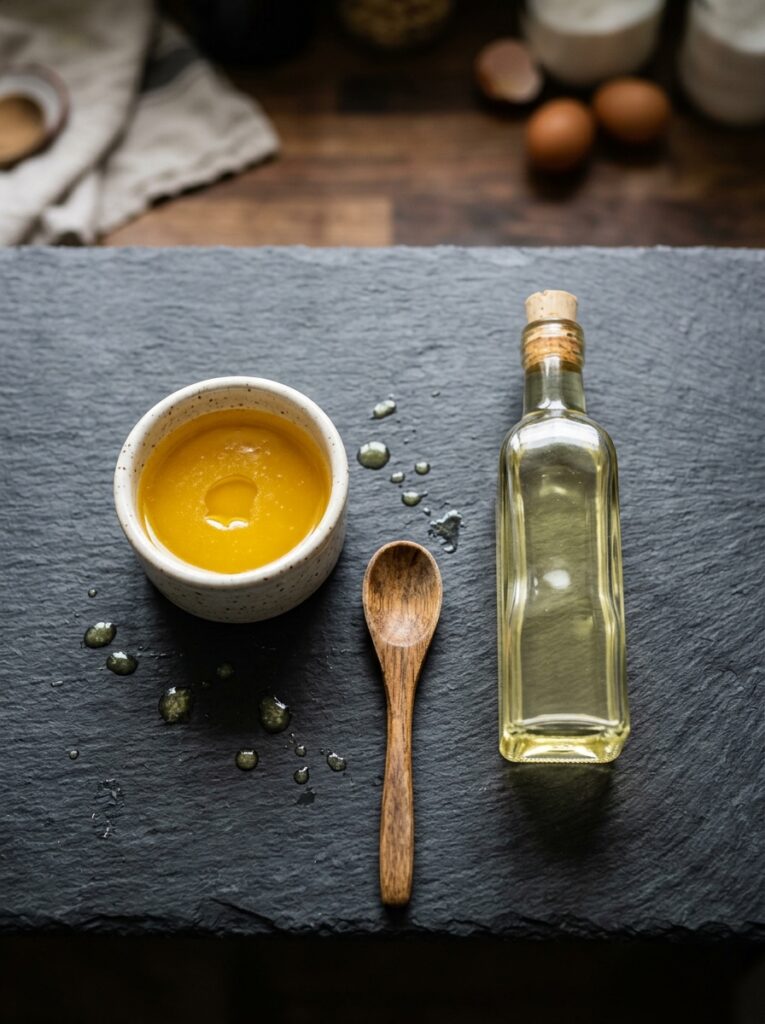
Butter. Obviously butter. But — and this is the important part — you can’t use pure butter on its own for the whole cook because it’ll burn before the bread is fully cooked through.
The fix is easy. Use a small amount of neutral oil (vegetable, sunflower, whatever you have) and add your butter into that. The oil raises the smoke point enough that the butter can take the heat without going dark and bitter. You still get all the flavor and that beautiful browning that only butter creates — you just don’t get the burned bits.
Some people use clarified butter or ghee and that works really well too. You can take it to a higher temperature without burning and the flavor is slightly nutty and rich. Not always in my cupboard first thing in the morning, but if you have it, use it.
—
7. The Toppings That Actually Make Sense (and One That Sounds Wrong but Isn’t)
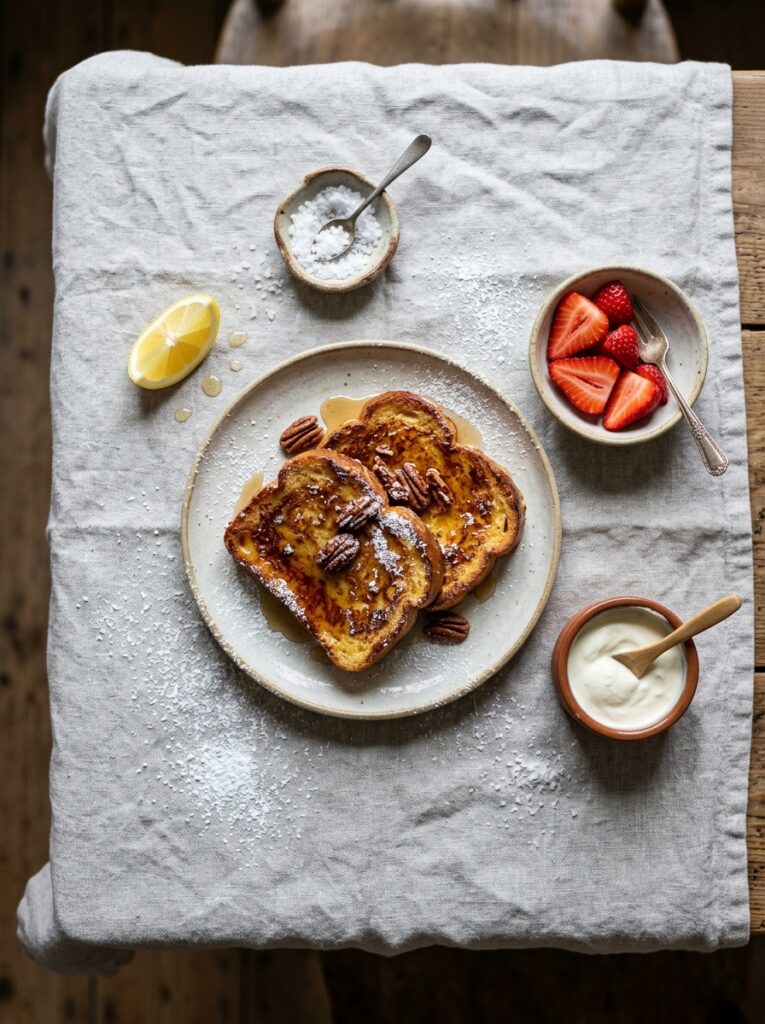
Maple syrup is the classic and I’m not arguing with it. Real maple syrup, not pancake syrup, because there’s a difference in flavor that’s worth every extra penny.
Fresh berries are perfect — strawberries especially in summer, or a quick five-minute stew of mixed berries with a tiny splash of water and a pinch of sugar if they’re out of season. Whipped cream obviously. Powdered sugar over the top because it makes everything look instantly more beautiful and costs literally zero effort.
But here’s the one that sounds wrong: a small drizzle of good balsamic glaze over the top, with ricotta. I know. Stay with me. The sweetness of the French toast plus the creamy mild ricotta plus the slightly acidic, syrupy balsamic — it’s extraordinary. It’s the kind of thing you make for a brunch guest and they ask you what restaurant you got the idea from.
Also. Bacon on the side. Always bacon on the side. This isn’t negotiable.
—
8. Making French Toast for a Full Table Without Losing Your Mind
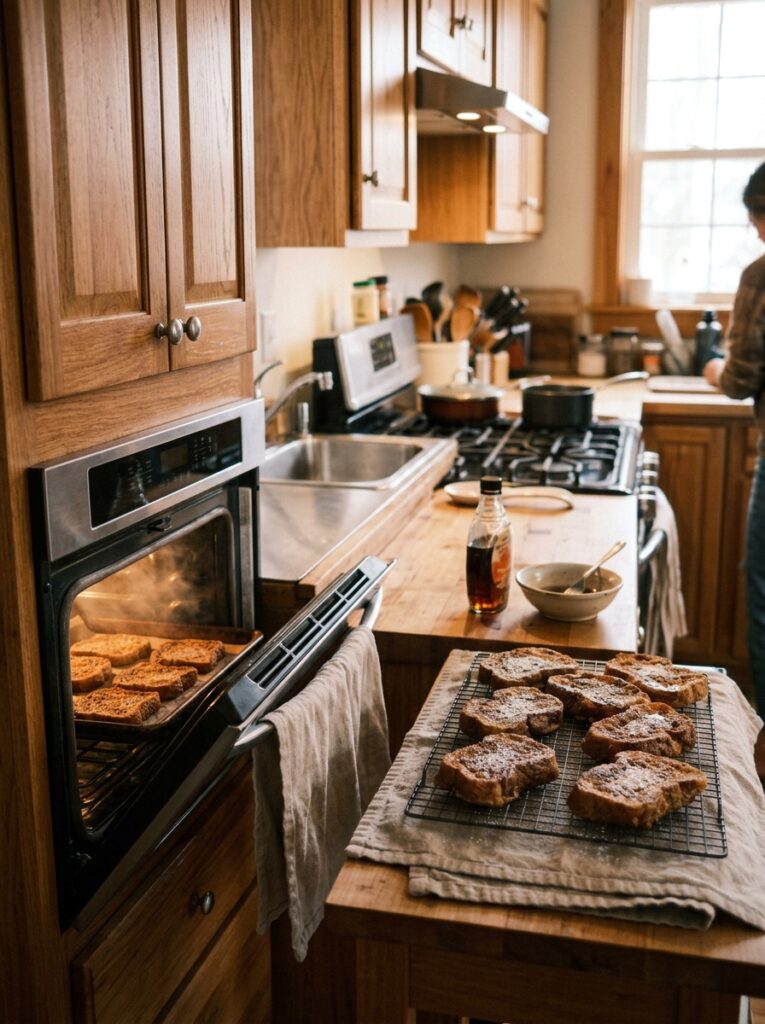
Here’s the thing nobody tells you about cooking French toast for more than two people: if you do it in batches in the pan, the first batch will be cold and slightly sad by the time you’re plating the fourth one. You end up eating in shifts and that’s miserable.
The solution is the oven. Preheat it to 200°F/90°C (warm, not cooking) and as each slice comes out of the pan, it goes onto a wire rack on a baking sheet in the oven. The wire rack matters — if you just stack them on the sheet, the steam gets trapped underneath and the beautiful crust you just created goes soft. Wire rack keeps air circulating and keeps the exterior intact.
This way, everyone gets hot French toast at the same time. Revolutionary concept, I know.
You can also fully cook French toast in the oven from scratch — dip the slices, lay on a buttered baking sheet, 375°F/190°C for about fifteen to eighteen minutes flipping once. It’s not quite as rich-tasting as pan-fried but it works brilliantly for big batches and you can do eight slices at once.
—
9. The Savory Version That Changed How I Think About This Dish
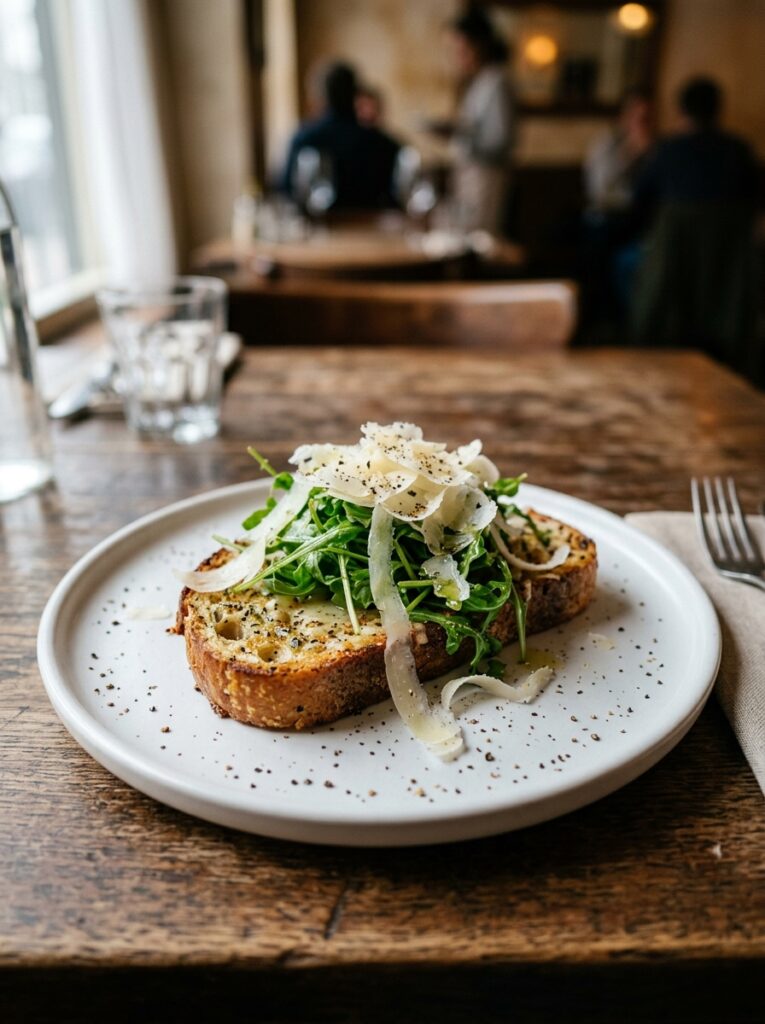
So everything I’ve told you so far has been sweet French toast. But I want to briefly derail because the savory version deserves its own conversation, or at least its own section.
Skip the vanilla and cinnamon in your custard. Add fresh thyme, a pinch of garlic powder, a good amount of black pepper, and some grated parmesan into the egg mixture. Use good sourdough or even thick white bread. Cook exactly the same way.
Serve it with a fried egg on top — yolk still runny — and a pile of wilted greens on the side. Maybe some hot sauce if you’re that way inclined. This is a DIFFERENT dish entirely and it is deeply, absurdly satisfying on a cold morning. It bridges the gap between French toast and something more like a posh fried bread, and I cannot explain why more people aren’t doing this.
Side note — this is also a brilliant way to use up bread that’s not sweet enough for the dessert-style version.
—
10. Overnight French Toast for People Who Like to Sleep In
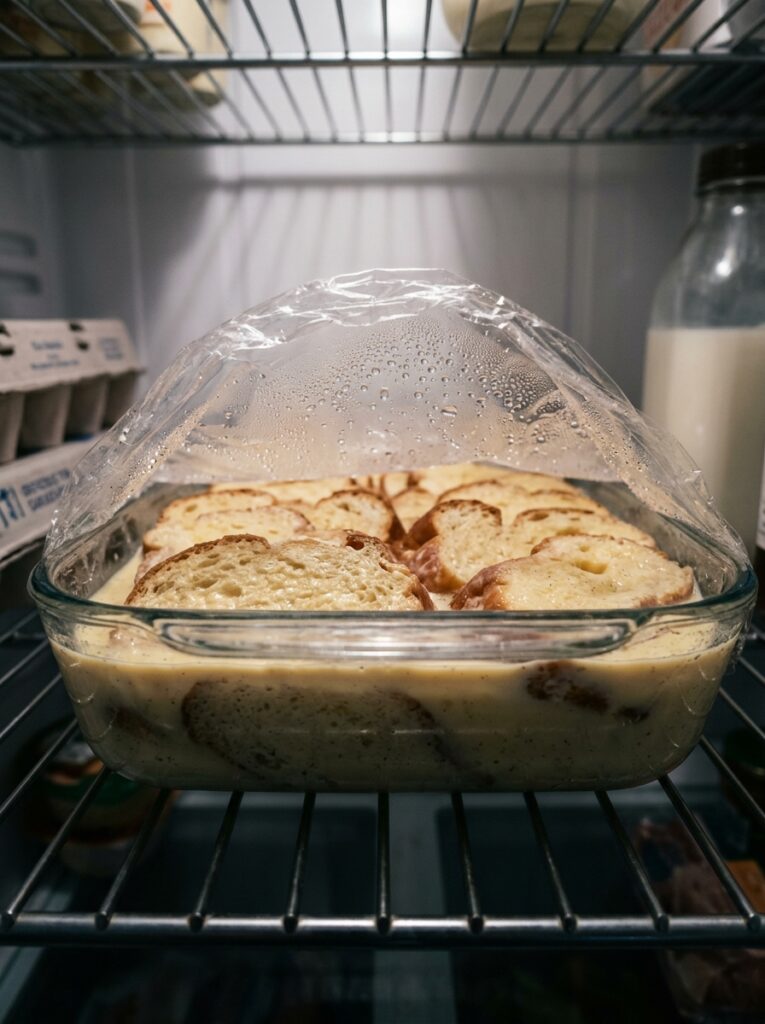
The premise is simple. You make the soak the night before, layer your bread in a baking dish, pour the custard over the whole thing, cover it, and put it in the fridge. In the morning you slide it in the oven at 350°F/175°C for about thirty-five to forty minutes and it puffs up into this baked, slightly bread-pudding-like thing that is a COMPLETELY different experience from the pan-fried version but equally wonderful.
“Overnight baked French toast is what happens when bread pudding and breakfast finally have the conversation they should’ve had years ago.”
You can add sliced fruit between the layers — banana and brown sugar is gorgeous, or apples with a pinch of cardamom. The fruit sort of melts into the custard overnight and becomes something jammy and caramelized. You wake up, the house already smells incredible because it’s been marinating all night, you preheat the oven with your first cup of coffee and by the time you’ve had a shower it’s done.
This version genuinely makes me look forward to Monday mornings and I didn’t think that was possible.
—
11. Why Leftovers Are Better Than People Think
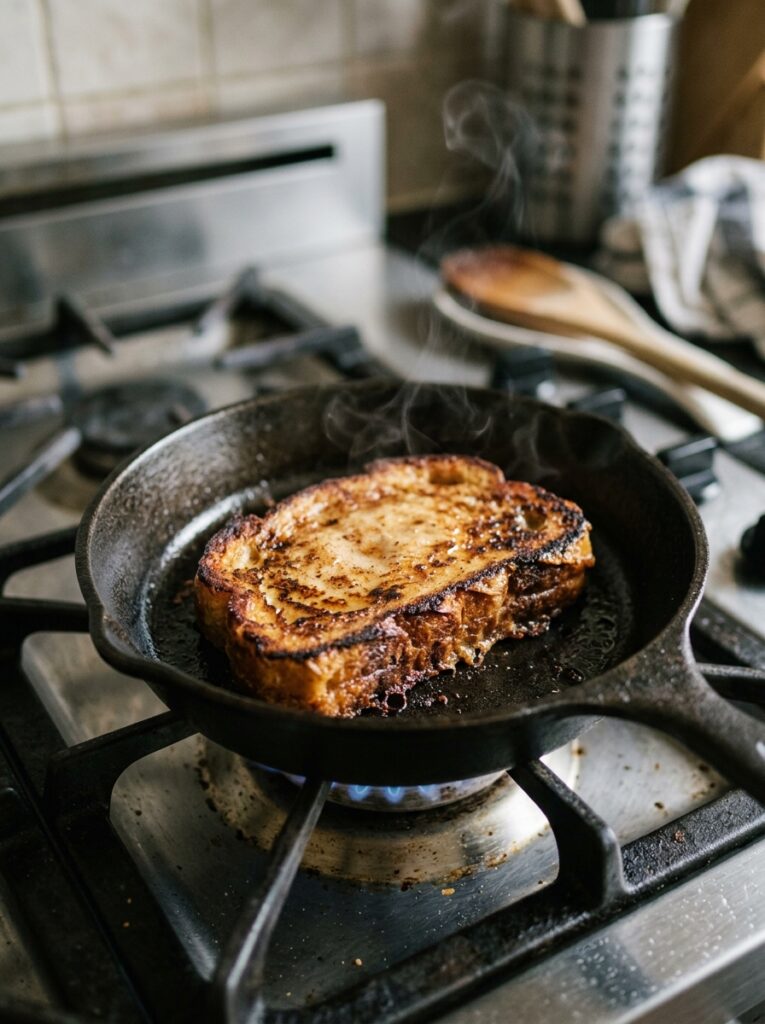
Cold French toast out of the fridge the next day is kind of underrated. I don’t think I’m supposed to say that but it’s true. It firms up overnight, so it’s denser and has a completely different texture — almost like a cold egg custard slice. Genuinely nice on its own.
But if you want to reheat it: oven at 325°F/165°C on a wire rack for eight to ten minutes. NOT the microwave — the microwave turns it into a soggy, rubbery mess and honestly you deserve better than that. The oven brings back some of the crispness around the edges and heats it through evenly.
You can also toast individual slices in a dry pan on medium heat for a couple of minutes per side. The exterior crisps back up beautifully, maybe even better than the first cook. It’s sort of like the second-day pizza phenomenon — sometimes reheating correctly beats the original.
—
12. The One Small Detail That Makes Your Plating Look Like a Café Breakfast
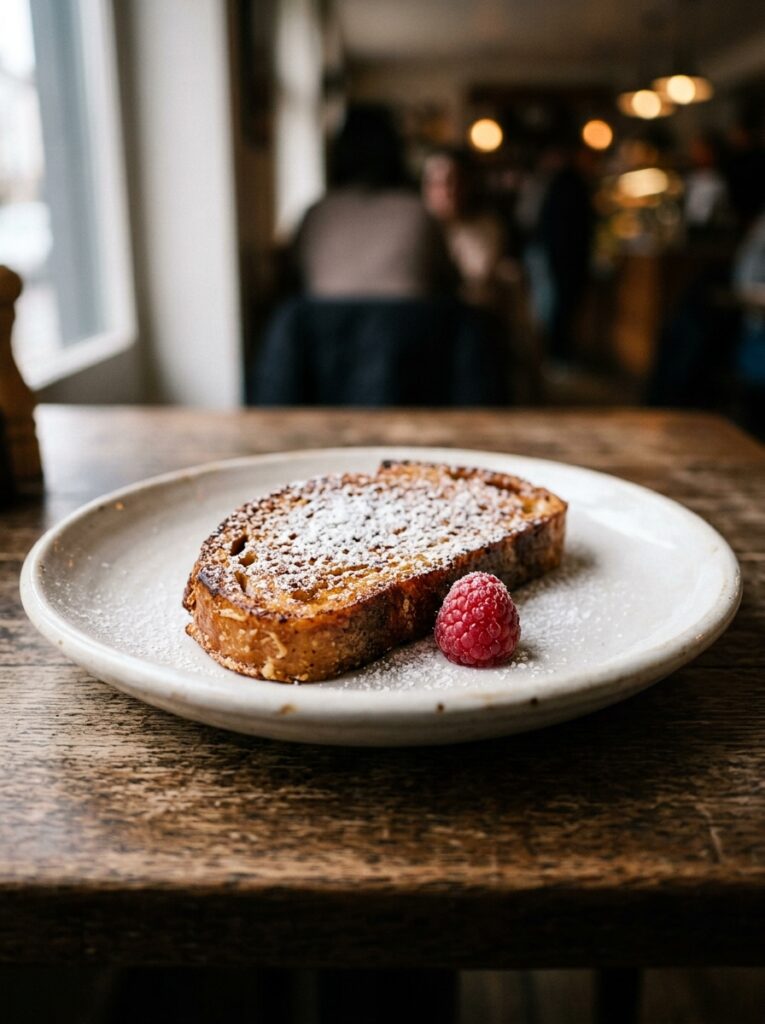
This sounds stupidly minor but: diagonal cuts.
Cut your French toast on a diagonal rather than straight down the middle. It looks better, it exposes more of the custard interior, and it somehow makes the whole plate feel more intentional. Stack the two halves overlapping slightly. Dust with powdered sugar from up high so it falls like snow rather than a clump. Place the fruit or compote to one side rather than piled directly on top.
A tiny sprig of fresh mint if you have it. Not because it adds much flavor. Just because the pop of green against the amber-gold toast and the white powdered sugar looks genuinely beautiful.
You don’t need fancy equipment. You don’t need a culinary background. You just need to pause for fifteen seconds before you hand someone a plate and think: does this look like I cared? Because the food already shows you did.
—
❓ FAQ
Q: What’s the best bread for French toast if I can’t find brioche? A: Challah is your best alternative — same enriched dough, similar texture, very forgiving. If you can’t get either, a thick-cut white sandwich loaf works in a pinch; just don’t soak it as long as you would brioche and make sure the slices are at least an inch thick. Sourdough is a surprisingly good choice too if you want something with a bit more character.
Q: Can I make French toast without dairy milk? A: Absolutely, and it works better than you’d think. Full-fat oat milk is probably the closest in terms of richness and behavior in the pan — it gives you a good custard texture. Full-fat coconut milk works too but adds a distinct coconut flavor that may or may not be what you want. Avoid thin, watery plant milks because the custard ends up too loose and you’ll lose that creamy interior.
Q: Why does my French toast always end up soggy in the middle? A: Two likely culprits — bread that’s too thin and fresh (both absorb too fast and fall apart), or pan heat that’s too high (burns the outside before the middle cooks through). Use thick, slightly stale bread, cook on medium heat, and give each side at least three to four minutes. If you’re still struggling, finish slices in a 325°F/165°C oven for five minutes after the pan to ensure the center sets.
—
💭 Final Thoughts
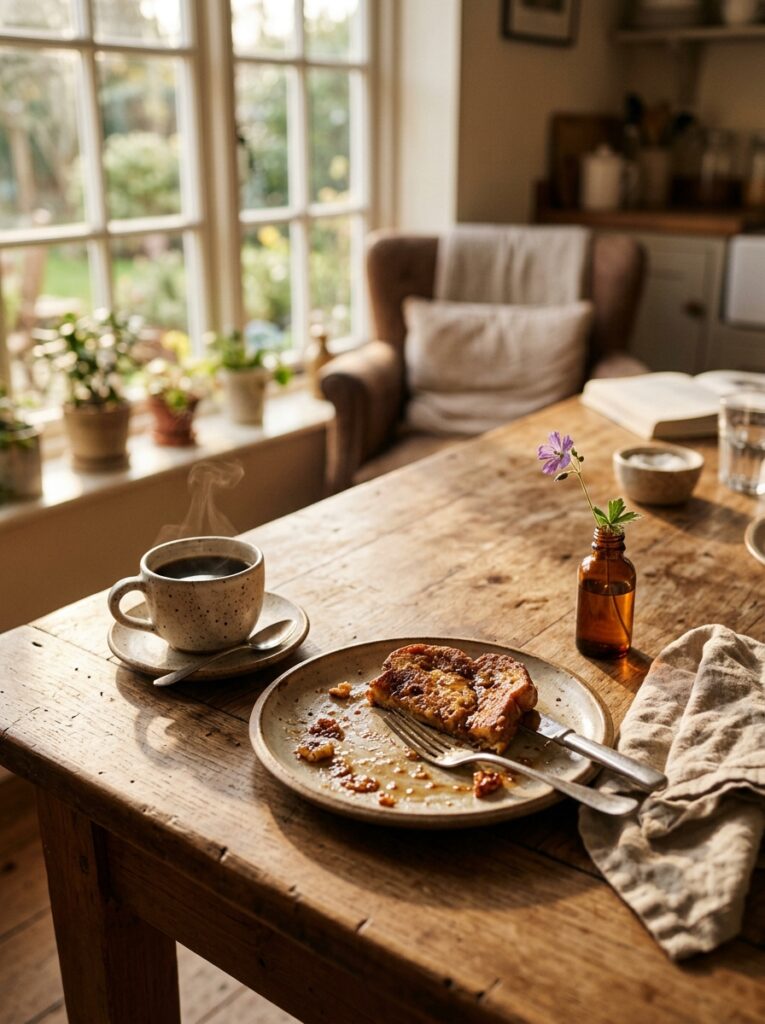
French toast is one of those dishes that sounds too simple to bother perfecting, and then you eat a really GOOD version of it and suddenly you understand why people care so much. The bread, the soak, the heat — none of it is complicated, but all of it matters. And once you get it right, once you pull that deep-golden slice out of the pan and the custard center is just barely set and the whole kitchen smells like vanilla and browned butter, you’ll understand why my friend drove across town with a loaf of brioche on a Saturday morning.
Even if she does call it eggy bread.
What would you pile on top — sweet or savory?
