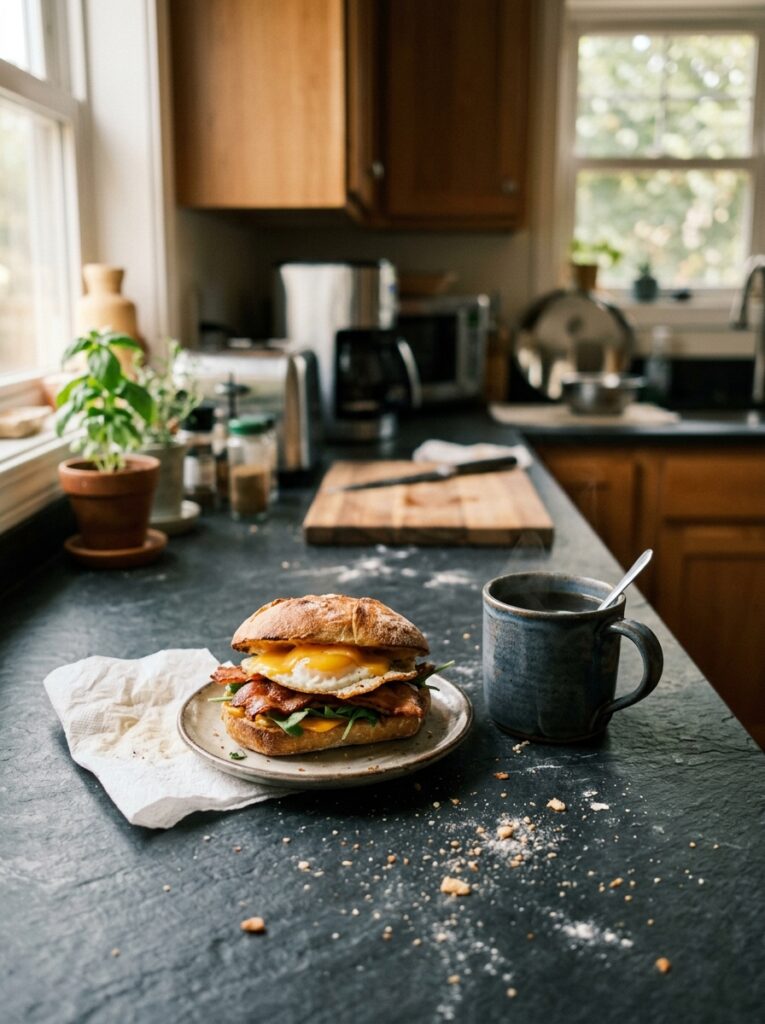
My friend called me at 8am on a Saturday to tell me she’d finally cracked it. Not the news I expected before coffee, but honestly? She wasn’t wrong.
—
1. Why Breakfast Sandwiches Hit Different Than Any Other Morning Food
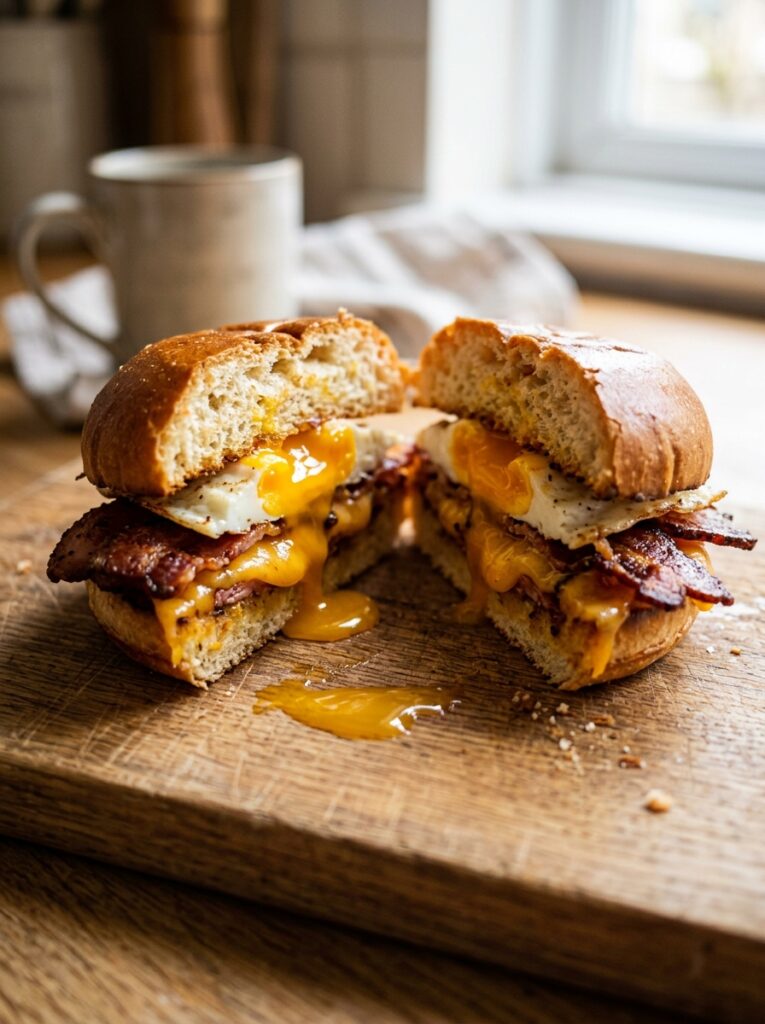
There’s something almost unreasonable about a good breakfast sandwich. It’s portable but it doesn’t feel disposable. It’s filling without making you want to lie back down. And it manages to hold — at minimum — five different flavors in one hand-sized thing, which is kind of miraculous if you stop to think about it.
I’ve eaten a lot of mediocre ones. Sad, steamed, wrapped in paper, gone cold before I reached the car. For a long time I think I accepted that as normal. The mediocrity. Like maybe breakfast sandwiches were just… fine. A food category that topped out at fine.
But they don’t. They absolutely don’t, and that’s the whole point of this.
The difference between a bad breakfast sandwich and a genuinely great one isn’t complicated ingredients or professional equipment. It’s knowing which two or three things actually matter — and doing those well. Everything else is basically decorating.
—
2. The Bread Situation Nobody Talks About Enough
Here’s my strong, slightly annoying opinion: most people choose the wrong bread, then wonder why their sandwich feels underwhelming.
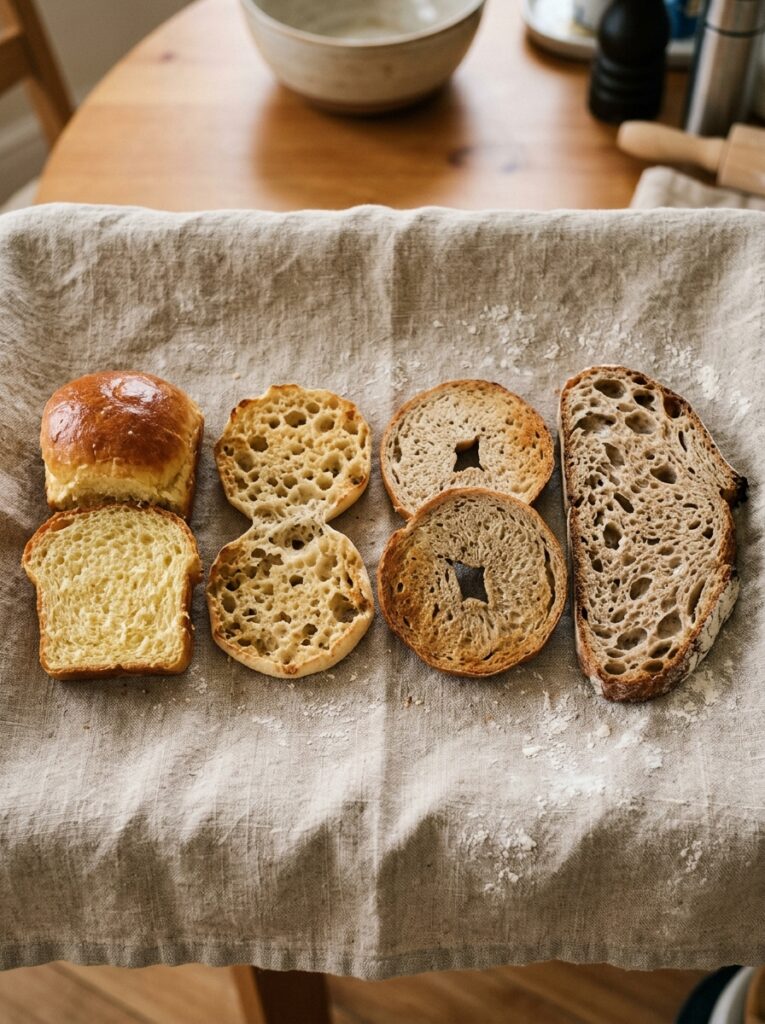
Soft sandwich bread doesn’t work. It goes soggy from the egg within about 90 seconds. A thick-cut white bloomer looks beautiful but competes too hard with the fillings. Sourdough is amazing but only if you toast it properly — underdone sourdough is RUBBERY and I will not be moved on this.
“The bread isn’t just a vehicle. It’s doing half the work.”
English muffins are the sleeper hit. Genuinely. That slightly chewy, nook-and-cranny surface catches yolk and sauce in a way that feels almost designed for the job. Because it was. Brioche buns are brilliant for a more indulgent version — a little sweet against salty bacon, which is a combination that doesn’t make logical sense and yet completely does. Ciabatta works if you’re doing a cold-cut or roasted veg situation. For a proper British-style morning roll, you want a soft white bap — nothing else comes close.
Toast everything. Always. Even if it only takes 60 seconds. Cold bread is a choice you will regret immediately.
—
3. The Egg Method That Actually Gets You That Perfect Stack
The fried egg is the most common choice and also the most frequently executed wrong. Too rubbery, too greasy, yolk broken before it even hits the bread. It doesn’t have to be this way.
Low and slow. That’s it. Medium-low heat, a tiny bit of butter (not oil — butter), and patience that lasts about two minutes longer than you think you have at 7:30am. You want the white fully set, edges just barely crisped, and a yolk that wobbles slightly when you lift the pan. That wobble is everything. That wobble is the whole sandwich.
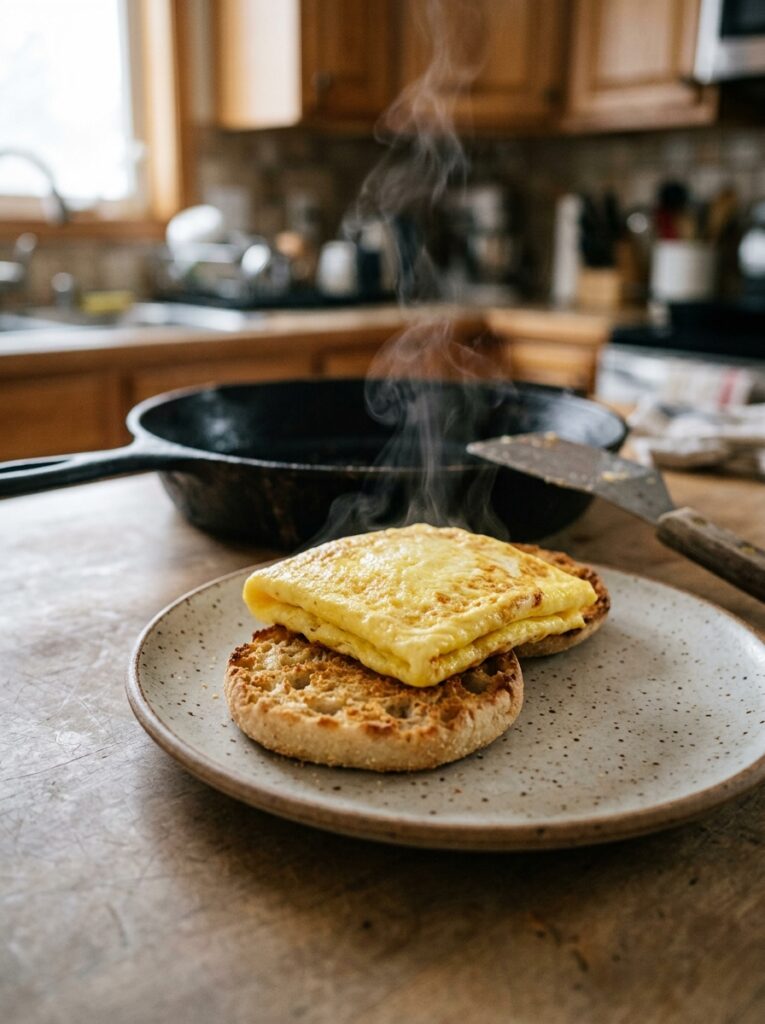
The folded egg — eggs beaten, poured into a buttered pan, folded like a soft omelette — gives you clean, even coverage and is honestly the move if you’re making sandwiches for more than one person. It holds together better, no yolk explosions, and it looks intentional in a way that a fried egg sometimes doesn’t.
Scrambled eggs in a breakfast sandwich are underrated and I’ll explain why: when they’re creamy and barely set, they work as a sauce. Not dry scrambled. Wet scrambled. There’s a difference and it matters enormously.
—
4. The Cheese That Makes or Breaks Everything (and It’s Not Cheddar)
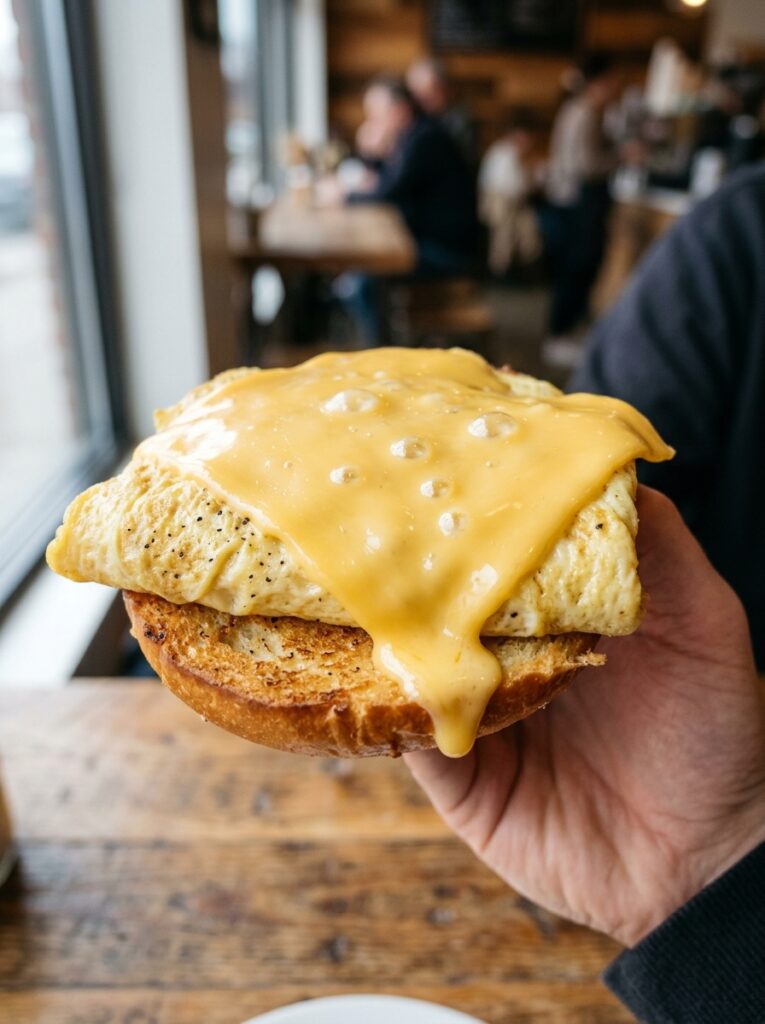
Wait — hear me out.
Cheddar is great. Truly. But it’s the obvious answer, and sometimes the obvious answer isn’t the right one. Mature cheddar gets a little oily when it melts, which is fine but not magic. American cheese — and yes I’m including this — melts into something almost creamy and completely coats the egg, which is actually the goal. It’s not fancy. It’s functional and it’s PERFECT.
For UK readers: a thin slice of Red Leicester does something similar and arguably looks better, with that orange glow against yellow egg. Gruyère is for when you want the sandwich to feel like a Sunday treat. Smoked cheese adds depth without adding anything complicated.
The method matters too. Put the cheese on the egg while it’s still in the pan. Let the residual heat do the work. Don’t skip this. A cheese slice that goes on cold bread, on top of a hot egg, doesn’t fully melt and it slides around and you deserve better than that.
—
5. Bacon, Sausage, or Something Else Entirely — Settling This Once and For All
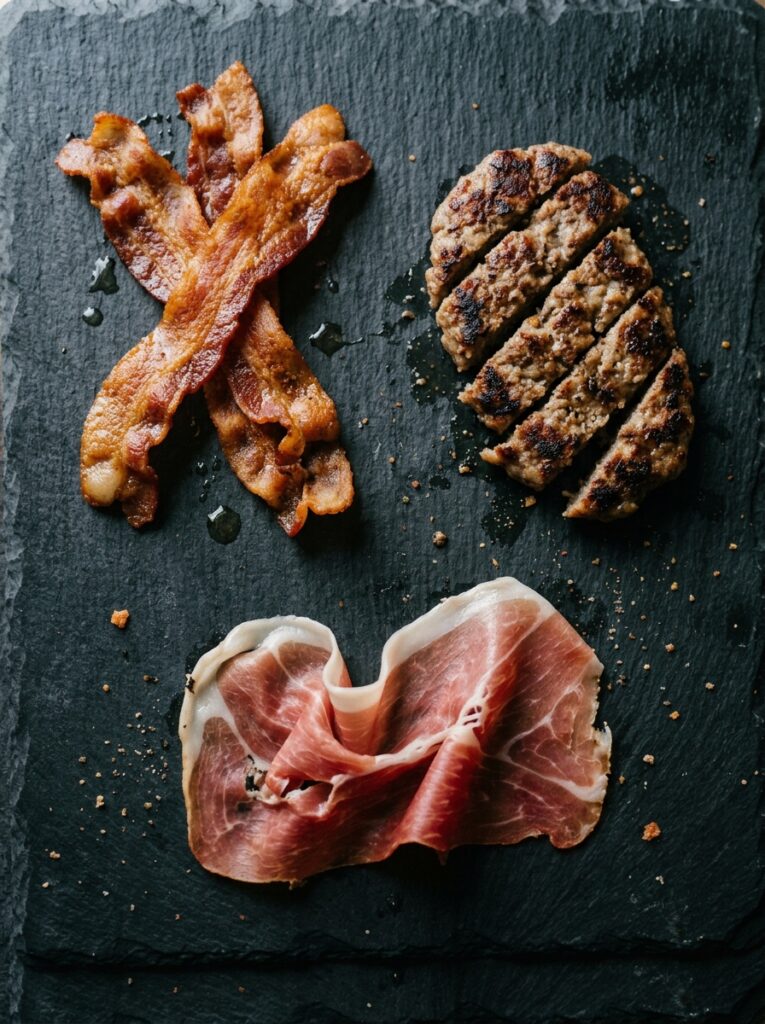
I’m not going to pretend I’m neutral here. I have opinions.
British back bacon is unmatched for a proper morning sandwich. The combination of the lean eye and the fatty streaky bit means you get different textures in one slice, plus it fits the bread better than American-style streaky on its own. That said — thick-cut streaky bacon, cooked until just barely past floppy, is the move for an American diner-style version. Both are correct. They’re just different.
“A breakfast sausage patty, made at home, costs almost nothing and tastes wildly better than anything pre-made.”
Sausage patties at home are underused. Take any good pork sausagemeat or squeeze it from the casings, press flat, season with a little fennel or sage, and cook until deeply golden. The crust on a homemade patty — that’s the thing you can’t buy. Pre-made patties are fine, but once you’ve done it yourself you sort of can’t go back.
The non-meat option: a thick slice of halloumi, fried until golden on both sides, honestly competes. It’s salty, it’s chewy in the right way, and it doesn’t try to pretend to be something it isn’t.
—
6. The Sauce Layer People Are Still Getting Wrong in 2025
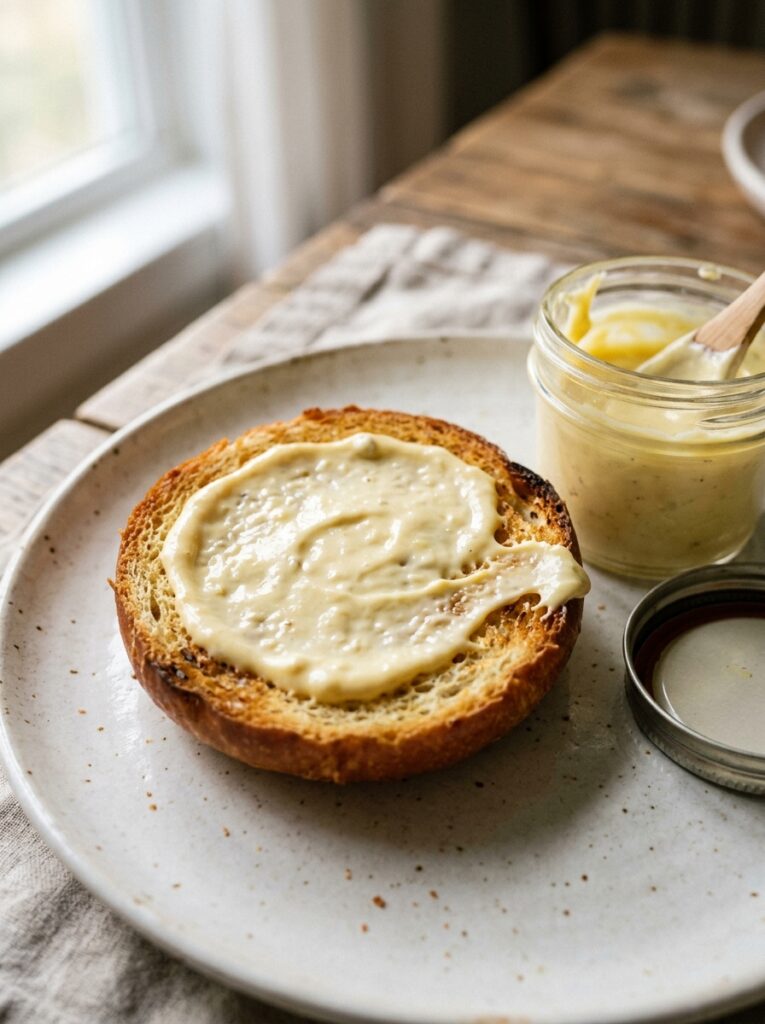
Butter. First. On the bread. Even if you’re adding another sauce. This is non-negotiable, and I say that with complete seriousness.
Beyond that — hot sauce is the obvious answer for heat, and it works, but it’s worth thinking about what the sauce is actually doing. Is it adding heat? Fat? Acid? Freshness? A great breakfast sandwich sauce should do at least two of those things.
A smear of Dijon mustard on the top half of the bread adds sharpness and a tiny bit of heat without screaming “mustard.” Mayonnaise mixed with a little sriracha is the lazy version of a remoulade and it’s genuinely good. For a British angle: brown sauce is a legitimate and underrated choice that pairs brilliantly with back bacon and does NOT deserve the side-eye it sometimes gets.
Avocado works as a sauce replacement — smashed, not sliced, with salt and lemon — but only if the rest of the sandwich is bold enough to stand up to it. Don’t put avocado in a mild sandwich and expect it to carry the whole thing.
—
7. How to Stack It So It Doesn’t Fall Apart the Second You Pick It Up
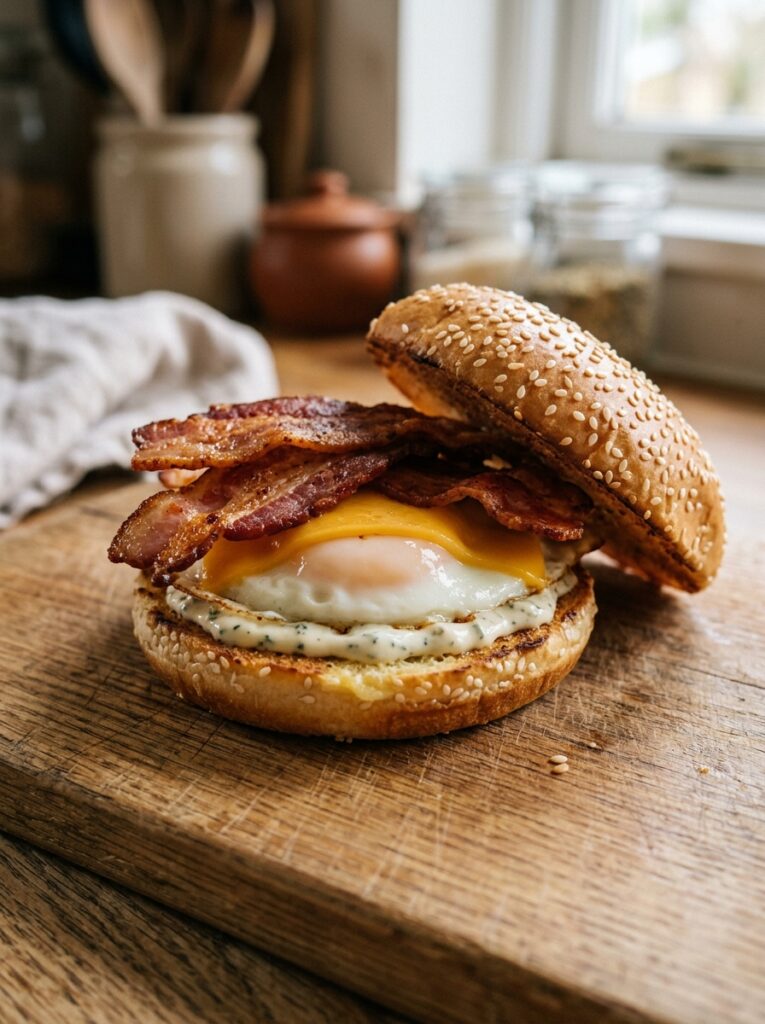
This sounds like a small thing. It isn’t.
Order matters. This is actually physics, not food snobbery.
Bottom bread, butter side up, then your heaviest, sturdiest item first (sausage or bacon). Then the egg and cheese directly on top of that — the cheese acts as a mild adhesive. Then anything sauced or slippery goes on the top bread, sauce side facing down toward the fillings. Close it. Press VERY gently. Pick it up.
The problem with most homemade breakfast sandwiches is that everything slides toward the person eating it. It’s because the wet, slippery elements (egg, sauce, avocado) are sitting on top of dry, flat elements and have nowhere to go but out the back.
Tuck. Everything. In. If something hangs over the edge, either fold it or cut it.
Also — let the sandwich sit for 30 seconds before you bite it. Just 30 seconds. Everything settles slightly and the whole thing becomes more cohesive. I know it’s hard. Do it anyway.
—
8. The Make-Ahead Version That Actually Still Tastes Good
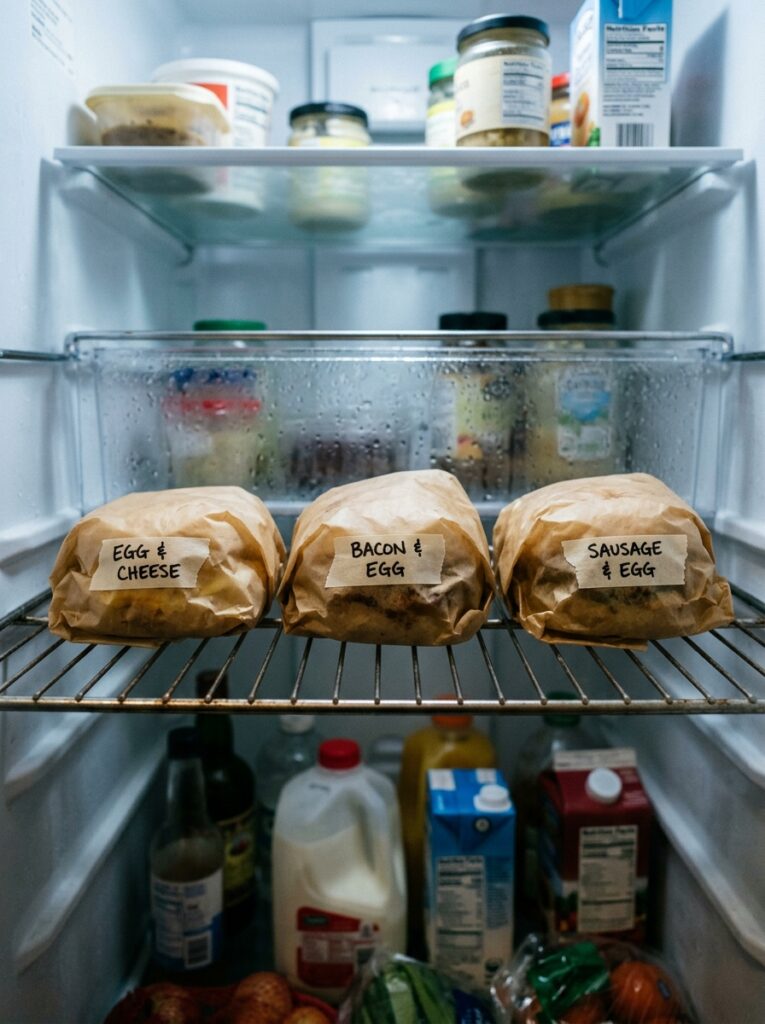
Meal prepping breakfast sandwiches has a reputation for producing sad, rubbery, reheated things that taste vaguely of the freezer. That reputation is deserved — if you do it wrong.
Wrap each sandwich in foil — not clingfilm, not a bag — and refrigerate for up to four days or freeze for up to a month. When you reheat from the fridge: into the oven at 350°F for about 12 minutes still wrapped. From frozen: 375°F for 20-25 minutes. The foil keeps steam inside and stops the bread from drying out.
The trick for freezer batches is to slightly undercook the egg — it’ll finish cooking on reheat and land at exactly the right texture instead of turning grey and bouncy.
Don’t put fresh tomato or avocado in the batch-prep version. Add those fresh when you eat it, takes 10 seconds, and the difference in quality is enormous.
—
9. The British-Style Bacon Butty and Why It Deserves Its Own Section
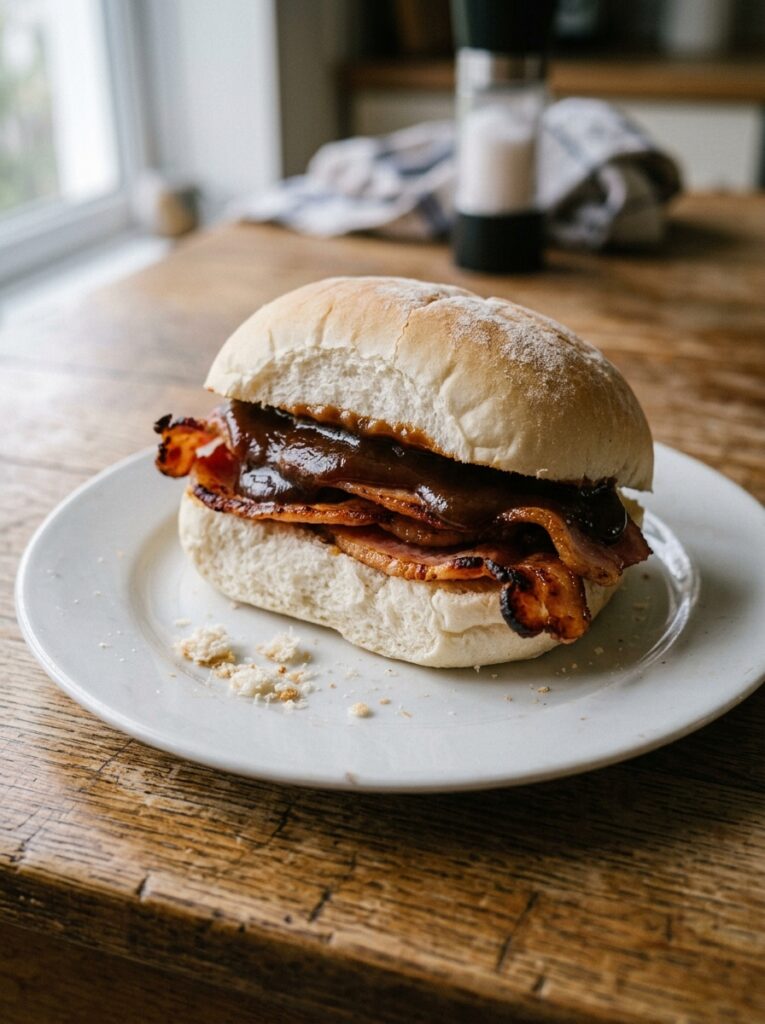
I couldn’t write an entire article about breakfast sandwiches and not stop here.
The bacon butty is not trying to be complicated. Soft white bread, a thin spread of butter, multiple rashers of back bacon cooked to your preference (crispy or soft — this is a very personal and occasionally heated decision), and either ketchup or brown sauce. Full stop.
It doesn’t need eggs. It doesn’t need cheese. It doesn’t need anything else, and adding things to it misses the point entirely.
“There’s something almost meditative about a bacon butty. It asks nothing of you.”
The bread should be proper British sandwich bread — soft, a little squishy, the kind that compresses slightly when you squeeze it. That compression is actually part of the eating experience. The bread melds into the bacon a little, the butter goes slightly translucent from the heat, and if your bacon is good quality, the whole thing is genuinely perfect.
Side note — the debate over ketchup vs. brown sauce is one I have zero interest in resolving because I think both camps are correct for different reasons and I’m not getting in the middle of that.
—
10. Vegetables in a Breakfast Sandwich: Yes, But Only These
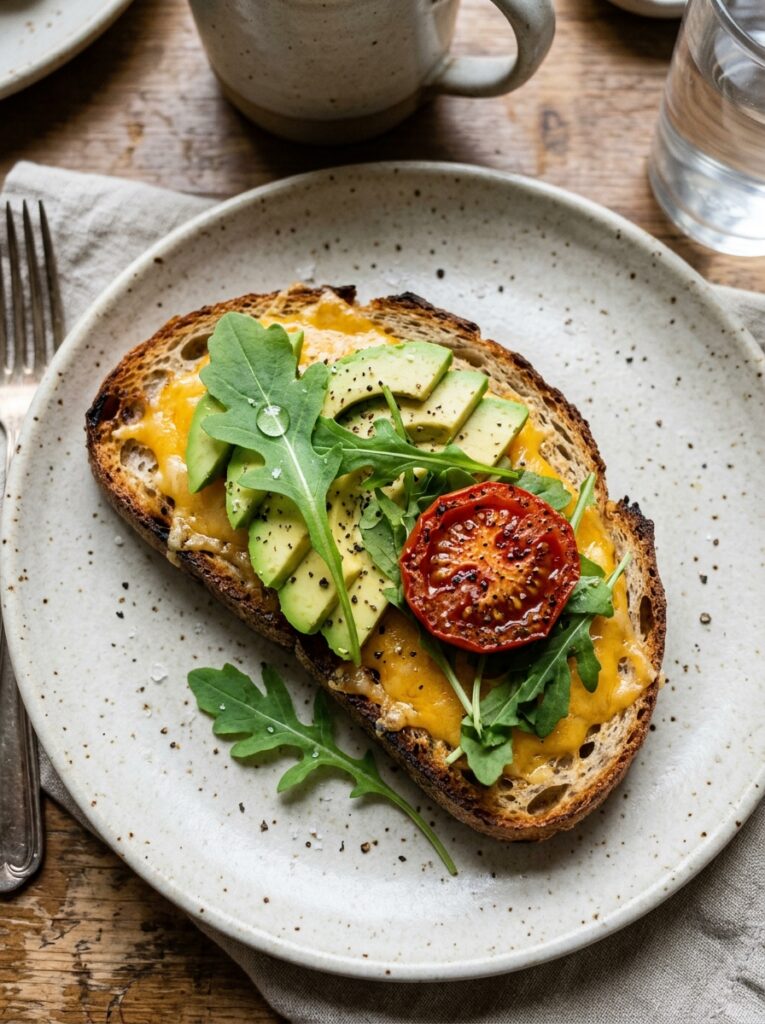
I know. Hear me out.
Most vegetables don’t belong in a breakfast sandwich. Not because vegetables are bad, but because a morning sandwich moves fast and most veg needs too much time or changes the texture in ways that don’t work.
The exceptions: roasted red peppers (jar-style, patted dry), baby spinach wilted directly in the pan after the bacon comes out, thinly sliced raw red onion which sounds chaotic but actually cuts through richness brilliantly. A slice of ripe tomato in summer — only summer, because off-season tomatoes are doing nothing for anyone.
Caramelised onions are a weekend-only addition because they take 30 minutes and you’re not doing that on a Tuesday. But when you do them, on a weekend, on a brioche bun with gruyère and sausage… yeah. It’s worth it. It’s absolutely worth it.
—
11. The Small Details That Separate a Good Sandwich From a Great One
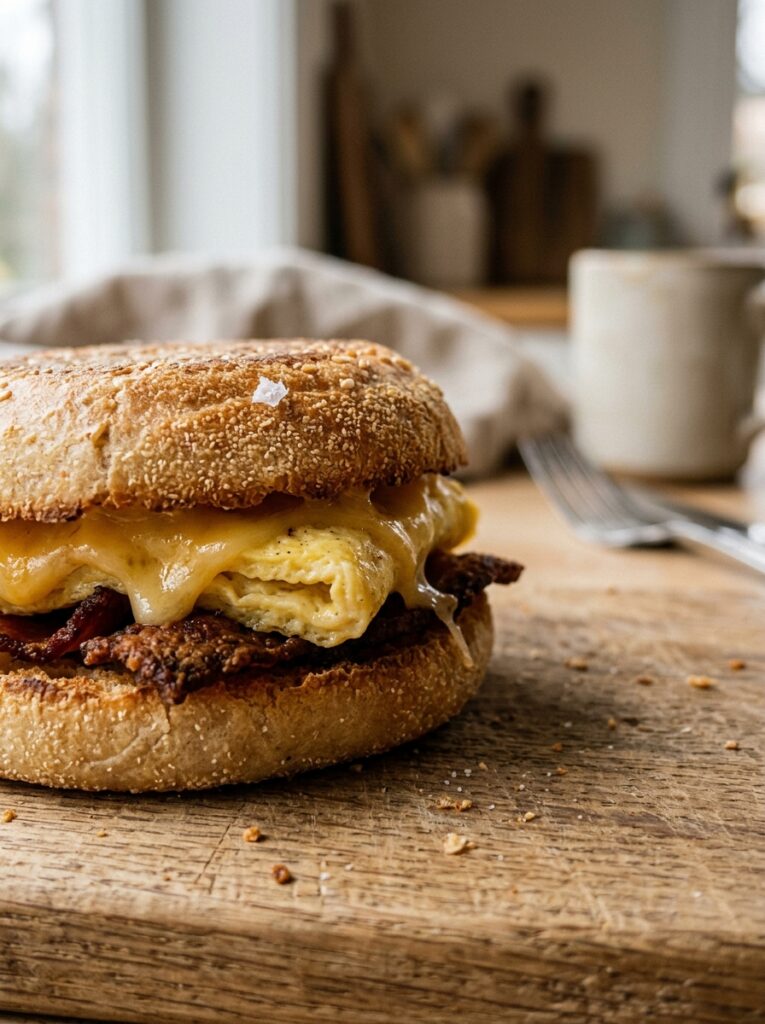
Season your egg before it hits the bread. Tiny thing, massive difference. A little flaky salt on top of the whole finished sandwich — that last-second crunch is something you didn’t know you needed until you have it and then you can’t stop.
Warm your bread. Not just toast it — warm it. If you can’t toast it, 20 seconds face-down in a dry pan gets you somewhere similar.
If your bacon or sausage is greasy, let it rest on a folded piece of kitchen paper for literally 10 seconds. That’s all. You’re not removing flavour, you’re removing the bit that makes the bread go soggy in your hand.
Also — and I say this with warmth — don’t overcrowd the sandwich. Three to four things. That’s the ceiling. More than that and nothing stands out and it becomes structurally unsound and you eat it hunched over the sink which is no way to start a day.
—
12. The Version Worth Making This Weekend, Start to Finish
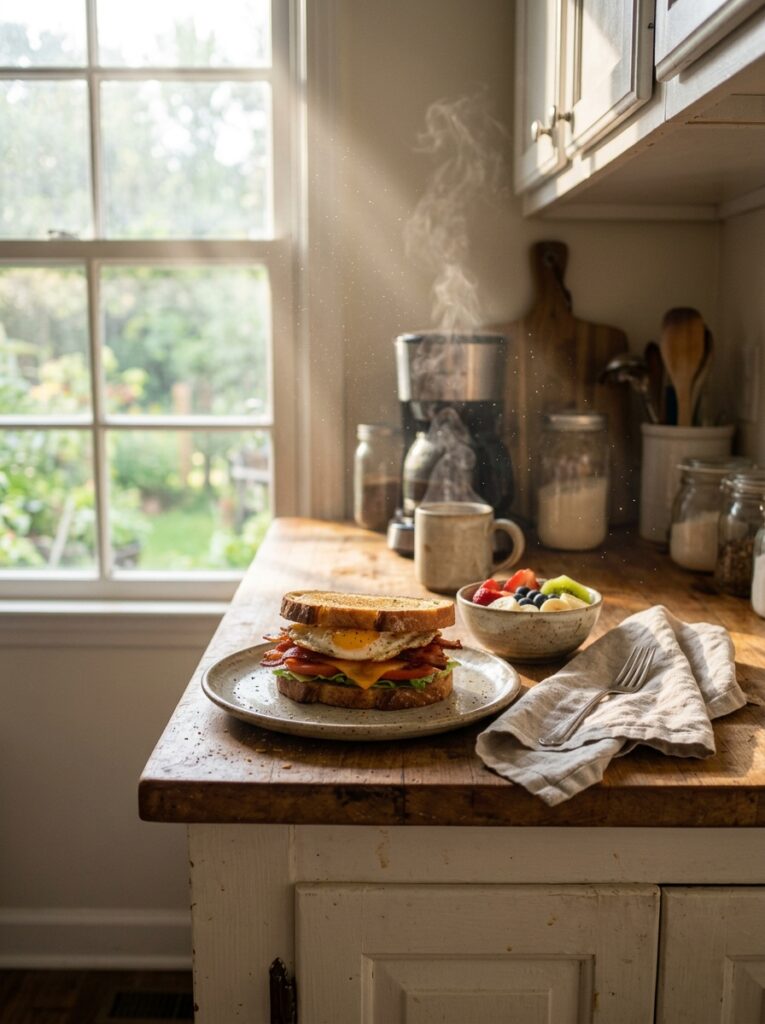
Here’s a full sandwich worth your time. Not a recipe — more of a sequence.
Toast a brioche bun split-side down in a pan with butter until golden. While it toasts, fry two rashers of back bacon in the same pan on medium heat. Remove the bacon, turn the heat to medium-low, add a little more butter, and crack in one egg. Let it cook low and slow, season it, lay a slice of cheese over the top for the last minute of cooking. While that’s happening, mix a small spoon of mayo with a few drops of hot sauce and smear it on the top half of the bun. Bacon goes on the bottom half, egg and melted cheese goes on top of the bacon. Close it, press gently, wait 30 seconds.
That’s a genuinely great breakfast sandwich. Made in under 10 minutes. Costs almost nothing. And it will absolutely not taste like something you just threw together.
—
❓ FAQ
Q: Can I make breakfast sandwiches the night before and eat them in the morning? A: Yes, and it works better than most people expect. Assemble fully, wrap tightly in foil, and refrigerate overnight. Reheat in the oven at 350°F for 10-12 minutes still wrapped. The foil steams the bread gently rather than drying it out, and the whole thing tastes remarkably close to fresh.
Q: What’s the best bread for a breakfast sandwich that won’t go soggy? A: English muffins and brioche buns hold up best because they’re sturdier and toasted. Avoid standard sandwich bread — it goes soft within minutes of contact with egg or sauce. If you only have regular bread, double-toast it and use it immediately.
Q: How do I keep the egg from sliding out every time I take a bite? A: Folded eggs (rather than fried) hold their shape better and fit the bread more evenly. Also, let the sandwich sit for 30 seconds before eating — everything compresses slightly and becomes more cohesive. And don’t overfill. Seriously, the egg slides because it has no room.
—
💭 Final Thoughts
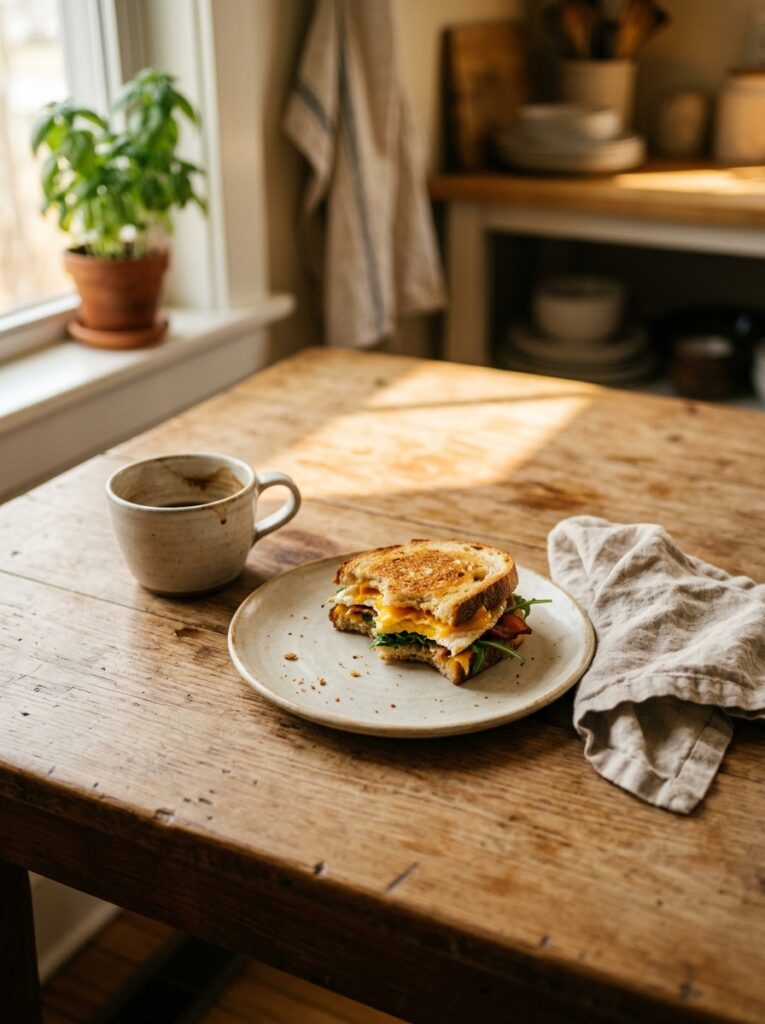
A breakfast sandwich is such a small thing, and somehow it’s also not small at all. It’s five minutes of effort that can genuinely set a different tone for a whole morning — the difference between grabbing whatever’s in the cupboard and actually sitting down with something that took care.
You don’t need much. Good bread, one decent egg, something salty, something fatty, 30 seconds of patience before you eat it.
But here’s what I keep thinking about: how many mornings have you rushed past something that could have been actually good?
