My friend texted me last year saying she’d given up on smoothies. “They’re just expensive juice,” she said. And honestly? She wasn’t wrong about the ones she’d been making.
Here’s the thing nobody tells you up front: most smoothie recipes floating around Pinterest are basically dessert in a cup. Banana, some frozen mango, a splash of juice — gone in four sips, and you’re raiding the biscuit tin by 10am. The good ones, the ones that actually do something, are built completely differently. And once you understand why, you can’t unknow it.
—
1. Why Your Last Smoothie Left You Hungry an Hour Later
It probably had too much fruit and not enough of anything else. That’s it. That’s the whole reason.
Fruit is wonderful — don’t get me wrong — but fructose digests fast, and without protein or fat to slow things down, your blood sugar spikes and then drops, and suddenly you’re staring into the fridge wondering where your willpower went. The fix isn’t complicated, but it does require thinking about your smoothie less like a drink and more like an actual meal you happen to eat through a straw.
Fat slows digestion. Protein keeps you satiated. Fiber adds bulk. You want at least two of these three in every smoothie you make. Ideally all three. And once you start building them that way, the whole experience changes — the texture gets thicker and more satisfying, the flavor gets more complex, and you actually feel like you’ve eaten something.
“A smoothie built like a meal tastes like a meal. Most people never make that shift.”
—
2. The Frozen Banana Trick That Changes Everything
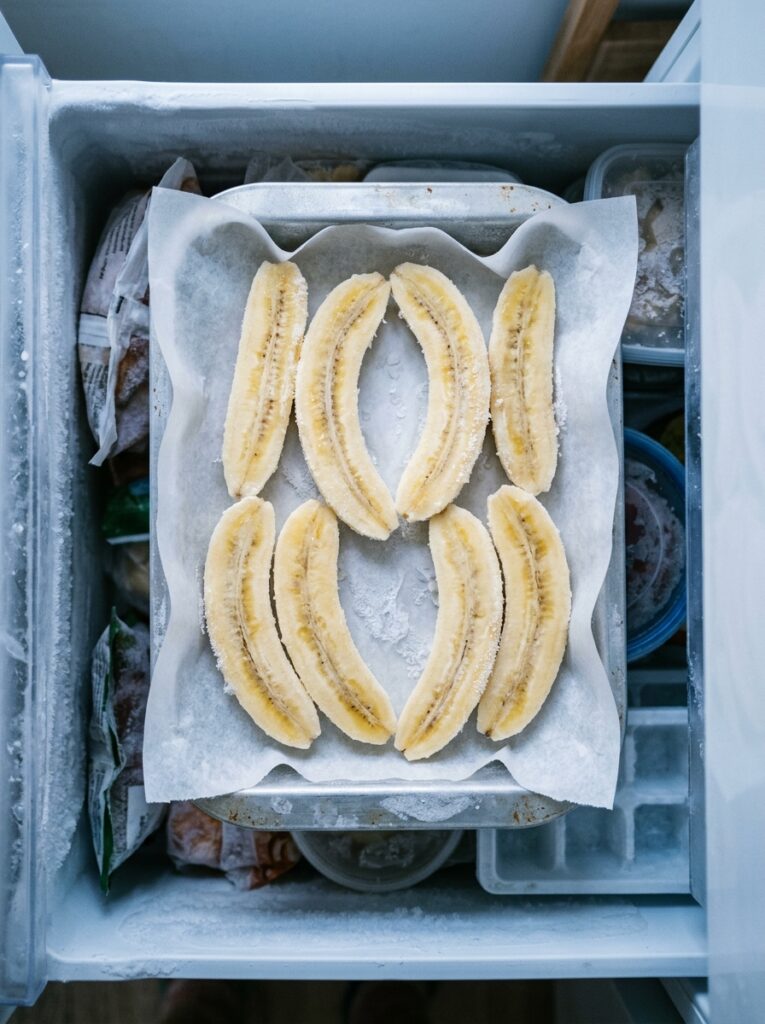
Okay, I know. Everyone says frozen banana. But I mean specifically RIPE, brown-spotted, frozen banana — and there’s a real difference.
A barely-yellow banana blended from frozen tastes kind of grassy and a little bitter. A properly ripe one — the kind that’s almost too soft to eat straight — turns into pure caramel when frozen. It also does this thing where it creates this unbelievably creamy base that makes cheap blenders look like they’re working harder than they are.
Peel them before freezing. Slice them into coins, lay them flat on a baking sheet for an hour, then bag them up. Yes, the extra step is annoying. Do it anyway. The difference is immediately obvious the first time you try it, and from then on you’ll never freeze whole bananas again because honestly what were we all thinking.
—
3. The Green Smoothie Formula That Doesn’t Taste Like a Lawn
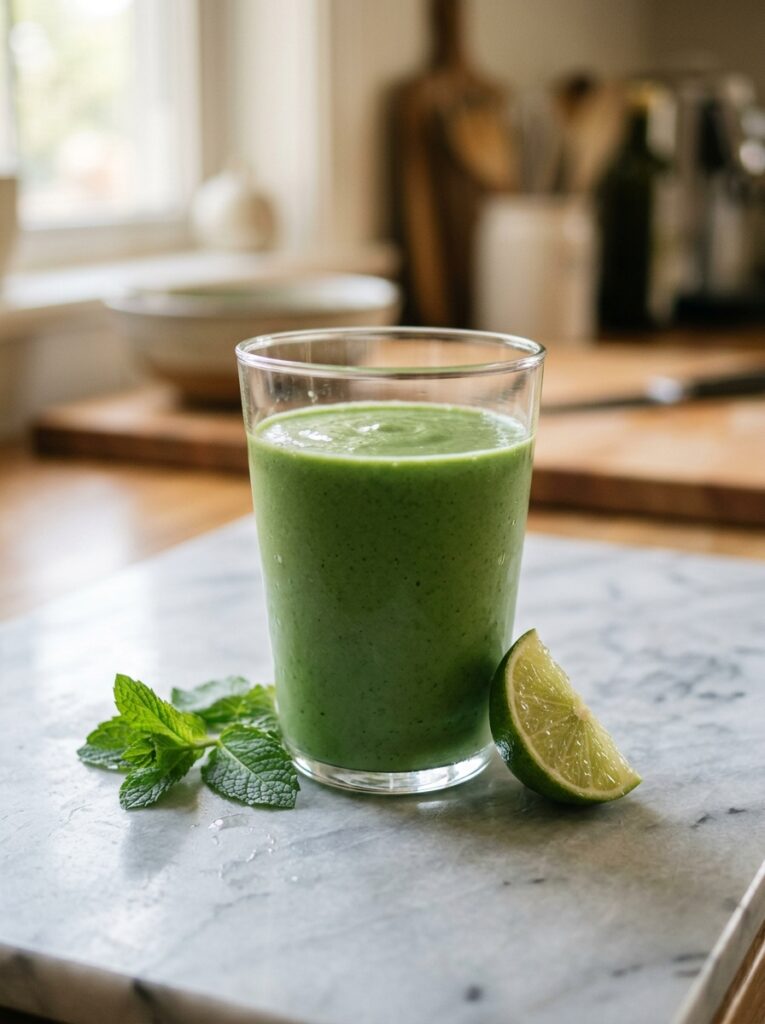
Most people hate green smoothies because they made one wrong and never recovered. Understandable.
The ratio matters more than the ingredients. If you go heavier on the greens than the fruit, especially before you’re used to it, you’ll taste every single leaf. The formula that actually works: start at roughly 60% fruit to 40% greens, and add a squeeze of lemon or lime. The citrus doesn’t just add flavor — it cuts the bitter edge that raw spinach and kale both carry.
Spinach is the gentlest green to start with. You can throw two big handfuls into a mango smoothie and genuinely not taste it, which sounds like a lie but is just true. Baby kale is next. Mature kale is kind of intense and needs more sweetness to balance it. Cucumber is technically a vegetable but works brilliantly as a base — it adds volume and freshness without much flavor at all, which means you can be more generous with stronger greens alongside it.
A small knob of fresh ginger helps too. Not for any particular wellness reason, just because it brightens everything up and makes it taste intentional rather than like you panicked and threw vegetables into your blender.
—
4. The Color That Keeps Showing Up in Every Beautiful Smoothie Bowl Right Now
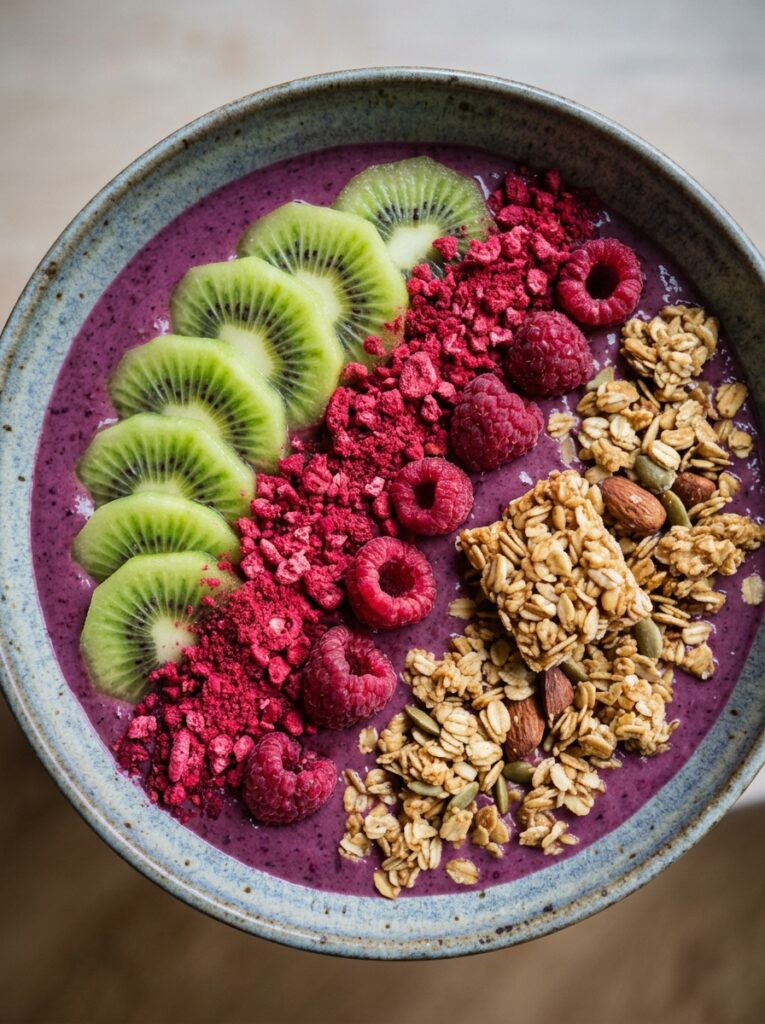
That deep purple. Almost burgundy, sometimes verging on maroon.
It’s coming from a combination of frozen wild blueberries, a spoonful of açaí paste, and sometimes a bit of frozen blackcurrant or blackberry depending on what’s available. The color is genuinely stunning — the kind of thing that photographs brilliantly without any effort — but more importantly, frozen wild blueberries taste COMPLETELY different from the fresh, large ones. Smaller, more intensely flavored, and they turn whatever you’re making a color that looks almost unreal.
“Wild blueberries are doing more work in a blender than almost any other ingredient. The flavor, the color, the antioxidants — they’re just superior.”
For smoothie bowls specifically, this blend works: one cup frozen wild blueberries, half an avocado (I know, stay with me), one tablespoon of almond butter, a splash of unsweetened oat milk, and just enough frozen banana to make it sweet without tasting like banana. Blend it thick — so thick your blender almost struggles. Pour it into a cold bowl and top it with whatever you like. Granola, coconut flakes, a few fresh blueberries, a drizzle of honey if you want it. The avocado makes it unbelievably creamy and the color stays that deep jewel purple all the way through.
—
5. Adding Protein Without Buying a £40 Tub of Something You’ll Regret
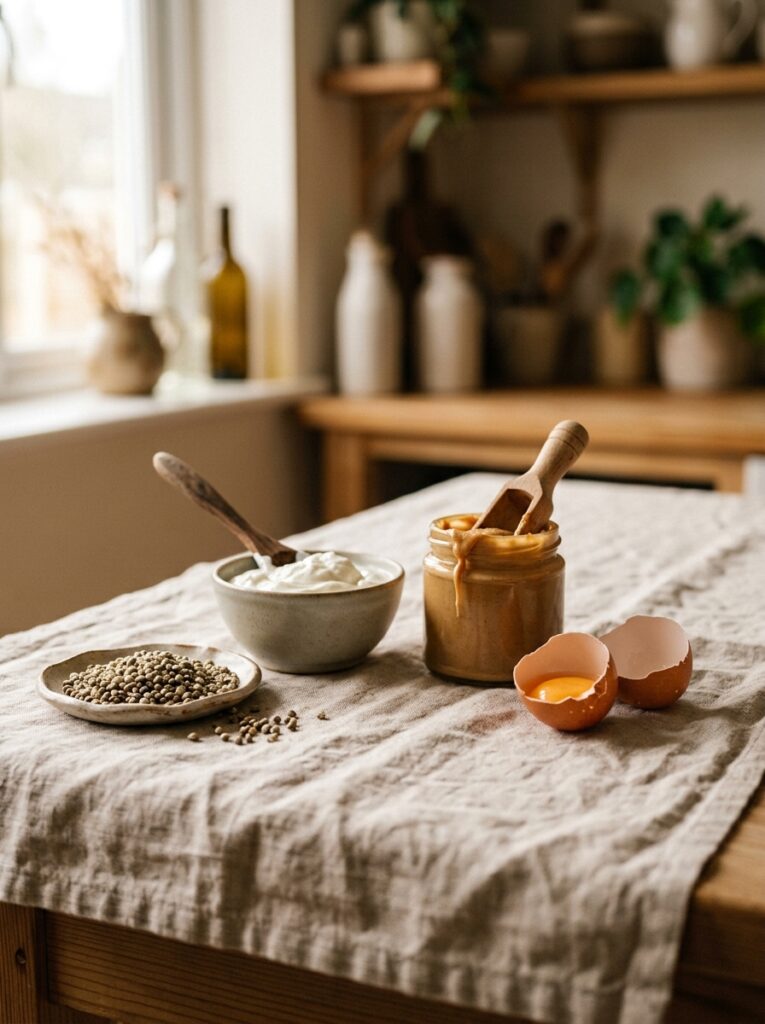
Protein powder is fine, but it’s not the only option and honestly it’s not always the best one.
Greek yogurt adds real protein — full-fat Greek yogurt especially, because the fat helps with satiety in a way low-fat versions kind of don’t. Two big spoonfuls in most smoothies is enough. Silken tofu is another one that sounds alarming but genuinely blends into nothing — you can’t taste it, it just makes the texture incredibly smooth and adds a decent protein hit. Hemp seeds are quieter about their nutritional value but reliably good; two tablespoons and you’ll barely know they’re there.
For a quick high-protein post-workout smoothie that actually tastes good: frozen banana, Greek yogurt, a tablespoon of peanut butter, a splash of oat milk or regular milk, a small drizzle of honey, and a pinch of cinnamon. Blend hard. It tastes like a peanut butter milkshake. You’ll feel slightly smug drinking it knowing what’s in it.
—
6. The Tropical Smoothie That Tastes Like It Cost £8 at That Place Near the Beach
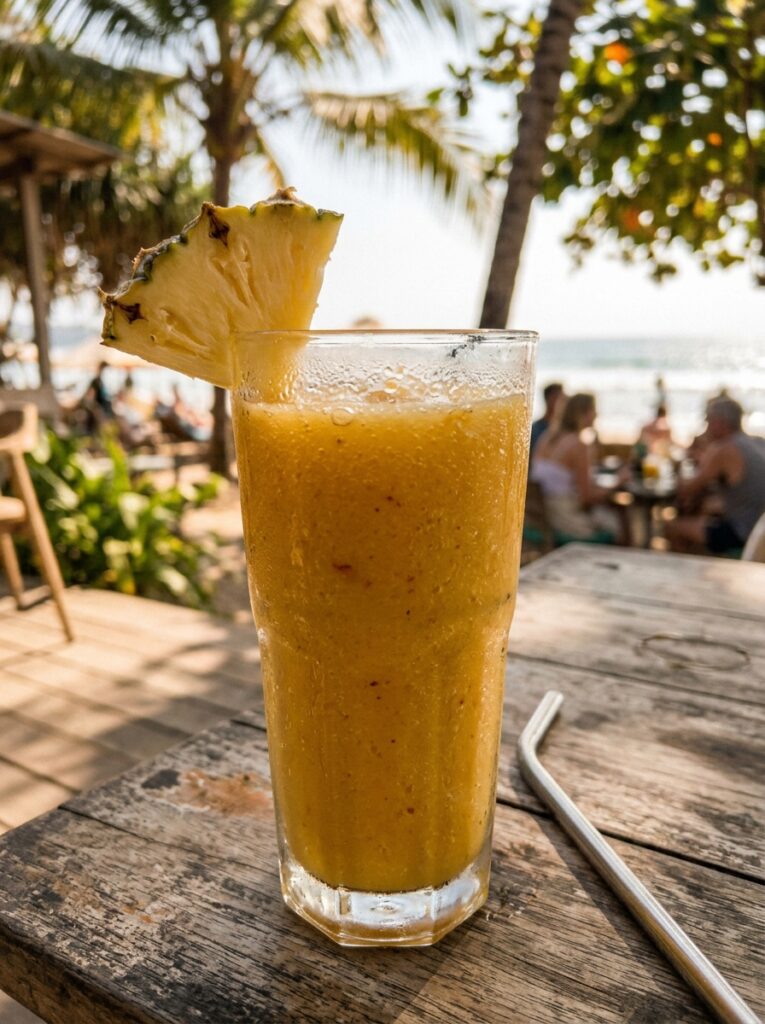
You know the one. Every coastal town has that little café with the handwritten board and the smoothies that somehow taste better than any you’ve made at home.
The secret is usually passion fruit. A lot of recipes skip it because fresh passion fruit can be hard to find, but frozen passion fruit pulp works just as well and is increasingly stocked in the freezer section at larger supermarkets. It has this sharp, perfumed quality that cuts through the sweetness of mango and pineapple and makes the whole thing feel like it has more layers.
The recipe: one cup frozen mango, half a cup frozen pineapple, two tablespoons frozen passion fruit pulp, a small frozen banana, and about half a cup of coconut water. Blend it smooth. If you want it thicker, reduce the coconut water. If you want it pourable, add a bit more. Serve over ice in a tall glass. The color is the most beautiful sunset orange you’ve ever seen, and it tastes genuinely tropical in a way that doesn’t feel fake or syrupy.
This is the one I make when it’s grey and raining outside and I need to be emotionally transported somewhere warmer. Which, in the UK at least, is approximately October through April.
—
7. The One Thing Every Good Smoothie Recipe Has That Bad Ones Don’t
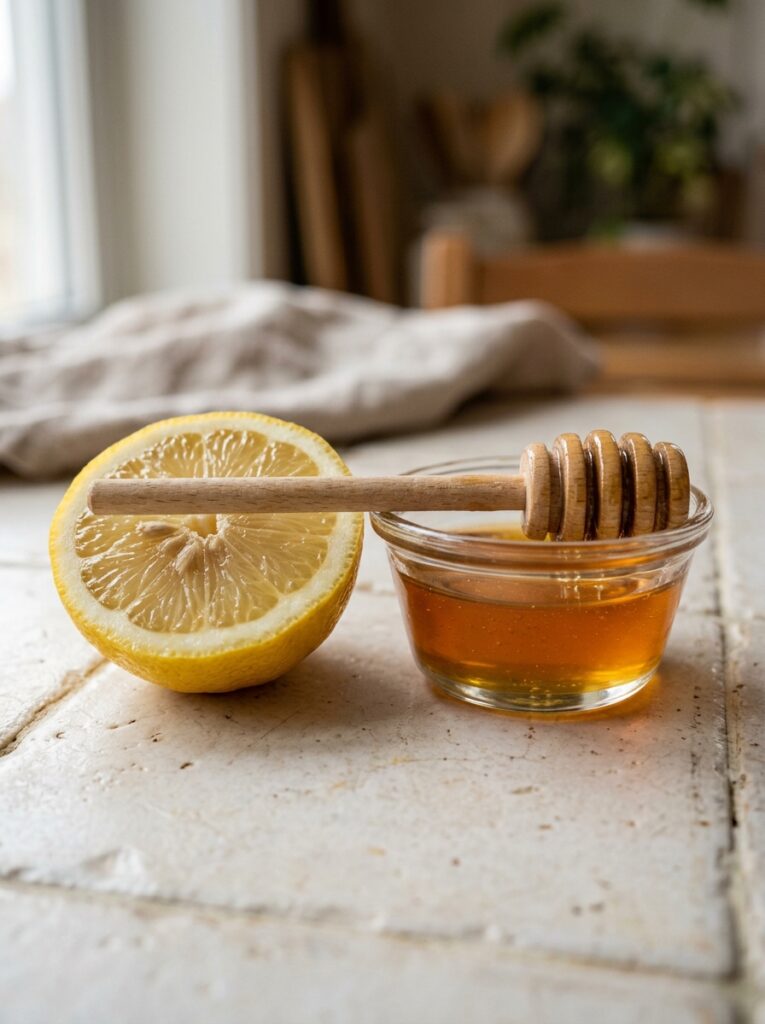
A pinch of salt.
Seriously. Just a tiny pinch. It sounds wrong and it is not wrong. Salt doesn’t make it taste salty — it makes every other flavor taste more like itself. The sweetness of the fruit opens up, the creaminess deepens, the whole thing tastes more finished. Try it once on a smoothie you’ve made before and you’ll notice the difference immediately.
This is a baking principle applied to drinks, and it works the same way. Unsalted smoothies taste a little flat in comparison, like they’re almost there but not quite. Salted ones taste complete.
—
8. The Smoothie That Genuinely Helps on a Slow, Hard Morning
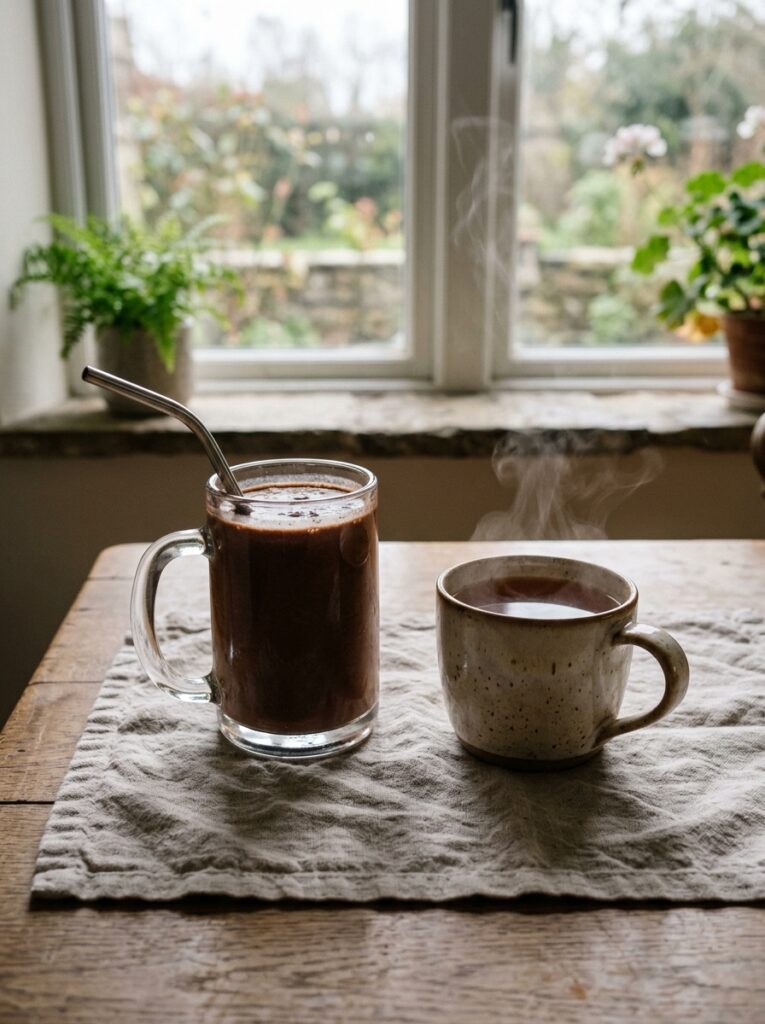
Not a miracle. Just something warm-adjacent, a bit grounding, with flavors that don’t demand too much of you before 8am.
Oat-based smoothies. Not everyone knows this is a thing, but blending rolled oats directly into a smoothie adds creaminess and fiber and gives the whole thing a texture that feels more substantial than fruit alone. Just a quarter cup of plain rolled oats — not instant, ideally — blended with a frozen banana, a big spoonful of almond butter or peanut butter, a generous pinch of cinnamon, a small splash of vanilla, and whatever milk you keep in the fridge. Oat, dairy, almond — doesn’t matter much.
“This is not a light green smoothie. This is breakfast that happens to be drinkable.”
It comes out thick and pale tan and smells exactly like cinnamon toast in the best possible way. If you’re in a hurry in the morning — which, same — this one takes about four minutes including getting the blender out and washing it after.
—
9. How to Make Smoothies Work When You’re Cooking for Two Different People
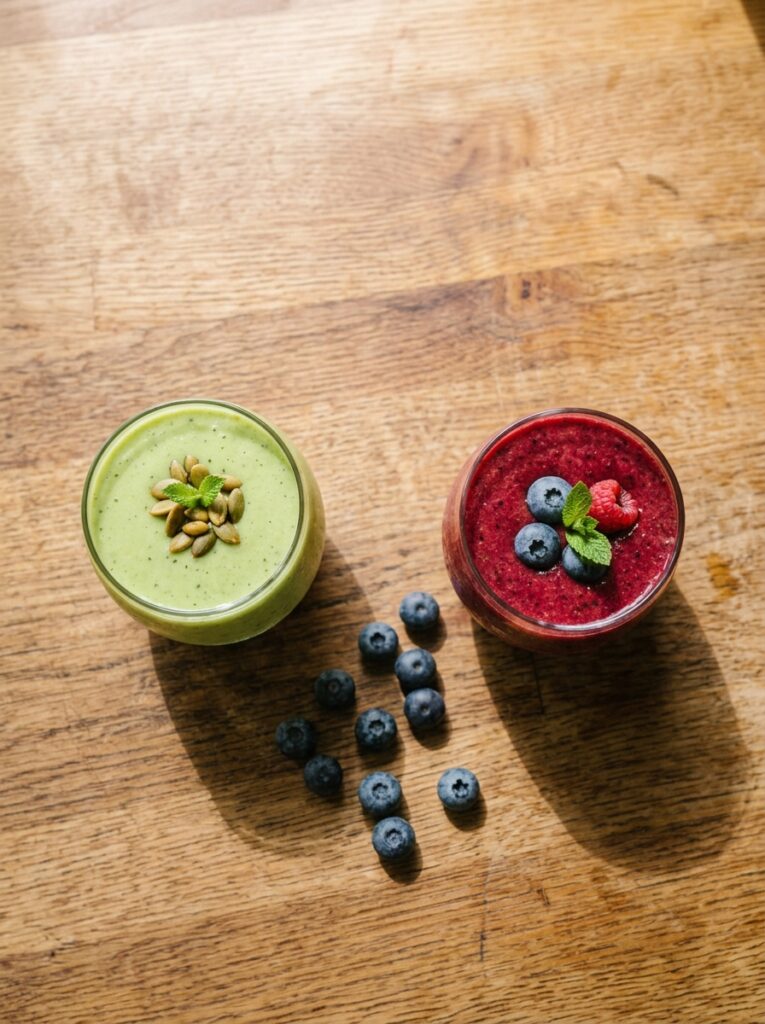
One wants it sweet, one wants it “healthy.” Classic.
The easiest trick is building a neutral base and then letting people add their own extras at the end, blended in individually. Start with something everyone can agree on — a frozen banana and mango base with coconut water, for instance — then split it. To one half add extra honey and a scoop of yogurt. To the other half add a big handful of spinach and some hemp seeds. Both people get what they want, you’ve only dirtied the blender once, and nobody has to compromise on the thing they actually wanted.
This also works brilliantly if you’ve got picky kids who’ll drink a mango smoothie but recoil at the idea of spinach. You know what you put in it. They don’t need to know what you put in it.
—
10. The Winter Smoothie Nobody Thinks to Make
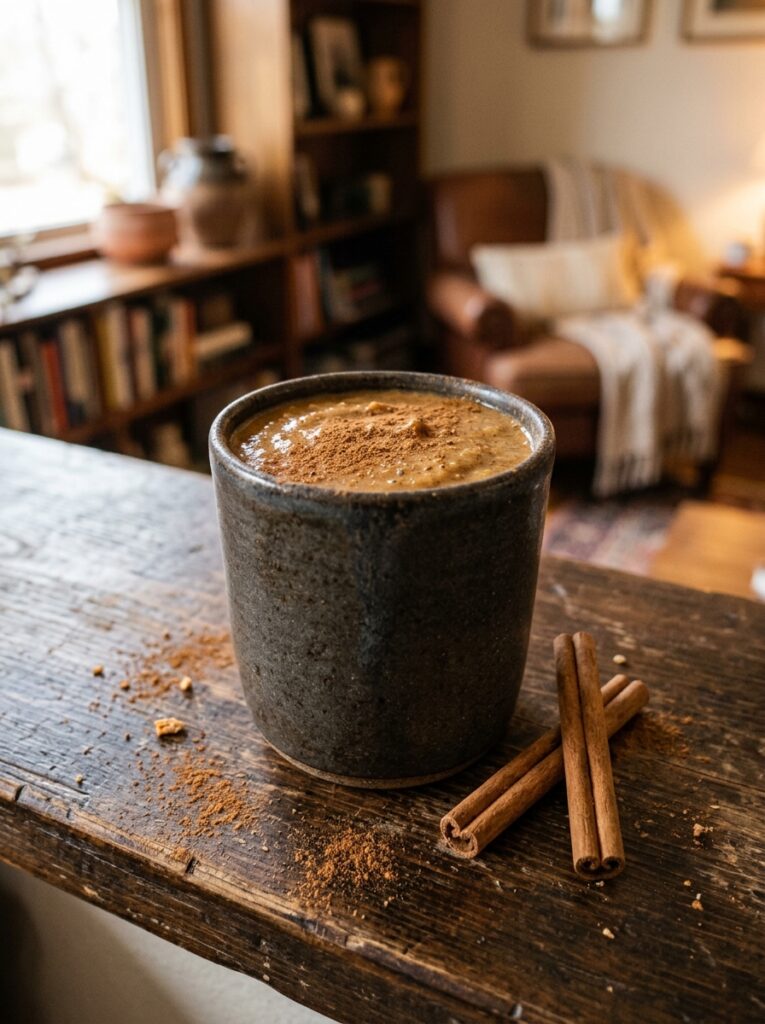
There’s this very widespread assumption that smoothies are a summer thing. And I sort of understand it — cold drinks when it’s cold outside feel counterintuitive. But here’s what nobody talks about: frozen fruit is actually AT ITS BEST during winter, because fresh options are limited and boring, and your freezer is doing all the heavy lifting of ripeness and flavor preservation that summer fruit does naturally.
A really good winter smoothie: frozen cherries (dark, not the bright red maraschino type), frozen banana, a tablespoon of cocoa powder, a spoonful of nut butter, a splash of oat milk. Blend until completely smooth. It tastes like a chocolate cherry dessert. It’s genuinely one of the best things to drink in January when everything feels grey and everyone around you is talking about “dry January” while you’re holding something that tastes like a luxurious treat and is technically just fruit.
—
11. The Blender Question (and Whether an Expensive One Is Actually Worth It)
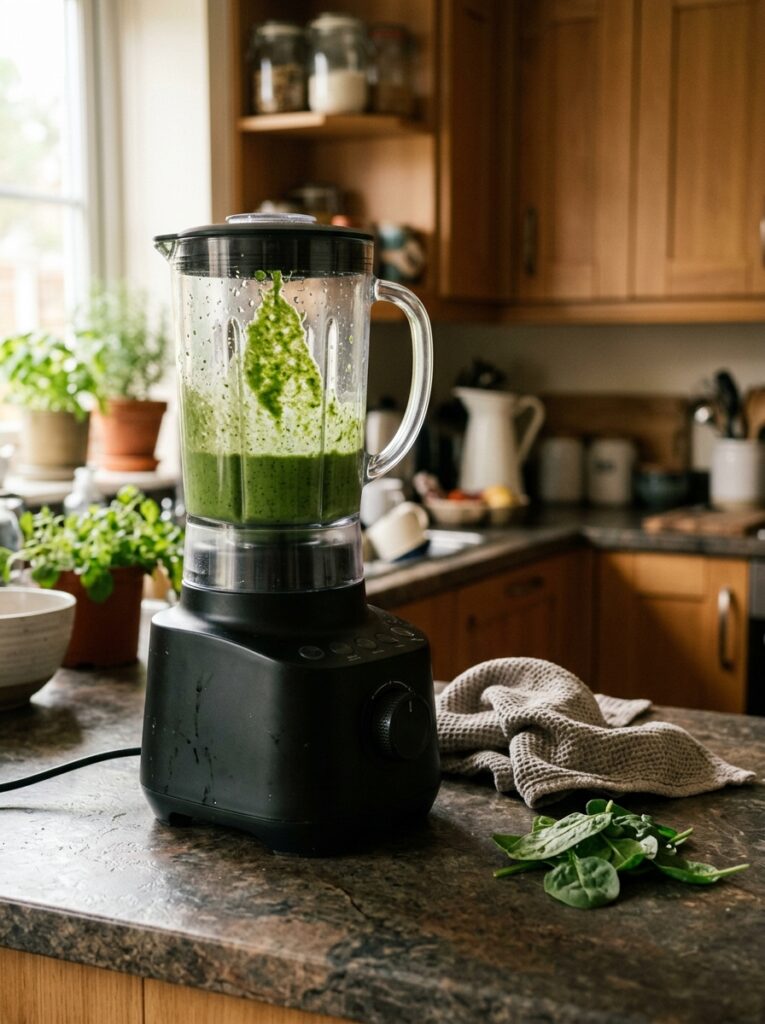
Mostly yes, unfortunately.
A high-powered blender makes a genuinely noticeable difference to texture — it breaks down frozen fruit and leafy greens to a completely smooth consistency that cheaper models struggle with, especially with anything fibrous like kale or flax seeds. If you’re making smoothies multiple times a week and texture matters to you (it should matter to you), the investment pays off.
That said. A mid-range blender with a powerful enough motor handles most smoothies absolutely fine if you’re using mainly frozen fruit, bananas, and yogurt. The things that specifically require a high-powered blender are: whole flax seeds, tough fibrous greens, nut bases from scratch, dates and dried fruits. If you’re not doing those, save your money for a while and upgrade later when it makes more sense.
Also — blend from low to high, not straight to high. It sounds obvious but a lot of people don’t do this and then wonder why the texture is uneven. Start slow, let the blades catch everything, then crank it up. The whole thing takes an extra ten seconds and the result is consistently smoother.
—
12. The “I Have Nothing in the Fridge” Smoothie That’s Always Good
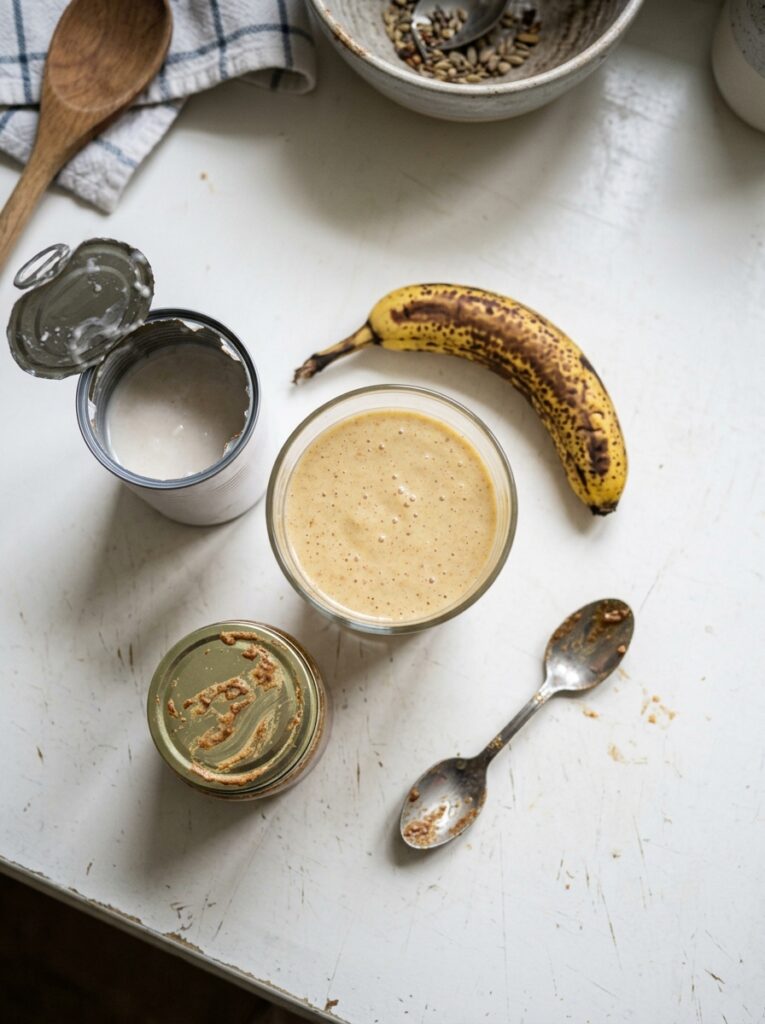
Two frozen bananas. A big spoonful of whatever nut butter you have. Milk of your choice — just enough to get it moving. A pinch of cinnamon. A pinch of salt. Blend.
That’s it. It’s almost too simple to write down, but this is the one I make when I’m tired or haven’t shopped or the fridge is looking grim. It tastes rich and filling and takes ninety seconds. If you have cocoa powder, add a teaspoon. If you have vanilla, same. But you don’t need any of it. The base version is completely satisfying on its own.
Keep two or three bananas perpetually in your freezer — just peel them when they’re ripe, bag them, freeze them — and you’ve always got the bones of a decent smoothie regardless of what else is going on.
—
❓ FAQ
Q: Can I meal prep smoothies in advance? A: Yes, but with some caveats. You can blend smoothies and refrigerate them for up to 24 hours — give them a good shake or stir before drinking because they will separate. For anything longer, blend and freeze in portions, then thaw in the fridge overnight. Green smoothies tend to discolor a bit when stored but still taste fine.
Q: What liquid is actually best for smoothies? A: Depends what you want. Coconut water adds a subtle sweetness and works brilliantly with tropical fruits. Oat milk is creamy and neutral. Regular dairy milk adds protein. Plain water works fine if you don’t want any extra flavor competing. Avoid fruit juice as your liquid base — it adds a lot of sugar without any of the fiber that whole fruit would give you.
Q: My smoothies always come out icy and watery. What am I doing wrong? A: Almost certainly too much liquid and not enough frozen fruit. Start with less liquid than you think you need — you can always add more — and use frozen fruit as your primary bulk ingredient rather than fresh. Also check that your banana is properly frozen and ripe. That one ingredient makes a bigger difference to texture than almost anything else.
—
💭 Final Thoughts
There’s something weirdly satisfying about finally cracking smoothies — like, once you understand the logic, you stop following recipes so closely and start just knowing what a smoothie needs. A bit more fat here, a pinch of salt there, an extra handful of frozen fruit when it feels thin. It becomes intuitive fast.
The best smoothies I’ve ever made were the ones I threw together at 7am without thinking too hard, built on a foundation of what I actually understand about flavor and texture now. Which is, I suppose, the whole point.
What’s the one smoothie ingredient you keep coming back to no matter what else changes?