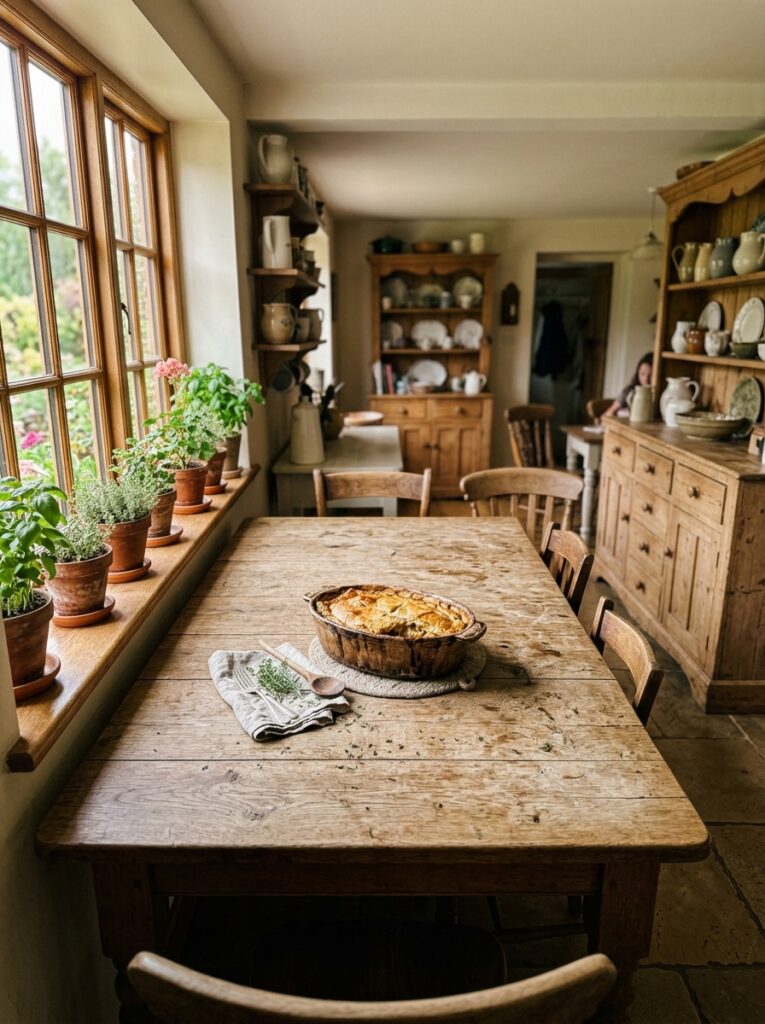
My mum used to say the best dinners are the ones that don’t need explaining. You put them on the table, people sit down, and the conversation just… happens. Chicken and rice casserole is that dinner. I don’t know when I became someone who makes it on repeat, but here we are, and I’m not sorry.
—
1. Why This Combo Hits Different Every Single Time
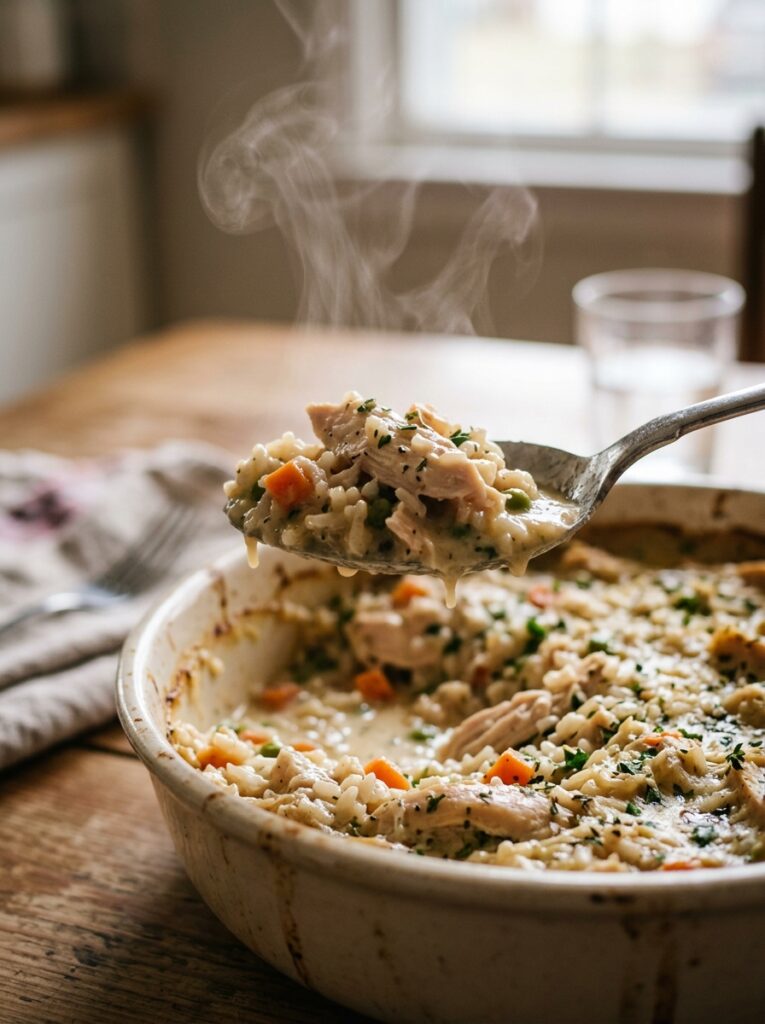
There’s something almost unfair about how well chicken and rice work together in a baking dish. The rice absorbs everything — the broth, the fat from the chicken, whatever herbs you’ve thrown in — and it turns into something that’s not quite rice anymore. It’s richer. Softer. More like a savory pillow than a side dish.
And the chicken, slow-roasted under a lid, gets that falling-apart tenderness you can’t fake. You don’t need a slow cooker. You don’t need hours of babysitting. Just an oven, one dish, and patience while it smells incredible.
The thing people forget is that casseroles reward imperfection. You forgot to add the garlic at the start? Toss it in halfway. The chicken thighs were frozen this morning and only barely thawed? Still fine. That low, forgiving heat does the heavy lifting.
Not gonna lie — that’s a big part of why I make it so often.
“The rice absorbs everything — the broth, the fat, the herbs — and turns into something richer than itself. That’s the whole magic of it.”
—
2. The Chicken Cut That Actually Changes Everything
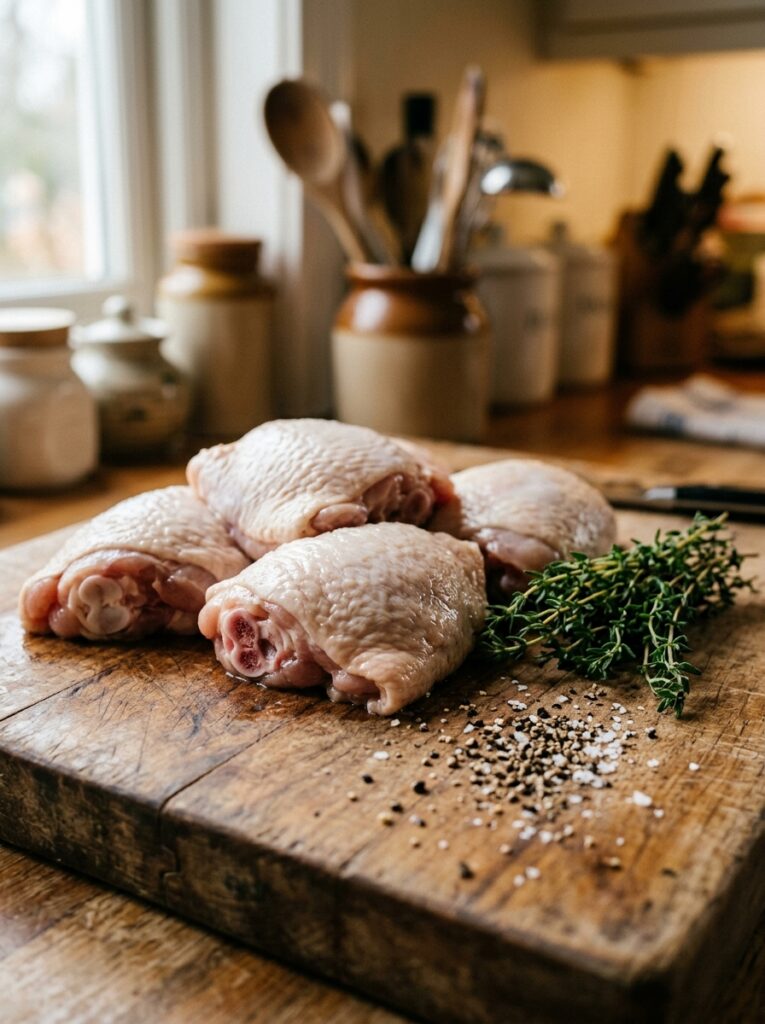
Thighs. Bone-in, skin-on thighs. Don’t let anyone talk you into breasts for this.
Okay, I know that’s a strong take, and yes, chicken breasts will technically work. But they dry out faster than you’d think, and in a long, covered bake, dry chicken is a tragedy that no amount of extra broth can fix. Thighs have enough fat running through them that even if you slightly overbake, they’re still juicy and pull-apart tender.
Drumsticks are actually a brilliant budget option here too, especially if you’re cooking for kids or stretching the dish across two nights. They braise beautifully and the bones add flavor to the rice in a way boneless cuts just don’t.
If you genuinely need to use breasts — maybe that’s what’s in the fridge, I get it — cut them thick, don’t go past 375°F (190°C), and pull the dish at 45 minutes rather than an hour. You can save it. But thighs are the move.
—
3. The Ratio Nobody Talks About (But Should)
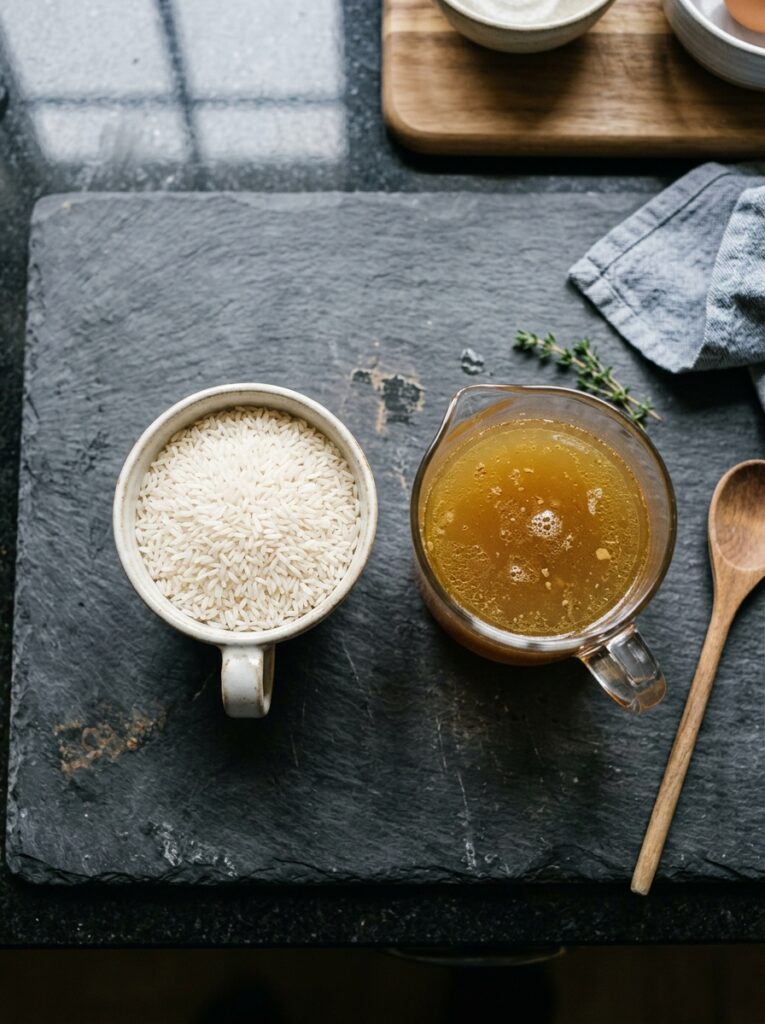
Here’s the thing: most casserole recipes give you the ingredients, but they skip over the ratio that makes the whole thing work. And if you get it wrong, you end up with either crunchy, undercooked rice or something closer to porridge.
The rule I swear by: 1 cup of dry rice to 1¾ cups of liquid. That’s it. That’s the number.
The liquid is usually a mix — chicken broth for depth, a little water to keep it from getting too salty, sometimes a splash of cream if I’m feeling indulgent. If you’re adding condensed soup (which is its own beautiful thing, more on that later), it counts as part of the liquid, so adjust accordingly.
Also: don’t rinse the rice. I know some recipes say to. But for a casserole, that surface starch is actually your friend. It helps the rice stick together slightly and absorb the surrounding liquid in a way that feels creamy rather than loose.
Side note — this is one of those small things that sounds fussy but takes literally five seconds and completely changes the texture of the dish.
—
4. The Cream of Mushroom Shortcut That Still Tastes Scratch-Made
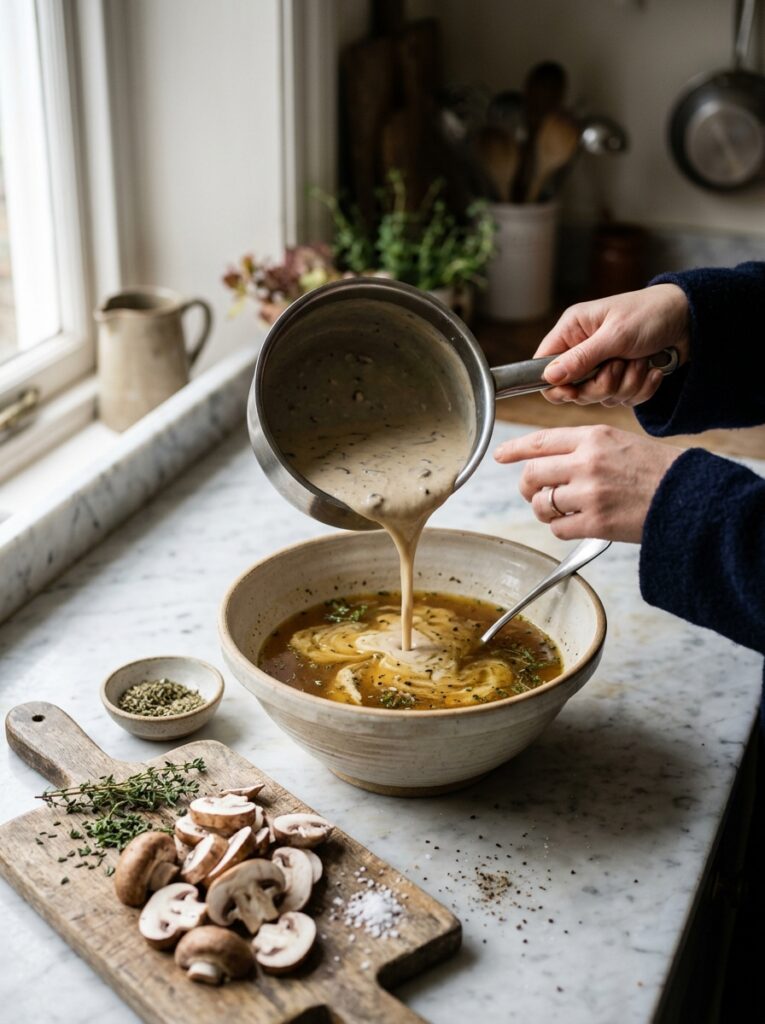
Let’s be real about something. The condensed cream of mushroom soup casserole is a classic for a reason. It’s been on American kitchen tables for decades, it’s comforting and thick and familiar, and dismissing it as “not real cooking” is both snobbish and wrong.
A can of condensed mushroom soup, diluted slightly with broth instead of water, gives you a sauce base that’s already seasoned, already silky, and already full of that earthy savory depth. Combined with rice and chicken, it bakes into something genuinely wonderful.
If you want to make a quick scratch version — and sometimes I do — just sauté a handful of chopped mushrooms in butter, make a quick roux with flour, then whisk in chicken stock and a splash of double cream (or heavy cream). Season it well. Pour it over the chicken and rice. Same idea, slightly more work, slightly more impressive if you’re cooking for people you want to impress.
Both are valid. Don’t let anyone tell you otherwise.
“Dismissing the condensed soup shortcut as ‘not real cooking’ is both snobbish and wrong. It’s been feeding families for decades. That counts for something.”
—
5. The Version With Garlic Butter and Herbs That I Can’t Stop Making
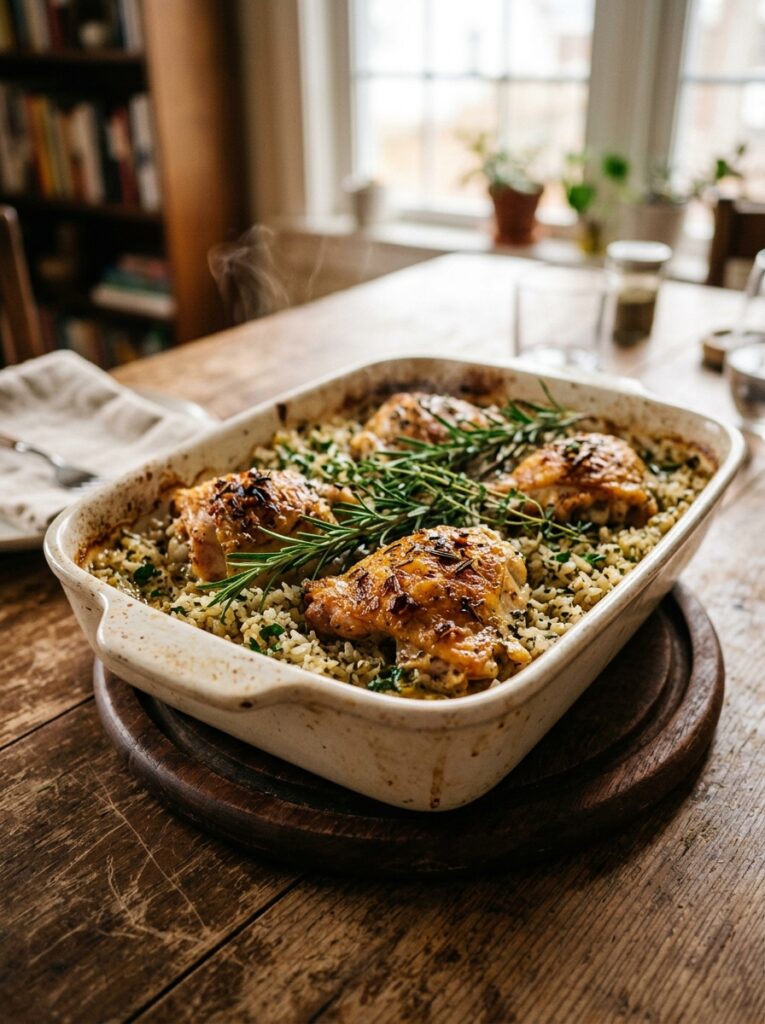
This is the one I make when I want something that feels a bit more intentional. Still one dish, still simple, but the flavors are sharper and the presentation is honestly beautiful.
You season your thighs aggressively — paprika, garlic powder, dried thyme, salt, a crack of black pepper. Then you brown them in the same casserole dish on the stovetop (if your dish is stovetop-safe; if not, use a pan and transfer) until the skin is crispy and deeply golden. That matters. Don’t skip the sear.
Underneath goes raw rice, sliced garlic, and broth — just enough to come up around the rice without submerging the chicken. Cover tightly with foil, then the lid. Into a 375°F (190°C) oven for 45 minutes. Remove the foil for the last 10 so the skin crisps back up.
What comes out is this dish where the rice has absorbed all the chicken fat and garlic and thyme, and it tastes like it cooked all day. A handful of fresh parsley on top. Done.
That’s dinner sorted.
—
6. The Cheesy Version for the Night Everything Needs to Be Cozy
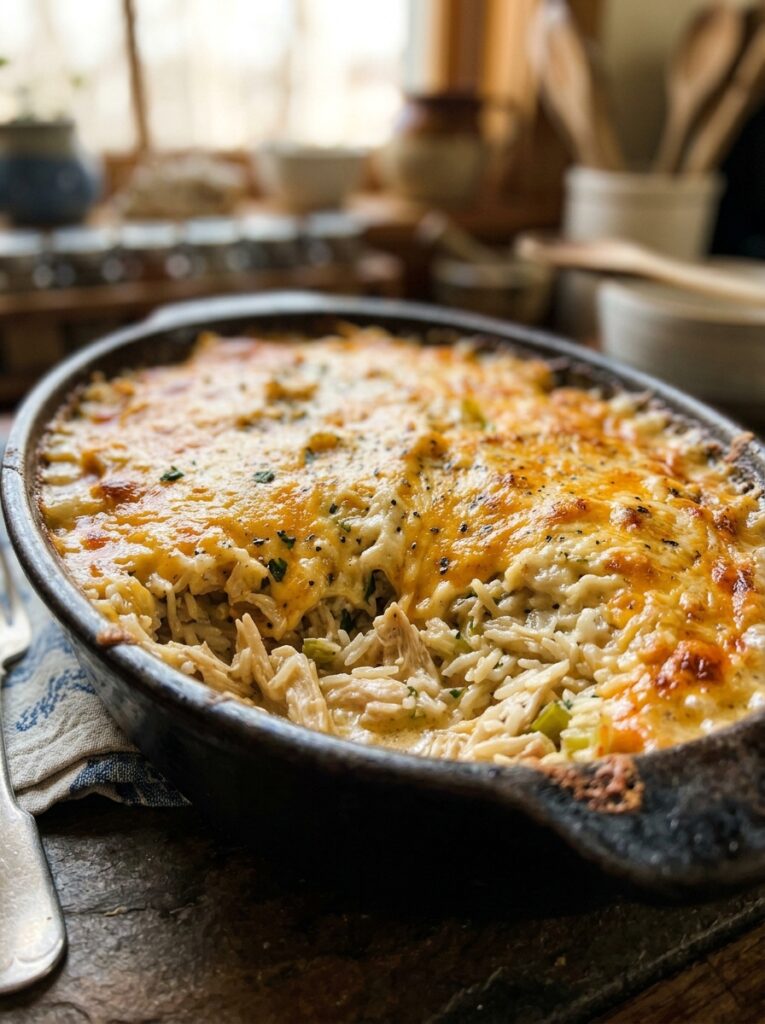
Rain outside. Tired kids. Long week. You need cheese.
Layer shredded rotisserie chicken (already cooked — no shame), dry rice, chicken broth, a spoonful of cream cheese, and a generous handful of sharp cheddar through the middle and on top. Some people add a layer of frozen peas or sweetcorn for color and sweetness, and honestly? Good call.
This version is more forgiving because you’re using pre-cooked chicken, which means you’re not worrying about doneness. You’re just heating everything through and melting cheese and making your house smell incredible for about 40 minutes.
The cream cheese sounds unusual but it melts into the broth and creates this silky, slightly tangy coating on the rice that I’ve never been able to stop eating. It’s dangerously good and I make this probably more than I should.
Serve straight from the dish. Don’t even pretend you’re plating it up individually.
—
7. A Lighter Version That Doesn’t Feel Like a Consolation Prize
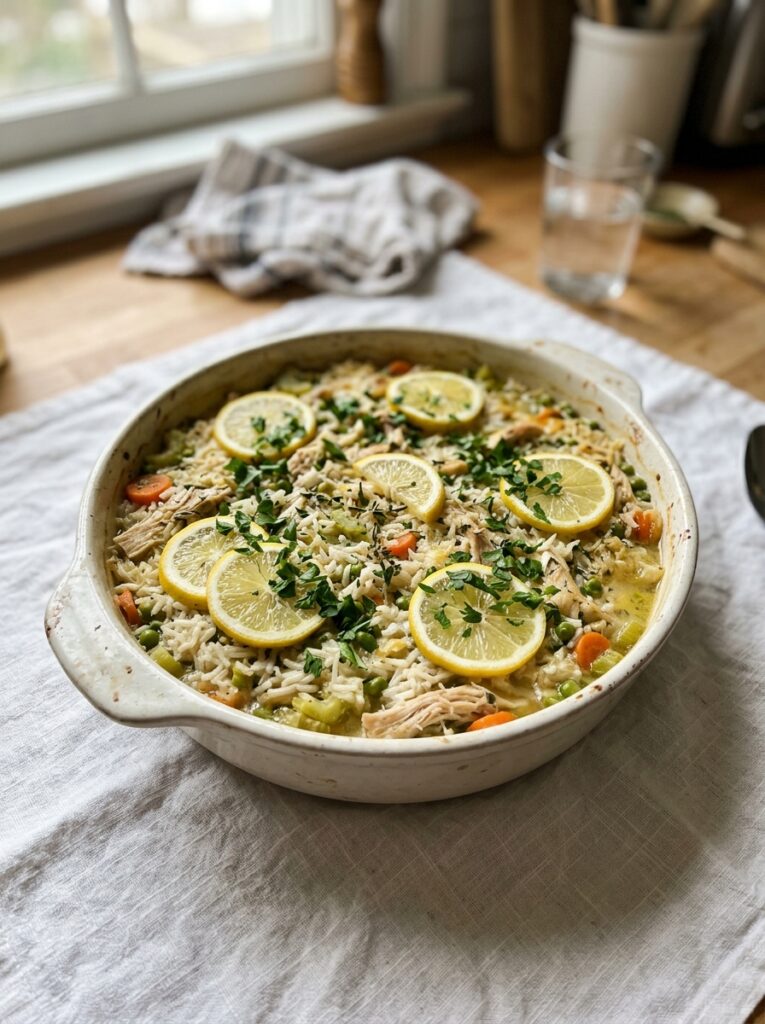
I’ve seen “healthy casserole” recipes that are just sad. Flavorless. The kind of thing you eat while thinking about what you actually wanted. This one isn’t that.
Use chicken breasts cut into chunks (here breasts are fine since they’re cut smaller and cook faster), brown rice — yes, brown rice works and actually adds a nutty flavor — and a broth-based sauce with lemon zest, a little Dijon mustard, and fresh thyme. The Dijon and lemon do a lot of heavy lifting flavor-wise, so you don’t need cream or cheese to make it feel satisfying.
Brown rice does take longer, so you’ll want to pre-cook it slightly — bring it to a boil in water, cook for 20 minutes, drain, and then add it to the casserole. Otherwise it’s still crunchy at the edges when the chicken’s done.
It tastes bright and fresh in a way that most casseroles don’t. The kind of meal you feel good after eating, which is not always a feeling casseroles give you, to be fair.
—
8. The One-Pan Trick That Makes Weeknight Cleanup Actually Bearable
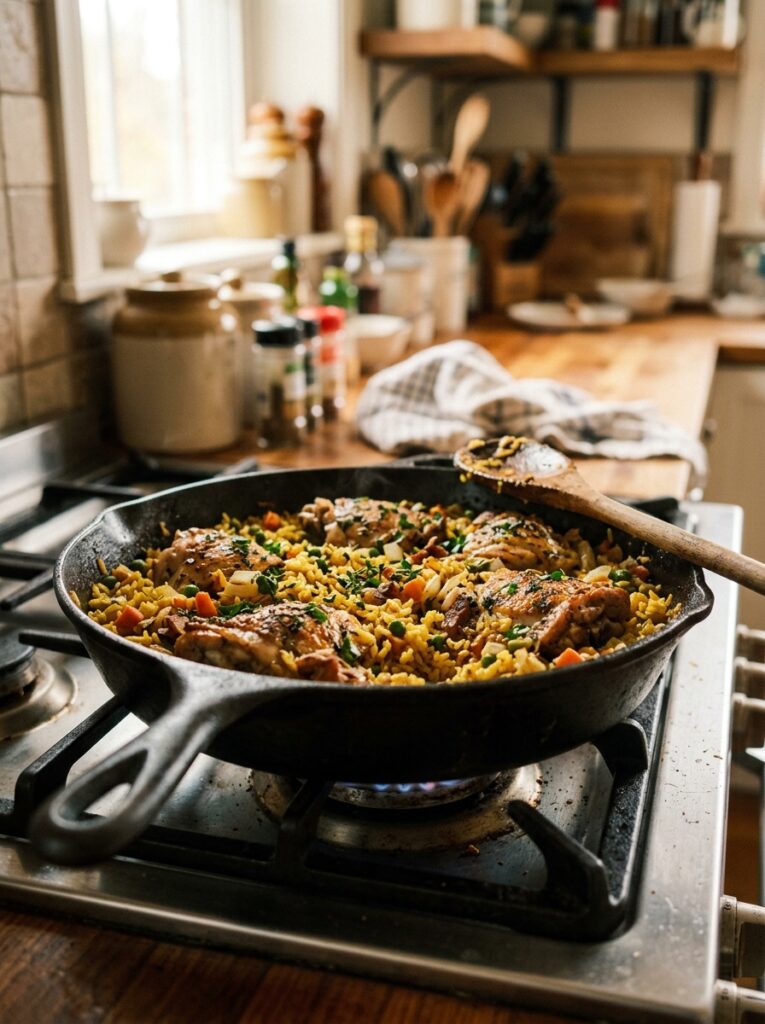
Okay, so “casserole” technically implies one dish, but a lot of recipes still have you making a sauce separately, browning in a pan separately, washing three things separately. I’m not about that.
If you have an oven-safe Dutch oven or a deep casserole dish that can go on the hob (stovetop), everything happens in one vessel. Sear the chicken directly in it. Sauté any onion or garlic in the same fat. Add the rice, pour in the broth, lid on, oven. That’s one washing-up situation and it keeps all the fond — those sticky brown bits on the bottom — incorporated into the rice. Free flavor. Every bit of it.
It’s one of those things where the “lazy” approach is also the tastiest approach, which is my favorite kind of cooking discovery.
—
9. The Version British Households Are Going to Love Specifically
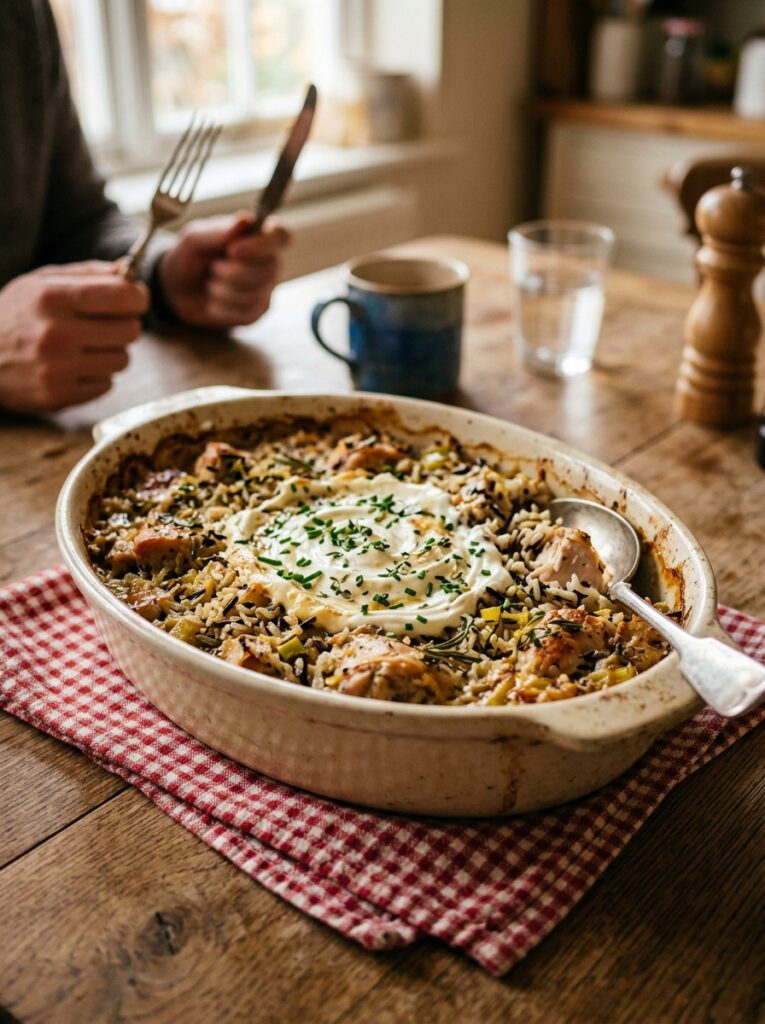
So in the UK, the chicken and rice casserole has a slightly different tradition — it’s less about the American cream-of-mushroom bake and more about a slow oven braise with leeks, white wine, and bay leaves. Deeply savory, slightly herby, cold-weather food at its best.
Here’s how I make it: chicken thighs, a good handful of sliced leeks, a bay leaf or two, a splash of dry white wine (the rest of the glass is yours), chicken stock, long-grain rice. Season generously. Put the lid on. Into a 160°C (325°F) oven for an hour and a half.
It comes out deeply flavored and almost brothy, with the rice soft and swollen with all that good wine-and-stock liquid. It’s not the same dish as the American version — it’s more elegant, less saucy, quieter somehow. Or maybe it’s the opposite, honestly — it’s just different in a way that suits a drizzly November evening perfectly.
“A splash of white wine, a bay leaf, a slow oven — that’s the British version of this dish, and it’s quieter and deeper and perfect for November.”
—
10. What to Do When the Rice Isn’t Cooking Evenly
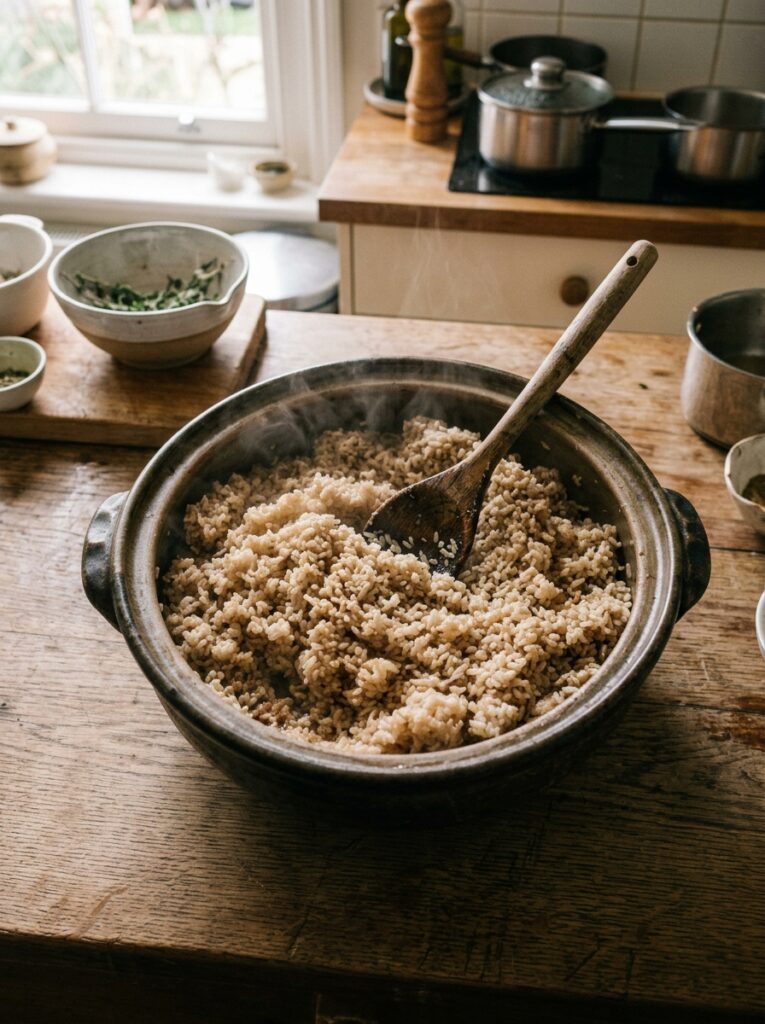
This happens. The edges are done, the middle is still weirdly firm, the chicken’s been resting for ten minutes already. Here’s what you do.
First: if you catch it early (say, at the 50-minute mark), pour ¼ cup of warm broth over the uncooked spots, re-cover tightly, and give it another 15 minutes. Works most of the time.
If it’s truly uneven and you can’t save the whole dish in the oven, take it out, cover it tightly in foil, and leave it on the counter for 20 minutes. Seriously. The residual heat and the steam inside the dish keep cooking the rice without overcooking the chicken. I’ve rescued what looked like a failure this way more than once.
And if it’s completely underdone in the middle? Microwave individual servings with a splash of water, covered. Not glamorous. But it works.
—
11. The Leftover Situation (This Is Actually Where It Gets Good)
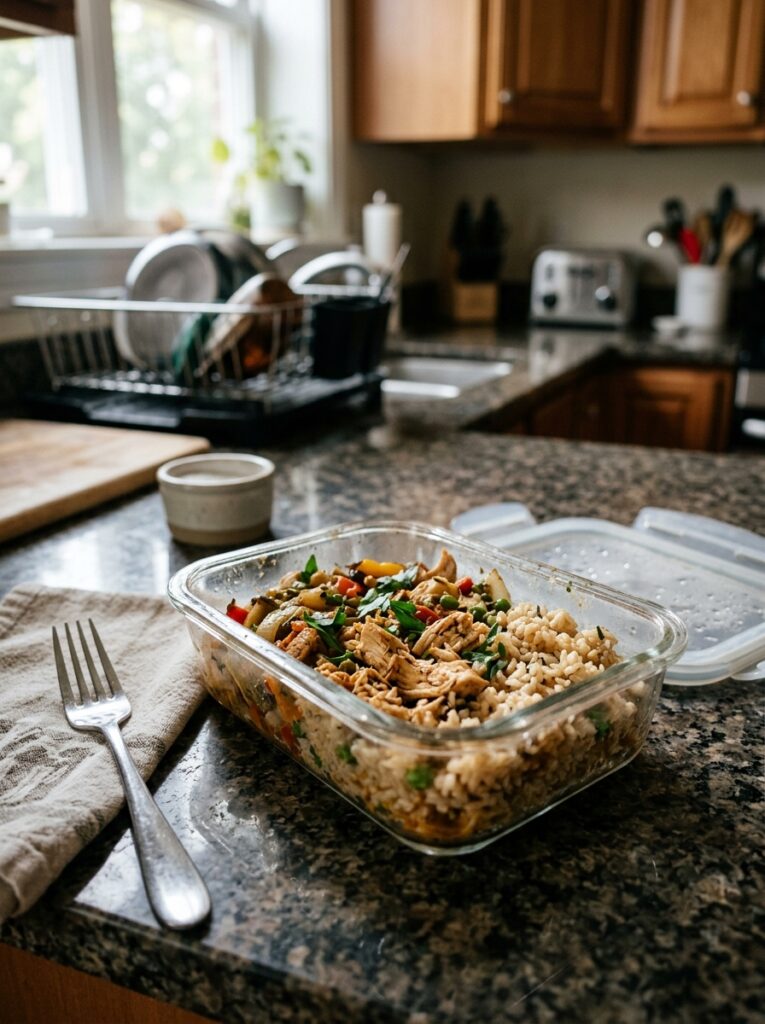
Cold chicken and rice casserole from the fridge is not the same dish you had last night. But it’s not worse, just different. The rice has set, the flavors have intensified, and reheated with a little splash of broth it comes back to life beautifully.
Some of my favorite things to do with leftovers: stuff them into a warm flatbread with some hot sauce and yogurt for a kind of deconstructed shawarma situation. Or reheat it in a pan with an egg cracked on top and let the egg cook right there in the rice. That’s a full breakfast. That’s a GOOD breakfast.
The cheesy version specifically firms up in the fridge into almost a rice cake consistency. Slice it, pan fry it in a little oil, and it gets crispy on the outside while staying creamy inside. Honestly I’ve made the cheesy casserole on purpose just so I can have that on day two.
—
12. The One Finishing Touch That Makes Any Version Better
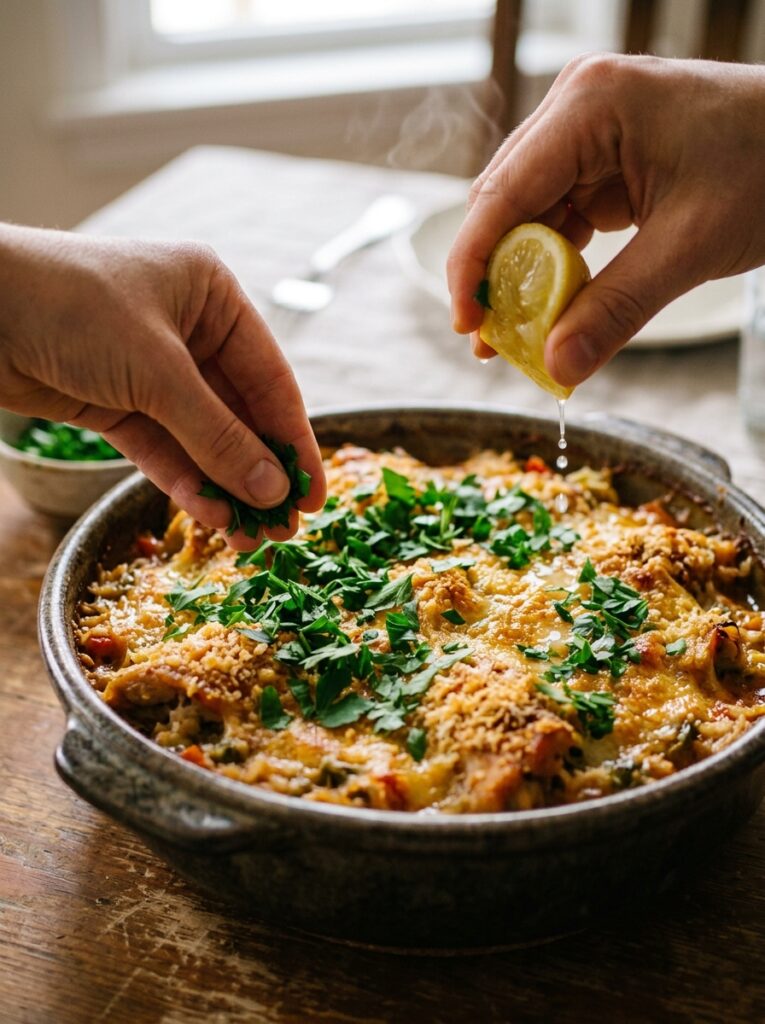
This is small. But it matters.
Before you serve, let the casserole rest uncovered for at least five minutes. Not because of food safety reasons (though that’s true too), but because the top layer of rice, exposed to air, dries out slightly and gets this gentle, almost toasted texture. The bottom stays soft and almost sticky. You get two textures in one dish without doing anything extra.
Then: fresh herbs. Whatever you have. Parsley is the classic, but fresh thyme, a little dill, even some fresh chives scattered on top make the whole thing feel finished in a way that dried herbs going in at the start can’t replicate. It’s the difference between a good casserole and one people ask about.
That’s it. That’s the last tip.
—
❓ FAQ
Q: Can I use instant or minute rice in a chicken casserole? A: You can, but you’ll need to adjust — instant rice cooks much faster, so either add it in the last 20 minutes of baking or reduce your liquid by about a third. It won’t have the same texture as regular long-grain rice, but it can work in a pinch, especially in the cheesy version where the sauce covers a lot of ground.
Q: How do I stop the rice from going mushy at the bottom? A: Two things help. First, don’t go over your liquid ratio — 1¾ cups liquid per 1 cup dry rice is the ceiling. Second, don’t skip resting the dish uncovered at the end. The steam release lets the bottom rice firm back up slightly instead of continuing to steam in its own moisture.
Q: Can I make chicken and rice casserole ahead and refrigerate it before baking? A: Yes, with one caveat. If you’re using dry, uncooked rice, don’t let it sit assembled in the fridge for more than a few hours, because the rice will start absorbing the liquid before it ever sees the oven and can cook unevenly. If you want to prep ahead, store the rice and the sauce/broth separately and combine right before baking.
—
💭 Final Thoughts
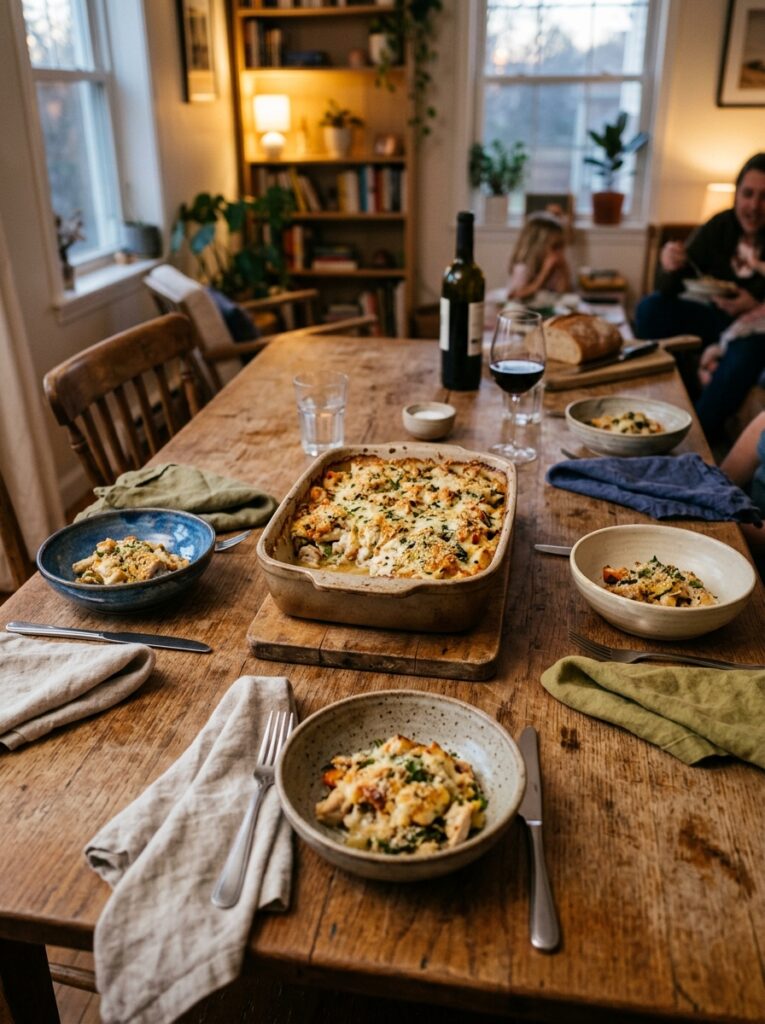
Chicken and rice casserole is the kind of recipe that sounds boring until you’re actually eating it, and then you understand why people have been making it for fifty-plus years. It’s warm in the way that really matters — not just in temperature, but in the feeling of eating something that was made to be shared.
I hope one of these versions lands in your regular rotation. The question I keep coming back to is this: which version are you most likely to make on the kind of evening when you need dinner to just work?