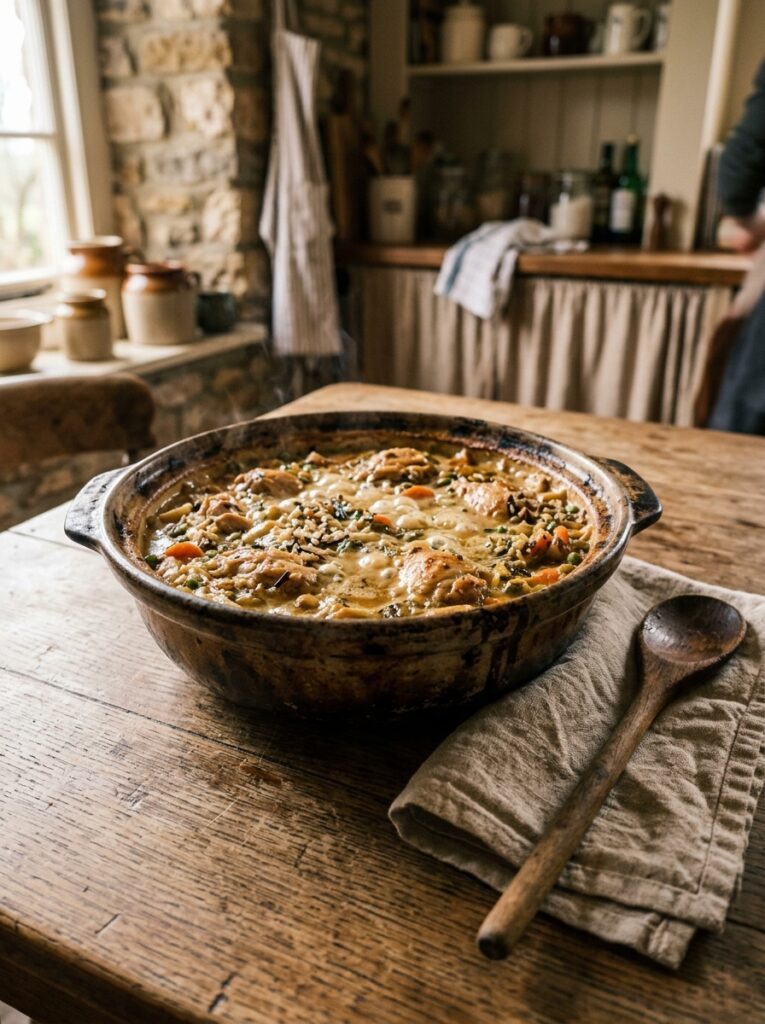
My friend Donna made this for a potluck two winters ago and I genuinely asked her for the recipe before I’d even finished my plate. That’s the thing about a really good chicken and rice casserole — it doesn’t just feed you, it sort of wraps around you like a blanket you didn’t know you needed.
—
1. Why This Dish Has Survived Every Food Trend Since the 1950s
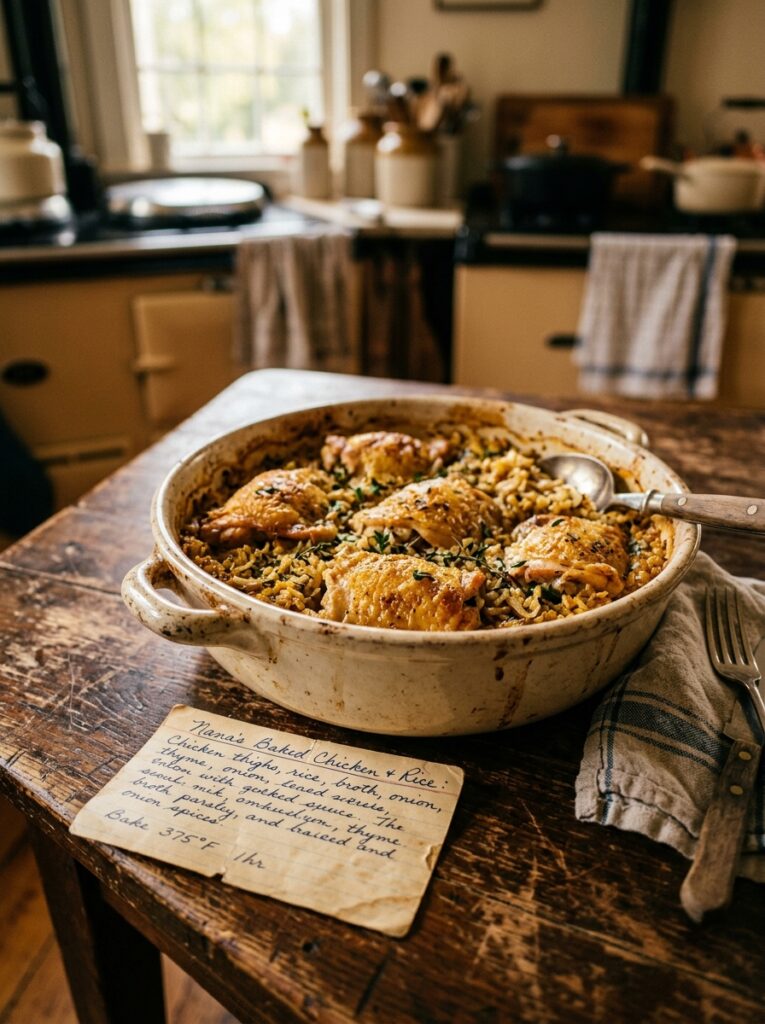
Here’s the truth nobody says out loud: most trendy dinners are forgettable. You make them once, they’re fine, and then six months later you can’t even remember what they tasted like. But chicken and rice casserole? I’ve eaten versions of this dish my whole life and I still get excited every single time.
It’s comfort food that actually delivers on the promise. The rice soaks up everything around it — every bit of stock, every fragment of herbs, every drop of butter — and then bakes into something that’s almost impossible to describe without just making someone taste it. Creamy without being heavy. Savoury without being sharp. There’s something deeply satisfying about how simple the ingredient list is and how complex the result ends up tasting.
And it works for literally any occasion. Weeknight dinner when you’re exhausted. Sunday lunch when you want something that feels a bit special. A dish you bring to a friend who just had a baby or moved house or is going through something hard. It just fits.
—
2. The Cut of Chicken That Actually Changes Everything
Most recipes will tell you that boneless, skinless chicken breasts are the easy choice. And sure, they are. But I’m gonna be real with you — they’re also the reason a lot of chicken and rice casseroles come out dry and kind of sad in the middle.
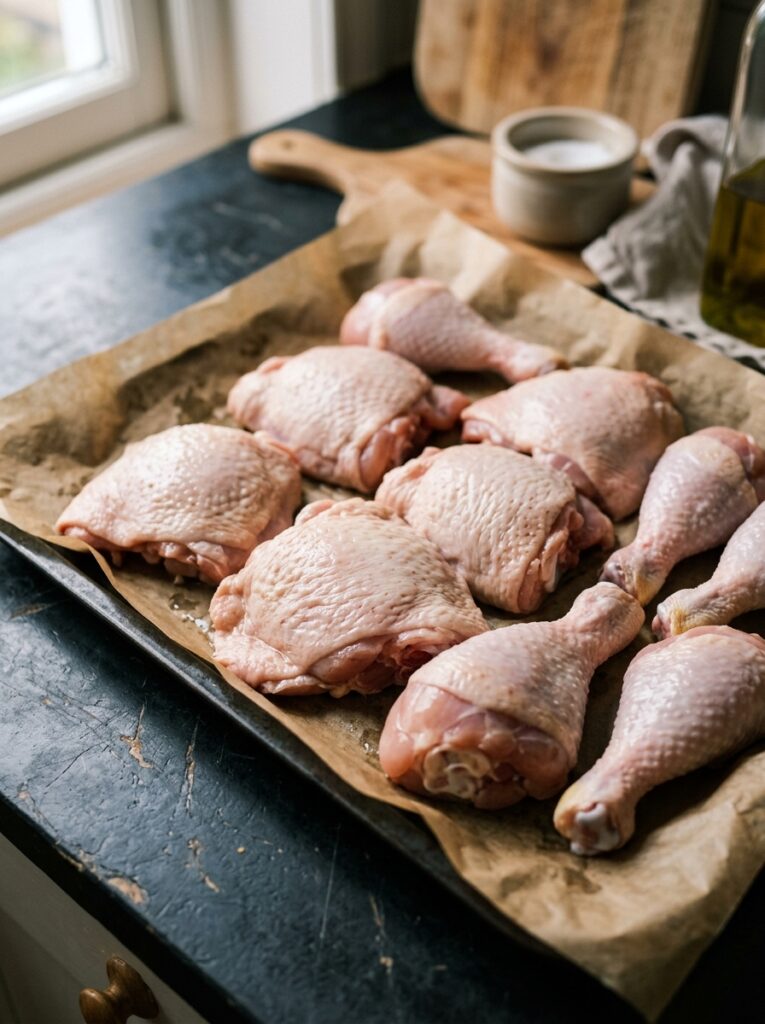
Chicken thighs. That’s the answer.
Bone-in, skin-on chicken thighs are almost impossible to overcook into something unpleasant. The fat in the skin bastes the meat as it bakes, the bone adds flavour to everything in the dish, and when it’s done, you can pull that chicken apart with basically no effort. The skin crisps up on top while the meat underneath stays genuinely juicy in a way that breasts just can’t compete with.
“Bone-in thighs are the move. The skin gets golden and a little bit crackling on top while underneath everything is rich and soft and just deeply, completely cooked.”
If you’re in the UK and you’ve been buying chicken breasts because that’s what you always reach for — try thighs for this. Honestly, I think you’ll convert.
That said, if you only have breasts on hand, cut them into large chunks rather than leaving them whole. Smaller pieces cook more evenly and stay in contact with more of the surrounding liquid, which helps.
—
3. The Rice Question (Because Not All Rice Is Created Equal)
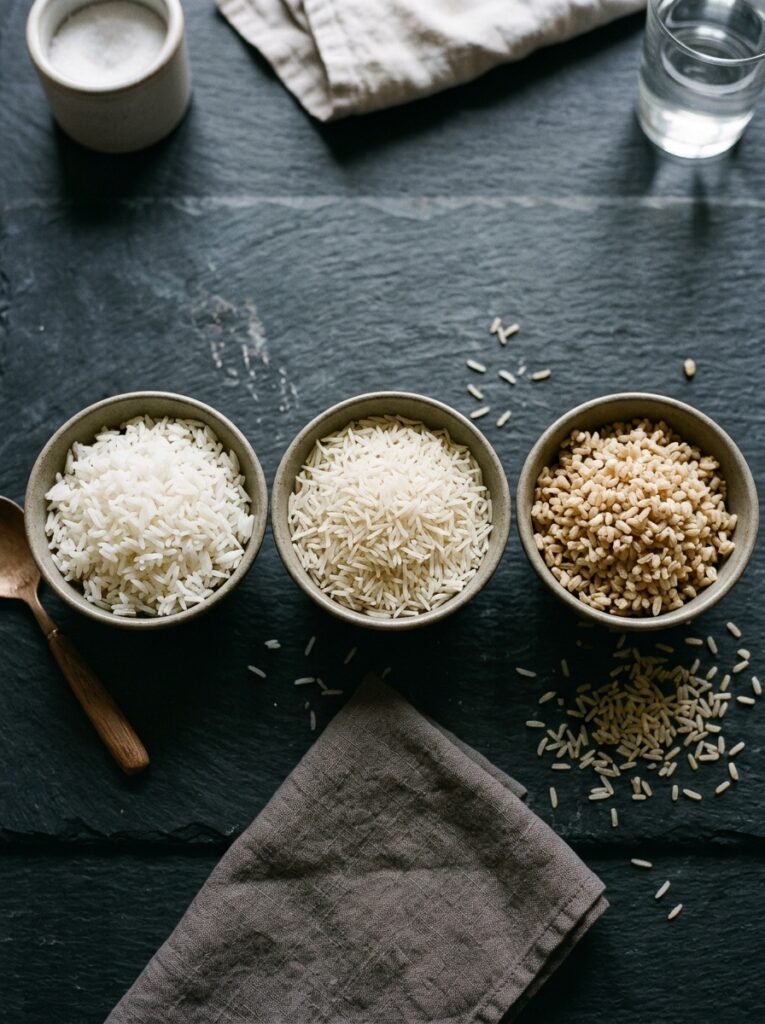
Long-grain white rice is what you want here. Not instant, not parboiled, not brown rice (though I’ll get to that in a second), not risotto rice — just regular long-grain white.
Here’s why it matters. Instant rice has already been partially cooked and it’ll go mushy before the chicken’s even close to done. Brown rice takes so much longer to cook that your chicken will be overcooked and starting to fall apart by the time the rice gets there. And short-grain rice gets starchy and sticky in a way that doesn’t suit a casserole texture at all.
Long-grain white rice absorbs liquid beautifully, holds its shape, and comes out fluffy and separate even when it’s been sitting in a creamy sauce for an hour. It’s the Goldilocks option.
Now. If you REALLY want to use brown rice because that’s what you have — it can be done, but you need to increase your liquid by about half a cup and add at least 20-25 extra minutes to the bake time, covered, before you do anything else with it. And still check it, because ovens are unpredictable.
—
4. The Sauce Formula I’ve Settled On After Years of Testing
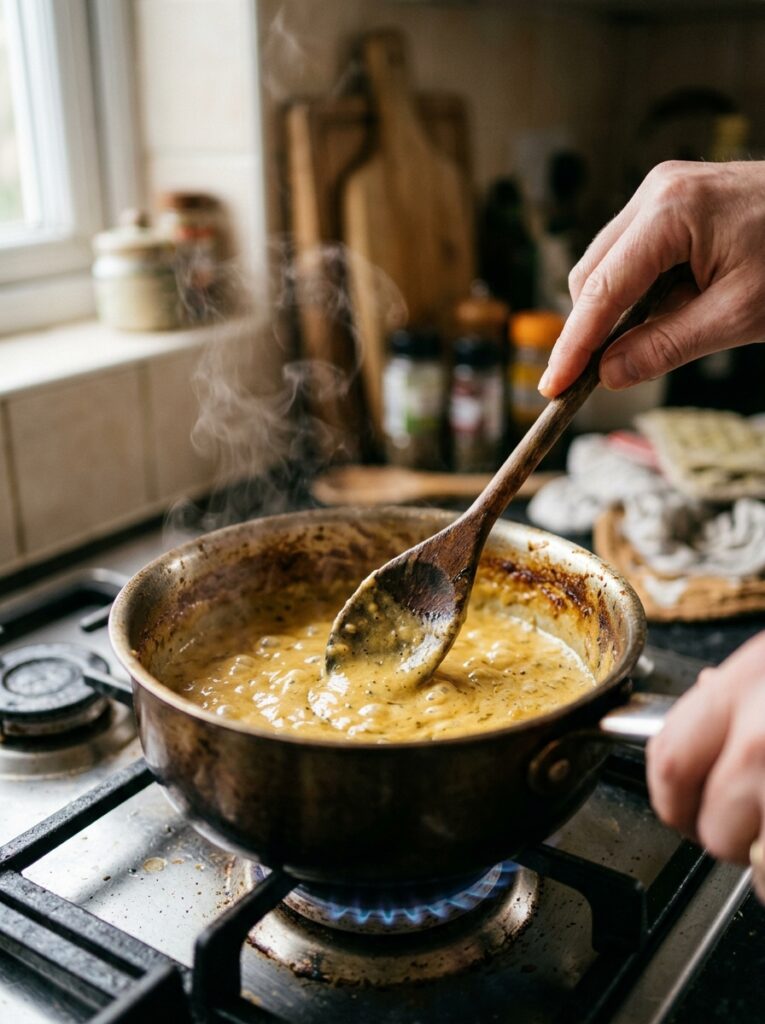
Okay so there are roughly a thousand variations of chicken and rice casserole sauce floating around online, and most of them involve a can of cream of mushroom soup. Which is not wrong. It works, it’s quick, and I’m not going to be a snob about it.
But if you have an extra 10 minutes, making your own sauce is worth it. It takes the dish from “really good weeknight dinner” to “this is the best thing I’ve made in months.”
What you need: butter, plain flour (or all-purpose flour — same thing, different names), chicken stock, whole milk, garlic, a little Dijon mustard, salt, a bit of black pepper, and dried thyme. That’s it. You’re making a basic white sauce, which sounds fancy but is just melting butter, stirring in flour, then whisking in your liquid until it thickens. It takes about eight minutes and it’s virtually impossible to mess up as long as you keep whisking.
The Dijon is the thing. Don’t skip it. It doesn’t make the dish taste like mustard — it just adds this background depth that you’d really notice was missing if it wasn’t there.
—
5. The Onion Step That Most People Skip (And Really Shouldn’t)
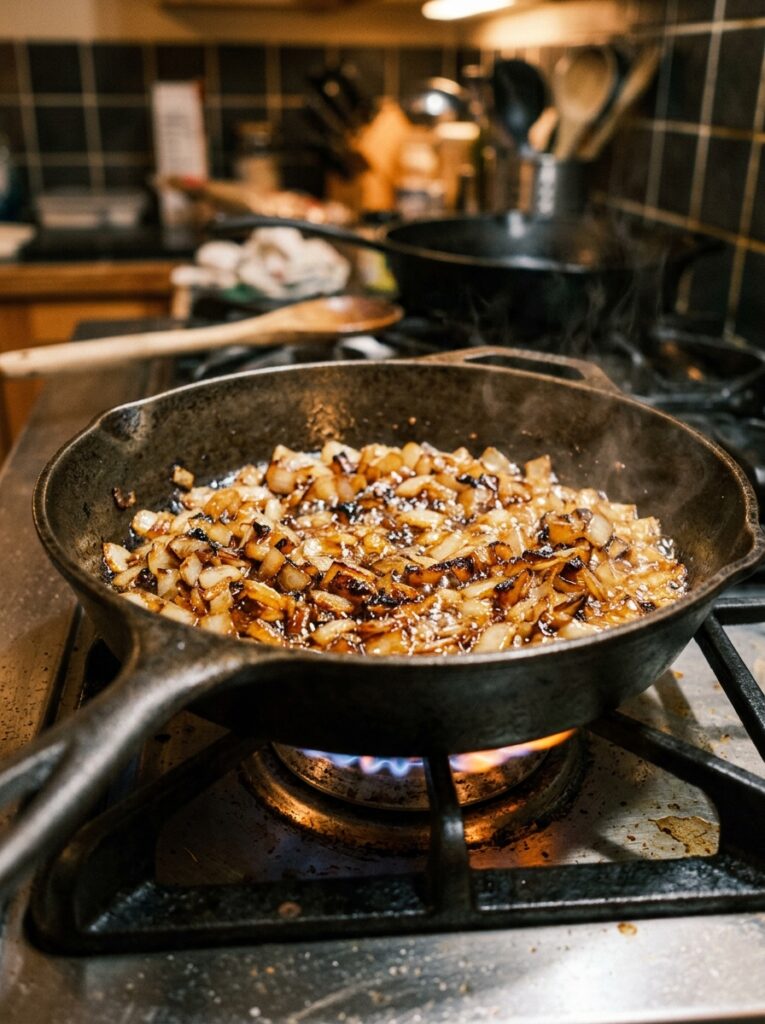
Before anything goes into the casserole dish, you want to cook your onions. Low heat, a bit of butter, maybe 8-10 minutes until they’re soft and translucent and just starting to go golden at the edges.
I know. You’re tired. It’s a Tuesday. You just want to throw everything in a dish and put it in the oven.
But raw onion in a casserole has this sharp, almost slightly bitter quality that never fully mellows out even with a long bake. Cooked onion is completely different — it’s sweet and soft and it disappears into the rice in the best possible way, adding flavour without you even noticing it’s there.
Same goes for garlic. Two or three cloves, in with the onion for the last couple of minutes. Raw garlic baked in a casserole can sometimes come out harsh and almost soapy. Briefly sautéed garlic is warm and rounded and it makes your whole kitchen smell incredible, which is honestly half the point.
—
6. Herbs That Are Worth Your Attention and One That Isn’t
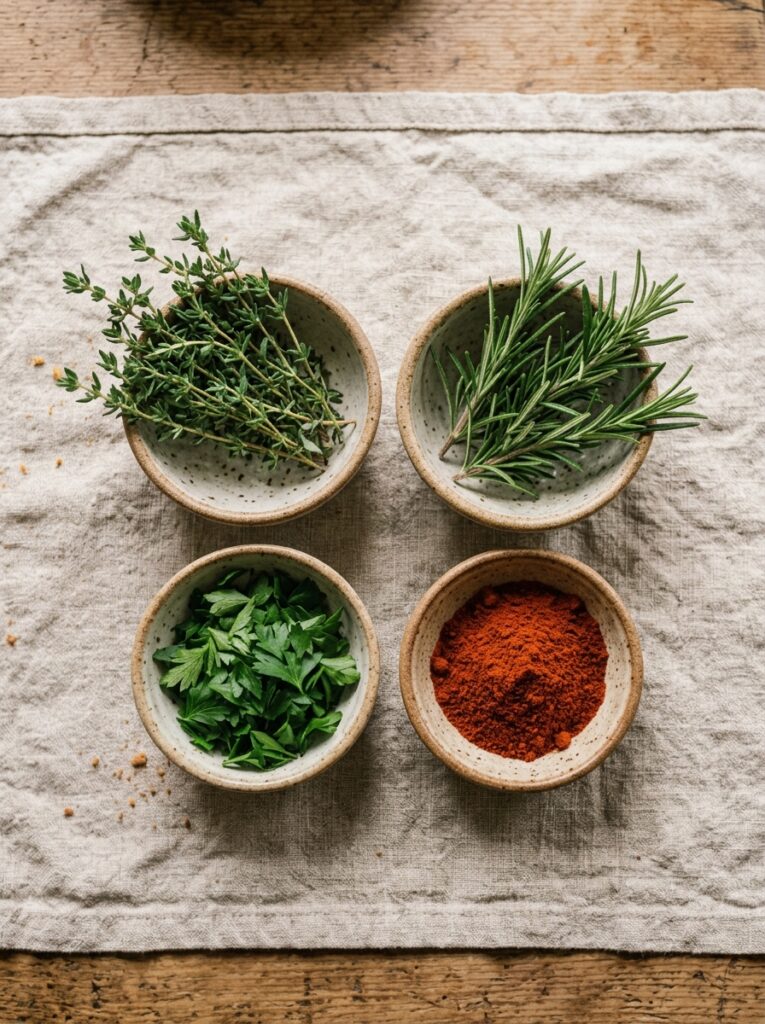
Thyme is the one. Dried or fresh, thyme has this earthy, slightly floral quality that gets along perfectly with chicken and rice and doesn’t compete with anything else in the dish. It sort of just settles in and makes everything smell like it came from a farmhouse kitchen, which is exactly the vibe you want.
“Thyme disappears into a casserole the way salt does — you wouldn’t really know it was there, you’d just know something was off without it.”
Rosemary is a maybe. It’s strong and piney and can overpower a dish like this if you use too much. A small pinch — genuinely small — can be nice, but I usually leave it out.
Sage, same story. Parsley is good stirred in right at the end, just before serving, for a little bit of freshness.
Bay leaves. Put two in. Fish them out before you serve. You’ll thank me.
And please, whatever you do, don’t dump in mixed dried herbs. They’ve got oregano and marjoram and whatever else in there, and while those are all lovely herbs in their own contexts, they’ll take your casserole in a completely different direction. Italian, almost. Which is a different dinner entirely.
—
7. The One Liquid Ratio That Prevents a Dry Casserole
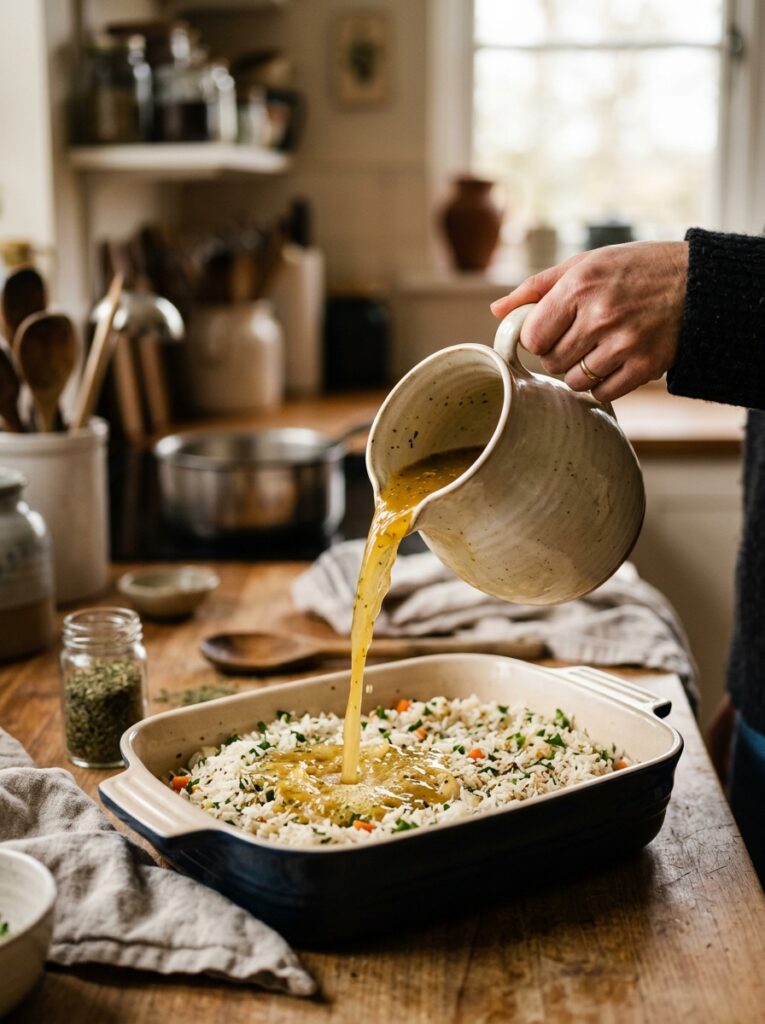
This is where most recipes go sideways, and I genuinely think it’s the number one reason people have disappointing results with casseroles. The ratio of liquid to rice matters enormously.
The standard is roughly 1.75 to 2 cups of liquid for every 1 cup of raw rice. But in a casserole, because the dish is covered with foil for most of the bake, you get a lot of steam trapped in there. That steam cooks the rice. So if you use the full two cups of liquid per cup of rice, you might end up with something that’s more wet than creamy.
I use 1.5 cups of liquid per cup of rice when I know the dish is going to be well-sealed with foil. If your casserole dish has a slightly loose lid, go up to 1.75.
The liquid itself should be a mix of chicken stock and either whole milk or a splash of cream. All stock makes it thin. All cream makes it heavy. Half and half is the balance.
—
8. Vegetables That Belong in This Dish (And When to Add Them)
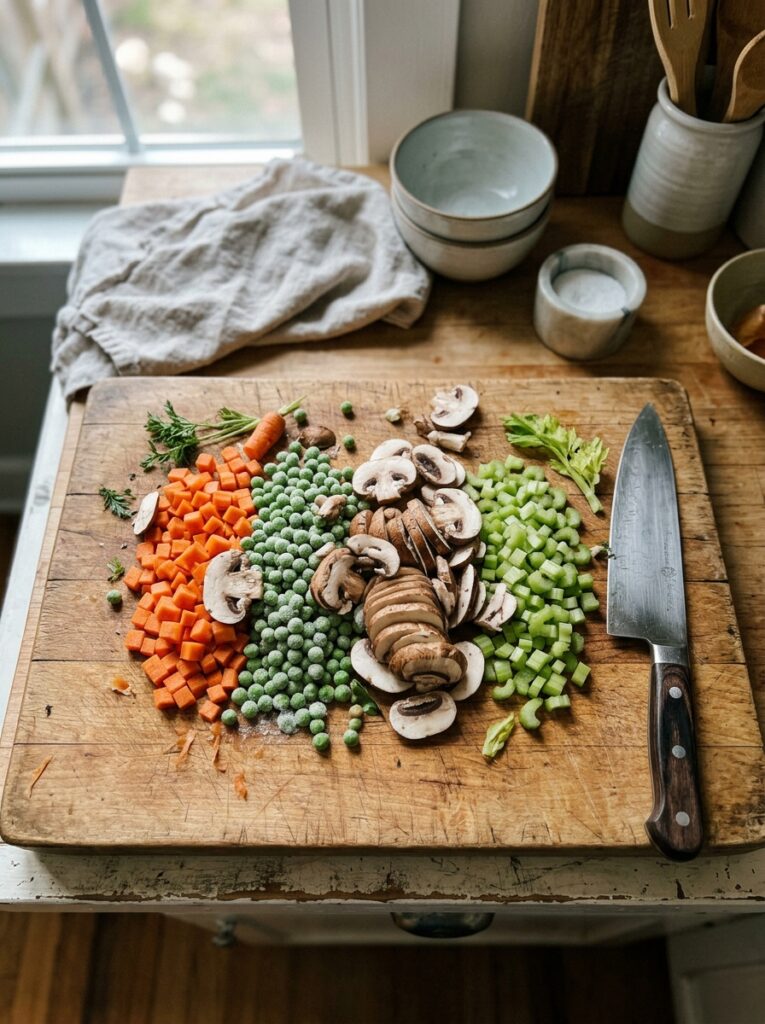
Frozen peas and corn go in at the very end — like, genuinely the last 10 minutes. They don’t need cooking, just warming through. If you add them at the start they’ll turn grey and sad.
Mushrooms need to be cooked separately first, same as the onion, otherwise they’ll release so much water into the dish that everything gets soupy.
Diced carrots and celery can go in raw if they’re cut small, because they’ll have the full bake time to soften. Big chunks won’t get there.
Spinach is brilliant stirred in at the end — it wilts in about 90 seconds just from the residual heat and adds something green and slightly earthy without changing the flavour much.
“Don’t treat the vegetable addition like an afterthought. Timing is everything — get it wrong and you’ve got mush or crunch, neither of which you want.”
Broccoli works if it’s in really small florets and goes in for the last 20 minutes only, covered. Otherwise it turns to complete mush and that colour is not appetising.
—
9. Temperature, Timing, and Why Your Oven Is Lying to You
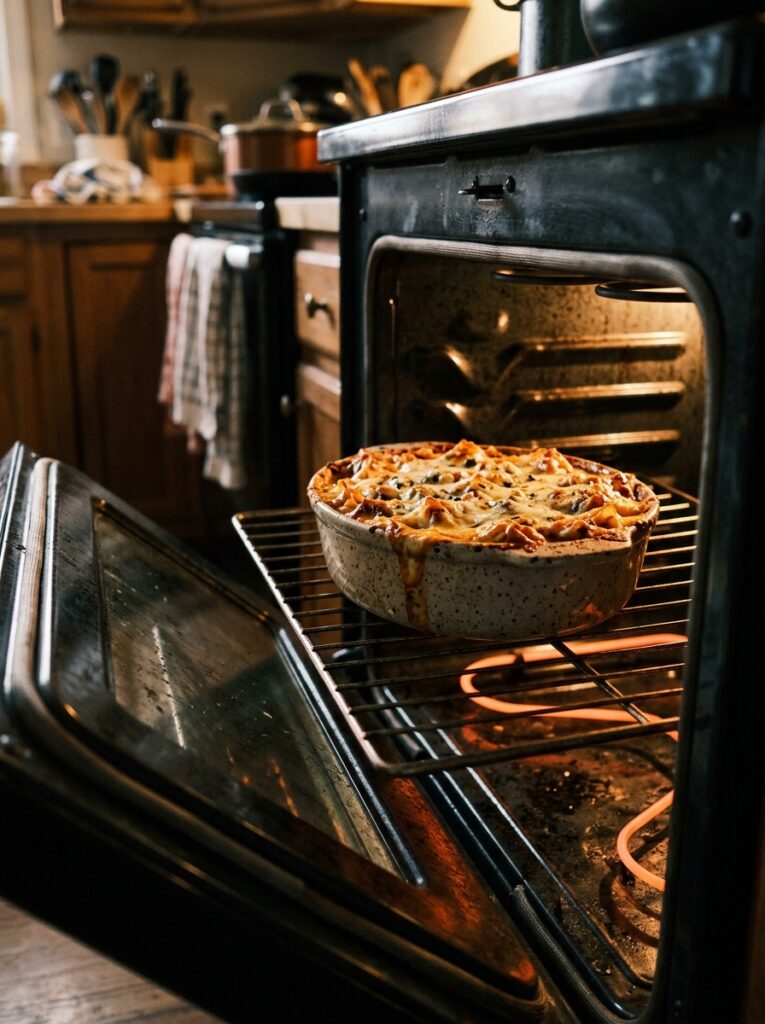
325°F (about 160°C for fan ovens, 165°C for conventional) is the magic zone. Low and slow is how you get rice that’s evenly cooked and chicken that’s tender without being stringy.
Cover the dish tightly with foil for the first 45-50 minutes. This is the steam phase — the rice is cooking in the trapped moisture. Then remove the foil for the last 20-25 minutes so the top can brown and the chicken skin can crisp up.
Total time for bone-in thighs is usually about 70-75 minutes at 325°F. Boneless pieces will be done faster, closer to 55-60 minutes.
But here’s the thing. Oven temperatures vary wildly, and I say this as someone who has owned four different ovens in four different rentals. One of them ran 25 degrees hot. One was sluggish and uneven. Get an oven thermometer if you don’t have one — they’re cheap and they’ll improve everything you cook, not just this.
The chicken is done when it reaches 165°F internally. The rice is done when it’s tender and not chalky in the middle. Check both.
—
10. The Crispy Topping That Makes People Ask What You Put On It
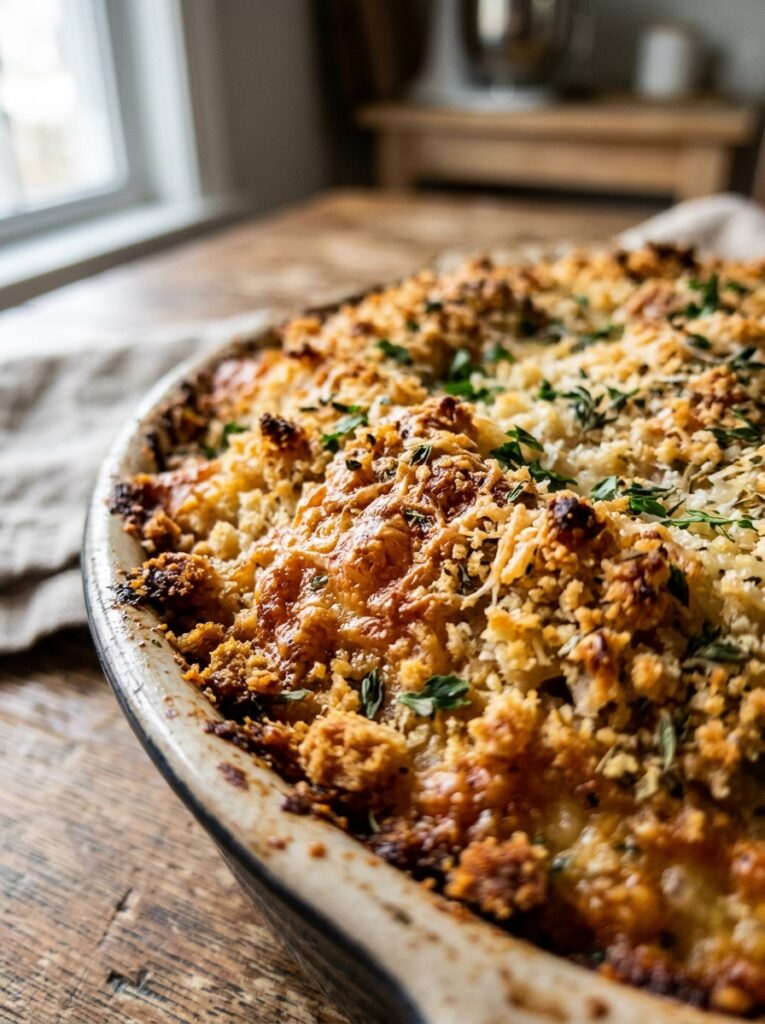
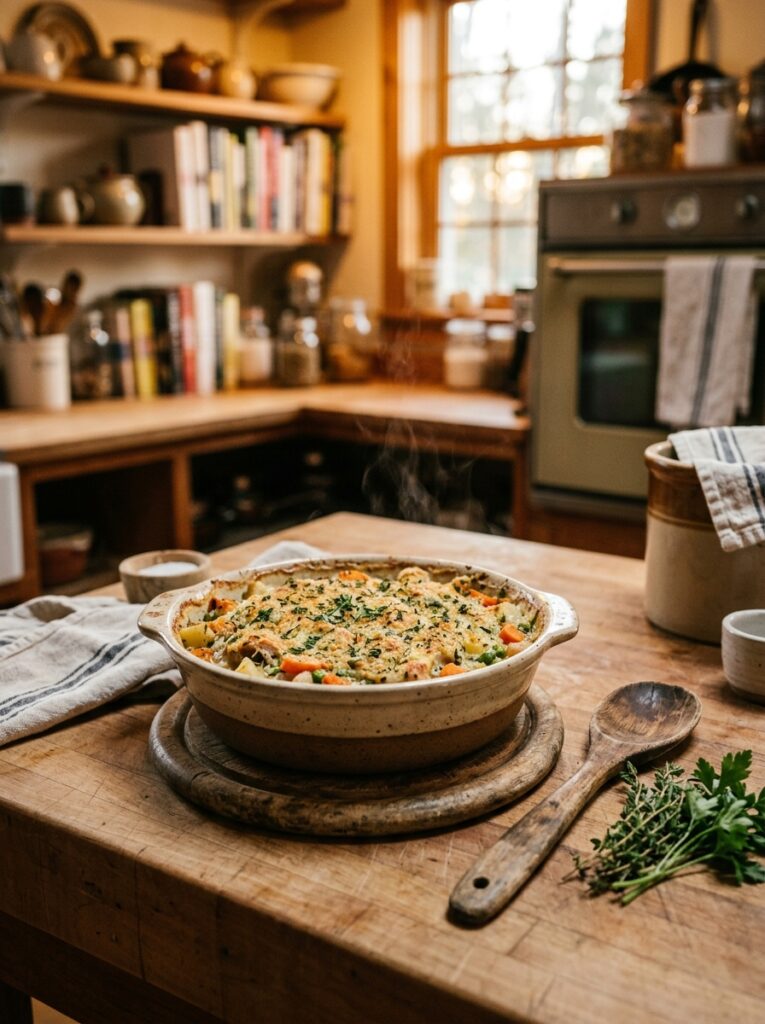
This is the step that takes a good casserole and makes it memorable. Right before the foil comes off, mix together some breadcrumbs with melted butter, a little grated hard cheese (anything sharp works), and a pinch of paprika. Scatter it over the top.
It’ll brown in that last 20-25 minutes and come out golden and crunchy and slightly cheesy and completely irresistible. The contrast between that crunchy layer and the soft creamy rice underneath is — okay, I can’t explain it. You just have to try it.
You don’t need much. Just enough to cover the surface in a light, even layer. About half a cup of breadcrumbs total.
If you want to go dairy-free on the topping, skip the cheese and add a little garlic powder and dried thyme to the breadcrumbs instead. Still delicious.
—
11. How to Make This Work for Meal Prep and Leftovers
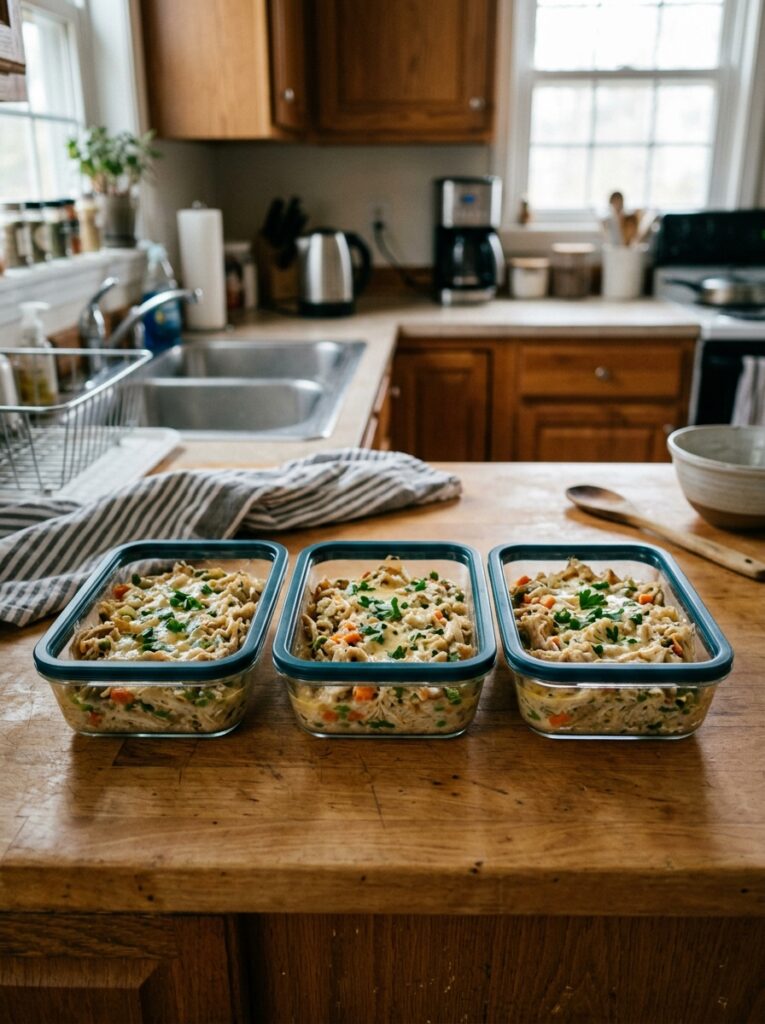
This casserole reheats beautifully, which makes it genuinely one of the best dishes you can make on a Sunday for weekday dinners. It keeps in the fridge for up to four days, covered.
When you reheat it, add a splash of stock or water before it goes back in the oven or microwave. The rice will have absorbed almost all the liquid overnight and it needs just a bit more moisture to come back to life. Don’t skip this step — it makes the difference between “great leftover” and “kind of dry and disappointing.”
For the freezer: the casserole freezes well for up to three months, but the rice texture does change slightly. It’ll be a little softer. Not mushy, just — less distinct. If that bothers you, make the casserole without the rice, freeze it, and cook fresh rice to add when you reheat. More effort, obviously. But the texture is better.
Side note — this is also one of those dishes that tastes better the second day, like the flavours have had time to properly settle and know each other.
—
12. The Serving Suggestion I Can’t Stop Coming Back To
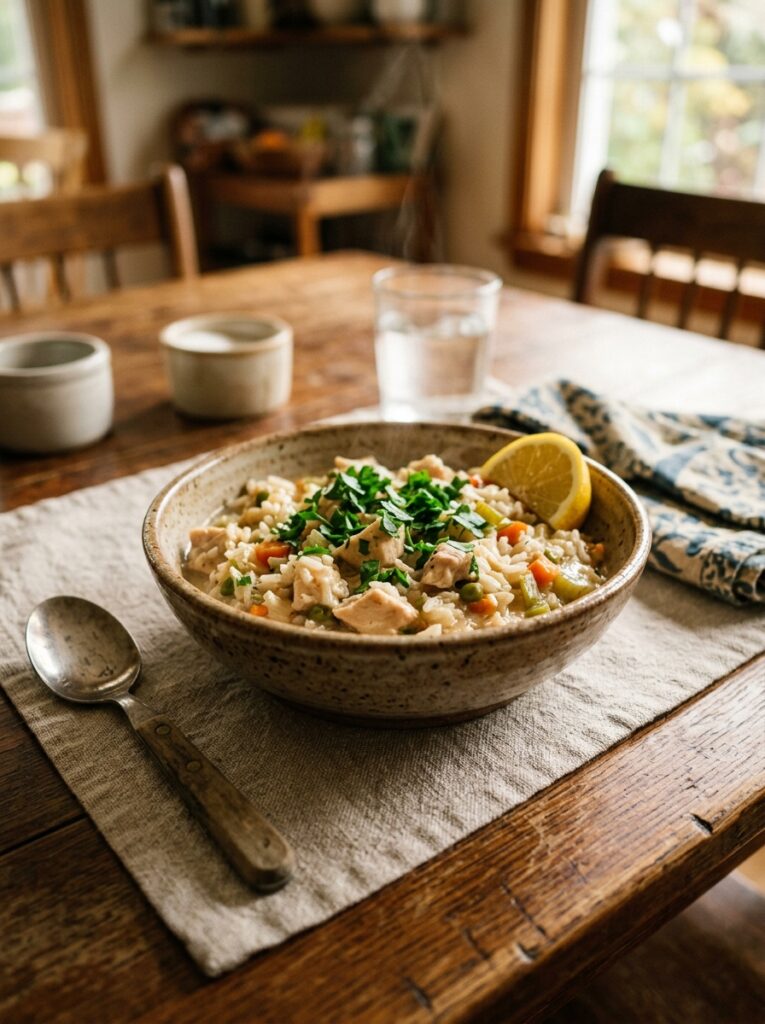
You don’t need sides. That’s kind of the whole point of a casserole — it’s a complete meal in one dish.
But if you want something alongside it, I always go for a simple green salad with a very sharp vinaigrette. The acidity cuts through the richness of the casserole in a way that makes both things taste better, which is a small cooking trick that works for basically everything creamy.
Crusty bread is also good. Obviously. You’ll want something to scrape up the sauce at the bottom of the dish.
And in winter, I sometimes serve it with roasted purple sprouting broccoli or some quickly sautéed greens with lemon. The brightness helps. Creamy casseroles can start to feel a bit one-note if everything on the table is the same temperature and texture, so contrasts are your friend.
—
❓ FAQ
Q: Can I make chicken and rice casserole ahead of time and bake it later? A: Yes — you can assemble the whole thing up to 24 hours ahead and keep it covered in the fridge. Just add about 10-15 extra minutes to the bake time since you’re starting from cold, and make sure the chicken reaches 165°F before you serve.
Q: My rice always ends up crunchy in the middle — what am I doing wrong? A: Usually it’s one of three things: not enough liquid, the foil wasn’t sealed tightly enough (so steam escaped), or your oven runs cool. Try adding a little extra stock next time, sealing the foil really well around the edges of the dish, and checking your oven temperature with a thermometer.
Q: Can I use a slow cooker instead of the oven? A: You can, but add the rice in the last 45 minutes of cooking on LOW rather than at the start — otherwise it’ll go completely mushy. Cook your chicken in the slow cooker for about 4-5 hours on LOW first, then add rice and a bit more stock for that last stretch. The topping obviously won’t work the same way, but the base casserole is good.
—
💭 Final Thoughts
A dish this simple really shouldn’t feel like an event, but somehow it always does. Maybe that’s what comfort food actually means — not fancy ingredients or complicated technique, but something that makes people sit down and stay a little longer at the table than they planned.
Make it once this week. See if it doesn’t become your thing.
What’s the one recipe you keep coming back to no matter how many new ones you try?