My neighbor knocked on my door last Tuesday holding an empty casserole dish and a slightly embarrassed expression. She’d made my recipe, she said, and her husband had eaten three servings before dinner was even officially on the table. Could she have the recipe again?
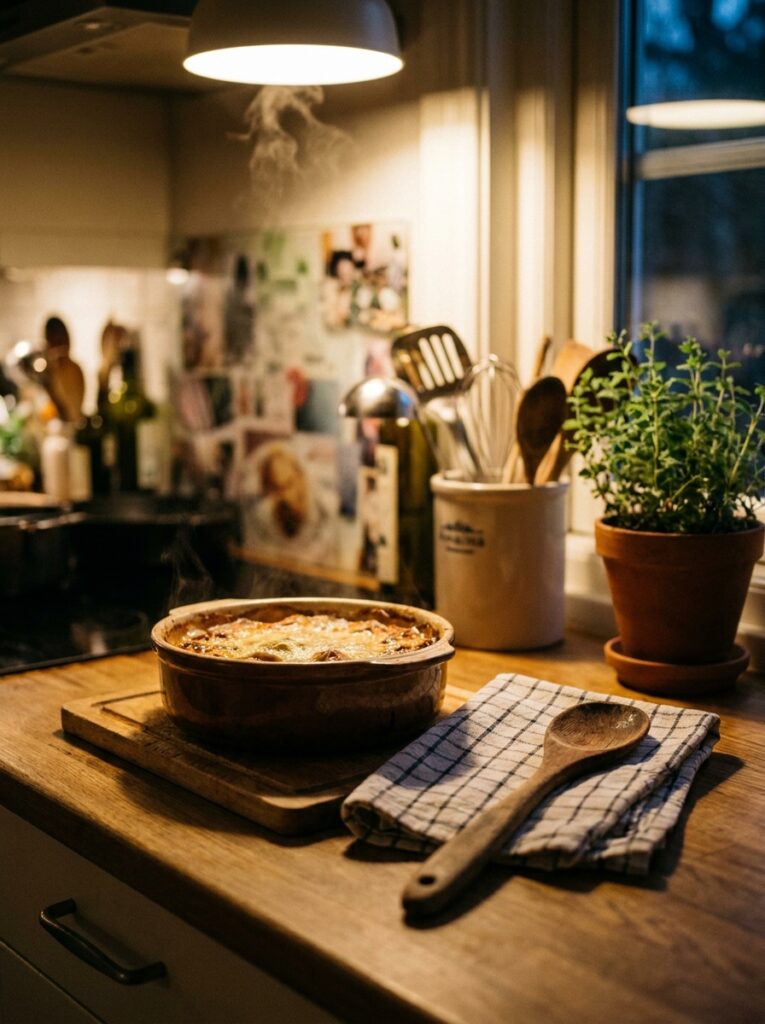
That’s the thing about this dish. It doesn’t look impressive. It doesn’t photograph particularly well. But the moment it comes out of the oven — that smell, that bubbling, golden-edged situation happening at the corners — people just sort of lose their minds a little.
—
1. Why Casseroles Got a Bad Reputation and Why This One Fixes It
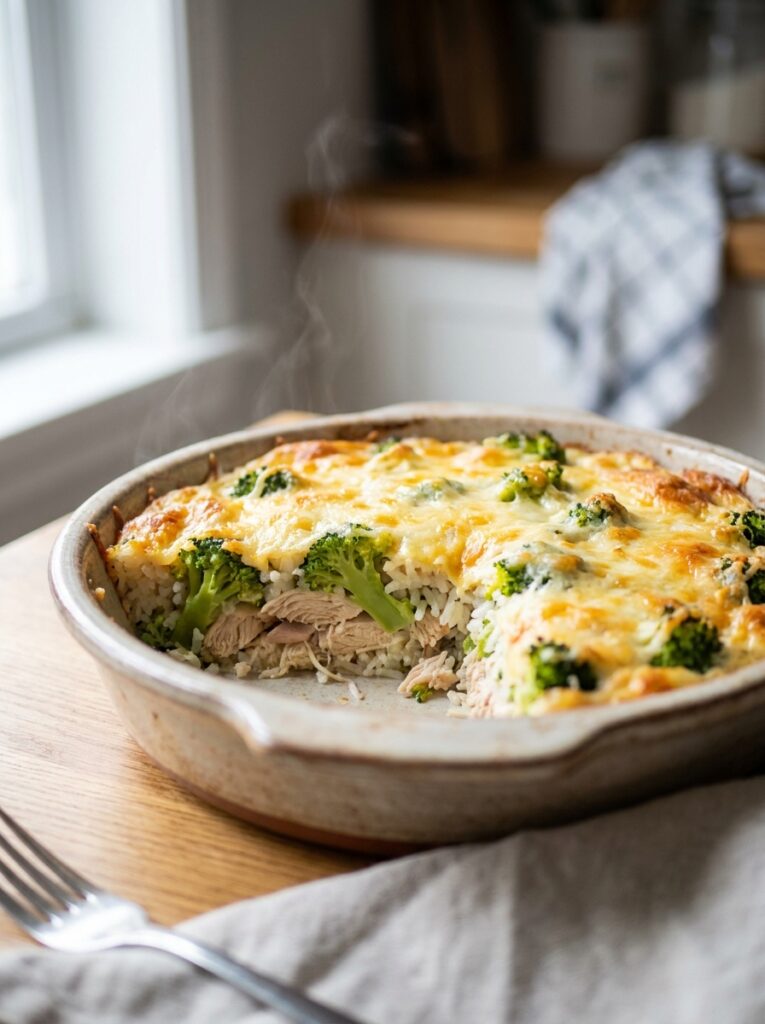
Not gonna lie — the word “casserole” does a lot of heavy lifting in the wrong direction. It conjures up something grey, something soft, something your aunt brought to a church potluck in a container with a cracked lid. And honestly? A lot of casseroles deserve that reputation.
But this one’s different, and here’s why: we’re not starting with canned soup. Or — okay, you CAN, and I’ll give you that option later because sometimes it’s 6pm and you have forty-five minutes and two kids asking about homework. But the base recipe doesn’t need it, and the flavor difference is genuinely worth knowing about.
When you build the sauce yourself, even a simple one, you get control. Over the salt level, over the richness, over whether it tastes like food or like the inside of a tin can. And it takes maybe ten extra minutes. Worth it? Almost always yes.
“The moment it comes out of the oven — that bubbling, golden-edged situation at the corners — people just sort of lose their minds a little.”
—
2. The Rice Situation: What Actually Works in a Baked Casserole
This is where I’ve seen people go wrong more than anywhere else. Rice in a casserole is not the same as rice in a pot. It behaves differently, absorbs differently, and the ratio matters in a way that feels almost mathematical.
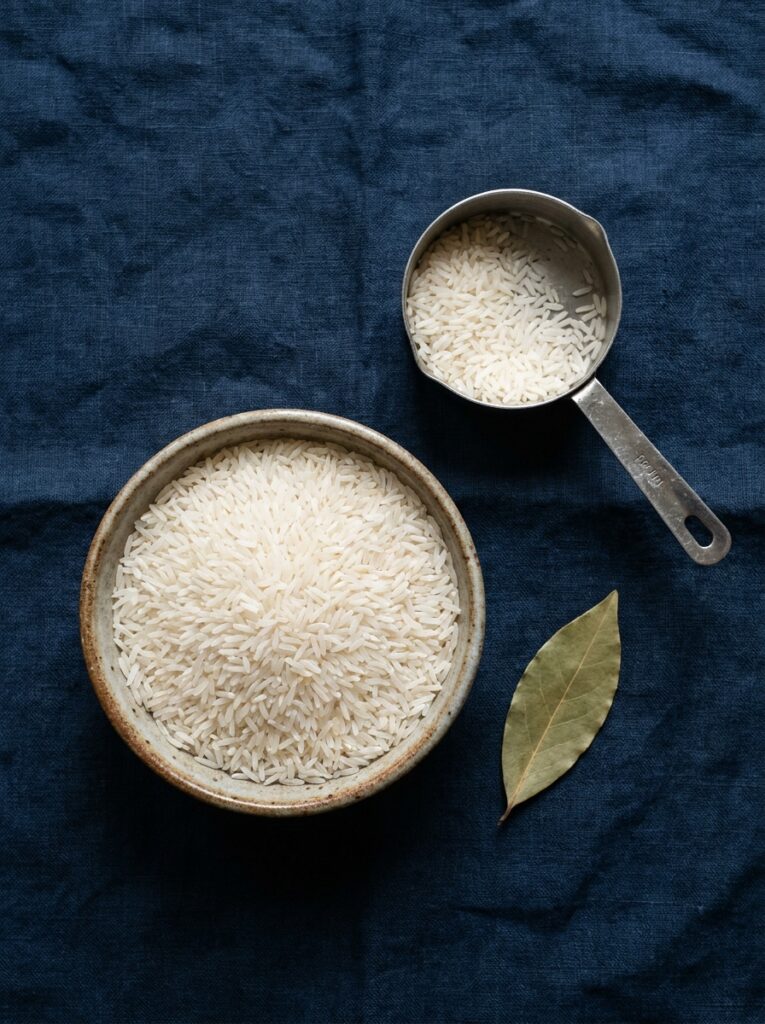
Use long-grain white rice. Not instant, not parboiled, not brown rice (I know, I know — but brown rice needs more liquid and more time and this will end in sadness). Long-grain white rice is what you want.
The ratio: roughly 2 cups of liquid for every 1 cup of uncooked rice. But in a casserole with all those other wet ingredients — broccoli releasing moisture, chicken cooking through — you might actually need slightly less. About 1¾ cups of liquid per cup of rice tends to work.
And do NOT lift the foil early to check on it. I cannot stress this enough. Every time you lift the foil, steam escapes, the rice cooks unevenly, and you’ll end up with that half-crunchy, half-mushy situation that ruins the whole thing. Cover it tight, leave it alone, trust the process.
—
3. The Chicken Question: Raw, Rotisserie, or Somewhere in Between
Here’s where the recipe splits into two very different weeknight scenarios.
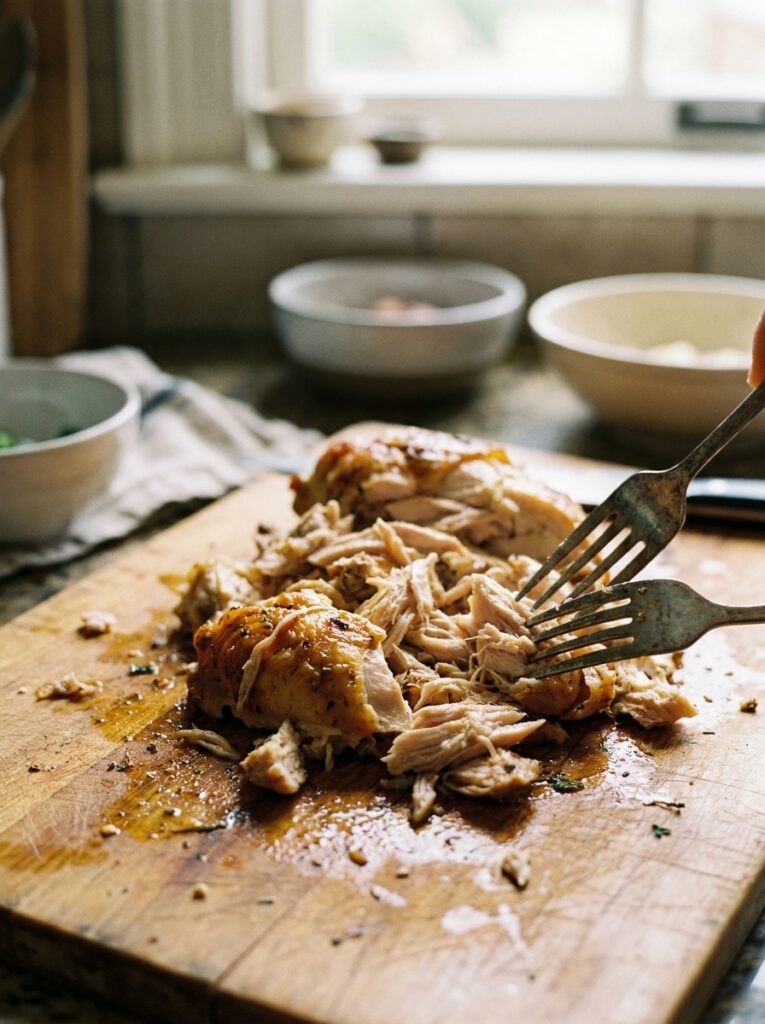
Option A: you’ve got time and a couple of raw chicken breasts. Cut them into chunks — about 1-inch pieces — and they’ll cook through in the oven right alongside everything else. The juices go into the rice, the rice absorbs all that flavor, and the whole thing tastes like it spent more time than it did. This is the better version if you’re cooking from scratch.
Option B: it’s genuinely a disaster evening. You grabbed a rotisserie chicken on the way home, you’re tired, someone’s crying, the dog needs walking. In that case — pull the meat off, stir it in with everything else, and reduce your bake time by about 15 minutes because you’re just warming cooked chicken, not cooking raw. Either way this dinner is happening tonight.
Side note — I’ve also done this with leftover roast chicken, pulled off whatever’s left from Sunday’s dinner. Works perfectly. Honestly might be the best use of leftover roast chicken I’ve found yet.
—
4. The Broccoli: Fresh or Frozen, and What to Do With the Stalks
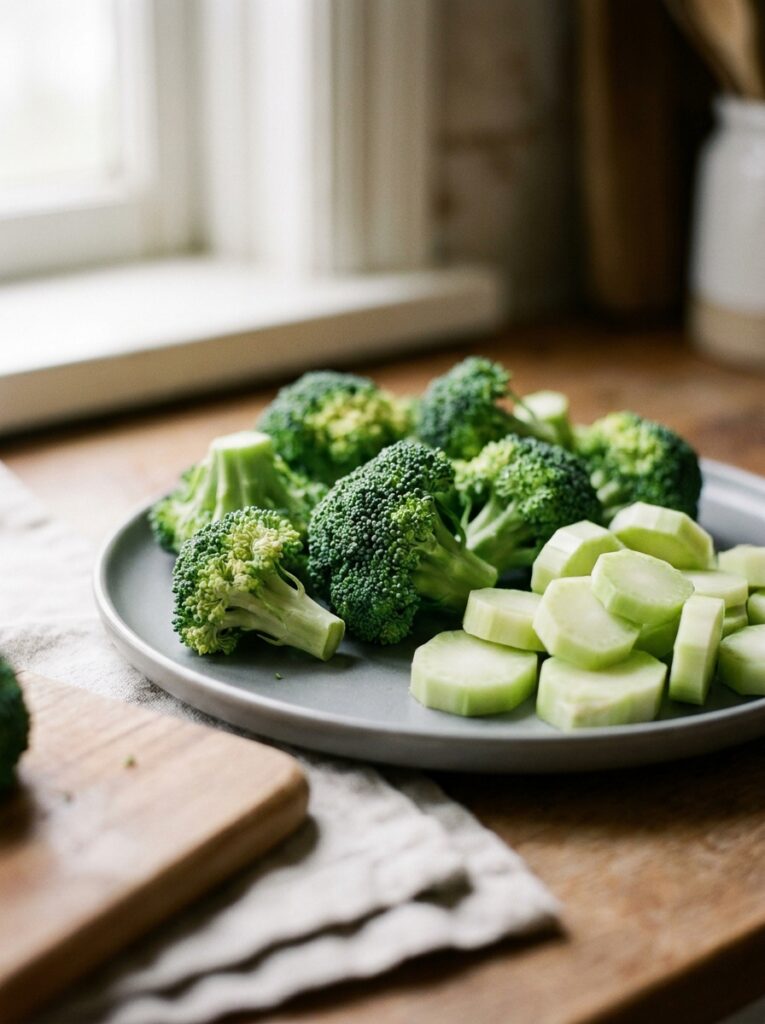
Frozen broccoli is FINE. I want to say that clearly and without apology. It’s already cut, it’s already blanched, it thaws during baking, and it costs less than fresh. There is nothing shameful about it.
That said — fresh broccoli, cut into small florets, has a slightly better texture after baking. The edges catch a little, get a tiny bit crispy where they’re exposed at the top, and that contrast against the soft, creamy rice underneath is genuinely excellent. So if you have it, use it.
If you’re using fresh broccoli, don’t bother blanching it first. It’ll cook through in the oven. Cut the florets on the small side — maybe an inch across — so they’re in proportion to everything else in the dish.
And the stalks? Peel them, dice them, throw them in. They add a little texture, they taste fine, and you don’t have to waste half the vegetable. Nobody will notice, and if they do, they’ll just think you’re resourceful.
—
5. The Sauce That Makes It All Work (No Canned Anything Required)
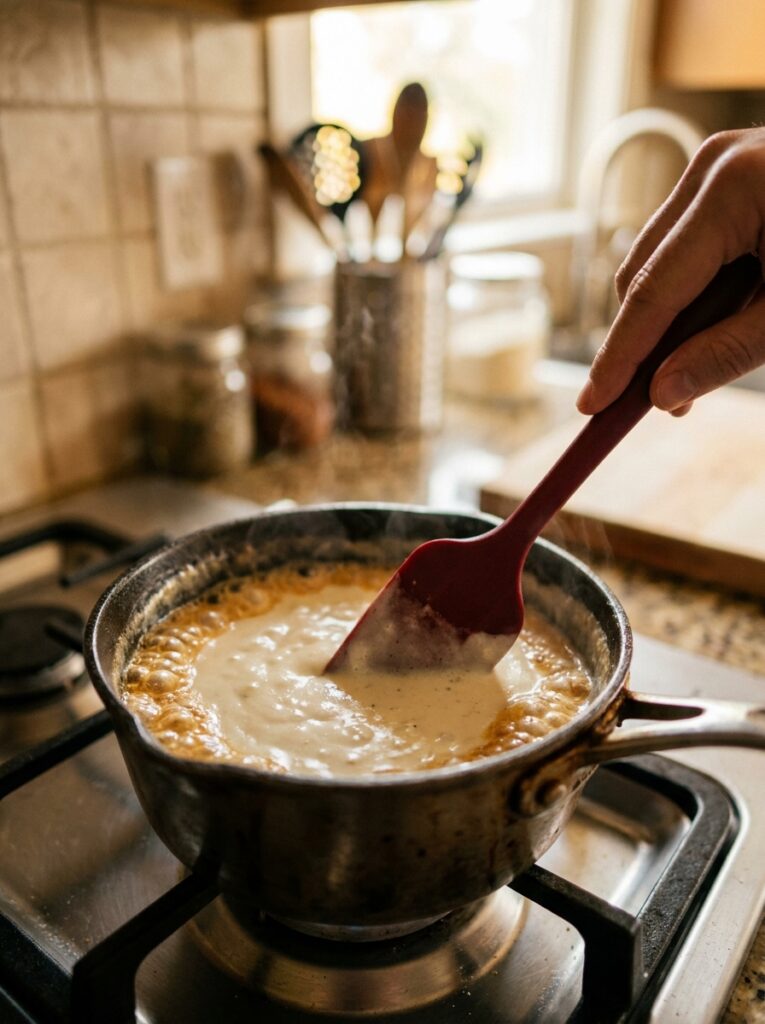
Okay. Here we go.
Start with butter. Two tablespoons in a saucepan over medium heat. Once it’s melted and just starting to foam, add two tablespoons of flour and stir it around for about a minute — you’re cooking out that raw flour taste, and it matters. Then add 1½ cups of chicken stock and ½ cup of milk or single cream, whisking as you go. It’ll thicken up in about 3-4 minutes.
Season with salt, pepper, garlic powder, and a generous amount of Dijon mustard. Not enough to taste like mustard, exactly — maybe ½ teaspoon — just enough to give it that little edge that makes people go “what IS that flavor?” You can also add a pinch of onion powder, paprika for color, and a handful of grated cheddar stirred through at the end.
That’s it. That’s the sauce. Takes about ten minutes start to finish and it blows the canned soup version out of the water.
“A pinch of onion powder, paprika for color, and a handful of grated cheddar stirred through at the end — that’s it. That’s the sauce.”
—
6. Putting It Together: The Assembly Order Actually Matters
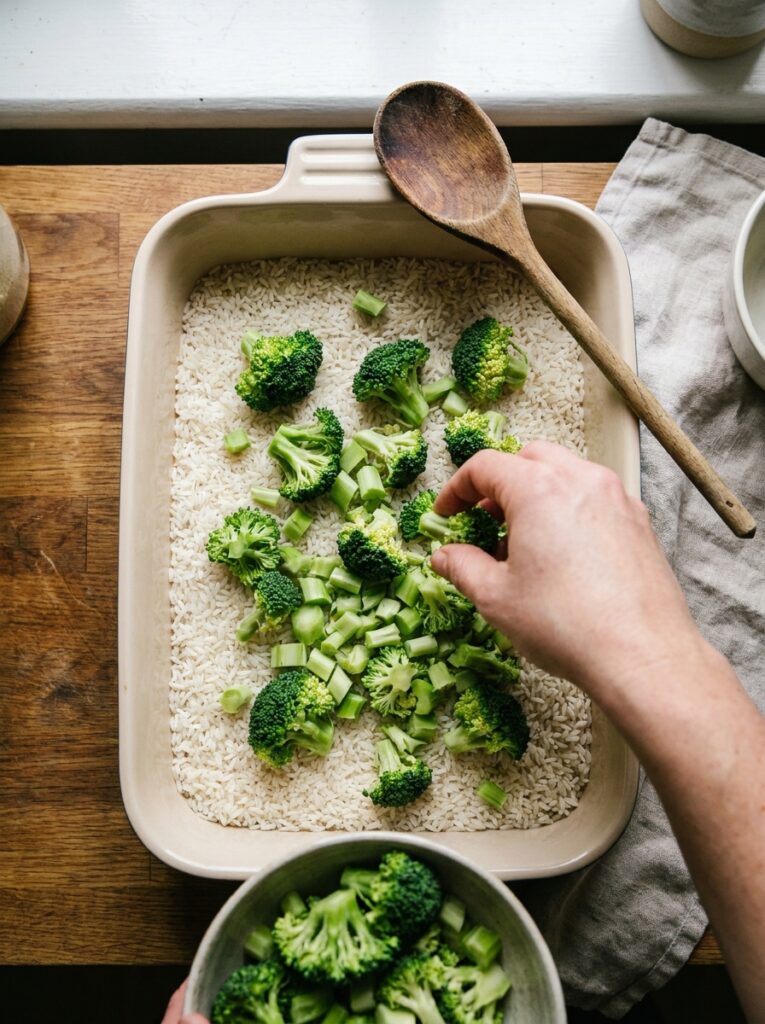
I used to just throw everything in the dish and mix it around. And that works, sort of, but the rice doesn’t always cook evenly and you get patches of undercooked grains near the top.
Here’s what works better: pour your sauce and stock into the dish first, then add your uncooked rice and stir it in. Get the rice evenly distributed and sitting in the liquid. Then nestle your raw chicken pieces down into the mixture. Then scatter the broccoli florets on top. This way the rice is fully submerged in liquid, the chicken is mostly covered, and the broccoli sits at the top where it can cook through without going completely mushy.
Scatter shredded cheese over the top — cheddar’s classic, but a mix of cheddar and mozzarella gives you those satisfying cheese pulls — cover tightly with foil, and bake.
375°F (190°C) for 45 minutes covered, then remove the foil and give it another 15 minutes to get golden and bubbling on top. Total: about an hour, with maybe 15 minutes of actual active work before it goes in.
—
7. The Version With Cream of Mushroom Soup (Because Sometimes Life Is Like That)
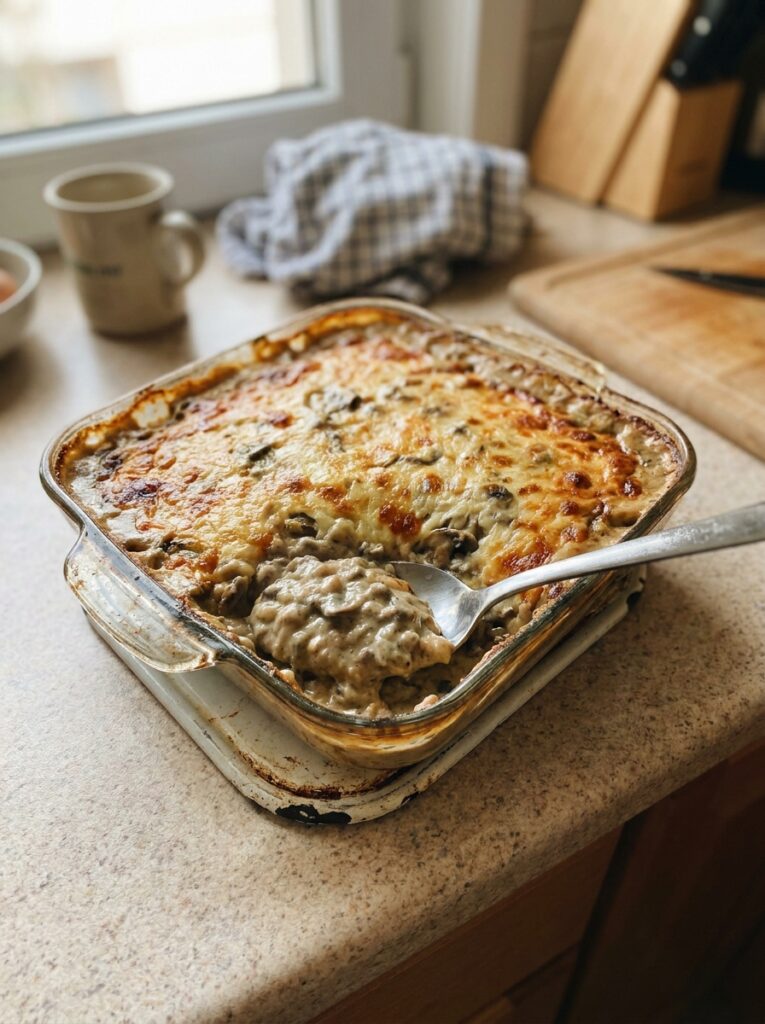
I promised I’d give you this option and here it is, without judgment.
One can of cream of mushroom soup (or cream of chicken), one cup of chicken stock, a splash of milk. Stir it together, pour it over your rice and chicken and broccoli. Season well — the soup is already salty, so taste as you go. Add garlic, some black pepper, maybe a pinch of paprika.
Same bake time, same temperature.
Is it as good as the from-scratch version? Honestly, not quite. But it’s really good. Comforting in a way that’s almost nostalgic. There’s something about that particular texture that hits differently when you’re tired and cold and just need dinner to be DONE.
And if someone complains, they can cook.
—
8. The Cheese Topping That Deserves Its Own Paragraph
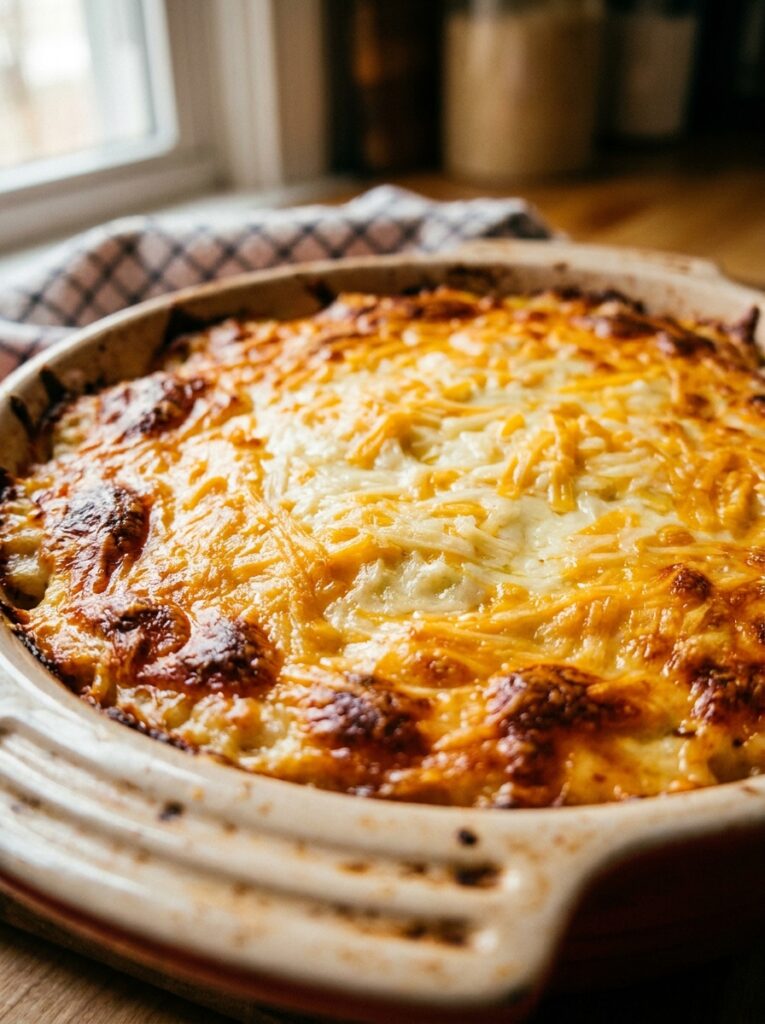
Don’t skip it. Don’t go light on it. This is not the place to be restrained.
You want the cheese to go on during the last 15 minutes of uncovered baking so it gets properly golden — not just melted, but slightly browned in spots, maybe a little crispy at the very edges of the dish. That’s where the magic happens.
Sharp cheddar is the classic move. But I’ve done a blend of gruyère and cheddar when I had it in the fridge and that was… genuinely very good. Richer, slightly nuttier. A little fancy-feeling for a weeknight, in the best possible way.
Breadcrumbs mixed with a small amount of melted butter scattered over the top before that final bake creates an actual crust. If you want that — and you should, at least once — do it. Even just panko breadcrumbs with a tiny bit of butter gives you something between a gratin and a casserole and it’s incredibly satisfying.
—
9. Making It for a Crowd Without Tripling the Stress
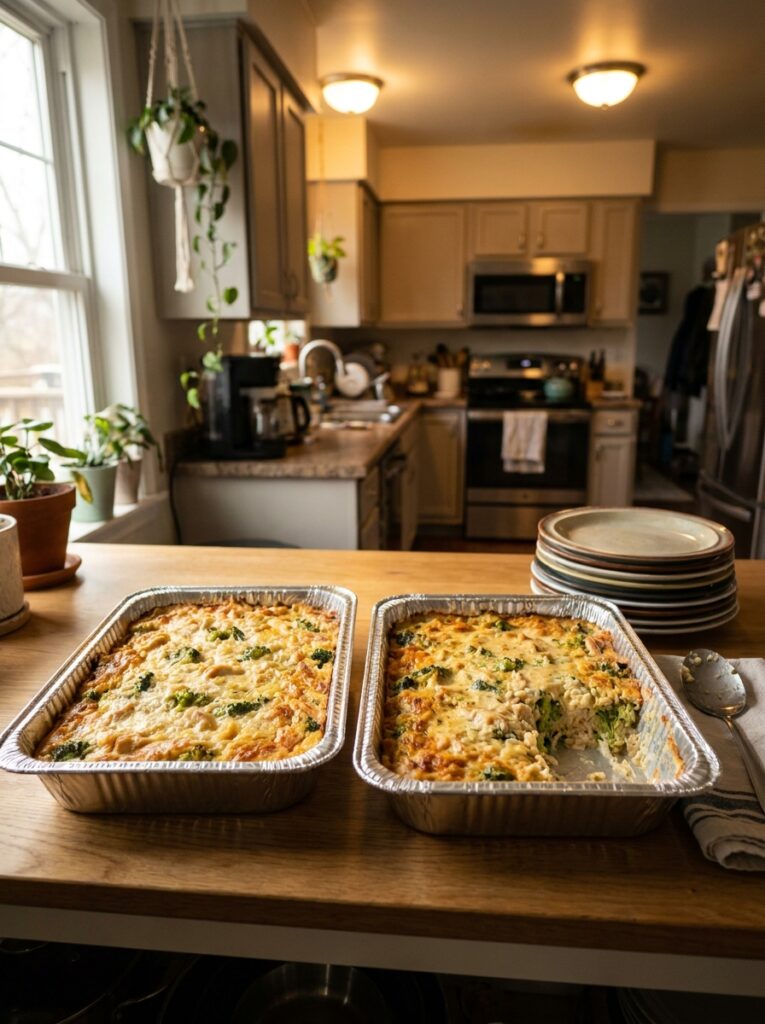
This recipe scales up almost perfectly. Doubling it means using a 9×13 dish instead of an 8×8, increasing the liquid proportionally, and adding about 10-15 minutes to the covered bake time.
Cooking for a crowd? You can assemble the whole thing the night before, refrigerate it covered, and bake it straight from the fridge — just add about 20 minutes to the total time since you’re starting from cold.
This is genuinely the casserole I bring to people. New parents, friends recovering from something, neighbors moving in. Because it reheats well, it transports well, and it tastes like you made an effort even when you absolutely did not.
—
10. The Leftovers Situation (Better Than You’d Expect)
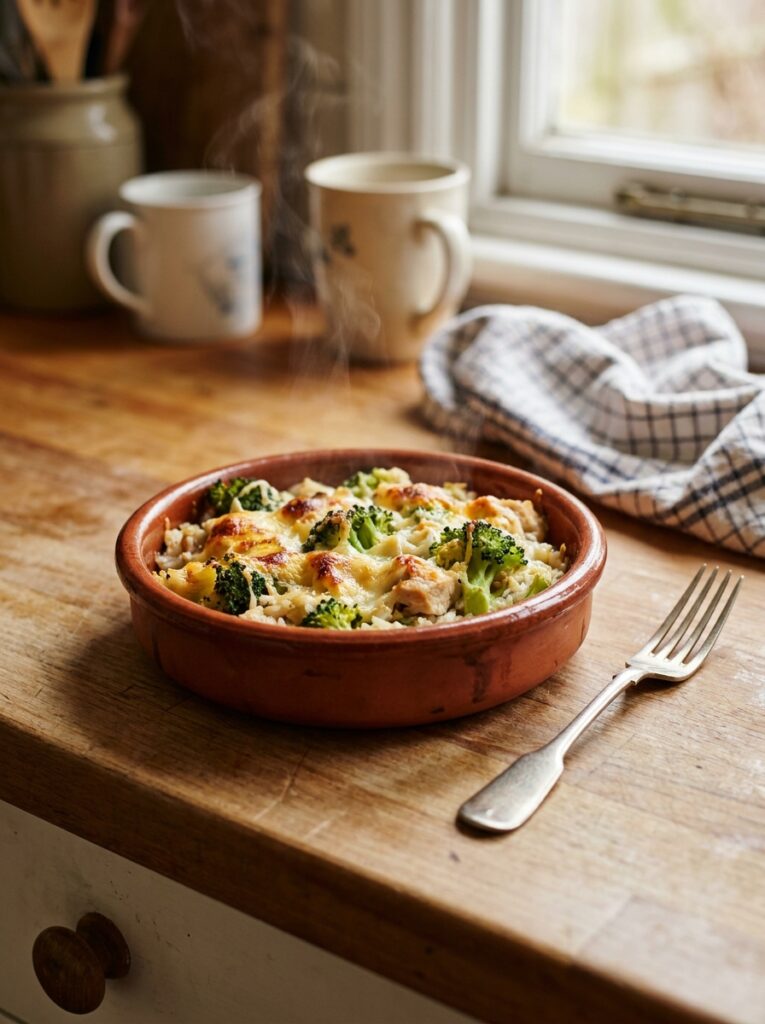
Casseroles sometimes struggle the next day. The rice can get gluey, things can separate a bit. This one holds up better than most, but there’s a trick.
When you reheat it, add a small splash of stock or water — maybe two tablespoons — over the portion before it goes in the microwave. Cover it loosely, heat on medium-high. The added moisture prevents the rice from going dry and pasty, and it comes out tasting almost like it did fresh.
Cold from the fridge, this casserole is… not great. I’ll be honest. It’s one of those things that really wants to be hot. So reheat it properly, and it’s a perfectly good lunch the next day.
It keeps in the fridge for about four days. You can freeze it, though the texture of the rice shifts a bit — more dense, less fluffy. Still good, still filling. Totally acceptable on a freezer-meal basis.
—
11. The Little Swaps That Change the Whole Personality of the Dish
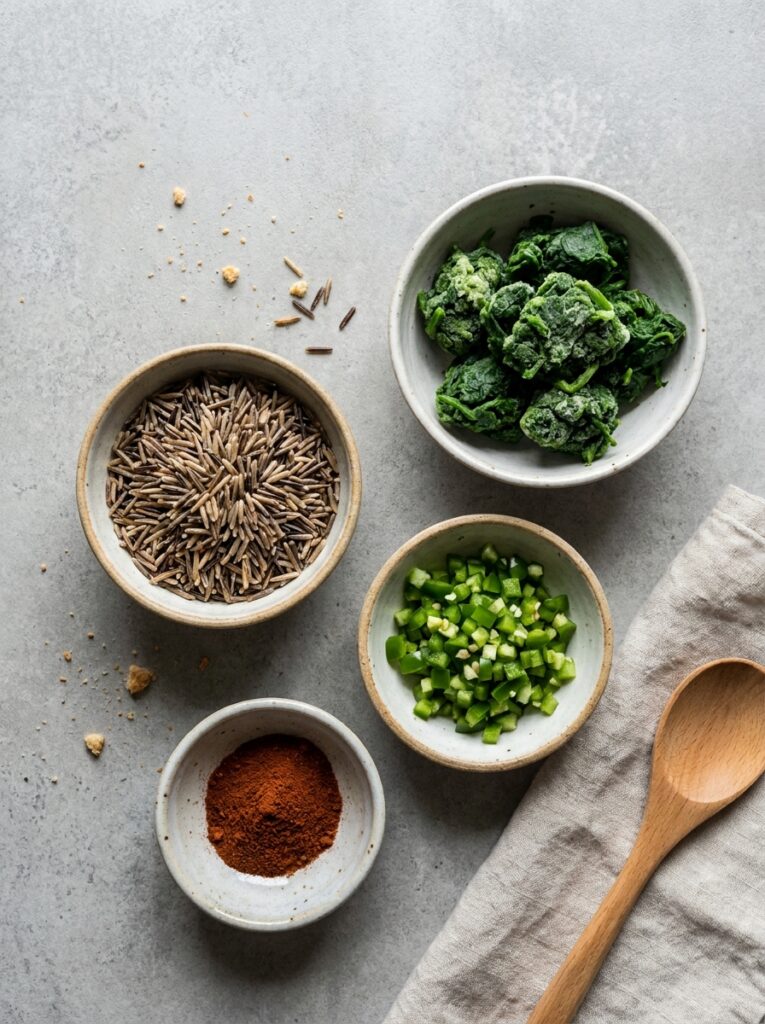
Once you know the base recipe, you can start messing with it. And that’s honestly where things get interesting.
Swap the broccoli for spinach that gets stirred in at the end (it wilts into the rice beautifully). Or use cauliflower instead of broccoli for something slightly more neutral. Add a chopped leek to the base sauce for a very British, very satisfying note of flavor.
You can go slightly spicy — add some smoked paprika and a pinch of cayenne to the sauce and suddenly it has a completely different personality. More interesting, a little less cozy and more dinner-party-adjacent.
Or make it creamy and herby: swap some of the stock for single cream, add fresh thyme and a squeeze of lemon, finish with parsley. It feels lighter but still comforting. Sort of a French-ish version that doesn’t quite fit the “casserole” label but doesn’t need to.
“Once you know the base recipe, you can start messing with it. And that’s honestly where things get interesting.”
—
12. The Dinner That Doesn’t Ask Much of You
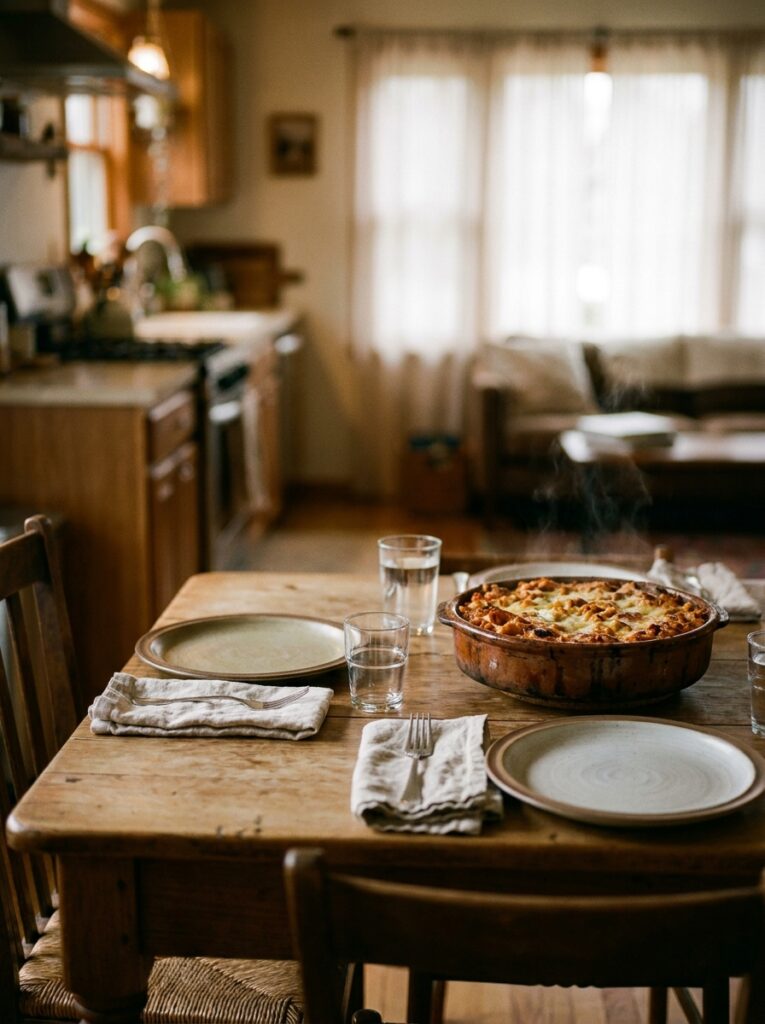
There’s something specifically satisfying about a meal that goes into the oven and just… handles itself. You don’t have to watch it, stir it, adjust it. You put it in, you set a timer, and for the next hour you can do something else.
Help with homework. Have a cup of tea. Lie on the sofa with your shoes still on pretending the day is over. Whatever you need.
And then the timer goes off, and you take the foil off, and the kitchen smells incredible — that golden, savory, bubbling smell that means dinner is genuinely ready. Not in a few minutes. Right now.
It feeds four comfortably, maybe six if you do some sides. A simple green salad, some crusty bread if you’re in the mood, maybe nothing at all because honestly it’s a complete meal by itself. The chicken, the vegetables, the starchy rice soaking up every bit of that creamy sauce.
That’s all this is. A really good dinner on a normal night. No fuss, no stress, no elaborate anything.
My neighbor still texts me photos of her casserole dish every time she makes it. Somehow it still surprises her how fast it disappears.
—
❓ FAQ
Q: Can I use brown rice instead of white rice in a chicken broccoli casserole? A: You can, but it needs adjusting. Brown rice requires more liquid (closer to 2½ cups per cup of rice) and longer cooking time — you’ll likely need to add 20-30 minutes to the covered bake time. Check it’s cooked through before removing the foil. The texture will be slightly nuttier and chewier, which some people actually prefer.
Q: Can I make chicken broccoli rice casserole ahead of time? A: Yes, and it works really well. Assemble the whole dish, cover tightly, and refrigerate for up to 24 hours before baking. Add 15-20 minutes to the covered bake time since you’re starting from cold. Don’t add the cheese topping until you’re ready to do the final uncovered bake.
Q: Why is my rice still crunchy after baking? A: Almost always a liquid or coverage issue. Make sure the rice is fully submerged in liquid before it goes in, that your foil is tightly sealed so steam can’t escape, and that your oven is actually at the right temperature (oven thermometers are cheap and genuinely useful). If it’s still crunchy after the full bake time, add a quarter cup of hot stock, re-cover, and give it another 10-15 minutes.
—
💭 Final Thoughts
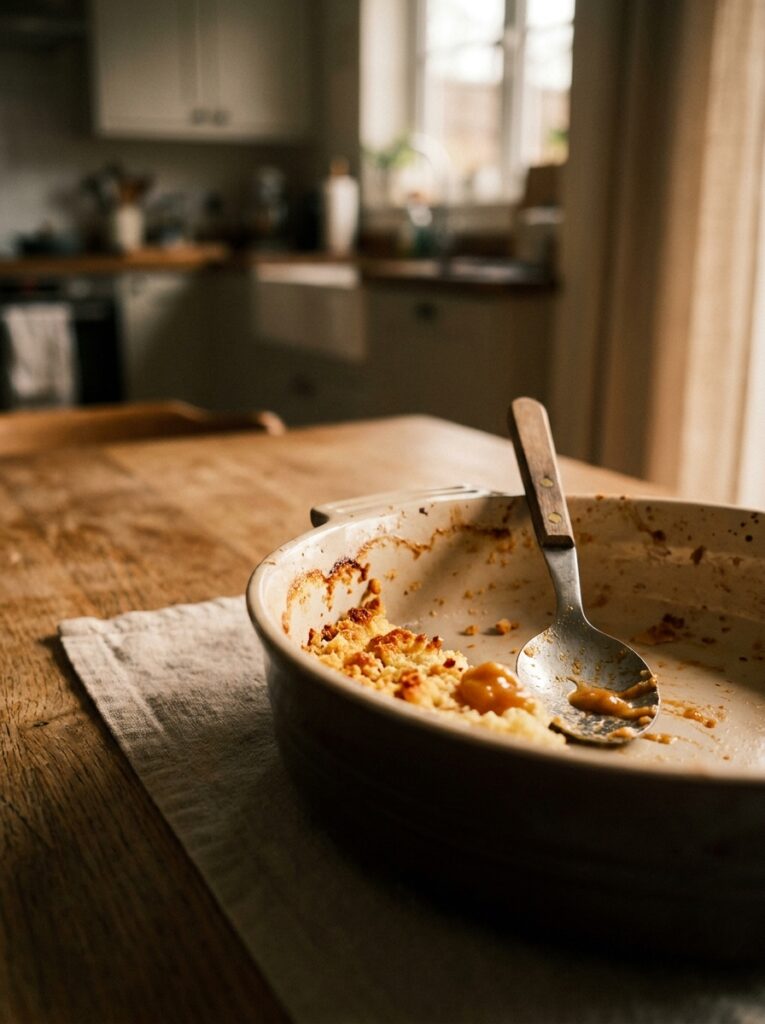
This is the recipe I make when I want to feel like I’ve done something nice for my household without actually expending a huge amount of energy. Which, on a Tuesday in the middle of a long week, is basically exactly what I need.
It’s forgiving, it’s flexible, and it tastes like it took more effort than it did — which is really all you’re ever asking of a weeknight dinner.
What’s the one dish in your rotation that you could make with your eyes closed?