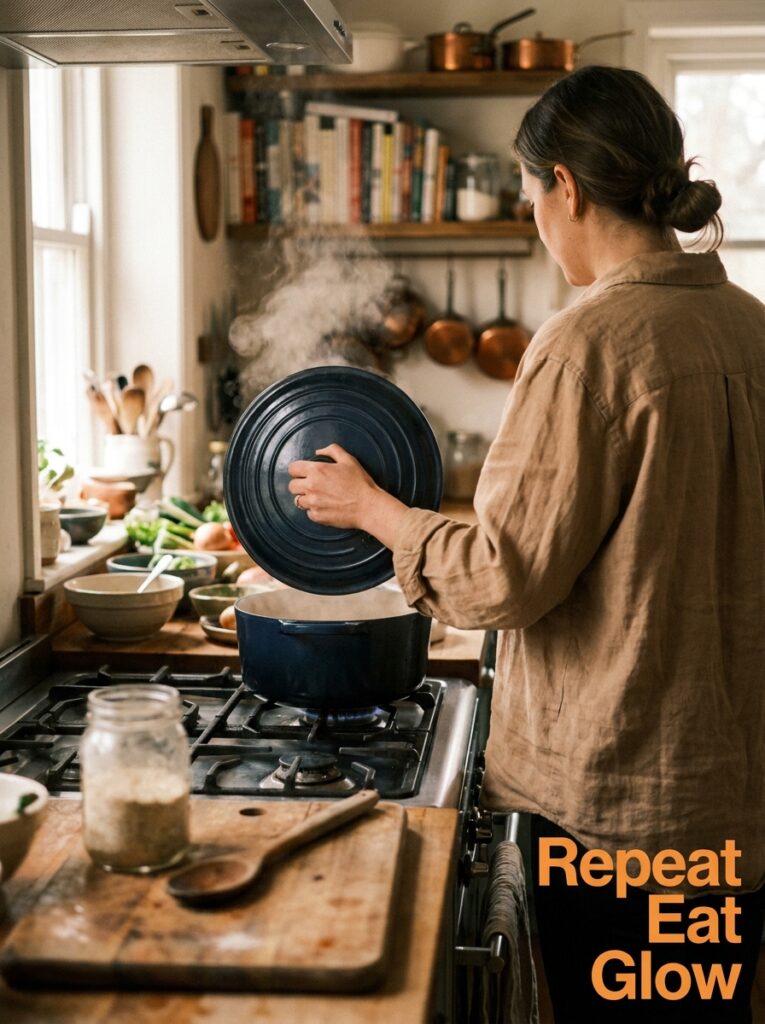
You know that smell when chicken has been braising low and slow for two hours and the whole house just smells like Sunday? That’s what a Dutch oven does. And once you get it, you never go back.
—
1. Why Your Dutch Oven Is the Most Underused Thing in Your Kitchen Right Now
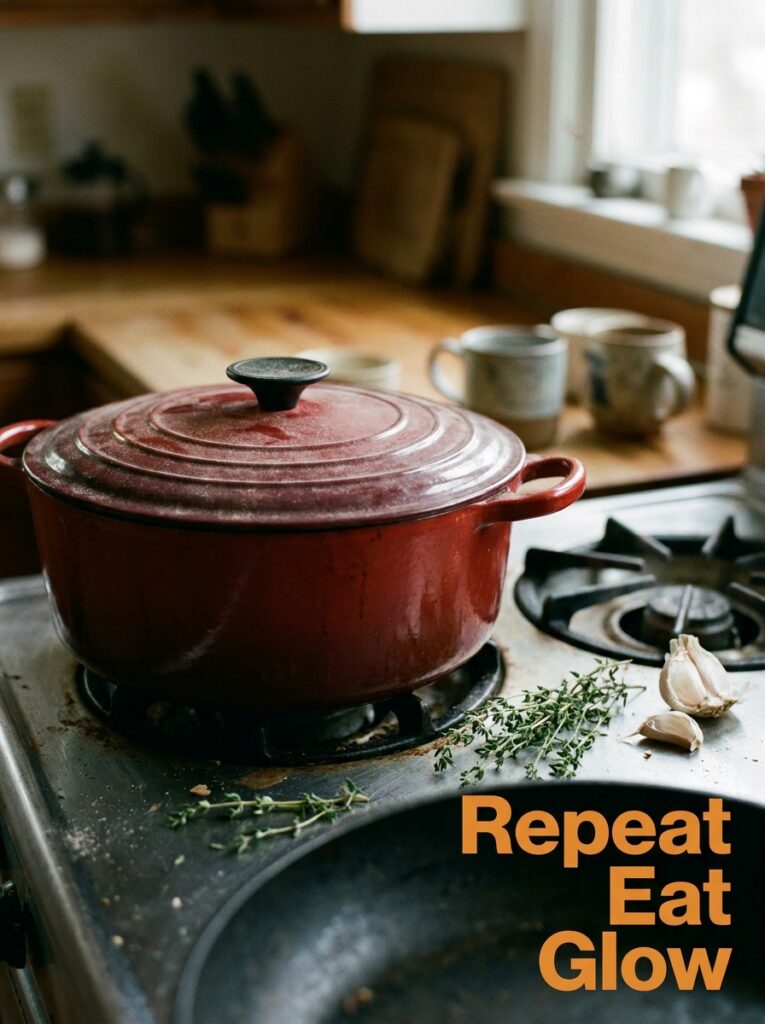
Honestly, I went two years owning a Dutch oven and using it maybe three times. It just sat there, heavy and impressive, on the bottom shelf. And then one rainy October afternoon I threw a chicken in it with some garlic and wine and forgot about it for an hour and a half. That was it. That was the thing that changed how I cook.
The Dutch oven is basically a cheat code for chicken. Cast iron holds heat so evenly that you don’t get those frustrating hot spots where one side burns while the other stays pale and sad. The lid traps steam, which means the chicken basically self-bastes the whole time it’s cooking. You get this incredible cycle of moisture — liquid evaporates, hits the lid, drops back down onto the meat — and what comes out is something that tastes like you really knew what you were doing.
It works on the stovetop, in the oven, and honestly the transition between the two mid-recipe is one of my favorite moves. Sear the chicken on the stove until it’s deep golden and crackling, then put the whole thing in the oven to finish gently. You’re using one pot. One. The washing up is so minimal it almost feels wrong.
Whether you’ve got a Le Creuset that cost more than your monthly grocery bill or a perfectly good £30 version from a superstore, the physics are the same. Heavy base. Tight lid. Heat that goes everywhere evenly. That’s all you need.
“The Dutch oven doesn’t ask much of you — just time and a tight lid. And in return it does something to chicken you can’t really explain until you taste it.”
—
2. The Classic French Braise That Needs to Be in Your Regular Rotation
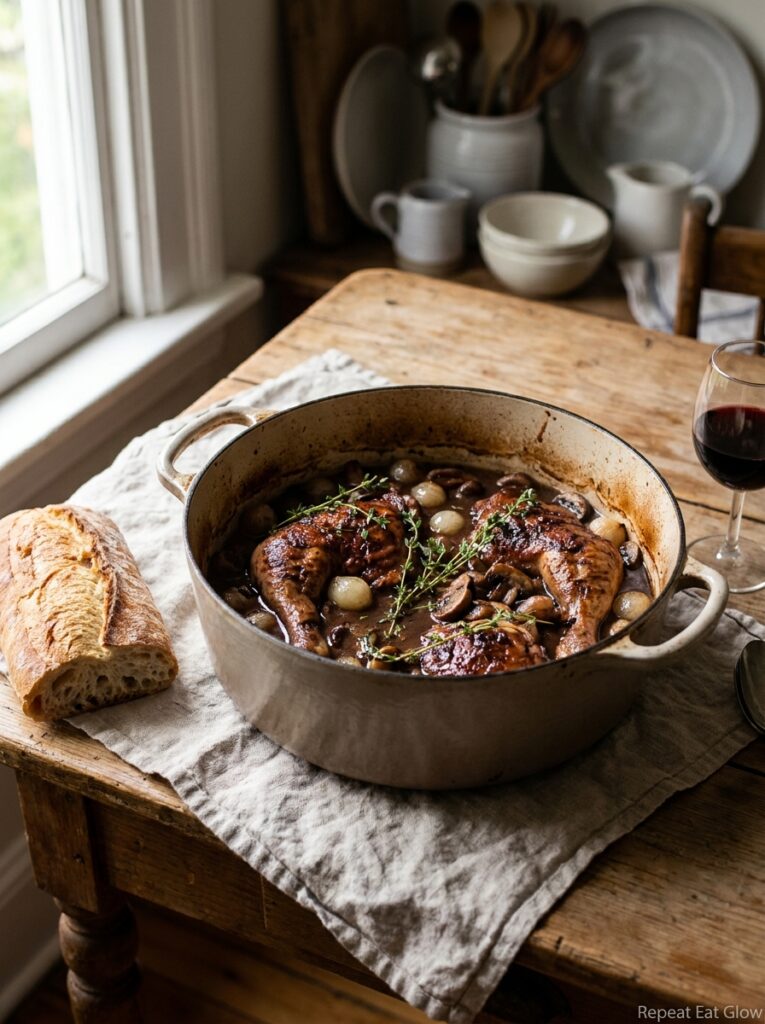
So there’s this recipe — I don’t even really call it a recipe anymore, it’s more like a method with variations. Chicken thighs (bone-in, skin-on, don’t argue with me on this), shallots, garlic, a pour of white wine, some chicken stock, and fresh thyme. That’s it. That’s the whole game.
You start by getting the Dutch oven ripping hot with a little oil, pat the chicken completely dry because WET chicken does not sear it just steams, and lay it in skin-side down. Don’t touch it. Just let it sit there getting golden and crispy while you resist every urge to move it. Five or six minutes. Then flip, give it another two minutes, and remove it to a plate.
In the same fat, cook the shallots until they’re almost melting — they’ll pick up all those golden bits from the bottom which is where all the flavor lives anyway. Add the garlic, the wine (pour yourself a glass too, obviously), let it bubble and reduce by half. Add stock, put the chicken back in, lid on, 325°F for about 45 minutes.
What comes out of that pot is something that tastes deeply savory and a little sweet and completely like something a French grandmother made except it was you. Serve it over mashed potatoes or with crusty bread and you’re basically done, dinner is handled, everyone is happy.
—
3. The Garlic Chicken That Uses a Whole Head and Somehow Isn’t Too Much
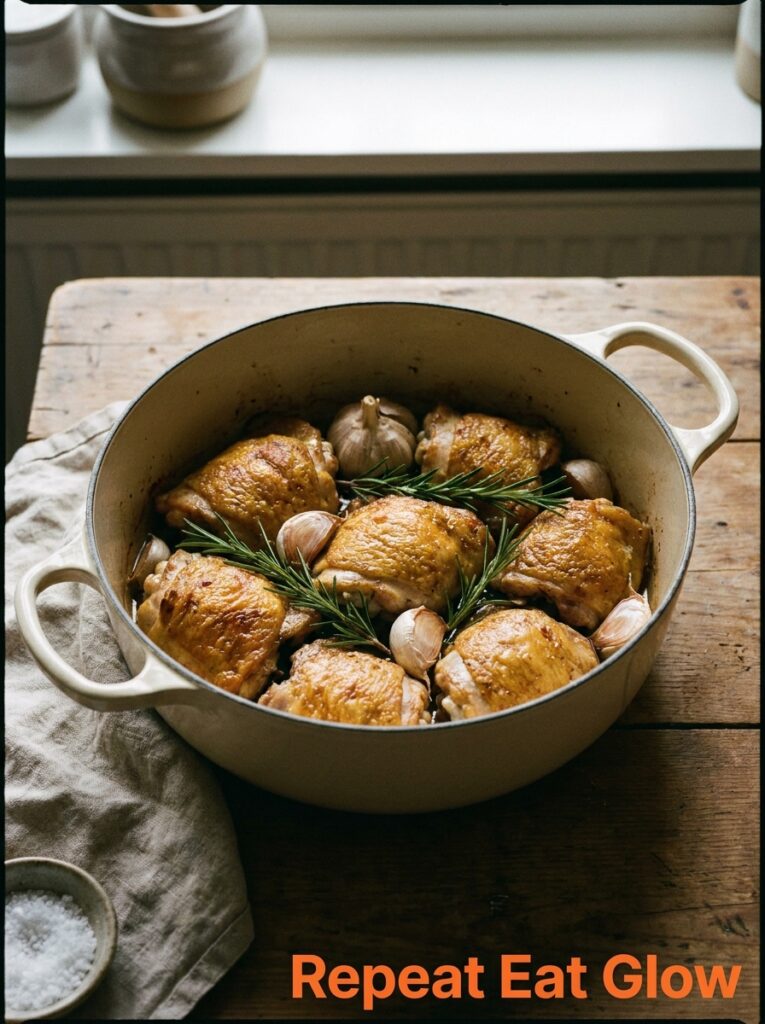
I know. A whole head of garlic sounds aggressive. And the first time someone told me this recipe I said “that’s a lot of garlic” and they said “that’s the point.” So.
Forty cloves of garlic. Yep. You don’t mince them, you don’t crush them — you leave them whole and unpeeled and they roast right alongside the chicken and turn into something completely different. They go sweet and nutty and sort of jammy inside their skins, and you can squeeze them out like little roasted garlic paste bombs onto your bread and it’s one of the best things I’ve eaten in my life, not kidding.
The chicken here is a whole bird. Trussed if you can be bothered, not trussed if you can’t. Season it generously — and I mean GENEROUSLY — inside and out with salt, pepper, and a little olive oil. Sear it all over in your Dutch oven, stuff some thyme and a lemon half in the cavity, scatter all the garlic around it, put the lid on, and into a 325°F oven for about an hour and a half depending on the size of the bird.
The garlic absorbs all the chicken fat and the herbs and the steam and it becomes this impossible side dish that nobody planned for but everyone fights over. Side note — the leftover garlic goes into pasta the next day and it’s almost better than the original meal.
—
4. Chicken and Rice, Done in One Pot, No Soggy Bottom
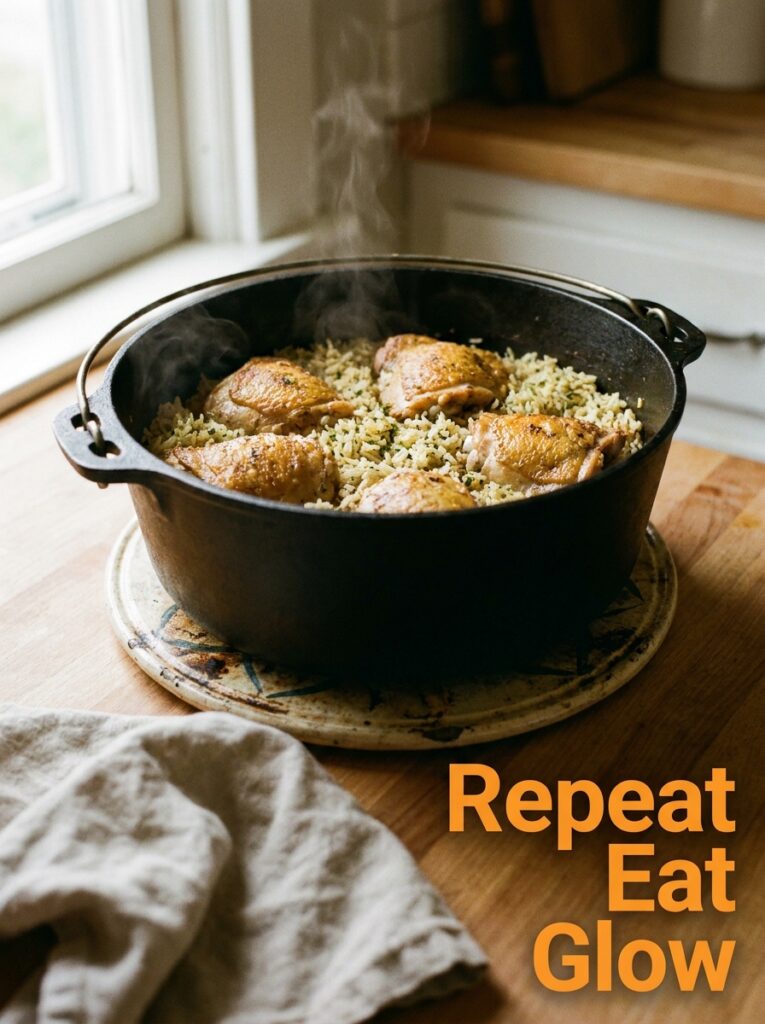
This one is magic. And I say that as someone who made it badly twice before I figured out the specific trick that makes it work.
The rice question. Everyone worries about mushy rice or undercooked rice or rice that sticks to the bottom in an unpleasant way. Here’s what actually works: you sear the chicken first, set it aside, then toast the raw rice in the leftover fat for about two minutes, stirring constantly. The rice goes slightly golden and nutty-smelling. Then you add your liquid — stock, always stock, please never water — and nestle the seared chicken pieces right on top. The chicken sits above the rice so the steam from below cooks it gently while the rice absorbs all the fat and fond and seasoning from the bottom.
The ratio matters a lot. 1 cup of rice to 1¾ cups of liquid, lid tight, oven at 350°F for 35 minutes. Don’t open the lid during cooking. Just don’t. You’ll let out the steam and then you’ll have uneven rice and you’ll be annoyed.
What you get after those 35 minutes is rice that’s fluffy and golden on the bottom with this crispy, slightly caramelized crust, chicken that’s cooked through and gorgeous, and a meal that sort of shocks people because it looks like effort but took under an hour.
“Toasting the rice in chicken fat before adding the liquid — that two-minute step is the entire difference between fine and unforgettable.”
—
5. The Coq au Vin You’re Not Scared of Making Anymore
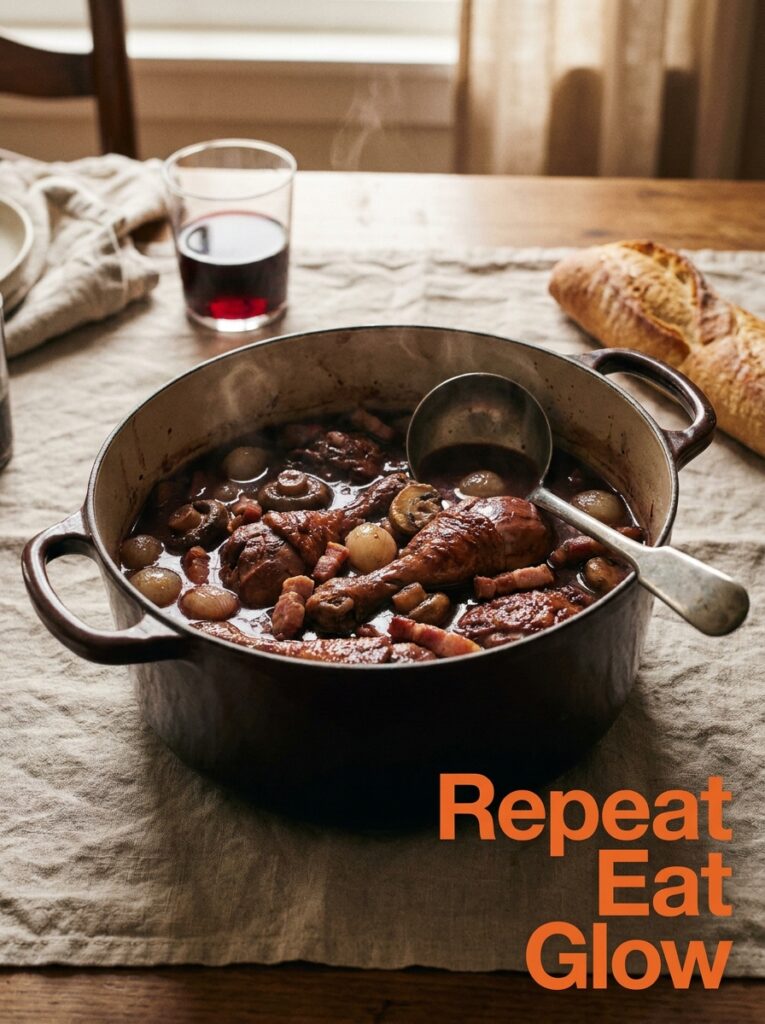
Coq au vin has this reputation for being a dinner party dish, something fancy and intimidating that requires skill and time and probably a French accent. It doesn’t. It really doesn’t.
Red wine, bacon lardons (or just cut up some streaky rashers), mushrooms, pearl onions, chicken, stock, and thyme. That’s the list. The technique is essentially the same braise we’ve already talked about — sear, build flavor in the pan, liquid, lid, oven — except here the liquid is wine and the whole thing takes on this deep, almost purple-red color that makes it look like you really went for it.
The bacon is non-negotiable. It renders its fat into the pot first and you cook everything else in that fat and it creates this smoky bottom note under everything that you can’t replicate any other way. Use chicken thighs for guaranteed tenderness. The mushrooms go in for the last 20 minutes so they don’t disappear into mush.
A thing nobody tells you: coq au vin is better the next day. The flavors deepen overnight and the sauce tightens up and it reheats beautifully. Make it on Saturday, eat it on Sunday, and you’ll feel genuinely smug.
—
6. When It’s Cold Outside and Only Chicken Soup from Scratch Will Do
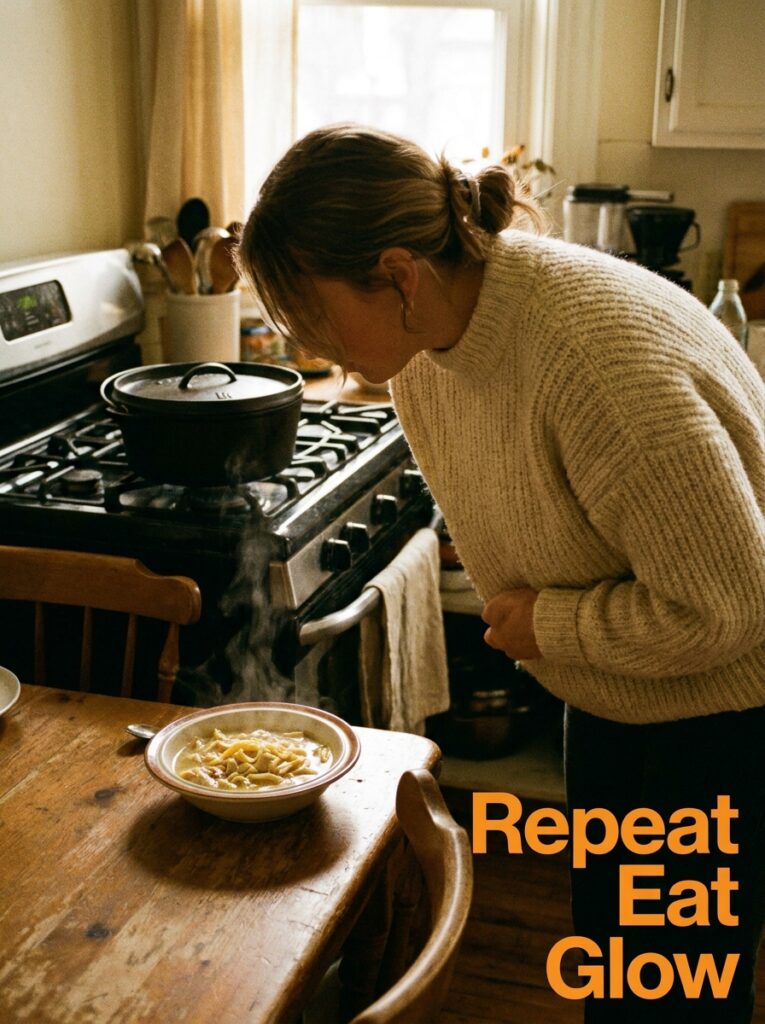
Not the shortcut version. Not the “use a rotisserie chicken” version (though I love that too, let’s be honest). I mean the version where you put bone-in chicken pieces in the Dutch oven with an onion and some celery and carrots and peppercorns and just let it go for an hour and a half and your kitchen becomes the warmest, best-smelling place you’ve ever been.
The Dutch oven is IDEAL for this. Because the size of it means you’re not crowding the pot, and the even heat means your stock simmers rather than boiling rapidly, which keeps it clear rather than cloudy. A gently simmering stock is a beautiful thing. Rapidly boiling stock is aggressive and creates a muddy, grey liquid, and that’s the thing most people don’t know.
Skim the foam off the top in the first 20 minutes. That’s the other thing. Just keep a spoon nearby and skim it every few minutes at the start. After that it calms down and you can pretty much ignore it. Remove the chicken, shred the meat, strain the stock, add it all back with some egg noodles or small pasta and a lot of dill and you’ve got the real thing. The one that actually makes people feel better.
—
7. A Moroccan-Spiced Chicken That’ll Convince You to Buy More Spices
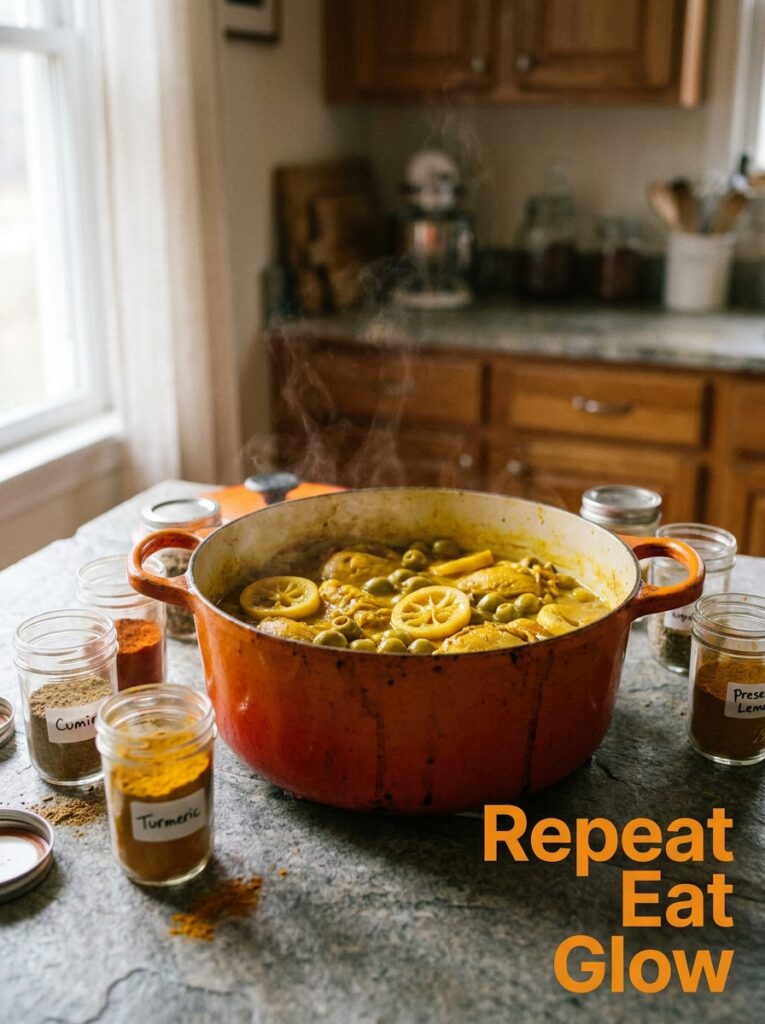
Preserved lemon, olives, cumin, coriander, cinnamon, paprika. If your spice drawer is looking dusty, this recipe is the reason to fix that. And it will fix it because you’ll make this again.
The chicken (thighs again — we live here, we’re not leaving) gets marinated in a spice paste of garlic, olive oil, cumin, paprika, and a little cayenne for about an hour if you’re organized or twenty minutes if you’re not. Then it goes into the Dutch oven on a bed of onions and tomatoes, with a handful of green olives scattered in and a preserved lemon cut into quarters tucked around the edges.
The preserved lemon is the thing. It’s salty and sour and a little funky in the best possible way, and it perfumes the whole dish as it braises. You can find them in most supermarkets now, or online, and they keep forever in the jar so it’s genuinely a good investment.
350°F, lid on, 50 minutes. The sauce should be thick and deeply orange-red and everything should be collapsing slightly into each other. Serve with couscous or flatbread and a dollop of yogurt. This is the dinner that made one of my friends text me at 11pm asking for the recipe and I don’t think that’s ever not happened after I made it for someone.
“The preserved lemon does something to braised chicken that no other ingredient can — a background saltiness and brightness that you can’t identify but you’d immediately notice if it wasn’t there.”
—
8. Chicken Cacciatore That Tastes Like a Sunday in Italy
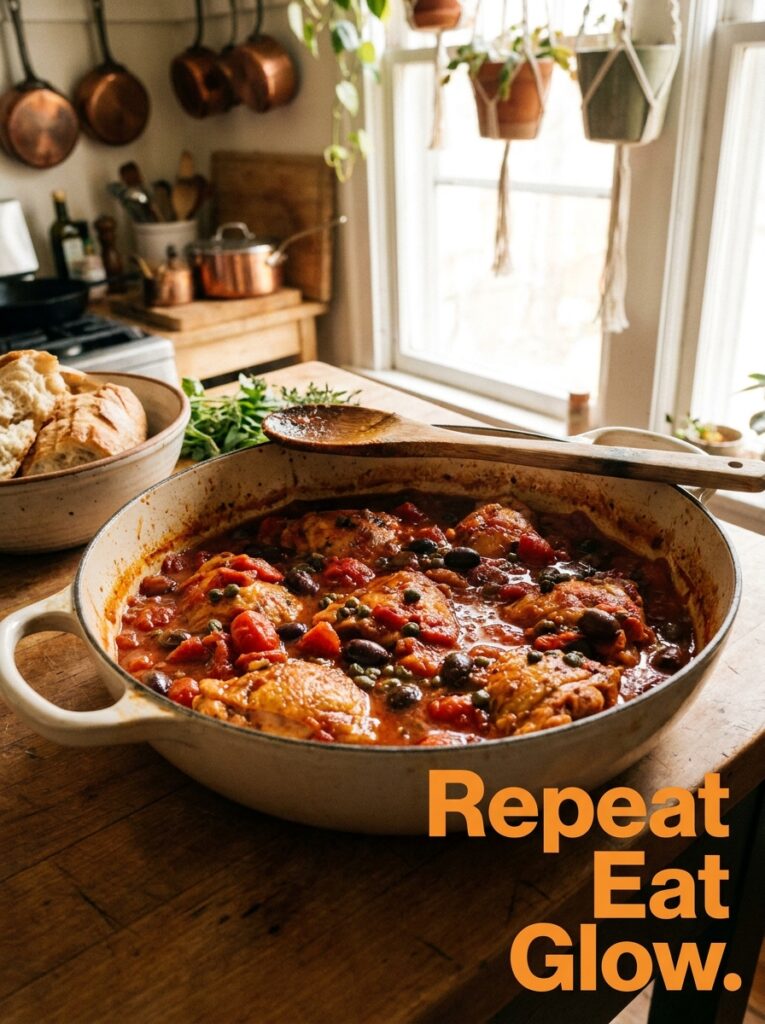
Tomatoes, olives, capers, peppers, white wine, chicken. Cacciatore means “hunter’s style” which basically means “whatever was lying around,” and that’s exactly the kind of cooking I respect most.
What I love about this one is you can put it together in under 15 minutes and then it sits in the oven for an hour and does all the work without you. The tomatoes break down into this thick, intensely savory sauce. The peppers go soft and sweet. The olives give these little pops of briney intensity every few bites.
Don’t use fancy olives. Or do, I’m not your mother. But the cheap Kalamata ones work perfectly fine and they’re more economical. The capers, though — don’t skip those. They’re small and they don’t overwhelm, they just add this little burst of acidity that keeps the whole dish from feeling heavy.
Chicken thighs and drumsticks work really well here, mixed together for different textures. You can serve this with pasta underneath or just good bread and a simple salad. It’s a complete meal and it tastes like something you’d get at a trattoria that has checked tablecloths and candles in wine bottles.
—
9. The Lemon Herb Whole Roasted Chicken That Beats Your Oven Every Time
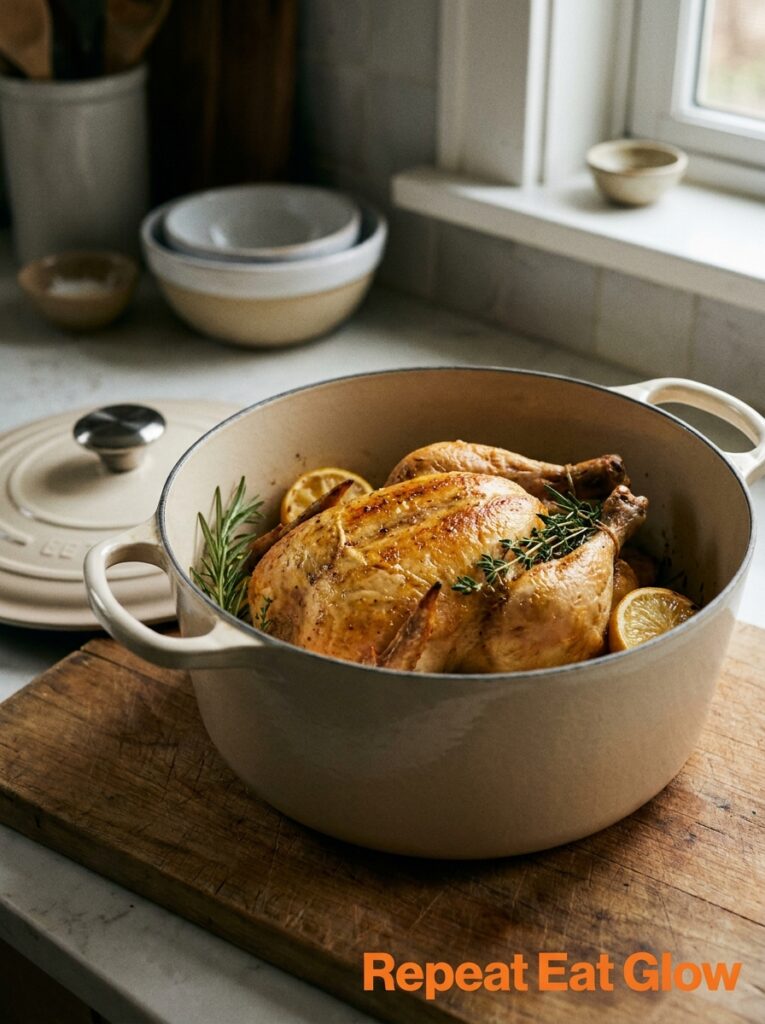
You know how sometimes you roast a chicken and the breast is done but the thighs aren’t, or the skin is great but the meat is dry? The Dutch oven solves this with an almost embarrassing ease.
Whole bird, really well seasoned inside and out. Stuff the cavity with half a lemon, a garlic head cut across the equator, and some thyme. Sear it on the stovetop in the Dutch oven — all sides, this takes patience and a good pair of tongs — then get it breast-side up, add a cup of chicken stock to the bottom, and roast at 375°F WITHOUT the lid for the first 30 minutes to get the skin golden and crispy. Then lid ON for the remaining 45 minutes.
The lid-off then lid-on approach gives you the best of both — the crispy, blistered skin you want at the start, and then the gentle steaming that keeps the breast from drying out at the end. The thighs and drumsticks will be pull-apart tender without the breast being sawdust. This is the method I use for every Sunday chicken now and it hasn’t failed me once.
—
10. Creamy Tuscan Chicken That Goes from Dutch Oven to Table in 35 Minutes
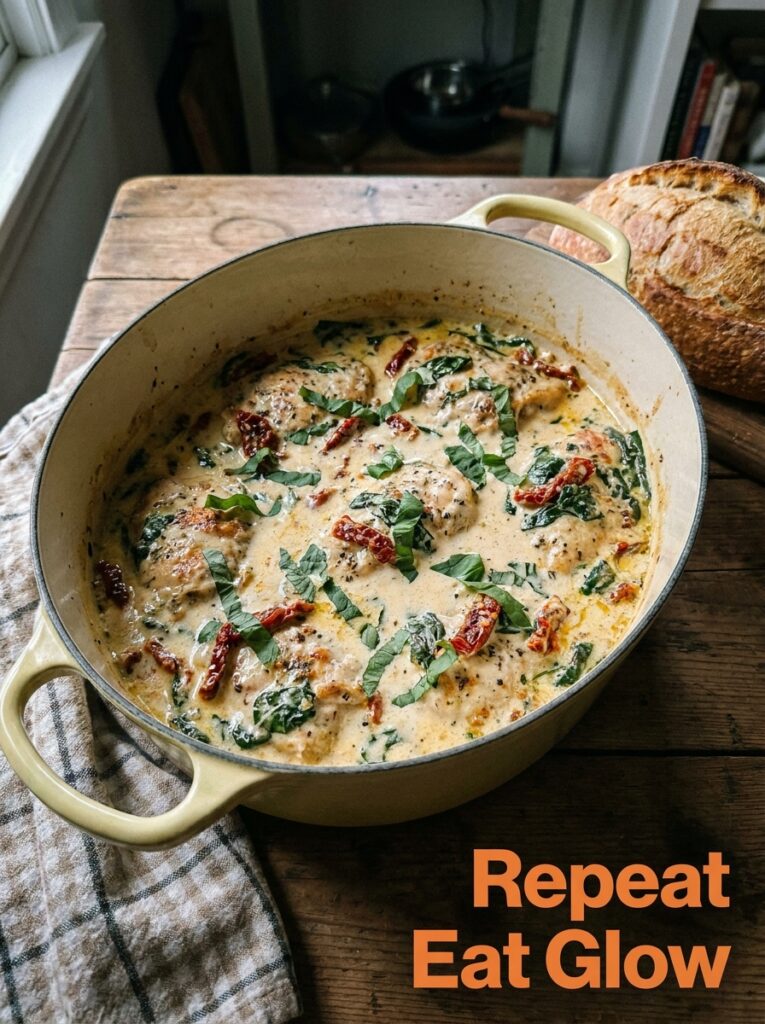
Not every Dutch oven recipe needs two hours. This one’s for a Tuesday.
Chicken breasts, seared until golden on both sides, set aside. In the same pot, garlic, sun-dried tomatoes, a splash of white wine, heavy cream, parmesan, spinach. The cream sauce takes maybe eight minutes to build and it’s genuinely rich and decadent and the kind of thing you’d pay a lot for at a restaurant. Add the chicken back in, lid on, low heat for 12 minutes, done.
The Dutch oven works here because the heavy base maintains such even heat that the cream sauce doesn’t scorch or split, which is the main risk with cream sauces over direct heat. The chicken stays juicy. The sauce is thick and coats everything beautifully.
It’s also a good date night dinner if that’s relevant because it looks very impressive and nobody needs to know it took 35 minutes.
—
11. The Chipotle Chicken Stew That Uses Up the Pantry
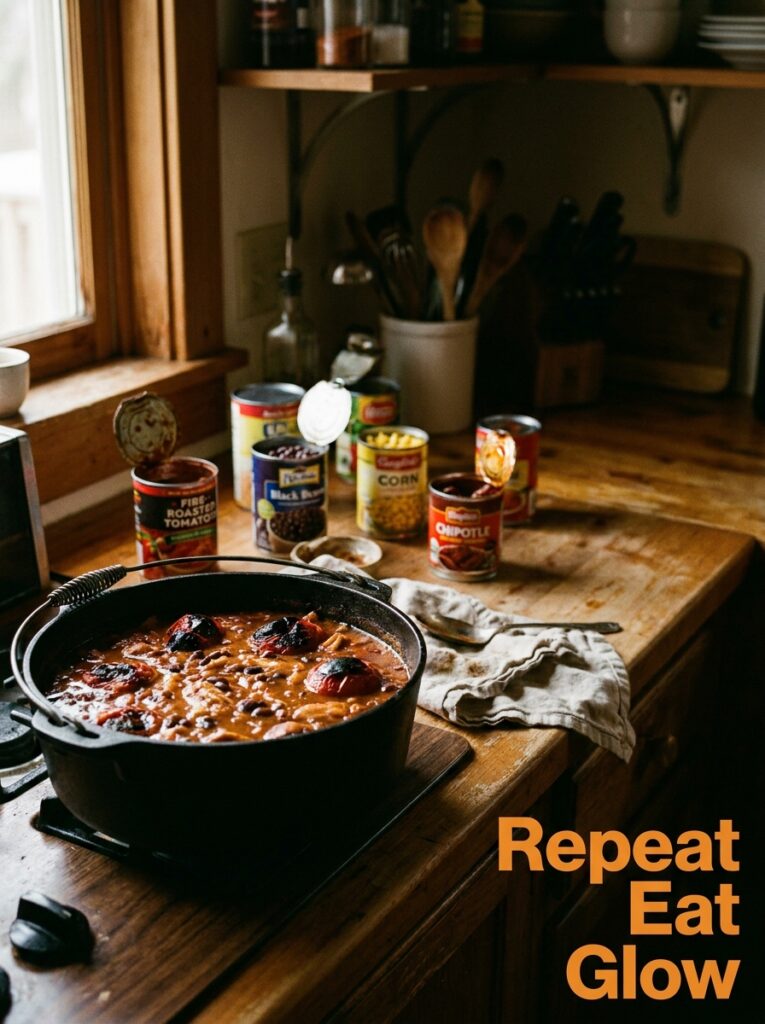
Canned chipotles in adobo. If you don’t have them, get them. They’re usually under $3 and they live in your cupboard forever once opened (in a jar in the fridge, not the can) and they add this smoky, deep, slightly spicy heat that’s completely different from chili powder or hot sauce.
Two chipotles plus a spoonful of the adobo sauce, blended with canned tomatoes, garlic, and cumin. That’s your base. Brown your chicken pieces in the Dutch oven, pour the blended sauce over everything, add a can of black beans and some chicken stock, lid on, low simmer for 45 minutes.
The result is this thick, intensely flavored stew with a heat level that builds rather than smacks. It freezes brilliantly, so I often make a double batch. Serve over rice or with warm tortillas and sharp cheddar on top and it tastes like something with way more ingredients than it has.
—
12. The Sunday Chicken That Really Does Make the Whole Week Easier
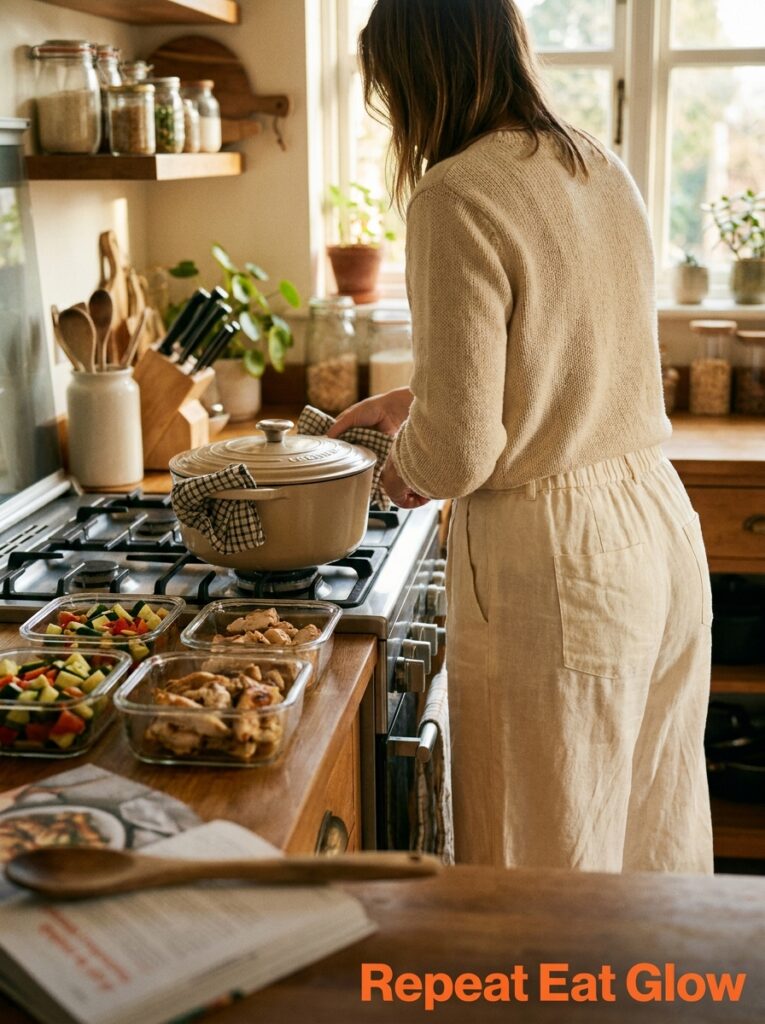
One big batch of Dutch oven chicken. Not for a specific recipe, just braised simply with aromatics and stock until it’s completely tender and falling off the bone. Then you shred it all. All of it.
That shredded chicken goes into lunches all week. It goes into tacos on Monday, into pasta on Wednesday, into soup on Thursday if there’s any left. It’s the kind of prep that feels almost too practical to be exciting but then you get to Wednesday and you have dinner ready in ten minutes and it feels like past-you was genuinely kind to present-you.
The Dutch oven makes the best braised shredded chicken because the gentle, even heat breaks down the collagen in the thighs slowly and what you get is meat that’s moist and almost creamy in texture rather than stringy and dry like rushed chicken tends to be. I do this every couple of weeks and it’s the single most effective meal prep habit I’ve built.
“Meal prep doesn’t have to be a Sunday of containers and spreadsheets. One Dutch oven of braised chicken and you’re ahead for the whole week.”
—
❓ FAQ
Q: Can I use a Dutch oven on an induction hob? A: It depends on the base. Cast iron Dutch ovens work great on induction since cast iron is magnetic. Just check that your specific pot is induction-compatible — most Le Creuset and Lodge models are, but always verify before you buy.
Q: What’s the best size Dutch oven for chicken recipes? A: A 5 or 5.5 quart is the sweet spot for most chicken recipes here. Big enough for a whole bird or 6-8 pieces, not so large that everything spreads out too thin and the liquid doesn’t come up enough. If you’re cooking for one or two regularly, a 4 quart works fine for thighs and smaller cuts.
Q: Can I make these recipes ahead and reheat them? A: Yes, and honestly most of them are better after a night in the fridge. The braises, the coq au vin, the cacciatore, the Moroccan chicken — they all deepen and the sauce thickens up overnight. Reheat gently on the stovetop with a splash of stock or water and a lid on, and they’ll taste like they just came out of the oven.
—
💭 Final Thoughts
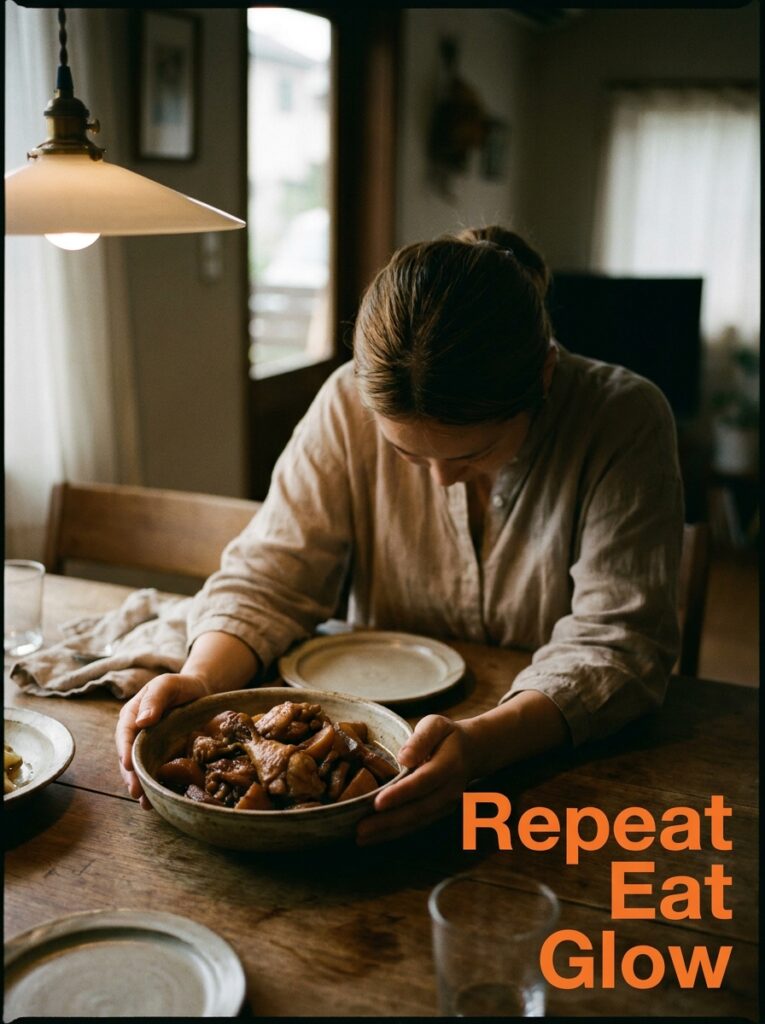
A Dutch oven is one of those things that quietly changes how you feel about cooking. Not overnight, but gradually — one Sunday braise at a time, one pot of soup, one meal that took barely any effort but tasted like it took all day. There’s something genuinely satisfying about how little it asks of you and how much it gives back. So tell me — which one are you making first?
