You pull them out of the oven and suddenly everyone’s in the kitchen. I don’t know what it is — the smell, maybe, or the way those golden crescents puff up like little pillows — but these things draw people in from three rooms away.

—
1. Why Crescent Roll Dough Is Actually a Genius Vehicle for Chicken Filling
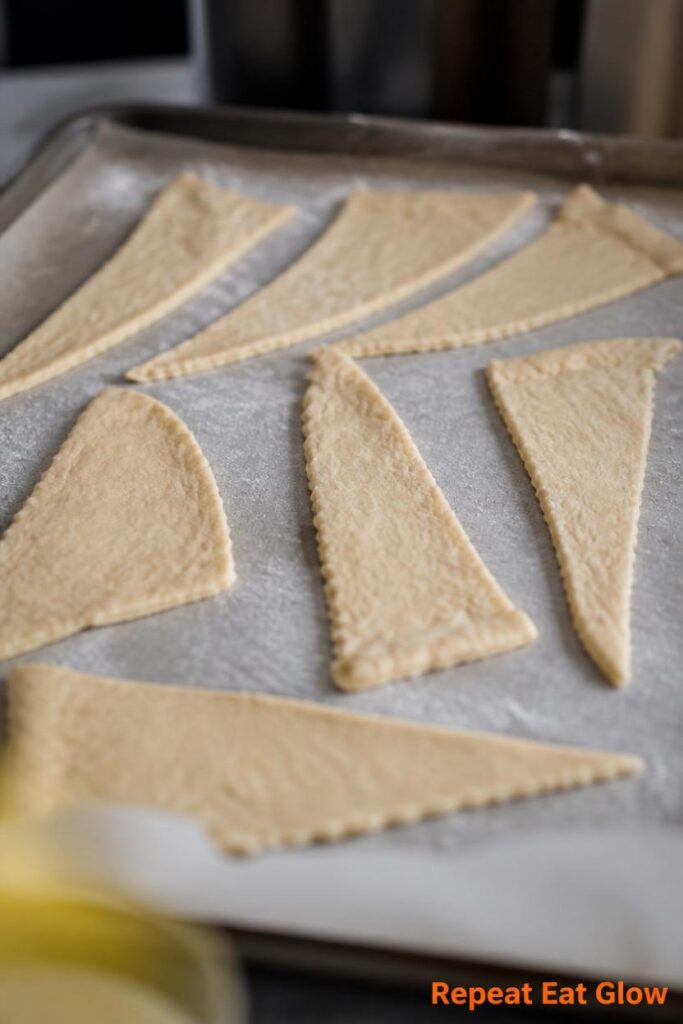
Let’s be real. Nobody’s reinventing the wheel here. Crescent roll dough has been in the American home cook’s arsenal since the 70s, and there’s a reason it never left. It’s pillowy, it’s buttery, and it bakes up with this slightly flaky pull that feels way more special than something you bought in a cardboard tube should feel.
But here’s the thing a lot of people miss — it’s not just a shortcut. It’s a decision. The dough does something specific that homemade pastry doesn’t always do: it stays soft in the center while crisping just slightly on the outside, which means the chicken filling inside doesn’t steam the dough into mush. You get actual texture contrast. Filling that’s creamy and warm, wrapped in something that has just enough bite to feel satisfying. It’s that contrast that makes the pocket format work so well.
There’s also the seal. Crescent dough pinches and folds in a forgiving way. You don’t need crimping skills, you don’t need a fork, you don’t need to be precise about it. Press the edges together and the dough does most of the work. First-time makers, kids helping in the kitchen, Sunday evenings when you just can’t be bothered — all covered.
“The dough is doing more than you think. It’s actually the whole reason this works.”
—
2. The Basic Chicken Cream Cheese Pocket That People Keep Coming Back To

Start here. Seriously, if you’ve never made these before, don’t jump straight to the fancy version. Make this one first because it’ll ruin you for other weeknight dinners.
You need two cups of shredded cooked chicken — rotisserie works perfectly and I won’t pretend otherwise — softened cream cheese (four ounces), a tablespoon of butter, a pinch of garlic powder, salt, pepper, and one can of crescent roll dough. That’s it. Well, and chives if you’re feeling yourself.
Mix the chicken with the softened cream cheese and butter until it comes together. Season it. Don’t be shy with the salt — the dough is rich and slightly sweet, so the filling needs to hold its own. Unroll your crescent triangles, drop a spoonful of filling at the wide end, and roll them up. Pinch the sides in as you go. Some people use two triangles pressed together to make a rectangle, which gives you more surface area for filling. Both methods work. The rectangle version gets more filling in and seals a little more cleanly.
Bake at 375°F for about 12-15 minutes until golden. The smell when these are baking is genuinely unfair to anyone who isn’t home yet.
—
3. The Spicy Buffalo Version That’s Actually Better Than the Classic (I Said What I Said)
Okay, I know. But hear me out.
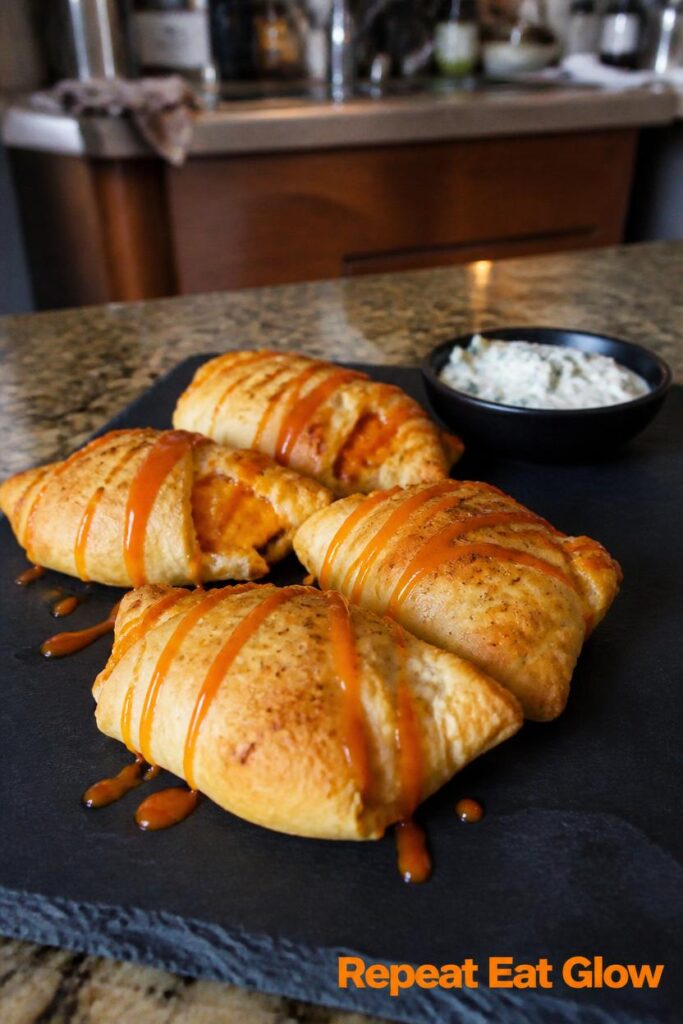
Take that basic cream cheese chicken filling and swap out the butter and garlic powder. Instead, mix your shredded chicken with softened cream cheese, two or three tablespoons of Buffalo hot sauce — Frank’s is non-negotiable, in my opinion — and about half a cup of shredded sharp cheddar. A little blue cheese crumble if you’re brave.
The heat hits differently when it’s sealed inside buttery dough. It’s contained, which sounds like it’d make it less spicy, but actually it concentrates everything. You get this burst of tangy heat when you bite through the pastry, and then the cream cheese sort of cools it back down again. It’s a whole thing.
Top these with a tiny drizzle of extra hot sauce and some crumbled blue cheese before serving. Ranch dipping sauce on the side. You’ll make these for every game day and casual dinner for the rest of your life. Not an exaggeration. I’ve been making them for six years and I don’t think I’ll stop.
—
4. The Trick to Getting Them Perfectly Golden Without Burning the Bottoms
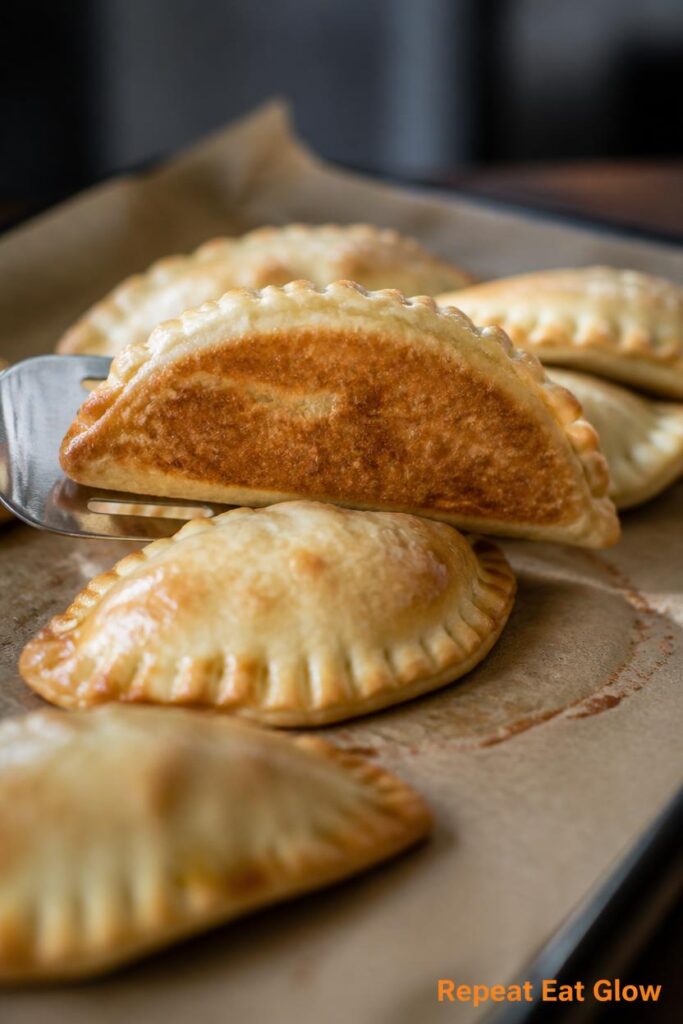
This is a boring-sounding section heading but I refuse to write a clickbait title for something genuinely useful. The bottoms burn. It happens. And there are two things that cause it.
First: parchment paper. Always line your baking sheet. The butter in the dough drips, and on an unlined sheet that butter sits there and basically fries the bottom of your pocket. Parchment lifts it just slightly and distributes heat better. Game-changing in the most mundane possible way.
Second: middle rack. Don’t put these on the lower rack thinking the heat will help them puff up. It’ll just torch the bottom before the top has time to go golden. Middle rack, every time.
And one more thing — brush them. Egg wash, or just a little melted butter, brushed lightly over the tops before they go in. This is what gives you that deep amber color instead of pale tan. Pale tan crescent pockets are sad. You want that glossy, golden-brown top that catches the light when you take them out of the oven. Worth the extra thirty seconds.
“Pale tan crescent pockets are sad. You want the glossy, golden-brown top. Always brush them.”
—
5. A Creamy Broccoli and Chicken Pocket That Gets Kids to Eat Vegetables Voluntarily
I know this sounds like something from a 1997 family magazine. It kind of is. But that’s fine because it WORKS.
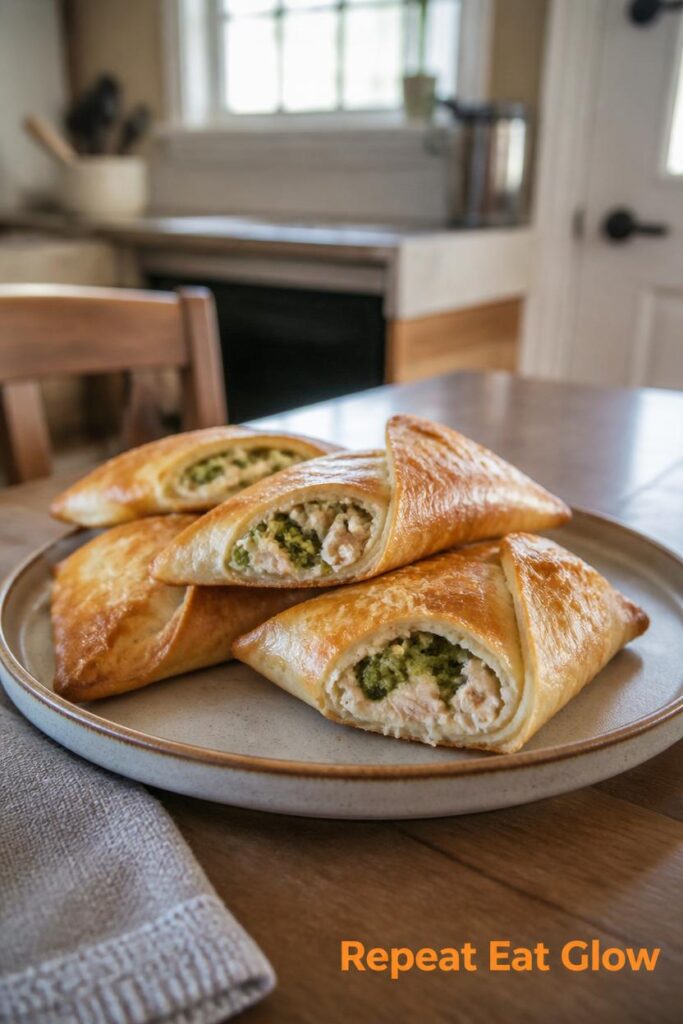
Cook or steam about a cup and a half of broccoli florets until they’re just tender — not mushy, just soft enough that you can roughly chop them. Mix them with two cups of shredded chicken, four ounces of cream cheese, a cup of shredded cheddar, salt, pepper, and a little onion powder. The broccoli pieces should be small enough that they don’t burst through the dough when you fold it.
What happens inside the pocket is actually kind of magic. The broccoli steams a little further in the heat, the cheddar melts into everything, and the whole thing becomes this creamy, savory situation where the vegetable is not an afterthought but actually the thing tying the filling together. Kids don’t register that they’re eating a fistful of broccoli because it’s wrapped in something golden and buttery. Parents have been exploiting this loophole forever and I think it’s completely justified.
—
6. Using Rotisserie Chicken Vs. Homemade Cooked Chicken — Does It Actually Matter?
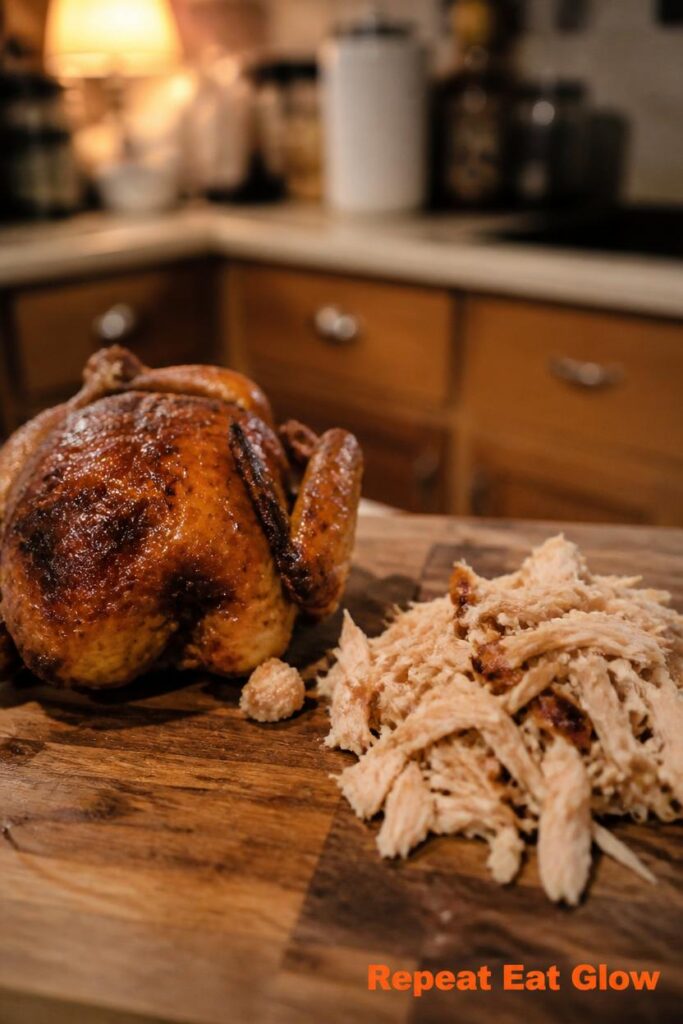
Short answer: no. Long answer: also no, but let me explain why.
Rotisserie chicken is already seasoned. The skin flavor has worked its way into the meat, so when you shred it and fold it into filling, it brings more depth than plain poached chicken breast. If your filling is simple — just cream cheese and seasoning — rotisserie chicken does a lot of heavy lifting in the flavor department.
But if you’re making a punchy filling, like the Buffalo version or something with a lot of aromatics and bold cheese, the base flavor of the chicken matters less. The other ingredients dominate. In that case, poaching a couple of chicken breasts and shredding them is totally fine and sometimes preferred because the texture is a bit more consistent and you have control over the salt level.
Leftover roast chicken? Absolutely. That’s honestly the best case scenario if you have it. The slightly richer flavor from the roasting process does something nice. Side note — these pockets are also a brilliant way to use up leftover Thanksgiving turkey. Same principle, different bird. Don’t tell anyone I told you that in a chicken recipe article.
—
7. The Sun-Dried Tomato and Spinach Version for When You Want Something Vaguely Mediterranean
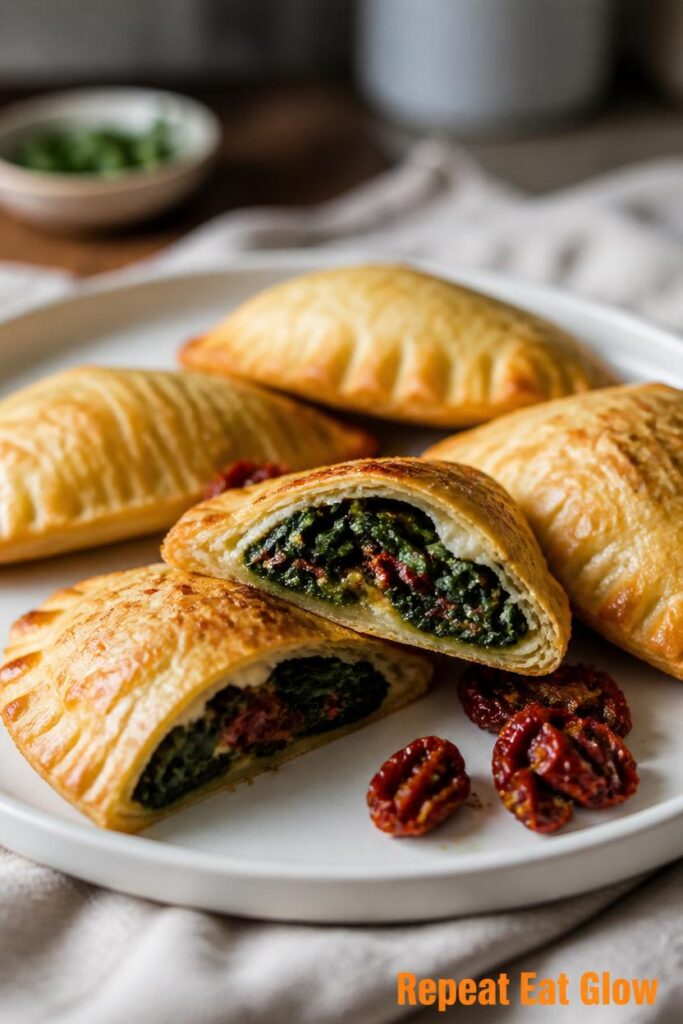
Not everything has to be cream cheese and cheddar, even though I clearly love cream cheese and cheddar.
Mix two cups of shredded chicken with half a cup of roughly chopped sun-dried tomatoes (the oil-packed ones, drained), a big handful of fresh baby spinach that you’ve wilted in a pan for about forty seconds, two tablespoons of cream cheese, a quarter cup of crumbled feta, and a little dried oregano. The feta brings saltiness so hold back on extra salt until you’ve tasted the filling.
This version is less creamy, more textured. The spinach adds a slight earthy note, the sun-dried tomatoes bring sweetness and a concentrated tang, and the feta does its little crumbly thing. It feels lighter somehow, even though crescent dough is never going to be diet food. These are the ones to bring to a lunch gathering or a potluck when you want something that looks a bit more considered. People always ask about them.
“These are the ones to make when you want something that looks a bit more considered.”
—
8. How to Seal Them So the Filling Doesn’t Explode Out in the Oven
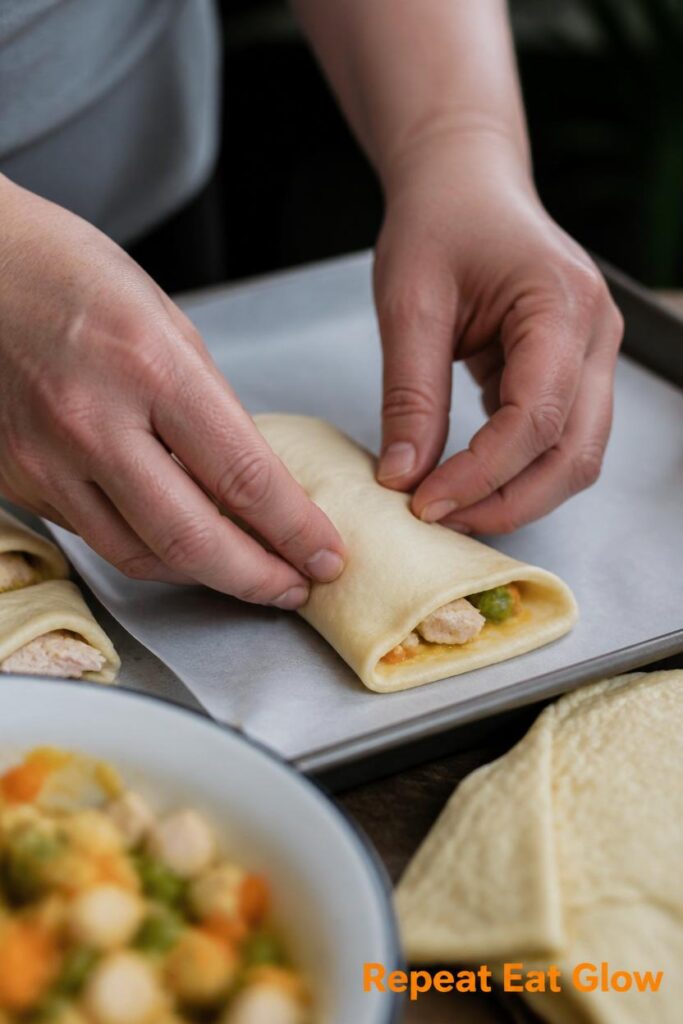
Because it will. At least once. And it’ll be fine but let’s try to avoid it.
The main mistake is overfilling. I know, I know — more filling seems better. It’s not, because the dough stretches during baking and a too-full pocket basically forces the seams open. A generous tablespoon to a tablespoon and a half is plenty per standard crescent triangle. For the rectangle method, you can push to about two or three tablespoons.
Press the edges firmly. Not just folded — pressed. Use your fingertips to really pinch that seam. If you’re doing the rectangle method, use a fork to crimp around all four edges, which creates a mechanical seal rather than relying on the dough alone. That fork mark isn’t just decorative.
Also: chill the filling slightly before you use it. If your cream cheese mixture is warm, it’s more liquid and it’ll find every gap in the dough. Give it ten minutes in the fridge and it firms up, which means it holds its shape better during baking. Small step, real difference.
—
9. Making a Big Batch for Meal Prep (and Which Fillings Actually Freeze Well)
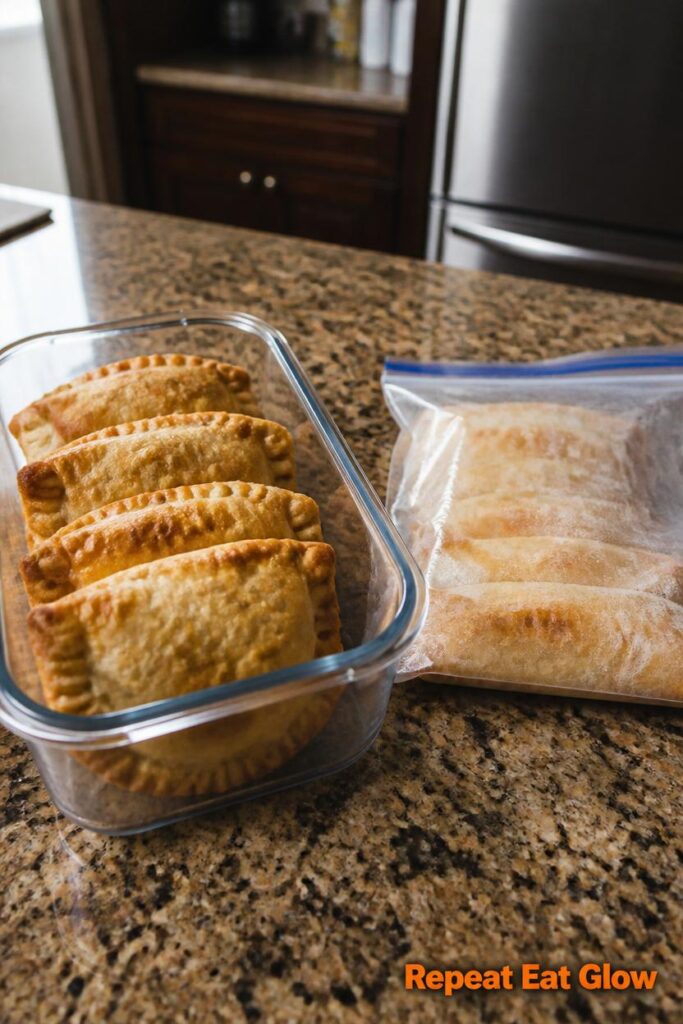
These freeze better than you’d expect. Way better. Make a double batch on Sunday, wrap the unbaked pockets individually in plastic wrap, and freeze them on a baking sheet until solid before transferring to a freezer bag. They’ll keep for up to three months.
To cook from frozen, go straight into the oven at 375°F — no thawing — and add about eight to ten minutes to the baking time. They’ll come out nearly identical to fresh. The dough puffs, the filling heats through, the bottoms go golden. Actually brilliant for weeknight emergencies.
That said, not all fillings freeze equally. Cream cheese-based fillings hold up best. Fillings with a lot of fresh vegetables can release moisture on thawing, which makes the dough slightly softer. Still edible, still good — just not as crisp-bottomed. The spinach and feta version is the one I’d eat within a week rather than freeze. The basic cream cheese chicken and the Buffalo version? Freeze brilliantly. Stock your freezer. Future you will feel very smug about this.
—
10. Serving Them — What Actually Goes Well Alongside a Crescent Pocket
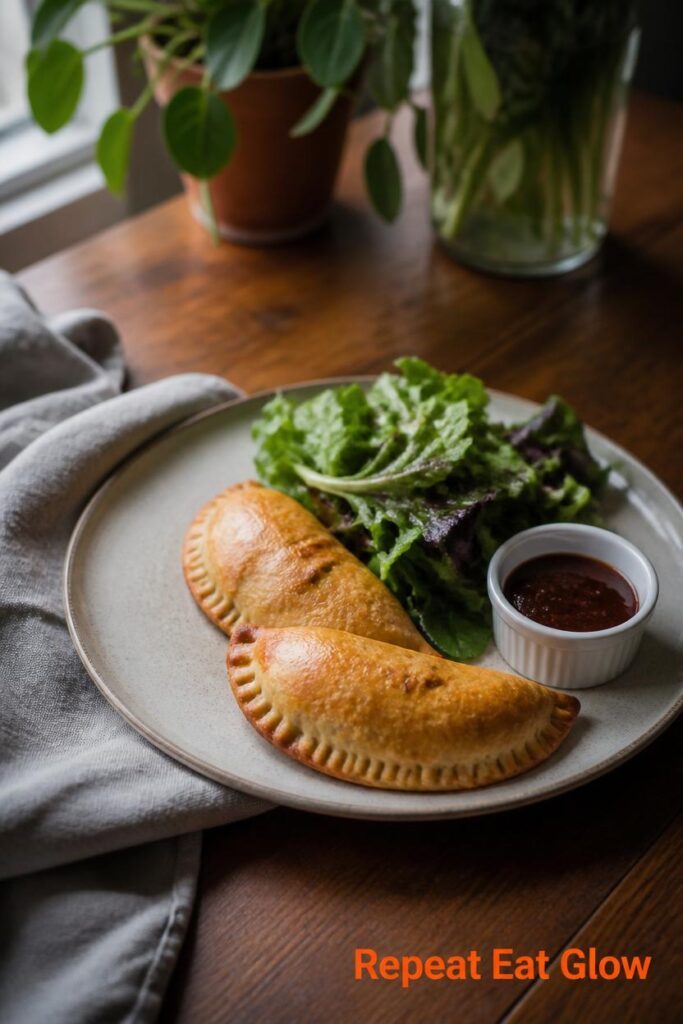
This is genuinely a harder question than it sounds. These aren’t a small snack but they’re also not a full meal on their own, so sides matter.
A simple green salad with a sharp vinaigrette cuts through the richness really well. Something acidic is the move. A lemony arugula situation, or even just a basic Caesar, works nicely against the buttery dough.
Soup is the other obvious direction. Tomato soup alongside chicken crescent pockets is almost offensively comforting. I say this without embarrassment. It’s a cozy pairing that tastes like being twelve years old in the best possible way. For a more grown-up version, a roasted red pepper soup does the same acidic-cutting work but feels a little more sophisticated.
If you’re serving these at a party or as finger food, just a couple of dipping sauces is all you need. Ranch, hot sauce, or a quick honey mustard made with Dijon, honey, and a splash of cider vinegar. Keep it simple. The pockets are doing the heavy lifting.
—
11. The Sweet Version Nobody Talks About But Should

Hear me out. Crescent roll dough is slightly sweet already, and it leans into dessert direction very happily.
Fill it with a mixture of cream cheese, powdered sugar, and a splash of vanilla extract. Add some fresh or frozen blueberries, or a spoonful of strawberry jam, or some sliced apple tossed with cinnamon and a tiny bit of brown sugar. Seal them up, brush with egg wash, sprinkle with a little coarse sugar, bake as normal.
You’ve just made breakfast pastries. Or dessert. Or an afternoon snack that makes a Tuesday feel more like a Saturday morning in some lovely little coffee shop you found on a trip once. Drizzle a simple powdered sugar glaze over the top when they come out of the oven — just powdered sugar, a drop of vanilla, and enough milk to make it pourable. The whole thing takes twenty minutes. They’re absurdly good.
These don’t get nearly enough attention because everyone’s focused on the savory applications, which is fair. But don’t sleep on the sweet version.
—
12. The Version That Looks Impressive but Takes About Twenty Minutes
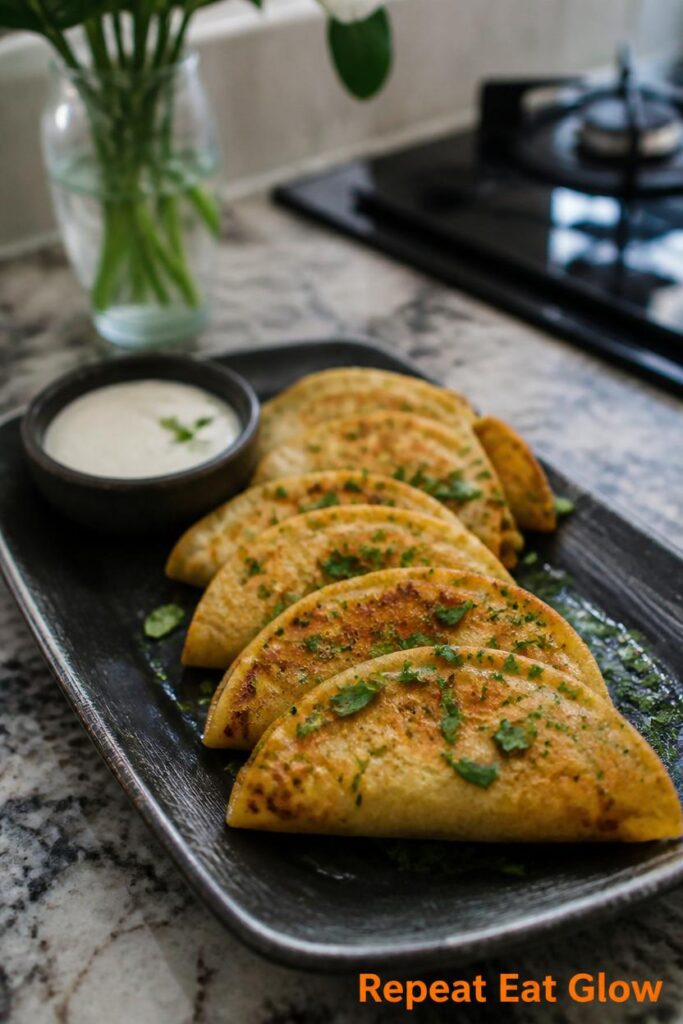
Because sometimes you need to look like you tried harder than you did. I think that’s a legitimate cooking goal.
Make the basic cream cheese chicken filling, but add two tablespoons of finely chopped sun-dried tomatoes, a teaspoon of pesto, and a small handful of shredded mozzarella. Not a lot of changes. But pull out a can of crescent sheet dough instead of the triangles — some brands sell it as a sheet, no perforations — and use it to make little folded parcels with tucked-in edges and a visible seam on top, almost like an envelope. Brush with egg wash, top with a small sprinkle of sesame seeds or flaky sea salt.
These look like something you’d see at a cafe. They genuinely do. The sesame seeds are doing a lot of visual work. Plate them on a wooden board with a little bowl of marinara for dipping, put some herbs around them if you’ve got them, and nobody will ever guess you made these in twenty-five minutes on a Wednesday.
—
❓ FAQ
Q: Can I use canned chicken for crescent roll chicken pockets? A: You can, and it’ll work fine, but drain it really well and press it between paper towels first. Canned chicken has more moisture than rotisserie or poached chicken, and excess moisture is what makes pockets soggy. Pat it dry and season the filling a little more assertively to compensate for the blander base flavor.
Q: Can I make chicken crescent pockets ahead of time? A: Yes — assemble them completely, place them unbaked on a parchment-lined tray, cover with plastic wrap, and refrigerate for up to 24 hours before baking. Let them sit at room temperature for about ten minutes before they go into the oven. They bake up just as well as fresh-assembled.
Q: Why do my crescent pockets leak filling in the oven? A: Almost always overfilling or not sealing properly — or both. Use slightly less filling than you think you need, press the edges firmly with your fingers, and for extra security, crimp with a fork. Chilling the filled pockets for ten minutes before baking also helps the seams hold.
—
💭 Final Thoughts

There’s a reason this particular recipe keeps showing up in everyone’s saved folders and recipe boxes. It’s not fancy, it doesn’t ask much of you, and it somehow manages to feel like more of an occasion than a weeknight dinner has any right to feel. Make the classic first, then go rogue with it — that’s the whole game here. What filling are you trying first?
