You’re standing in front of the open fridge at 5:30pm, tired, hungry, not sure what you’re doing with your life. And there they are — chicken thighs. Dark, a little glossy, cheap enough that you grabbed a big pack without thinking. Good. Because tonight’s going to be better than you planned.

—
1. Why Thighs Beat Breasts Every Single Time (And I’ll Die on This Hill)
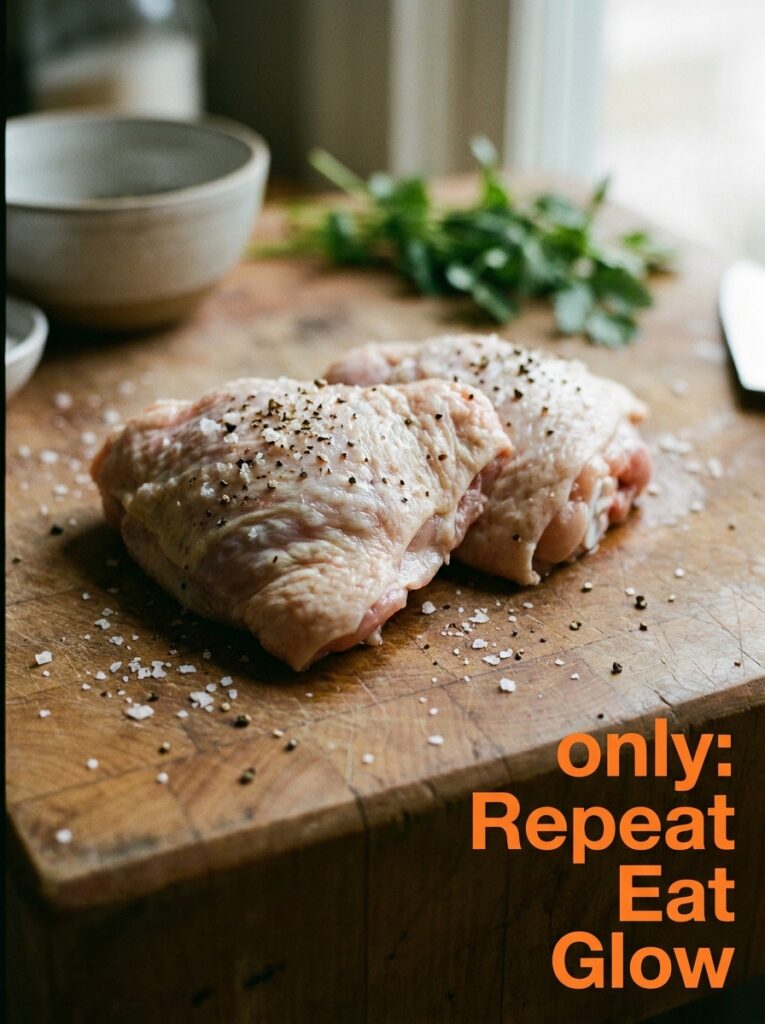
Let’s just get this out of the way. Chicken breasts get all the attention, all the “healthy eating” headlines, all the meal prep glory — and honestly, they don’t deserve it. Not for weeknight dinners. Not when you’re cooking something that needs flavor, something that can sit in a pan for twenty minutes without turning into cardboard.
Chicken thighs have fat in them. That’s not a bug, it’s the whole point. That fat is what keeps them juicy even if you get distracted by the dishes or a phone call or whatever chaos is happening in your kitchen. You can genuinely overcook a chicken thigh a little and it’ll still be tender. Try that with a breast. Go ahead, I’ll wait.
The flavor is richer, the texture holds up to sauces and marinades in a way that breasts just don’t, and they cost less. Sometimes SIGNIFICANTLY less — I’ve grabbed bone-in thighs for under £3 or $4 a pack and that’s dinner for four sorted. Boneless and skinless are great for quick weeknights. Bone-in with skin? That’s for when you want something that looks impressive and crackles in the oven.
Basically, if someone’s been avoiding thighs because they heard they’re “less healthy,” that someone has been missing out on the best chicken cooking of their life.
“Fat is flavor, and chicken thighs have figured that out.”
—
2. The Garlic Butter Pan Sauce That Takes Eleven Minutes Flat
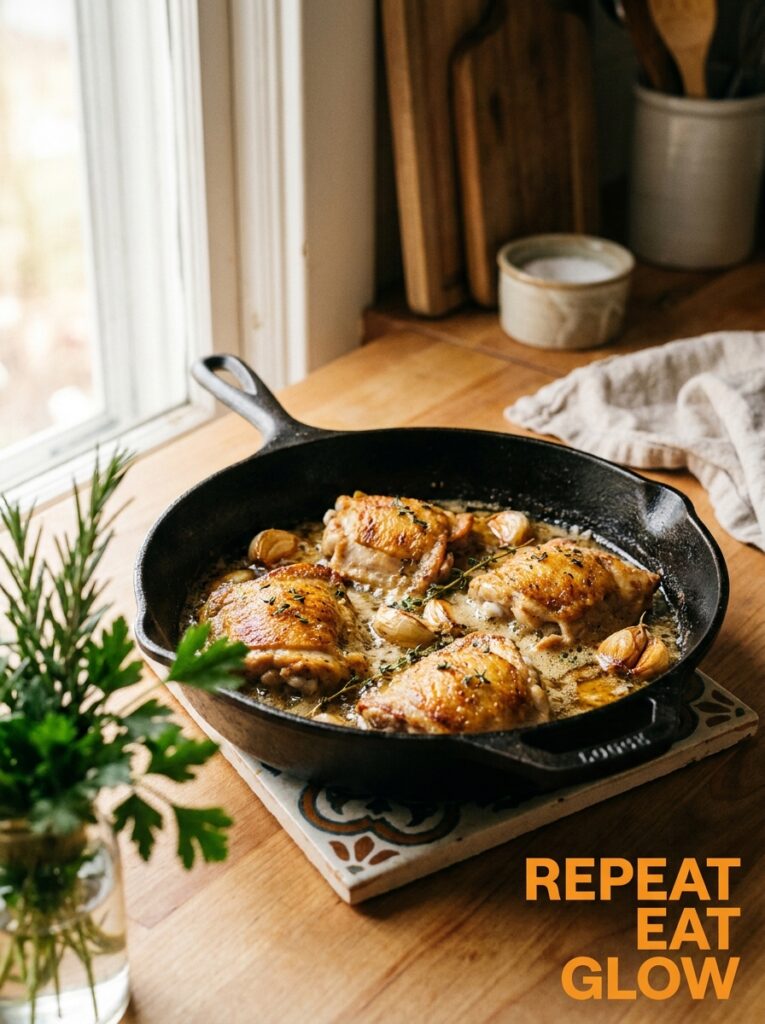
This isn’t a recipe with ten steps and a beurre blanc. This is: season, sear, make a quick sauce in the same pan. Done.
Pat your thighs dry — this is non-negotiable, wet chicken steams instead of browning and you don’t want that. Season with salt, pepper, and garlic powder. Get a wide skillet genuinely HOT before the chicken goes in. Like, hold your hand over it and pull back fast kind of hot. Lay the thighs in skin side down if they have skin, walk away for five minutes. Don’t touch them. Don’t press them down. Just let them do their thing.
Flip. Another five minutes. Take them out and rest them on a plate.
Now — in that same pan, there’s all this gorgeous golden chicken fat and little browned bits. Add a knob of butter and like four crushed garlic cloves, let that sizzle for thirty seconds, then splash in some chicken stock (or white wine if you’re feeling it). Scrape up those brown bits. Let it reduce for two minutes. Squeeze in some lemon. Pour it over the chicken.
That’s dinner. Serve it with whatever you have — rice, crusty bread, roasted veg. The sauce is GOOD. People will ask what you did and you’ll feel weirdly proud.
—
3. The Sheet Pan Trick That Makes Vegetables Actually Taste Amazing
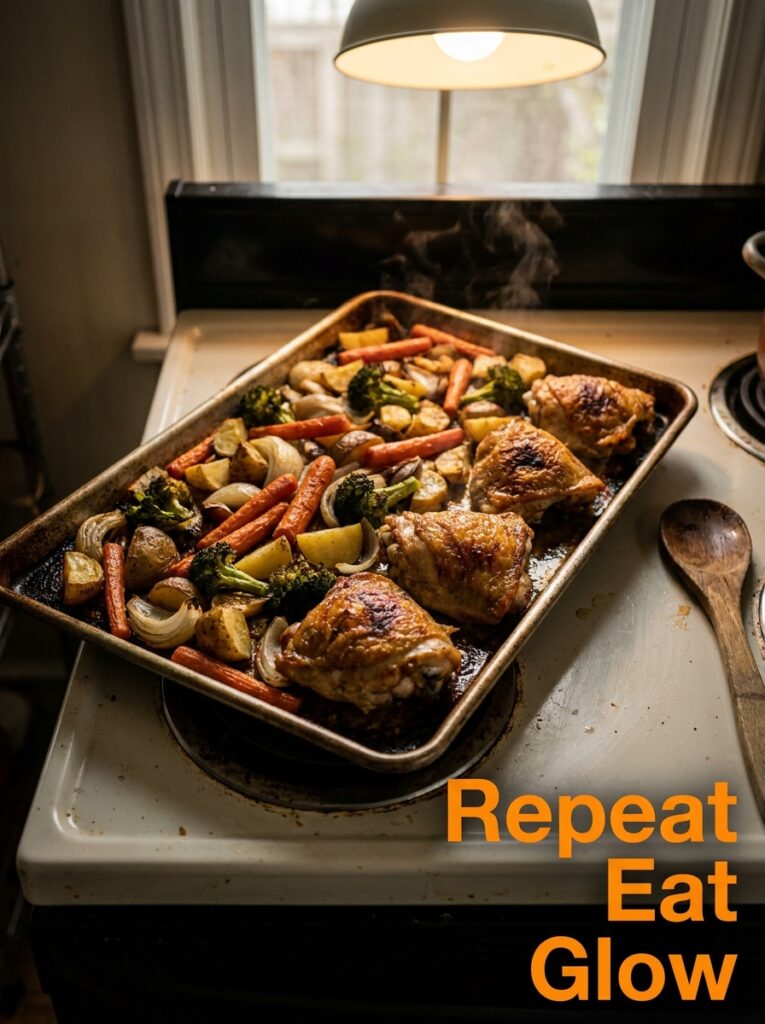
Here’s the thing about sheet pan dinners that nobody talks about: the chicken has to be up on something. Or the veg has to go around the edges. Because if everything’s crammed together on one flat tray, you get steamed vegetables instead of caramelized ones, and caramelized is the whole reason you’re doing this.
Spread your vegetables out. I mean actually spread them — space between each piece. Toss them in enough olive oil that they look slightly overdressed, salt generously, and put them on the outer edges of the pan. Place the thighs in the middle. The fat from the chicken will drip outward as it cooks and baste the vegetables. This is just pure physics working in your favor.
Good combos: cherry tomatoes, red onion, and olives with herbs de Provence. Baby potatoes and tenderstem broccoli with lemon zest. Butternut squash and red pepper with smoked paprika. Sweet potato and red onion with a bit of cumin.
400°F/200°C, 35-40 minutes for bone-in thighs. Boneless? More like 25-28 minutes. Check that the juices run clear and you’re done. One pan, minimal washing up, actual flavor. This is the format most weeknights deserve.
—
4. When You Have Twenty Minutes and Zero Energy — Honey Soy Thighs
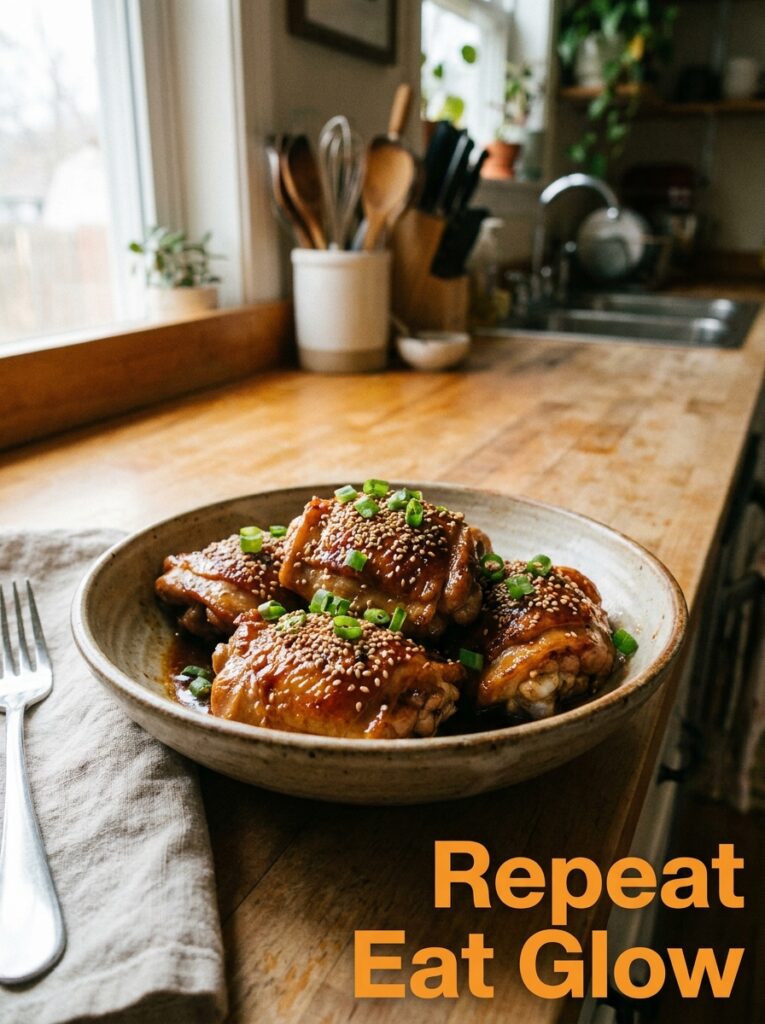
This might be the most useful recipe in your weekly rotation. Five ingredients. No skill required. Wildly good.
Mix together: two tablespoons of soy sauce (low sodium if you care about that), one tablespoon of honey, one teaspoon of sesame oil, two minced garlic cloves, a tiny squeeze of fresh ginger if you have it or half a teaspoon of ground ginger if you don’t. That’s your marinade. That’s also your sauce. Same thing.
If you have twenty extra minutes, toss your boneless thighs in this and let them sit. If you don’t have twenty minutes — and listen, sometimes you just don’t — it’s fine to cook them right away. The flavor will still be there.
Sear in a hot pan, about five minutes per side. Pour whatever marinade is left into the pan in the last two minutes. It’ll caramelize slightly, thicken, and coat the chicken in this sticky, salty-sweet glaze that honestly makes the whole kitchen smell incredible. Like takeaway but better because there’s nothing weird in it.
Serve over rice. Scatter some sesame seeds and sliced green onions on top if you want to make it look like you made an effort. I do this basically every other week and it hasn’t gotten old.
“Five ingredients and a hot pan — that’s all this needed to become your most-requested dinner.”
—
5. The One-Pot Braise That Tastes Like You Cooked All Day
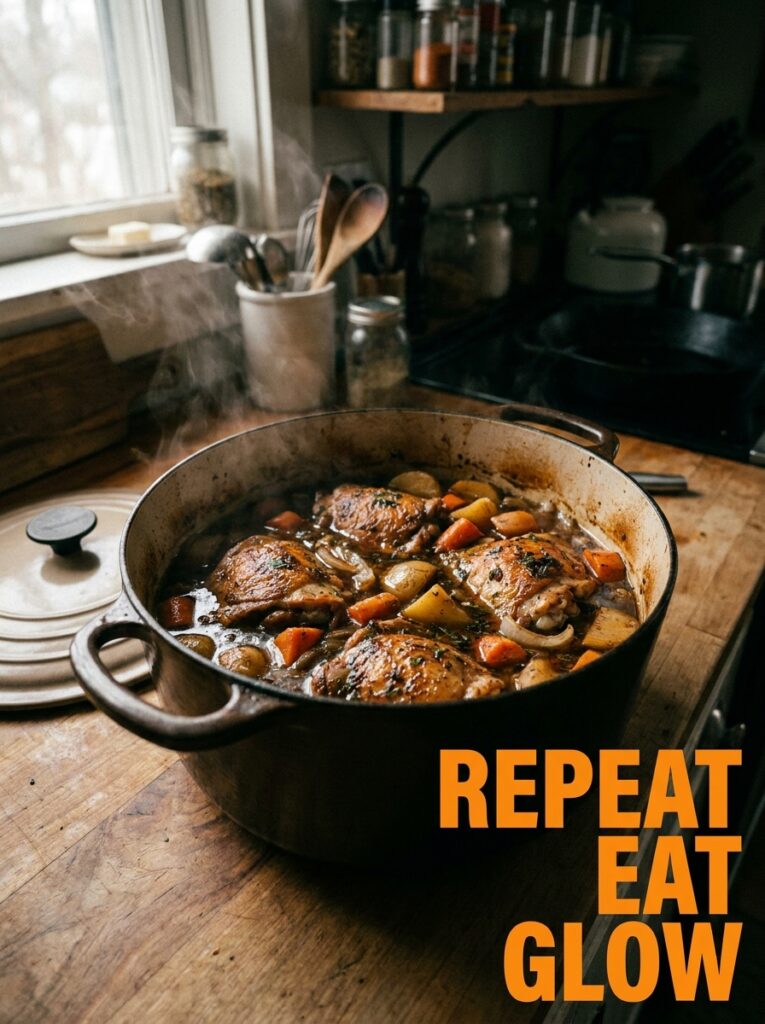
You didn’t cook all day. You cooked for about forty-five minutes and then ignored it. But nobody needs to know that.
A braise is just chicken cooked low and slow in a flavored liquid until it’s fall-apart tender. It sounds fancy. It really, really isn’t. Get a heavy pot — a Dutch oven, a Le Creuset if you have one, any oven-safe pot with a lid. Brown the thighs in batches in a bit of olive oil. Take them out. Soften a diced onion and some garlic in the same pot. Add chopped tomatoes (canned is perfect here), chicken stock, a splash of red wine if you want, and a sprig of rosemary. Stir. Nestle the chicken back in, lid on, into a 325°F/165°C oven for forty-five minutes.
When it comes out, the chicken is practically melting. The sauce has deepened into something that tastes like it has thirty ingredients. Tear some bread. Eat directly from the pot if the mood strikes.
This works for winter nights, for Sunday dinner, for when guests are coming and you want something that sounds impressive. “Oh, it’s a braise” — yes. Yes it is.
—
6. The Crispy-Skin Method That People Actually Get Excited About
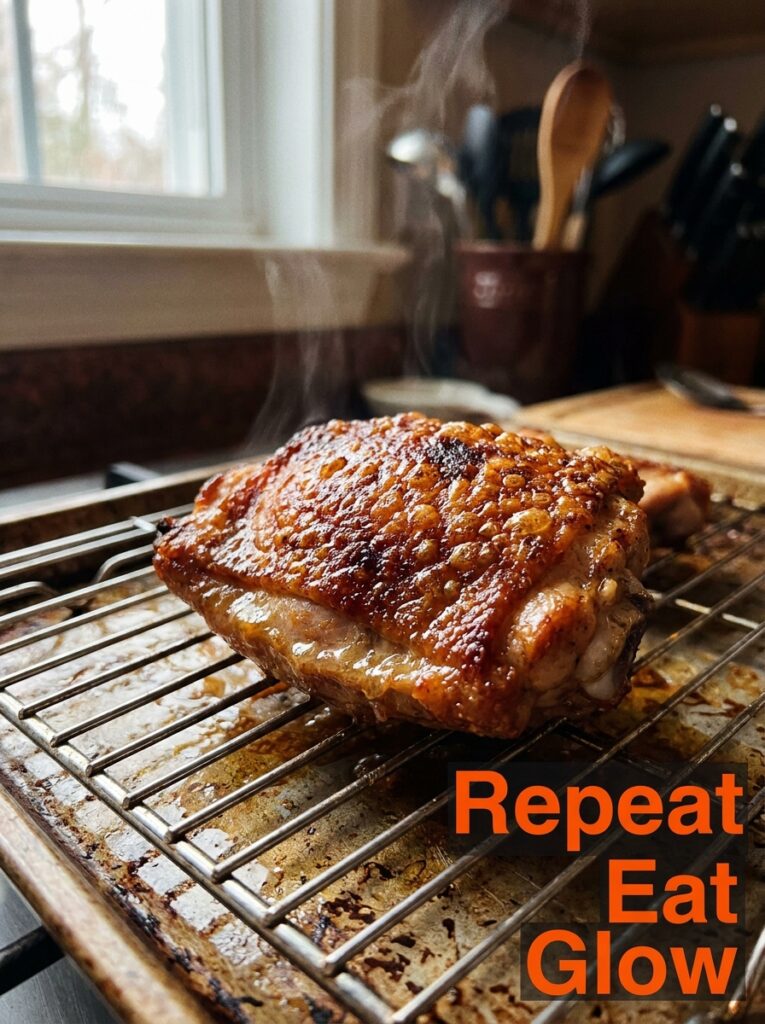
Crispy chicken skin is not complicated to achieve. But there are two things most people skip that ruin it every time.
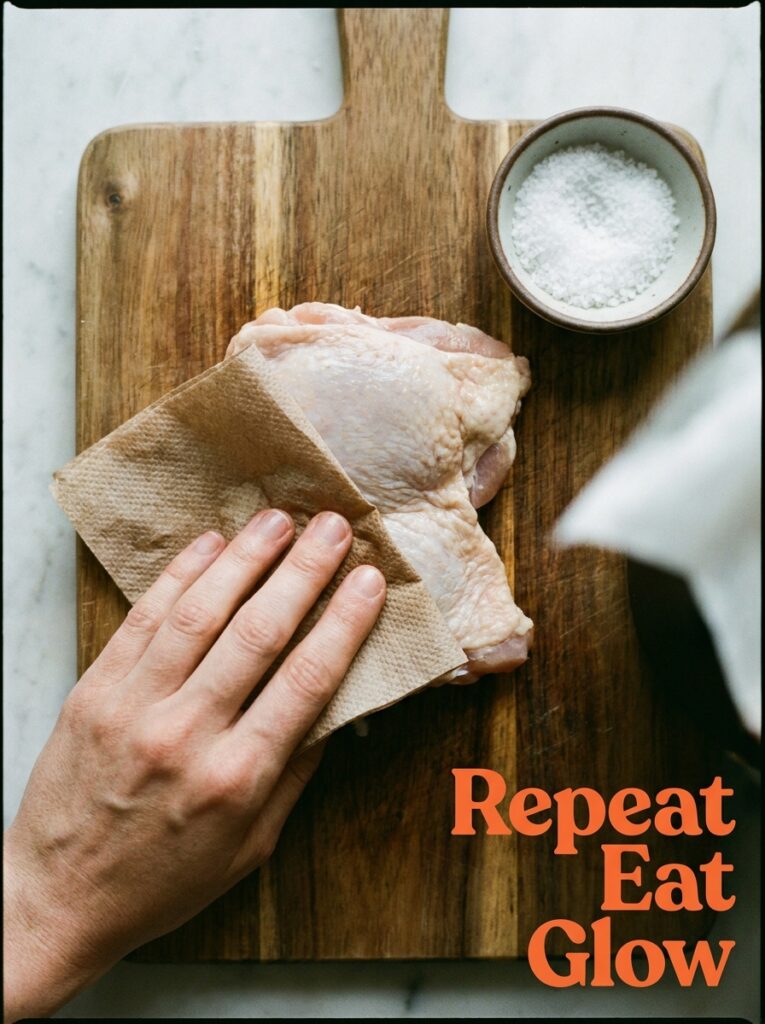
First: dry the chicken. Like, really dry it. Paper towels, then let it sit uncovered in the fridge for an hour or even overnight if you think ahead. Moisture is the enemy of crispy. This matters more than anything else.
Second: start it skin-side down in a COLD pan. Or if you’re roasting, get the oven to 425°F/220°C — properly preheated, not kind of hot. The fat under the skin needs time to render out slowly before it can crisp up. If the pan’s too hot from the start, the outside burns before the fat renders. Cold-to-hot method in a cast iron skillet is my favorite way, not gonna lie.
Salt the skin generously. I mean more than feels right. Skin is thick, it can handle it.
After that? Don’t cover it. Don’t add liquid. Don’t flip it too early. The skin will release from the pan when it’s ready — if it’s sticking, it’s not done. Let it go. Then flip for just a few minutes on the other side.
The crack when you cut through it. That’s the sound of doing it right.
—
7. Slow Cooker Thighs That Are Actually Worth Doing
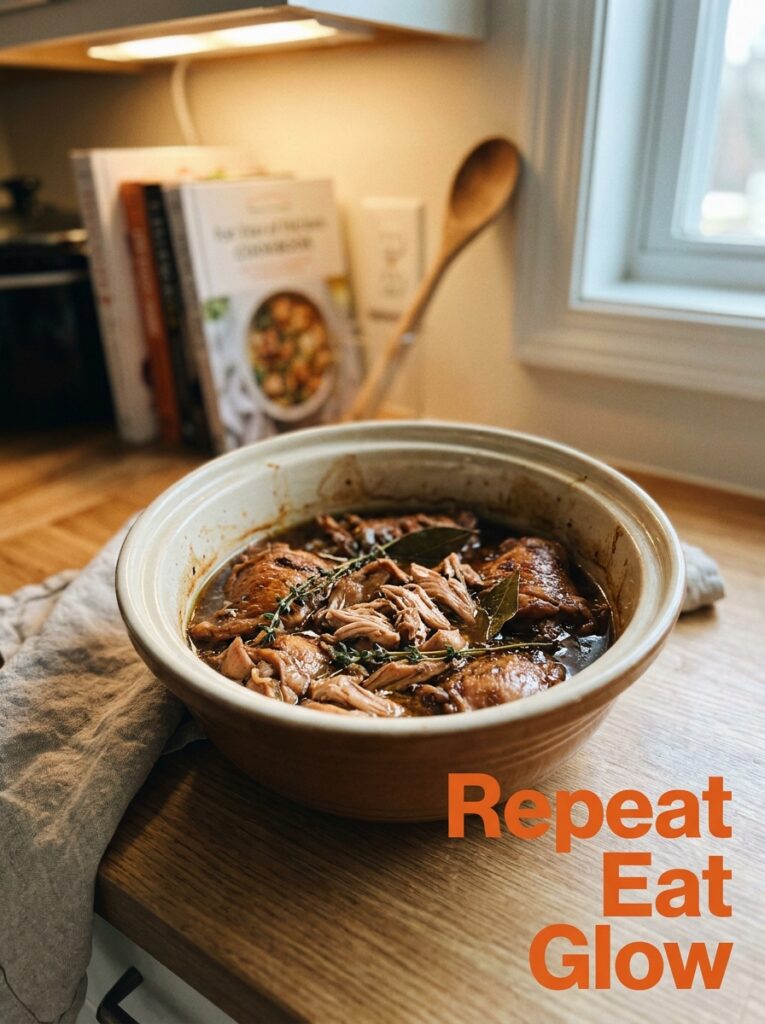
Most slow cooker chicken recipes produce something pale, stringy, and sad. I’ve eaten that chicken. I’ve served that chicken to people and watched them be politely disappointed. Here’s why it usually goes wrong and how to not do that.
Brown the thighs first. Even five minutes in a hot pan before they go in the slow cooker changes everything — flavor, color, texture. It adds this depth that you just can’t get from throwing raw chicken into a ceramic pot and walking away. I know that defeats part of the convenience, but it’s worth the extra five minutes. Or don’t do it and accept slightly less depth. Your kitchen, your call.
Don’t add too much liquid. The chicken releases a lot of moisture as it cooks and everything ends up swimming. A half cup of stock is plenty, sometimes less.
Good for slow cooking: anything with big, bold flavors that can stand up to a long cook. Tomato-based sauces. Mexican-inspired spices — cumin, chili, smoked paprika. Barbecue sauce with a bit of vinegar to cut through. These deepen and improve over hours.
Set it in the morning, come home to dinner. That’s the actual dream, and chicken thighs are the right cut for it.
“Brown them first. That extra five minutes is the difference between dinner that’s good and dinner that gets talked about.”
—
8. The Lemon Herb Thing That Never, Ever Gets Boring
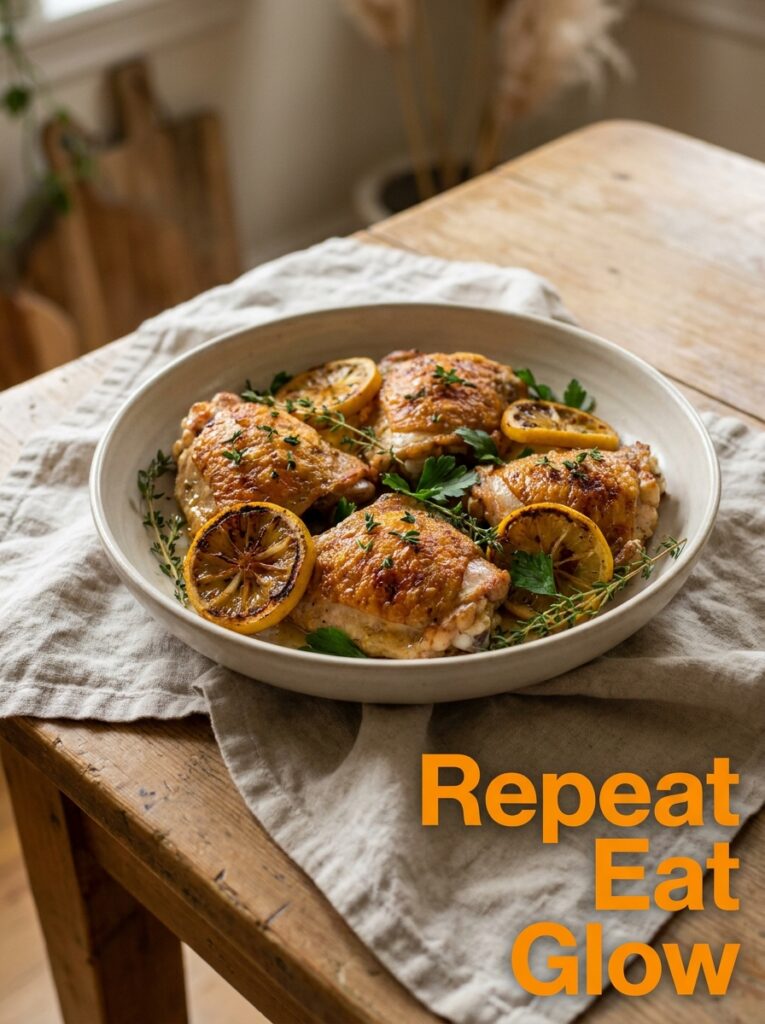
I’ve made some version of this probably two hundred times. Bone-in thighs, lemon, garlic, fresh herbs, olive oil. That’s it. And it somehow stays in constant rotation.
Zest your lemon first, then juice it. Mix the zest and juice with olive oil, a LOT of minced garlic (four cloves minimum), fresh thyme or rosemary or both, salt, and pepper. Toss the chicken in this. If you can let it marinate for an hour, great. If it goes straight in the oven, also fine.
Roast at 400°F/200°C skin-side up, uncovered, for about 40 minutes. The lemon caramelizes slightly at the edges of the pan. The garlic gets golden and sticky. The herbs crisp up. The kitchen smells like the best version of a Sunday.
This is the recipe I make for people who say they “don’t really cook.” They make it that week, text me about it, and start calling themselves people who cook. It’s that easy and that good.
—
9. Spice-Rubbed Thighs for When You Want Some Actual Heat
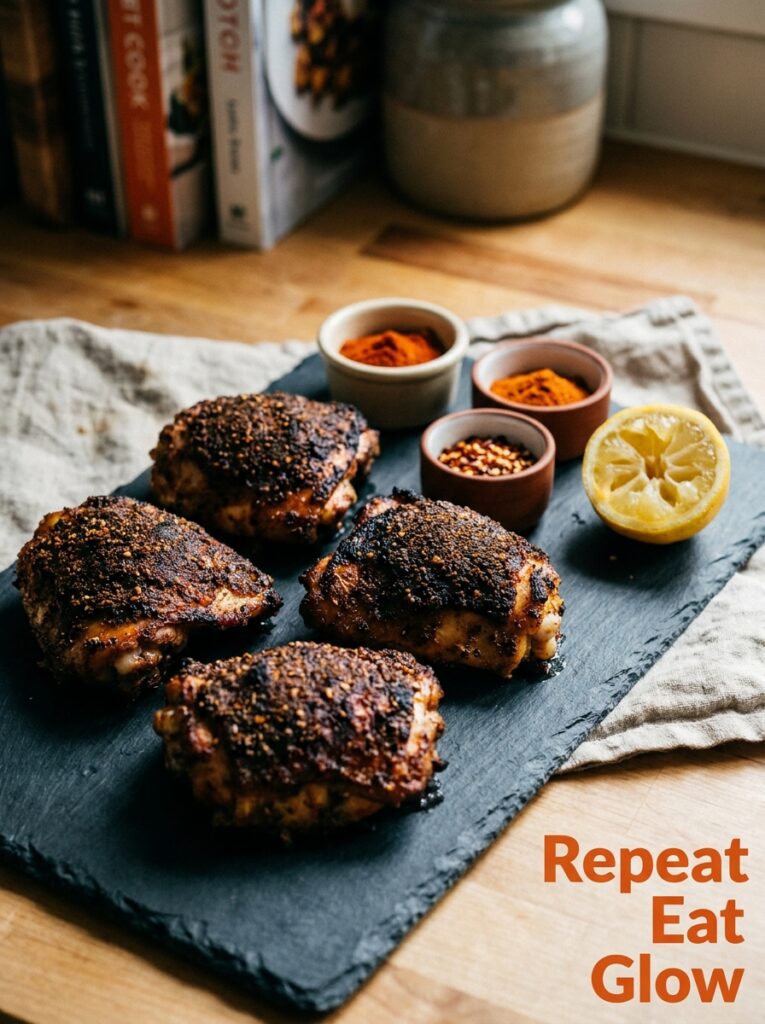
Not everything needs to be subtle. Sometimes dinner should have a bit of fire in it.
A good spice rub for chicken thighs: smoked paprika (not sweet, SMOKED — the difference is real), cumin, garlic powder, cayenne, salt, and a tiny bit of brown sugar. That last one sounds weird but the sugar helps with caramelization and creates this slightly sticky exterior that you’re going to love.
Rub it directly onto the chicken, getting under the skin if there is any. Don’t be shy with it. You want the chicken properly coated, not dusted.
Grill them if it’s summer and the weather’s cooperating. Roast them at high heat (425°F/220°C) if it’s not. Either way, the spice crust gets slightly charred in spots, the meat stays juicy inside, and every bite has this smoky-warm depth to it. Serve with something cool and creamy on the side — yogurt sauce, slaw, even just sour cream — to balance the heat.
This is good. Like, order-cancellation-level good.
—
10. The Dinner Party Recipe That Looks Harder Than It Is
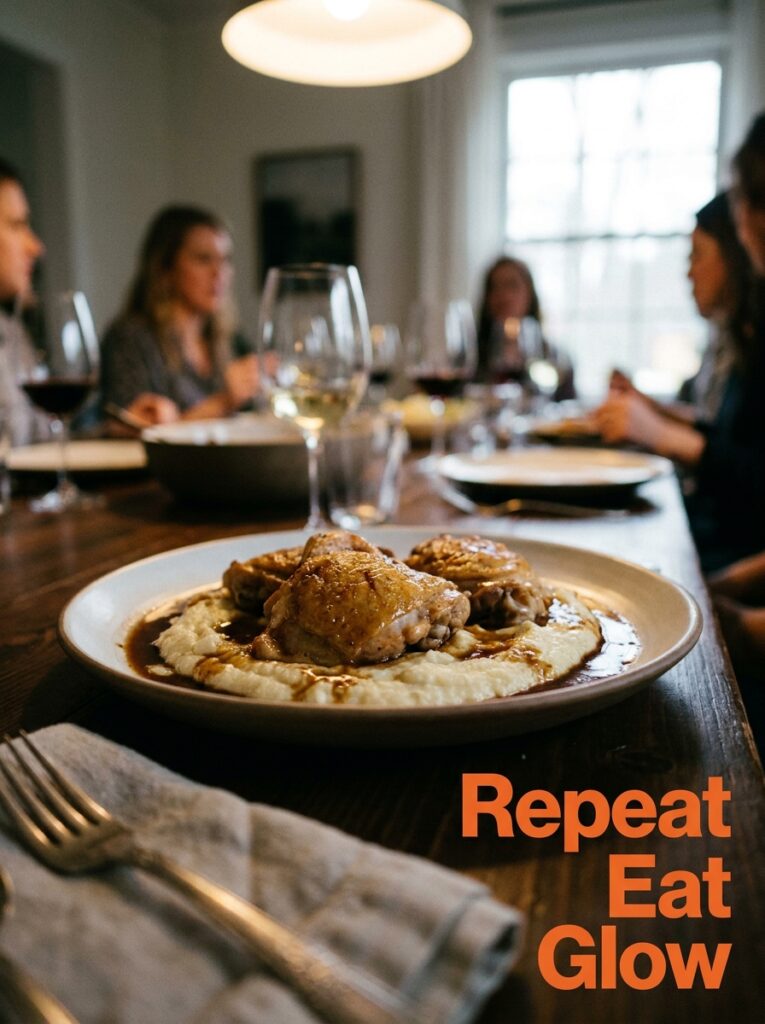
Chicken thighs with olives, capers, and white wine. It sounds like something from a restaurant menu. Takes about an hour total, most of that hands-off.
Brown the thighs. Set aside. In the same pan, soften shallots and garlic. Add white wine (a dry one — whatever you’d actually drink), a can of crushed tomatoes, a handful of olives, a tablespoon of capers, a bay leaf. Stir. Nestle the chicken back in skin-side up. Into a 375°F/190°C oven for 30 minutes, uncovered, so the skin stays somewhat crispy while the sauce does its thing below.
Scatter fresh parsley over the top before you serve it. Put the whole pan in the center of the table. Let people help themselves.
It’s got this rich, briny, slightly acidic sauce that makes everything on the plate taste better. And side note — it reheats brilliantly the next day, which means leftovers for lunch and you feeling very smug about your life choices.
—
11. The Marinade You’ll Make Again and Again (Seriously, Write This Down)
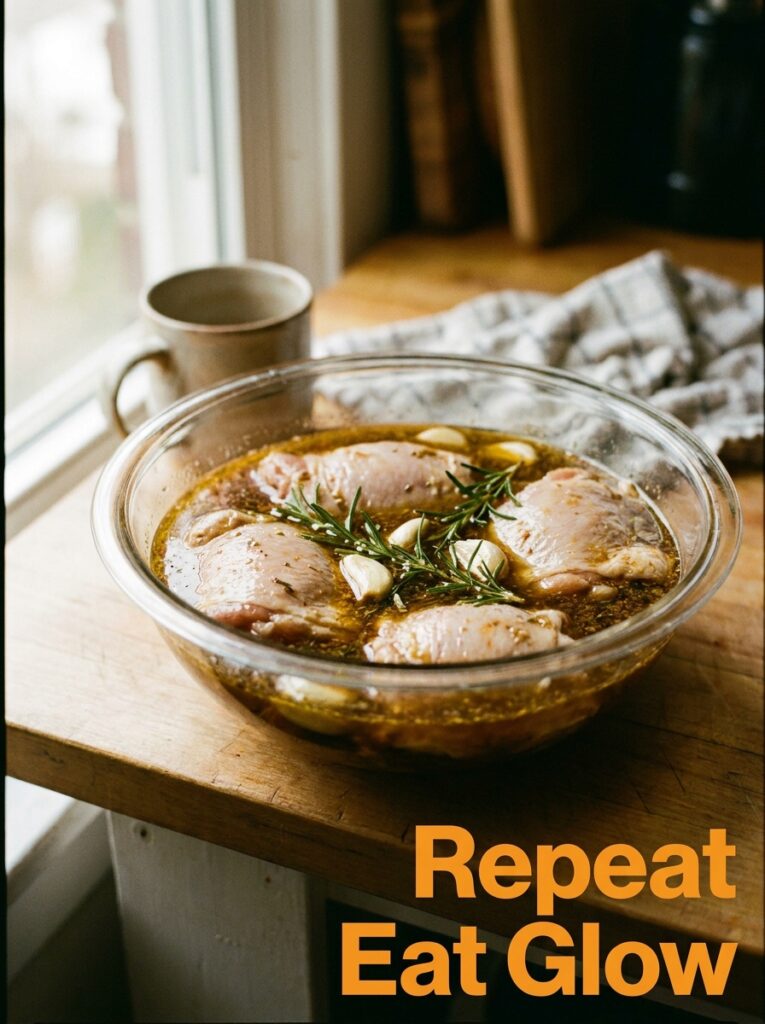
Greek-inspired. Dead simple. Yogurt, lemon, garlic, dried oregano, olive oil, salt. That’s your whole list.
The yogurt does something to the chicken that no other marinade really does — it tenderizes, it keeps moisture in, it creates this slightly charred coating when it hits high heat that is genuinely addictive. Two hours in the fridge minimum. Overnight if you can manage it.
After that, grill or roast hot and fast. The yogurt will look weird when it’s raw — lumpy, slightly curdled-looking. Don’t worry. It transforms in the oven into this gorgeous, slightly crispy coating with golden spots. Trust the process.
Eat with warm flatbreads, sliced cucumber, a squeeze of lemon. Or over rice. Or in a wrap the next day with leftover veg. The marinade is versatile enough that it plays well with basically everything.
—
12. The Rule That Makes Every Chicken Thigh Recipe Better
Rest your chicken. Always. This isn’t optional.
When chicken comes out of the pan or oven, it’s still cooking. The internal temperature keeps rising for a few minutes. More importantly, the juices are moving toward the surface — and if you cut into it right now, they run all over the board and you’re left with drier meat. If you wait five to ten minutes, those juices redistribute back through the meat and every bite is better.
It’s the simplest thing. A lot of people skip it because dinner is ready and everyone’s hungry and those five minutes feel like an eternity. I get it. But this is the single change that genuinely makes a difference across every method, every cut, every recipe.
Cover it loosely with foil while it rests. Pour yourself a glass of something. Catch your breath. The chicken will still be hot, and it’ll be noticeably juicier than if you’d cut into it right away.
Small thing. Big difference. Write it down.
—
❓ FAQ
Q: What temperature should chicken thighs reach to be fully cooked? A: 165°F (74°C) is the safe internal temperature for chicken. That said, chicken thighs are often even better between 175-185°F because the extra heat breaks down the connective tissue and makes them more tender — so don’t panic if they read a bit higher.
Q: Can you cook chicken thighs from frozen? A: You can, but you’ll need to increase cooking time by about 50% and make sure to check the internal temperature carefully. For best results with any of these recipes though, thawed chicken browns and cooks much more evenly — it’s worth the overnight defrost in the fridge if you can plan ahead.
Q: Bone-in or boneless for weeknight dinners? A: Boneless thighs win on weeknights — they cook faster (around 20-25 minutes), they’re easier to eat, and they work perfectly in stir-fries, quick pan sauces, and anything where you want even slices. Bone-in are worth the extra time on weekends or when you want that deeper flavor and crispier skin.
—
💭 Final Thoughts

Here’s what I keep coming back to: the chicken thigh is genuinely one of the most forgiving, most flavorful, most honestly useful things you can keep in your kitchen. It doesn’t demand perfection. It rewards a bit of heat, a bit of patience, and some good seasoning. Any of these twelve recipes could be on your table tonight with what’s probably already in your kitchen right now. So which one’s first?
