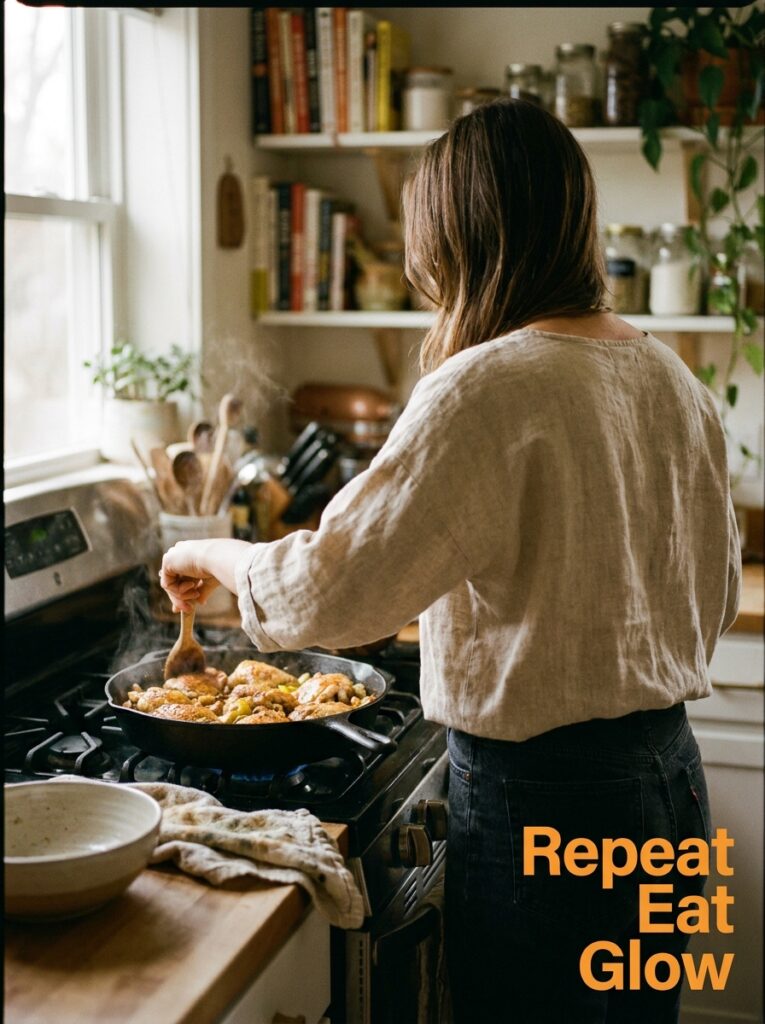
You open the fridge at 5:30pm and there it is. Two chicken breasts, a lemon that’s seen better days, and the quiet panic of a weeknight. We’ve all been there. Here’s what to do about it.
—
1. The Garlic Butter Pan Sauce That Makes Any Chicken Breast Taste Restaurant-Worthy
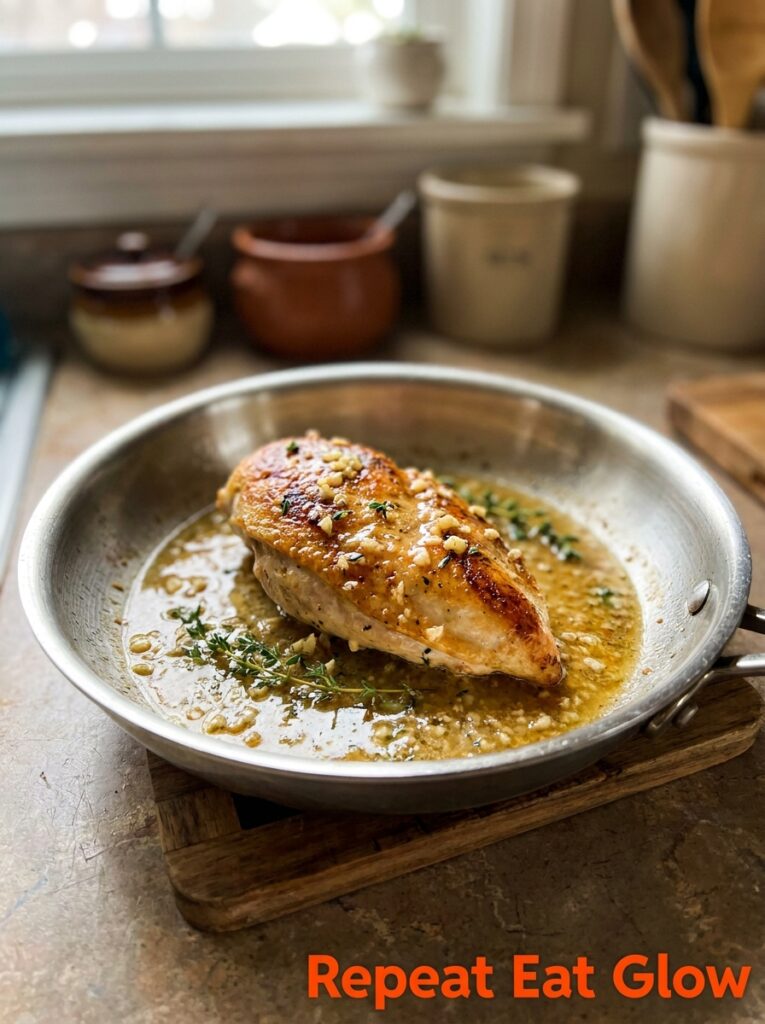
Okay, so here’s the thing about chicken breast that nobody really says out loud: it’s not the most exciting ingredient in the world. It’s kind of the blank canvas of proteins. A little dry if you’re not careful, a little bland if you forget the seasoning. But garlic butter? That’s where everything changes.
This method is embarrassingly simple. Season your chicken with salt, pepper, and a pinch of smoked paprika — the smoked version, not sweet, it makes a difference — and sear it in a hot pan with a splash of oil for about six minutes per side. Don’t touch it. I know you want to, but don’t. When it’s golden and cooked through, pull it out and let it rest. In that same pan, you drop two or three crushed garlic cloves, a knob of butter (and I mean a generous one), a squeeze of that struggling lemon from your fridge, and a handful of whatever fresh herb you’ve got. Thyme works. Parsley works. Even rosemary if you’re into that.
Spoon it over the chicken. That’s it. That sizzling, buttery, garlicky smell that fills your kitchen is the whole point. Your family will think you’ve been cooking for an hour.
“The secret to a good weeknight chicken isn’t a complicated recipe — it’s a really good pan sauce you make in three minutes.”
—
2. Why Pounding Your Chicken to Even Thickness Is the One Step You’re Probably Skipping
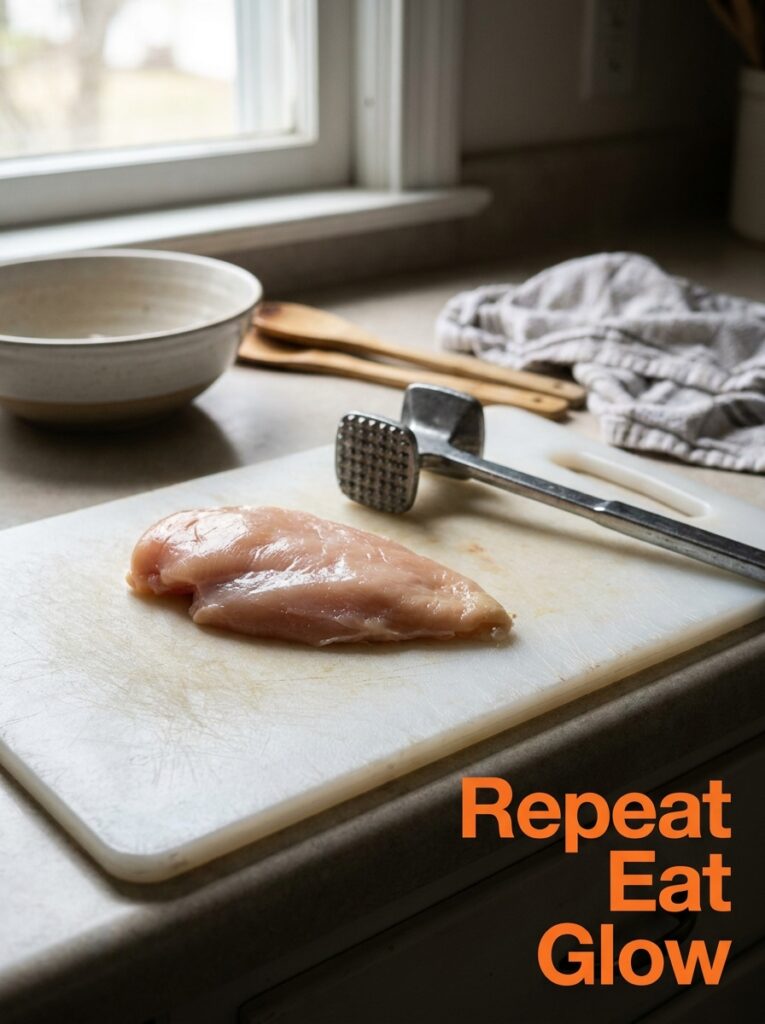
Not glamorous. I know. But if your chicken keeps coming out dry on the outside and weirdly underdone in the thick part, this is why.
Chicken breasts are uneven. One end is thick, one end tapers off, and when they hit a hot pan they cook at different rates. The thin end overcooks by the time the thick part catches up. You end up with rubbery edges and a slightly chalky center, and you wonder why your chicken doesn’t taste like the restaurant version.
Put the breast in a zip-lock bag or between two sheets of cling film. Use a rolling pin or the bottom of a heavy pan — whatever’s closest — and bash it to roughly 3/4 inch thickness throughout. Takes maybe two minutes. You don’t need to go paper-thin. Just even.
The difference is kind of shocking, honestly. Even thickness means even cooking, which means every single bite is juicy instead of just the lucky ones. This one change might genuinely fix what you thought was a chicken problem but was actually a geometry problem. And yes, that’s a weird sentence, but it’s true.
—
3. The Lemon Herb Marinade You Can Make in Five Minutes and Forget About Until Dinner
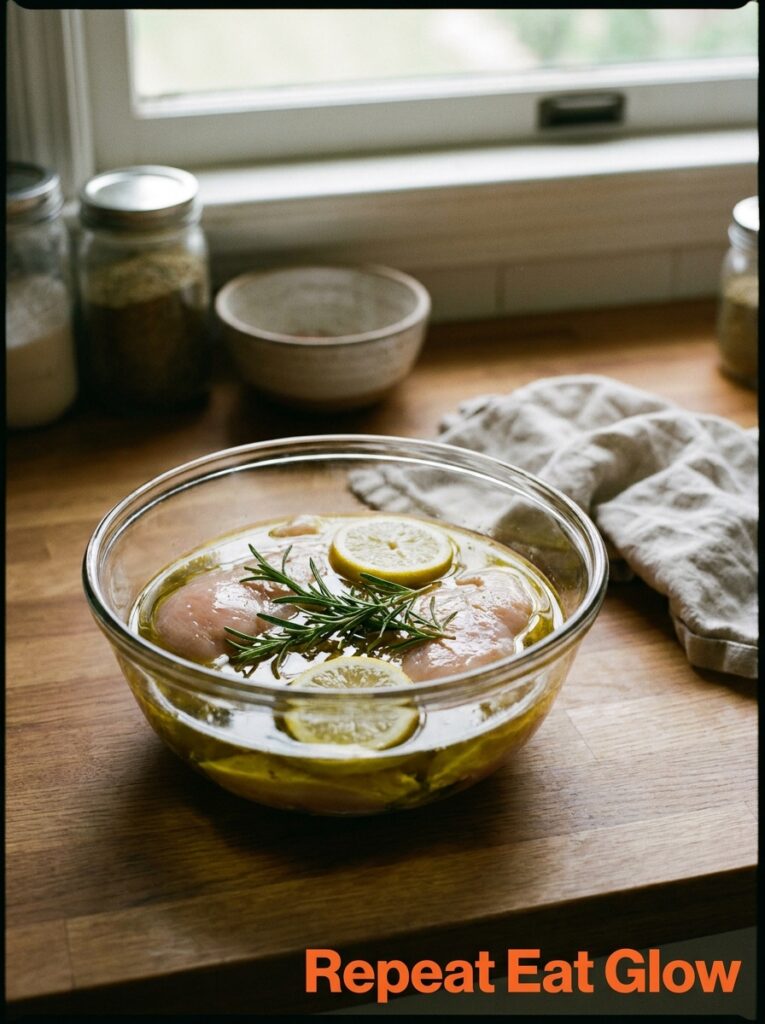
Marinades feel like effort but they really, really aren’t. This one takes about five minutes in the morning and then your evening self will genuinely thank your morning self.
Whisk together the juice of a whole lemon, three tablespoons of olive oil, two crushed garlic cloves, a teaspoon of dried oregano, half a teaspoon of cumin, salt, and black pepper. That’s it. Drop your chicken breasts in, cover the bowl, and stick it in the fridge. Even two hours makes a difference. Four is better. All day is ideal.
The acid in the lemon starts to break down the surface of the meat a little, which means flavor gets in deeper. The oil carries the herbs. The garlic does what garlic always does. When you cook it — grill, pan, oven, whatever you’ve got — the outside gets these gorgeous caramelized spots and the inside stays tender in a way that un-marinated chicken just doesn’t.
Side note — this marinade also works on thighs if that’s what you’ve got. Or on vegetables. Or honestly just as a salad dressing in a pinch, though maybe don’t tell anyone it touched raw chicken.
—
4. Crispy Chicken Cutlets in 20 Minutes: The Weeknight Version That Holds Up
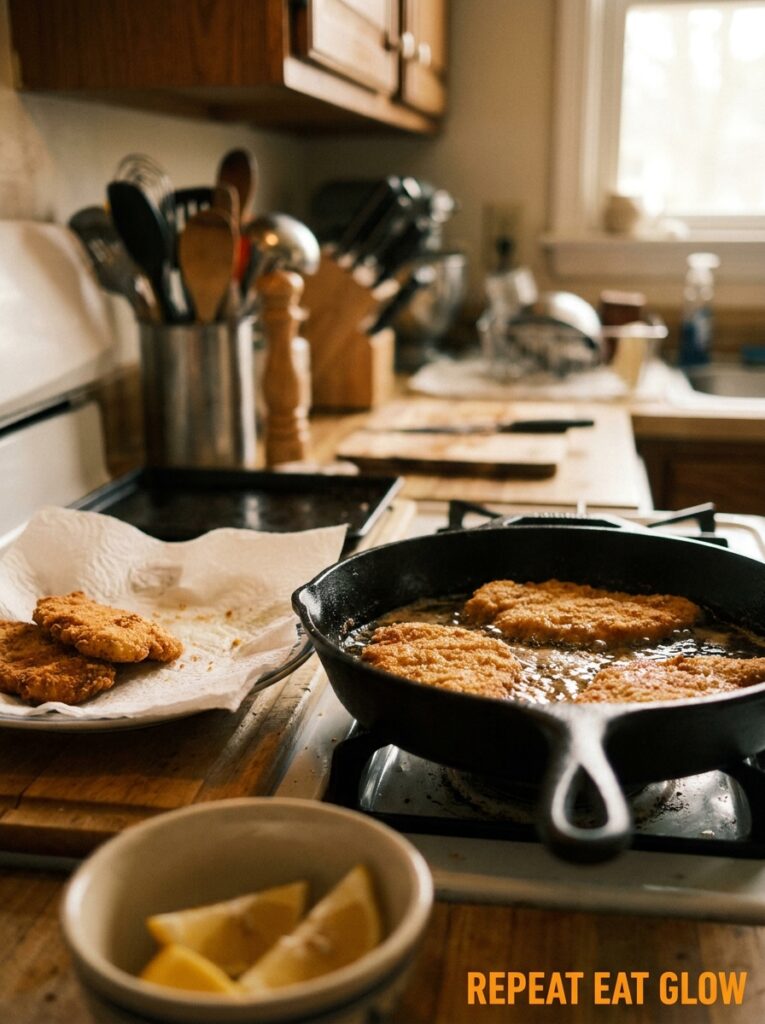
You know when you order chicken milanese at a restaurant and you think “why don’t I make this more?” And then you convince yourself it’s complicated? It’s not. It genuinely isn’t.
Thin your chicken to about half an inch. Dip in seasoned flour, then beaten egg, then breadcrumbs — panko if you have them, they’re crunchier, but regular breadcrumbs work fine. Press the breadcrumbs on. Don’t just dip and go. Press them in like you mean it.
Shallow fry in about a quarter inch of vegetable oil over medium-high heat. Three to four minutes per side. The outside goes this deep golden color and when you cut into it the crust kind of crackles and the chicken inside is soft and steaming. Lay it on a plate over some rocket and a few cherry tomatoes, squeeze a lemon wedge over the top, and I promise you it looks and tastes like a proper meal. Not a weeknight panic meal. An actual dinner.
“Panko breadcrumbs are one of those small upgrades that make you feel like you know something other people don’t.”
—
5. The Slow-Oven Method That Produces Impossibly Juicy Chicken With Zero Fuss
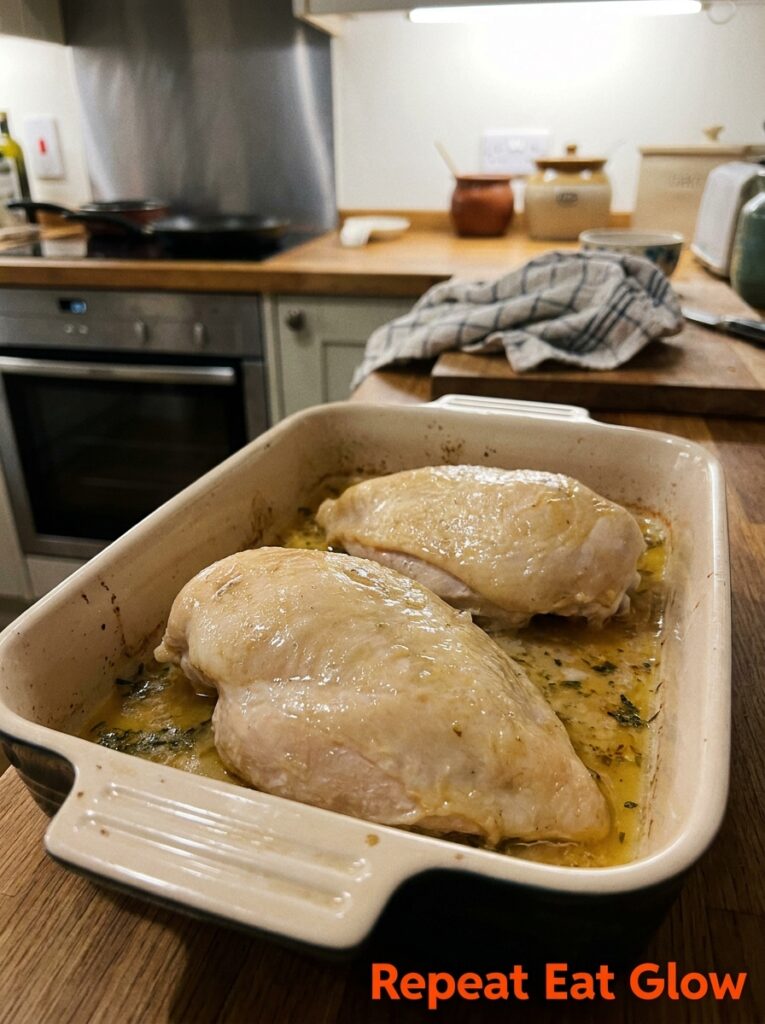
This one’s for the nights you’ve got TIME but not ENERGY. Big difference. You don’t want to stand at the stove. You want to put something in the oven and walk away.
Preheat your oven to 275°F (135°C). Put your seasoned chicken breasts in a baking dish, add a splash of chicken stock or even just water to the bottom, cover tightly with foil, and cook for about 45 minutes to an hour. That’s it. Low and slow.
What you get out of the oven is some of the most tender, moist chicken you’ve ever made at home. The low temperature means the muscle fibers don’t tighten and squeeze out all the moisture. It’s gentle. Patient. And the chicken rewards you for it.
If you want a little color on top, pull the foil off for the last five minutes and crank the broiler. You’ll get a slight golden blush on the surface without losing any of the juiciness underneath. Serve it sliced over rice or with roasted vegetables that you also threw in the oven at the same time, because you’re smart and you don’t want extra dishes.
—
6. This Creamy Tuscan Chicken Takes 25 Minutes and It Tastes Like Comfort Has a Last Name
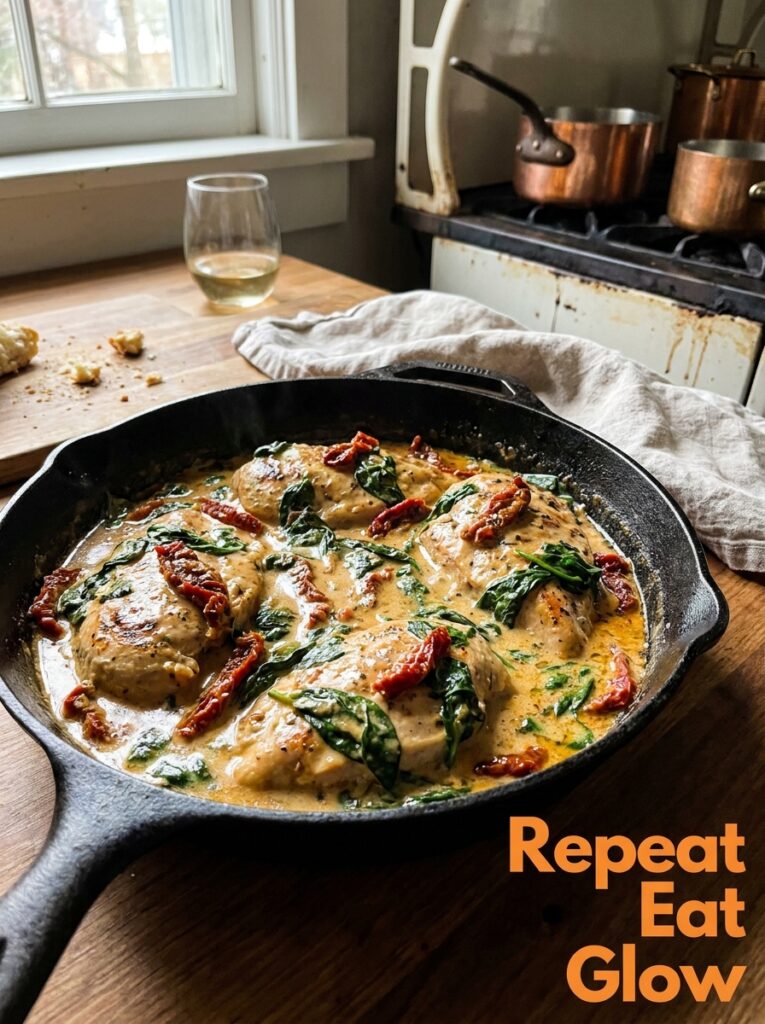
Okay. This one I’m a little obsessed with, not gonna lie.
Sear seasoned chicken breasts in olive oil until golden, then set them aside. In the same pan: garlic, a handful of sun-dried tomatoes, a big handful of spinach, a cup of heavy cream (or single cream if you’re in the UK), a squeeze of lemon, salt, pepper, and a generous handful of grated parmesan. Stir it together. Let it thicken just slightly. Nestle the chicken back in.
The sauce is rich without being heavy. The sun-dried tomatoes give it this intense, almost jammy sweetness. The spinach wilts down to almost nothing but gives the whole thing a slightly earthy backbone. And the parmesan — well, parmesan never needs justification.
This is the recipe people ask for. The one that sounds fancy but took you less time than finding the remote. Serve it over pasta or crusty bread to catch the sauce. You’ll make it twice in the same week, which sounds like a lot but honestly won’t feel like it.
—
7. Sheet Pan Chicken With Whatever Vegetables You Need to Use Up Before They Quit
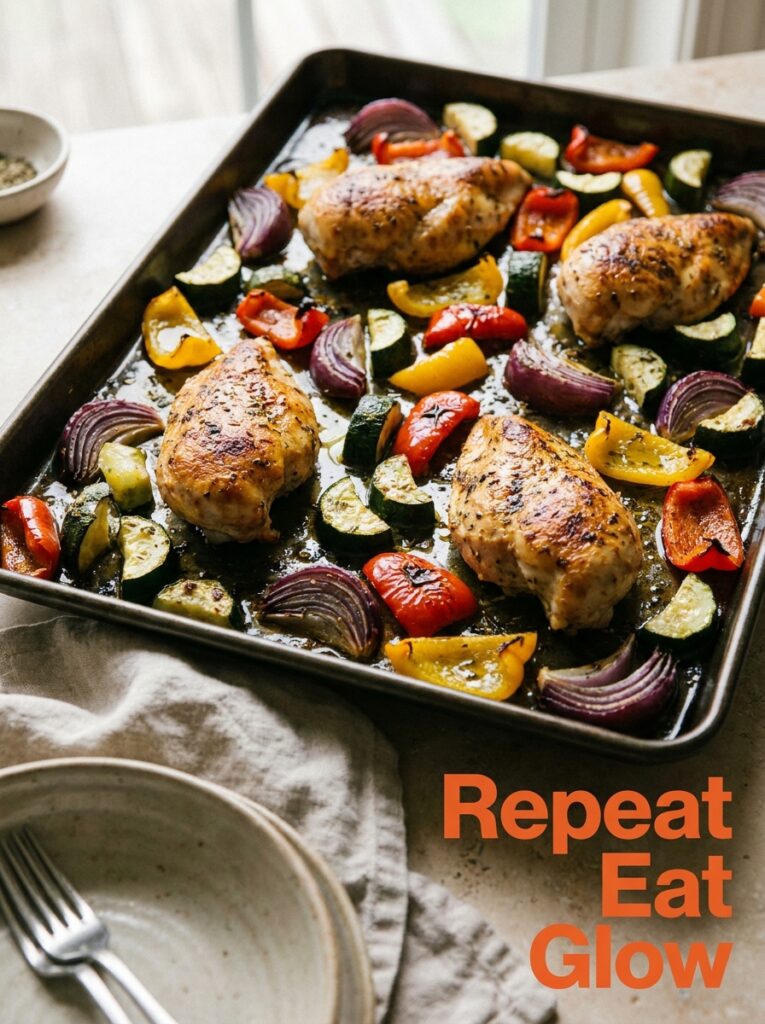
You know that drawer in the fridge? The one with the half a red pepper and the zucchini you bought with good intentions? This is why that drawer exists.
Sheet pan dinners are not a trend. They’re a philosophy. One pan. Everything goes in together. Everything comes out at the same time. Done.
Season your chicken breasts however you’re feeling — Italian herbs, za’atar, just salt and pepper, whatever. Chop your vegetables into similarly-sized pieces so they cook evenly. Toss everything in olive oil and spread it on a sheet pan without overcrowding. This is important. Overcrowded = steamed, not roasted. Give things space.
425°F (220°C) for 22 to 25 minutes. The edges of the vegetables start to caramelize. The chicken gets a little color. Everything on that pan picks up flavor from everything else, which is why sheet pan dinners always taste more coherent than the random ingredients suggest they should.
“A sheet pan dinner is basically a love language for people who hate washing up.”
—
8. The Honey Soy Chicken That’s Faster Than Ordering Takeout (Tested Against a Real Timer)
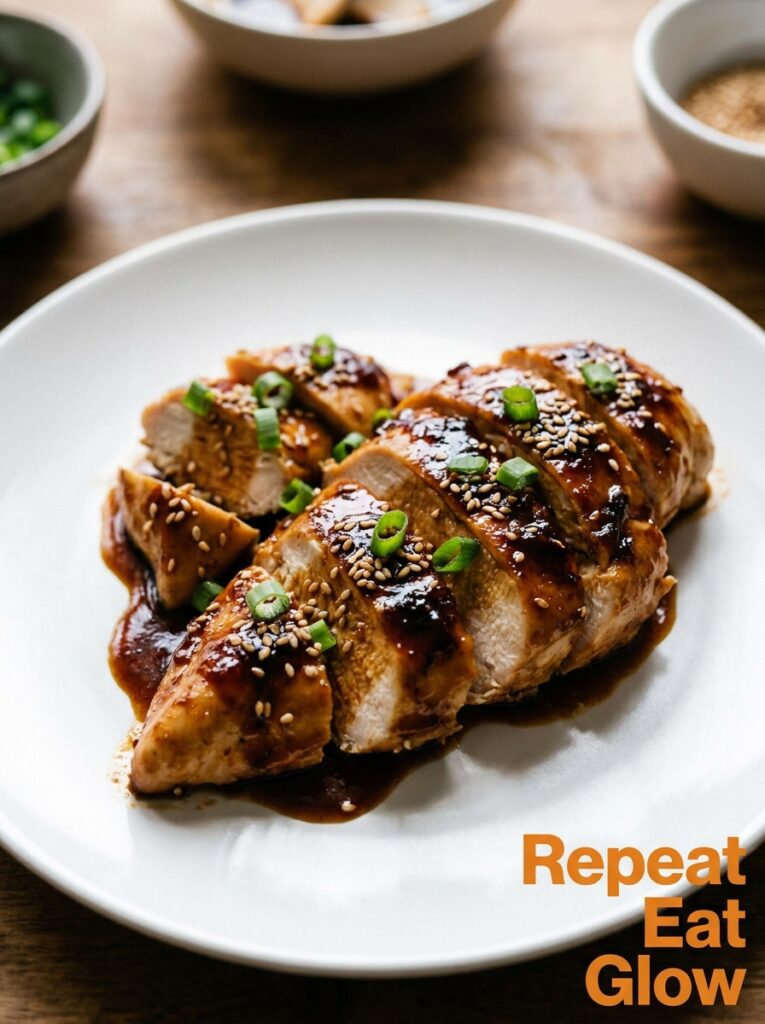
Not kidding about the timer thing. Twenty-two minutes start to plate. I’ve done it.
Mix together two tablespoons of soy sauce, one tablespoon of honey, a teaspoon of sesame oil, a little grated ginger, and two crushed garlic cloves. Slice your chicken breasts into strips or cutlets — thinner means faster — and cook them in a hot pan for a few minutes per side. Pour the sauce over. Let it bubble and reduce and coat every piece. Add a scatter of sesame seeds and sliced spring onions at the end.
The sauce does this thing where it caramelizes slightly and goes slightly sticky and the edges of the chicken pieces get a little charred in the most satisfying way possible. Serve over steamed rice. Add some steamed broccoli on the side if you want to feel virtuous, which sometimes you do.
This is genuinely the answer to “should we just order pizza?” More often than you’d think.
—
9. Why Brining Your Chicken in Salted Water for 30 Minutes Actually Works
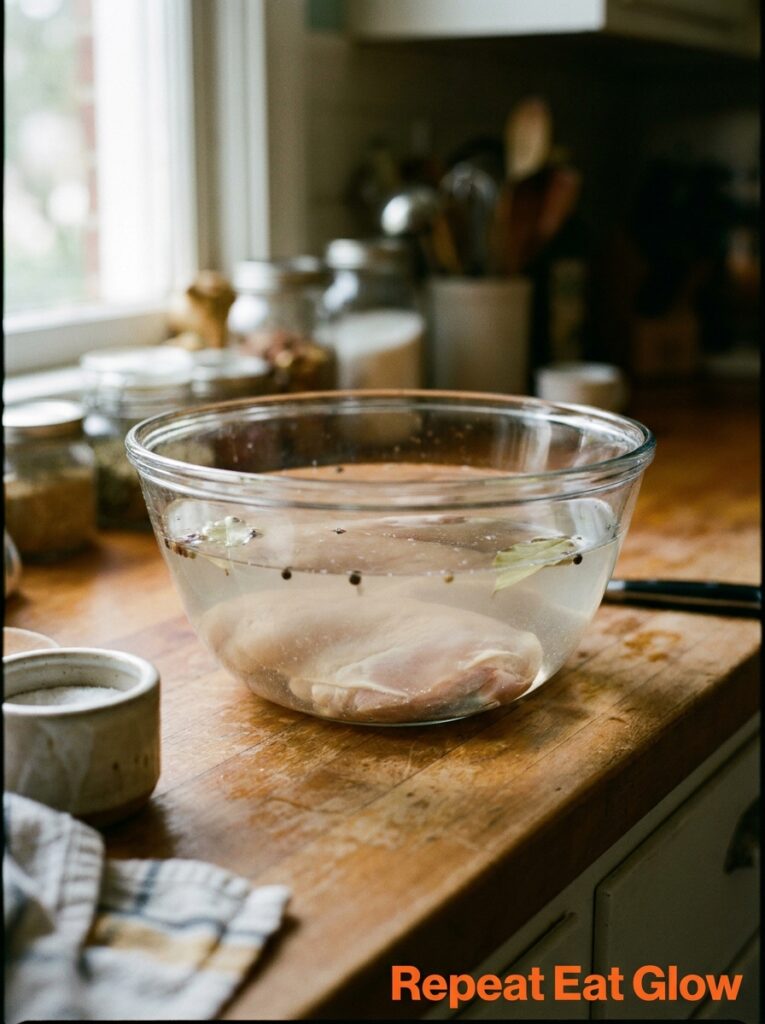
I was skeptical too. It sounds like one of those “technically correct” cooking tips that doesn’t translate to real life. But I tried it and now I can’t un-try it.
Dissolve a tablespoon of salt in a quart (or litre) of cold water. Submerge your chicken breasts. Thirty minutes. Pull them out, pat them dry, cook normally.
The science-y explanation is that the salt changes the protein structure slightly and helps the meat retain moisture during cooking. The non-science-y explanation is that brined chicken is noticeably juicier and more flavorful than un-brined chicken and once you notice it, you keep doing it. Even 20 minutes makes a difference, which means you can start the brine while your pasta water heats up and it works out timing-wise.
It won’t make dry chicken magically wet — if you overcook it you’ll still have a problem. But it gives you a wider margin for error, which on a Tuesday night is actually really valuable.
—
10. One-Pan Chicken With Cherry Tomatoes That Makes Its Own Sauce While You Ignore It
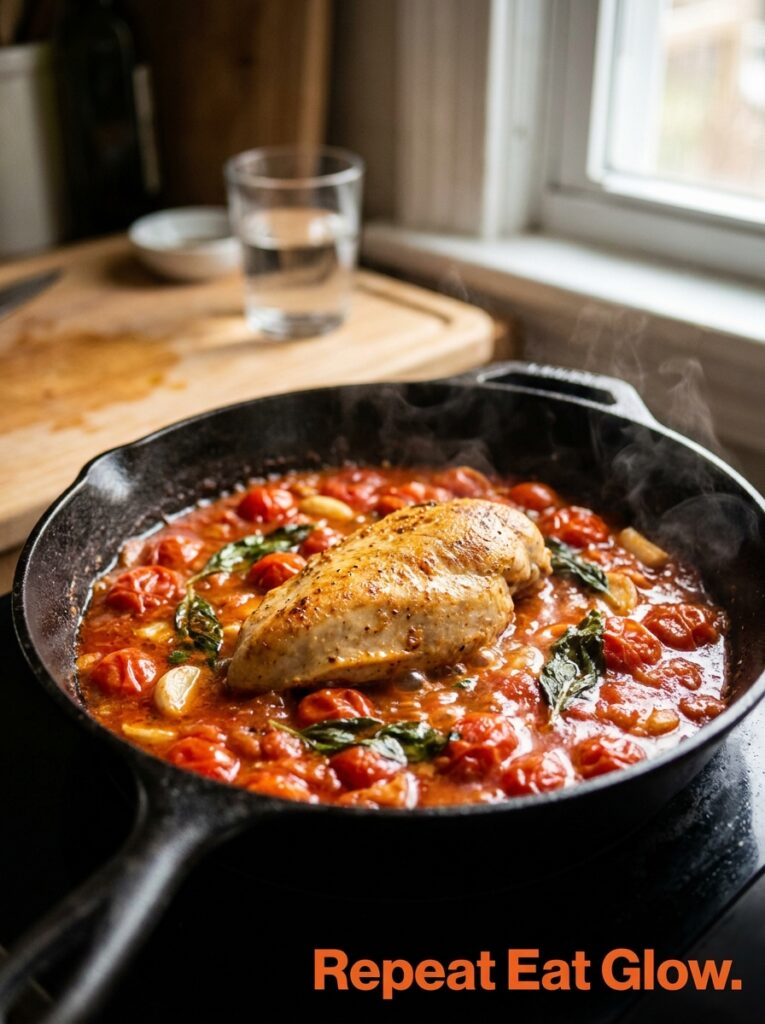
This one practically cooks itself. And I mean that pretty literally.
Sear your seasoned chicken breasts in an oven-safe pan. While they’re searing, scatter a big handful of cherry tomatoes around them — halved is fine, whole is also fine, they’ll burst either way. Add some whole garlic cloves, a splash of white wine or chicken stock, a few sprigs of thyme, and a pinch of chili flakes if you want a little heat.
Transfer the whole pan to a 400°F (200°C) oven for 15 to 20 minutes. While it’s in there, the tomatoes collapse and release their juices, the garlic gets soft and sweet, and the whole thing reduces into this loose, glossy, slightly jammy sauce. Nothing you did. The oven just handled it.
Pull it out. Scatter some fresh basil over the top. The tomatoes that were whole when they went in are now these soft, bursting little pockets of sweetness. It looks like something from a cookbook but took about eight minutes of actual effort. The rest was just heat and time doing their thing.
—
11. The Chicken Breast Stuffed With Spinach and Ricotta That Looks Incredibly Impressive for a Weeknight
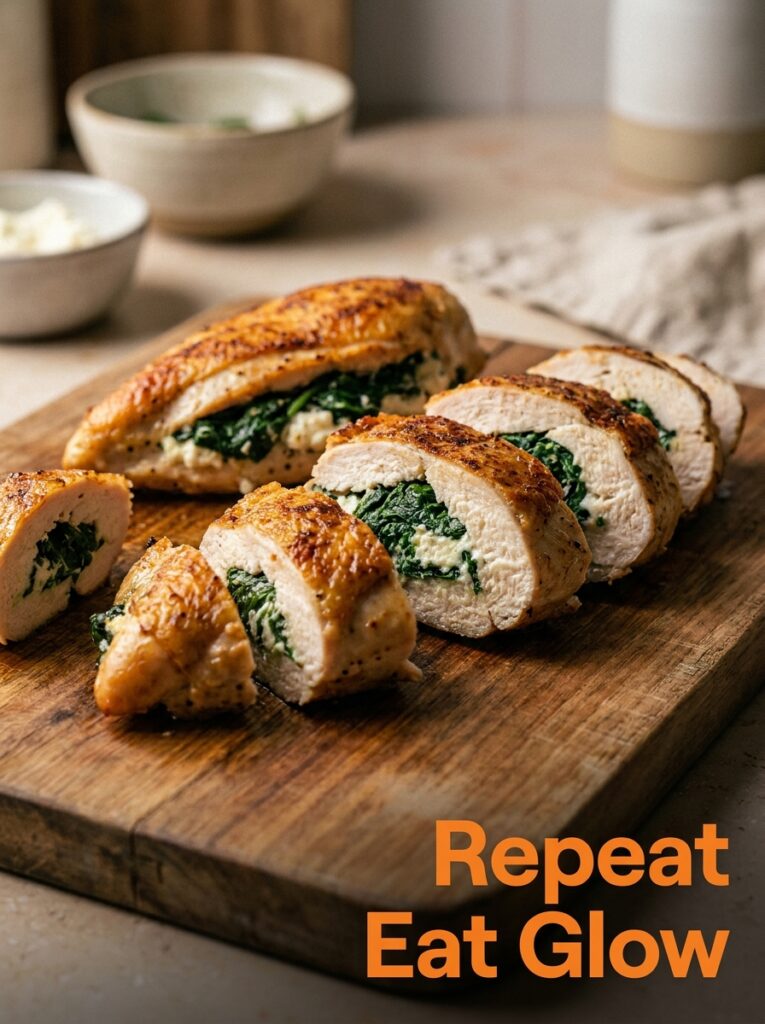
This one’s for when you want people to look at your plate and ask if you’ve been watching cooking shows. You have, but that’s beside the point.
Make a small horizontal cut along the thickest part of each chicken breast — you’re making a pocket, not cutting all the way through. Fill it with a mixture of ricotta, wilted spinach, a little lemon zest, salt, pepper, and grated parmesan. Don’t overstuff or it’ll push out while cooking. Secure with a toothpick if you’re worried. You probably don’t need to.
Sear the stuffed breasts in an oven-safe pan until golden on both sides, then finish in a 375°F (190°C) oven for about 18 minutes. When you slice into them, the filling is soft and melted and slightly creamy against the tender white meat. The lemon zest lifts the whole thing. It’s elegant in the way that only simple food with good ingredients can be.
—
12. The Cold Chicken Breast Move That Makes Your Lunch Tomorrow Better Than Your Dinner Tonight
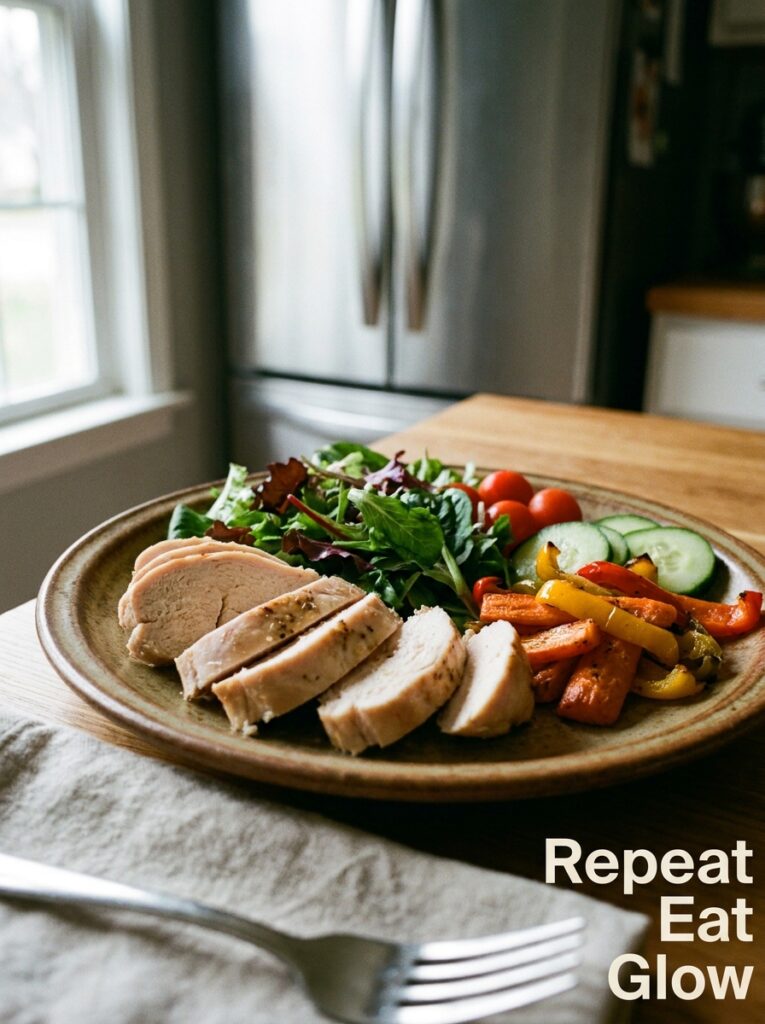
Okay, this is a slightly different vibe. Less recipe, more strategy.
When you’re cooking chicken for dinner, cook extra. Always. Intentionally undercook it by just a hair — it’ll carry over a little as it rests. Let it cool completely and store it whole, not sliced, in the fridge. Sliced chicken dries out faster. Whole keeps better.
Tomorrow’s lunch: slice it cold, put it over greens with whatever dressing you like, add some avocado and cherry tomatoes and you have a better salad than anything you’d buy. Or shred it into a wrap with hummus and roasted red pepper. Or toss it with pasta and a little olive oil and capers.
Cold chicken breast from dinner is one of the most useful things in your fridge. It takes about three seconds to turn into something that feels intentional. And intentional is how you want your lunch to feel when you’re already halfway through the week.
—
❓ FAQ
Q: Why does my chicken breast always come out dry even when I follow the recipe? A: Almost always it’s overcooking — chicken breast doesn’t have much fat to protect it, so a few extra minutes make a real difference. Pull it at an internal temp of 165°F (74°C) and let it rest covered for five minutes before you cut into it. Cutting too soon lets all the juices run out.
Q: Can I use frozen chicken breasts for these recipes without thawing them first? A: You can bake them from frozen at a lower temperature (around 325°F/165°C) with extra time, but pan-searing really needs them fully thawed for safety and even cooking. Overnight in the fridge is the easiest thaw method — just move them the night before.
Q: What’s the best way to store leftover cooked chicken breast so it doesn’t dry out in the fridge? A: Store it whole rather than sliced, in an airtight container with a tiny splash of the cooking juices or broth. Keeps for up to three days. Reheat gently with a little moisture — a splash of water or stock in a covered pan — rather than blasting it in the microwave uncovered.
—
💭 Final Thoughts
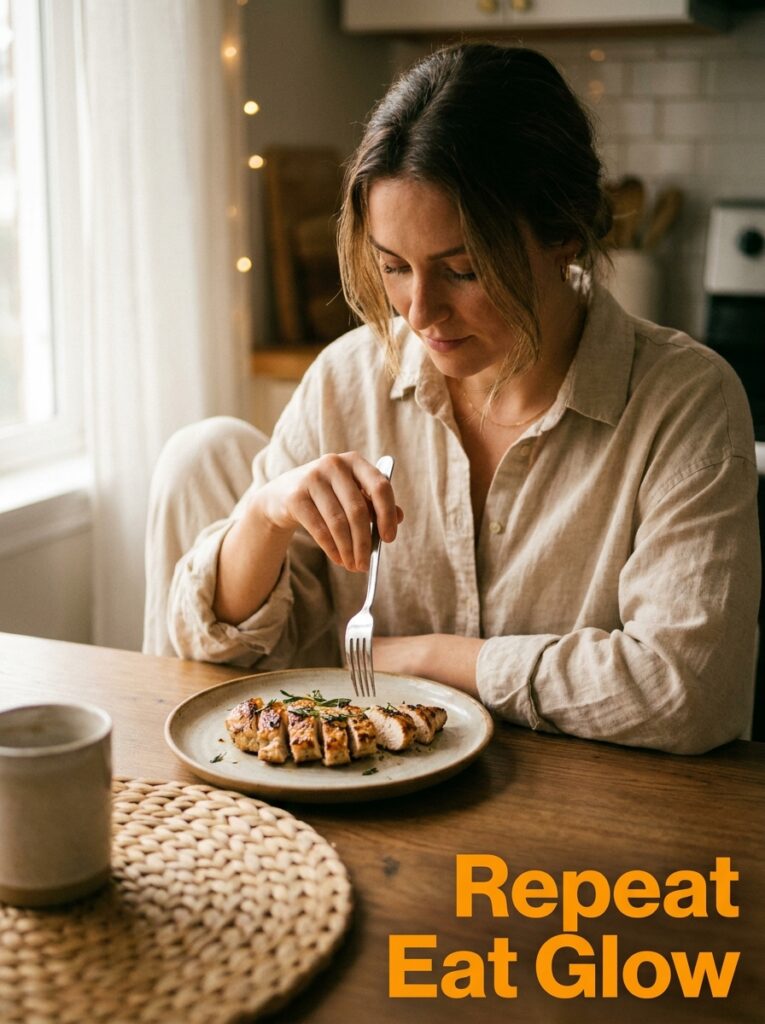
Chicken breast doesn’t have to be the boring part of dinner. It’s one of those ingredients that completely transforms depending on what you bring to it — the heat of a cast iron pan, a good marinade, five minutes and a sauce. Most of these recipes don’t ask much of you except showing up. And isn’t that kind of what weeknight cooking is supposed to be? Which one are you making first?
