If you are looking for fresh ways to use two underrated vegetables, these cabbage and artichoke recipes are a great place to start. Cabbage brings a slightly sweet, crisp texture, while artichokes add a tender, earthy flavor that works beautifully in salads, skillet meals, pasta, soups, and baked dishes. Together, they can turn simple ingredients into surprisingly flavorful meals without requiring complicated cooking techniques.
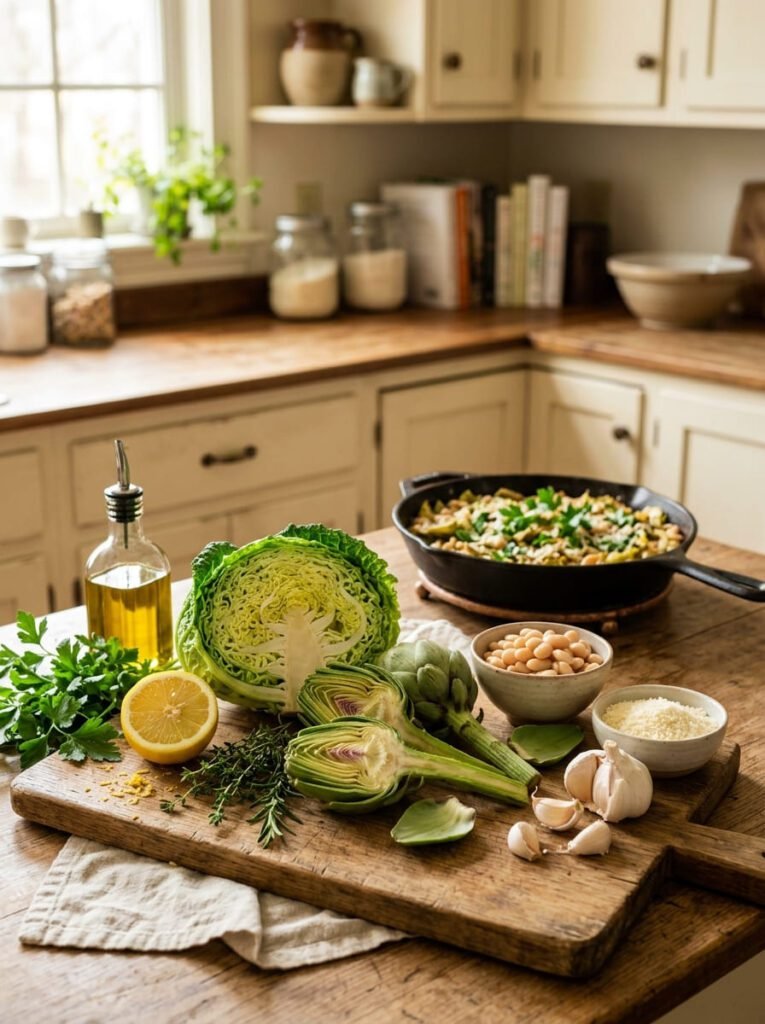
Whether you have a head of green cabbage, a bag of shredded cabbage, fresh artichokes, or a jar of marinated artichoke hearts, there are plenty of combinations to try. Some of these recipes are light enough for lunch, while others make satisfying side dishes or easy weeknight dinners. The key is pairing the vegetables with ingredients such as garlic, lemon, Parmesan, beans, herbs, and creamy sauces that complement both flavors.
1. Lemon Garlic Cabbage and Artichoke Skillet
A simple skillet is one of the easiest ways to bring cabbage and artichokes together. Start by sautéing sliced cabbage in olive oil until it begins to soften and develop lightly browned edges. Add chopped artichoke hearts, minced garlic, lemon zest, and a squeeze of fresh lemon juice, then cook everything together until hot and fragrant.
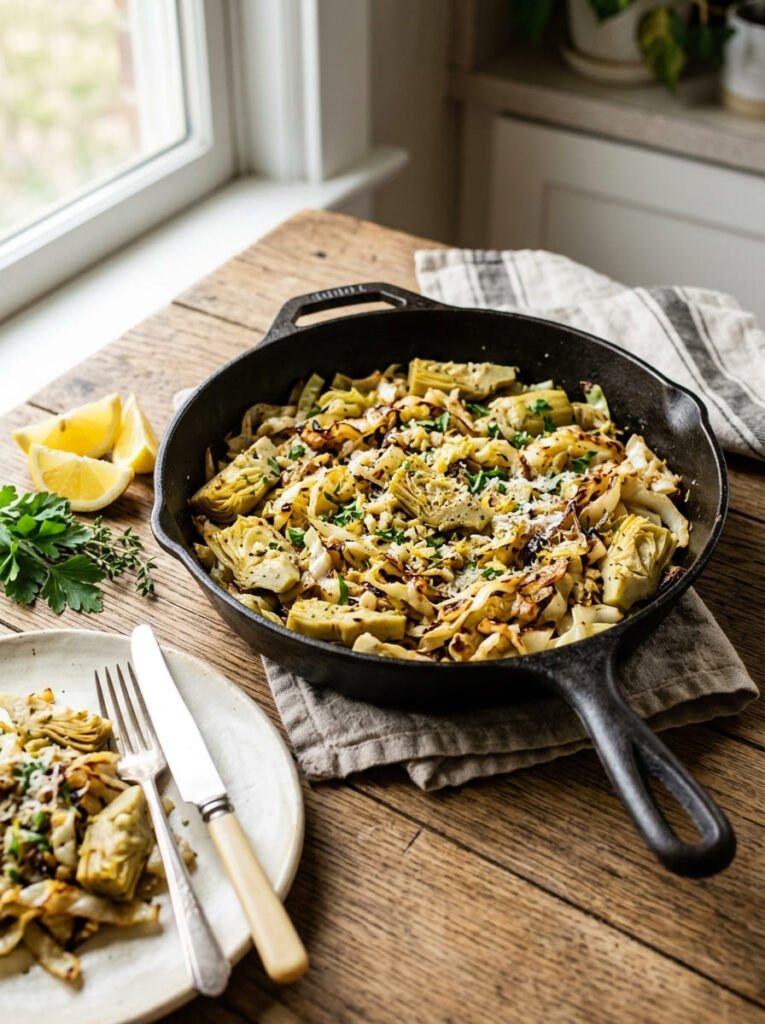
For extra flavor, finish the skillet with cracked black pepper, parsley, and a small amount of grated Parmesan. The lemon keeps the dish bright while the cabbage becomes tender and slightly caramelized. Serve it as a vegetable side dish with grilled chicken, salmon, roasted potatoes, or crusty bread.
2. Creamy Cabbage and Artichoke Pasta
Cabbage and artichokes work surprisingly well in a creamy pasta dish. Sauté thinly sliced cabbage with garlic and onion before adding chopped artichoke hearts and your favorite cooked pasta. A light sauce made with cream, Parmesan, vegetable broth, and black pepper brings everything together without completely covering the vegetables.
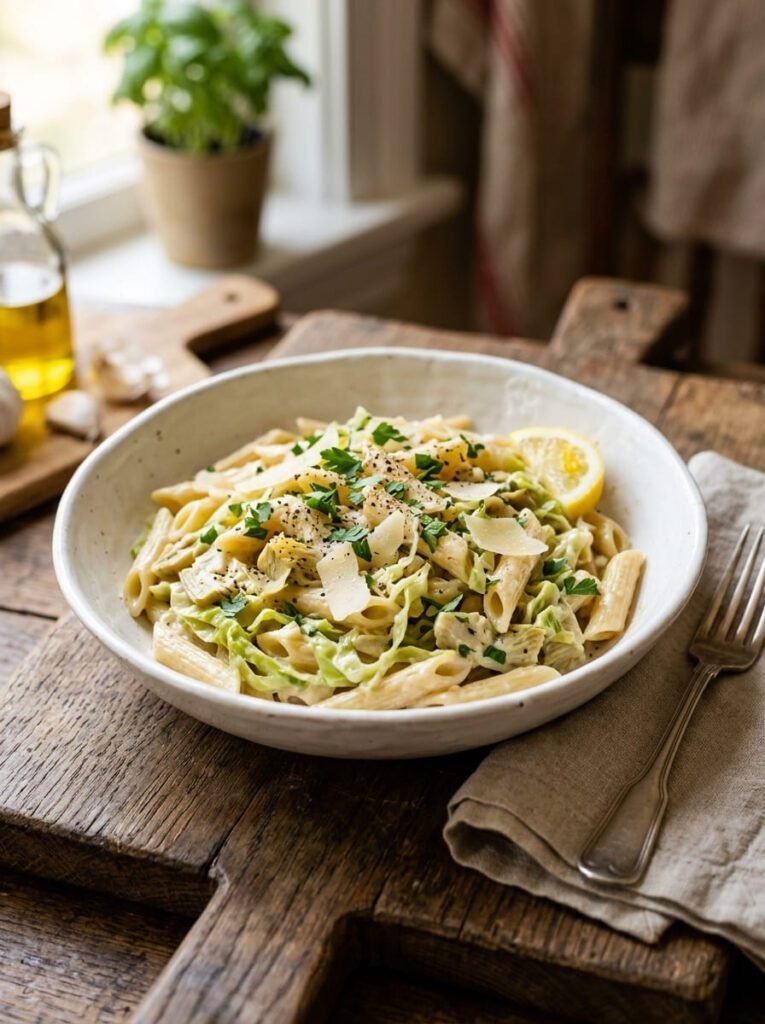
You can also use Greek yogurt for part of the cream to create a lighter sauce, although it should be stirred in gently over low heat to prevent curdling. Short pasta shapes such as penne, rigatoni, or bow ties work especially well because they catch pieces of cabbage and artichoke. Add red pepper flakes if you enjoy a little heat.
3. Roasted Cabbage and Artichoke Hearts
Roasting gives both vegetables a deeper, richer flavor. Cut cabbage into thick wedges or chunky pieces and combine them with drained artichoke hearts on a large sheet pan. Toss everything with olive oil, garlic powder, salt, black pepper, and a little lemon zest before roasting until the cabbage edges become golden.
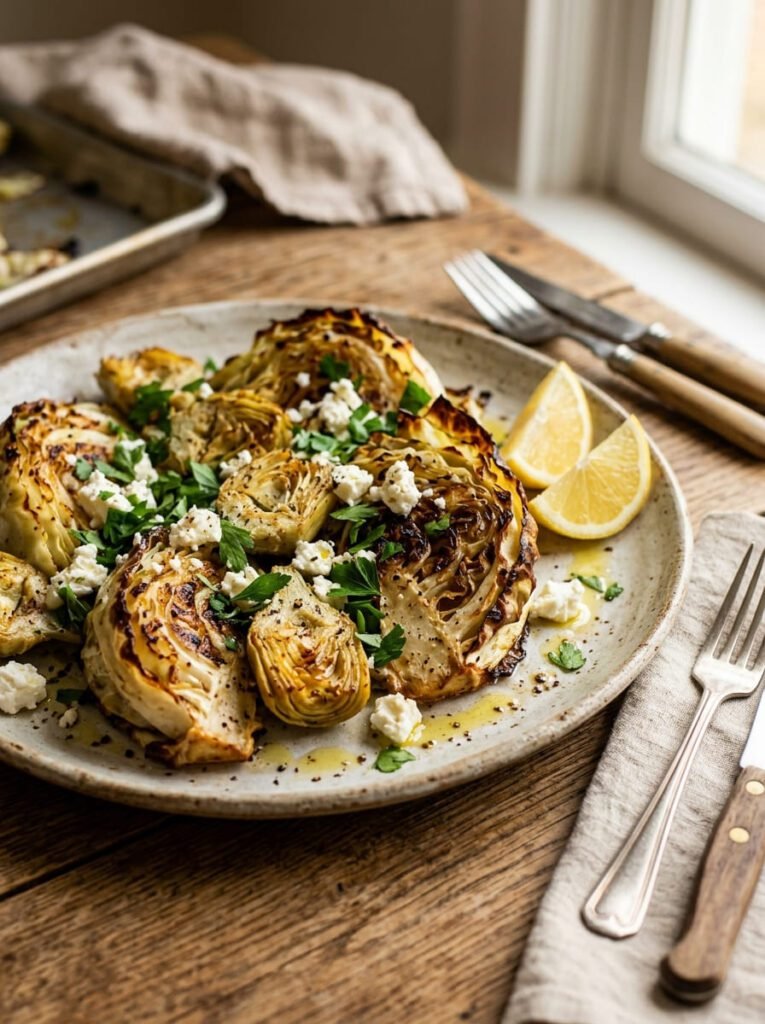
The artichokes become slightly crisp around the edges while the cabbage develops sweet roasted spots. For a Mediterranean-style finish, sprinkle the vegetables with crumbled feta, fresh parsley, and lemon juice. This makes an easy side dish that feels much more special than ordinary roasted vegetables.
4. Mediterranean Cabbage and Artichoke Salad
For a fresh lunch option, combine finely shredded cabbage with artichoke hearts, cucumber, cherry tomatoes, olives, and red onion. A simple dressing made with olive oil, lemon juice, garlic, oregano, salt, and black pepper gives the salad a bright Mediterranean flavor.
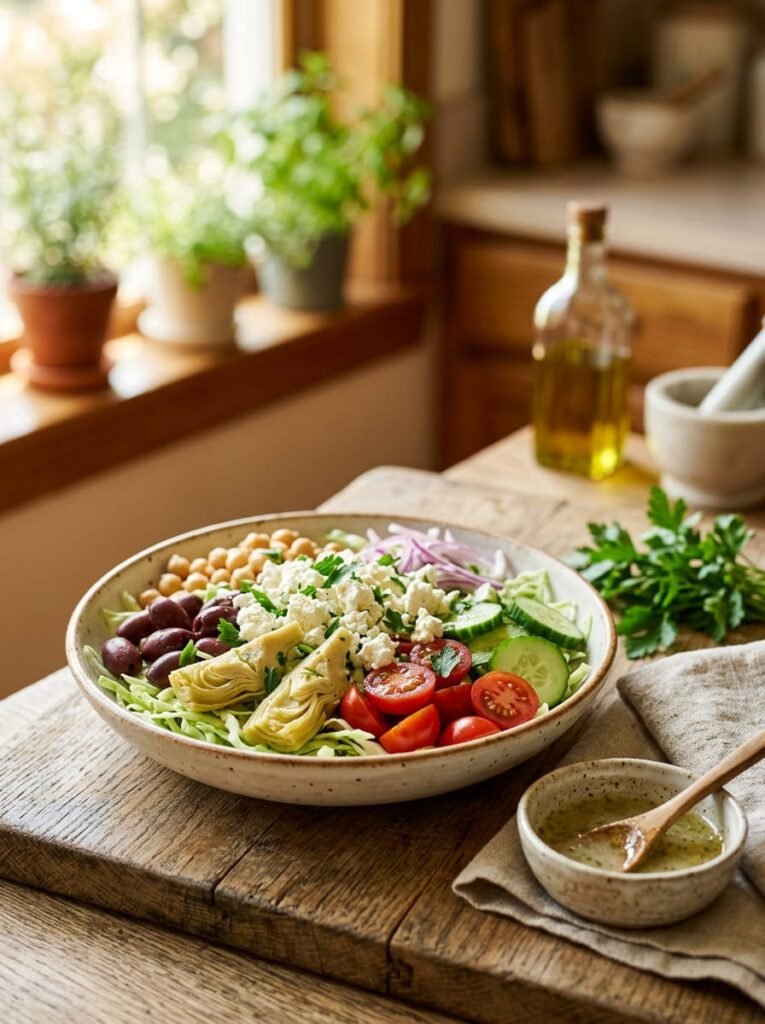
Feta cheese is an excellent addition if you want something salty and creamy. Chickpeas can also turn the salad into a more filling meal while adding plant-based protein and fiber. Because cabbage holds its texture well, this salad can be prepared ahead of time and still remain pleasantly crunchy.
5. Cabbage and Artichoke Soup
A warm vegetable soup is perfect when you want something comforting but not overly heavy. Sauté onion, garlic, and chopped cabbage in olive oil, then add vegetable broth, diced tomatoes, artichoke hearts, Italian herbs, and white beans. Simmer until the cabbage is tender and all of the flavors have had time to blend.
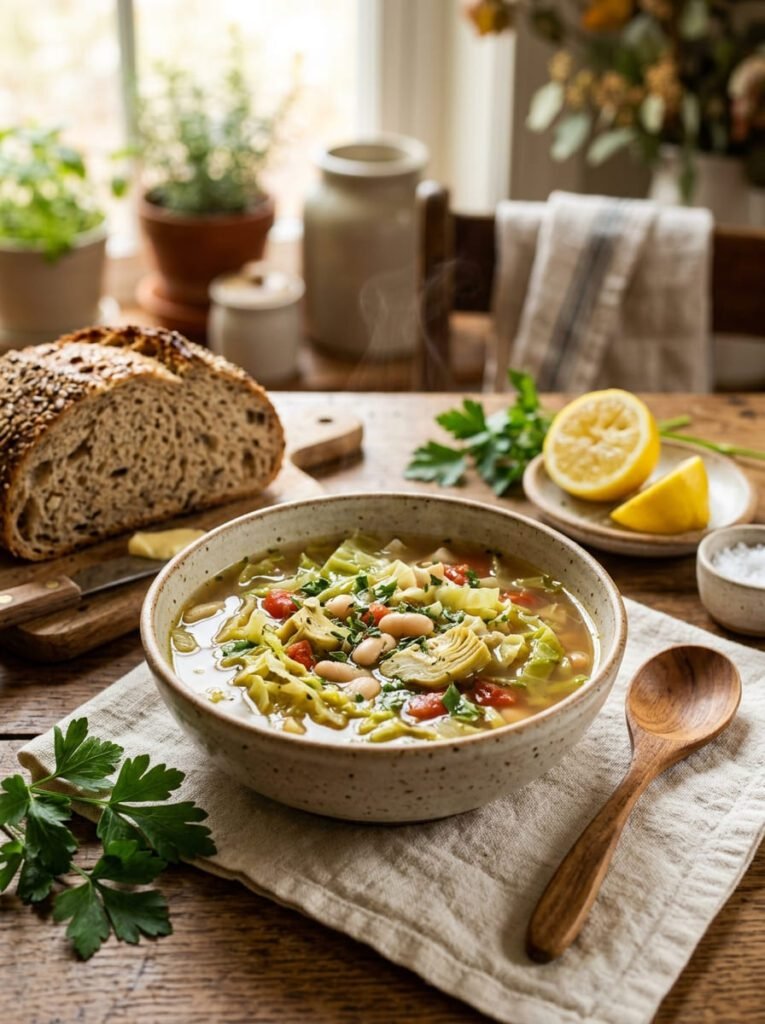
White beans make the soup more substantial while still keeping the vegetables at the center of the dish. A squeeze of lemon at the end can brighten the broth and balance the richness of the artichokes. Serve with whole-grain toast or crusty bread for an easy dinner.
6. Cabbage and Artichoke Slaw
If you enjoy crunchy vegetable salads, try turning these ingredients into a simple slaw. Shred green or purple cabbage and toss it with finely chopped artichoke hearts, carrots, green onions, and fresh herbs. Instead of a heavy dressing, use lemon juice, olive oil, Dijon mustard, and a small amount of honey for a tangy finish.
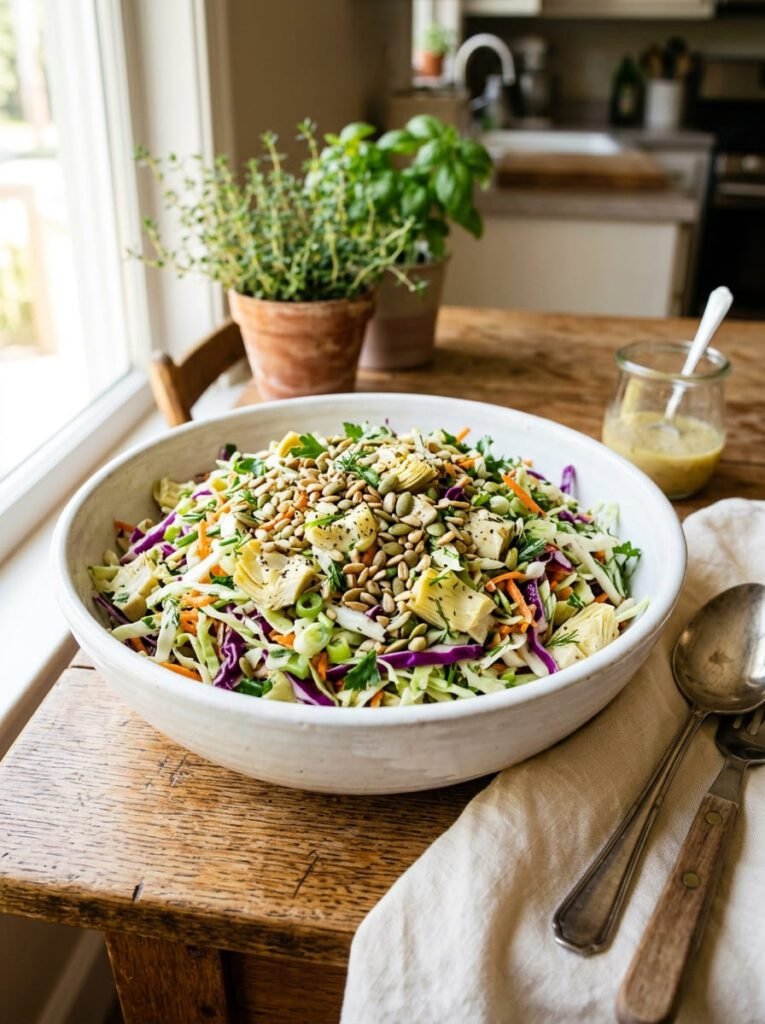
This slaw works particularly well beside grilled meats, sandwiches, burgers, or tacos. You can also add sunflower seeds, sliced almonds, or pumpkin seeds for extra crunch. Letting the slaw sit for about 15 to 20 minutes before serving allows the flavors to develop while the cabbage stays crisp.
7. Cheesy Baked Cabbage and Artichoke Casserole
For a cozy comfort-food version, combine cooked cabbage and chopped artichoke hearts with a creamy sauce and cheese. Mozzarella, Parmesan, or a mild cheddar can all work depending on the flavor you want. Transfer everything to a baking dish and top with breadcrumbs before baking until bubbling and golden.
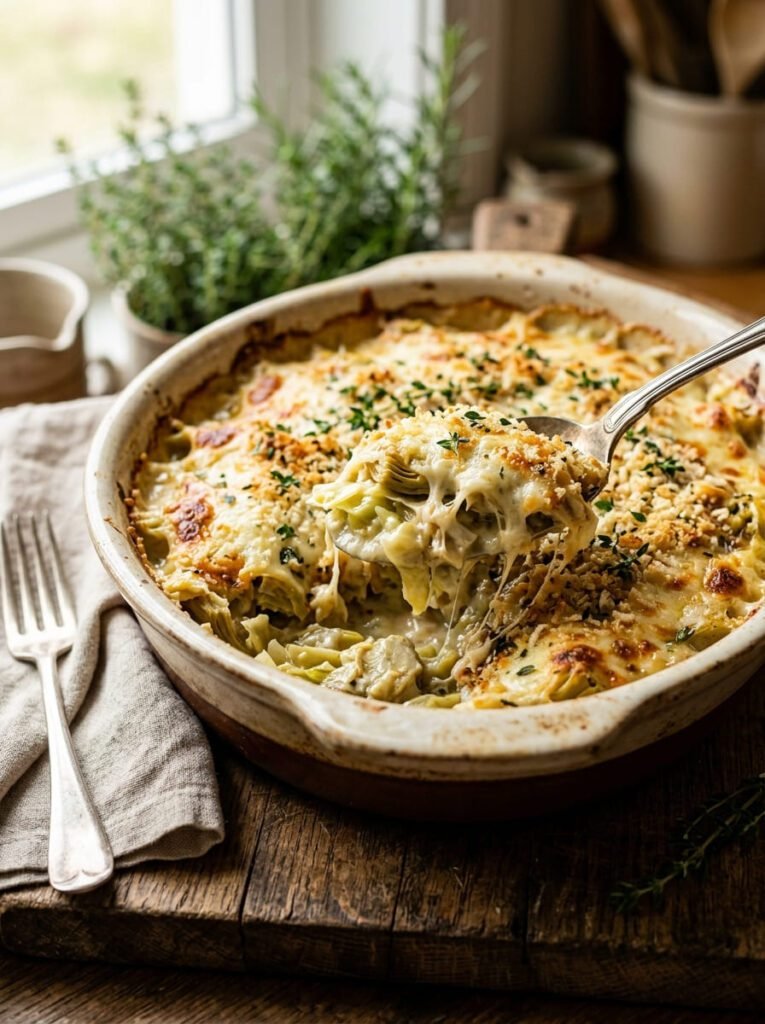
This recipe is especially useful when you have leftover cooked cabbage that needs a second life. Add garlic, Italian seasoning, and a little onion powder to keep the casserole flavorful. It can be served as a vegetarian main dish or as a side alongside roasted chicken or turkey.
8. Cabbage and Artichoke White Bean Skillet
For a quick plant-based dinner, combine cabbage, artichokes, and white beans in one skillet. Sauté onion and garlic first, then add shredded cabbage and cook until tender. Stir in drained cannellini beans and artichoke hearts, followed by lemon juice, oregano, black pepper, and a drizzle of olive oil.
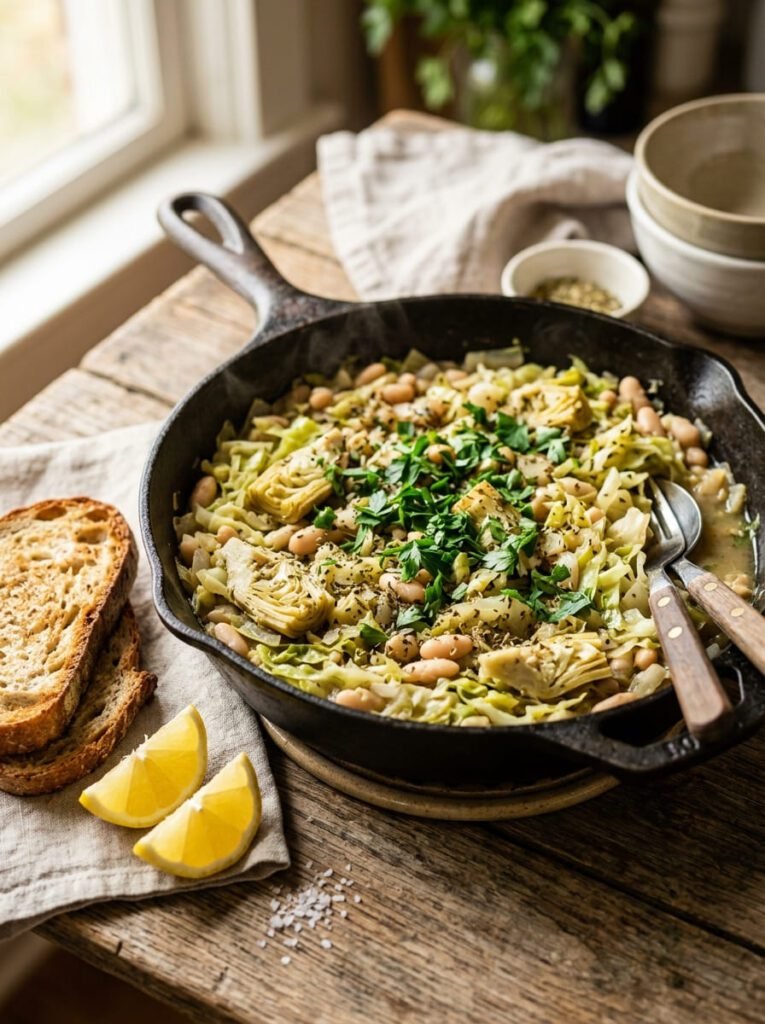
The beans provide enough substance to make this more than just a vegetable side dish. You can add spinach during the final few minutes for another layer of greens. Serve the skillet over rice, quinoa, or toasted sourdough for a simple meal.
9. Garlic Butter Cabbage and Artichoke Pasta
Garlic butter is another easy flavor base for this vegetable combination. Cook sliced cabbage in butter or olive oil until soft and lightly browned, then add garlic and chopped artichoke hearts. Toss the mixture with spaghetti or linguine and a splash of pasta water to create a light, glossy coating.
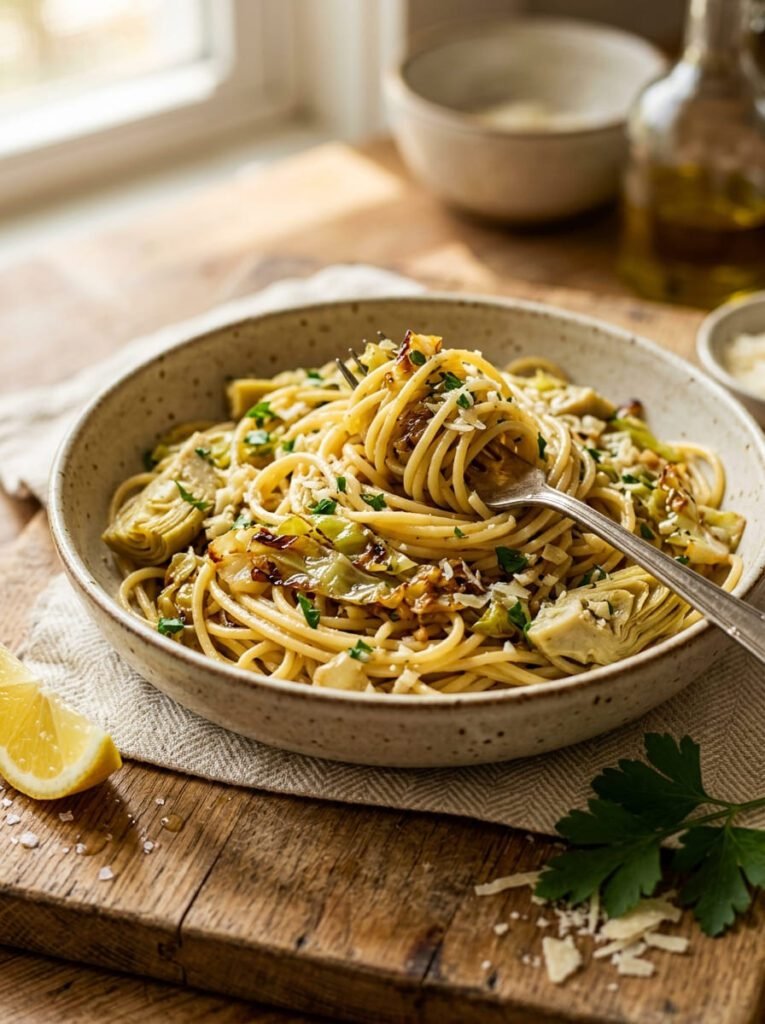
Fresh parsley and Parmesan make the dish taste complete with very little effort. For additional protein, add cooked chicken, shrimp, white beans, or chickpeas. A little lemon juice at the end prevents the buttery sauce from tasting too rich.
10. Cabbage and Artichoke Frittata
Cabbage and artichokes can also make a delicious breakfast or brunch frittata. Sauté shredded cabbage and artichoke hearts until tender, then pour beaten eggs over the vegetables. Sprinkle with Parmesan, feta, or goat cheese and cook until the eggs are almost set before finishing the frittata in the oven.
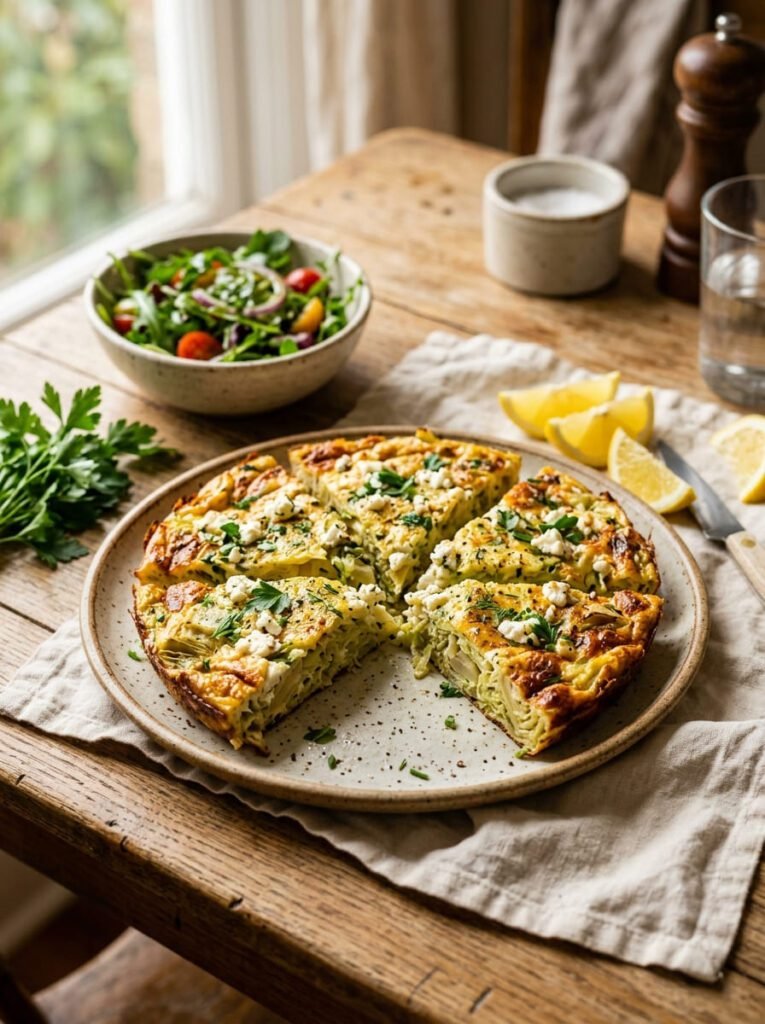
Fresh herbs such as parsley, dill, basil, or chives work beautifully here. You can also add mushrooms, spinach, roasted peppers, or onions depending on what you have available. Serve warm with a simple green salad for an easy weekend meal.
11. Creamy Artichoke and Cabbage Soup
For something richer than a traditional vegetable soup, create a creamy version using potatoes or white beans as the base. Cook cabbage, artichoke hearts, onion, and garlic in vegetable broth until tender, then blend part of the mixture to create a naturally creamy texture. You can leave some vegetables whole so the soup still has plenty of texture.
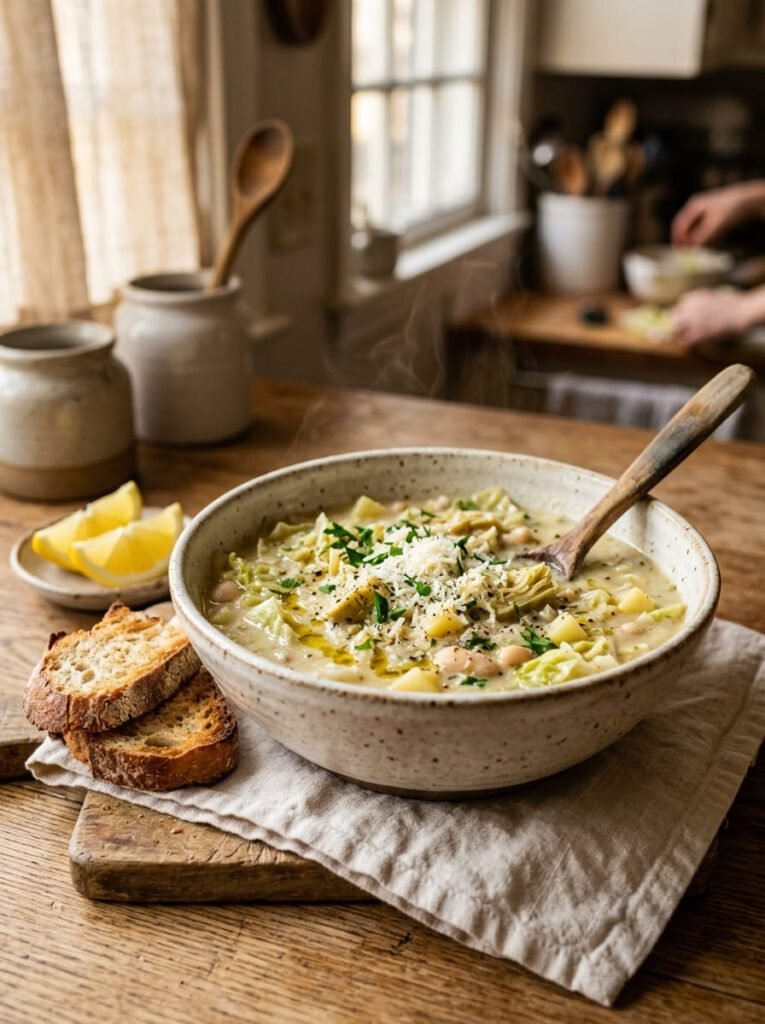
A little Parmesan or cream can be added at the end for extra richness. Lemon juice is particularly helpful because it balances the earthy artichokes and creamy texture. Serve this soup with toasted bread and fresh herbs for a cozy lunch or light dinner.
12. Cabbage and Artichoke Grain Bowls
Grain bowls are an easy way to turn cabbage and artichokes into a complete meal. Start with cooked quinoa, brown rice, farro, or another grain, then add roasted or sautéed cabbage and chopped artichoke hearts. Add chickpeas, avocado, cucumber, tomatoes, or roasted vegetables to build more flavor and texture.
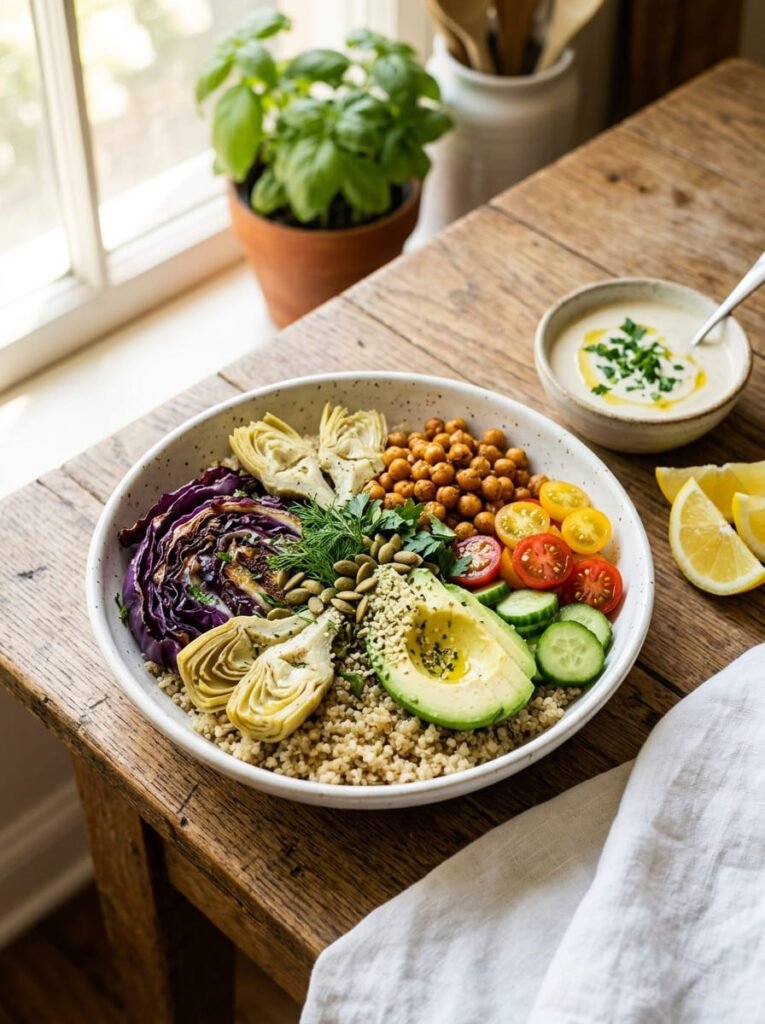
For the dressing, try a lemon-tahini sauce made with tahini, lemon juice, garlic, water, salt, and black pepper. A simple Greek-inspired dressing with olive oil, lemon, oregano, and garlic also works beautifully. These bowls are easy to customize and are especially useful for meal prep.
How to Make Cabbage and Artichoke Recipes More Flavorful
The combination of cabbage and artichokes has a mild flavor, so strong supporting ingredients can make a big difference. Garlic, lemon, Parmesan, feta, oregano, parsley, basil, red pepper flakes, and Dijon mustard are all excellent choices. Roasting or browning the cabbage is another easy way to add depth because caramelized edges bring out its natural sweetness.
Artichokes can vary depending on what you use. Fresh artichokes require more preparation, while canned or jarred artichoke hearts are convenient for everyday recipes. If using marinated artichokes, drain them well and remember that they may already contain oil, vinegar, salt, and herbs, so you may need less seasoning in the rest of the recipe.
Easy Ingredient Pairings
If you want to create your own cabbage and artichoke recipe, several ingredients pair naturally with both vegetables. Lemon and garlic are excellent for fresh, Mediterranean-style dishes, while Parmesan and cream create a richer combination for pasta and casseroles. White beans and chickpeas are useful when you want to turn the vegetables into a filling vegetarian meal.
You can also add chicken, shrimp, salmon, sausage, or turkey if you want more protein. For additional vegetables, try spinach, mushrooms, tomatoes, onions, carrots, bell peppers, or potatoes. Fresh herbs and a final squeeze of lemon can make even a simple skillet taste much brighter.
Tips for Cooking Cabbage and Artichokes
Cabbage can release quite a bit of moisture as it cooks, so avoid overcrowding the pan if you want browned edges instead of steamed vegetables. Slicing cabbage thinly helps it cook quickly, while thicker wedges are better for roasting. If you are using canned or jarred artichokes, drain them thoroughly before adding them to a skillet, salad, or baking dish.
Don’t be afraid to let the cabbage develop some color. A little browning adds a sweet, nutty quality that balances the tender artichoke hearts. If a dish starts tasting too rich, add lemon juice or a splash of vinegar to bring the flavors back into balance.
Final Thoughts
These cabbage and artichoke recipes show how versatile this vegetable pairing can be. From bright Mediterranean salads and crunchy slaws to creamy pasta, hearty soups, grain bowls, and cheesy casseroles, there are plenty of ways to use these ingredients together. The combination becomes especially flavorful when you add garlic, lemon, herbs, beans, cheese, or a simple homemade dressing.
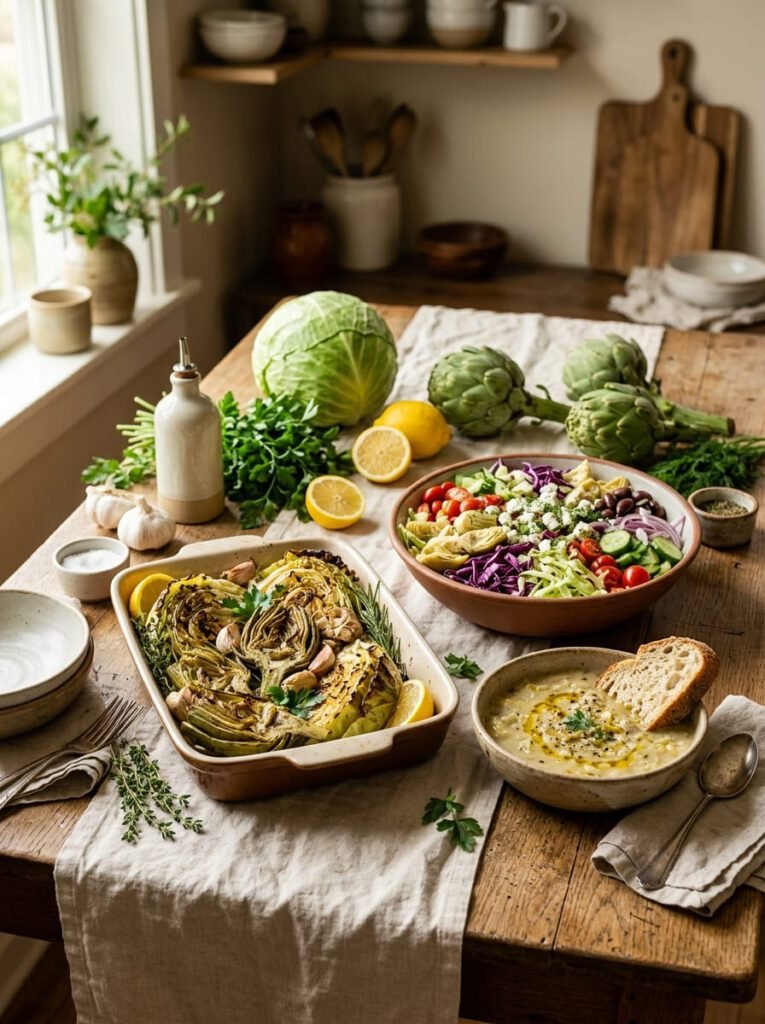
If you have leftover cabbage or a jar of artichoke hearts in the pantry, start with an easy skillet or roasted vegetable recipe. Once you discover which flavors you enjoy most, you can easily adapt the same combination into pasta, soup, salads, or complete grain bowls. It is a simple way to turn two humble vegetables into meals that feel fresh, satisfying, and anything but boring.