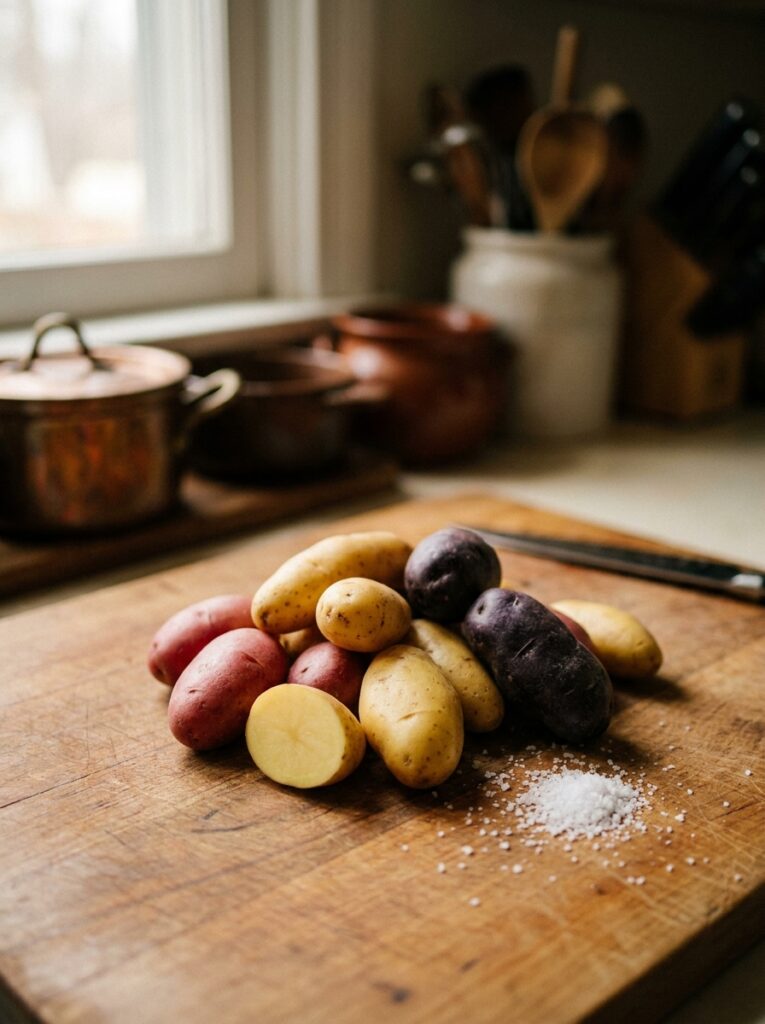
My friend Dani made these at a dinner party and didn’t tell anyone how she did it. Just set them down on the table, golden and crackling, and watched everyone go quiet for a second. That’s the kind of recipe this is.
—
1. Why Fingerlings Specifically (and Why Russets Won’t Cut It Here)
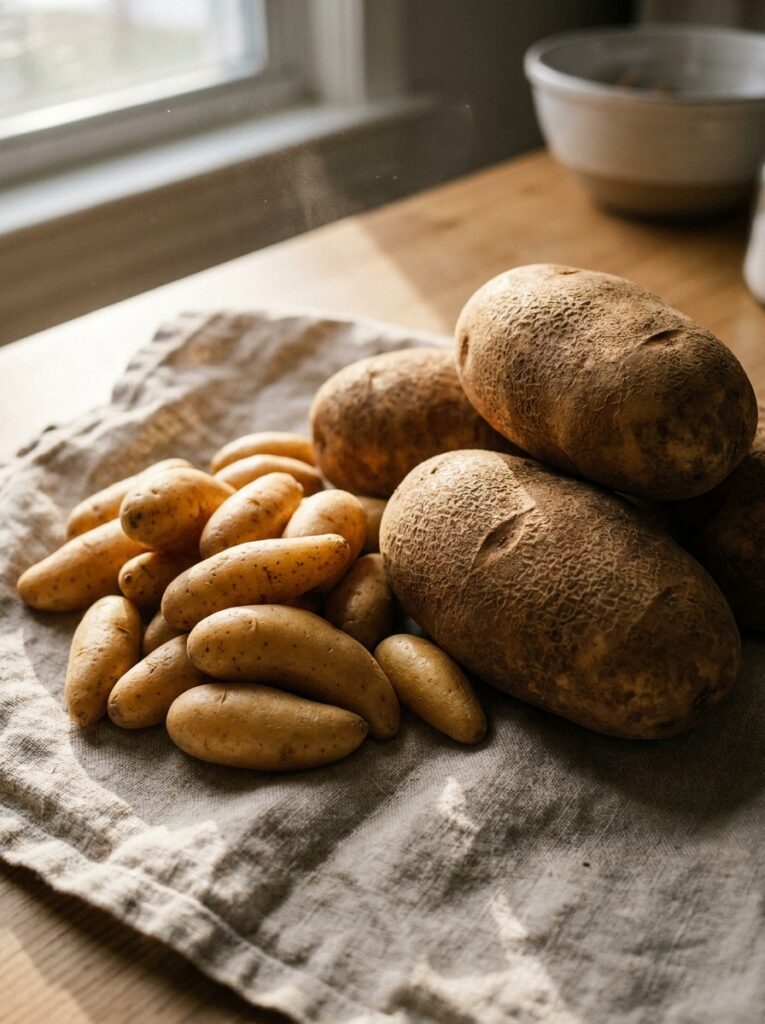
Fingerlings aren’t just small potatoes. They’re waxy, dense, and low in starch, which means they hold their shape when you cook them fast and hot — and the air fryer is FAST and hot. A regular russet would get mealy inside before the outside crisped up properly. A Yukon gold gets close, but it doesn’t have that slight nuttiness fingerlings bring.
And the shape matters too. That long, narrow body means you get a high ratio of crispy skin to soft interior in every single bite. You’re not cutting through a bunch of bland middle to get to the good part. Every forkful has texture.
Side note — fingerlings also look genuinely beautiful on a plate. I know that’s a shallow reason but I’m not pretending it doesn’t factor in.
“Low starch, high flavor, and that shape means every bite has crunch. That’s the whole case for fingerlings right there.”
They’re also incredibly forgiving. You can leave them in an extra minute or two without disaster. Try that with fish. You can’t.
—
2. The Prep Step Most People Skip (and Then Wonder Why Their Potatoes Are Sad)
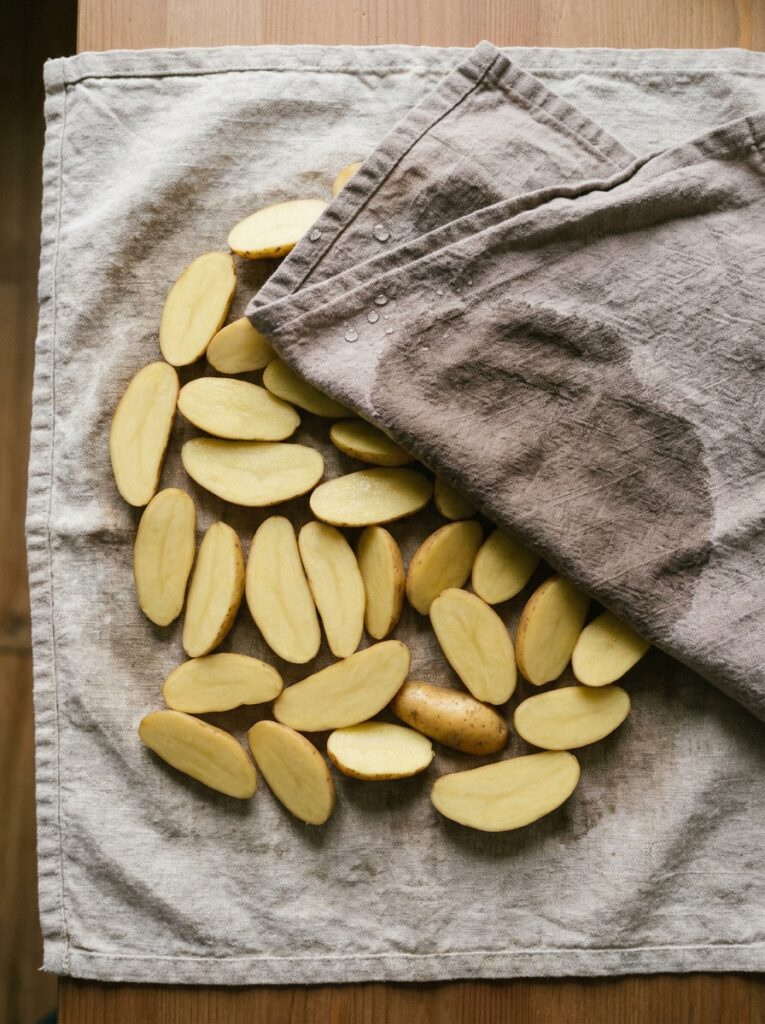
Here’s the thing. You need to dry them. Properly.
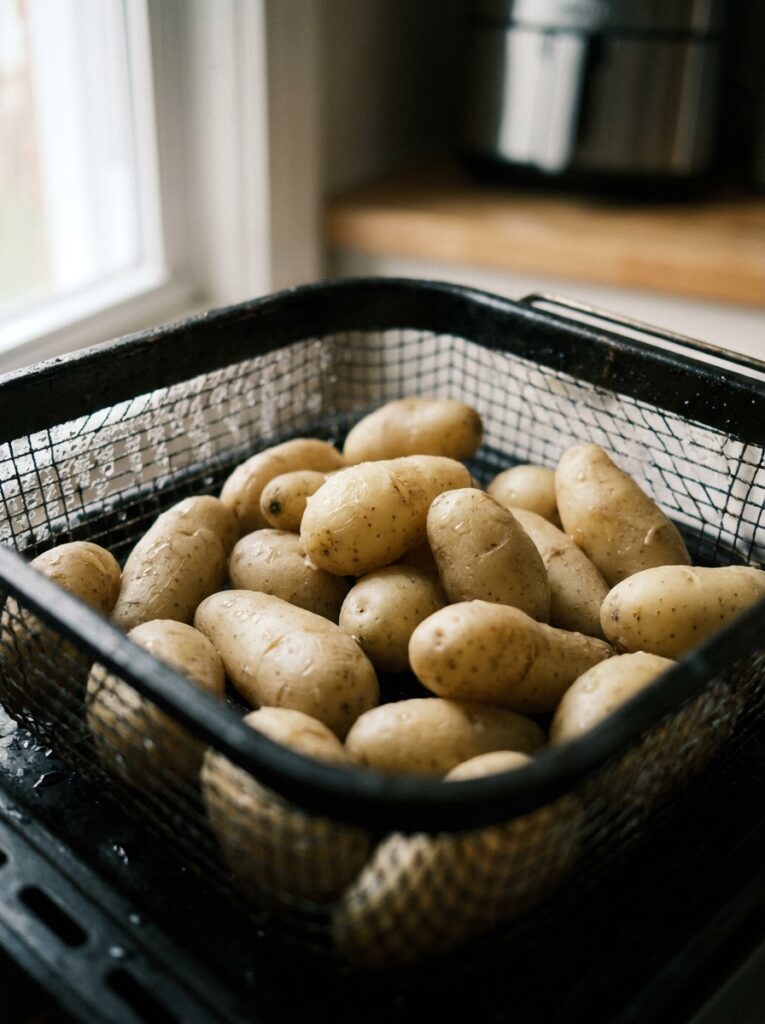
Wash them, sure. But then put them on a clean kitchen towel and actually pat them dry — don’t just set them on a paper towel and walk away. Any surface moisture that’s still there when they hit the hot basket is going to steam instead of roast, and steamed potatoes taste like a compromise.
Some people par-boil fingerlings before air frying and honestly? I’ve tried it both ways and I don’t think it’s worth the extra step for this size of potato. They’re small enough that the inside cooks through just fine without pre-cooking. Where par-boiling DOES help is if you’re doing really chunky potato pieces. But fingerlings whole? Skip it. Just dry them well.
Halving them lengthwise is usually the move. You get a flat cut side that goes face-down on the basket and caramelizes into something almost sweet. If they’re particularly small, you can leave them whole, but you’ll need an extra two or three minutes.
—
3. The Oil-to-Potato Ratio That Actually Works
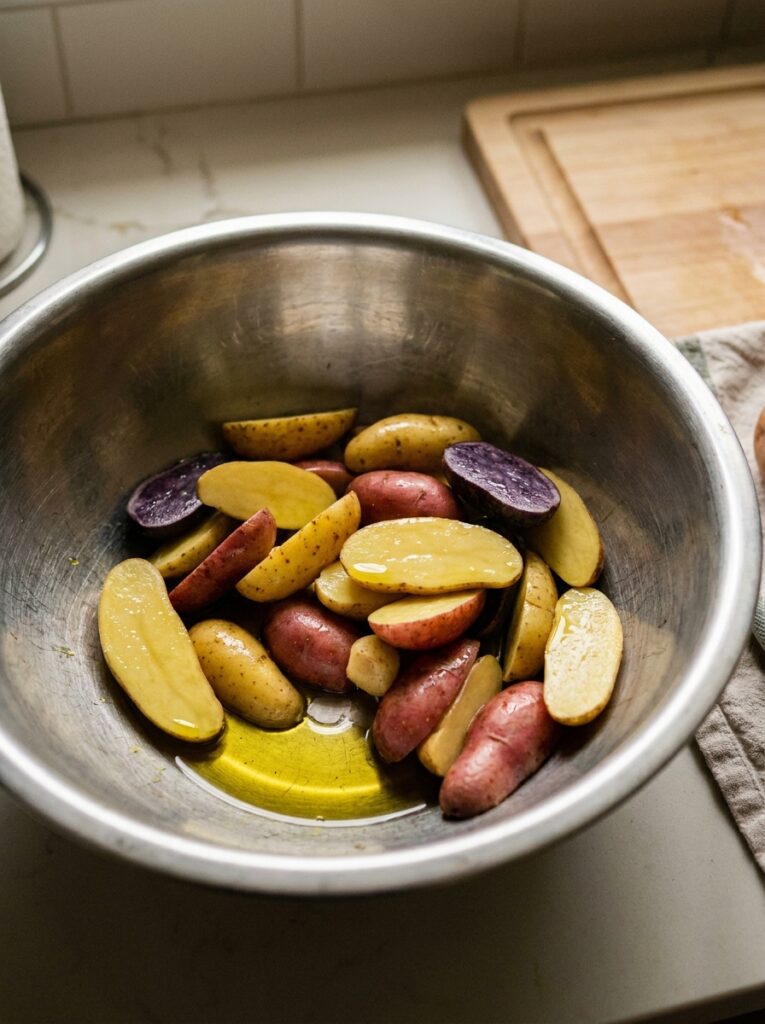
Not enough oil and they’re dry. Too much and they don’t crisp — they fry in a weird, soggy way. The sweet spot is about one and a half tablespoons of oil for every pound of fingerlings.
Avocado oil is my first choice for this because it has a high smoke point and doesn’t leave a flavor behind. Olive oil works too — you’ll get a very faint fruity note, which is actually nice — but use a light olive oil, not extra virgin. Extra virgin at high heat tastes a little bitter and acrid. Not the vibe.
Coat them properly. Put the potatoes and oil in a bowl, not directly in the basket, and actually toss them until every surface is glossy. If you just drizzle oil over potatoes that are already in the basket, you’ll end up with some beautifully crispy ones and some sad, dry ones, and that’s a frustrating result from a simple recipe.
—
4. The Seasoning Window You Didn’t Know You Had
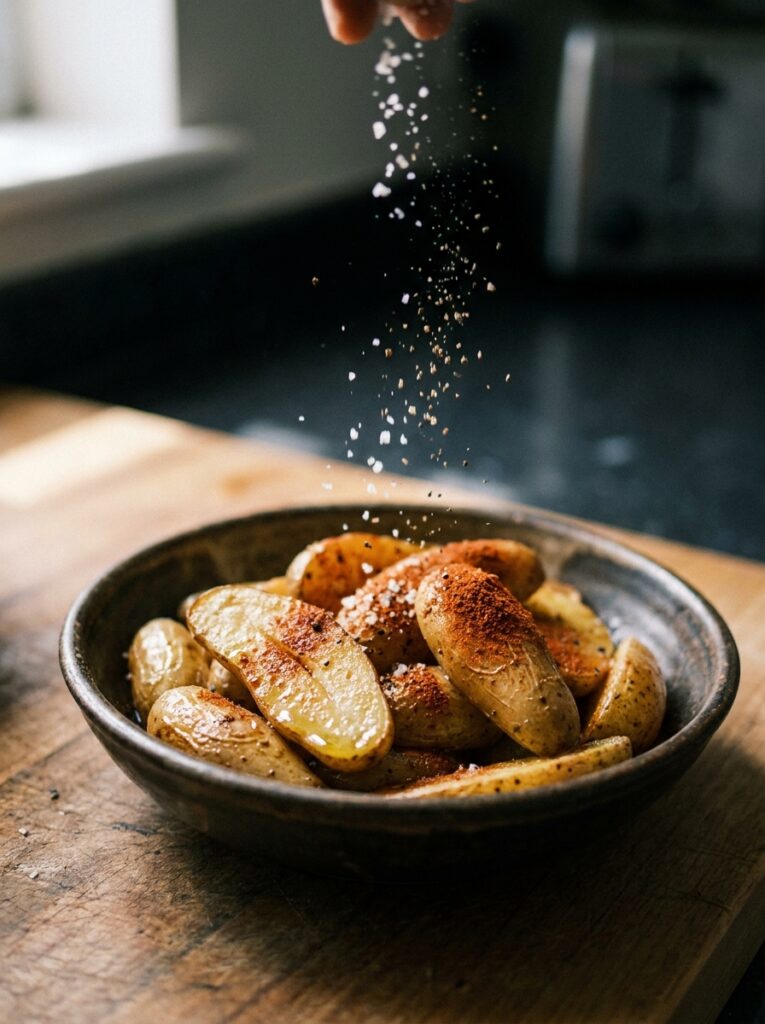
Salt goes on before. That’s non-negotiable, and you want more than you think — probably three-quarters of a teaspoon of fine sea salt per pound, at least.
But here’s the part most recipes skip: there’s a second seasoning window AFTER they come out of the air fryer, while they’re still hot. The surface is slightly oily and porous from cooking, so anything you add at that point actually sticks and absorbs. This is when you add fresh herbs, an extra pinch of flaky salt, a bit of lemon zest, or a dusting of something like smoked paprika. It hits differently than if you’d put it on beforehand.
The herbs that go on before cooking: dried thyme, rosemary, garlic powder, onion powder. These can handle the heat.
The things that go on after: fresh parsley, fresh chives, fresh dill, lemon, flaky salt, black pepper if you like it bright rather than baked in.
Both stages. Don’t miss either one.
—
5. Temperature and Timing Without Any Guesswork
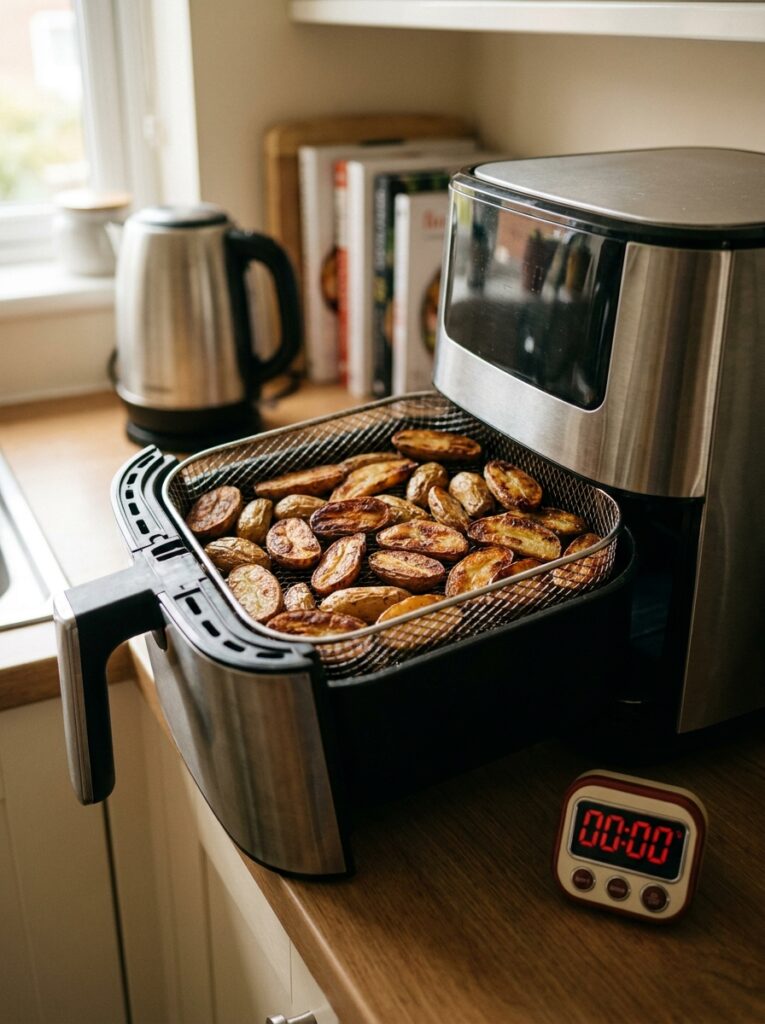
400°F (about 200°C) is the temperature. Some people go lower and get confused when nothing crisps. You need high heat to get the Maillard reaction going on that skin — that’s the browning reaction that creates actual flavor, not just color.
Cooking time for halved fingerlings is 18 to 22 minutes. Whole small fingerlings, 22 to 26 minutes. You should shake the basket at least once, ideally twice. Not a gentle little wiggle — an actual shake that moves the potatoes around so different surfaces get exposure to the hot circulating air.
Every air fryer runs slightly differently, so the first time you make these, check at 18 minutes. Open the basket, look at the cut sides. You want them deeply golden, maybe with a few darker spots that are almost — but not quite — charred. Those spots are good. Those spots are flavor.
If you crowd the basket, add five minutes and shake more often. Or just do two batches. I know that’s annoying to hear but crowded potatoes steam each other, and you’ll end up with something soft and a bit wan.
“Those darker spots that make you nervous? Those are exactly what you’re going for. That’s where all the flavor lives.”
—
6. The Garlic Timing Problem (and How to Solve It)
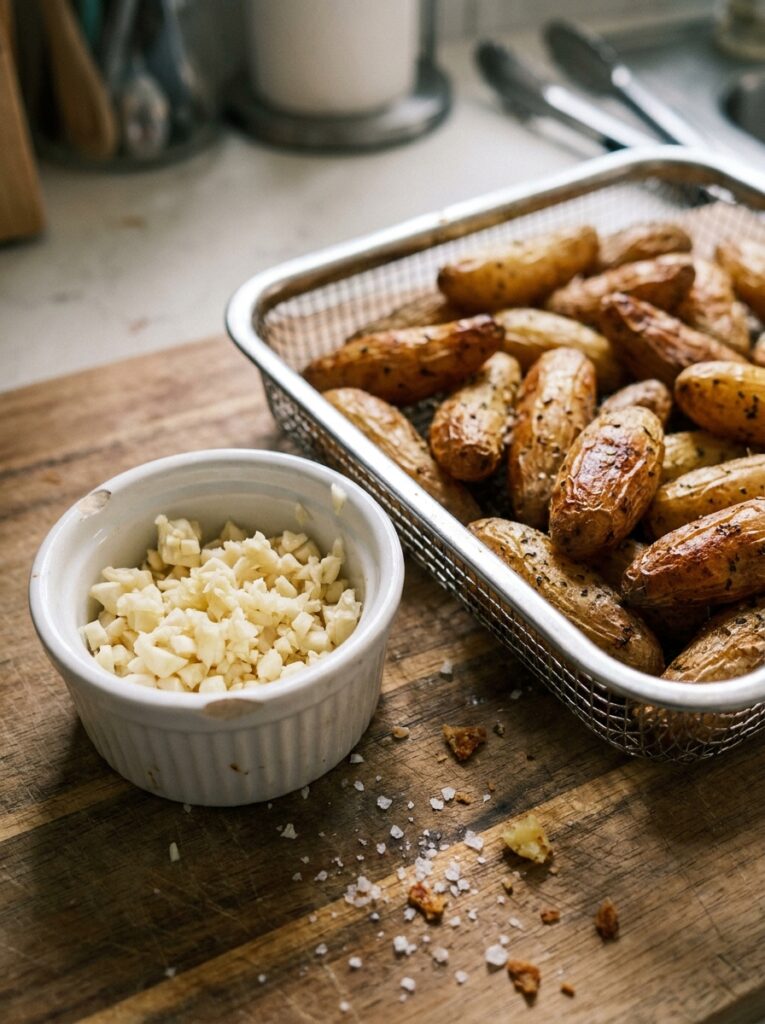
Raw garlic in the air fryer for 20 minutes will burn. It’ll go acrid and sharp and kind of ruin everything it’s touching. But garlic fingerlings are genuinely one of the best things in the world, so here’s how you handle it.
Option one: use garlic powder instead of fresh for the whole cook. It’s actually brilliant for this application — it sticks to the surface, caramelizes slightly, and gives you this deep, rounded garlic flavor that fresh garlic doesn’t always produce when cooked fast.
Option two: finish with fresh garlic. Take one or two cloves, grate them on a microplane, toss immediately with the hot potatoes the moment they come out of the basket. The residual heat cooks the garlic just enough to take the raw edge off without burning it. You get the best of both — depth from cooking plus brightness from fresh.
Option two is my honest favorite but I get that some nights you just want to toss everything in and walk away. Option one for those nights.
—
7. What to Serve These With (Beyond “Just a Side Dish”)
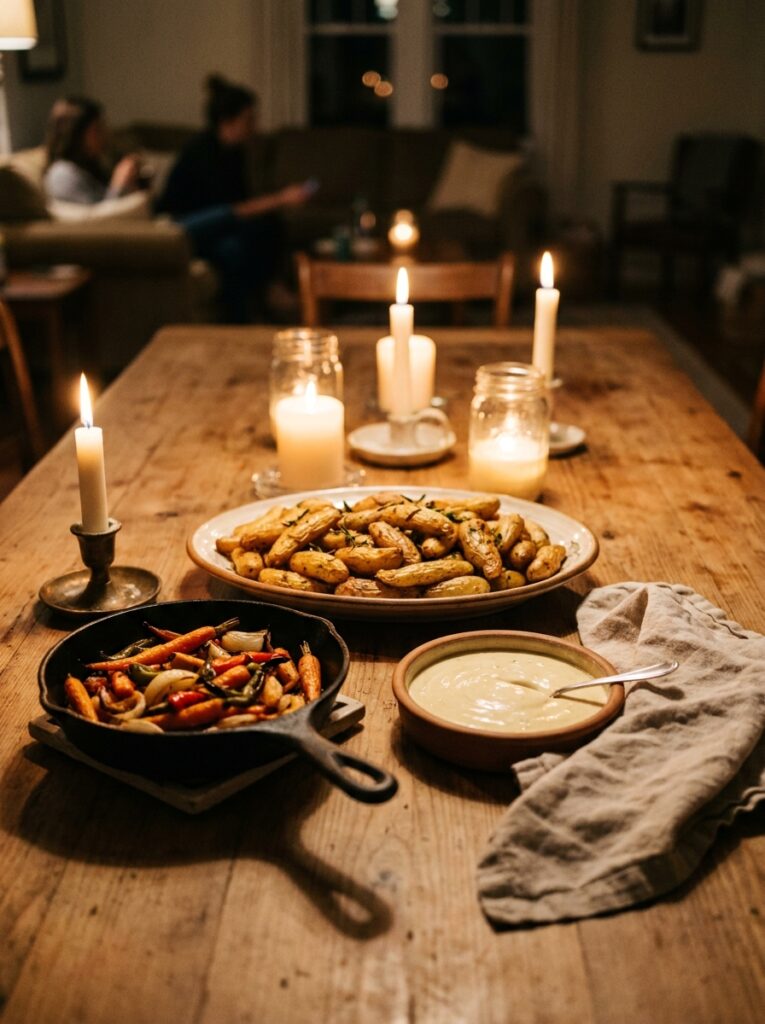
Okay, they’re technically a side dish. But I’ve had them as the main event more than once, and I’m not embarrassed about it.
The most obvious pairings: anything grilled. Chicken thighs, steak, salmon. The fingerlings don’t compete — they complement.
But where they really sing is next to something acidic or creamy. A big dollop of sour cream with chives and a squeeze of lemon. A garlicky yogurt sauce. A really punchy green sauce with parsley and vinegar — sort of a rough chimichurri. The crispy potato soaks up any sauce beautifully, and that contrast of crunchy skin against cool, creamy dip is kind of addictive, honestly.
For a proper British spread — because I know some of you are reading this from the UK — these are magnificent next to a roast on Sunday instead of traditional roasties. Quicker, crispier, and you don’t have to wait for par-boiling and basting. Your oven stays free for everything else. That’s a genuine win on a Sunday afternoon.
—
8. The Flavor Variations Worth Trying First
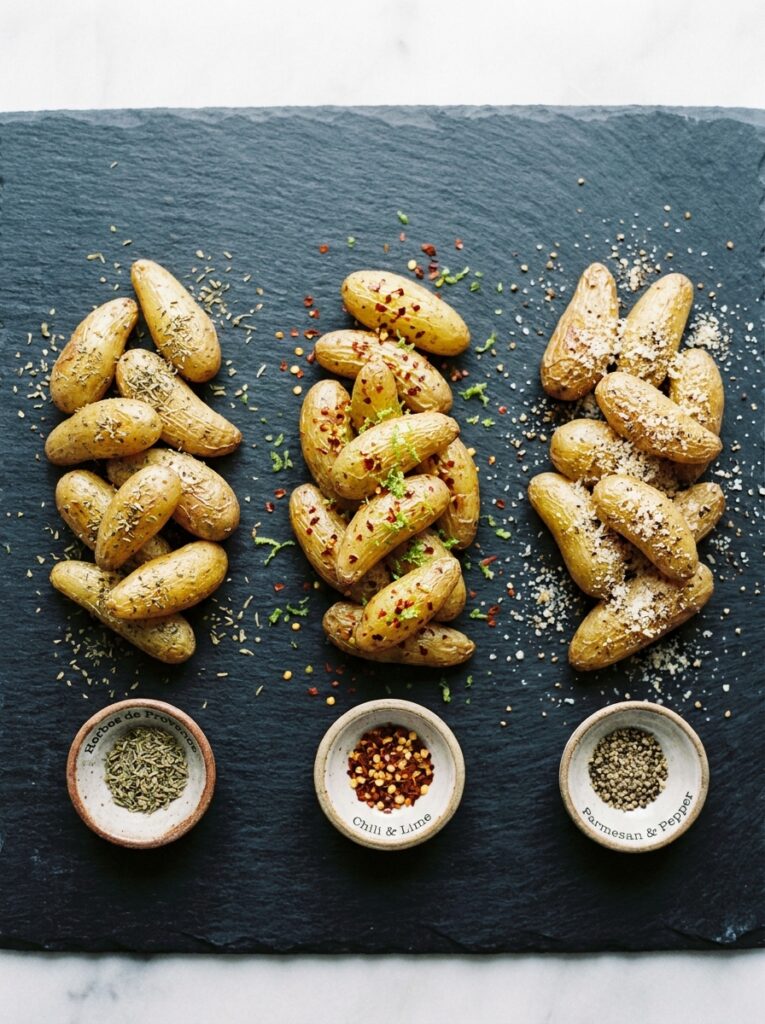
Plain is excellent. But here are the variations I keep coming back to.
Herb and lemon: garlic powder, dried thyme, dried rosemary on before, then lemon zest and fresh parsley on after. This is the one I make most often because it goes with basically everything.
Smoked paprika and sea salt: just these two things, plus oil. Stupidly simple and the paprika caramelizes on the cut sides in a way that’s almost smoky-sweet. Pairs unbelievably well with eggs.
Parmesan at the end: cook them plain, then the moment they come out, toss with finely grated Parmesan. The residual heat slightly melts it onto the surface. Don’t use pre-grated — it won’t melt right and the texture is wrong. Fresh-grated only.
Spicy: garlic powder, smoked paprika, a pinch of cayenne, and a tiny bit of cumin. Finish with fresh lime juice and coriander (that’s cilantro if you’re in the US). This one goes brilliantly with a cool avocado dip.
—
9. The One Mistake That Ruins an Otherwise Perfect Batch
Putting them back in after saucing.
I’ve seen people add a sauce or fresh herbs, then put the basket back in to “warm everything through.” It sounds logical. But fresh herbs go dark and papery, citrus zest turns bitter, and cheese can go from melted to burnt in under two minutes.
If you want to keep them warm, tent them loosely with foil on a baking sheet. They’ll hold heat for 10 to 15 minutes no problem. The crust softens slightly but the flavor’s all still there.
That’s it. That’s the mistake. Don’t put fresh-finished potatoes back in the air fryer.
“The last two minutes of cooking are what you’ll remember. Don’t rush them, and don’t mess with them once they’re done.”
—
10. How to Make These Ahead Without Losing the Crunch
Meal prep people, this one’s for you.
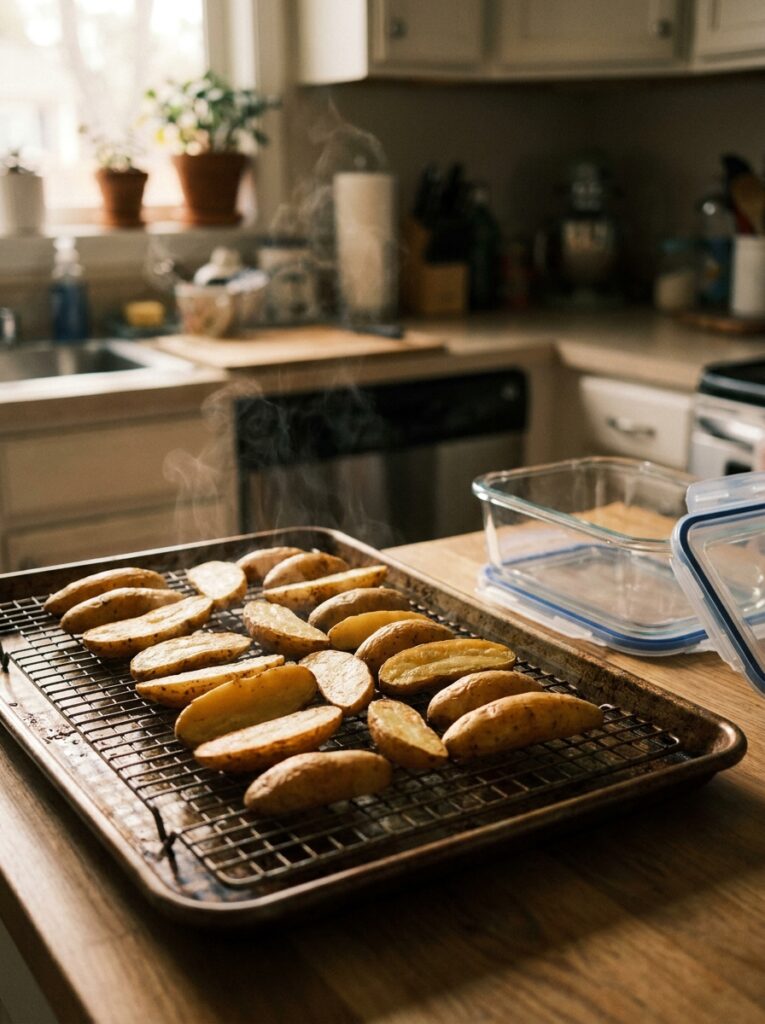
Cook them fully, let them cool completely on a wire rack (not a plate — a plate traps steam underneath and makes the bottoms soggy), then refrigerate in a single layer or loosely in a container.
To reheat: air fryer again, 380°F, about 5 to 6 minutes. They come back close to 90 percent of original crispiness. Which is pretty remarkable for a leftover potato. A microwave will absolutely not do this — you’ll end up with something soft and a little rubbery. Please don’t.
They keep well in the fridge for up to three days. They also work cold, sliced up into a salad with some pickled red onion and a mustardy dressing. Or I guess, but I digress, you could just eat them standing at the fridge at midnight. No judgment. I have done this.
—
11. A Quick Note on Different Air Fryer Types
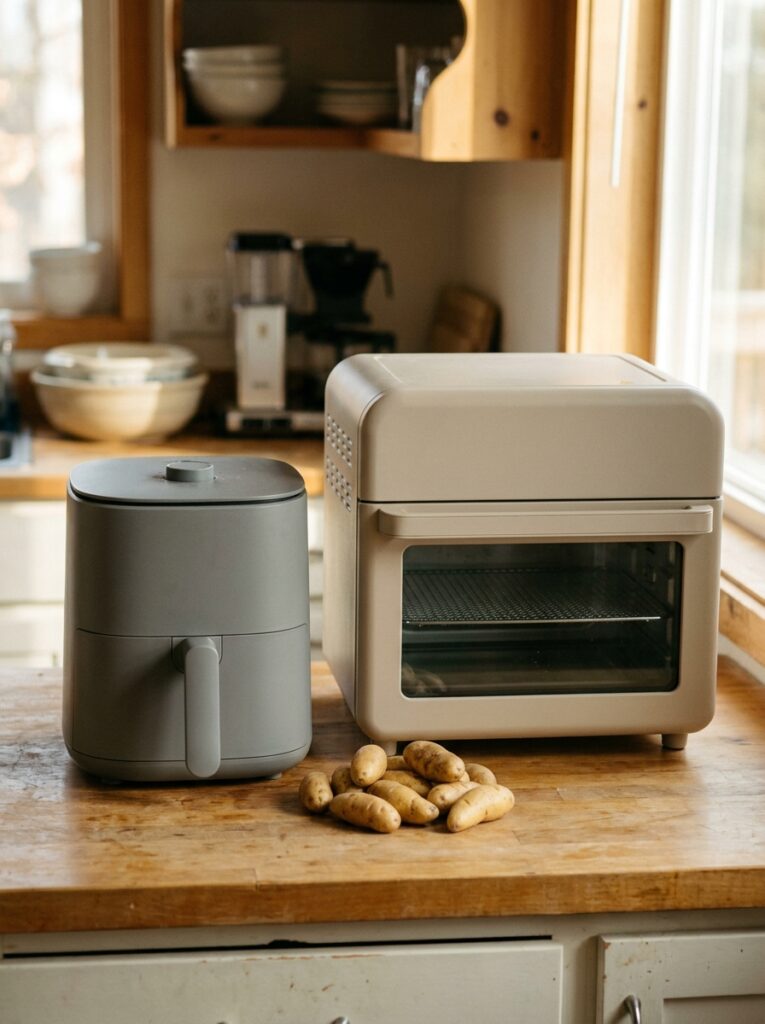
Basket-style air fryers and oven-style air fryers behave a little differently and it’s worth knowing.
Basket fryers circulate heat more intensely and cook faster. If you’ve got one of these, start checking at 16 minutes.
Oven-style air fryers have more space, which sounds great but also means the heat is a bit more dispersed. Stick to the 18 to 22 minute range and maybe bump the temperature up to 410°F if they’re not browning.
The other thing: if your air fryer has a preheat function, use it. Two to three minutes of preheating means the potatoes hit a hot surface immediately, which helps the crust form faster. If you put potatoes into a cold basket that’s heating up, they lose moisture during that early phase instead of searing.
Small difference. Real impact.
—
12. The Reason This Becomes a Habit
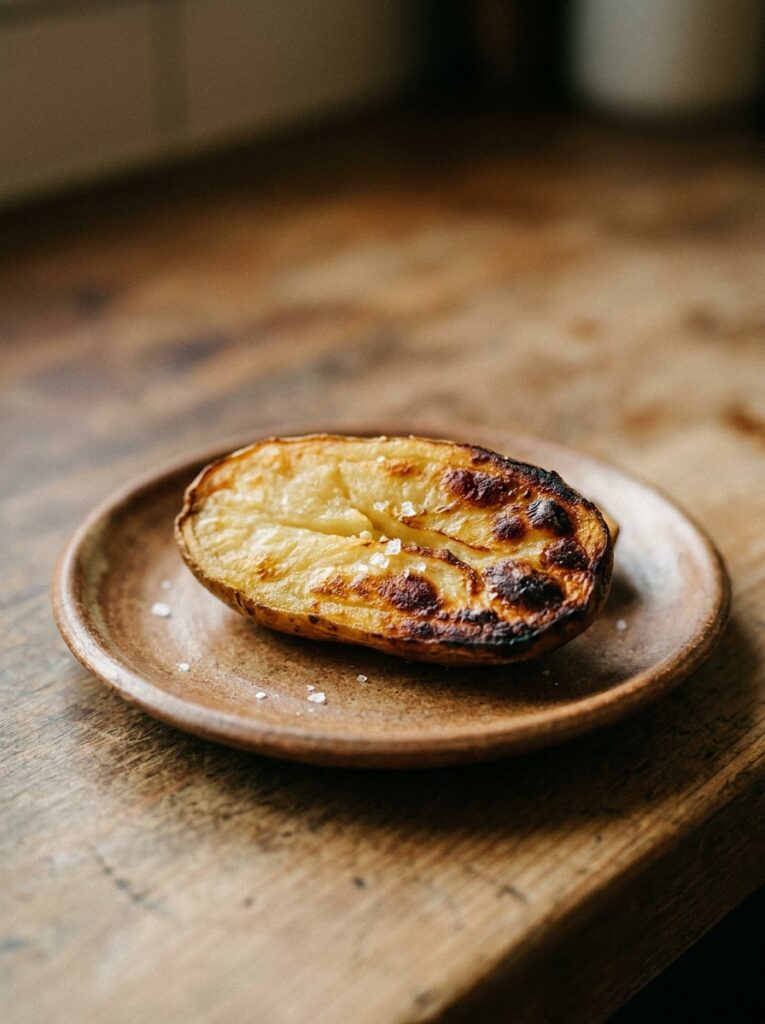
Here’s what happens after you make these once.
You start looking for excuses to make them again. You add fingerlings to your weekly shop without even thinking about it. Someone asks “what are we having with dinner?” and before you’ve thought about it you’ve said “air fryer fingerlings.” Because they’re genuinely that easy and genuinely that good.
They take about five minutes of actual hands-on time. The air fryer does the rest. And the result — those golden, crackling little potatoes with the creamy interior and whatever herbs you felt like throwing at them — feels like something you’d get at a really good restaurant. The kind of place where the side dishes make you as happy as the main.
That’s the appeal. You’re not just making a side dish, you’re making the thing that people remember after dinner.
—
❓ FAQ
Q: Do I need to peel fingerling potatoes before air frying? A: Nope, and you really shouldn’t. The skin is thin and it crisps up beautifully — that’s actually a big part of the texture you’re going for. Peeling them would take away the crunch and honestly they’d look a bit sad. Just scrub them well under cold water and dry thoroughly.
Q: Can I use frozen fingerling potatoes in the air fryer? A: You can, but don’t thaw them first — put them straight in frozen and add about 5 to 8 extra minutes to the cook time. They won’t get quite as crispy as fresh because they release more moisture as they cook, but they’re still a solid result. Fresh is noticeably better if you have the choice.
Q: Why are my air fryer fingerling potatoes coming out soft instead of crispy? A: Usually one of three things: they weren’t dried properly before oiling, the basket was too crowded, or the temperature wasn’t high enough. Make sure you’re at 400°F, they’re in a single layer with some breathing room, and you’ve patted every one of them dry before tossing in oil. Those three things together pretty much guarantee crispy.
—
💭 Final Thoughts
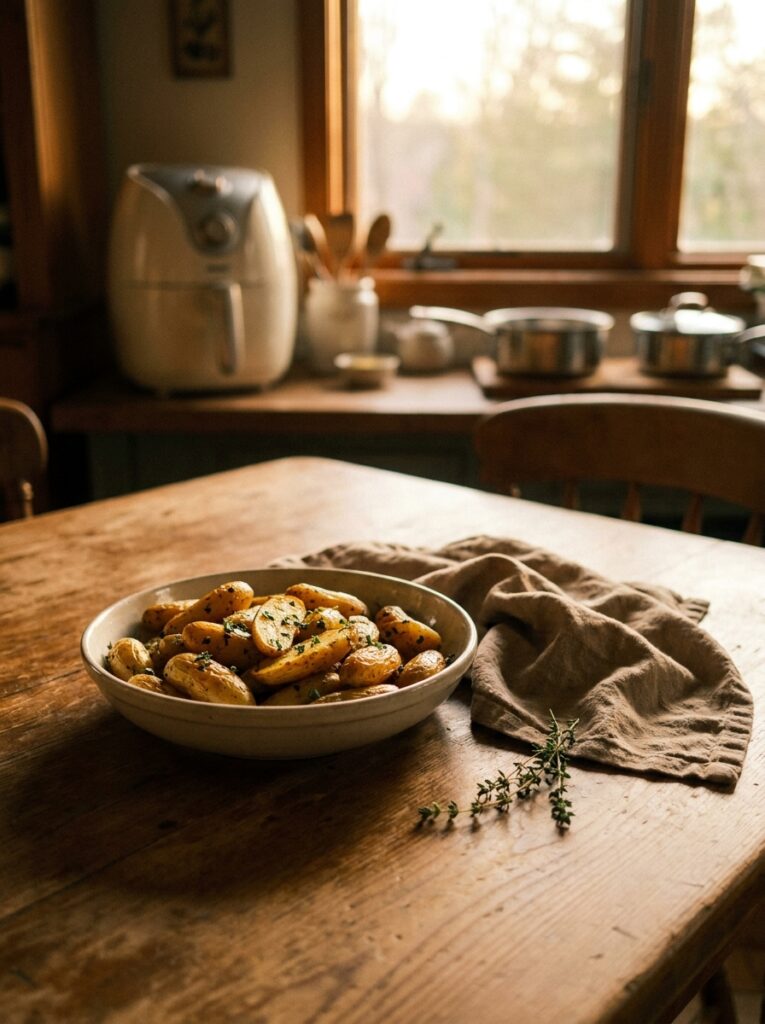
There’s something quietly satisfying about a recipe this simple producing something this good. No complicated technique, no long list of equipment, no checking on things every five minutes. Just good potatoes, the right heat, and enough confidence to leave them alone until they’re done.
Make them once exactly as written, then start experimenting from there. Because once you’ve got the basics down, you’ll know instinctively how to push them further.
And honestly — what IS it about a perfectly crispy potato that feels like such a win every single time?
