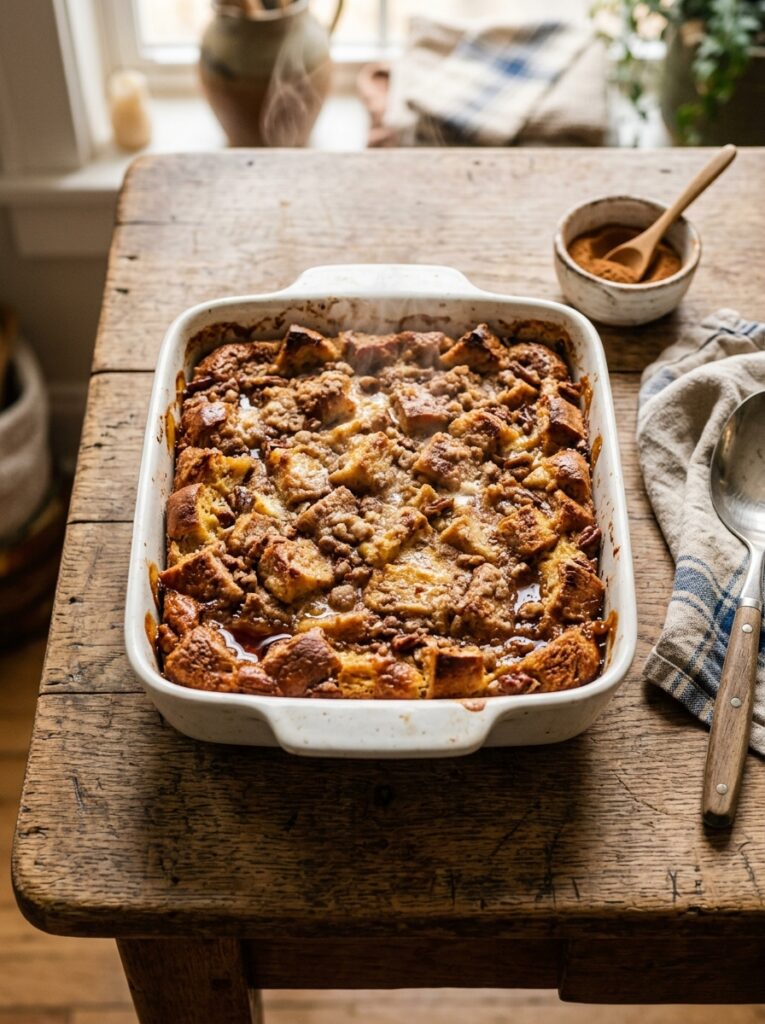
My sister-in-law made this at Thanksgiving and I genuinely thought she’d woken up at 4am. She hadn’t. She’d gone to bed at a normal human hour, slept eight hours, and just pulled a pan out of the fridge.
That was two years ago. I’ve made it probably thirty times since.
—
1. Why the Night-Before Part Is the Whole Point (Not Just a Shortcut)
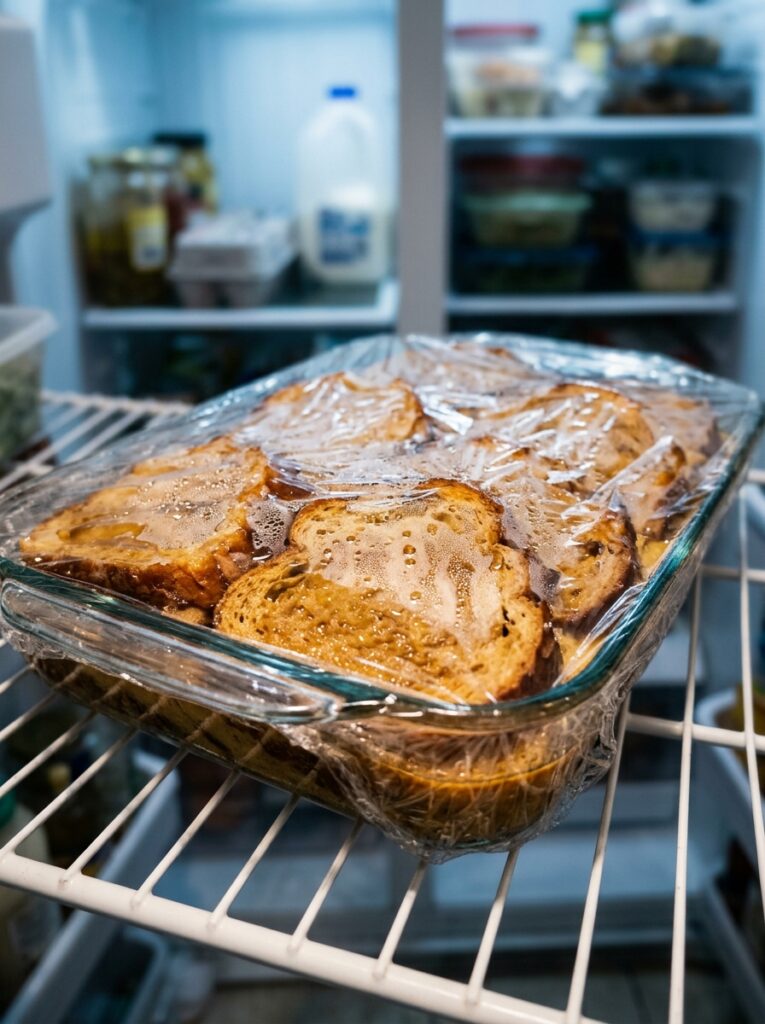
Here’s what most recipes don’t tell you — the overnight soak isn’t just convenient. It’s actually what makes this better than any French toast you could make fresh.
When you press brioche or challah into that egg custard and let it sit for six to eight hours, something genuinely different happens. The bread absorbs the custard all the way through. Not just at the edges, not just on the surface. All the way. So when it bakes, the inside stays custardy and almost pudding-soft while the top gets this crackled, caramelized crust that makes a noise when you break into it.
Fresh French toast can’t do that. You’d have to soak each slice for so long it’d fall apart in the pan.
So the overnight step isn’t a workaround. It IS the recipe. That distinction matters a lot once you start making this regularly, because you stop seeing it as “delayed effort” and start seeing it as just… Tuesday night putting in ten minutes so Wednesday morning is actually good.
—
2. The Bread Situation — and Why You’re Probably Reaching for the Wrong Loaf
Not all bread works here. I’ll be direct about that.
Sandwich bread? Too thin, goes mushy, and the texture when baked is kind of sad — sort of dense and uniform, like eating a slice of bread that gave up on itself.
Sourdough? I know, I know. People suggest it. And technically it works, but the tang fights the custard in a way I find distracting. Not bad exactly, just… busy.
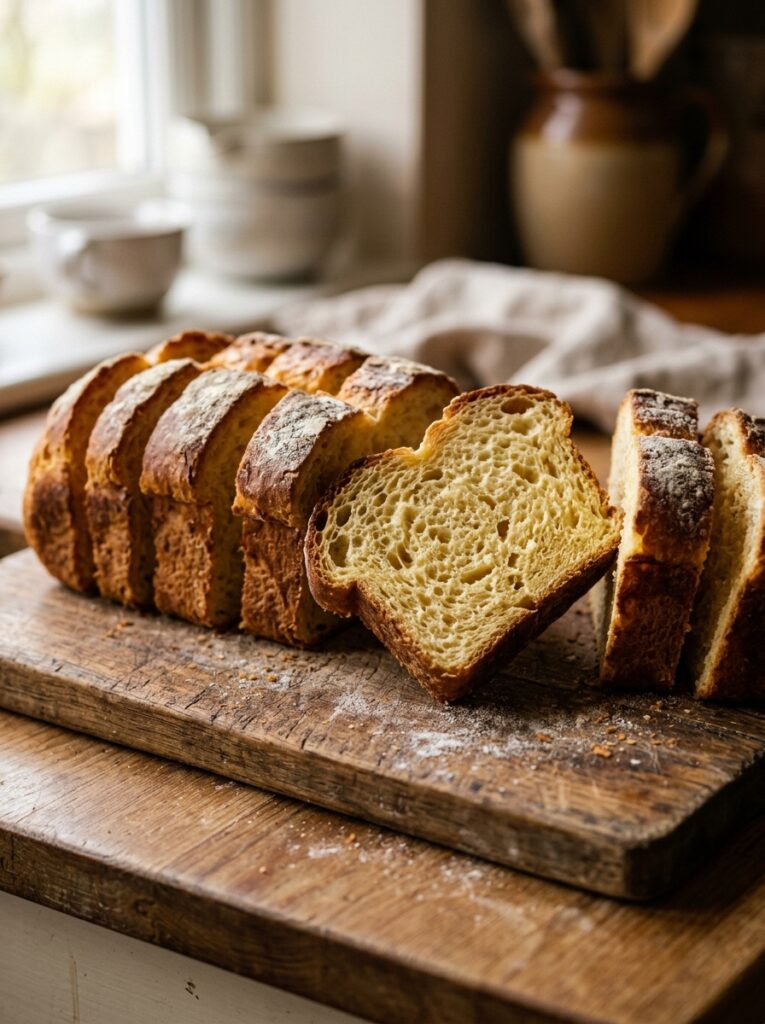
What you want is brioche. Or challah. Both are enriched breads — made with eggs and butter — and that richness creates this layered, slightly pillowy interior that holds the custard without dissolving into it. Brioche goes a bit more buttery and tender. Challah goes a bit chewier and slightly honeyed. Either is genuinely perfect.
“Day-old bread isn’t a compromise. It’s the correct choice.”
Cut it thick. Like, an inch and a half thick. And if it’s slightly stale? Even better. Stale bread absorbs liquid more evenly and doesn’t fall apart when you press it into the dish. If yours is fresh, leave the slices out on a cooling rack for a couple of hours before you start. Easy fix.
—
3. The Custard Ratio That Everyone Gets Wrong the First Time
Too many eggs and it tastes like a baked omelette. Too much milk and it won’t set properly — you’ll pull out a pan of soggy bread soup. Neither is what we’re going for.
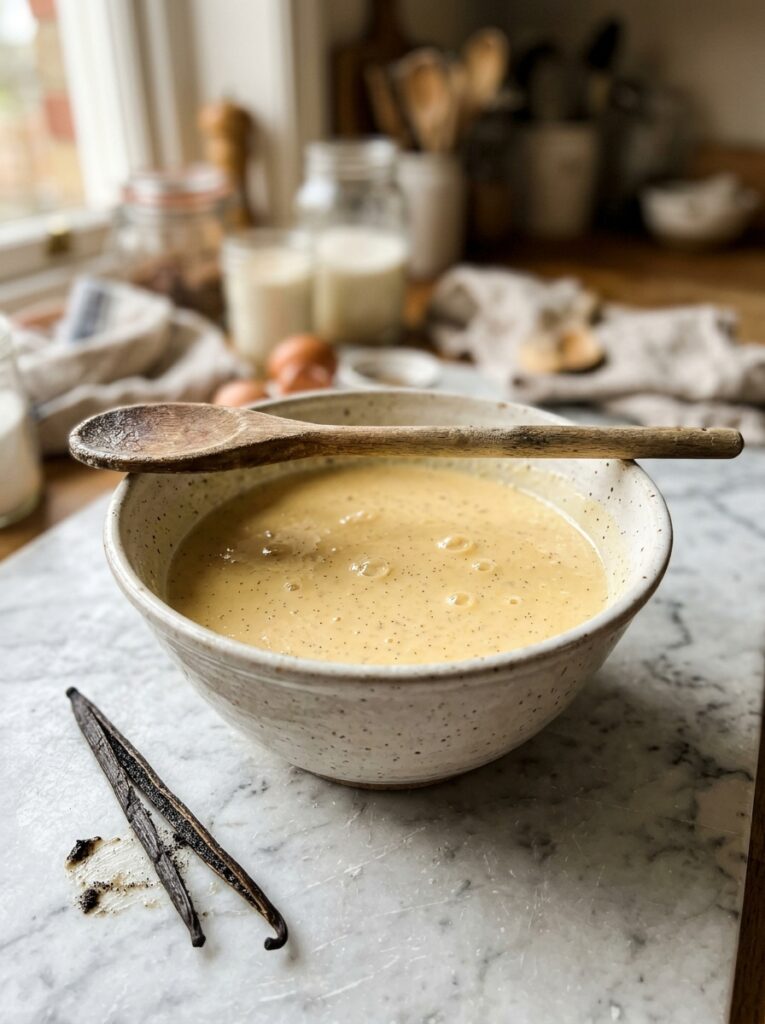
The sweet spot is roughly 6 large eggs to 2 cups of whole milk plus ½ cup of heavy cream for a standard 9×13 inch dish. That ratio gives you something that sets firmly enough to slice but stays soft and yielding inside.
The flavoring is where you can really do something. Vanilla — a full teaspoon, the real stuff if you’ve got it — is non-negotiable. Then: cinnamon, freshly grated nutmeg (just a little, nutmeg is assertive), a tablespoon of brown sugar stirred right into the custard itself, and — this is my slightly embarrassing addition — a tiny pinch of salt. Sounds obvious but a lot of people skip it in sweet recipes and then wonder why everything tastes flat.
Whisk it all together until the eggs are completely incorporated. No streaks. Pour it slowly and evenly over the bread so every single piece gets coated. Then press the bread down gently, cover it, and refrigerate.
—
4. The Brown Sugar Butter Situation You Didn’t Know You Needed
Okay. This is the part that takes the casserole from “really good” to “why is everyone standing over the pan before I’ve even served it.”
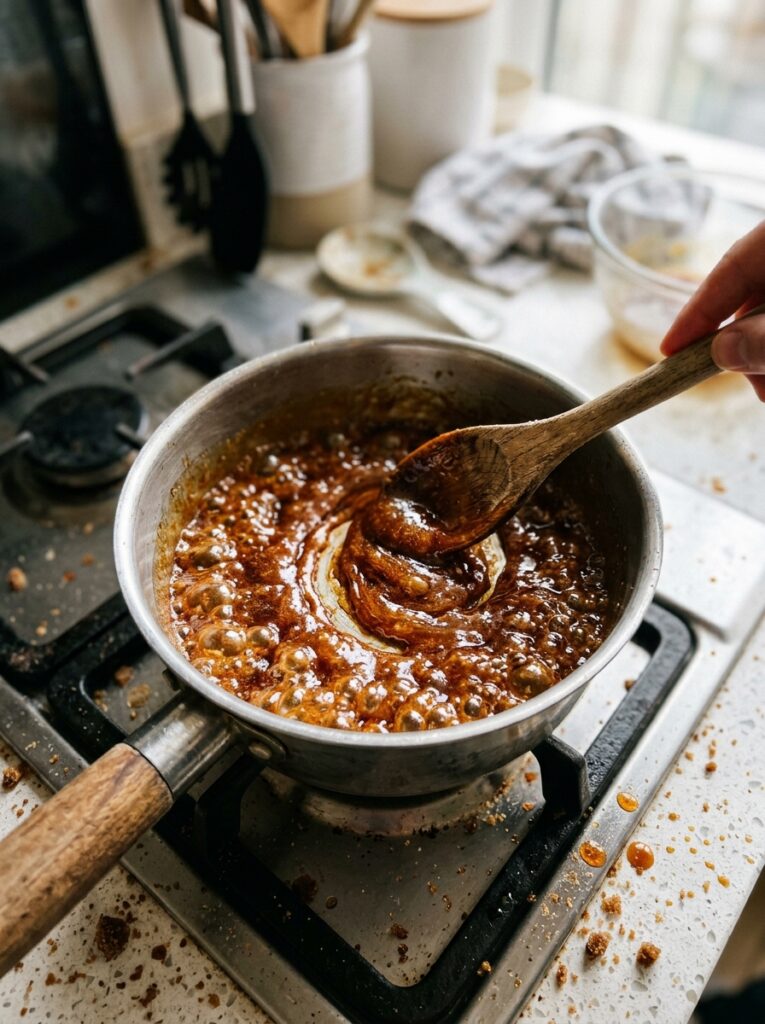
Before the bread goes into the oven, you add a brown sugar and butter mixture either underneath it or on top. I do underneath. I melt butter, stir in brown sugar and a little cinnamon, pour it into the bottom of the dish, then lay the soaked bread on top. As the casserole bakes, that sugar bubbles up and around the bread, caramelizing as it goes.
The result on the underside — which becomes the top when you serve it flipped, if you’re feeling theatrical, or just looks glorious face-up in the pan — is this dark, slightly sticky, deeply caramelized layer that’s almost like praline. It goes a bit crunchy in spots. There are little pockets where the butter has reduced down to something almost toffee-like.
It’s the kind of thing where you take a photo before you cut into it because you know you won’t be able to stop yourself once you start.
—
5. From Fridge to Oven — the Part People Rush and Shouldn’t
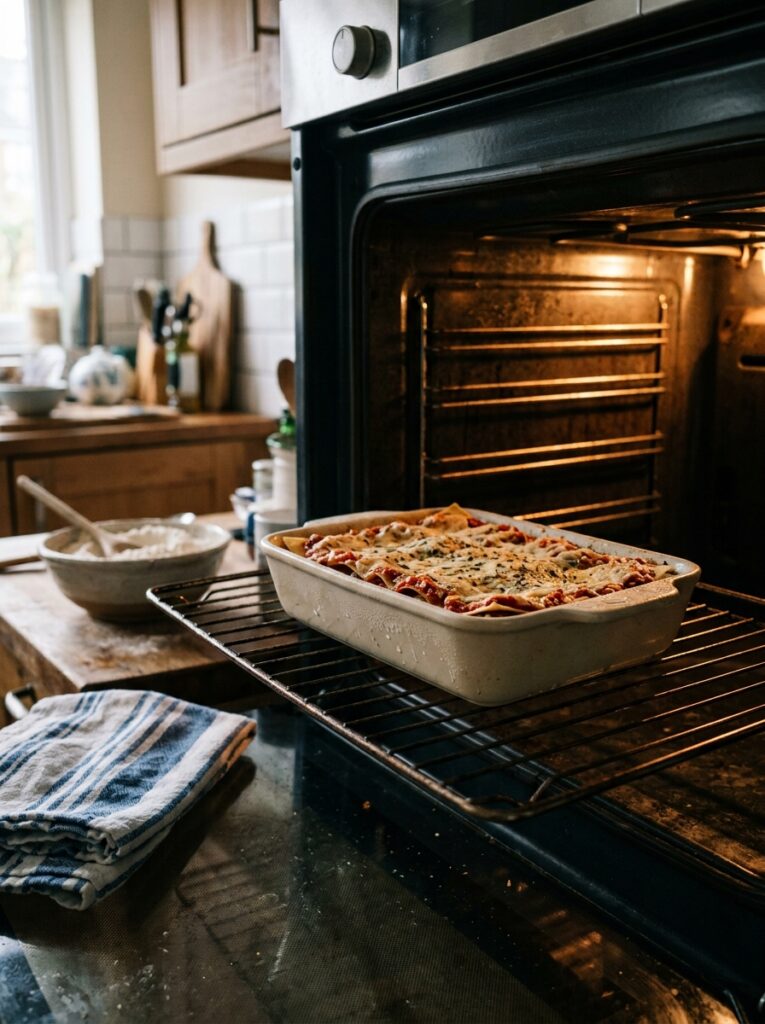
Pull the dish out of the fridge about 20 to 30 minutes before it goes in the oven. This isn’t optional. A cold dish going straight into a hot oven means the outside cooks fast and the inside lags behind — you’ll end up with overcooked edges and a still-wet center.
Preheat to 350°F (175°C). Cover the dish loosely with foil for the first 30 minutes, then uncover for the final 20 to 25 minutes so the top can brown and that custard can fully set.
Total bake time: around 50 to 55 minutes depending on your oven and how thick your bread is.
“You’ll know it’s done when the center barely jiggles — like a just-set cheesecake, not a wave.”
Press gently on the center with the back of a spoon. It should feel set, not liquid. If it’s still moving in a way that concerns you, give it another 5 minutes uncovered. Every oven is different, and this is a recipe that rewards paying attention just at the end.
Let it rest for 10 minutes before you cut in. I know. Waiting is brutal. But it finishes setting during that rest, and you’ll get cleaner slices instead of a landslide of custard.
—
6. The Toppings That Go From Good to Actually Unforgettable
Plain is honestly fine. With that caramelized base and the custard interior, you don’t need much. But here’s where people have strong opinions and I’m not above having mine.
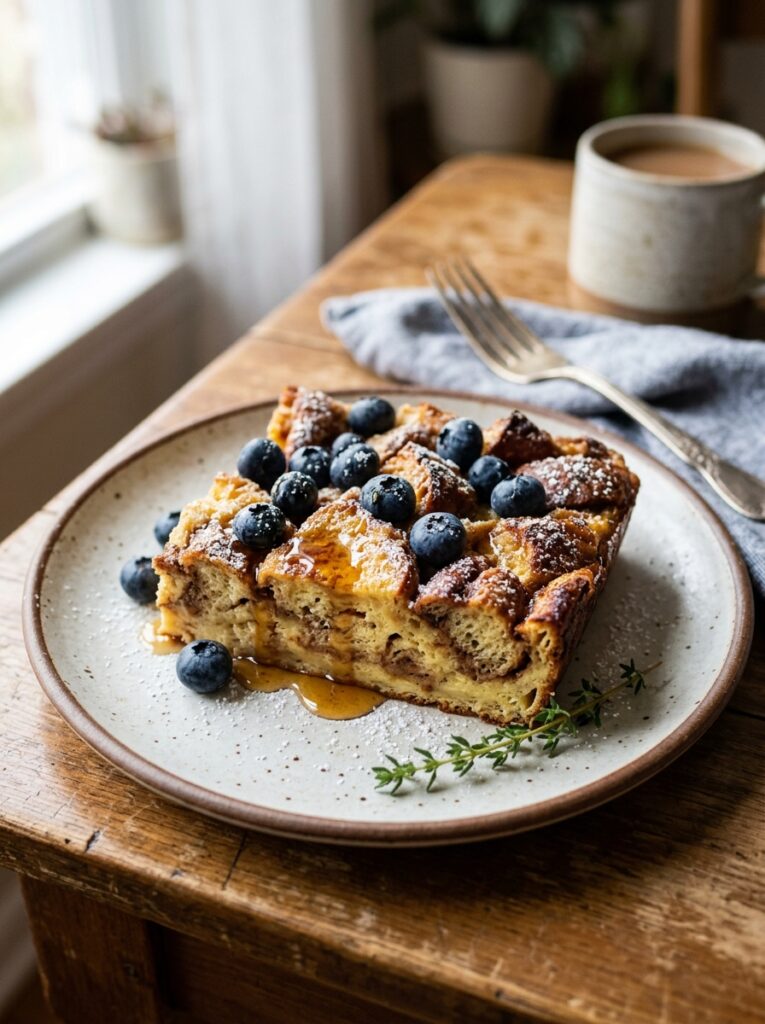
Fresh berries. Raspberries, blueberries, or sliced strawberries added after baking, just before serving. Cold fruit against hot casserole is one of those combinations that sounds simple and tastes spectacular.
A warm maple syrup drizzle. Not the thin, barely-flavored kind — actual dark maple syrup, the kind that smells like trees and autumn and everything good. Warm it gently in a small pan before serving.
Whipped cream. Properly whipped, not out of a can (though honestly, no judgment). Something about the lightness of it against the dense, rich casserole just works.
Powdered sugar. Through a sieve, right before it hits the table. It melts a little on the warm surface and creates this beautiful dusted effect that makes everything look like it came from a proper café.
Pick one. Two at most. You don’t need all of them.
—
7. How to Actually Serve This at a Gathering Without Losing Your Mind

The entire appeal of this recipe at Christmas, Easter, or any weekend with houseguests is that you’re not in the kitchen flipping individual slices at 8am while everyone else is having coffee and being normal.
You make it the night before. You go to sleep. You wake up, pull it out, let it sit while you make coffee and have a conversation that doesn’t involve spatulas, and then it bakes while people are slowly surfacing from various corners of the house.
But there are a few things that make the gathering version work even better:
- Double the recipe and use two pans if you’ve got more than six people. It reheats beautifully, but you don’t want to be cutting tiny squares.
- Set up a toppings station. Small bowls of fruit, syrup, cream — let people assemble their own. It buys you at least ten more minutes of not being needed.
- Keep one pan covered in foil while the other gets cut into, so latecomers don’t get something that’s been sitting out for forty minutes.
It genuinely changes the vibe of a group breakfast when the host isn’t frantic. People notice. Not always consciously, but they notice.
—
8. The Version That Tastes Like Autumn Walked Into Your Kitchen
Side note — this casserole has a seasonal alter ego and it’s worth knowing about.
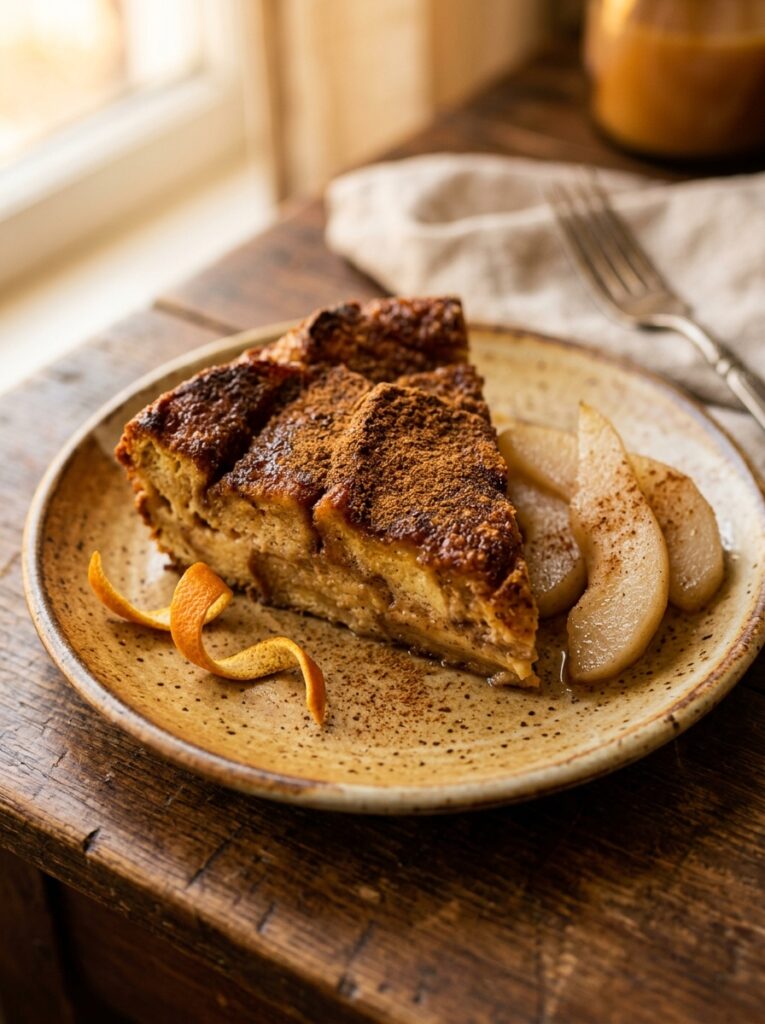
Swap out the cinnamon and nutmeg for a proper spice blend: 1 teaspoon cinnamon, ½ teaspoon ginger, ¼ teaspoon allspice, a tiny pinch of cloves. Add a layer of thinly sliced pears or Granny Smith apples between the bread and the custard. Mix a tablespoon of molasses into your custard alongside the brown sugar.
The result smells like a bakery that’s also somehow a forest. It’s warming in a way that regular French toast casserole isn’t — deeper, more complex, the kind of thing you want when it’s grey outside and the heating just clicked on.
“That apple and spice version is what I make the first cold Saturday of the year. Every year.”
Both versions — classic and autumnal — can be assembled identically. Same structure, same method, same overnight timing. Just a different flavor story.
—
9. Making It Work for Dietary Preferences Without Ruining It
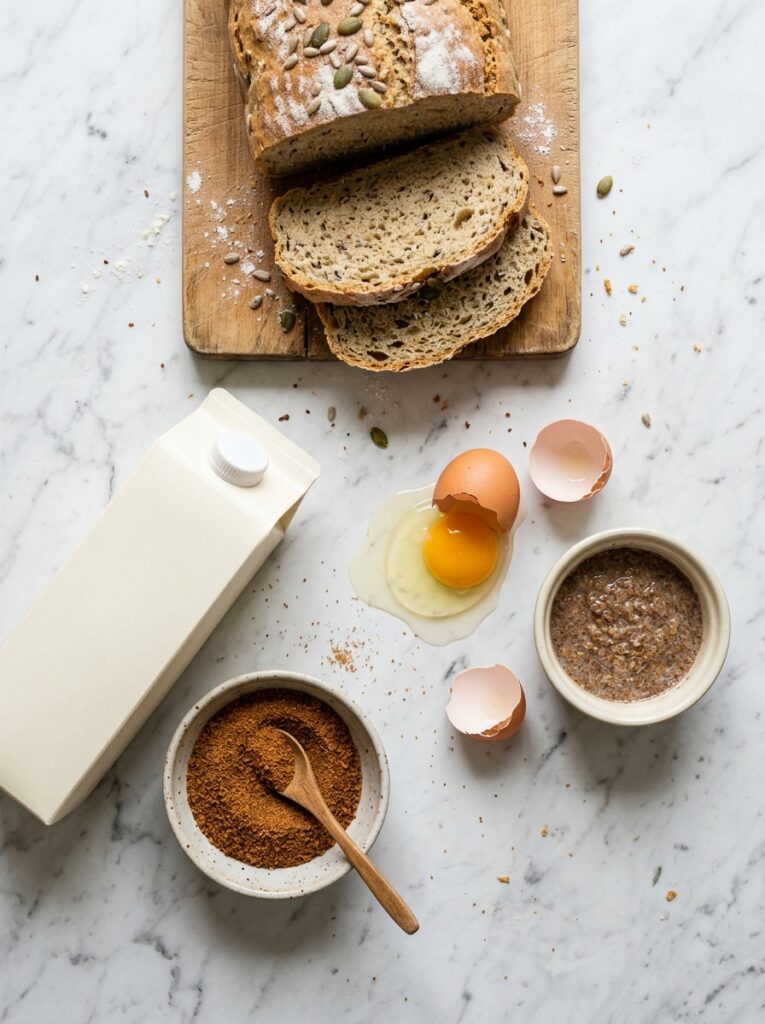
I’ll be honest: some substitutions work and some don’t.
Dairy-free: Full-fat coconut milk in place of the milk and cream works better than you’d expect. It adds a very faint coconut note but in a way that’s actually nice with vanilla and cinnamon. Use a plant-based butter for the caramel base.
Gluten-free: This one’s trickier. You need a gluten-free enriched bread — something made with eggs and fat, not just rice flour and hope. It exists, it’s just harder to find. The texture will be slightly different but still genuinely good if you can find the right loaf.
Lower sugar: Skip the brown sugar butter base and reduce the sugar in the custard. Serve with fresh fruit instead of syrup. It’s less indulgent but still works as a dish — sort of savory-leaning, which some people actually prefer.
What I’d avoid is trying to substitute the eggs entirely. I’ve seen recipes that do it with flax eggs and they just don’t set the same way. The custard doesn’t happen. You end up with something more like a soggy bread pudding that never quite firms up. If eggs genuinely aren’t an option, that’s a different recipe altogether rather than an adapted version of this one.
—
10. The Storage Truth No One Puts in the Recipe Card
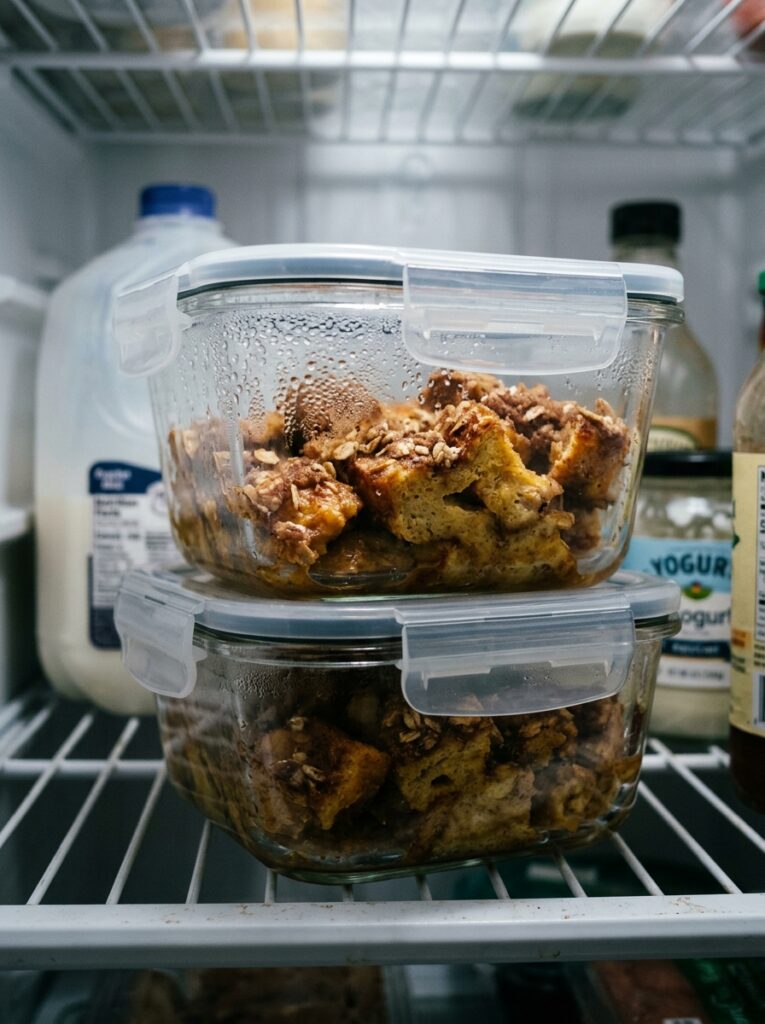
Leftovers are real. And this reheats well, which is genuinely unusual for something with this much custard in it.
Covered in the fridge, it keeps for three days without any meaningful quality loss. Individual portions reheat in a 325°F (165°C) oven for about 12 minutes or in a microwave in 60-second bursts — though the oven is better for getting any crispiness back on top.
Can you freeze it? Yes, but with caveats. Bake it first, cool it completely, then freeze individual portions. It’ll defrost and reheat fine but the texture won’t be quite what it was fresh — the custard gets a tiny bit grainy. Still totally edible, just slightly less magical.
What you CANNOT do is refrigerate the assembled-but-unbaked casserole for more than about 12 hours. Beyond that, the bread starts to break down past the point of saving. Overnight means overnight — not 24 hours, not two nights. Start it the evening before you want to eat it and bake it the next morning.
—
11. Why This Recipe Works as Well on a Wednesday as at a Holiday Brunch
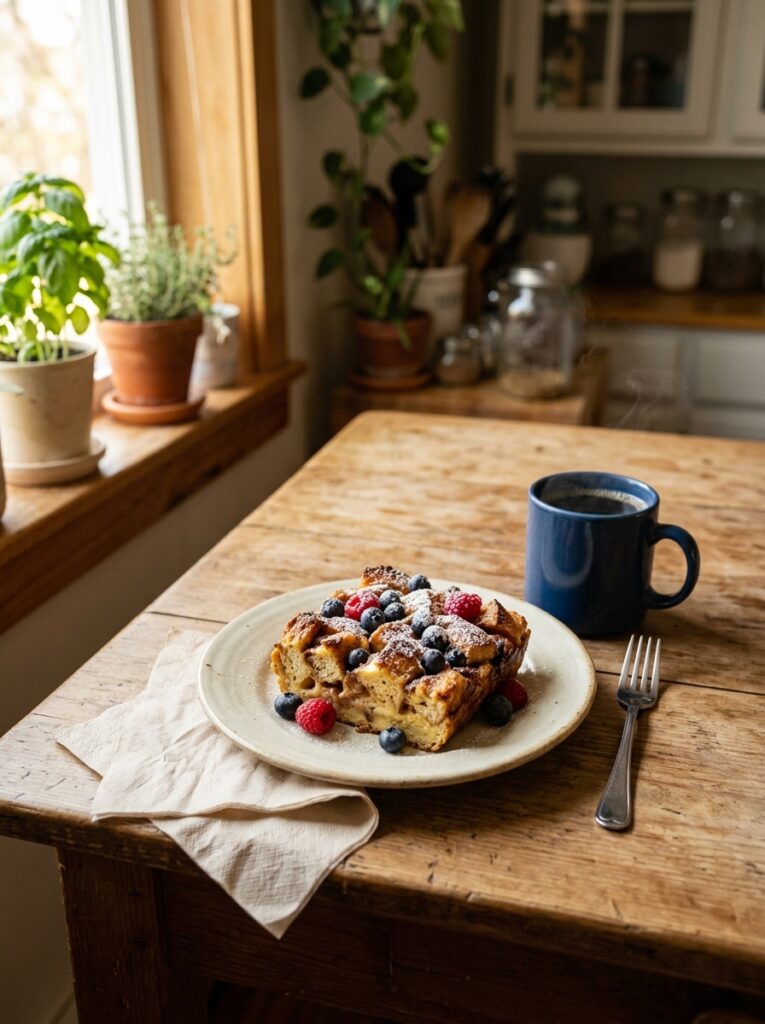
It took me a while to stop thinking of this as a “special occasion” dish. And I think that’s a mistake people make early.
Yes, it’s impressive for guests. Yes, it photographs beautifully and feels festive. But it’s also just… a really easy weekday breakfast. The active prep is maybe 15 minutes the night before. The bake time is mostly hands-off. And it feeds a family of four with leftovers.
The mental shift is realizing that “making the morning easier” is a completely valid reason to assemble this on a Tuesday night. Not everything has to be an event. Sometimes it’s just Tuesday and you don’t want to think about breakfast and you want something warm and sweet and already done.
That’s the whole point of it, kind of. The casserole isn’t performing for guests. It’s just quietly doing its job while you drink your coffee in peace.
—
12. A Few Small Tweaks That Genuinely Change the Result
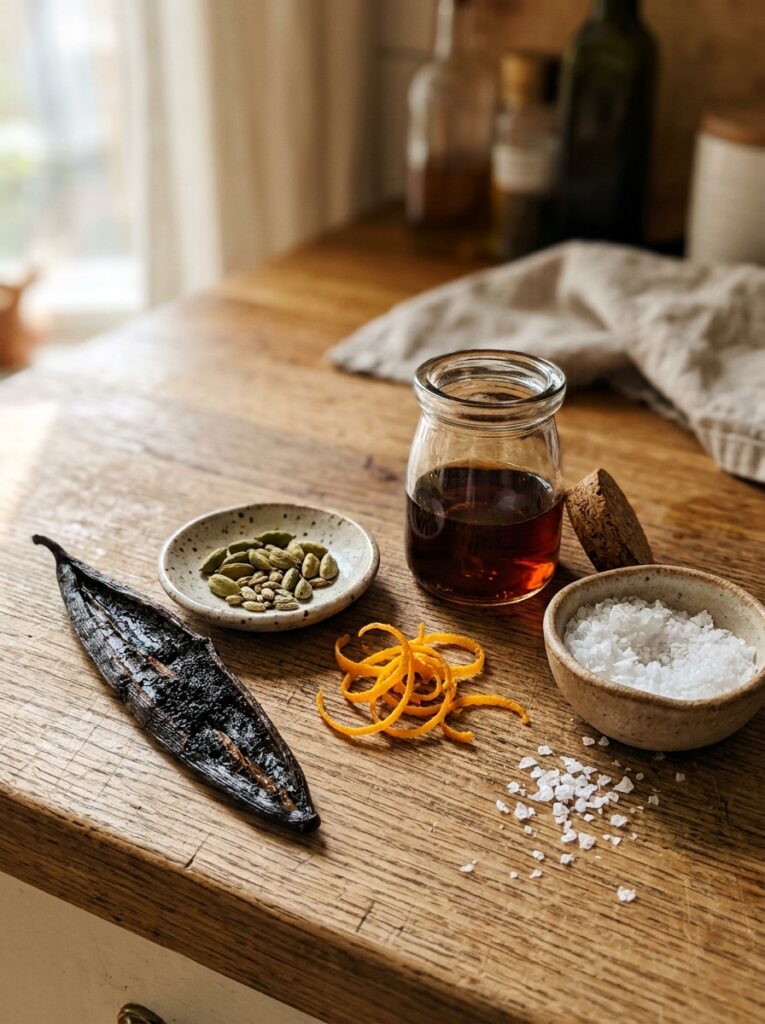
These are the ones I’ve landed on after a lot of batches. None of them are dramatic, but together they matter.
Use a glass or ceramic baking dish, not metal. The heat is more even and the caramel base doesn’t catch and burn at the edges the way it can with metal.
Sprinkle turbinado sugar across the top before the final 20 minutes uncovered. It forms this crackling, glassy crust on the surface that’s almost like crème brûlée. Almost. It’s a very good almost.
Don’t skip the nutmeg. I know people are inconsistent about it. But freshly grated nutmeg — not the pre-ground stuff from the back of the spice rack — adds a warmth that vanilla alone can’t.
Cover with plastic wrap, not foil, when it goes in the fridge overnight. Foil can trap condensation that drips back onto the bread and messes with the top layer. Plastic wrap sits against the surface and keeps it more uniform.
And finally: let people eat it at the pan. Big family-style dishes belong at the table, not plated in the kitchen. Something about cutting your own piece, adding your own toppings, leaning over the pan — it makes it feel communal in a way that’s worth something.
—
❓ FAQ
Q: Can I prep this more than one night ahead? A: Not for the assembled casserole — after about 12 hours in the custard, the bread breaks down too much. But you CAN pre-slice the bread and store it a day ahead, or make the brown sugar butter base in advance and refrigerate it separately. Then assemble the night before you want to eat it.
Q: My casserole came out soggy in the middle — what went wrong? A: Usually one of three things: the oven wasn’t fully preheated, the dish went in straight from the fridge without that 20-minute rest, or it needed more time uncovered at the end. Give it an extra 10 minutes uncovered and check the jiggle test again. If the center still feels loose, keep going — it’ll get there.
Q: Can I make this savory instead of sweet? A: Yes, and it’s genuinely good. Skip the sugar and spices entirely, use a good crusty bread, and fill the custard with cheese, herbs, caramelized onions, or cooked vegetables. It becomes more of a savory bread pudding or strata. Same overnight method, totally different dish.
—
💭 Final Thoughts
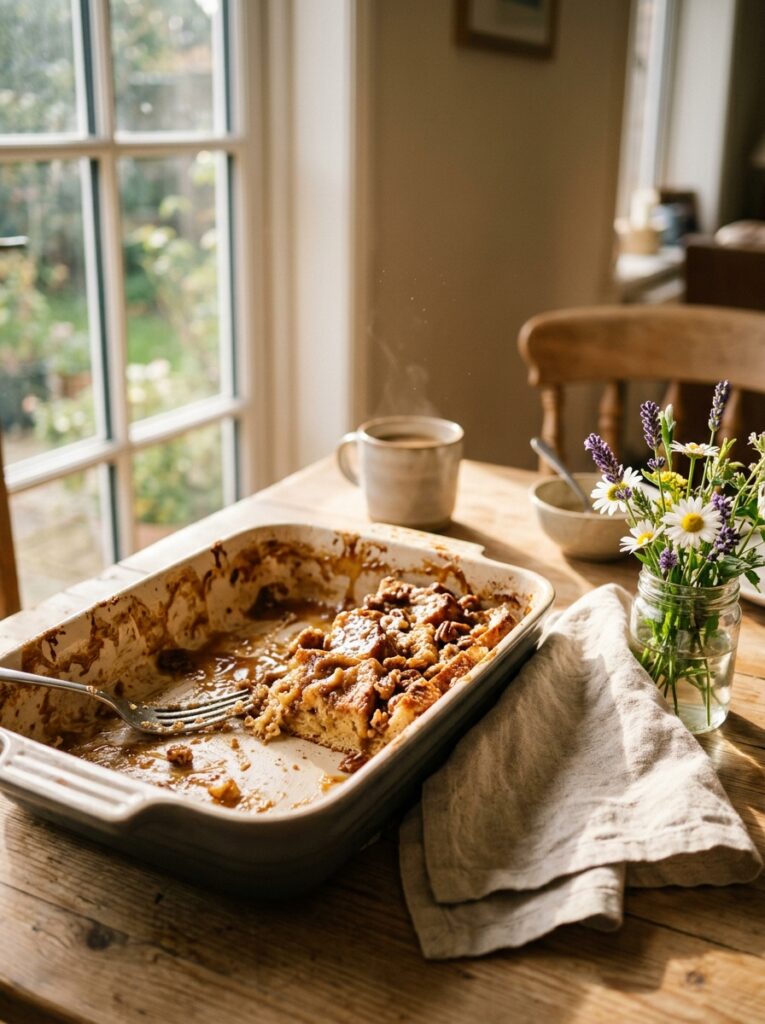
There’s something really nice about a recipe that does its most important work while you’re asleep. No drama, no morning rush, no one standing over the stove in their pajamas trying to flip individual slices.
Just bread and custard and time doing what they do naturally, and you showing up in the morning to a kitchen that already smells like something good is happening.
Is there a breakfast that makes a Tuesday feel more intentional than it deserves?
