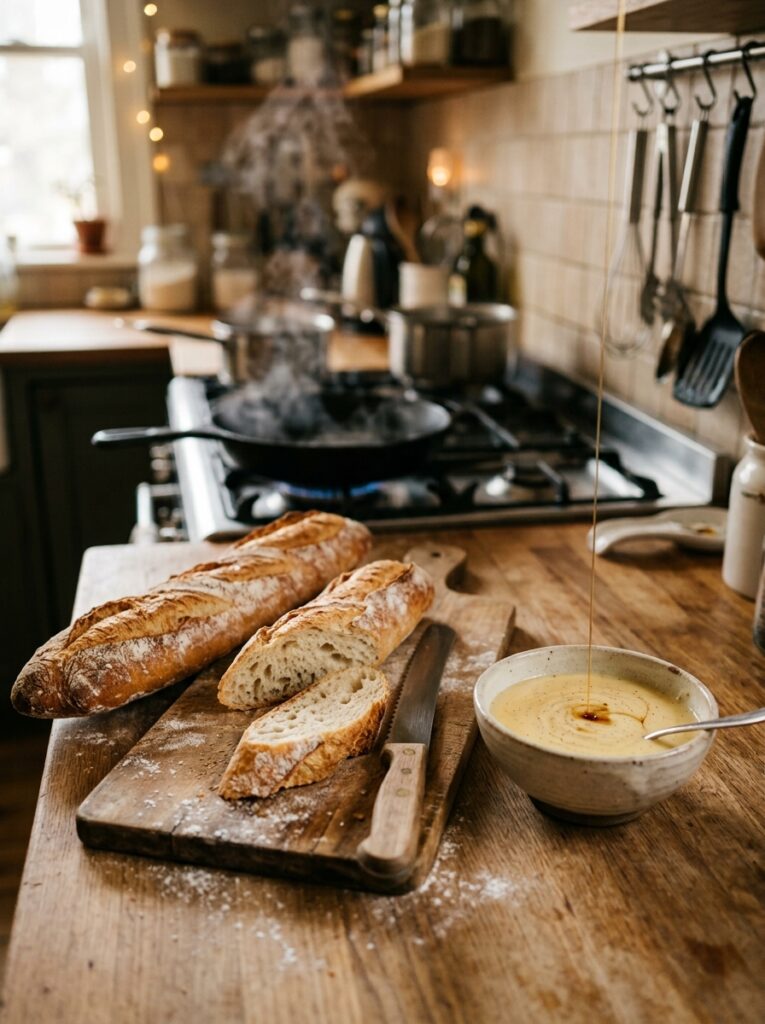
My friend Deb called me last Saturday. Said she’d made French toast and it was, quote, “soggy in the middle and burnt on the outside and I don’t understand how that keeps happening.” And I knew immediately. She was using sandwich bread.
That’s the whole problem.
—
1. Why a Baguette Changes Everything You Thought You Knew About French Toast
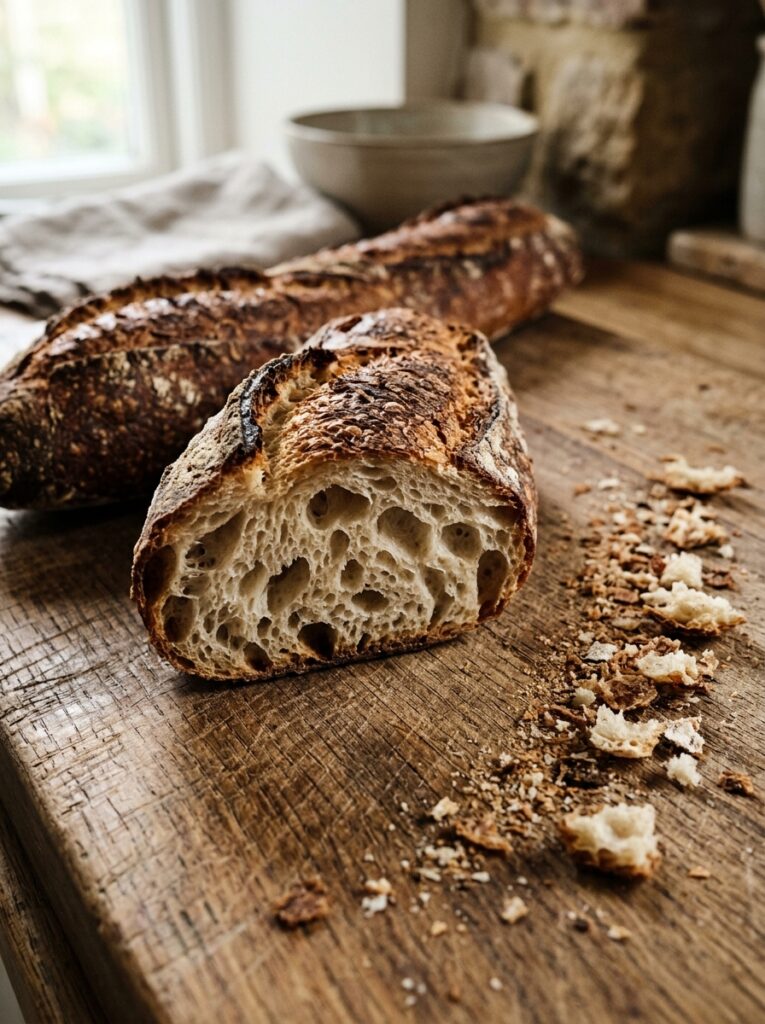
French bread — a proper baguette or a thick demi-baguette — has a crust that actually holds up to the custard soak. Sandwich bread doesn’t have that. Sandwich bread is basically a sponge dressed up as breakfast food, and when you dunk it in egg and milk it just… gives up. Falls apart. Gets sad.
But a baguette? The outside stays structured while the inside goes soft and custardy in this deeply satisfying way. It’s the thickness, partly — you’re cutting slices an inch to an inch and a half thick, which means the center has time to cook through without the outside going dark and crispy before anything’s ready. And it’s the crust itself. That chewy, slightly dense exterior slows down how fast the egg soaks in, which means you’re in control of the process instead of racing against it.
Day-old bread is better. I’ll say it louder. DAY-OLD bread is better, because it’s drier, it absorbs the custard more evenly, and it doesn’t immediately dissolve. If your baguette is fresh, just leave it on the counter uncovered for a few hours. Problem solved.
2. The Custard Ratio That Actually Makes a Difference
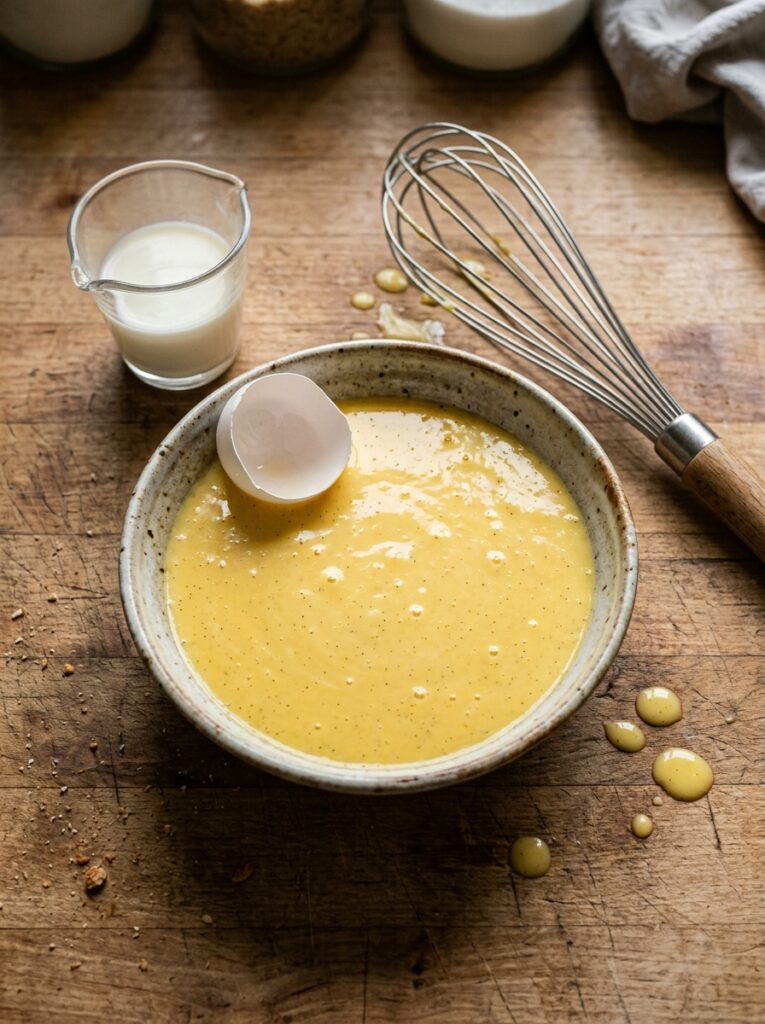
Okay so this is where a lot of recipes go sideways. Too much milk and you get wet, eggy bread that steams instead of fries. Too many eggs and the inside tastes like a cooked omelette. There’s a ratio that just works, and it’s this:
For every 4 thick slices of French bread, use 3 large eggs and about ¾ cup of whole milk. Add a tablespoon of heavy cream if you have it — not required, but it does make the finished texture richer in a way that’s noticeable. A pinch of salt. A teaspoon of vanilla extract. Half a teaspoon of cinnamon, maybe a tiny scrape of nutmeg if you’re feeling it.
Whisk it until it’s genuinely combined, not just swirled together. You want everything uniform because patchy custard means patchy results.
“Day-old bread, a proper custard ratio, and a hot enough pan — that’s it. That’s the whole secret.”
The vanilla matters more than people give it credit for. Not gonna lie, I skipped it once thinking it was optional and the French toast tasted noticeably flatter. Use real extract if you can. The imitation stuff works but it’s got this sharp alcohol edge that kind of lingers.
3. The Soak Time Nobody Agrees On (Here’s What I’ve Found)
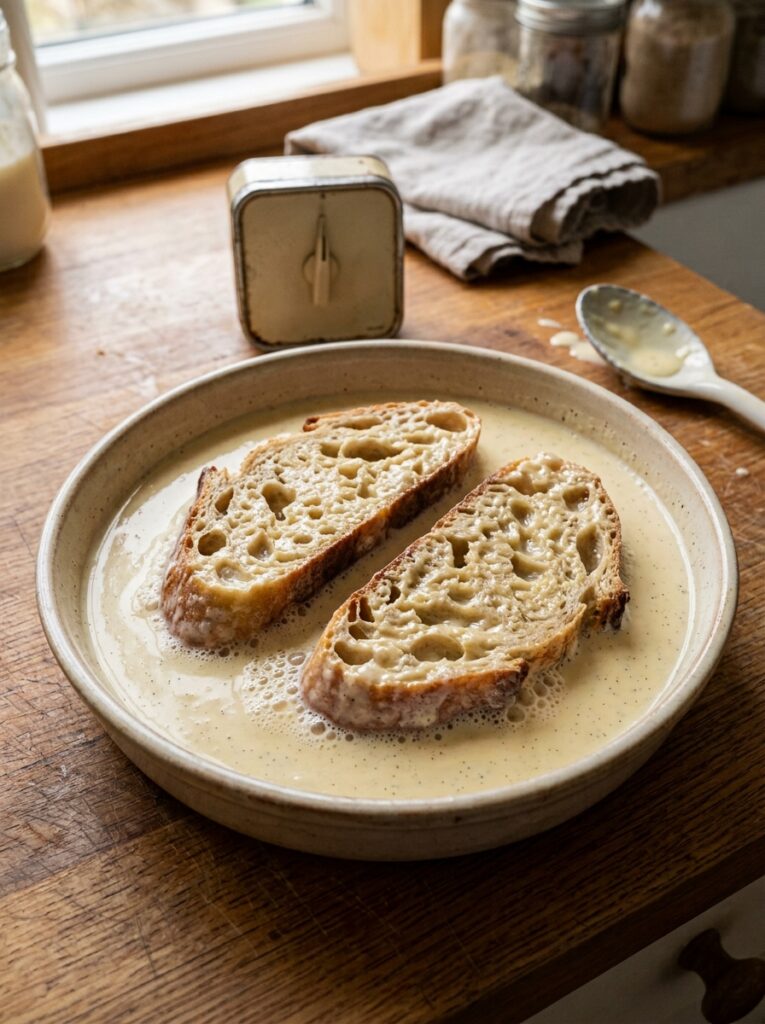
This is genuinely contested and I’ve read probably fifteen different takes on it. Quick soak vs. long soak. Some people say 30 seconds a side. Some say 5 minutes. Some people soak overnight in the fridge.
Here’s my take after way too many batches: 45 seconds to 1 minute per side for day-old French bread, and you’re in the zone. Long enough that the custard’s gotten into the bread but short enough that the slices haven’t fully saturated. You’ll know it’s right when you pick up a slice and it holds its shape but feels noticeably heavier. If it’s starting to look translucent through the middle, pull it out.
The overnight soak works but it changes the texture. It’s more like a bread pudding thing — really dense and custardy all the way through. Which is delicious, genuinely, but it’s a different dish. Not better or worse, just different.
For a regular weekend morning where you want to eat in the next 20 minutes, one minute per side is your answer.
4. The Pan Setup That Stops the Soggy Middle Problem for Good
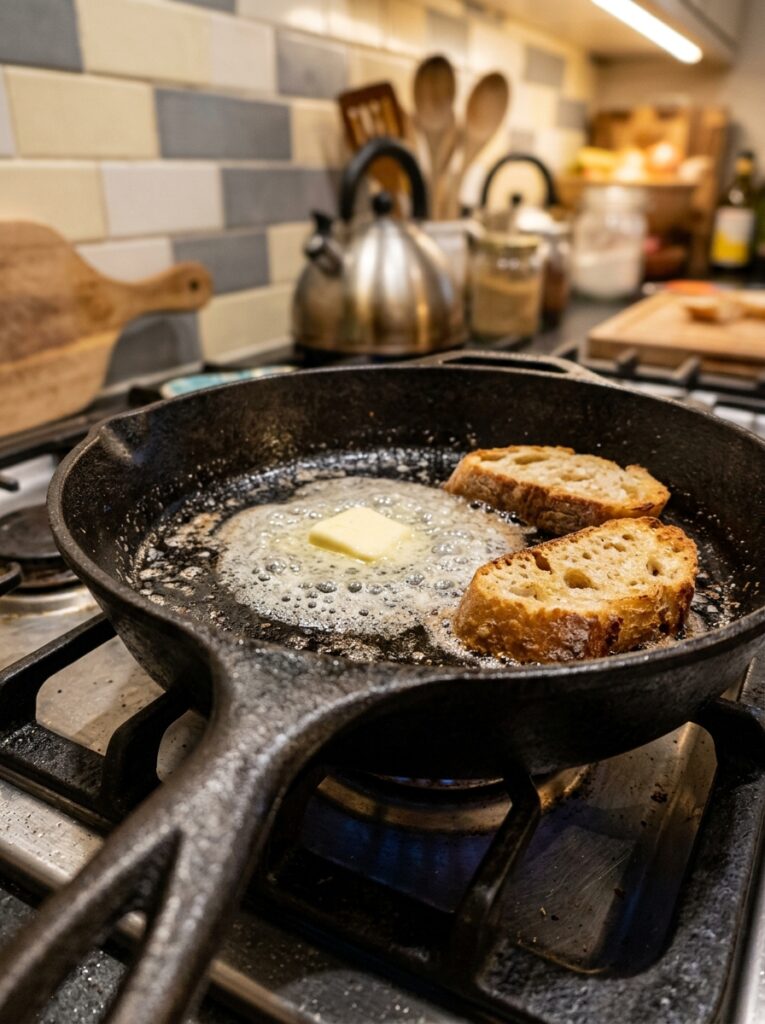
Medium heat. Not high. This is the one I see people get wrong constantly and it’s the direct cause of Deb’s burnt-outside, raw-middle situation.
You need the pan hot enough that the bread starts cooking immediately on contact, but not so hot that it’s browning in 90 seconds. A knob of butter — real butter — in the pan, let it foam and then subside slightly. That’s your moment. When the foam starts to calm down, the pan’s at the right temperature.
Cast iron holds heat beautifully and gives you this slightly crispier exterior. A non-stick pan is more forgiving and easier to manage if you’re making multiple batches and adjusting the heat as you go. I use both depending on my mood, honestly.
Cook for about 3 to 4 minutes per side on medium. Don’t rush it. Don’t press down on the bread. Let it do its thing. The bread will release from the pan when it’s ready — if it’s sticking, it’s not done yet.
“When the foam from the butter starts to calm down, that’s your window. Slide the bread in right then.”
5. The Toppings That Are Worth the Extra Two Minutes
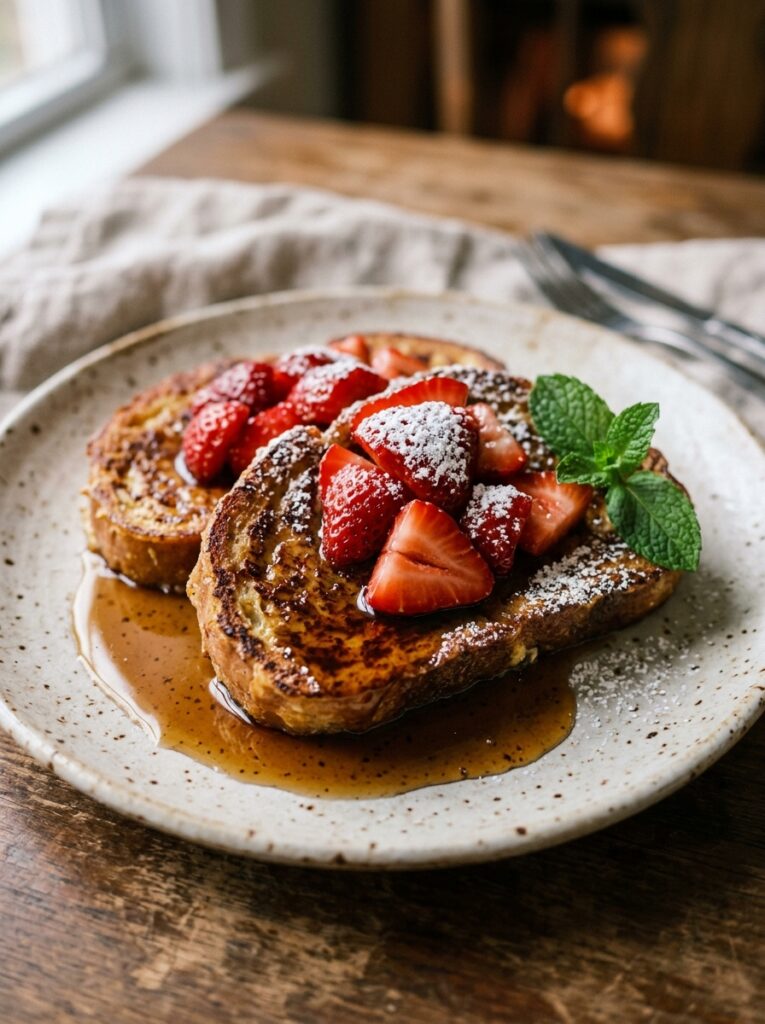
Plain maple syrup is perfect. I’m not going to pretend otherwise.
But. If you’ve got five extra minutes, a quick berry compote changes the whole mood of the plate. Handful of frozen berries (blueberries or raspberries work best), a tablespoon of sugar, squeeze of lemon, small splash of water, five minutes in a small saucepan over medium heat until it’s syrupy. That’s it. Pour it warm over the French toast and it soaks into the edges slightly and it’s genuinely one of the better breakfasts you can make without any real effort.
Thick Greek yogurt instead of whipped cream. It cuts through the richness of the custard and adds this tangy thing that makes every bite more interesting.
Bananas fried in butter and brown sugar. Two minutes in the same pan you used for the bread. Yes. Do it.
Powdered sugar through a small sieve for the photo, obviously. But also because that thin layer of sweetness on the surface right before you eat it is quietly excellent.
6. The Version That Works for a Crowd Without Anyone Losing Their Mind
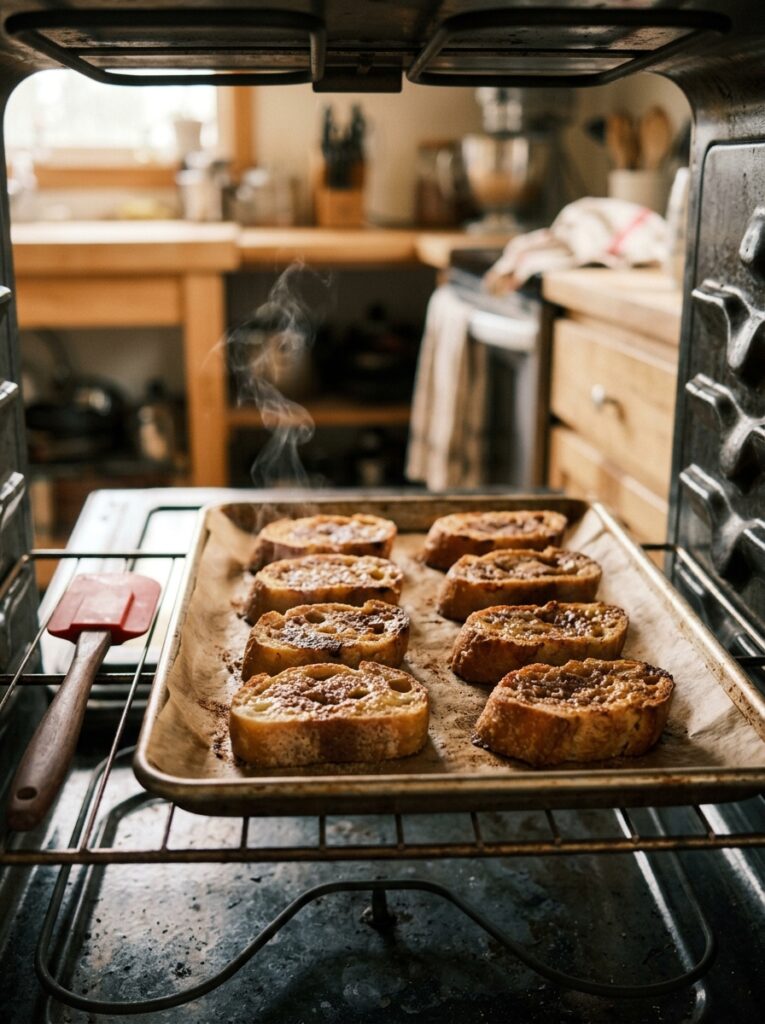
Here’s the thing about making French toast for more than two people: the stovetop version gets exhausting fast. You’re standing there cooking individual slices while everyone else is eating and by the time you sit down your food is cold and you’re slightly resentful.
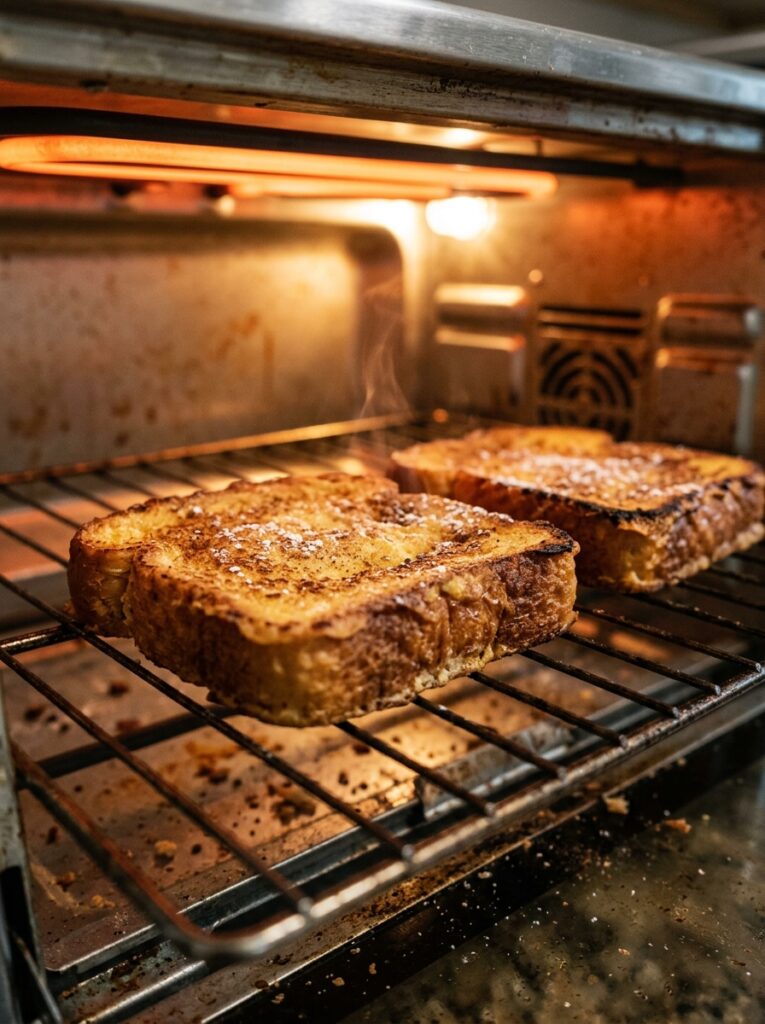
The oven method fixes all of this. Make your custard the same way. Soak your slices. Then instead of going pan-by-pan, lay them on a baking sheet that you’ve buttered generously, and bake at 400°F (200°C/gas 6) for about 15 minutes, flipping halfway through. The result is slightly different — more uniform, a bit less buttery on the surface — but everyone eats at the same time and that matters.
Side note — if you butter the baking sheet AND dot small pieces of butter on top of each slice before it goes in, you get close to that pan-fried richness. Worth the extra 30 seconds.
7. The Savory Version You Might Not Have Considered
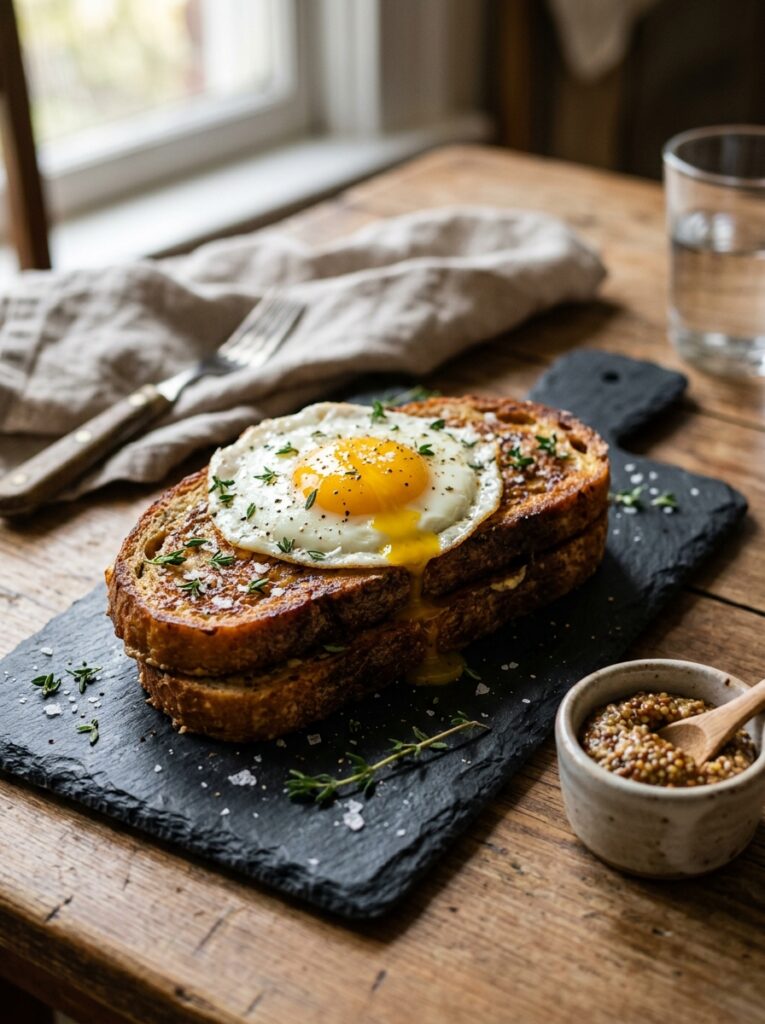
Not every French toast needs maple syrup.
A thick slice of French bread soaked in a custard made with less sugar and more salt, finished in the pan the same way, and then topped with a fried egg and a spoonful of something sharp — a simple tomato sauce, or a tangle of sautéed mushrooms, or honestly just some flaked sea salt and a drizzle of good olive oil — is a completely different and completely legitimate meal.
In France this kind of thing is called pain perdu, which means “lost bread,” and the savory versions have been around just as long as the sweet ones. British readers might recognize this idea from eggy bread, which is essentially the same concept. Not glamorous, deeply satisfying.
I had a savory version with gruyère and thyme once and I think about it probably more than is reasonable.
8. The Stale Bread Situation: What to Do When Your Baguette Is Actually Hard
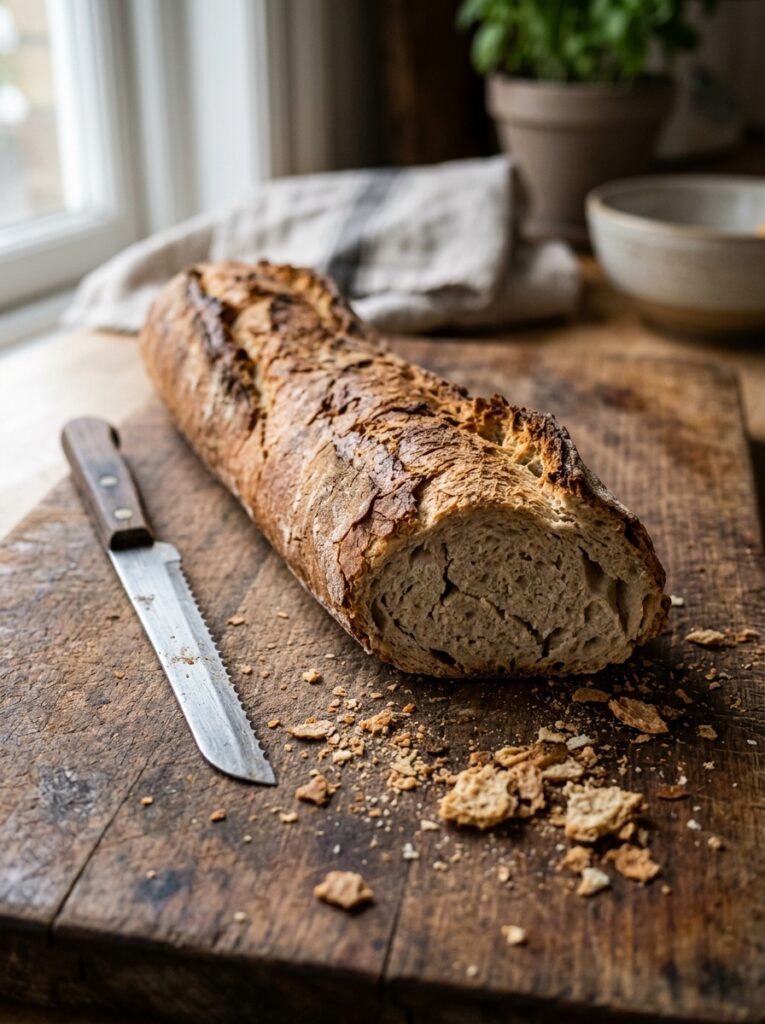
Sometimes “day-old” turns into “forgot about it for three days” and now you’ve got a baguette that’s so stiff you could use it for self-defense. Not ideal.
You can still use it. You just need to soak it longer, and with slightly more liquid. Add an extra tablespoon of milk to your custard and let the slices sit for closer to two minutes per side. The custard will have more work to do softening the bread and you want to give it the time.
Alternatively, this is exactly when the overnight soak in the fridge makes the most sense. Very stale bread genuinely benefits from the longer soak because it needs more time to rehydrate. Cover your soaking dish with cling film, put it in the fridge before you go to bed, and in the morning you have a batch ready to go straight to the pan.
“Very stale bread isn’t a problem. It’s just bread that needs a longer conversation with the custard.”
9. A Few Things I Got Wrong Before I Got This Right
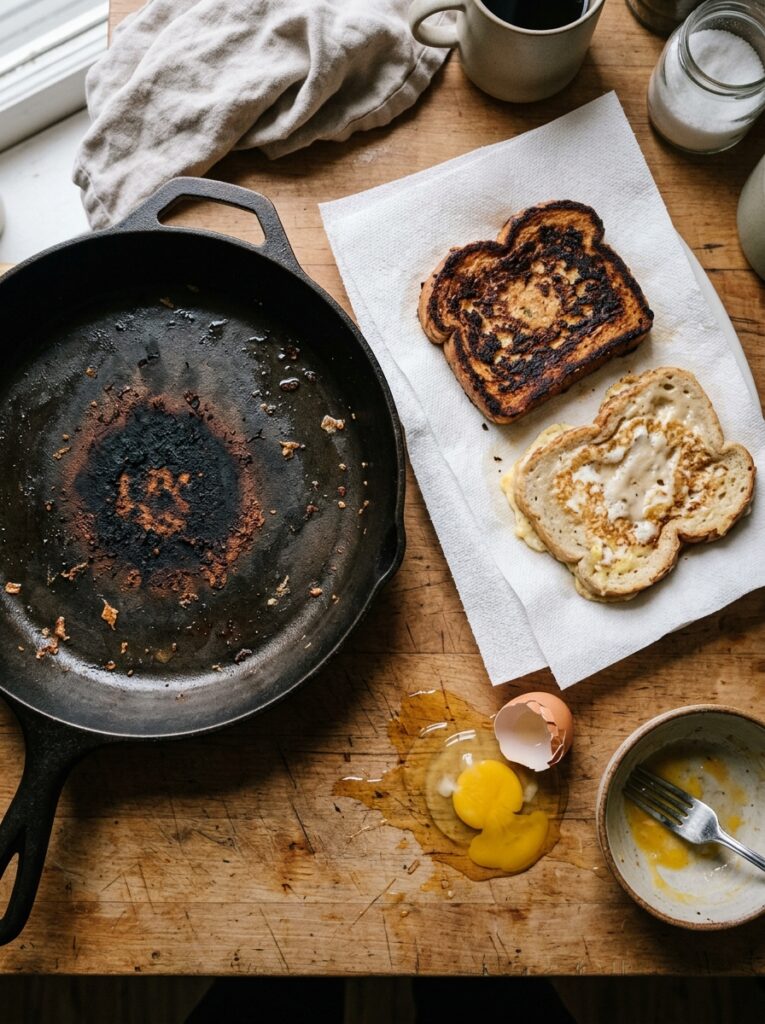
First time I made French toast with a baguette I sliced it too thin. Maybe half an inch. Cooked in about 90 seconds and the texture was more cracker than anything else.
I’ve also over-sweetened the custard before. Adds too much sugar to the exterior and it catches in the pan and burns before the inside’s properly done. Keep the sugar in the custard minimal — one teaspoon at most — and add sweetness through your toppings instead.
And I’ve cooked on heat that was too high more times than I want to admit. The fix is annoyingly simple: turn it down and add a minute to each side. That’s really it.
Oh, and using low-fat milk. Just don’t. The fat content in whole milk is what gives the custard its texture once it’s cooked. Skimmed milk produces something thin and weirdly slippery. Whole milk only. Or if you’re in the UK, semi-skimmed at the very lowest.
10. How to Reheat It Without Ruining It Completely
Cold French toast is kind of depressing. The good news is it reheats better than most breakfast foods.
Best method: pop it in a pan on medium-low heat with a tiny bit of butter, cover it loosely with a lid or a bit of foil, and let it warm for about 2 minutes per side. The steam from the covered pan heats the inside without drying out the surface.
Toaster? Works for thinner slices. Not ideal for the thick ones — the outside gets crunchy before the inside warms through.
Microwave? I mean. It’ll be warm. The texture will be sort of soft and slightly rubbery. Fine if you’re desperate.
The oven at 300°F (150°C/gas 2) for about 8 minutes on a lightly buttered tray is actually pretty good if you’re reheating several pieces at once.
11. The Version That Feels Like a Weekday Treat Instead of a Weekend Project
Not everyone has 30 minutes on a Tuesday morning. Here’s a faster version.
Instead of a full custard soak, do a quick dip — barely 15 seconds per side — in a mixture of one egg beaten with two tablespoons of milk and a splash of vanilla. Thinner coating, cooks faster. Medium-high heat (slightly hotter than the weekend version because you’re cooking thinner coverage), about 2 to 2.5 minutes per side.
It’s not as deeply custardy in the center. But it’s done in under 10 minutes and it’s still dramatically better than toast with jam, which is what most weekday mornings actually look like.
12. Why This Became My Default Breakfast for Guests
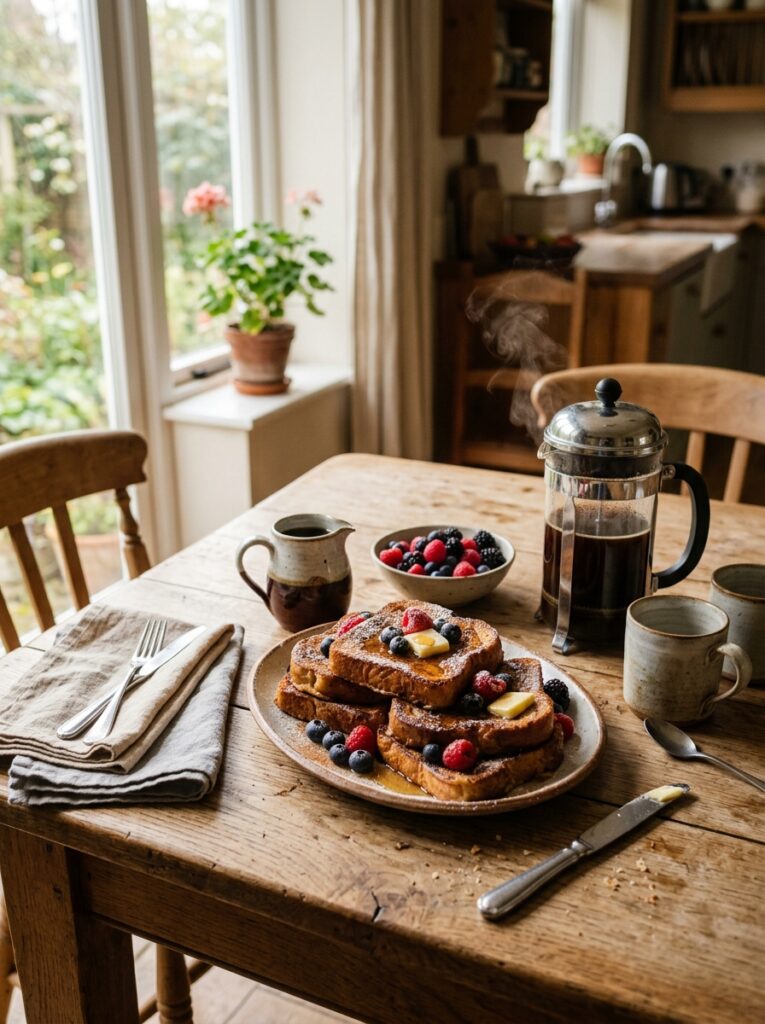
I started making this for houseguests a few years ago and it became a thing. People request it. They ask for the recipe, and when I explain that it’s mostly just using better bread and a proper custard they seem almost disappointed by how simple it is.
But that’s sort of the whole point. French bread French toast sounds like a step up, and it is, but it’s not actually more work. The baguette costs about the same as a loaf of sandwich bread. The custard takes three minutes to whisk together. The cook time is the same.
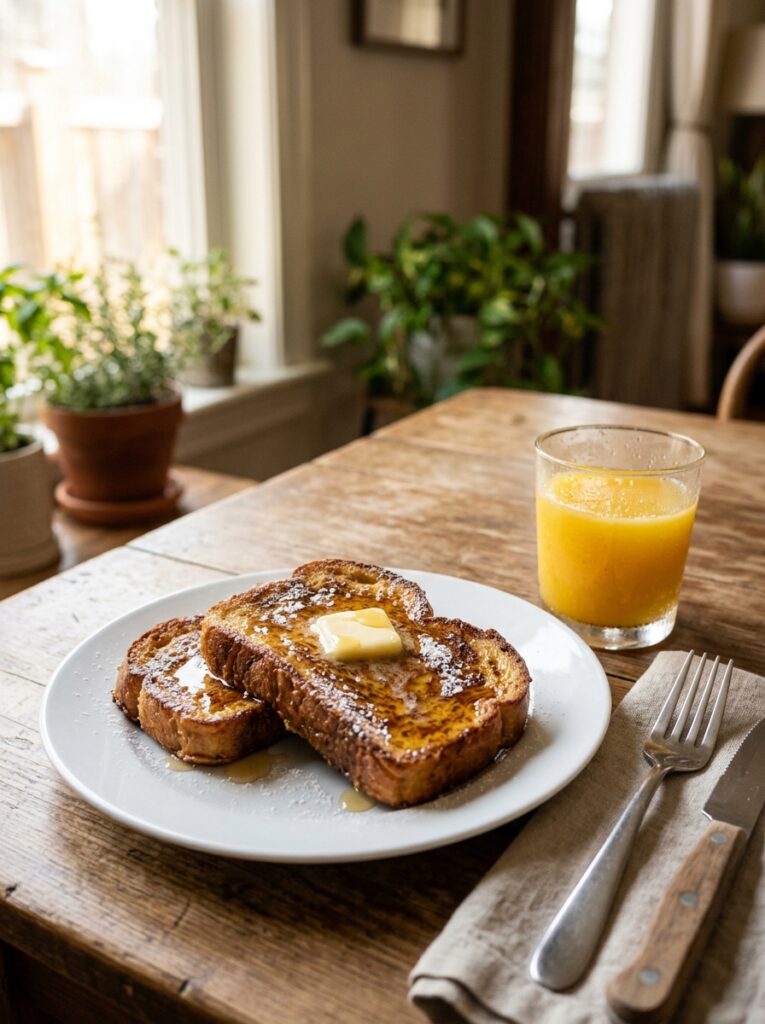
The difference is just in the result. A thick, golden-brown slice with a crust that’s genuinely crisp, a center that’s soft and set but not wet, and that slightly yeasty depth of flavor from the bread itself that sandwich bread never gives you. It holds up under syrup without immediately dissolving. It stays warm on the plate longer because of the thickness.
Deb made it the following weekend after our phone call. Texted me a photo. “Okay,” she said, “this is completely different.” It really is.
—
❓ FAQ
Q: Can I use a ciabatta or sourdough instead of a baguette? A: Absolutely, and both are excellent. Sourdough adds a slight tang that works really well with sweet toppings, and ciabatta gives you an airier interior that goes almost pillowy when soaked. Day-old is still the move for both — fresh ciabatta especially is too soft and will absorb custard too fast.
Q: My French toast keeps sticking to the pan even with butter. What’s going wrong? A: Either the pan isn’t hot enough when the bread goes in, or it needs more time before you try to flip it. French toast releases naturally when the underside is properly cooked — if you’re prying it up, give it another 30 to 45 seconds. A little more butter doesn’t hurt either.
Q: How far ahead can I make the custard mixture? A: You can whisk it together the night before and keep it covered in the fridge with no problem. The vanilla might mellow slightly overnight, which is actually nice. Give it a quick whisk in the morning before you use it and it’s good to go.
—
💭 Final Thoughts
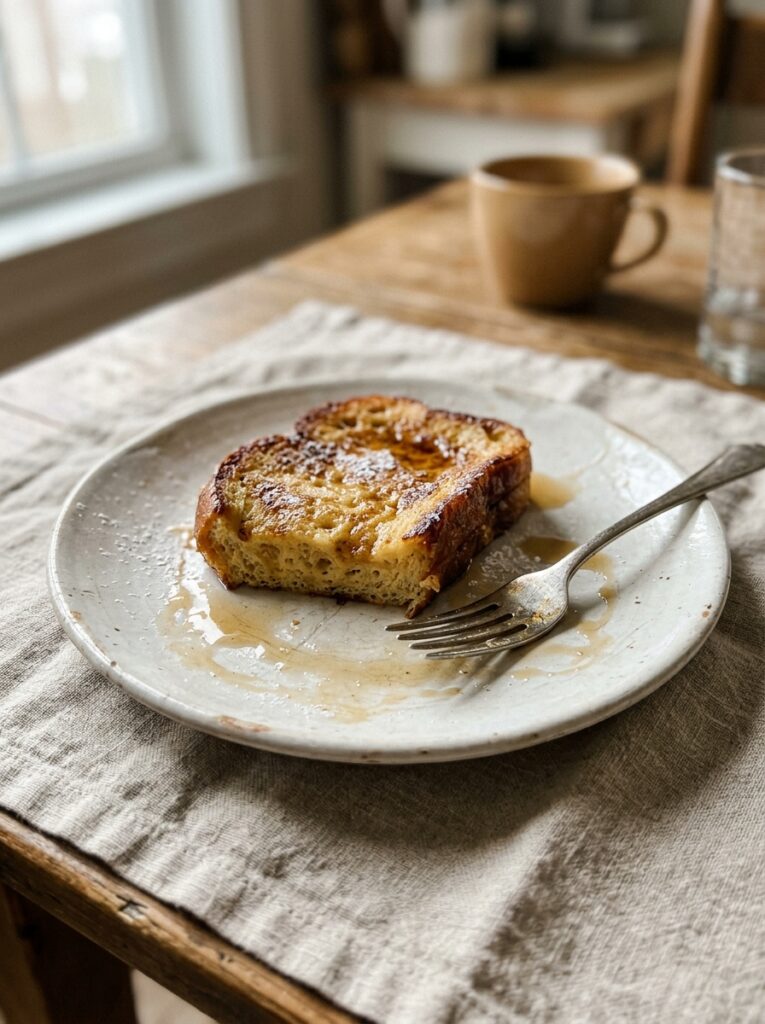
French toast is one of those dishes where the technique matters more than any fancy ingredient, and once you understand why each step works, you stop second-guessing yourself. The bread does most of the heavy lifting — choose a good one and you’re already mostly there. Everything else is just paying attention.
What’s your usual French toast topping? Because I’m genuinely curious whether the berry compote people or the maple syrup people are winning.
