My friend Sarah called me last Tuesday and said, “I’ve been making smoothies every morning for three weeks and I’m starving by 9:30.” I knew EXACTLY what she was doing wrong.
—
1. Why Most Smoothie Recipes Set You Up to Fail by Mid-Morning
Here’s the thing nobody talks about. The majority of smoothie recipes you find online are basically dessert in a glass. Frozen mango, banana, orange juice, maybe some pineapple — and yeah, they taste incredible, but your blood sugar is going to spike and then absolutely crater before you’ve even opened your laptop.
The ones that actually work? They’ve got fat, protein, and fibre in there doing real structural work. Not just fruit and a prayer.
I’m not saying go full protein powder and kale and suffer through something that tastes like lawn clippings. There’s a middle ground, and it’s genuinely delicious. The trick is understanding that a smoothie isn’t a snack. If you’re replacing a meal with it, it needs to EAT like a meal. More on exactly how to do that as we go through these recipes.
“A smoothie isn’t a snack. If you’re replacing a meal with it, it needs to eat like a meal.”
—
2. The Frozen Banana Rule That Changes Everything
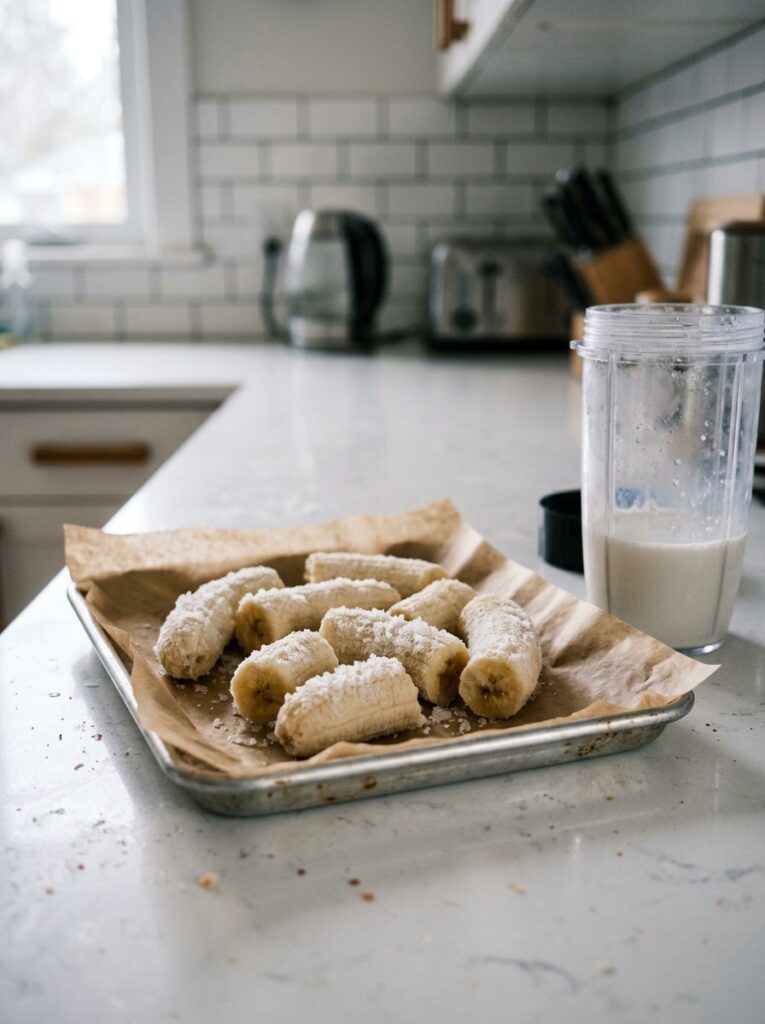
Stop refrigerating your bananas. Freeze them.
I don’t mean slightly ripe, I mean spotty-brown-peel-just-starting-to-soften ripe, then peel them and throw them in a bag in the freezer. A frozen banana does something completely different in a blender than a fresh one. It creates this thick, creamy, almost ice-cream-like base that makes your smoothie feel genuinely indulgent without needing to add ice (which waters everything down) or yoghurt (which you might not want).
One frozen banana is roughly half a cup of natural sweetness and enough body to carry heavier ingredients without going grainy or separating in the glass. It’s the reason some people’s smoothies look like silk and yours looks like a science experiment gone wrong. And yeah, it’s free — you’re just using bananas you were about to throw away anyway.
For British readers: Cavendish bananas work perfectly fine. You don’t need anything exotic. Just get them ripe, freeze them, and never look back.
—
3. The Green Smoothie That Doesn’t Taste Green at All
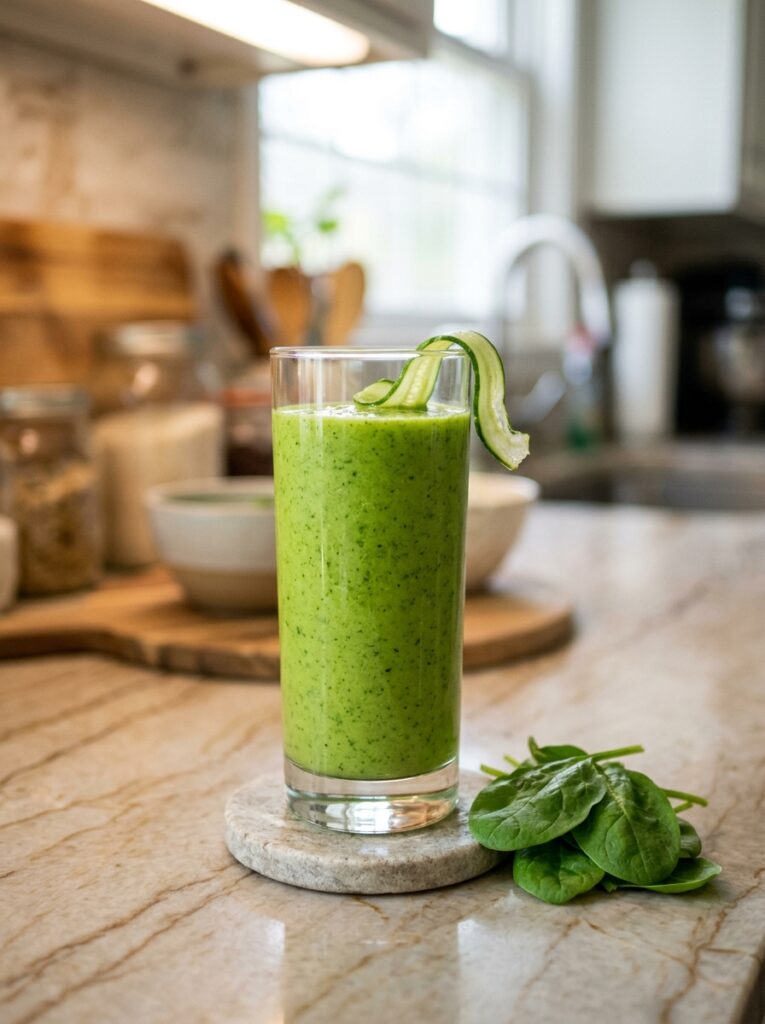
People have strong feelings about green smoothies. Either they’re evangelists or they’ve been traumatized by one bad spinach situation and they’re not over it. I get it.
But here’s what changed my mind: using baby spinach instead of kale, and pairing it with something sweet enough to lead the flavour. Mango does this brilliantly. You genuinely cannot taste the spinach when you’ve got a full cup of frozen mango in there alongside it.
So here’s what this one looks like:
- 1 cup frozen mango chunks
- 1 large handful baby spinach (about 1 cup loosely packed)
- ½ frozen banana
- 1 cup coconut milk (the carton kind, not the thick canned version)
- 1 tablespoon chia seeds
- A squeeze of fresh lime
Blend until completely smooth — and if it’s still looking streaky, give it another 30 seconds. The colour is going to be this gorgeous deep jade green and it tastes like a tropical holiday. The chia seeds add omega-3s and keep you full, and the coconut milk makes it feel luxurious without being heavy.
—
4. The Colour That Keeps Showing Up in Every Beautiful Smoothie Bowl Right Now
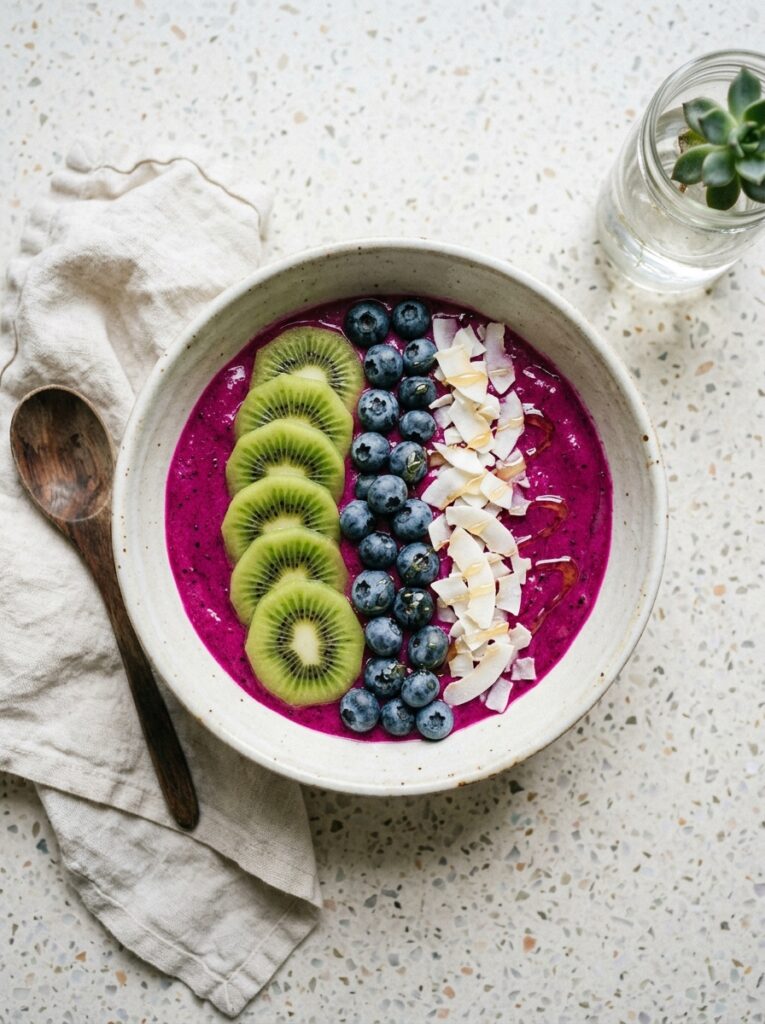
Deep purple. Specifically, the kind you get from frozen blueberries and açaí.
Now, açaí powder is easier to find than it used to be — most health food shops and larger supermarkets in both the US and UK stock it now. But honestly? Frozen blueberries alone get you 80% of the way there visually, and they’re cheaper and less faffy.
The thing about a deep purple smoothie is that it photographs beautifully, and if you’re making smoothie bowls rather than drinks, the colour contrast with sliced banana and granola on top is just stunning. But forget the aesthetics for a second — blueberries are legitimately one of the most flavour-flexible fruits in a blender. They pair with almost anything. Almond butter. Oat milk. Vanilla. Lemon zest. They don’t overpower, they just deepen everything around them.
“Frozen blueberries pair with almost anything. They don’t overpower — they just deepen everything around them.”
—
5. One Tablespoon That Makes Every Smoothie Taste More Expensive
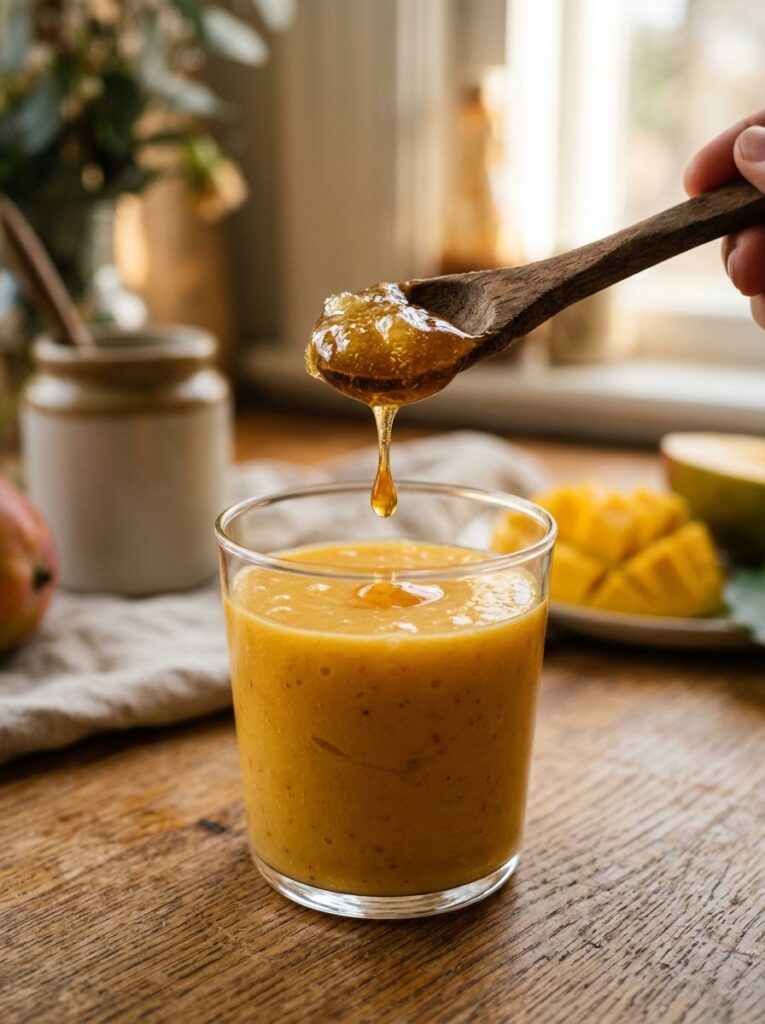
Almond butter. That’s it. That’s the answer.
A generous tablespoon of almond butter added to almost any fruit smoothie does three things: it rounds out the sweetness, it adds a subtle nuttiness that makes the whole thing taste more complex, and it gives you staying power you can’t get from fruit alone. The fat content slows down how fast the natural sugars hit your bloodstream. Which is the whole point if you’re trying to get to lunch without raiding the biscuit tin.
You can use peanut butter too — and honestly for certain recipes (banana, chocolate, oat milk) peanut butter is the better choice. But for lighter, fruitier combinations? Almond butter. It disappears into the background in the best way.
Side note — this also works in smoothie bowls. Drizzle a little on top and suddenly it looks like something a café would charge you £9 for.
—
6. The Overnight Prep Trick for People Who Hate Mornings
I’m not a morning person. I’ve made peace with this.
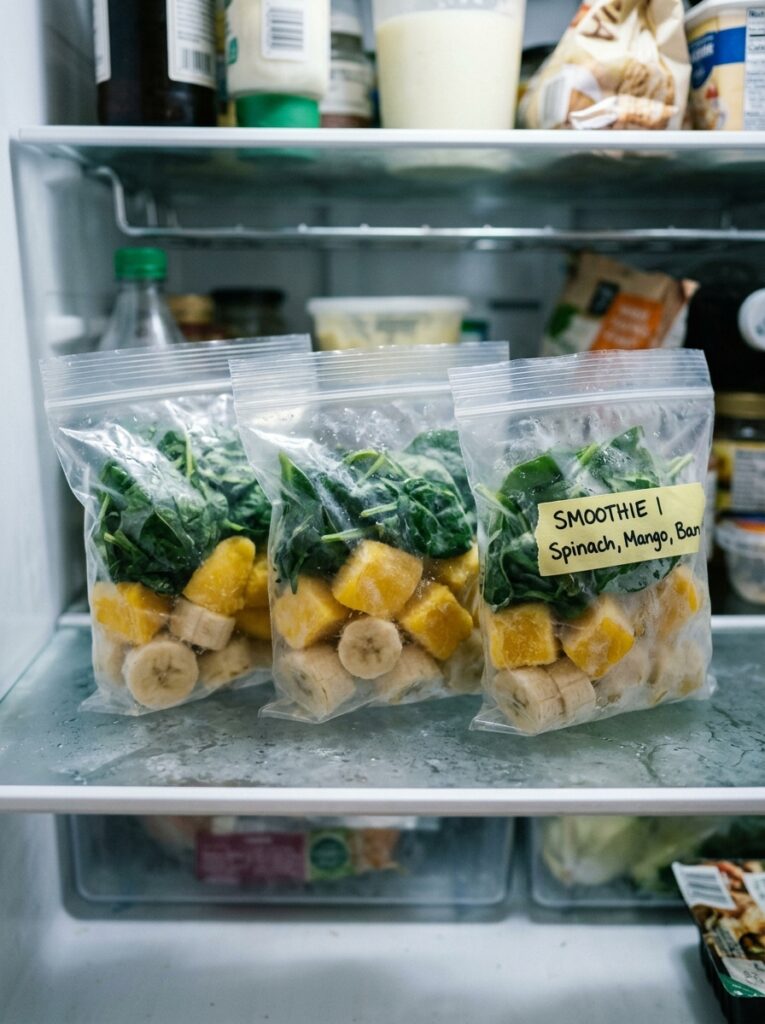
What I have NOT made peace with is standing in front of a freezer at 7am trying to remember if I have spinach. So I started doing something my more organised friends do: smoothie packs.
Once a week — Sunday works well — I portion out all my non-liquid smoothie ingredients into small freezer bags or containers. Frozen fruit, spinach, any seeds or powders, even a pre-measured bit of nut butter if I know I want it. In the morning, you dump the whole thing into the blender, add your liquid, and blend. Done in under two minutes.
It sounds almost too simple, and maybe it is, but it means I’ve had a proper breakfast every day this week without thinking about it even once. And because everything’s pre-portioned, you don’t get that thing where you accidentally make enough smoothie for four people and don’t want to waste it.
—
7. The Peanut Butter Chocolate Smoothie That Feels Completely Irresponsible
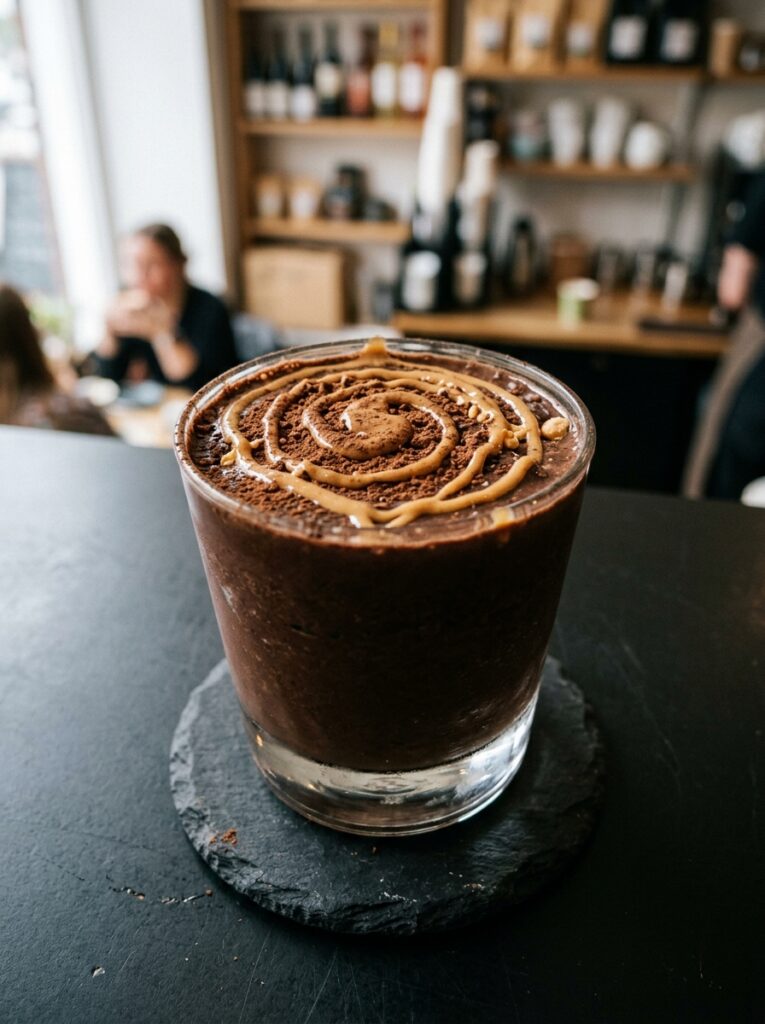
Okay, here’s the one that feels like a cheat. But it’s not — or at least, not entirely.
- 1 frozen banana
- 2 tablespoons peanut butter (the natural, no added sugar kind)
- 1 tablespoon unsweetened cocoa powder
- 1 cup oat milk
- 1 tablespoon ground flaxseed
- A small pinch of sea salt (don’t skip this)
Blend it. Taste it. You’re going to think you accidentally made a milkshake.
The sea salt is the part people skip and then wonder why theirs tastes flat. Salt amplifies chocolate. It’s not a baking trick, it works in blenders too. The ground flaxseed is invisible but does a lot of quiet work — fibre, omega-3s, and it thickens the texture slightly in a way that feels intentional rather than gloopy.
This one keeps me full for HOURS. I don’t fully understand the science of it but I have a theory it has something to do with the fat content from the peanut butter hitting differently when it’s blended smooth rather than eaten in a spoon.
Or maybe it’s the opposite, honestly. I’m not a nutritionist.
—
8. What No One Tells You About Using Oat Milk as Your Smoothie Base
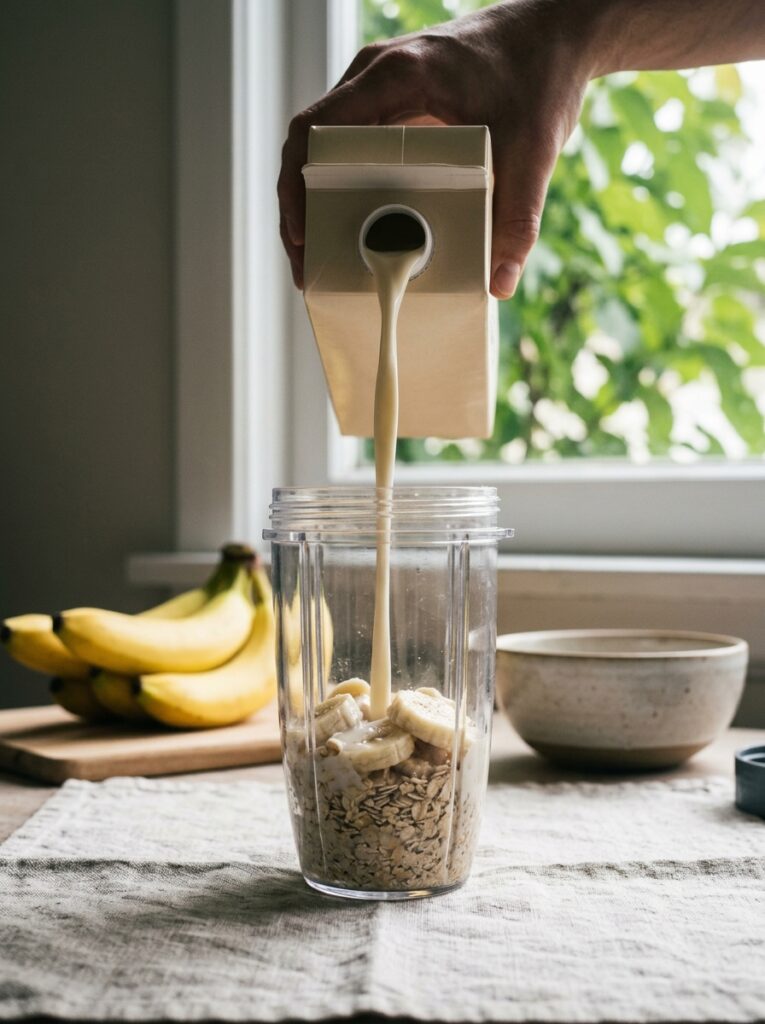
Most people default to almond milk and it’s fine, but it’s thin. Oat milk is where things get interesting because it’s got a natural creaminess and a very slight sweetness that plays well with almost everything — berry smoothies especially, but also the richer chocolate or coffee ones.
The one thing to watch: oat milk can make a smoothie feel slightly thick and starchy if you’re using it with banana AND oats. Sometimes that’s exactly what you want. Sometimes it’s too much. Trial and error on that one.
Coconut milk from a carton (not the tin — very different thing) is brilliant for tropical combinations. Full-fat cow’s milk or whole milk makes the richest, most satisfying texture but obviously that’s a personal choice. Soy milk is the most neutral of the lot if you want your fruit flavours to come through clean and undiluted.
Basically: your liquid matters more than most recipes admit.
—
9. The Berry Combination That’s Better Than Any Single Berry Alone
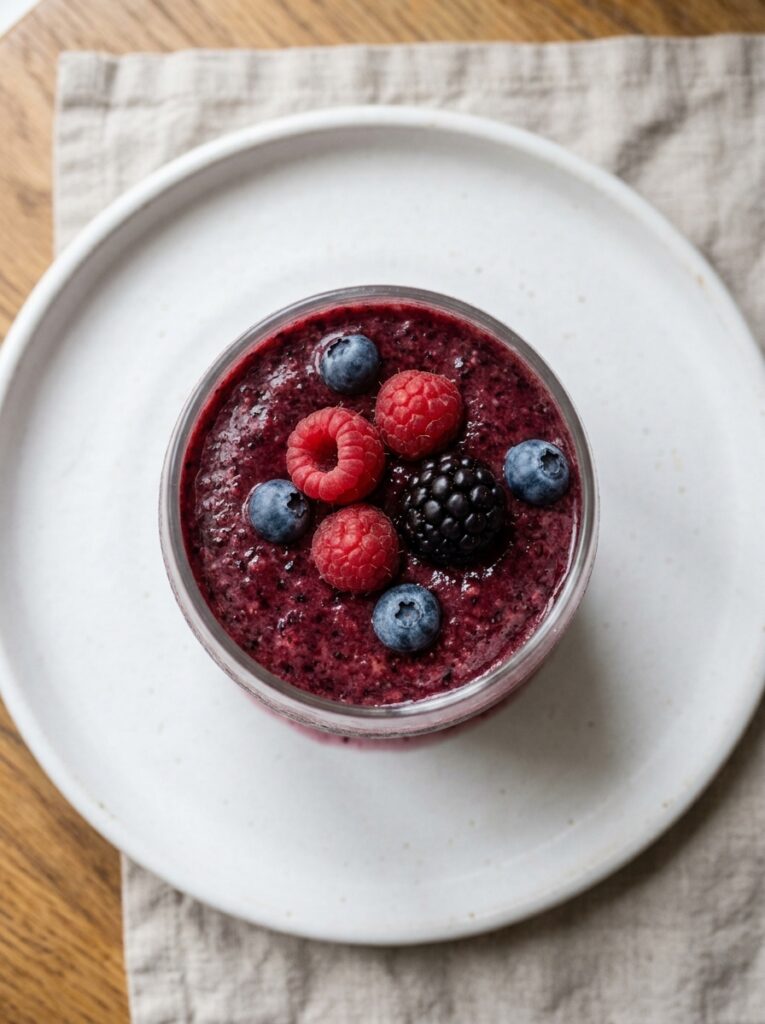
Here’s a small but genuine aha moment: mixed frozen berries — the bags you get with raspberries, blackberries, blueberries, and sometimes redcurrants — make a more complex and interesting smoothie than a single berry does alone.
Raspberries bring tartness. Blackberries bring depth. Blueberries bring that rounded sweetness. Together they create something that tastes almost jammy, especially if you blend them with a bit of vanilla extract and some Greek yoghurt. Not plain yoghurt — Greek. The thickness and the mild tanginess it adds is completely different.
This is one of my favourite quick breakfasts:
1 cup mixed frozen berries + ½ cup Greek yoghurt + ½ cup milk of your choice + 1 teaspoon vanilla extract + a drizzle of honey if the berries are very tart. Done in four minutes, genuinely satisfying, and it looks gorgeous in a glass.
“Mixed frozen berries make a more complex smoothie than any single berry does alone — they taste almost jammy.”
—
10. The Caffeine Smoothie for People Who Can’t Choose Between Coffee and Breakfast
Because sometimes you don’t want to choose.
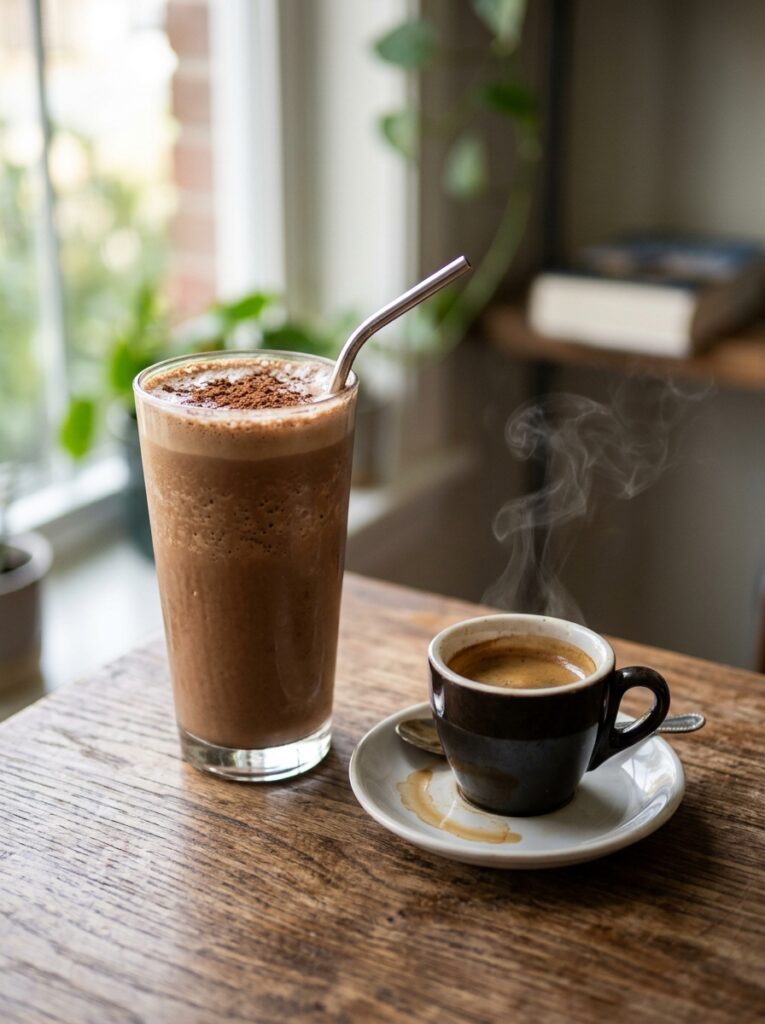
Cold brew concentrate plus a frozen banana plus oat milk plus a tablespoon of almond butter is one of those combinations that sounds like it shouldn’t work and then really, really does. You get the coffee hit, the natural banana sweetness, and enough substance to count as food.
If you don’t have cold brew, a shot of espresso that you’ve let cool down for five minutes works fine. Hot coffee into a blender full of frozen fruit makes a strange foam situation, so don’t do that. Cold or room temp only.
A small spoonful of unsweetened cocoa powder turns this into a mocha situation if that’s your preference. And a tiny pinch of cinnamon — I mean small, like a quarter teaspoon — adds this warmth underneath the coffee that I can’t entirely explain but can’t stop adding.
—
11. Why Your Smoothie Tastes Watery (And the Simple Fix)
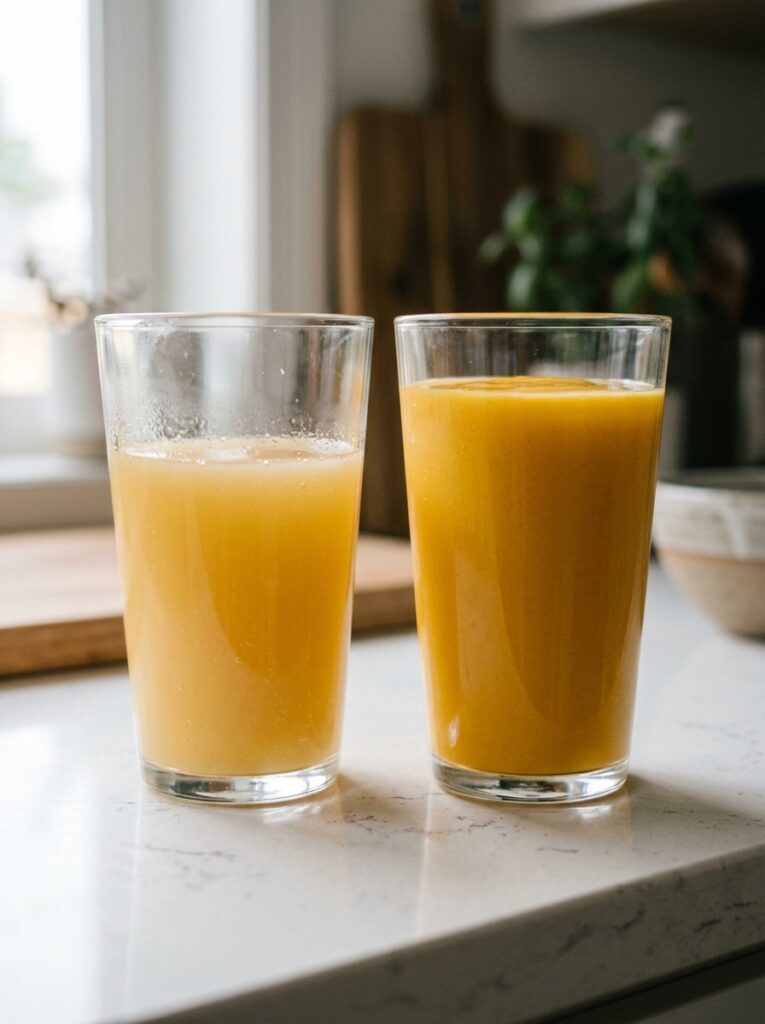
If your smoothies keep coming out thin and a bit sad, one of three things is happening.
You’re using too much liquid. Most recipes call for a cup to a cup and a half of liquid. More than that and you’ve essentially made juice with ambitions. Start with less than you think you need — you can always add more but you can’t take it away.
Or: you’re not using any frozen fruit. Fresh fruit blends thinner. Frozen fruit acts like natural ice and creates body without dilution. Even swapping half your fresh fruit for frozen makes a noticeable difference.
Or — and this one’s sneaky — your blender just isn’t powerful enough to fully break down what you’re putting in. If that’s the case, softer ingredients blend better: banana, mango, berries. Save the frozen kale and whole flaxseeds for when you’ve got the equipment to handle them.
—
12. The One Smoothie Worth Making on a Slow Weekend Morning
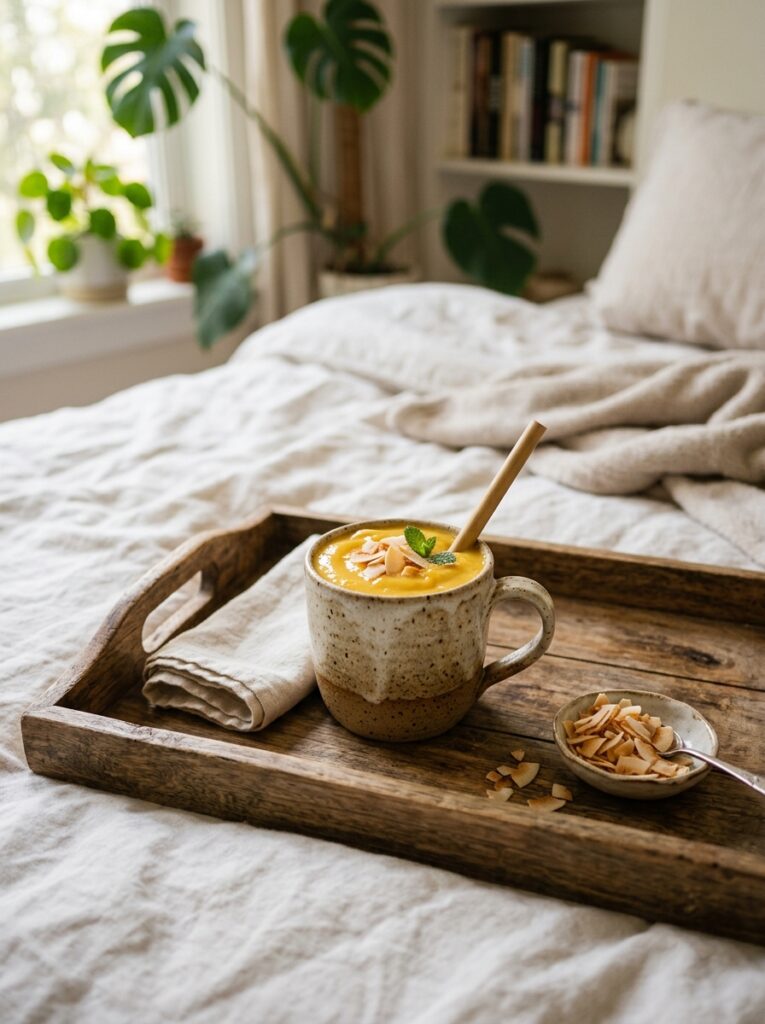
This isn’t a quick weekday one. This is the smoothie you make when you’ve got a bit of time and you want to actually enjoy the process.
Roasted strawberries. I know. Stay with me.
Slice a cup of strawberries, toss with a tiny bit of honey, roast at 375°F / 190°C for about 20 minutes until they’re jammy and caramelised and the kitchen smells incredible. Let them cool. Blend with half a cup of full-fat coconut milk from the tin (yes, the tin this time), a squeeze of lemon, a few ice cubes, and a small handful of frozen raspberries for tartness.
The flavour is so different from a regular strawberry smoothie it almost doesn’t seem like the same fruit. The roasting concentrates everything and adds this slightly caramelised depth that you simply can’t get any other way. It’s one of those things that feels like a lot of effort until you’ve tasted it, and then it doesn’t feel like effort at all.
—
❓ FAQ
Q: Can I make smoothies the night before and drink them the next morning? A: You can, but they’re best stored in a sealed jar in the fridge and consumed within 12 hours. Give it a good shake before drinking since ingredients naturally separate overnight. Ones made with banana or avocado may brown slightly — a squeeze of lemon in the recipe helps with that.
Q: How do I make a smoothie thicker without using yoghurt or banana? A: Frozen cauliflower florets are genuinely brilliant for this — they add almost no flavour but create real body and creaminess. Avocado also works well, and soaked oats (just a couple of tablespoons) thicken things up nicely without changing the taste much.
Q: Are smoothies with all that fruit actually healthy or are they just sugar? A: Whole fruit in a smoothie retains its fibre, which slows the sugar absorption significantly compared to fruit juice. The key is balance — pair fruit with protein (yoghurt, nut butter) and fat (seeds, coconut milk) and you’ve got a nutritionally solid meal. A smoothie that’s just fruit and juice is where the sugar concerns are more valid.
—
💭 Final Thoughts
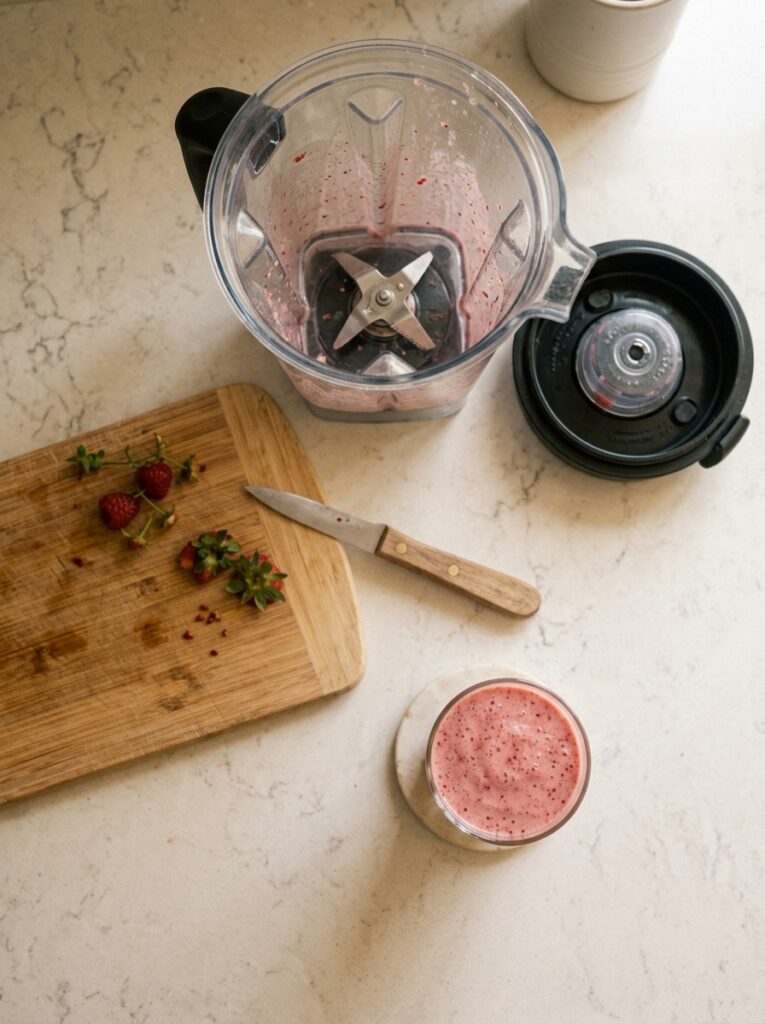
There’s something almost meditative about the ten-second pause while the blender runs — the small daily ritual of making something that’s actually good for you and actually tastes like it was meant to. These recipes aren’t complicated. They don’t ask much of you in the morning. And most of them are better than whatever you were going to grab instead.
So what’s stopping you from trying one tomorrow?