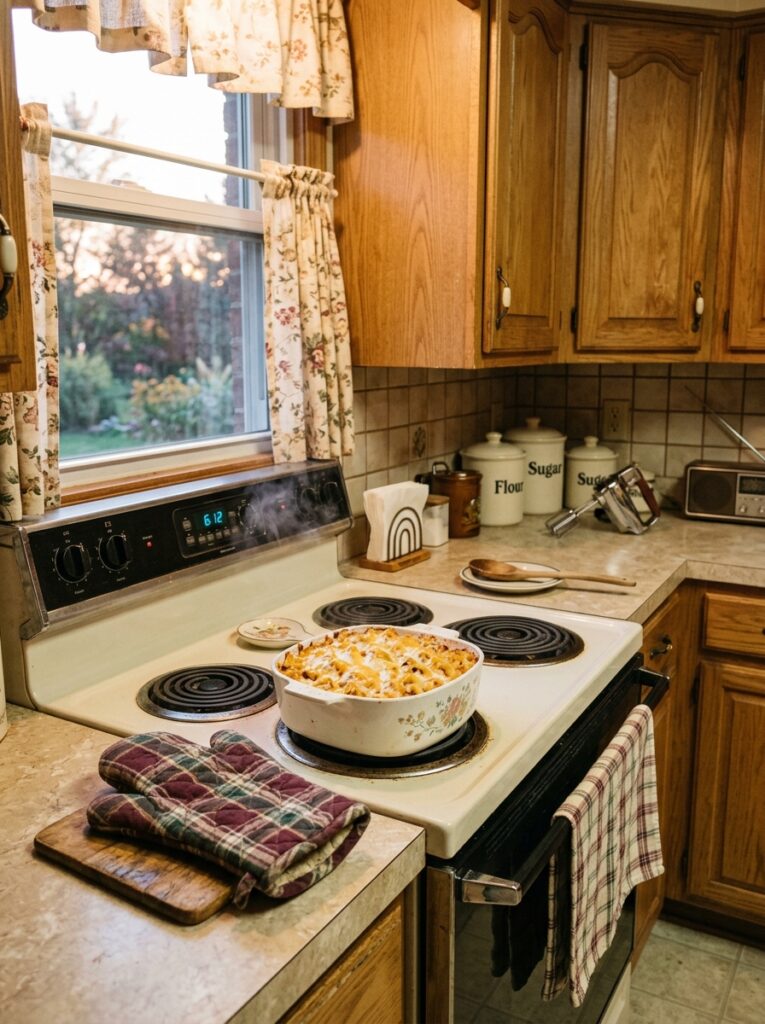
My mom made casseroles on Tuesdays. Not Mondays, not Wednesdays — Tuesdays specifically, and I never questioned it. Just knew that at 6pm the kitchen would smell like something golden and bubbling, and whatever happened that day didn’t feel quite as heavy anymore.
That’s the thing about chicken and rice casserole. It doesn’t ask much of you, and somehow gives back more than it takes.
—
1. Why This Dish Has Outlasted Every Food Trend I’ve Ever Cared About
Grain bowls came and went. Cauliflower had its moment. I went through a whole spiralizer phase I’d rather not revisit.
But chicken and rice casserole? Still here. Still perfect.
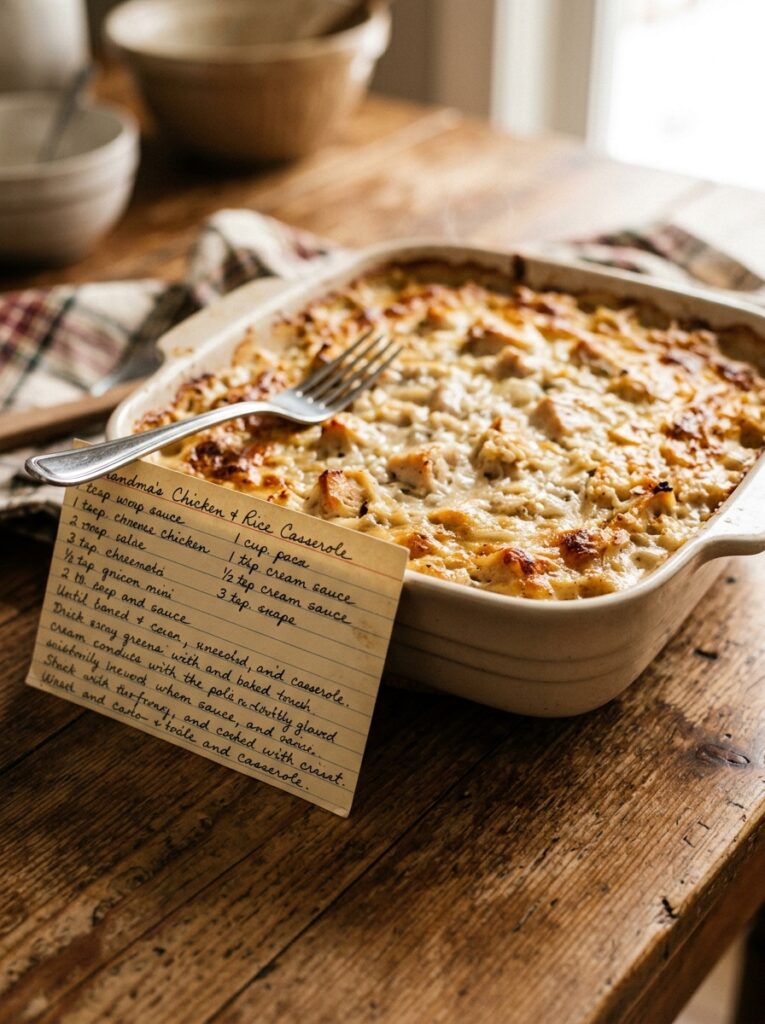
There’s a reason it shows up in community cookbooks, on church potluck tables, and in the back of handwritten recipe cards found in grandmothers’ kitchens. It works. Every time. The rice absorbs everything around it — the fat, the herbs, the steam from the chicken — and turns into something that’s genuinely better than the sum of its parts. Not gonna lie, I’ve made complicated dinners that took twice as long and got half the reaction.
The version most Americans grew up with was cream-of-something soup based, and honestly? That’s not a bad starting point. But there’s a whole world of variations beyond that. And once you understand what actually makes this dish CLICK, you can riff on it endlessly without a recipe.
“Once you understand what makes this dish click, you can riff on it endlessly — no recipe required.”
—
2. The Cut of Chicken That Changes Everything (and It’s Not What You Think)
Most people default to chicken breasts. I get it — they’re lean, they’re easy, they’re what’s usually in the fridge.
But for a casserole? Thighs. Every time.
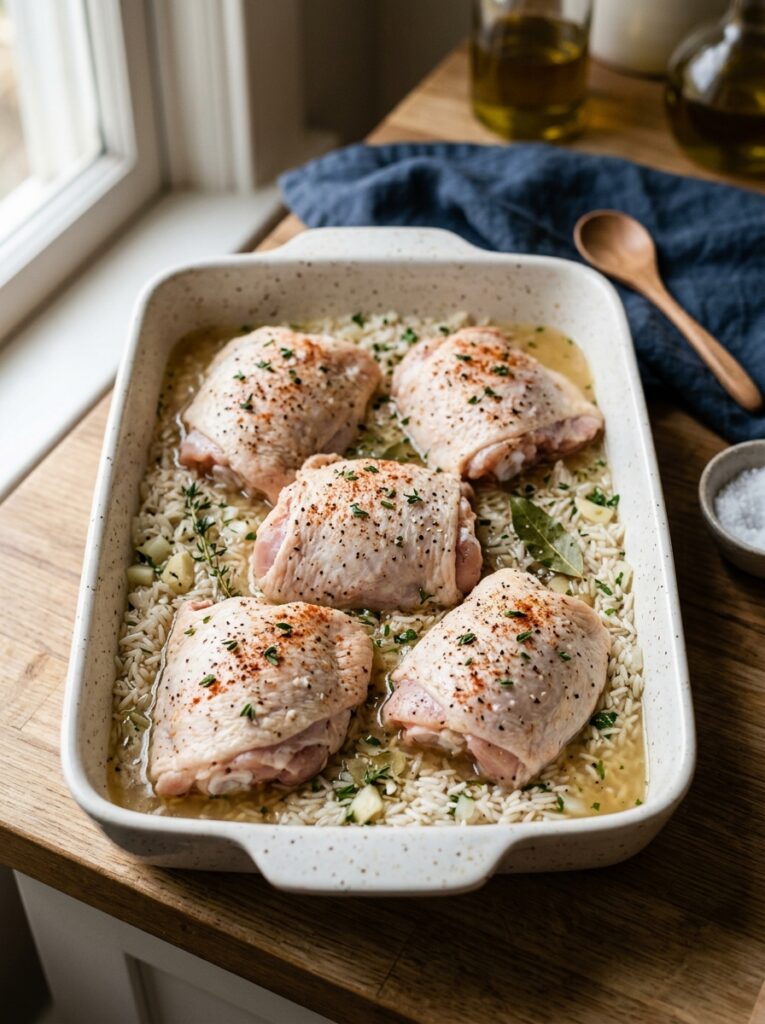
Bone-in, skin-on thighs are genuinely the move here, and here’s why: they don’t dry out when they bake for 45 minutes, the fat renders into the rice as it cooks, and that skin goes crispy on top in a way that creates this incredible textural contrast against the soft, creamy rice underneath. It’s the difference between a casserole that’s fine and one that people ask you to make for their birthday dinners.
Boneless thighs work too, especially if you’re meal prepping or portioning for kids. And chicken drumsticks are actually underrated in this context — cheap, flavorful, and they look great in a big baking dish if you’re feeding a crowd. Rotisserie chicken shredded in works brilliantly for weeknights when you just don’t have bandwidth. That’s not cheating. That’s cooking smart.
—
3. The Rice Situation Is More Important Than You Think
Here’s where most first-timers go wrong.
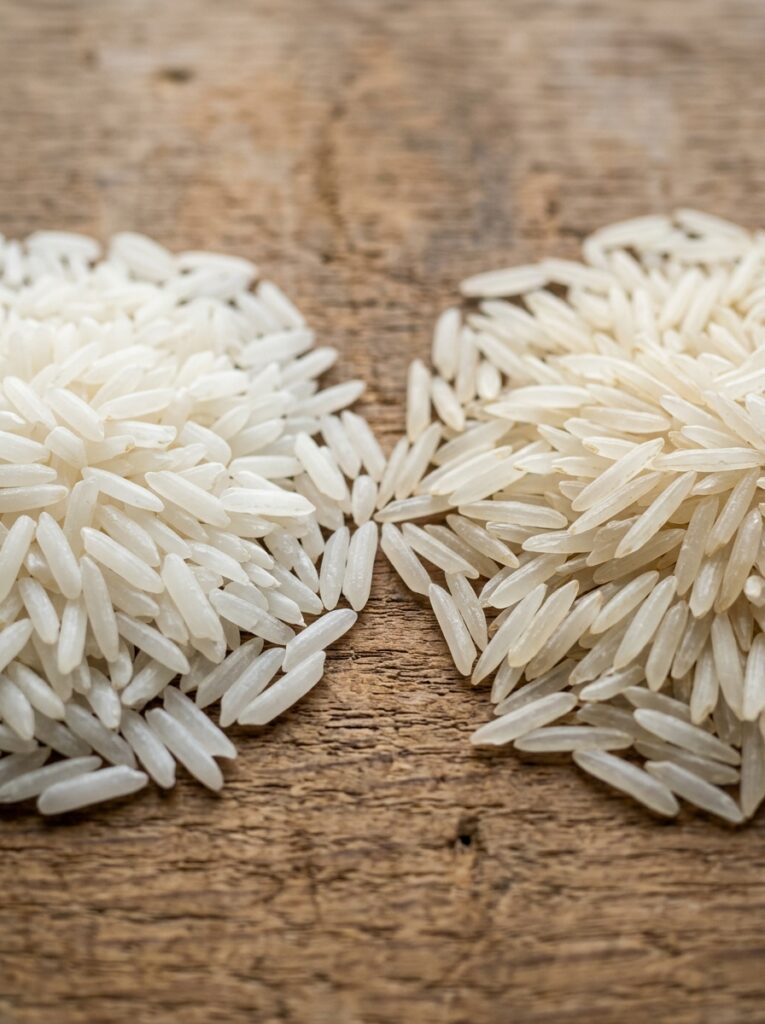
Long-grain white rice is your best friend in a casserole. It stays separate, it absorbs liquid evenly, and it doesn’t turn to mush. Basmati works beautifully too — the grains stay slightly firmer and the fragrance it adds is actually lovely.
DO NOT use instant rice. I mean this. Instant rice turns into wallpaper paste in a casserole, and I won’t apologize for being this direct about it.
Brown rice is technically possible, but you’ll need significantly more liquid and a longer cooking time — maybe an extra 20-25 minutes under foil. It works, but it’s a different dish. The texture’s chewier, nuttier. Some people love it that way.
Wild rice mixed in is a gorgeous option if you want something a bit more special — say, for a holiday dinner. The dark grains against the pale rice looks beautiful and adds an almost woodsy, earthy note that pairs incredibly well with mushrooms.
—
4. The Liquid Ratio Trick That Basically Every Recipe Gets Wrong
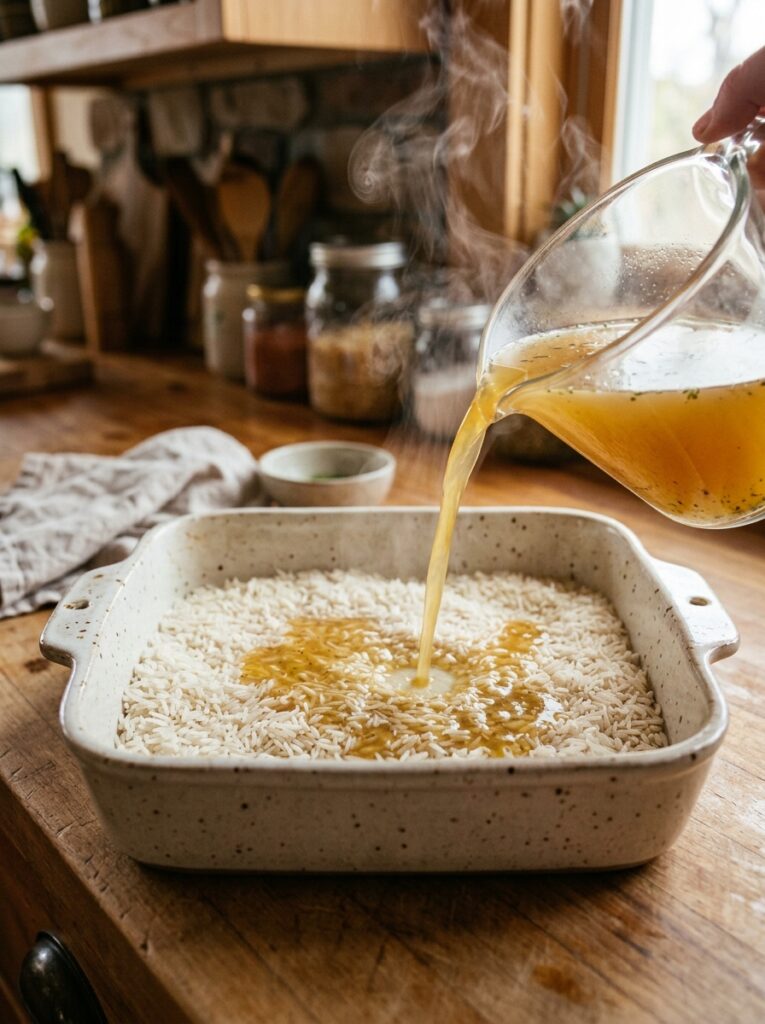
Ready? 1:1.5. Rice to liquid.
Not the 1:2 your package tells you. In a covered casserole dish, the steam recirculates in a way that a saucepan doesn’t, so you need slightly less liquid than you think. Using too much is how you get that soggy, wet-rice situation that slides off the spoon in a way that’s genuinely unpleasant.
Chicken broth or stock is the obvious choice, and good-quality broth makes a real difference — you can taste it in the finished dish. But I’ve made casseroles with a mix of broth and white wine, or broth with a spoonful of miso stirred in, or even coconut milk for a Southeast Asian-leaning version that was frankly incredible over jasmine rice.
Side note — if you’re using a cream of mushroom or cream of chicken soup as part of your liquid, count that toward your total. A lot of recipes don’t make this clear and then you end up with soup instead of casserole.
—
5. Vegetables That Actually Belong in Here vs. the Ones That Don’t
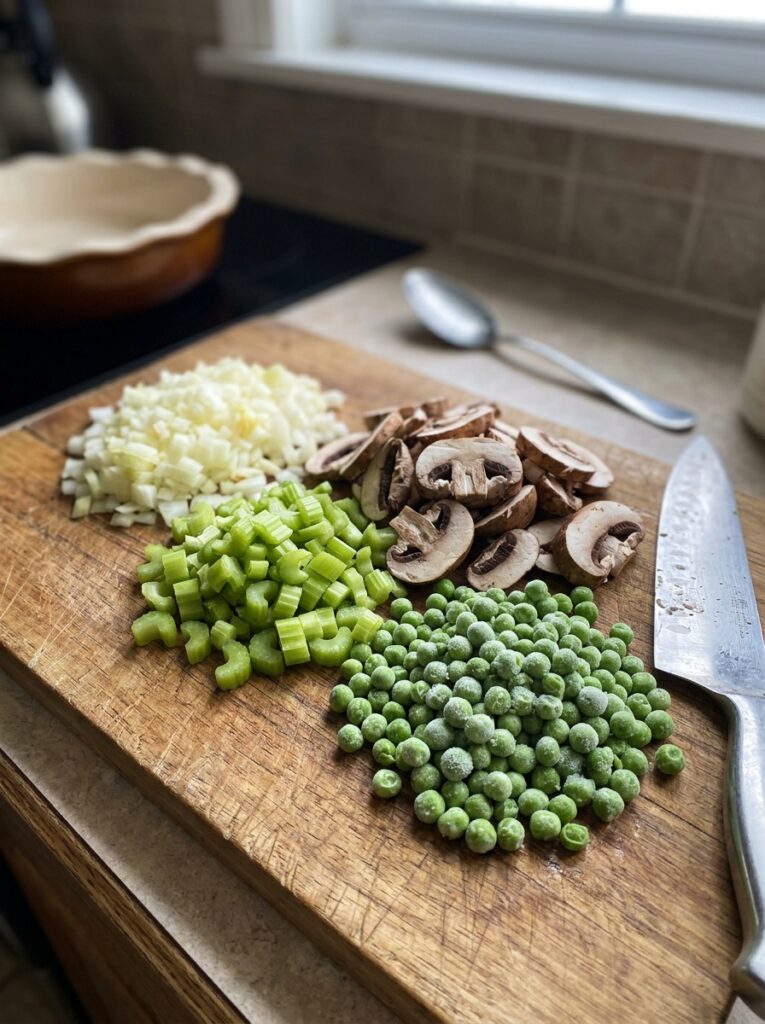
Let me be real: not every vegetable belongs in a casserole.
Onions and garlic? Non-negotiable. Celery adds this quiet background note that you don’t notice until it’s missing. Frozen peas stirred in during the last 10 minutes of baking get just warm enough without turning grey and sad. Mushrooms — especially creminis — are phenomenal because they intensify as they cook and add a depth that makes people think you’ve been cooking all day.
Broccoli can work if you add it late and don’t overbake. Spinach wilts in beautifully. Roasted red peppers from a jar add sweetness and color.
But zucchini? It releases SO much water. Tomatoes too, unless you’re intentionally going for a Mediterranean direction and you’ve accounted for the extra liquid. And please, I beg — no corn in a creamy casserole. I’ve tried it. I thought I could make it work. I couldn’t.
—
6. The Classic Creamy Version That Never Lets Anyone Down
This is the one. The Tuesday-night one. The “I need to make something tonight and my brain is tired” one.
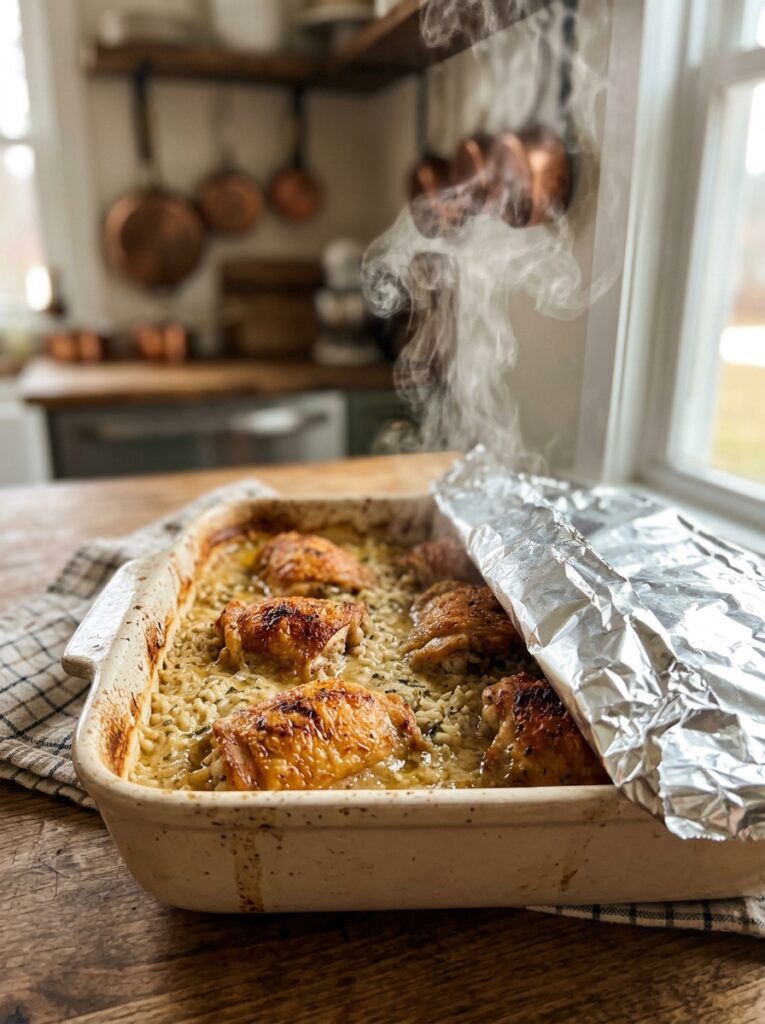
You sauté a diced onion and two cloves of garlic in butter until they’re soft and a little golden, then stir in a can of cream of mushroom soup, 1.5 cups of chicken broth, salt, pepper, and whatever herbs you have — dried thyme is PERFECT here, rosemary if you’re feeling it. Pour that over a cup and a half of uncooked long-grain white rice in a greased baking dish. Lay your chicken thighs right on top, season them generously, cover with foil, and bake at 375°F (190°C) for 45 minutes. Pull the foil off and bake another 15-20 until the skin is golden and the rice has absorbed everything.
That’s it. That’s genuinely it.
The smell when you pull that foil back — steam carrying chicken fat and thyme — is one of those smells that makes a house feel like a home. You can’t bottle it. You just have to make it.
“That smell when you pull the foil back — steam carrying chicken fat and thyme — makes a house feel like a home.”
—
7. A Slightly Fancier Version for When You Want People to Be Impressed
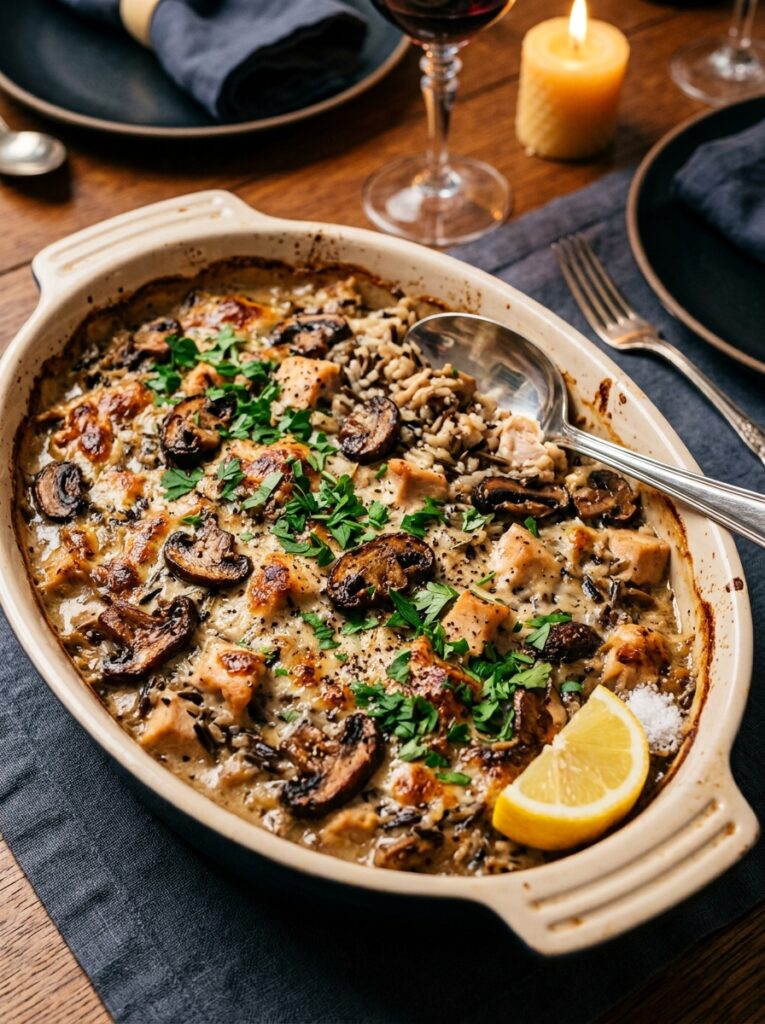
My friend Jess makes this one for dinner parties and people think she’s been in the kitchen all day. She hasn’t. She’s watched three episodes of television and had a glass of wine.
Sauté sliced cremini mushrooms in butter until they’re deeply browned — don’t rush this part, it takes about eight minutes and it matters. Add shallots, garlic, a splash of dry white wine. Let it reduce. Stir in a mix of chicken broth and a bit of crème fraîche or double cream, fresh thyme, and a pinch of nutmeg. Pour over the rice, add your seasoned chicken thighs, and bake as usual. Finish with a scatter of fresh parsley and a squeeze of lemon when it comes out.
The lemon is the thing that wakes everything up. Don’t skip it.
Serve with something simple alongside — a green salad, some crusty bread to mop the sauce. It feels like something from a French countryside kitchen, and the whole thing takes maybe 20 minutes of actual hands-on work.
—
8. The Spiced Version That’ll Completely Change How You Think About This Dish
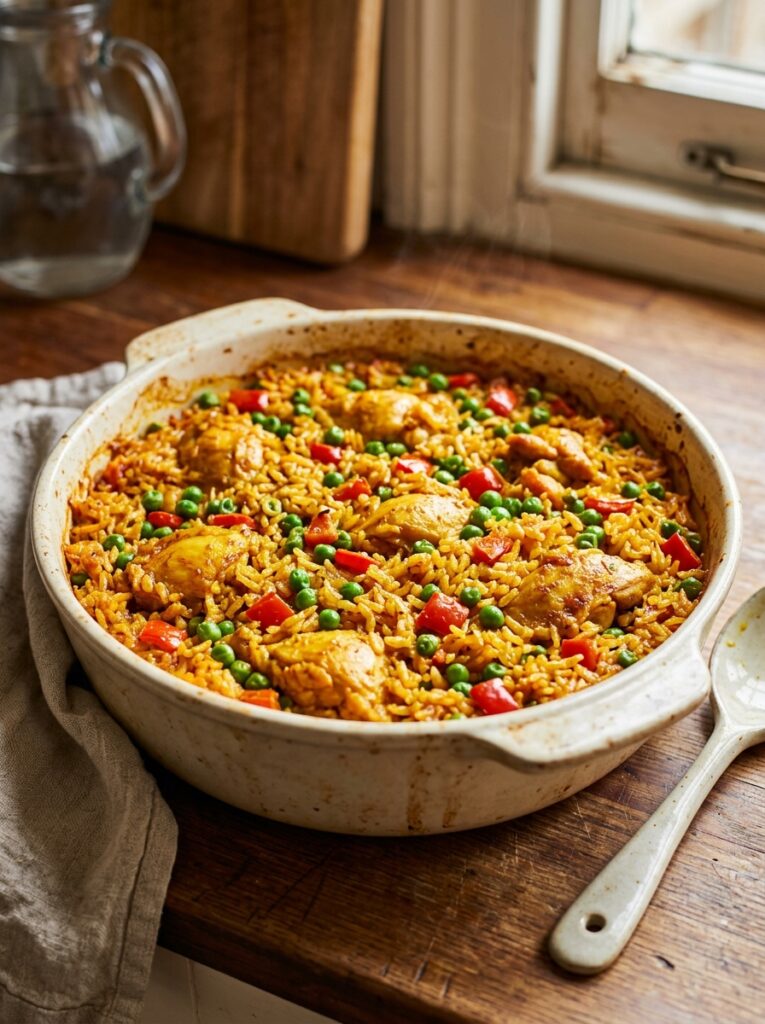
Okay so — I genuinely didn’t expect to love this as much as I do.
Take the same basic framework and swap in these spices: cumin, smoked paprika, turmeric, a little coriander, and a pinch of cinnamon. Use chicken broth with a spoonful of tomato paste stirred in. Add frozen peas and diced roasted red peppers. Top the chicken with a little harissa or just extra smoked paprika before baking.
The rice takes on this gorgeous golden-orange color and the whole dish smells vaguely of a Moroccan street market — warm, a little smoky, slightly sweet. It’s incredibly aromatic out of the oven. My kids weren’t sure about it the first time and then went back for thirds, which I’m counting as a win.
—
9. Making It Work for Meal Prep (Without It Tasting Like Sad Leftovers)
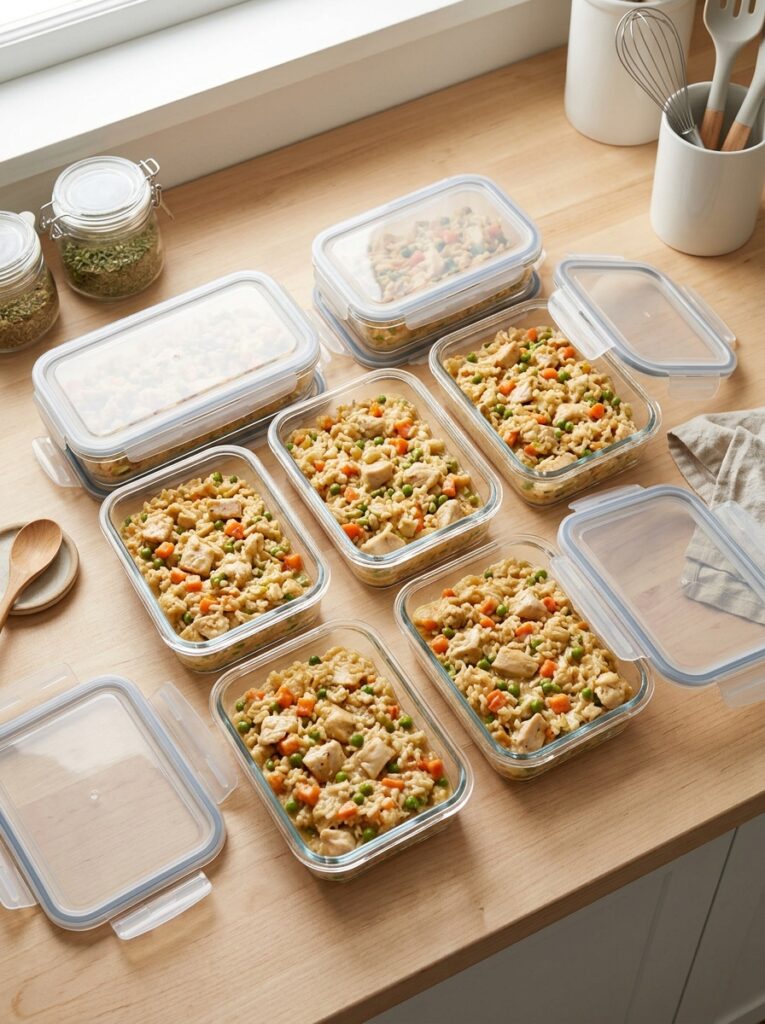
Casseroles are GOOD at being meal prep. Better than most things, honestly.
The rice firms up slightly overnight and actually slices into portions more cleanly once it’s cold. For reheating: add a small splash of broth before microwaving to get the moisture back, cover loosely, and go at medium heat rather than full blast. It comes back to life in a way that other dishes don’t.
For freezing, portion it into individual containers once it’s completely cooled. It keeps well for up to three months. Thaw overnight in the fridge before reheating.
One thing I’d change for dedicated meal prep: cut the chicken off the bone first if you used bone-in thighs. Much easier to portion and store that way. Or just use boneless thighs from the start and shred them through the rice once it’s baked — gives you this almost pulled chicken situation that’s incredibly satisfying to eat.
—
10. The Thing Nobody Tells You About Baking Dishes and Why It Matters
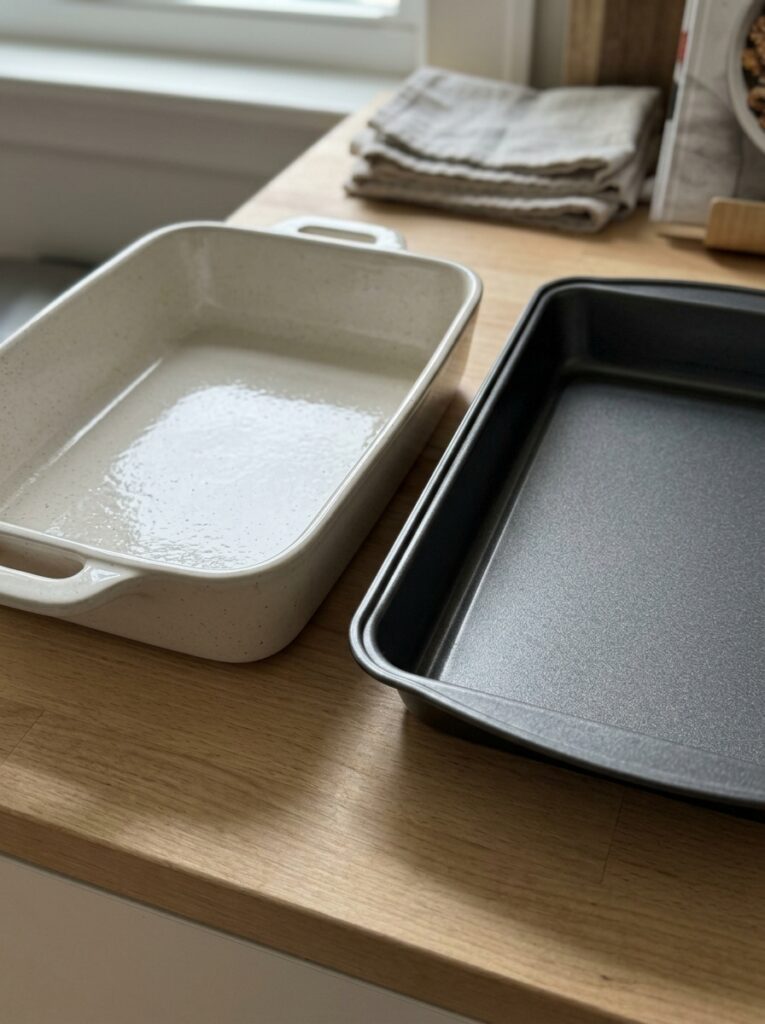
The pan matters more than most recipe writers admit.
A ceramic or glass baking dish distributes heat evenly and gently, which is what you want for a dish that needs time to cook from the inside out. It also holds heat beautifully, so the casserole stays warm on the table for ages.
Dark metal pans cook faster and hotter at the bottom — which can mean the rice on the bottom gets slightly overcooked before the chicken’s done. If that’s all you have, drop your oven temperature by about 15-20°F and keep an eye on it.
The size matters too. A 9×13 inch dish gives you the best rice-to-chicken ratio for most recipes. Too small and it piles up, the chicken steams instead of roasting and the skin won’t crisp. Too large and the rice layer is too thin and dries out at the edges. Annoying but true.
“Too large a dish and the rice dries out at the edges. Too small and the chicken steams. The 9×13 really is the Goldilocks of casserole pans.”
—
11. How British Home Cooks Do This Differently (and What Americans Can Steal From It)
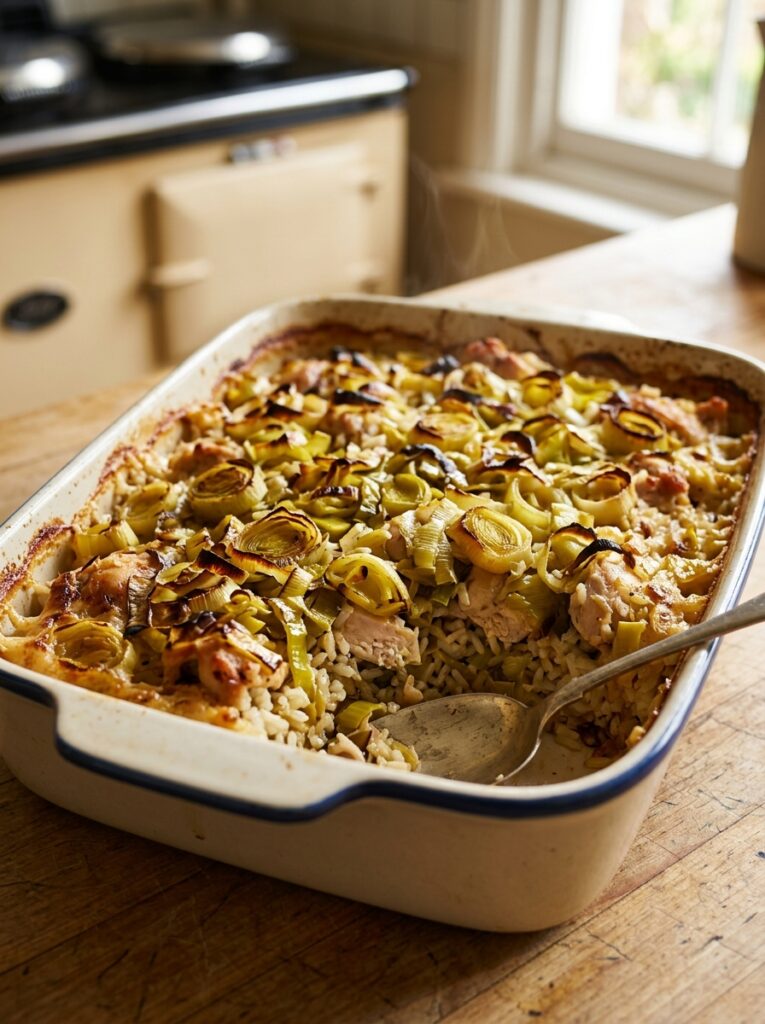
There’s a version of this that’s popular in UK kitchens that Americans should absolutely know about.
Instead of cream soup, you’ll often see recipes use proper chicken stock (stronger and less salty than most American broths), a slosh of Worcestershire sauce, and a top layer of thinly sliced leeks that caramelise in the oven. The flavors are deeper, a bit more savoury, with less of that creamy richness and more of an herbaceous, almost roasted quality.
British cooks also tend to be less afraid of cooking time — leaving a casserole in for an hour or more at a lower temperature to let everything properly meld. There’s something to that. The patience pays off in flavor.
And the leftovers, in many UK households, become the base for a next-day soup. Cold casserole blended with a bit more stock, maybe some wilted spinach stirred in. It’s genius, actually — nothing goes to waste and you get two completely different meals from one cook.
—
12. The Toppings and Finishes That Take It From Good to “Can I Have This Recipe?”
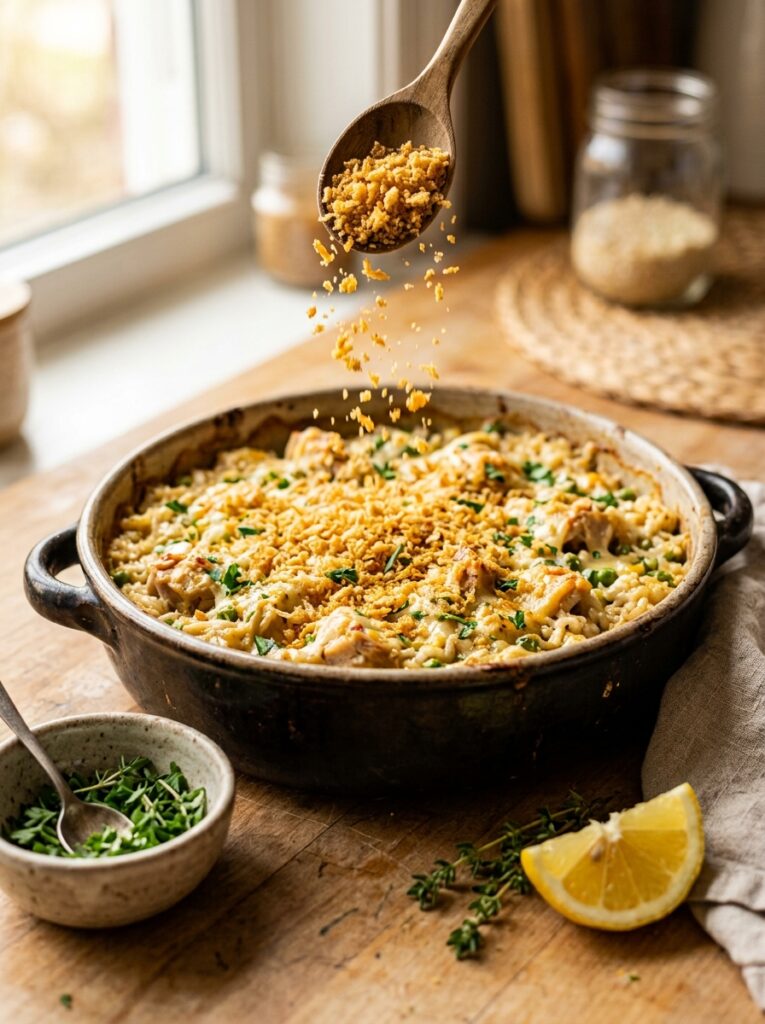
The surface of a casserole is premium real estate, and most people waste it.
A handful of panko breadcrumbs tossed in melted butter, scattered over the top in the last 10 minutes of uncovered baking, gives you this golden, crunchy crust that’s almost like a savory crumble. It’s the kind of textural contrast that makes people audibly react when they take a bite.
Fresh herbs right at the end — parsley, chives, fresh thyme — do more than you’d expect. They add brightness against all that richness and make the whole thing look like you actually care about presentation.
A squeeze of lemon over the finished dish. I keep saying it. I’ll keep saying it. It cuts through the fat and makes every single flavor sharper and cleaner.
And if you’re feeling bold: a spoonful of good chilli crisp on top of your individual portion. That nutty, spicy, slightly sweet oil melting into the rice and chicken is something I’ve been thinking about for three days.
—
❓ FAQ
Q: Can I make chicken and rice casserole without cream of mushroom soup? A: Absolutely — and some people prefer it that way. A simple sauce of butter, flour, and good chicken stock works as a roux-based substitute and gives you more control over the seasoning. You can also use full-fat coconut milk for a dairy-free version, or just a straightforward mix of broth and a spoonful of crème fraîche.
Q: How do I stop the rice from going mushy? A: Two things: don’t use instant rice, and don’t go overboard with the liquid. Aim for that 1:1.5 rice-to-liquid ratio, make sure your dish is tightly covered with foil for most of the cooking time, and trust the process — open the foil too early and you lose the steam that’s doing all the work.
Q: Can I use leftover cooked rice instead of raw? A: You can, but the technique changes completely. Cooked rice goes in much later — stir it through with about 15-20 minutes left in the baking time, or it’ll absorb too much liquid and turn gluey. Reduce your liquid by about a third and add the rice once the chicken is nearly done. It works, but I’d honestly argue raw rice gives a better result if you have the time.
—
💭 Final Thoughts
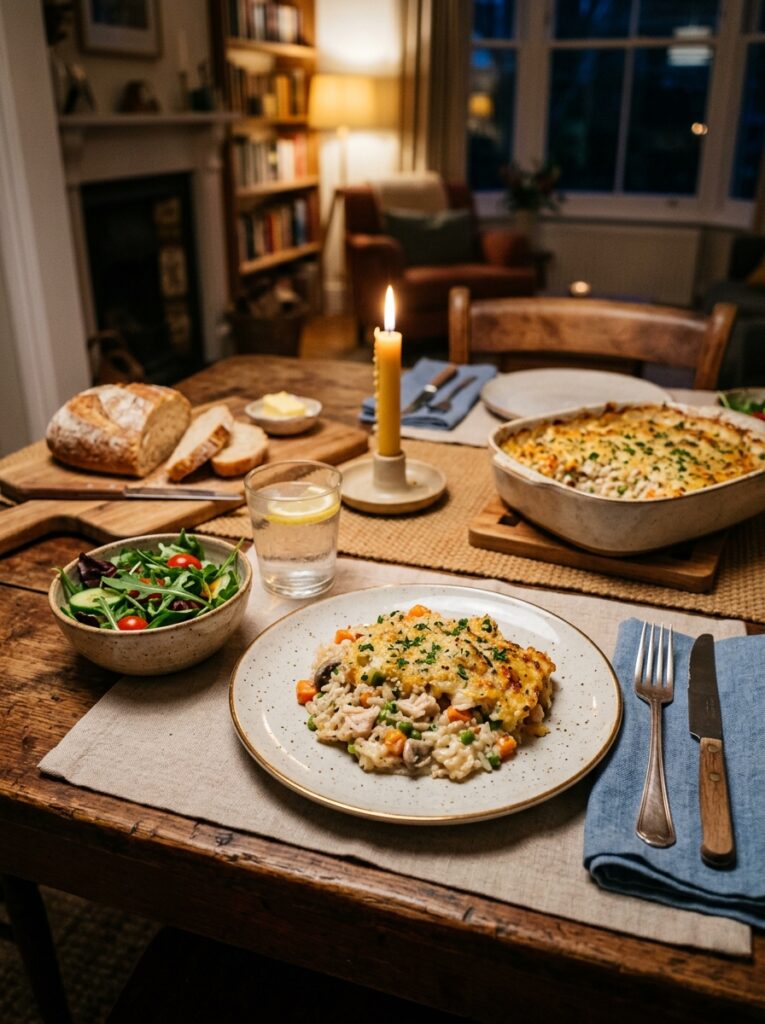
There’s something almost meditative about putting a casserole together — the layering, the covering, the waiting. Dinner that mostly looks after itself while you get on with your evening.
It’s not glamorous. It doesn’t photograph the way a composed restaurant plate does. But it’s the kind of food that people actually remember, and ask you to make again, and associate with feeling taken care of.
What’s your version of this dish — the one that makes a Tuesday feel like something worth coming home to?