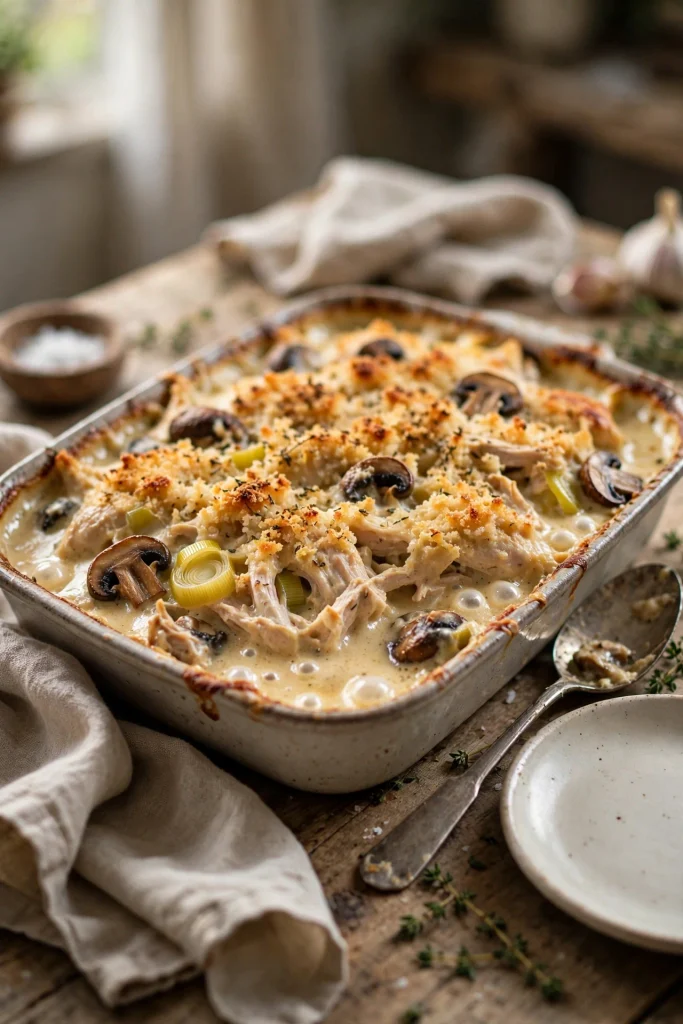
There’s a specific kind of Tuesday evening — grey outside, a little tired, not sure you have anything in you — and then you pull a bubbling dish from the oven and the whole kitchen fills with something warm and rich and deeply reassuring. That’s what a good creamy chicken casserole does. It doesn’t just feed you. It fixes something.
—
1. Why Creamy Chicken Casseroles Are Having a Genuine Moment Right Now (Not Just a Comfort Food Cliché)

Let’s be honest. Casseroles got a bad reputation for a while. They became a punchline — the beige, blobby thing from a 1970s church cookbook. But something shifted. Maybe it’s the meal prep culture finally colliding with real hunger for home-cooked flavour. Maybe it’s that people started actually cooking again and realized that the casserole dish sitting in the back of their cabinet was the most underestimated piece of equipment they owned.
The creamy chicken casserole, specifically, has had a quiet and completely deserved comeback. It sits at the intersection of every good thing: rich but not heavy (when done right), flexible enough for a weeknight but impressive enough for a Sunday table, and — crucially — the kind of thing that tastes even better the next day.
The versions worth making aren’t shortcuts or compromises. They’re layered with real flavour. Softened onions, a splash of white wine, herbs that actually mean something. The cream binds it all together without smothering everything underneath.
This is not your grandmother’s mystery-can casserole. This is the dish that earns its place.
—
2. The One Creamy Base That Makes Every Casserole Taste Like a Restaurant Made It
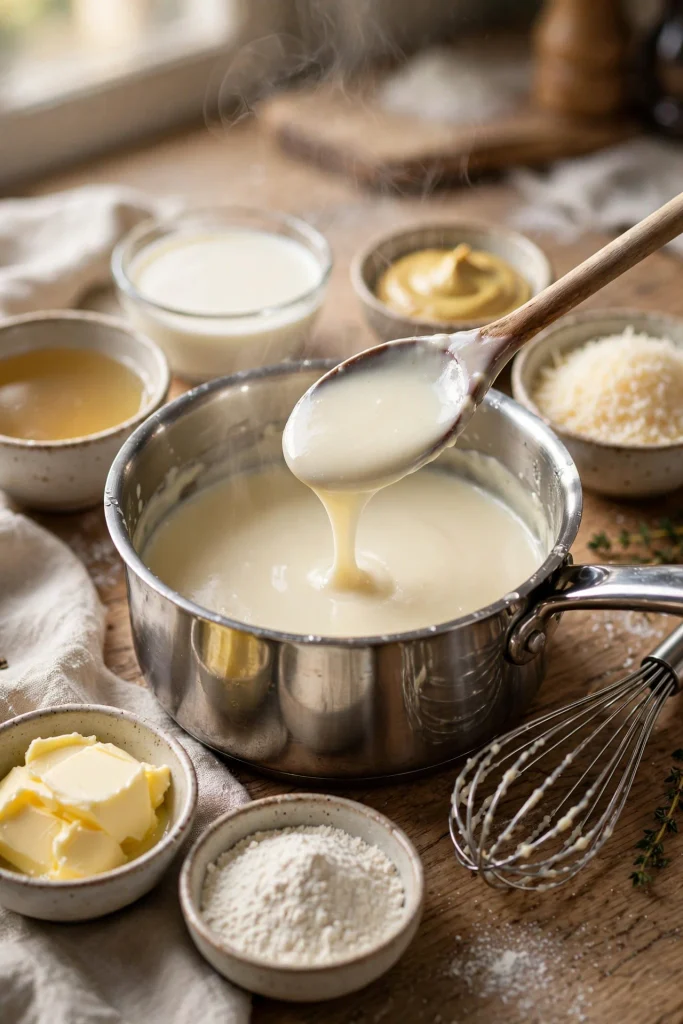
Most home cooks split into two camps: the ones who use condensed soup straight from the tin, and the ones who make a proper cream sauce from scratch. Both camps have good arguments.
Here’s the truth: a simple béchamel-style base takes about eight minutes and the difference in flavour is enormous. Melt two tablespoons of butter in a pan, whisk in two tablespoons of flour, cook it for ninety seconds (that step matters — it takes the raw flour taste away), then slowly pour in a cup of chicken stock and a cup of heavy cream or double cream, whisking as you go. Season generously. That’s it.
The sauce should coat a spoon without being thick and gluey. Think of it like a good gravy — present but not dominant. You want it to flow between the chicken pieces, settling into every gap, so when you take a bite you get creaminess in every single forkful.
For an extra layer, add a heaped teaspoon of Dijon mustard and a small handful of grated Parmesan to the base. The mustard isn’t detectable on its own. It just makes everything taste more like itself, more rounded, more finished.
“The sauce shouldn’t taste like cream. It should taste like chicken, and cream, and every good decision you made along the way.”
—
3. The Chicken Cut That Changes Everything (And Why Thighs Win Every Time)
Chicken breast is fine. It’s reliable. But creamy casseroles are long, slow, oven affairs, and breast meat — cooked for forty-five minutes in a sauced dish — can become tight, dry, slightly chalky in a way that no amount of cream can fully rescue.
Thighs are where it’s at.
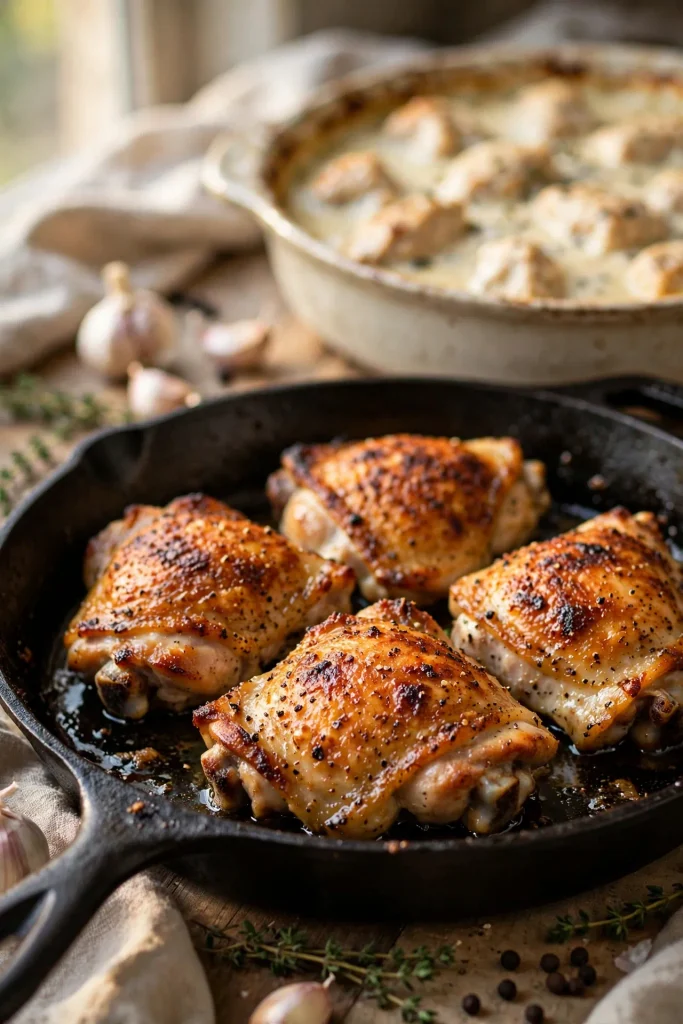
Bone-in, skin-on thighs develop flavour in a way that boneless cuts simply don’t. The collagen in the bones melts slowly into the sauce, adding body and richness you can’t fake. The skin crisps if you sear it first — and you should always sear it first — giving you this gorgeous textural contrast when you break through to the cream sauce underneath.
Boneless thighs are a perfectly good compromise if you prefer easy serving. They still hold up beautifully over a long cook, staying tender and pulling apart gently with a fork rather than shredding apart like overcooked breast meat.
If you’re feeding a crowd in the UK and want to stretch the dish further, mix thighs with drumsticks. Americans might go for a whole cut-up chicken, which works wonderfully and makes the dish look genuinely abundant in the dish.
Whatever you choose — season it properly before it hits the pan. Salt, pepper, garlic powder. Let it sear until golden brown before it goes anywhere near the casserole dish. That colour is flavour. Don’t skip it.
—
4. Vegetables That Actually Belong in a Creamy Chicken Casserole (Not Just Filler)
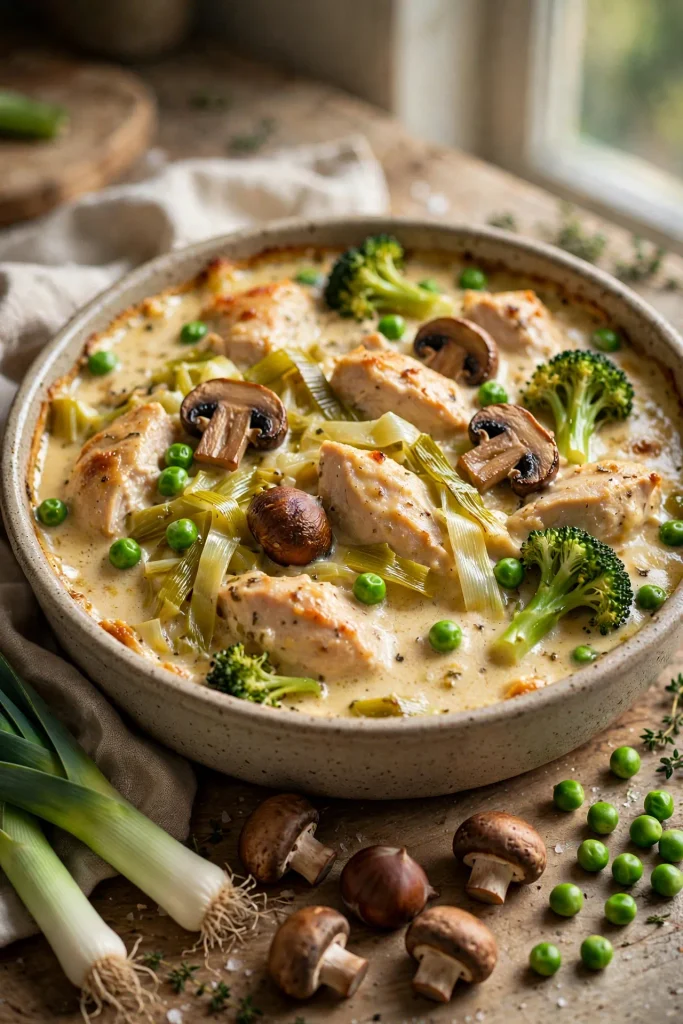
Not every vegetable earns a place here. This isn’t a fridge cleanout (well, it can be, but the best versions aren’t). The vegetables in a creamy chicken casserole need to do specific things: add texture, absorb the sauce beautifully, and not disappear into mush after forty-five minutes in the oven.
Leeks are an underused star. Softer and sweeter than onion, they melt into the sauce in the most silky, pleasing way. Sauté them in butter until they’re translucent and almost jammy before they go in — it takes an extra five minutes and makes a noticeable difference.
Mushrooms belong here. Chestnut mushrooms or cremini hold their shape and go wonderfully deep and savoury in the heat. Quarter them, sear them hard in a dry pan until they release their moisture and start to brown, then add them to the dish. A soggy mushroom is a tragedy. A properly cooked mushroom is one of the best things in a casserole.
Frozen peas added in the last ten minutes of cooking stay bright green and give little bursts of freshness. Tender stem broccoli works similarly — it doesn’t need long, just enough to become just-soft while keeping some bite.
Stay away from courgette or watery tomatoes. They’ll make your sauce thin and your mood worse.
“Vegetables in a casserole should look like they chose to be there.”
—
5. The Herb Combination That Makes People Ask What Your Secret Is
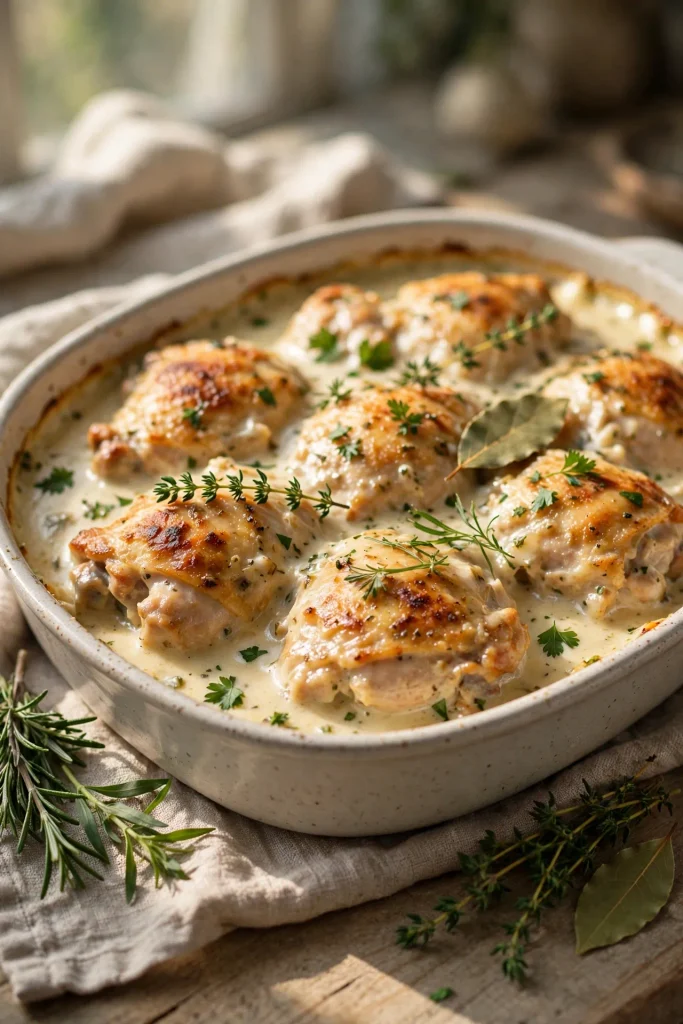
Fresh thyme and a single bay leaf. That’s the base, and honestly, it’s enough on its own. Thyme has this low, earthy, slightly floral quality that weaves through a cream sauce without taking over. The bay leaf does something quiet and essential that you only notice when you leave it out.
If you want to push further: tarragon. It’s the French instinct, and it’s a good one. Tarragon and cream and chicken is one of the great combinations in cooking — anise-y and herbal and fresh in a way that cuts through the richness. Start with a small amount, because dried tarragon is significantly stronger than fresh, and there’s a fine line between sophisticated and slightly medicinal.
Rosemary is a casserole wildcard. Used boldly and chopped fine so it doesn’t deliver needle-like bites, it gives the dish a more robust, wintery character. Pair it with garlic and a splash of white wine and suddenly you’re somewhere in Provence, which is never a bad place to be.
Finish with fresh parsley. Always. The brightness it adds over the top of the finished dish — vivid green over golden cream — is worth it for aesthetics alone, but the flavour is real too.
—
6. The Crispy Topping Nobody Told You Was the Whole Point
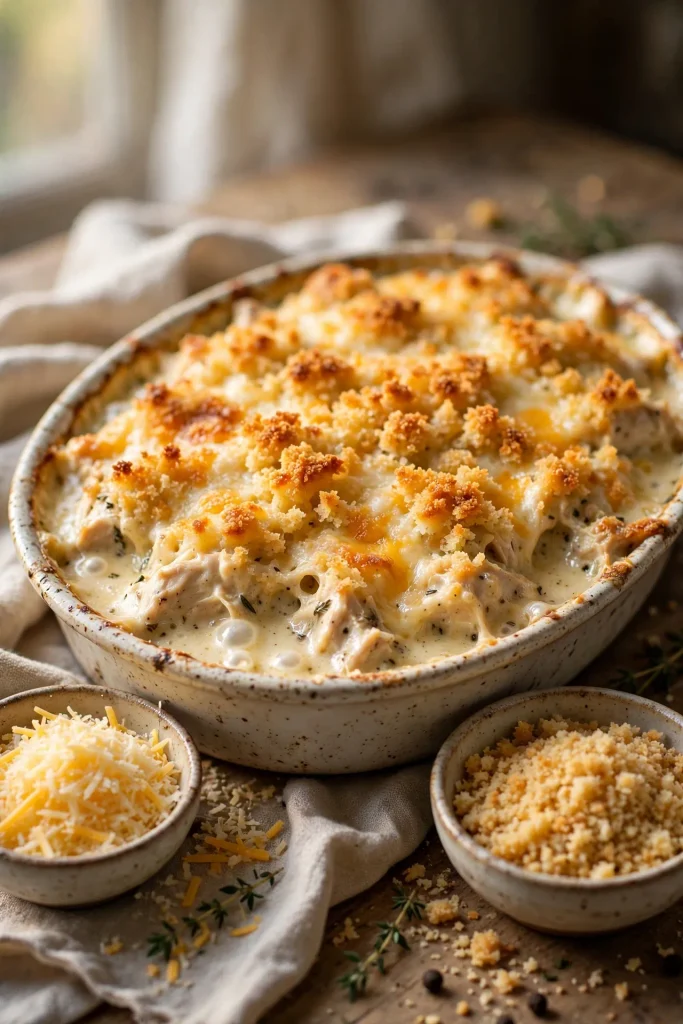
Here is where many recipes quietly fail. They present a casserole as finished when it’s technically cooked through, and then they leave the top smooth and uniform and boring, when what should be there is contrast, texture, the thing that makes the dish interesting to eat from the first bite to the last.
Breadcrumbs mixed with melted butter and scattered over the top ten minutes before the end of cooking. That’s the base version. It becomes golden and crisp and slightly nutty, and it soaks up some of the cream from below and gets this incredible half-crunchy, half-soft quality that is genuinely one of the great textures in food.
Grated cheese over the breadcrumbs makes it a completely different dish. Gruyère melts with those gorgeous bubbling brown patches. Extra-mature cheddar (in the UK, a good strong West Country one) goes sharp and almost nutty over the sweet cream beneath. In the US, white sharp cheddar does something similar.
For a French-inspired version, skip the breadcrumbs entirely and go with a puff pastry lid laid over the top of the dish, tucked in at the edges, brushed with egg wash and baked until it’s a deep, crinkled amber. It turns a casserole into something special-occasion-worthy without much extra effort.
The top of the casserole is the first thing people see when the dish comes out of the oven. Make it earn that moment.
—
7. One-Pan Creamy Tuscan Chicken Casserole (The Recipe That Gets Requested Every Single Time)

Sun-dried tomatoes. Spinach. A truly unreasonable amount of garlic.
This is the version that gets brought to potlucks and prompts immediate requests for the recipe. It has the creamy base but tilts it toward something more vibrant — there’s an acidic brightness from the sun-dried tomatoes that cuts the cream, the spinach wilts into deep green ribbons, and the garlic is everywhere, present in every single bite.
Start by searing bone-in, skin-on thighs until the skin is genuinely golden — not blonde, golden. Remove them. In the same pan, soften half a diced onion, then add four cloves of minced garlic and cook for another minute. Add the sun-dried tomatoes (use the ones packed in oil and roughly chop them), then pour in half a cup of white wine, let it reduce by half, and build the cream sauce directly in that pan. Stir in two big handfuls of baby spinach — it’ll look like too much and then collapse down to almost nothing in about thirty seconds.
Nestle the chicken back in. Into a 375°F oven for thirty-five minutes.
Serve over pasta. Or with crusty bread. Or just eat it from the dish at the counter because you’re home alone and it’s been a week.
“This is the kind of food that makes you feel like a good cook even on the days you’re convinced you aren’t.”
—
8. The Classic British Version: Creamy Chicken and Leek Casserole with a Buttery Mash Crown
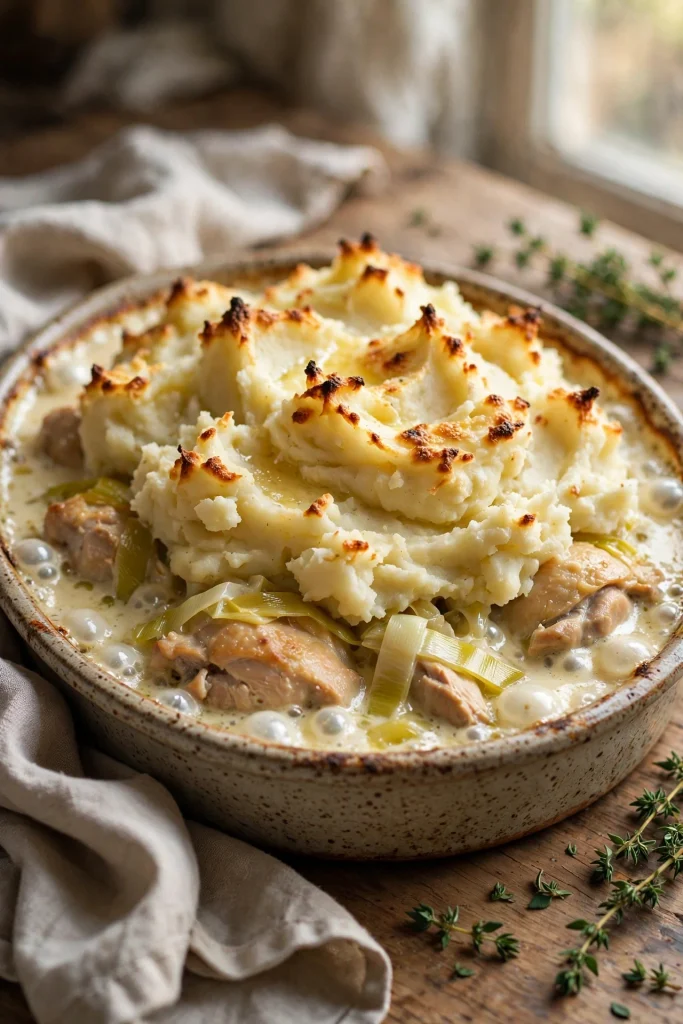
This one is unashamedly British and completely unapologetic about it. Chicken and leek is a classic pairing in the UK — it shows up in pies, soups, pasties — and in casserole form it becomes this deeply satisfying, softly flavoured dish that tastes like autumn and Sunday lunches and staying in because it’s properly cold outside.
Soften two large leeks in butter with a small diced onion. Add diced chicken thigh (boneless works well here), let it colour slightly, then sprinkle over flour and cook for two minutes before adding chicken stock and double cream in equal parts. Season with thyme, Dijon mustard, salt and pepper. Pour into a baking dish.
Now, instead of a breadcrumb topping — mash. A layer of good buttery mash piped or spooned over the top, rough peaks left so they’ll crisp and catch in the oven. Into a moderate oven for twenty-five minutes until the mash tips are brown and the cream sauce is bubbling up around the edges.
It’s a shepherd’s pie cousin. Warm and familiar and deeply comforting. Make extra mash.
—
9. The Make-Ahead Rule That Means This Dish Is Actually Better on Day Two
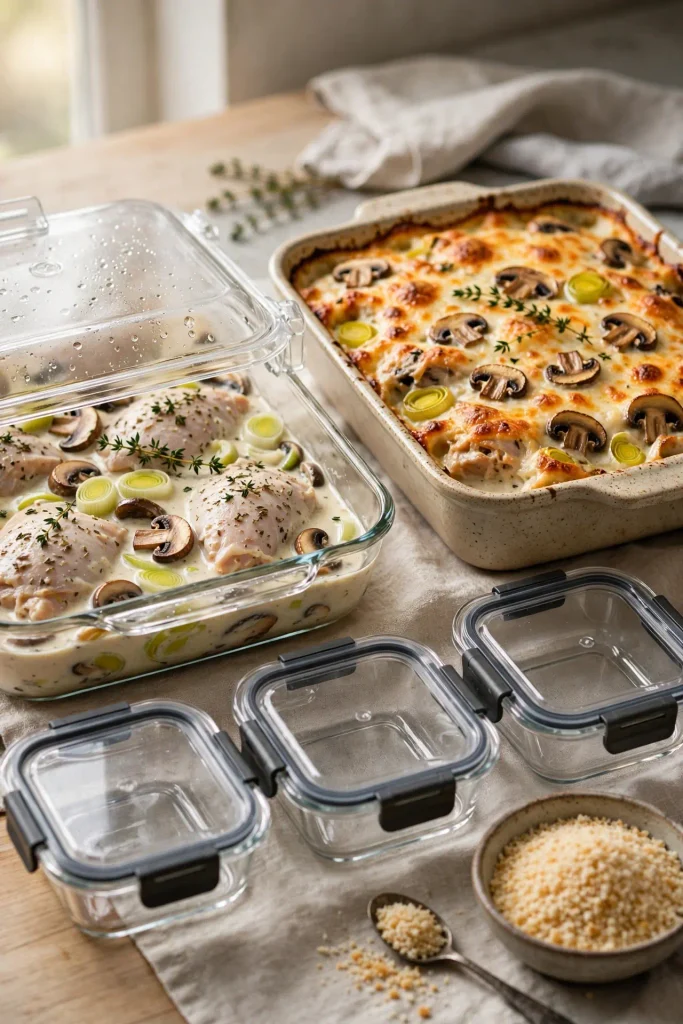
There’s a phenomenon with casseroles — almost all of them — where sitting overnight in the fridge somehow improves them. The sauce thickens slightly. The flavours settle and deepen and come into focus in a way they haven’t quite managed the night you made it.
This is not your imagination. It’s chemistry. The proteins in the chicken continue to absorb the sauce as they rest. Fats redistribute. Herbs bloom further into the liquid around them.
For meal preppers, this is a gift. Assemble the entire casserole up to the point of baking, cover it well, refrigerate it, and bake it the next day adding ten minutes to the cooking time since it’ll be going in cold. The result is often better than if you’d baked it immediately.
Creamy chicken casserole also freezes well — without the breadcrumb topping, which should always be added fresh. Freeze in portions, thaw in the fridge overnight, warm in the oven at 350°F covered with foil until steaming through.
This is weeknight cooking done right. Once of work, hours of reward.
—
10. What to Serve Beside It That Doesn’t Get Overlooked on the Plate
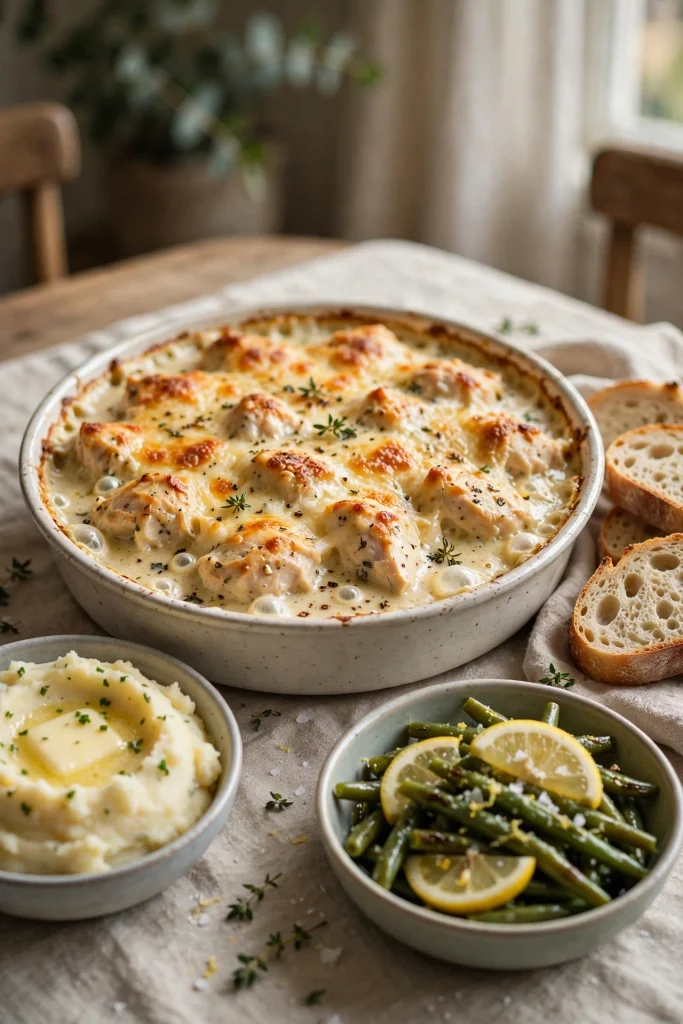
The casserole is the star. But the right side dish matters more than people think, because creamy sauces need something to play against — something with either texture or slight bitterness to balance the richness.
In the US: egg noodles or wide pappardelle pasta are both excellent. The noodles tangle with the sauce and become part of the dish. White rice works similarly, soaking up the cream in a satisfying, specific way. For something lighter, roasted green beans with a squeeze of lemon clean the palate between bites without demanding attention.
In the UK: buttery mash is almost always the right answer. Or a simple steamed green — tenderstem broccoli, savoy cabbage wilted with butter, or purple sprouting broccoli with a little olive oil. Crusty sourdough to mop the dish is never wrong.
What doesn’t work: anything that competes. Skip the heavy starch if you’re already doing a mash-topped version. Avoid anything very sweet, which will make the cream taste cloying. A plain green salad with a sharp mustard dressing is underrated as a casserole companion — the acid cuts through in exactly the right way.
—
11. The Small Details That Separate a Good Casserole from a Great One
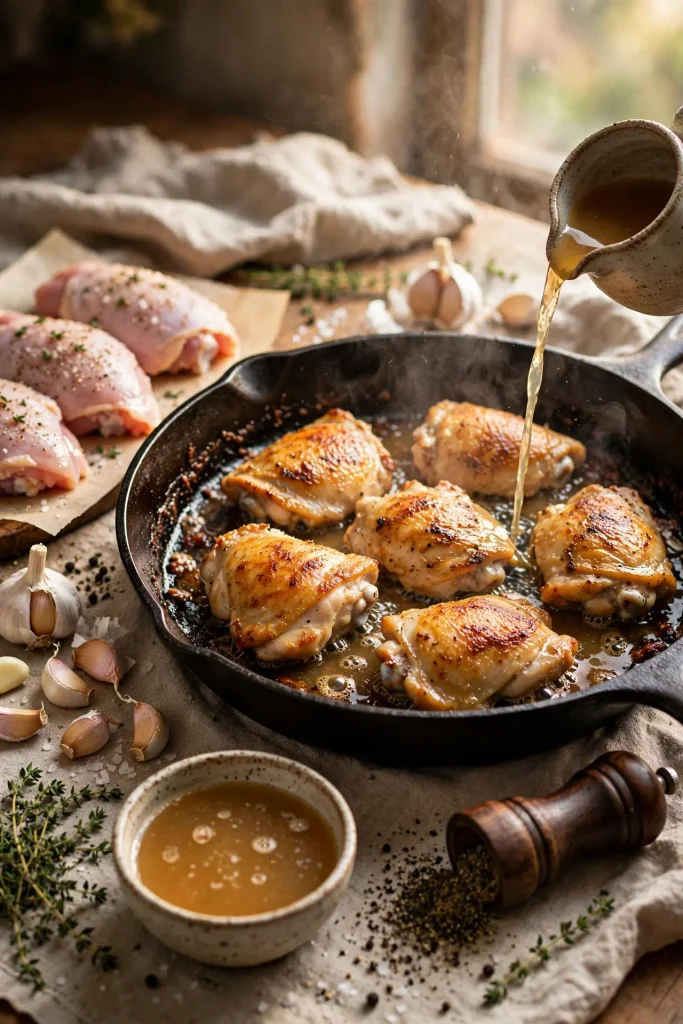
Salt the chicken properly the night before if you have time. This isn’t complicated — just season it and leave it uncovered in the fridge overnight. It draws out a little surface moisture, then that moisture gets reabsorbed with the salt, seasoning the meat from the inside rather than just the surface. The difference is noticeable.
Deglaze the pan after searing the chicken. That brown stuck-on layer at the bottom of the pan — that’s concentrated, caramelized flavour, and a splash of white wine or chicken stock will lift all of it into your sauce. This step adds depth that you simply cannot get any other way.
Use good stock. Homemade is best, obviously. But a decent store-bought one — not too salty, made with actual chicken — is perfectly fine. What you want to avoid is a stock that’s so salty it makes it impossible to season the dish properly as you cook.
Taste as you go. Always. Every time you add something, taste it. A casserole built on proper tasting will always be better than one assembled by recipe measurements alone.
Let it rest for five minutes out of the oven before serving. The sauce will settle and thicken just slightly. Worth it.
—
12. The Leftover Transformation That Means Nothing Goes to Waste

The leftover creamy chicken casserole — if there is any — has a second life that is almost as good as the original.
Pull the chicken, shred it with two forks. Mix the shredded chicken back into the sauce. Spoon the whole thing over toasted sourdough for an open sandwich that is incredibly good at lunch the next day. Or stir it through freshly cooked pasta for what will feel like an entirely new meal — pasta with a creamy chicken ragù, essentially, made in about ten minutes from something you already made.
The sauce, thickened overnight and slightly deeper in flavour, also works beautifully as a filling for baked jacket potatoes. Top with a little more cheddar under the grill (or broiler, if you’re in the US) for two minutes.
Nothing goes in the bin. Every last bit of that sauce is too good to lose.
—
❓ FAQ
Q: Can I use condensed cream of chicken soup instead of making a sauce from scratch? A: You can, and plenty of recipes call for it. The result will be fine but noticeably saltier and slightly less nuanced in flavour. If you’re short on time, go for it — but thin it with a little chicken stock and taste before adding extra salt. Making a simple cream sauce from scratch genuinely takes less than ten minutes and the difference is worth it once you’ve tried it.
Q: How long does creamy chicken casserole keep in the fridge? A: Three to four days, stored in an airtight container. It reheats well in the oven at 350°F covered with foil, or in the microwave with a splash of stock added to loosen the sauce. The flavour often improves by day two, so leftovers are genuinely something to look forward to.
Q: Can I make a creamy chicken casserole without dairy? A: Yes, with good results. Full-fat coconut cream works in Tuscan-inspired versions and adds a subtle sweetness that’s pleasant rather than overwhelming. Oat cream or cashew cream are both good neutral-flavoured substitutes for double cream or heavy cream in the more classic British-style versions. The sauce texture will be slightly different but still rich and coating.
—
💭 Final Thoughts
A creamy chicken casserole is, at its core, an act of intention. It’s choosing to make something real, something that fills the kitchen with an actual smell, something that’ll still be good tomorrow. There’s no trick to it — just good ingredients, a little patience, and knowing which details actually matter.
Cook one this week. See if it doesn’t change what Tuesday evening feels like.
What’s the one ingredient you always sneak into your casseroles that the recipe never quite calls for?
