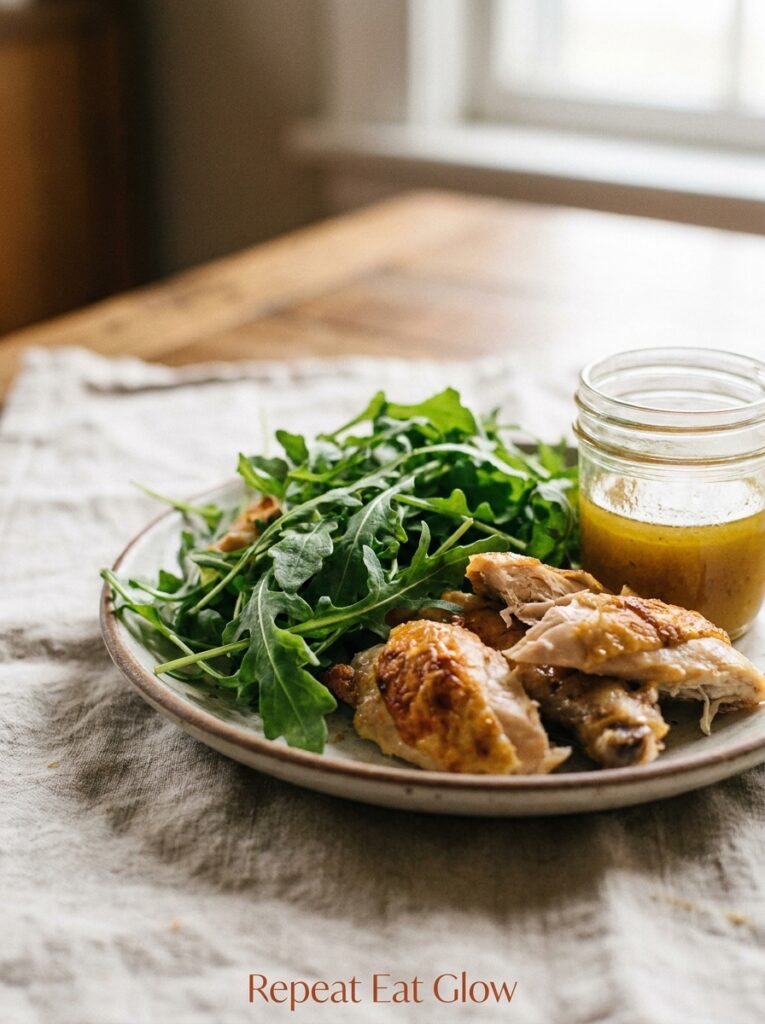
My friend texted me last week: “I keep buying arugula and then not knowing what to do with it.” Same. We’ve ALL been there. You grab it because it looks fresh and vaguely sophisticated, then it wilts in the back of the fridge next to some leftover feta you’ve also forgotten about. But here’s the thing — arugula and chicken together? That combination has quietly become the pairing I reach for more than almost anything else.
It’s peppery, fast, and honestly kind of gorgeous every single time.
—
1. Why Arugula Does Something to Chicken That Lettuce Never Could
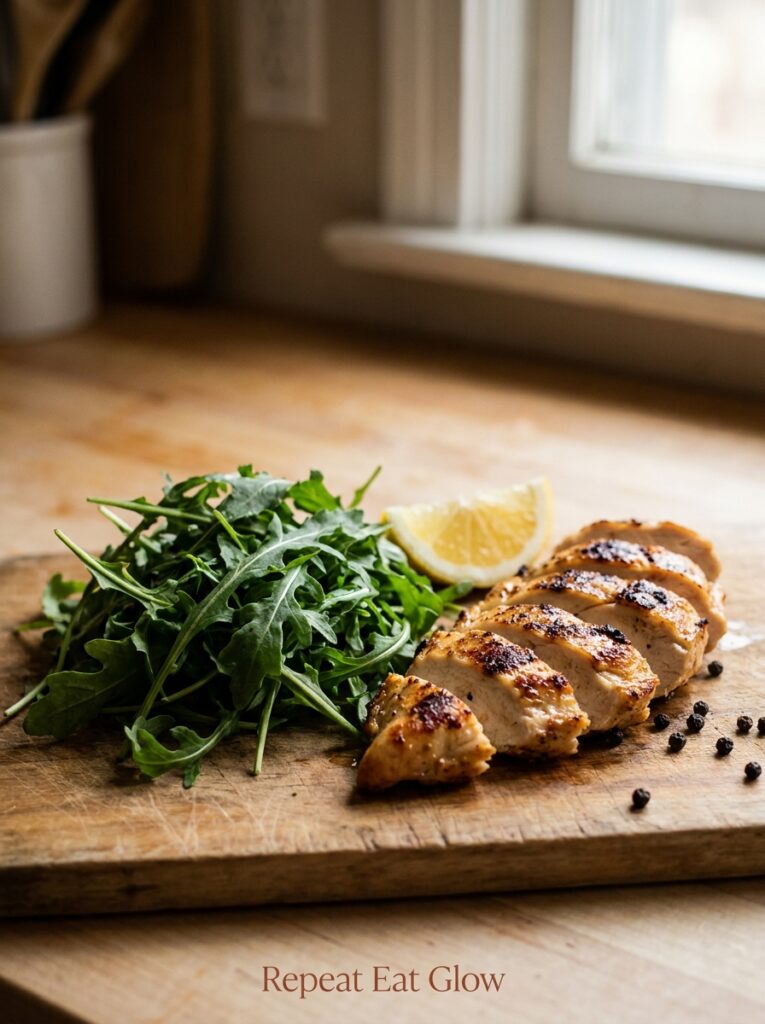
Let’s be clear about something: arugula isn’t just a salad green you swap in for romaine. It’s got this sharp, almost mustardy bite that cuts right through rich, fatty chicken skin, through warm pan drippings, through creamy dressings. It WAKES the whole dish up.
Romaine just sits there. Arugula argues back.
And that’s exactly what you want when chicken is your main ingredient, because chicken — we love it, we eat it constantly, but it’s not exactly the boldest thing on the plate. It needs a partner with opinions. Arugula has opinions. Together they’re weirdly balanced, like opposites in a really good way.
The other thing about arugula: it wilts just enough under warm chicken without turning to mush, which means you can add hot protein directly on top and get this halfway-cooked, halfway-fresh thing happening that feels restaurant-level but takes about zero extra effort. I didn’t fully appreciate that until I accidentally did it once and couldn’t figure out why the dish tasted so much better.
—
2. The Pan Sauce Trick That Makes a Simple Chicken Breast Actually Worth Eating
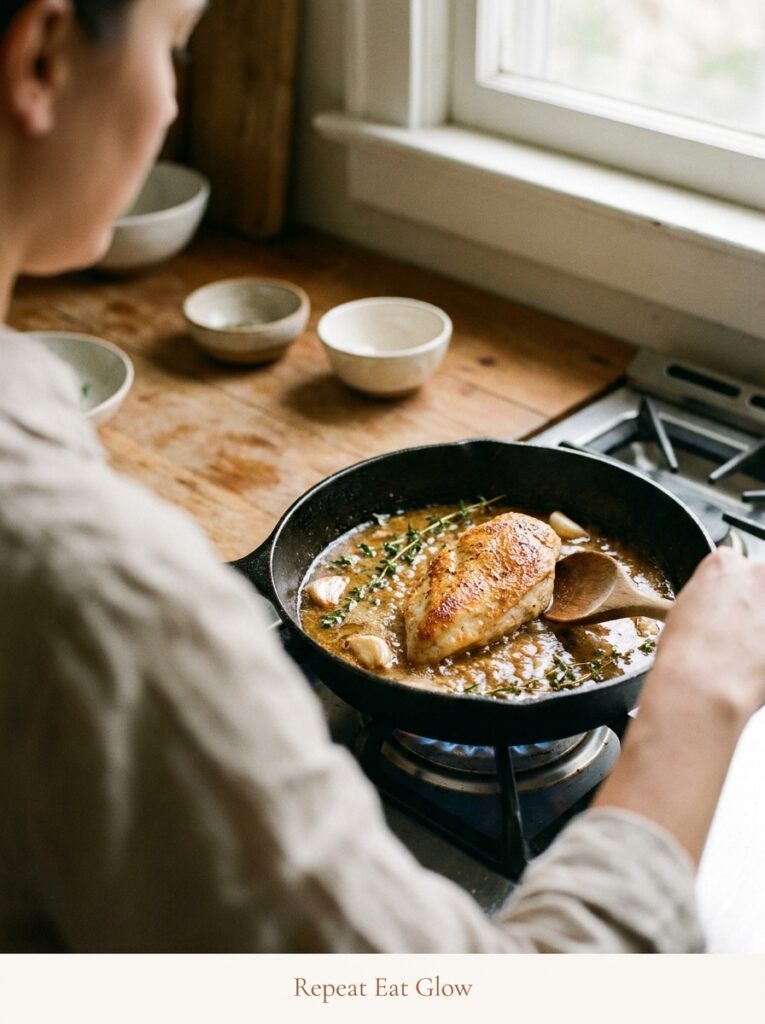
Okay so here’s where we start. The most basic application — and I mean that as a compliment — is pan-seared chicken over arugula with a quick lemon-garlic pan sauce. But the “quick pan sauce” part is where most people bail, and they absolutely shouldn’t.
You sear two chicken breasts in a cast iron or stainless pan, pull them out, and then — without cleaning anything — throw in a splash of white wine or even just chicken stock, about half a cup, and scrape up all those dark bits stuck to the bottom. That right there is flavor you were about to throw down the sink. Add a clove of crushed garlic, a squeeze of lemon, and a tablespoon of cold butter whisked in at the end. Pour it warm, directly over a pile of fresh arugula. The arugula wilts slightly at the edges where the sauce hits it.
“Pour it warm, directly over a pile of fresh arugula — and watch the edges wilt just enough to make everything feel intentional.”
It sounds like almost nothing. It tastes like you spent an hour on it. Season the arugula first with a tiny bit of olive oil and flaky salt so it’s not totally undressed underneath, and that’s genuinely dinner done in under 25 minutes.
—
3. The Cold Salad Version That Actually Holds Up in the Fridge
Meal prep people, this one’s for you.
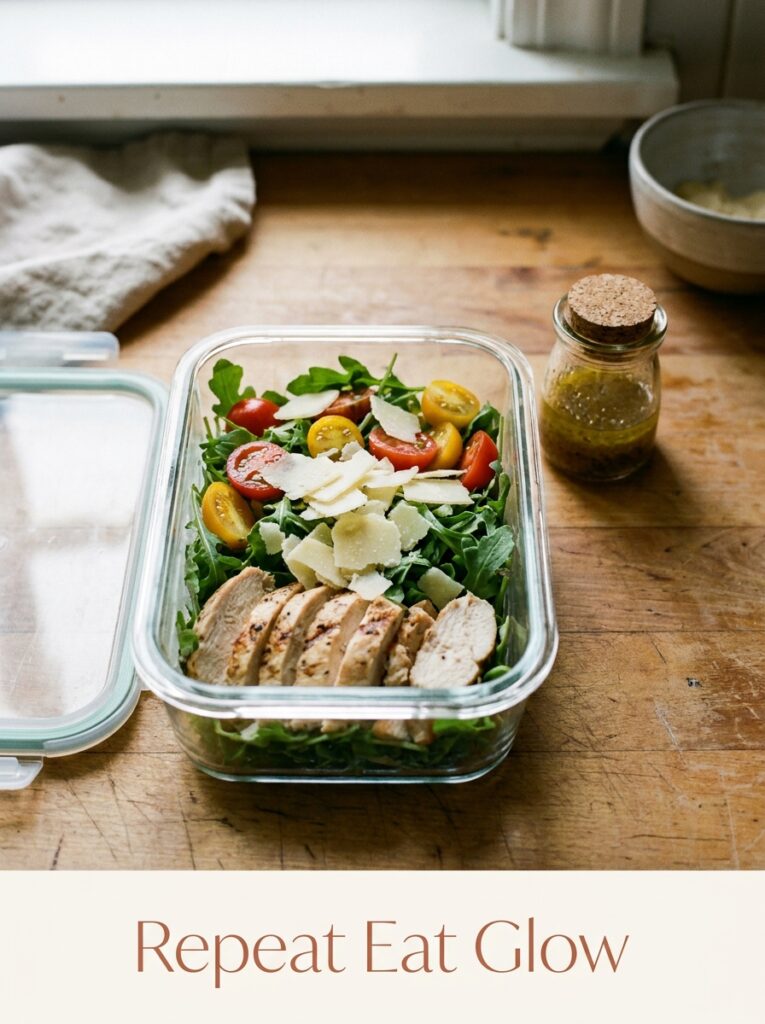
Most salads don’t survive the fridge. Arugula, weirdly, kind of does — especially when you keep the dressing separate and you use roasted chicken instead of seared. Roasted chicken (thighs, please, not breasts — juicier, more forgiving, better cold) sliced thin over arugula with shaved parmesan, some cherry tomatoes, and a sharp lemon-dijon vinaigrette you make in a jar. That’s it.
The vinaigrette is just three tablespoons olive oil, one tablespoon lemon juice, a teaspoon of dijon, a small crushed garlic clove, salt, and a tiny bit of honey to balance the bitterness. Shake it. Done.
This works as lunch for three days. The arugula stays peppery and doesn’t get slimy the way spinach does, the chicken holds its flavor cold, and every time you pull it out of the fridge it still looks GOOD. That matters. Nobody wants to eat a sad container.
—
4. The One That’ll Make You Look Like You’ve Been to Italy
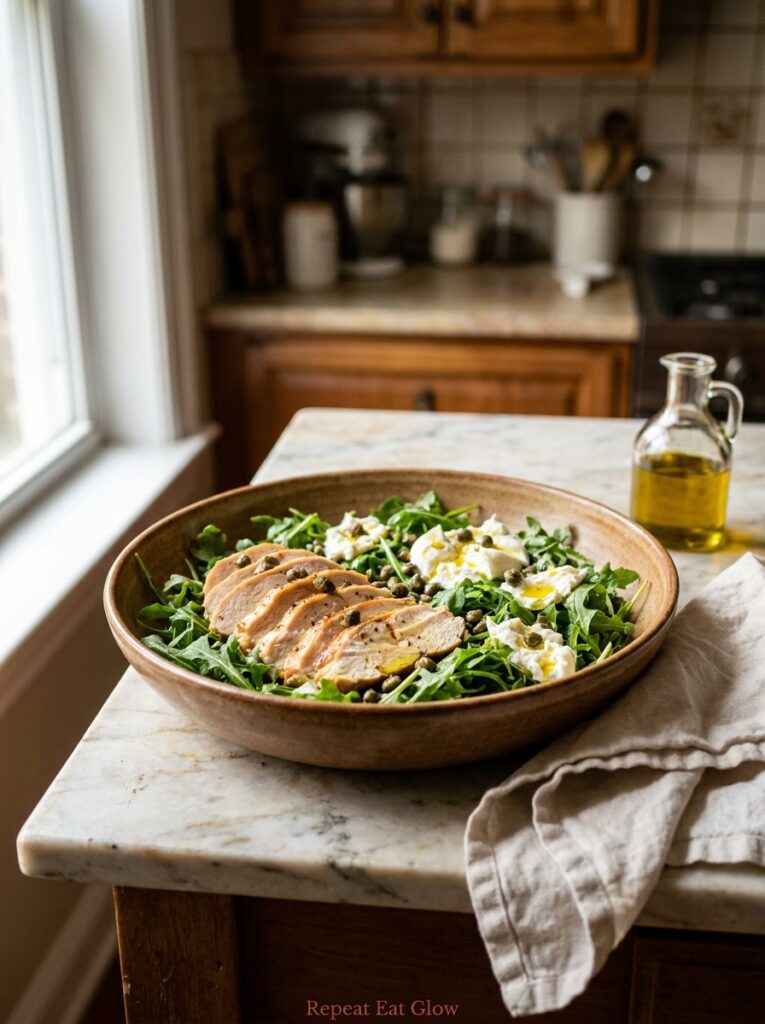
There’s a dish that shows up all over northern Italian trattorias — thin chicken cutlets, pounded flat, pan-fried crispy, then piled with raw arugula, shaved parm, cherry tomatoes, and a drizzle of very good olive oil. Sometimes a little balsamic. Sometimes just lemon.
It’s called something different everywhere, but the concept is always the same: hot crispy chicken, cold sharp greens, good fat on top.
And here’s the key thing most recipes don’t say explicitly: you put the arugula on AFTER plating, not in the pan. The contrast between the hot crunchy chicken and the cold, peppery arugula is the whole point. If you cook it together you lose everything.
To make the cutlets: pound two chicken breasts between two sheets of cling film to about half an inch thick. Season with salt and pepper, dust lightly in flour, and fry in a generous amount of olive oil — not butter — over medium-high heat for about three minutes per side. They should be properly golden and crackling at the edges.
Plate them immediately. Pile arugula on top. Shave parmesan over with a vegetable peeler. A good olive oil drizzle, flaky salt, and either lemon or a few drops of aged balsamic. That’s the whole dish. It looks like a magazine cover and takes twenty minutes.
—
5. Grilled Chicken and Arugula With a Dressing That’s Kind of Obsession-Worthy
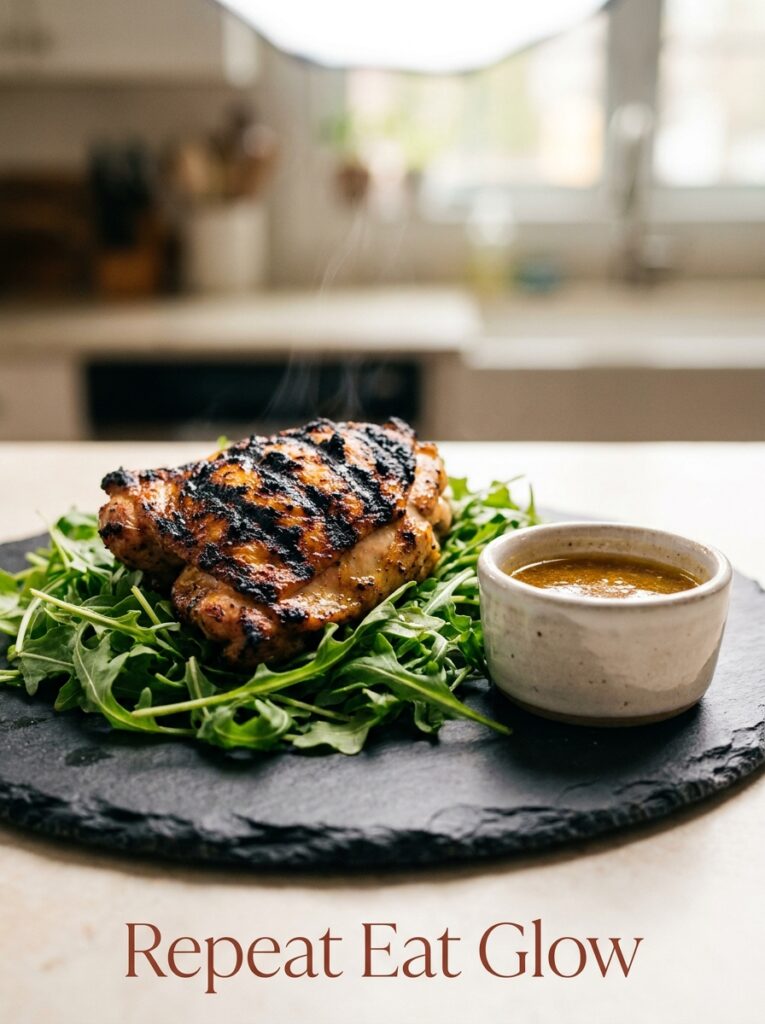
Not gonna lie, I make this dressing and then find excuses to put it on other things. It’s a walnut-lemon situation that’s got no right to be as good as it is.
Blend (or just whisk really hard) two tablespoons of finely chopped toasted walnuts, three tablespoons olive oil, one tablespoon lemon juice, a teaspoon of red wine vinegar, half a small clove of garlic grated in, and a pinch of salt. It’s thick, slightly nutty, a bit creamy without any dairy, and it completely coats arugula in a way that turns it from a side thought into the main event.
Grilled chicken thighs — marinated in olive oil, garlic, lemon zest, and dried oregano — sliced and laid over a big handful of arugula. Pour this dressing over everything while the chicken’s still slightly warm.
“The walnut dressing doesn’t just coat the arugula — it makes it taste like something you’d order at a restaurant, then try to reverse-engineer for months.”
Add some thinly sliced red onion if you’ve got it. Maybe a few olives. This is the kind of thing you eat on a warm evening and feel genuinely smug about.
—
6. The Pasta Version for When You Want Something More Substantial
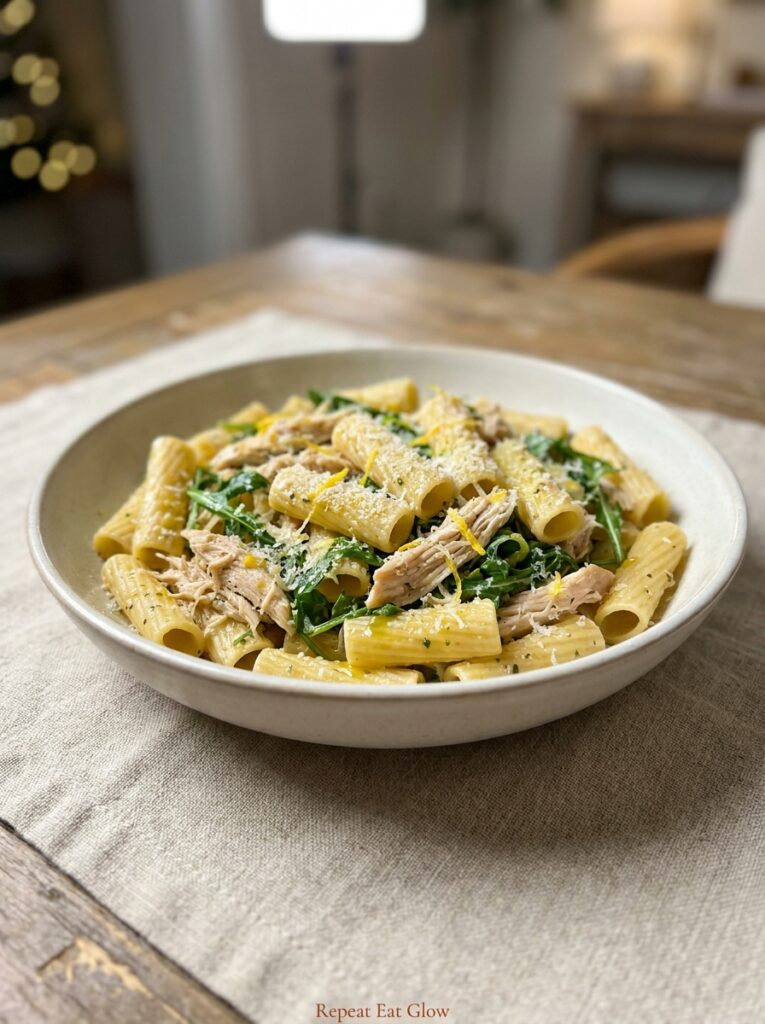
Peppery arugula in pasta is a thing that doesn’t get nearly enough credit. It wilts into warm pasta like basil does, but with more edge.
Cook 12 oz of pasta — rigatoni or fusilli works better than spaghetti here, you want the sauce to catch somewhere. While it cooks, pan-fry diced chicken thighs in olive oil with garlic and a generous pinch of chili flakes until golden and slightly crispy at the edges. Add a small splash of pasta water when you combine everything, which is the move that makes the sauce silky instead of dry.
Off the heat: toss in about 4 cups of arugula and let the heat of the pasta wilt it down. It looks like a LOT of arugula before you add it. It won’t be. Add parmesan, black pepper, a squeeze of lemon.
Side note — if you’ve got leftover roasted chicken, this is actually faster. No searing step, just shred it in, heat it through, and you’re done.
The arugula adds this slight bitterness to the rich pasta that keeps the whole dish from feeling heavy. It’s that thing where you eat a full bowl and don’t feel completely horizontal afterwards. Which, honestly? That’s everything.
—
7. The Flatbread Situation I’ve Made Three Times This Month
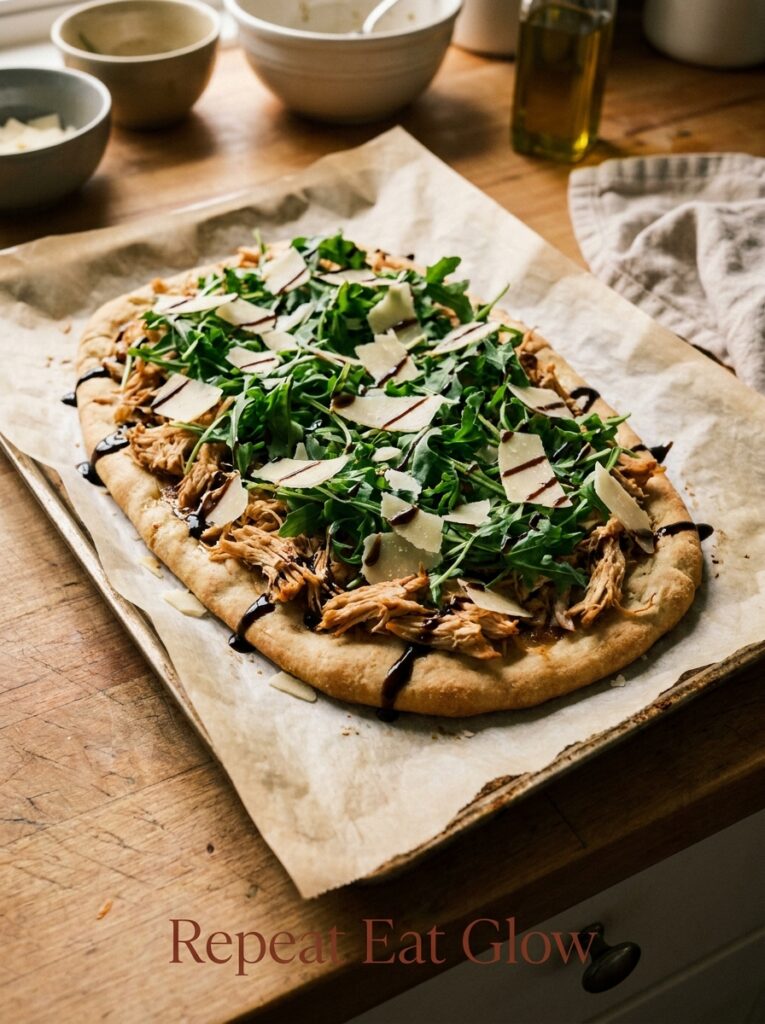
There are two types of flatbread situations. The one where you load toppings on raw dough before baking. And the one where you add toppings AFTER baking, on the hot crust.
Arugula belongs firmly in camp two.
Bake or griddle your flatbread until it’s properly bubbled and charred in spots — you can use store-bought pizza dough, naan, or even a flour tortilla on a really hot dry pan. Top it while it’s still hot with cooked, shredded chicken (rotisserie is perfect here, and I’m not apologizing for shortcuts), a handful of fresh arugula, some thin-sliced prosciutto if you’re feeling extravagant, and a drizzle of balsamic glaze.
The warmth from the bread barely wilts the arugula edges without killing it. The prosciutto gets slightly translucent. Everything on top is cold and raw and fresh, sitting on this hot, blistered base.
It’s one of those things that photographs beautifully and also takes maybe eight minutes.
—
8. The Grain Bowl Direction (If That’s the Vibe You’re Going For)
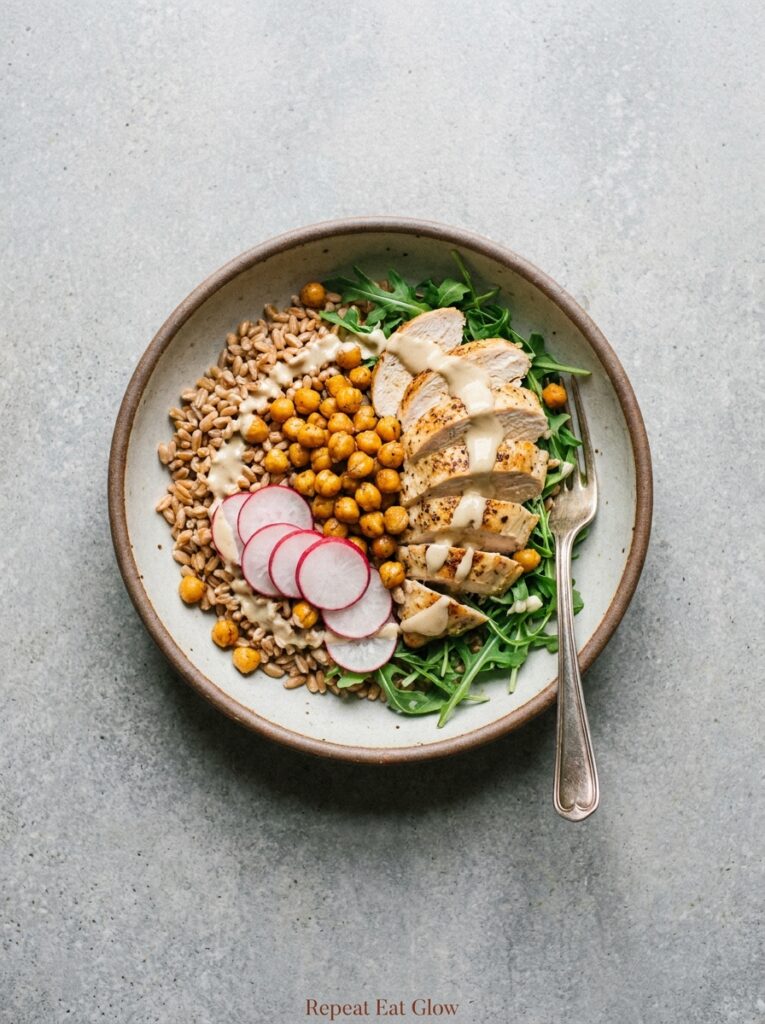
Farro, farro, farro. Or quinoa if you’ve got it. Or even just brown rice, honestly — though farro has this chewy, nutty texture that does something special next to arugula.
Cook your grain. Top with sliced roasted chicken thighs, a big handful of arugula, some roasted cherry tomatoes (just halved, tossed in oil, roasted at 400°F / 200°C for about 20 minutes until they collapse and go jammy), and a tahini-lemon drizzle.
The tahini-lemon is just tahini thinned with warm water, lemon juice, garlic, and salt. Two minutes to make, ridiculously good. The arugula sits raw on top of the warm grain and wilts just at the bottom layer, which I think is actually the ideal arugula state — half alive.
This is genuinely good cold too, which makes it the kind of lunch that actually excites you in the morning. Not always easy to achieve.
—
9. The Sandwich You Should’ve Been Making This Whole Time
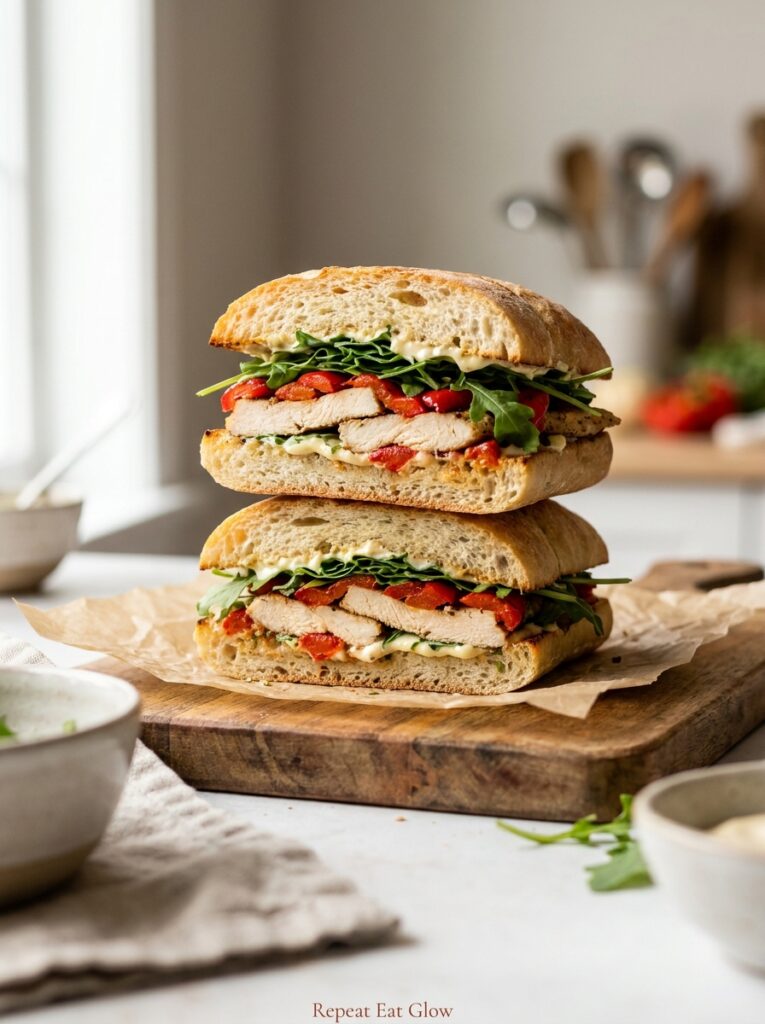
I feel like hot chicken sandwiches get all the attention and cold ones get ignored, which is a mistake.
Good crusty ciabatta, toasted. A layer of good mayo (or aioli if you’re doing things properly). Sliced pan-fried chicken breast, still slightly warm. A generous pile of arugula — more than you think, because it compresses fast. Thin slices of avocado. A few sun-dried tomatoes or roasted red peppers if you’ve got them.
The arugula is doing the heavy lifting here, acting as crunch AND flavor. You don’t need lettuce, you don’t need much else. The peppery bite of it cuts through the mayo and the richness of the avocado, and you get this contrast of soft bread, juicy chicken, and that sharp, slightly bitter green in every single bite.
Also: this doesn’t need to be fancy. If you’ve got leftover chicken, this is a five-minute lunch that feels like something you’d pay twelve dollars for. Which is sort of the whole point of having a chicken-and-arugula rotation in the first place.
—
10. What Happens When You Add Goat Cheese (Answer: Everything Gets Better)
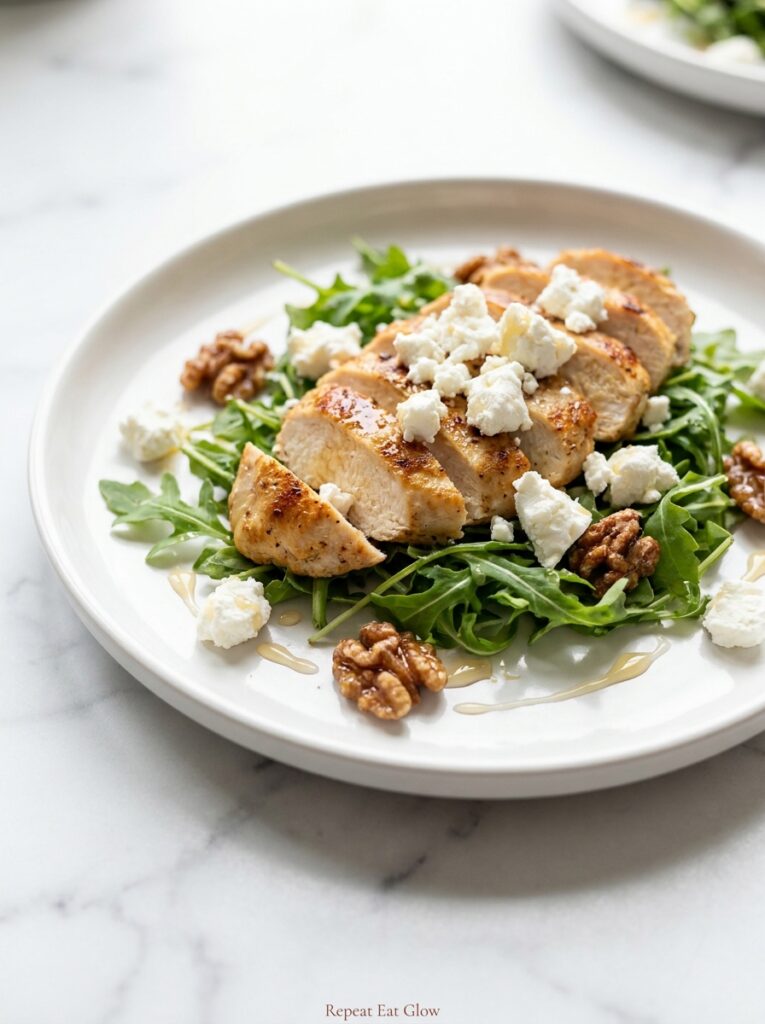
Creamy goat cheese and sharp arugula is already a classic. Add warm chicken and it becomes a full meal.
This one works best as a warm salad. Pan-sear chicken thighs, slice them thin. Arrange over arugula while still warm — this is that wilting-the-edges move again. Crumble goat cheese over the top while everything’s still hot enough to soften it very slightly.
“The goat cheese softens just enough in the heat to turn slightly creamy at the edges — not melted, not firm, just that in-between state that makes everything taste more expensive than it is.”
Add some sliced strawberries if it’s summer and you want to be a little unexpected about it. Or roasted beets if it’s winter. A simple honey-balsamic dressing — one tablespoon honey, two tablespoons balsamic, three tablespoons olive oil, salt, shake — ties it all together without competing.
This is the dish you bring to a dinner party as the starter salad and everyone asks you for the recipe. It looks like you tried.
—
11. The Version That Uses Up Leftover Rotisserie Chicken in the Best Way Possible
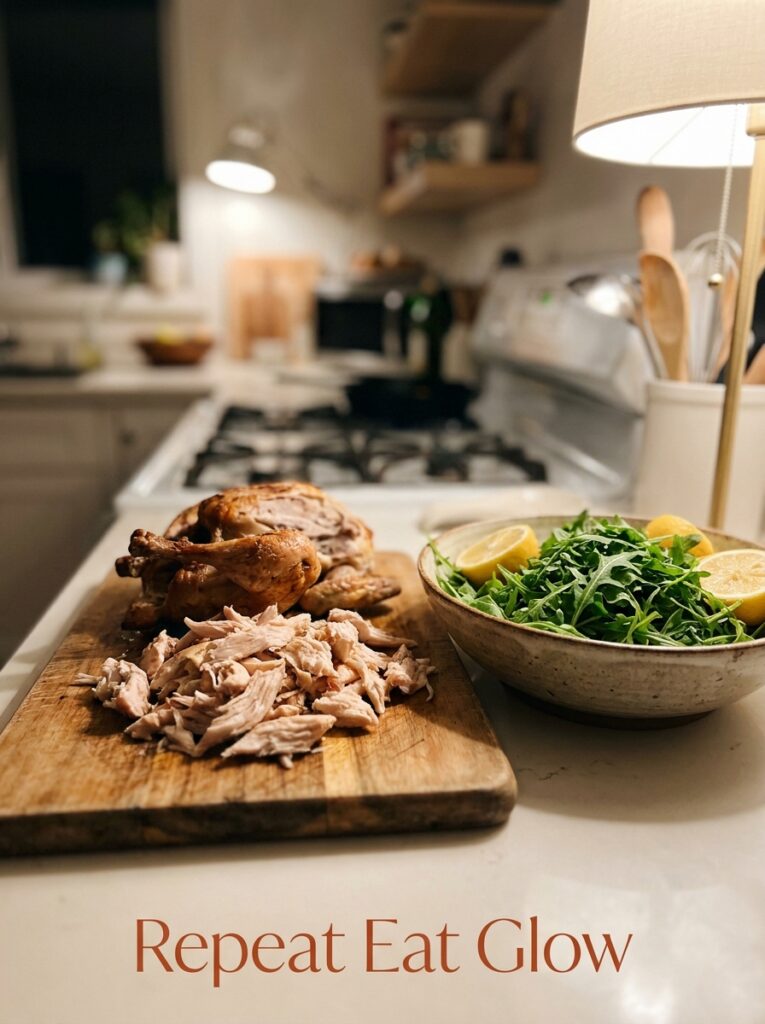
Can we talk about rotisserie chicken for a second? It’s one of the most underrated things in both US grocery stores and UK supermarkets — already cooked, already well-seasoned, and you can do an incredible amount with it. But most people just eat it with some sad side salad and call it a night.
Don’t do that.
Shred the remaining meat — legs, thighs, the bits from the carcass that everyone ignores — and toss it in a warm pan with a tablespoon of olive oil, some lemon zest, and a small handful of toasted pine nuts just to warm it through and crisp the edges slightly. Like, two minutes total.
Pile it over arugula with some thin-sliced fennel (raw fennel and arugula is one of those combination that shouldn’t work on paper and absolutely does), a small handful of raisins or dried cranberries, and a simple cider vinegar dressing. The sweetness from the dried fruit, the anise note from the fennel, the pepper from the arugula, the warmth from the chicken. Every element is doing something different.
This is a meal. A GOOD meal. From leftovers.
—
12. The Caramelized Onion and Chicken Situation That’s Technically a Salad but Feels Like Dinner
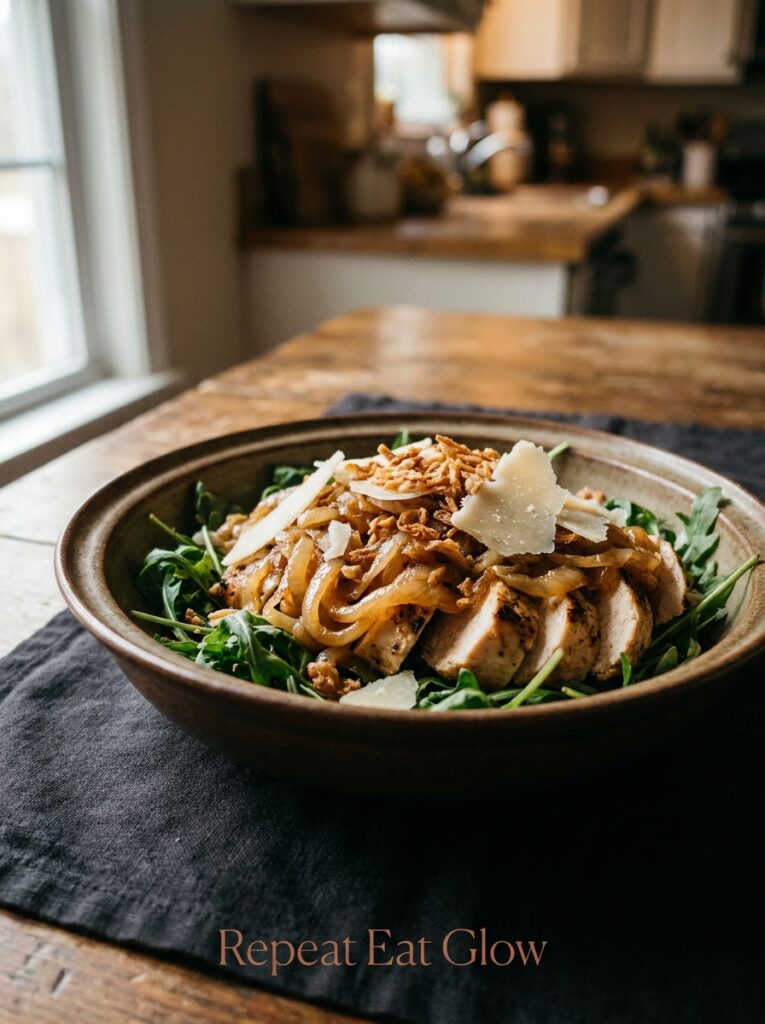
Last one, and maybe my favorite.
Caramelized onions take patience — the real kind, where you cook them low and slow for 40 minutes until they’re dark brown and almost jammy. There’s no shortcut here and I won’t pretend otherwise. But if you’ve got them ready, either fresh or batch-cooked from the day before, this comes together in under fifteen minutes.
Thin chicken breast or thighs seared golden. A pile of arugula. Spoon the jammy caramelized onions over the top — they’re warm and sweet and slightly sticky, and they do this incredible thing with the peppery arugula where they mellow it out completely without killing the bite. Crumble some blue cheese or aged goat’s cheese over the top if you’re that way inclined, and add a few walnuts for crunch.
The whole thing looks rustic and kind of gorgeous, and it’s one of those recipes where the quality of your onions is genuinely the most important thing, not the protein. The chicken is almost a vehicle for getting the onions and arugula to coexist beautifully on your fork.
—
❓ FAQ
Q: Can I use baby arugula or does it have to be regular arugula? A: Baby arugula works great for most of these recipes — it’s milder and slightly less peppery, which is actually better in things like pasta or the grain bowl where you want it to blend in rather than dominate. Regular arugula holds its own better next to strong flavors like goat cheese or caramelized onions. Either works, it’s really just about heat preference.
Q: What’s the best chicken cut to use with arugula? A: Thighs, almost every time. They’ve got more fat, more flavor, and they don’t dry out the way breasts do when they sit on a warm salad for five minutes. That said, breasts are better for the cutlet recipe and the sandwich because you need that thin, even shape. Rotisserie chicken is honestly the cheat code for any of these cold preparations — already cooked, already seasoned, just shred and go.
Q: How do I keep arugula from going bitter when I add warm chicken on top? A: The trick is not to cook the arugula directly — just let the residual heat from the warm chicken or sauce do the work naturally. If arugula hits a screaming hot pan it turns bitter and sad almost instantly. Dress it lightly in good olive oil first so there’s a fat barrier between it and the heat, and add warm protein rather than boiling-hot anything directly on top. That tiny bit of protection makes a significant difference.
—
💭 Final Thoughts

Chicken and arugula aren’t flashy, which I think is why people underestimate them. There’s no trendy ingredient, no technique you need to learn, no equipment you don’t already own. It’s just this very honest combination that consistently produces something that tastes more thought-out than the effort involved. I keep coming back to it because it never really disappoints me, which is more than I can say for most things.
So — which one are you making first?
