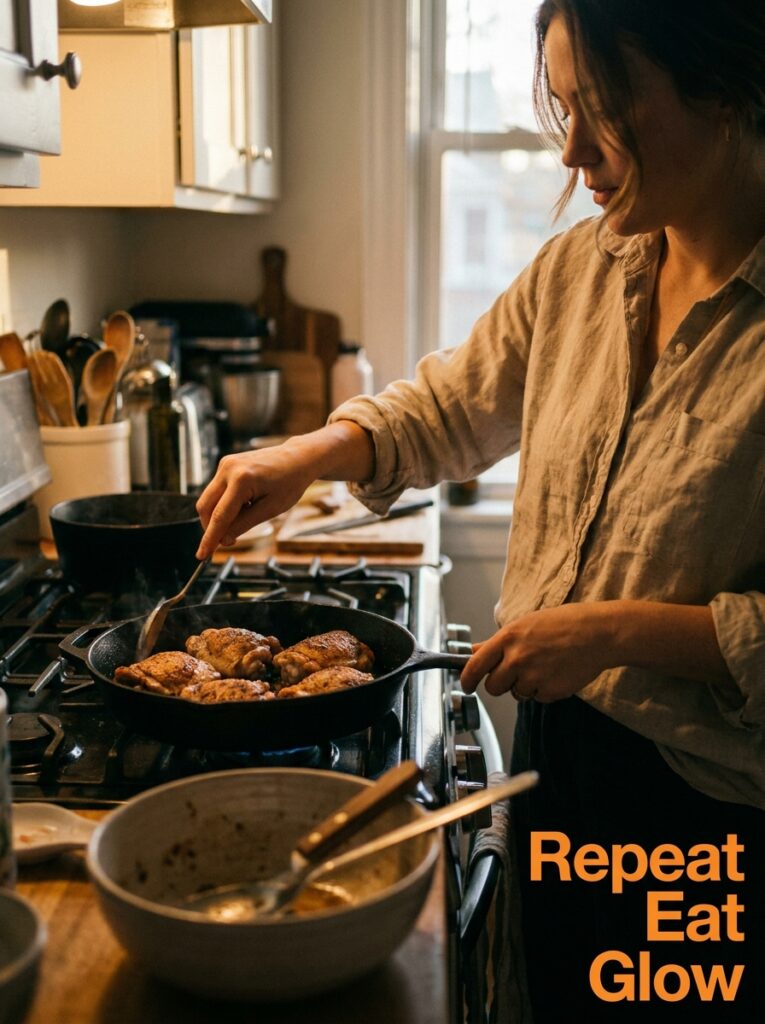
You know the feeling. You’ve got a pack of chicken thighs sitting in the fridge, it’s 5:45pm, and you’re staring at 47 saved pins wondering why none of them feel right. This list is different. These are the ones I come back to — some cozy, some fast, some embarrassingly good for how simple they are.
—
1. The Weeknight Hero: Crispy Garlic Butter Chicken Thighs That Take 25 Minutes
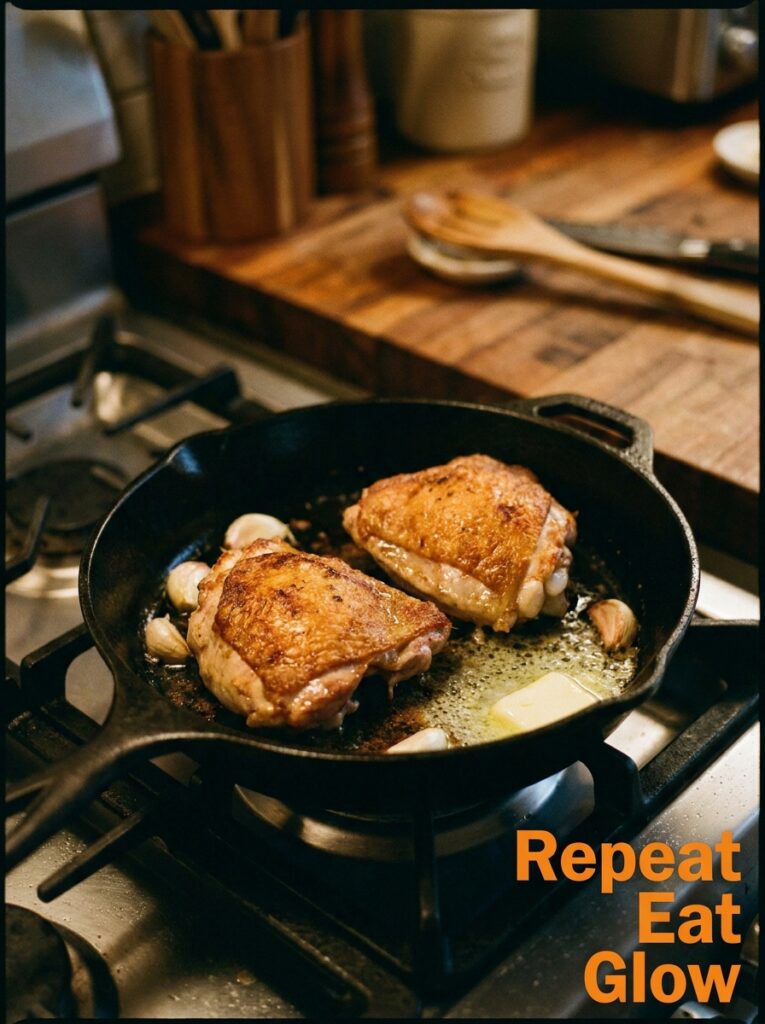
Chicken thighs don’t get enough credit. People reach for breasts out of habit, but thighs? They’re forgiving, they’re juicy, and they get this incredible golden skin when you cook them right that breasts honestly can’t compete with.
Here’s what you do. Pat them DRY — this step matters more than any seasoning. Season generously with salt, pepper, garlic powder, and a tiny bit of smoked paprika. Get a cast iron or stainless steel pan ripping hot, add a glug of oil, and lay them skin-side down without touching them for eight full minutes. Don’t peek. Don’t move them. Let the pan do the work.
Then flip, add four or five smashed garlic cloves and a few tablespoons of butter, and baste constantly for another four or five minutes. That’s it. That’s the whole thing. The kitchen smells unreal — garlic sizzling in brown butter, that savory hit that makes people wander in from other rooms asking what’s cooking.
Serve with anything. Mashed potato, roasted veg, crusty bread to mop up the pan juices. Or honestly, just eat it standing over the stove with a fork. No judgment.
“The best chicken dinner of your week is probably 25 minutes away and costs less than a coffee.”
—
2. The Recipe That Made Me Finally Understand Brining
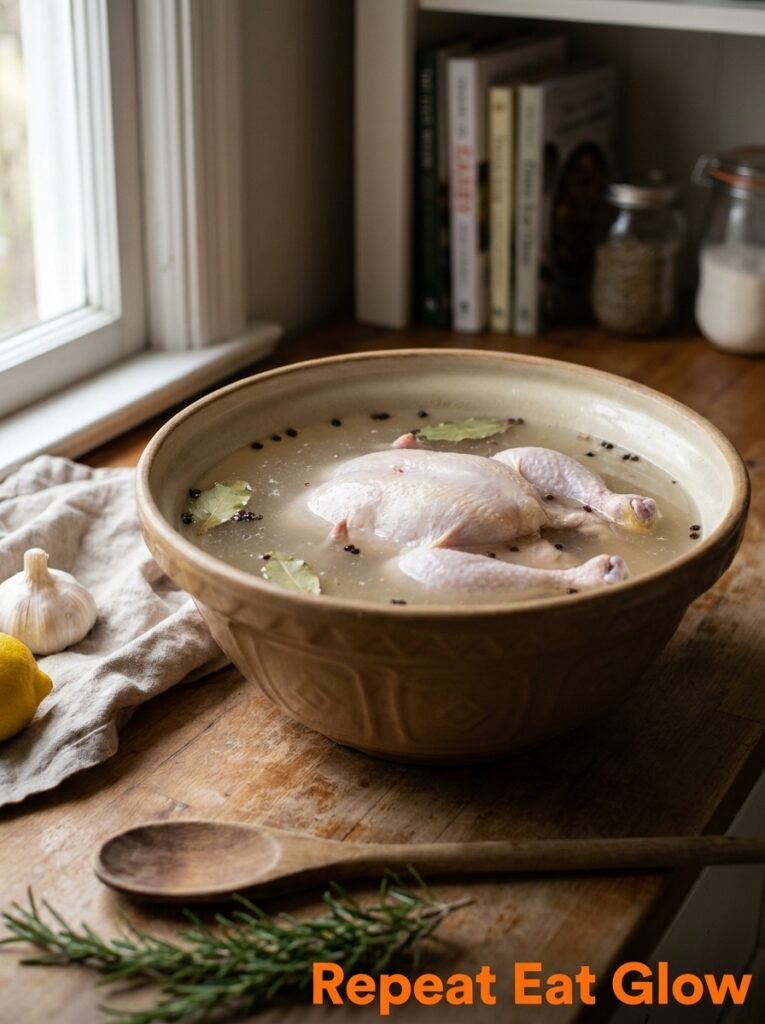
I used to skip brining. Seemed fussy, seemed like extra washing up, seemed like something restaurant chefs did but not real people on a Wednesday. I was wrong, and I feel I should say that clearly.
A simple overnight brine — just water, salt, a little sugar, and whatever aromatics you like (I do peppercorns and a bay leaf, sometimes a crushed garlic clove) — changes chicken breast completely. You’re not just seasoning the surface. The salt works all the way through, and the moisture retention is genuinely different. You can actually overcook a brined breast slightly and it’ll still be tender. That’s not something I can say about unbrined chicken.
Even a two-hour quick brine makes a difference if you’re short on time. Quarter cup of salt dissolved in four cups of cold water, chicken goes in, fridge, done. Rinse before cooking or it’ll be too salty — that step matters.
This is the foundation that makes every roasted, grilled, or pan-seared chicken breast actually worth eating. Once you do it once, you’ll wonder what you were doing before, and not in a pretentious way — just in a genuine “oh, that’s just better” way.
—
3. Marry Me Chicken Has a Name for a Reason
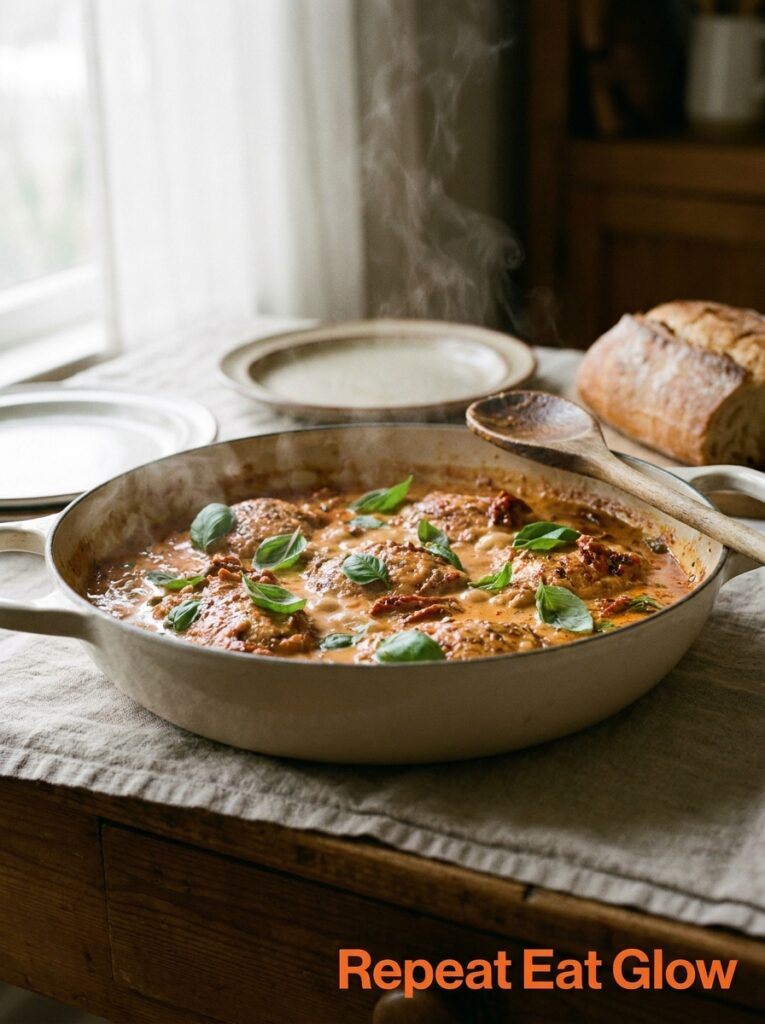
Look, the name is a bit much. But I’m not going to argue with results. This dish — pan-seared chicken in a creamy sun-dried tomato and parmesan sauce with garlic and fresh basil — hits in a way that’s hard to explain until you’ve eaten it.
The sauce is the thing. Sun-dried tomatoes (the ones packed in oil, not the dry ones), lots of garlic, a splash of chicken stock, heavy cream, and parmesan that you add at the end off the heat so it melts in slowly instead of going grainy. The chicken goes back in the sauce to finish cooking so it absorbs everything.
It’s rich. It’s genuinely indulgent in the way that makes you slow down while you’re eating. Not a quick weeknight thing — more of a Sunday or a date night situation when you want the kitchen to smell good for a while before you even sit down.
Side note — it works brilliantly with pasta, but I’ve also served it over soft polenta and honestly that might be my favourite version. The polenta gets this kind of silky quality when it absorbs the sauce that pasta doesn’t quite do the same way.
—
4. The British Pub Classic That Deserves a Spot in Your Regular Rotation

Chicken tikka masala. And before anyone says “that’s not British,” technically — it kind of is? Or at least it became something distinctly its own in UK kitchens and restaurants. Doesn’t really matter either way because it’s brilliant and more people should be making it at home.
The key is the marinade. Yogurt, lemon juice, garam masala, turmeric, cumin, coriander, a bit of chili, and salt. The chicken — cubed thighs, please, not breast — goes in for at least an hour, overnight if you can manage it. Char it under a hot grill or in a very hot skillet so you get those slightly blackened edges. That smokiness is essential. Without it you just have chicken in tomato sauce, which is fine but not the same thing at all.
The masala sauce starts with onions cooked down slow until they’re almost jammy, then tomato, cream, more spices, and a knob of butter at the end that makes it glossy and slightly sweet. It takes patience but it’s the kind of cooking that feels meditative — chopping, stirring, tasting. A pot of basmati rice, some warm naan, maybe a little yogurt and coriander on top. Proper Friday night dinner.
“Chicken tikka masala at home hits differently when you know you didn’t skimp on the marinade time.”
—
5. The Roast Chicken Trick That Makes Your Whole Kitchen Smell Like a French Bistro
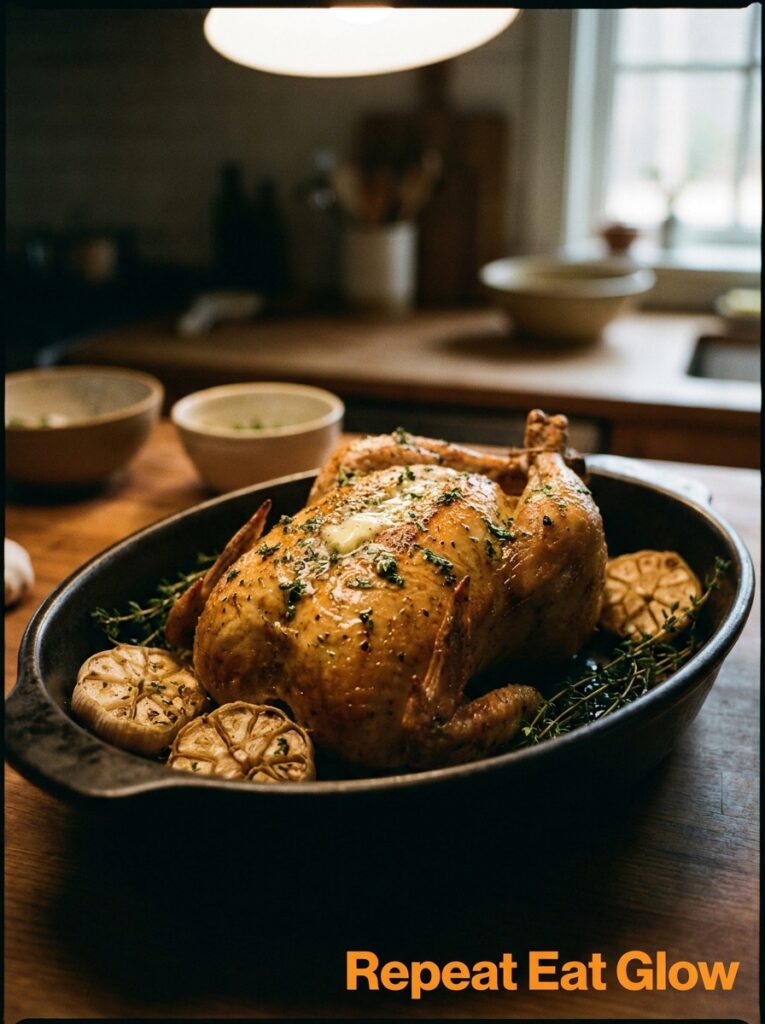
Spatchcock it. If you haven’t done this yet — remove the backbone, flatten the bird, roast it at a higher heat — you’re losing about 25 minutes of cooking time and gaining incredibly even results. The skin gets crispy all over, not just on top. The thighs and breasts finish at roughly the same time, which is basically the holy grail of roasting a whole bird.
Herb butter under the skin is the other thing. Softened butter mashed with garlic, fresh thyme, a bit of rosemary, salt, and lemon zest. Get your fingers under the skin at the breast and thigh and push it in, then smooth it out from the outside. It sounds a bit odd but the butter melts into the meat while it roasts and you end up with this incredibly fragrant, self-basting situation.
425°F / 220°C for about 45-50 minutes depending on the size of the bird. Let it rest properly — 15 minutes under foil, minimum. The resting is not optional. The juices redistribute and you get actual moisture in every slice instead of a puddle on the cutting board.
The pan drippings, tipped into a small saucepan with a splash of white wine and stock, become a five-minute pan sauce that’s better than most gravies I’ve ever made.
—
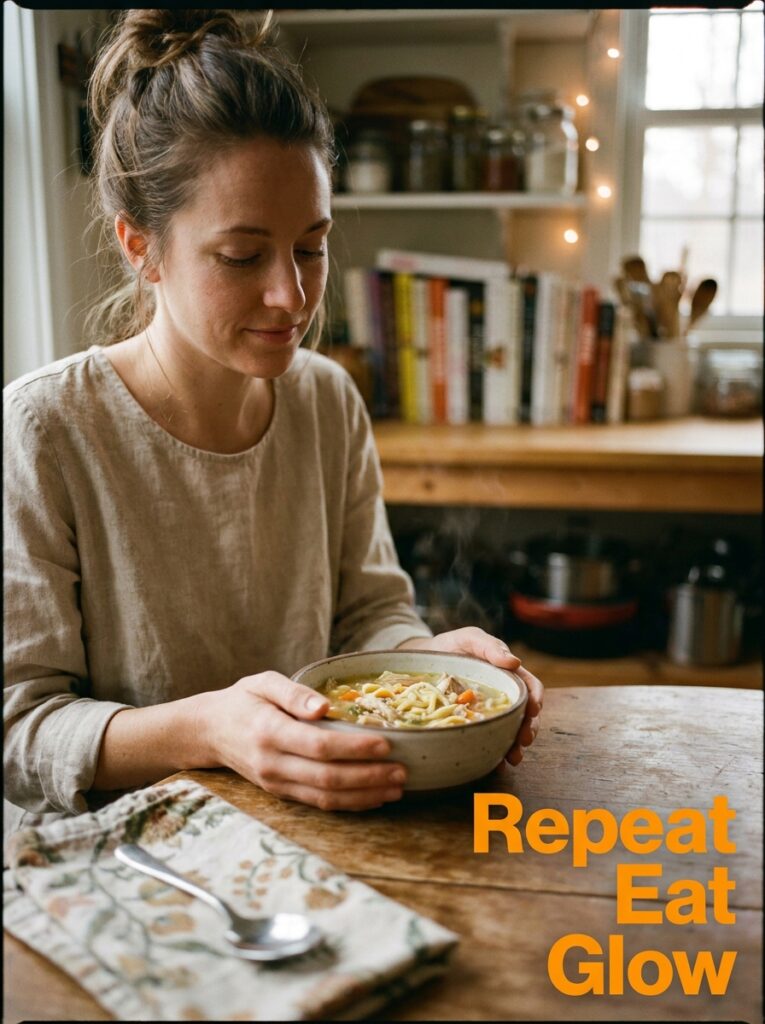
6. Why Chicken Soup Is Actually the Recipe That Shows Off Your Skills the Most
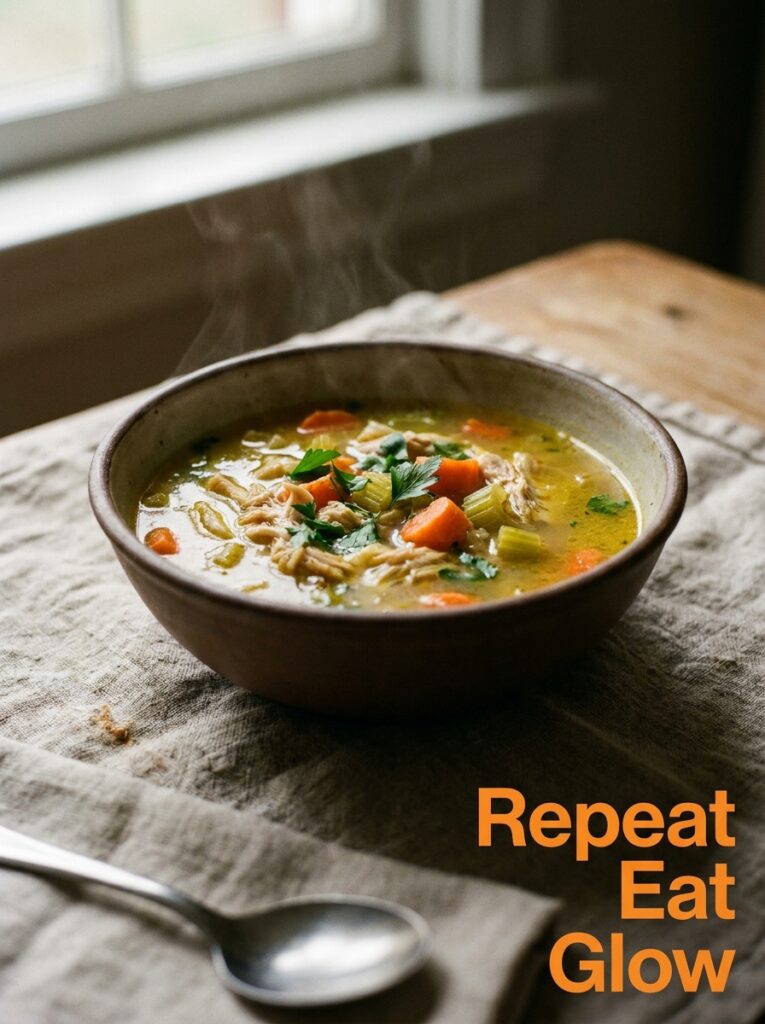
Anyone can throw together a chicken soup. Not everyone can make one that tastes like it’s been going for hours, like someone’s grandmother made it, like it fixes something. That gap — that’s all technique.
Start with a whole chicken or bone-in pieces. Bones matter here. The gelatin that renders out as they cook is what gives a good broth its body, that slight lip-sticking quality that water with stock cube never replicates. Cover the chicken with cold water (cold, not hot — this is a thing), bring it slowly to a simmer, skim the grey foam that rises in the first fifteen minutes, then add your aromatics: onion halved with the skin on for colour, carrots, celery, peppercorns, parsley stems, thyme.
Low and slow from there. Two hours minimum, three if you can. The house smells extraordinary.
Then pull the chicken out, shred the meat, strain the broth, and build the soup however you like from there. Noodles, dumplings, rice, whatever vegetables feel right. The base is the thing. Get that right and the rest follows naturally.
—
7. The 10-Ingredient Sheet Pan Dinner That Actually Tastes Like More Work Than It Was
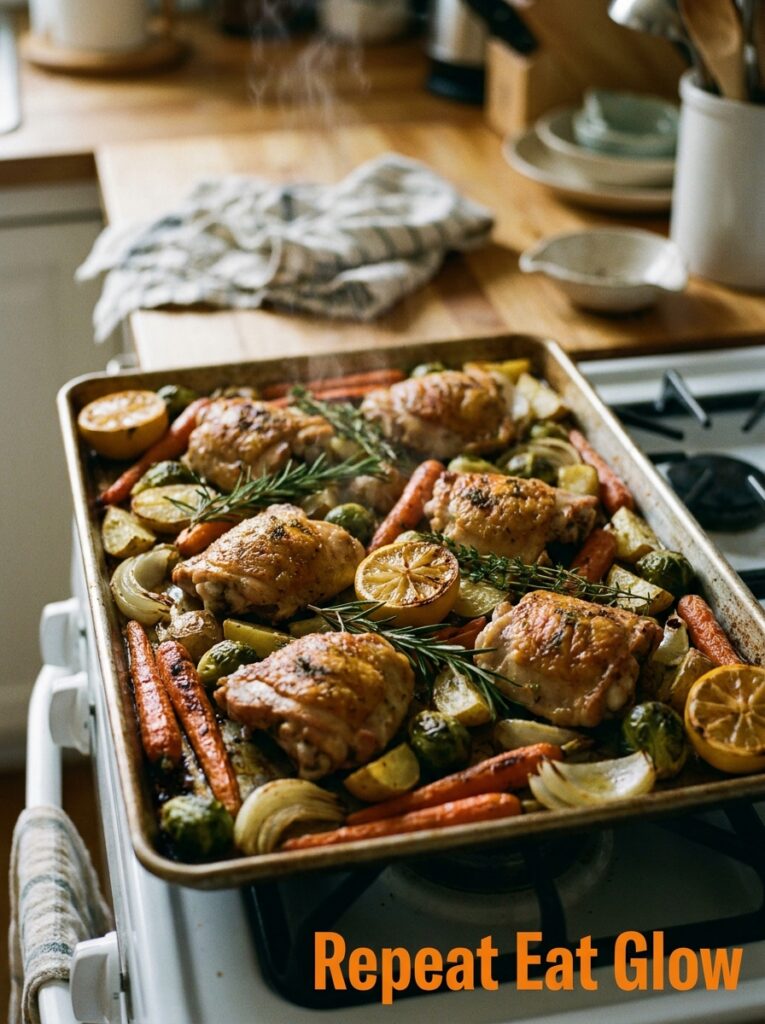
Sheet pan chicken is kind of a cliché at this point, but hear me out. Most versions are fine. A few versions are genuinely good and also one of the easiest things you can make. The difference is usually in how you season and whether you give everything enough space.
My go-to: bone-in chicken thighs, chunks of red onion, whole cherry tomatoes, sliced peppers (red and yellow, not green — green goes bitter in the oven), and kalamata olives if you like them, all tossed in olive oil with oregano, smoked paprika, garlic, salt, and a squeeze of lemon. Laid out in ONE LAYER — crucial, this — on a large sheet pan.
400°F / 200°C for 40 minutes. The tomatoes burst and caramelise, the peppers soften and go slightly sweet at the edges, the chicken skin goes crispy. The whole pan essentially becomes its own sauce from all the juices mixing together. Add a handful of fresh basil when it comes out.
This is the kind of dinner that looks impressive on a plate but cost you about twelve minutes of actual effort.
“Sheet pan cooking isn’t lazy. It’s smart. There’s a difference.”
—
8. The Cold Chicken Recipe You’re Probably Not Thinking About (But Should Be)
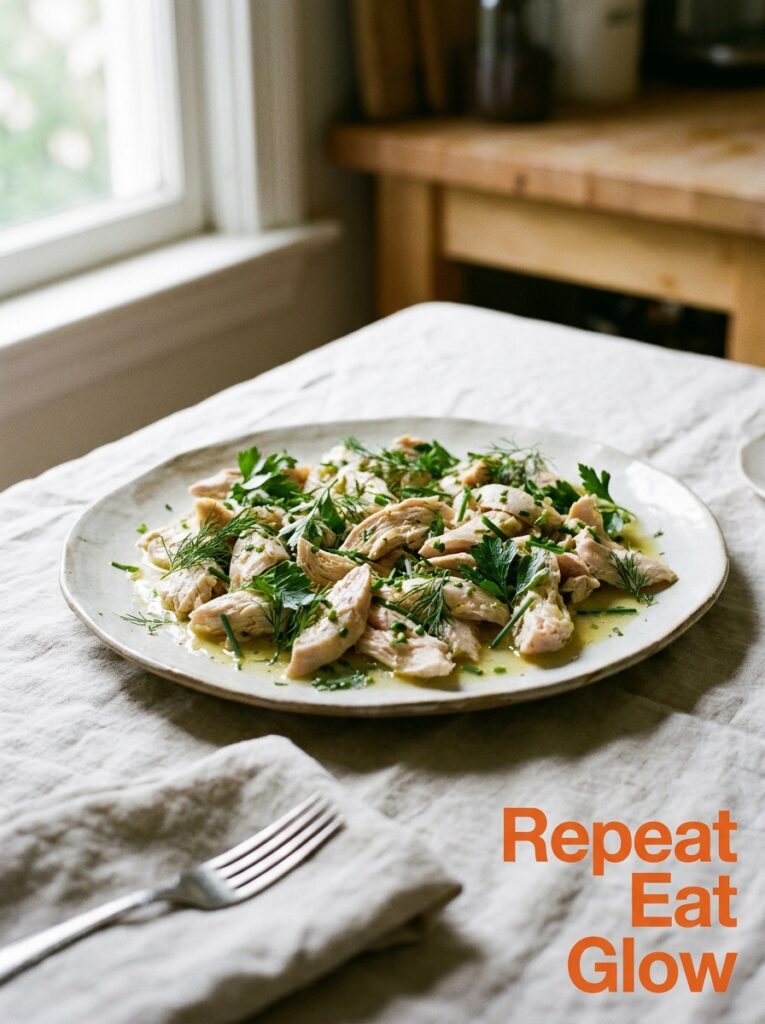
Coronation chicken. It’s everywhere in the UK and almost nowhere in the US, which is a genuine shame because it’s quietly one of the most interesting ways to serve chicken cold.
The original 1953 recipe — yes, it was created for Queen Elizabeth II’s coronation, which is sort of a great origin story — is essentially poached chicken in a curried mayonnaise sauce with apricot jam and a bit of cream. It sounds odd. It’s genuinely delicious, especially on a sandwich or stuffed into a jacket potato or, honestly, spooned over a bed of watercress with some toasted almonds.
The modern versions vary wildly. I like to add a little mango chutney instead of or alongside the apricot jam, and I use slightly more curry powder than the original calls for because I want it to taste like something. Season it properly. Cold food needs more seasoning than hot food — it’s a calibration thing.
Make it a day ahead if you can. Overnight the flavours meld into something more cohesive, less individual-component-y. It’s a fantastic make-ahead situation for a picnic, a work lunch, a party spread.
—
9. The Lemony Chicken Pasta That Sounds Too Simple to Be This Good
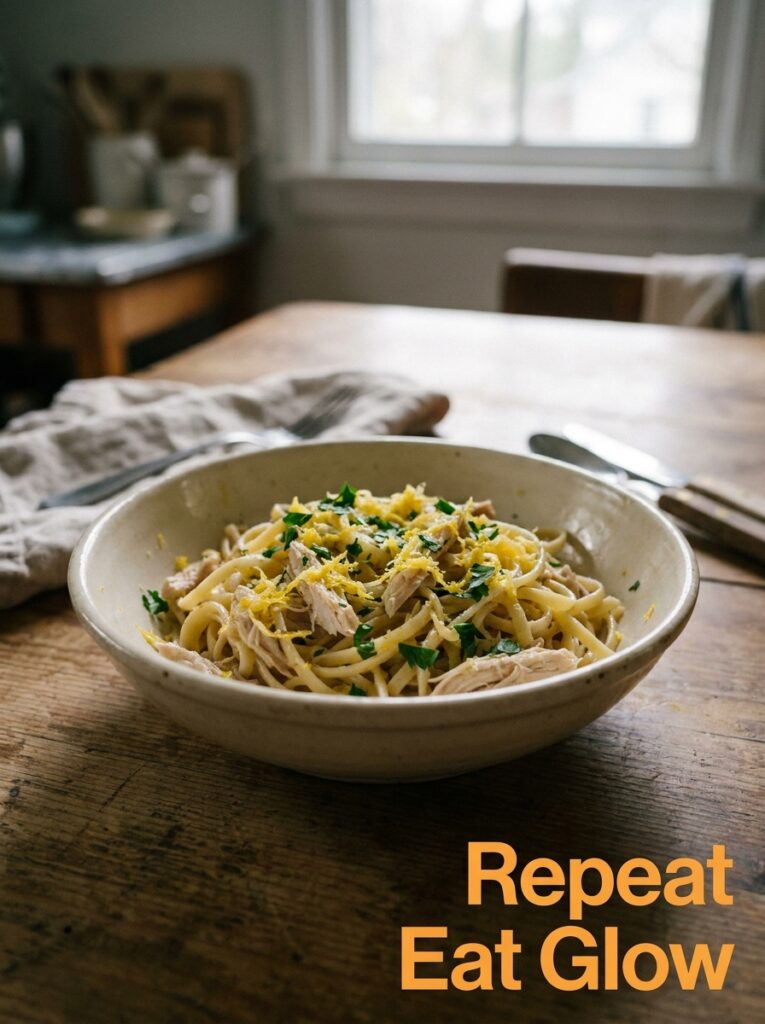
There are three nights a month where I just want something that tastes bright and clean and doesn’t require much thought. This is that dinner.
Cook pasta — linguine or spaghetti work best. In a wide pan, sauté sliced chicken breast or thigh in olive oil with lots of garlic until golden. Add lemon zest (a whole lemon’s worth, don’t be shy), a big pinch of chili flakes, and a splash of the pasta water before you drain it. Toss everything together, add a handful of parmesan and a handful of fresh parsley, another squeeze of lemon juice right at the end.
That’s genuinely it. The pasta water and parmesan create this light, clinging sauce that isn’t creamy-heavy but isn’t dry either. It’s the kind of thing you eat quickly because it’s good, not because you’re rushing.
Sometimes I add capers. Sometimes asparagus in spring, or wilted spinach when I have it. But the base version, just as described, is completely satisfying on its own.
—
10. Buffalo Chicken Everything: The American Classic That Belongs in More Forms Than Just Wings
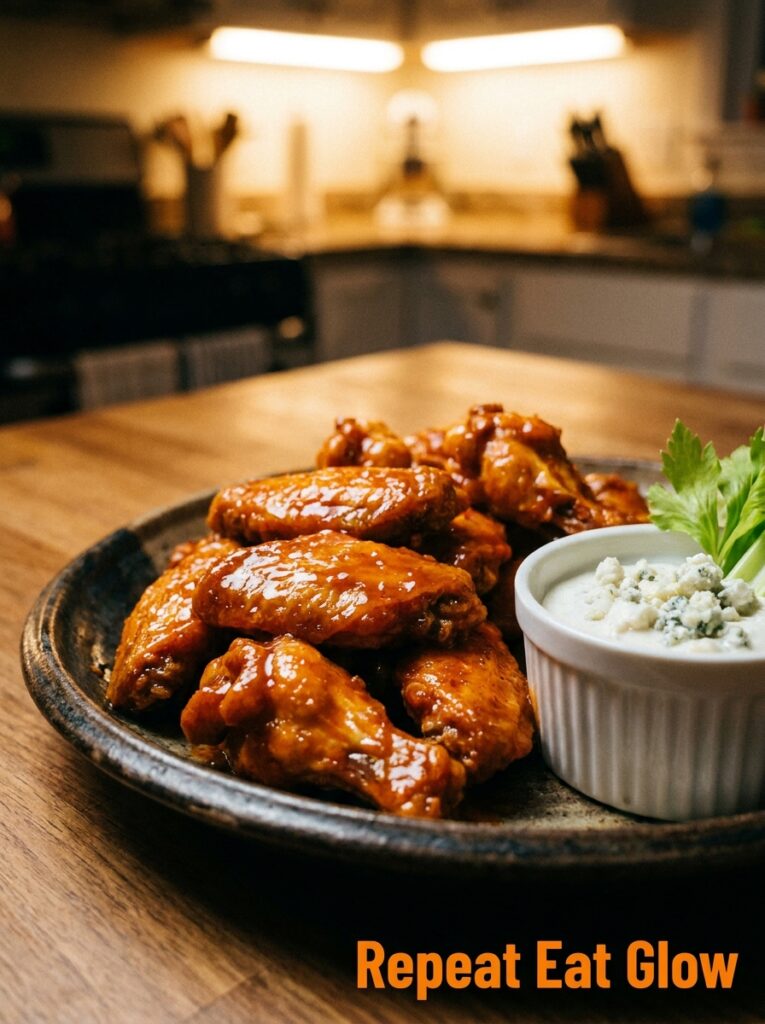
Wings are the classic entry point, obviously. But once you understand that buffalo sauce — hot sauce, butter, a bit of garlic, maybe a tiny splash of vinegar — is really just a very simple, very effective flavour, you start putting it on everything.
Buffalo chicken dip: shredded rotisserie chicken, cream cheese, buffalo sauce, ranch dressing, shredded cheddar, baked until bubbly. Dangerous at a party. Also dangerous as a Tuesday snack, not gonna lie.
Buffalo chicken flatbreads are another one. Spread buffalo-sauced chicken on a naan or flatbread base, top with mozzarella and a drizzle of ranch or blue cheese dressing, bake until the cheese is golden. Done in 15 minutes.
The key to good buffalo sauce every time is the butter-to-hot sauce ratio — about equal parts, sometimes slightly more butter. It should coat a spoon but still be fluid, glossy and orange-red. Frank’s RedHot is the standard in the US and it’s the right call, honestly.
—
11. The Chicken Dish That’s Been on Every Menu for 30 Years Because It’s Actually Perfect
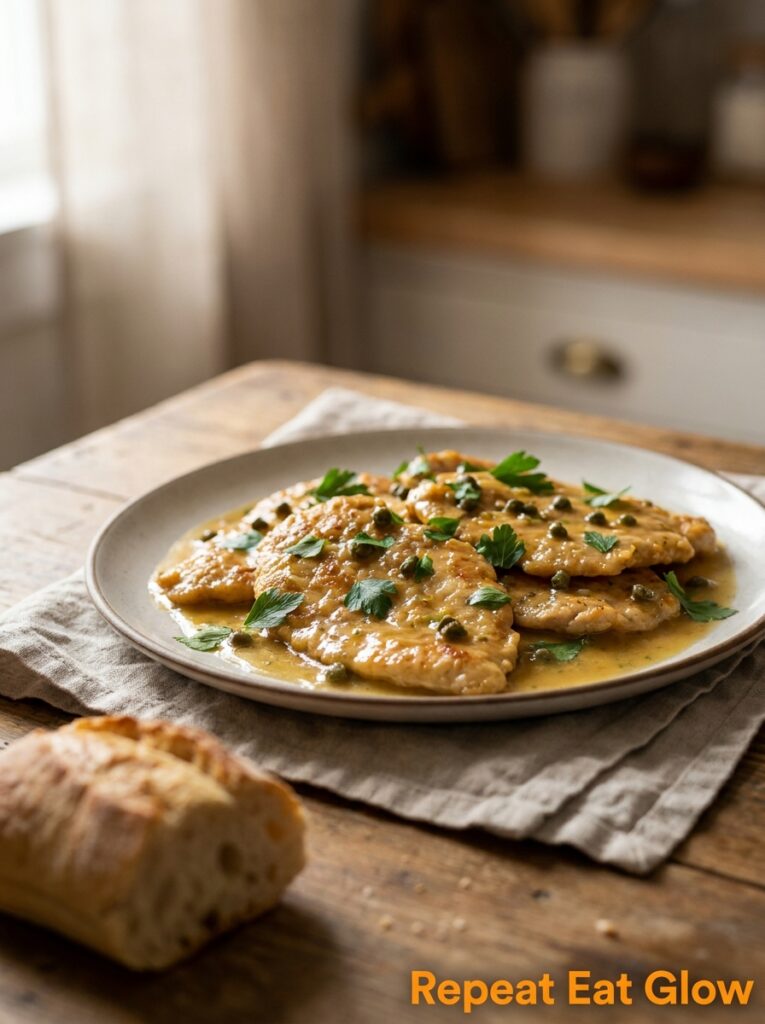
Chicken piccata. Thin-pounded chicken cutlets, dredged in flour, pan-fried until golden, then finished in a pan sauce of white wine, chicken stock, lemon juice, capers, and cold butter whisked in at the end to make it silky. The whole thing takes maybe 20 minutes if you have everything prepped.
The caper brine is something people forget. Add a splash of it to the sauce — it adds this briny, almost funky depth that rounds out the lemon and makes the whole thing more interesting. Not everyone does this but they should.
It’s an Italian-American dish technically, but it’s become so embedded in home cooking on both sides of the Atlantic that it almost feels universal now. And it never stops being satisfying. There’s something about that combination of acid and butter and the slight crust on the chicken that just works at a fundamental level.
—
12. The One Chicken Recipe You Should Learn by Heart
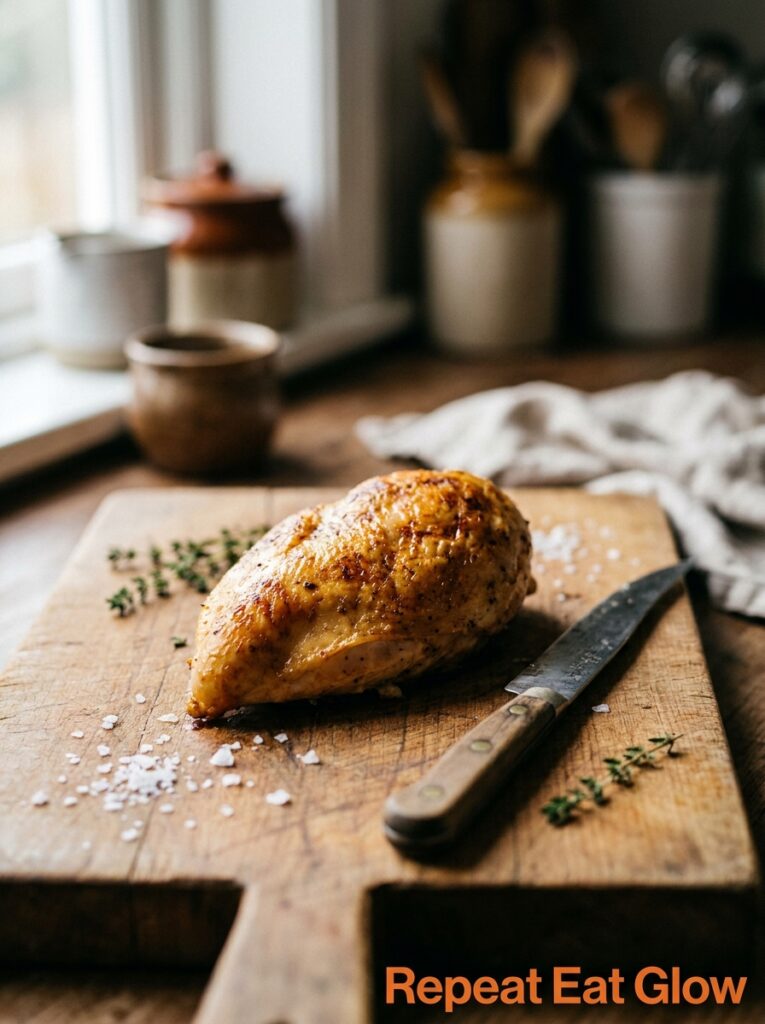
Roasted chicken pieces with loads of fresh herbs, finished with a squeeze of lemon. Not glamorous, not trending, not the sort of thing you’d describe excitedly to someone. But it’s the one that’s there when you need it, the one that feeds everyone, the one that tastes like you know what you’re doing in the kitchen even on a chaotic night.
Season well, use bone-in skin-on pieces, get the pan hot before the chicken goes in so it sears rather than steams, finish in the oven. Thyme, rosemary, garlic — whatever combination suits you. Lemon at the end. That’s the bones of it.
Master this and you’ve got a foundation for so many other recipes. The leftovers become soup, pasta, sandwiches. The cooking technique — sear then oven — works for so many other things. It’s the kind of recipe that teaches you something each time you make it, and not in a way that feels like homework.
—
❓ FAQ
Q: What’s the safest internal temperature for cooked chicken? A: 165°F (74°C) is the USDA and UK food safety guideline for all chicken. Get an instant-read thermometer if you don’t have one — it’s genuinely the single most useful kitchen tool for anyone who cooks chicken regularly. Insert it into the thickest part of the meat, away from bone.
Q: What’s the best cut of chicken for most recipes? A: Bone-in, skin-on thighs are the most forgiving and the most flavourful for most cooking methods. They stay juicy even if you slightly overdo them, and the skin crisps beautifully. Save the breasts for dishes where you’re specifically slicing thin or brining first.
Q: Can I use rotisserie chicken for most of these recipes? A: For a lot of them, yes. The soup, the buffalo chicken dip, coronation chicken, the pasta — all work brilliantly with pre-cooked shredded rotisserie chicken. It’s not cheating, it’s just practical. The ones that really need raw chicken are the piccata (because the thin cutlet and pan sauce is the whole point) and anything where the skin needs to crisp.
—
💭 Final Thoughts
Chicken is the ingredient that meets you wherever you are — rushed weeknight, slow Sunday afternoon, dinner party where you want to look competent without panicking. The recipes above aren’t all equally fast or equally fancy, but they’re all actually worth making. Not just saving. Making.
The garlic butter thighs and the lemon pasta I’ve made more times than I can count. The tikka masala and the french bistro roast are the ones I make when I want cooking to feel like an event. They all have a place.
Which one are you making first — and honestly, is it going to be the one you planned on, or the one that just sounds right for tonight?
