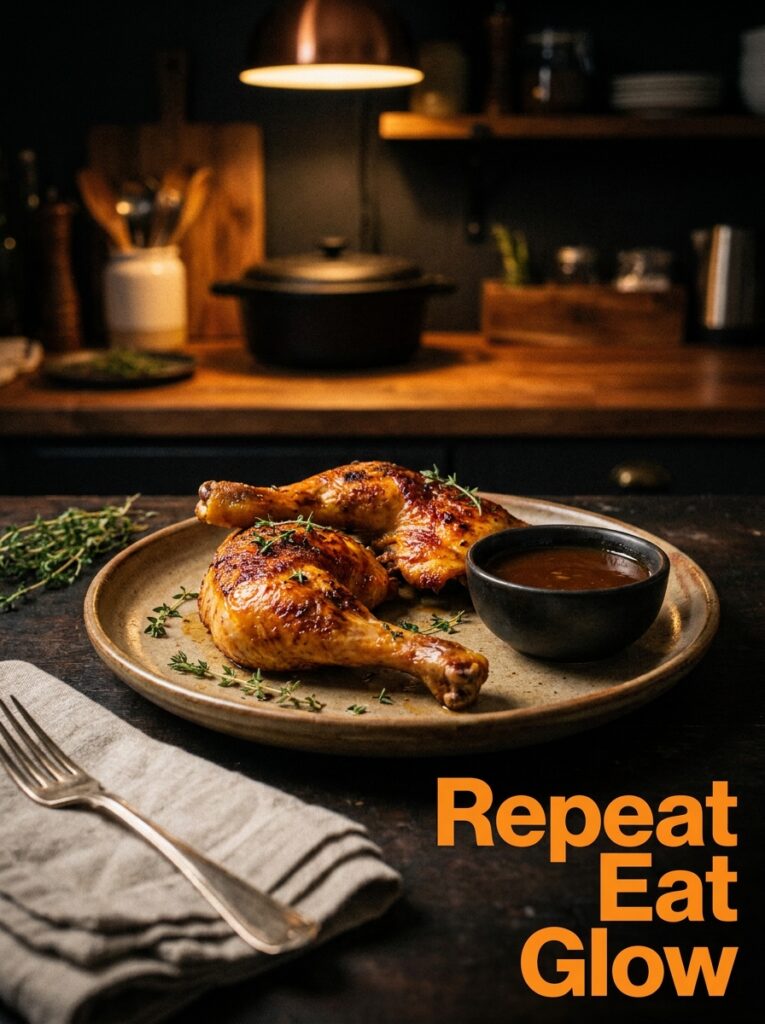
You grabbed a pack of chicken legs because they were cheap and you had a vague plan. Now they’re sitting in your fridge and you’re staring at them like they owe you something. Good news: they absolutely do.
—
1. Why Every Serious Home Cook Keeps Chicken Legs on Rotation (And What That Says About Them)
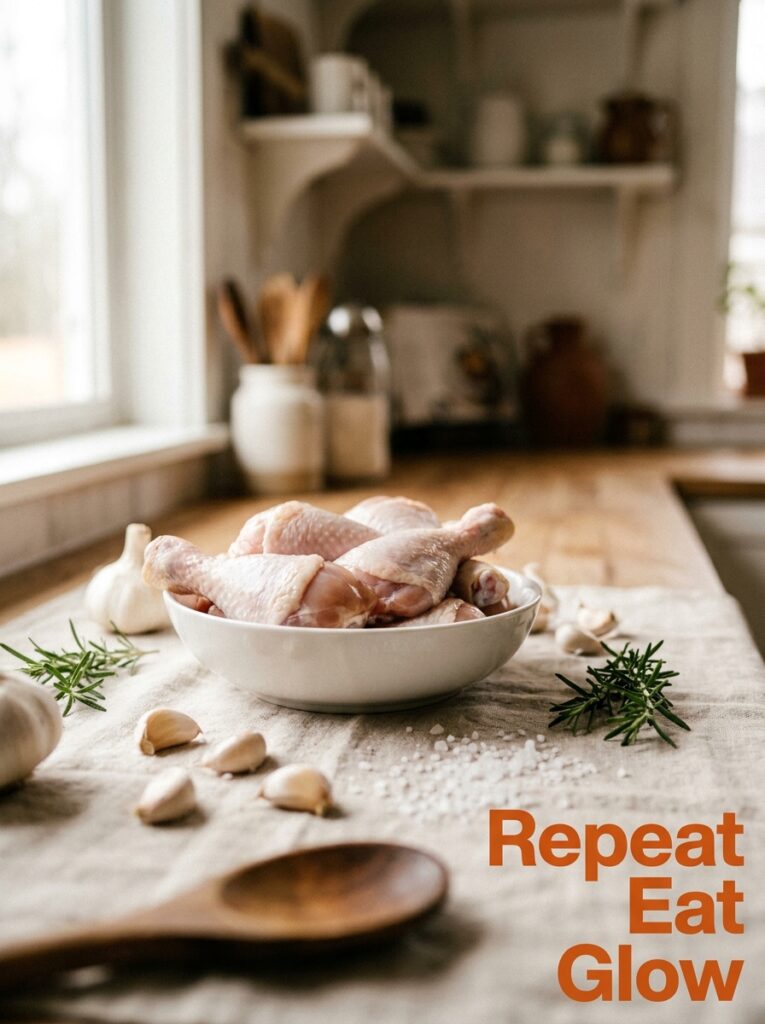
Chicken legs don’t get the Pinterest treatment that a beautiful roast chicken gets, or the recipe-blog obsession that chicken thighs seem to attract these days. And that’s honestly a little baffling, because the drumstick is one of the most forgiving, most flavourful, most SATISFYING pieces of meat you can cook at home.
Here’s what’s actually going on: legs have a higher fat content than breasts, which means they don’t dry out when you get distracted and leave them in the oven ten minutes too long. They don’t punish you for being busy. They sort of reward the chaos of real home cooking in a way that’s almost unfair to the people who spent extra money on chicken breasts this week.
I’ve made chicken legs for weeknight dinners when I had zero energy and for actual dinner parties where people asked me for the recipe. The same cut. Different approaches. Both times, people were properly impressed.
And the price. Let’s talk about the price. You can feed four people generously for what sometimes feels like nothing, especially if you catch them on sale. That’s not a small thing right now.
So if you’ve been sleeping on chicken legs, these recipes are your wake-up call.
“The cuts that don’t get the glamour shots are almost always the ones worth cooking.”
—
2. The Sticky Honey Garlic Glaze That Made Me Stop Ordering Takeaway
This one started as an experiment on a Thursday night and turned into the most-requested thing I make. It’s embarrassing how simple it is.
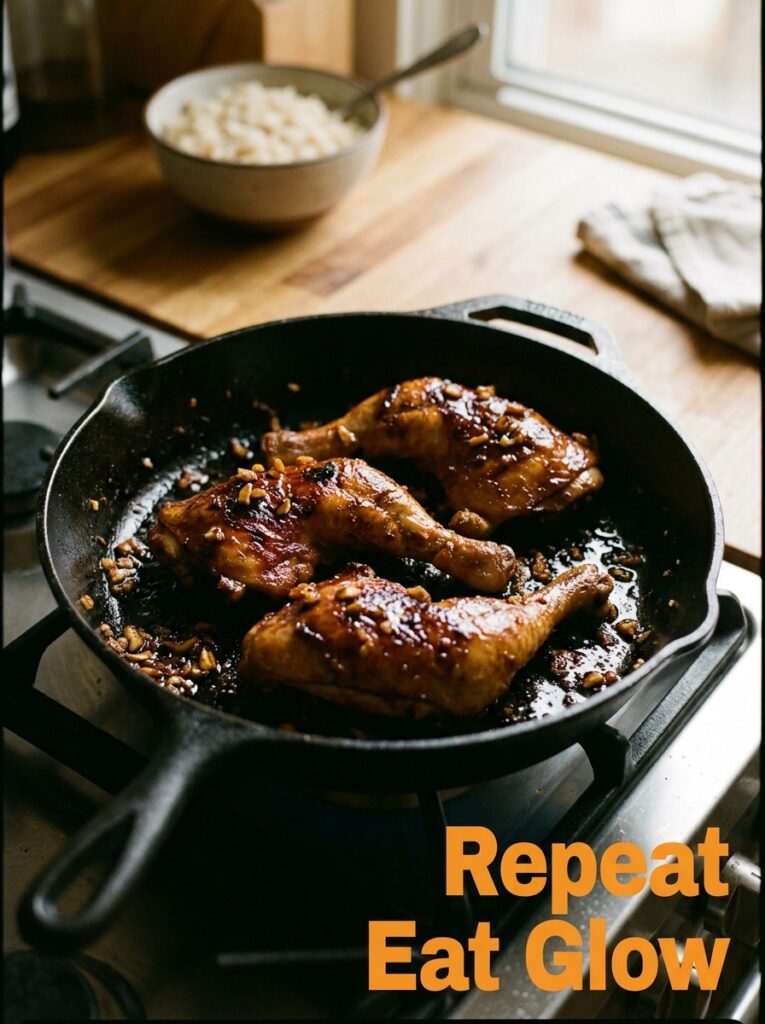
You want four chicken legs, patted completely dry — and I mean completely, because moisture is the enemy of that beautiful lacquered skin. Combine 3 tablespoons of honey, 2 tablespoons of soy sauce, four minced garlic cloves, a teaspoon of rice vinegar, and half a teaspoon of red pepper flakes if you want a tiny kick. That’s your glaze.
Season the legs with salt and pepper and sear them in a hot oven-safe skillet — cast iron if you have it — skin side down for about six minutes. Don’t move them. Don’t check on them. Let them do their thing. Flip, pour the glaze over everything, and then slide the whole pan into a 425°F oven for around 25 minutes.
What comes out is this deeply caramelized, sticky, glossy situation. The garlic gets sweet and almost jammy. The skin crackles at the edges and pulls away from the bone just slightly, which means it’s done and it’s perfect. Serve it over plain white rice with something green on the side — tenderstem broccoli, steamed bok choy, whatever you’ve got. The pan juices alone are worth making this for.
—
3. The Sheet Pan Dinner Nobody Talks About But Everybody Should Be Making
Sheet pan dinners get a reputation for being boring and they don’t deserve it. The problem isn’t the concept, it’s that people aren’t being bold enough with their seasoning, and they’re not getting the oven hot enough.
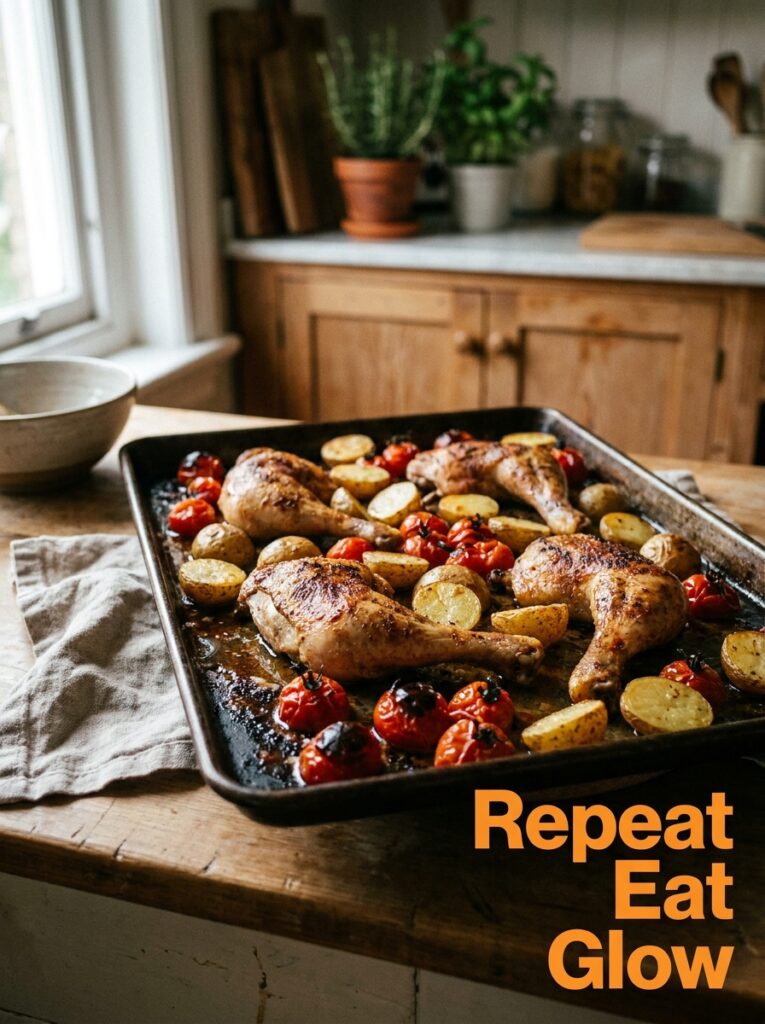
Here’s the version that changed my mind. Toss chicken legs with olive oil, smoked paprika, cumin, garlic powder, a little cayenne, salt. Real amounts: at least a teaspoon each of the paprika and cumin, not a polite dusting. On the same pan, throw wedges of red onion, halved cherry tomatoes, and chunks of courgette (zucchini for my American readers). Roast at 425°F for about 40 minutes, turning the vegetables once halfway through but leaving the chicken alone.
The tomatoes blister and almost collapse. The onion edges go dark and sweet. The chicken skin does that thing where it goes from pale to golden to this crackling, deeply seasoned crust that you’ll want to eat before anyone else gets to the table. I won’t judge you. I’ve done it.
Squeeze half a lemon over the whole pan right before serving. That’s it. That’s the move.
—
4. Slow Cooker Chicken Legs When You Need Dinner to Just Handle Itself
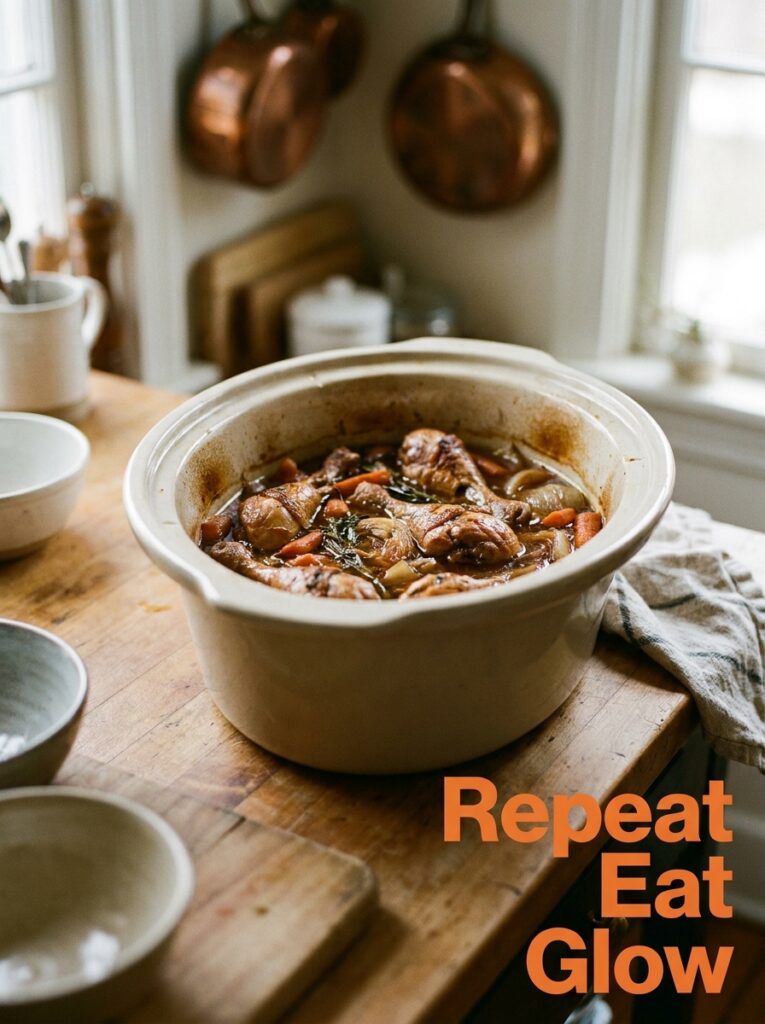
Not gonna lie, I resisted the slow cooker for years. It felt like cheating. Or like something my mum did in the 80s with a recipe clipped from a magazine. But then I had a season of my life that was genuinely relentless and I gave in, and now I understand what all the fuss was about.
Chicken legs are MADE for the slow cooker. That connective tissue and fat that makes them so flavourful breaks down slowly and turns the meat incredibly tender — tender in a way that you can’t quite achieve in the oven in the same time. The meat pulls away from the bone with almost no effort.
“Slow cooker chicken legs don’t just cook dinner. They kind of save you on the days you can’t save yourself.”
Here’s a combination that works brilliantly: season the legs and brown them quickly in a pan first — you don’t have to, but you’ll be glad you did because the colour and flavour are noticeably better. Then into the slow cooker with a can of crushed tomatoes, half a cup of chicken stock, a diced onion, three garlic cloves, a teaspoon of dried oregano, and a pinch of sugar to balance the tomatoes. Cook on low for six to seven hours or high for about four. Serve over mashed potatoes or with crusty bread to catch every drop of that sauce. It’s deeply comforting in a way that feels almost old-fashioned, and I mean that as the highest possible compliment.
—
5. The Marinade That Needs 24 Hours and Is Completely Worth the Wait
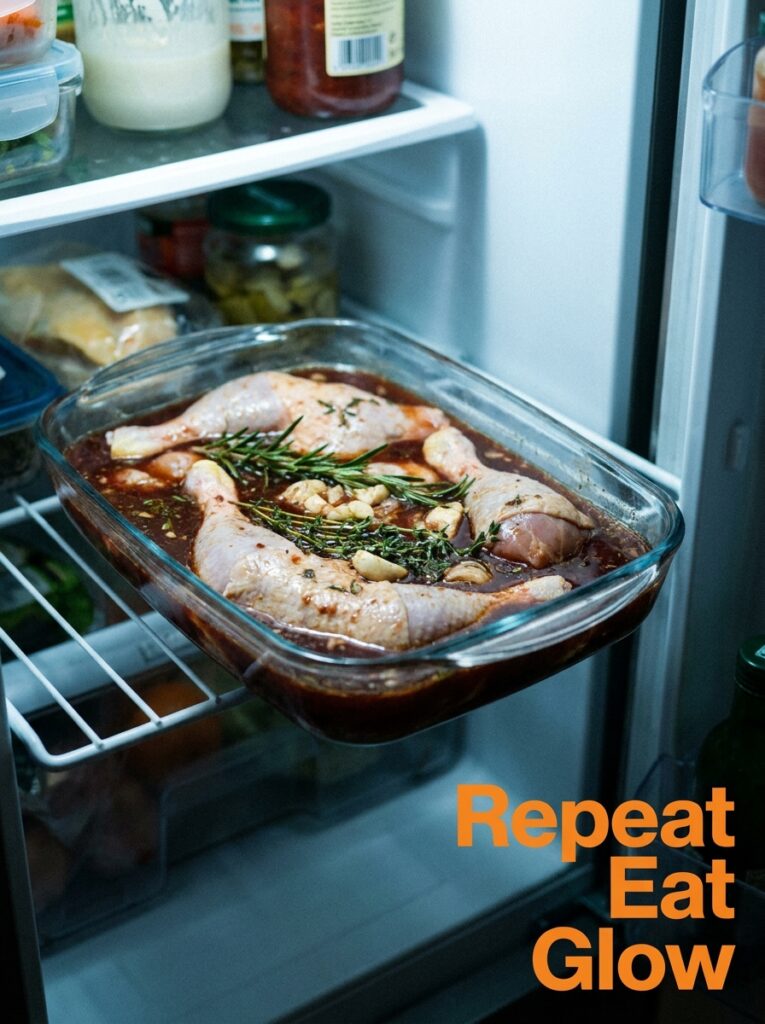
Patience isn’t my strong suit. But I make exceptions when something is genuinely worth waiting for, and this marinade is one of them.
Greek-inspired. Bright and herbaceous and deeply savoury all at once. You’re going to combine half a cup of plain yogurt, the juice and zest of one lemon, four garlic cloves (minced or grated), a tablespoon of dried oregano, two teaspoons of olive oil, salt, and black pepper. Score the chicken legs a few times with a knife — this sounds fussy but it takes about 30 seconds and it lets the marinade actually penetrate the meat rather than just sitting on the surface. Submerge the legs in the yogurt mixture, cover, and refrigerate for at least four hours but honestly overnight if you can swing it.
The yogurt tenderises the meat and when it hits a hot oven or a very hot grill, it chars in these beautiful dark patches that taste faintly smoky and almost tangy. Serve with warm flatbread, a cucumber and tomato salad, and a big spoonful of tzatziki. It feels like holiday food, which is the entire point.
—
6. Crispy Baked Chicken Legs That Give Fried Chicken Energy Without the Mess
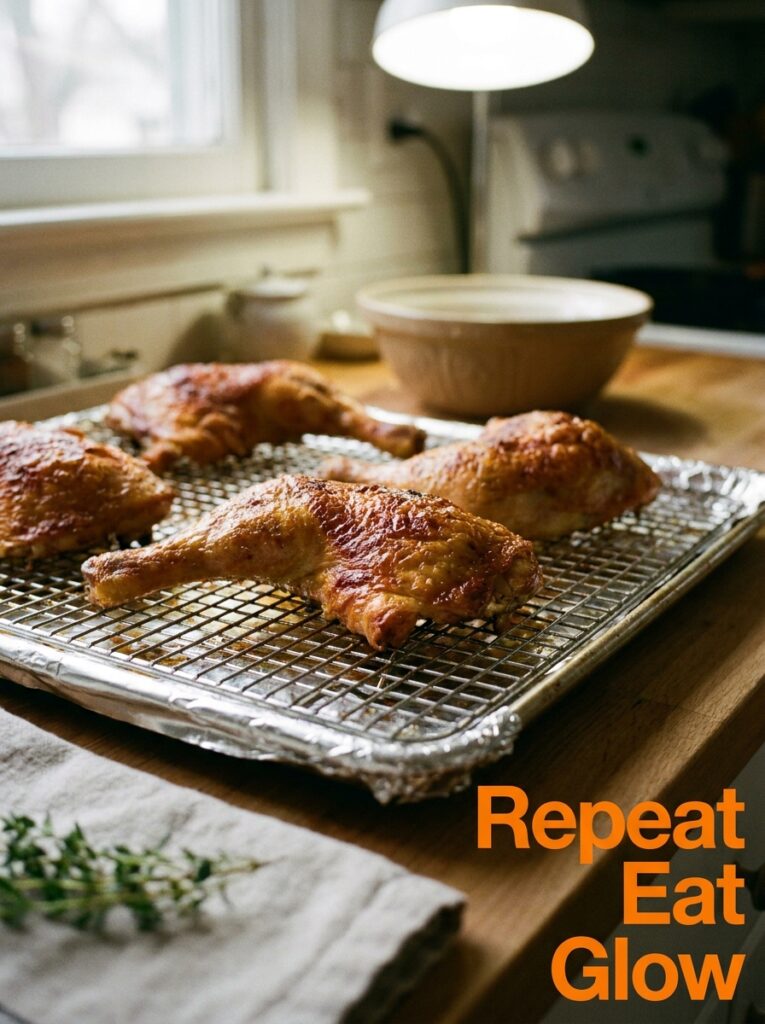
Frying chicken at home is great and also I’m not cleaning that up on a weeknight. This method is the compromise I’ve made peace with, and it’s actually so close to the real thing that I’ve stopped feeling bad about it.
The secret is baking powder. Not baking soda — baking powder, mixed into your dry seasoning. About half a teaspoon per leg. It sounds strange but it reacts with the chicken skin and draws out moisture, which means the skin gets genuinely crispy rather than just… cooked. There’s a difference, and it’s a big one.
Season with baking powder, garlic powder, onion powder, smoked paprika, a decent hit of salt, and cayenne if you like heat. Coat the legs thoroughly, then — this is important — let them sit uncovered in the fridge for at least an hour, or overnight. That air-drying step is doing real work. Roast on a wire rack set over a baking sheet at 425°F for 45 to 50 minutes, flipping once halfway through. The rack lets air circulate underneath, so there’s no soggy bottom situation. The skin comes out crackling and deeply seasoned. It’s very good. Stupidly good for a baked thing.
—
7. Jerk Chicken Legs That Don’t Require a Specialist Trip to the Store
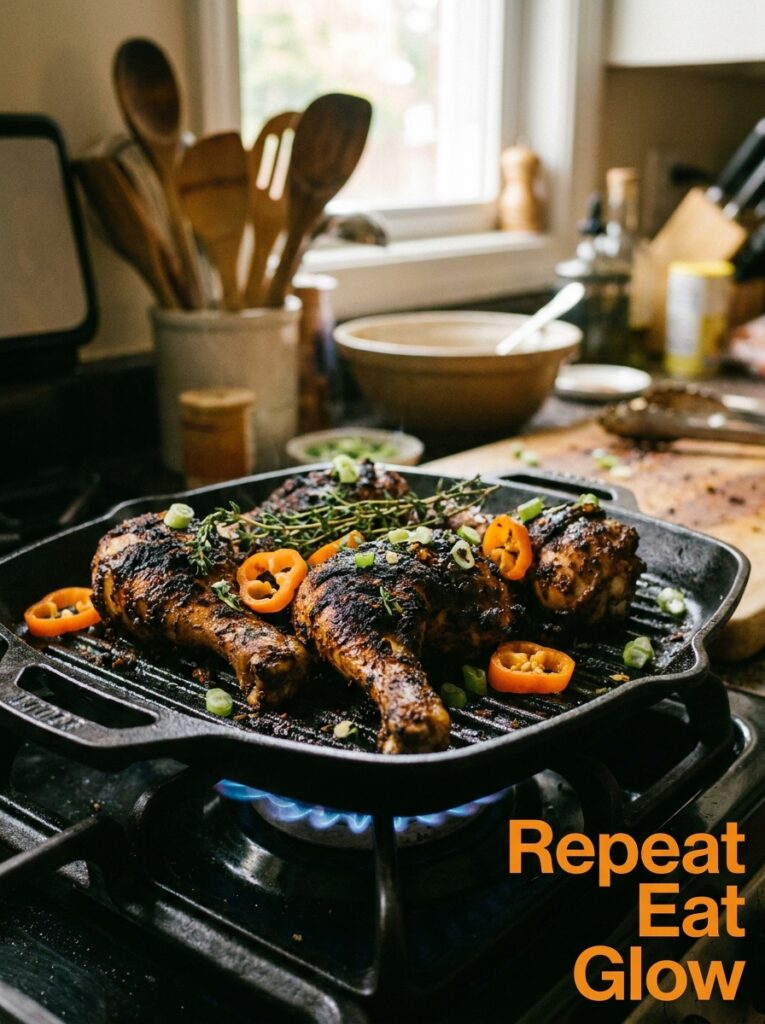
Real jerk chicken from a roadside shack in Jamaica — I’m not going to pretend I’m replicating that. But this is a really respectable home version that delivers the right depth of flavour and heat, and you can make it with things that are increasingly easy to find at most decent supermarkets.
The paste: blend together two or three scotch bonnet peppers (fewer if you’re heat-sensitive, genuinely — these are not mild), four spring onions, four garlic cloves, a thumb of fresh ginger, two tablespoons of soy sauce, one tablespoon of brown sugar, a tablespoon of apple cider vinegar, a teaspoon each of allspice, cinnamon, thyme, and black pepper, and a splash of olive oil. Blend it rough, not completely smooth. Rub it all over scored chicken legs and marinate for at least four hours.
“Good jerk seasoning should make you slightly nervous about how much you’ve added. And then you add more.”
Grill them if you can — charcoal is ideal but gas is fine. Or roast at 400°F for 40 minutes, then finish under the broiler/grill for five minutes to get those charred edges. Serve with rice and peas and you’re done. It’s a full meal and it’s properly excellent.
—
8. French Braised Chicken Legs for When You Want to Feel Like You Actually Know What You’re Doing in the Kitchen
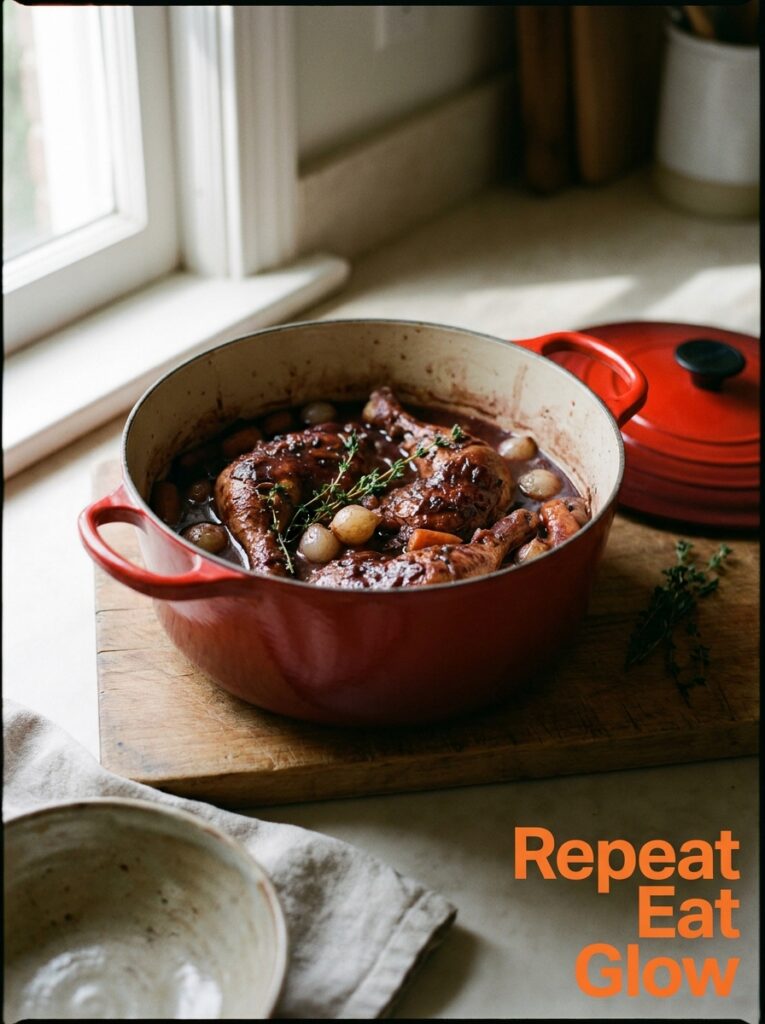
Braising sounds intimidating and it genuinely isn’t. Brown the meat, add liquid, cook it low and slow. That’s the whole thing.
This version is inspired loosely by coq au vin, but stripped back so it’s actually achievable on a regular evening. Brown four chicken legs well in a Dutch oven or heavy casserole dish — take your time with this, you want real golden colour. Set them aside. In the same pot, cook diced onion, celery, and carrot until soft. Add a few sprigs of thyme, two garlic cloves, a tablespoon of tomato paste, and a cup of dry white wine. Scrape up all the bits from the bottom of the pan. Let the wine bubble and reduce by half, then add one cup of chicken stock. Nestle the chicken legs back in, cover, and cook in a 325°F oven for about an hour and fifteen minutes.
What happens is something close to magic — the sauce becomes silky, the meat goes almost impossibly tender, and your kitchen smells like a French farmhouse. Serve it with buttered egg noodles or creamy mashed potatoes. Don’t skip the crusty bread.
—
9. The Spicy Coconut Braise That’s Now on Monthly Rotation
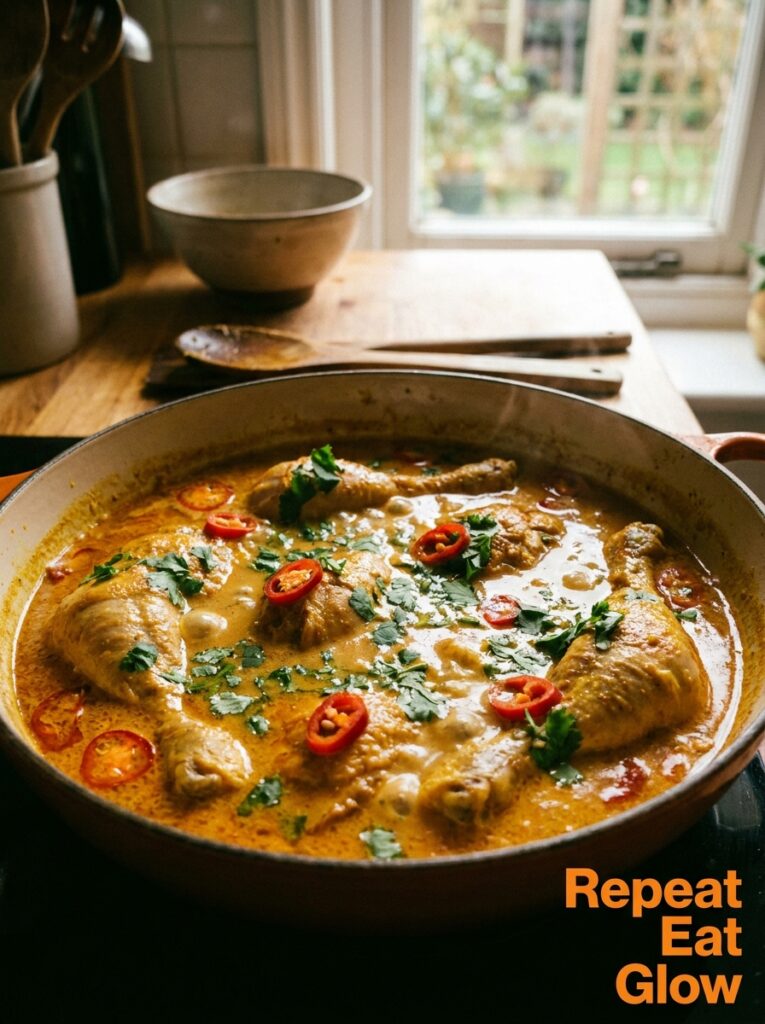
This one’s a bit different in energy. It’s got warmth and richness and a hint of sweetness from the coconut milk that makes it feel sort of luxurious, but it genuinely isn’t complicated to make. Side note — I first made this when I had a can of coconut milk left over from something else and no real plan. Best accidental dinner I’ve had in a while.
Season chicken legs with salt, pepper, turmeric, and a little cumin. Brown them in a wide pan, skin side down first. Remove them. In the same pan, soften a diced onion, add three cloves of garlic, an inch of grated ginger, and a tablespoon of red curry paste. Cook that for about two minutes until it’s very fragrant. Pour in one can of full-fat coconut milk and a half cup of chicken stock, stir to combine, then add the chicken legs back in. Simmer, partially covered, for 35 to 40 minutes.
The sauce thickens. The chicken goes silky. Finish with a squeeze of lime and some fresh coriander (cilantro). Serve over jasmine rice. It’s the kind of dinner you make and then sit down and think “I should make this more often” — and then actually do.
—
10. Lemon Herb Roasted Legs: The One You’ll Make When You Don’t Want to Think

Classic. Simple. Completely reliable. Sometimes that’s exactly what you need.
Coat chicken legs in olive oil, the juice and zest of a lemon, four smashed garlic cloves, fresh rosemary and thyme, salt and pepper. Roast at 400°F for 45 minutes. That’s largely it. The lemon gets a little caramelized around the edges, the herbs perfume the whole pan, the garlic turns golden and sweet and soft. It’s the kind of roast chicken smell that makes whoever is in the next room wander into the kitchen asking what’s happening.
Serve with roasted potatoes cooked in the same pan, because the chicken fat that renders out is the best thing those potatoes will ever encounter in their lives.
—
11. BBQ Chicken Legs That Actually Have Flavour Beyond Just “Sauce”
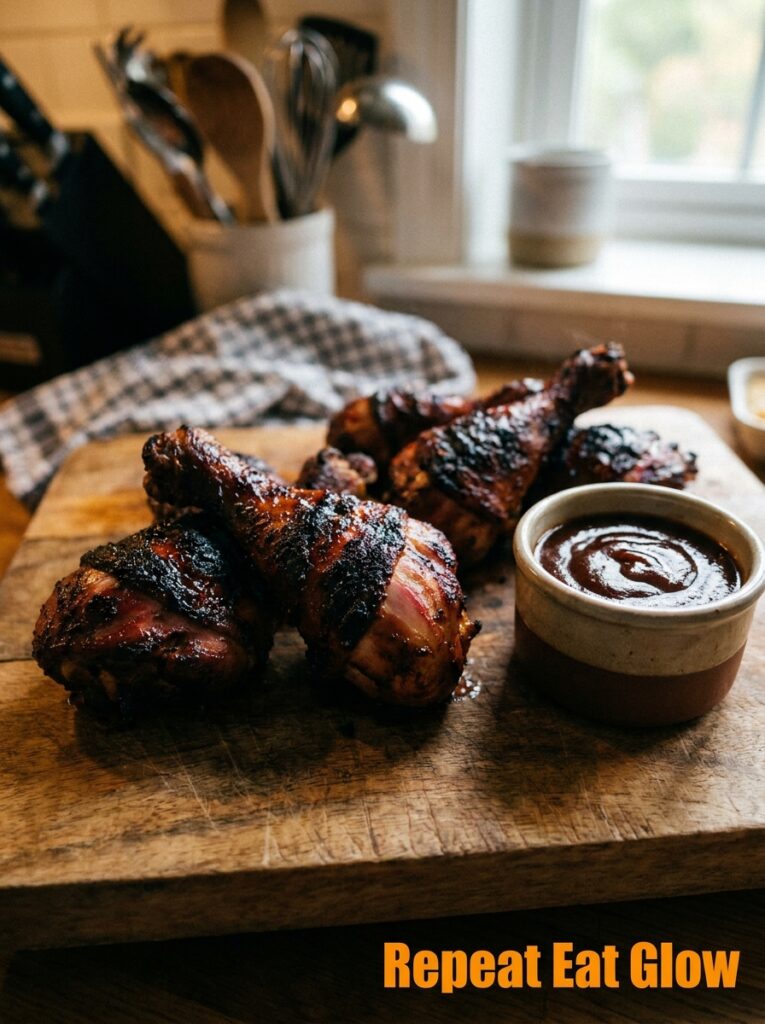
A lot of BBQ chicken is just chicken with sauce on it, and that’s fine but it can be so much better. The step people skip is building flavour before the sauce goes on.
Dry rub first — always. Brown sugar, smoked paprika, garlic powder, onion powder, salt, black pepper, and a pinch of cayenne. Rub it thoroughly on the legs and let them sit for at least 30 minutes. Then cook them through at 375°F for about 35 minutes. THEN apply your BBQ sauce — homemade or store-bought, both work — and either finish on a hot grill for those char marks or crank the oven to 425°F for the last ten minutes. The sauce caramelizes and gets slightly sticky and the rub underneath gives the whole thing real depth.
It’s the difference between BBQ chicken and actually good BBQ chicken.
—
12. What Happens When You Add Preserved Lemon to Roasted Chicken Legs
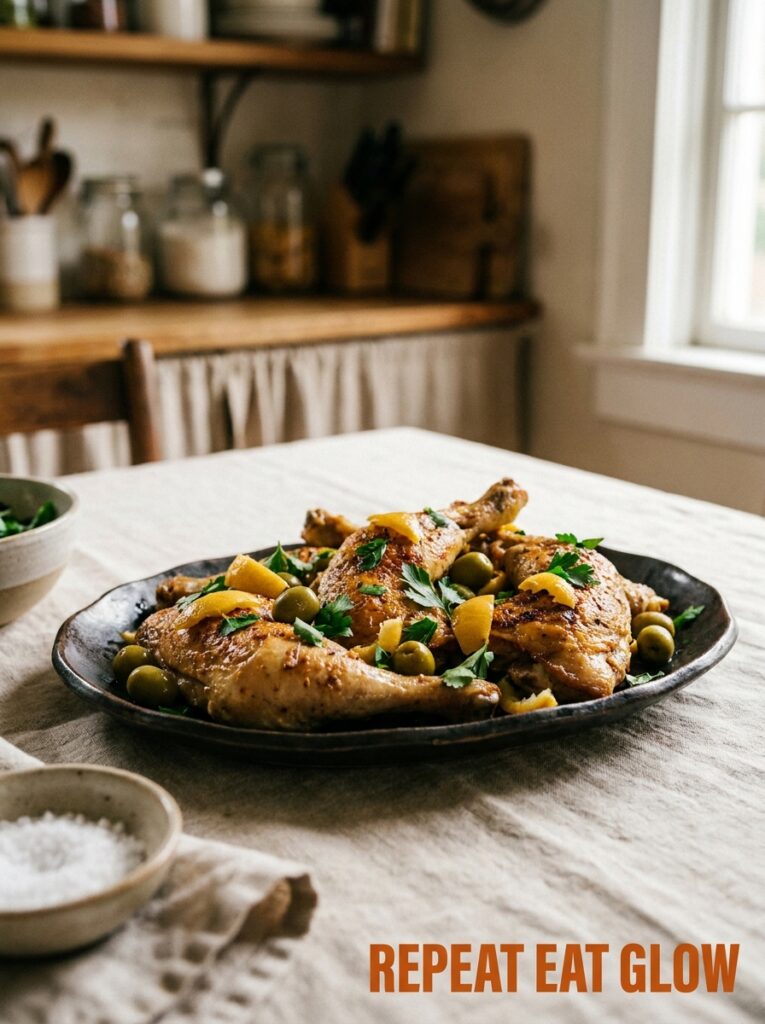
Okay, this is the slightly more adventurous one. But preserved lemons are in most big supermarkets now and they keep forever, so there’s no reason not to have them on hand.
Mince up a quarter of a preserved lemon — rinse it first — and mix it with softened butter, a garlic clove, fresh parsley, and a pinch of cumin. Gently loosen the skin on each chicken leg and push some of that butter mixture underneath. Rub the outside with olive oil and a little extra salt. Roast at 400°F for about 45 minutes.
The butter melts under the skin and bastes the meat from the inside. The preserved lemon does something to the flavour that’s hard to describe precisely — it’s salty and bright and intensely citrusy in a way that fresh lemon isn’t. The result is this incredibly fragrant, tender, deeply flavoured chicken that tastes like it took a lot more effort than it actually did. Which is, honestly, the whole dream.
—
❓ FAQ
Q: How long do chicken legs take to cook in the oven and at what temperature? A: At 400–425°F, most chicken legs take 40 to 50 minutes depending on size. The surest way to know they’re done is a meat thermometer reading 165°F at the thickest part, not touching the bone. If you don’t have a thermometer, pierce the thickest part and check that the juices run clear.
Q: Can I cook chicken legs from frozen? A: You can, but it’s really worth thawing them first if you can plan ahead — frozen-to-oven cooking tends to produce rubbery skin and unevenly cooked meat. If you’re in a pinch, thaw in cold water for an hour, then cook as normal. The result is noticeably better.
Q: What’s the difference between a chicken leg and a drumstick? A: A chicken leg technically refers to the whole leg — the drumstick plus the thigh attached. A drumstick is just the lower portion. Most of these recipes work for either, but the whole leg has a bit more meat and fat, so adjust cooking times slightly if you’re only using drumsticks.
—
💭 Final Thoughts

Chicken legs don’t need rescuing — they just need someone to actually pay attention to them. They’re patient, they’re flavourful, and they’ll reward you every single time if you give them half a chance. So next time you’re standing in the meat aisle trying to decide what to do for dinner, grab the legs.
What’s the one cut of chicken you keep going back to, and what would it take to convince you to switch things up?
